The Paris AtlasCharting the artists, works, and places worth returning to.
  • Author
  • Playwright
  • Poet
· Irish · 1923–1964

Brendan Behan

Irish writer, friend and drinking companion of J. P. Donleavy who suggested submitting *The Ginger Man* to Maurice Girodias's Olympia Press in Paris.

In images

Details

Lived
1923–1964
Born
9 February 1923
Birthplace
Dublin
Birth name
Brendan Francis Aidan Behan
Died
20 March 1964 · aged 41
Place of death
Dublin
Nationality
Irish
Profession
Playwright, memoirist and poet
Major works
The Quare Fellow, An Giall / The Hostage, Borstal Boy
Married
Beatrice Ffrench Salkeld · married 1955 until his death in 1964
Children
Blanaid Behan
Roles
AuthorPlaywrightPoet

About Brendan Behan

Irish playwright and memoirist, the author of Borstal Boy and The Quare Fellow

Brendan Behan was an Irish playwright, memoirist and poet who wrote in English and in Irish. He was born in Dublin on 9 February 1923 and joined the IRA at sixteen. His years in English and Irish prisons became his three lasting works: the plays The Quare Fellow (1954) and The Hostage (1958), and the memoir Borstal Boy (1958), a worldwide best-seller.

The prisons made the writer. Arrested in Liverpool at sixteen with a suitcase of explosives, Behan served his sentence in a borstal, a youth prison, on the Suffolk coast. Back in Dublin in 1942, he fired at two police detectives during an IRA commemoration and drew fourteen years, of which he served four. He sketched The Quare Fellow, a comedy set in a prison on the eve of a hanging, in Mountjoy Prison, and learned Irish from fellow internees. Joan Littlewood's 1956 London production of the play, and a gloriously drunken BBC television interview to promote it, made him famous in a fortnight.

Fame fed the drinking, and the drinking killed him. A diabetic since the early 1950s and, in his own phrase, a drinker with a writing problem, Behan dictated his last books into a tape recorder when he could no longer type. He collapsed in a Dublin bar and died at the Meath Hospital on 20 March 1964, aged 41. His funeral, with a full IRA guard of honour, was called the biggest Ireland had seen since Michael Collins's.

Russell Street, the ballads, and the house painters, 1923–1939

Brendan Behan was born at Holles Street Hospital in Dublin on 9 February 1923, into a working-class family soaked in books and republican politics. His father, Stephen Behan, a house painter who had fought in the War of Independence, read Zola, Galsworthy and Maupassant to the children at bedtime. His mother, Kathleen, took them on literary walking tours of the city and had been a personal friend of Michael Collins; at thirteen Brendan wrote a lament for Collins called "The Laughing Boy", using her nickname for him. His uncle Peadar Kearney wrote the Irish national anthem. His brothers Dominic and Brian became a songwriter and a writer in their turn.

The family lived on Russell Street near Mountjoy Square until 1937, when Dublin's slum clearances moved them to a new council estate at Crumlin. Behan left school at thirteen to apprentice as a house painter, the trade of his father and both grandfathers. He had already joined Fianna Éireann, the republican youth organisation, published boyhood verse in its magazine, and become the youngest contributor printed in The Irish Press.

The IRA, the borstal, and Mountjoy, 1939–1946

At sixteen, Behan joined the IRA and set off alone, without orders, to bomb the Cammell Laird shipyard in England. He was arrested in Liverpool in possession of explosives. Offered relocation to Canada under a new name if he would inform on his superiors, the sixteen-year-old refused, and was sentenced to three years in a borstal, the British youth prison system. He served it at Hollesley Bay on the Suffolk coast, the material of Borstal Boy, and was deported home in 1941.

Dublin gave him a second, harder sentence. On 10 April 1942, at an IRA commemoration for Theobald Wolfe Tone, Behan seized a comrade's revolver and fired two shots at Garda detectives. Tried for attempted murder, he got fourteen years. In Mountjoy Prison he began writing in earnest, sketching the play that became The Quare Fellow and drafting a first play, The Rent Woman, whose acts were rediscovered in the National Library of Ireland only in 2024. Interned later at the Curragh Camp, he learned fluent Irish. A 1946 amnesty freed him at twenty-three, and apart from one short sentence in 1947, for trying to break an IRA prisoner out of a Manchester jail, his revolutionary career was over.

Paris, McDaid's, and the apprentice years, 1946–1954

After his release Behan drifted. He went to the Irish-speaking districts of Galway and Kerry, where he began writing poetry in Irish. A lighthouse-painting job ended with the keeper calling him the worst specimen he had met in thirty years. In the early 1950s he moved to Paris, where he lived loose and reportedly paid his way writing pornography. Back in Dublin he finally worked at the writing, rising at seven and stopping at noon when the pubs opened. He wrote features for The Irish Times and a crime serial, The Scarperer, built on his knowledge of the Dublin and Paris underworlds.

His Dublin was the literary pub scene based at McDaid's, shoulder to shoulder with Flann O'Brien, Patrick Kavanagh, Anthony Cronin and J. P. Donleavy. Kavanagh came to loathe him and called him evil incarnate. Donleavy got something better than a feud: it was Behan who steered The Ginger Man, unpublishable at home for its obscenity, toward Maurice Girodias's Olympia Press in Paris.

The Quare Fellow, The Hostage, and Borstal Boy, 1954–1958

The Quare Fellow opened at Dublin's small Pike Theatre in 1954 and ran six months. It is a prison comedy set in the hours before a hanging, its condemned man never seen, its dialogue carrying the argument against capital punishment without a speech ever making it. In May 1956 Joan Littlewood's Theatre Workshop staged it at Stratford East in London, and it transferred to the West End. Promoting it, Behan appeared spectacularly drunk on BBC television with Malcolm Muggeridge, and England took him to its heart. His fellow guest Jackie Gleason, who became a friend, ruled it an act of Guinness rather than an act of God.

In 1958 came the double crest. His Irish-language play An Giall opened at the Damer Theatre in Dublin. It tells of a British conscript held hostage by the IRA in a Dublin house that doubles as a brothel, and of the convent girl he falls for before dying in a bungled raid. Behan's own English version, The Hostage, reworked with and by Littlewood into something bawdier and looser, became an international success. Borstal Boy, the memoir of the Suffolk youth prison, was published the same year and sold worldwide; its arc is a boy rebel unlearning political violence. The critic Kenneth Tynan wrote that if the English hoard words like misers, Behan sends them out on a spree, ribald, flushed and spoiling for a fight.

Behan in Jackie Gleason's dressing room during the Broadway run of Take Me Along, 1960. (Walter Albertin, New York World-Telegram and the Sun / Library of Congress · Public domain)

New York, the tape recorder, and the fall, 1959–1964

Fame moved him to New York, which he loved loudly, and where Harpo Marx and Arthur Miller kept him company and a young Bob Dylan trailed him. But the diabetes diagnosed in 1956 and the drinking were destroying him together. Diabetic comas and seizures became regular; publicans began throwing him out; a drying-out stay at a Toronto clinic in 1961 did not hold. The late books, Brendan Behan's Island, Brendan Behan's New York and Confessions of an Irish Rebel, were dictated into a tape recorder because he could no longer write or type long enough to finish a page.

He had married Beatrice Ffrench Salkeld, an illustrator for The Irish Times, in February 1955; their daughter Blanaid was born in 1963, months before the end. Biographers have also established that Behan was to some degree bisexual, and that a 1961 encounter with Valerie Danby-Smith, Ernest Hemingway's assistant, produced a son he never met.

On 20 March 1964 Behan collapsed at the Harbour Lights bar on Echlin Street, Dublin, and died the same day at the Meath Hospital, aged 41, his body ruined by alcohol dependence and diabetes. The IRA gave his coffin a full guard of honour, and newspapers ranked the funeral crowd behind only those for Michael Collins and Charles Stewart Parnell. He is buried at Glasnevin Cemetery.

How Behan wrote

Behan's method was talk, caught on paper. The plays run on the speech of cells, tenements and pubs, ribald, quick, and cut with ballads. The Quare Fellow carries its own song, "The Auld Triangle", which escaped the play to become a folk standard recorded by The Dubliners, The Pogues and the Dropkick Murphys. He worked mornings only, seven until the pubs opened at noon, and in two languages, writing An Giall in Irish before making The Hostage in English.

Collaboration and dictation finished what discipline could not. Joan Littlewood shaped the London texts so heavily that Dublin wits said Dylan Thomas wrote Under Milk Wood and Brendan Behan wrote under Littlewood. The final books were spoken into a tape recorder. Nearly everything that lasts came from four years of work, 1954 to 1958, drawing on the eight years of prison that came first.

Reception and the long echo

In his lifetime Behan carried two reputations in one body. He was the leading Irish playwright of his generation. He was also the professional drunk the public paid to see, a role he played to the end because, as he said, there is no bad publicity except an obituary. The plays hold the stage, and Borstal Boy stands with the great prison books. Ireland has built him monuments: a bronze on the Royal Canal, plaques and pub shrines across Dublin, and in 2026 a plaque on the Russell Street house where he grew up.

The echo is loudest in music. Shane MacGowan named him a founding influence, and The Pogues sang him in "Streams of Whiskey" and "Thousands Are Sailing". Mikis Theodorakis set songs from The Hostage for Maria Farantouri. "The Auld Triangle" is sung in pubs by people who have never heard of the play it came from.

Life events

  1. 1923

    Born at Holles Street Hospital, Dublin, on 9 February, into a house-painting, ballad-writing republican family.

    Brendan Behan

  2. 1936

    Writes "The Laughing Boy", a lament for Michael Collins, at thirteen.

    Brendan Behan

  3. 1939

    Joins the IRA at sixteen and is arrested in Liverpool with explosives on an unauthorised solo bombing mission; sentenced to three years in a borstal.

    Brendan Behan

  4. 1942

    Fires on Garda detectives at an IRA commemoration in Dublin on 10 April; sentenced to fourteen years, and begins writing in Mountjoy Prison.

    Brendan Behan

  5. 1946

    Freed at twenty-three under a general amnesty; drifts through the Gaeltacht and, in the early 1950s, Paris.

    Brendan Behan

  6. 1954

    The Quare Fellow opens at the Pike Theatre in Dublin and runs six months.

    Brendan Behan

  7. 1955

    Marries the illustrator Beatrice Ffrench Salkeld in February.

    Brendan Behan

  8. 1956

    Joan Littlewood stages The Quare Fellow in London; a drunken BBC interview with Malcolm Muggeridge makes him a celebrity. His diabetes is diagnosed the same year.

    Brendan Behan

  9. 1958

    An Giall opens in Dublin, The Hostage triumphs in London, and Borstal Boy becomes a worldwide best-seller.

    Brendan Behan

  10. 1960

    Broadway embraces him; he haunts New York with Jackie Gleason, Harpo Marx and Arthur Miller.

    Brendan Behan in Jackie Gleason's dressing room during the Broadway run of Take Me Along in 1960. (Walter Albertin, New York World-Telegram and the Sun / Library of Congress)

    Brendan Behan

  11. 1961

    Admitted to a Toronto clinic for alcohol dependence; the cure does not hold, and the last books are dictated to tape.

    Brendan Behan

  12. 1963

    His daughter Blanaid is born.

    Brendan Behan

  13. 1964

    Collapses at the Harbour Lights bar and dies at the Meath Hospital, Dublin, on 20 March, aged 41; the IRA mounts a guard of honour at one of Ireland's largest funerals.

    Brendan Behan

People they knew

Documented connections — every one carries its source.

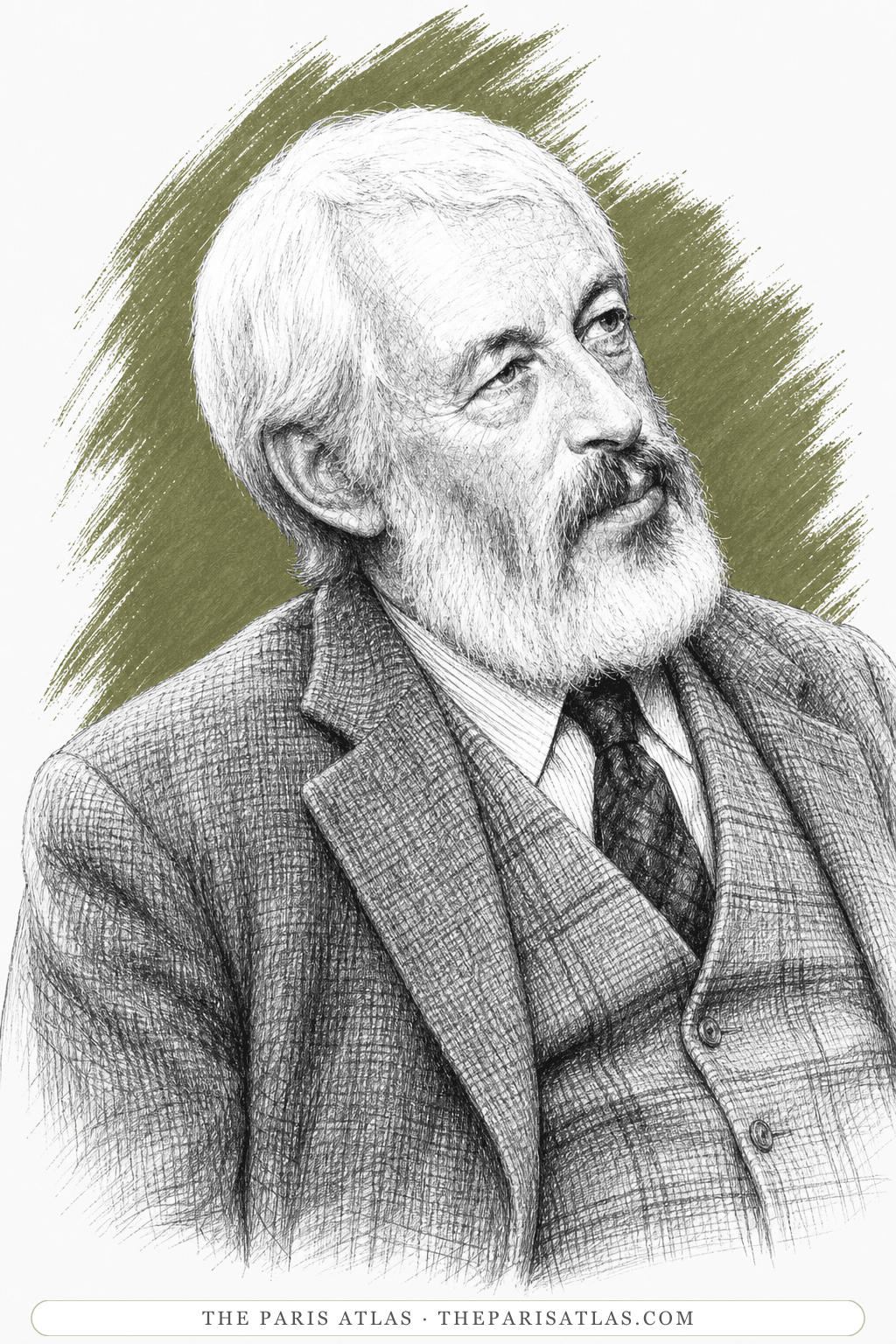
Illustrated portrait of Patrick Kavanagh

Patrick Kavanagh

  • Poet
  • Author

Met

Both held court in the literary Dublin of the 1950s that ran through McDaid's pub, alongside Flann O'Brien, Anthony Cronin and J. P. Donleavy, and the two poets loathed each other. Patrick Kavanagh reportedly shuddered at the mention of Behan's name and called him evil incarnate; the enmity is a fixture of every memoir of the scene.
Brendan Behan

Illustrated portrait of J. P. Donleavy

J. P. Donleavy

  • Author
  • Playwright
  • Painter

Met · 1946

Behan became Donleavy's friend, drinking companion, antagonist and occasional fighting partner, and later suggested that he submit The Ginger Man to Olympia Press.

JP Donleavy obituary; J. P. Donleavy’s The Ginger Man at 60 (2015); A Singular Man: J. P. Donleavy on His Fascinating Life Since The Ginger Man (2010)

Questions about Brendan Behan

Who was Brendan Behan?

Brendan Behan (1923–1964) was an Irish playwright, memoirist and poet, the author of The Quare Fellow, The Hostage and the memoir Borstal Boy. A Dublin house painter's son who joined the IRA at sixteen, he spent most of his youth in English and Irish prisons and made that experience the whole substance of his work. He wrote in both English and Irish, and died at 41 of the combined effects of alcohol dependence and diabetes.

What is Borstal Boy about?

Behan's own imprisonment, from his arrest in Liverpool at sixteen with a suitcase of IRA explosives to his years in the Hollesley Bay borstal, a youth prison on the Suffolk coast. Published in 1958, it became a worldwide best-seller. The book is a comedy of cells, warders and friendships rather than a tract: its idealistic boy rebel gradually concludes that political violence is futile, which is why the memoir reads as Behan's farewell to the gun.

Was Brendan Behan in the IRA?

Yes, from sixteen. Raised in a staunchly republican Dublin family, he joined the IRA's youth wing at fourteen and the IRA at sixteen, and was arrested in Liverpool in 1939 carrying explosives for an unauthorised solo bombing of the Cammell Laird shipyard. In 1942 he fired two shots at Garda detectives at a Dublin commemoration and was sentenced to fourteen years. Released in the 1946 amnesty, he left active service at twenty-three, and Borstal Boy traces his movement away from violence. The IRA still gave his coffin a guard of honour in 1964.

How did Brendan Behan die?

From the combined effects of long alcohol dependence and diabetes. Behan had been diabetic since the early 1950s, and by the 1960s suffered regular diabetic comas and seizures while continuing to drink heavily. On 20 March 1964 he collapsed at the Harbour Lights bar on Echlin Street, Dublin, and died that day at the Meath Hospital, aged 41. Newspapers called his funeral, with its full IRA guard of honour, the biggest in Ireland since Michael Collins's. He is buried at Glasnevin Cemetery.

What is "The Auld Triangle"?

The song that opens The Quare Fellow, sung by a prisoner as Mountjoy Prison wakes on the morning of a hanging; the triangle was the iron gong that marked prison time. It slipped free of the play to become an Irish folk standard, recorded by The Dubliners, The Pogues, the Dropkick Murphys and dozens of others, and it is Behan's most widely heard piece of writing.

What was Brendan Behan's connection to The Ginger Man?

He got it published. Behan and J. P. Donleavy were friends, drinking companions and occasional sparring partners in 1950s Dublin. When Donleavy's novel The Ginger Man was rejected as obscene, it was Behan who pointed him to Maurice Girodias's Olympia Press in Paris, which published it in 1955. Donleavy told the story for the rest of his life, feud and gratitude tangled together.

What did Behan mean by "a drinker with a writing problem"?

It was his own summary of how the fame worked. The public wanted the drunken performer, on television, on stage, in the pubs, and Behan supplied him, once saying there is no bad publicity except an obituary. The joke covered a real working discipline, the morning shifts before the pubs opened that produced the plays and Borstal Boy. It also covered that discipline's collapse: by the early 1960s he could no longer type, and dictated his last books into a tape recorder.

Sourced claims

Every connection the graph holds for Brendan, with the evidence behind it.

Met

Patrick Kavanagh

Both held court in the literary Dublin of the 1950s that ran through McDaid's pub, alongside Flann O'Brien, Anthony Cronin and J. P. Donleavy, and the two poets loathed each other. Patrick Kavanagh reportedly shuddered at the mention of Behan's name and called him evil incarnate; the enmity is a fixture of every memoir of the scene.

Brendan Behan

Met · 1946

J. P. Donleavy

Behan became Donleavy's friend, drinking companion, antagonist and occasional fighting partner, and later suggested that he submit The Ginger Man to Olympia Press.

JP Donleavy obituary; J. P. Donleavy’s The Ginger Man at 60 (2015); A Singular Man: J. P. Donleavy on His Fascinating Life Since The Ginger Man (2010)

References

References

The sources below include biographies, scholarly essays, interviews, and primary materials that informed this page. They reflect both the historical record and ongoing critical conversations about Brendan Behan and their work.

  1. 1JP Donleavy obituary

    Periodical
    The Guardian
    Used for

    Contemporary reporting or criticism used to document the historical reception and context of Brendan Behan.

    View source
  2. 2J. P. Donleavy’s The Ginger Man at 60

    Periodical
    The Irish Times, 2015
    Used for

    Contemporary reporting or criticism used to document the historical reception and context of Brendan Behan.

    View source
  3. 3A Singular Man: J. P. Donleavy on His Fascinating Life Since The Ginger Man

    Periodical
    The Independent, 2010
    Used for

    Contemporary reporting or criticism used to document the historical reception and context of Brendan Behan.

    View source
  1. 4Brendan Behan — archival television and radio collection

    Archive
    RTÉ Archives
    Used for

    Archival evidence used to document the historical record connected to Brendan Behan.

    View source
  2. 5Brendan Behan

    Website
    Wikipedia
    Used for

    Reference article cross-checked for the IRA record, the prisons, the play productions, the marriage, and the death.

    View source
i
Why these sources are here

These references anchor the page in the documented record and in the scholarly conversations around Brendan Behan. Every claim on this page traces back to one or more of the works listed here.

Explore more resources
Browse all authors