Café terraces & gallery afternoons
Saint-Germain-des-Prés
For the Paris of literary cafés, small galleries, and long conversations on the Left Bank.
Explore places & hotelsART, CULTURE & TRAVEL
Discover the museums, literary cafés, bookshops, and neighborhoods that make Paris yours. Then find a hotel close to the places you want to explore.
An independent guide for the culturally curious.
FIND YOUR CORNER OF THE CITY
Start with what draws you here. Let the neighborhood follow.
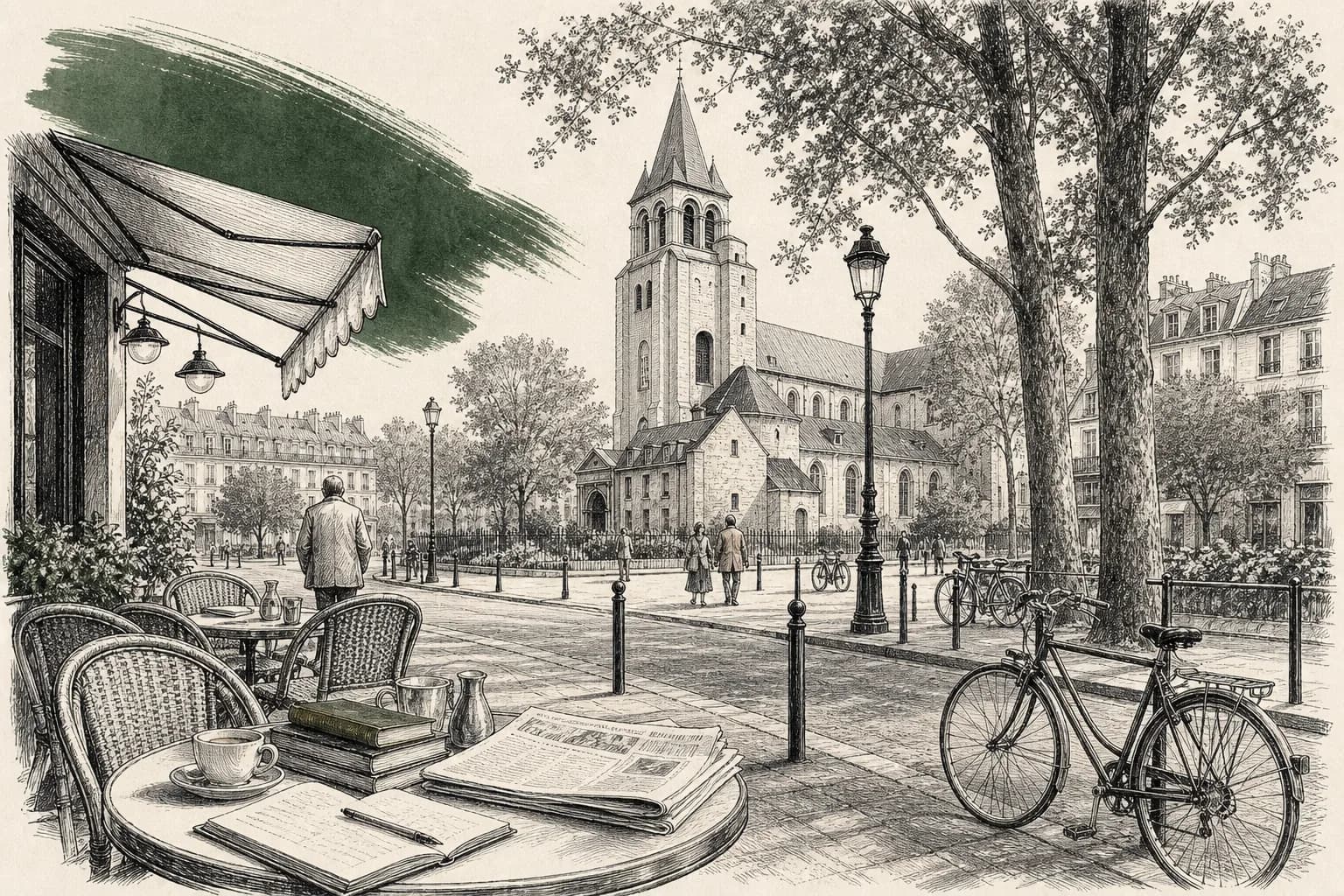
Café terraces & gallery afternoons
For the Paris of literary cafés, small galleries, and long conversations on the Left Bank.
Explore places & hotels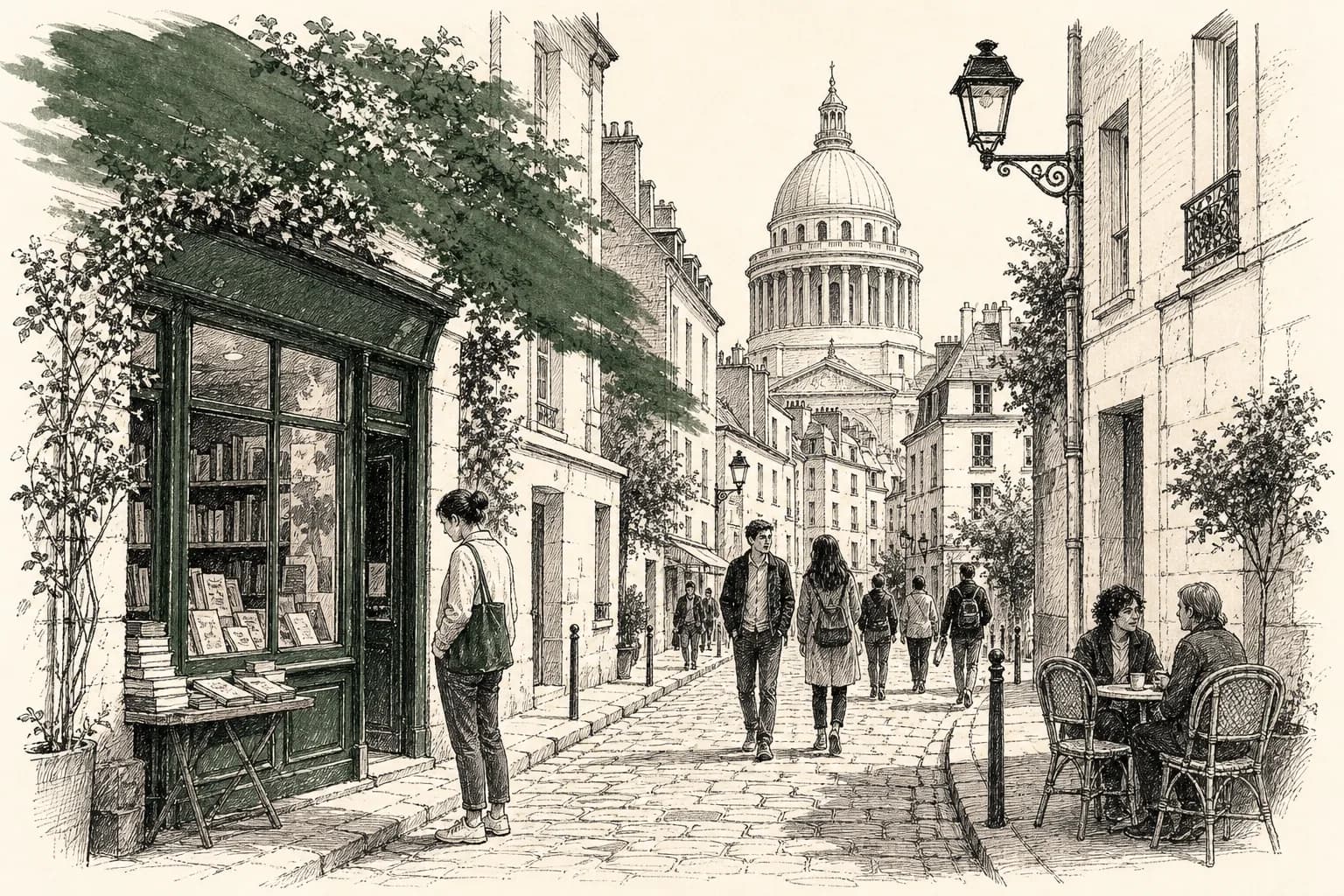
Bookshops & wandering streets
For bookshop browsing, the streets around the Panthéon, and a walk down to the Seine.
Explore places & hotels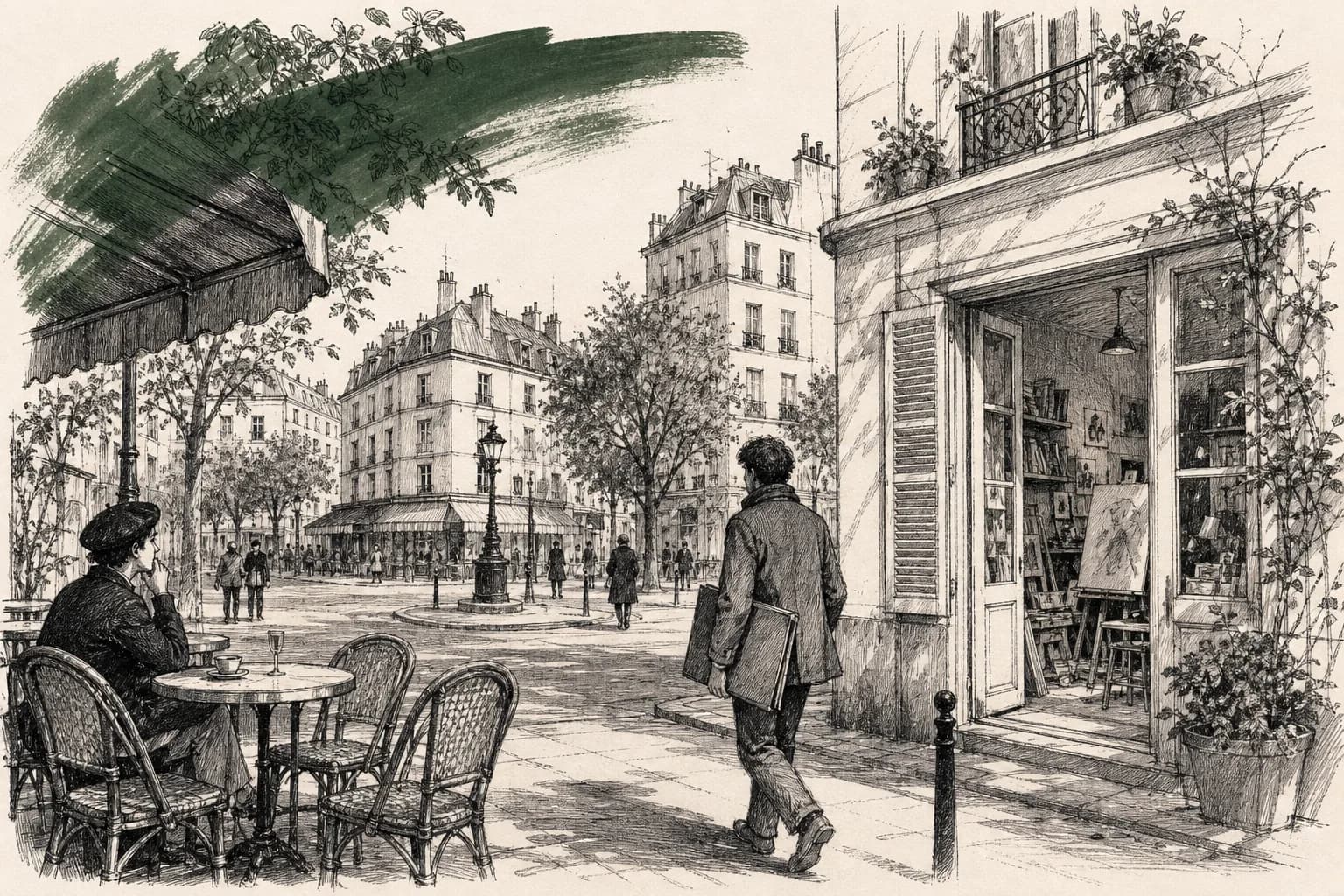
Artists’ studios & storied brasseries
For the cafés, studios, and meeting places of the artists who made the neighborhood their own.
Explore places & hotelsWHERE TO STAY
Find a base for the museums, cafés, and bookshops on your list.
Latin Quarter
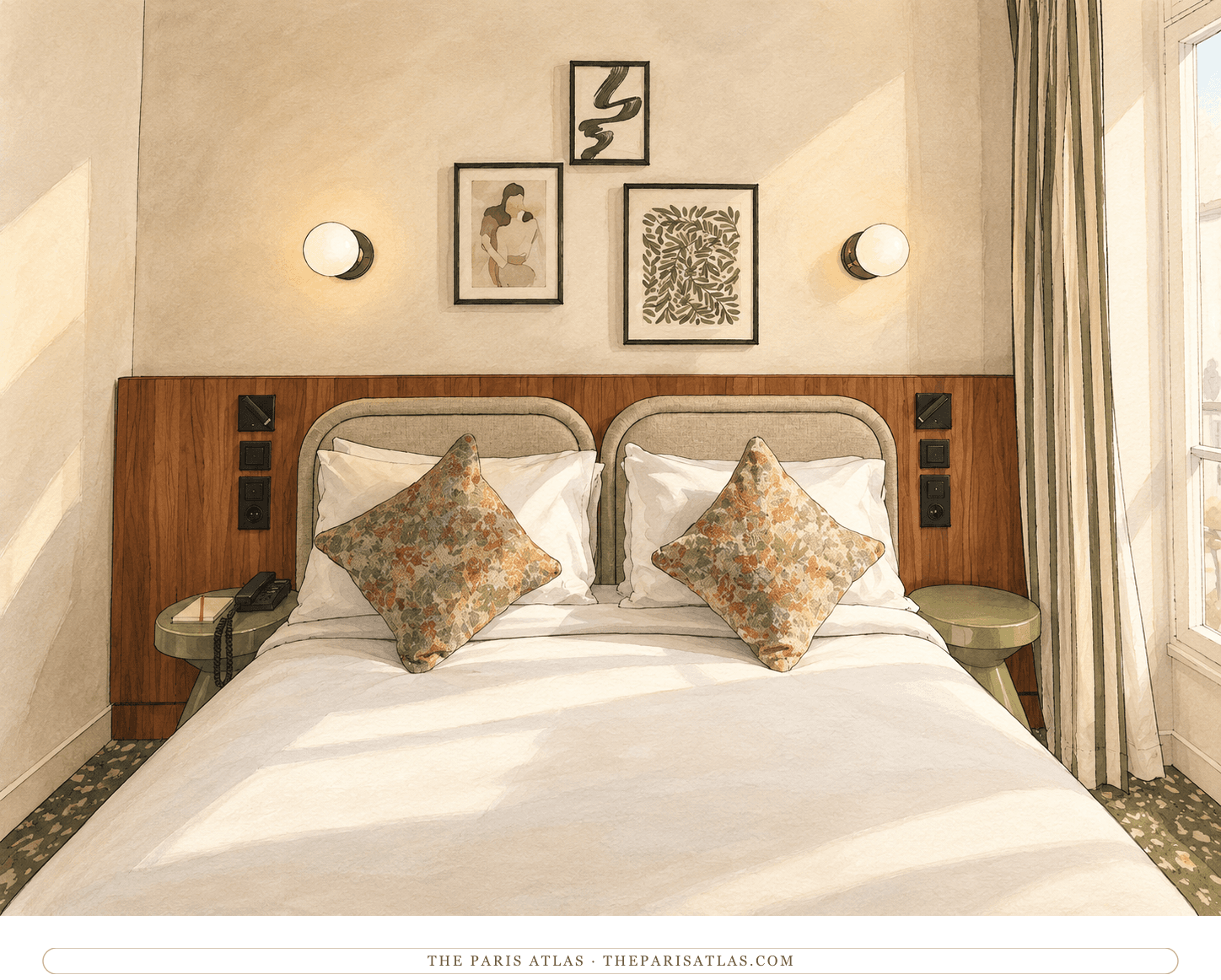
For books and a literary café
Stay on rue Cujas, with a literary café downstairs and the Panthéon and Luxembourg Gardens nearby.
Explore the hotel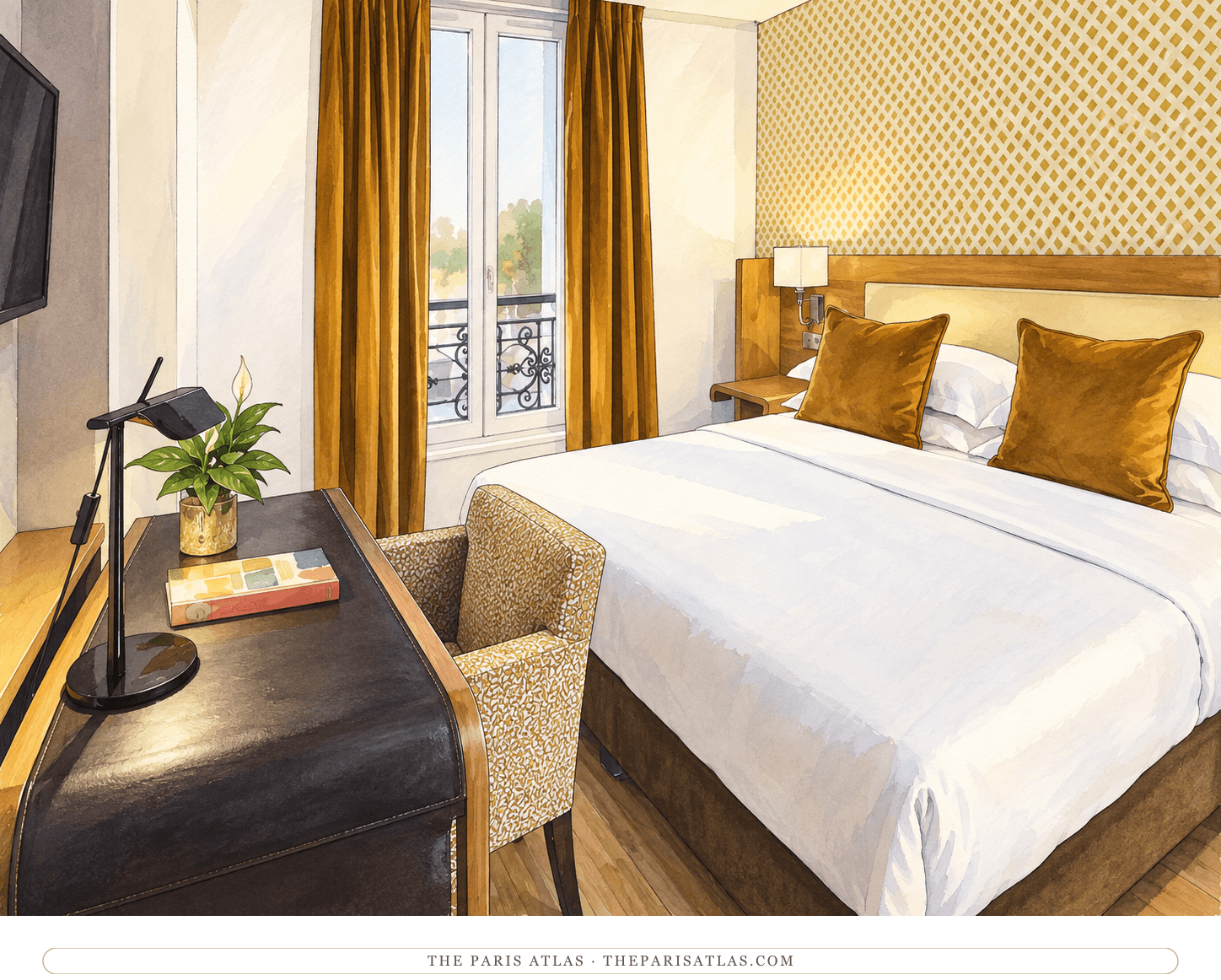
Montparnasse
For garden walks and a library bar
A base on rue Stanislas between Montparnasse and the Luxembourg Gardens, with a library bar and a small spa.
Explore the hotel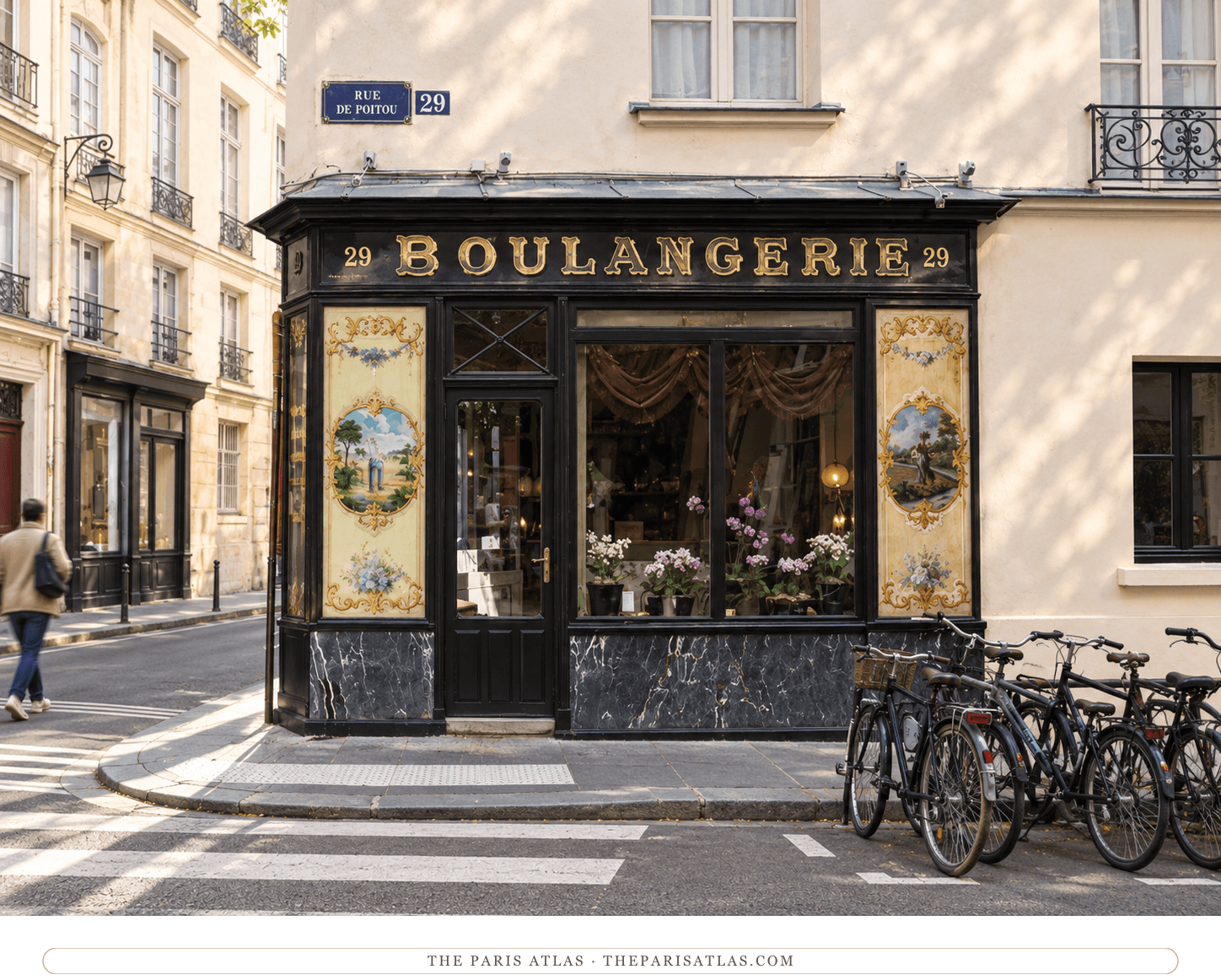
Le Marais
For art and design in Le Marais
Behind a preserved bakery storefront on rue de Poitou, discover rooms designed by Christian Lacroix near the Musée Picasso.
Explore the hotel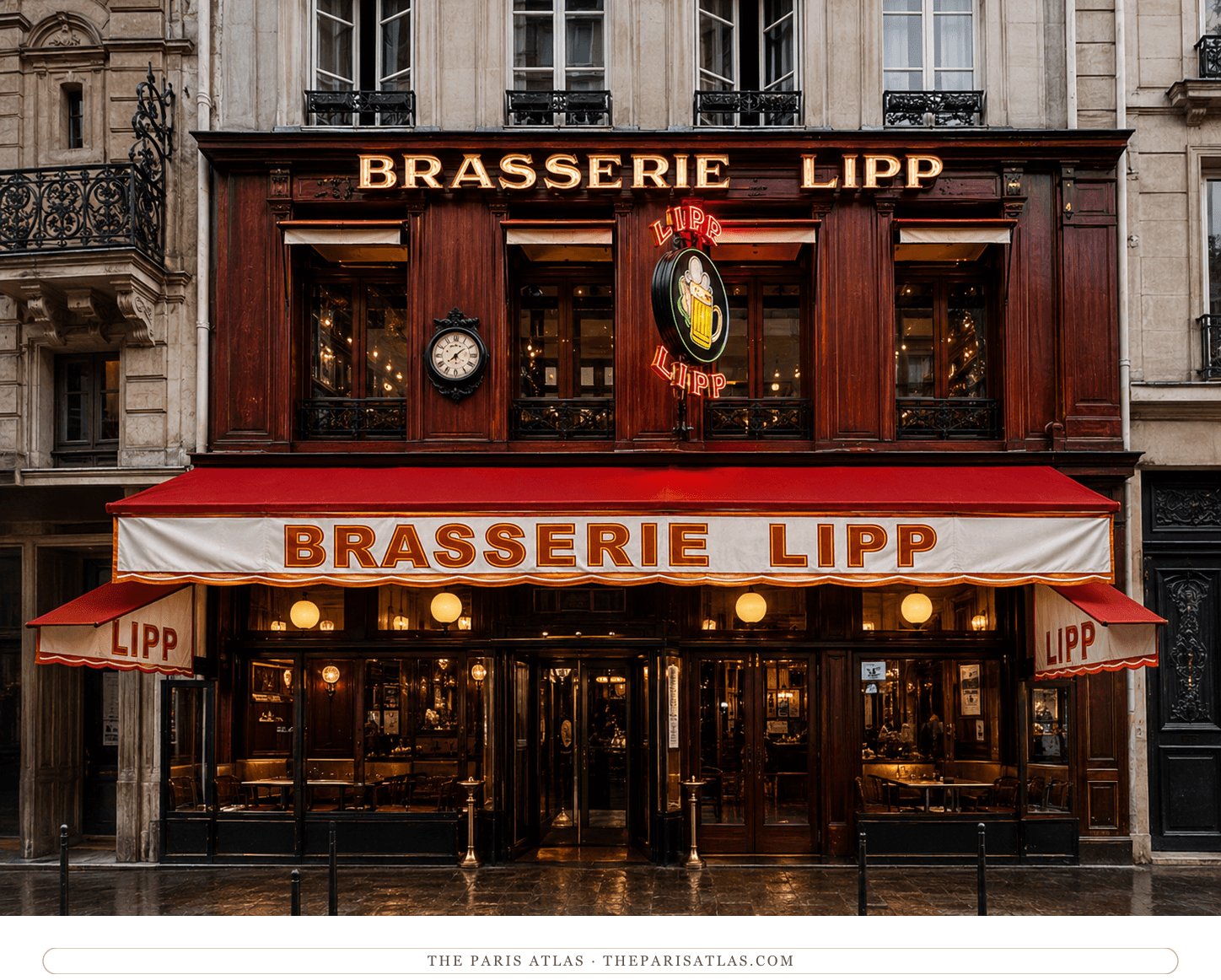
Editorial illustration © The Paris Atlas
FROM THE PAGE TO THE PAVEMENT
Follow the writer through Saint-Germain: the hotel rooms, café tables, and streets that became part of his life and work.
Explore the walkFROM THE ATLAS
The books, artists, and ideas that bring another Paris into view.

Read before you go
Hemingway’s Paris, from the borrowed books to the café tables.
Open the book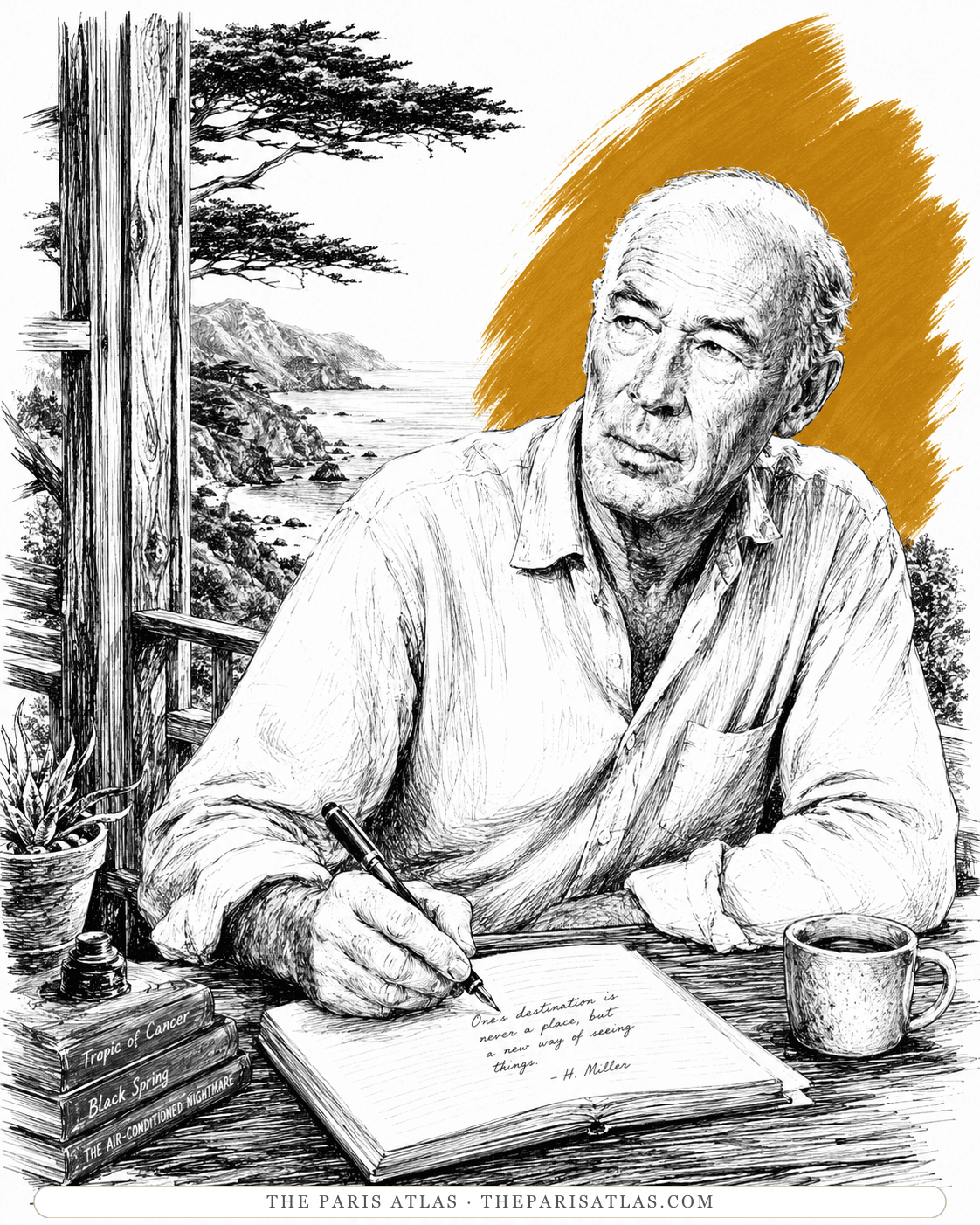
Meet the author
His life, his books, and where to begin reading.
Explore Henry Miller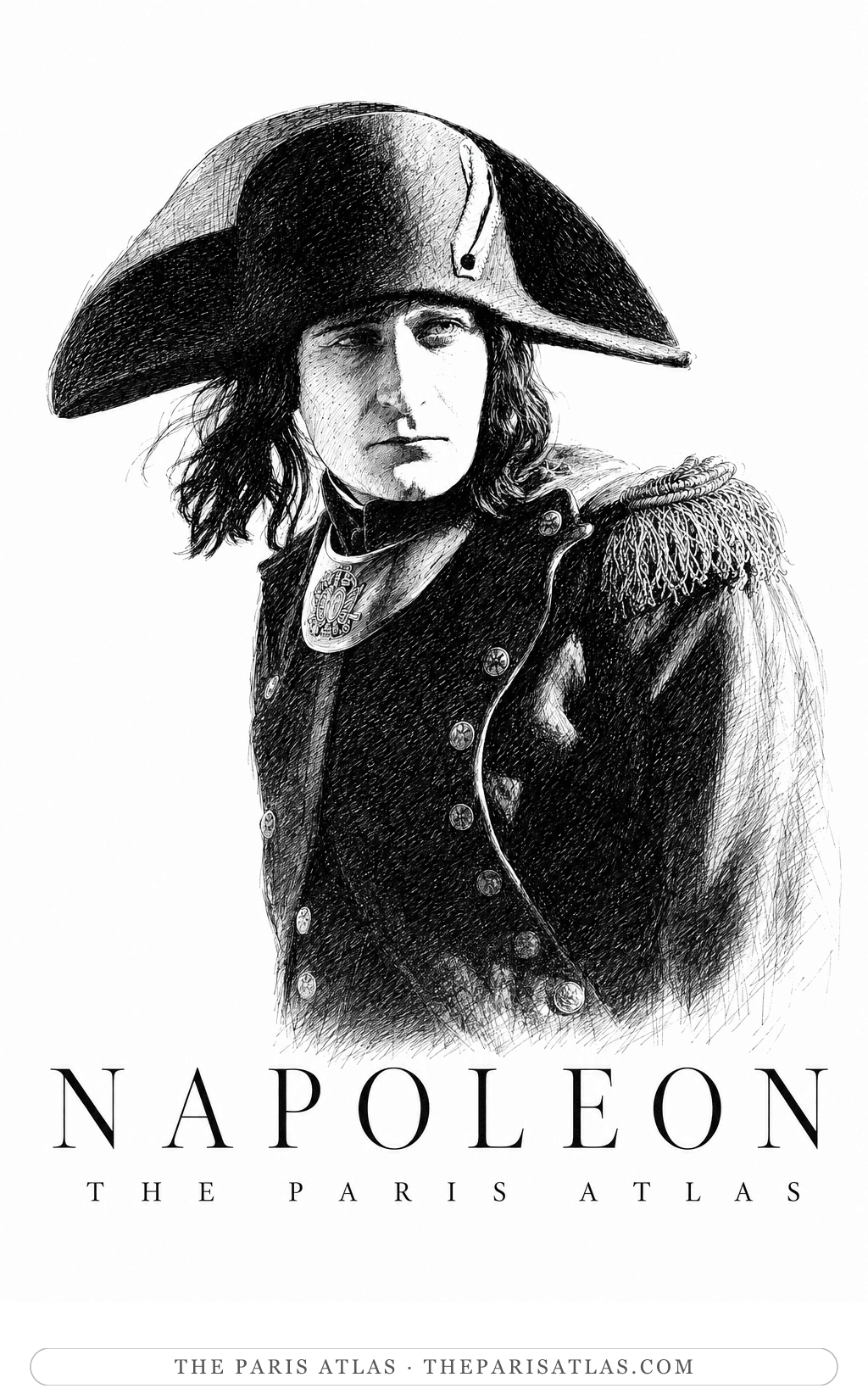
A film to explore
Abel Gance’s epic, from its Paris premiere to its restorations.
Explore the film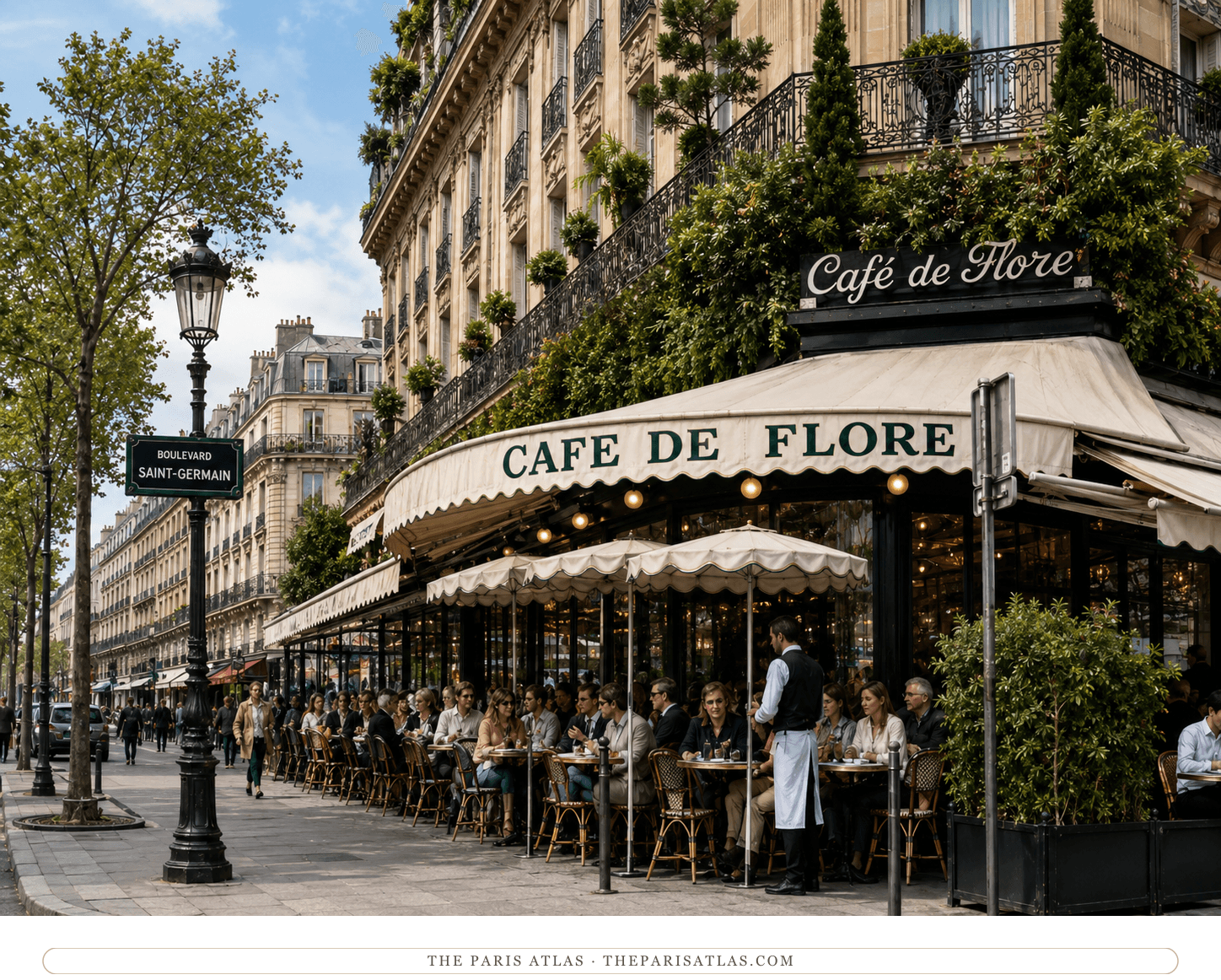
A place in Paris
A literary meeting place in Saint-Germain-des-Prés.
Explore the caféA walk to take
Follow the writer through the cafés and streets of the Left Bank.
Explore the walkEditorial illustrations © The Paris Atlas

A READING LIST TO BEGIN WITH · 8 BOOKS
Tracing the war, the expatriate cafés, and the long look back—from Hemingway to Henry Miller.
The Paris Atlas
Cafés, dance halls, and river tables from The Sun Also Rises — researched, mapped, and illustrated.
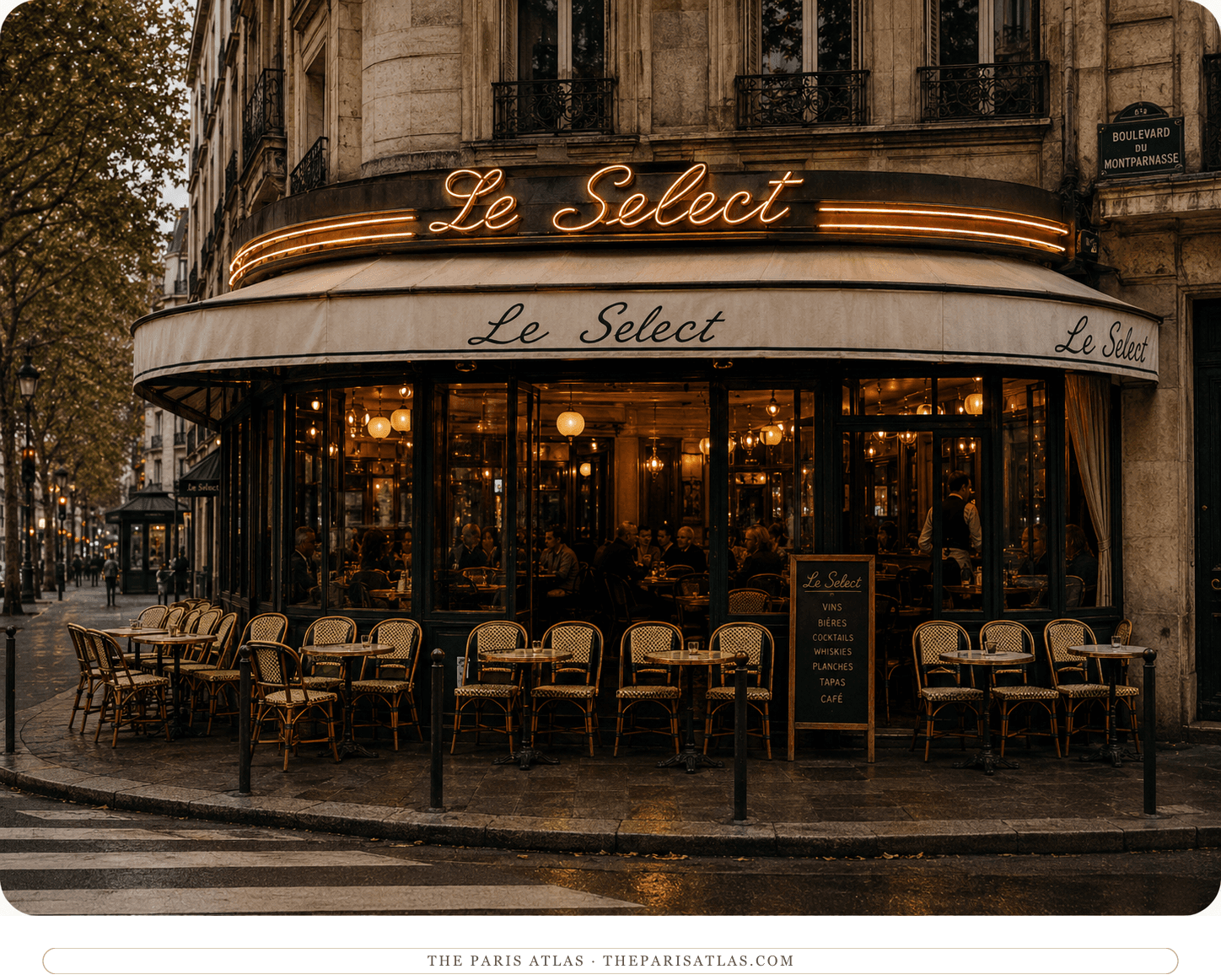
Café · Montparnasse
The all-night café of the Vavin crossroads and the closest thing Ernest Hemingway's The Sun Also Rises has to a home address — the crowd always ends up at the Select.
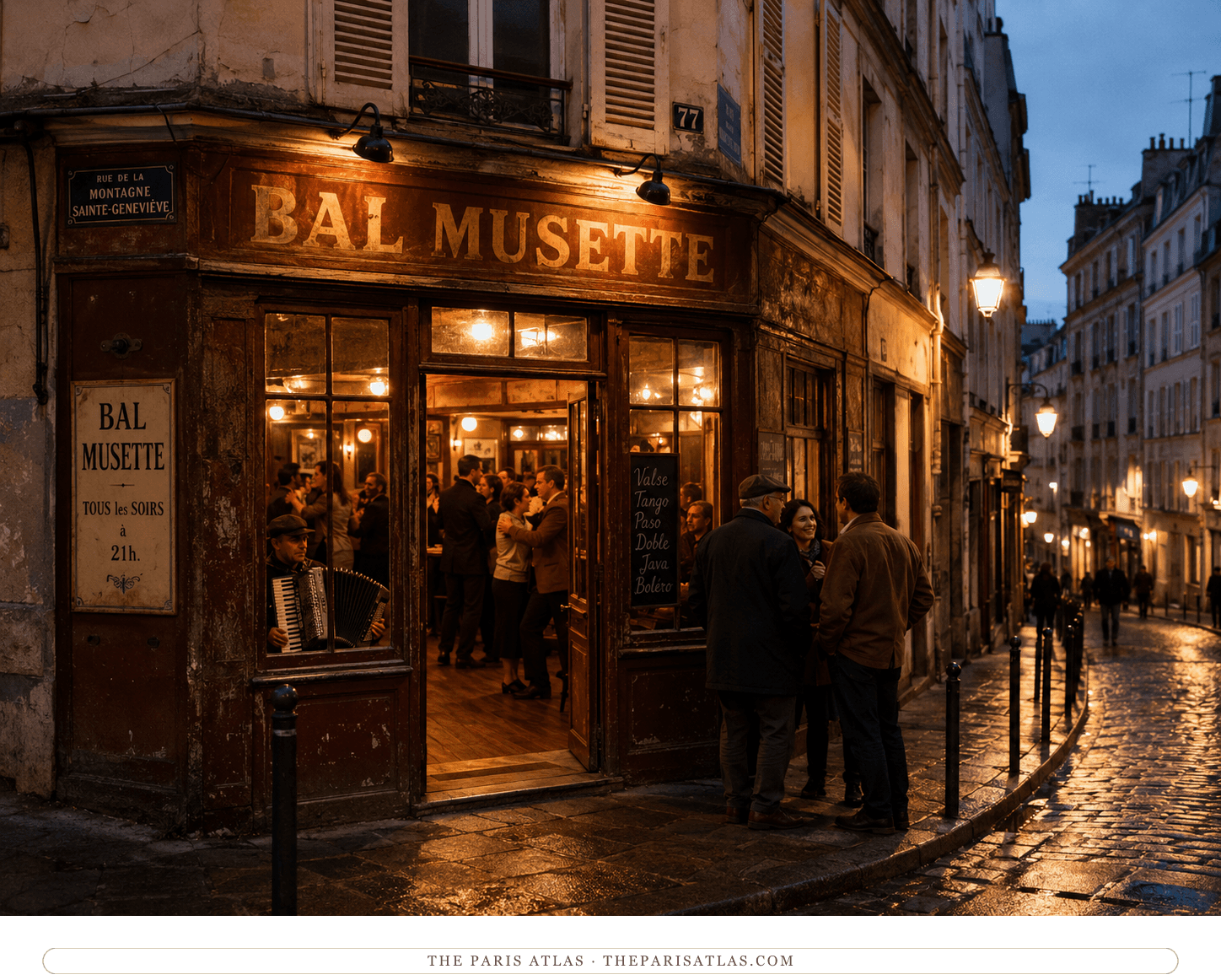
Nightclub · Latin Quarter (Panthéon)
A working-class accordion dance hall in the Latin Quarter — the neighborhood danced there most nights, and the expatriate crowd borrowed it on Mondays.
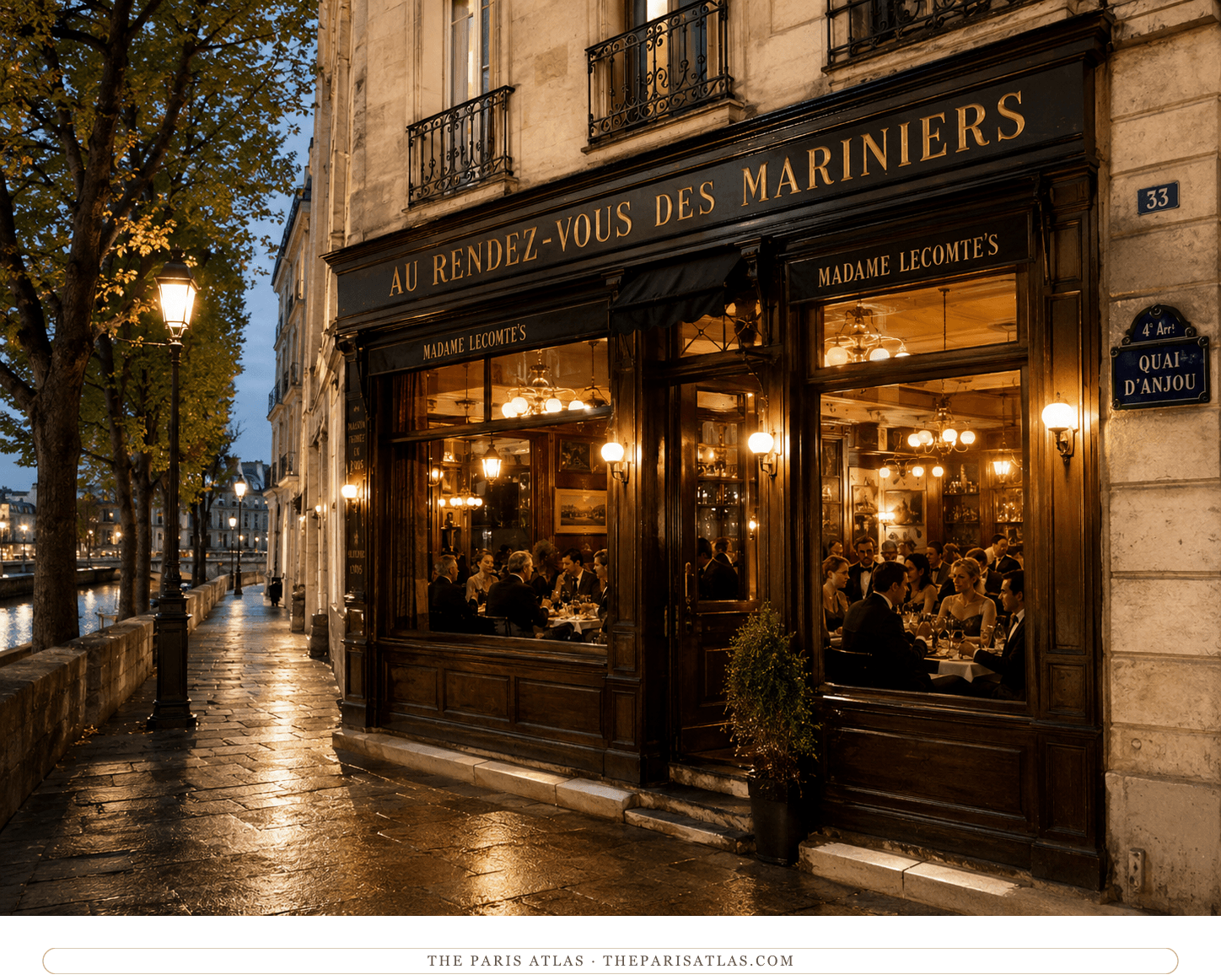
Restaurant · Île Saint-Louis
The riverside table on the far side of the Île Saint-Louis — wonderful food, Madame Lecomte at the door, and a forty-five-minute wait since the Americans found it.
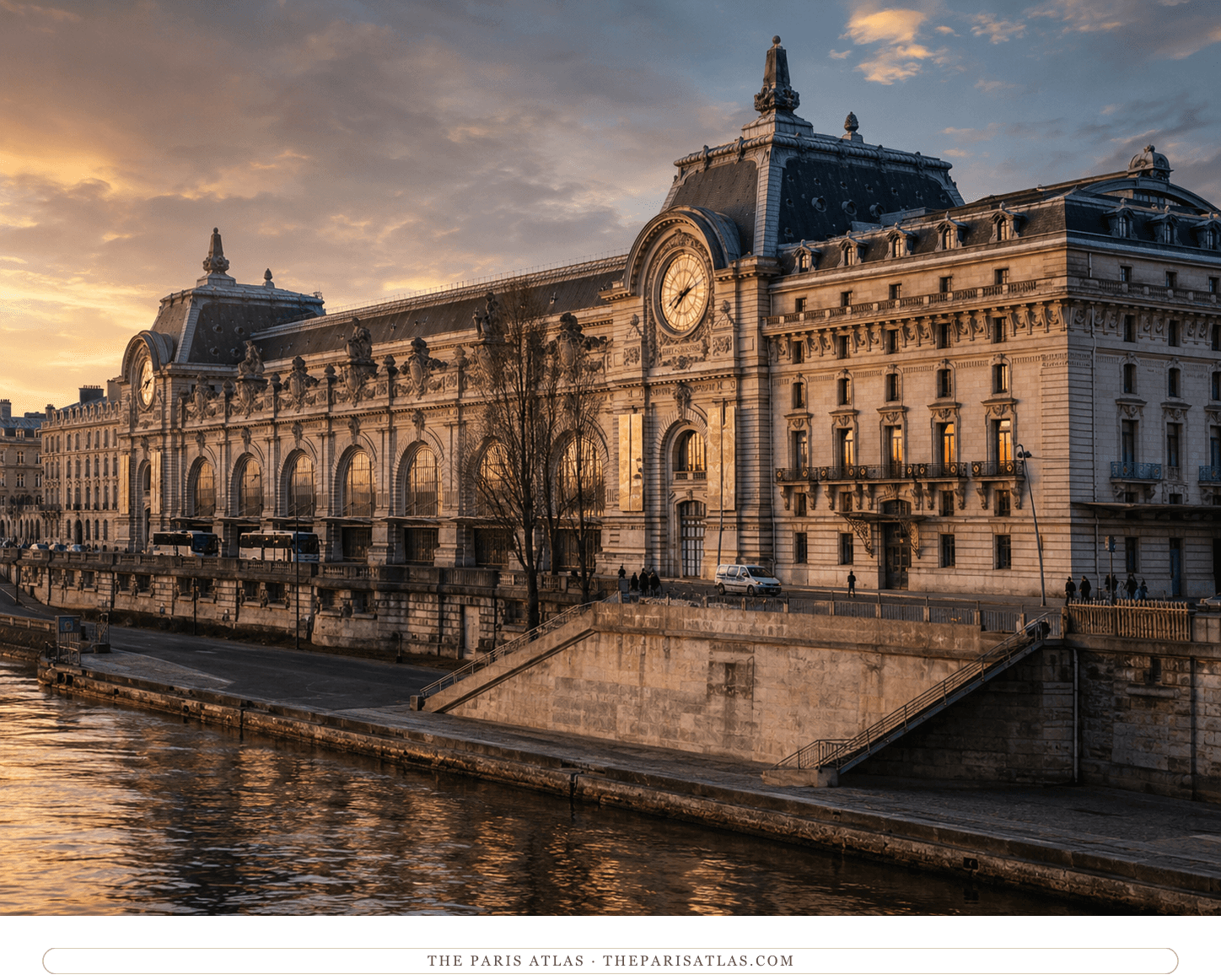
Railway station · Faubourg Saint-Germain
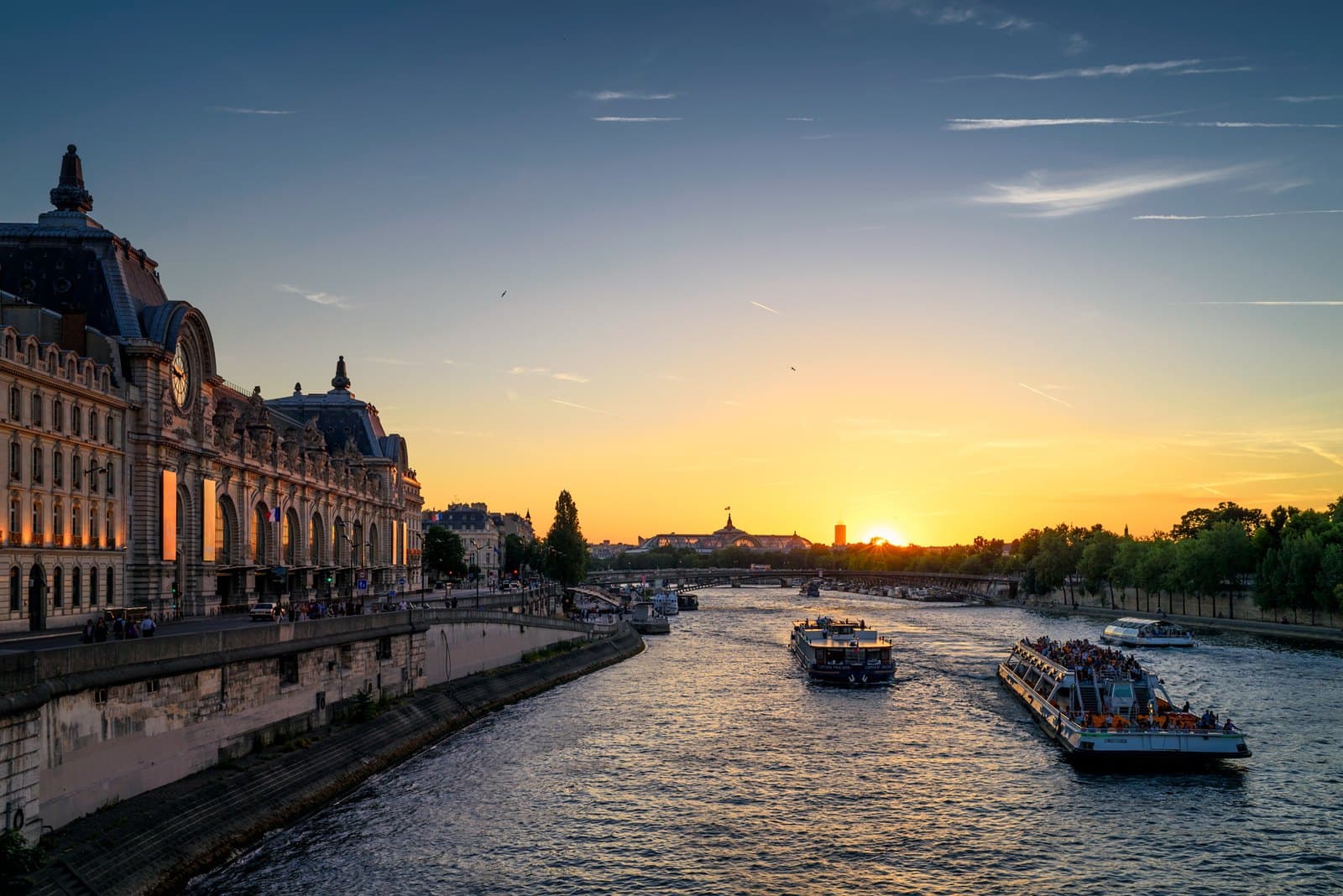
The Beaux-Arts terminus on the Seine where Jake Barnes and Bill Gorton, in Ernest Hemingway's The Sun Also Rises, board the morning train south toward Spain — today the Musée d'Orsay.
Cinema
One film at a time, researched like the books — who made it, where it premiered, and how it survives in restoration.

Napoléon vu par Abel Gance
Abel Gance's biography of Bonaparte runs from a schoolyard snowball fight to the Italian campaign, filmed with cameras strapped to horses, swung on pendulums, and thrown like snowballs. It ends in Polyvision: three projectors opening the screen into a triptych, two years before the talkies made its inventions orphans.
Curated collections
Every list explains every pick — no title dumps, no algorithms.
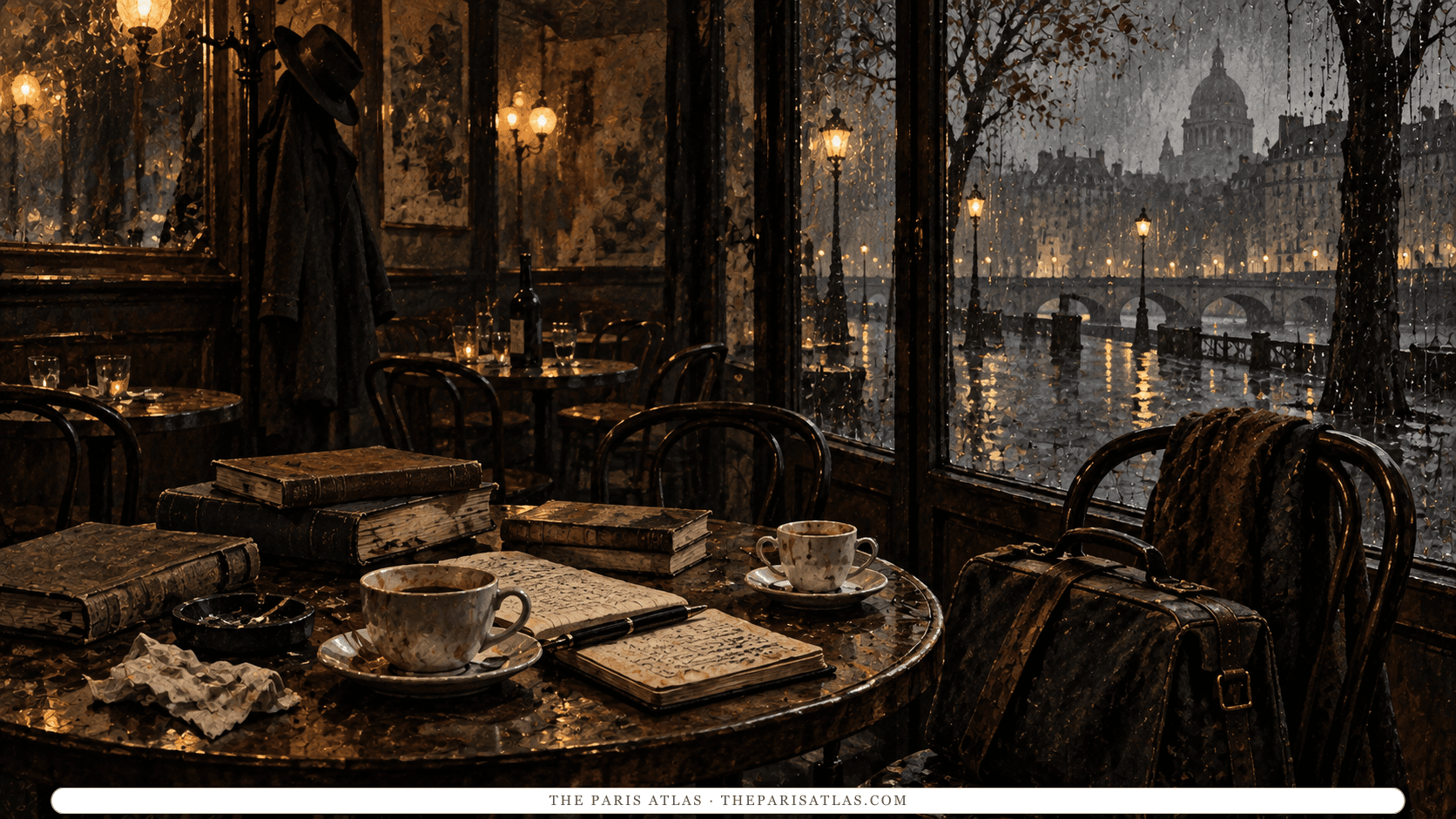
8 books
Eight books that hold the whole era — the wound, the party, and the hangover.
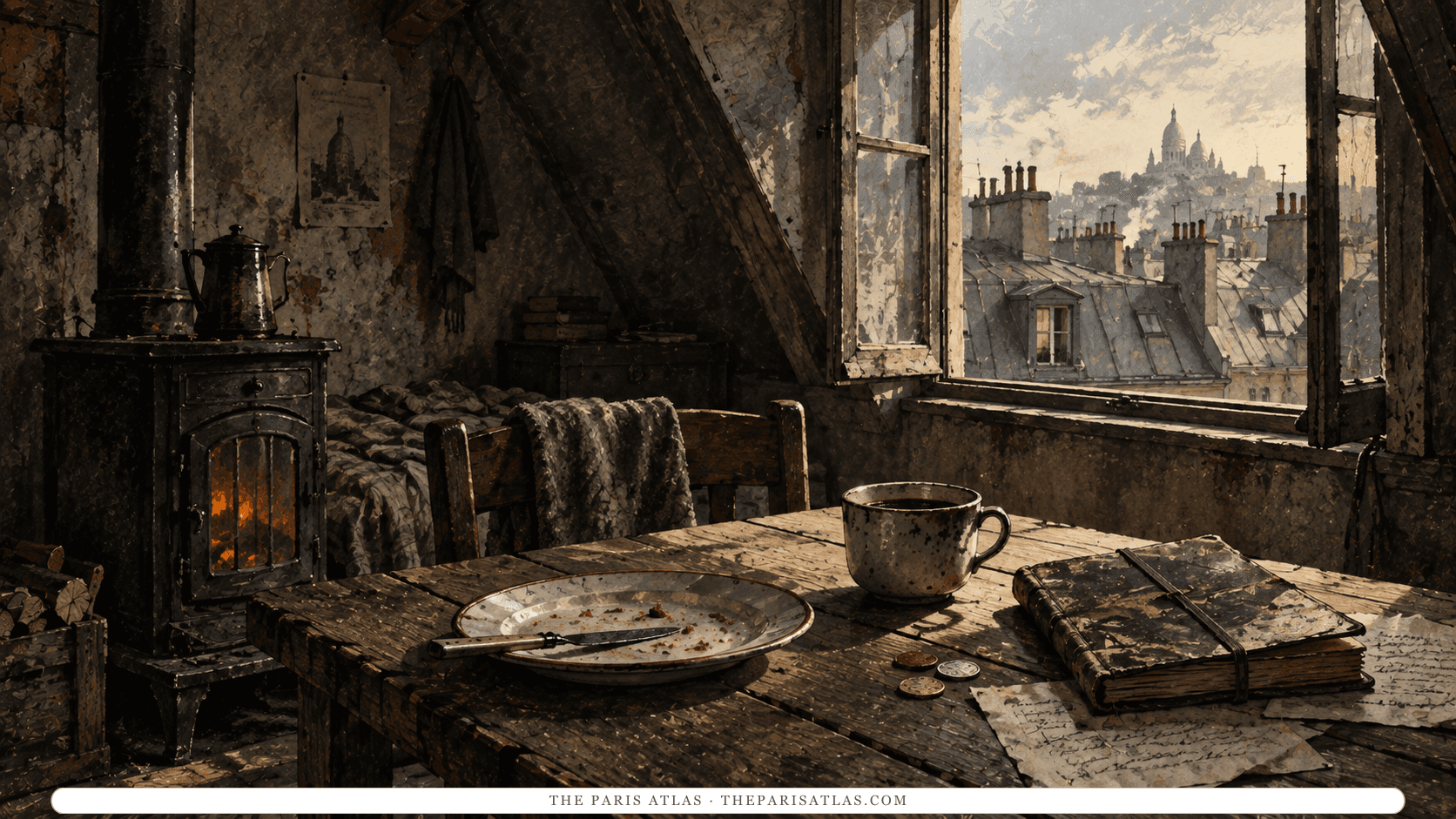
8 books
The expatriate city as it was actually lived — cafés, cold flats, and hunger as a muse.
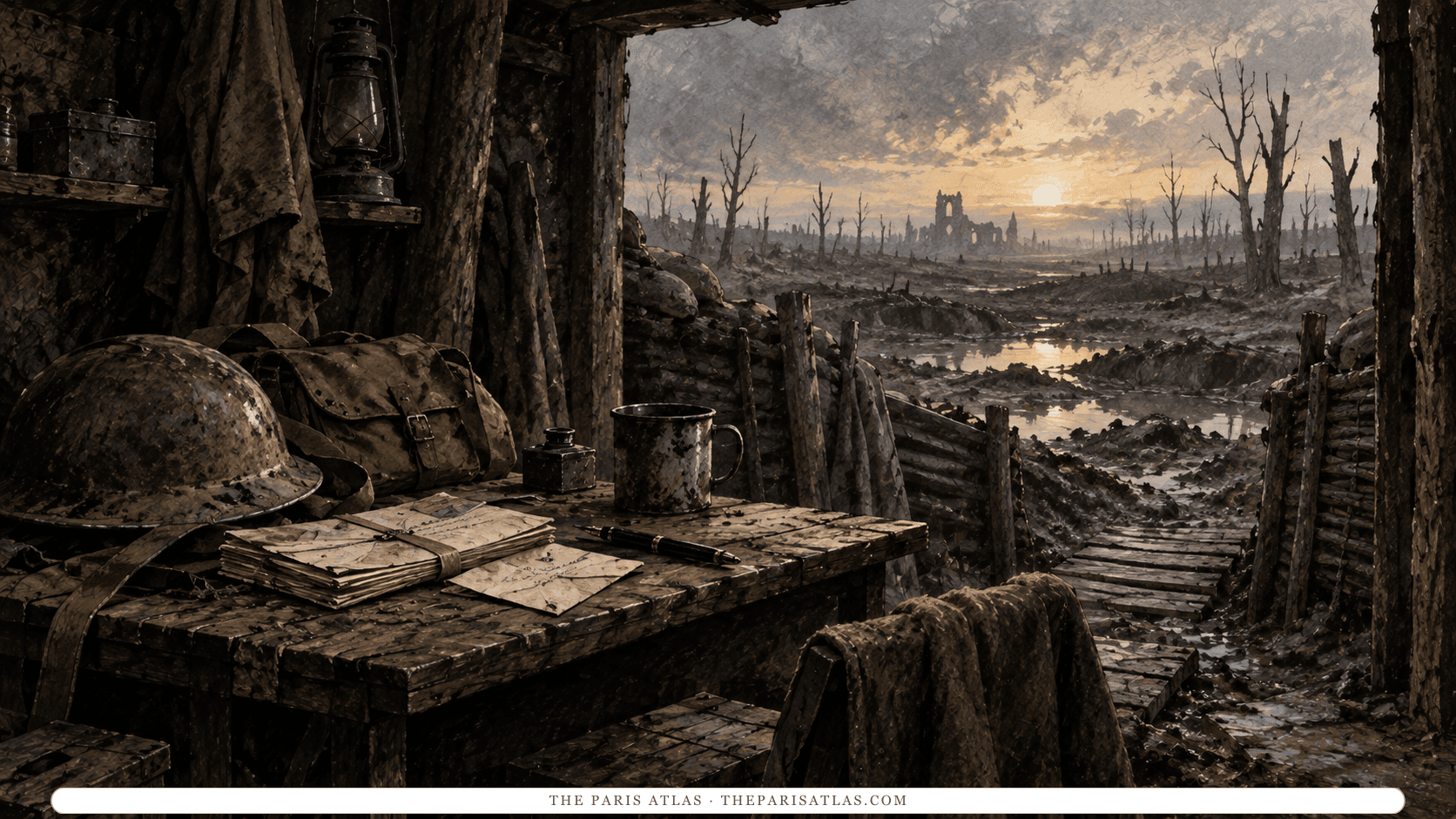
6 books
The Great War as the generation's authors actually wrote it — grief, fury, and the end of the big words.
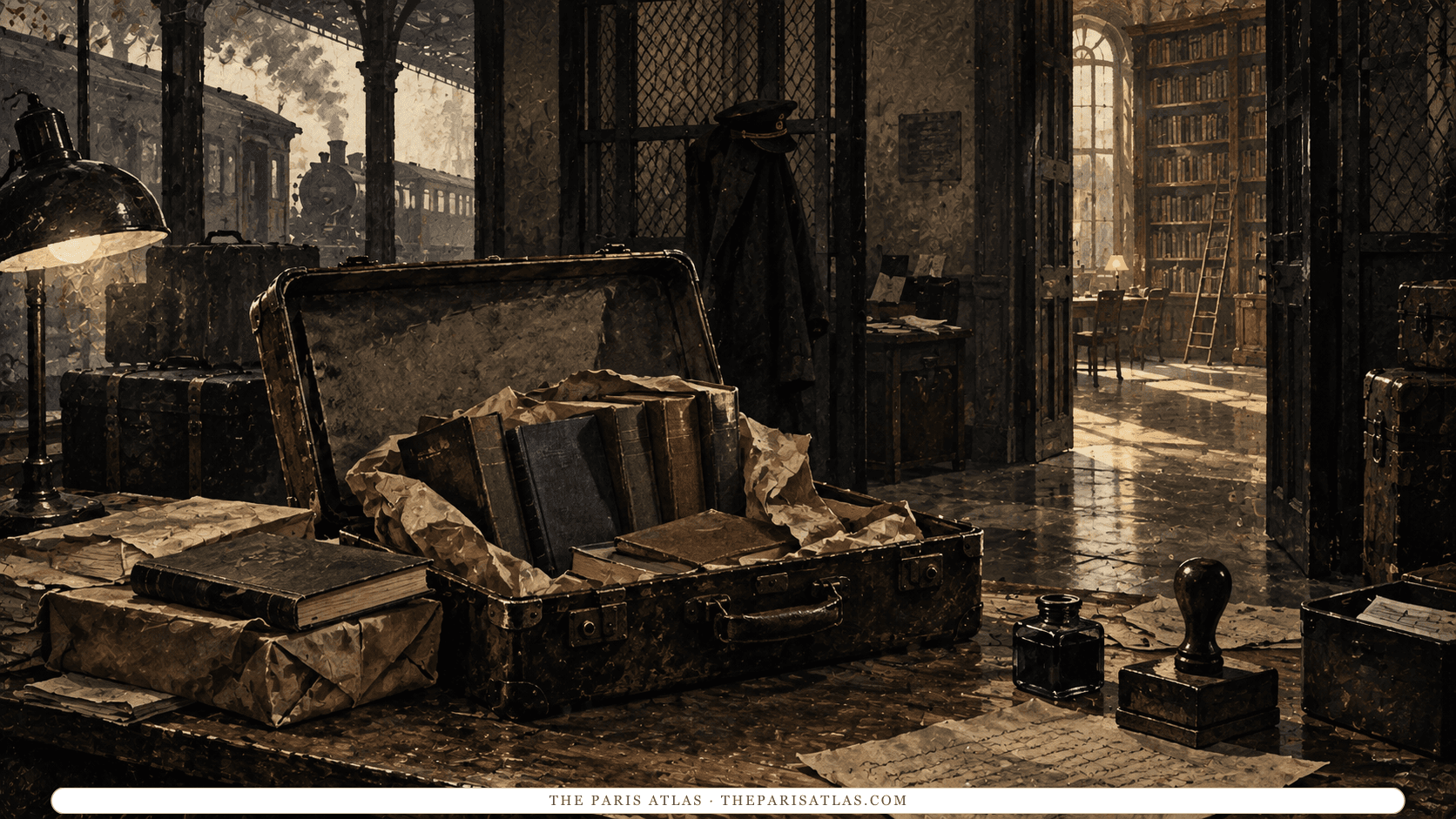
6 books
The books customs officers seized and professors now assign — the era's contraband shelf.
The voices
Four of the 163 writers with a page — introduced honestly, difficult parts included.
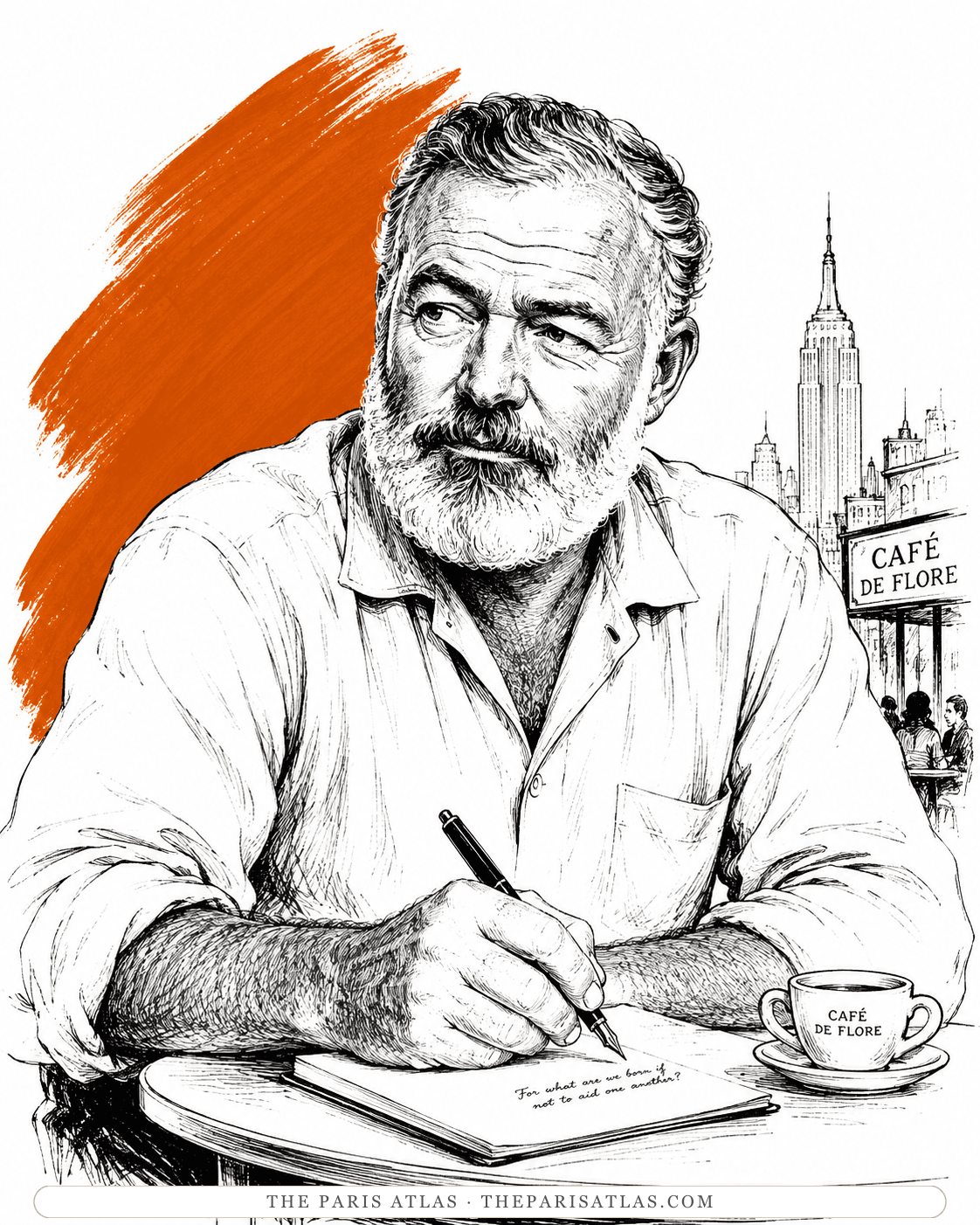
American
Author of The Sun Also Rises and A Moveable Feast; his pared-down style, developed in 1920s Paris, became the most imitated in American prose.
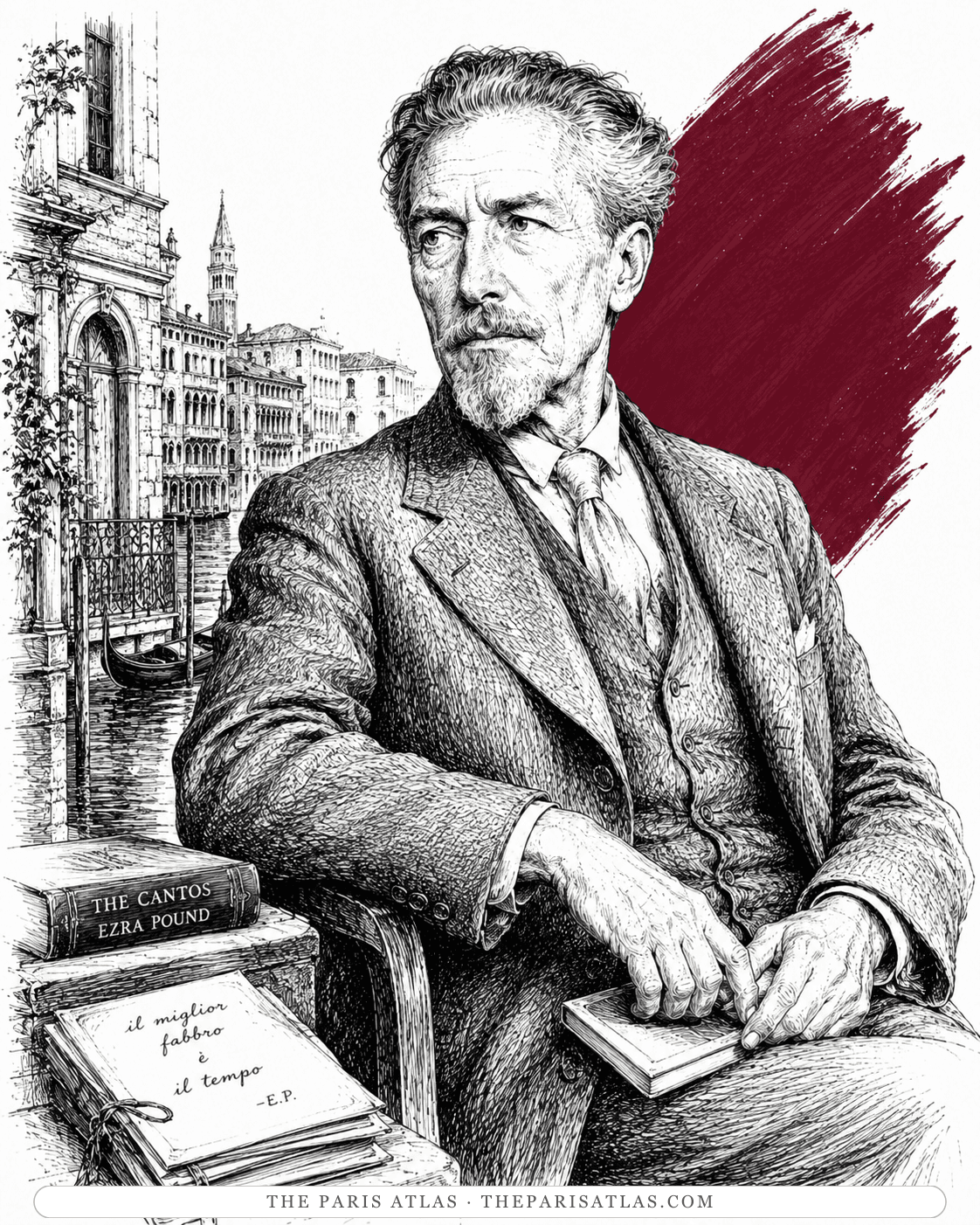
American
Modernism's impresario — editor of Eliot, publisher of Joyce, Hemingway's line-cutter, and the era's most brilliant, most compromised poet.
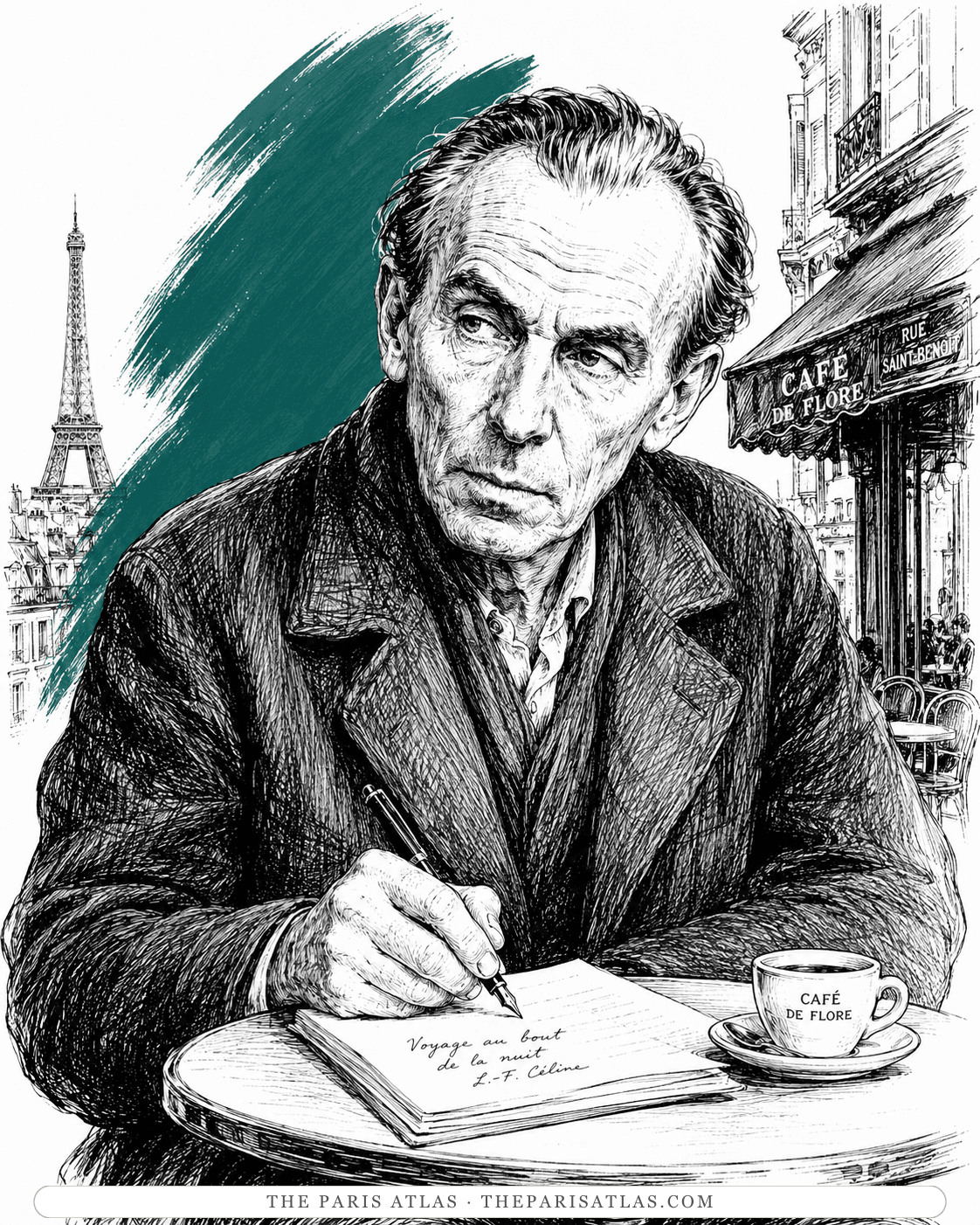
French
The doctor of the Paris slums who wrote the century's blackest, funniest novel — and changed the sound of French prose.
American
The Brooklyn dropout who arrived in Paris broke at thirty-eight and wrote the exuberant, banned books that ended American censorship.
Never start book three first
Where to begin, what order to follow, and which books are skippable — we keep the guides current.

Meet an author
American · The Brooklyn dropout who arrived in Paris broke at thirty-eight and wrote the exuberant, banned books that ended American censorship.
Henry Miller arrived in Paris in 1930 as a nearly forty-year-old failed writer: no money, no prospects, an unstable marriage, drawers full of unpublished pages, and, by his own account, the happiest years of his life ahead of him. He cadged meals on a rotating schedule of friends, slept where offered, and wrote it all down.
Start with this book
The one that changed the law and the form. Read it for the first forty pages alone — the greatest overture in autofiction — and know in advance that it earns its content notes.
Books like
Explore hand-picked recommendations based on voice, mood, setting, characters, themes, and style.
8 hand-picked recommendations
Ernest Hemingway
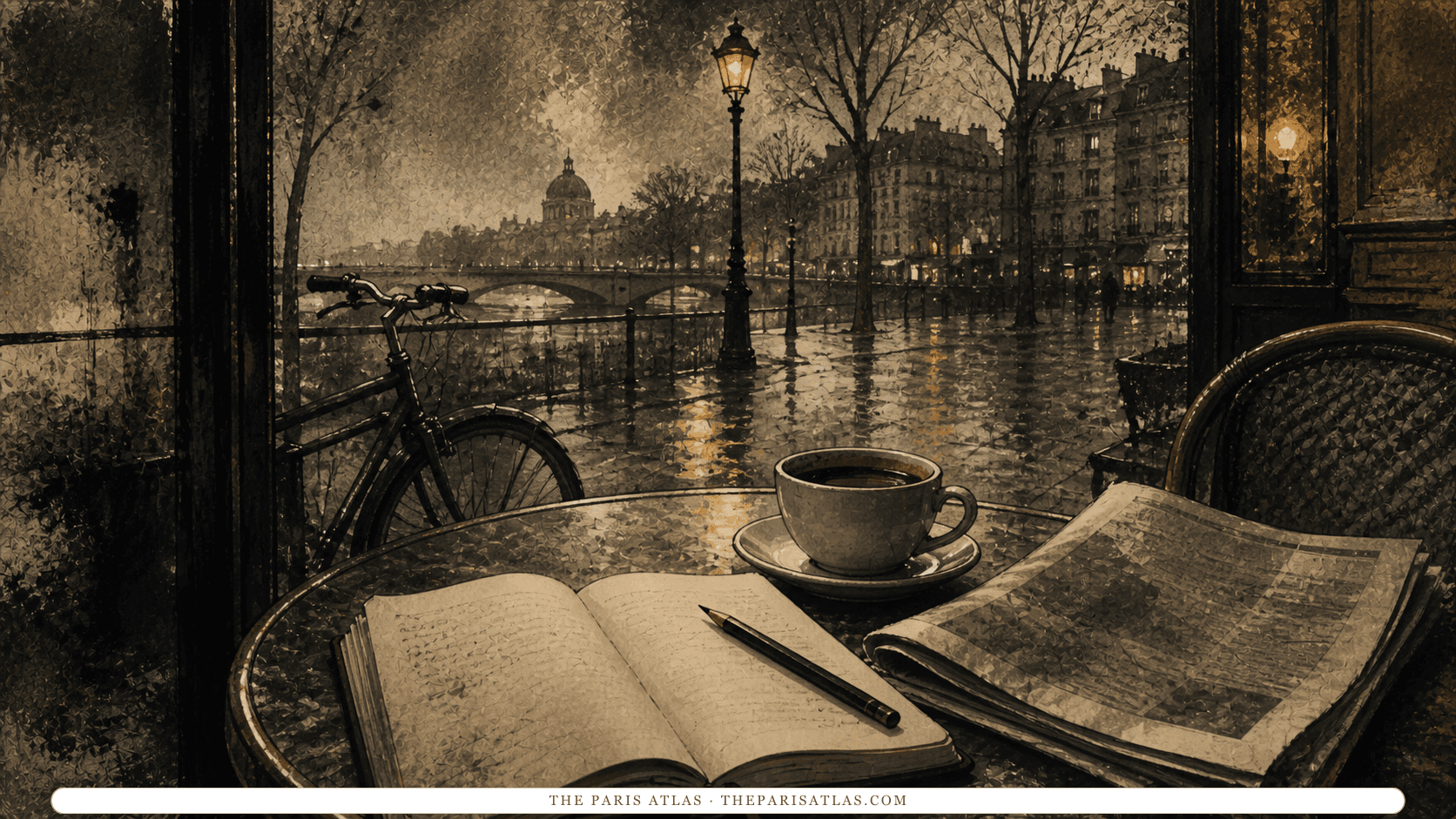
8 hand-picked recommendations
Ernest Hemingway
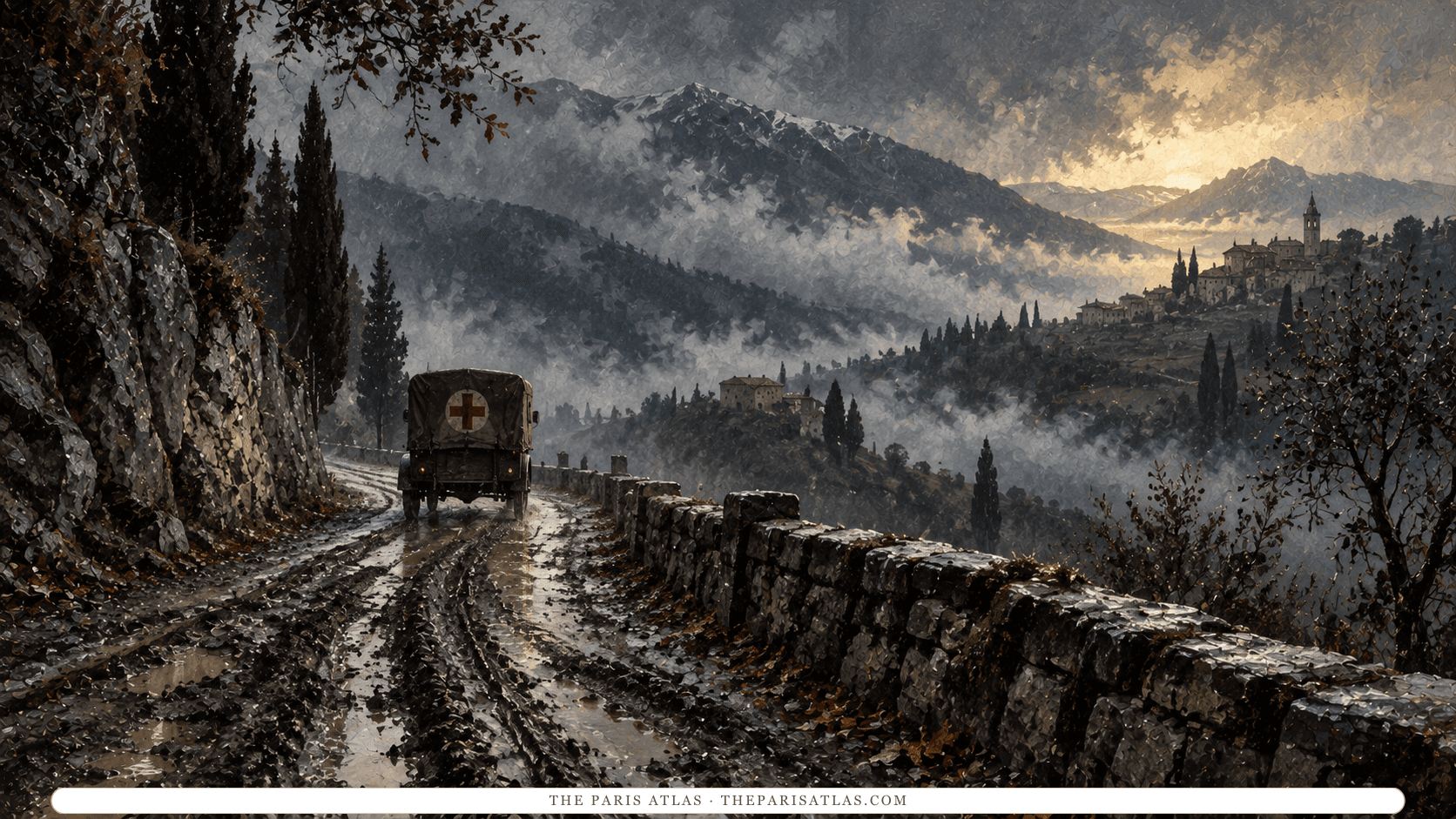
16 hand-picked recommendations
Ernest Hemingway
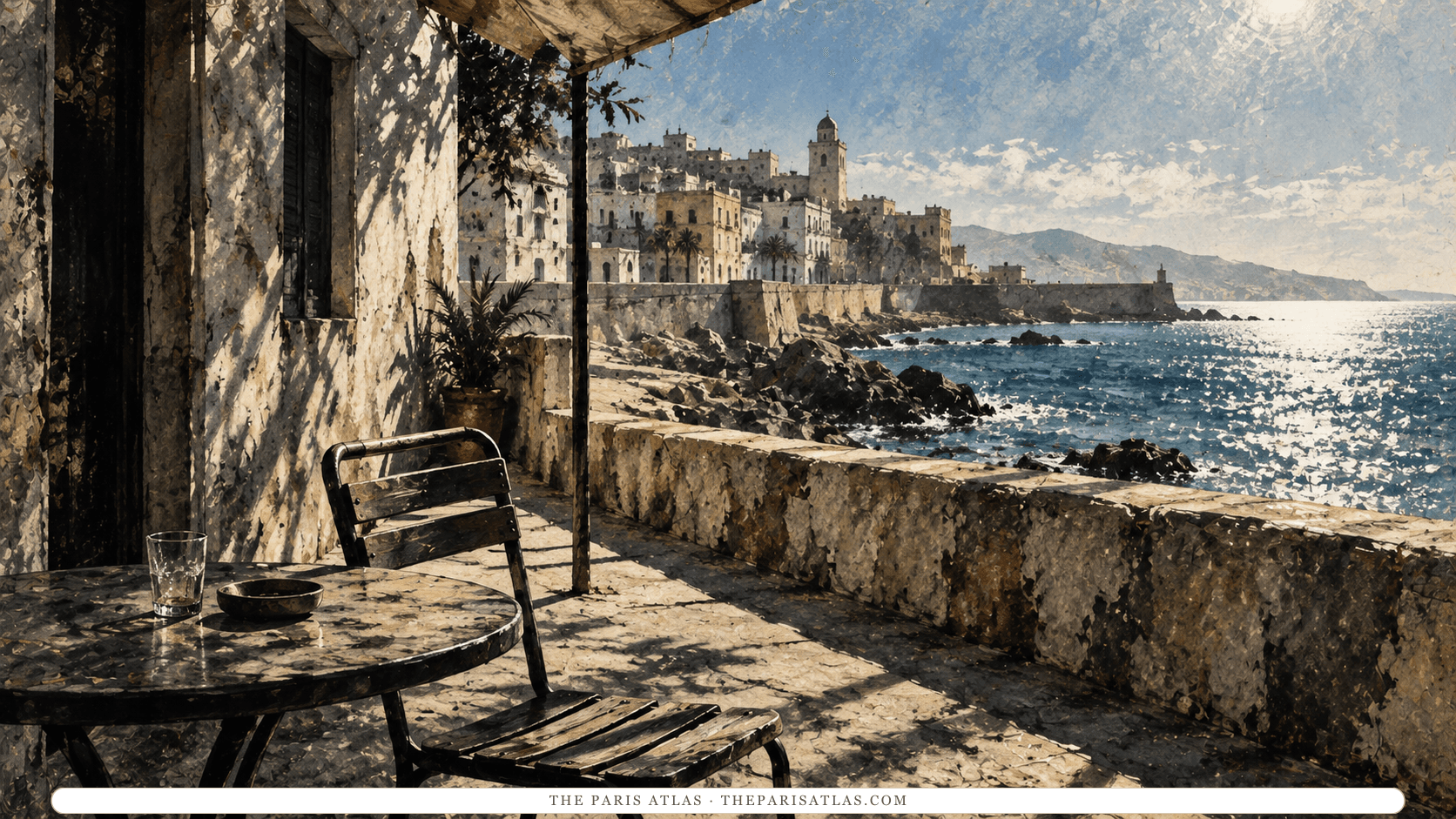
20 hand-picked recommendations
Albert Camus
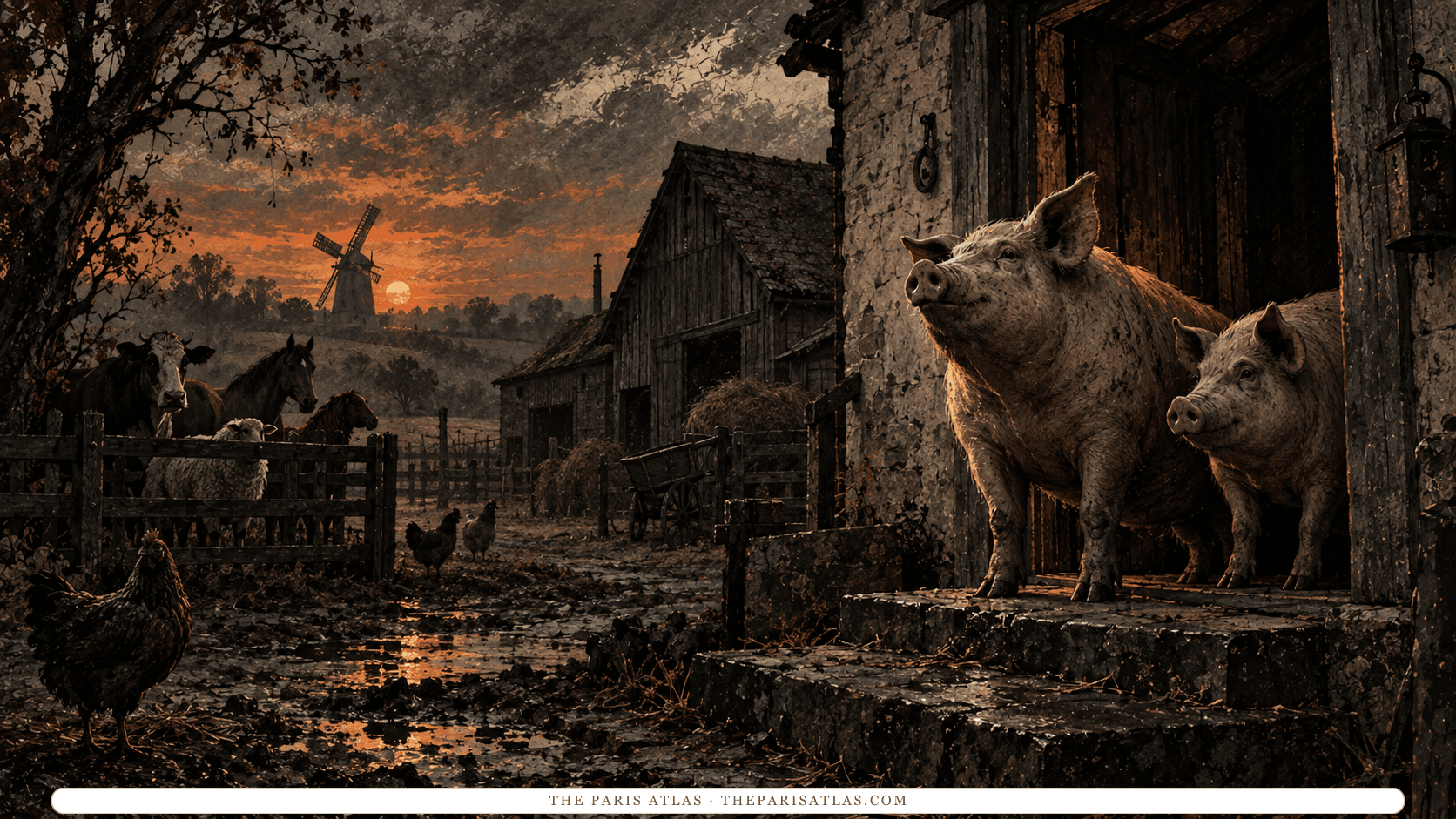
15 hand-picked recommendations
George Orwell
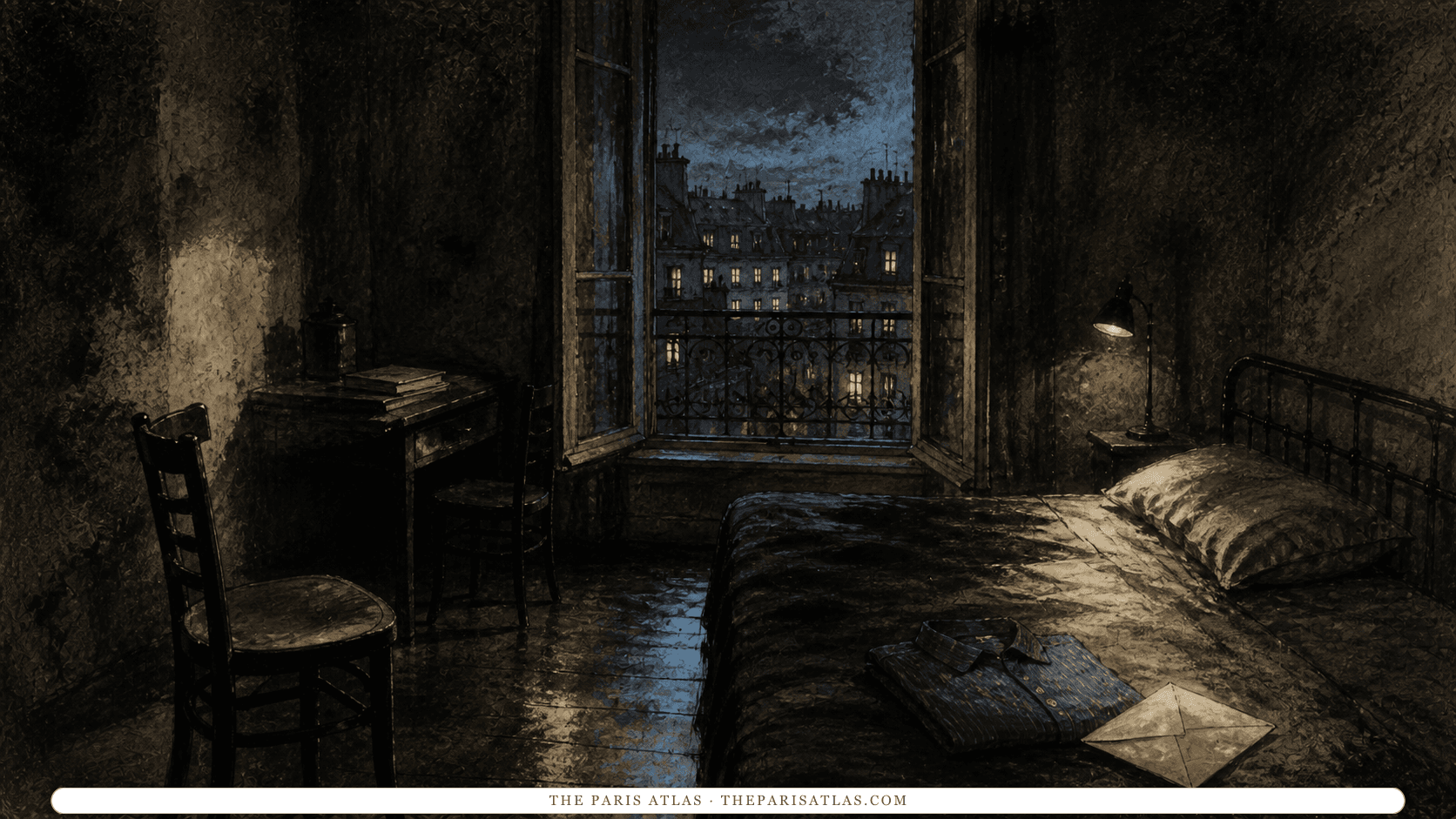
15 hand-picked recommendations
James Baldwin
From the journal
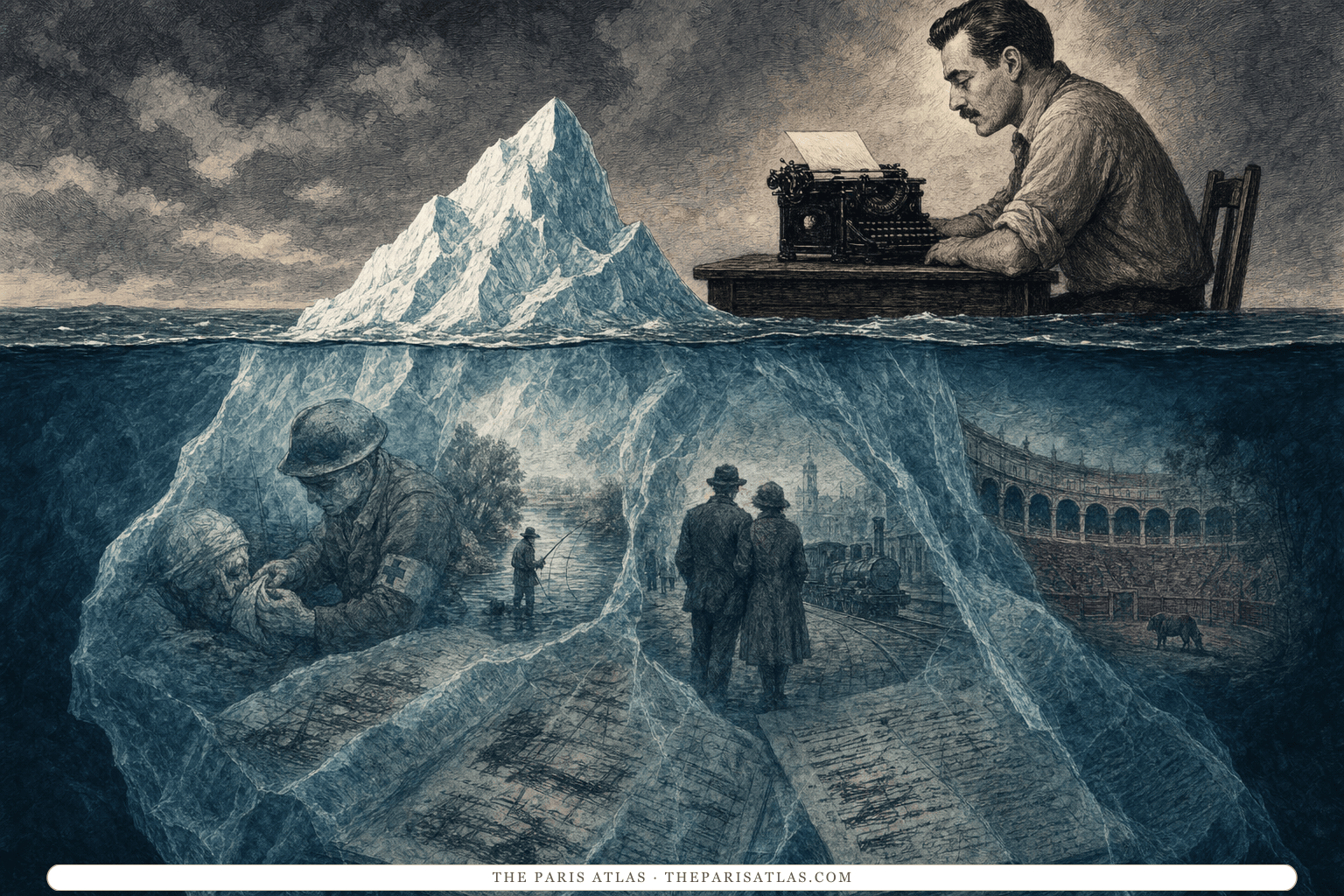
Essays
The iceberg theory is writing by informed omission: most of the writer’s knowledge stays below the surface, while selected actions and details let the reader feel it.
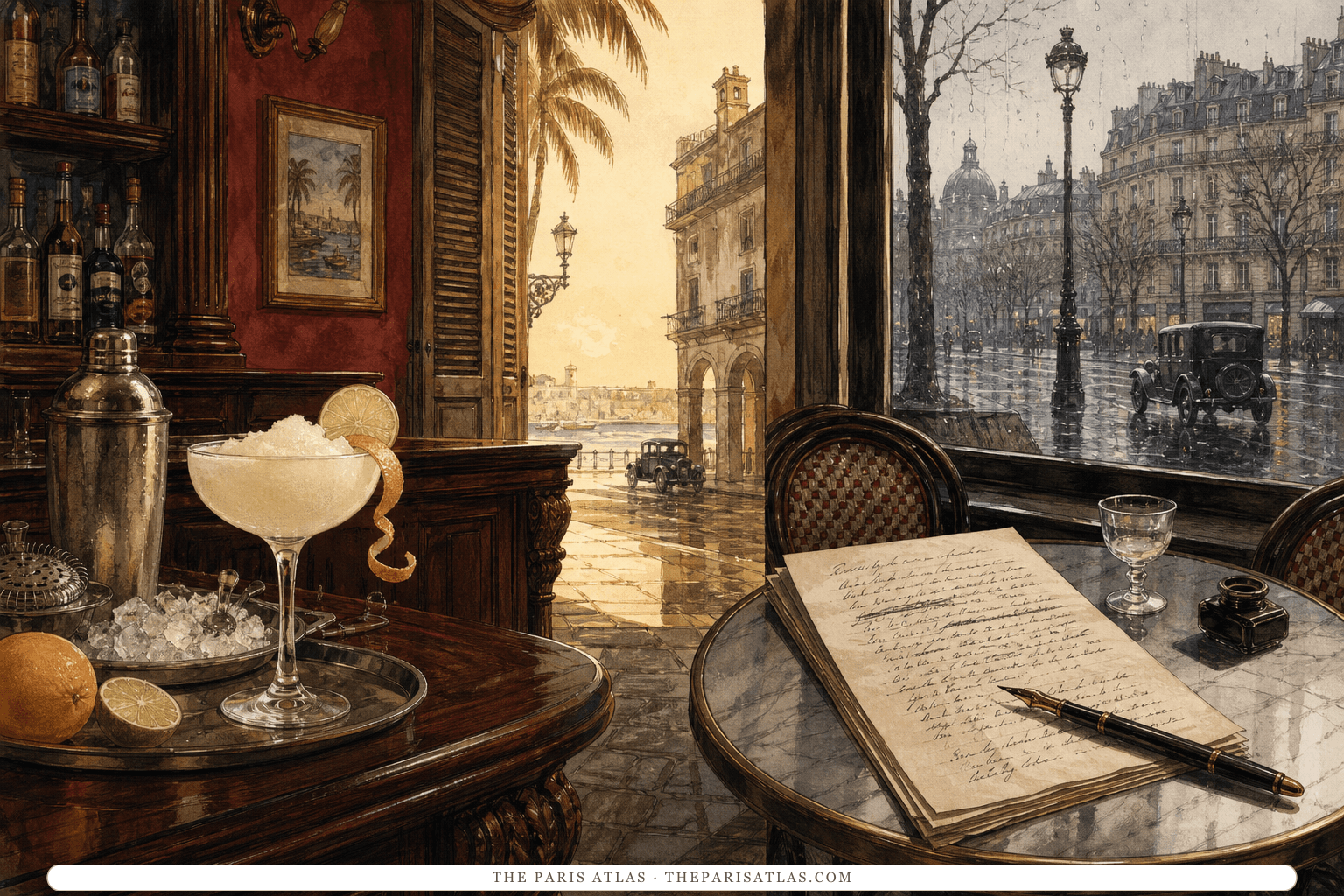
Real history
The Hemingway daiquiri grew from Ernest Hemingway’s real association with El Floridita in Havana, but the name now covers several different drinks.
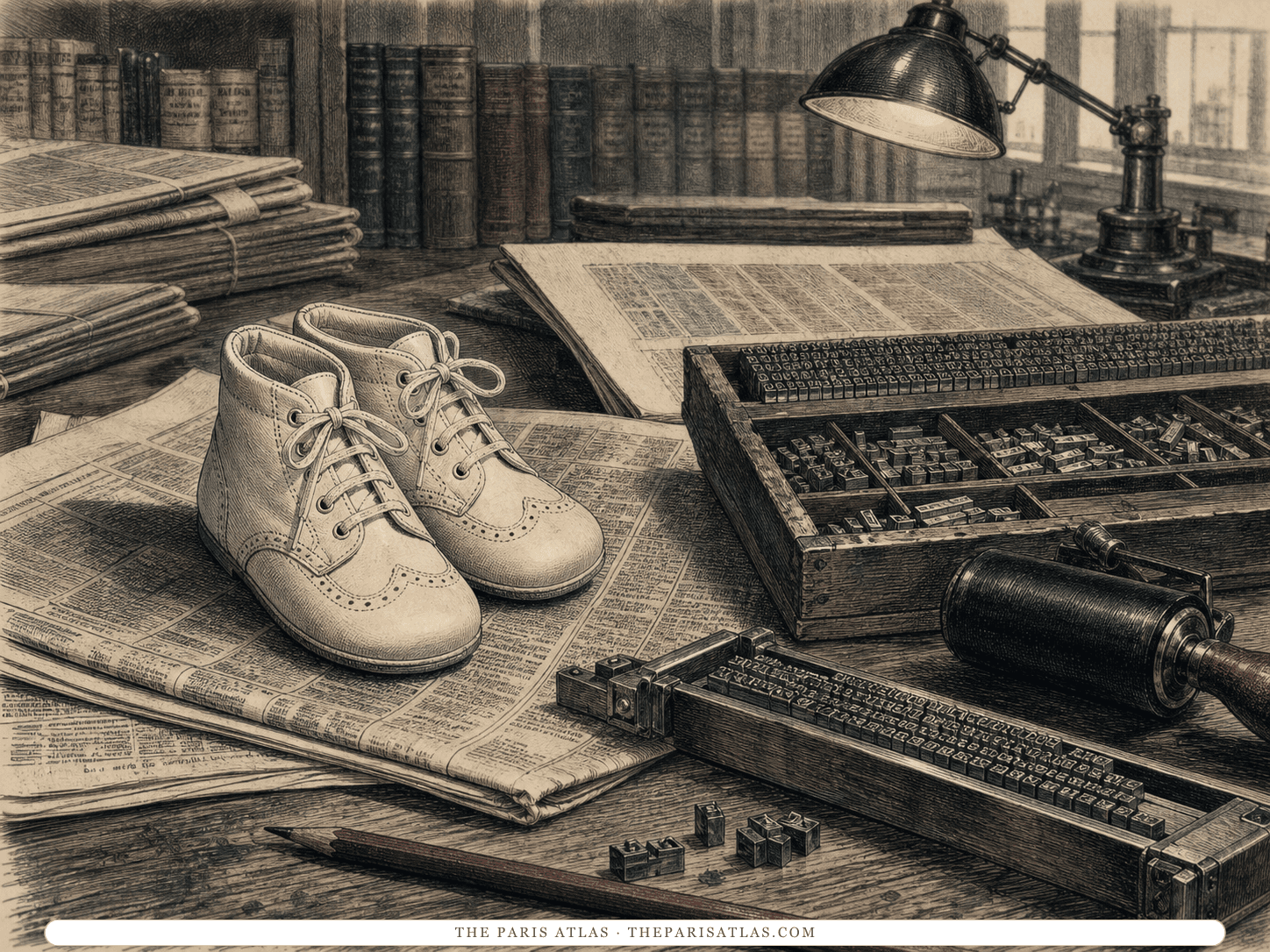
Real history
No manuscript, letter, interview or person who knew Ernest Hemingway connects him to the baby-shoes story. Here is what the surviving evidence shows.
This week's featured story
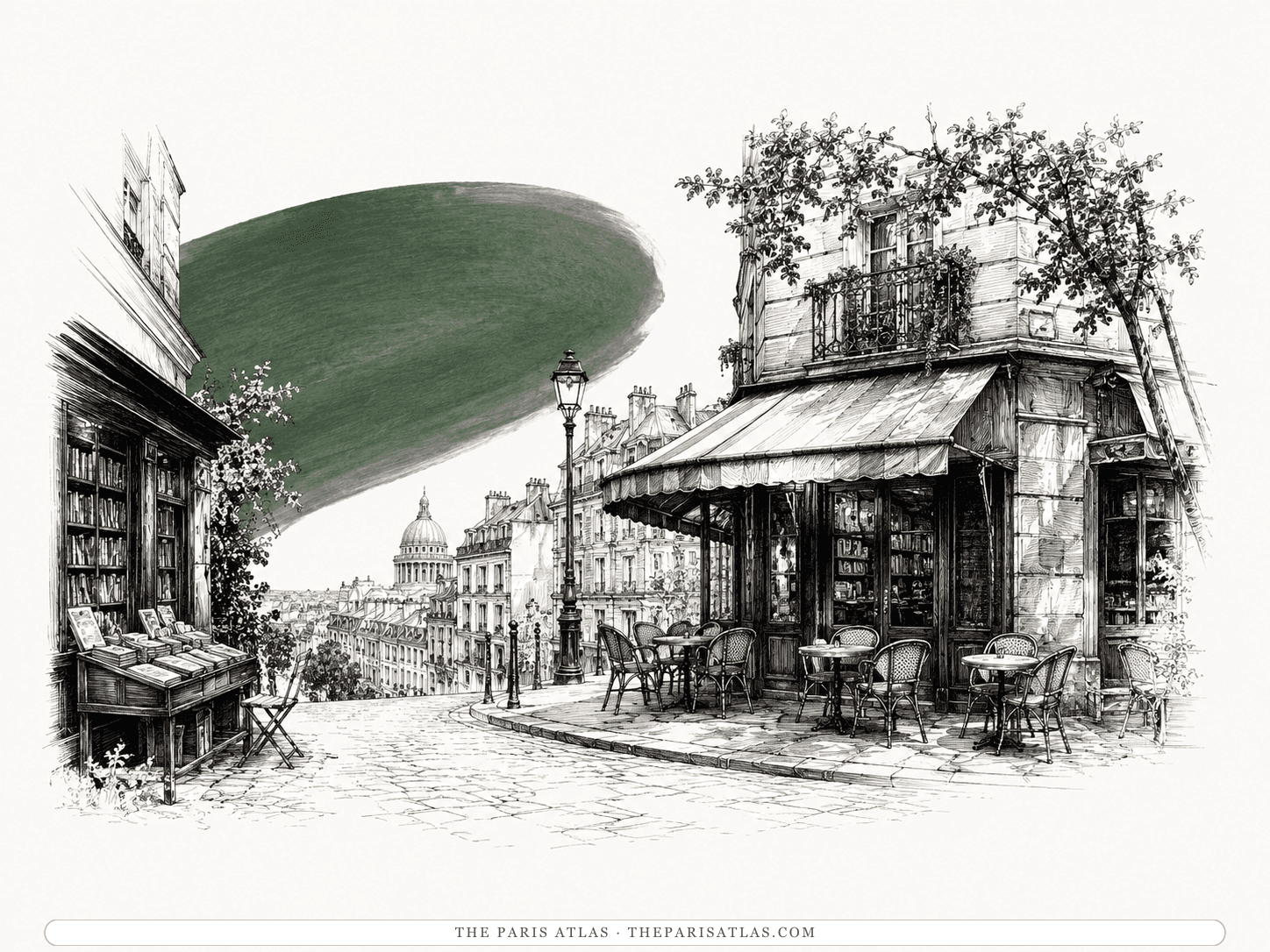
Real history
Every address in Hemingway's memoir checks out — the flat, the salon, the bookshop, the printing press. A walking tour of the city where modern literature was manufactured, and the economics that made it possible.
Read the storyGuides
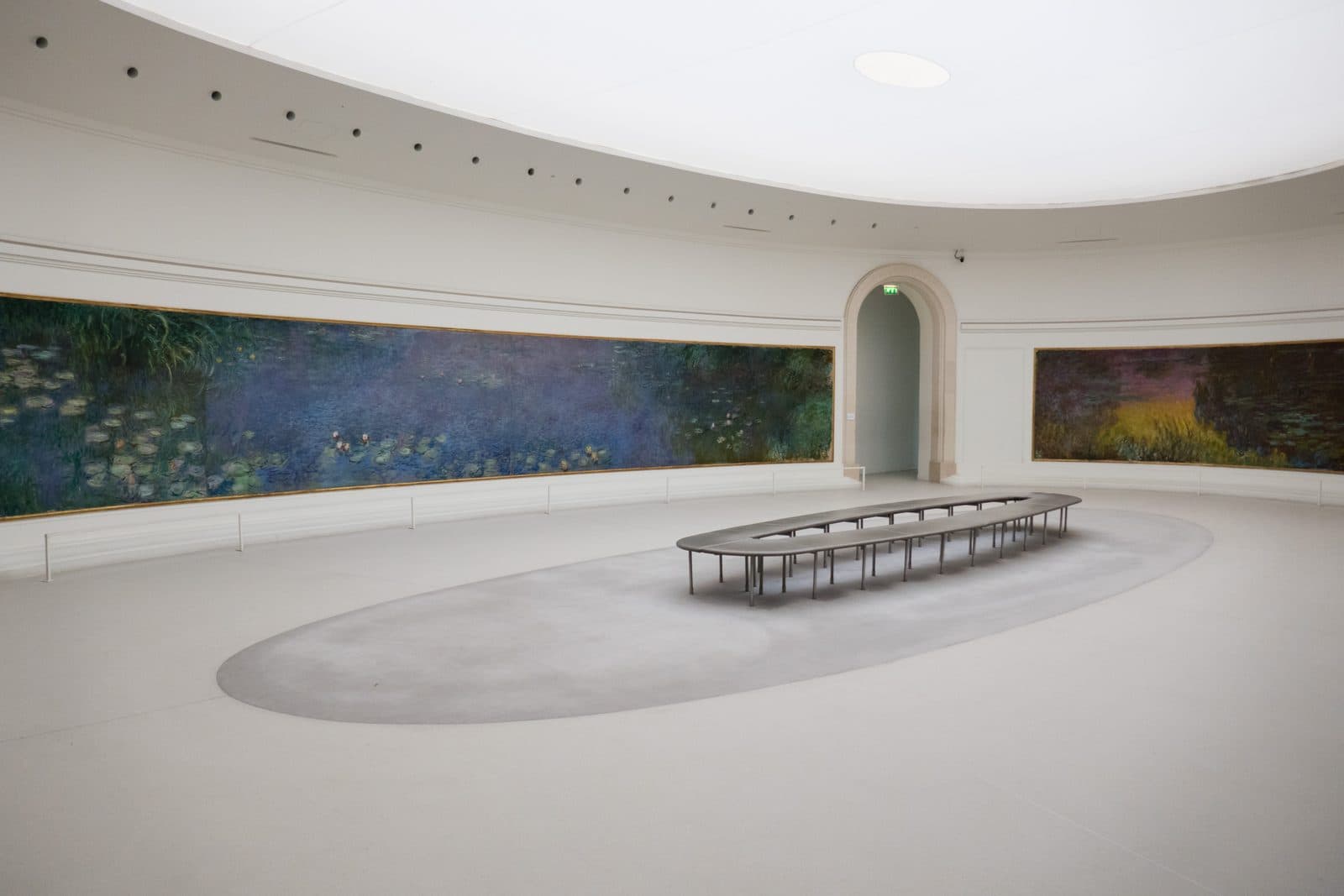
The pass costs €85, €105, or €125 and covers more than fifty museums and monuments. Since January 2026 some of the biggest ones charge more if you live outside Europe, but the pass still costs everyone the same.
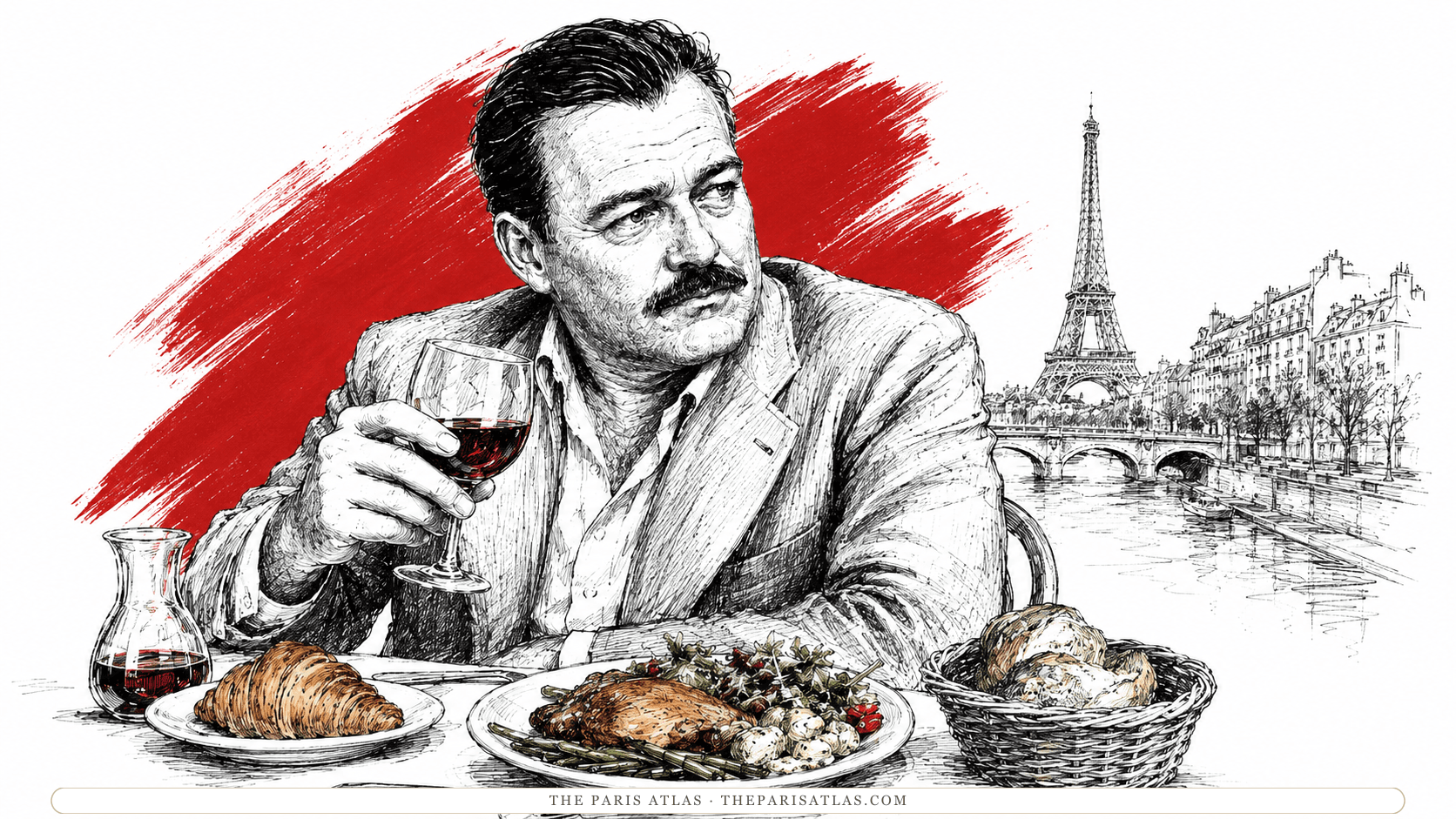
Eight meals carry Jake Barnes from a brioche in Paris to a suckling pig in Madrid. Most have disappeared. One is still roasting.
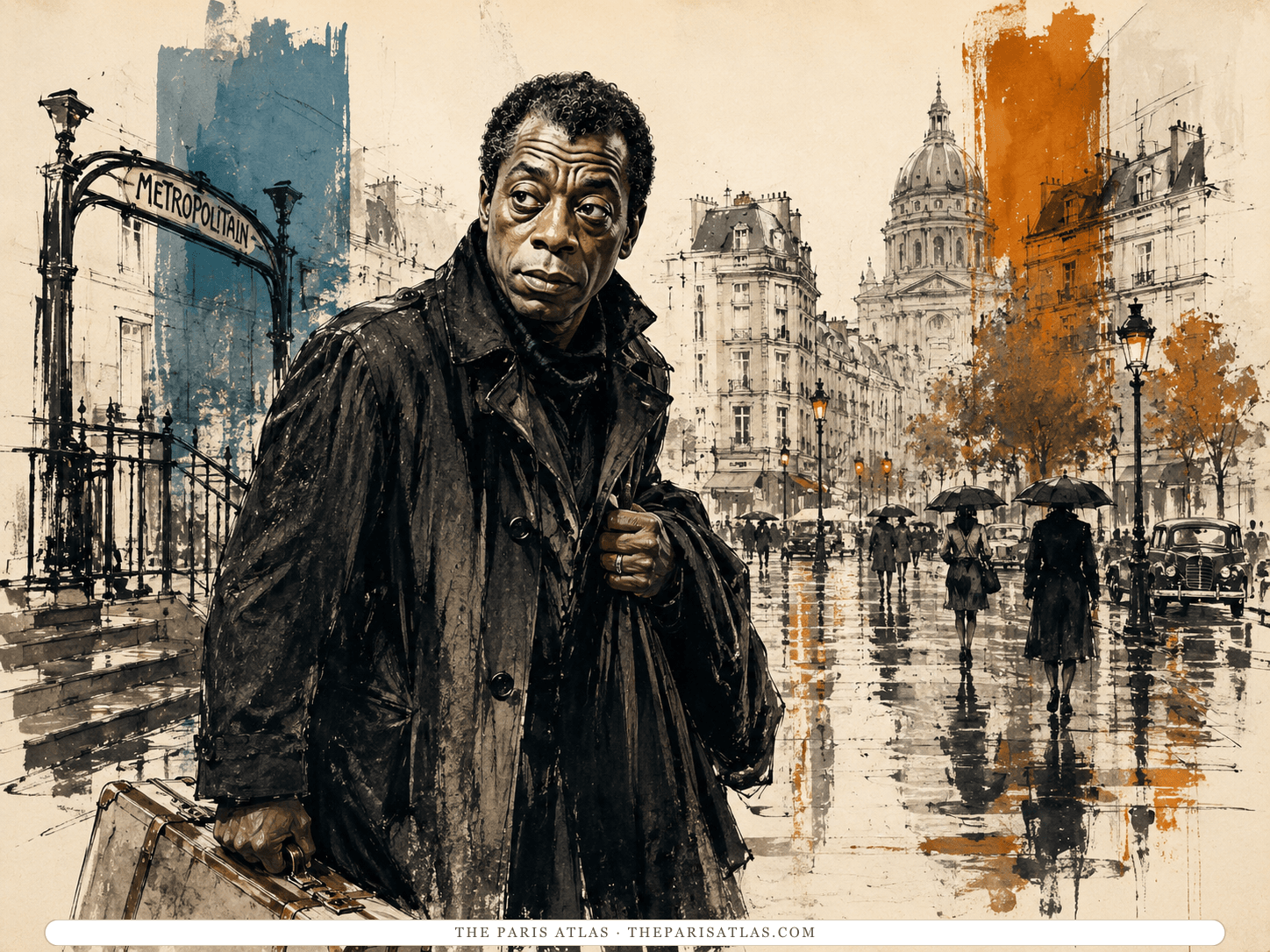
James Baldwin arrived in November 1948 with forty dollars, and for nearly a decade his Paris fit inside one Left Bank neighborhood: Saint-Germain-des-Prés, its hotels, cafés and clubs. You can walk it all in an afternoon.
Water Lilies room: Brady Brenot, 2017 · CC BY-SA 4.0 · cropped. Other guide images are Atlas illustrations.
Newsletter
New stories about art, literature and famous places around the world.