The Real Paris Behind A Moveable Feast
Every address in Hemingway's memoir checks out — the flat, the salon, the bookshop, the printing press. A walking tour of the city where modern literature was manufactured, and the economics that made it possible.
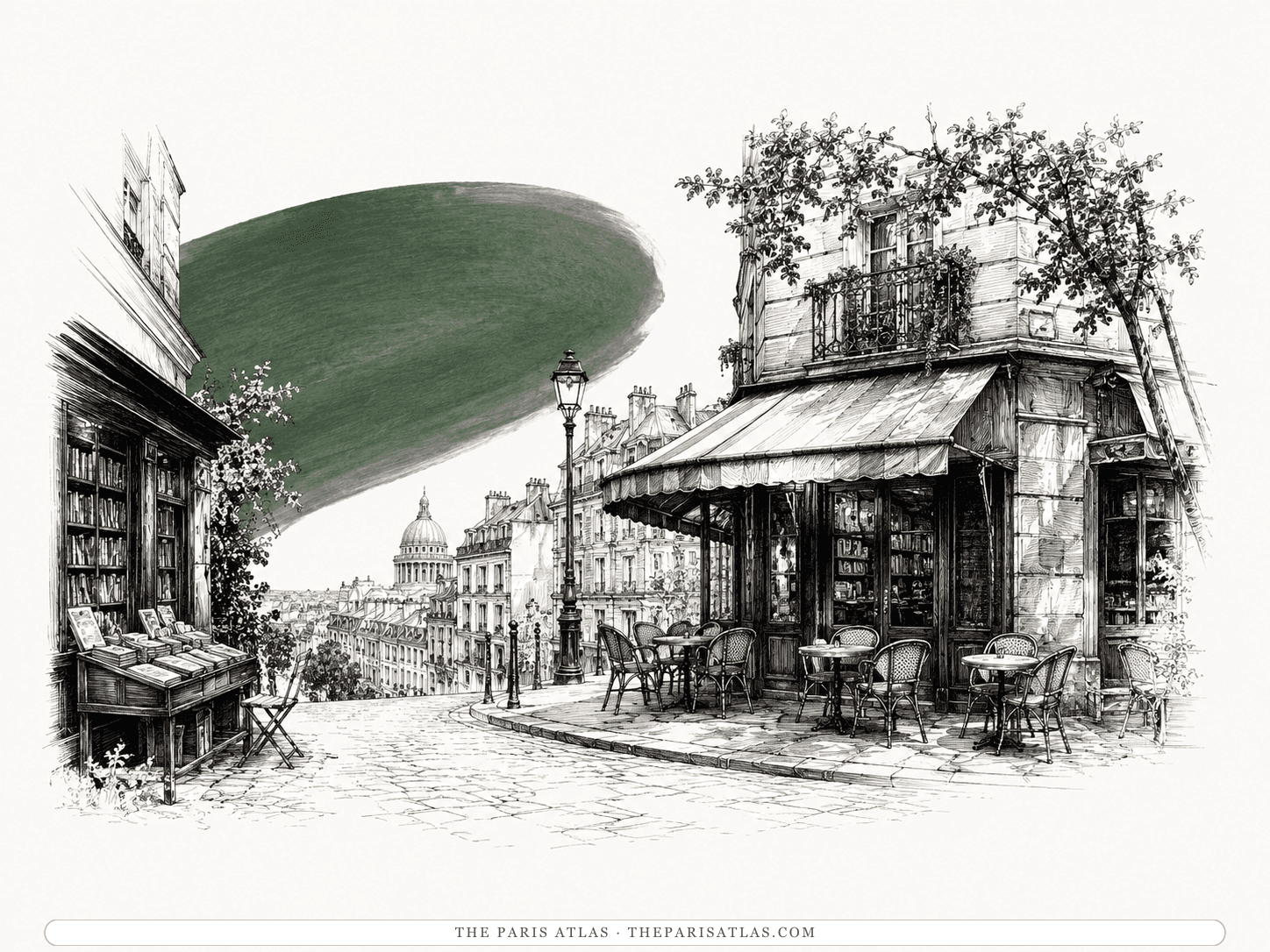
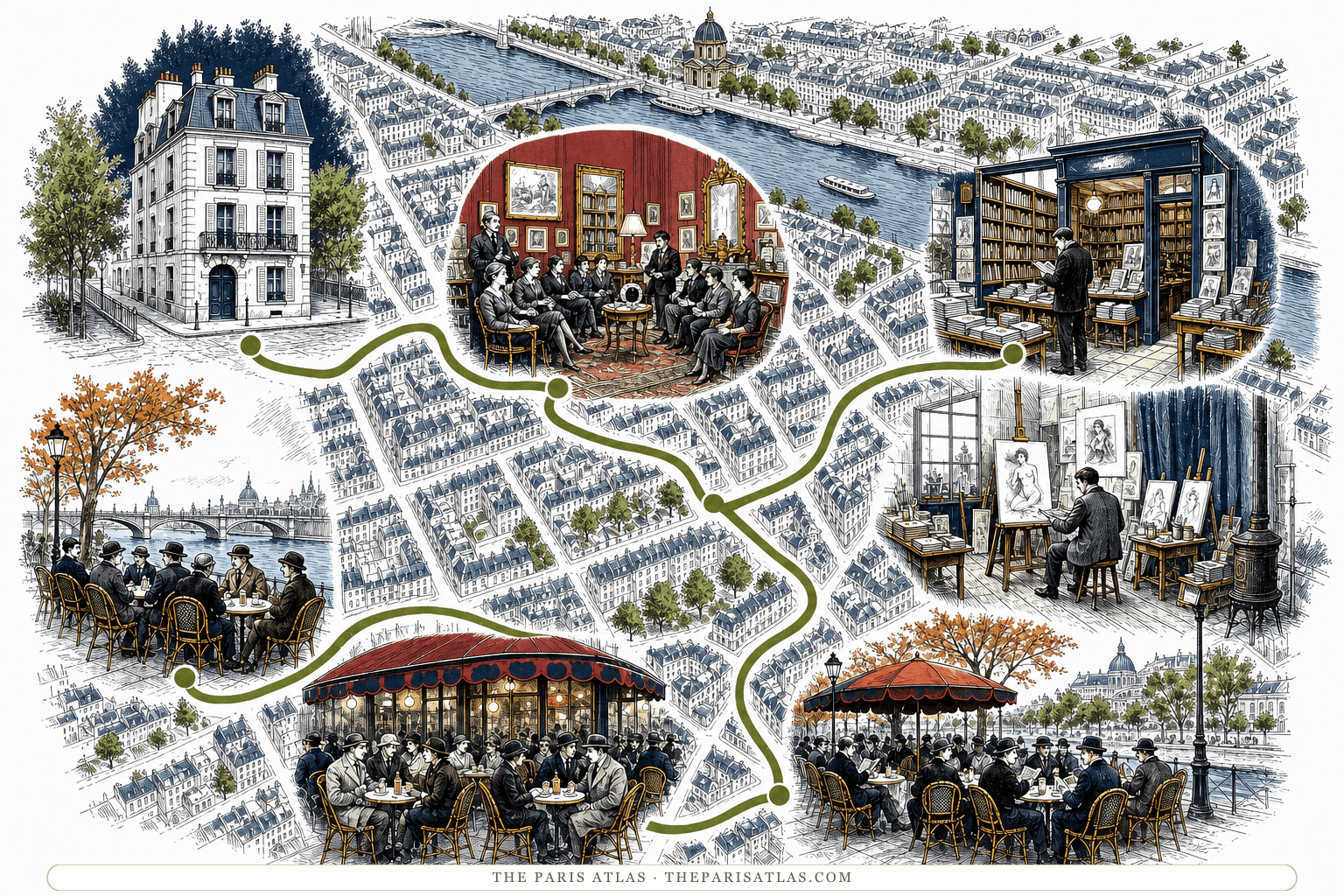
The mythology of 1920s Paris is so thick that it's worth stating the plain fact underneath it: the whole thing happened in about twenty minutes of walking. The flat where the Hemingways lived on next to nothing — 74 rue du Cardinal Lemoine, the address is on the building — sits a short walk from 27 rue de Fleurus, where Gertrude Stein and Alice B. Toklas ran the most consequential salon in modern art, and from the successive addresses of Shakespeare and Company, where Sylvia Beach lent books to writers who couldn't buy them and, in 1922, published a novel called Ulysses that no respectable house would touch.[1][2][3]
Add Ezra Pound's studio on the rue Notre-Dame-des-Champs — a few doors from the sawmill flat Hemingway later took on the same street — and the café triangle of the Dôme, the Rotonde, and the Select in Montparnasse, and you have essentially the entire infrastructure of literary modernism, arranged like a village. That's the first thing A Moveable Feast gets right: the era wasn't a scene, it was a neighborhood.[1]
The exchange rate did the rest
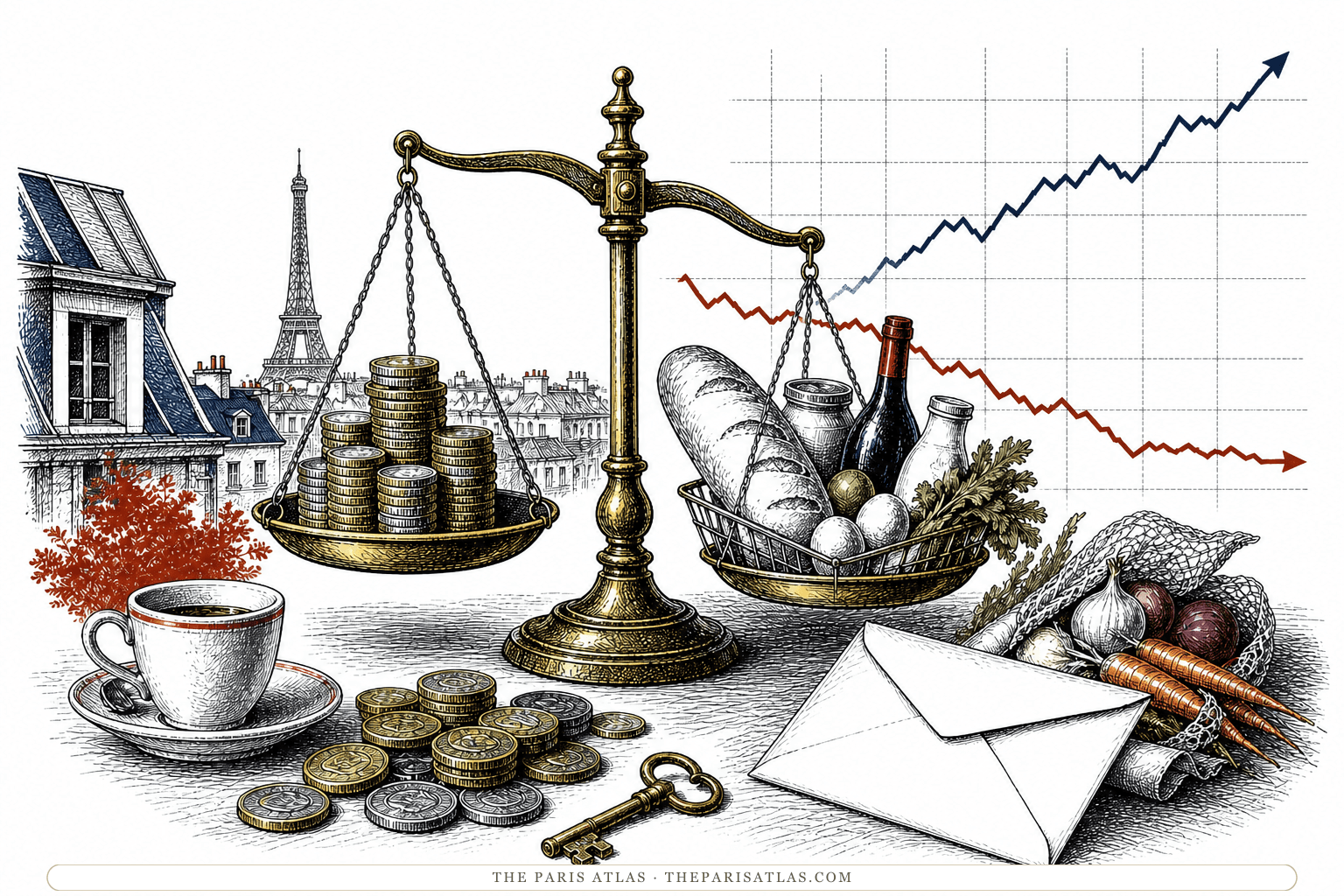
The second engine was money — specifically, the postwar collapse of the franc. Through the early twenties, an American with even a small income lived in Paris at a multiple of what the same dollars bought at home. The 'poverty' of the memoirs was real for some (Hemingway's early lean years check out against the letters) and theatrical for others; either way, the arithmetic explains why the American colony numbered in the tens of thousands, why the Fitzgeralds could roar through Montparnasse while Scott finished The Great Gatsby, and why little presses could afford to exist at all.[4]
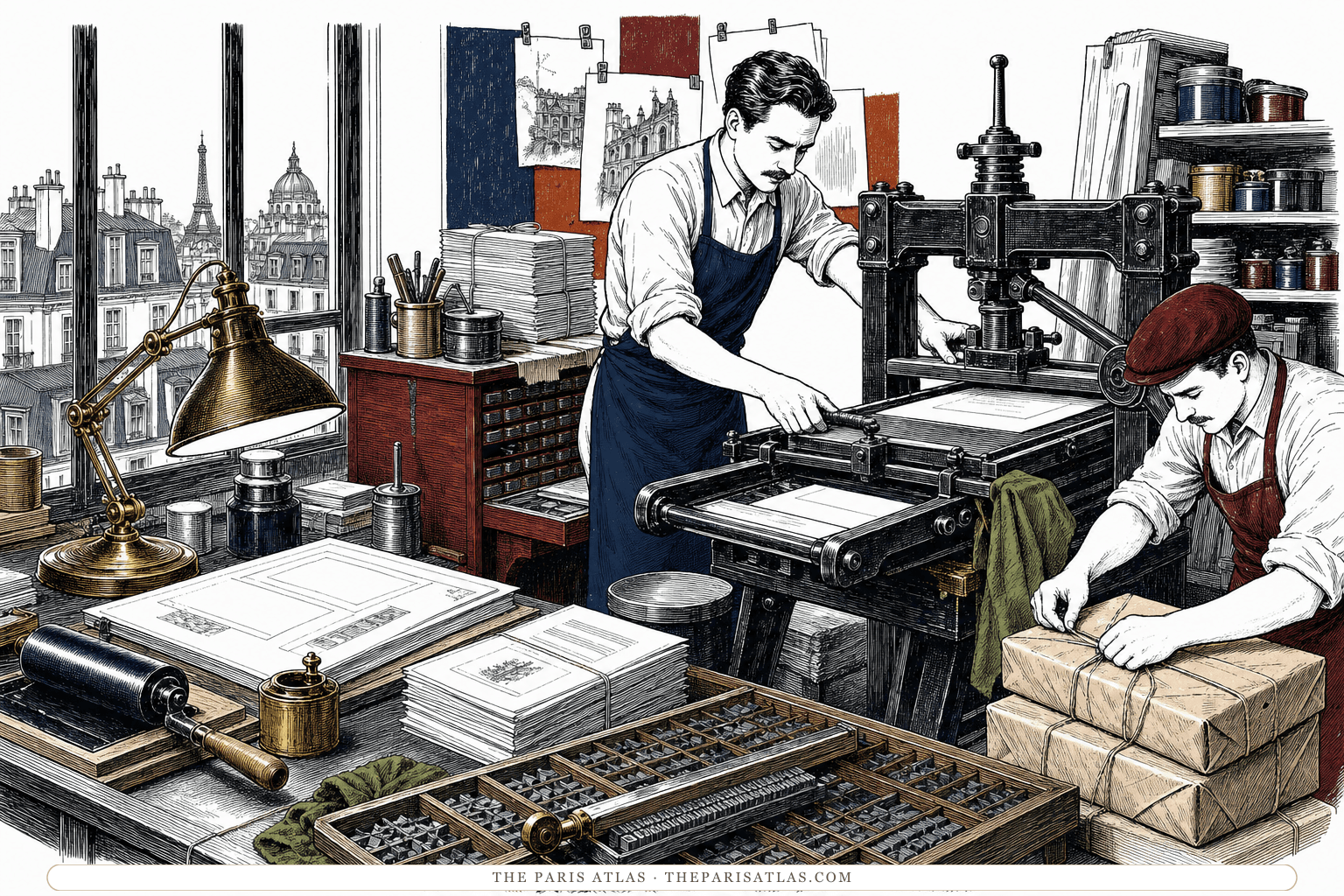
Those presses matter more than the parties. Bill Bird's Three Mountains Press hand-set Pound's first Cantos installment on the Île Saint-Louis; Robert McAlmon's Contact Editions did Hemingway's first book; Ford Madox Ford edited the Transatlantic Review from the same cramped quai, serializing Stein and hiring Hemingway to sub-edit. And in the thirties, Jack Kahane's Obelisk Press extended the tradition to its logical end, publishing the English-language books no other country would print — most famously a broke Brooklyn expatriate's debut called Tropic of Cancer. 'Printed in Paris' meant free speech with a customs problem.[2]
The era wasn't a scene, it was a neighborhood — with an exchange rate.
What the memoir bends
A Moveable Feast was assembled from notebooks rediscovered decades later in a Ritz Hotel trunk, finished at the end of Hemingway's life, and published after it. It is gorgeous and it is armed. Stein, who taught him more than he admits, is repaid with a cruel anecdote; Ford gets his breath mocked; Fitzgerald's chapter is affection wrapped around a knife. The historical record — letters, other memoirs, Beach's own account — consistently shows a warmer, more dependent young Hemingway than the self-sufficient craftsman the memoir remembers.[1][2]
The Pamplona chapters of the era bend the same way. The July 1925 fiesta trip that became The Sun Also Rises happened with real people whose real names are one letter's distance from the novel's — and most of them never forgave him. The era's greatest novel is also its most efficient friendship-ending machine; reading the roman à clef against the record is half the fun and all of the tragedy.

None of which dents the essential truth the memoir tells: that for one cheap, cold, absurdly concentrated decade, a few streets on the Left Bank held Joyce finishing Ulysses, Pound editing everyone, Stein sitting for Picasso's portrait under Picasso's portrait of her, and a young reporter learning to write one true sentence. The addresses are still there. The books are on this shelf. The walking tour starts at 74 rue du Cardinal Lemoine, and it's downhill to the cafés.




 View source