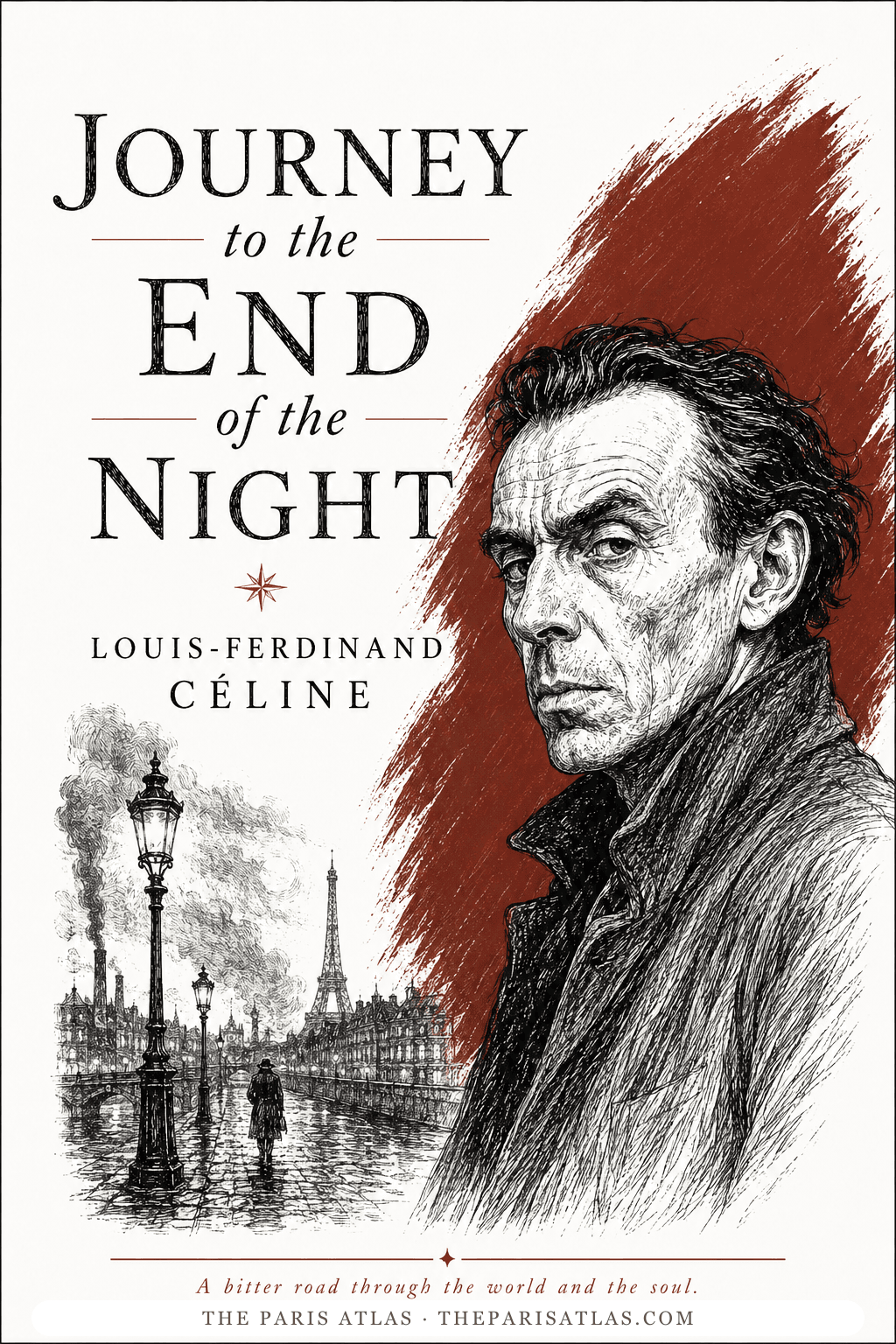
Journey to the End of the Night
The book that gave Miller his permission slip — he read it in manuscript and rewrote his own in its light.
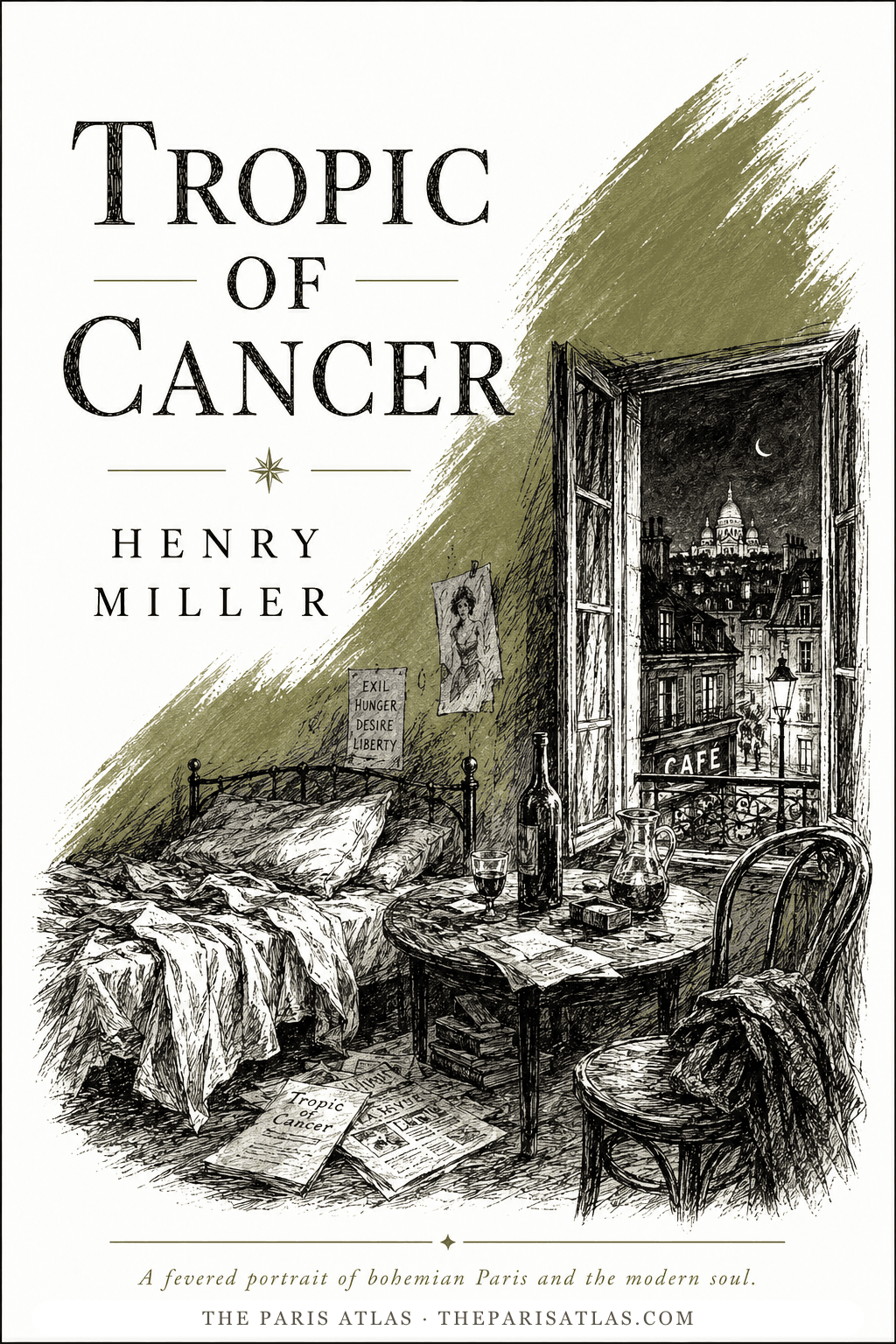
by Henry Miller
Broke, shameless, and ecstatically alive in 1930s Paris — the banned book that ended American censorship.
No plot, no apologies: an American in Paris with no money and no prospects records his rounds of borrowed beds, cadged dinners, odd jobs, and sexual adventures, interrupted by passages of prose-poetry that lift off the page like weather. Published in Paris in 1934 and contraband in the English-speaking world until 1961, it is the book that put the unsayable into American literature — and the strangest thing about it is its joy.
'I am the happiest man alive. I have no money, no resources, no hopes…' — the first forty pages are the most galvanizing opening in autofiction, a genre this book effectively founded.
The 1961 Grove Press edition triggered sixty-plus obscenity prosecutions and a landmark Supreme Court ruling. Every frank book on every shelf since owes it a debt.
Nobody — not Orwell, not Hamsun — has written the arithmetic of the empty stomach with more comedy or precision. The famous dinner-schedule of friends is a masterpiece of abject bookkeeping.
The Obelisk Press, run by the piratical Jack Kahane, existed precisely to publish English books too hot for London and New York — its list is half the reason 'printed in Paris' once meant scandal.
Read the full story in the journalThe book that gave Miller his permission slip — he read it in manuscript and rewrote his own in its light.
Black Spring
Henry Miller
The follow-up: same Paris, more dream, published two years later.
A Moveable Feast
Ernest Hemingway
Poverty in Paris as romance — the book Cancer exists to contradict.
Tropic of Capricorn
Henry Miller
The prequel decade: how a Brooklyn personnel manager became this narrator.