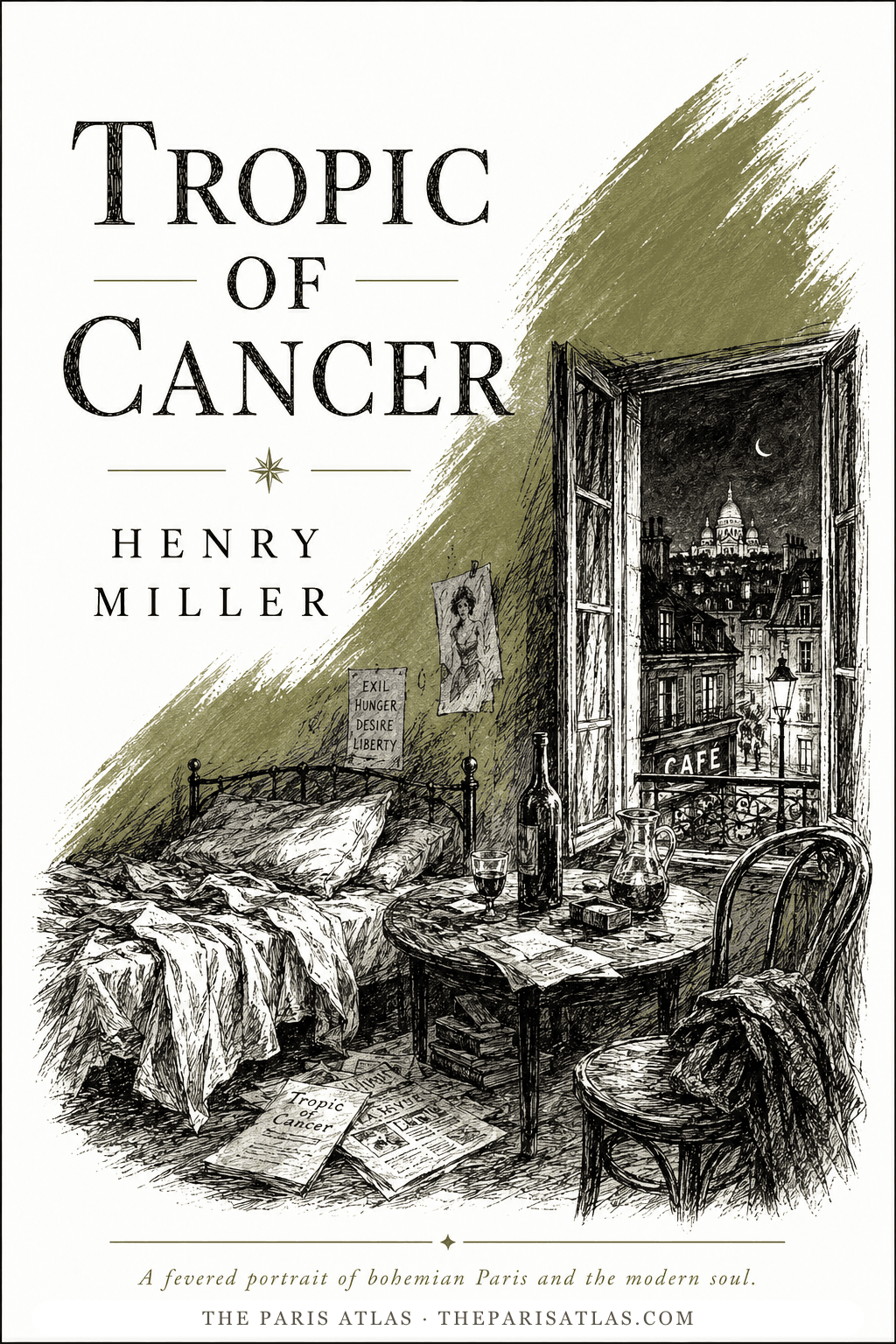
Broke, shameless, and ecstatically alive in 1930s Paris — the banned book that ended American censorship.
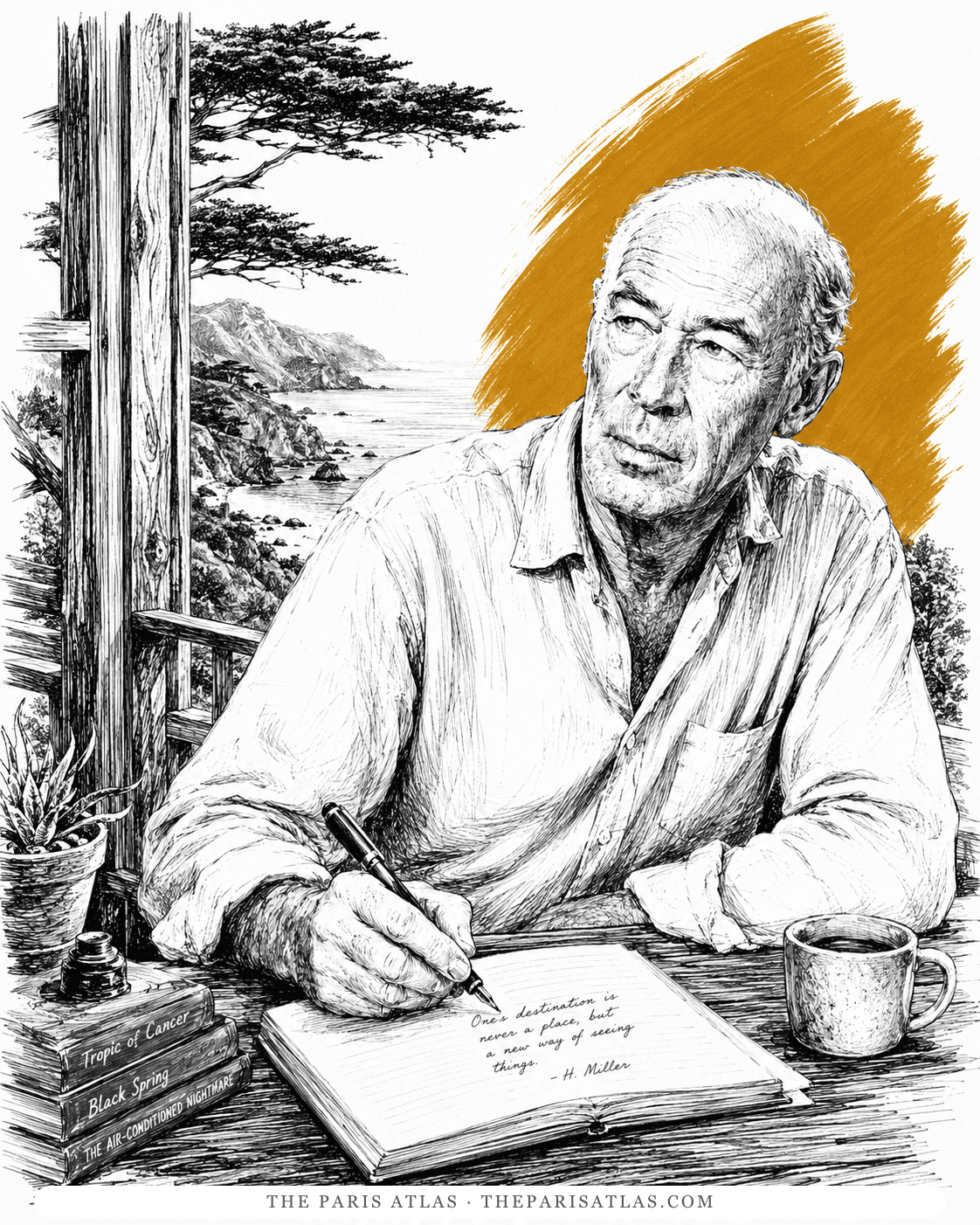
The Brooklyn dropout who arrived in Paris broke at thirty-eight and wrote the exuberant, banned books that ended American censorship.
Henry Miller failed at nearly everything for two decades — Western Union personnel manager, husband (twice by then), novelist (two unpublished) — before washing up in Paris in 1930 with no money, no prospects, and, by his own account, the happiest years of his life ahead of him. He cadged meals on a rotating schedule of friends, slept where offered, and wrote it all down.
Tropic of Cancer (1934), published by the Obelisk Press because no American or British house would touch it, threw out plot, shame, and the polite novel in one gesture. Its mix of ecstatic prose-poetry, comic squalor, and explicit sex made it contraband in the English-speaking world for nearly thirty years; the 1961 Grove Press edition triggered the obscenity battles that effectively ended literary censorship in America.
The Paris books that followed — Black Spring, Tropic of Capricorn — completed the project: one man's appetite as a full-scale rebellion against the age of machines and money. The frankness that liberated the novel has aged into a genuine argument, particularly in how the books use the women in them; modern readers tend to arrive for the scandal and stay for the sentences, which remain among the most alive anyone has written about being broke, free, and awake in a city.
The one that changed the law and the form. Read it for the first forty pages alone — the greatest overture in autofiction — and know in advance that it earns its content notes.
Broke, shameless, and ecstatically alive in 1930s Paris — the banned book that ended American censorship.
Black Spring
Henry Miller
Ten hallucinatory riffs between Brooklyn's 14th Ward and the Paris streets — Miller at his most purely musical.
Tropic of Capricorn
Henry Miller
Before Paris: the Brooklyn years, the Cosmodemonic Telegraph Company, and the fury that made the flight necessary.
The Lost Generation's Paris wasn't a mood — it was a specific set of rooms within walking distance of each other, and an exchange rate. Here is the real map under the memoir.
"Everyone wants to have read the moderns and nobody wants to start," says the veteran bookseller. "My whole job is the on-ramp." An interview about hand-selling a century-old avant-garde.