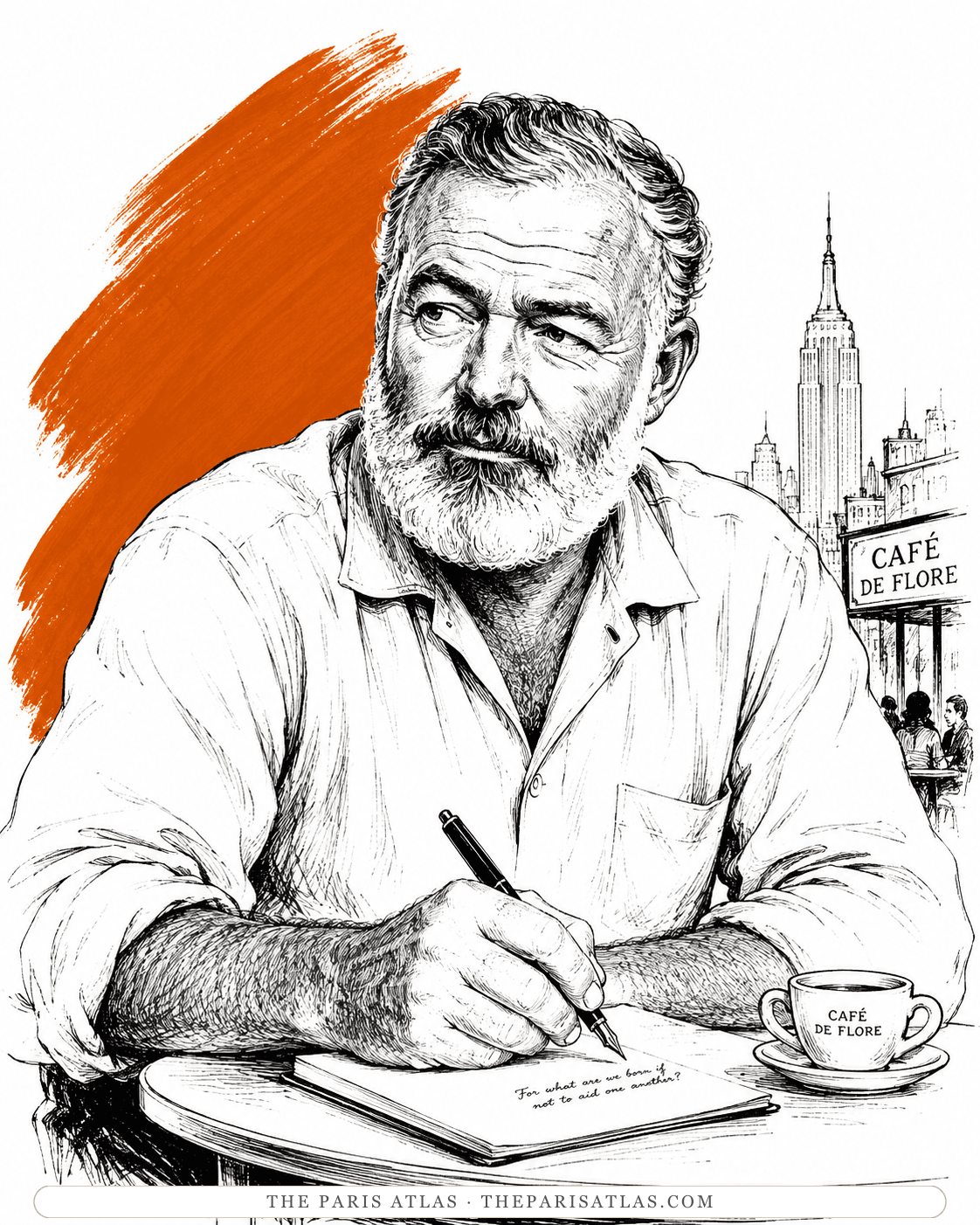
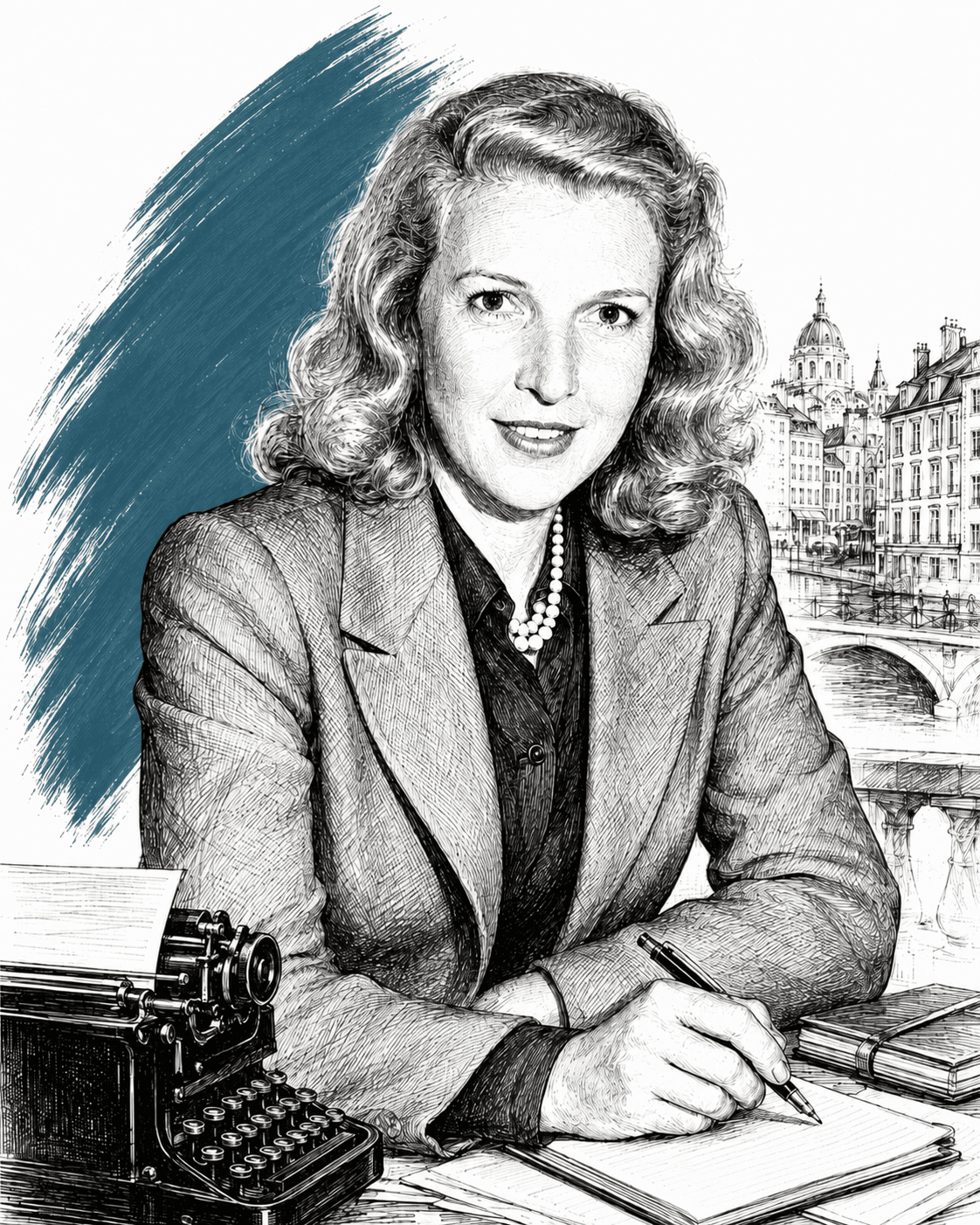

Hemingway's memoir of being young, poor, and absurdly talented in 1920s Paris — the most seductive book ever written about writing.
Lives barely disguised: memoirs that read like novels and novels that are mostly confession.
The writers of this era invented much of what we now call autofiction, mostly by refusing to decide where their lives ended and their books began. Hemingway's A Moveable Feast carries the author's own warning that it 'may be regarded as fiction'; Miller's Tropics star a narrator named Henry Miller doing things Henry Miller verifiably did, plus some he embellished; Céline's novels track their author's war, his Africa, his Detroit, and his medical practice beat for beat.
The form's power is the wager it makes: that a life honestly rendered — hunger, vanity, bad behavior included — carries an authority invented characters can't match. Its permanent risk is the same wager: these books settle scores, flatter their narrators, and bend dates, and part of reading them well is holding the enchantment and the skepticism at once.
Start with A Moveable Feast for the romantic version and Tropic of Cancer for the feral one, then read them against each other — two broke Americans in the same city, a decade apart, each insisting the other's Paris was the fake.
Hemingway's memoir of being young, poor, and absurdly talented in 1920s Paris — the most seductive book ever written about writing.

Broke, shameless, and ecstatically alive in 1930s Paris — the banned book that ended American censorship.

Before Paris: the Brooklyn years, the Cosmodemonic Telegraph Company, and the fury that made the flight necessary.

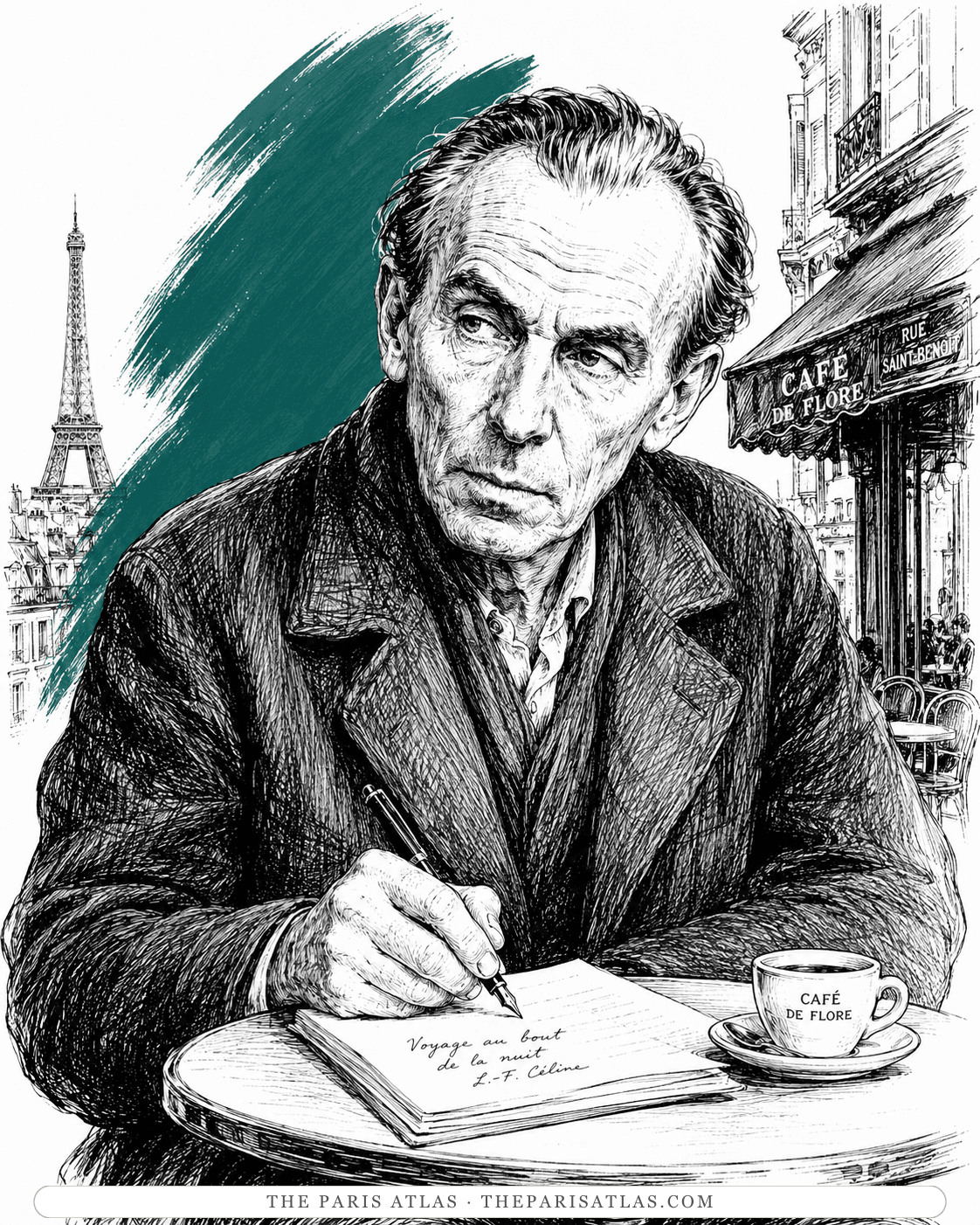
Céline's shrieking, hilarious portrait of a Belle Époque Paris childhood in the Paris arcades — poverty as opera.

Ten hallucinatory riffs between Brooklyn's 14th Ward and the Paris streets — Miller at his most purely musical.

Henry Miller's account of inviting a destitute Paris astrologer to live with him at Big Sur, and of how badly it went.

The unexpurgated series completes: fame with the double life still running underneath, and the ending the published Diary declined to print.

The century's most famous literary love affair, in its own hand: two decades of the Nin–Miller letters, selected by Gunther Stuhlmann.

Beauvoir's hundred-page account of her mother's month-long death from cancer in a Paris clinic — the shortest and most direct book she wrote, and the case study The Coming of Age would turn into general argument six years later.

Beauvoir's account of Sartre's last ten years — the blindness, the strokes, the political engagements, the dependence on her care — followed by the 1974 interviews the two of them recorded together, the most direct testimony we have of what fifty years of that partnership actually consisted of.

The fourth and final volume of Beauvoir's memoirs — written at sixty-four with the whole life visible behind her, organised by theme rather than chronology, and containing the reckoning with 'I was cheated' that Force of Circumstance had ended on.

One long letter to Alfred Perlès — Miller sails to New York in 1935, hates it magnificently, and sails back. A round trip, as the title says.

Beauvoir's diary of her four-month lecture tour across the United States in 1947 — the trip on which she met Nelson Algren, an encounter later scored across The Mandarins and her Letters to Nelson Algren.

The mail habit, preserved: a small edited collection of Nin's letters to a young admirer, Moira Collins.

The sequel the Cook Book's success demanded — her recipes, annotated for American kitchens by the century's least likely collaborator.

Twenty-four years of letters with the poet-librarian who took her seriously before the world did.

A late gathering of Colette's short prose — first published not as a standalone book but as a named section of her Complete Works.

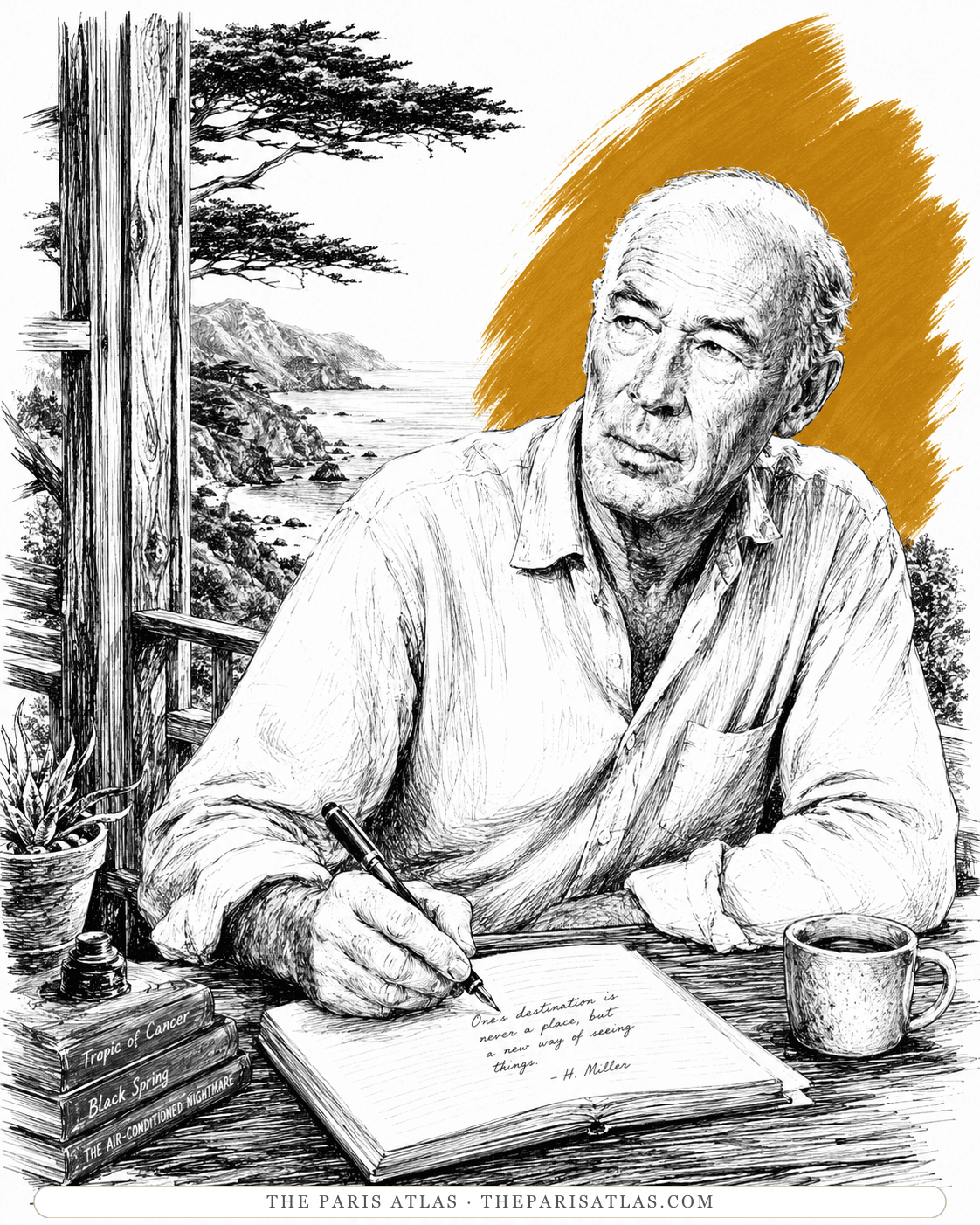
The scandalous exile finds his paradise: fog, cliffs, children, neighbors, pilgrims — and the question of whether paradise can be lived in.

At eighty-four, the rememberer goes back to the beginning: the boys of the Fourteenth Ward, named and thanked one by one.

Eleven ports and the sea-word for knocking about the world — with the great Genoa chapter, the tetralogy's buried childhood, at its heart.

A woman past fifty, alone in a Provence summer, decides what a life no longer organized around love can be.

Louis-Ferdinand Céline's ten Copenhagen prison notebooks — February to October 1946 — first published in complete scholarly form in 2019, and the workshop in which the postwar novels began.

Louis-Ferdinand Céline's unfinished 1949 novel — an eighteen-year-old cavalry volunteer's first terrible night at the barracks.

Louis-Ferdinand Céline's 1957 novel — the first of the German trilogy — about the last months of the Vichy government-in-exile at Sigmaringen.

Oscar Wilde's long prison letter to Lord Alfred Douglas, combining accusation, self-criticism, memory, suffering, art, and a new interpretation of Christ.

Orwell's first book: seventeen-hour days in a Paris hotel kitchen, then a month on the road in England.

The life told in her own words — an autobiography assembled after her death from some forty of her books, and the English Colette most readers meet.

Small events turned into surprise — Colette's chronicles of the minor, and a seedbed for the books that followed.

Louis-Ferdinand Céline's 1952 novel — the first volume of his postwar Féerie sequence, a feverish mixture of prison, memory and grievance.

The third unexpurgated volume: New York with Rank, the return to Paris, and a private life running at full burn between two continents.

Twenty-two flower portraits written from memory — late Colette turning description of a rose or a poppy into a kind of self-portrait.

The third and longest volume of Beauvoir's memoirs: the eighteen years from the Liberation of Paris in August 1944 through 1962, the years in which she wrote The Second Sex and The Mandarins, met Nelson Algren, campaigned against French torture in Algeria, and became one of the most-watched public intellectuals in Europe.

Twelve fashionable chronicles that follow the turning year — a private printing for a patron's friends, later folded into Journey for Myself.

Occupied Paris, watched and described from a single window — practical, intimate, and an irreplaceable record of the city's wartime life.

A month on safari, written as an experiment: can a true book, absolutely truthful, compete with the novel? Plus the Huckleberry Finn verdict.

Louis-Ferdinand Céline's recovered 2022 novel — a young Ferdinand comes to on a battlefield, survives a military hospital, and starts moving toward London.

Louis-Ferdinand Céline's 1944 novel — a wounded French veteran drops into a London underworld of pimps, prostitutes, musicians and eccentrics.

The unexpurgated year — what the 1966 Diary couldn't print about Henry, June, and the winter that changed all three.

George Orwell went to Spain to write newspaper articles and joined a militia instead: a winter in the Aragón trenches, street fighting in Barcelona, a bullet through the throat.

Four pages that end the war literature of glory: the poet-legionnaire's confession, with drawings by Fernand Léger.

The most famous of Maya Angelou’s seven autobiographies: a Black girl’s childhood in the segregated South, and how she got her voice back.

The sequel to The Big Sea: Cuba, Haiti, the Soviet Union, and besieged Madrid, ending in Montmartre on New Year's night.

Late prose of landscape, memory, and homage — Colette on familiar ground, seeing it new through the eye of a painter friend.

Short chronicles of the street and the throng — Colette watching the anonymous life of the city pass.

The second unexpurgated volume: the analysts, the abortion chapter, and the reunion with her father that the 1966 Diary could only gesture at.

Old age falls in love and can't sleep: the last great infatuation, confessed in prose and painted through the small hours.

A collectible late volume that is not, despite its title, a diary — a mixed gathering of chronicles and tales, printed in a small run.

The last portrait in the gallery is the best friend of all: Fred Perlès — Carl of Clichy — thanked at last under the old pet name.

Short prose of weather, illness, waiting, and travel — a mutable self-portrait Colette reworked heavily between 1922 and 1928.

The matador who invented modern bullfighting tells his life to Spain's greatest reporter — night swims, secret capework in the dark, and the melancholy of surviving the golden age.

Colette's last book — a short return to the old women of her childhood village, published in the year she died.

Louis-Ferdinand Céline's posthumous 1964 novel — Guignol's Band II picks up in wartime London with gas-mask experiments, a fourteen-year-old niece, and the criminal past that will not release Ferdinand.

The fame years by airmail: Nin's letters to the Australian bookseller David Pepperell, 1968 to 1974.

Four decades of letters to the third member of the Villa Seurat triangle, from the Booster days to the last year of her life.

Where the whole project begins: the diary an eleven-year-old started on the boat to New York, as a letter to the father who left.

Louis-Ferdinand Céline's recovered 2022 novel Londres, arriving in English as London on 13 October 2026 in Charlotte Mandell's New Directions translation — a French criminal underworld in wartime London destroys itself around Ferdinand.

A wartime gathering of short pieces and memories — miscellaneous by design, and revealing precisely because it is unsettled.

Louis-Ferdinand Céline's ~905-page preliminary manuscript of Féerie pour une autre fois — memories of Montmartre before the flight from Paris, and the bombing that reorganises the narrative into escape.

The first volume of Beauvoir's memoirs: a bourgeois Catholic Paris childhood, the loss of faith, philosophy at the Sorbonne, and a friendship whose ending she said cost her her freedom.

The series resumes after seventeen years: the war decade uncut, from the flight out of Paris to the night the mirages ended.

A French curiosity of the shelf: Marcel Moreau's book, published with a group of Nin's letters to him — her contribution, not her volume.

Colette's cold, exact memoir of her first marriage — the writing factory in which the Claudine novels were made and signed by another man.

Volume two of the friendships — opened, without apology, by the truest friend of all: the bicycle.

The life, told aloud at eighty: taped talk, photographs, watercolors — the scandalous century recollected from a sunny room.

Short, luminous memories of a Burgundy childhood, gathered around the mother who presides over them.

A chance encounter becomes a map of 1920s Paris, Surrealist wonder and the danger of turning another person into a symbol.

The last prewar volume: the houseboat, Moré at the center, and the Paris world running out while the diary refuses to look away.

The trilogy's last act: a third party in the marriage, the darkest New York winter — and at the end of it, a boat to Paris.

Louis-Ferdinand Céline's 1954 novel — the second volume of the Féerie sequence, a single night of Allied bombing over Montmartre.

Louis-Ferdinand Céline's 1960 novel — the second of the German trilogy — about his 1944 flight into a collapsing Germany.

Colette's prose set against fifty photographs by Izis — a late book-club photobook, and not the 1932 art book of nearly the same name.

Colette's animal pieces printed as a rare Swiss art book, with wood-engraved beasts by Paul Jouve — not to be confused with the 1953 photobook of almost the same name.

A Times correspondent's eyewitness tour of the salons and café tables of 1920s Paris — Joyce, Pound, Sylvia Beach, and the young Hemingway, sketched from the next chair.

The Rosy Crucifixion, book two: married to Mona, done with jobs forever, and learning — expensively — how to become a writer.

A wide gathering of Colette's prose on animals, the Midi, appetite, and secrecy — where confinement and ecstasy turn out to be kin.

The happiest of the Paris books: two broke friends in a Clichy flat, and the era remembered as pure appetite.

The letters behind the diary's hardest chapter: father and daughter writing to each other after the 1933 reunion.

Louis-Ferdinand Céline's posthumous 1969 novel — the final volume of the German trilogy, and the escape at last completed.

Sixty years of letters, edited by her biographer Caroline Moorehead. Faster, funnier and ruder than the prose Gellhorn published.

Six late chamber pieces in one volume — the old man's small forms, from a dream of his mother to the view from eighty.

The Rosy Crucifixion begins: New York in the twenties, the marriage that must end, the woman who must be Mona — his most banned book.

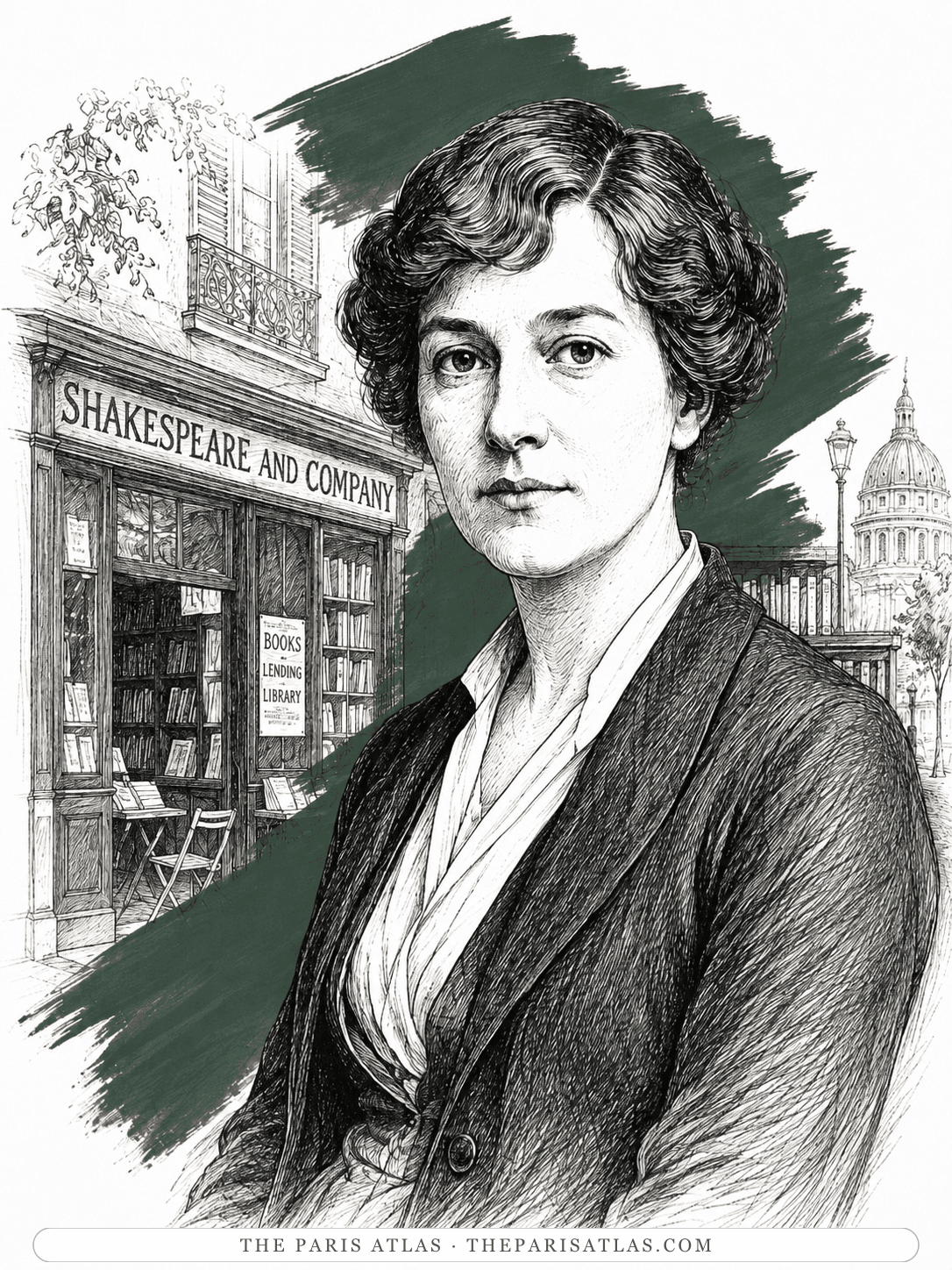
The bookseller's own story — twenty-two years at 12 rue de l'Odéon, told by the woman who lent the Lost Generation its library and published Ulysses.

Colette's portrait of her mother — and, around her, her father and wild siblings — often called the finest thing she wrote.

The tetralogy ascends: a levitating saint, the Brazilian outback — and, unspoken at the center, a son who fell from the sky.

The twenty-one years the memoir refused to write — the widowhood, in her own mail.

A late book of portraits — the writers, performers, and painters Colette had known, drawn from memory in a few exact strokes.

A wartime miscellany with one masterpiece inside: 'Reunion in Brooklyn,' the exile's homecoming to the parents he fled.

Henry Miller's 1945 account of driving across the United States for a year and disliking most of what he found.

Alice B. Toklas's 1954 cookbook, which is also her memoir of fifty years with Gertrude Stein, told through the meals she cooked.

The memoir tetralogy opens like a lightning strike: war, gypsies, and the art of being astonished — written after a decade of silence.

Malcolm X told his life to Alex Haley across two years of interviews and was murdered before the book appeared. It is the source James Baldwin was hired to turn into a film.

Hughes's autobiography to age twenty-nine: Africa by tramp steamer, Paris by dishwater, and the Harlem Renaissance from inside.

Blaise Cendrars's memoir of the Foreign Legion squad he led in the First World War, written thirty years after he lost his right arm in it.

One of Colette's last books — written from her chair as her body failed, and set against decline rather than defeated by it.

The scandalous autobiographer turns to the shelf: a reading life told like an adventure, from boyhood pulp to Cendrars.

Greece, 1939: the light, the ruins, and a monologuist named Katsimbalis — the book Miller himself called his best.

The last book he worked on: Spain, 1959 — two great matadors, one murderous rivalry, and the old aficionado keeping score a final time.

The century's most famous journal opens on Louveciennes, 1931 — Miller at the table, June in the doorway, and a woman writing it all down as it happens.

The divided decade: Mexico and California against New York, the fiction out of fashion, and the diary carrying a double life it couldn't print.

After the review: Dutton signs her, the young writers arrive, and the diarist of Paris becomes a figure in postwar New York.

The famous years: lecture halls, honors, a new generation of readers — and the diarist watching her own arrival with a lifetime's practiced eye.

The long approach: Alan Swallow rescues the novels, the diary is readied at last for print, and the volume ends on the edge of fame.

The war years in America: Greenwich Village, the hand press on Macdougal Street, erotica for a dollar a page, and the review that changed everything.

The second volume: New York with Otto Rank, the return to Paris, the houseboat on the Seine, and Europe arming behind every entry.

The seventh unexpurgated volume: two households in balance, the fiction winding down, and the decade-long campaign to publish the diary itself.

The last early volume: dance, the D. H. Lawrence book, and the approach to the exact doorstep where the famous Diary begins.

The diary switches to English: work, modeling, a long courtship, and a young woman writing her way toward a marriage and a self.

Late reflections written from an immobile chair — memory, the war years, and lost friends, gathered under the evening star.

The unfinished novel recovered after Camus’s death returns to his father, his mother and a poor childhood in Algiers.

A late, deliberately mixed gathering — chronicles, tales, and prefaces bound together as one of Colette's collectible last volumes.

The third early volume: a very young marriage, the move to Paris, and a would-be writer deciding what a wife is allowed to become.

Chronicles across a single year — wartime hardship and the urge to reclaim ordinary life, with the child Bel-Gazou at the edges.

Colette's war album — the First World War seen from hospitals, the rear, and ruined ground, without a word of bombast.

Beauvoir's 1957 book on her two-month trip to Mao's China — the most politically contested of her nonfiction, a document of what a serious European left intellectual could and could not see in the People's Republic in the mid-1950s.

The raw feed of the Nightmare: the actual notebook from the 1940–41 American tour, published in facsimile — blots, sketches, and all.

The second memoir volume, covering Beauvoir from her 1929 meeting with Sartre through the Occupation and the Liberation of Paris — the years the intellectual partnership at the centre of her life was built and tested.

Two months in the coal towns of Lancashire and Yorkshire, then a long argument with the people Orwell agreed with.

The prophet of the exodus tells his own story — the manifesto, the Select's saucers, the blindness, and the trip home.

Colette tells her life through the rooms she lived in — an autobiography written as a sequence of Paris addresses.

The double life, documented: eight years swinging between a husband in New York and a lover in California, from the journal that kept both books.

A travel book organised entirely around the trips that went wrong, and the funniest thing she ever wrote.

Kenya, 1953 — the safari that became a marriage story, a meditation on belonging, and Hemingway's most contentious posthumous publication.

Her actual autobiography — brisk, dry, and stopped dead at 1946: the title says exactly what the book is, and what it declines to be.

Gellhorn's letters from 1930 to 1949: the Depression, Spain, Normandy, Dachau and the Hemingway marriage, printed with the replies included.

The central single-volume selection of Céline's correspondence — 2,080 pages, five decades, and a private voice that changes with every recipient.

Claude McKay's account of two decades of travel — Harlem, London, Moscow, Berlin, Paris, Marseille, Morocco — by a writer who refused to settle anywhere or belong to anyone's programme.

John Glassco’s lively memoir of arriving in Paris at nineteen and spending the end of the 1920s among Montparnasse writers, artists, rented rooms, and late nights.

Gertrude Stein tells the story of her Paris life and artistic circle in the voice of her partner, Alice B. Toklas.

Jean Genet turns theft, prisons, sex, betrayal, and wandering through Europe into a defiantly beautiful literary autobiography.

Henry Chinaski across wartime America, one abandoned job at a time — the American work ethic, refused politely and then not politely.

The childhood behind the persona: the beatings, the acne, the library, and the first drink — Bukowski's most sustained novel.

Bukowski watched Hollywood film his life, then did the most Bukowskian thing possible: he turned the experience into another novel.

The underground newspaper column that invented the public Bukowski — autobiography, fiction and provocation with no editor in the way.

Charles Bukowski quit the post office in January 1970 and handed his publisher this novel within weeks. It is the job, turned into literature.

Bukowski's last novel: a detective story dedicated to bad writing, finished while he was dying, with Death herself as the client.

The 1978 European tour in prose and photographs — the Paris week, the Apostrophes disaster, and the return to Andernach, told by the man at the center.

What happens when a persona built on failure suddenly succeeds: Chinaski, famous at last, and no better at living.

A woman returns to the affair she began at fifteen and discovers that memory has changed what she thought she knew.

A love story in which heroin becomes a third partner, then narrows two lives into dependence and collapse.

Heroin without romance: finding it, paying for it, using it, withdrawing, and arranging life around the next dose.

Jean Cocteau records withdrawal, dreams, art, memory, and the uneasy bargain between opium and creativity.

Crowley’s enormous autobiography of travel, sex, drugs, mountaineering, feuds, magic, scandal, and self-mythology.

A boy learns shame early and tries every available way to turn himself into someone else.

A young man performs the life expected of him and hopes the performance will eventually become real.

A writer looks back on the boy he loved and the fear that made an honest shared life impossible.

The real love, hospitals, waiting, and loss behind the First World War.

The second volume of letters: the years Bukowski left the post office, published his first novel, and became a writer people had heard of.

The last volume of letters, running to the year he died — the San Pedro decades, the film work, and the illness at the end.

The letters of the post-office decade: an unknown poet writing to small-magazine editors while sorting mail for a living.

Bukowski's last journals, 1991 to 1993, with twelve drawings by Robert Crumb.

Seven years of letters with the artist Sheri Martinelli — one of the few people Bukowski argued with about art rather than performing for.

Isadora Wing tests sexual fantasy, marriage, and freedom in a candid, feverish, and sharply self-mocking voice.

Miller and June’s first Paris trip, recovered from an unfinished manuscript before the city became part of his legend.

A jealous writer turns a brief bohemian affair into one rushing act of self-exposure.

The 1939 travel notebook Miller gave away whole — begun on Hydra, finished at Delphi, and dedicated to George Seferis.

A Black Spring dream rewritten by hand and carried across eighty silkscreened pages by Bezalel Schatz.

Forty-five years and nearly a million words — the expanded correspondence that restored lost letters and passages cut from the 1963 selection.

A late dream of death and reconciliation, followed by Miller’s imaginative China: the lifelong quarrel with his mother finally released.

Miller at eighty: gratitude, bodily comedy, and a refusal to treat old age as the end of imaginative appetite.

Anne Poor’s postwar drawings meet Miller’s memories of prewar Greece in a compact, independent collaboration.

A facsimile notebook from Miller’s American journey, preserving the raw handwriting, drawings, lists, and reversals behind finished prose.

Miller’s watercolor argument turns seeing into renewal: the familiar world made liquid, bright, and strange again.

Miller’s case for amateur freedom: painting as renewed attention, appetite, and affection rather than professional mastery.

A collector and a writer negotiate books, manuscripts, friendship, and literary survival across eighteen years of letters.

Miller’s late letters to Irving Stettner and his handmade magazine stay funny, visual, and fiercely attentive to ordinary life.

Three decades of letters join a self-made writer to a scholar of France through Rimbaud, Nin, Gide, and remembered Paris.

Miller’s side of the defining Paris correspondence: love, rivalry, manuscripts, money, and two writers inventing themselves in public and private.

Before Paris became legend, Miller wrote the struggle in real time to his oldest artistic confidant: work, failure, books, marriage, and escape.

Two exuberant old literary outsiders exchange myth, appetite, illness, books, and encouragement across the Atlantic.

A first, scarce window into Miller’s letters to Emil Schnellock, preserving the apprenticeship before the fuller archive appeared.

A critic’s manuscript prompts Miller to contest interpretation, explain intention, and turn disagreement into sustained correspondence.

Georges Belmont’s Paris conversations draw Miller into direct speech about Brooklyn, France, sex, censorship, painting, and the making of a public self.

At Pacific Palisades, Christian de Bartillat prompts an aging Miller to move backward through Paris, America, friendships, work, and survival.

A centennial Miller arranged as a life journey: ten books distilled into a bracing autobiography of appetite, independence, and renewal.

Two British volumes gather Miller’s major prose modes—Paris, America, travel, art, friendship, and the essayistic voice between them.

A pocket-sized self-portrait assembled from stories, essays, autobiographical sketches, and photographs for readers meeting Miller beyond the scandal.

Douglass's final autobiography follows his life from slavery into abolition, the Civil War, public office, and diplomacy.

Douglass revisits his childhood and explains how freedom led him into public speaking, newspaper editing, and political disagreement.

Douglass's first autobiography follows his childhood in slavery, secret education, and beginnings as an abolitionist speaker.

Angelou's second memoir follows a young mother trying to earn a living and find a place for herself after World War II.

Angelou's fourth memoir follows her move into New York's literary and political life while her son grows toward independence.

An American pleasure voyage becomes a comedy about tourists, famous sights and the expectations they bring with them.

Paul Bowles wrote his autobiography at fifty-nine and told almost nothing. William S. Burroughs called it Without Telling.

More than four hundred letters across sixty-three years, selected from seven thousand pages — and far more forthcoming than the autobiography.

Zora Neale Hurston's autobiography, published in 1942, which won a thousand-dollar prize and had been cut to keep white readers comfortable — the excised chapters were not restored until 1995.

Three chapters of the novel Capote never finished, and the magazine instalments that ended his friendships in 1975.

Arthur Miller at seventy-two, writing his own life in the order memory hands it over rather than the order it happened.

Gertrude Stein's short book about why she chose France, written in the last months before the German army reached Paris.

Stowe's letters from the 1853 tour that Uncle Tom's Cabin paid for: mobbed in Britain, left alone in Paris, and happiest in the Louvre.

Twenty-eight short pieces published at eighty for the daughters Maya Angelou never had, from a Stamps childhood to a dinner in Senegal with a friend she met in Paris.

Every surviving journal Sylvia Plath kept from her first year at Smith College to the last year of her life, printed in full in 2000, with the spelling mistakes left in.

A shoemaker's son from Odense tells how he became famous, and how Paris met him three times: as a nobody, as a known writer, and as a celebrity.

Mary Shelley's first book: sixteen, eloping, stuck for a week in a Paris hotel, then walking out of the city with a donkey.

Three years after On the Road made him famous, Jack Kerouac hides in a friend's cabin on the California coast to dry out, and his mind comes apart there.

Jack Kerouac flies to Paris in 1965 to prove he descends from Breton nobility. He finds closed archives, long nights in bars and, maybe, a moment of awakening in a taxi.

Jack Kerouac's follow-up to On the Road trades the highway for mountain trails, and a restless young writer tries to learn Buddhism from a poet who climbs peaks.

More than three hundred letters between F. Scott Fitzgerald and Zelda Fitzgerald, from their courtship in Alabama to the clinic years, edited in 2002.

Dante's first book: the poems he wrote for Beatrice Portinari, and his own account of why he wrote each one.

Pablo Neruda's own story of his life, finished by others after he died and still argued over today.

Zelda Fitzgerald's only novel. A Southern judge's daughter marries a painter, follows him to the Riviera and Paris, and trains as a ballet dancer years too late.

Aldous Huxley takes mescaline in May 1953 and writes down what happens to the world when he looks at it.

Rousseau tells his own life, the stolen ribbon and the five abandoned children included, and promises to hide nothing.

Rousseau's last book: ten walks around the edge of Paris, a dog that knocks him flat at Ménilmontant, and a boat drifting on a Swiss lake.

Two young sailors desert their whaler in the Marquesas Islands and walk into the valley of a people feared as cannibals.
Newsletter
The Friday letter explains one book at a time — what style it works in, why that matters, and where to go next.