In Our Time
Ernest Hemingway
The debut story collection where the modern American short story was invented — trout streams, war flashes, and Nick Adams.
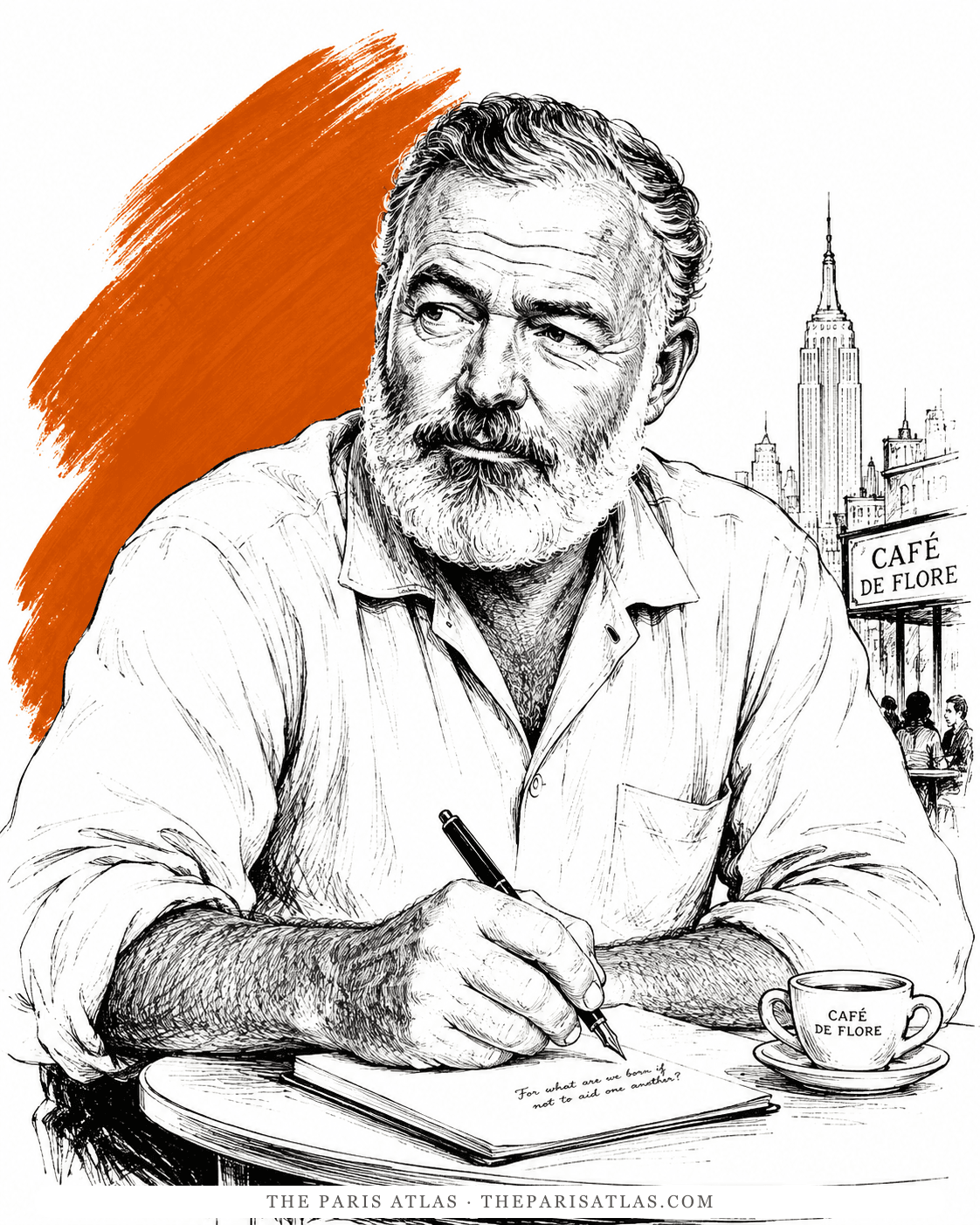
The iceberg stylist of the Lost Generation — wounded at eighteen, remade in Paris, imitated ever since.
Ernest Hemingway arrived in Paris in December 1921 as a twenty-two-year-old newspaper stringer with a war wound from the Italian front and a letter of introduction to Gertrude Stein. He rented rooms at 74 rue du Cardinal Lemoine, wrote in cafés because they were heated and the flat wasn't, and set about stripping the English sentence down to its load-bearing walls.
The method he built there — the famous 'iceberg,' where seven-eighths of the story sits underwater — remade American prose. The Sun Also Rises turned his own crowd of expatriate drinkers into the novel of the era; A Farewell to Arms turned his war into one of the great love stories; and decades later A Moveable Feast turned the whole apprenticeship into the most seductive memoir ever written about being young, poor, and talented in Paris.
The legend — bullfights, marlin, wars, the Nobel — eventually grew larger than the books and finally heavier than the man. The books hold. Start with the early ones, written when every sentence still had something to prove.
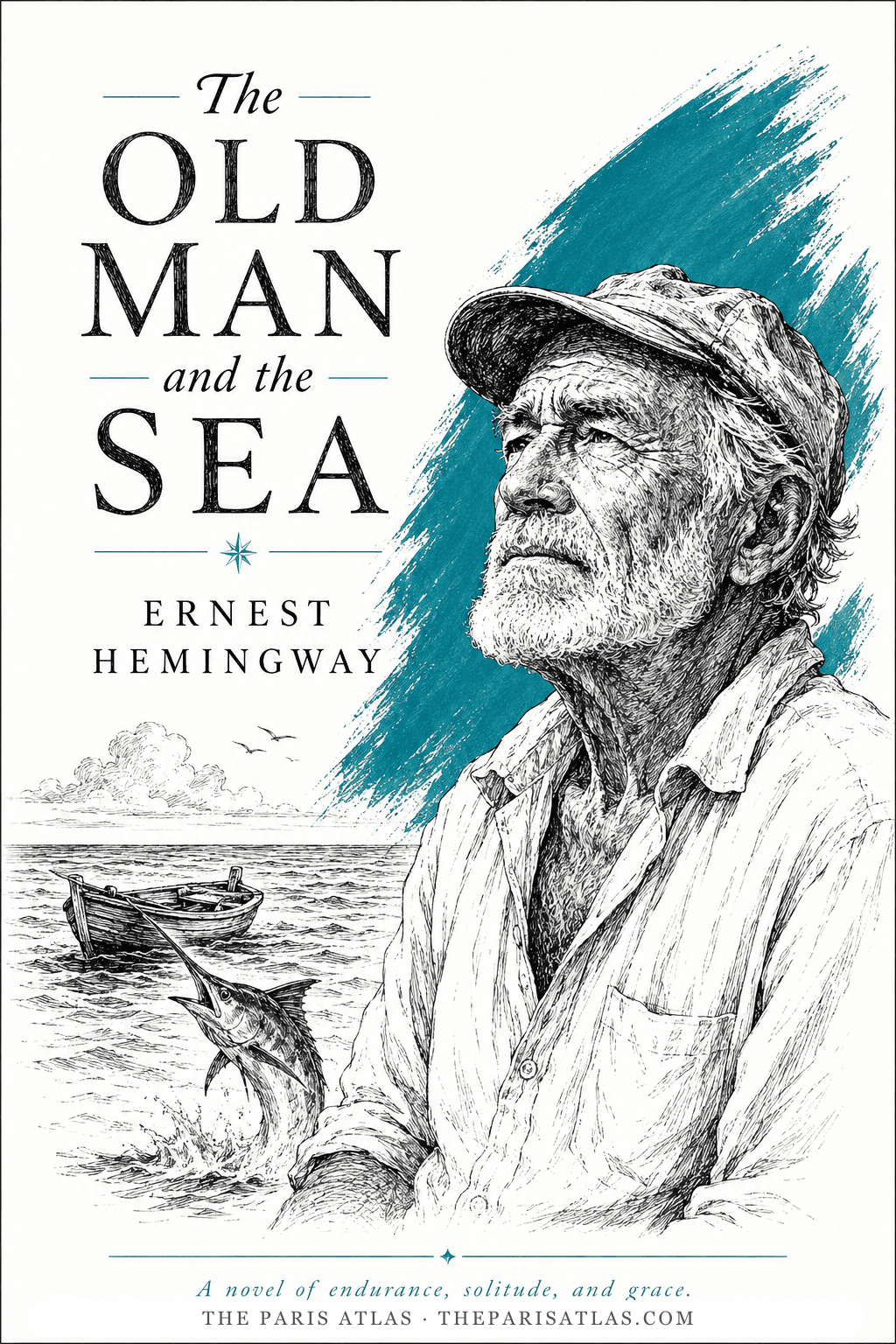
One sitting, one old man, one fish — the entire method at its purest, and the book that won him the Nobel. Read it in an afternoon, then go back to Paris with The Sun Also Rises.
In Our Time
Ernest Hemingway
The debut story collection where the modern American short story was invented — trout streams, war flashes, and Nick Adams.
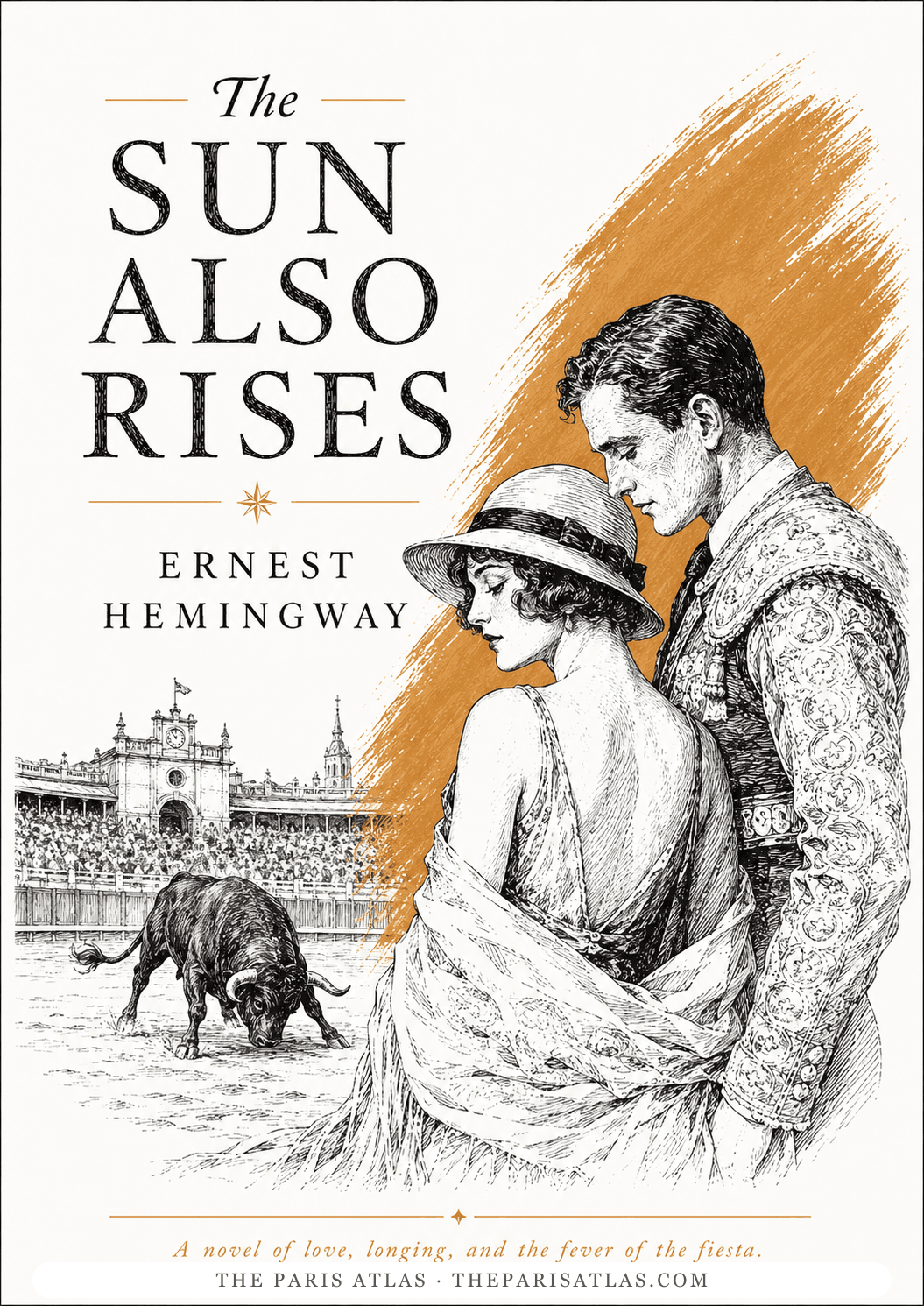
Paris cafés, Pamplona bulls, and a crowd of the beautifully damaged — the novel that named a generation.
A Farewell to Arms
Ernest Hemingway
An American ambulance driver, an English nurse, and the Italian front — the Great War's great love story.
An old Cuban fisherman, eighty-four days without a catch, and the fish of his life — the whole method in one afternoon's read.
A Moveable Feast
Ernest Hemingway
Hemingway's memoir of being young, poor, and absurdly talented in 1920s Paris — the most seductive book ever written about writing.
The Lost Generation's Paris wasn't a mood — it was a specific set of rooms within walking distance of each other, and an exchange rate. Here is the real map under the memoir.
The most famous label in modern literature started as a complaint about a slow car repair. What 'lost' actually meant — and why the writers it named never accepted it.