
The Sun Also Rises
The young man's book to this old man's book — read them as bookends of a career.
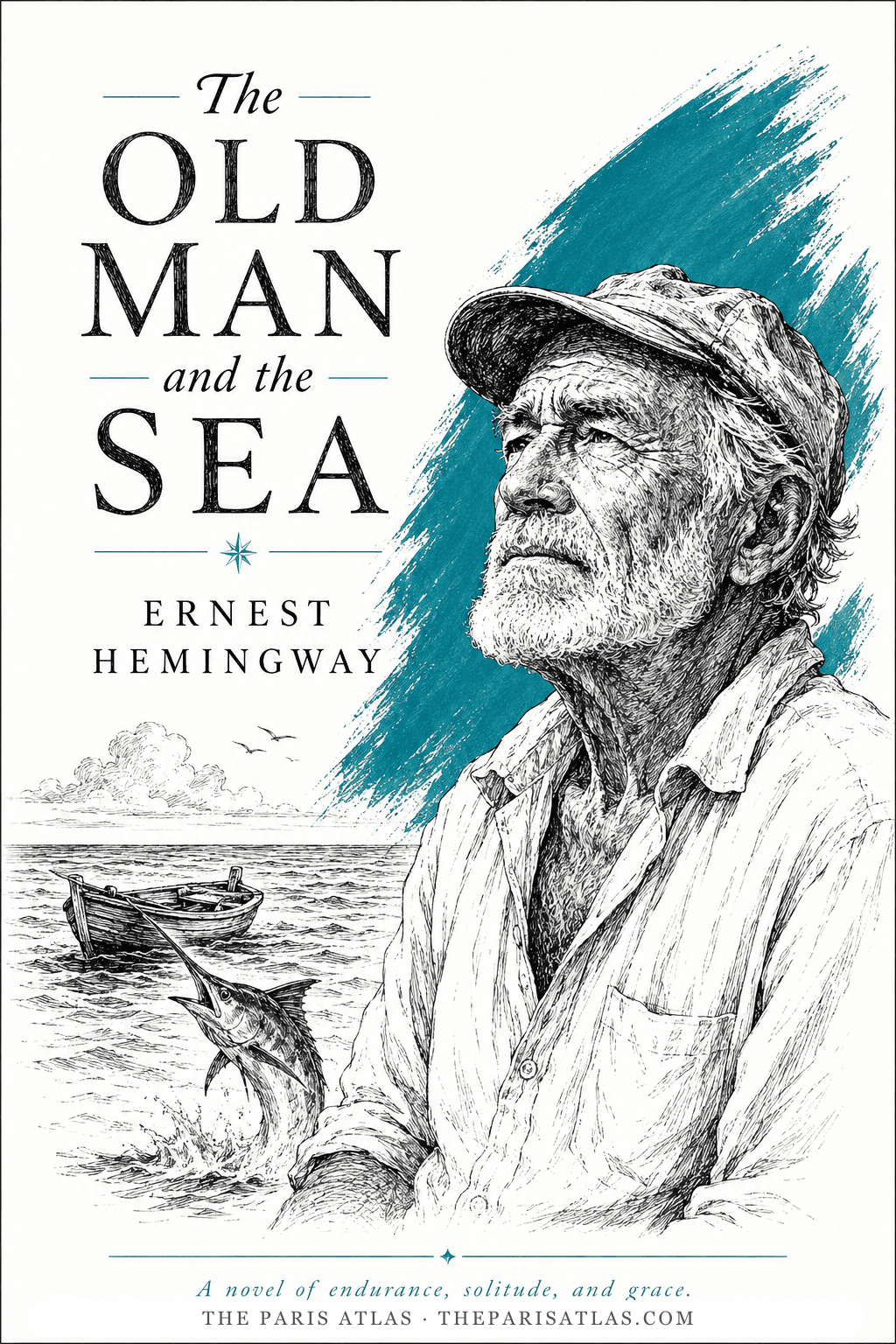
An old Cuban fisherman, eighty-four days without a catch, and the fish of his life — the whole method in one afternoon's read.
Santiago has gone eighty-four days without a fish, and the boy who loves him has been ordered onto a luckier boat. On the eighty-fifth day the old man rows far out into the Gulf Stream alone and hooks a marlin bigger than his skiff — and the rest is a duel of endurance between one worn body and the sea itself. Written late, when the critics had counted Hemingway out, it won the Pulitzer, secured the Nobel, and remains the cleanest introduction to what his prose can do.
No café chatter, no crowd — just one man, one fish, and sentences sanded down to grain. If you want to know what 'Hemingway' means, it's all here in 127 pages.
Written when the literary world had filed him under 'finished,' and it reads that way — an aging champion proving the old moves still work. The subtext needs no footnote.
'A man can be destroyed but not defeated' could be kitsch; the book earns it, line by line, and sends you out oddly consoled.
Hemingway fished these waters for twenty years out of Cojímar, and the village's fishermen — including his own boat captain — swore they knew the real Santiago.
The young man's book to this old man's book — read them as bookends of a career.
A Farewell to Arms
Ernest Hemingway
The same stoic code, tested by war instead of the sea.
In Our Time
Ernest Hemingway
Where the style was invented — the early stories that made this late clarity possible.

Endurance without the consolation — the dark mirror of Santiago's dignity.