
War, colonial Africa, Ford's Detroit, and the Paris night — the century's blackest comedy, told by its greatest bad attitude.
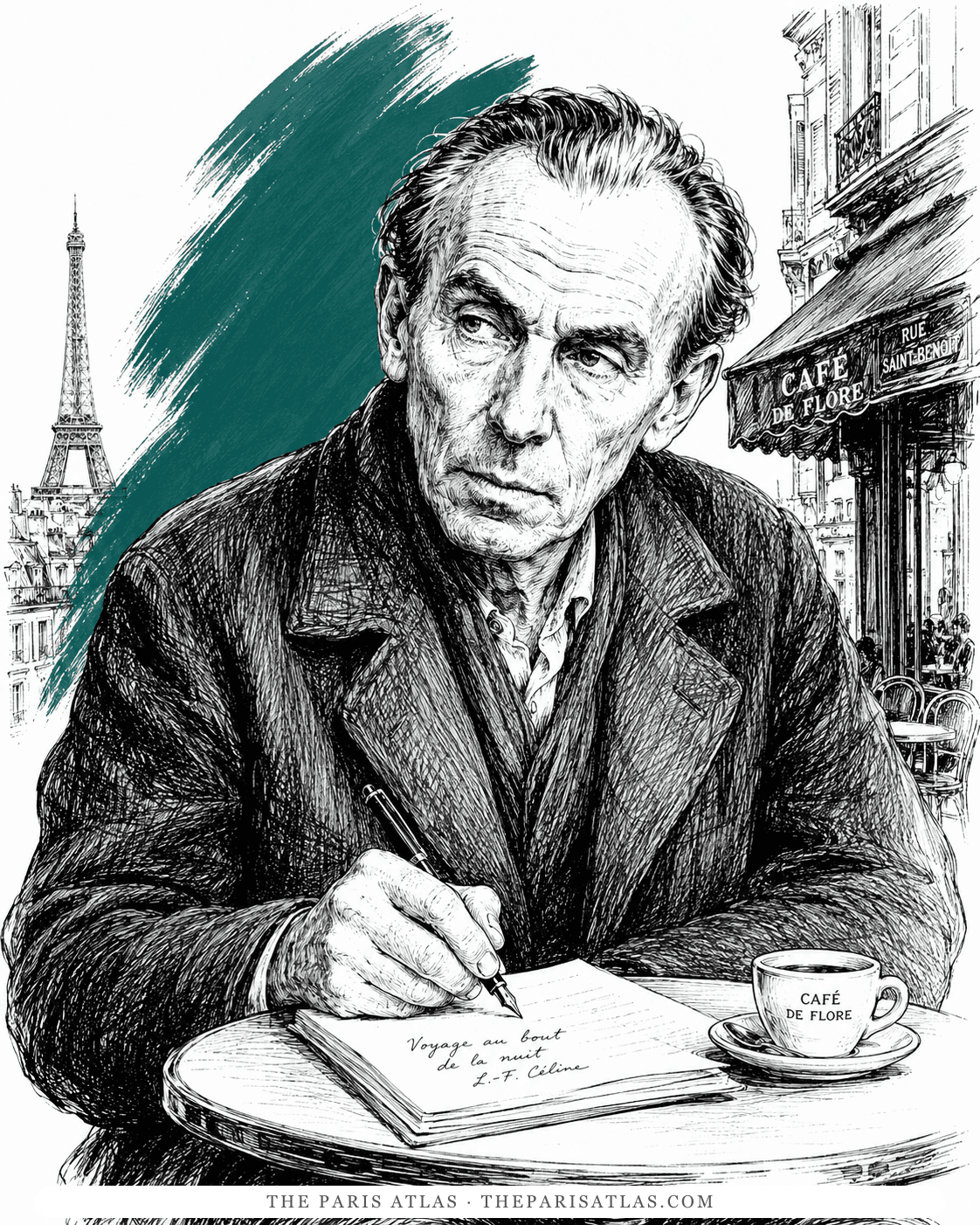
The doctor of the Paris slums who wrote the century's blackest, funniest novel — and then its most unforgivable pamphlets.
Louis-Ferdinand Destouches was wounded and decorated in the first weeks of the Great War, drifted through colonial Africa and a Ford assembly line in Detroit, and settled into medical practice among the poor of suburban Paris — treating patients by day and, at night, writing under his grandmother's name, Céline.
Journey to the End of the Night (1932) detonated on arrival. Written in a spoken, spat, ranting French that critics said couldn't be literature until suddenly it was the most influential style in the language, it followed one battered survivor through war, empire, America, and back to the Paris gutter. Death on the Installment Plan reached further back, into a shrieking Belle Époque childhood, and pushed the style further out.
Then the asterisk, which in Céline's case is closer to a brand: in the late 1930s he wrote antisemitic pamphlets of genuine viciousness, welcomed the Occupation's company, and fled to Denmark ahead of the Liberation's judges. France has argued about him ever since — and kept reading him, because the novels' compassion for the poor and rage at the machinery that grinds them somehow survive their author. We recommend the novels and refuse to look away from the rest.
The masterpiece, and the only honest place to begin: war, Africa, Detroit, and the Paris night, narrated by the century's greatest bad attitude. If the first fifty pages take, you're his for life.
War, colonial Africa, Ford's Detroit, and the Paris night — the century's blackest comedy, told by its greatest bad attitude.
Death on the Installment Plan
Louis-Ferdinand Céline
Céline's shrieking, hilarious portrait of a Belle Époque childhood in the Paris arcades — poverty as opera.
The most famous label in modern literature started as a complaint about a slow car repair. What 'lost' actually meant — and why the writers it named never accepted it.
"Everyone wants to have read the moderns and nobody wants to start," says the veteran bookseller. "My whole job is the on-ramp." An interview about hand-selling a century-old avant-garde.