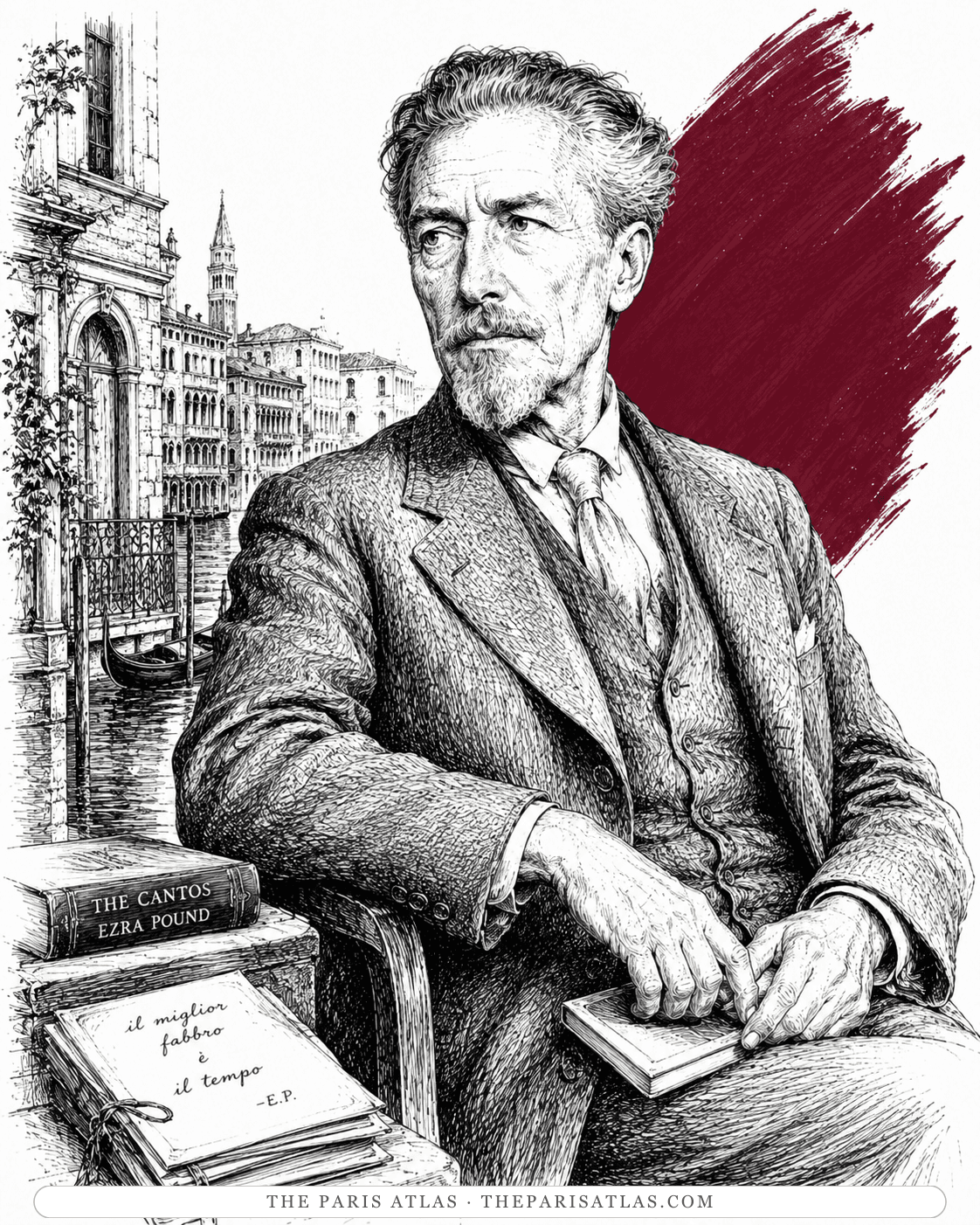

Pound's farewell to London and elegy for the war dead — eighteen pages that indict an entire civilization.
The modernist poem — compressed, allusive, and out to remake the art from the syllable up.
Poetry was modernism's front line. Before the novels caught up, the poets — with Ezra Pound as drill sergeant — had already declared war on ornament: no filler words, no automatic rhymes, no emotion announced instead of embodied. 'Make it new' was Pound's slogan, and his editing pencil enforced it on a generation, most famously on The Waste Land, which he cut nearly in half.
The era's poetry ranges from the perfect small machine (the Imagist poem, two lines doing a paragraph's work) to the deliberately impossible project (The Cantos, a poem attempting to contain all of history). Both extremes share the same conviction: that compression is honesty, and that a reader given the exact image needs no instructions about what to feel.
If verse intimidates you, start with Hugh Selwyn Mauberley — eighteen pages, and its war stanzas explain the entire generation's fury faster than any novel on our shelves.
Pound's farewell to London and elegy for the war dead — eighteen pages that indict an entire civilization.

The 'poem including history' — fifty years, 116 cantos, and modernism's most magnificent ruin.

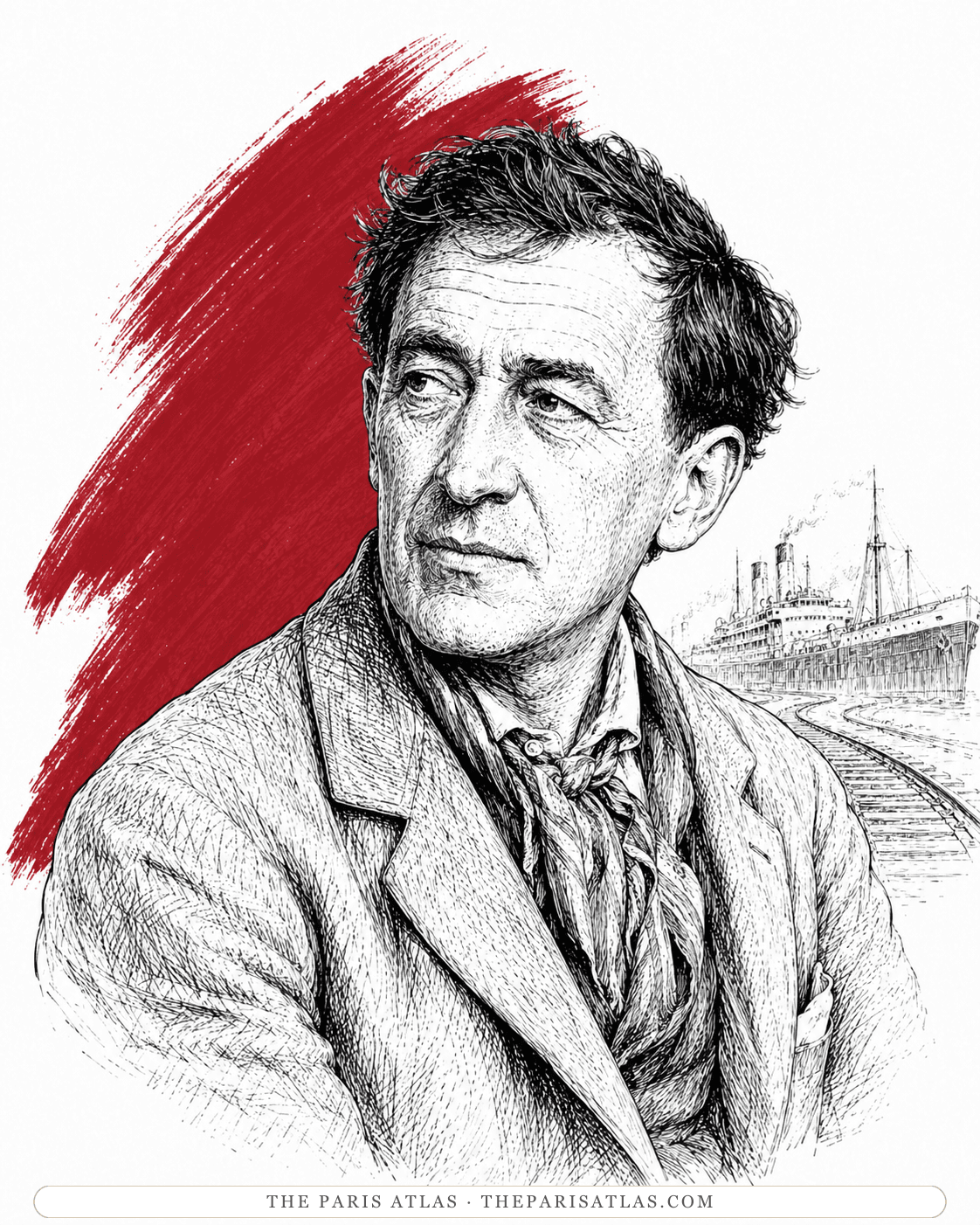
Louis-Ferdinand Céline's two songs — the sailor's chant À nœud coulant and the underworld revenge ballad Règlement, both recorded in his own voice in 1956 and collected as a book in 1981.

All of Ernest Hemingway's poems in one scholarly edition — school verse, Paris satires, war poems, and the private jokes he never meant to publish.

The poem where 'Blaise Cendrars' is born: a starving night in Manhattan, addressed to Christ — and modern French poetry changes course.

The only book of poems James Baldwin published, brought out in London in 1983 when he was fifty-nine and almost nobody knew he wrote them.

Poems that stretch to fit the century — nineteen dispatches from the studios of Chagall, Léger, and Delaunay, and the last verse before the novels.

Seven uncles scattered to the world's ends, one boy reading their letters — the wander-poem John Dos Passos loved enough to translate.

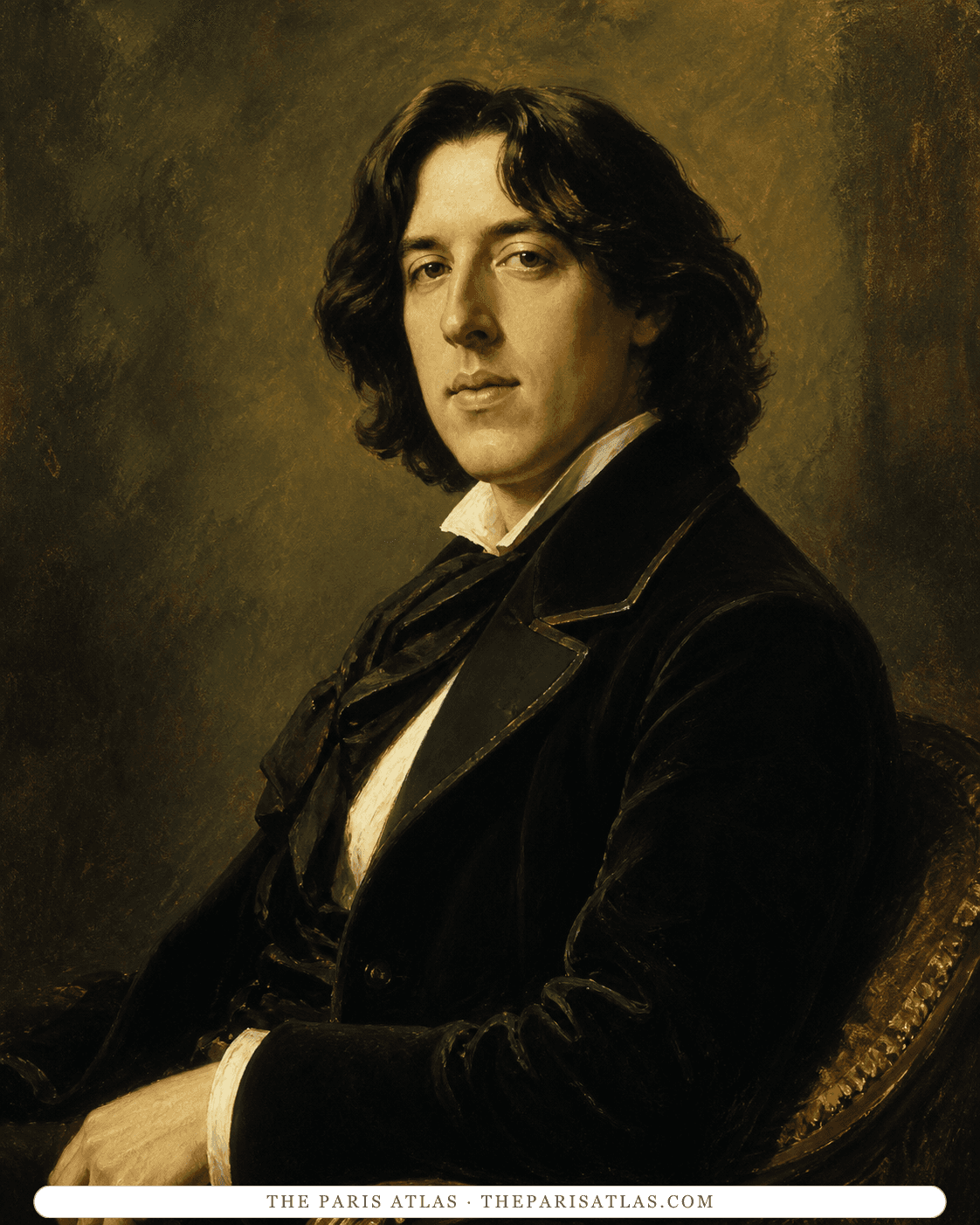
Oscar Wilde's first commercial book, a decorated collection shaped by classical myth, Catholic imagery, travel, love, and the Aesthetic movement.

Still lifes in words from the studio hung with Picassos — objects, food, and rooms painted in sentences. Modernism at its most playful.

A long poem about a prisoner's execution and the institution that makes every person inside share the waiting, fear, shame, and isolation.

The two-meter poem: a train across Siberia, a girl asking if they're far from Montmartre, and Sonia Delaunay's colors running the whole way down.

A long, highly decorated poem in which a speaker questions a sphinx about imagined lovers, gods, monsters, and ancient history.

Langston Hughes's first book: the poems of Lenox Avenue, the sea, and the Paris nightclub kitchen, published when he was twenty-four.

The first book: three hundred copies from a little Paris press, 1923 — everything Hemingway had that the stolen suitcase spared.

The collection that opened the Harlem Renaissance, written in strict sonnets by a Jamaican who refused to soften either the form or the anger.

The poems of the Women years: desire, wreckage and the typewriter, in the collection whose title became Bukowski shorthand.

The final collection published in his lifetime — age, cats, the computer, the dead, and 'Bluebird', the poem where the armor opens.

The one-volume door into the poetry: four decades selected by John Martin, the publisher who paid Bukowski to quit the post office.

The mid-1980s poems: the San Pedro years, the cats, the childhood resurfacing, and the loneliness given its full name in the title.

The first Bukowski book from Black Sparrow Press — 45 poems, 800 paperbound copies, and the start of the partnership of his life.

Eighteen years of poems in one volume — the in-print gateway to the three rare early collections, plus a section of new work.

The second Loujon Press book: 3,100 signed copies, hand-made in New Orleans, with artwork by the painter Noel Rockmore.

The poems between Play the Piano Drunk and Ham on Rye, named for the flowering shrub in the San Pedro garden years.

Nine poems cut from The Days Run Away during editing, rescued into the last of the early Bukowski chapbooks.

Bukowski's first book: a 200-copy chapbook that took thirty months to appear and did not sell out for years.

Bukowski's first full-length poetry collection: 777 copies hand-printed in a New Orleans apartment by Jon and Louise Webb.

The first poetry collection of the full-time years — published the year after Post Office, with the title poem about a mockingbird and a cat.

A decade of portrait poems, issued as a numbered double number of the Wormwood Review — the little magazine that printed Bukowski for decades.

The poems between Women and Ham on Rye, under the longest and most quoted title Bukowski ever put on a book.

A 400-copy Glendale chapbook of eighteen poems — four of which have never been reprinted anywhere since.

The collection that carries the elegies for Jane — Bukowski's grief poems for the great love of his rooming-house years.

The poems of the early 1980s: success arrived, the past not gone, and a writer measuring one against the other.

The posthumous archive begins in earnest: previously unpublished poems from the reserve Bukowski left behind, three years after his death.

A posthumous collection published twelve years after Bukowski's death, near the end of the archive series.

189 previously unpublished poems running from the early 1980s to 1994, the year Bukowski died.

The first posthumous Bukowski volume published by Ecco, after Black Sparrow Press closed in 2002.

A posthumous collection whose title jokes on a famous Yeats line — evidence of how widely read the supposedly artless Bukowski was.

143 previously unpublished poems from the archive, a decade into the posthumous program.

The last Bukowski book published under the Black Sparrow Press imprint, one year before the press closed.

The posthumous volume whose title became the most-quoted Bukowski sentence — 416 pages of poems spanning 1970 to 1990.

The first posthumous book, published two years after his death — poems and stories mixed the way Septuagenarian Stew had mixed them.

Eighty poems and twenty stories shuffled together, published the year Bukowski turned seventy and named for it.

The first of Abel Debritto's thematic gatherings: every poem and passage Bukowski wrote about cats, in 128 pages.

The subject he is most famous for, gathered across 272 pages: the drinking that fed the writing and put him in hospital.

Fifty years of love poems in 224 pages, published two weeks before Valentine's Day 2016 — though the contents are far harder than that suggests.

497 pages arranged by the period of life each piece describes, not by publication date — a life told through its own writing.

98 poems printed as Bukowski typed them — the first collection in twenty-five years to reproduce the manuscripts unaltered.

The volume that actually closed the archive series, two years after the one announced as final.

Announced as the last of the archive collections — though two more followed it.

256 pages rescued from the scarce early pamphlets — the closest thing to a complete early Bukowski.

240 pages chosen as the shortest complete answer to the question of what Bukowski wrote.

A selection of Bukowski chosen by another editor to introduce him to strangers: eighty stapled pages, four hundred copies, printed in Madison, Wisconsin.

Poe's 1845 collection places The Raven beside songs, haunted landscapes, youthful poems, and scenes from a verse drama.

Angelou's third poetry collection joins bodily confidence and resistance to poems of hurt, labor, family, and memory.

Hughes's 1951 sequence joins the voices, interrupted rhythms, and unmet hopes of postwar Harlem.

Plath's late poems move through birth, estrangement, anger, and startling changes of voice.

The 1981 volume gathers Plath's poetry across years, with editorial notes and an early-work appendix.

Plath's first poetry collection makes family, landscape, and ordinary creatures strange in scale.

Twenty-five years of poems split in half by a drowning: the book Hugo asked readers to treat as the work of a dead man.

The travel poem that made Byron famous overnight: a bored young lord wanders from Lisbon to Rome, and the poet slowly takes his place.

Byron's unfinished comic epic: a young Spaniard is seduced, shipwrecked, sold and sent across Europe while the narrator talks over him.

Two dozen short poems written as song lyrics in the winter of Byron's marriage, including She Walks in Beauty and The Destruction of Sennacherib.

Puck brings back the dead of English history to talk to two children in Sussex, and between two of their stories sits "If—".

A woman drowned in a sack, a Venetian's revenge and a deathbed confession, told in broken pieces: the Eastern tale that Delacroix painted twice.

Eight poems from Byron's first summer of exile on Lake Geneva: a prisoner in a castle dungeon, the end of the world, and a poem of thanks to his sister.

Emerson's first book of verse opens with a riddling Sphinx and ends with "the shot heard round the world". Near the end is his lament for his five-year-old son.

Pablo Neruda's long poem of the whole American continent, finished while the Chilean police were looking for him.

Dante's plan to serve philosophy to ordinary readers as a banquet, in Italian, with his own poems as the dishes.

Dante's first book: the poems he wrote for Beatrice Portinari, and his own account of why he wrote each one.

A hundred love poems Pablo Neruda wrote for Matilde Urrutia, arranged from morning to night.

The dark, difficult poems Pablo Neruda wrote alone in Asia in his twenties, and the book that made other poets take him seriously.

A Florentine in exile walks down through hell, up a mountain and into the sky, naming the people he knew on the way.

The book of love poems Pablo Neruda published at nineteen, and the most read book he ever wrote.
Newsletter
The Friday letter explains one book at a time — what style it works in, why that matters, and where to go next.