Hugh Selwyn Mauberley
Ezra Pound
Pound's farewell to London and elegy for the war dead — eighteen pages that indict an entire civilization.
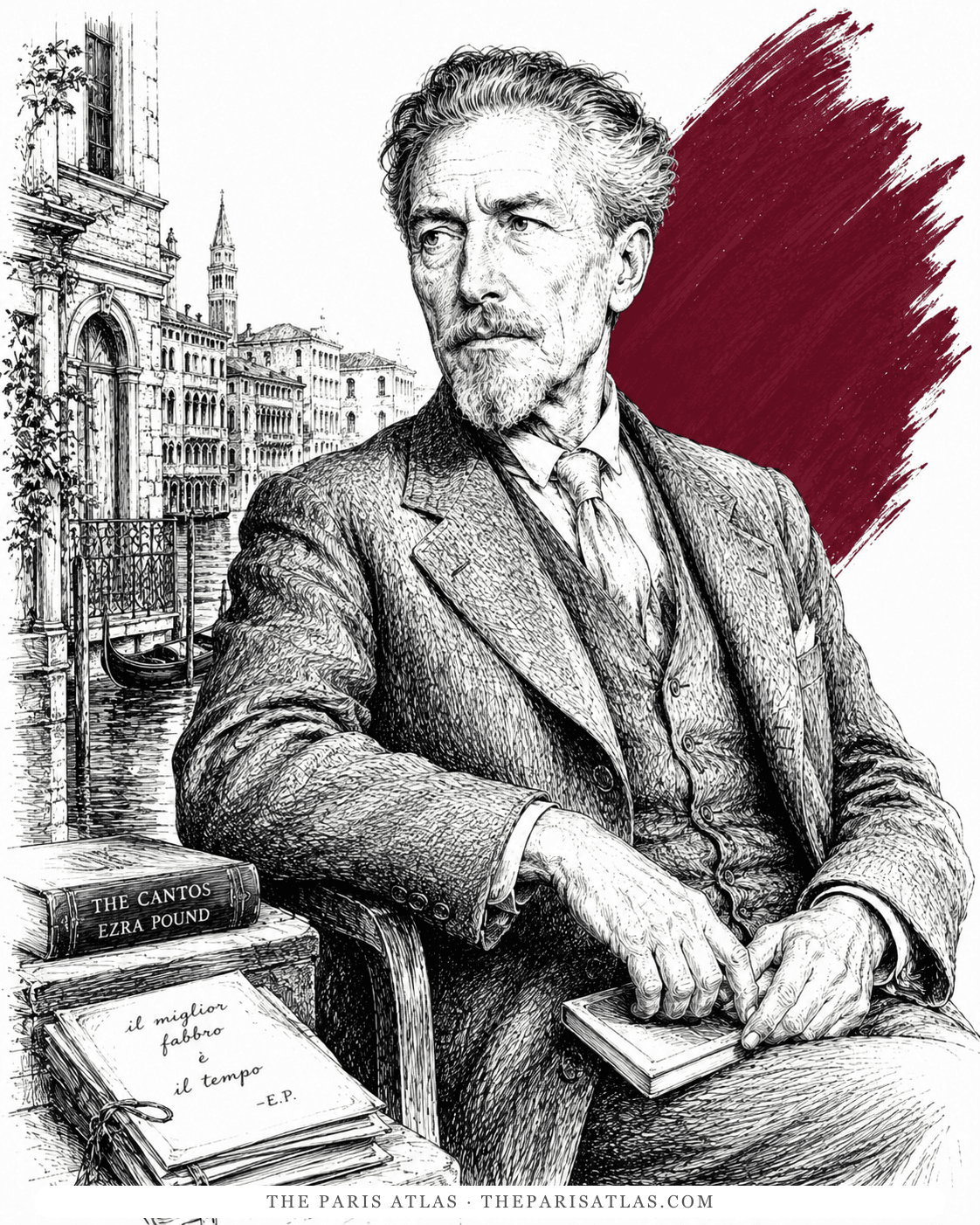
Modernism's impresario — editor of Eliot, publisher of Joyce, Hemingway's line-cutter, and the era's most brilliant, most compromised poet.
No single person did more to build modern literature than Ezra Pound, and almost no one did more to damage his own place in it. From London and then Paris, he operated as the movement's one-man infrastructure: he edited The Waste Land into its final shape (Eliot's dedication — 'il miglior fabbro,' the better craftsman — was earned), championed Joyce's Ulysses into print, drilled the young Hemingway in cutting every spare word, and invented or promoted half the era's -isms.
His own work ran from the perfect small machines of Imagism to Hugh Selwyn Mauberley — his savage farewell to a civilization that had fed a generation to the war — and then into The Cantos, the sprawling, decades-long 'poem including history' that is by turns the summit of modernist ambition and a cautionary tale about it.
The cautionary tale extends to the life. Pound spent the Second World War broadcasting fascist propaganda from Mussolini's Italy, was arrested for treason, and passed twelve years in a Washington asylum; strains of that politics, including open antisemitism, run through the later Cantos. We shelve him the only honest way: as essential, and as a warning. Reading him means holding both.
Hugh Selwyn Mauberley
Ezra Pound
Eighteen pages, written as he left London for Paris — the war elegy ('There died a myriad…') that shows exactly why the whole generation listened to him. The Cantos can wait; this can't.
Hugh Selwyn Mauberley
Ezra Pound
Pound's farewell to London and elegy for the war dead — eighteen pages that indict an entire civilization.
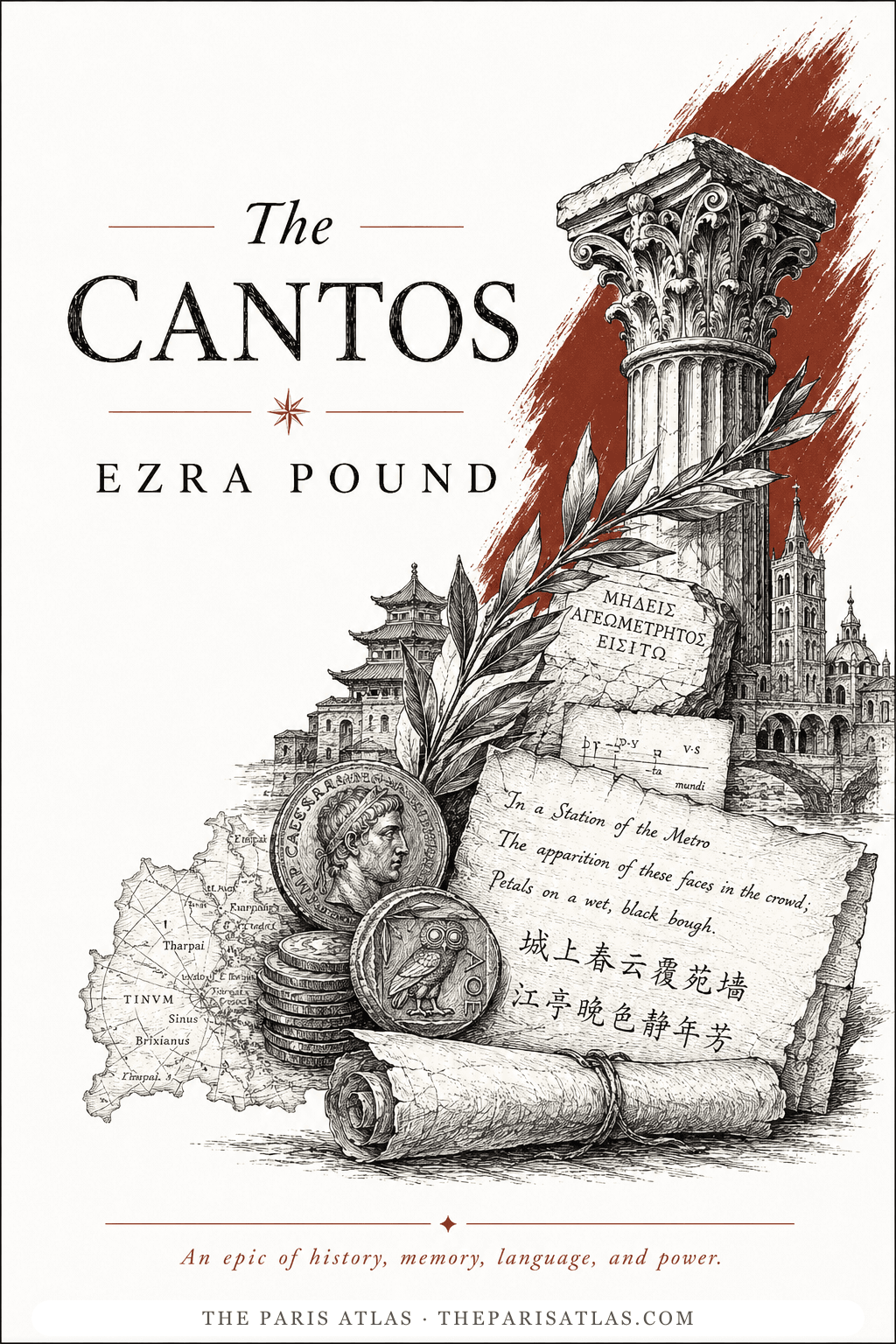
The 'poem including history' — fifty years, 116 cantos, and modernism's most magnificent ruin.
The Lost Generation's Paris wasn't a mood — it was a specific set of rooms within walking distance of each other, and an exchange rate. Here is the real map under the memoir.
Two of the four authors on our masthead did unforgivable things. Here's how our own book club reads them anyway — and why 'anyway' is the wrong word.