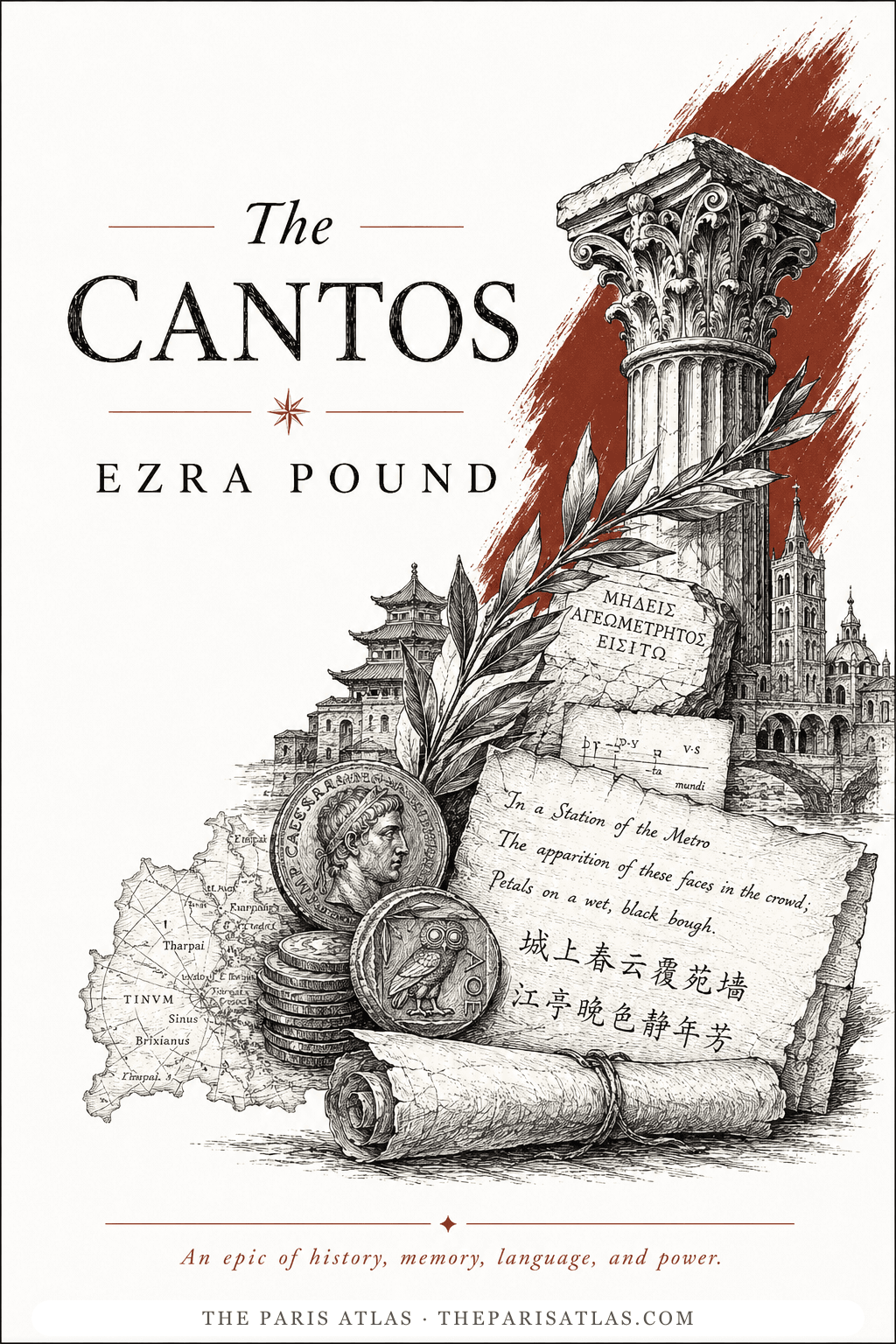
The Cantos
Where he went next — the epic this poem cleared the ground for.
Hugh Selwyn Mauberley
Ezra Pound
by Ezra Pound
Pound's farewell to London and elegy for the war dead — eighteen pages that indict an entire civilization.
Part self-portrait, part exit interview with English literary culture, Mauberley follows a minor poet 'out of key with his time' through a society that rewards the fake and buries the real. At its center stand the war sections — 'There died a myriad / And of the best, among them' — four of the most quoted stanzas of the century, written for friends who did not come back. Pound left for Paris the year it appeared.
'Died some, pro patria, non “dulce” non “et decor”…' — the Great War's bitterest epitaph, and the hinge on which poetry in English turned modern.
The Cantos demands months; Mauberley demands an evening and gives you the whole Poundian toolkit — the compression, the masks, the rage at bad art.
What Pound demanded here — no ornament, no lies, make it new — is precisely what he then drilled into Hemingway across a Paris café table. Read the poem, then reread the prose it produced.
Where he went next — the epic this poem cleared the ground for.
A Farewell to Arms
Ernest Hemingway
The same war grief, carried into prose by his best student.
A Moveable Feast
Ernest Hemingway
Contains the era's warmest portrait of Pound — read them as call and answer.
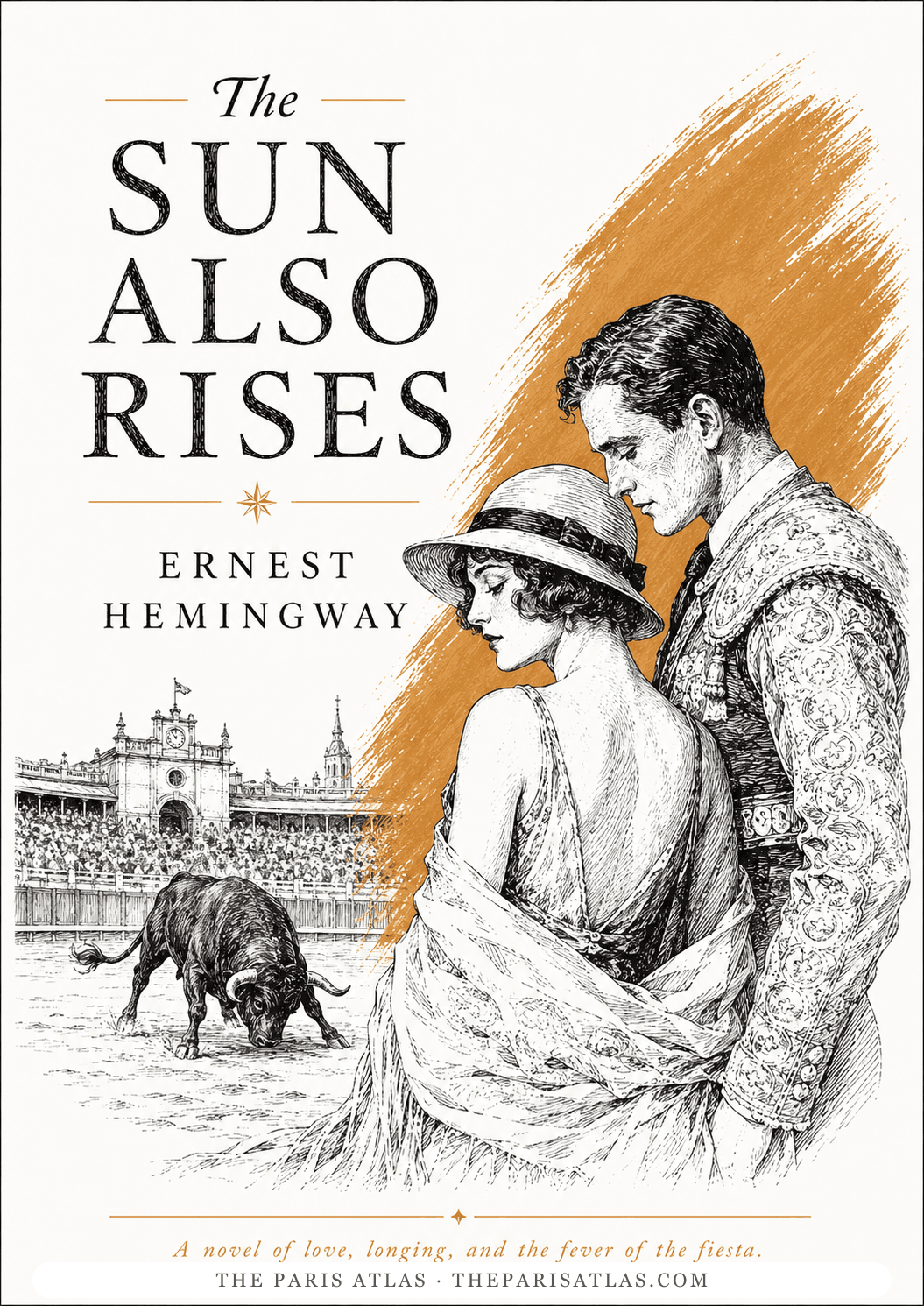
The generation this poem eulogized, drinking through the peace.