
Published · 1934
Tropic of Cancer
Jack Kahane's Obelisk Press issues Miller's first published novel in Paris; no American or British house would print it.
The Paris press that published what London and New York didn't dare — and paid for it with potboilers.
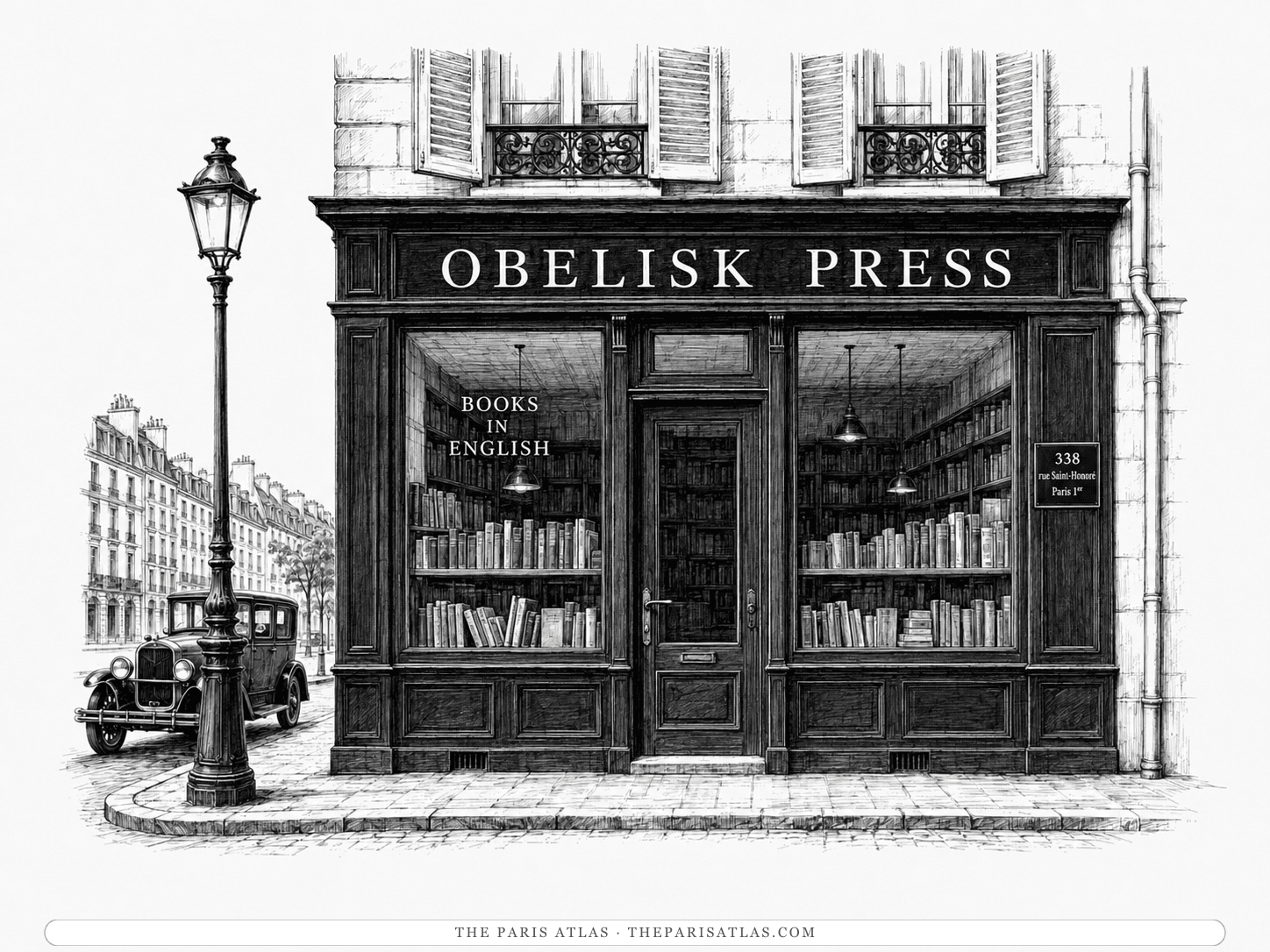
Every censored generation gets the publisher it needs. The English-speaking 1930s got Jack Kahane: a Manchester-born novelist with a taste for the avant-garde, a weakness for the risqué, and a crucial piece of legal arithmetic — books published in English in France answered to no British or American censor. Customs officers could seize them at the border, and did, constantly. But they could be printed, sold in Paris, and slipped into coat linings, and that was enough to build a press on.[1]
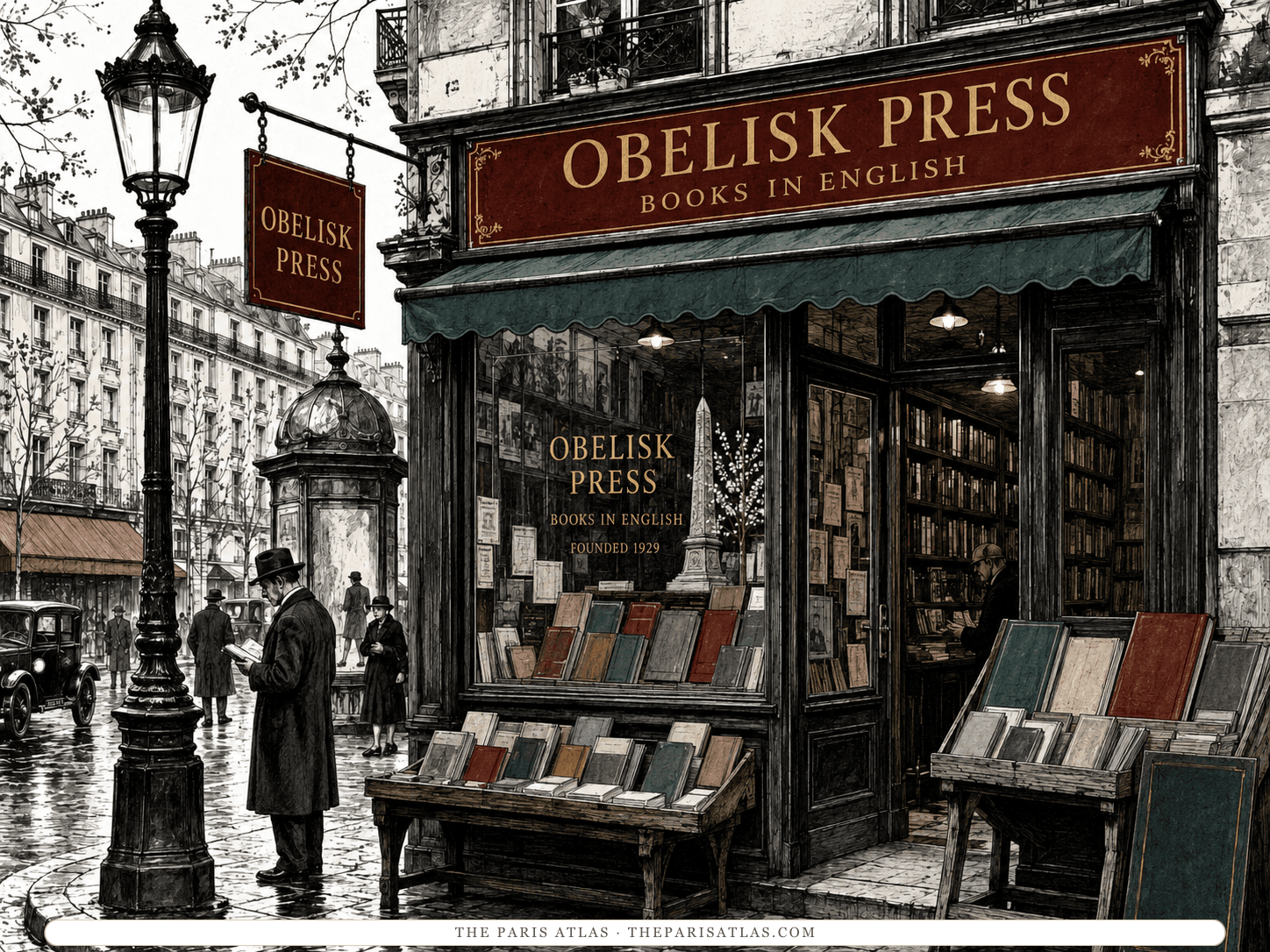
Kahane founded Obelisk in 1929 after his own London publisher went under, going into business alongside Herbert Clarke, an English printer whose Imprimerie Vendôme at 338 rue Saint-Honoré did the actual work. There was never a shop: the address was a working print room on a street of expensive boutiques, and the books left it for coat linings rather than window displays. The business model was a two-sided ledger unique in publishing history. On one side: frankly commercial 'db's' — dirty books, Kahane's own cheerful term — many written by Kahane himself under the pen name Cecil Barr, beginning with Daffodil in 1931. On the other: literature no respectable house would touch. The naughty books paid the bills; the bills bought the gambles; and the gambles turned out to include some of the century's most important fiction.[1]
The scandalous list and the essential list are usually the same list, ten years apart.
The list tells the story. Obelisk reprinted The Well of Loneliness, Radclyffe Hall's lesbian novel banned in Britain after a notorious 1928 obscenity trial. It published James Joyce when the big houses hesitated, James Hanley's suppressed Boy, Frank Harris's unprintable memoirs, Cyril Connolly's only novel, and the young Lawrence Durrell's The Black Book — which Durrell always said Obelisk alone would print whole. And in September 1934 it issued a first novel by an unknown, forty-two-year-old American who had been living hand to mouth in Paris: Henry Miller's Tropic of Cancer, the book that would eventually go to the U.S. Supreme Court and end literary censorship in America. Obelisk published five more Miller titles, including the rest of what became the Paris trilogy.[1][2]
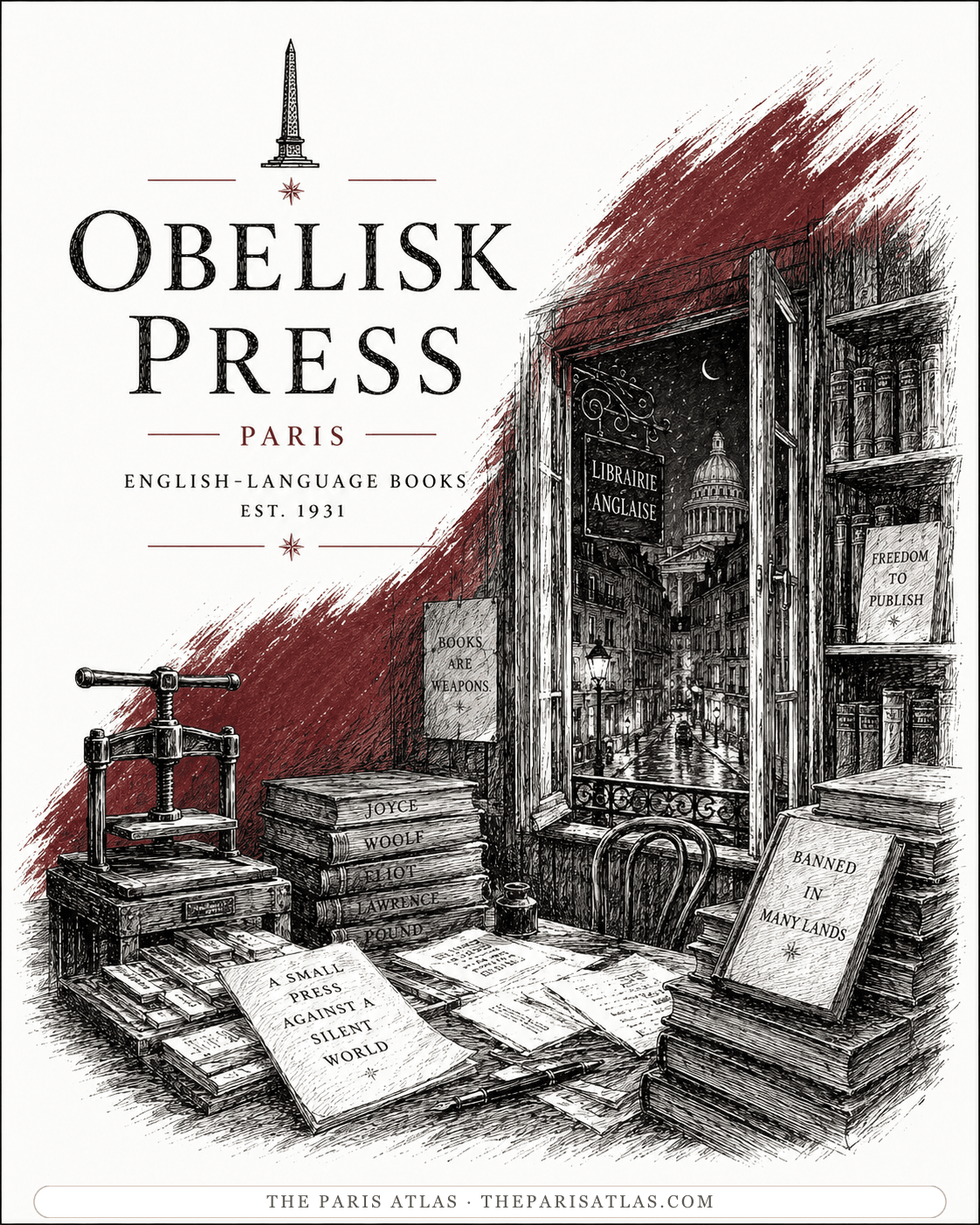
It was a family shop in the most literal sense: Kahane's wife Marcelle and their son Maurice drew and designed covers for the imprint. The son is a story of his own. During the Occupation he took his mother's maiden name — Girodias — to survive the war as a Jew in Paris, briefly revived Obelisk afterward (selling Miller by the crate to American G.I.s passing through on their way home), and in 1953 founded the Olympia Press, which ran his father's playbook for a new generation: Lolita, Beckett, Naked Lunch. The family firm, in two generations, published the banned masterpieces of both halves of the century.[3][1]
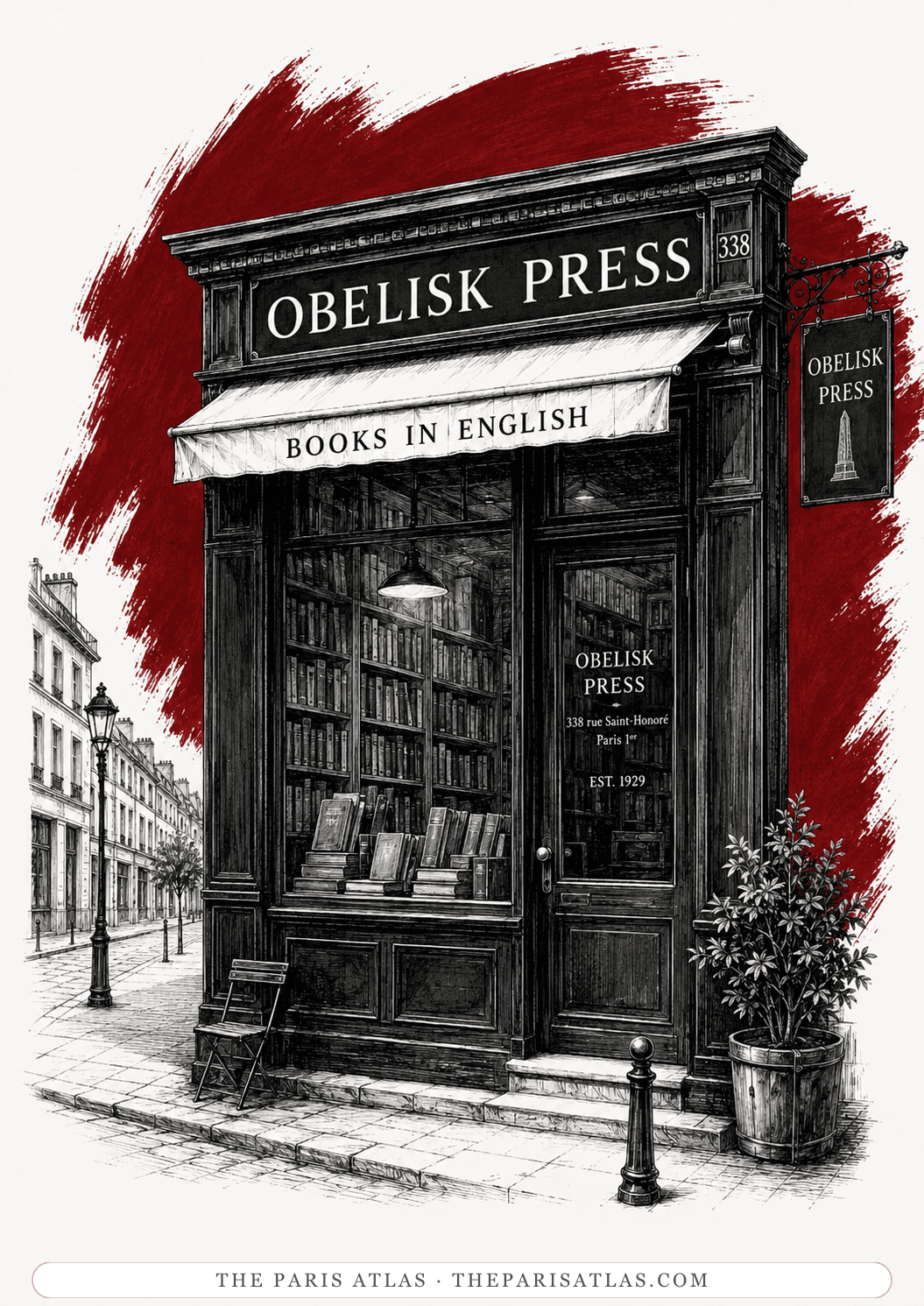
Kahane himself did not live to see any vindication. He died on 3 September 1939 — within days of the war's outbreak — having just completed his own book, a memoir with the perfect title: Memoirs of a Booklegger. It is hard to improve on as an epitaph. He was a self-confessed peddler of naughty books who understood, earlier and more cheerfully than the great publishing houses, that the scandalous list and the essential list are usually the same list, ten years apart.[1]
338 rue Saint-Honoré, 1st arr.
Herbert Clarke's Imprimerie Vendôme, where the books were printed. Not a shop, and the street is luxury retail today.
Jack Kahane founds the press in Paris with printer Herbert Clarke after his London publisher goes bankrupt.
Publishes Daffodil, the first of Kahane's own money-making 'Cecil Barr' novels.
Publishes James Joyce's Pomes Penyeach and Haveth Childers Everywhere.
Publishes Henry Miller's Tropic of Cancer — refused by every London and New York house.
Publishes Miller's Black Spring and Cyril Connolly's The Rock Pool.
Publishes Lawrence Durrell's The Black Book, unexpurgated.
Publishes Miller's Tropic of Capricorn and Anaïs Nin's Winter of Artifice. Kahane dies on 3 September, days into the war.
Maurice Girodias briefly revives the press, selling Miller to homebound G.I.s, then folds its spirit into his new Olympia Press.
Founder & publisher
Manchester novelist turned Paris booklegger — half avant-garde talent scout, half unapologetic smut merchant, wholly necessary.
Visit their page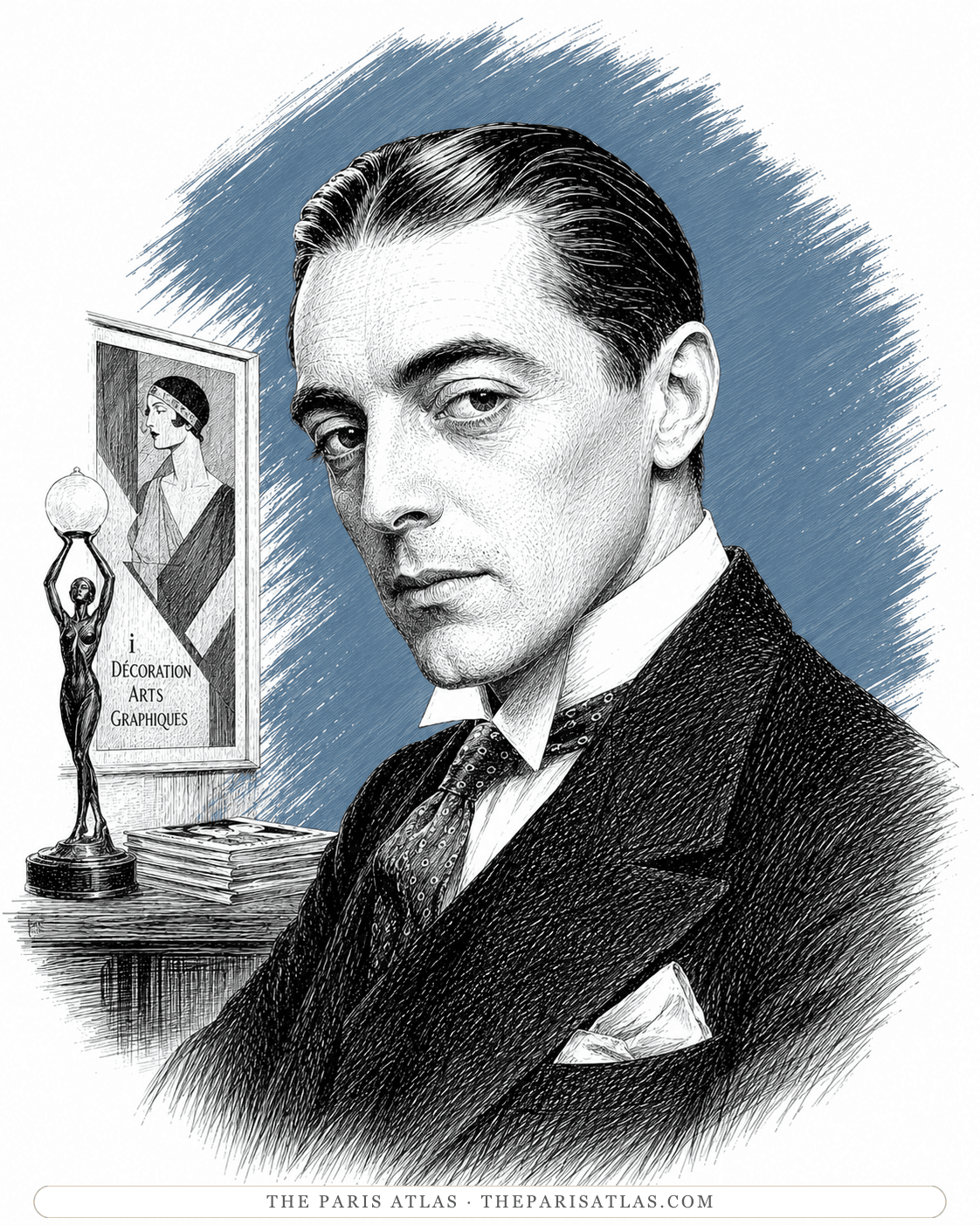
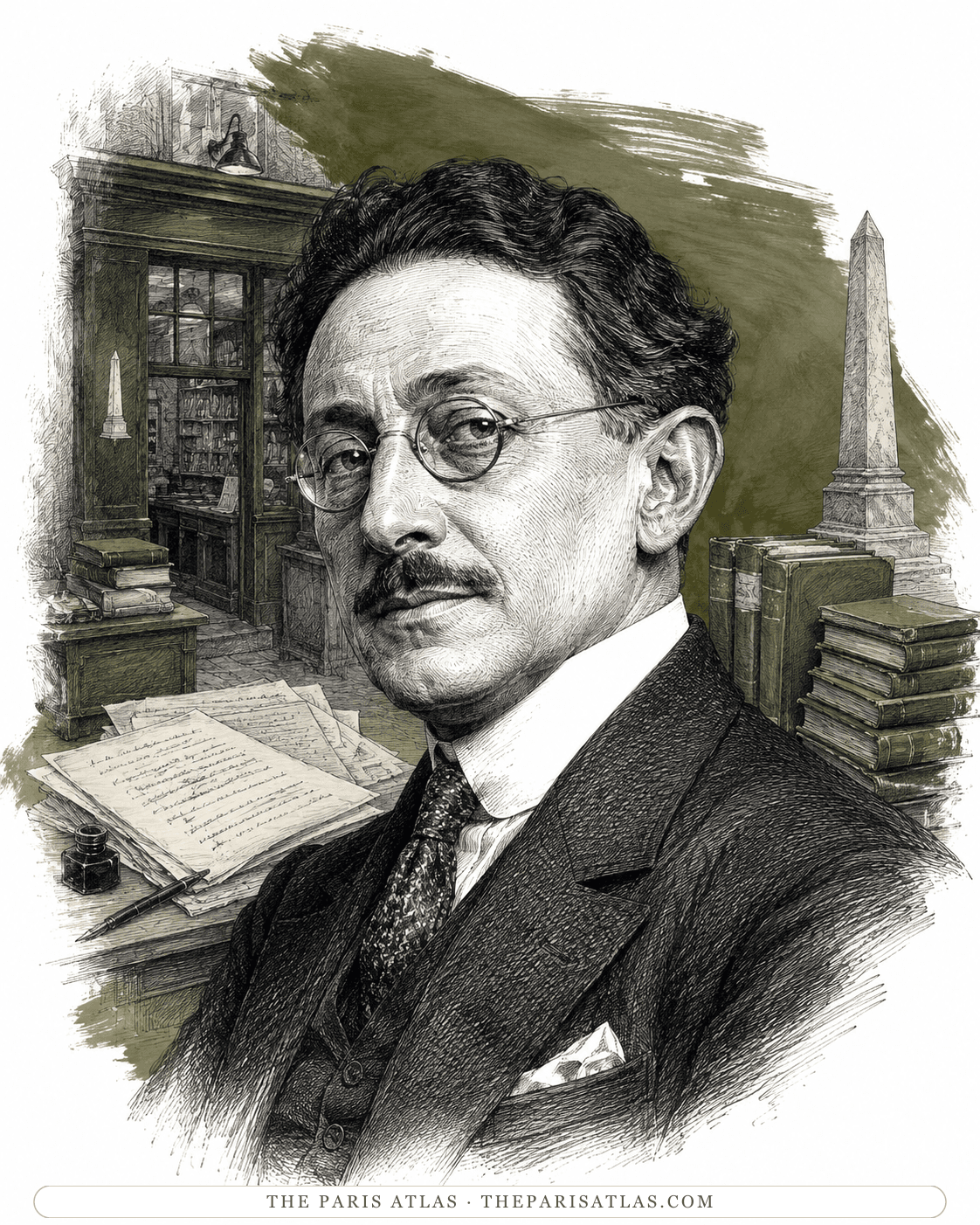
Printer & partner
Owner of the Imprimerie Vendôme, whose presses turned Kahane's gambles into physical books.
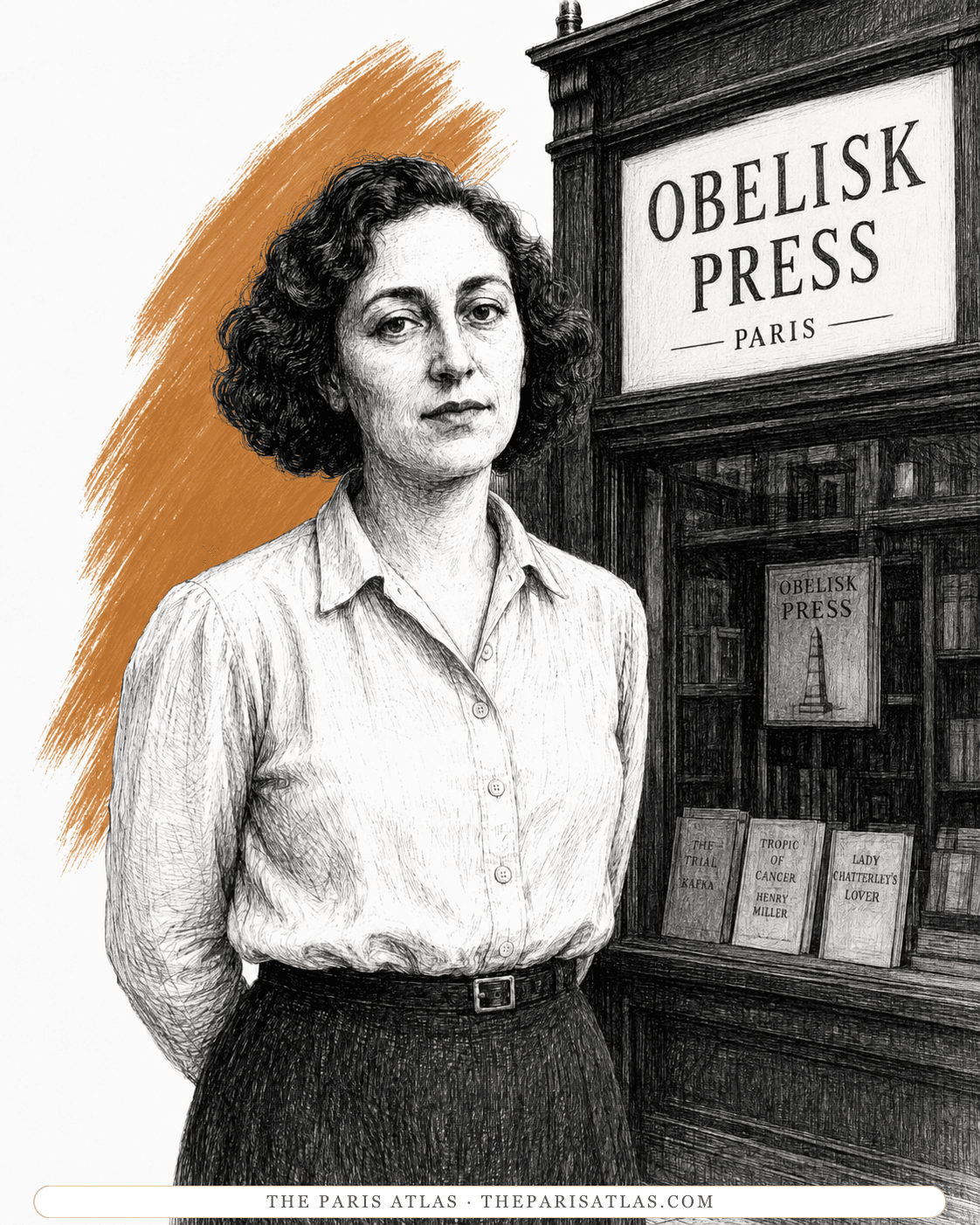
Cover illustrator
Kahane's wife, whose designs gave the contraband its look.
Visit their pageCover artist, later heir
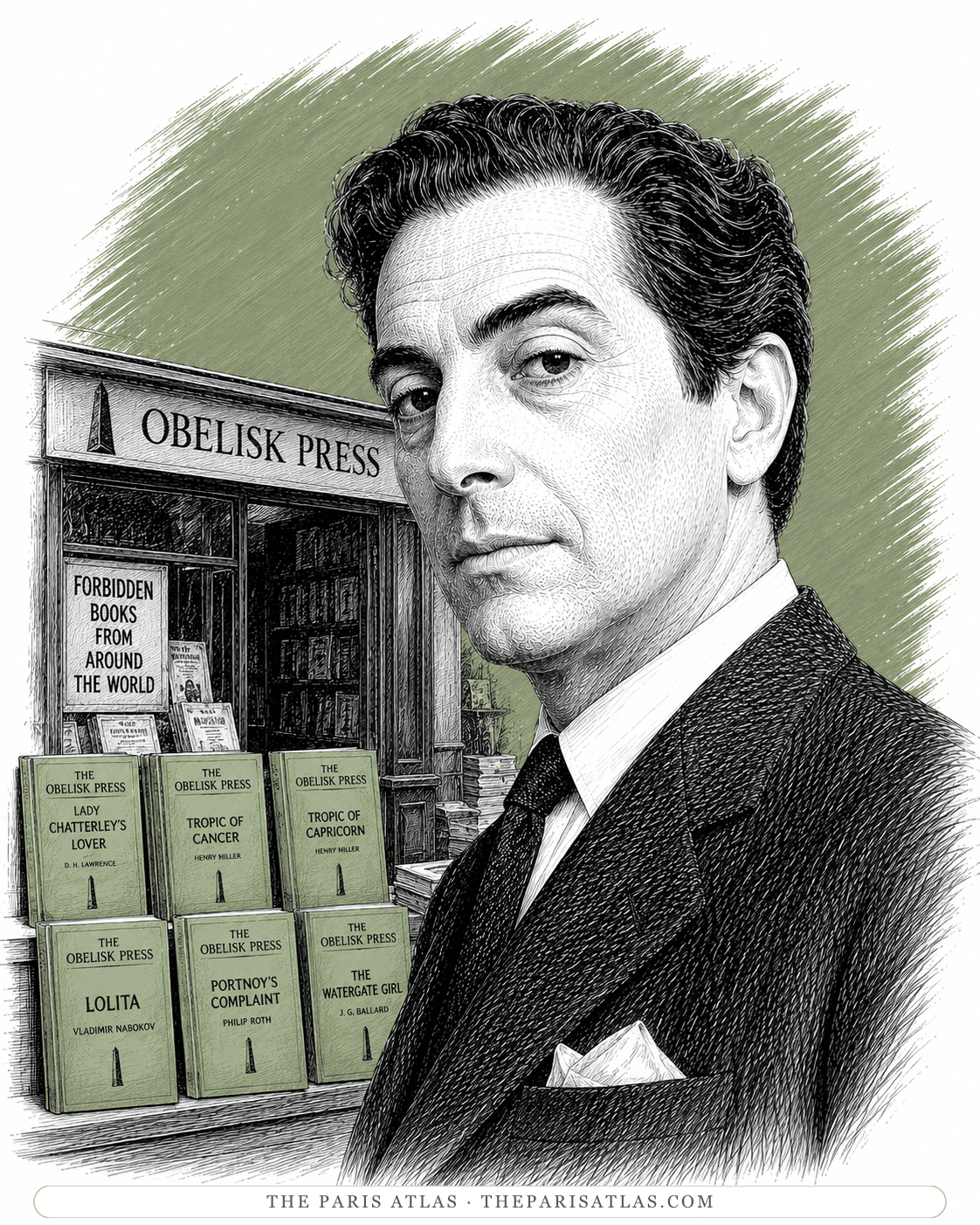
The son who survived the Occupation under his mother's name, revived the press, and founded Olympia — publisher of Lolita — in 1953.
Visit their pageThe house masterpiece: banned for 27 years, then the test case that ended American literary censorship.
On our shelves


The New York prequel, out just months before the war closed the whole experiment.
On our shelves
Radclyffe Hall's banned novel joined the Obelisk list in 1933. The 1928 Paris edition that first kept it in print after the British ban was the Pegasus Press's, not Obelisk's — the press did not yet exist.
The young Durrell's breakthrough, printed whole when London would only take it cut.
The great critic's only novel — too louche for London, no trouble at all for Paris.
Nin's early fiction, published in the press's final season.
The memoir so scandalous its author had been printing it privately — squarely on the 'db' side of the ledger.
Published · 1934
Jack Kahane's Obelisk Press issues Miller's first published novel in Paris; no American or British house would print it.
Published · 1939
Issued in Paris in the last months before the war; Kahane died that September.

Published · 1939
Nin's novellas appear as a volume of Obelisk's Villa Seurat Series.

Published · 1949
Printed in Paris in two volumes for private circulation, a decade after Kahane's death, under his son Maurice Girodias.

Published · 1960
The first English-language edition appears in Paris marked Volume 1; the promised second volume never followed.
Founded by · 1929
Founded in Paris with printer Herbert Clarke after Kahane's London publisher went under — the press that printed what London and New York didn't dare.
Operated by · 1929–1939
Kahane ran the press himself from its founding until his death in September 1939, days after the war began.

Published · 1935
Siana Series no. 1, October 1935 — 150 copies, printed at the author's expense.

Published · 1938
September 1938, volume 2 of the Villa Seurat Series — the imprint Miller edited from his studio.

Founded by · 1929
Jack Kahane started the press in partnership with Clarke, an English printer who owned the Imprimerie Vendôme at 338 rue Saint-Honoré. Clarke's print room was the only premises Obelisk ever had; the firm is usually credited to Kahane alone.
Employed
She drew covers for the imprint, as did her son Maurice. The press was run out of the family.
Operated by · 1945
Girodias briefly revived his father's press after the war, reissuing Henry Miller and other English-language titles to American soldiers passing through Paris. He founded the Olympia Press in 1953.
The sources below include institutional histories, archival materials, scholarly research, and primary records that informed this page. They document Obelisk Press, the people connected to it, and its cultural history.


Primary text included as part of the documented record for Obelisk Press.
First-person evidence and historical context used in preparing the Obelisk Press page.
Primary text included as part of the documented record for Obelisk Press.
Primary text included as part of the documented record for Obelisk Press.

Archival evidence used to document the historical record connected to Obelisk Press.
These references provide the documented foundation for this organization's history and context. Claim-level citations remain attached to the specific claims they support.
 Explore more resources
Sylvia Beach's lending library published Ulysses and fed the Lost Generation's reading habit; a decade after it closed, George Whitman's separate shop took up the name and never stopped.
Visit the page
Ford Madox Ford's monthly ran for exactly one year from a Paris quai — and published Joyce, Stein, Hemingway, Rhys, and Barnes on its way out the door.
Visit the page
The American publisher of the 1920s expatriates. Scribner's had Henry James and Edith Wharton before it had Fitzgerald and Hemingway, and it kept them all through one long editorial tenure.
Visit the pageNewsletter
Presses, magazines, bookshops, and the writers who haunted them — one story from the Paris ecosystem in every letter.
