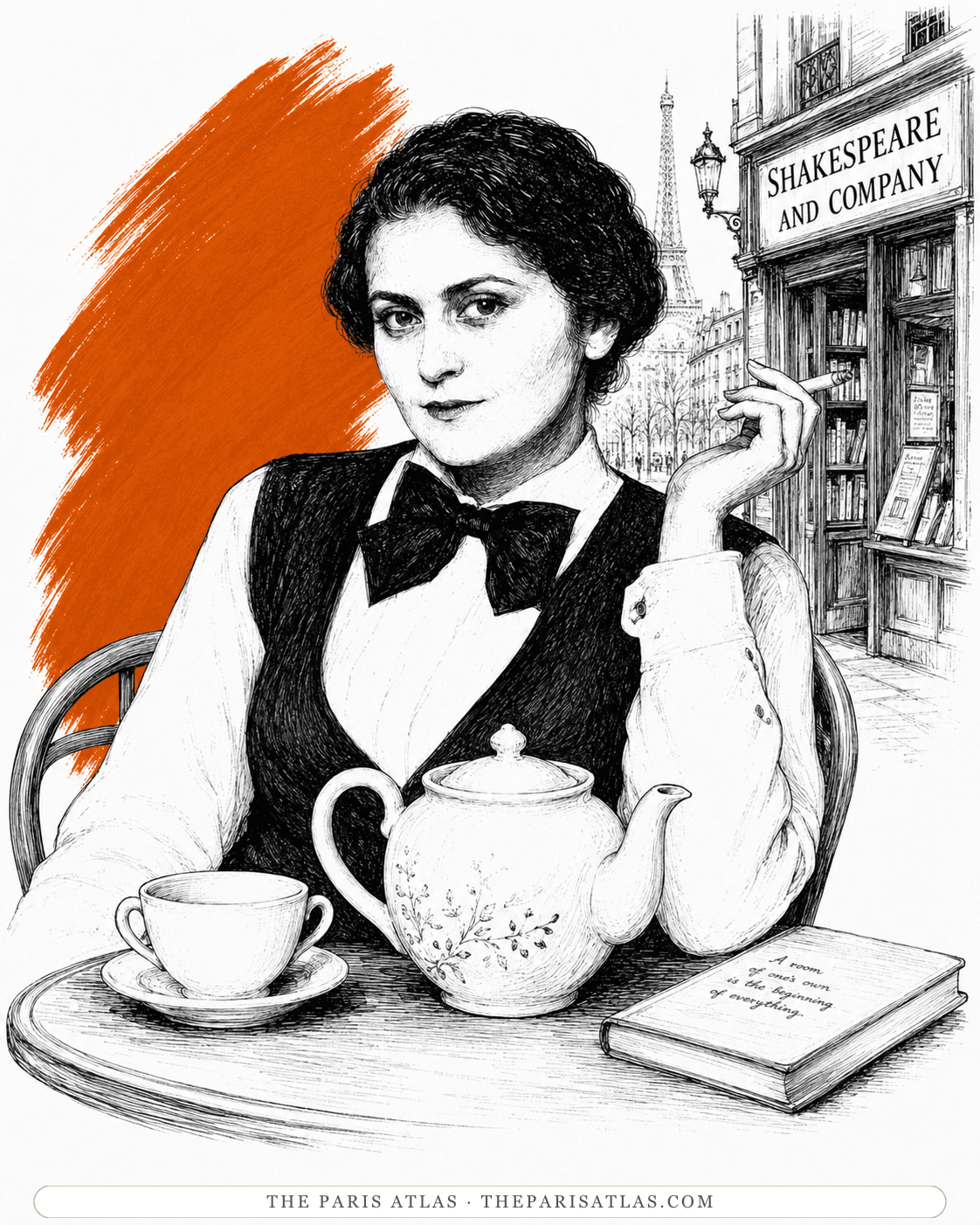


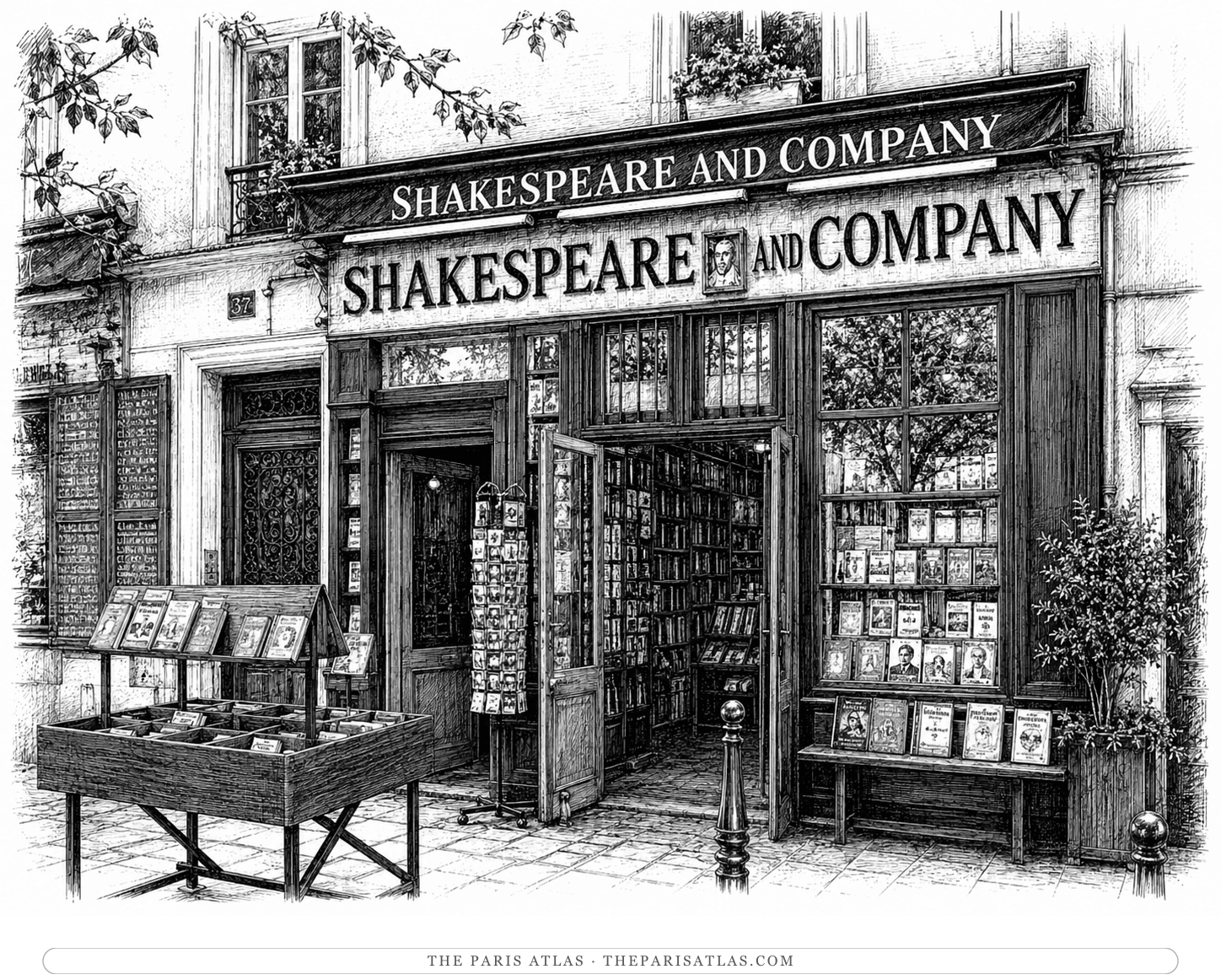
Shakespeare and Company
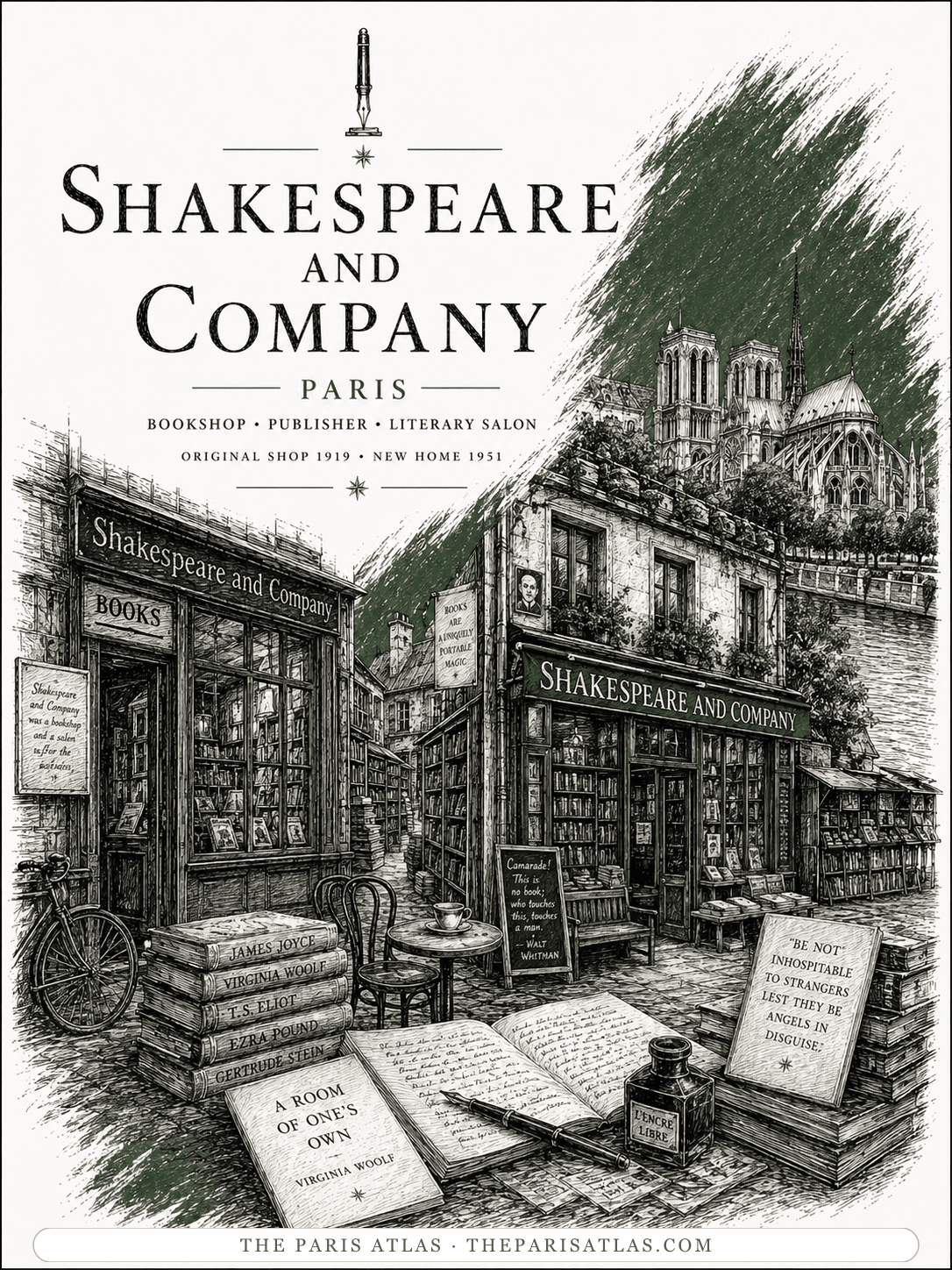
Two shops, three addresses, one name — the bookstore that published Ulysses, and the one that took up the torch.
- Sylvia Beach (1919) · George Whitman (1951)
- Left Bank, Paris


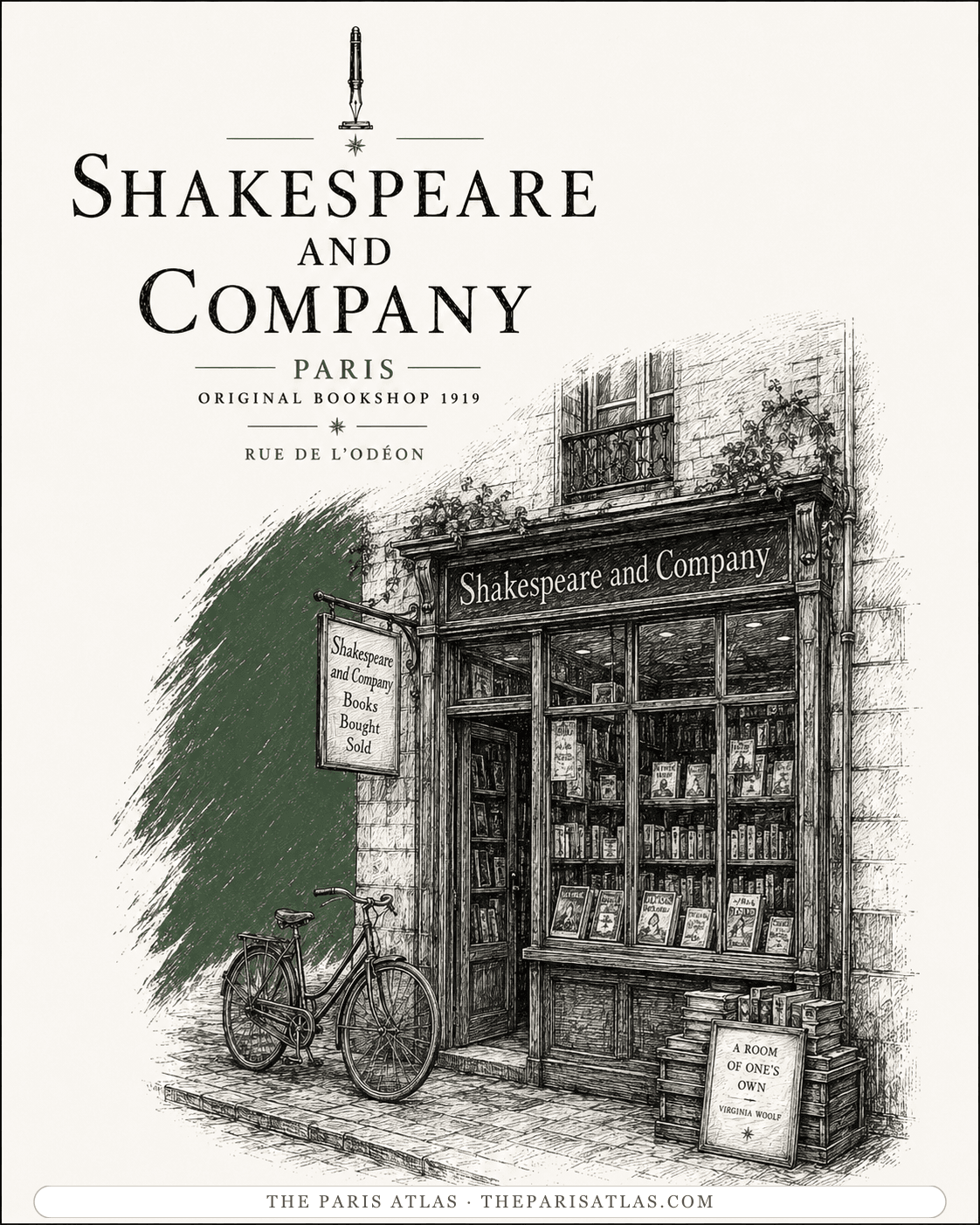
Shakespeare and Company is really two bookstores separated by a decade of war and connected by a deliberate act of inheritance. Understanding the era on our shelves means knowing both.
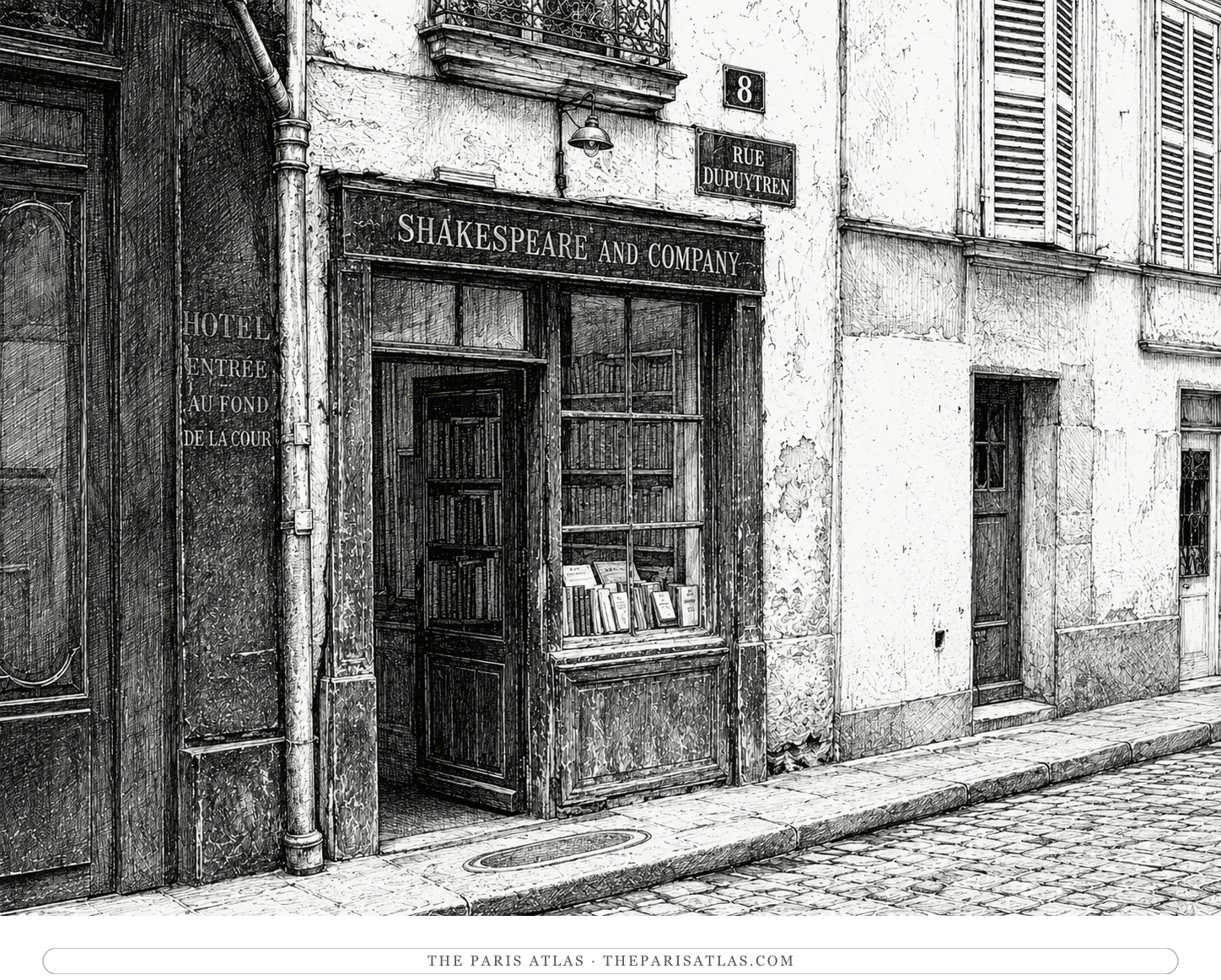
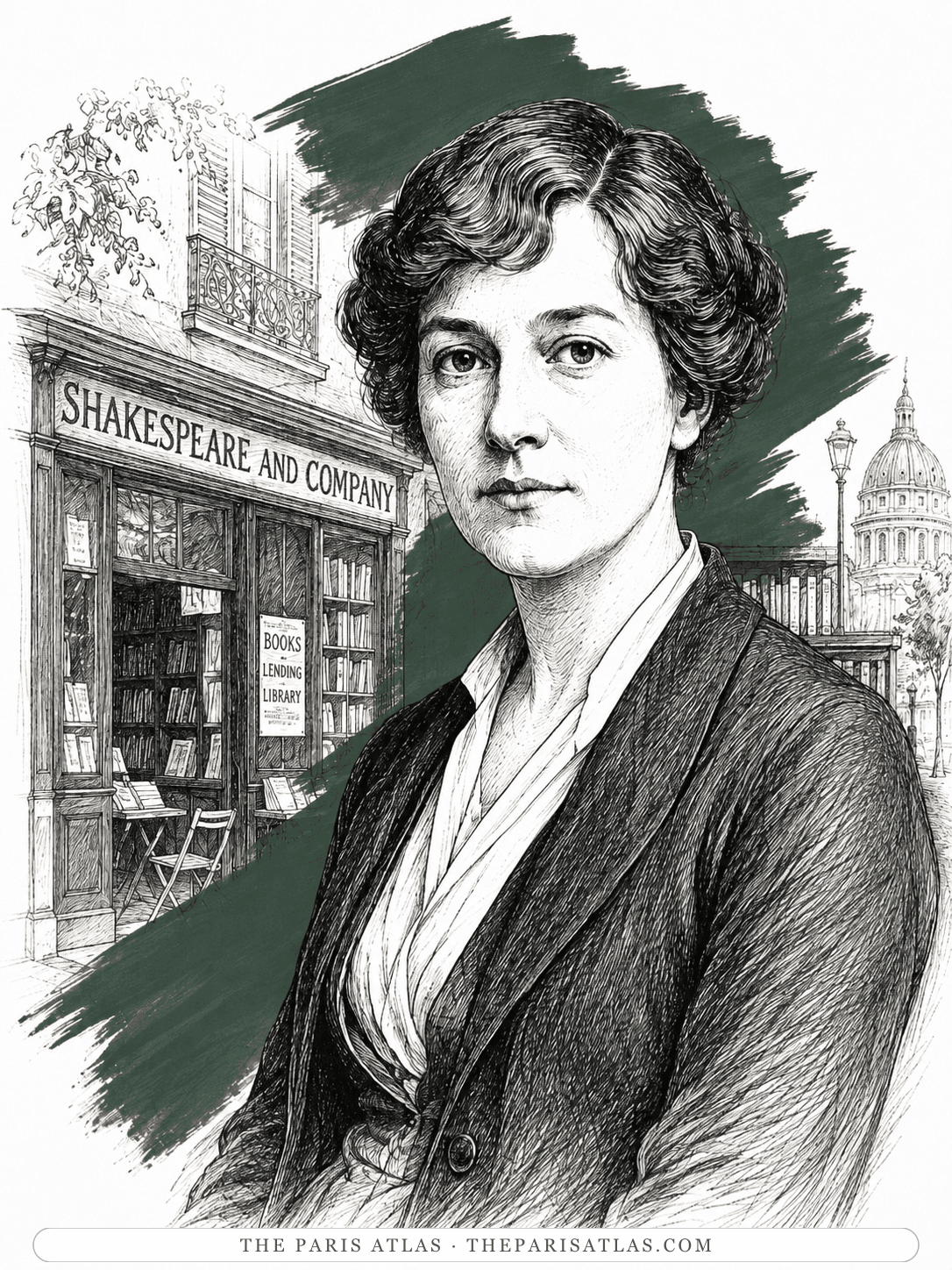
The first was Sylvia Beach's. The American opened her English-language bookshop and lending library in November 1919 — first on the rue Dupuytren, then from 1921 at the famous 12 rue de l'Odéon, directly across from La Maison des Amis des Livres, the French bookshop run by her partner Adrienne Monnier. For the broke Anglophone writers flooding postwar Paris, the lending library was the whole education: Hemingway, who couldn't afford to buy books when he arrived, borrowed by the armload on credit and repaid the debt with one of the warmest chapters in A Moveable Feast. And in 1922 Beach did the thing no commercial publisher on either side of the Atlantic would do: she published James Joyce's Ulysses herself, seeing the century's most notorious novel through the press of a Dijon printer and into the hands of subscribers — making a Left Bank bookshop, briefly, the most important publisher in the English language.
The first shop did not survive the Occupation. The store closed for good in 1941 — the legend, told by Beach herself, is that a German officer, refused her last copy of Finnegans Wake, threatened to confiscate everything, and the entire stock vanished into an upstairs flat within hours. Beach was later interned; the shop never reopened. In August 1944 her friend Hemingway, rolling through the city with the liberation, made a point of stopping at the rue de l'Odéon — to 'liberate' the street personally, as both of them enjoyed telling it.
Be not inhospitable to strangers, lest they be angels in disguise.
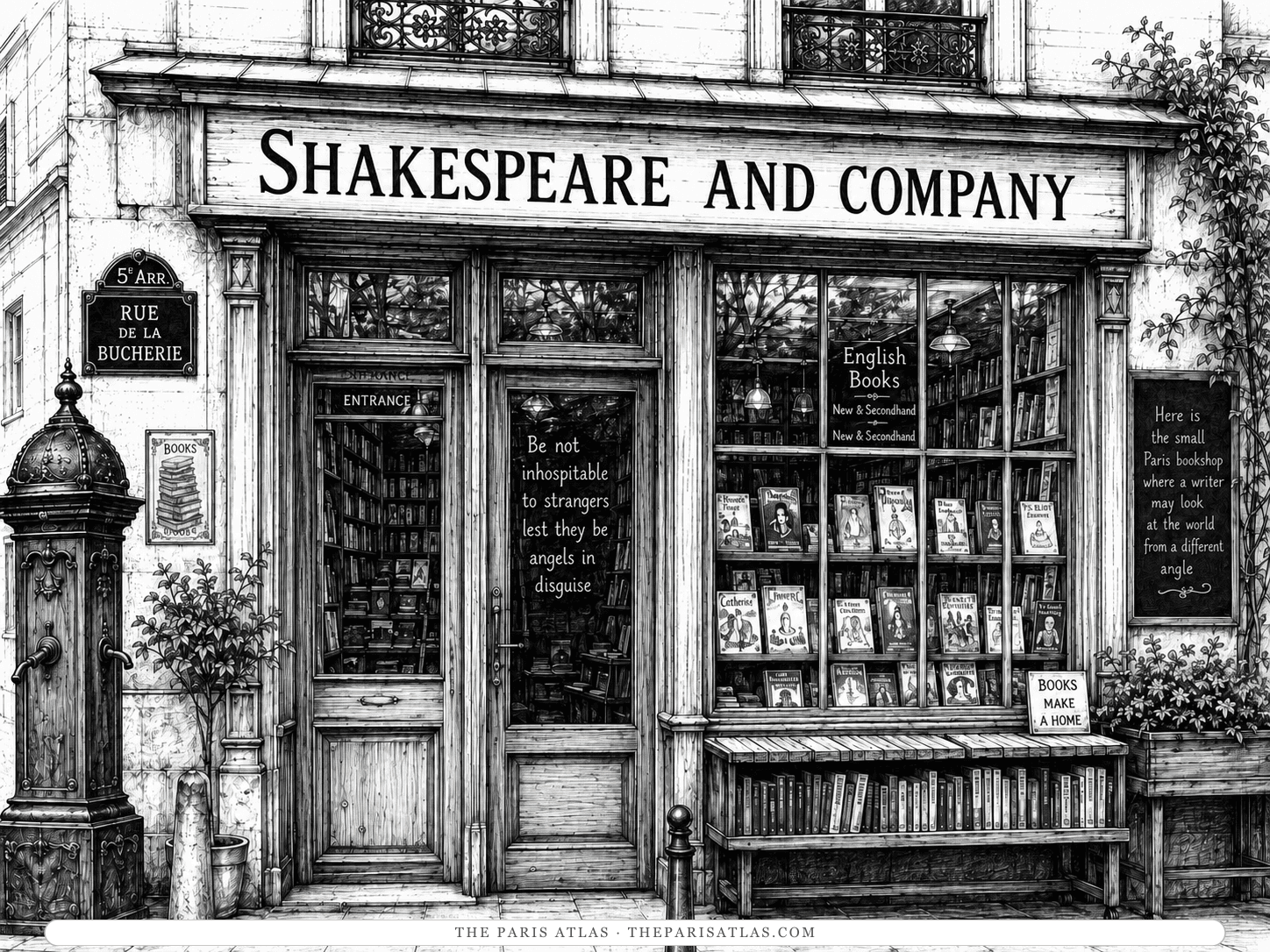
The second act began in 1951, when George Whitman — an American ex-serviceman whose Depression-era wanderings had taught him the hospitality he later made a creed — opened an English bookshop called Le Mistral at 37 rue de la Bûcherie, in a building that had once been part of a sixteenth-century monastery, facing Notre-Dame across the Seine. It became to the Beat Generation what Beach's shop had been to the Lost one: Ginsberg, Corso, and Burroughs all haunted it, and a new generation of little magazines — Merlin, which first published Beckett in English, among them — used it as an editorial address. Henry Miller, closing the circle with our shelves, pronounced it 'a wonderland of books.'
The name passed with Beach's blessing — she announced the gift at a 1958 dinner — and in 1964, after her death and on Shakespeare's four-hundredth birthday, Whitman renamed Le Mistral in her shop's honor. He called the result 'a socialist utopia masquerading as a bookstore,' and ran it accordingly: beds tucked between the shelves, where aspiring writers — 'Tumbleweeds,' blown in on the winds of chance — could sleep free in exchange for a few hours' help, a book read a day, and a one-page autobiography for the archive. By the shop's own count, more than thirty thousand people have taken the deal since 1951. The motto painted over the library door states the theology: 'Be not inhospitable to strangers, lest they be angels in disguise.'
Whitman died in 2011, aged ninety-eight, in the apartment above the shop; his daughter — named Sylvia, for Beach — runs it today with her partner, having added a literary prize, a festival, and a café next door. The through-line from 1919 is unbroken and entirely intentional: an English-language bookshop on the Left Bank that treats literature as something between a public utility and a religious order. It remains the single best place on earth to stand inside this catalog.
The addresses
8 rue Dupuytren, 6th arr.
Beach's first, tiny storefront.
12 rue de l'Odéon, 6th arr.
The legendary address — lending library, Ulysses headquarters, and the era's clubhouse.
37 rue de la Bûcherie, 5th arr.
Whitman's shop (Le Mistral until 1964), facing Notre-Dame across the Seine.
Timeline
Sylvia Beach opens Shakespeare and Company on the rue Dupuytren as a bookshop and lending library.
The shop moves to 12 rue de l'Odéon, opposite Adrienne Monnier's La Maison des Amis des Livres.
Beach publishes James Joyce's Ulysses when no commercial house will touch it.
The shop closes under the Occupation — the stock hidden overnight, the legend says, after Beach refuses a German officer her last Finnegans Wake.
Hemingway, arriving with the Liberation, personally 'liberates' the rue de l'Odéon.
George Whitman opens Le Mistral at 37 rue de la Bûcherie, a former monastery building facing Notre-Dame.
At a dinner party, Beach hands Whitman the name for his shop.
After Beach's death, on Shakespeare's 400th birthday, Le Mistral becomes Shakespeare and Company.
George Whitman dies at 98 in the flat above the shop; his daughter Sylvia Whitman carries it on.
The people
Sylvia Beach
Founder, first shop (1919–1941)
Bookseller, lender, and — for one heroic book — publisher. The Lost Generation's librarian.
Adrienne Monnier
Partner & neighbor
Ran the French bookshop across the street; the two stores made the rue de l'Odéon literature's main street.
George Whitman
Founder, second shop (1951–2011)
The ex-serviceman who reopened the idea a decade after the war closed it, and housed 30,000 writers in the stacks.
Sylvia Whitman
Owner (2011–present)
Whitman's daughter, named for Beach — the inheritance made literal.
Landmarks of the shop
Ulysses
Published by the first shop itself — a bookstore doing what the entire English-language publishing industry wouldn't.
A Moveable Feast
Ernest Hemingway
A Moveable Feast
Contains the era's love letter to Beach and her lending library — 'no one that I ever knew was nicer to me.'
On our shelves
Merlin
The little magazine run from the second shop that first published Samuel Beckett in English.
Shakespeare and Company: A History of the Rag & Bone Shop of the Heart
The shop's own history, built from the Tumbleweed archive and Whitman's Depression-era journals.
Further reading
- Shakespeare and Company — Sylvia Beach, 1959
- Sylvia Beach and the Lost Generation — Noël Riley Fitch, 1983
- Time Was Soft There: A Paris Sojourn at Shakespeare & Co. — Jeremy Mercer, 2005
Reading Shakespeare and Company's world
More presses, magazines & shops
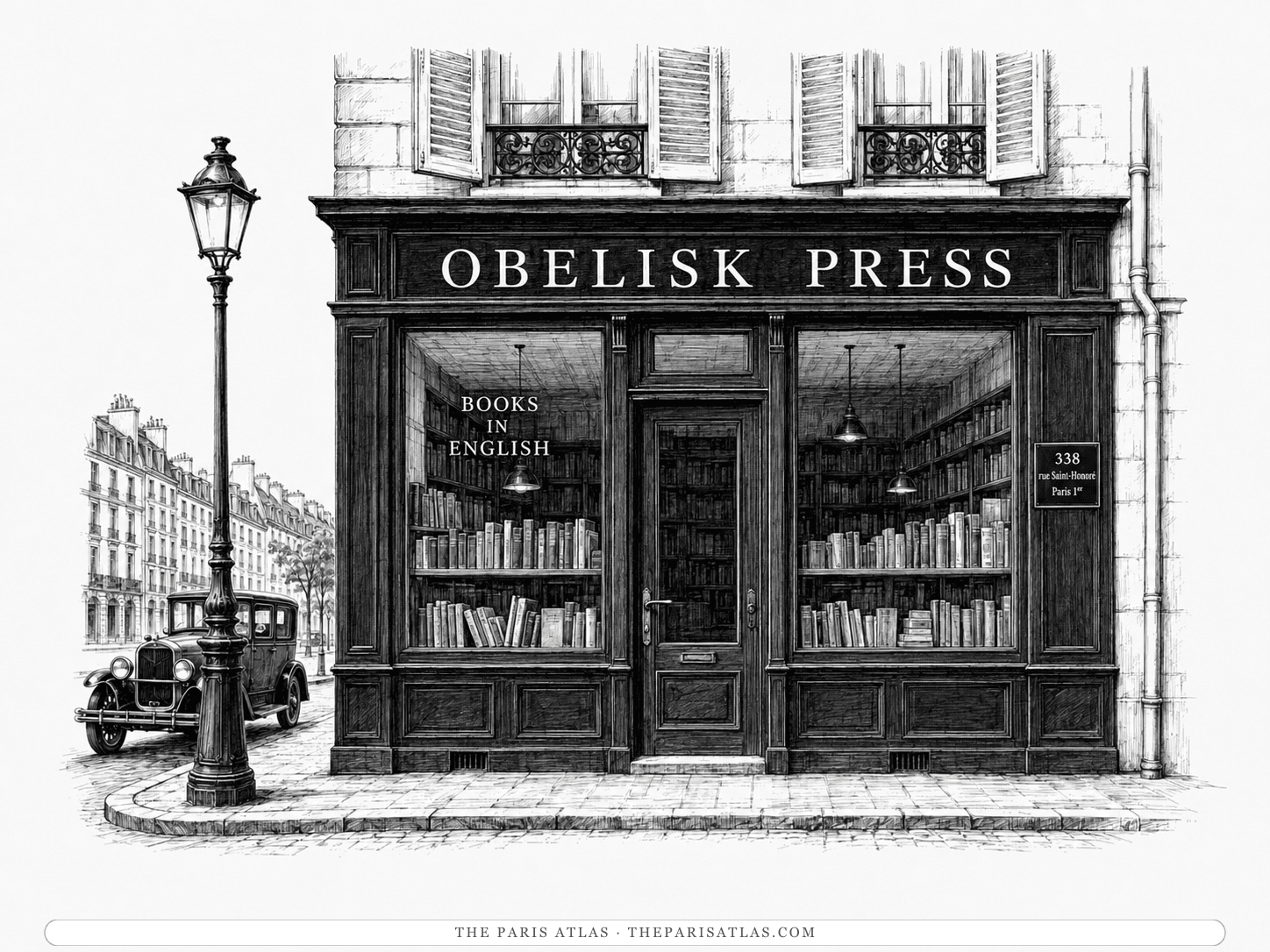
Obelisk Press
Jack Kahane's English-language press printed the banned books of the 1930s from Paris — Tropic of Cancer first among them — funding the masterpieces with cheerful smut.
Visit the pageThe Transatlantic Review
Ford Madox Ford's monthly ran for exactly one year from a Paris quai — and published Joyce, Stein, Hemingway, Rhys, and Barnes on its way out the door.
Visit the pageThe Friday Letter
The history behind the books, every Friday.
Presses, magazines, bookshops, and the writers who haunted them — one story from the Paris ecosystem in every letter.
Join 2,400 thoughtful readers.