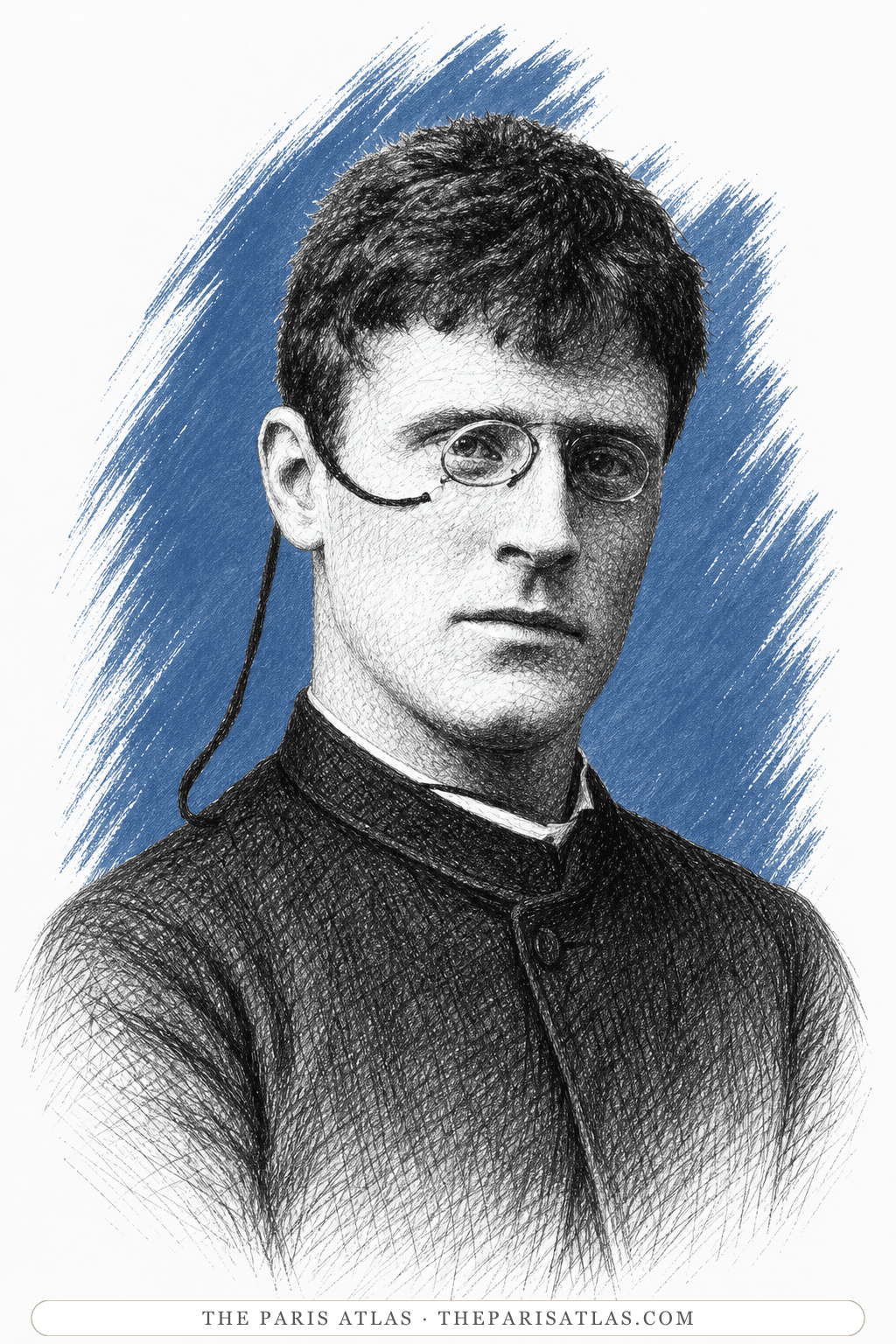
Knut Hamsun
- Author
Met · 1899
The Hamsun Society chronology records Hamsun meeting Sibelius during his 1899 stay in Finland.
Finnish composer whom Knut Hamsun met during his 1899 stay in Finland.
Jean Sibelius was a Finnish composer, born in Hämeenlinna on 8 December 1865, when Finland was still an autonomous grand duchy of the Russian Empire. He is regarded as his country's greatest composer, and his music is widely credited with strengthening Finnish national feeling under Russian rule. The core of his work is a cycle of seven symphonies. His best-known single pieces are the tone poem Finlandia, the Valse triste, and the Violin Concerto.
He drew his subjects from the Finnish national epic, the Kalevala, and from the northern landscape. Kullervo (1892) announced a distinctly Finnish orchestral voice, and Finlandia (1899) became an unofficial anthem of resistance. He composed prolifically until the mid-1920s, then stopped. After the Seventh Symphony, the incidental music for The Tempest, and the tone poem Tapiola, all completed by 1926, he published no more major works. For the last thirty years of his life he wrote almost nothing, a withdrawal known as the silence of Järvenpää.
Sibelius lived that long silence at Ainola, the lakeside house he built north of Helsinki, with his wife Aino. He worked at, and apparently destroyed, an eighth symphony, and died there of a brain haemorrhage on 20 September 1957, aged 91. Finland now flies the flag on his birthday.
Johan Julius Christian Sibelius was born on 8 December 1865 in Hämeenlinna, a Swedish-speaking town in Russian-ruled Finland. His father, a doctor, died of typhoid in 1868, leaving debts, and the family moved in with his widowed grandmother. He grew up among women, with a music-loving uncle, Pehr, as his one male guide; Pehr gave him a violin at ten and served as his musical adviser. Summers on the coast at Loviisa gave him a lifelong attachment to nature.[1]
He learned piano from an aunt who rapped his knuckles for wrong notes, then turned to the violin, which he loved. He played chamber music with his sister and brother and dreamed of becoming a virtuoso soloist. As a student he swapped the boyhood name Janne for the French form Jean, taken from a seafaring uncle's business cards, and became Jean Sibelius. He passed his final school examinations in 1885.
Sibelius began law at Helsinki's university but moved quickly to the Helsinki Music Institute, now the Sibelius Academy, studying there from 1885 to 1889. His teachers included the school's founder Martin Wegelius and, later, the pianist-composer Ferruccio Busoni, who became a lifelong friend. Through his friend Armas Järnefelt he met the family he would marry into. He continued his studies in Berlin under Albert Becker and in Vienna under Robert Fuchs and Karl Goldmark.
Abroad he heard Strauss, Bruckner and Wagner, and turned from the violin to orchestral composition. He also abandoned his dream of a soloist's career, later calling it a painful awakening to admit he had begun too late. On returning to Finland he completed Kullervo, a vast choral-orchestral work drawn from the Kalevala. Its Helsinki premiere on 28 April 1892 was a triumph, and one singer called it simply Finnish music. That June he married Aino Järnefelt.[1]
The 1890s and 1900s made him famous at home and abroad. En saga, the Karelia music and the Lemminkäinen legends built his Kalevala-based idiom. In 1899 he wrote the Press Celebration Music, in support of a newspaper suspended for criticising Russian rule; its final tableau, revised as Finlandia, became an unofficial national anthem of Finnish resistance. A 1900 European tour with Robert Kajanus's orchestra, reaching Paris, brought international recognition.
The First Symphony (1899) and the hugely popular Second (1902) established the symphonist. The Violin Concerto came in 1904, failing at first and succeeding in a revised version the next year. In 1904 Sibelius and Aino moved to Ainola, the house he built near Lake Tuusula at Järvenpää, among a colony of Finnish artists. There he wrote the leaner, stranger later symphonies, the Third, Fourth and Fifth, and lived the rest of his life. The marriage strained under his long Helsinki binges of wine, champagne and lobster, which sent Aino to a sanatorium and ran up ruinous bills.[1]
Sibelius kept composing through the First World War and Finnish independence, completing the beloved Fifth Symphony and revising it twice. The Sixth and Seventh followed, the Seventh in 1924 compressing a whole symphony into one continuous movement. Incidental music for The Tempest (1926) and the tone poem Tapiola (1926) were his last major works. He was 60, and he stopped.
For the last thirty years he published almost nothing and largely stopped speaking publicly about his music. He worked at an Eighth Symphony, promised it to conductors and even let a London performance be advertised, but no score survives. He is thought to have burned it. Aino recalled a great burning at Ainola in the 1940s, when he fed a laundry basket of manuscripts into the dining-room fire, and grew calmer afterward. He had always been self-critical, saying that if he could not write a better symphony than the Seventh, it would be his last.
The silence was not solitude; official visitors, colleagues and grandchildren filled Ainola. A morning walk in September 1957 gave rise to a famous story: Sibelius saw a flock of cranes, called them the birds of his youth, and watched one circle the house before rejoining the flock. Two days later, on the evening of 20 September 1957, he died of a brain haemorrhage at Ainola, aged 91, while his Fifth Symphony was being broadcast from Helsinki.
Sibelius built large forms from small cells, growing whole movements out of a few motifs the way a landscape grows from a seed. The early works are lush and nationalist, steeped in the Kalevala and in Finnish nature; the late symphonies grow terse and concentrated, until the Seventh fuses four movements into one unbroken span. Tapiola, his last tone poem, spins an entire twenty-minute forest out of a single theme.
The music researcher Vesa Sirén has argued that Sibelius suffered from an essential tremor from youth and drank partly to steady his hands, a common but risky self-medication that may have deepened the drinking that shadowed his middle years. Whatever the cause, the late silence was, by his own account, a decision: he simply felt he had written enough.
In his lifetime Sibelius reached a rare height of fame. A 1935 New York Philharmonic survey found him the single most popular composer among American listeners, living or dead. Finnish radio carried his music across borders from the late 1920s, and his 70th, 80th and 90th birthdays were national events. Modernist critics later found him conservative, and his reputation dipped mid-century before recovering; the symphonies and tone poems are now firmly in the international repertoire.
At home he is inseparable from national identity. His face was on the 100-mark note until Finland adopted the euro, his birthday is a flag day and the Day of Finnish Music, and Ainola is a museum. Finlandia is sung with words as a hymn, and Sibelius remains, as he was in his lifetime, the sound of Finland to the world.
Born Johan Julius Christian Sibelius in Hämeenlinna on 8 December, in Russian-ruled Finland.
Enters the Helsinki Music Institute, later renamed the Sibelius Academy, after briefly studying law.
Kullervo premieres in Helsinki to acclaim; he marries Aino Järnefelt in June.
Writes the First Symphony and the Press Celebration Music, whose finale becomes Finlandia.
The Second Symphony is received in Helsinki as a national masterpiece.
Completes the Violin Concerto and moves to Ainola, his home near Lake Tuusula.
Completes the Seventh Symphony, a whole symphony in a single continuous movement.
The Tempest music and the tone poem Tapiola are his last major works; the silence of Järvenpää begins.
A New York Philharmonic survey names him American listeners' favourite composer, living or dead.
Apparently burns the manuscript of his Eighth Symphony in a great fire at Ainola.
Dies of a brain haemorrhage at Ainola on 20 September, aged 91, as his Fifth Symphony is broadcast from Helsinki.
Met · 1899
The Hamsun Society chronology records Hamsun meeting Sibelius during his 1899 stay in Finland.
Jean Sibelius (1865–1957) was a Finnish composer, widely regarded as his country's greatest. He wrote seven symphonies, the Violin Concerto, and tone poems drawn from the Finnish epic the Kalevala, and his patriotic piece Finlandia became an unofficial national anthem. His music helped shape Finnish national identity under Russian rule, and he remains the composer most identified with Finland.
Finlandia is a short orchestral tone poem Sibelius composed in 1899, revised from the finale of his Press Celebration Music, which was written in support of a newspaper the Russian authorities had suspended for criticising their rule. Its surging main theme, later given words as a hymn, became a rallying cry for Finnish independence and is the piece by which most of the world knows Sibelius. Finland gained independence in 1917.
After the Seventh Symphony (1924), the incidental music for The Tempest, and the tone poem Tapiola, all done by 1926, Sibelius published no more major works. He wrote almost nothing for the last thirty years of his life, a withdrawal known as the silence of Järvenpää. He worked at an Eighth Symphony and promised its premiere, but no score survives, and he is thought to have burned it in the 1940s. His own explanation was simple: extremely self-critical, he felt he had written enough and would not release anything weaker than the Seventh.
He worked on one for years and repeatedly promised its premiere, and a 1933 bill for a fair copy of the first movement proves it reached paper. But no complete manuscript survives. Sibelius, ruthlessly self-critical, is believed to have destroyed it, most likely in the great burning of manuscripts his wife Aino witnessed at Ainola in the 1940s, when he fed a laundry basket of scores into the dining-room fire. Only short fragments, published in 2011, remain.
He died of a brain haemorrhage at his home, Ainola, near Järvenpää, on the evening of 20 September 1957, at the age of 91. According to a well-known account, days earlier he had watched a flock of cranes pass over the house on his morning walk and called them the birds of his youth. As he died, his Fifth Symphony was being broadcast on the radio from Helsinki.
The seven symphonies are the heart of his output, especially the popular Second and Fifth and the single-movement Seventh. Beyond them stand the Violin Concerto (1904), the Kalevala tone poems Kullervo (1892), En saga, The Swan of Tuonela and Pohjola's Daughter, the patriotic Finlandia (1899), the Karelia Suite, the Valse triste, and his stark final tone poem Tapiola (1926).
Met · 1899
The Hamsun Society chronology records Hamsun meeting Sibelius during his 1899 stay in Finland.
The sources below include biographies, scholarly essays, interviews, and primary materials that informed this page. They reflect both the historical record and ongoing critical conversations about Jean Sibelius and their work.


Biographical evidence used to verify chronology, relationships, and historical context connected to Jean Sibelius.
Biographical evidence used to verify chronology, relationships, and historical context connected to Jean Sibelius.
Reference article cross-checked for the chronology, the symphonies, the silence of Järvenpää, the burned Eighth, and the death.
These references anchor the page in the documented record and in the scholarly conversations around Jean Sibelius. Every claim on this page traces back to one or more of the works listed here.
 Explore more resources