The Paris AtlasCharting the artists, works, and places worth returning to.
  • Singer
  • Musician
  • Actor
· American · 1907–1994

Cab Calloway

Bandleader in a white tailcoat who took over the bandleader Duke Ellington's job at the Cotton Club in Harlem, sold a million copies of "Minnie the Moocher" in 1931, and turned a lyric he forgot on stage into the hi-de-ho, the call-and-response chant audiences sang back to him for the rest of his life. France borrowed his voice and his clothes for the zazous, the conspicuously overdressed swing fans of the wartime Occupation, then took more than forty years to give him the audiences he deserved.

Details

Lived
1907–1994
Born
1907
Birthplace
Rochester, New York
Birth name
Cabell Calloway III
Died
1994
Place of death
Hockessin, Delaware
Nationality
American
Profession
Bandleader, singer, and actor
Major works
Minnie the Moocher (1931), Porgy and Bess (Sportin' Life), The Blues Brothers (1980)
Roles
SingerMusicianActor

About Cab Calloway

Cab Calloway was the most kinetic bandleader in American music: a tall man in a white tailcoat and a zoot suit, conducting with his hair, dancing a rubber-legged glide that the animators of the cartoon character Betty Boop traced frame by frame, and calling a nonsense phrase into a hall so that thousands of strangers would call it back. He got the phrase by accident. He forgot a lyric on stage, filled the hole with "hi-de-ho", and spent the next six decades being asked for it.

France met him three times before it understood him. He arrived at the Salle Pleyel in April 1934 billed as the Roi du Jazz Hot — the King of Hot Jazz — and the encounter did not take. He came back with the opera Porgy and Bess in 1953, and headlined L'Olympia in May 1958 to rows of empty seats while France's Fourth Republic, the parliamentary system in place since 1946, collapsed in the streets outside over the war in Algeria. But in between, without him being there at all, wartime Paris had named a whole youth style after his voice and his clothes: the zazous. From 1977 he played France almost every summer, and his last French concert was at the Olympia in July 1992, two years before his death.

Baltimore, and the club he was not allowed to sit in

Cabell Calloway III was born on Christmas Day 1907 in Rochester, New York, and grew up in Baltimore, where he shined shoes, caddied, worked a grocery and ran an elevator, and sang in the choir of Grace Presbyterian Church on Dolphin Street. By the middle of 1930 he was in New York fronting a band at the Cotton Club in Harlem — which needs explaining, because the name has outlived the facts. The Cotton Club was a nightclub run by gangsters at which the performers were Black and the paying customers, with rare exceptions, were not: it was where wealthy white New Yorkers went to consume Harlem without meeting it.

The job was open because Duke Ellington, the club's resident bandleader and the most sophisticated composer in American popular music, had taken his orchestra on tour. By the account PBS, the American public broadcaster, published with its American Masters film on Calloway, the men who ran the club did not so much offer Calloway the residency as make it unrefusable, threatening to wreck whichever venue he was contracted to instead. He took it, and it made him: the Cotton Club broadcast live on national radio, and Calloway's band became the first Black orchestra invited onto the Lucky Strike radio show — a nationwide programme paid for by the cigarette brand — and the first of its stature to tour the American South.

Minnie the Moocher, and a lyric he forgot

"Minnie the Moocher" was first recorded in 1931 and sold more than a million copies. It is a song about a woman of the Harlem night — "the roughest, toughest frail, but Minnie had a heart as big as a whale", frail being the slang of the day for a woman — carried on a slow, deliberate storytelling voice, and stitched with references to cocaine and opium that a good many buyers did not decode. What made it an event was the middle: Calloway sang a line of scat, wordless syllables invented on the spot, and the band and then the audience sang it straight back. "Hi-de-hi-de-hi-di-hi. Ho-de-ho-de-ho-de-ho." The Library of Congress added the record to the National Recording Registry in 2018, the register of recordings the United States considers culturally essential.

Calloway's own account of where the phrase came from was completely unromantic: he forgot a lyric on stage, and put in the hi-de-ho to cover it. Scat singing and call-and-response were already common property in jazz; what Calloway added was a stage presence so physical that the cartoonists came for it. In 1932 Max Fleischer, the animator whose New York studio made the Betty Boop and Popeye cartoons, built a Betty Boop film around "Minnie the Moocher" that opens with live footage of Calloway doing his rubber-legged dance — a backwards glide of the kind later called the moonwalk — and then rotoscopes those exact movements onto a cartoon walrus, tracing the filmed body frame by frame to animate the drawn one. Calloway and Betty Boop met again in "The Old Man of the Mountain" in 1933. The wide-mouthed smile, the zoot suit — the exaggerated suit of long jacket, wide shoulders and high, tapered trousers that he did as much as anyone to popularise — and the kinetic movement made him one of the most reproduced images in American entertainment.

The Salle Pleyel, April 1934

Calloway's first European tour, in 1934, took the orchestra through England, Holland and Belgium and into Paris, where he played the Salle Pleyel — the concert hall at 252 rue du Faubourg Saint-Honoré, built for the Pleyel piano firm and opened in 1927 — on 23 and 24 April. The posters called the evenings "Concerts du Roi du Jazz Hot", the concerts of the King of Hot Jazz, and promised his formidable orchestra from the Cotton Club in New York.

It did not work. Calloway himself remembered the tour as a success, and the British press had already thought otherwise; the researcher Jean-François Pitet, who has assembled the dated record of every Calloway appearance in France, is blunt about Paris. On his account, drinking, missed appointments and misrepresentation of what the audience was being sold ensured that the meeting between Calloway and the French public did not happen that time. It would be nineteen years before he played the city again.

The zazous: a Paris style built out of his voice

He did not have to be in France to change it. During the German Occupation of France, from 1940 to 1944, a youth subculture appeared in Paris and the larger French cities — the zazous, teenagers and young adults who wore deliberately excessive clothes, danced to swing and made a small, dangerous nuisance of themselves in a city under military rule. The Institut national de l'audiovisuel, France's national broadcast archive, records the derivation flatly in its catalogue note on Calloway: the zazou fashion was inspired by his vocalisations and his way of dressing. A man who had spent two nights in Paris in 1934 had given the French language a word for a generation.

That archive note comes from his next visit. He arrived on 21 May 1958 at a French radio studio, where the jazz critic Maurice Cullaz interviewed him for the midday news programme Actualités de midi — the midday news. Calloway tried out his French, laughed a great deal, hummed the hi-de-ho and explained where it had come from, and talked about his previous visit to Paris, the one with the opera. He gave later French interviews entirely in French.

Porgy and Bess, and an Olympia run the Republic ruined

That previous visit was Porgy and Bess — George Gershwin's 1935 opera of Black life in Charleston, South Carolina, revived in 1952 by the producers Blevins Davis and Robert Breen and sent around the world on money from the United States Department of State, the government department responsible for foreign affairs, which had decided that a Black American company touring an American opera was worth more abroad than any pamphlet. Calloway played Sportin' Life, the drug dealer, alongside the soprano Leontyne Price and the baritone William Warfield. After London, Vienna and Berlin, the production reached Paris and gave sixteen performances at the Théâtre de l'Étoile, a theatre near the Arc de Triomphe, between 16 February and 1 March 1953.

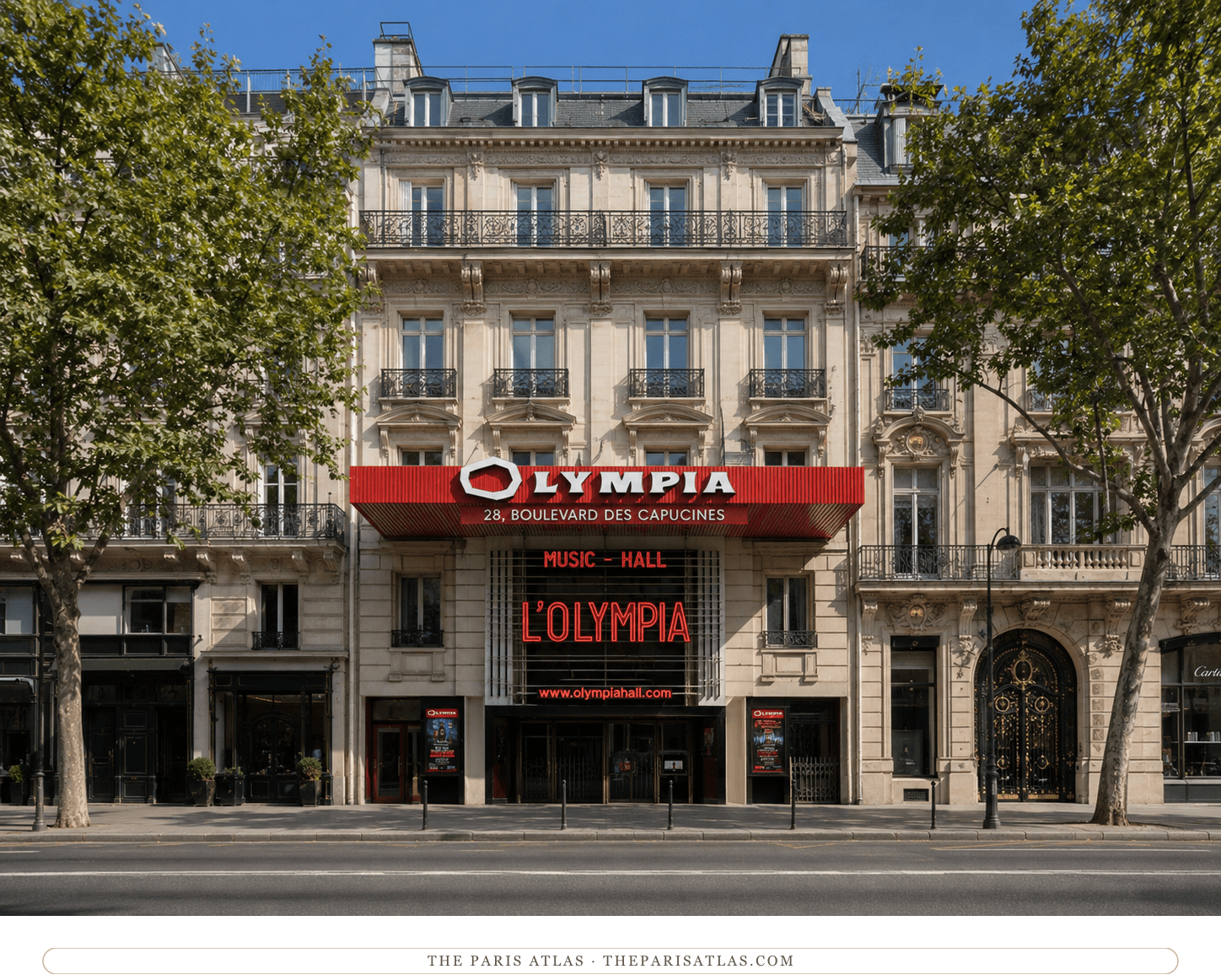
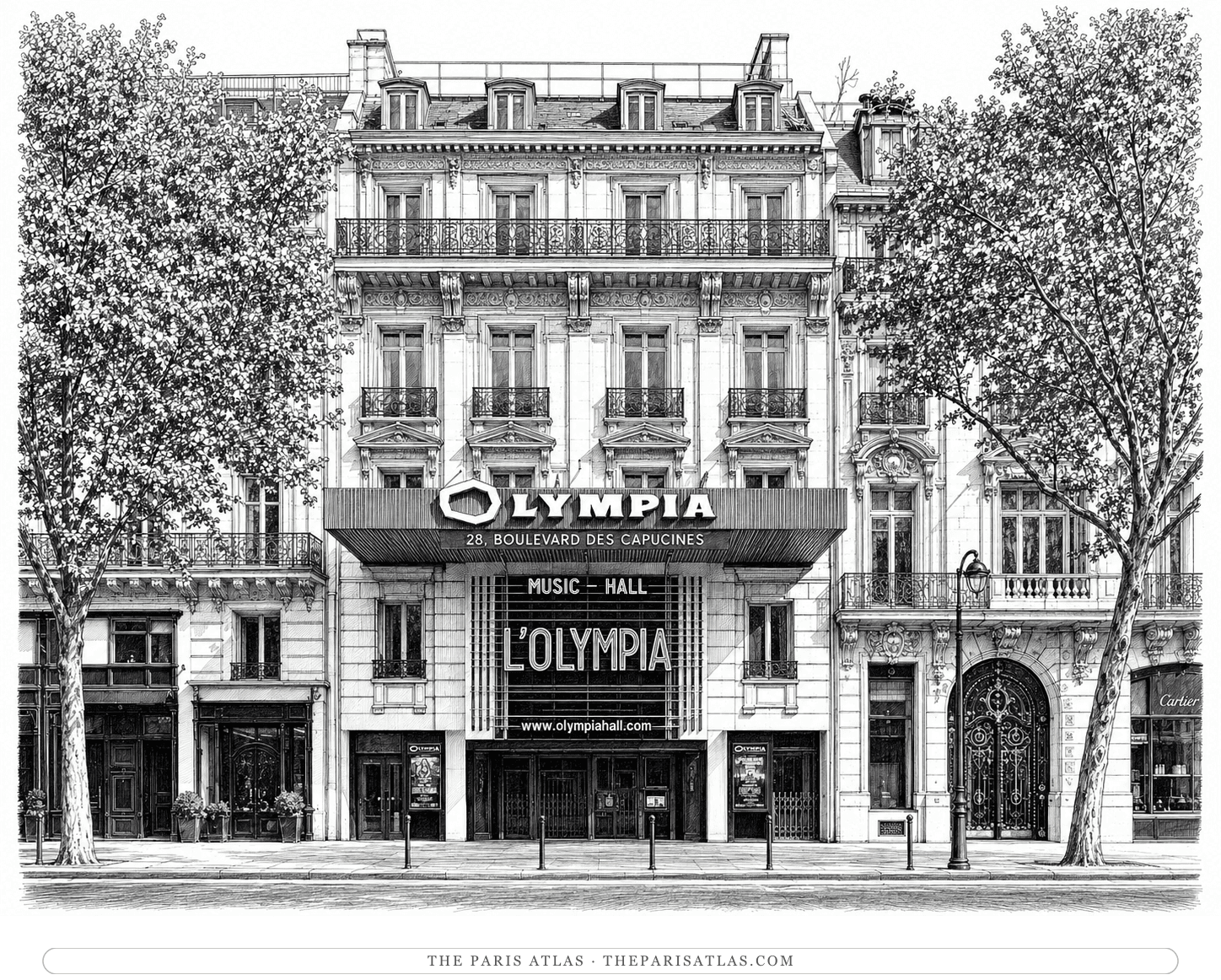
Five years later he topped the bill at L'Olympia, the music hall on the boulevard des Capucines that is the most famous variety stage in France. The run opened on 22 May 1958 with a full French variety bill under him — an equilibrist, which is to say a balancing act, plus acrobats, a Cuban orchestra and the cartoonist Siné drawing his trademark cats, all introduced by the singer and comedienne Suzanne Gabriello — and Calloway closing for about an hour in front of a pick-up orchestra, musicians hired locally for the occasion, led by Gaston Lapeyronnie, with not one member of his own band. It was advertised to run through 9 June and was cut short. Paris in May 1958 was in the crisis over Algeria — then a French territory fighting a war for independence — which brought down the Fourth Republic and returned Charles de Gaulle, the general who had led the Free French in the Second World War, to power. As the Afro-American, one of the leading Black newspapers in the United States, reported it, people were too upset and nervous to go to the shows, and the King of Hi-de-Ho played to many empty seats.

The Blues Brothers, and a long French coda

The big-band economy that had made him — the touring dance orchestras of the swing years, with a dozen or more players on the payroll — died in the 1940s, and Calloway spent decades as a working entertainer rather than a star. Then, in 1980, the musical comedy The Blues Brothers, with John Belushi and Dan Aykroyd, put him on screen in a white tailcoat singing "Minnie the Moocher" to a new generation who had never heard of him. The film restarted everything. He toured the world for the rest of his life, and appeared briefly in the pop singer Janet Jackson's video for "Alright" in 1990.

France got the version of him it had missed in 1934. From July 1977 at Nice, where he played the Grande Parade du Jazz, the city's summer festival in the gardens on the Cimiez hill above it, he was in the country almost every summer: Nice again in 1980 and 1982, a three-week club residency at the Hôtel Méridien in Paris in April 1985 with his daughter, the singer Chris Calloway, and a line of tap dancers, a night that August on the Îles de Lérins, the islands off Cannes, staged as a tribute to the Cotton Club, the Jazz à Juan festival at Juan-les-Pins on the Riviera in a pink blazer in 1987, the Tuileries gardens in central Paris in 1989. He returned to L'Olympia on 20 July 1987, and again on 8 July 1992 — an old man, one witness wrote, who seemed diminished off stage and bounded like a boy the moment he had a microphone. That was his last performance in France.

He had a stroke in June 1994 and died of pneumonia in November at a retirement community in Hockessin, Delaware, at eighty-six.

Life events

  1. 1907

    Born Cabell Calloway III on Christmas Day in Rochester, New York; raised in Baltimore, singing in the choir of Grace Presbyterian Church on Dolphin Street.

    Hi-de-ho man Cab Calloway dies (1994)

  2. 1930

    Takes over at the Cotton Club in Harlem — the gangster-run nightclub with Black performers and white audiences — after Duke Ellington's orchestra goes on tour.

    Hi-de-ho man Cab Calloway dies (1994); Cab Calloway: Sketches - Cab Calloway's Renaissance

  3. 1931

    Records "Minnie the Moocher", which sells more than a million copies and fixes the call-and-response hi-de-ho as his signature.

    Herb Boyd, Minnie the Moocher - Cab Calloway (1931): National Recording Registry essay (2018)

  4. 1932

    Max Fleischer's Betty Boop cartoon of "Minnie the Moocher" opens with live footage of Calloway dancing, then rotoscopes his movements onto an animated walrus.

    Herb Boyd, Minnie the Moocher - Cab Calloway (1931): National Recording Registry essay (2018)

  5. 1934

    First European tour — England, Holland, Belgium — reaches Paris for two concerts at the Salle Pleyel on 23 and 24 April, billed as the Roi du Jazz Hot, the King of Hot Jazz. The French public does not bite.

    Jean-François Pitet, April 23 and 24, 1934: Cab Calloway at the Salle Pleyel, Paris; Cab Calloway: Sketches - Cab Calloway's Renaissance

  6. 1953

    Plays Sportin' Life in the State Department-funded Porgy and Bess with Leontyne Price and William Warfield: sixteen performances at the Théâtre de l'Étoile in Paris, 16 February to 1 March, after London, Vienna and Berlin.

    Jean-François Pitet, Cab Calloway's concerts in France (2008); Porgy and Bess International Tour Program Collection, 1952-1977

  7. 1956

    Plays the interval of a Harlem Globetrotters date at the Vélodrome d'Hiver in Paris in July — the first jazz concert the cartoonist Cabu ever saw, and the start of a lifelong fascination.

    Jean-François Pitet, Cab Calloway's concerts in France (2008)

  8. 1958

    Interviewed in Paris for the radio news programme Actualités de midi on 21 May; the archive's note credits his voice and his clothes as the source of the French zazou style.

    Cab Calloway à Paris (1958)

  9. 1958

    Headlines L'Olympia from 22 May, on a French variety bill and with a pick-up orchestra. The run is cut short: Paris is in the Algerian crisis that ends the Fourth Republic, and he plays to empty seats.

    Jean-François Pitet, May 1958: Cab Calloway at the Olympia in Paris (2012)

  10. 1980

    Sings "Minnie the Moocher" in the film The Blues Brothers, which restarts his career for an audience born long after the Cotton Club.

    Hi-de-ho man Cab Calloway dies (1994); Cab Calloway: Sketches - Cab Calloway's Renaissance

  11. 1977–1990

    Becomes a fixture of the French summer — the Grande Parade du Jazz at Nice in 1977, 1980 and 1982, a Paris residency at the Hôtel Méridien in April 1985, a Cotton Club tribute on the Îles de Lérins, Juan-les-Pins in 1987, the Tuileries in 1989.

    Jean-François Pitet, Cab Calloway's concerts in France (2008)

  12. 1992

    Plays L'Olympia on 8 July — his last performance in France.

    Jean-François Pitet, Cab Calloway's concerts in France (2008)

  13. 1994

    Dies of pneumonia in November at a retirement community in Hockessin, Delaware, aged eighty-six, after a stroke the previous June.

    Hi-de-ho man Cab Calloway dies (1994)

Cab Calloway’s Places

The cataloged places connected to Cab Calloway — through the books, and through the documented record.

Places you can enter today appear first, followed by addresses to see from outside and sites that have vanished.

Questions about Cab Calloway

What does "hi-de-ho" mean?

Nothing — that is the point. It is scat: wordless syllables sung for their sound. Calloway's own explanation of how it started was that he forgot a lyric on stage and put in the hi-de-ho to cover the gap. It stuck because of what he did with it: he sang a phrase, the band answered, and then the hall answered, which turned every performance into something the audience had made too. It became so completely his that he was known for the rest of his life as the Hi-De-Ho Man.

What was the Cotton Club?

A nightclub in Harlem, run by gangsters, where the entertainers were Black and the customers were white — the fashionable place for rich New Yorkers to experience Harlem without sharing a table with anyone who lived there. It also had a national radio wire, which is why a residency there made careers. Duke Ellington's orchestra held the job until it went on tour; Calloway took over in 1930 and became a star within a year.

Did Cab Calloway ever play in Paris?

Repeatedly, over fifty-eight years, though the relationship took a long time to warm. He gave two concerts at the Salle Pleyel on 23 and 24 April 1934 on his first European tour, and by every account including his own biographer's the city did not take to him. He returned in February 1953 with Porgy and Bess at the Théâtre de l'Étoile, played the interval of a Harlem Globetrotters night at the Vélodrome d'Hiver in 1956, and headlined L'Olympia in May 1958 to poor houses during the political crisis over Algeria. From 1977 he was in France almost every summer, and he played L'Olympia again in 1987 and, for the last time, on 8 July 1992.

What are the zazous, and what did Cab Calloway have to do with them?

The zazous were young French people during the German Occupation of 1940 to 1944 who wore conspicuous, exaggerated clothes and danced to banned American swing — a fashion that doubled as a small refusal of the times. The Institut national de l'audiovisuel, France's national broadcast archive, states in its own catalogue note that the style was inspired by Calloway's vocalisations and his way of dressing. He was not in France in those years; the records and the newsreels were.

What is "Minnie the Moocher" about?

A woman of the Harlem night — "the roughest, toughest frail, but Minnie had a heart as big as a whale" — and, in lines that many buyers never decoded, about cocaine and opium. Calloway first recorded it in 1931; it sold over a million copies, and the Library of Congress added it to the National Recording Registry in 2018 as a recording of lasting national importance.

What did Cab Calloway do in The Blues Brothers?

He stopped the film to sing "Minnie the Moocher" in a white tailcoat, backed by a full orchestra. The 1980 musical comedy introduced him to an audience with no memory of the Cotton Club and set off the last and busiest phase of his career: fifteen years of touring worldwide, including almost every French summer.

Was Cab Calloway in Porgy and Bess?

Yes — he played Sportin' Life, the dope peddler, in the revival that Blevins Davis and Robert Breen produced from 1952, with Leontyne Price and William Warfield. The United States Department of State paid for its European tour, making the company a piece of Cold War cultural diplomacy — American culture sent abroad to argue for the country; it reached Paris for sixteen performances at the Théâtre de l'Étoile in February 1953.

How did Cab Calloway die?

Of pneumonia, in November 1994, at a retirement community in Hockessin, Delaware. He was eighty-six, and had suffered a stroke the previous June.

Sourced claims

Every connection the graph holds for Cab, with the evidence behind it.

Performed at · 1958–1992

L'Olympia

Three engagements across thirty-four years. Calloway topped the bill from 22 May 1958, on a French variety programme and with a pick-up orchestra; the run was announced through 9 June and cut short, because Paris that month was consumed by the Algerian crisis that ended the Fourth Republic and, as the Afro-American reported, the King of Hi-de-Ho played to many empty seats. He returned on 20 July 1987, and again on 8 July 1992 — his last performance in France.

Jean-François Pitet, May 1958: Cab Calloway at the Olympia in Paris (2012); Jean-François Pitet, Cab Calloway's concerts in France (2008)

References

References

The sources below include biographies, scholarly essays, interviews, and primary materials that informed this page. They reflect both the historical record and ongoing critical conversations about Cab Calloway and their work.

  1. 1Cab Calloway's concerts in France

    The Hi De Ho Blog, 2008

    The dated chronology of every Calloway appearance in France.

    View source
  2. 2Minnie the Moocher - Cab Calloway (1931): National Recording Registry essay

    National Recording Preservation Board, Library of Congress, 2018

    The Library of Congress essay on the 1931 record.

    View source
  3. 3Hi-de-ho man Cab Calloway dies

    The Baltimore Sun, 1994

    The obituary in his home city's paper.

    View source
  1. 4Cab Calloway à Paris

    Institut national de l'audiovisuel, 1958

    French radio, 1958 — and the zazou derivation.

    View source
  2. 5Cab Calloway: Sketches - Cab Calloway's Renaissance

    American Masters, PBS

    The American Masters biographical essay.

    View source
  3. 6Porgy and Bess International Tour Program Collection, 1952-1977

    Special Collections, College of Charleston Libraries

    The finding aid for the State Department's Porgy and Bess tour.

    View source
i
Why these sources are here

These references anchor the page in the documented record and in the scholarly conversations around Cab Calloway. Every claim on this page traces back to one or more of the works listed here.

Explore more resources