The Paris AtlasCharting the artists, works, and places worth returning to.

In their own words

Édith Piaf quotes

6 quotations, each verified against its source and credited to the work it comes from — the wording as Édith Piaf wrote or said it, not as the internet passes it around.

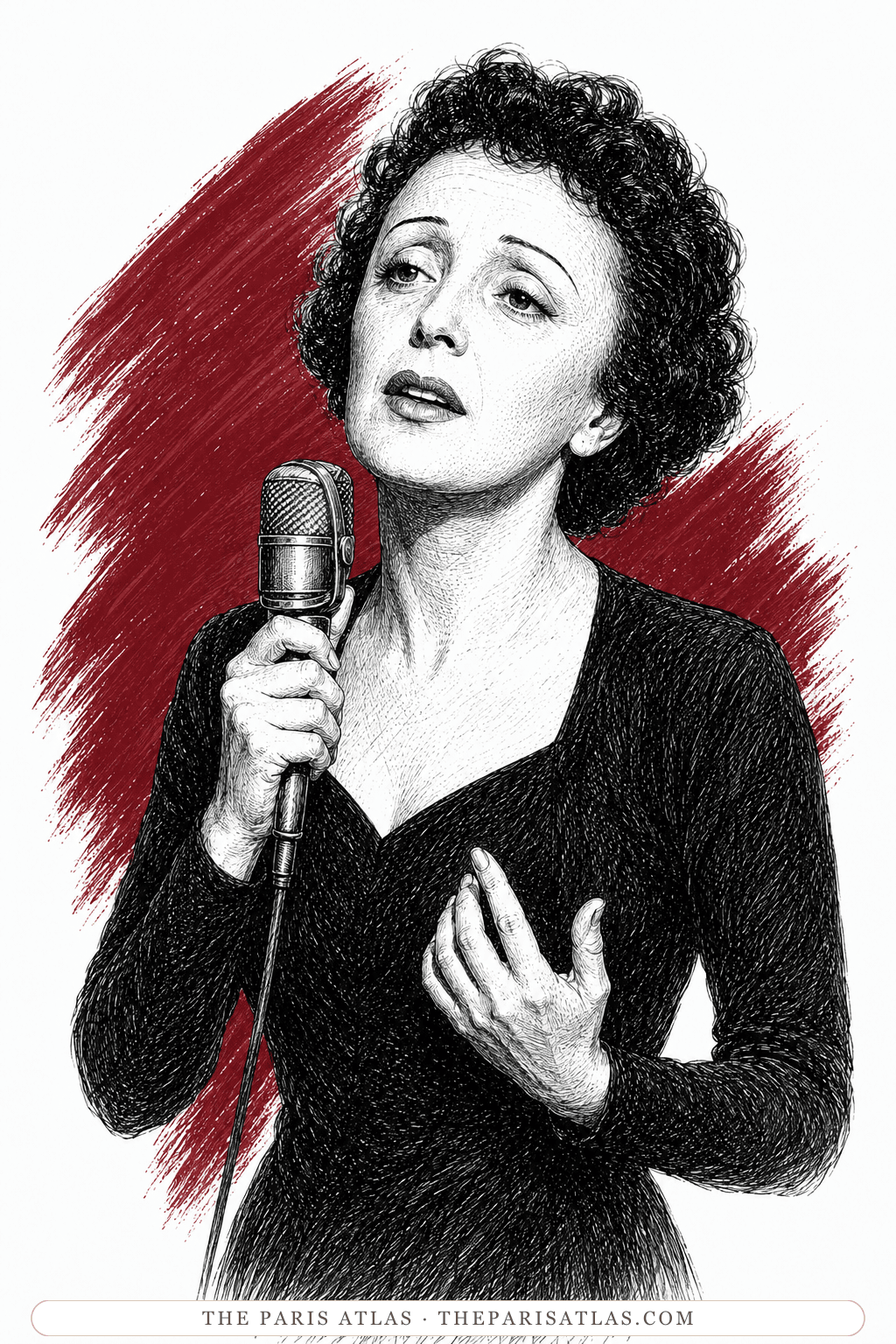
Illustrated portrait of Édith Piaf

How these quotes were checked

How we decide whether a quote is genuine

Édith Piaf's spoken and written voice survives best in the memoir she published in 1958, Au bal de la chance, and every quote above is read from the pages of its English translation, The Wheel of Fortune. What mostly circulates over her name, though, are her song lyrics — and lyrics have authors, which is what the check below untangles.

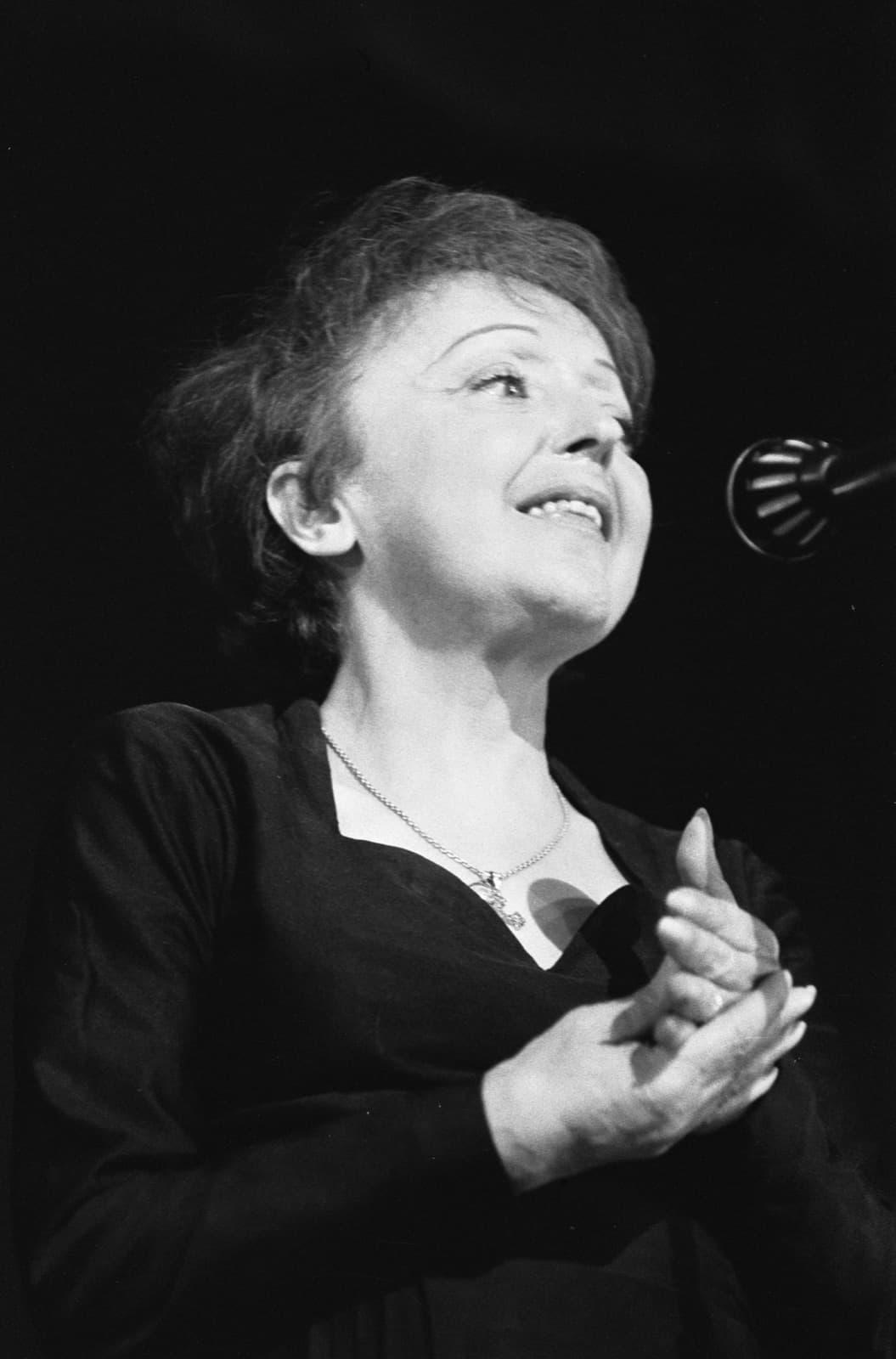
Portrait of Édith Piaf in the Netherlands, December 1962
Piaf in the Netherlands, 13 December 1962 — ten months before the end, the face the voice had earned. Eric Koch / Anefo, Nationaal Archief (CC0). CC0.

One famous Édith Piaf quote, fact-checked

A sentence linked to Édith Piaf may be exact, shortened, remembered by someone else, or unsupported. Each label below explains what the available evidence actually proves.

Misattributed

Non, je ne regrette rien. (No, I regret nothing.)

As a personal statement, these are not Piaf's words: they are the title and refrain of a song written for her in 1960 — music by Charles Dumont, words by Michel Vaucaire. She made it immortal, and she dedicated her recording to the French Foreign Legion, but quoting the phrase as her own sentence credits the singer with the songwriters' work. Her actual credo, in her own memoir, was about sincerity on stage: her movements had to be “genuine … sincere or they are valueless.”

  • Édith Piaf, Édith Piaf, The Wheel of Fortune (1965), trans. Peter Trewartha and Andrée Masoin de Virton — Internet Archive lending scan (1965)
I can think of no better point at which to begin my memoirs than the day when Destiny took hold of me and set me on the pathway to fame.
Édith Piaf, The Wheel of Fortune (1965), the English translation of her memoir Au bal de la chance (1958)
In those days I used to sing in the streets, accompanied by a friend who, with outstretched hands, would solicit the passers-by. I was pale and unkempt. I had no stockings and my coat was out at the elbows and hung down to my ankles.
Édith Piaf, The Wheel of Fortune (1965), the English translation of her memoir Au bal de la chance (1958)
‘You are truly a little sparrow of Paris. That's what you should be called, Sparrow; but unfortunately La Môme Moineau is already being used so we must think of something else. The slangword for sparrow is piaf. Why shouldn't you be La Môme Piaf?’ He considered this for a few seconds more. ‘Right! That's settled.’ I was baptized for life.
Louis Leplée, in Piaf's telling · Édith Piaf, The Wheel of Fortune (1965), the English translation of her memoir Au bal de la chance (1958)
I never practice in front of a mirror. Many singers, including Maurice Chevalier, who specialize in songs of a lighter, more humorous nature, find the mirror method of great assistance, for they must calculate with great precision the impact of each gesture. For them, mime is a part of the presentation and should be planned rather than improvised. This, however, does not apply to the songs I sing. My movements must be genuine … sincere or they are valueless.
Édith Piaf, The Wheel of Fortune (1965), the English translation of her memoir Au bal de la chance (1958)
If, while I am singing, I become conscious of my actions, or feel that my gestures are deliberate, I know that I am losing that essential spontaneity and that the time has come to put that particular song aside for a while.
Édith Piaf, The Wheel of Fortune (1965), the English translation of her memoir Au bal de la chance (1958)
I never learnt music; but I adore it! I would have travelled thousands of miles to hear the great Ginette Neveu who died so tragically in the very same air-disaster that killed my very dear Marcel Cerdan.
Édith Piaf, The Wheel of Fortune (1965), the English translation of her memoir Au bal de la chance (1958)

Questions about Édith Piaf quotes

What is Édith Piaf's most famous quote?

The phrase everyone associates with her — “Non, je ne regrette rien,” no, I regret nothing — is a song refrain written for her in 1960 by Michel Vaucaire, with music by Charles Dumont, not a sentence she wrote or said as her own. Of the things she actually wrote, the best known is the story of her name: the cabaret owner Louis Leplée calling her “a little sparrow of Paris” in 1935, and her three-word verdict on it — “I was baptized for life.”

Did Édith Piaf write a book?

Yes, two memoirs. Au bal de la chance (1958), translated into English as The Wheel of Fortune in 1965, is the source of every quote above; a second, shorter memoir, Ma vie, was assembled from interviews and published in 1964, the year after her death. The 1958 book opens with Jean Cocteau's tribute to her.

What did Édith Piaf say about singing?

That it only worked when it was sincere. In The Wheel of Fortune she writes that unlike singers who plan every gesture in a mirror, her movements had to be “genuine … sincere or they are valueless” — and that the moment she caught herself singing a song deliberately, she put it aside until it came back honest.

References

References

The sources below are the editions, archives, and full-text searches used to verify the quotations on this page. Every line was checked against one or more of them before it appeared here.

  1. 1Édith Piaf, The Wheel of Fortune (1965), trans. Peter Trewartha and Andrée Masoin de Virton — Internet Archive lending scan

    Memoir
    Chilton Books, 1965
    Used for

    The memoir in its published English translation, read page by page for every quote above.

    View source
i
Why these sources are here

Verification is the point of this collection: a quotation is listed only when its wording has been checked against the sources above, and the attribution notes record what each check found about the famous lines that failed.

Explore more resources

The Friday Letter

One story from the atlas, every Friday.

No algorithms chasing attention. A work, a place, and the connection between them — with the history checked.

One email a week. No spam, no selling your address. Unsubscribe anytime.