
The Dharma Bums
How Gary appears in its pages: A poet, mountain climber, former logger and student of Zen who teaches Ray what he knows. Modeled on Gary Snyder.
American poet and student of Asian religions whose friendship intensified Kerouac's Buddhism and inspired Japhy Ryder in The Dharma Bums.
Gary Snyder is an American poet, essayist, translator and environmental activist, born in San Francisco on 8 May 1930. He came out of the Beat Generation and the San Francisco Renaissance, won the Pulitzer Prize for his 1974 collection Turtle Island, and has been called the poet laureate of deep ecology.
He was the Beats' woodsman and its most serious student of the East. Raised on a Depression farm in Washington State, he trained as a logger, fire lookout and seaman. He read "A Berry Feast" at the 1955 Six Gallery reading where Allen Ginsberg first performed "Howl", and his backcountry life and Zen study made him the model for Japhy Ryder in Jack Kerouac's The Dharma Bums. He then left for Japan and spent much of a decade in Kyoto monasteries, bringing home a Buddhism grounded in practice and translating the Tang recluse Han Shan's Cold Mountain poems.[1]
Since 1970 Snyder has lived at Kitkitdizze, the house he built on the San Juan Ridge in the Sierra foothills, and his later work fuses poetry, Buddhism and ecology into a single argument for inhabiting one place well. He taught for years at the University of California, Davis, and completed his forty-year poem Mountains and Rivers Without End in 1996.[2]
Gary Sherman Snyder was born in San Francisco on 8 May 1930, and moved at two to a small dairy farm in King County, Washington, that the Depression had made poor. At seven, four months bedridden after an accident turned him into a voracious reader; he later said the accident changed his life. Growing up near the Coast Salish peoples gave him an early, lasting interest in Native American cultures and their relationship to the land, and the Mazamas youth climbing group gave him the mountains.[2]
After his parents' 1942 divorce he moved to Portland with his mother, a reporter at The Oregonian, and worked as a copy-boy at the same paper. On a scholarship from 1947 he attended Reed College, roomed among the young poets Philip Whalen and Lew Welch, and published his first poems. He joined a seamen's union for a summer at sea, and did folklore fieldwork on the Warm Springs reservation. He graduated in 1951 with a dual degree in anthropology and literature and a thesis on a Haida myth.[1]
A single semester of graduate anthropology at Indiana convinced Snyder to return to San Francisco and, as he put it, sink or swim as a poet. He worked summers as a fire lookout on Crater and Sourdough Mountains in the North Cascades. At the height of McCarthyism in 1954, his union ties got him barred from government work, and he went back to logging as a choker setter. In 1953 he enrolled at Berkeley to study Asian languages, took Tang-dynasty poetry with Ch'en Shih-hsiang and ink painting with Chiura Obata, and began translating Han Shan's Cold Mountain poems.[1]
Kenneth Rexroth sent Allen Ginsberg to find him, and through Ginsberg he met Jack Kerouac, sharing a Mill Valley cabin with Kerouac in 1955 and 1956. On 7 October 1955 Snyder read "A Berry Feast" at the Six Gallery reading in San Francisco where Ginsberg premiered "Howl", the night the Beats broke into public view. To the urban New York writers, Snyder, the logger and mountaineer who actually knew the backcountry, was a revelation; Lawrence Ferlinghetti called him the Thoreau of the Beat Generation.[1]
Snyder had prepared for Japan more seriously than any of the Beats. A 1955 Zen scholarship was nearly blocked when the State Department denied him a passport, citing an allegation that he was a Communist, until a court ruling forced the policy to change. From 1956 he lived for long stretches in Kyoto. He served first as attendant and English tutor to the Zen abbot Miura Isshu at Shokoku-ji, later as the first foreign disciple of Oda Sesso at Daitoku-ji, doing zazen, sutra chanting and kōan study. He formally became a Buddhist in July 1955 and received the dharma name Chofu, "Listen to the Wind", living for years as a de facto monk without becoming a priest.[1]
His first book, Riprap, drawn from the fire lookouts and the Yosemite trail crews, appeared in 1959, followed by Myths & Texts (1960). In the early 1960s he travelled six months through India with his second wife, the poet Joanne Kyger, along with Ginsberg and Peter Orlovsky, a journey that ended at Dharamsala in conversation with the Dalai Lama. He and Kyger married in 1960 and separated after the India trip, divorcing in 1965. His essay "Buddhist Anarchism" (1961) argued that Eastern insight and Western social revolution were two halves of one mercy.[2]
In 1966 Snyder joined Ginsberg and others to buy a hundred acres on the San Juan Ridge, in the Sierra Nevada foothills north of Nevada City. On the Japanese island of Suwanosejima in 1967 he married Masa Uehara, and in 1968 the couple moved to California with their infant son, Kai; a second son, Gen, followed. In 1970 they settled at Kitkitdizze, the house Snyder built on the ridge from rural-Japanese and Native American ideas, where he still lives.[1]
The homecoming reoriented the work toward family, community and the American continent. Turtle Island (1974), titled with a Native American name for North America, won the Pulitzer Prize, and Axe Handles (1983) won an American Book Award. The essay collections, above all The Practice of the Wild (1990), made him the central literary voice of deep ecology. He taught at the University of California, Davis, from 1986, is now professor emeritus, and in 1996 completed Mountains and Rivers Without End, the poem he had begun forty years earlier in Kyoto. His fourth wife, the naturalist and writer Carole Lynn Koda, whom he married in 1991, died of cancer in 2006.[2]
Snyder writes in ordinary speech rhythms, without regular meter or rhyme, in short lines built from concrete natural imagery: rock, water, tree, tool, trail. The manner comes straight from the jobs, logging, fire-watching, trail-building, freighter work, and from the Chinese poetry he translated, whose compression and clarity he made his own. The Cold Mountain versions taught him to say a landscape in few words, and the lesson never left the later books.[1]
The content is a single sustained argument: that a person should know one place, its plants, its animals, its human and geological history, deeply enough to live in it rightly. Buddhism supplies the discipline of attention, ecology the subject, and manual labour the vocabulary. Mountains and Rivers Without End, written across forty years, applies to a whole continent the East Asian idea, learned from the painter Saburo Hasegawa, of landscape as a meditative practice.
Among the Beats, Snyder has aged into the elder statesman: the one whose commitments, to Buddhism, to the land, to a settled rural life, deepened rather than burned out. The Pulitzer for Turtle Island in 1975 moved him from countercultural figure to established poet, and the Bollingen Prize (1997), the Ruth Lilly Poetry Prize (2008), and election to the American Academy of Arts and Letters confirmed the standing.
His larger influence runs outside poetry, into the environmental movement he helped give a literature. He was the first American to receive Japan's Buddhism Transmission Award, and John J. Healy's 2010 documentary The Practice of the Wild recorded him in long conversation with the writer Jim Harrison. For readers who came to ecology through books, Turtle Island and The Practice of the Wild are founding texts.[3]
Born Gary Sherman Snyder in San Francisco on 8 May; the family soon moves to a Depression-era farm in Washington State.
Enters Reed College on a scholarship, among the young poets Philip Whalen and Lew Welch.
Graduates from Reed with a dual degree in anthropology and literature and a thesis on a Haida myth.
Enrolls at Berkeley to study Asian languages, and begins translating Han Shan's Cold Mountain poems.
Reads "A Berry Feast" at the Six Gallery on 7 October, the night Ginsberg first performs "Howl"; formally becomes a Buddhist.
Sails for Japan on a Zen scholarship, after a court ruling forces the State Department to grant him a passport.
Kerouac's The Dharma Bums appears, with Snyder as its hero Japhy Ryder.
Publishes his first book, Riprap, drawn from the fire lookouts and the Yosemite trail crews.
Travels six months through India with Joanne Kyger, Allen Ginsberg and Peter Orlovsky, meeting the Dalai Lama at Dharamsala.
Settles at Kitkitdizze, the house he built on the San Juan Ridge, his home ever since.
Turtle Island wins the Pulitzer Prize for Poetry.
The Practice of the Wild makes him the central literary voice of deep ecology.
Completes Mountains and Rivers Without End, the poem begun forty years earlier in Kyoto.
Wins the Bollingen Prize for Poetry and the John Hay Award for Nature Writing.
How Gary appears in its pages: A poet, mountain climber, former logger and student of Zen who teaches Ray what he knows. Modeled on Gary Snyder.
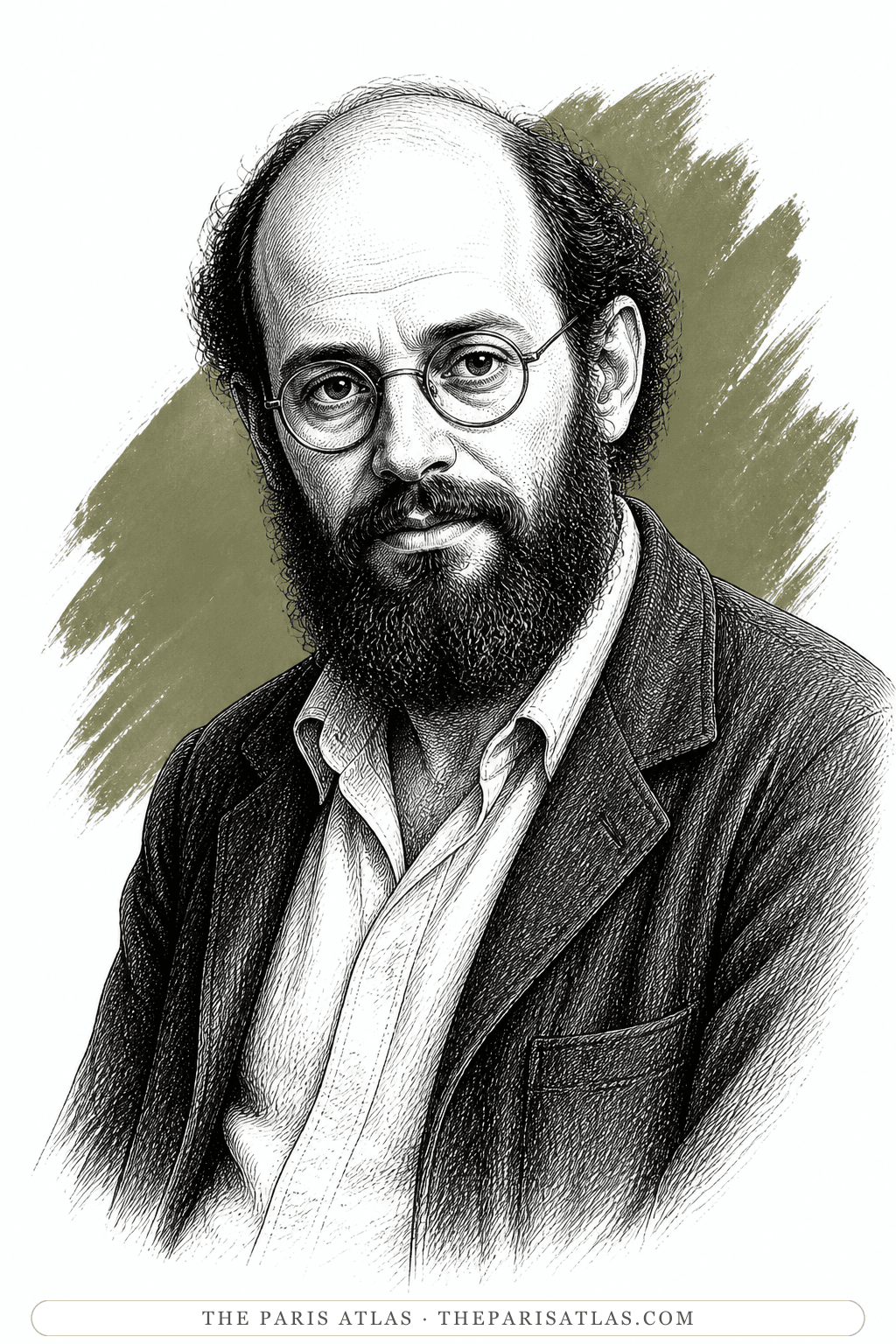
Met · 1955
Allen Ginsberg sought Snyder out in 1955 on Kenneth Rexroth's recommendation, and weeks later both read at the Six Gallery on 7 October 1955, Ginsberg premiering "Howl" and Snyder reading "A Berry Feast". The friendship ran for decades: six months travelling India together in 1962 with Joanne Kyger and Peter Orlovsky, and a joint land purchase on the San Juan Ridge in 1966 that became Snyder's home, Kitkitdizze.
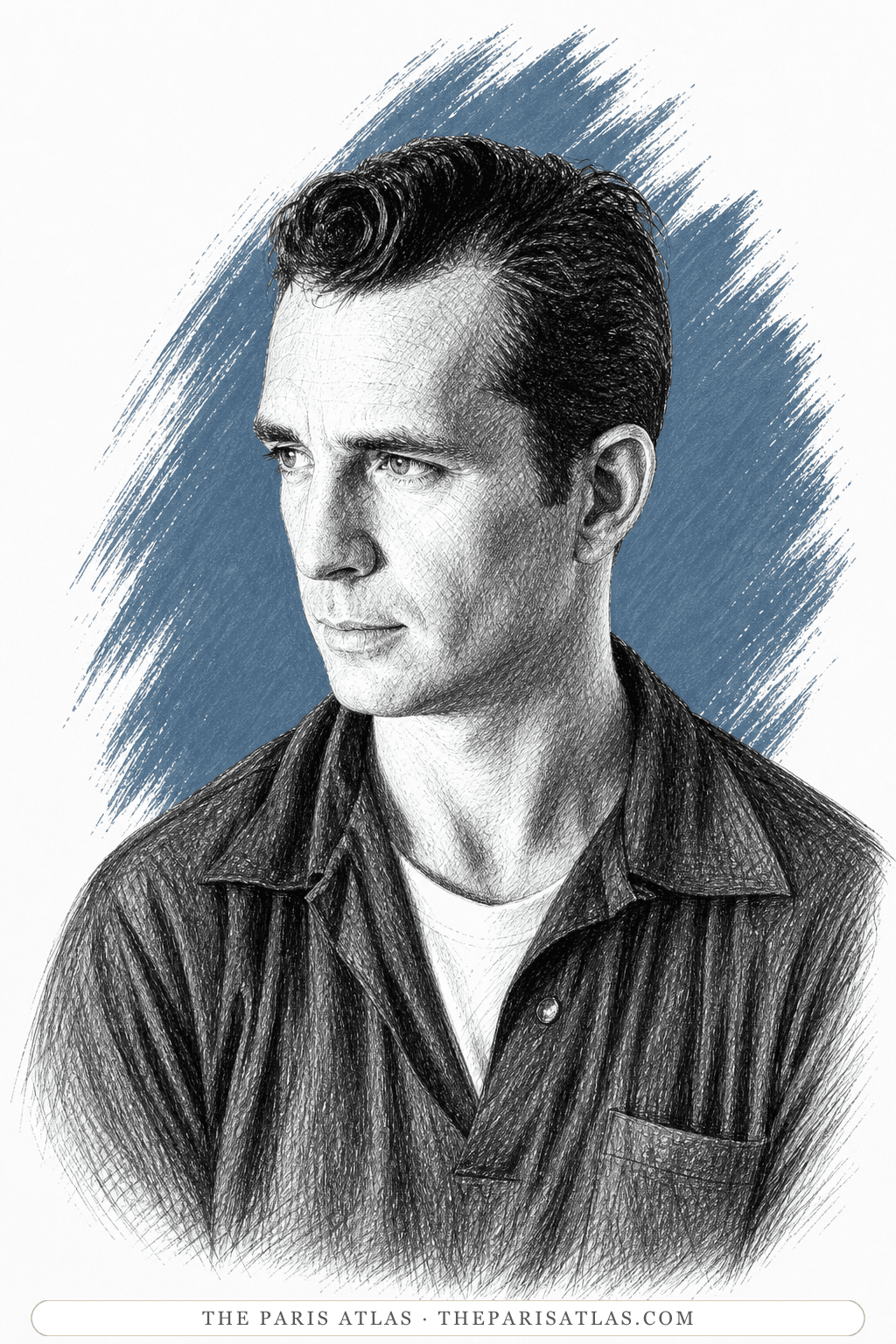
Met · 1955
Snyder's serious study of Asian religions intensified Kerouac's Buddhism and inspired Japhy Ryder in The Dharma Bums.
Gary Snyder (born 8 May 1930) is an American poet, essayist, translator and environmental activist associated with the Beat Generation and the San Francisco Renaissance. He won the Pulitzer Prize for his 1974 collection Turtle Island, spent much of the 1950s and 1960s studying Zen Buddhism in Kyoto, and has lived since 1970 at Kitkitdizze, a homestead he built in the Sierra Nevada foothills. He is often called the poet laureate of deep ecology.
Yes, though he came to the Beats through the West Coast rather than the original New York circle. He read at the 1955 Six Gallery reading in San Francisco where Ginsberg first performed "Howl", shared a cabin with Jack Kerouac, and became a central figure of the scene. But his backcountry life, manual labour and serious Buddhist study set him apart, and his commitments outlasted the movement; Lawrence Ferlinghetti called him the Thoreau of the Beat Generation.
Yes. Jack Kerouac based Japhy Ryder, the mountaineering, Zen-studying hero of his 1958 novel The Dharma Bums, directly on Snyder, just as he had based Dean Moriarty in On the Road on Neal Cassady. The two had met in San Francisco in the mid-1950s and shared a Mill Valley cabin, and Snyder's serious engagement with Buddhism and the wilderness gave the novel much of its material.
The homestead Snyder built in 1970 on the San Juan Ridge, in the Sierra Nevada foothills north of Nevada City, California, and his home ever since. He named it after the Miwok word for a local evergreen shrub. The house, built with friends from rural-Japanese and Native American architectural ideas, is the physical center of the bioregional, live-in-one-place philosophy that runs through his later poetry and essays.
Zen Buddhism, through formal monastic training in Kyoto. From 1956 he spent much of a decade there, first as attendant and English tutor to the abbot Miura Isshu at Shokoku-ji, then as the first foreign disciple of Oda Sesso at Daitoku-ji, practising zazen, sutra chanting and kōan study. He formally became a Buddhist in 1955, took the dharma name Chofu, and lived for years as a de facto monk. He also worked on Zen translations and deepened the classical Chinese that underlies his Cold Mountain versions.
Start with Riprap & Cold Mountain Poems (1959), which pairs his own spare lookout poems with his Han Shan translations, and Turtle Island (1974), the Pulitzer winner. The essay collection The Practice of the Wild (1990) is a foundational deep-ecology text, and Mountains and Rivers Without End (1996) is the epic sequence he wrote across forty years. Myths & Texts (1960) and Axe Handles (1983), an American Book Award winner, are also central.
Met · 1955
Allen Ginsberg sought Snyder out in 1955 on Kenneth Rexroth's recommendation, and weeks later both read at the Six Gallery on 7 October 1955, Ginsberg premiering "Howl" and Snyder reading "A Berry Feast". The friendship ran for decades: six months travelling India together in 1962 with Joanne Kyger and Peter Orlovsky, and a joint land purchase on the San Juan Ridge in 1966 that became Snyder's home, Kitkitdizze.
Met · 1955
Snyder's serious study of Asian religions intensified Kerouac's Buddhism and inspired Japhy Ryder in The Dharma Bums.
The sources below include biographies, scholarly essays, interviews, and primary materials that informed this page. They reflect both the historical record and ongoing critical conversations about Gary Snyder and their work.


The Academy of American Poets biography, used to confirm the award record.
Reference article cross-checked for the chronology, the Japan years, the marriages, Kitkitdizze, and the awards.
These references anchor the page in the documented record and in the scholarly conversations around Gary Snyder. Every claim on this page traces back to one or more of the works listed here.
 Explore more resources