The Paris AtlasCharting the artists, works, and places worth returning to.
  • Filmmaker
· French · 1841–1890

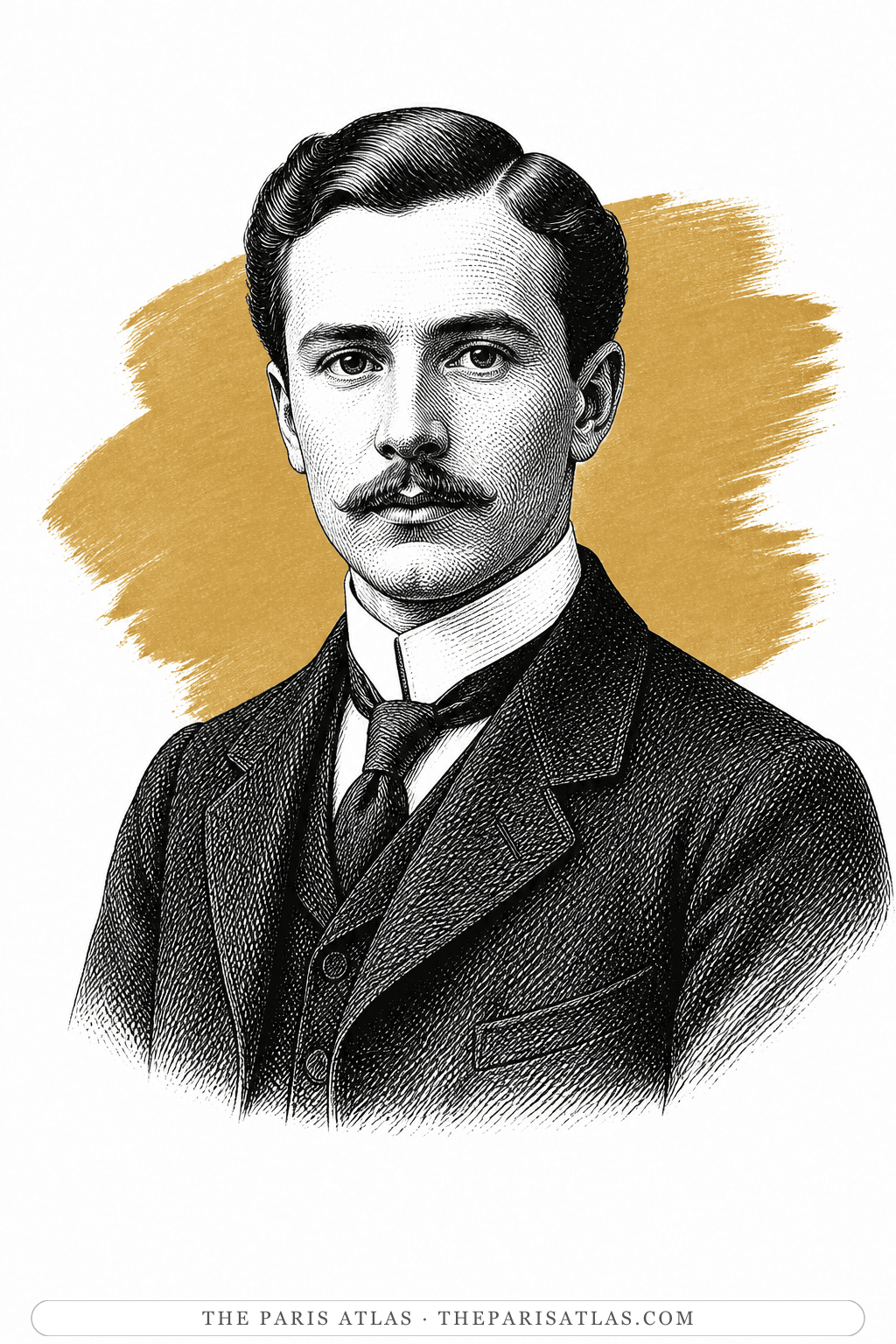
Louis Le Prince

A French inventor and moving-image pioneer who filmed Roundhay Garden Scene in Leeds in 1888 with a single-lens camera, then disappeared without trace on a train from Dijon to Paris two years later.

Details

Lived
1841–1890
Born
28 August 1841
Birthplace
Metz, France
Died
Presumed after 16 September 1890
Place of death
Unknown; disappeared between Dijon and Paris
Nationality
French
Married
Elizabeth Whitley · 1869–1890
Roles
Filmmaker

About Louis Le Prince

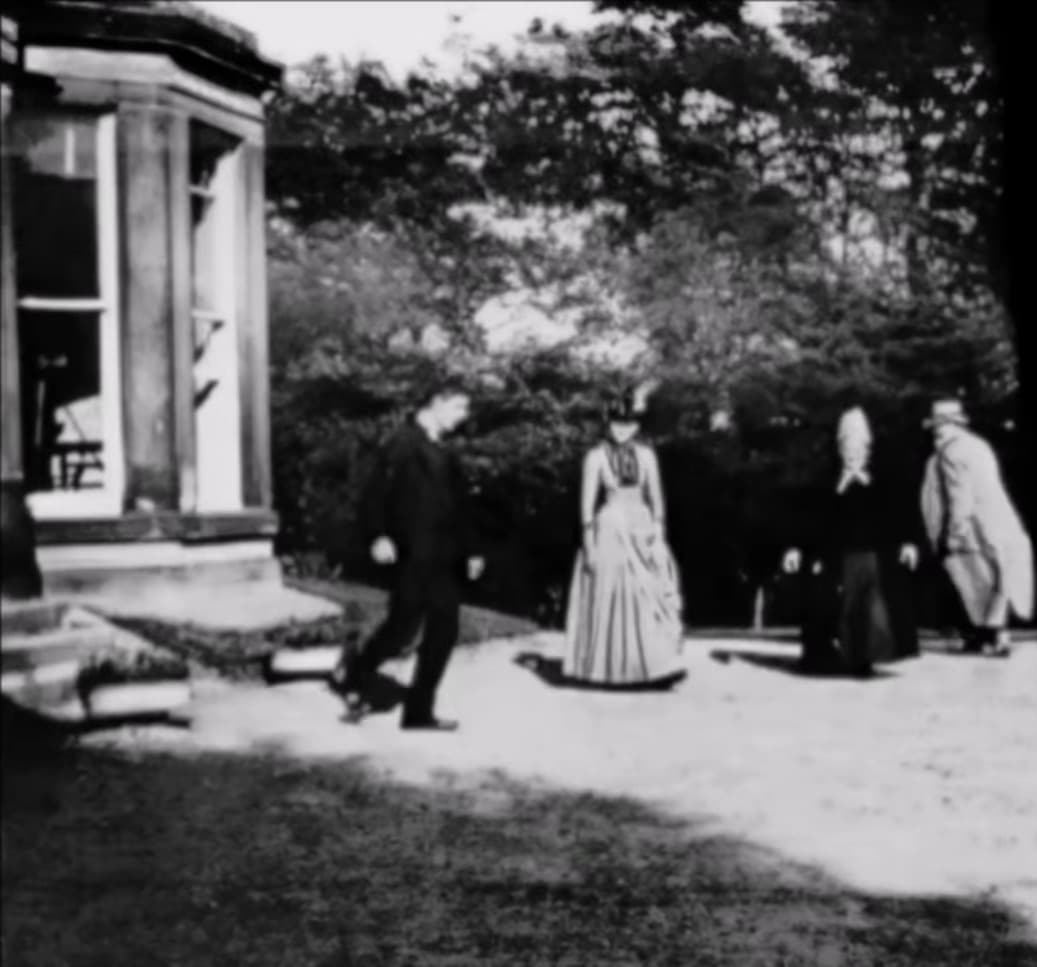
Louis Aimé Augustin Le Prince (1841–1890) was a French inventor, photographer, and trained artist whose Leeds workshop produced the earliest surviving moving pictures. In October 1888 his single-lens camera recorded Roundhay Garden Scene — four people walking in a garden for less than two seconds — and Traffic Crossing Leeds Bridge, films that predate every public cinema demonstration by Thomas Edison and the Lumière brothers.

He never showed either film to a paying audience. On 16 September 1890 he boarded a train from Dijon to Paris and vanished. Neither he nor his luggage was ever found. His son Adolphe carried the invention forward, first to New York and then into an American priority suit that ended in his own suspicious death.

A photographer's son from Metz

Louis Le Prince was born in Metz in 1841. His father was an officer of the French Legion of Honour and a friend of Louis Daguerre, the French artist and chemist whose daguerreotype was the first commercial photographic process. The boy grew up around Daguerre's cameras and learned photographic chemistry as a hobby before he learned it as a profession.

He studied painting in Paris and chemistry at Leipzig University. Both trainings mattered: he understood the way light struck a plate and the way an image should compose. The invention that followed rested on both — a technical problem solved by a person who could also draw.

Leeds, marriage, and the workshop years

In 1866 Le Prince moved to Leeds to join Whitley Partners, a brass foundry run by his friend John Whitley. Three years later he married John's sister Elizabeth, an artist and teacher, and settled in Yorkshire. The couple worked and taught in Leeds together for two decades, and Elizabeth ran the art education their marriage was built around.

Le Prince kept a workshop on Woodhouse Lane in Leeds. His earliest moving-image camera used sixteen lenses; the design was clumsy because each image sat at a slightly different point and the sequence could not be brought smoothly together. In 1888 he replaced it with a single-lens camera that exposed successive pictures on paper-backed photographic film, all from one viewpoint. That was the machine that recorded the Roundhay footage.

What Roundhay Garden Scene actually is

The film Le Prince recorded on 14 October 1888 lasts under two seconds. Four people walk in a circle in a garden owned by his in-laws Sarah and Joseph Whitley in the Roundhay district of Leeds. His son Adolphe Le Prince crosses the centre of the frame; Annie Hartley, a family friend, walks with Sarah at the front; Joseph is partly hidden behind Hartley. There is no story. The movement is the experiment.

It is the earliest surviving film recorded with a single-lens camera intended to reproduce continuous motion. It is not the first attempt at motion photography — Eadweard Muybridge's horse studies and Étienne-Jules Marey's chronophotographic gun both predate it — and it is not the first film shown to a paying audience. That distinction belongs to the Lumière brothers' Grand Café programme in Paris on 28 December 1895, seven years later.

The train to Paris

By 1890 Le Prince was preparing to demonstrate his camera to a paying audience — first in Britain, then in the United States, where he was expected to project his films in New York later that autumn. On 14 September 1890 he visited his brother Albert in Dijon. On 16 September he boarded the express to Paris to complete the trip home.

He never arrived. His family was waiting at the Paris station; he was not on the train. His luggage was not on the train either. His brother said he had personally seen him board at Dijon. No body was recovered, no witness on the train remembered him, and no ransom note came. French researchers later publicised an 1890 photograph from the Paris police archives showing a drowned man who resembled him, but the identification has never been confirmed.

Theories have ranged from suicide over patent-office setbacks, murder for the invention, a family dispute with his brother over their mother's inheritance, and a voluntary disappearance. None is supported by evidence strong enough to close the case. What is documented is the disappearance and its timing: days before the demonstration that might have made his invention public.

How cinema history nearly lost him

Louis's son Adolphe Le Prince carried the papers and cameras to New York and, in 1898, testified in Equity 6928, the American priority suit brought by the American Mutoscope Company against Thomas Edison. The court ruled that Le Prince's cameras had not been a public projector and therefore did not invalidate Edison's patents. Adolphe himself was shot dead on Fire Island in 1901, in what a coroner recorded as a hunting accident — a verdict his family did not accept.

The frames survived because Elizabeth Le Prince kept the paper film safe in the family. In 1930 the National Science Museum in London made photographic copies of the Roundhay and Leeds Bridge sequences, and the University of Leeds now holds the Le Prince Collection. His reputation as the maker of the earliest surviving moving pictures with a single-lens camera has been rebuilt in the century since. It came late, and it came without a body.

Life events

  1. 1841

    Born on 28 August in Metz, in the French Moselle region.

  2. 1866

    Moves to Leeds to join Whitley Partners, a brass foundry run by his friend John Whitley.

  3. 1869

    Marries Elizabeth Whitley in Leeds.

  4. 1886

    Files a United States patent for a sixteen-lens camera-projector.

  5. October 1888

    Records Roundhay Garden Scene and Traffic Crossing Leeds Bridge with his single-lens camera at his Woodhouse Lane workshop in Leeds.

  6. 16 September 1890

    Boards a train from Dijon to Paris and disappears. No body, luggage, or trace is ever found.

  7. 1898–1901

    Adolphe Le Prince testifies for the American Mutoscope Company in Equity 6928, a United States suit challenging Thomas Edison's motion-picture patents. The court rules for Edison.

  8. 1901

    Adolphe Le Prince is shot dead on Fire Island, New York — coroner's verdict: hunting accident.

  9. 1930

    The National Science Museum in London photographs the surviving Roundhay and Leeds Bridge paper-film frames.

Selected works

Cataloged from the holding institutions' records. Reproductions appear only where the rights are verified.

Cinema

Frame from Roundhay Garden Scene showing four people in Victorian dress walking in a garden in Leeds in 1888

Artwork reproduction

Film

Roundhay Garden Scene

14 October 1888 · Silent motion-picture fragment; about 1.7 seconds at 12 frames per second

Four people walk in a garden for less than two seconds. French inventor Louis Le Prince recorded the scene in Leeds on 14 October 1888 with a single-lens camera. The surviving frames predate the films of Thomas Edison and Auguste and Louis Lumière. It is accurate to call this the earliest surviving motion picture made with a single-lens camera. It is not accurate to call it the first public movie screening: Le Prince never presented it to a paying audience.
Louis Le Prince, Roundhay Garden Scene, 14 October 1888. Image: public domain.

People they knew

Documented connections — every one carries its source.

Adolphe Le Prince

Parent of · 1872

Adolphe was born in Paris in 1872, the eldest son of Louis Le Prince and Elizabeth Whitley. Sixteen years later he appears in Roundhay Garden Scene, crossing the frame between his grandparents Sarah and Joseph Whitley and the family friend Annie Hartley. He kept the cameras and paper film after his father's 1890 disappearance and carried the patent claim to New York.

National Science and Media Museum — The mystery of Louis Le Prince; University of Leeds Special Collections — Louis Le Prince Collection

Questions about Louis Le Prince

Who was Louis Le Prince?

Louis Le Prince (1841–1890) was a French inventor and moving-image pioneer working in Leeds, England. He built a single-lens camera and used it to record the earliest surviving motion pictures in October 1888 — years before Thomas Edison and the Lumière brothers demonstrated their systems to the public.

Did Louis Le Prince invent cinema?

He built one of the machines that made cinema possible: a single-lens camera that exposed successive pictures on paper-backed film. He was not the first to attempt moving photography, and he never demonstrated his invention to a paying audience, which is why the Lumière brothers' 1895 Paris programme is called the first commercial cinema, not his.

What films did Louis Le Prince make?

The two surviving Le Prince films are Roundhay Garden Scene (14 October 1888), which shows his son Adolphe, his in-laws Sarah and Joseph Whitley, and Annie Hartley walking in a Leeds garden, and Traffic Crossing Leeds Bridge, filmed later that month.

What happened to Louis Le Prince?

He disappeared on 16 September 1890 on a train from Dijon to Paris. His brother said he had put him on the train at Dijon; his family was waiting in Paris; he never arrived, and neither he nor his luggage was ever found. His fate has never been confirmed.

Why isn't Louis Le Prince as famous as Thomas Edison or the Lumière brothers?

He vanished before he could stage a public demonstration. Edison and the Lumière brothers both showed their inventions to paying audiences, patented them widely, and built industries around them. Le Prince's invention survived only because his family kept the paper film safe; his reputation was rebuilt slowly by film historians over the century that followed.

Where can you see Louis Le Prince's cameras today?

The Le Prince Collection at the University of Leeds holds his cameras, papers, and paper-film experiments. The Science Museum in London holds the photographic copies of the surviving Roundhay and Leeds Bridge frames.

Sourced claims

Every connection the graph holds for Louis, with the evidence behind it.

Parent of · 1872

Adolphe Le Prince

Adolphe was born in Paris in 1872, the eldest son of Louis Le Prince and Elizabeth Whitley. Sixteen years later he appears in Roundhay Garden Scene, crossing the frame between his grandparents Sarah and Joseph Whitley and the family friend Annie Hartley. He kept the cameras and paper film after his father's 1890 disappearance and carried the patent claim to New York.

National Science and Media Museum — The mystery of Louis Le Prince; University of Leeds Special Collections — Louis Le Prince Collection

Sources and further reading

  • National Science and Media Museum — The mystery of Louis Le Prince
  • University of Leeds Special Collections — Louis Le Prince Collection
  • Science Museum Group — Two frames from Roundhay Garden Scene
  • Institut Lumière — Le Cinématographe Lumière