The Paris AtlasCharting the artists, works, and places worth returning to.

In their own words

Marie Curie quotes

6 quotations, each verified against its source and credited to the work it comes from — the wording as Marie Curie wrote or said it, not as the internet passes it around.

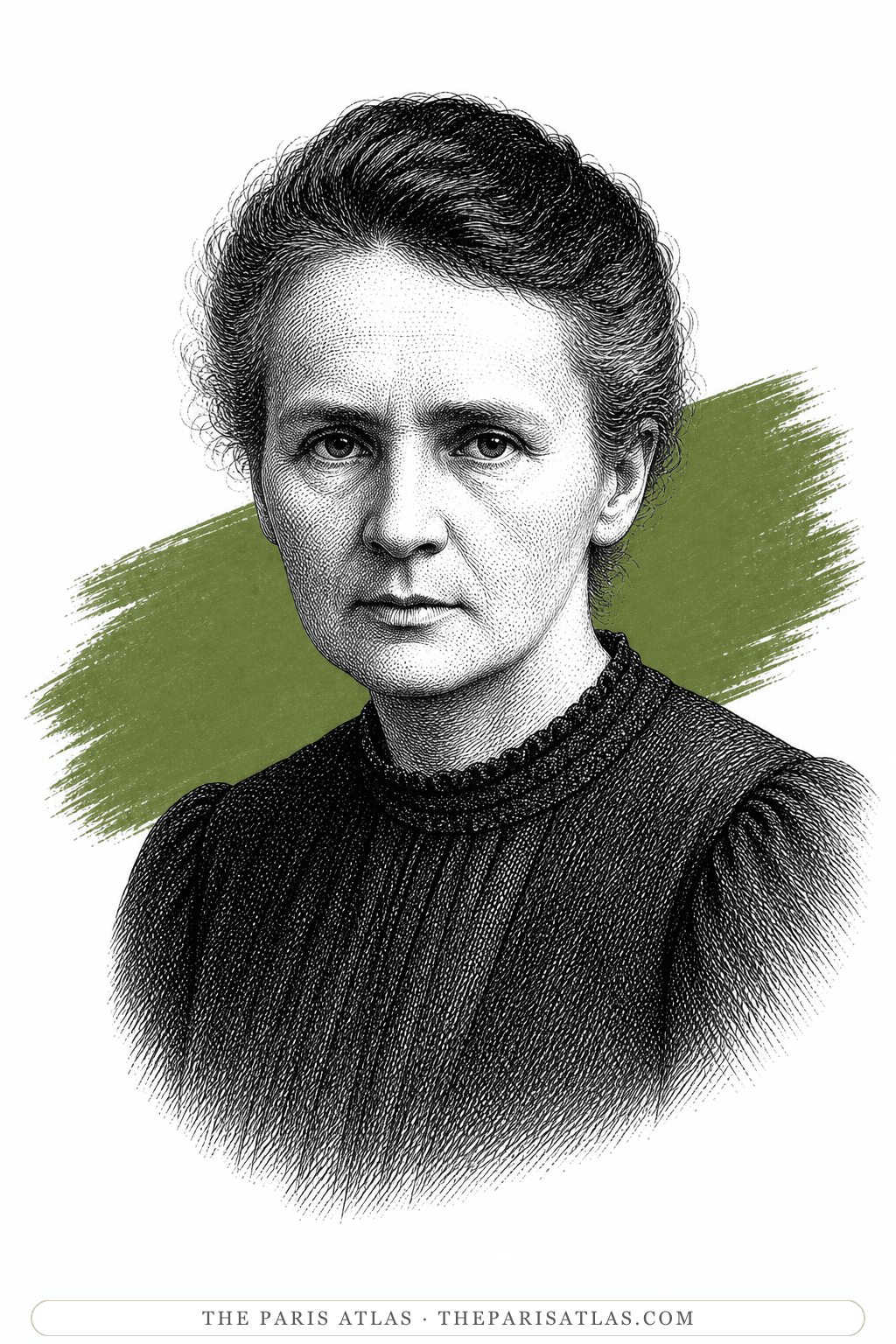
Illustrated portrait of Marie Curie

How these quotes were checked

How we decide whether a quote is genuine

Marie Curie left few quotable sentences in English by design: she wrote sparingly about herself, and her one book of personal writing is the memoir of Pierre Curie she added her own notes to. Every quote above is checked against a printed source from her lifetime — her 1923 autobiographical notes, the pamphlet of her 1921 Vassar College address, or the contemporaneous record of the interviewer who asked her about patents.

The most famous line credited to her is checked below, and it does not appear in any of them.

Four famous Hemingway quotes, fact-checked

A sentence linked to Hemingway may be exact, shortened, remembered by someone else, or unsupported. Each label below explains what the available evidence actually proves.

Unproven

Nothing in life is to be feared, it is only to be understood. Now is the time to understand more, so that we may fear less.

The most-shared Curie line has no primary source. It does not appear in her Autobiographical Notes of 1923, in her Vassar College address of 1921, or in the interview record of Marie Mattingly Meloney printed with the 1923 book — the three first-hand texts checked for this collection — and no one who quotes it cites where she said it. It cannot be called hers until a source surfaces.

  • Marie Curie, Pierre Curie, with Autobiographical Notes (1923)
  • Marie Curie, The Discovery of Radium — address by Madame M. Curie at Vassar College, 14 May 1921 (scanned pamphlet) (1921)

Common paraphrase

Humanity needs practical men... but humanity also needs dreamers.

The thought is genuinely hers, from the Autobiographical Notes, but the printed sentences differ from the circulated version: she wrote “Humanity, surely, needs practical men” and “But it also needs dreamers”. The exact wording is given in the verified quote above.

  • Marie Curie, Pierre Curie, with Autobiographical Notes (1923)
Reported speech

Radium was not to enrich any one. It belongs to all people.

These are words Curie spoke, not words she wrote: the American editor Marie Mattingly Meloney recorded them from their 1920 conversation in Paris and printed them in her introduction to Pierre Curie. The report is contemporaneous and Meloney knew Curie well, but the phrasing is an interviewer's record of speech.

  • Marie Curie, Pierre Curie, with Autobiographical Notes (1923)
It was like a new world opened to me, the world of science, which I was at last permitted to know in all liberty.
Marie Curie, Autobiographical Notes, in Pierre Curie (1923), on beginning her studies at the Sorbonne in 1891
Yet it was in this miserable old shed that we passed the best and happiest years of our life, devoting our entire days to our work.
Marie Curie, Autobiographical Notes, in Pierre Curie (1923), on the shed where radium was isolated
Humanity, surely, needs practical men who make the best of their work for the sake of their own interests, without forgetting the general interest. But it also needs dreamers, for whom the unselfish following of a purpose is so imperative that it becomes impossible for them to devote much attention to their own material benefit.
Marie Curie, Autobiographical Notes, in Pierre Curie (1923)
The work was one of pure science. And this is a proof that scientific work must not be considered from the point of view of the direct usefulness of it. It must be done for itself, for the beauty of science, and then there is always the chance that a scientific discovery may become like the radium a benefit for humanity.
Marie Curie, address at Vassar College, 14 May 1921
I was taught that the way of progress is neither swift nor easy.
Marie Curie, Autobiographical Notes, in Pierre Curie (1923), on her first laboratory work in Warsaw
There were no patents. We were working in the interests of science. Radium was not to enrich any one. Radium is an element. It belongs to all people.
Marie Curie, in conversation with Marie Mattingly Meloney, 1920, as recorded in Meloney's introduction to Pierre Curie (1923)

Questions about Marie Curie quotes

What is Marie Curie's most famous quote?

The line most often shared — “Nothing in life is to be feared, it is only to be understood” — has no known source in her writings or recorded speech. Of the sentences she verifiably wrote, the best known are the ones about the “miserable old shed” where radium was isolated and about humanity needing dreamers.

Did Marie Curie really say “Nothing in life is to be feared”?

No source has ever been produced for it. It is absent from her 1923 autobiographical notes, from her 1921 Vassar College address, and from the contemporaneous interview record printed with her book on Pierre Curie. Until someone finds it in a primary source, it should not be attributed to her.

Did Marie Curie write in English?

The Vassar College address of 1921 was delivered in English and printed from her text. Her Autobiographical Notes were written for the American edition of Pierre Curie and translated by Charlotte and Vernon Kellogg with her cooperation, so the English wording is the authorized published form.

Why did Marie Curie refuse to patent radium?

She and Pierre Curie published the extraction process freely so that anyone could produce radium. Her autobiographical notes defend the choice as the work of “dreamers” who cannot put material benefit first — and it left her, by 1920, unable to afford a gram of radium for her own laboratory.

Where do these quotes come from?

Three first-hand texts: her Autobiographical Notes printed with Pierre Curie (1923), the Vassar College pamphlet of her 1921 address on the discovery of radium, and — for words she spoke rather than wrote — the interview record of Marie Mattingly Meloney printed in the same 1923 book. Each quote names its source and how it was checked.

References

References

The sources below are the editions, archives, and full-text searches used to verify the quotations on this page. Every line was checked against one or more of them before it appeared here.

  1. 1Pierre Curie, with Autobiographical Notes

    Memoir
    The Macmillan Company, 1923
    Used for

    Autobiographical Notes and Meloney's introduction — the main source of her own words in English.

    View source
  2. 2The Discovery of Radium — address by Madame M. Curie at Vassar College, 14 May 1921 (scanned pamphlet)

    Archive
    Vassar College; Internet Archive, 1921
    Used for

    The Vassar address pamphlet, her one formal English address.

    View source
i
Why these sources are here

Verification is the point of this collection: a quotation is listed only when its wording has been checked against the sources above, and the attribution notes record what each check found about the famous lines that failed.

Explore more resources

The Friday Letter

One story from the atlas, every Friday.

No algorithms chasing attention. A work, a place, and the connection between them — with the history checked.

One email a week. No spam, no selling your address. Unsubscribe anytime.