The petites Curies
The buildings were barely finished when the war began. X-rays could show a surgeon exactly where a bullet or a shell fragment sat inside a wounded man, and in 1914 the French army had almost no radiological equipment near the front. Marie Curie spent four years fixing that: she raised the money and the vehicles through the Red Cross and the Patronage National aux Blessés — the National Fund for the Wounded, a French war charity — had eighteen cars fitted out as mobile X-ray units, trained women as radiological operators — her daughter Irène, then seventeen, among them — and travelled with a car of her own to Amiens, Calais, Dunkirk, Verdun, Nancy, Belfort, Compiègne. The vehicles were nicknamed the petites Curies, the 'little Curies', a name her younger daughter Ève put into print in the biography she later wrote of her mother. More than a million wounded men were examined by the technique.
Afterwards there was no money for research in a ruined country, and she went looking for it. An American journalist, Marie Mattingly Meloney, visited her in 1920, was astonished to find that the discoverer of radium could not afford to buy any of it for her own laboratory, and launched a subscription among American women; in May 1921 Curie sailed to the United States with both daughters and came home with a gram of radium presented by the American president, Warren Harding, along with instruments and funds. The Curie Foundation, created the same year to pay for the Institute's work, opened a clinic on the rue d'Ulm in 1922 offering the new radiation treatments for cancer. In 1922 she was elected to the Académie de médecine, France's national academy of medicine — the first woman elected to it — for a therapy that carried her name, curiethérapie: curietherapy, the treatment of tumours by placing radium against or inside them.
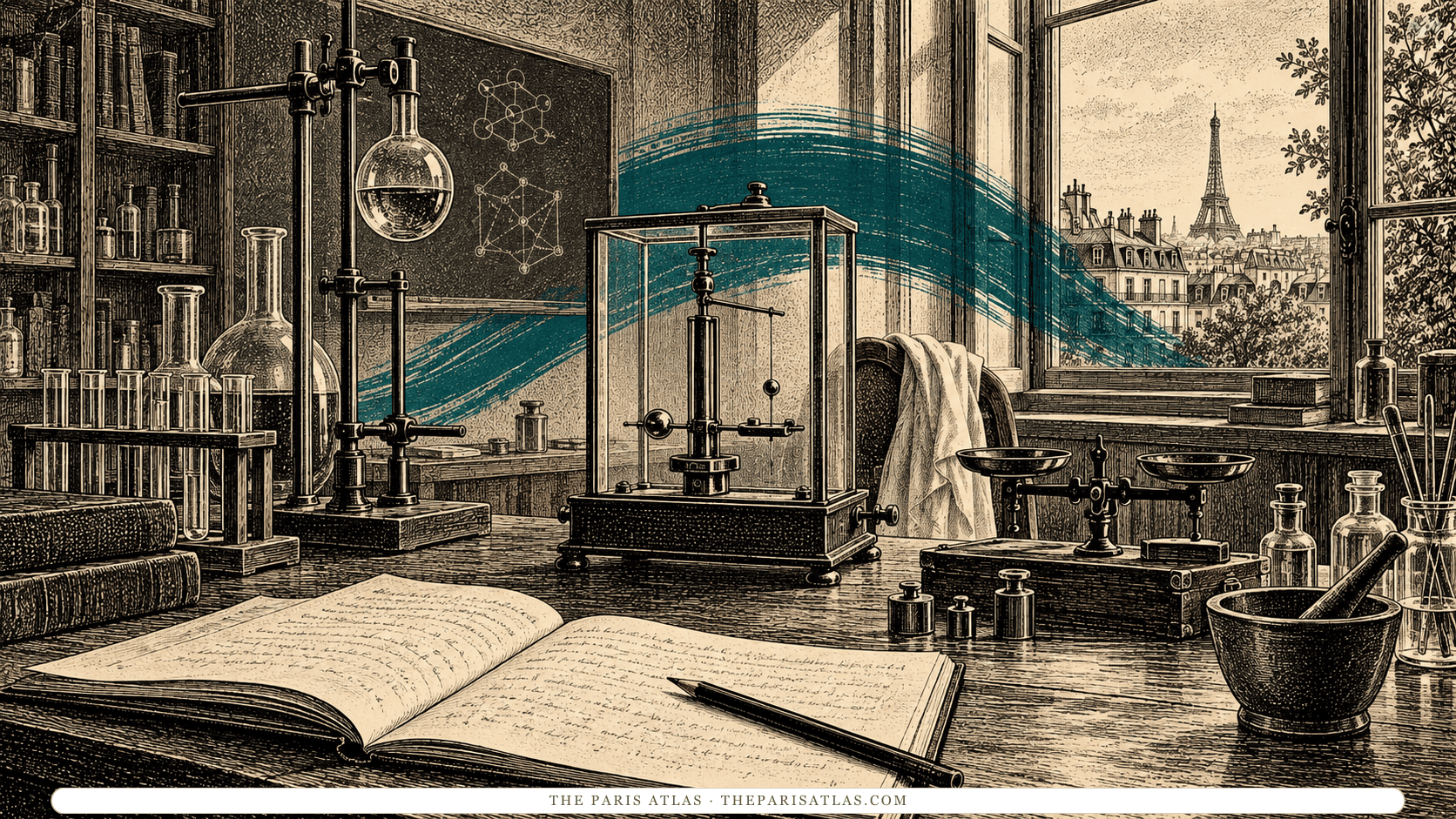
She kept an office at the Institute for the last twenty years of her life. Through the 1920s her health failed: she had spent three decades handling radioactive material with no protection anyone then knew to take, and her doctors diagnosed pernicious anaemia — a failure of the marrow to produce healthy red blood cells. She died on 4 July 1934 at a sanatorium, a mountain clinic for long convalescences, at Sancellemoz in the Haute-Savoie, in the French Alps, aged sixty-six. On 20 April 1995 the ashes of Pierre and Marie Curie were carried into the Panthéon, the domed former church on the hill above the Latin Quarter that France uses as a burial place for its national figures — making her the first woman moved there on the strength of her own achievements rather than a husband's. Her laboratory on the rue Pierre-et-Marie-Curie is now the Musée Curie, and her office and chemistry laboratory are kept as she left them.


 View source