The Paris AtlasCharting the artists, works, and places worth returning to.

Quarter · Latin Quarter · 5e arrondissement

The Latin Quarter

Still there, much changed

Open and walkable. The Sorbonne is still here and so is the street market; the rooms Hemingway could afford are not.

The university quarter on the hill above the river, named for the language its students once spoke, and the address of Ernest Hemingway's first Paris flat.

Address
Quartier latin, 75005 Paris
Years
University quarter since the 13th century
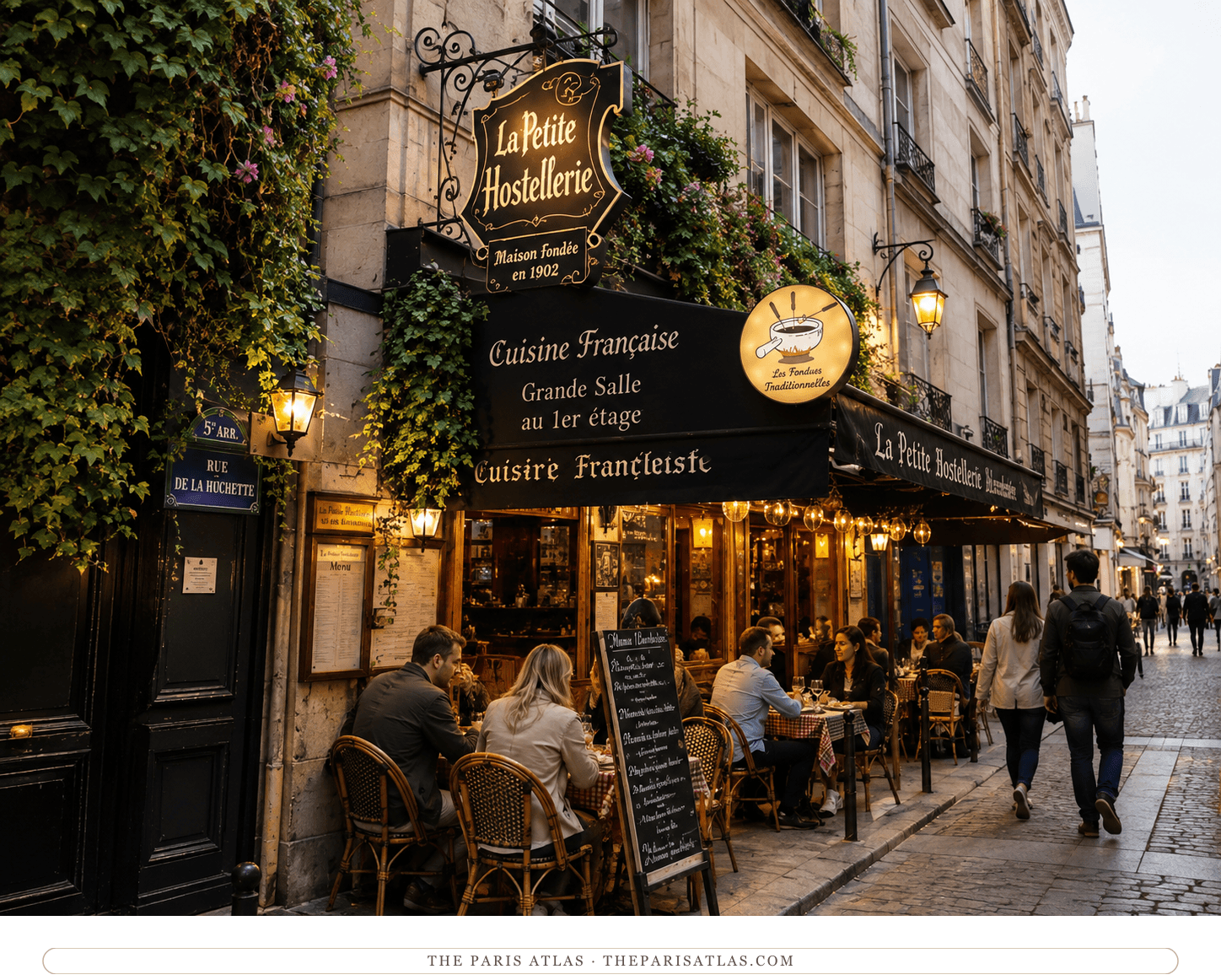
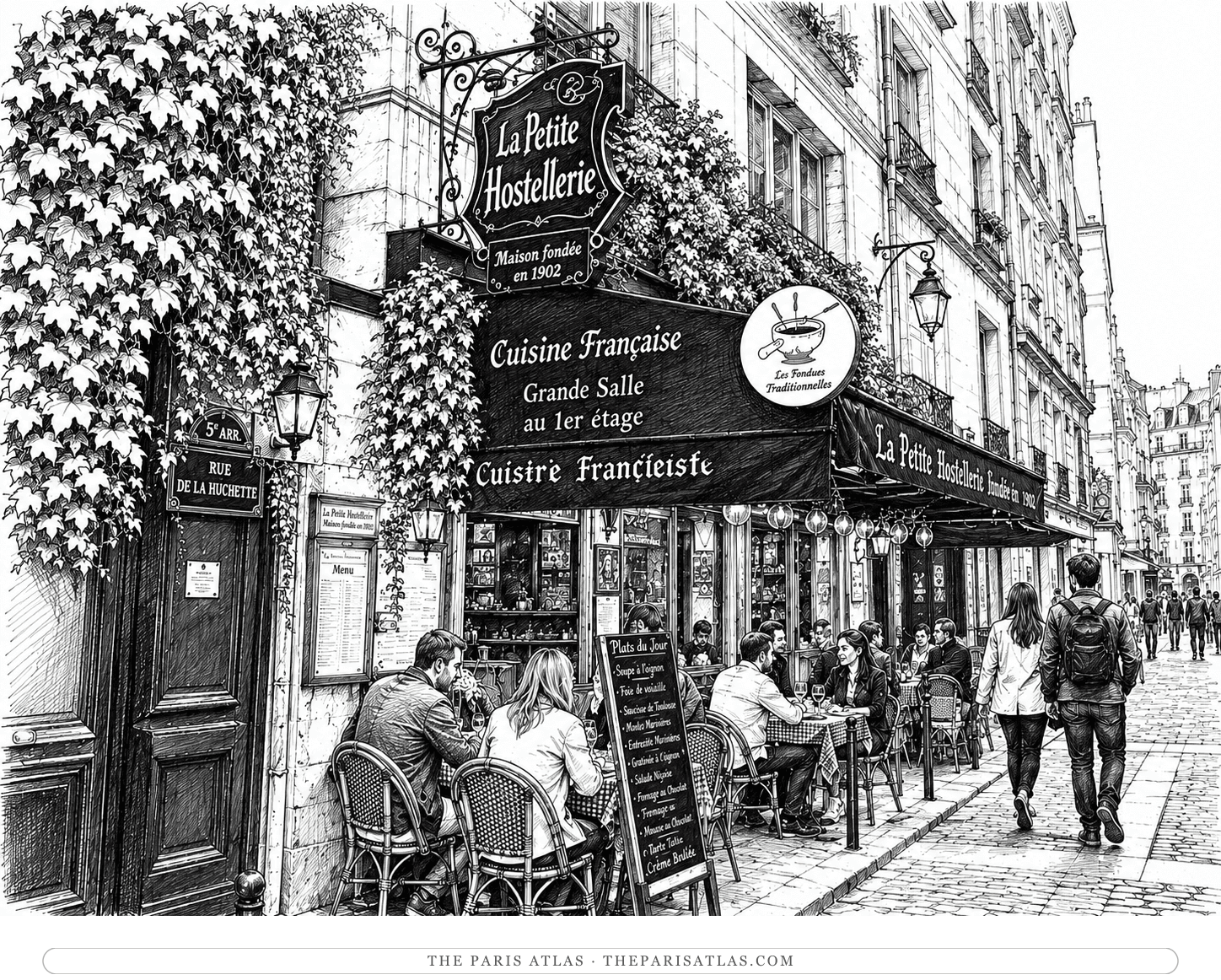
IllustrationColour drawing of a narrow Latin Quarter street, restaurant terraces under ivy and awnings, diners at pavement tables

The same street in colour, lamps lit.

Editorial illustration

The story

Hemingway’s Latin Quarter

Ernest Hemingway’s early Paris is closely tied to this neighborhood.

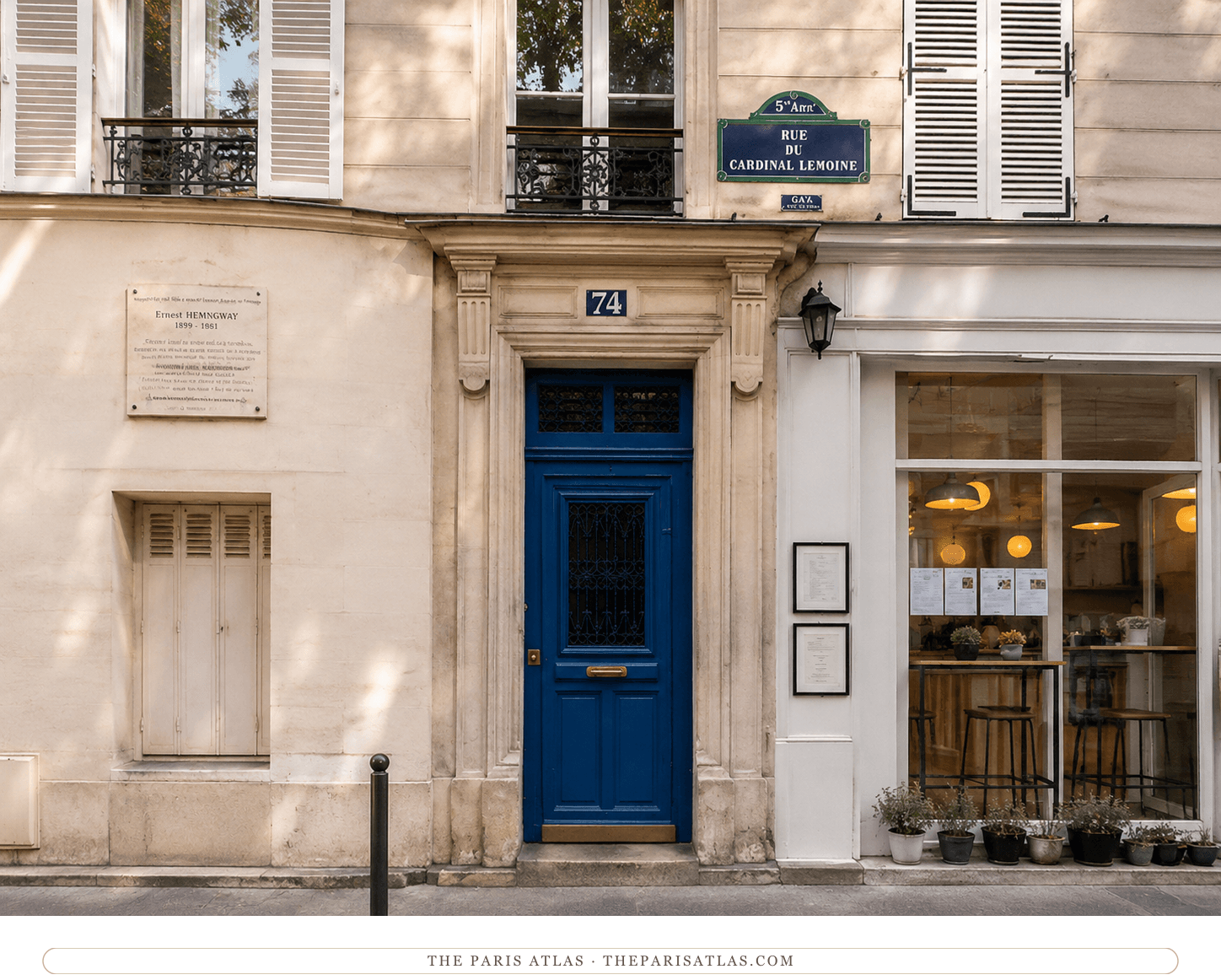
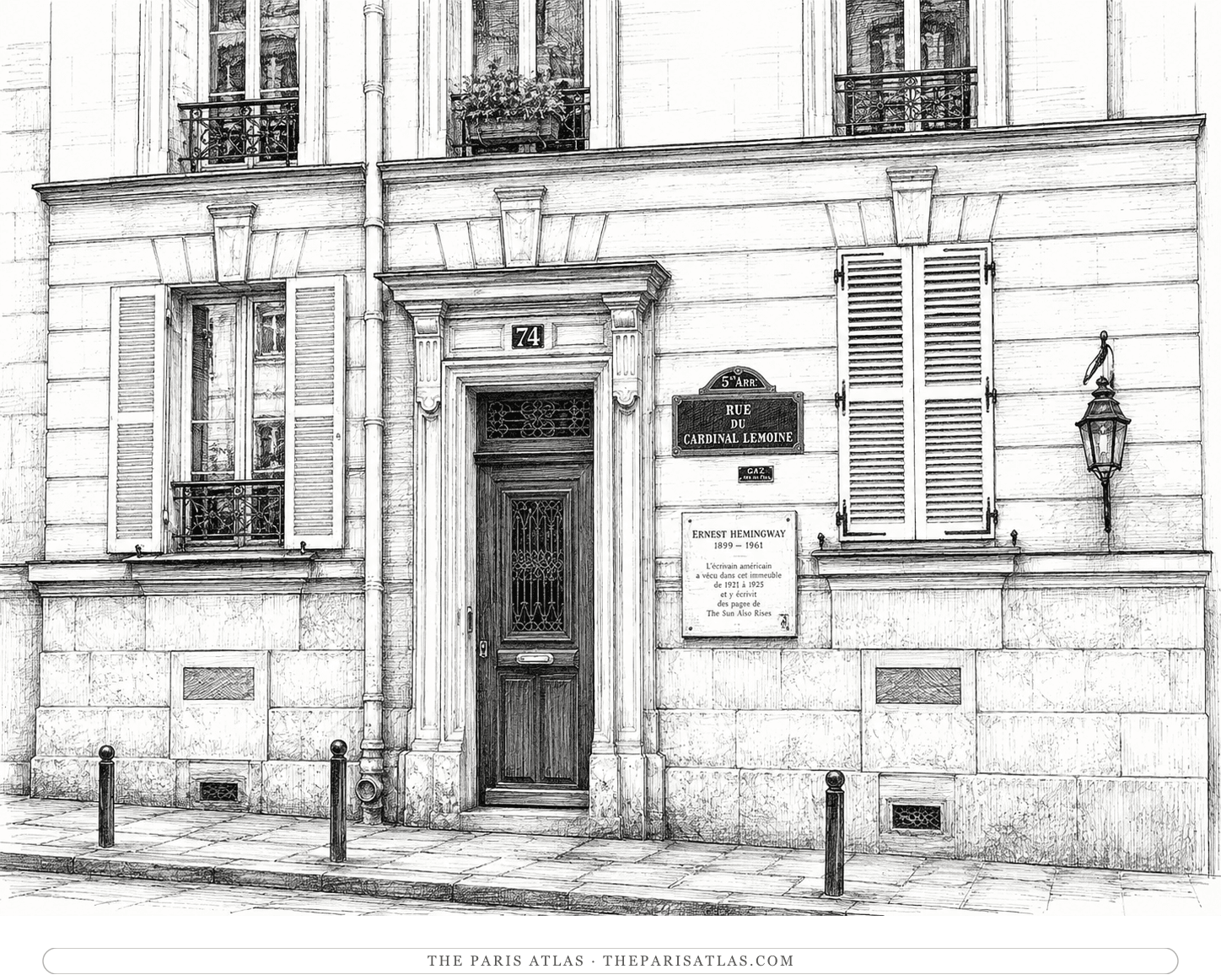
In January 1922, Hemingway and his first wife, Hadley Richardson, moved into a third-floor apartment at 74 rue du Cardinal Lemoine. The flat was basic, with no hot water and a squat toilet on the landing.

Hemingway also rented a separate room around the corner on rue Descartes, where he could go to write.

Their neighborhood centered around Place de la Contrescarpe, at the top of rue du Cardinal Lemoine, and nearby rue Mouffetard, one of the oldest market streets in Paris. Food has been sold along rue Mouffetard for roughly eight centuries, and its crowded street life became part of the Paris Hemingway remembered throughout his writing.

The Paris of The Snows of Kilimanjaro

Hemingway returned to this neighborhood later in The Snows of Kilimanjaro.

In the story, a dying writer in Africa remembers experiences he never managed to turn into stories. Among them is the Paris around Place de la Contrescarpe.

He remembers flower sellers dyeing their flowers in the street, with the dye running across the paving near the place where the autobus started. He remembers the sprawling trees, old white plastered houses painted brown below, and the sudden descent of rue du Cardinal Lemoine toward the river.

In the other direction was the narrow, crowded world of rue Mouffetard.

The scene matters because Hemingway’s memories are not focused on monuments or famous attractions. They are memories of the ordinary streets where he lived when he was young: houses, markets, transportation and the daily life of the neighborhood.

Much of that geography still survives. Place de la Contrescarpe, rue du Cardinal Lemoine and rue Mouffetard are all close enough together that the central locations can be walked in roughly ten minutes.

A Moveable Feast and Hemingway’s Memory of Paris

Hemingway returned to much of the same ground in A Moveable Feast.

The memoir describes cafés, bookshops, a cold apartment and the experience of being poor in Paris while trying to become a writer. Hemingway often remembers poverty not simply as hardship, but as part of an artistic apprenticeship.

The reliability of those memories has long been part of the discussion surrounding the book.

A Moveable Feast was written roughly thirty-five years after the period it describes, and Hemingway himself acknowledged in the foreword that memory and invention could overlap. By then, he was looking back on his youth from a very different point in his life and had plenty of opportunity to reshape the story.

Whatever the limits of the memoir as a historical record, the streets at the center of it remain recognizable.

Sylvia Beach and Shakespeare and Company

The Latin Quarter did not belong only to Hemingway or to American expatriates.

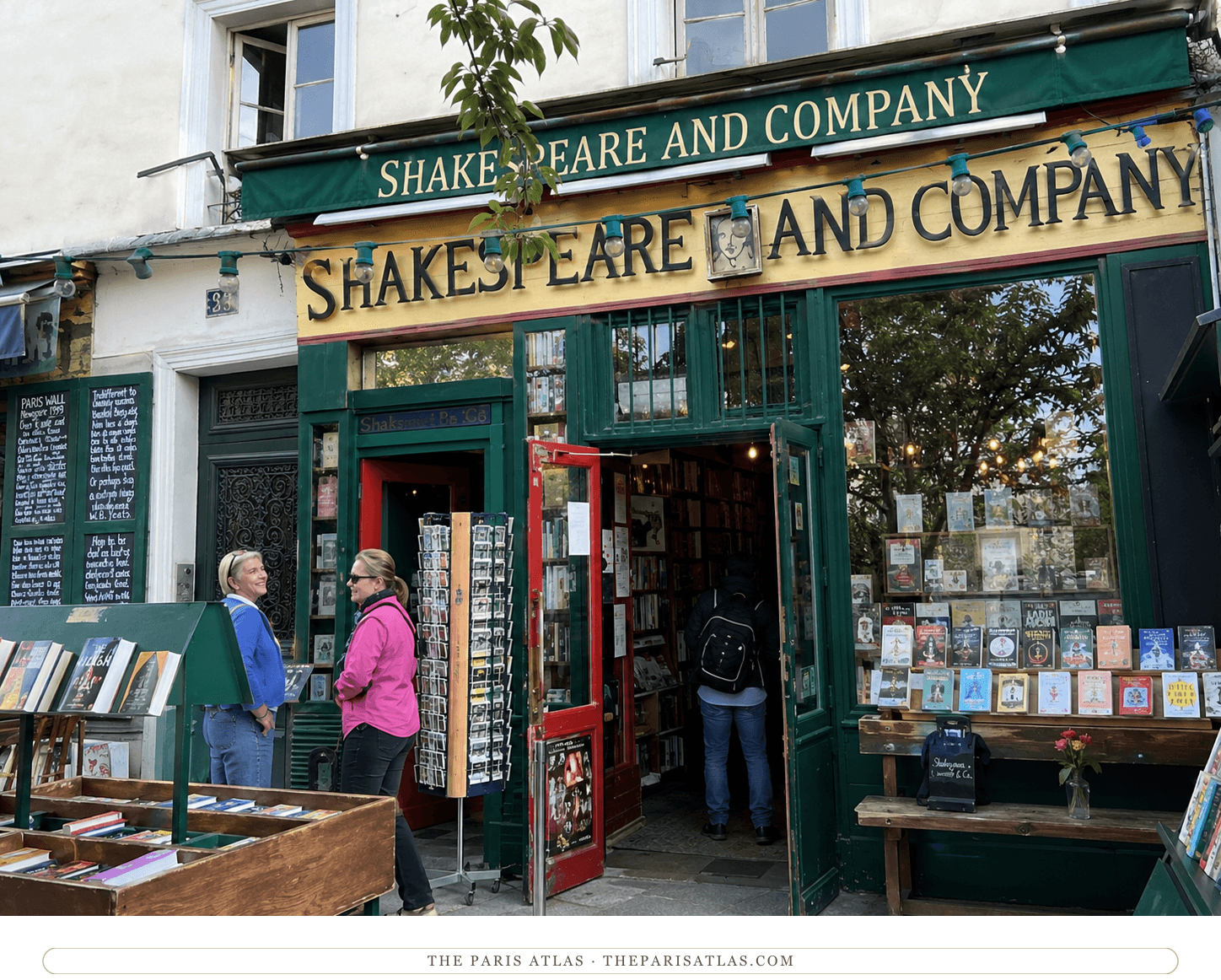
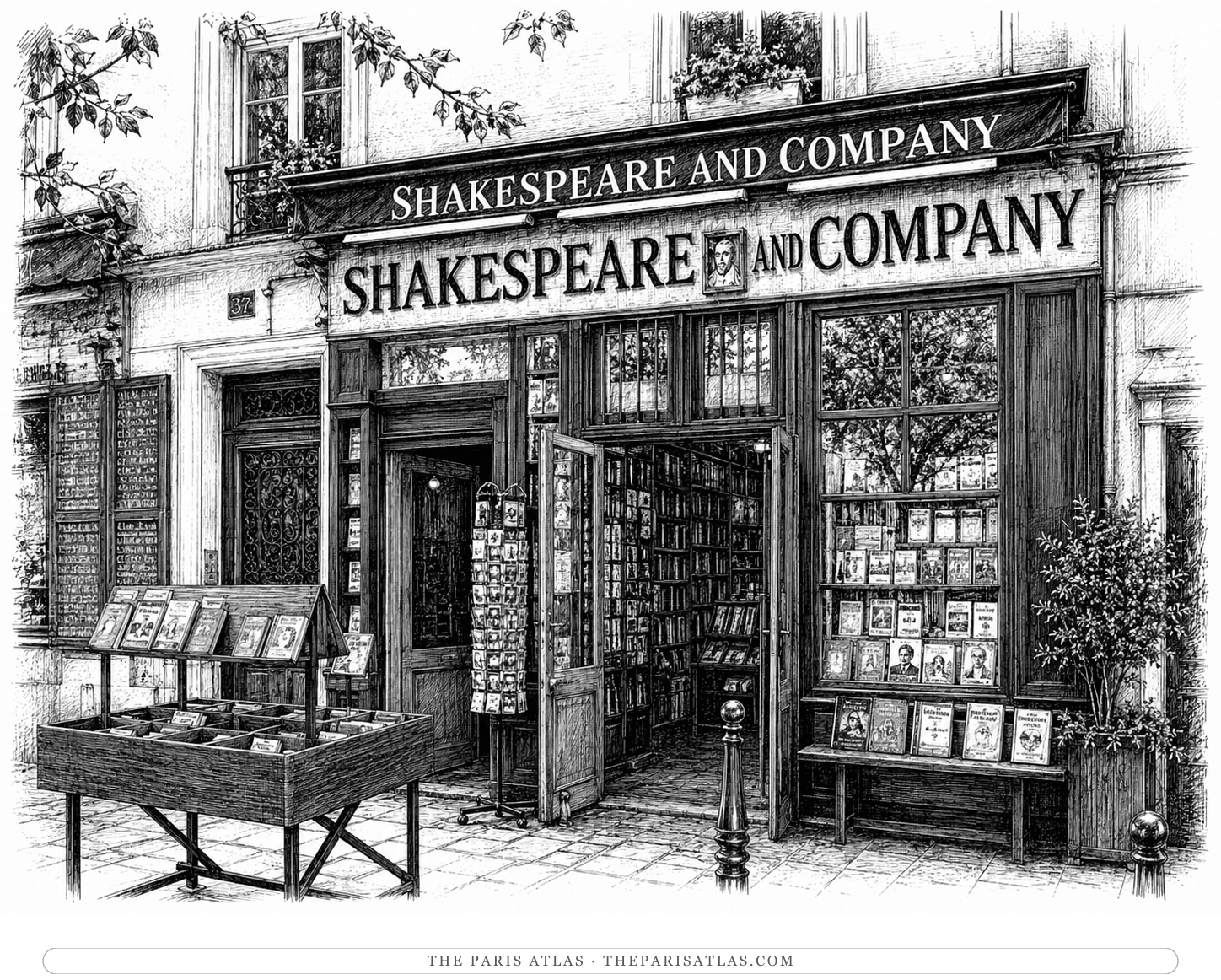
At its western edge, Sylvia Beach’s Shakespeare and Company on rue de l’Odéon became one of the most important literary meeting places in interwar Paris.

Beach’s English-language bookshop attracted writers and expatriates from across Europe and the United States. She also became the original publisher of James Joyce’s Ulysses when other publishers would not take on the book.

Joyce was a constant presence in the literary world surrounding the shop.

James Joyce Across the Street

Joyce also had a direct connection to the same street where Hemingway would soon live.

From June to October 1921, he stayed rent-free at 71 rue du Cardinal Lemoine, in an apartment lent to him by the French writer Valery Larbaud.

Joyce worked there during the final stages of Ulysses. Sylvia Beach published the novel the following February, in 1922.

Only a few months after Joyce’s stay ended, Hemingway and Hadley moved into 74 rue du Cardinal Lemoine, almost directly across the street.

The timing creates an unusual overlap in the neighborhood’s literary history. Joyce was completing Ulysses at number 71 shortly before Hemingway began his Paris years at number 74.

A marble plaque at 71 rue du Cardinal Lemoine carries the names associated with that literary history.

A Neighborhood of Writers and Students

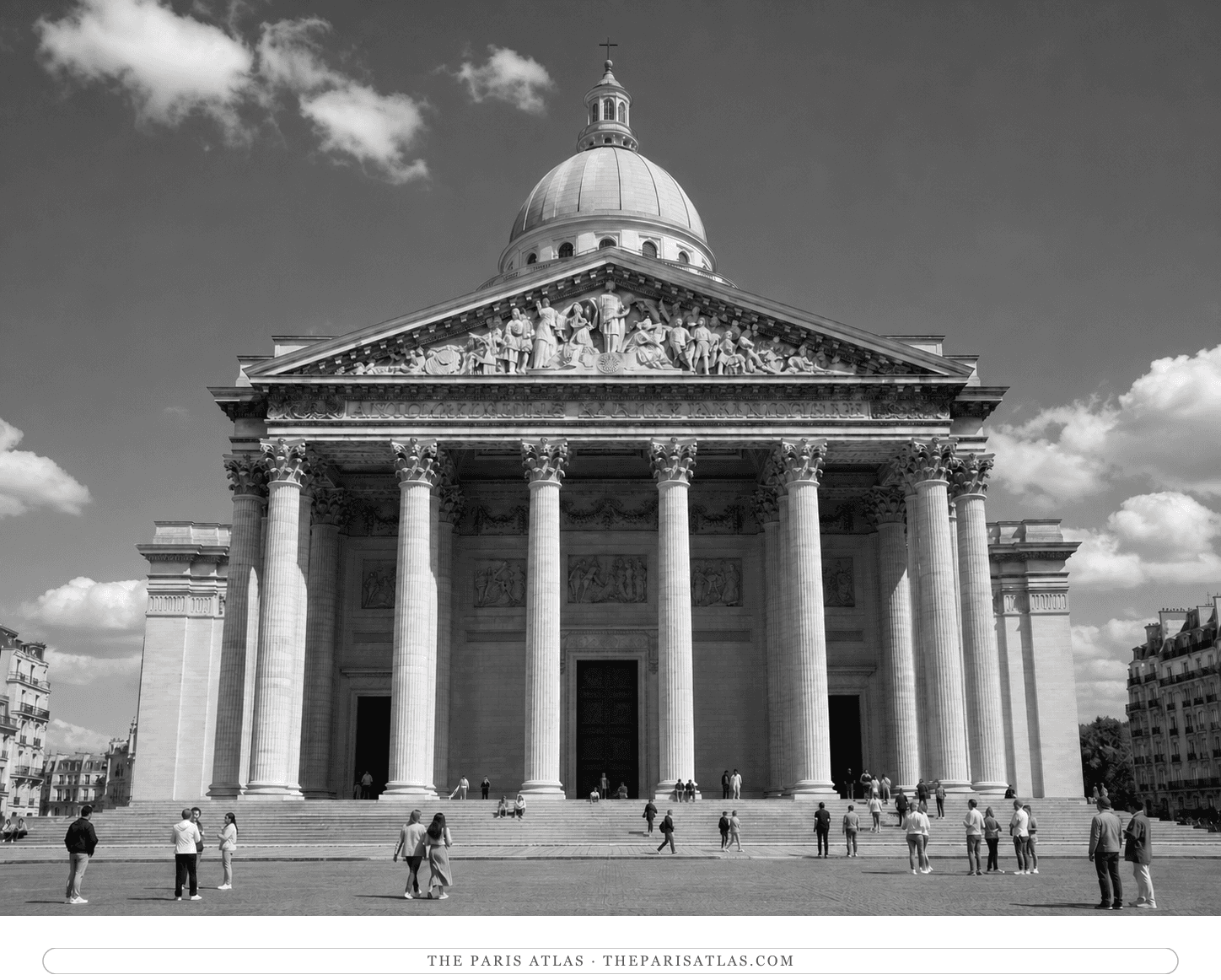
The broader Latin Quarter includes landmarks such as the Panthéon, Val-de-Grâce and Jardin des Plantes, but much of its literary importance comes from smaller streets and ordinary residential buildings.

The neighborhood also remains filled with students, many of whom pass addresses associated with writers such as Hemingway and Joyce without necessarily knowing the history attached to them.

That overlap between everyday life and literary history is part of what makes the Latin Quarter distinctive. Famous writers were not living in an isolated artistic district. They were renting ordinary rooms inside a working student neighborhood.

George Orwell’s Poorer Paris

George Orwell encountered another version of the Latin Quarter.

In the spring of 1928, when he was still writing under his birth name Eric Blair and had not yet become a published author, he rented a room at 6 rue du Pot de Fer, a short street just off rue Mouffetard.

He remained in Paris for about eighteen months.

When his money ran out, Orwell worked as a plongeur, washing dishes and doing kitchen labor in hotel kitchens across the river. The work could involve shifts of around seventeen hours a day.

Those experiences eventually became part of Down and Out in Paris and London, published in 1933.

Orwell changed some of the geography in the book, renaming rue du Pot de Fer as the rue du Coq d’Or.

There is no plaque marking Orwell’s former address.

Orwell and Hemingway: The Same Few Streets

The comparison between Orwell and Hemingway is especially interesting because they experienced almost the same part of Paris under very different circumstances.

Rue du Pot de Fer is only about two minutes from Place de la Contrescarpe.

That means Orwell’s Paris and Hemingway’s Paris occupied essentially the same few hundred meters, separated by roughly six years and a major difference in circumstances.

Hemingway later remembered his early poverty in Paris as part of his development as a writer. Orwell made poverty and working life themselves the subject of Down and Out in Paris and London.

The same neighborhood produced two very different accounts of what it meant to be young and poor in Paris.

What You Can Still Visit Today

Much of this literary landscape remains unusually easy to visit.

Rue Mouffetard still operates as a market street. Place de la Contrescarpe is still lined with cafés. Rue du Cardinal Lemoine still descends toward the Seine.

The flower sellers Hemingway remembered no longer dye their flowers in the street, but the underlying geography remains remarkably recognizable.

The addresses associated with Hemingway and Joyce are still there. The plaque at 74 rue du Cardinal Lemoine can be easy to miss, which fits the history of the place: Hemingway and Hadley chose the apartment because it was inexpensive, not because it was grand or important.

That is part of what makes the Latin Quarter so rewarding for literary visitors. The important locations are often ordinary buildings and streets rather than preserved monuments.

From Hemingway’s Paris to Baldwin’s Paris

By the time James Baldwin arrived in Paris in 1948, the literary world of the Left Bank had changed.

Baldwin’s Paris lay mostly farther west, around Saint-Germain-des-Prés, on the other side of boulevard Saint-Michel from the heart of the Latin Quarter. Giovanni’s Room does not use the Latin Quarter as a primary setting in the same way Hemingway’s writing does.

In that sense, the Latin Quarter is more directly associated with the literary generation that came before Baldwin.

But the Latin Quarter and neighboring Saint-Germain belonged to the same larger Left Bank world, and understanding that world helps readers understand the Paris surrounding Giovanni’s Room.

The Latin Quarter and the Queer Paris of Giovanni’s Room

The Latin Quarter and the surrounding Left Bank provide an important cultural backdrop to Giovanni’s Room.

When James Baldwin was living in Paris, the cafés, bars and streets around the Latin Quarter and neighboring Saint-Germain-des-Prés attracted students, artists, expatriates and people living outside the conventions of mainstream society.

They were also part of Paris’s emerging homosexual social world.

The Queer Social World of Saint-Germain

Before the Marais became identified as Paris’s gay neighborhood, Saint-Germain-des-Prés was one of the places where gay men gathered.

In the 1950s, establishments such as Le Fiacre on rue du Cherche-Midi became well-known meeting places for an international homosexual clientele.

This was the Paris in which Baldwin lived and wrote: a city where same-sex relationships could become visible in particular cafés, bars and private rooms, even while homosexuality remained surrounded by prejudice, secrecy and police scrutiny.

Freedom and Concealment in Giovanni’s Room

That tension between freedom and concealment runs throughout Giovanni’s Room.

David comes to Paris hoping, in part, to escape the identity and expectations he associates with America.

After Hella leaves for Spain, he enters a nighttime world of bars, expatriates and gay men, eventually meeting Giovanni at Guillaume’s bar.

Their relationship becomes possible within this alternative Parisian social world.

Paris gives David access to people and relationships that might have been much more difficult for him to encounter openly in the world he has left behind.

Yet Baldwin refuses to portray Paris as a simple sanctuary.

David can enter spaces where men desire other men, but he cannot escape his own fear of what that desire means. His struggle with sexuality, masculinity and shame follows him through the city.

The Public City and Giovanni’s Room

The contrast becomes especially powerful between the public world of the Left Bank — its crowded streets, cafés and late-night encounters — and Giovanni’s small room.

Inside the room, David and Giovanni can briefly live together beyond the expectations of the outside world.

The room offers privacy, but it also becomes increasingly claustrophobic. The city outside offers the possibility of a different kind of life, while David remains frightened of what accepting that life would mean.

That contradiction is central to the novel.

A Different Kind of Expatriate Story

Baldwin’s Paris also creates an interesting contrast with the writers who had occupied the Left Bank before him.

For Hemingway, the neighborhood became part of a story about artistic development: being young, poor, surrounded by books and cafés, and learning how to become a writer.

For Joyce, Paris provided the literary community that allowed Ulysses to be published.

For Orwell, the same area became the setting for an examination of poverty, work and life at the economic margins of the city.

Baldwin explored another kind of outsider experience.

When Baldwin left the United States for Paris in 1948, the distance from America gave him room to rethink many of the racial, social and personal expectations he had grown up with.

In Giovanni’s Room, Paris similarly creates distance between David and the identity he associates with his American life.

But Baldwin also shows that changing countries does not necessarily allow someone to escape his own fears.

David can leave America, enter a social world where relationships between men are possible and fall in love with Giovanni. Yet none of those changes allow him to accept his sexuality without shame.

Why the Latin Quarter Matters to Giovanni’s Room

The Latin Quarter matters to Giovanni’s Room not because Baldwin identifies a single famous landmark here, but because it helps readers understand the Paris surrounding the novel.

The larger Left Bank was a place where foreigners, students, artists and queer people could find one another, experiment with different ways of living and experience freedoms that were difficult to find elsewhere.

Those freedoms, however, were incomplete.

Homosexuality remained stigmatized, and queer life continued to exist alongside social prejudice and police scrutiny. Certain cafés, bars and private rooms could provide community and protection, but privacy could also become another form of concealment.

Baldwin’s novel captures both sides of that Paris.

For a modern reader walking these streets, that history adds another layer to Baldwin’s Paris. The neighborhood represents both the possibility of becoming someone new and the central tragedy of the novel: David finds a world in which he might be free, but cannot bring himself to accept the freedom it offers.

Key facts

Where
The 5th arrondissement and part of the 6th, on the hill above the left bank
The name
Its students were required to speak Latin until the Revolution
Hemingway's first flat
74 rue du Cardinal Lemoine, from January 1922 — no hot water, toilet on the landing
What Hemingway wrote about it
The Contrescarpe, the rue Mouffetard and the drop to the river, in The Snows of Kilimanjaro
Not in Giovanni's Room
Baldwin's Paris was across the boulevard Saint-Michel, in Saint-Germain
Today
Open. The market street and the square are both still working
The rue de la Huchette, one street off the river at the quarter's northern edge.Editorial illustration
The same street in colour, lamps lit.Editorial illustration

Timeline

  1. 13th century

    The Sorbonne is founded on the hill; the quarter takes its name from the language of its students.

  2. January 1922

    Ernest and Hadley Hemingway move into 74 rue du Cardinal Lemoine.

  3. 1922

    Sylvia Beach publishes Ulysses from the rue de l'Odéon at the quarter's western edge.

  4. 1936

    The Snows of Kilimanjaro puts the Contrescarpe, the dyed flowers and the rue Mouffetard into a dying man's inventory.

  5. 1964

    A Moveable Feast is published, three years after Hemingway's death, and fixes the quarter's legend.

On the map

Related books

Cover of A Moveable Feast by Ernest Hemingway

Setting of the story

A Moveable Feast

Ernest Hemingway · 1964

Hemingway's first Paris is this hill: the flat at 74 rue du Cardinal Lemoine, the writing room on the rue Descartes, the place de la Contrescarpe at the top of the street and the market on the rue Mouffetard running down from it.

Cover of Giovanni's Room by James Baldwin

A model for the book's version

Giovanni's Room

James Baldwin · 1956

Backdrop rather than address. The novel names no landmark in the 5th, but the Left Bank it moves through — students, expatriates, and the cafés where homosexual Paris was visible before the Marais — ran continuously from here into Saint-Germain-des-Prés next door.

Cover of Down and Out in Paris and London by George Orwell

Setting of the story

Down and Out in Paris and London

George Orwell · 1933

Chapters I to XXIII are set in the slum quarter Orwell calls the Coq d'Or, which is the rue du Pot de Fer off the rue Mouffetard, in the fifth arrondissement. He gives the street an invented name and keeps the quarter.

Writers who knew this place

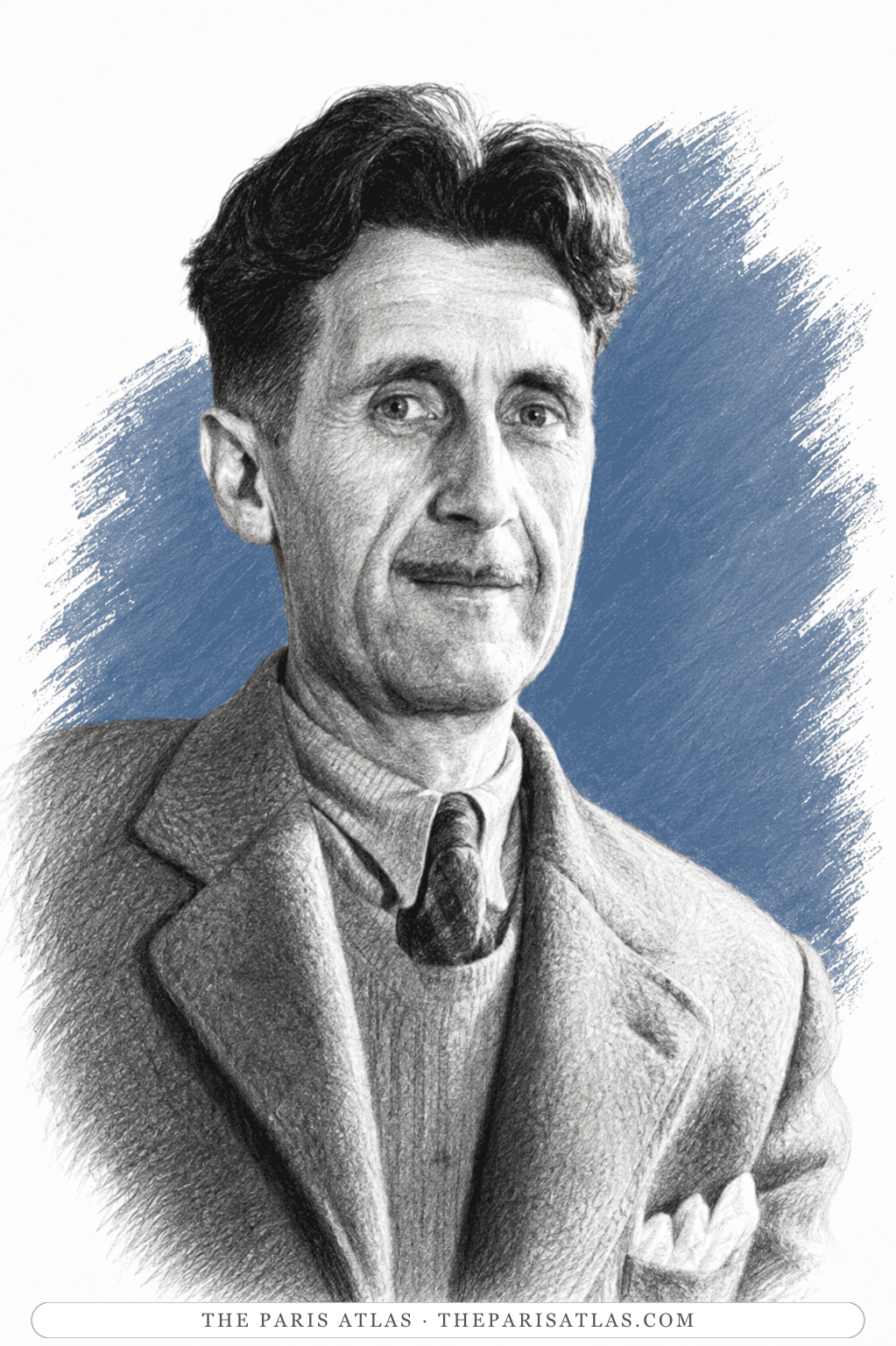
Illustrated portrait of George Orwell

George Orwell

British · English novelist, essayist and journalist, born Eric Arthur Blair, who wrote Animal Farm and Nineteen Eighty-Four. He was an imperial policeman in Burma, a plongeur in Paris kitchens off the rue Mouffetard, and a militiaman shot through the neck in Spain before any of it.

Lived here

Orwell took a room at 6 rue du Pot de Fer, off the rue Mouffetard, in the spring of 1928 and stayed about eighteen months. Down and Out in Paris and London renames the street the rue du Coq d'Or.

George Orwell, Down and Out in Paris and London (1933); Down and Out in Paris

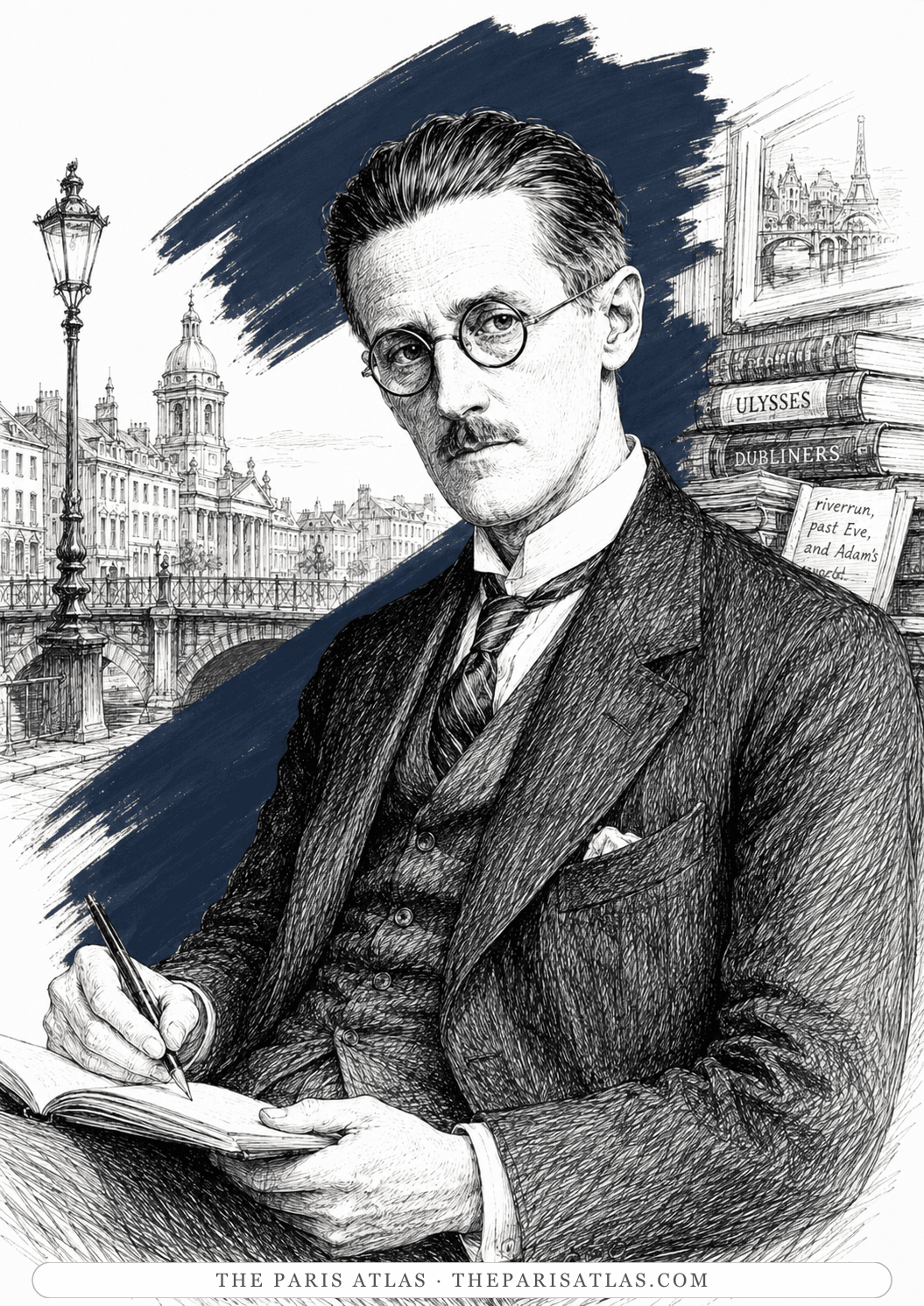
Illustrated portrait of James Joyce

James Joyce

Irish · Dublin's great exile — he left Ireland at twenty-two, carried the city with him through Trieste, Zurich, and Paris, and rebuilt it entire in Ulysses.

Lived here

Joyce had the loan of Valery Larbaud's flat at 71 rue du Cardinal Lemoine from June to October 1921, and finished Ulysses there. Ernest Hemingway moved in across the street at number 74 three months after Joyce left.

James Joyce and Valery Larbaud marble plaque, 71 rue du Cardinal Lemoine

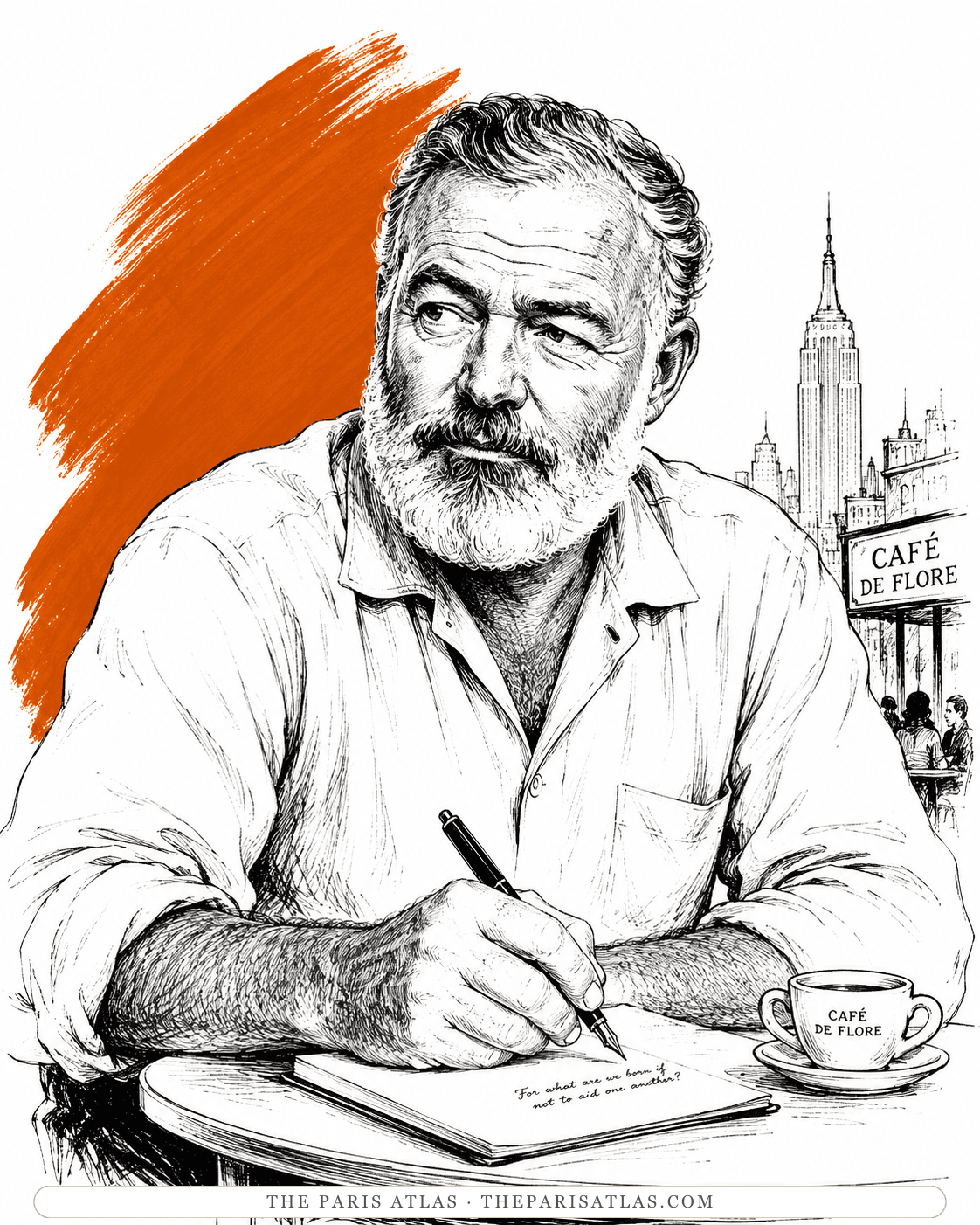
Illustrated portrait of Ernest Hemingway

Ernest Hemingway

American · Author of The Sun Also Rises and A Moveable Feast; his pared-down style, developed in 1920s Paris, became the most imitated in American prose.

Ernest Hemingway wrote about The Latin Quarter in A Moveable Feast.

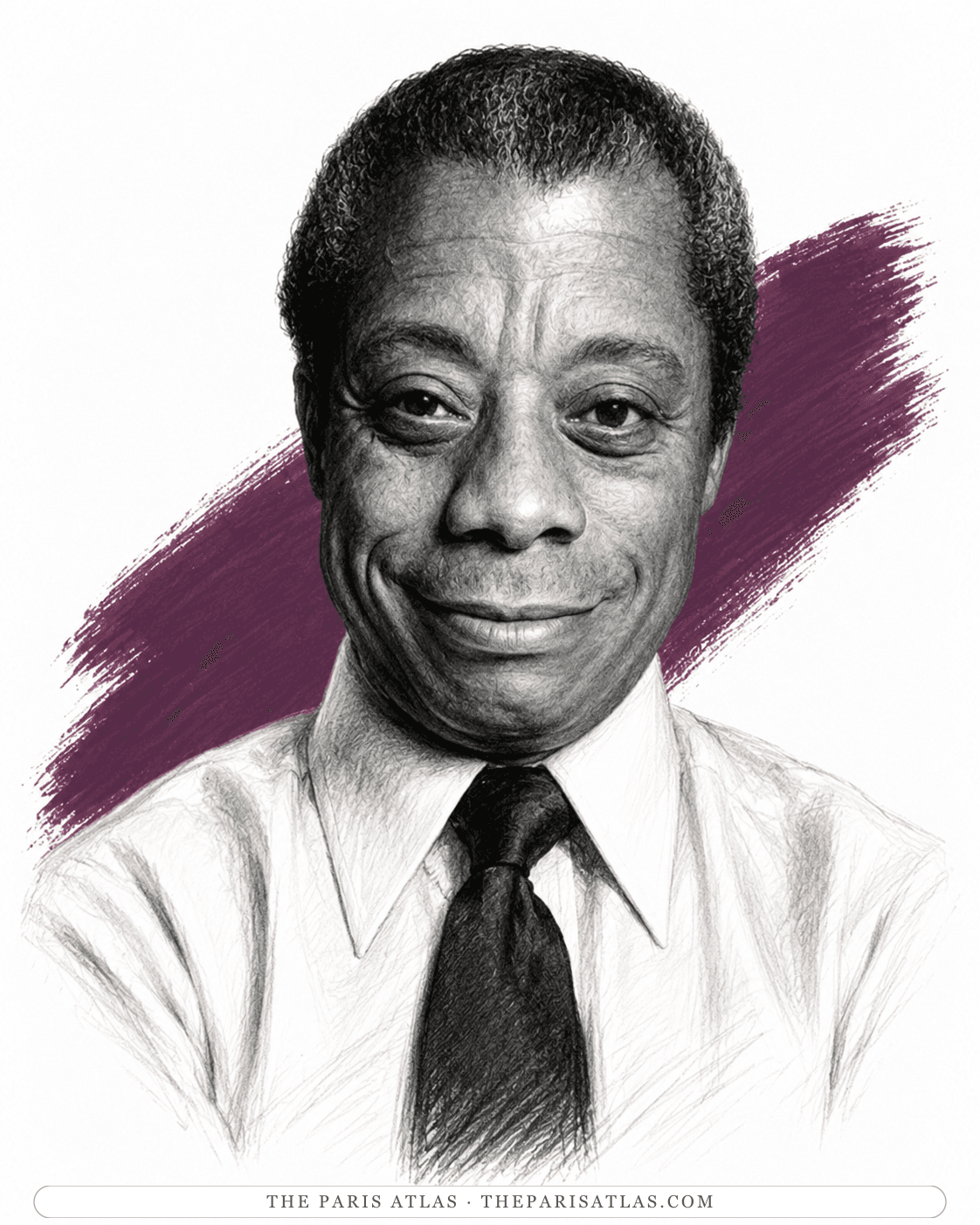
Illustrated portrait of James Baldwin

James Baldwin

American · American novelist and essayist who left Harlem for Paris at twenty-four with forty dollars, and wrote the books that made him the most quoted witness to race, sex and belonging in twentieth-century America.

James Baldwin wrote about The Latin Quarter in Giovanni's Room.

In this quarter

9 places in the Atlas sit here.

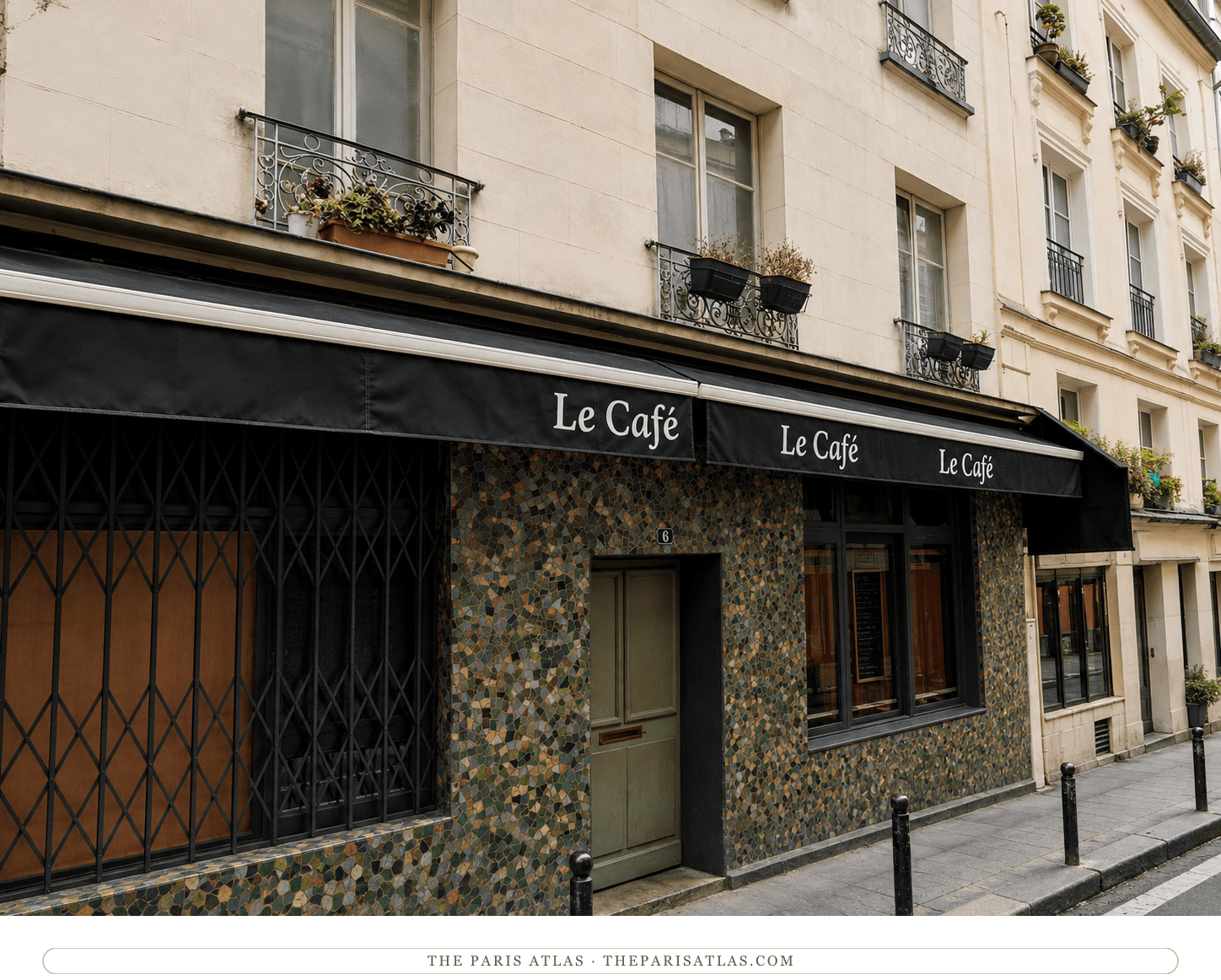
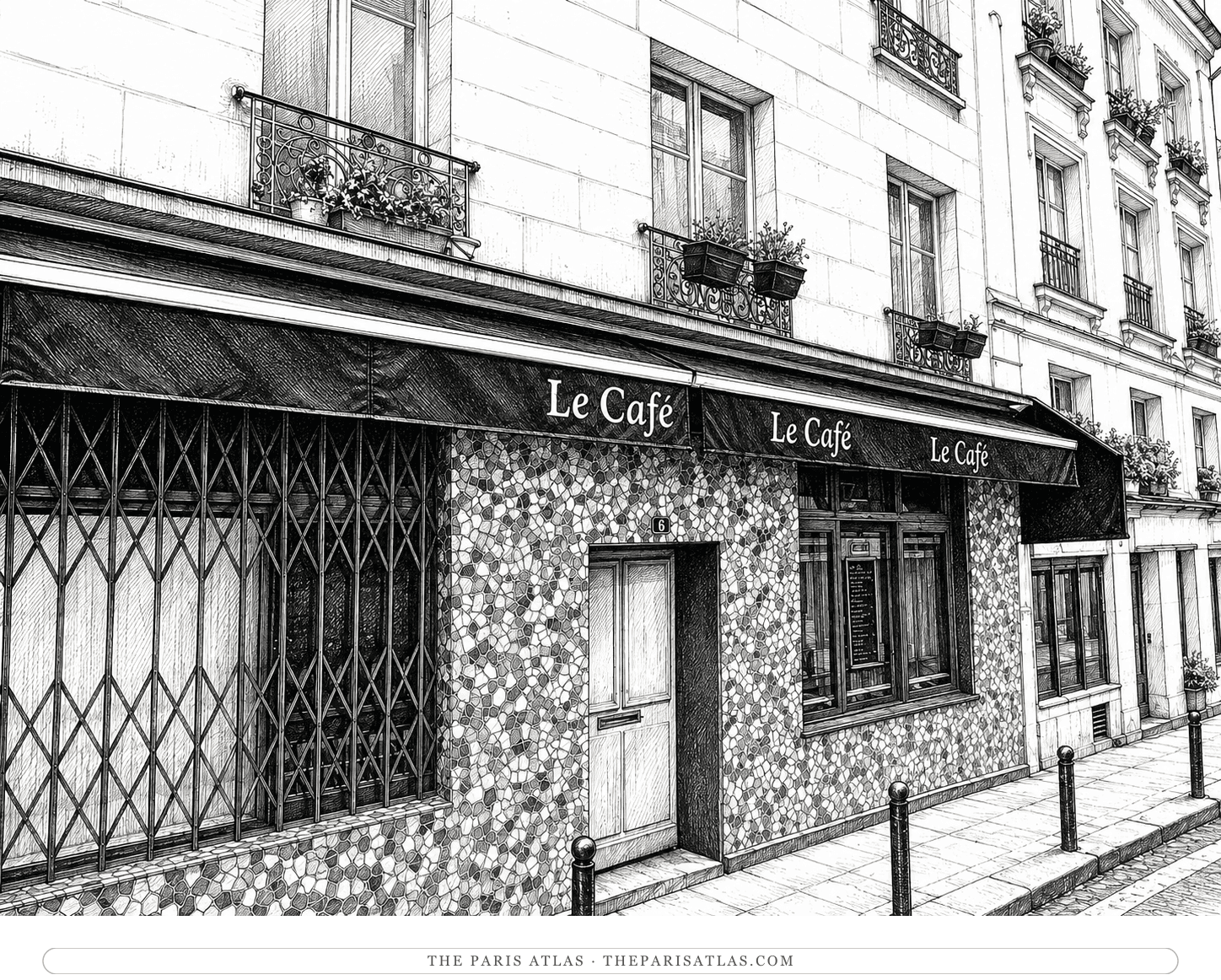
The front of 6 rue du Pot de Fer today in colour — green and ochre mosaic tiling around a pale green door, black awnings, geraniums on the ironwork balconies above

Hotel · Latin Quarter (Mouffetard)

6 rue du Pot de Fer (Hotel des Bons Amis)

The cheap Latin Quarter lodging house where Eric Blair lived for eighteen months before he was George Orwell, and the raw material for the Paris half of Down and Out in Paris and London.

Visit the place
The blue door of 74 rue du Cardinal Lemoine today, with the street sign and memorial plaque on the wall

Apartment · Latin Quarter

74 Rue du Cardinal Lemoine

Ernest Hemingway and Hadley Richardson's first Paris apartment, on the fifth floor with no running water. He describes it in the opening pages of the book.

Visit the place
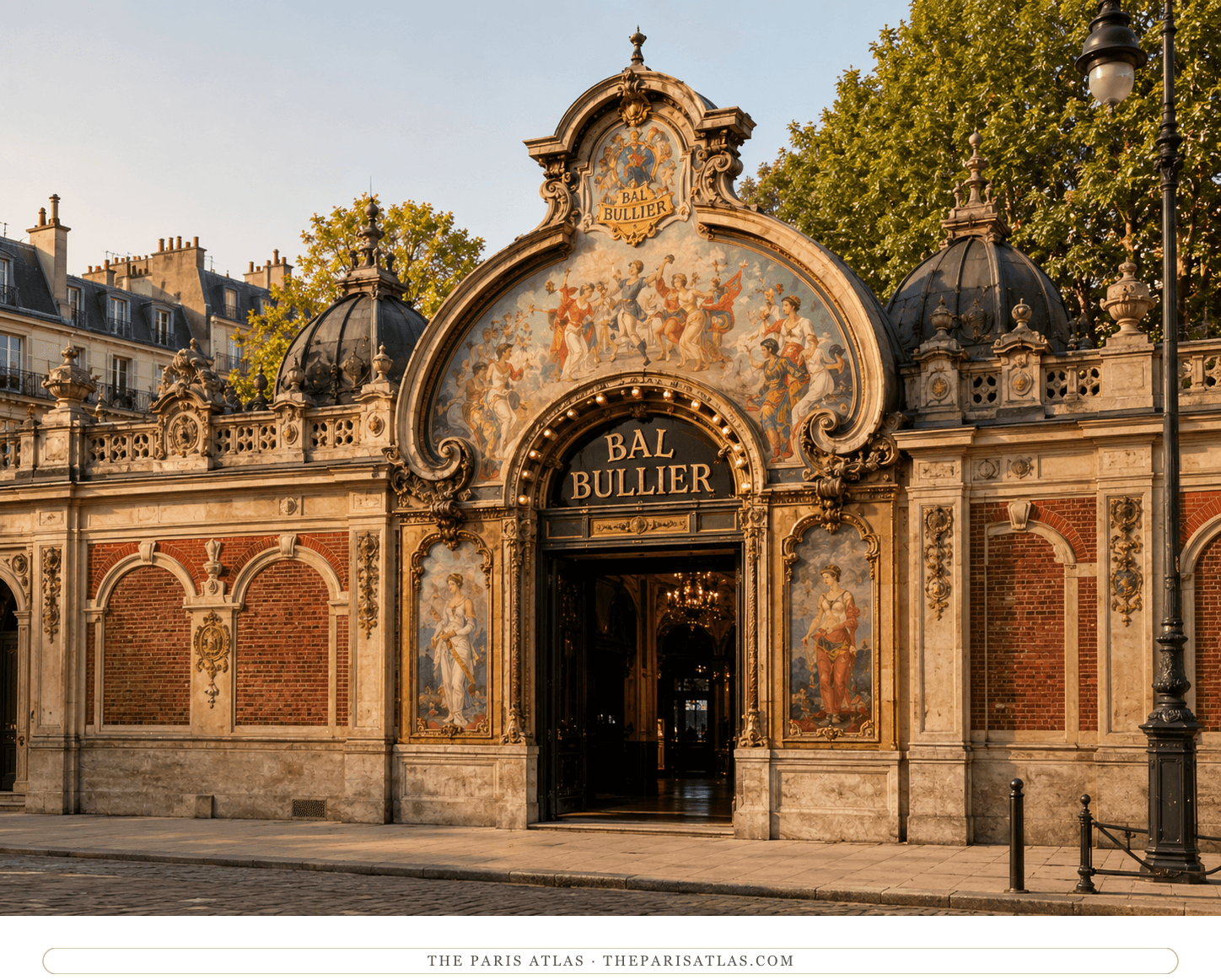
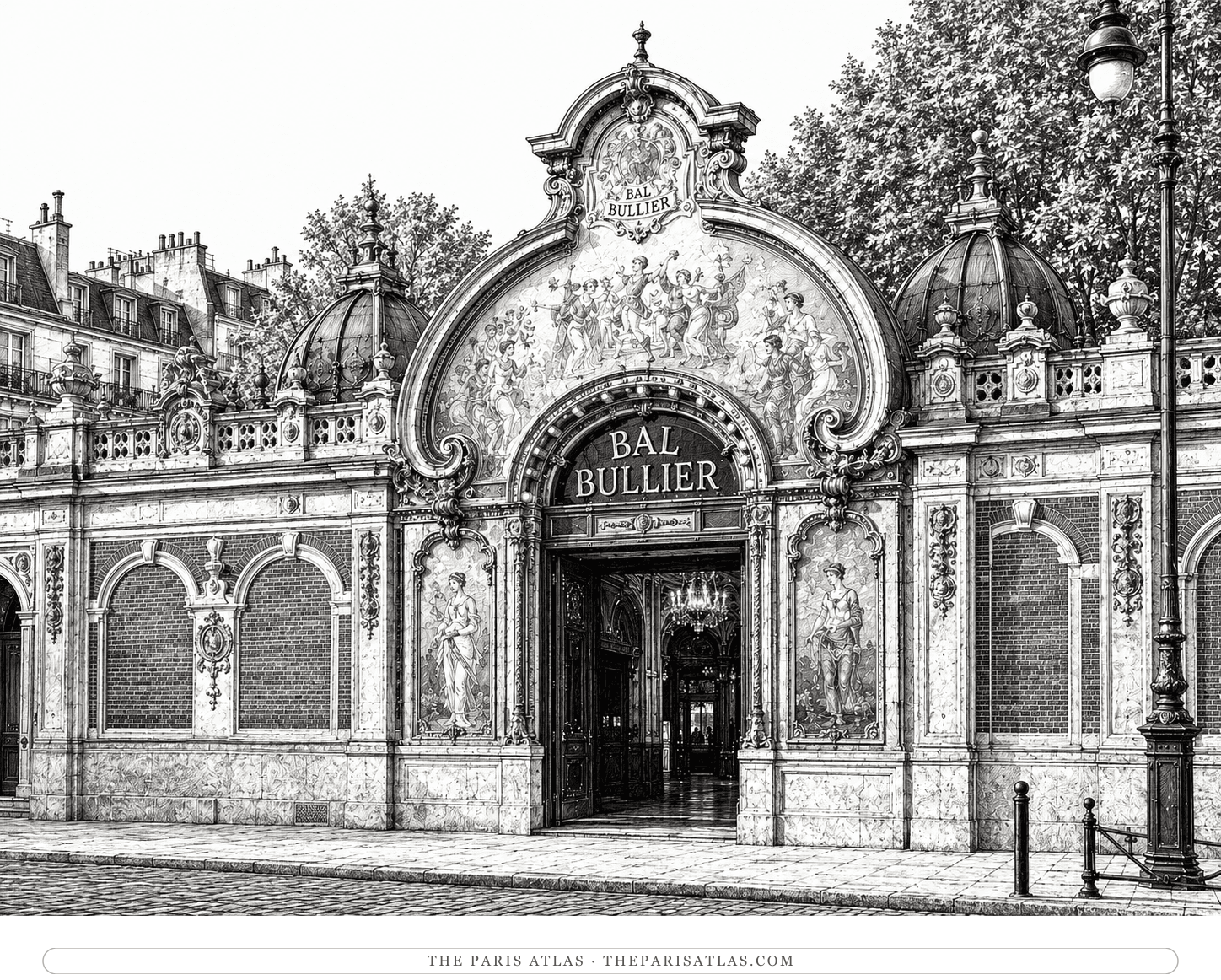
The Bal Bullier façade in golden evening light, painted allegorical panels between brick piers and gilded domes above the arch

Nightclub · Latin Quarter (Port-Royal)

Bal Bullier

The students' dance hall behind the mock-oriental façade opposite the Closerie des Lilas — where the Latin Quarter danced for a century, and Robert and Sonia Delaunay painted the dancers.

Visit the place
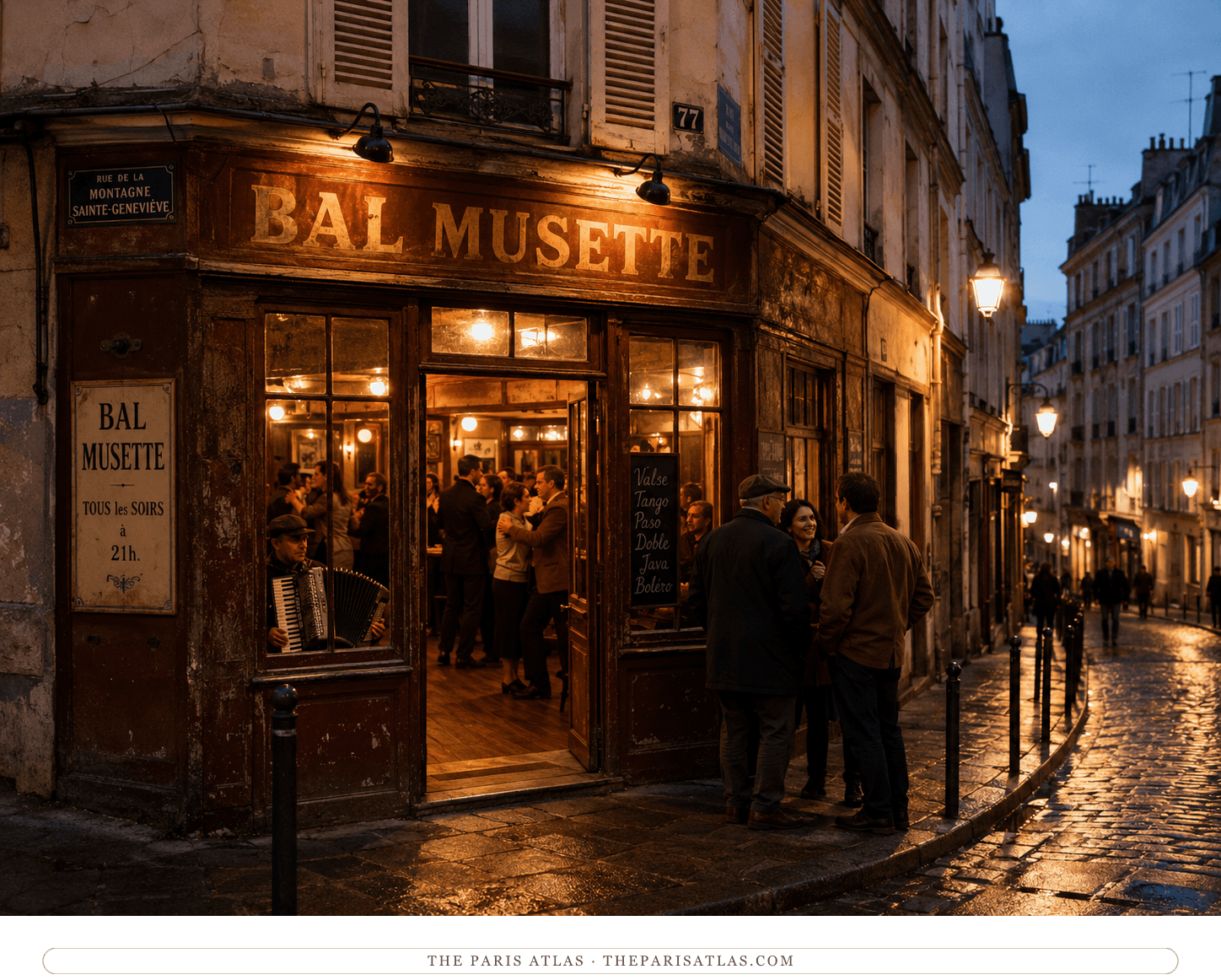
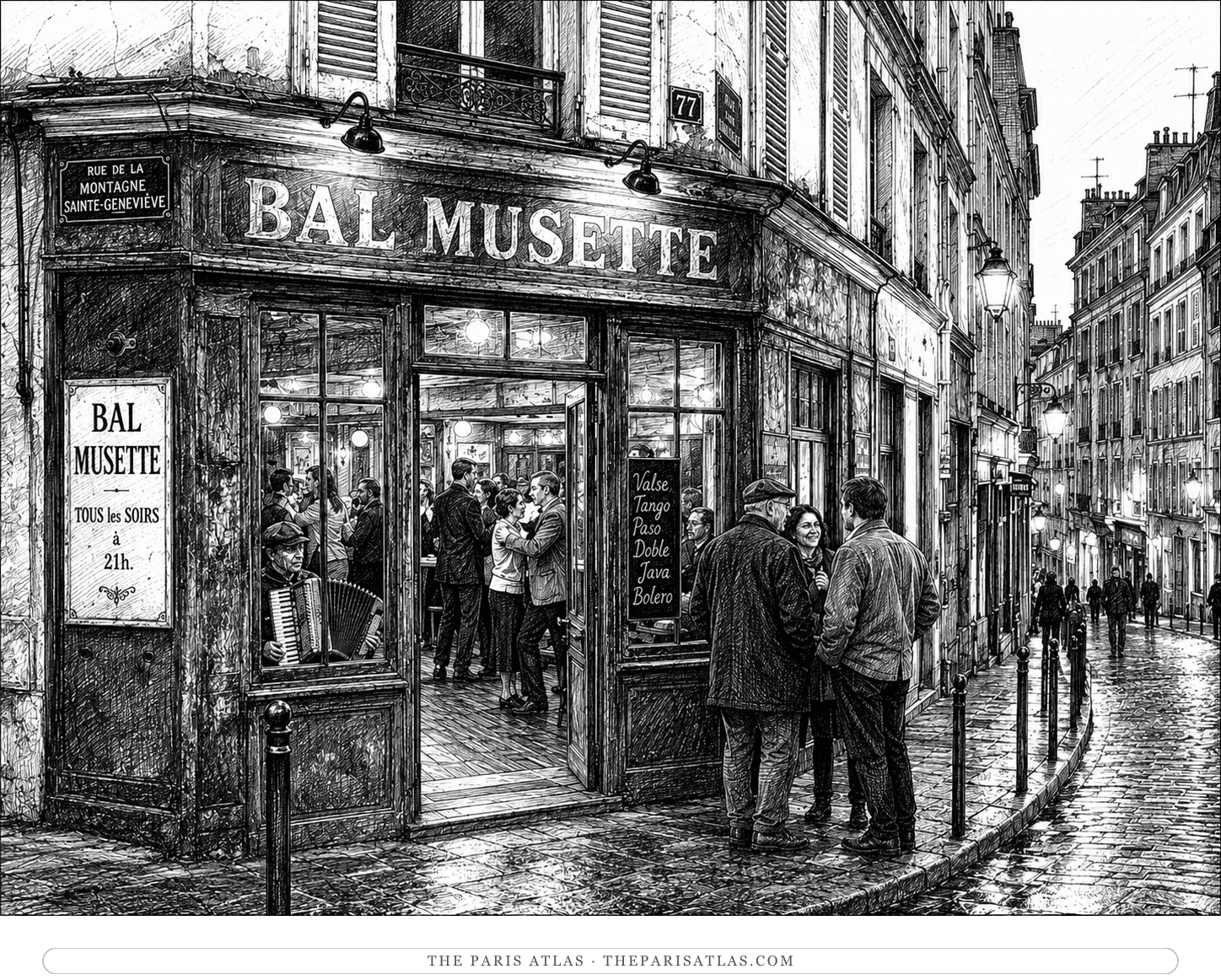
The bal musette by lamplight, an accordionist playing inside the open door while couples linger on the wet cobbles

Nightclub · Latin Quarter (Panthéon)

Bal Musette

A working-class accordion dance hall in the Latin Quarter — the neighborhood danced there most nights, and the expatriate crowd borrowed it on Mondays.

Visit the place
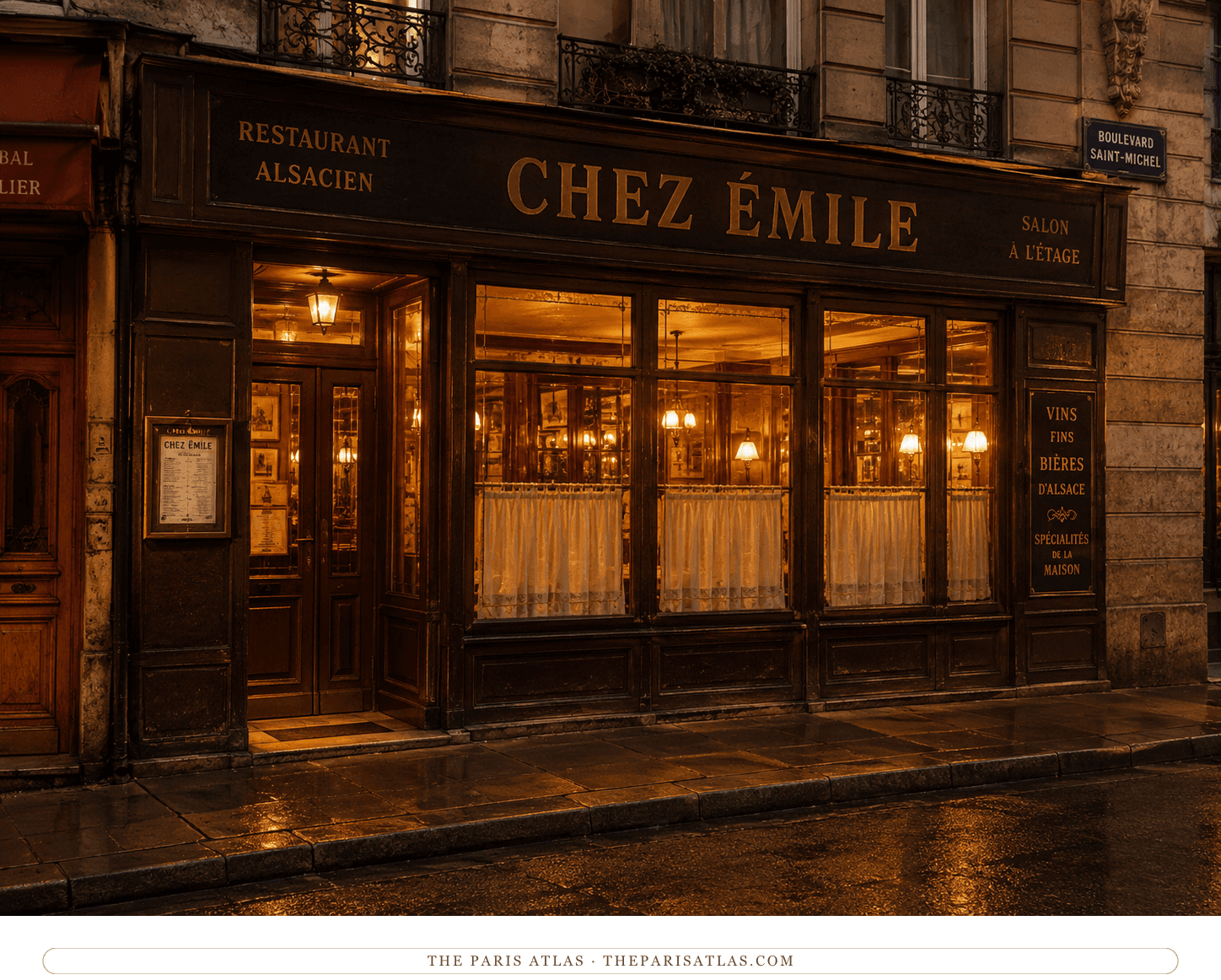
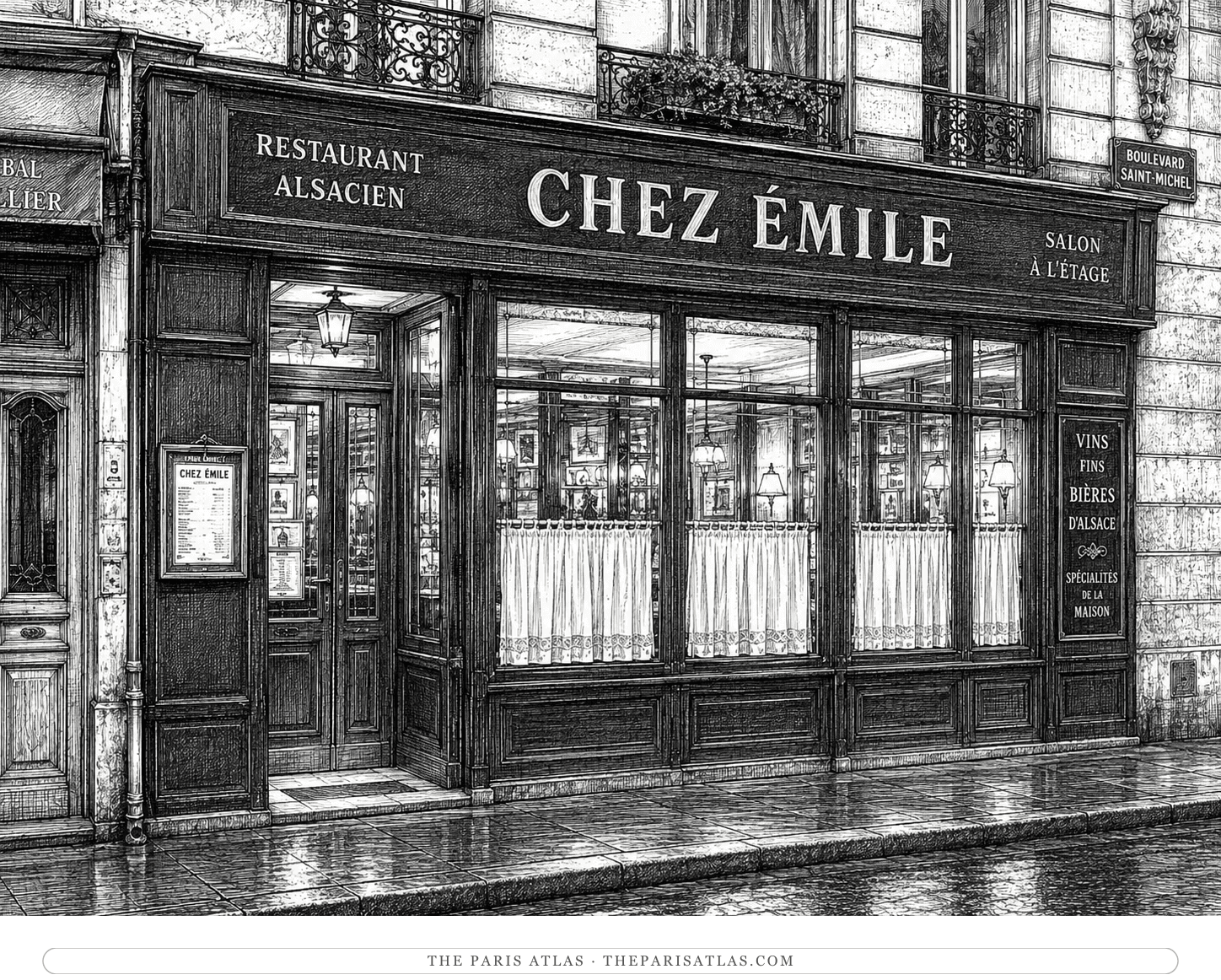
Chez Émile glowing at night, warm light through the lace curtains onto the wet pavement of the boulevard

Restaurant · Latin Quarter (Port-Royal)

Chez Émile

An Alsatian restaurant with an upper room at the quiet end of the Boul' Mich' — where Ford Madox Ford, Ezra Pound, and Sisley Huddleston talked for hours, and only the memoir remembers it.

Visit the place
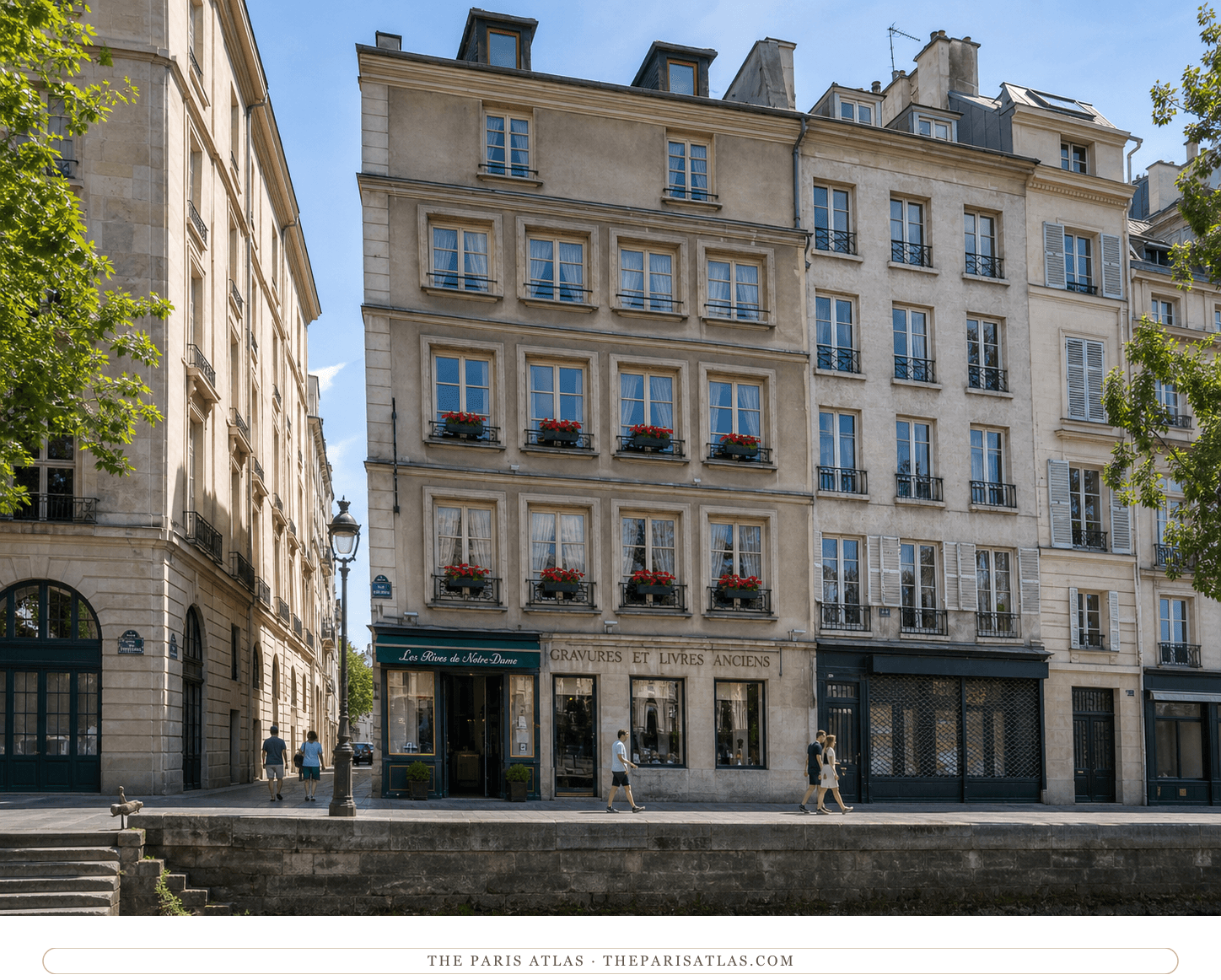
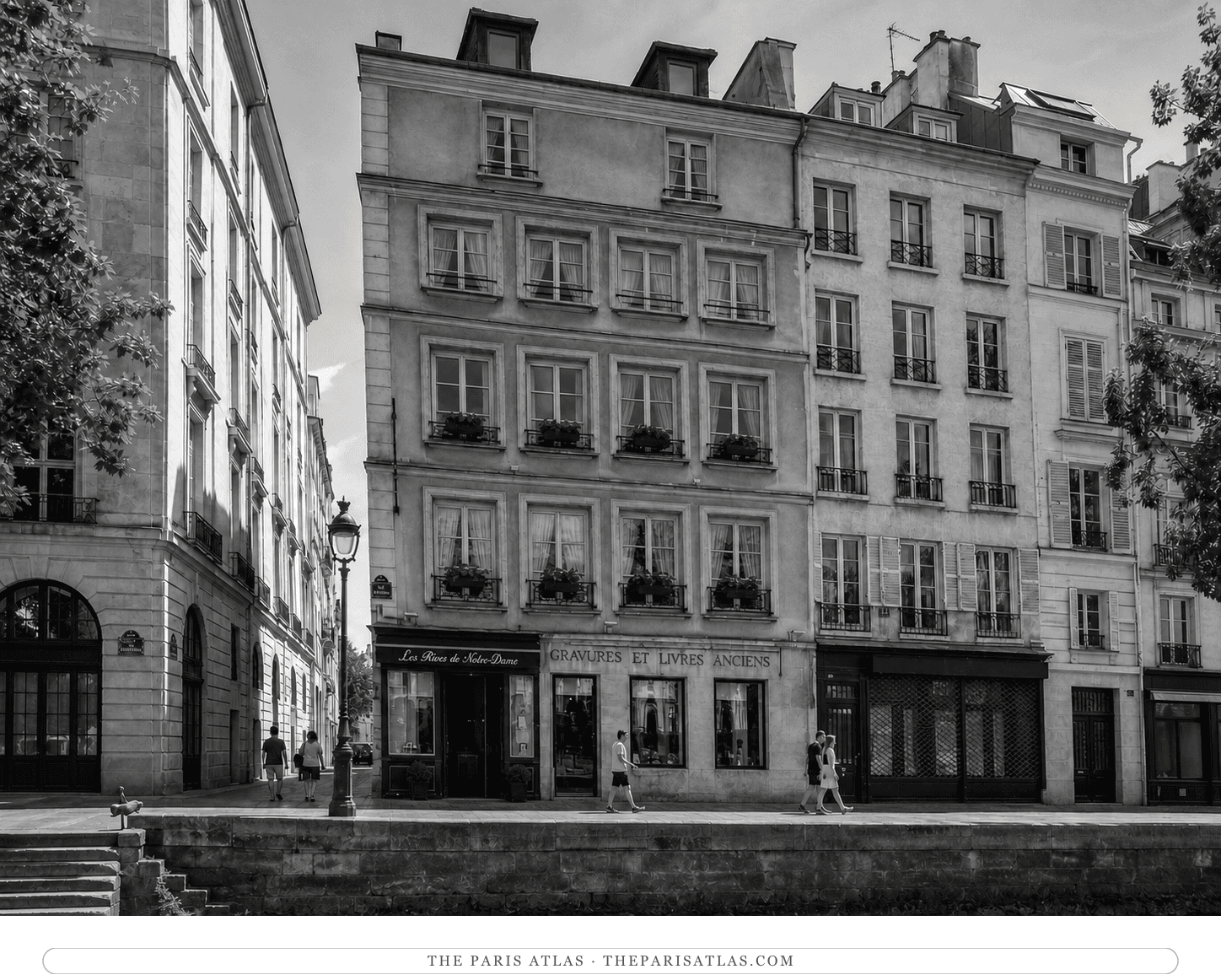
Present-day view of the former Hôtel de Suède building at 15 quai Saint-Michel, now Hôtel Les Rives de Notre-Dame

Hotel · Quai Saint-Michel

Hôtel de Suède

The small Left Bank hotel on the quai Saint-Michel, facing Notre-Dame, where Godard shot the long bedroom scene of Breathless in Room 12. The hotel closed in 1993; the site is now the Hôtel Les Rives de Notre-Dame.

Visit the place
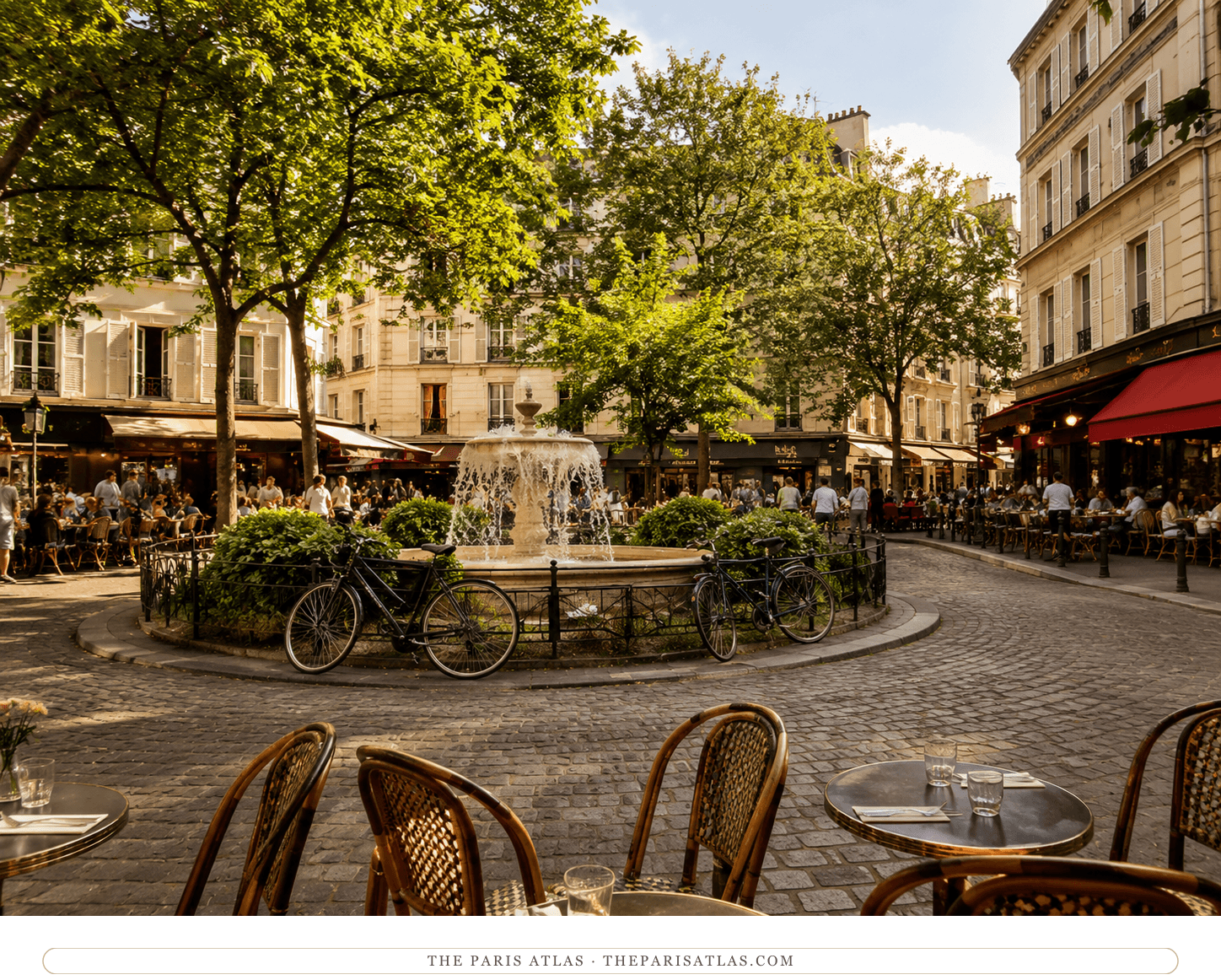
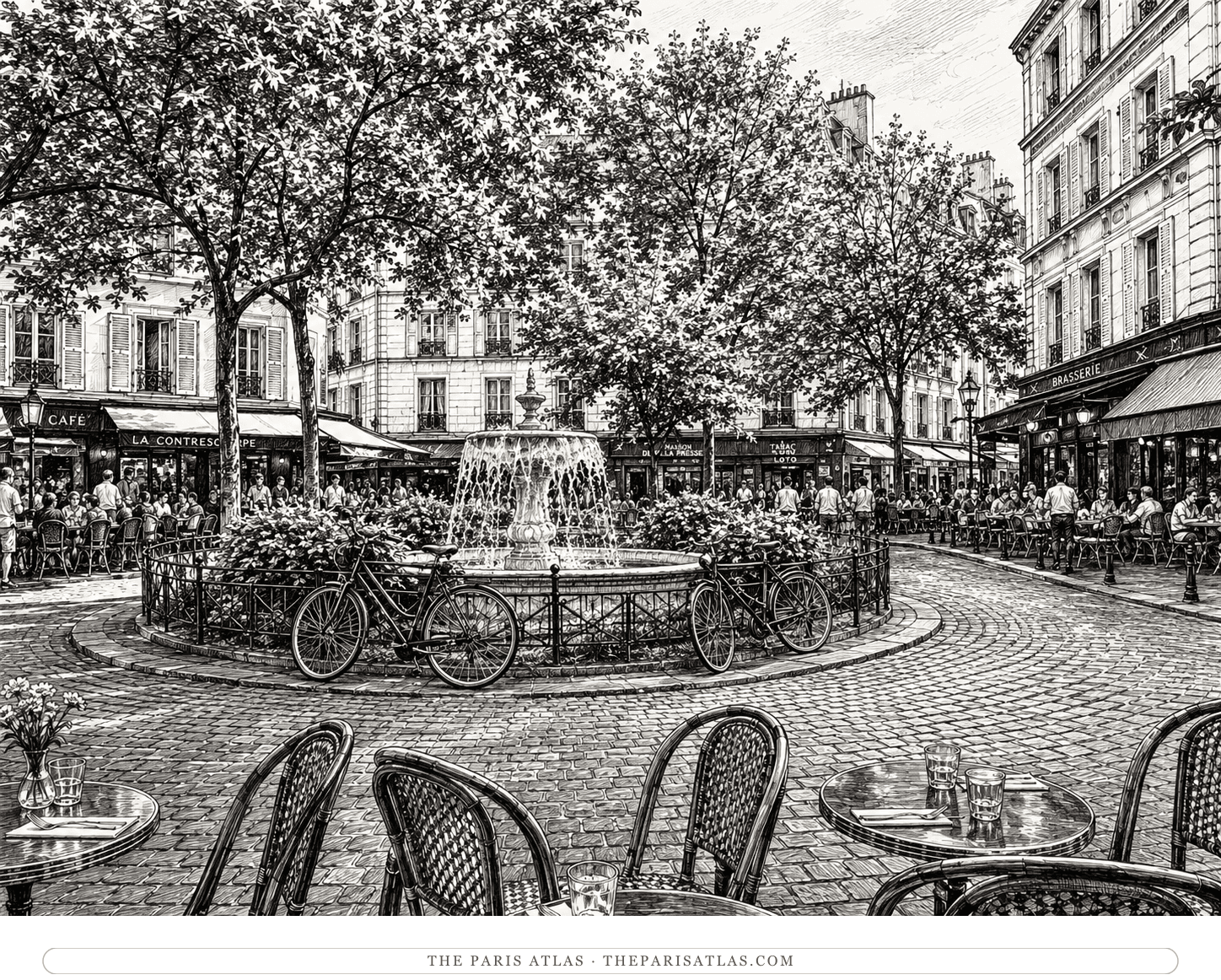
The Place de la Contrescarpe in summer light, the fountain playing at the center and café terraces ringing the cobbles

Square · Latin Quarter (Mouffetard)

Place de la Contrescarpe

The small square at the top of the rue Mouffetard, a minute from Ernest Hemingway's first flat — now one of the quarter's prettiest corners. The novel visits it after dark.

Visit the place
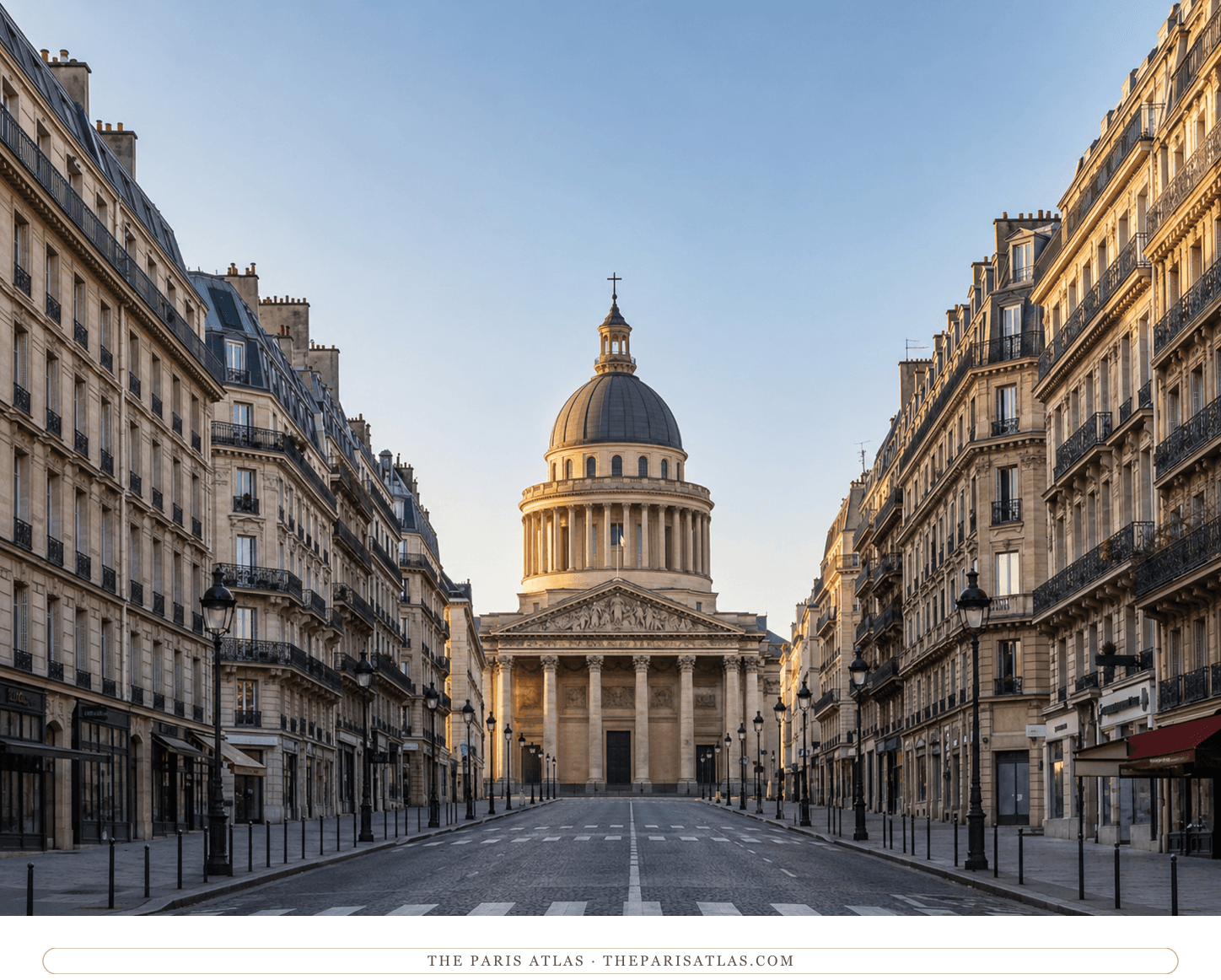
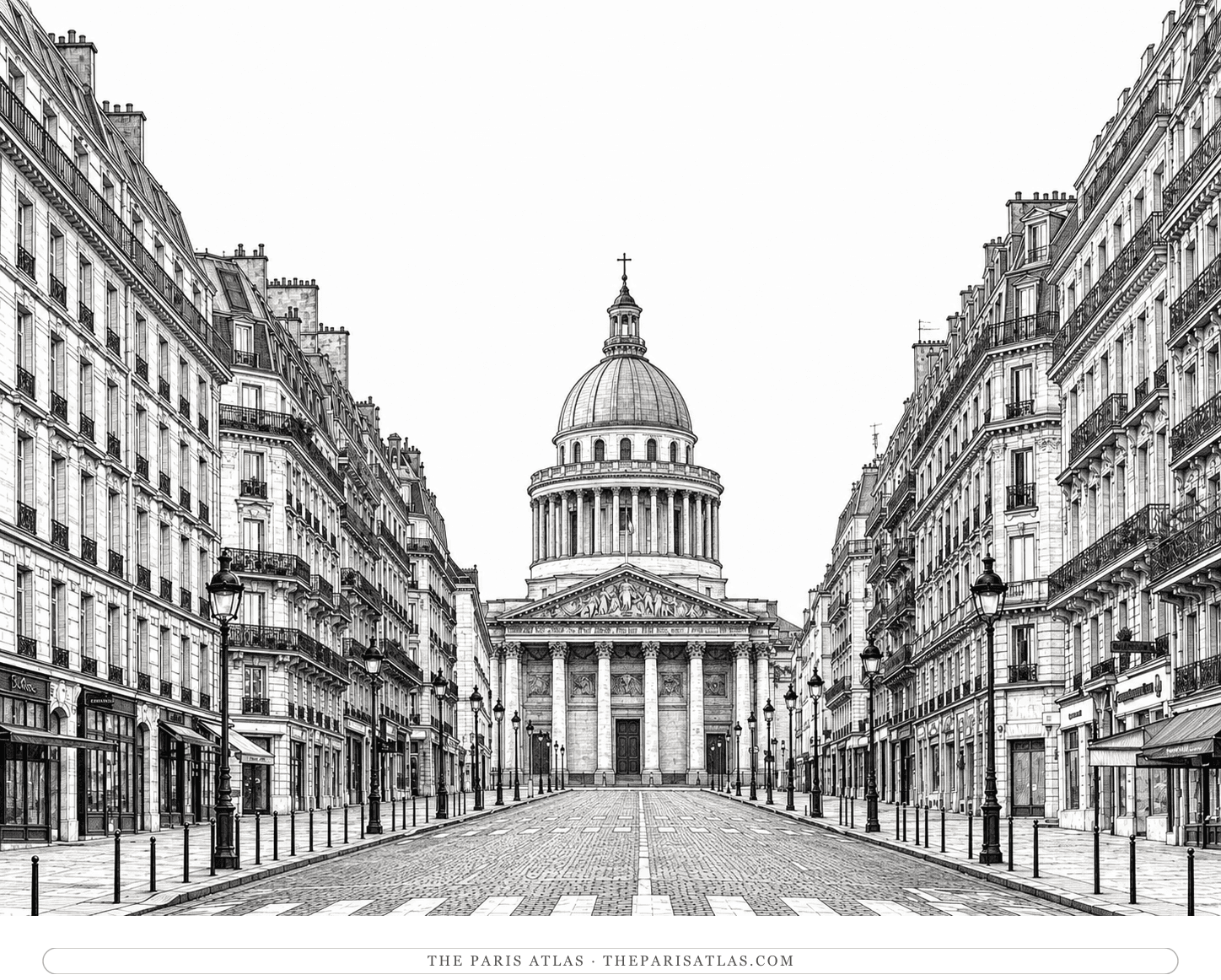
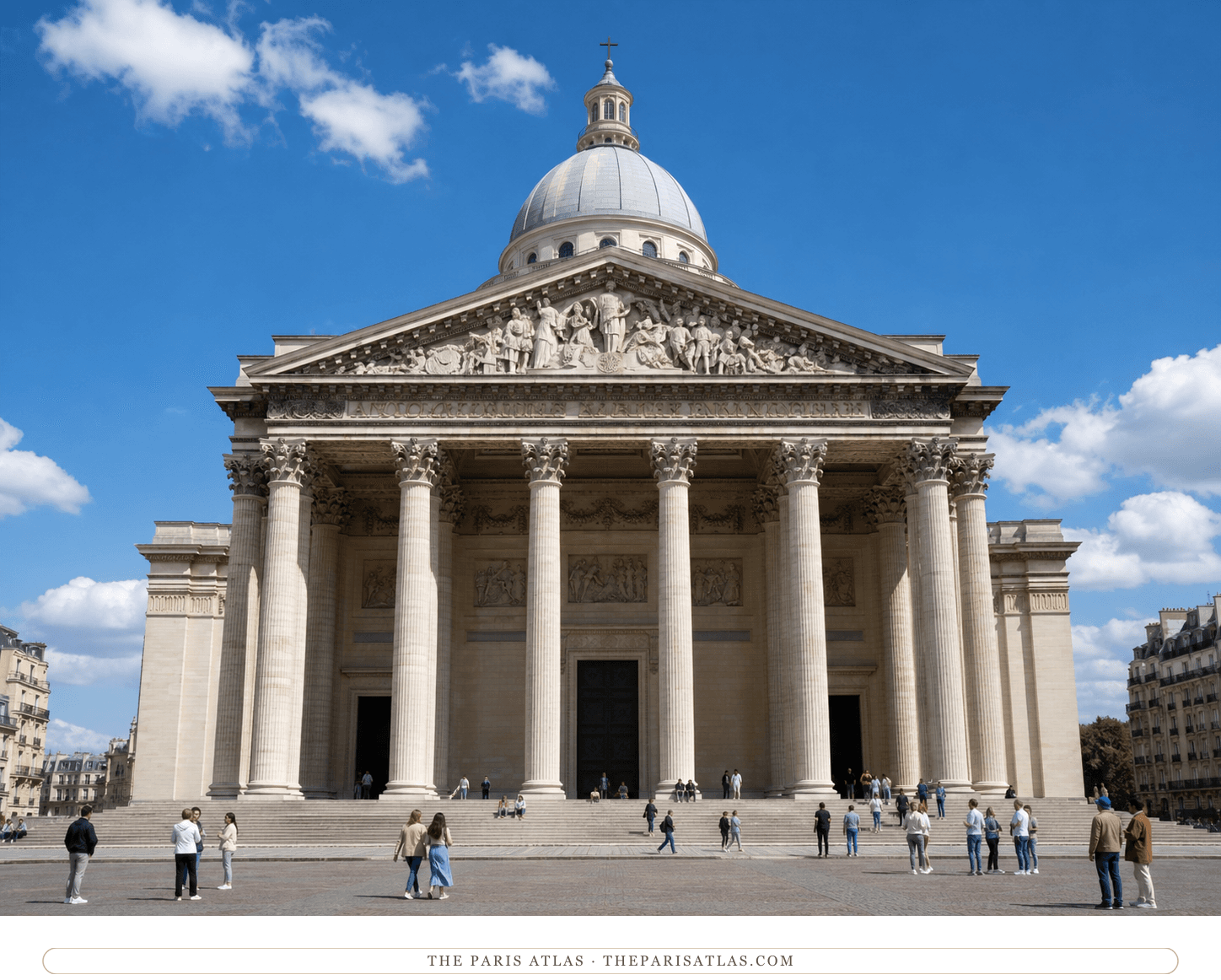
The rue Soufflot at first light, the Panthéon's dome and colonnade lit gold above the empty street

Street · Latin Quarter, between the Luxembourg and the Panthéon

Rue Soufflot

The street between the Luxembourg gardens and the Panthéon where the narrator of Ernest Hemingway's The Sun Also Rises stops for coffee and a brioche, on the one morning the novel shows him going to work. He never names the café.

Visit the place
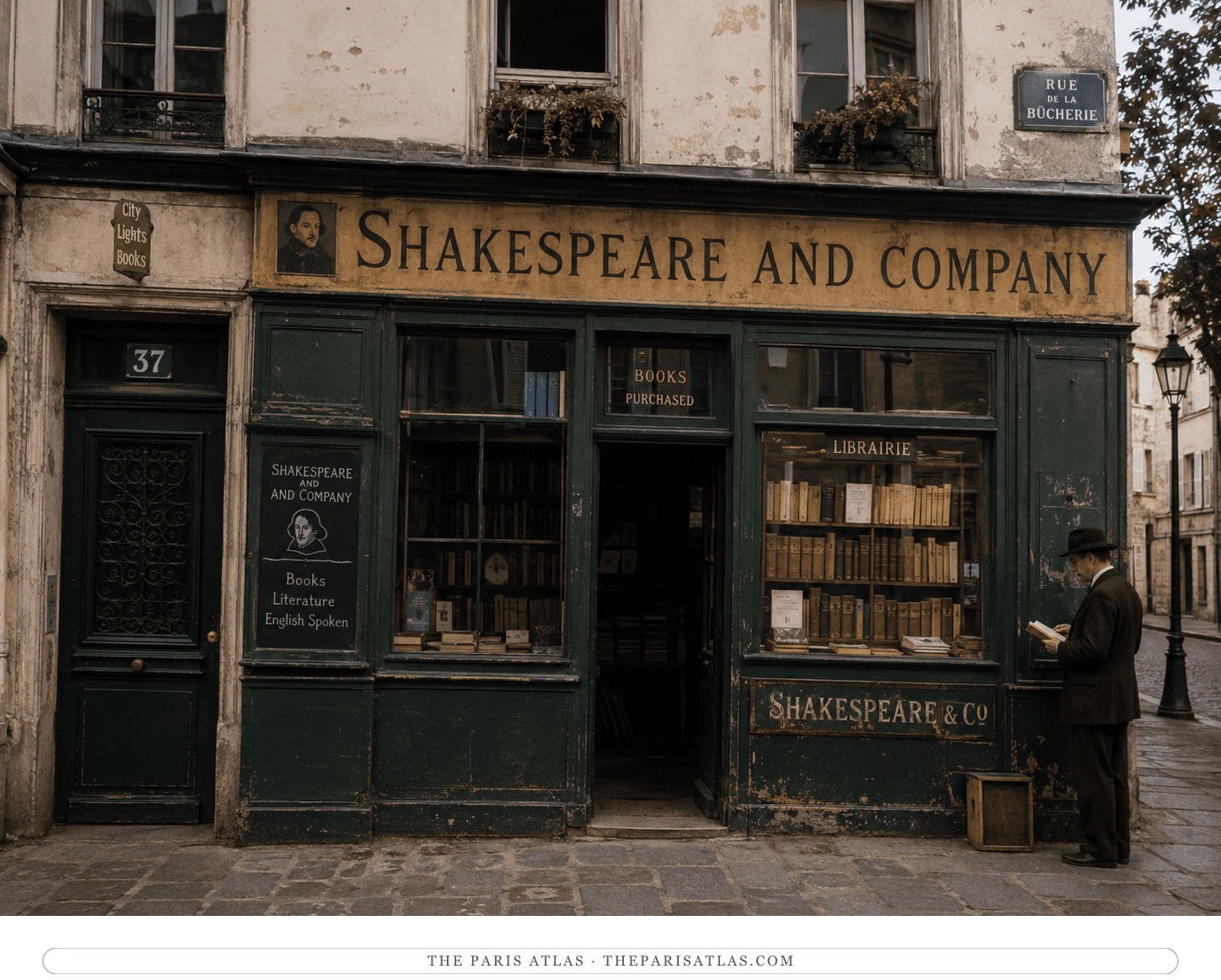
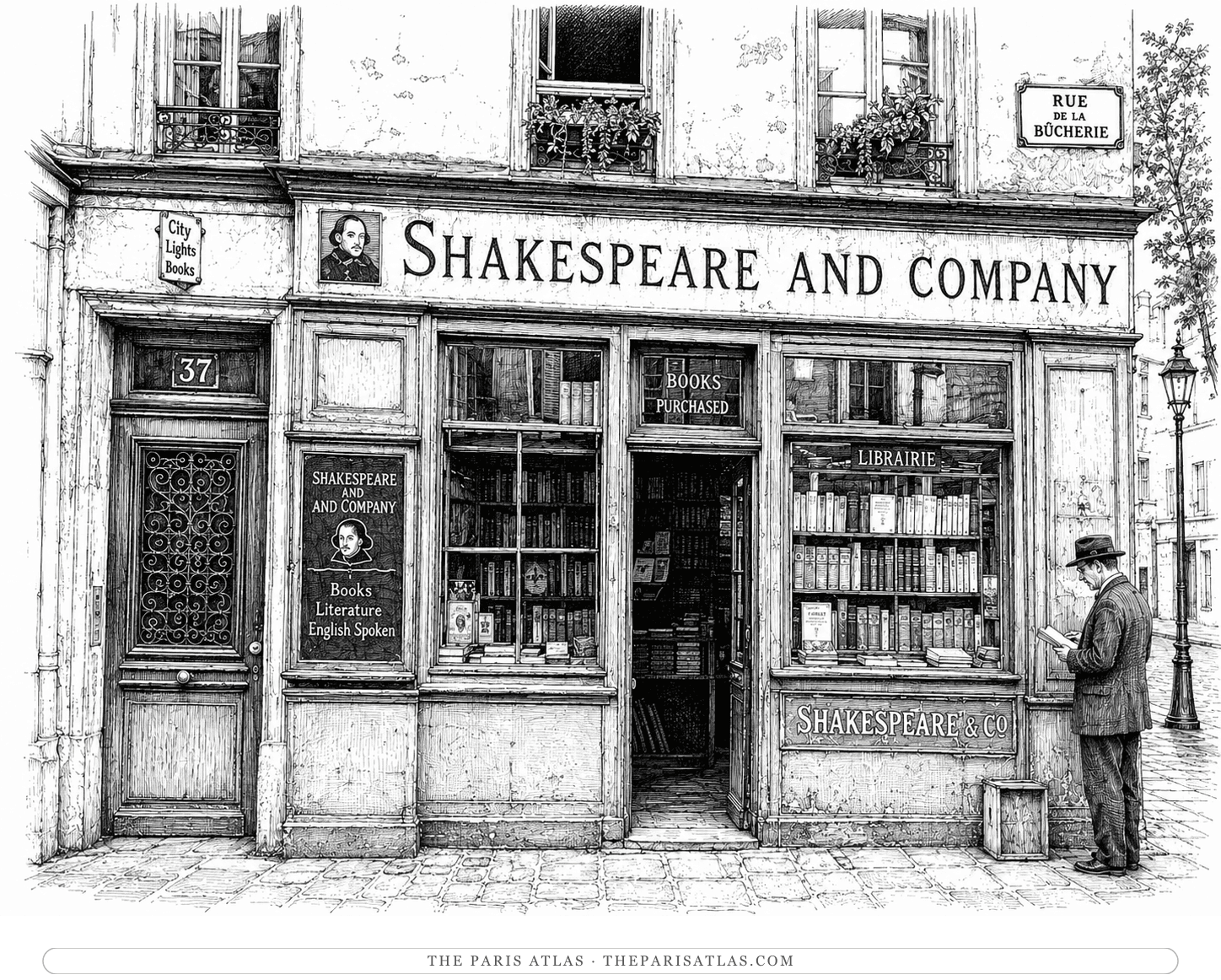
The weathered green and gold Shakespeare and Company storefront today, a reader browsing at the window, the rue de la Bûcherie sign above

Bookshop · Latin Quarter

Shakespeare and Company (Rue de la Bûcherie)

George Whitman's bookshop by the Seine — opened as Le Mistral in 1951, renamed Shakespeare and Company in 1964 with Sylvia Beach's blessing, and still sleeping writers among its shelves.

Visit the place

Within walking distance

The Friday Letter

Paris, one address at a time.

The cafés, studios, and walk-up flats where the work was made — one story from the map in every letter.

One email a week. No spam, no selling your address. Unsubscribe anytime.