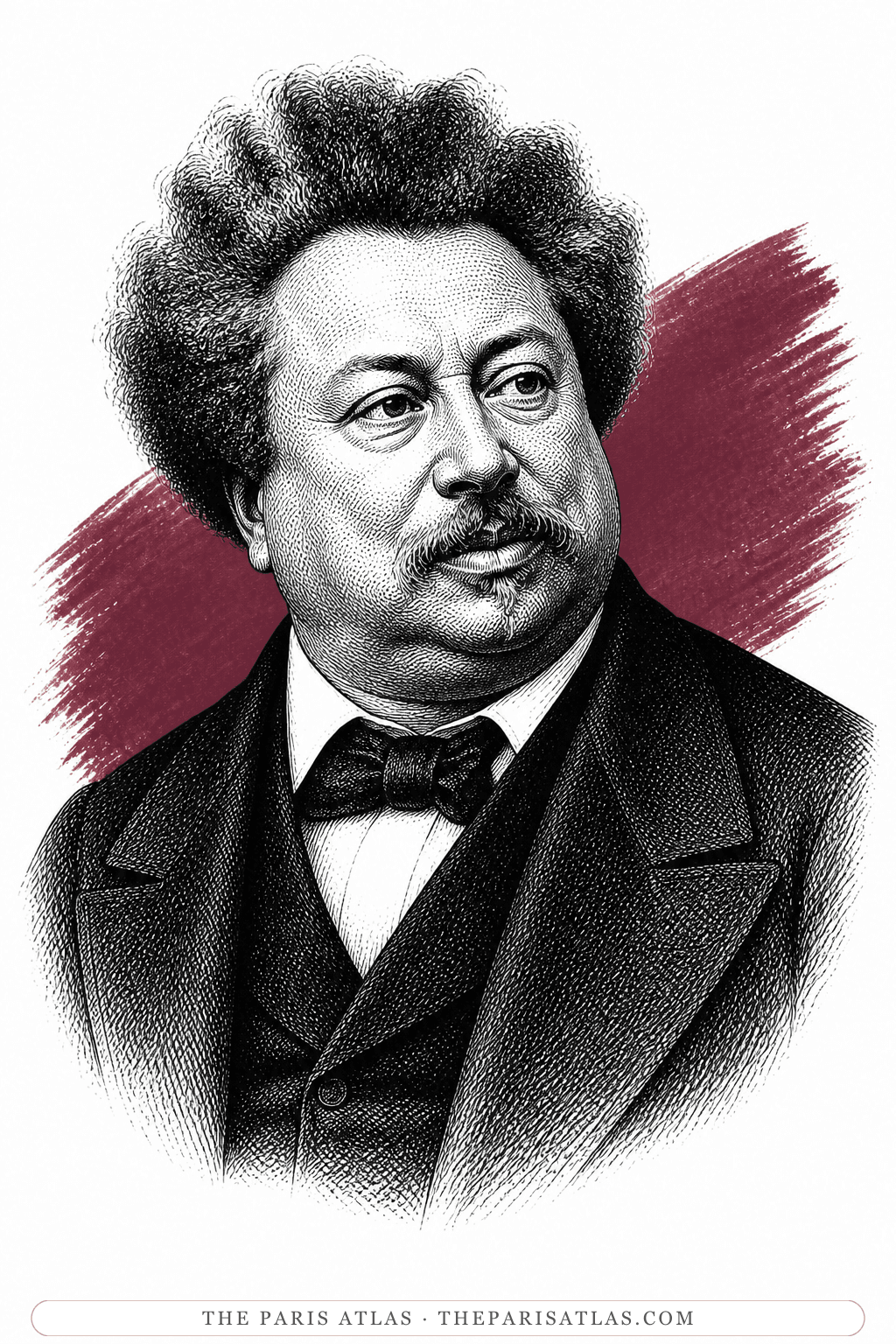
Alexandre Dumas
Buried here · 2002
Dumas entered the Panthéon in 2002, on the bicentenary of his birth, under President Jacques Chirac.
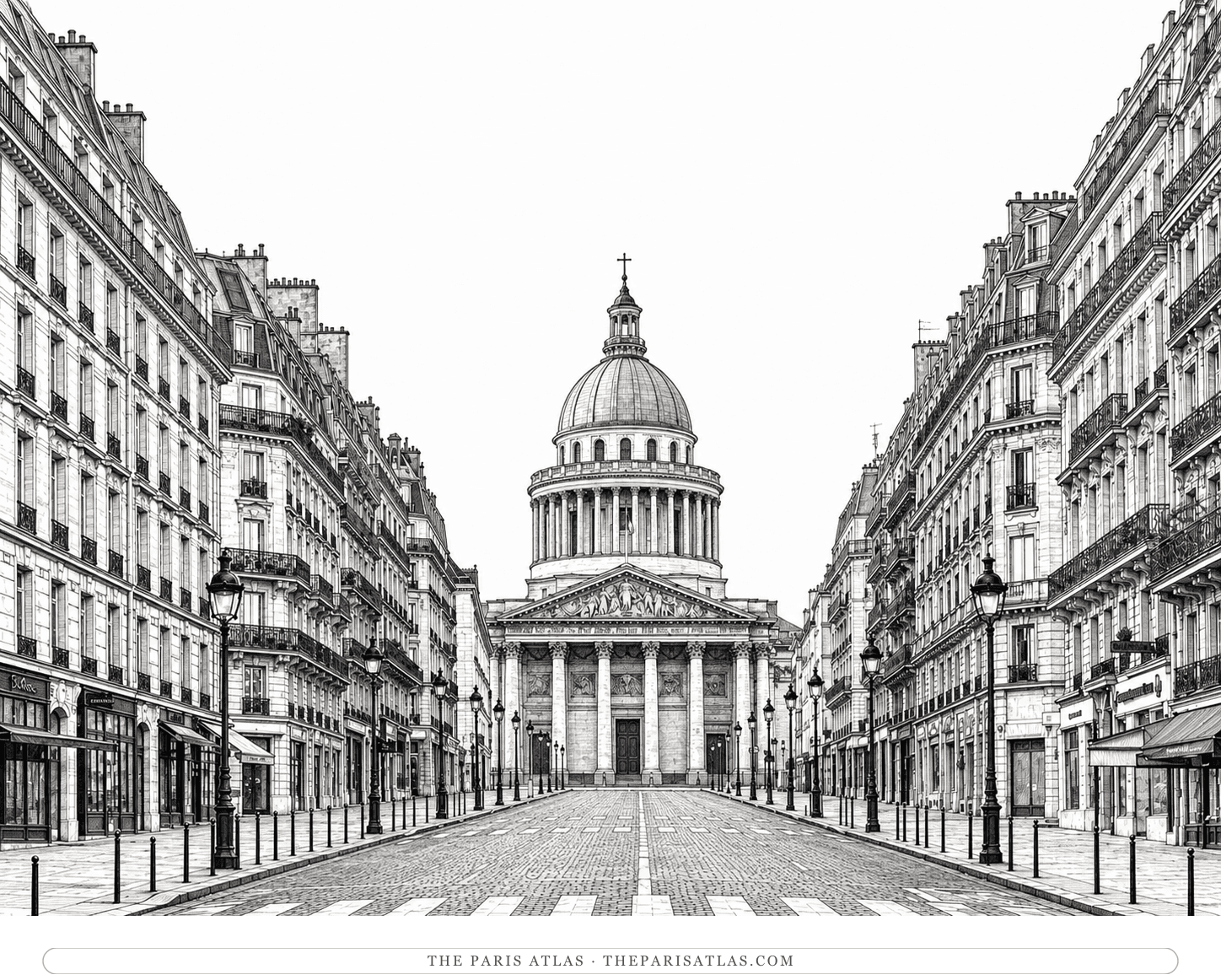
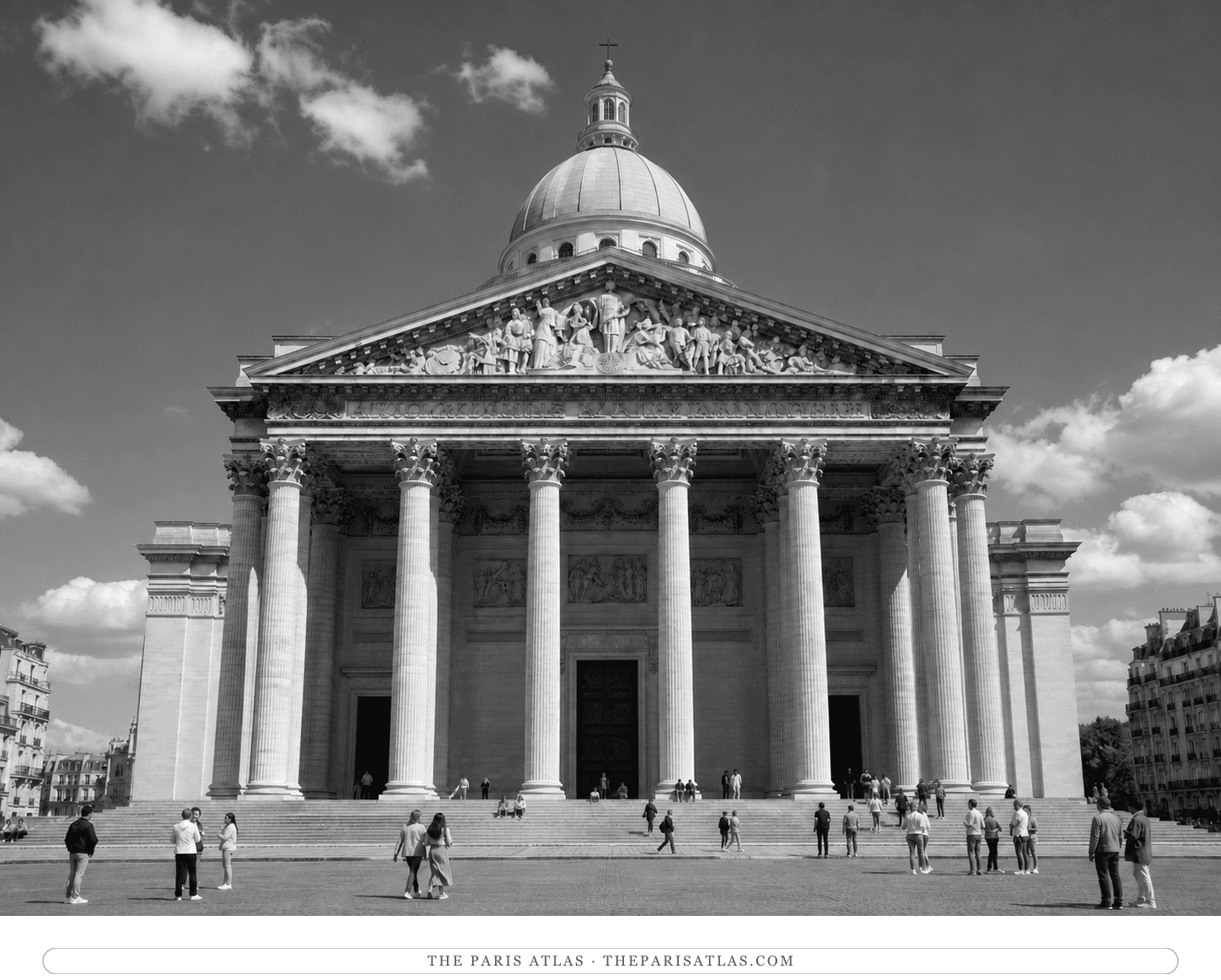
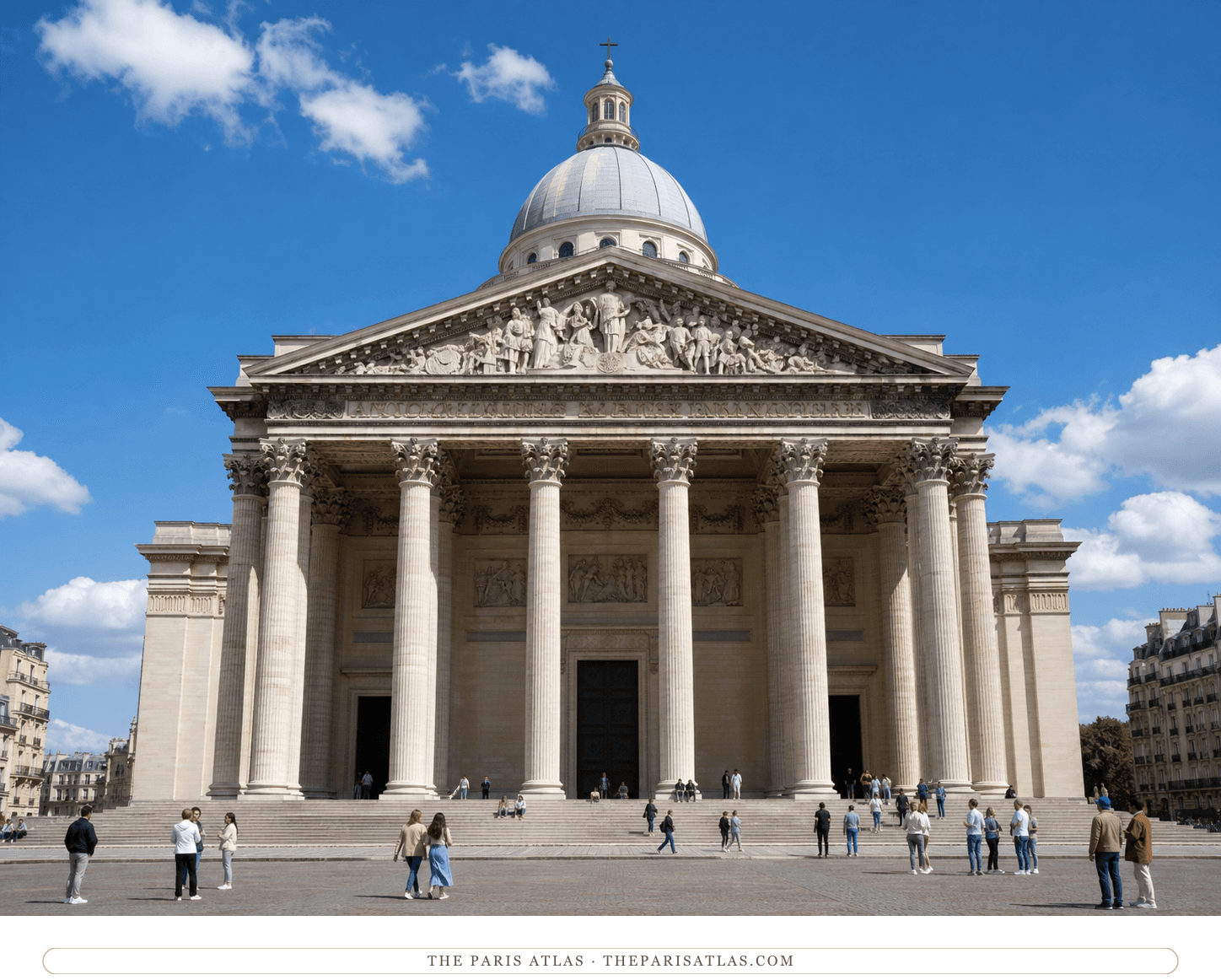
A domed neoclassical building at the top of the Latin Quarter, begun as a church to keep a king's promise and turned into a mausoleum for the nation's great by the Revolution. Voltaire arrived in 1791, Hugo's funeral settled its purpose in 1885, Alexandre Dumas came in 2002 and Josephine Baker in 2021. Open 10 a.m.–6.30 p.m. in summer; €13–€16.
The Panthéon exists because a king got ill. In 1744, campaigning at Metz during the War of the Austrian Succession, Louis XV fell seriously sick and prayed to Saint Geneviève, the patron saint of Paris. He recovered, and promised the monks of her abbey that he would rebuild their crumbling church.[1]
It took twenty years to start. The king laid the first stone himself on 6 September 1764, to a design by Jacques-Germain Soufflot, who had been given the commission in 1755. Soufflot wanted to combine three things that had never been combined: the structural daring and lightness of Gothic, the discipline of French classicism, and the grandeur of the Greek temples he had studied in Italy. The result is a Greek-cross plan under a dome, fronted by a portico modelled on the Pantheon of Agrippa in Rome — which is where the building's eventual name comes from.[1]
Soufflot died in 1780 without seeing it finished, and without any idea of what it was about to become. Maximilien Brébion and Jean-Baptiste Rondelet carried the work on and completed it in 1790.[1]
One year later the Revolution took it. When the orator Mirabeau died in 1791, the new republic needed somewhere to bury its heroes, and the brand-new church at the top of the hill was the obvious candidate. Antoine Chrysostome Quatremère de Quincy was given the job on 3 July 1791 of stripping the Christian building down into a secular one — blocking most of the windows, which is why the interior is far darker and more solemn than Soufflot's design intended.[2]
Voltaire was moved in that same year, 1791, and Jean-Jacques Rousseau in 1794 — the two writers whose arguments had done most to make the Revolution thinkable, installed as its founding saints. Then the building changed hands repeatedly as France changed regime, going back to being a church and back to being a mausoleum more than once across the nineteenth century.[3]
What settled it was a funeral. When Victor Hugo died in 1885, the crowds that followed him through Paris were so vast, and the national feeling so unambiguous, that the building's identity was fixed by the event: from Hugo onward the Panthéon was the Panthéon.[3]
The people admitted since read as an argument about what France wants to say about itself. Émile Zola's ashes came in 1908, six years after his death, in the long aftermath of the Dreyfus affair. André Malraux arrived in 1996 and Alexandre Dumas in 2002, on the bicentenary of his birth. Josephine Baker was honoured in 2021, the first Black woman to be, and the Armenian-French Resistance fighter Missak Manouchian in February 2024.[3]
One distinction is worth knowing before you go down to the crypt, because it surprises people: not everyone honoured here is buried here. A pantheonisation can be marked by a cenotaph — an empty tomb — or by an inscription alone. Josephine Baker is the monument's own example. Her tomb in the crypt is a cenotaph; her body remains in Monaco, where her family wished it to stay.[4]
Philosopher, playwright and pamphleteer of the French Enlightenment
Crypt
Novelist and poet; author of Les Misérables and Notre-Dame de Paris
Crypt
Novelist of the Rougon-Macquart cycle and author of J'Accuse…!
Crypt
Novelist of The Three Musketeers and The Count of Monte Cristo
Crypt
Novelist and France's first Minister of Cultural Affairs
Crypt
Performer, Resistance agent and civil-rights campaigner
Crypt
Louis XV, gravely ill at Metz, invokes Saint Geneviève and vows to rebuild her abbey church.
Jacques-Germain Soufflot is given the commission.
The king lays the first stone himself.
Soufflot dies with the church unfinished.
Brébion and Rondelet complete the building.
Quatremère de Quincy is charged with converting the church into a secular national necropolis after Mirabeau's death.
Voltaire is transferred to the Panthéon; Rousseau follows in 1794.
Victor Hugo's state funeral fixes the building's purpose permanently.
Émile Zola's ashes are transferred to the crypt.
André Malraux is pantheonised by President Jacques Chirac.
Alexandre Dumas enters the Panthéon on the bicentenary of his birth.
Josephine Baker is honoured — the first Black woman — with a cenotaph rather than a burial.
Missak Manouchian becomes the most recent pantheonisation.
A large domed neoclassical building at the top of the Latin Quarter that serves as France's national mausoleum. It was begun in 1764 as a church dedicated to Saint Geneviève and converted during the Revolution, in 1791, into a secular resting place for people the republic wanted to honour.
Among many others: Voltaire (1791), Jean-Jacques Rousseau (1794), Victor Hugo (1885), Émile Zola (1908), André Malraux (1996), Alexandre Dumas (2002) and Missak Manouchian (2024). Josephine Baker was honoured in 2021 but is not buried there — her tomb is a cenotaph and her body remains in Monaco.
To keep a promise. In 1744 Louis XV fell seriously ill at Metz, prayed to Saint Geneviève, the patron saint of Paris, and vowed to rebuild her decaying abbey church if he recovered. He did, and laid the first stone himself on 6 September 1764.
Jacques-Germain Soufflot, commissioned in 1755. He set out to combine the lightness of Gothic engineering, French classicism and the grandeur of Greek temple architecture. He died in 1780 before it was finished; Maximilien Brébion and Jean-Baptiste Rondelet completed the building in 1790.
The Revolution repurposed it. When Mirabeau died in 1791, the new republic needed a burial place for its heroes and took the newly finished church. Quatremère de Quincy was charged on 3 July 1791 with converting it, blocking most of the windows — which is why the interior is much darker than Soufflot intended.
10 a.m. to 6.30 p.m. from 1 April to 30 September, and 10 a.m. to 6 p.m. from 1 October to 31 March, with last admission 45 minutes before closing. Closed on 1 January, 1 May and 25 December, and it opens at noon on the first working Monday of each month. Verified 24 August 2026.
€13 in the winter season and €16 in high season, with a €13 rate on days other than Wednesday. A combined ticket with the Basilica of Saint-Denis is €26. Under-16s with an adult, 16-to-25-year-olds resident in the EU, disabled visitors with a companion and registered jobseekers enter free, as does everyone on the first Sunday of the month from November to March.
Not at present — the panoramic colonnade around the dome is closed to visitors. When it is open it is a seasonal, separately managed climb, so check the monument's own site before counting on it.
A pendulum hangs under the dome, recreating the demonstration Léon Foucault staged in the building in 1851 to show the rotation of the Earth. The original instrument is not the one on display. Ask at the desk whether it is swinging on the day you visit, since it is not always in motion.
An hour is comfortable — the nave, the paintings on Saint Geneviève's life, the pendulum, and then the crypt, which is the reason most people come. It sits at the top of the Montagne Sainte-Geneviève, so it pairs naturally with the Latin Quarter and the Luxembourg Gardens.
Buried here · 2002
Dumas entered the Panthéon in 2002, on the bicentenary of his birth, under President Jacques Chirac.
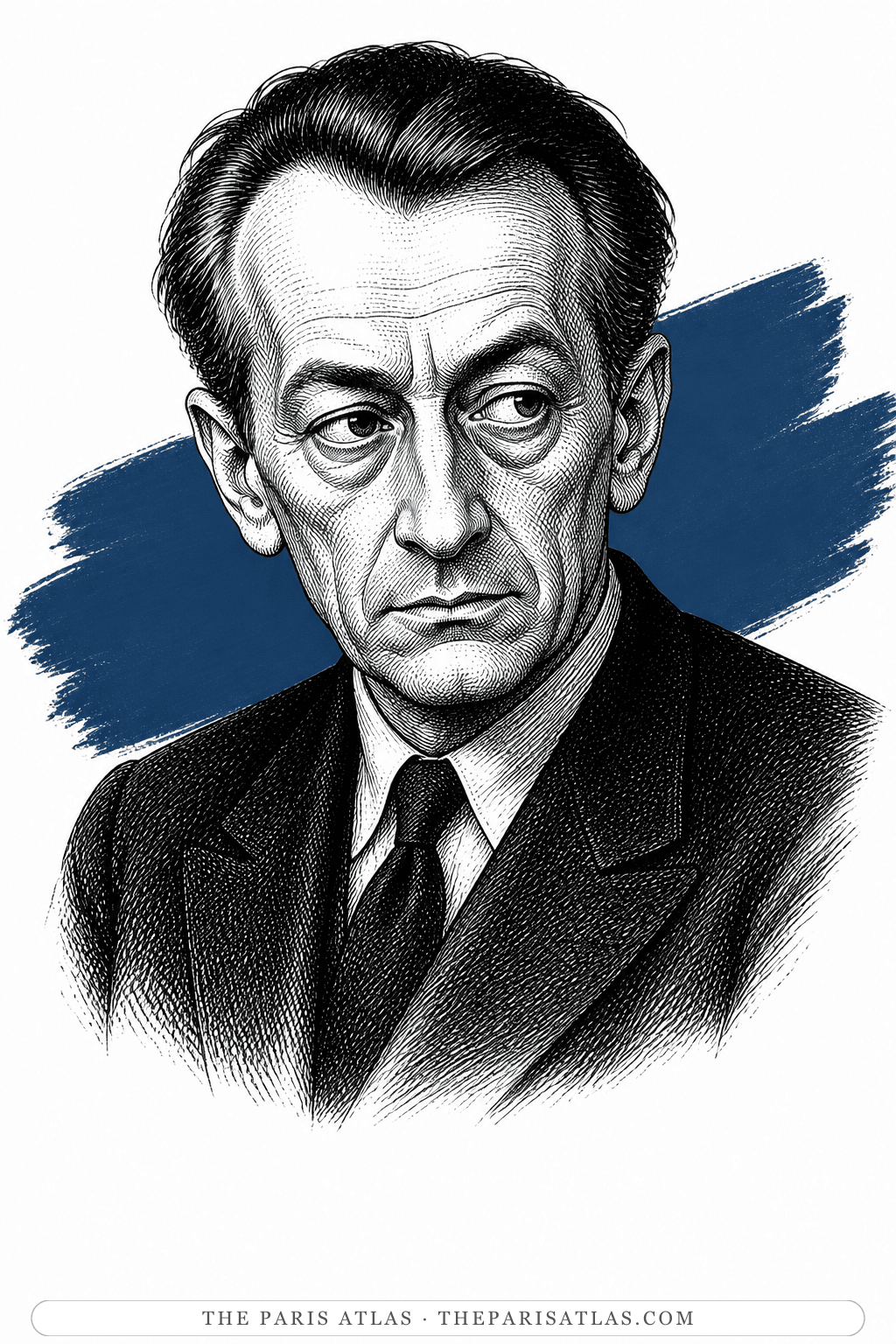
Buried here · 1996
Malraux was brought into the Panthéon in 1996 by President Jacques Chirac.
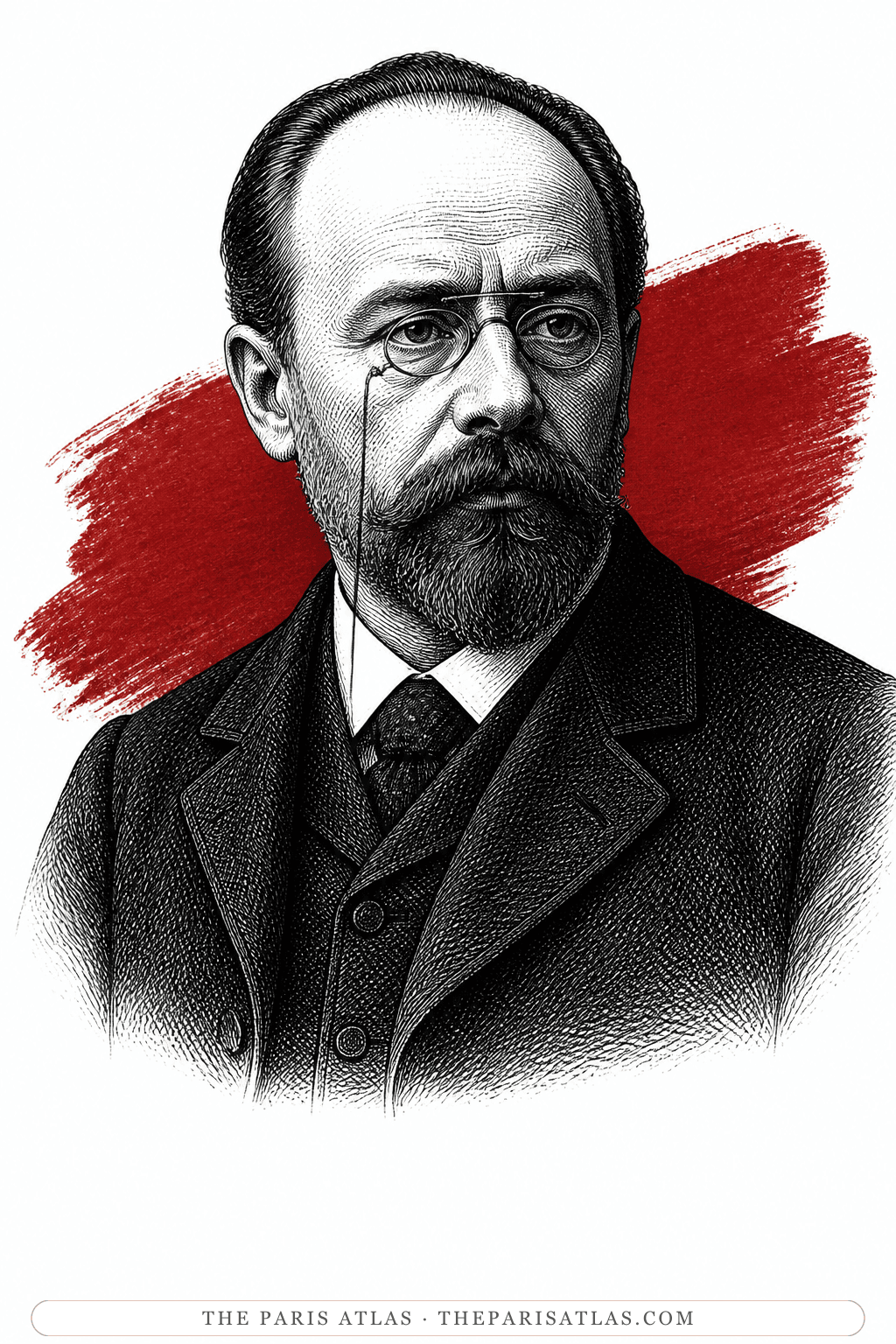
Buried here · 1908
Zola's ashes were transferred to the Panthéon in 1908, six years after his death and following his role in the Dreyfus affair.
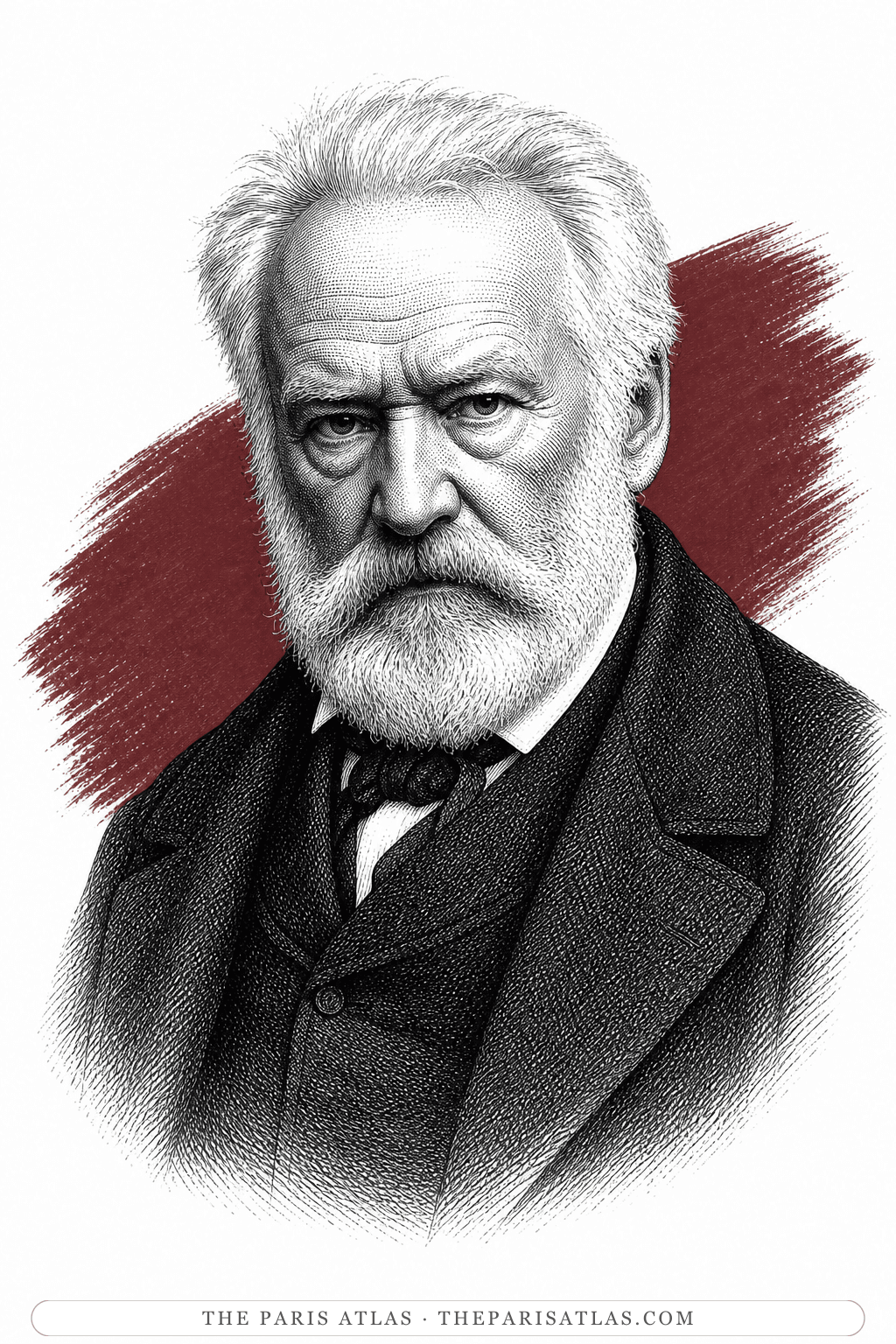
Buried here · 1885
Hugo's state funeral in 1885 drew enormous crowds and settled the building's purpose for good: after decades of switching back and forth between church and mausoleum, the Panthéon stayed a Panthéon.
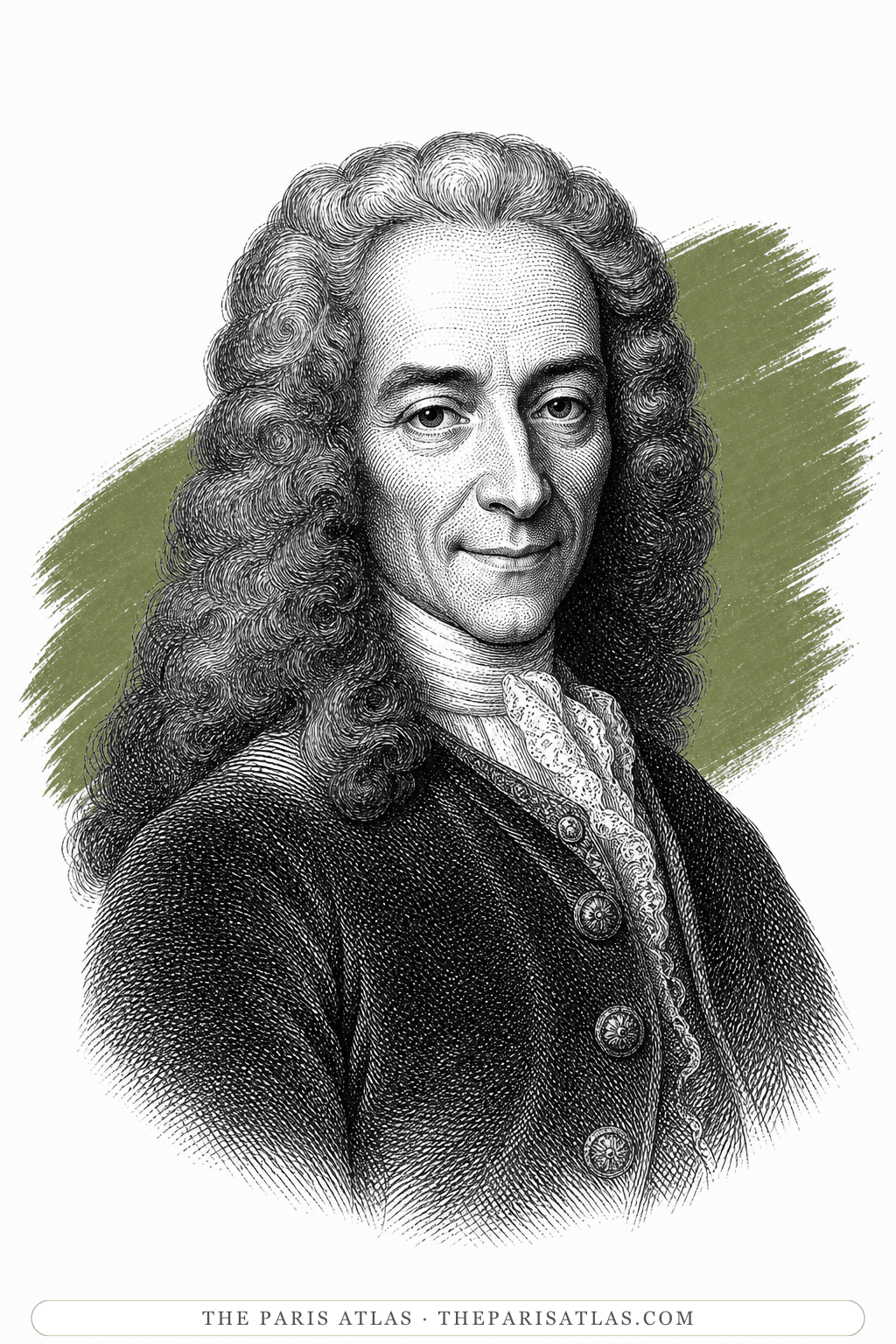
Buried here · 1791
Voltaire entered the Panthéon in 1791, in the first wave of pantheonisations that followed the building's conversion from a church into a national necropolis.
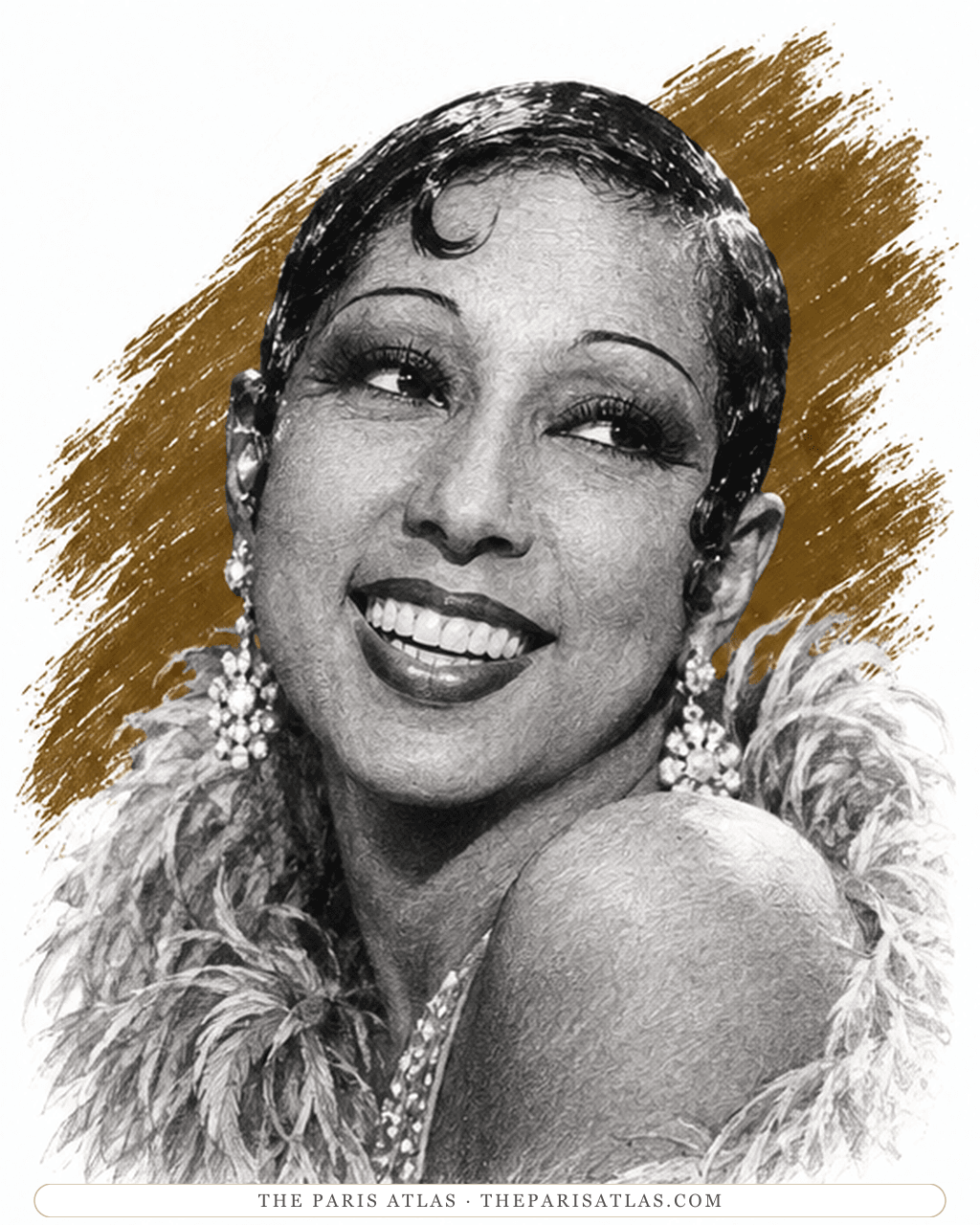
Josephine Baker was honoured at the Panthéon in 2021, the first Black woman to be. What stands in the crypt is a cenotaph — an empty tomb — not a burial: the monument itself gives her as its example of the distinction.
Art & literary movement · circa 1860–1910
Symbolism gave form to dreams, ideas and inner experience. Its artists, poets, paintings, music, history and Paris collections.
Enter the movement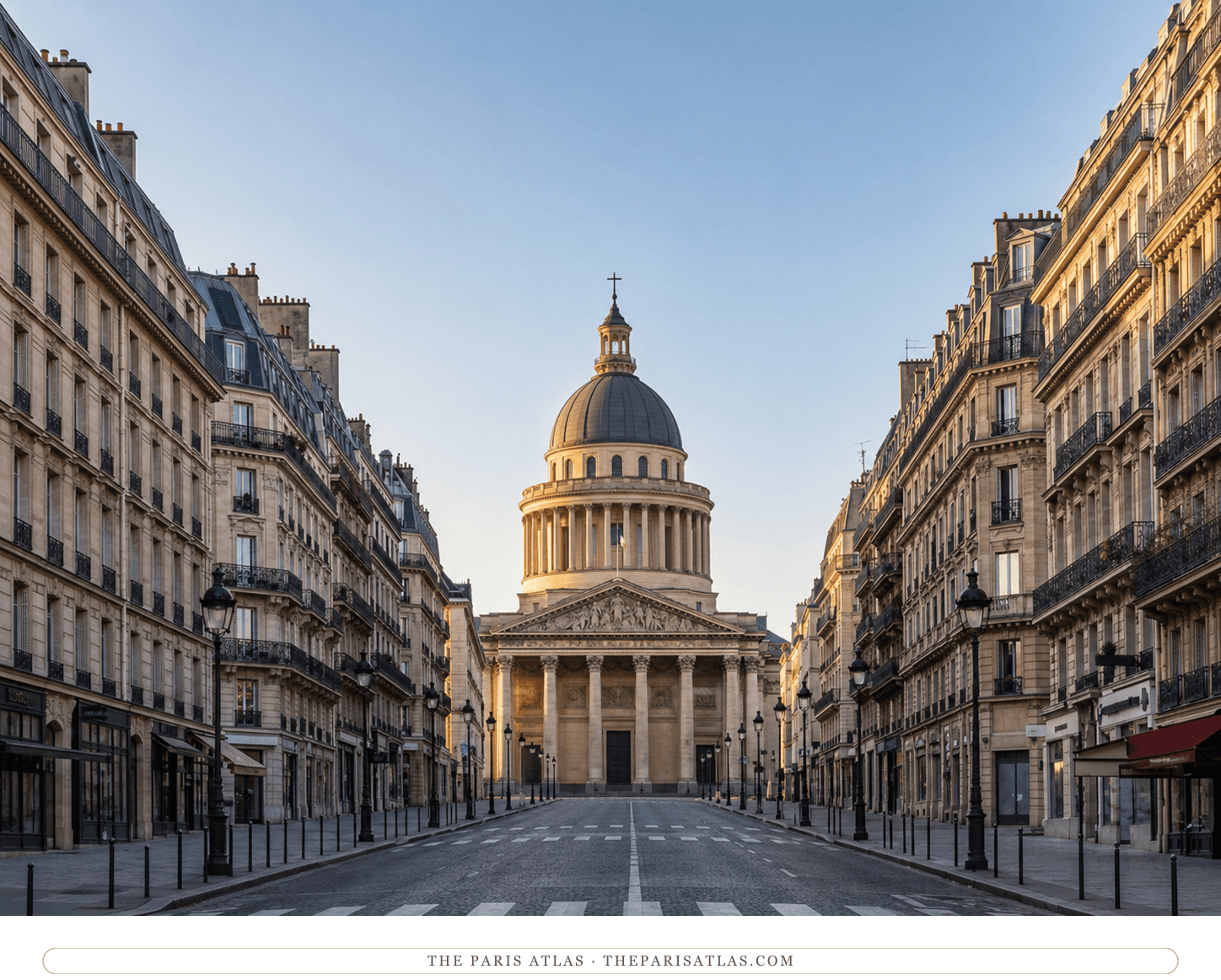
The street between the Luxembourg gardens and the Panthéon where the narrator of Ernest Hemingway's The Sun Also Rises stops for coffee and a brioche, on the one morning the novel shows him going to work. He never names the café.
Visit the place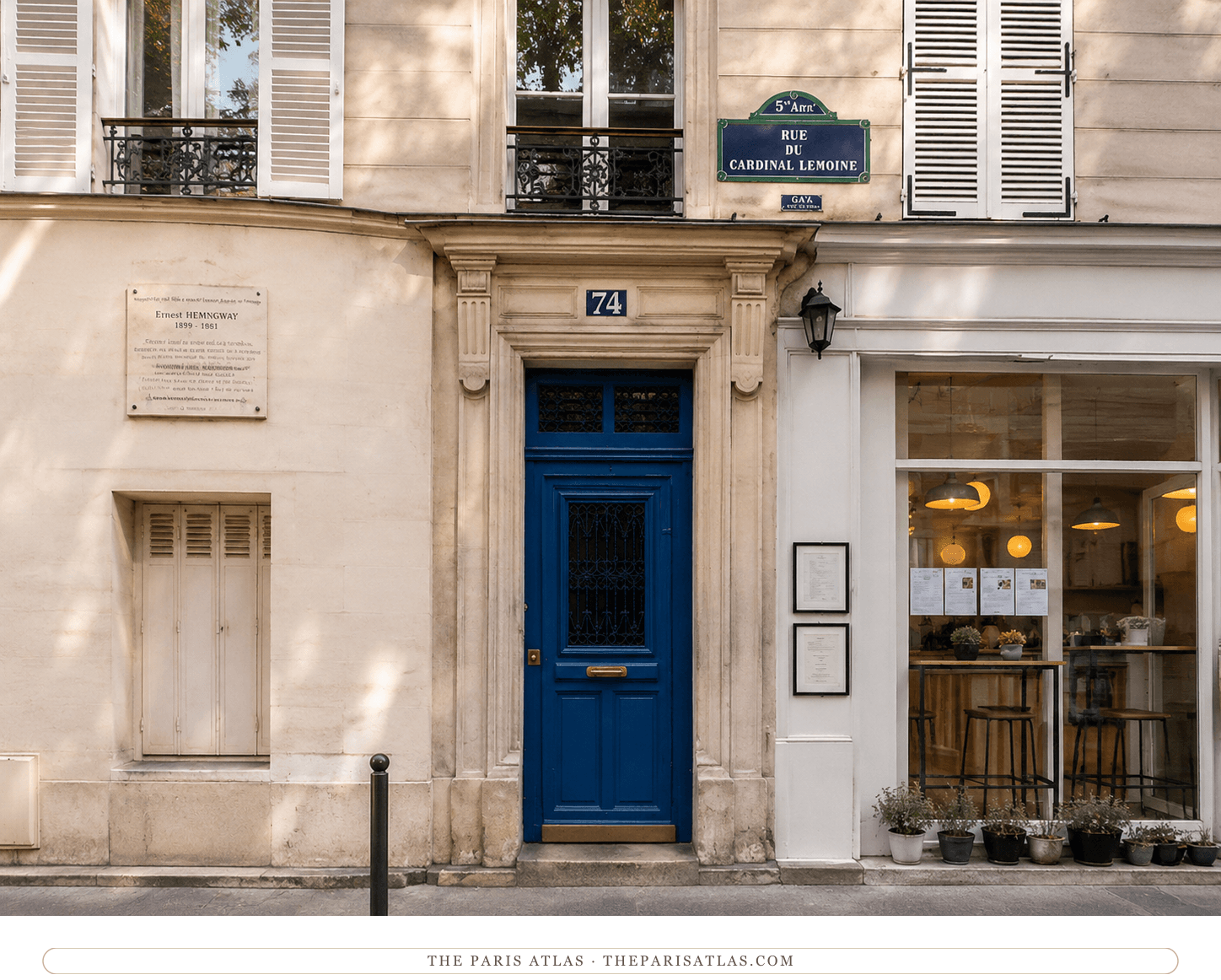
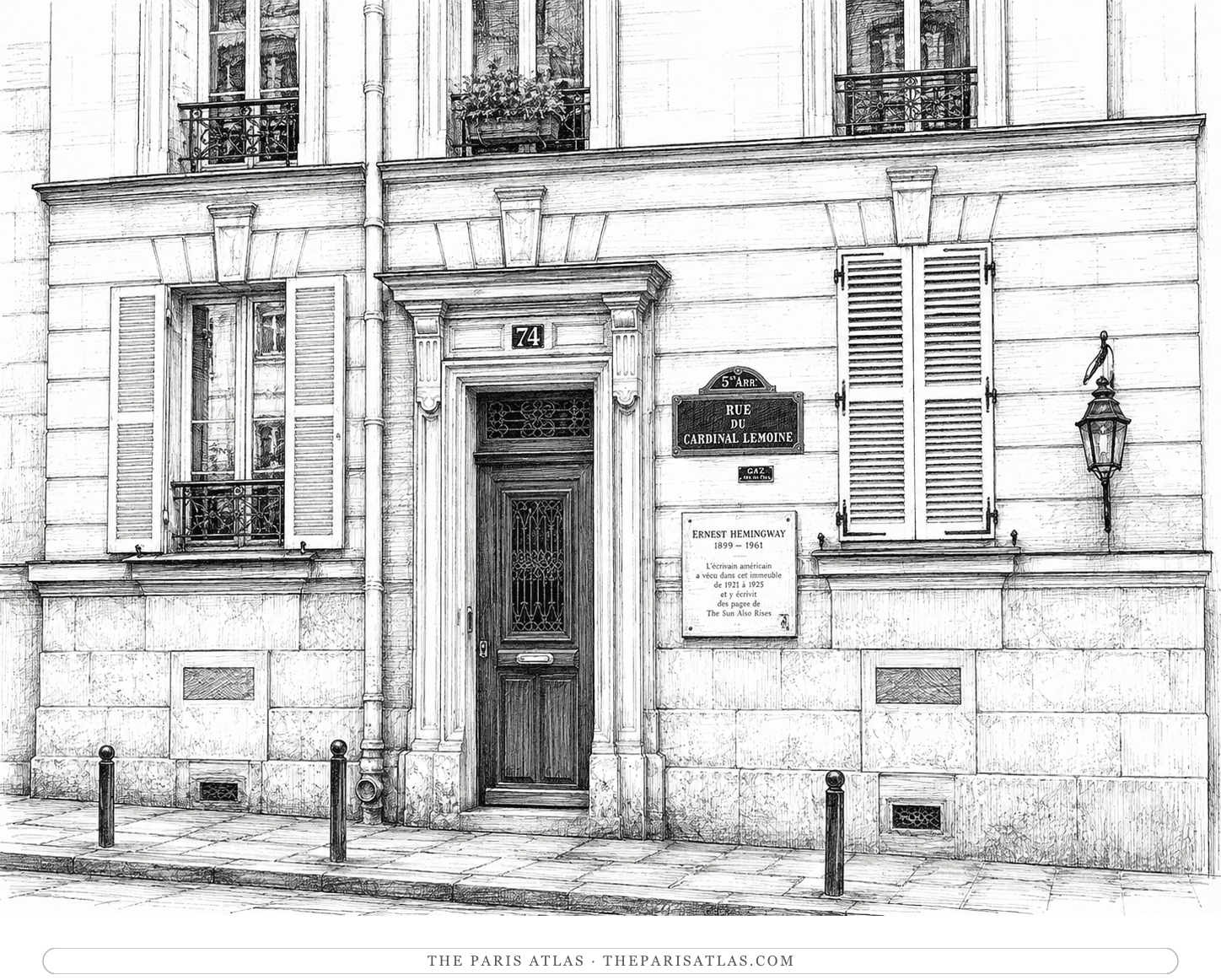
Ernest Hemingway and Hadley Richardson's first Paris apartment, on the fifth floor with no running water. He describes it in the opening pages of the book.
Visit the place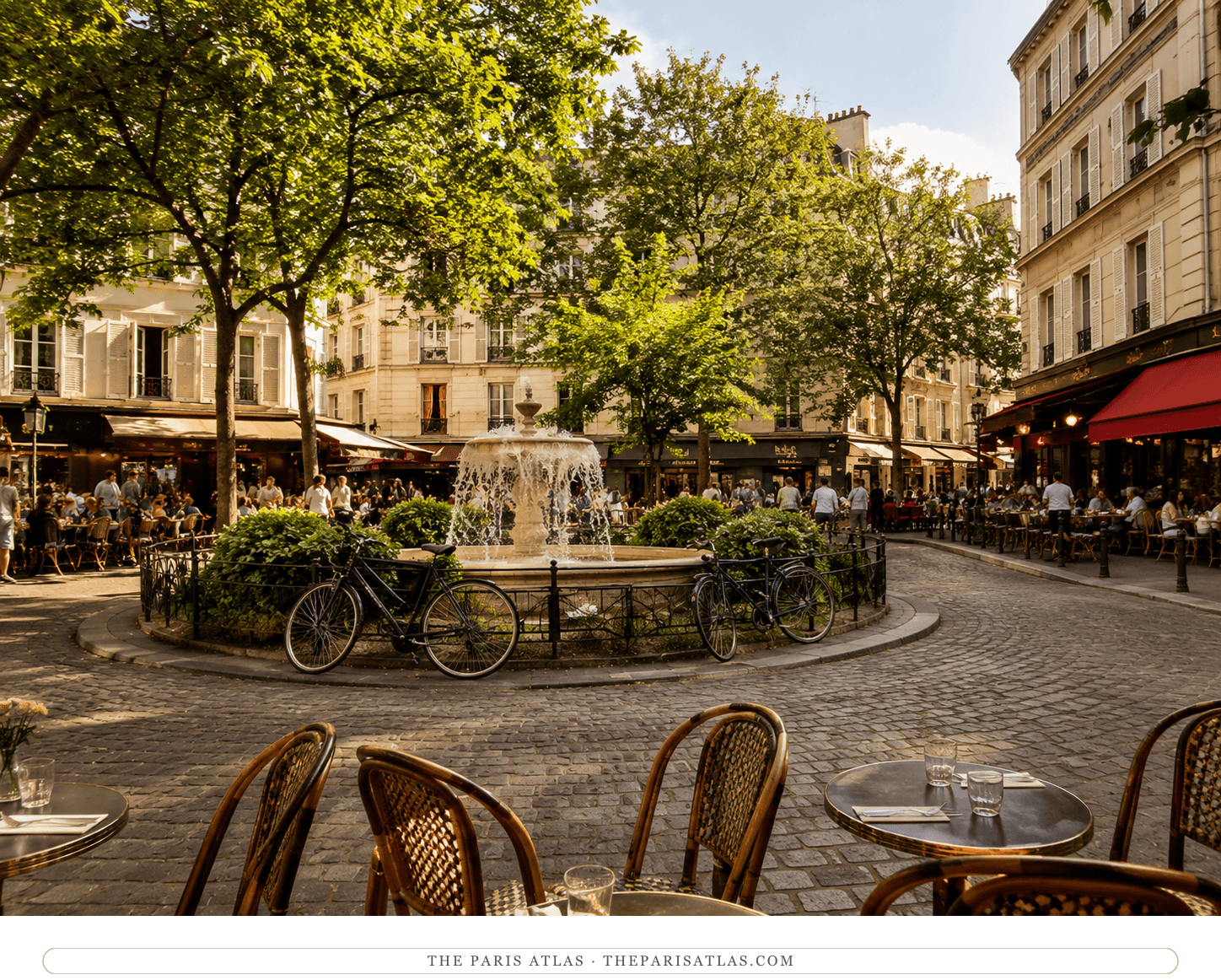
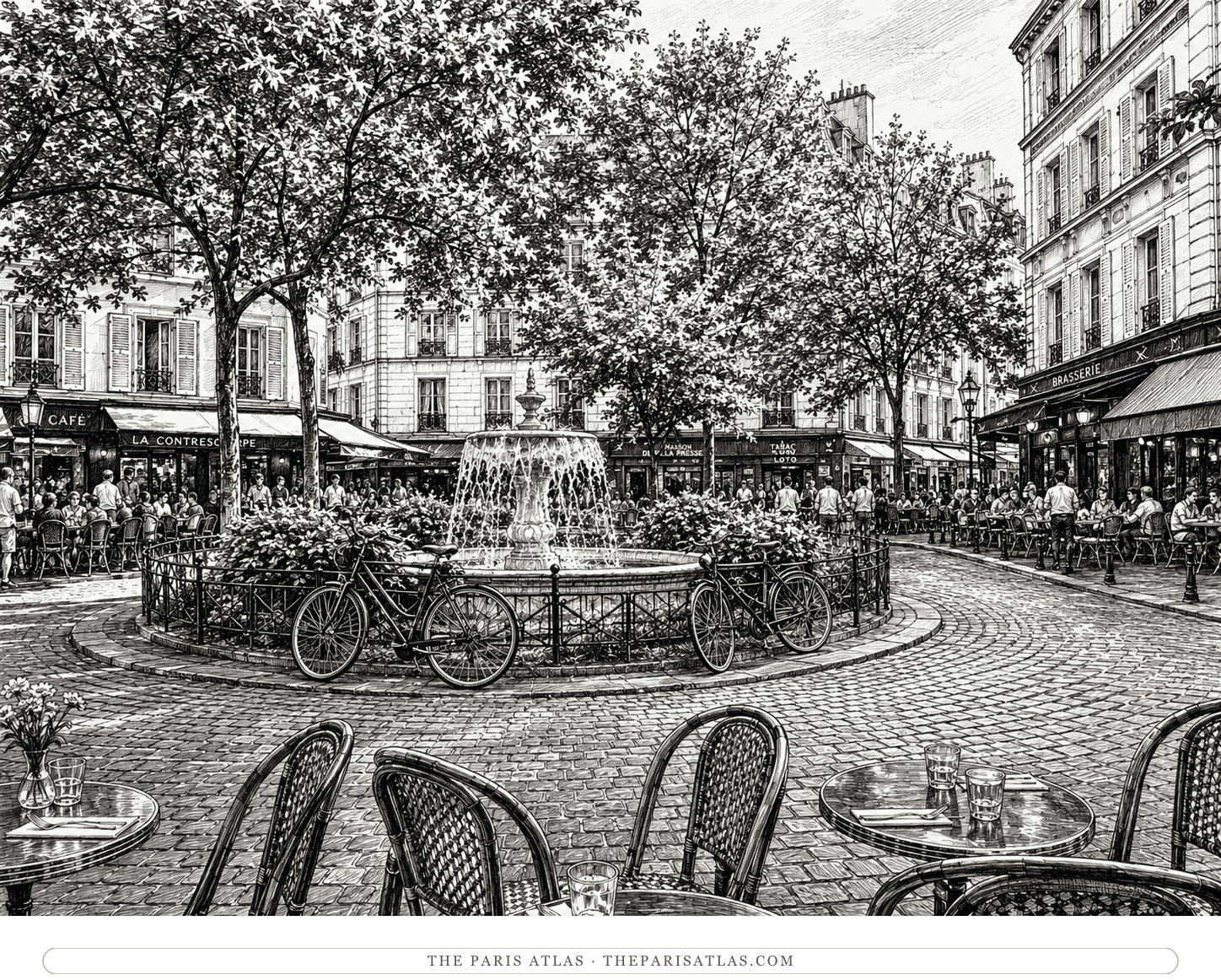
The small square at the top of the rue Mouffetard, a minute from Ernest Hemingway's first flat — now one of the quarter's prettiest corners. The novel visits it after dark.
Visit the place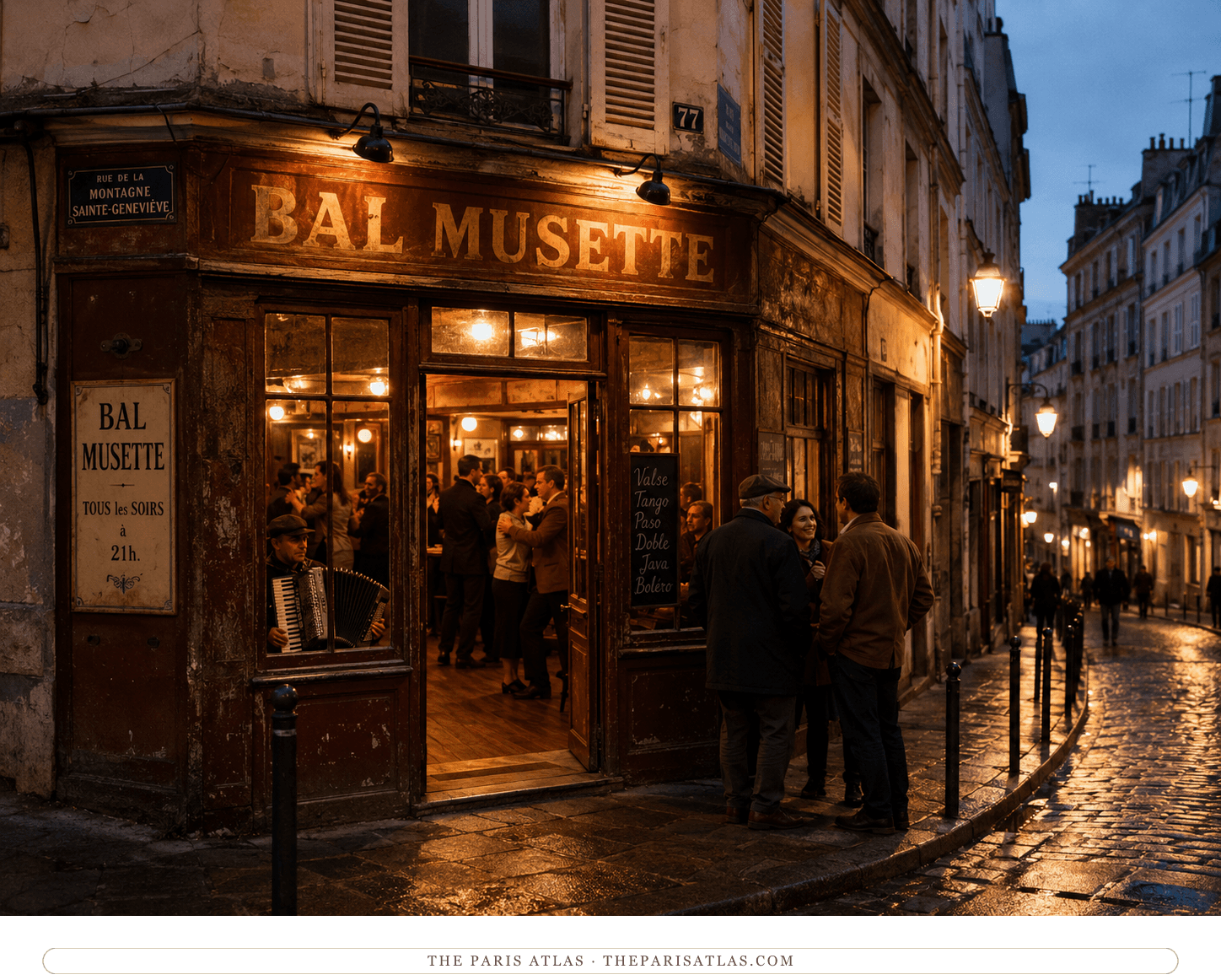
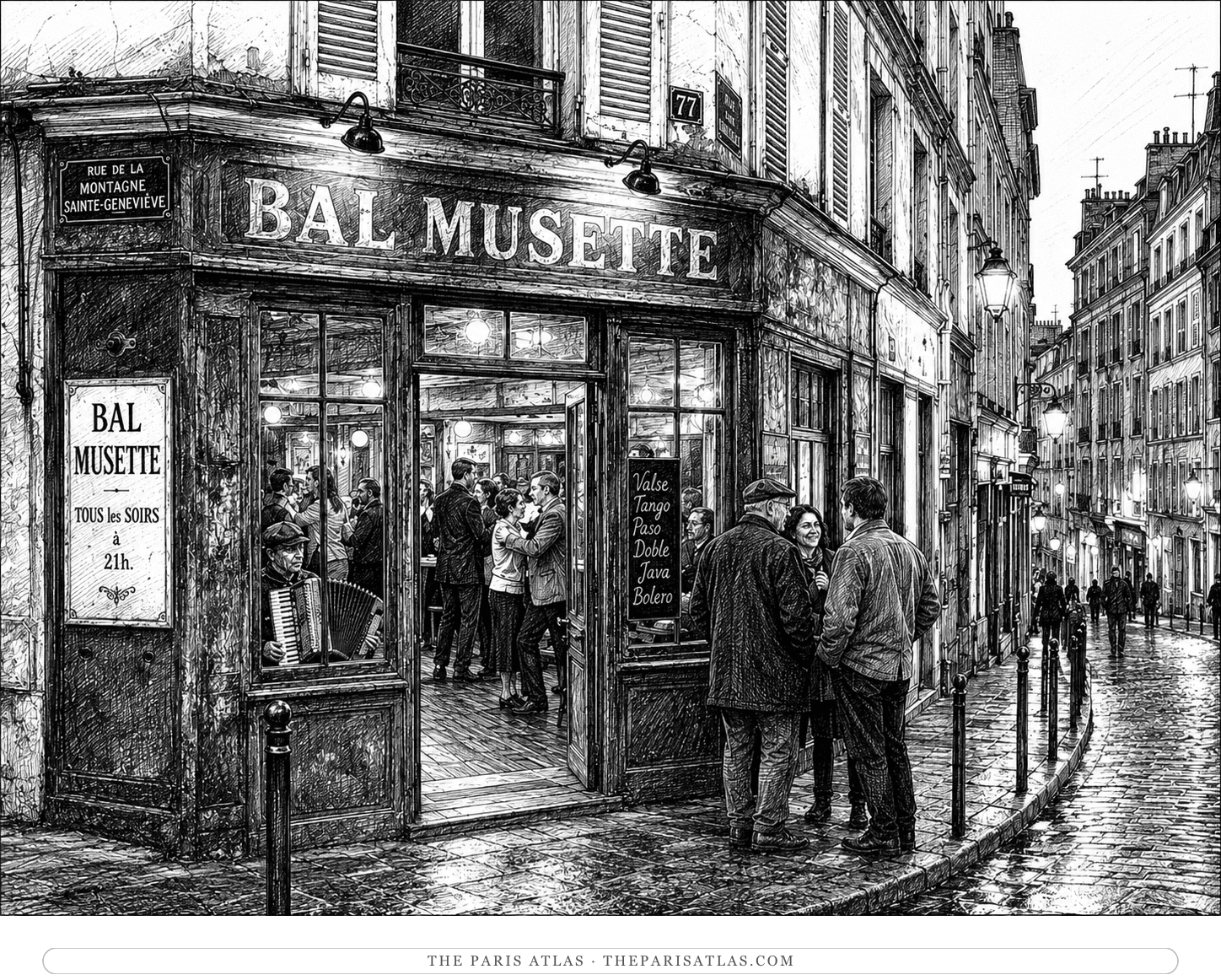
A working-class accordion dance hall in the Latin Quarter — the neighborhood danced there most nights, and the expatriate crowd borrowed it on Mondays.
Visit the placeThe sources below include histories, archival materials, scholarly research, and official records that informed this page. They document The Panthéon, the people connected to it, and its place in Paris.

Web source consulted for documented facts and historical context presented on the The Panthéon page.
Seasonal hours, last admission, closures, admission rates and transport. Checked 24 August 2026.

Map data used to verify addresses, geographic coordinates, and the placement associated with The Panthéon.
These references provide the documented foundation for this page's history and context. Claim-level citations remain attached to the specific claims they support.
 Explore more resources
Newsletter
The cafés, studios, and walk-up flats where the work was made — one story from the map in every letter.