
Mentioned in passing
Tropic of Cancer
Counted among the narrator's favorite resting places — the square's third literary generation in as many decades.
The small square at the top of the rue Mouffetard, a minute from Ernest Hemingway's first flat — now one of the quarter's prettiest corners. The novel visits it after dark.
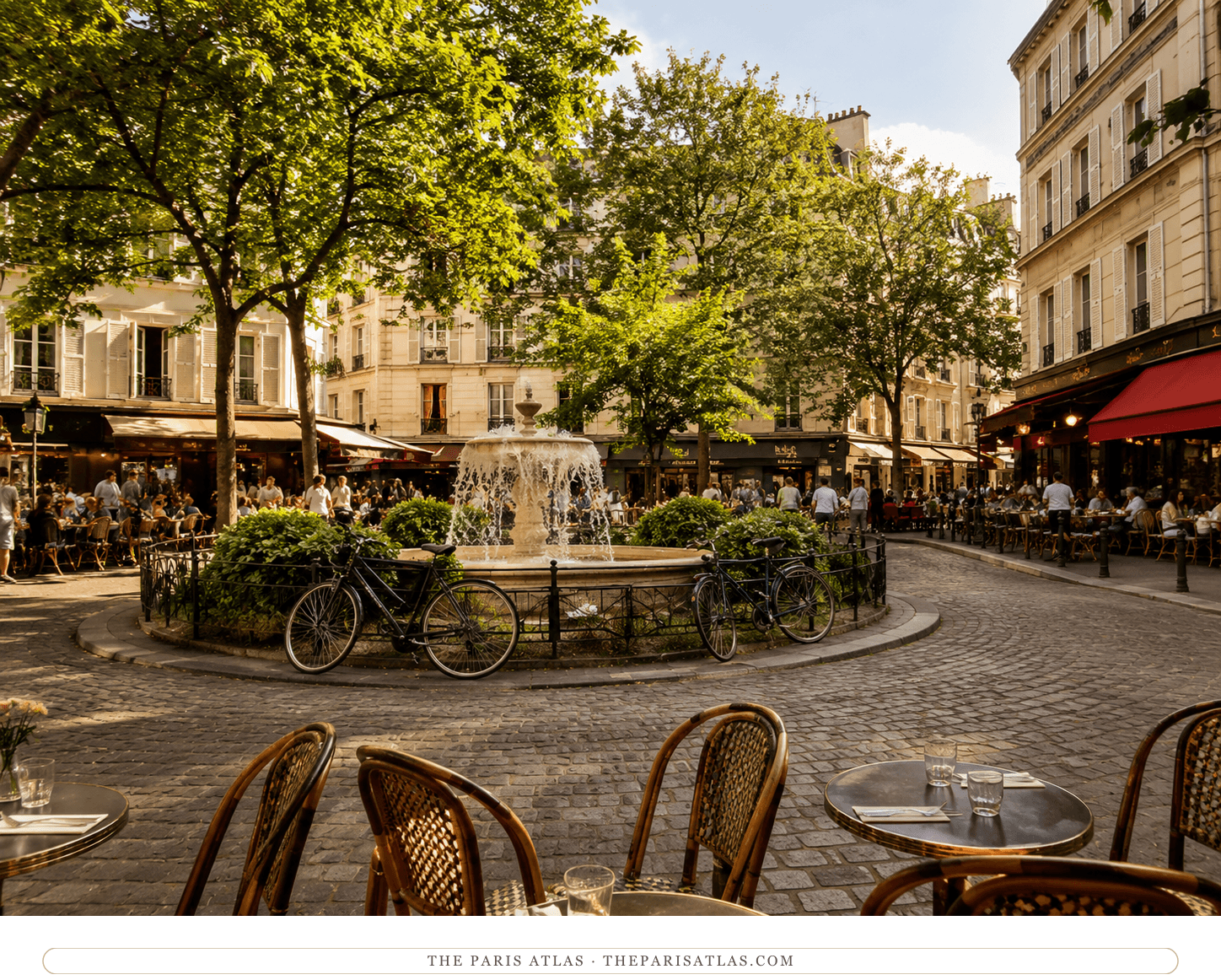
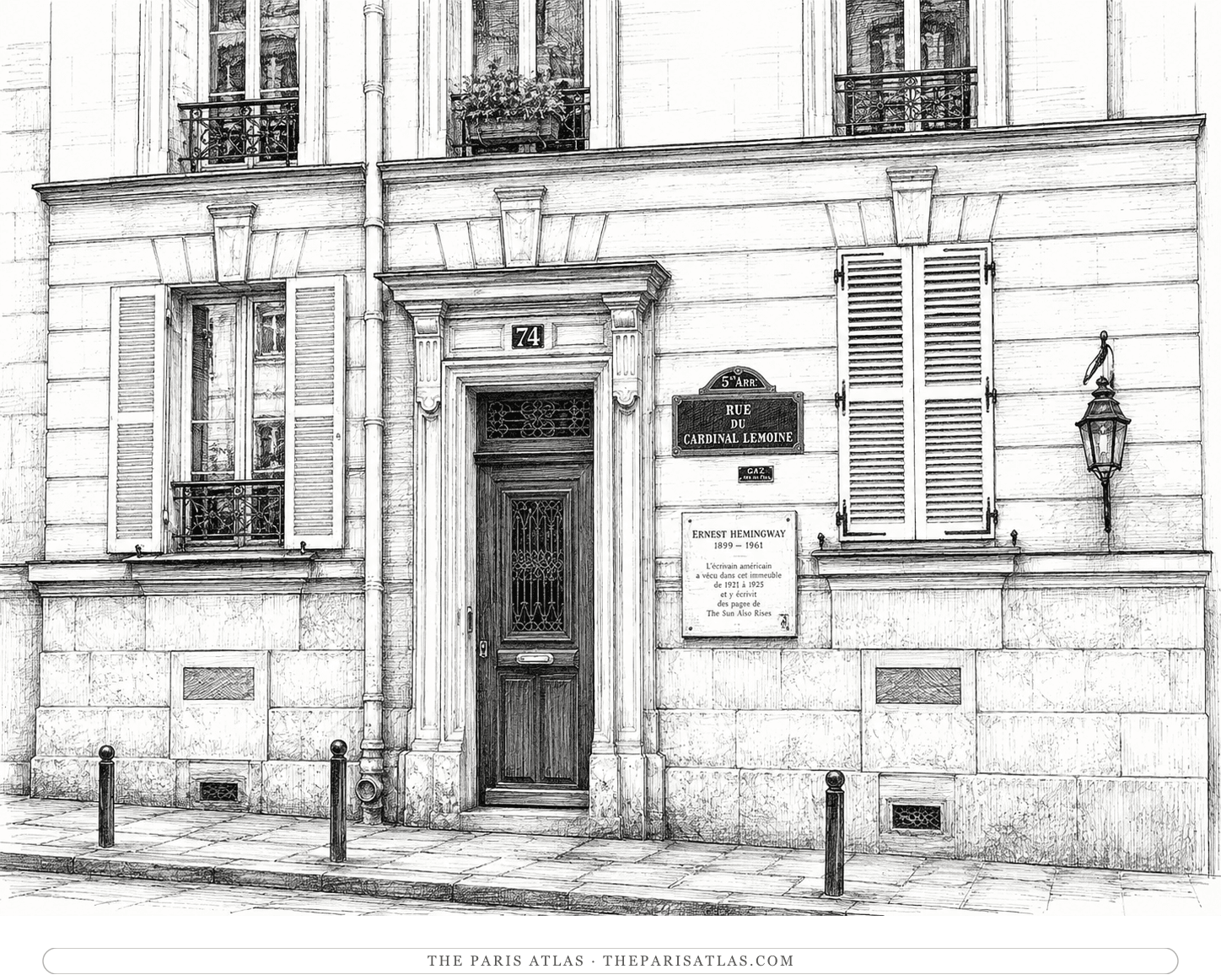
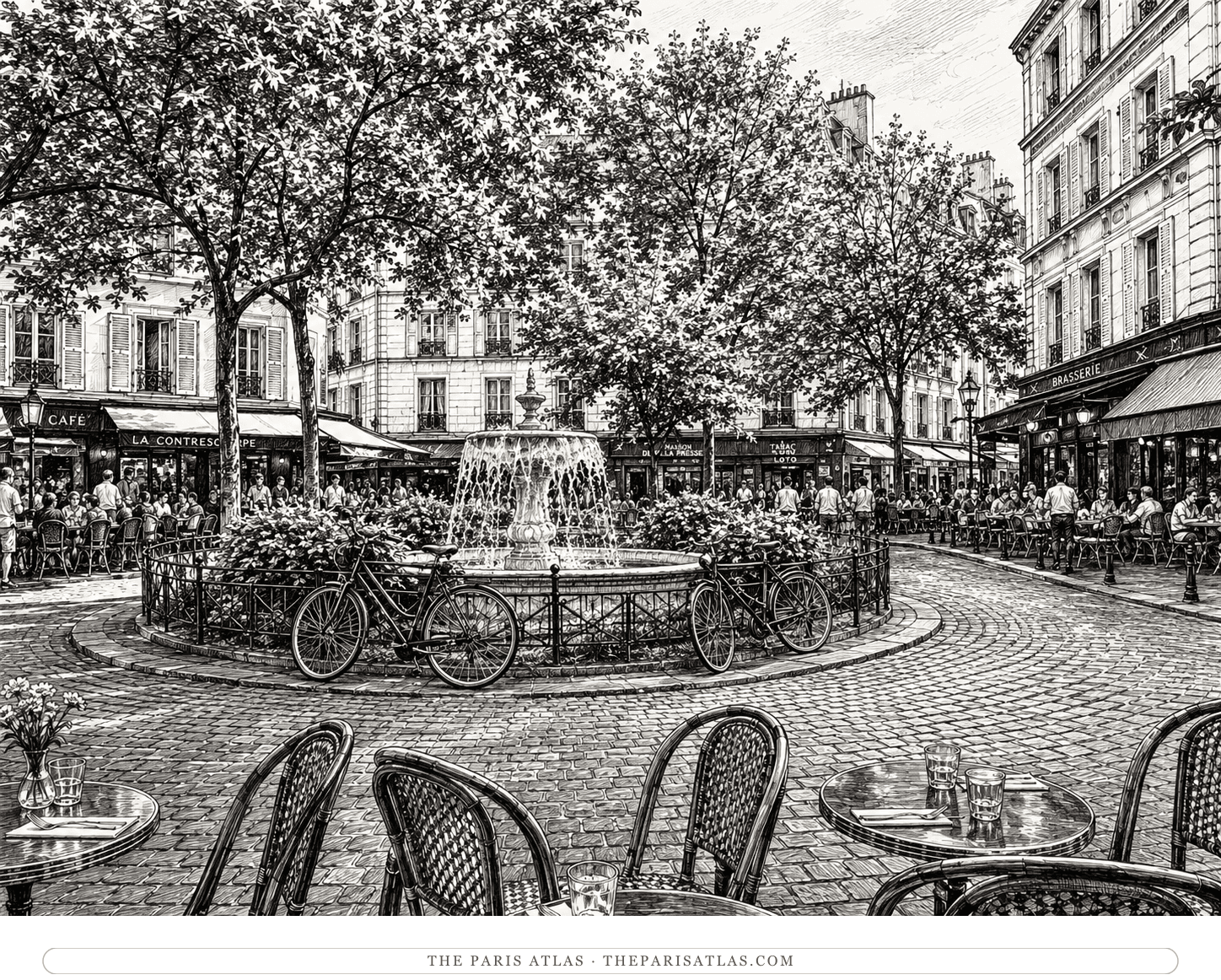
The Place de la Contrescarpe is the small square where the rue Mouffetard's market slope meets the top of the Montagne Sainte-Geneviève — in the twenties a poor, hard-drinking corner of the quarter, ringed by cheap cafés and lodging houses, with the S bus terminus under its trees. It was the first Paris Hemingway lived in: his flat at 74 rue du Cardinal Lemoine was a minute downhill, and A Moveable Feast opens onto this square, sour café and all.
Ernest Hemingway crosses the square twice in The Sun Also Rises, his 1926 novel, both times at night, both times beautifully. Early in the book a taxi coming down from the hill passes the trees and the standing bus at the Contrescarpe and turns onto the cobbles of the rue Mouffetard, past lighted bars and late-open shops. And on the great walk of Chapter VIII, his narrator Jake Barnes and his friend Bill Gorton climb the rue du Cardinal Lemoine all the way up from the river until they come out on the square — arc-light shining through the leaves, the S bus ready to start, music coming from a dancing hall — before turning off along the smooth narrow streets toward Montparnasse.
The square has traded poverty for postcards since — the cafés are pleasant now, the fountain is newer than it looks, and the plaque around the corner marks the Hemingway flat — but the geometry is untouched: the trees, the lamplight through the leaves, and five streets of old Paris running off downhill in every direction.
We crossed the bridge and walked up the Rue du Cardinal Lemoine. It was steep walking, and we went all the way up to the Place Contrescarpe. The arc-light shone through the leaves of the trees in the square, and underneath the trees was an S bus ready to start.
The taxi went up the hill, passed the lighted square, then on into the dark, still climbing, then levelled out onto a dark street behind St. Etienne du Mont, went smoothly down the asphalt, passed the trees and the standing bus at the Place de la Contrescarpe, then turned onto the cobbles of the Rue Mouffetard.
Hemingway lives around the corner; the square is his first Paris.
Hemingway crosses it by taxi and on foot in The Sun Also Rises, both times after dark.
Hemingway's memoir A Moveable Feast opens its first chapter on the same square.
The quarter's poorest corner has become one of its prettiest; the S bus is long gone.
Mentioned in passing
Counted among the narrator's favorite resting places — the square's third literary generation in as many decades.

Setting of the story
The small square at the top of the rue Mouffetard, a minute from Hemingway's first flat — now one of the quarter's prettiest corners. The novel visits it after dark.
Frequented by · 1930–1939
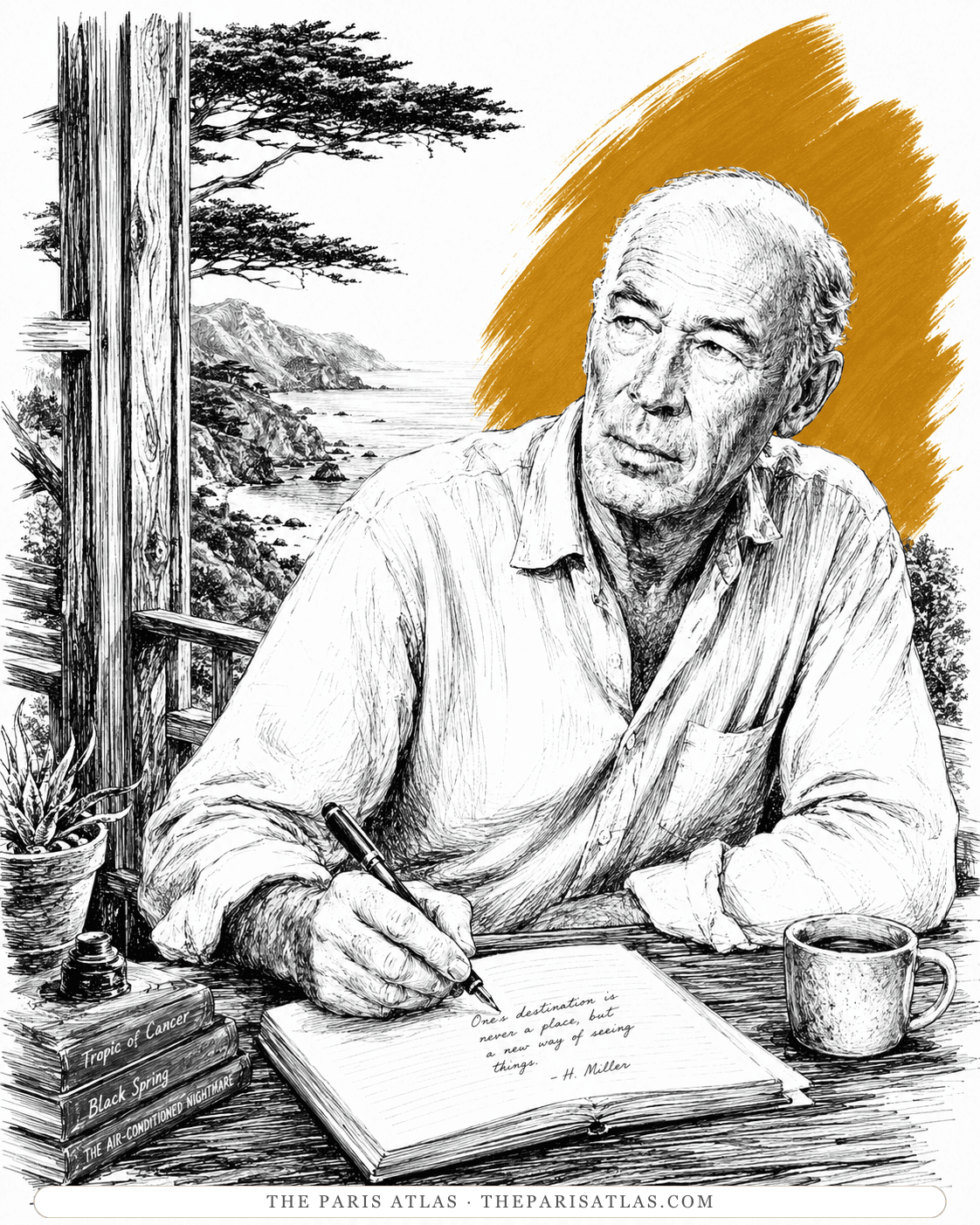
One of Miller's favorite resting places in the 1930s — the hillside square kept its pull on broke writers a decade after Hemingway's crowd.
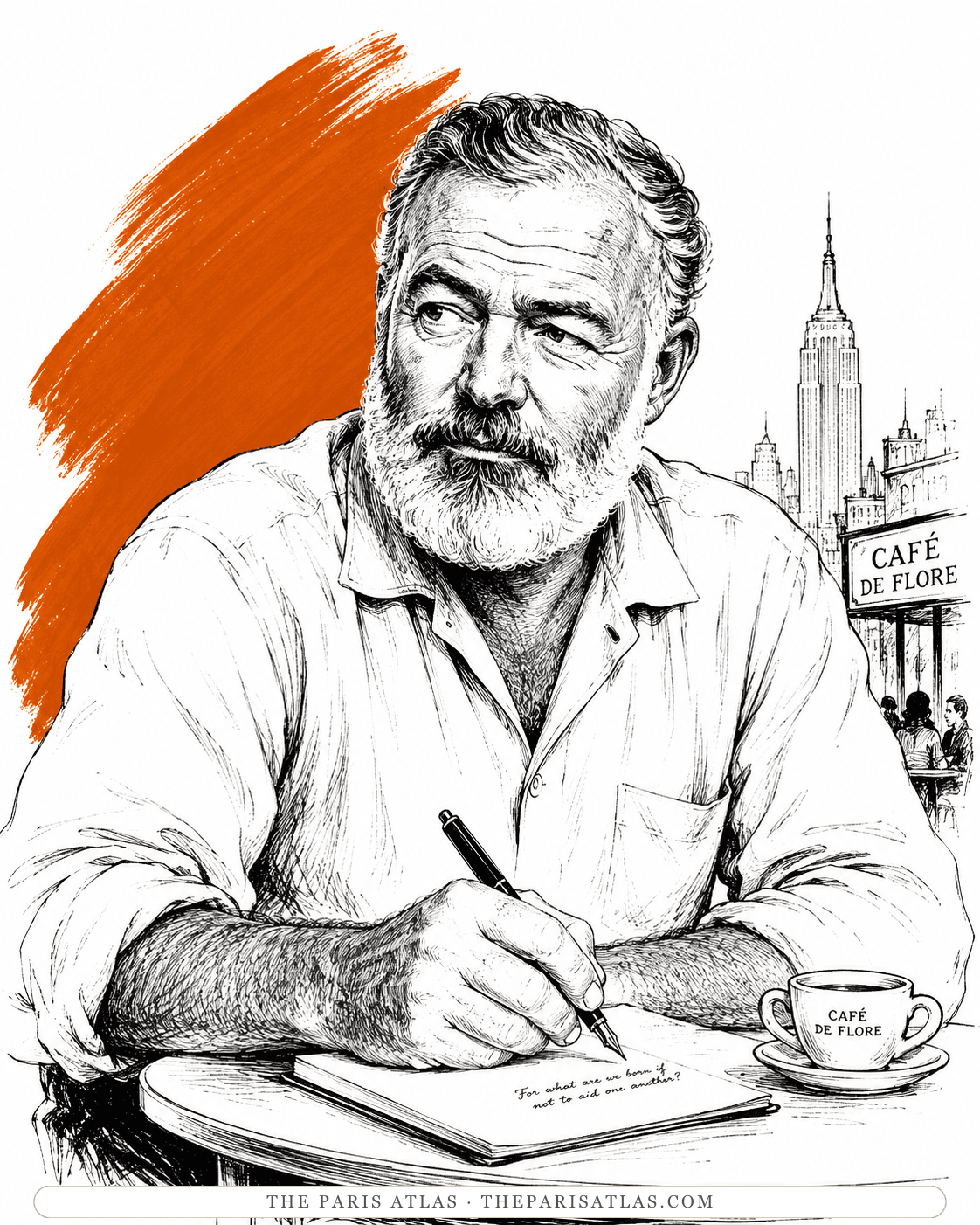
Ernest Hemingway wrote about Place de la Contrescarpe in The Sun Also Rises.
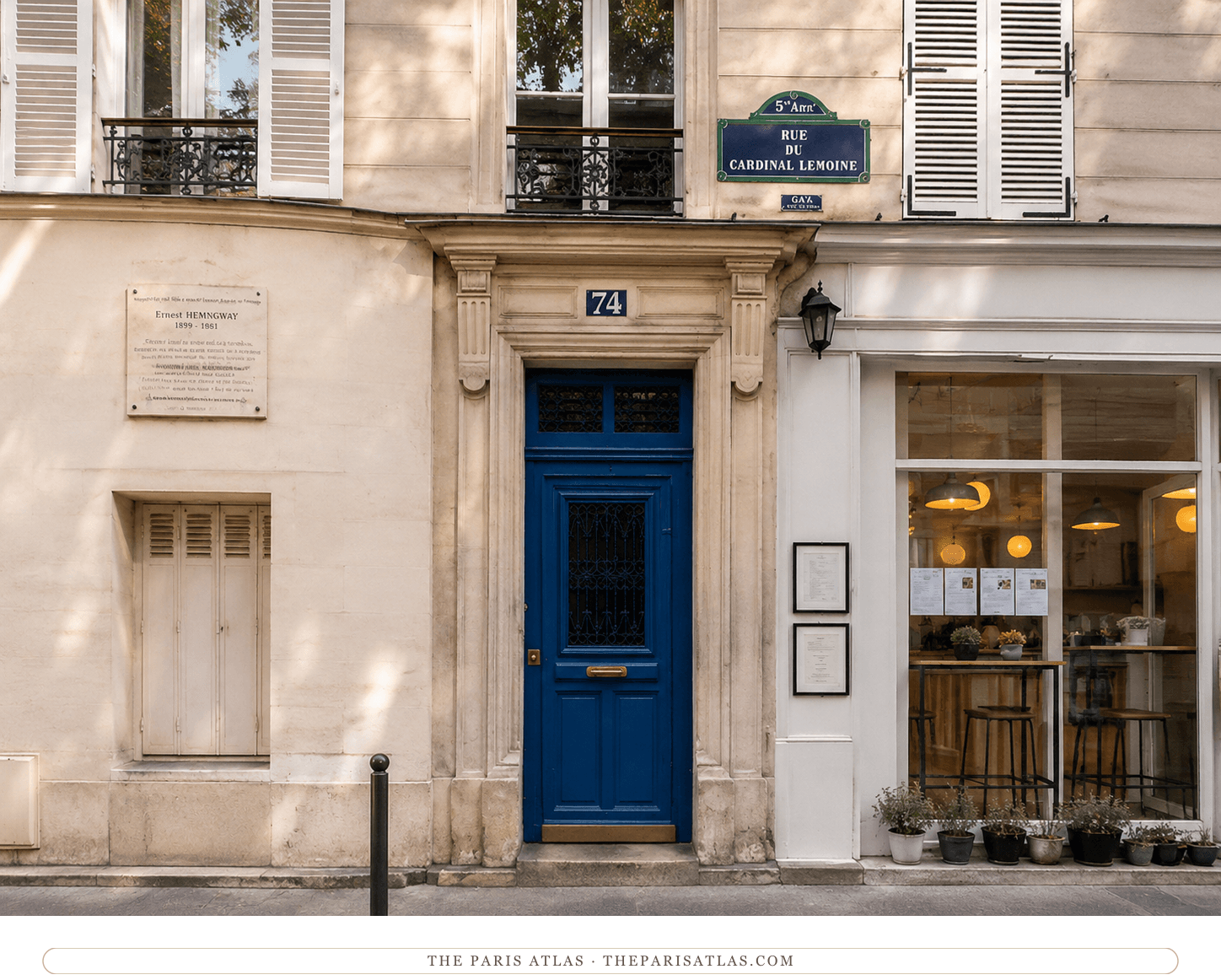
Ernest Hemingway and Hadley Richardson's first Paris apartment, on the fifth floor with no running water. He describes it in the opening pages of the book.
Visit the place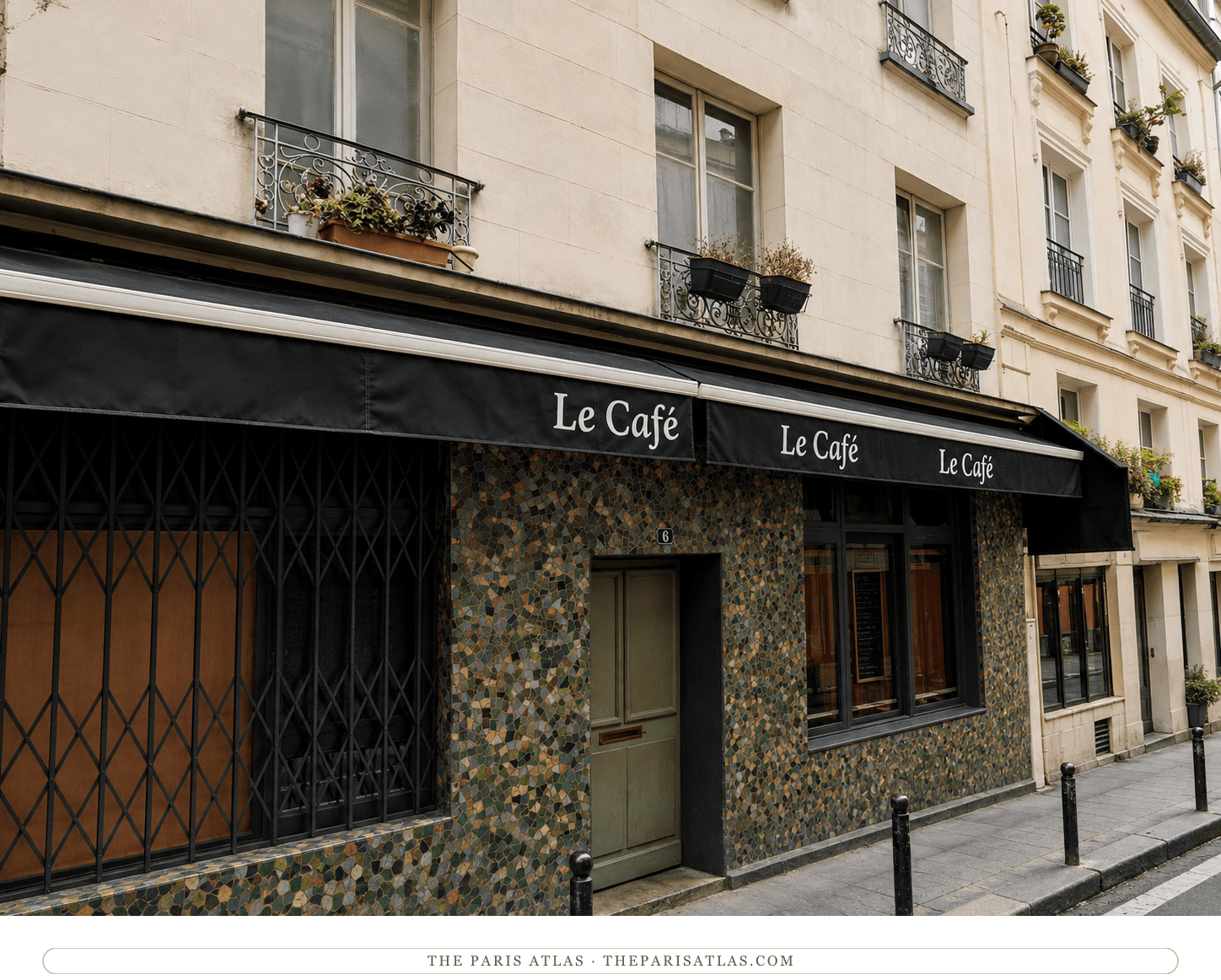
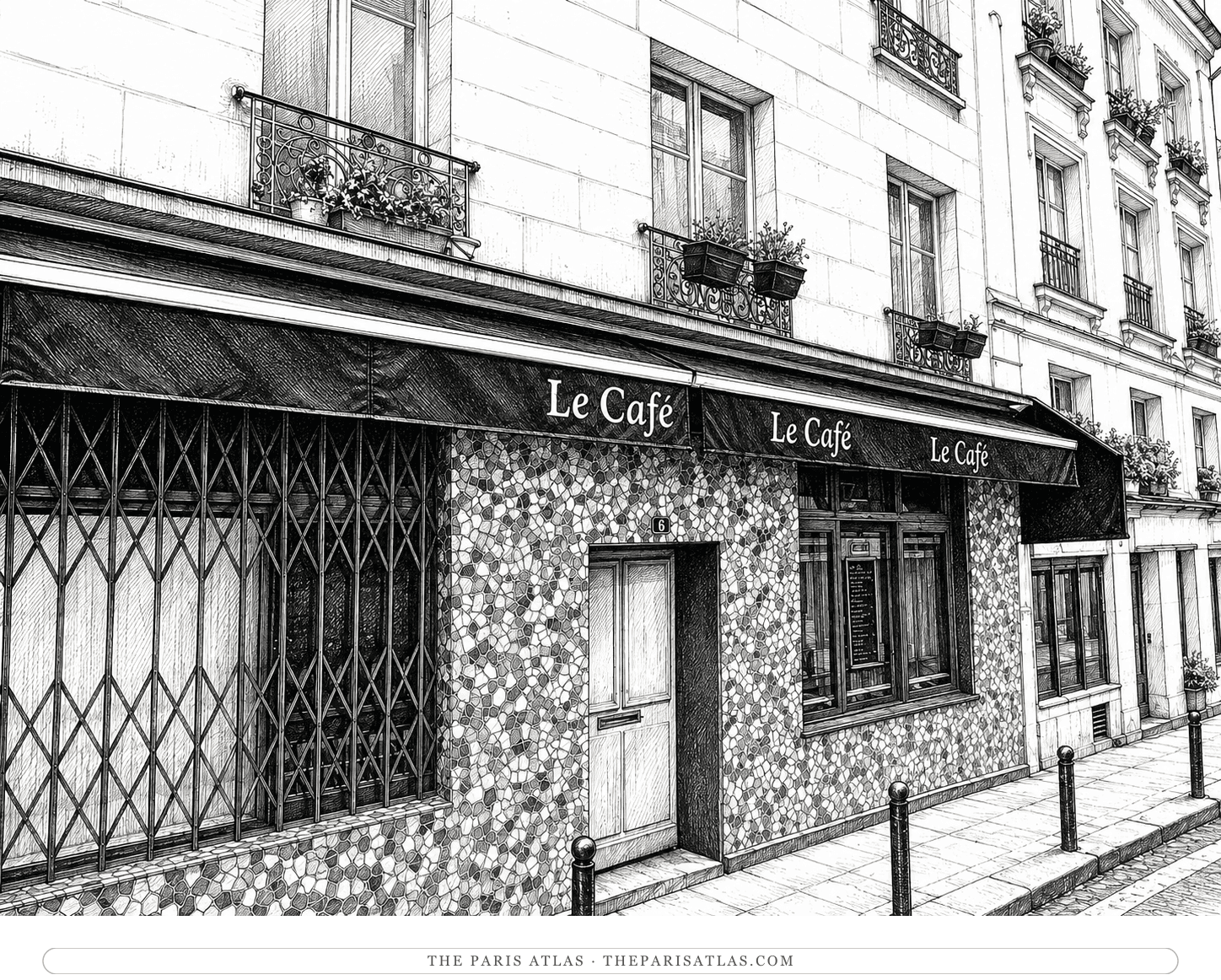
The cheap Latin Quarter lodging house where Eric Blair lived for eighteen months before he was George Orwell, and the raw material for the Paris half of Down and Out in Paris and London.
Visit the place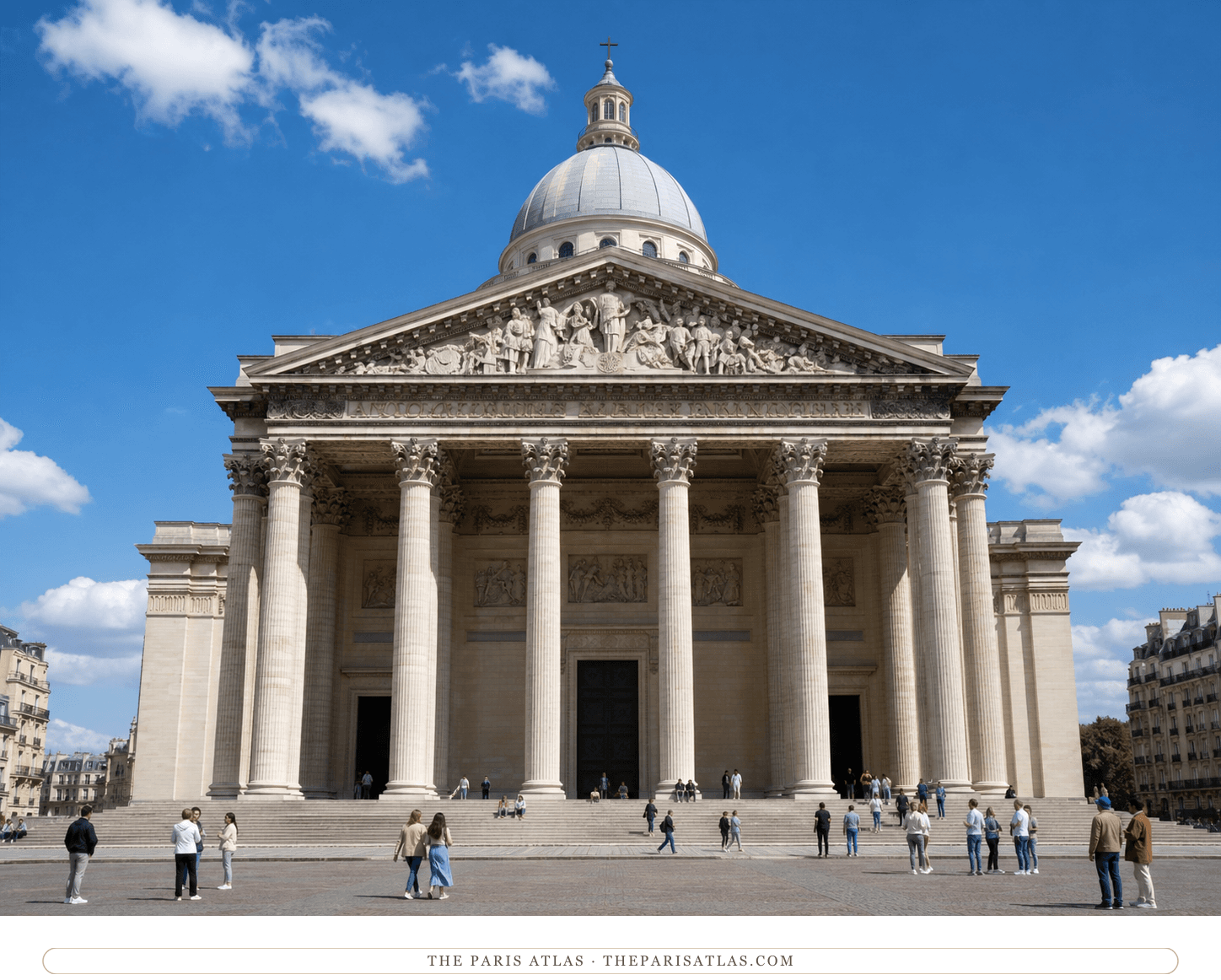
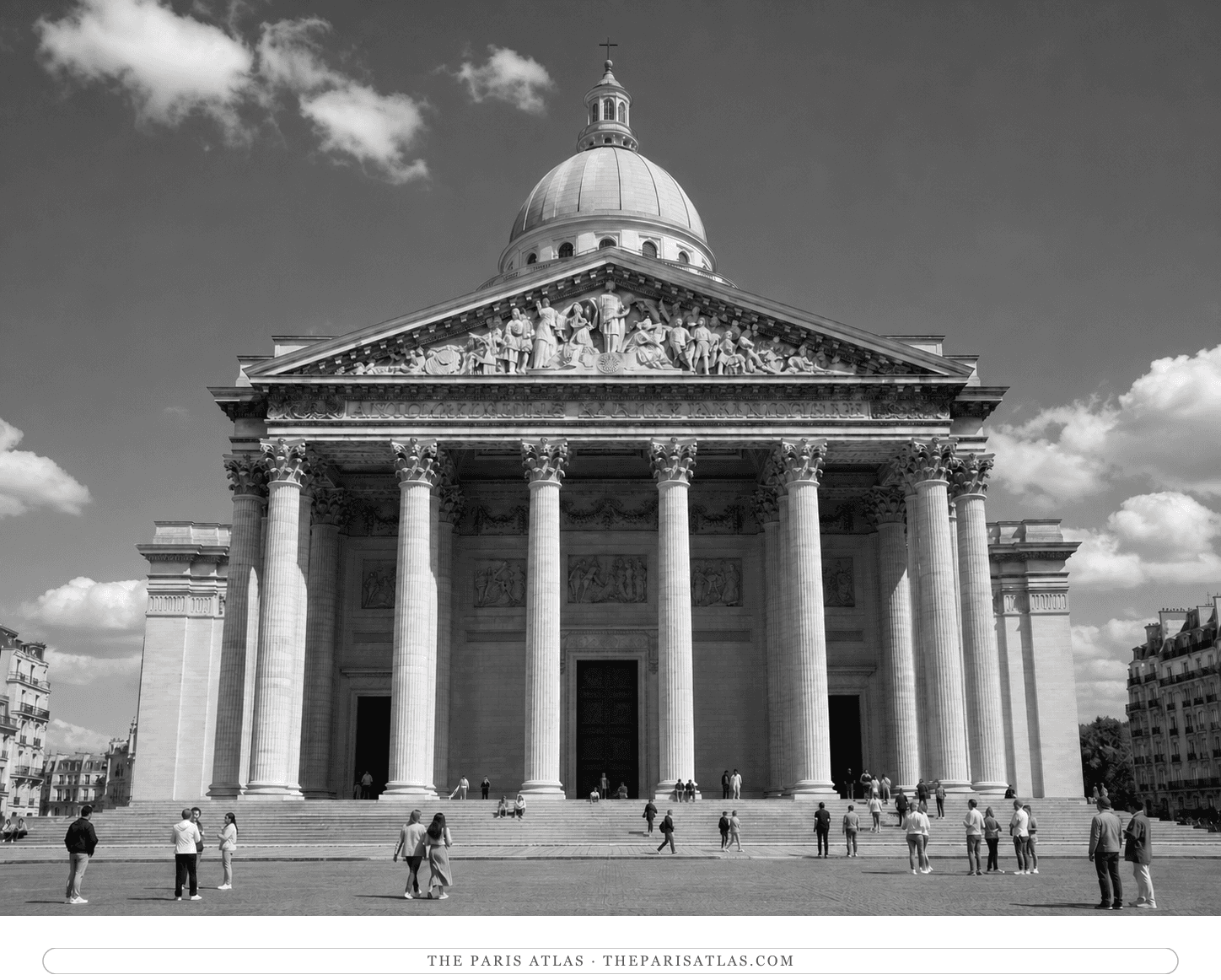
A domed neoclassical building at the top of the Latin Quarter, begun as a church to keep a king's promise and turned into a mausoleum for the nation's great by the Revolution. Voltaire arrived in 1791, Hugo's funeral settled its purpose in 1885, Alexandre Dumas came in 2002 and Josephine Baker in 2021. Open 10 a.m.–6.30 p.m. in summer; €13–€16.
Visit the place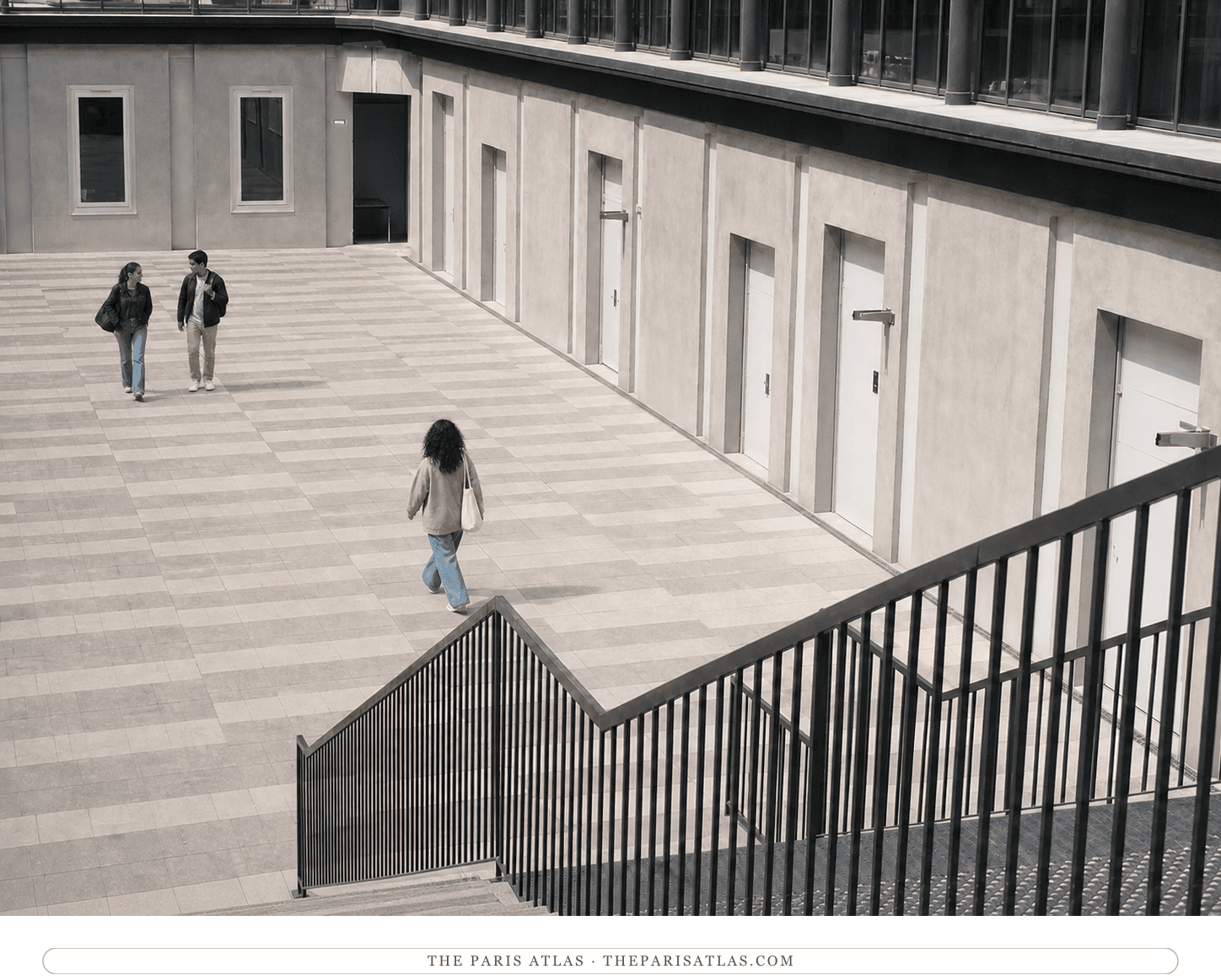
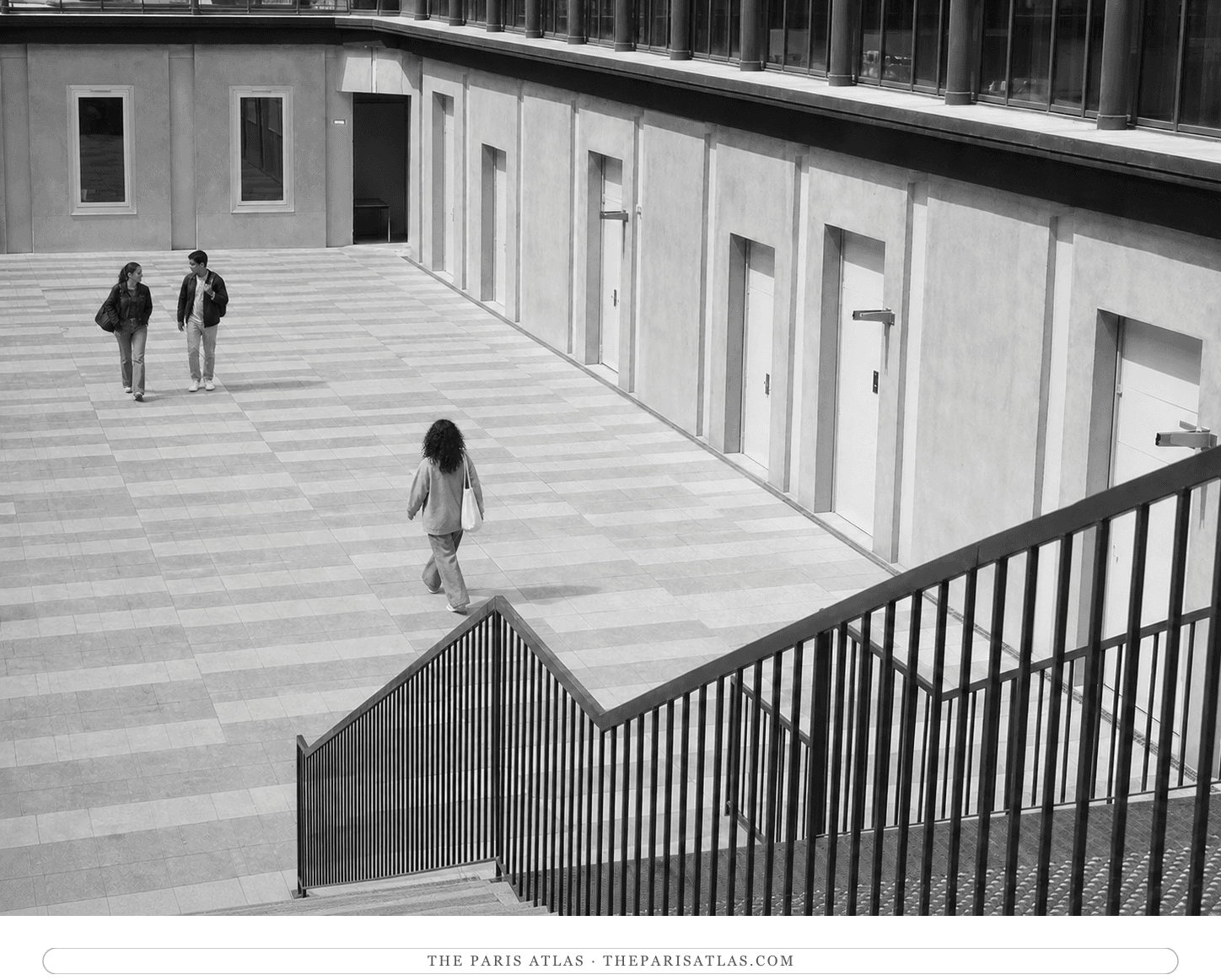
Paul Cézanne's Left Bank address in 1872 — the year his son Paul was born, and the year he went out to Pontoise to work beside Camille Pissarro, which changed his painting completely.
Visit the placeThe sources below include histories, archival materials, scholarly research, and official records that informed this page. They document Place de la Contrescarpe, the people connected to it, and its place in Paris.


Primary text included as part of the documented record for Place de la Contrescarpe.
First-person evidence and historical context used in preparing the Place de la Contrescarpe page.

Map data used to verify addresses, geographic coordinates, and the placement associated with Place de la Contrescarpe.
Official record used to verify names, dates, institutional details, or other factual information on this page.
These references provide the documented foundation for this page's history and context. Claim-level citations remain attached to the specific claims they support.
 Explore more resources
Newsletter
The cafés, studios, and walk-up flats where the work was made — one story from the map in every letter.