The Sun Also Rises
How Ernest appears in its pages: The narrator — an American newspaperman in Paris, carrying a war wound the book never names, in love with the one woman it makes impossible.
Read the character guideAuthor of The Sun Also Rises and A Moveable Feast; his pared-down style, developed in 1920s Paris, became the most imitated in American prose.
Ernest Hemingway arrived in Paris in December 1921 as a twenty-two-year-old newspaper stringer with a war wound from the Italian front and a letter of introduction to Gertrude Stein.[1] He rented rooms at 74 rue du Cardinal Lemoine, wrote in cafés because they were heated and the flat wasn't, and set about stripping the English sentence down to its load-bearing walls.[2][3]
The method he built there — the famous 'iceberg,' where seven-eighths of the story sits underwater — remade American prose.[4] The Sun Also Rises turned his own crowd of expatriate drinkers into the novel of the era; A Farewell to Arms turned his war into one of the great love stories; and decades later A Moveable Feast turned the whole apprenticeship into the most seductive memoir ever written about being young, poor, and talented in Paris.
The legend — bullfights, marlin, wars, the Nobel — eventually grew larger than the books and finally heavier than the man. The books hold. Start with the early ones, written when every sentence still had something to prove.
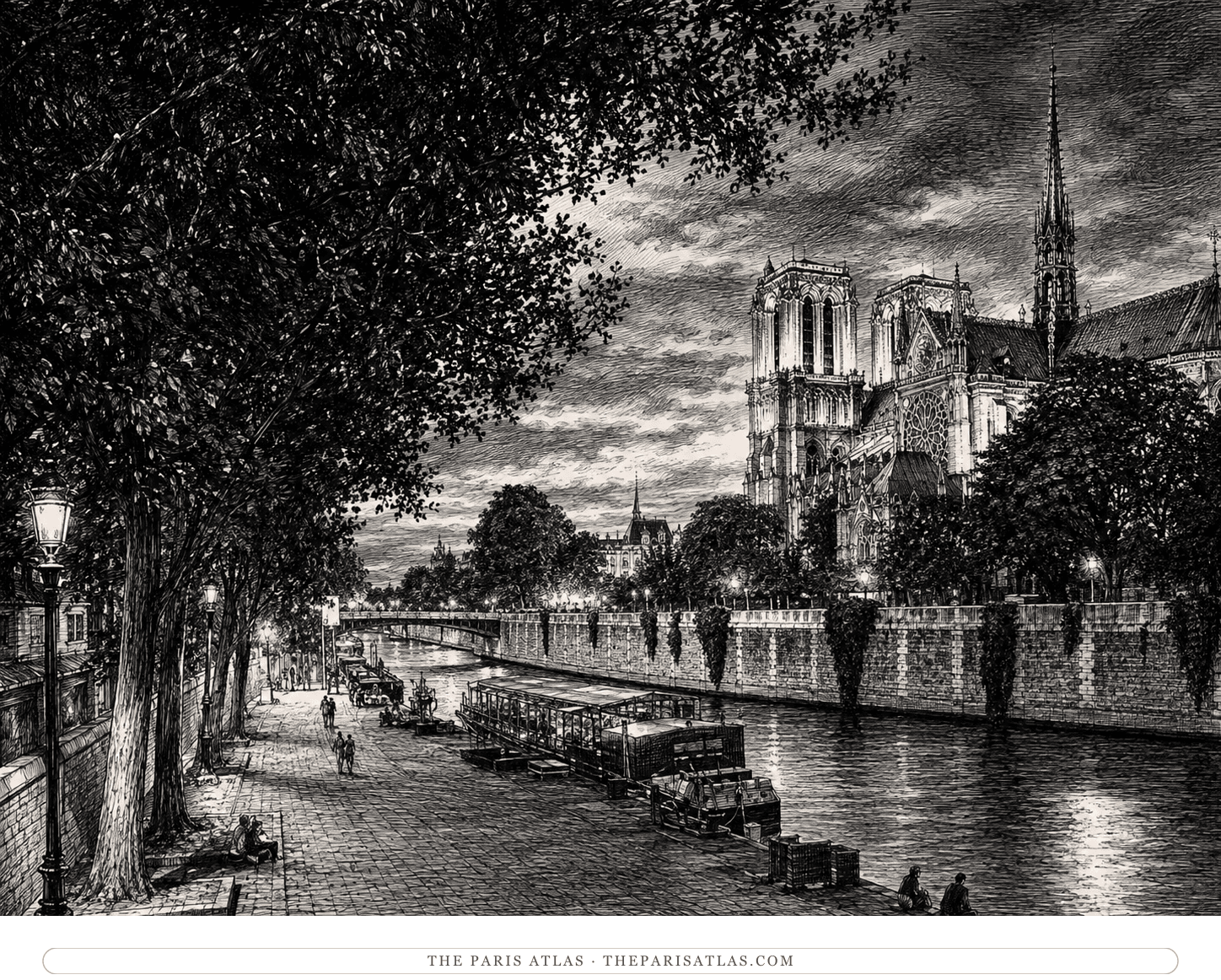
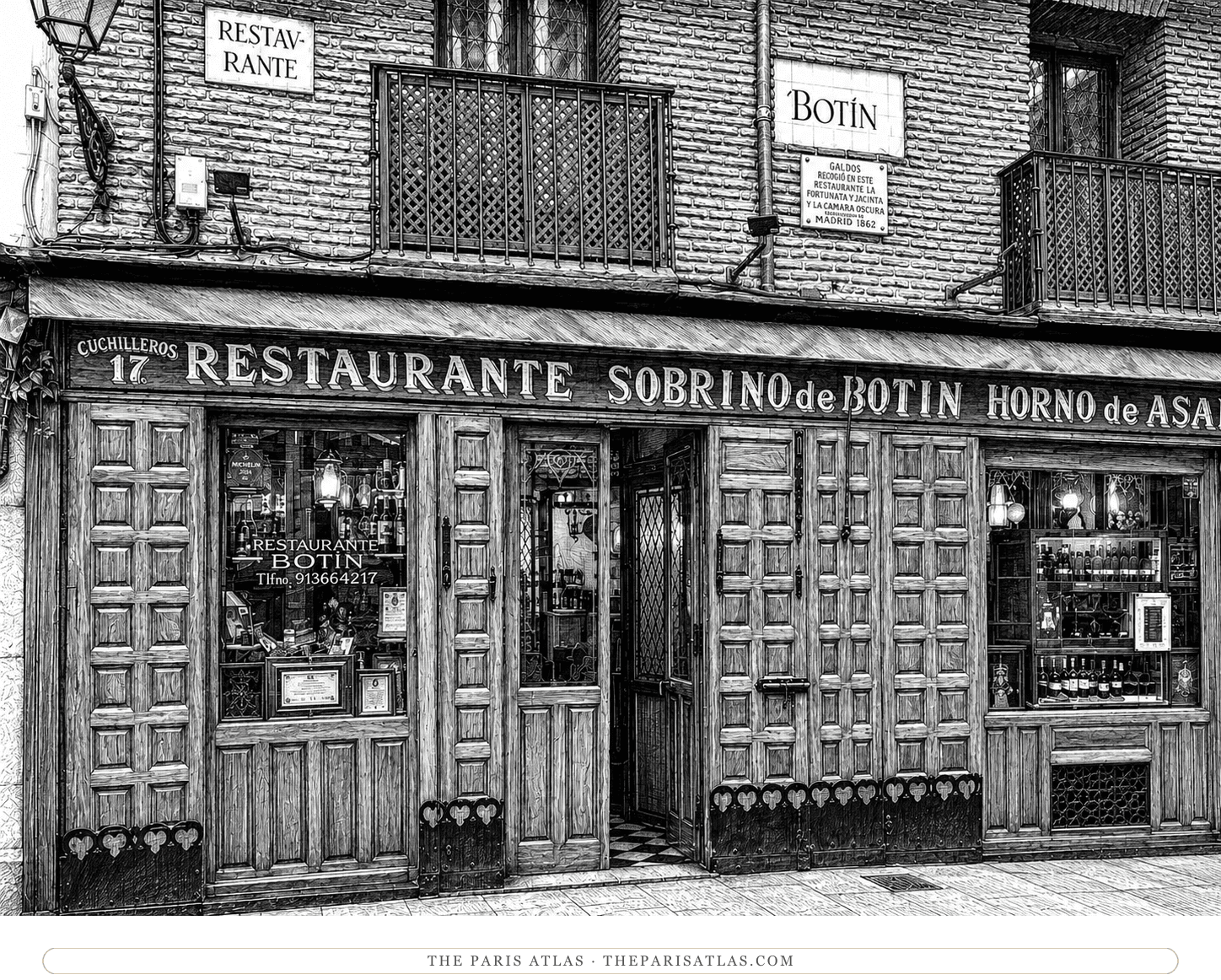
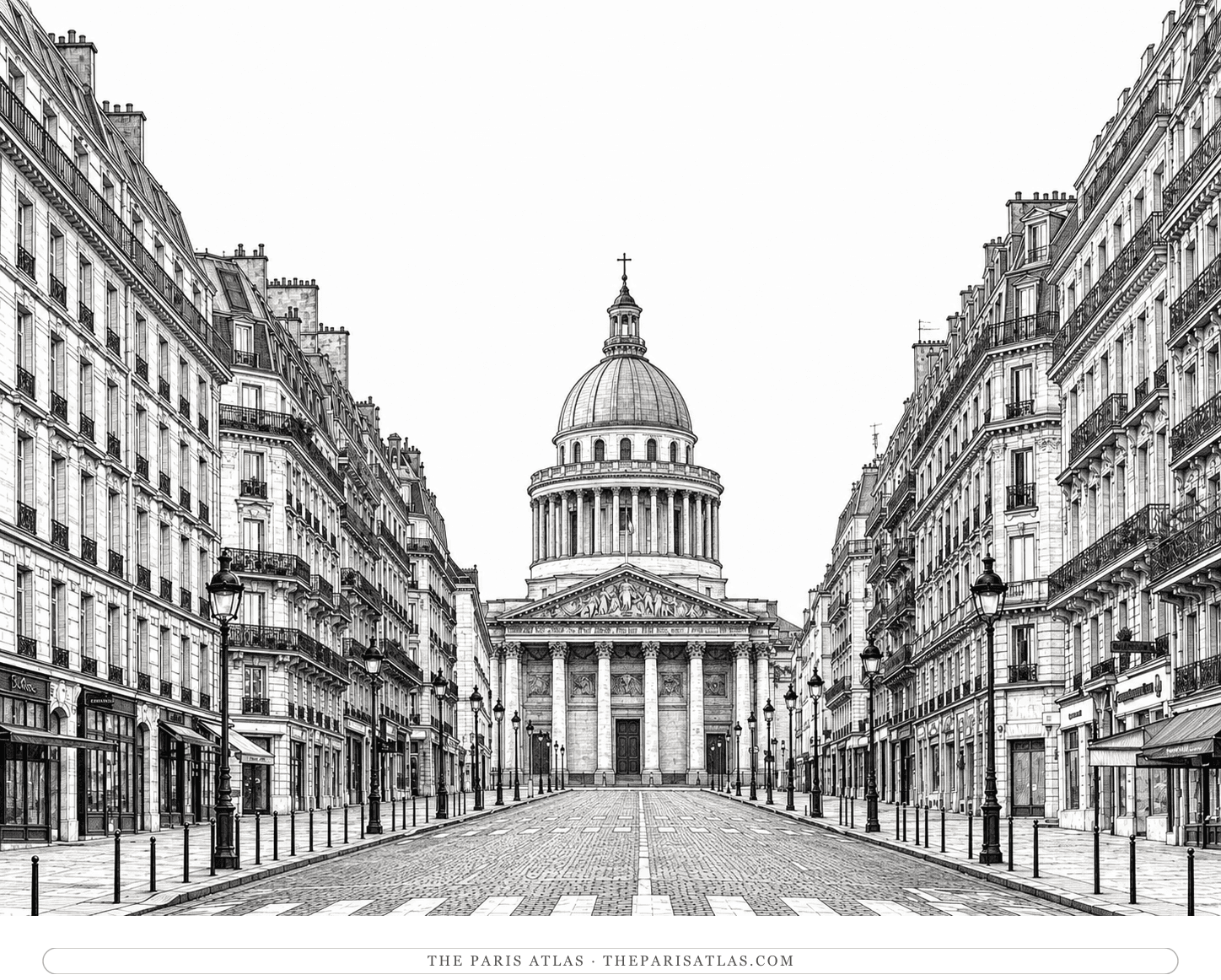
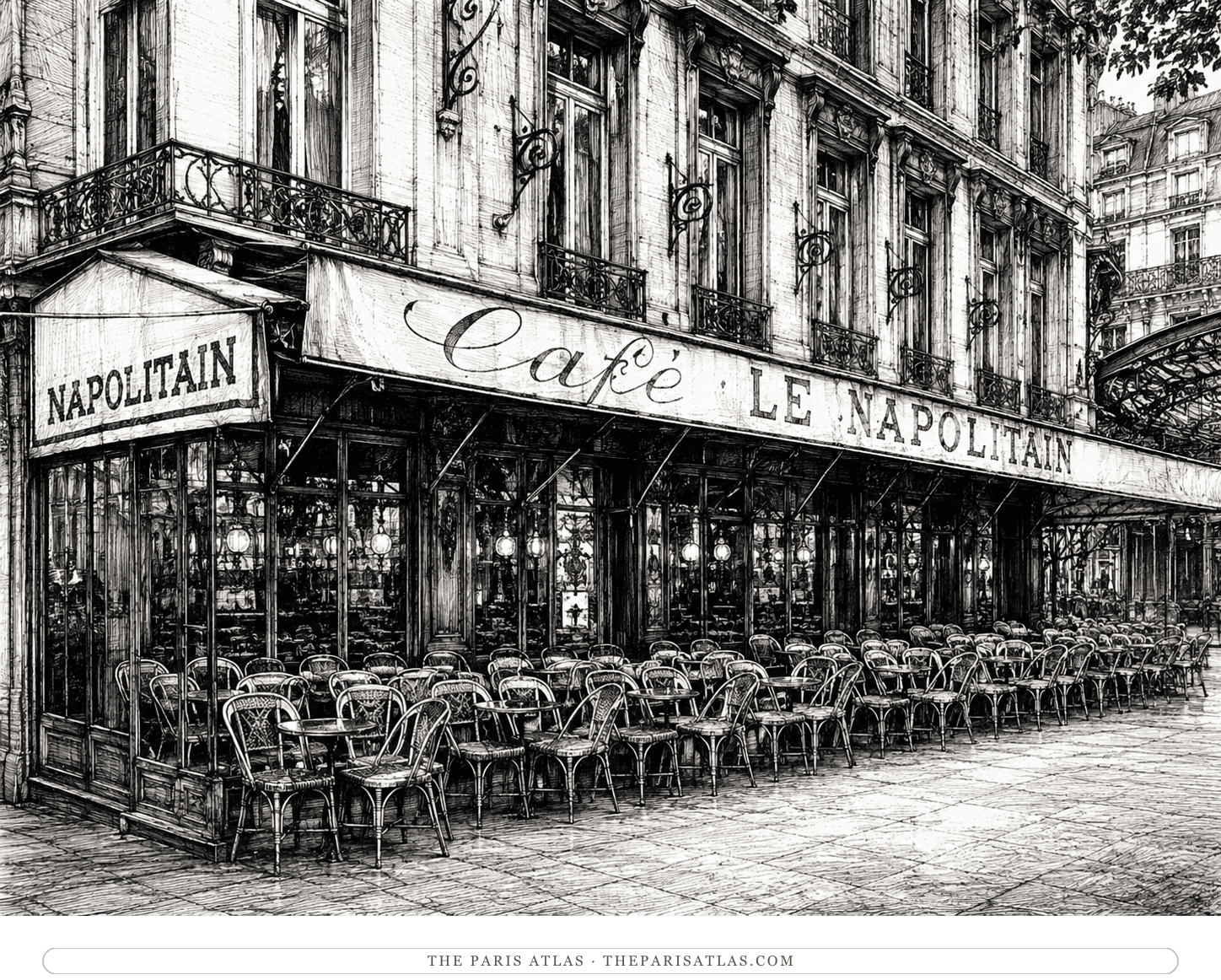
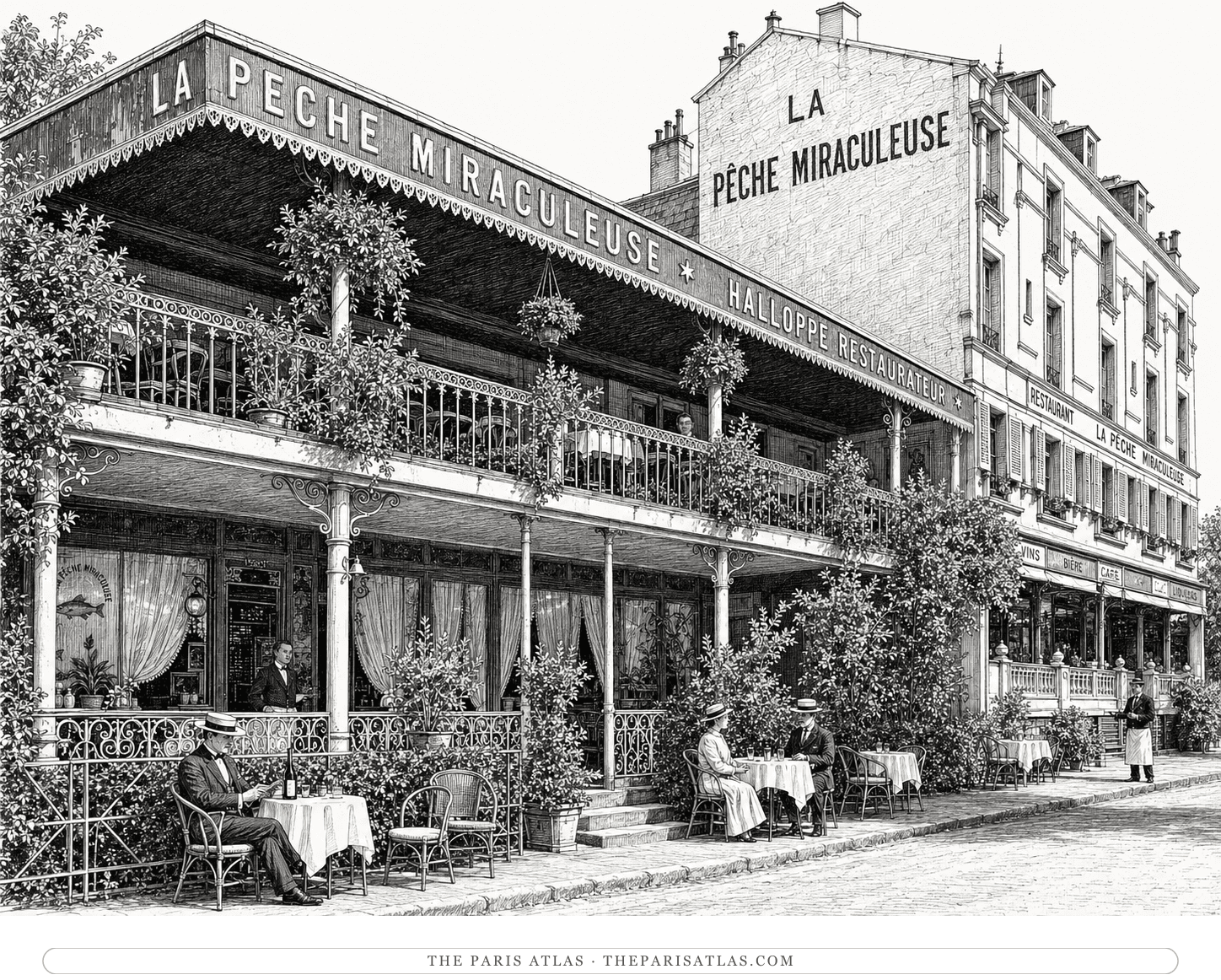
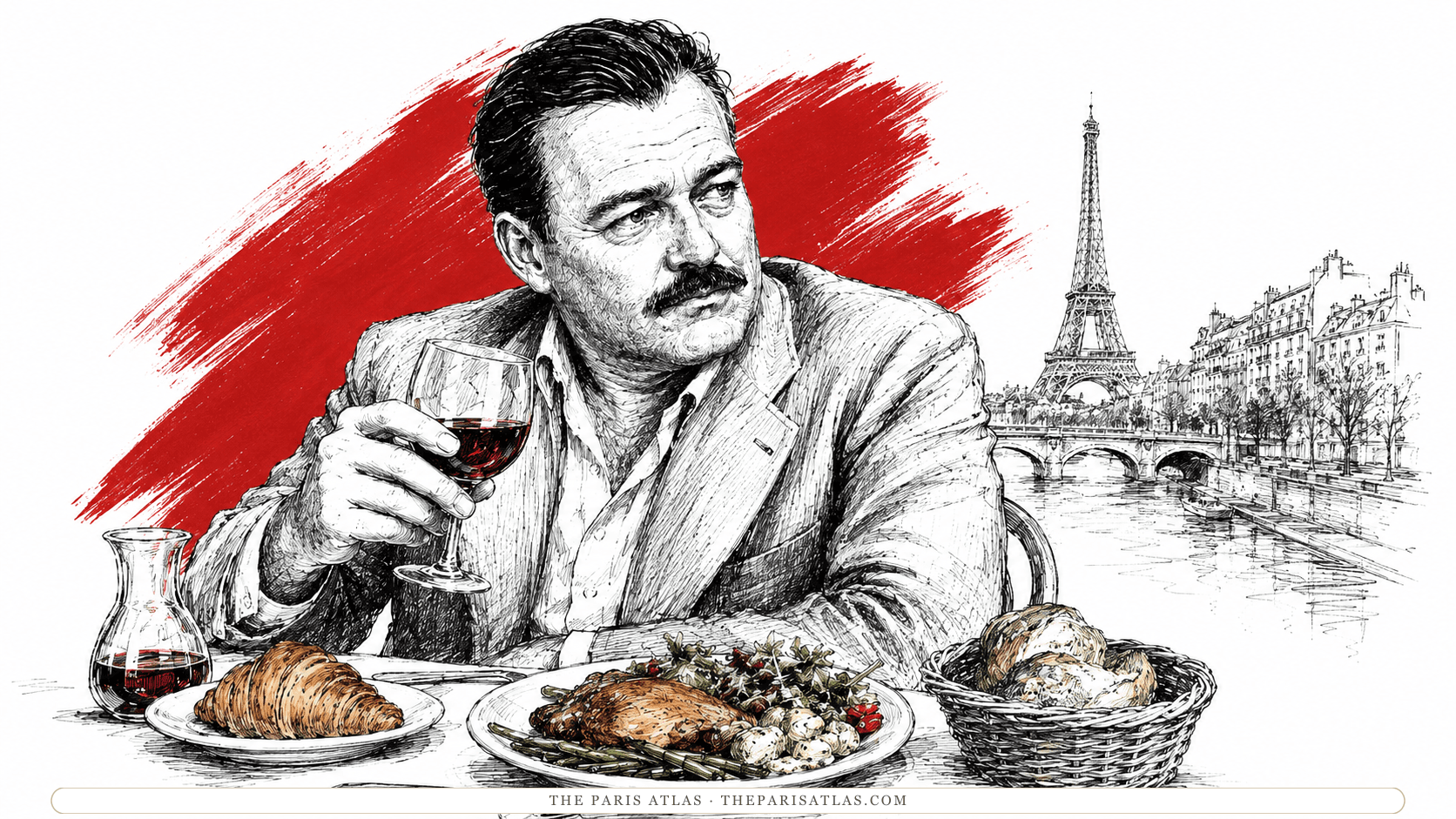
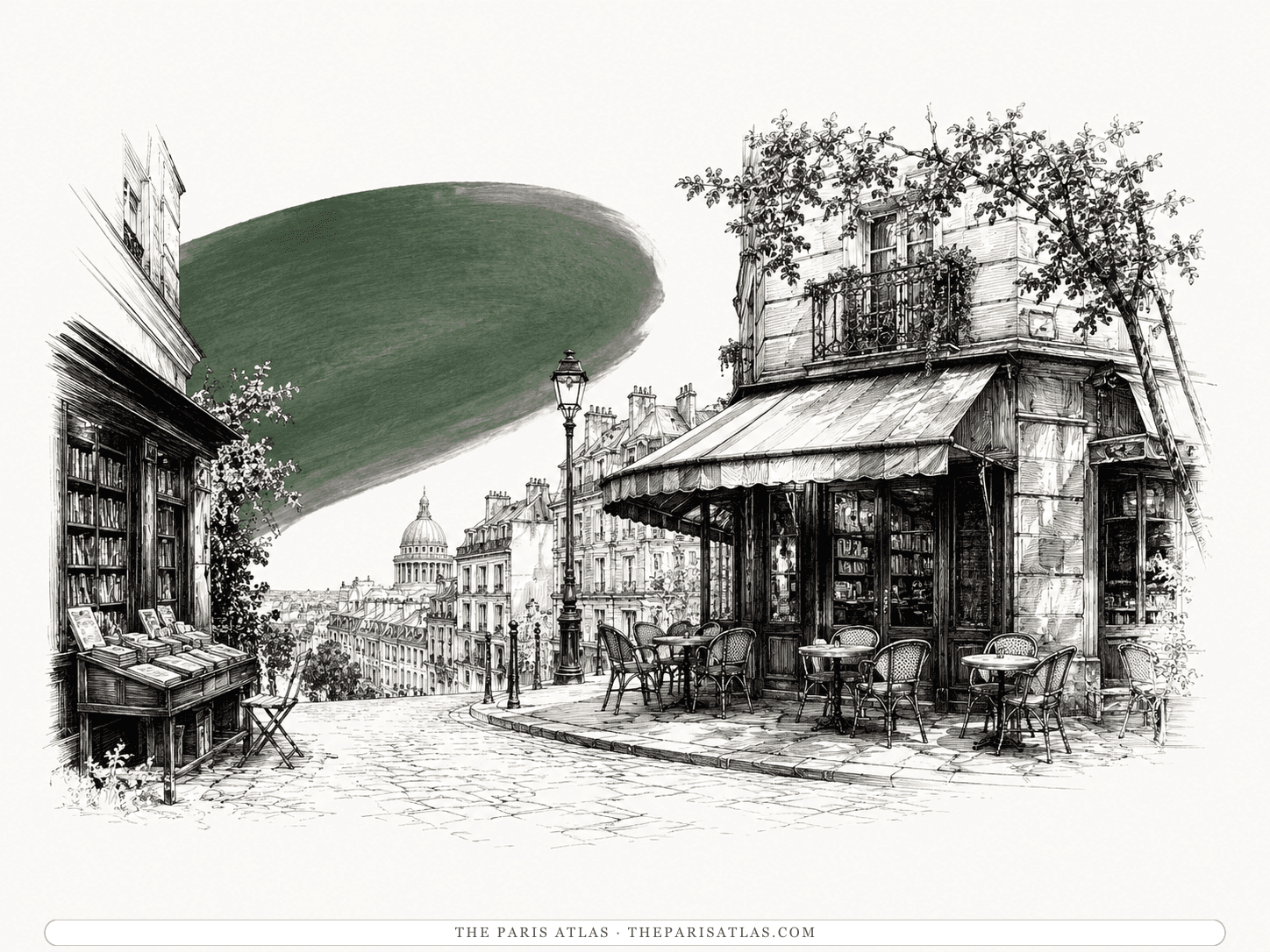
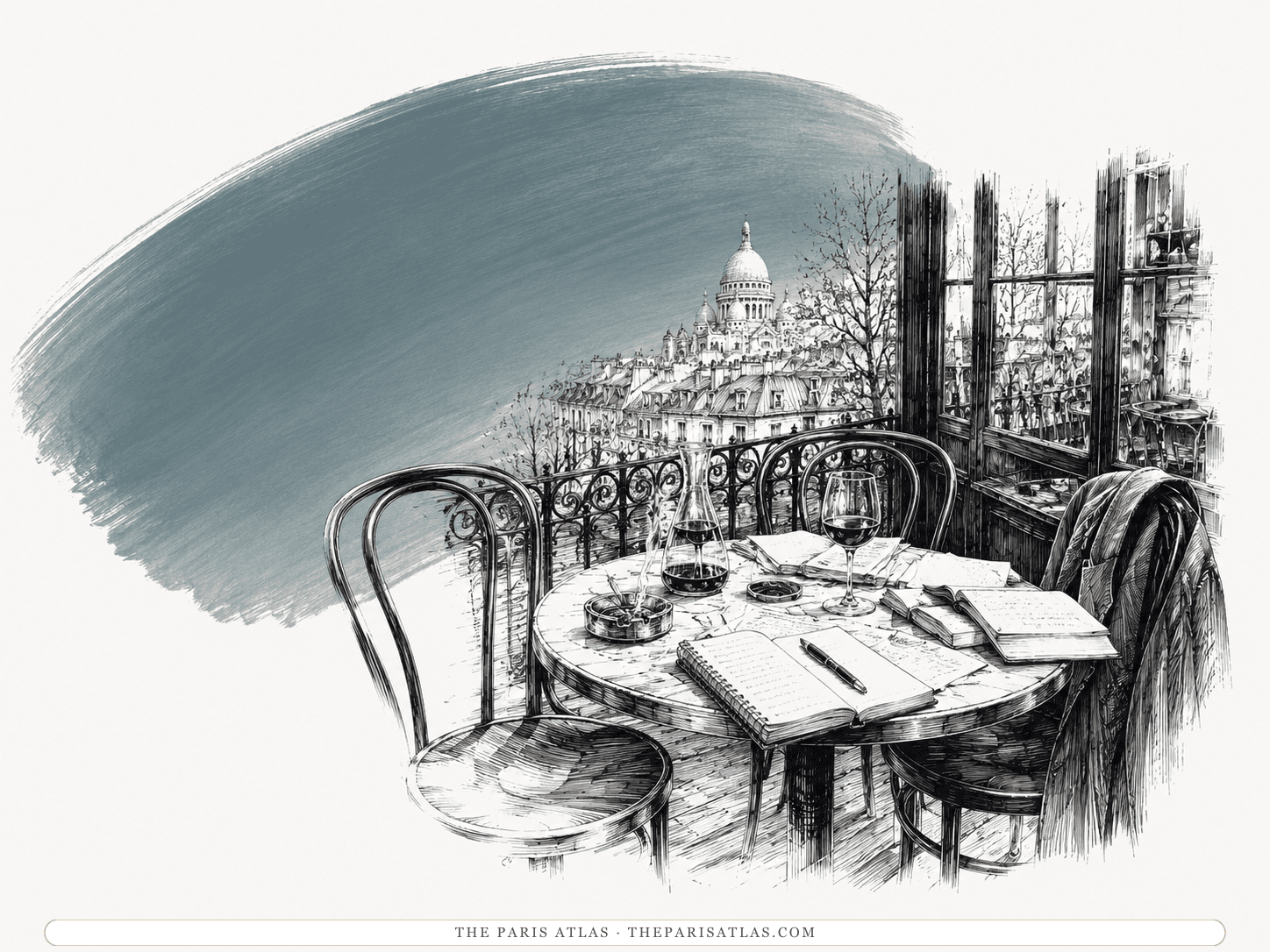
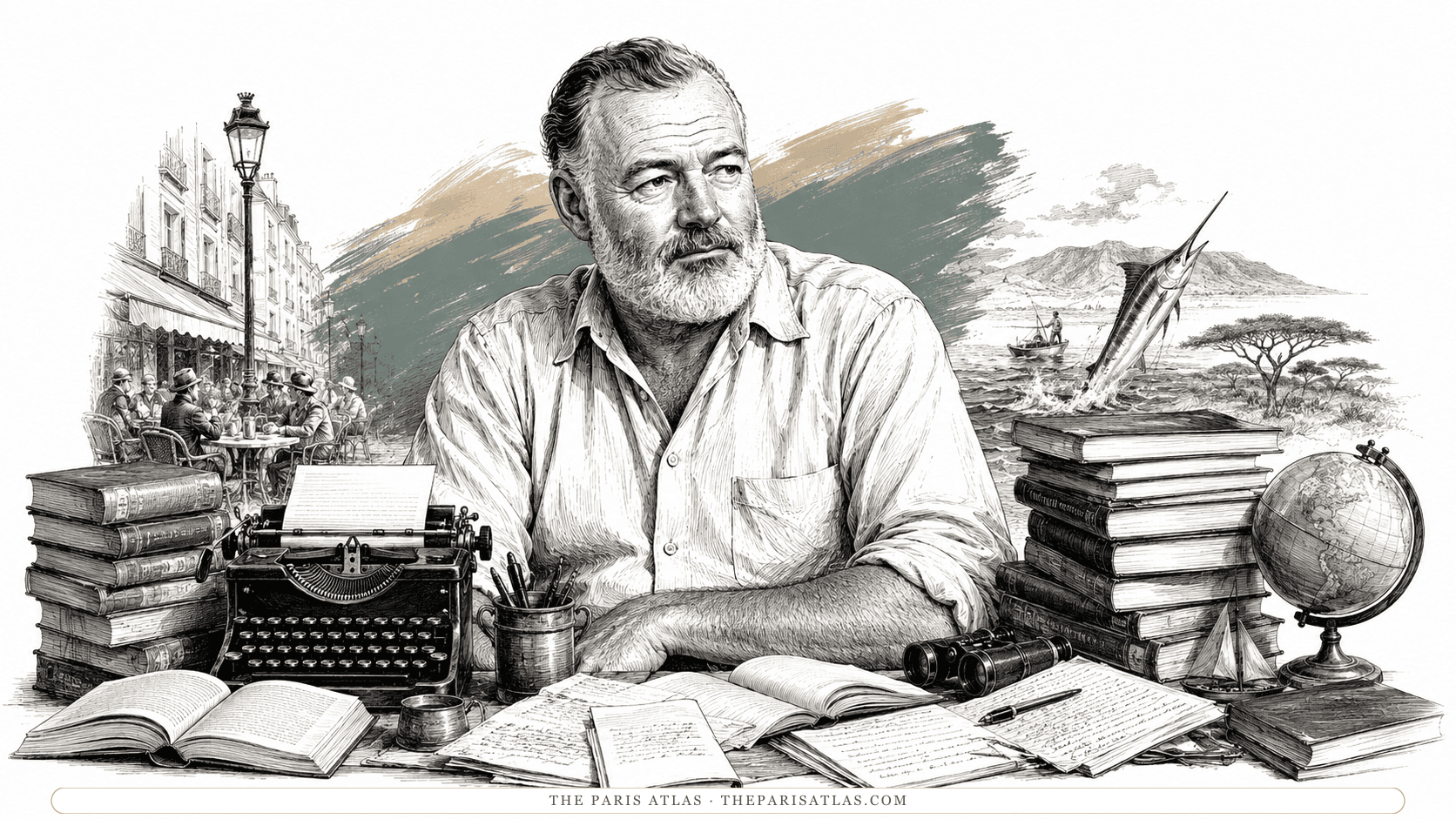
A few scenes from Hemingway's life — drawn illustrations, not photographs.
Ernest Hemingway died by suicide at his house in Ketchum, Idaho, early on the morning of 2 July 1961, nineteen days before his sixty-second birthday.[5] He came downstairs before seven, took a double-barrelled shotgun from the storeroom, and shot himself in the front entrance foyer.[1][6] Mary Welsh, his fourth wife, found him there.[5]
The first announcement called it an accident — a gun going off while he cleaned it — and that is how the papers carried it on 3 July.[7] Mary held to that account for five years before telling The New York Times that he had shot himself.[5]
The run-up is about seven years long and has no single cause. It starts in January 1954, in Uganda.
A chartered Cessna carrying Hemingway and Mary hit a telegraph wire near Murchison Falls and came down by the Nile. The aircraft sent to collect the party the next day caught fire on take-off at Butiaba, and he forced the jammed door with his head. Writing to a friend afterwards he listed a ruptured right kidney, an injured liver and spleen, third-degree burns to his right arm and left hand, a concussion and a fractured skull; Mary had broken several ribs. A passing pilot had reported no survivors, so he was announced dead around the world and spent the following weeks reading his own obituaries. He was still injured when the Nobel Prize was announced that October, and did not go to Stockholm to collect it.[1]
He did not fully recover, and these were not his first head injuries: the mortar at Fossalta in 1918, a skylight that came down on him in Paris in 1928, a car crash in the London blackout in 1944. By the late fifties he was being treated for high blood pressure and a damaged liver, and his doctors told him to stop drinking. He mostly did not. The work slowed. In 1961 he spent several days unable to finish a few sentences for a volume being presented to President Kennedy, and it distressed him badly.
On 30 November 1960 he was flown to Rochester, Minnesota, and admitted to Saint Marys Hospital under the name of George Saviers, his doctor in Ketchum, to keep it out of the papers. He stayed fifty-three days under Howard Rome, the head of psychiatry, treated for depression and for his blood pressure. The treatment included roughly fifteen sessions of electroconvulsive therapy. Rome discharged him on 22 January 1961 with a note saying he had fully recovered.[5]
It was a brilliant cure but we lost the patient.[6]
The treatment also took much of his memory. He told Hotchner that erasing it had put him out of business, memory being his capital. That account is Hotchner's, published five years after the death by the friend who saw most of him in his last year, and it matches what the rest of the record shows: after Rochester he could not reliably reach the facts and images the writing ran on.[6]
He was home in Ketchum by the end of January and worse by spring. On 21 April Mary found him holding a shotgun with two shells set upright on the windowsill. Four days later, flying back to Rochester, the plane stopped to refuel at Rapid City, South Dakota; he went through the hangar and the parked cars looking for a gun, then walked toward a taxiing aircraft until its pilot cut the engine. Saviers, who was travelling with him, said afterwards that he did not think Hemingway meant to walk into the propeller. He was admitted to Mayo the same day, this time under his own name and to the locked ward, given further shock treatment, and released on 26 June. He reached Ketchum on 30 June and died two days later.[5]
His father had done the same thing. Clarence Hemingway, a doctor in Oak Park with diabetes, heart disease and money worries, shot himself with his own father's revolver on 6 December 1928, when Ernest was twenty-nine, and Ernest wrote at the time that he expected to go the same way.[1] Two more of the family followed after him, his sister Ursula in 1966 and his brother Leicester in 1982, and his granddaughter Margaux in 1996. Later psychiatric work on the case, including a review published in Psychiatry in 2006, reads the whole of it alongside bipolar illness, alcohol dependence and repeated traumatic brain injury. Those are diagnoses made from the record decades afterwards rather than findings from the chart at Rochester, and they are worth keeping distinct from it.[8]
In his last year he told friends he was being watched by federal agents — that his bank account was being checked, that a car outside a Ketchum restaurant was theirs. Hotchner heard most of it and took it for illness. Mary and his doctors took it the same way, and it was among the things Rochester was meant to treat.[6]
The bureau did hold a file on him. It was opened in 1942, when he ran an informal counter-intelligence operation out of Havana and hunted submarines from the Pilar, and the file released under the Freedom of Information Act runs from that autumn to 1974, most of it embassy traffic from 1942 to 1944.[9] It also holds a memorandum from January 1961 reporting that he was registered at Saint Marys Hospital under an assumed name, and that his psychiatrist had said he was worried about an FBI investigation. On the fiftieth anniversary of the death, Hotchner wrote in The New York Times that he had been wrong to dismiss the fear.[10]
The file shows that the bureau kept one, kept adding to it, and knew where he was in the month before he died.[9] It does not show that the surveillance caused his death, and it does not confirm the particular things he said in 1961 about being followed. He was seriously ill in the same period, and both facts belong in the account.
Born 21 July in Oak Park, Illinois — a doctor's son who preferred the woods.
The Michigan summers at Walloon Lake — fishing, camping, and the raw material of the Nick Adams stories.
Red Cross ambulance driver on the Italian front; wounded at Fossalta on 8 July, at eighteen. Recuperates in Milan — and falls for his nurse.
Marries Hadley Richardson on 3 September at Horton Bay, Michigan. In December, with Sherwood Anderson's letters of introduction in hand, they sail for Paris.
The flat at 74 rue du Cardinal Lemoine: writing in cafés, filing for the Toronto Star, learning at the rue de Fleurus. In December a suitcase holding nearly all his early manuscripts is stolen at the Gare de Lyon.
Toronto interlude: Bumby is born on 10 October, and Three Stories and Ten Poems appears from a Paris press.
Back to Paris and the flat above the sawmill at 113 rue Notre-Dame-des-Champs; unpaid editing for Ford's transatlantic review, and in our time from the Three Mountains Press.
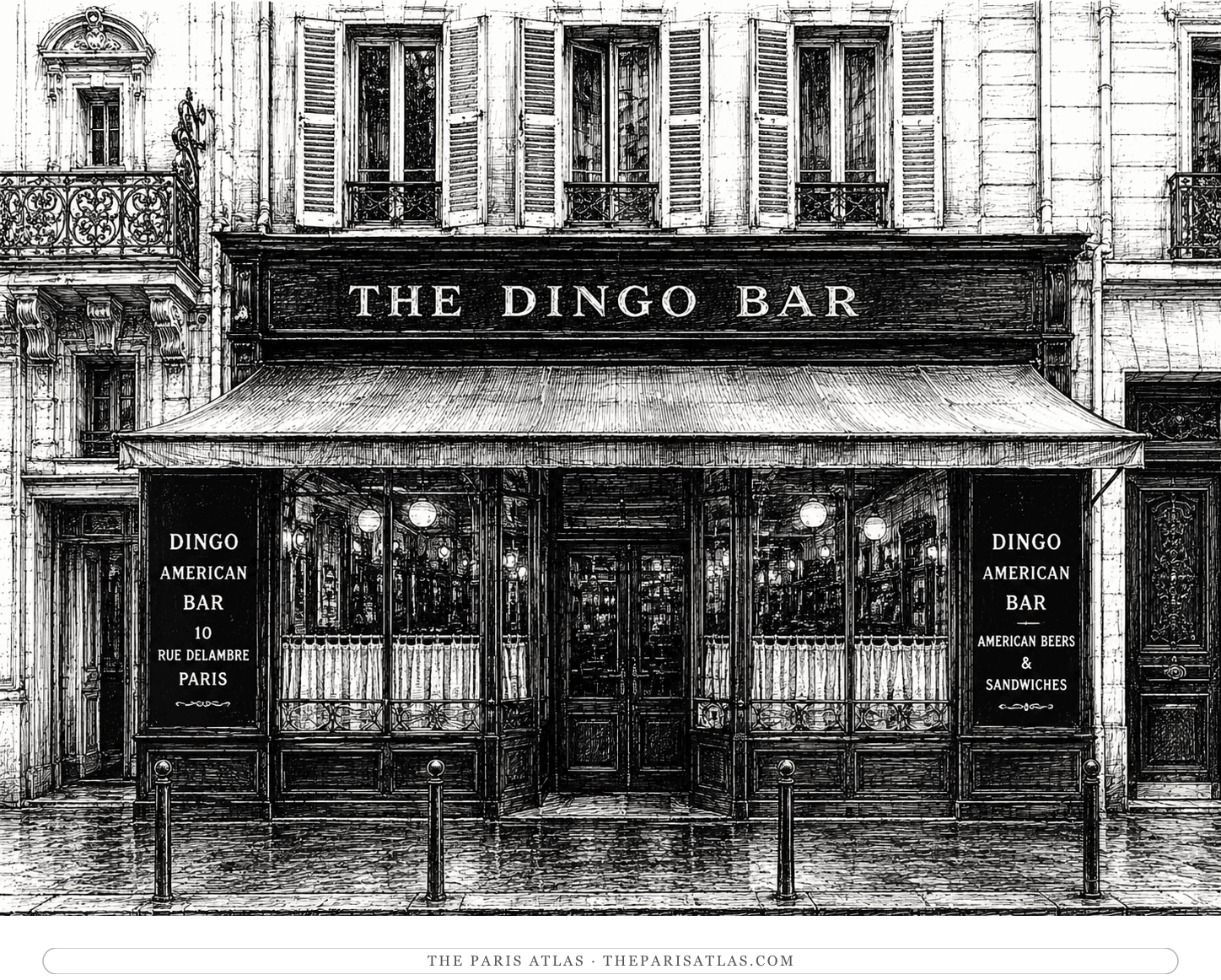
The Pamplona summer with the crowd he would turn into fiction; meets Fitzgerald at the Dingo bar weeks after Gatsby publishes; In Our Time appears in New York.
The Schruns winters — skiing, rewriting the novel, the family poorest and, by the memoir's accounting, happiest.
The Sun Also Rises published in October — and the rich arrive at the feast, Pauline Pfeiffer among them.
Divorces Hadley — signing over the novel's royalties to her — and marries Pauline. Men Without Women, dedicated to Evan Shipman.
Leaves Paris for Key West. His father dies in December.
A Farewell to Arms — the war and the nurse, carried by the style at full scale.
The Gulf Stream years: Key West, marlin out of Cojímar, the fishing boat Pilar — with Death in the Afternoon and Green Hills of Africa between trips.
Spain as a war correspondent; For Whom the Bell Tolls (1940); marries Martha Gellhorn, his third wife.
Runs an informal counter-intelligence operation out of Havana for the American embassy and patrols for submarines aboard the Pilar. The FBI opens the file it keeps on him until 1974.
Back to war: Normandy, the Hürtgen Forest alongside Buck Lanham's regiment — and, by his own accounting, the liberation of the Ritz bar.
The Finca Vigía outside Havana; marries Mary Welsh, his fourth and last wife.
The Old Man and the Sea wins the Pulitzer; two plane crashes in Uganda on successive days nearly kill him; the Nobel Prize follows that October, and he is too injured to travel to Stockholm.
In a trunk at the Ritz, the Paris notebooks resurface — and he begins the memoir that becomes A Moveable Feast.
Two admissions to the Mayo Clinic at Rochester, Minnesota — the first from 30 November under the assumed name of his Ketchum doctor, the second from 25 April to the locked ward — treated for depression with electroconvulsive therapy, which costs him much of his memory.
Dies by suicide at his house in Ketchum, Idaho, early on 2 July, shot with a double-barrelled shotgun in the front entrance foyer.
A Moveable Feast published — the apprenticeship, the marriage, and the city, given back.
Writing, at its best, is a lonely life.
For a true writer each book should be a new beginning where he tries again for something that is beyond attainment.
A writer should write what he has to say and not speak it.
How Ernest appears in its pages: The narrator — an American newspaperman in Paris, carrying a war wound the book never names, in love with the one woman it makes impossible.
Read the character guide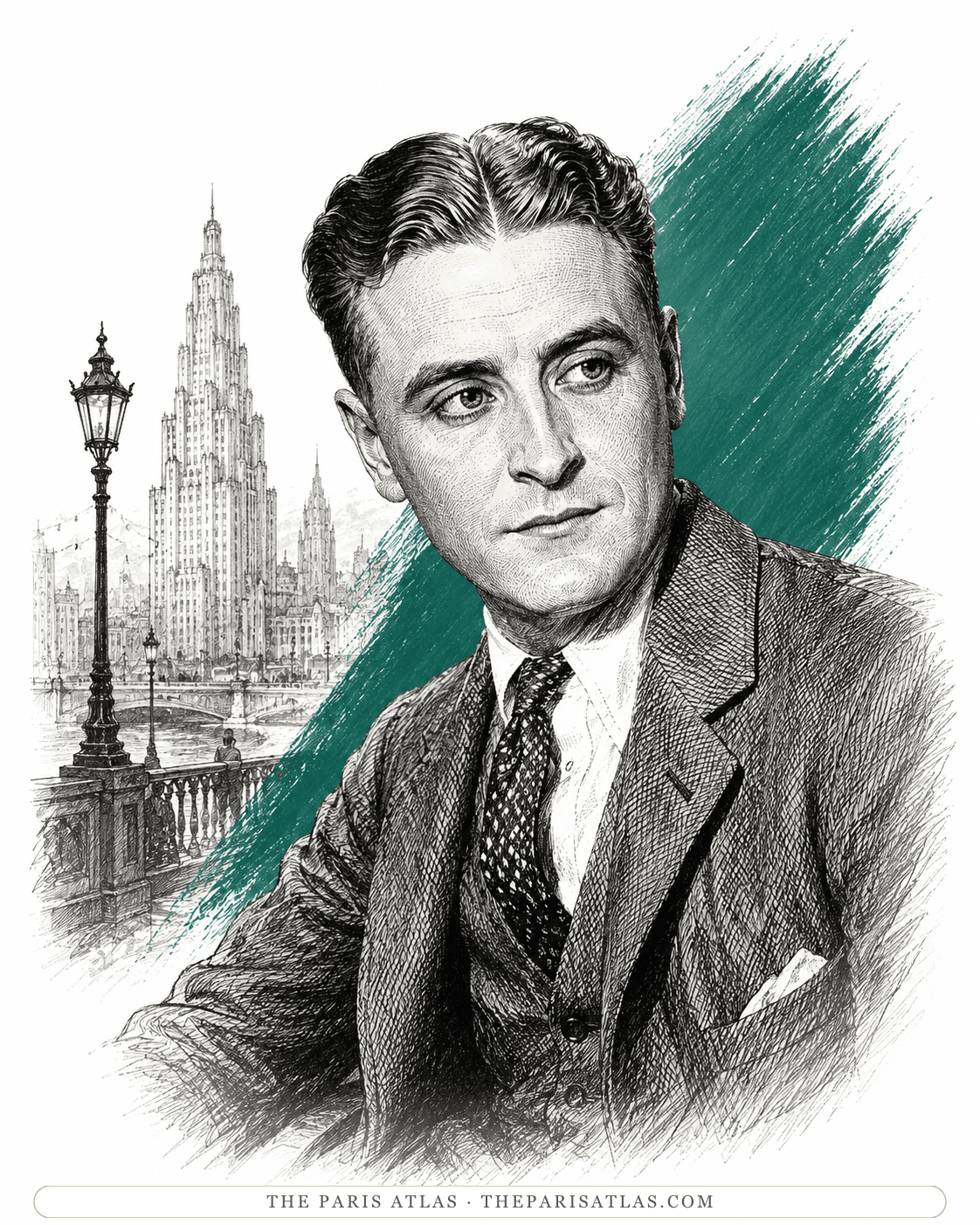
Met · 1925-04
The era's most famous introduction: Fitzgerald, two weeks after Gatsby published, walks up to Hemingway at the Dingo bar — the friendship begins.
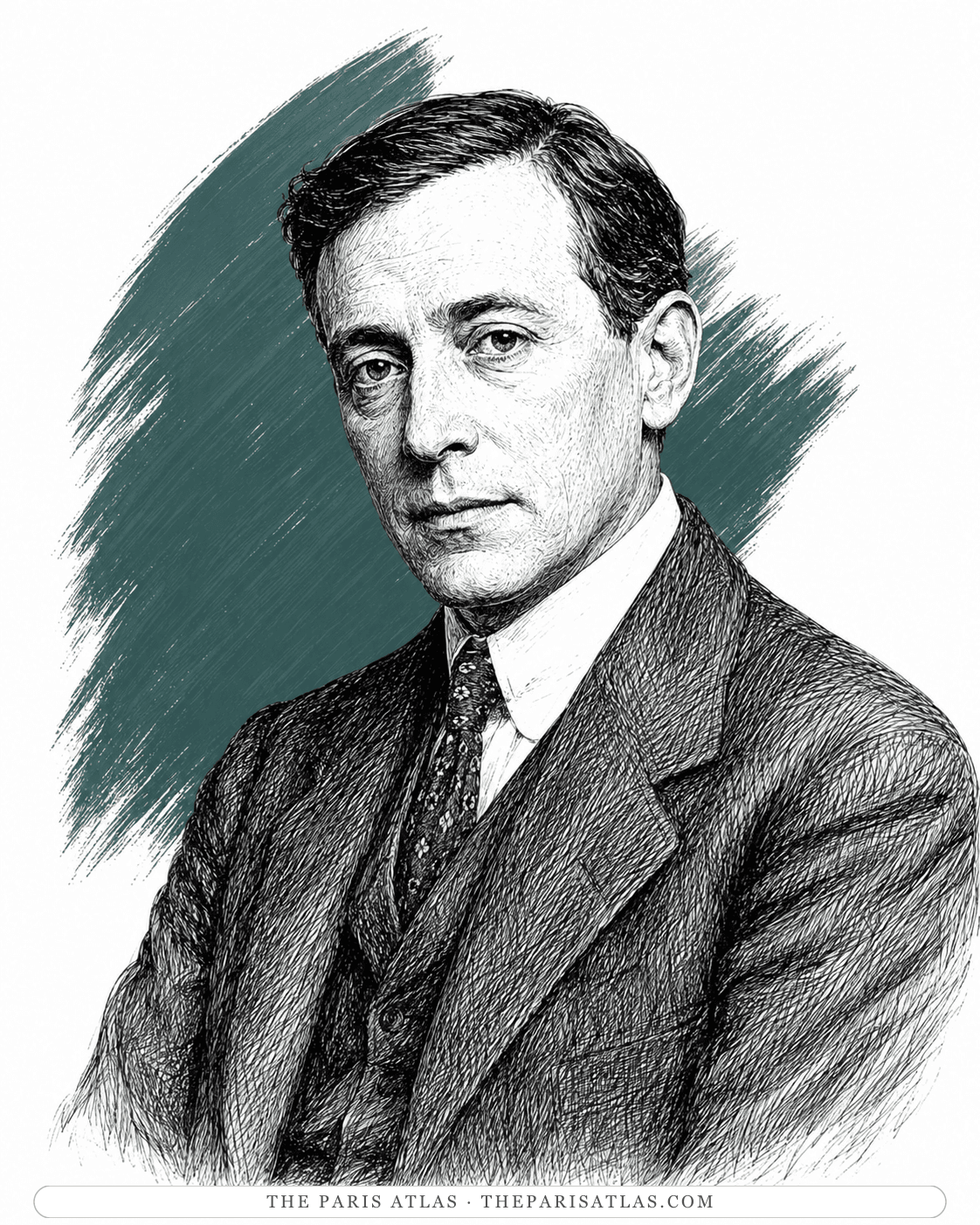
Met
Fellow fixtures of the Quarter's café and racing crowds — acquainted well enough that Hemingway could file him into The Sun Also Rises as Harvey Stone, portrait and verdict in a single chapter.
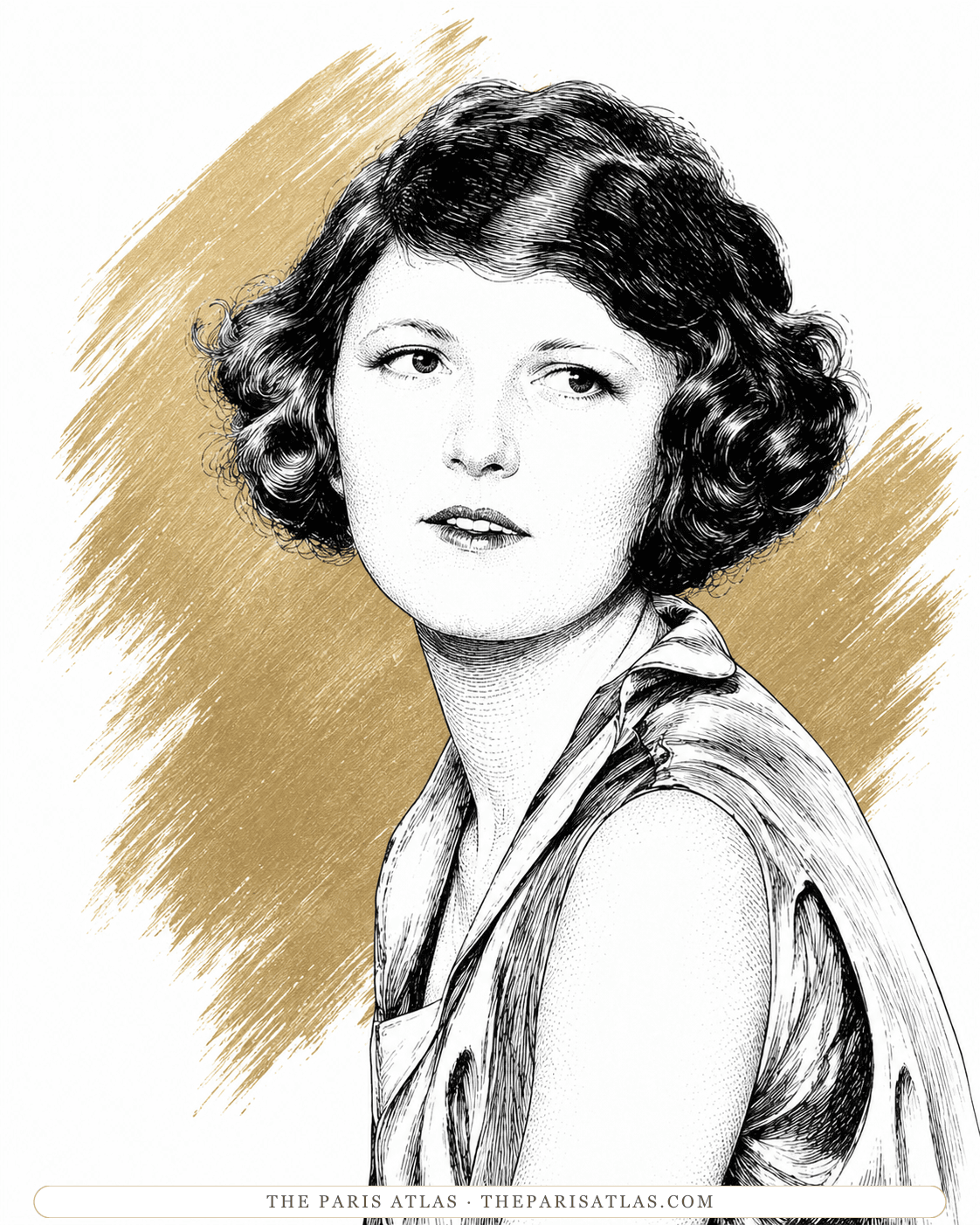
Met · 1925
Met through Scott in the spring of 1925, and the wariness was mutual from the first dinner — she judged him a poseur, he judged her the enemy of Scott's work. A Moveable Feast files its side of the verdict under 'Hawks Do Not Share.'
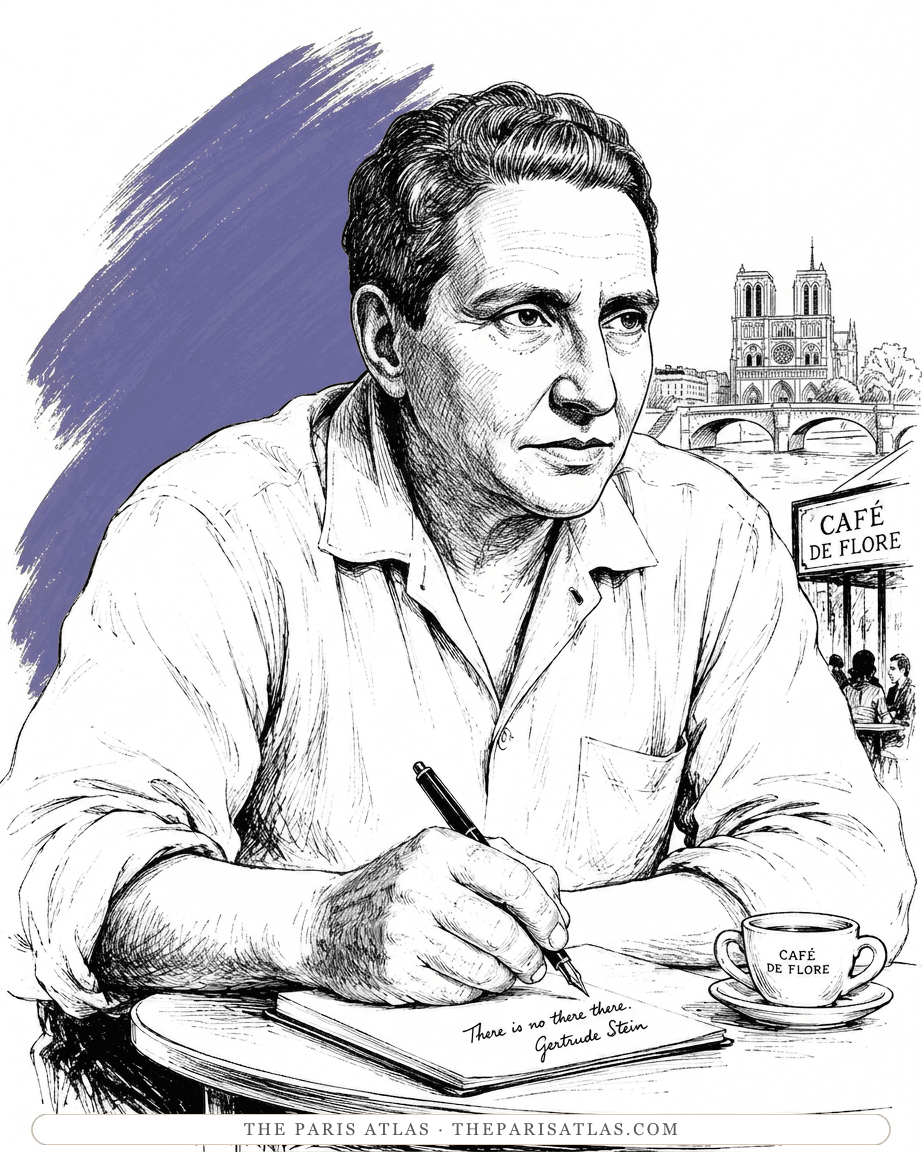
Met · 1922
The apprenticeship at 27 rue de Fleurus: Sherwood Anderson's letter opened the door in early 1922, and Stein instructed — on writing, painting, and much else — until the friendship curdled into the era's most public literary quarrel.
Mentored by · 1922
Instruction and encouragement at the rue de Fleurus salon — including the era's most quoted put-down, which he repaid with a book title and a memoir portrait.
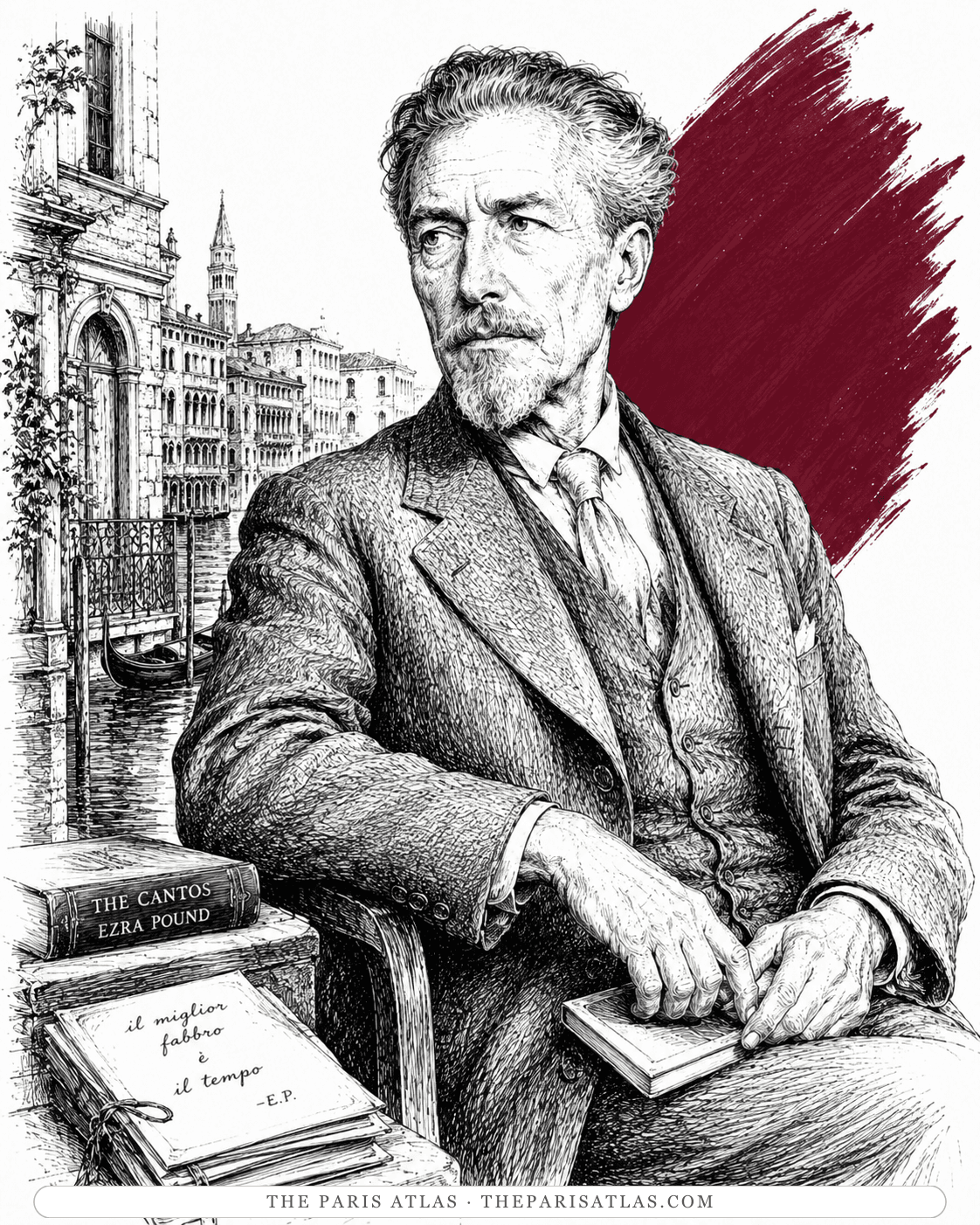
Met · 1922
Met within weeks of Hemingway's arrival in Paris; Pound edited him, promoted him, and took boxing lessons in exchange — the era's fairest trade. The memoir's portrait of Pound is the warmest Hemingway ever wrote of another writer.
Mentored by · 1922
Pound drilled the young Hemingway in cutting every spare word; Hemingway repaid the editing lessons by teaching Pound to box.
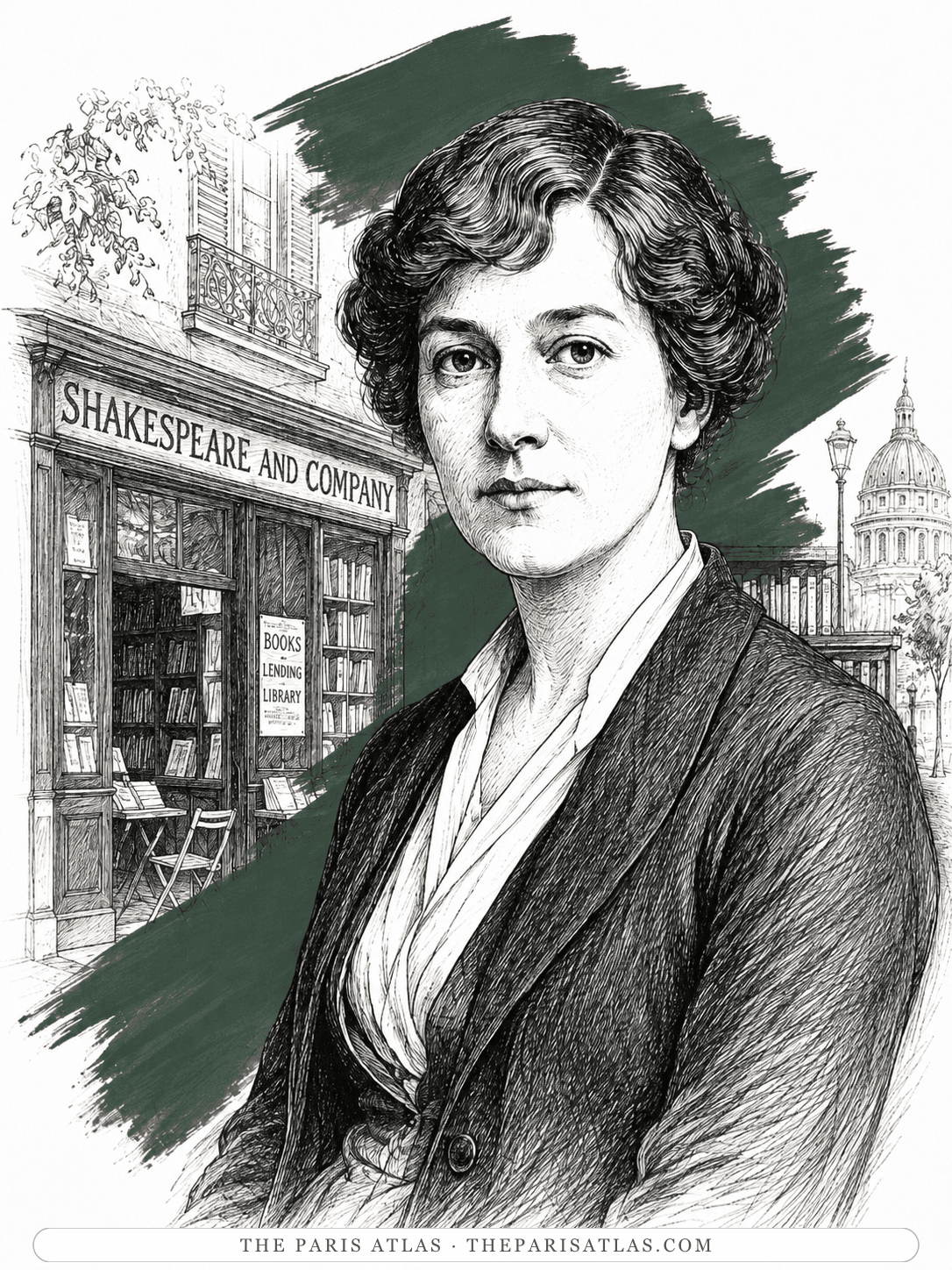
Met · 1921
First stop on the rue de l'Odéon, December 1921: a lending-library card extended on trust to a writer who couldn't cover the deposit. Both memoirs record the friendship; in 1944 he arrived in uniform to 'liberate' the street.
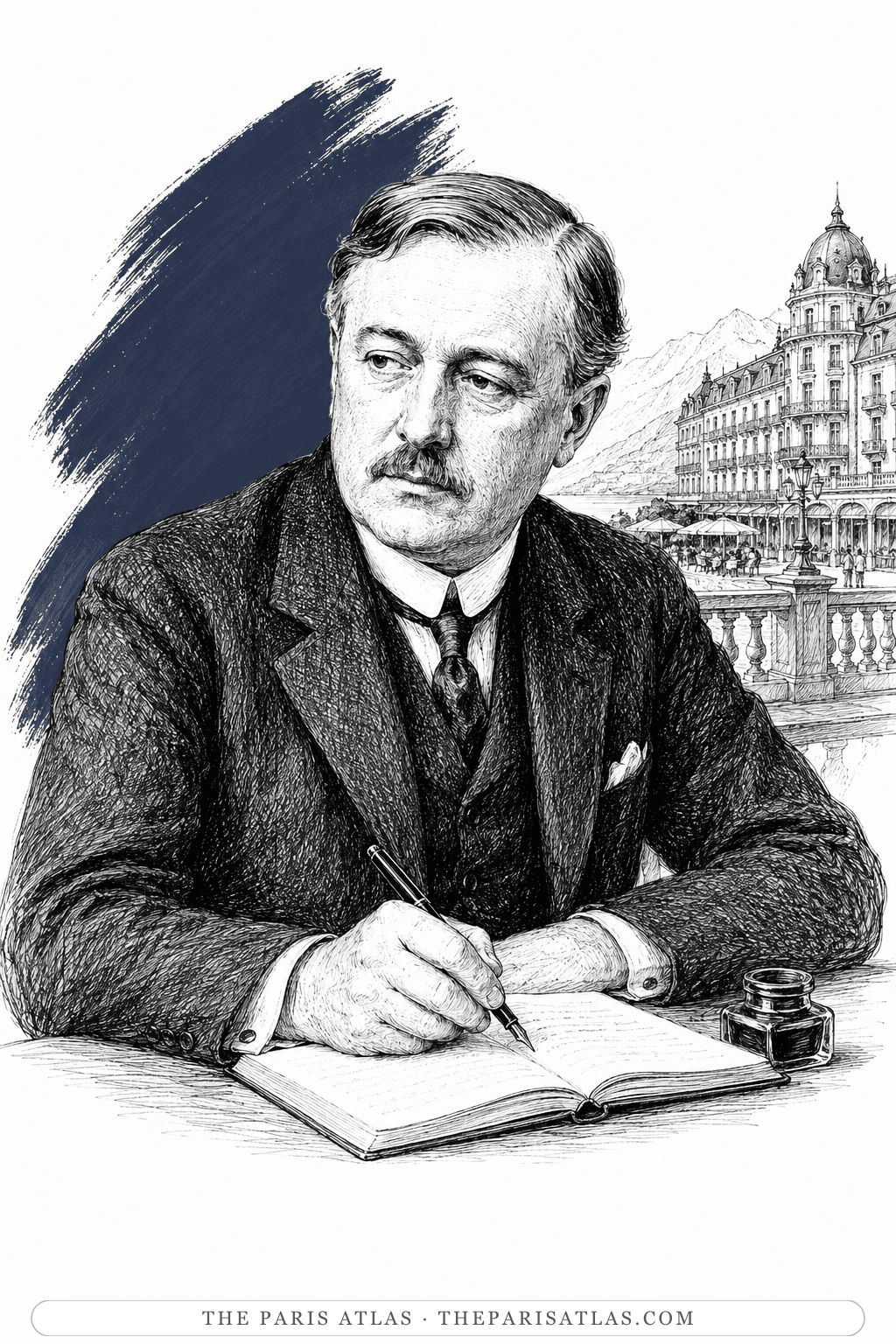
Met · 1924
Thrown together by the transatlantic review in 1924 — Ford published and employed the young subeditor, who repaid the debt with the memoir's cruelest portrait and a walk-on for Ford in The Sun Also Rises as Braddocks.
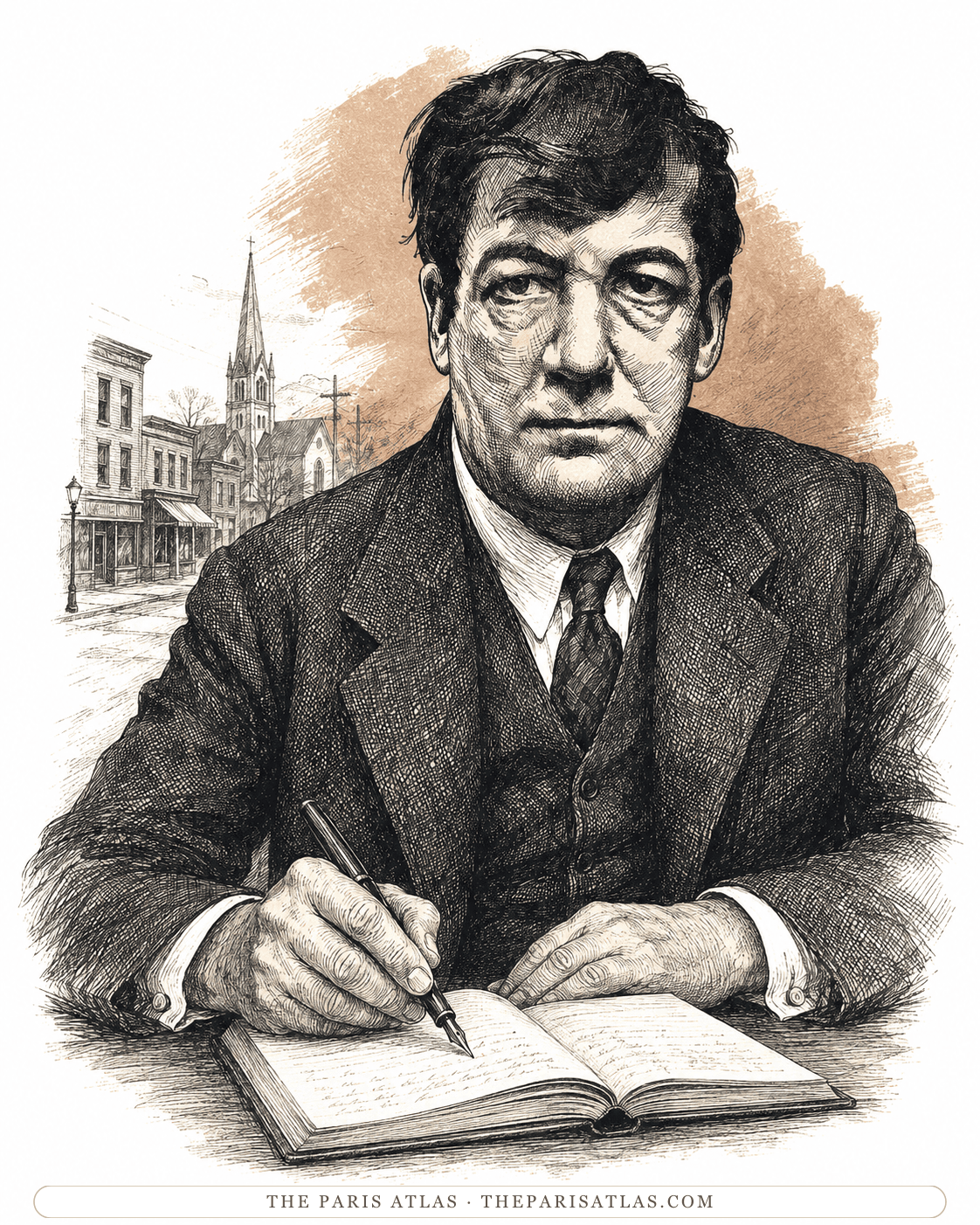
Met · 1921
Chicago, 1921: the established author befriended the young reporter and wrote the letters of introduction — to Stein, to Beach — that opened literary Paris. Hemingway repaid the debt with a parody novel; the friendship did not survive the joke.

Met
Friends since the Michigan summers at Horton Bay, and together again in the Pamplona party of July 1925.

Met
Hemingway sought him out at Pamplona in July 1925, the season of his alternativa, and wrote about him again in Death in the Afternoon when the nerve had gone.

Met
Went to the fiesta at Pamplona with Hemingway in 1924 and again in July 1925, and supplied the comic voice of Bill Gorton.

Met
Known to each other in Montparnasse and together in the Pamplona party of July 1925, with Hemingway's wife Hadley Richardson also present. He began the novel days after it ended.

Met
Loeb recommended Hemingway's early work to Boni & Liveright, which published In Our Time in 1925. Weeks later the two quarrelled over Duff Twysden at Pamplona, and Hemingway put him in the novel as Robert Cohn.

Met
One of the party Hemingway took to the fiesta at Pamplona in July 1925, travelling with his cousin Duff Twysden.
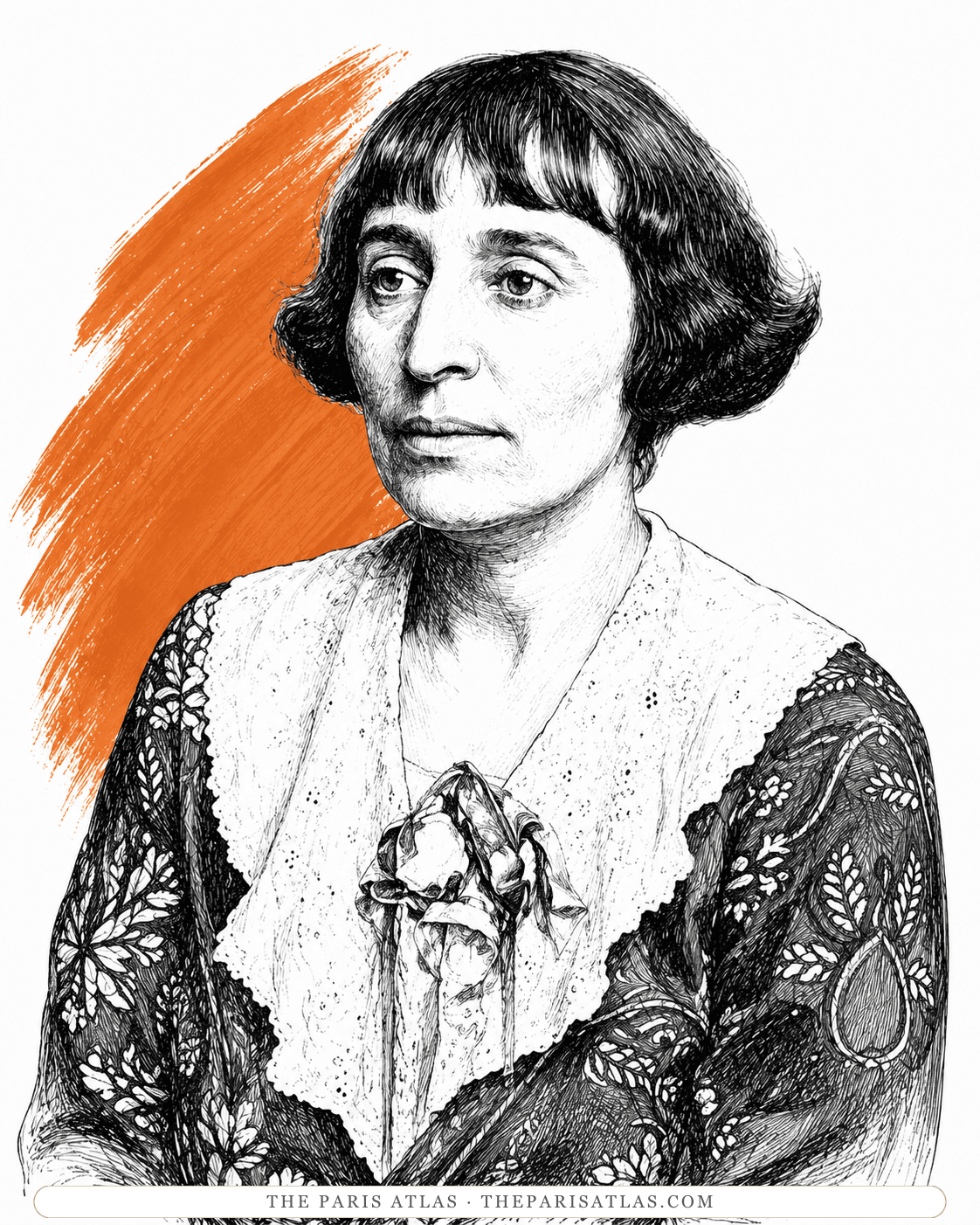
Met · 1922
Hemingway called at the rue de Fleurus from 1922, and with Stein she stood godmother to his son the following year — before the friendship's famous cooling, recorded from opposite sides in the two households' memoirs.
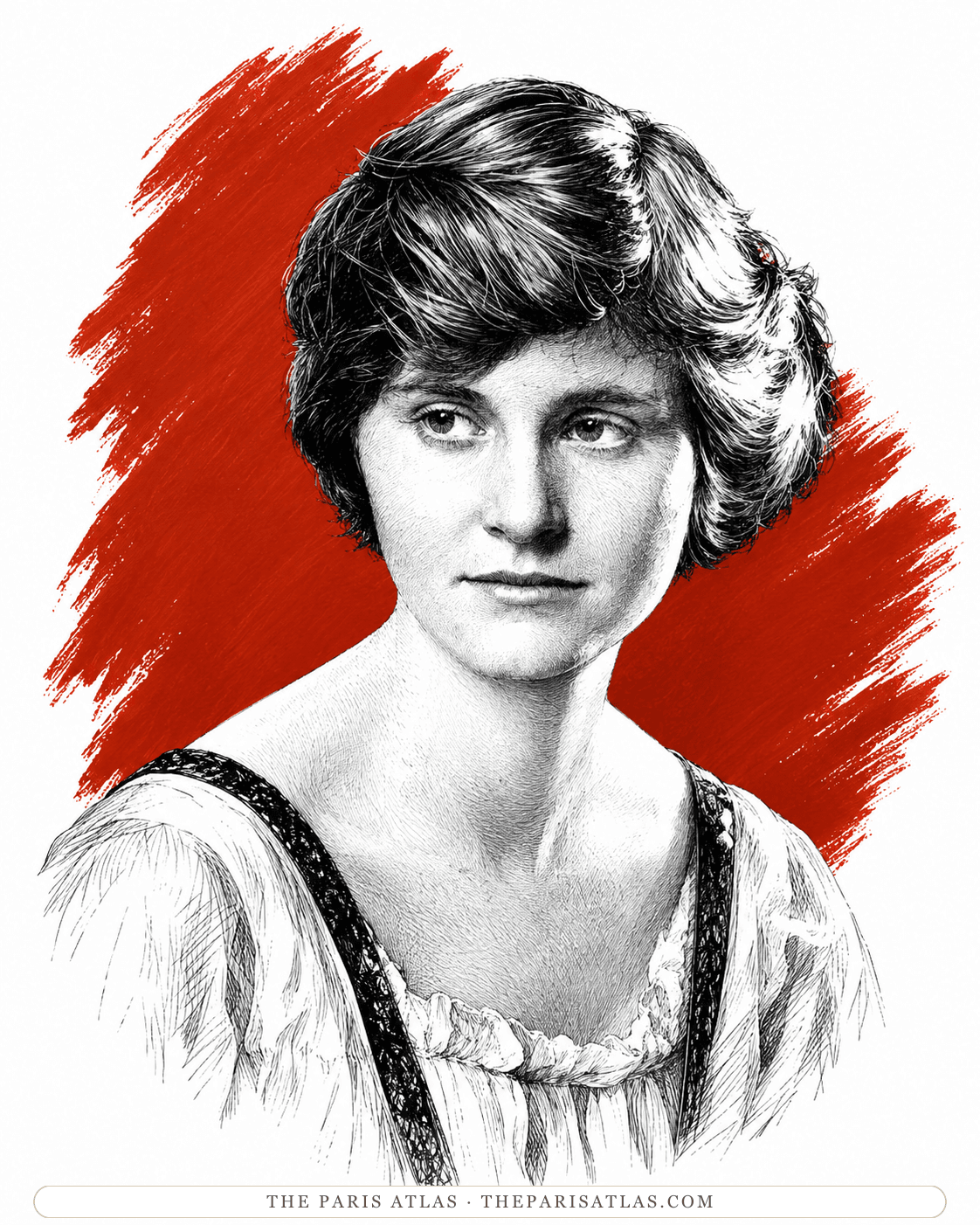
Married to · 1921–1927
The first marriage — Horton Bay to Paris to Schruns, ended by the 'pilot fish' winter of 1926; A Moveable Feast closes on his regret, and the Paris memoir is dedicated to what they were before the money came.
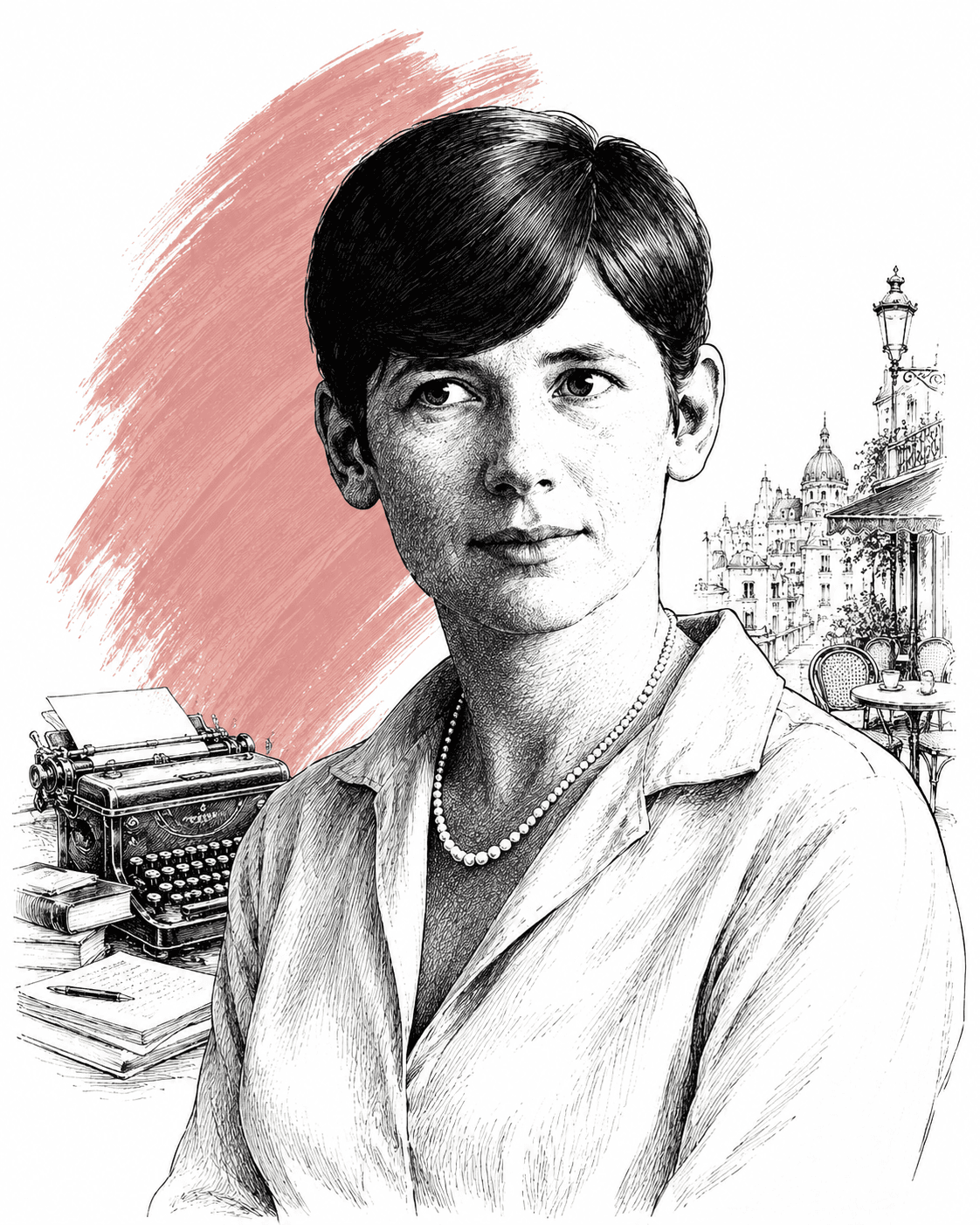
Married to · 1927–1940
The second marriage — begun in the wreckage of the first and lived mostly in Key West on Pfeiffer money; it ended the way it began, with the next wife already on the scene.
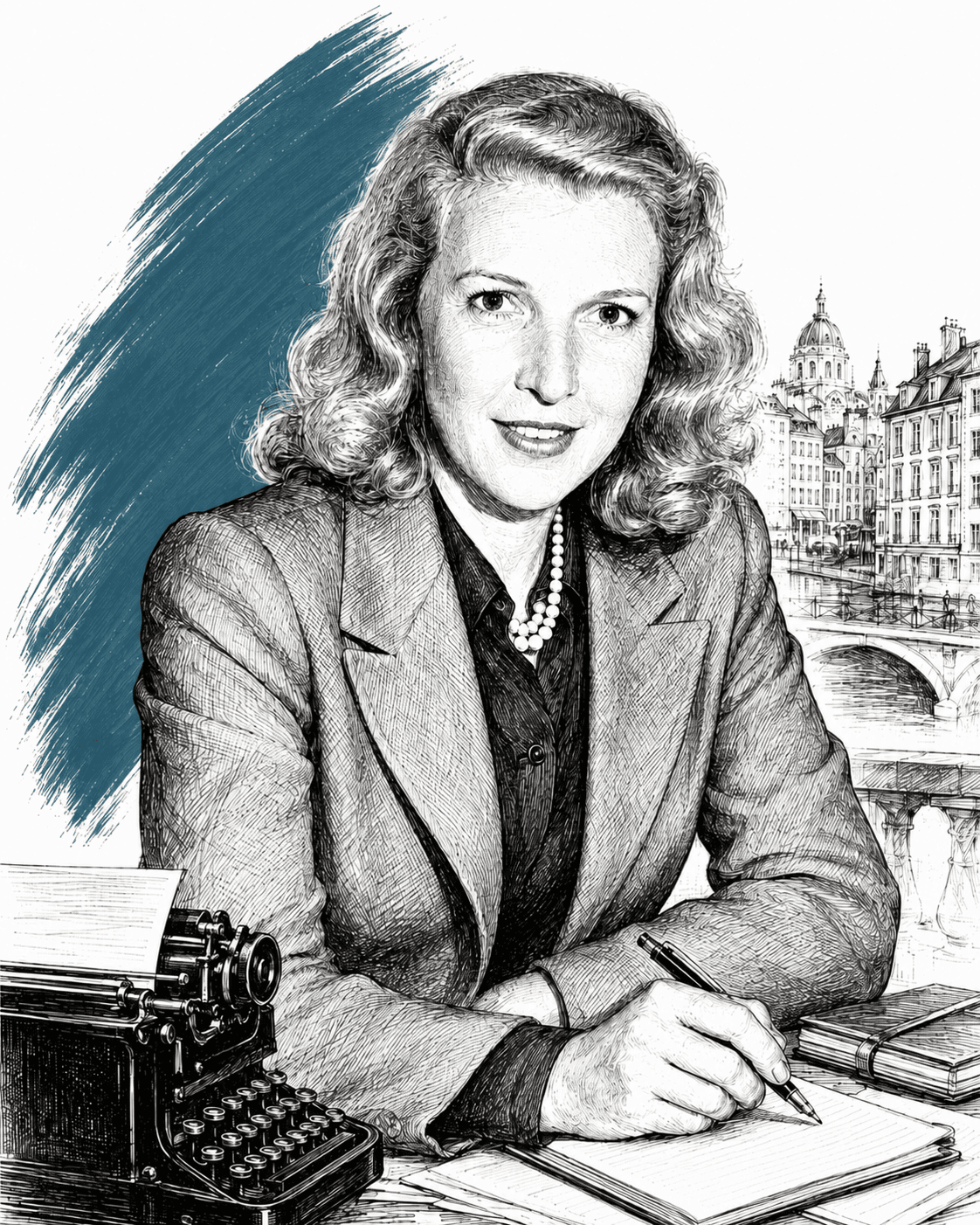
Married to · 1940–1945
The war marriage — Madrid under shellfire, then Cuba, then rival bylines racing to the Normandy summer; two correspondents in one house, and the only wife who left him first.

Married to · 1946–1961
The last marriage — the Finca Vigía years and then Ketchum; she survived the plane crashes, the Nobel, and the decline, and as his widow steered A Moveable Feast into print.
Met · 1944
They met in London in 1944, while she was at lunch with the writer Irwin Shaw and Hemingway came to the table to ask to be introduced. Both were reporting the war; they married two years later in Havana.
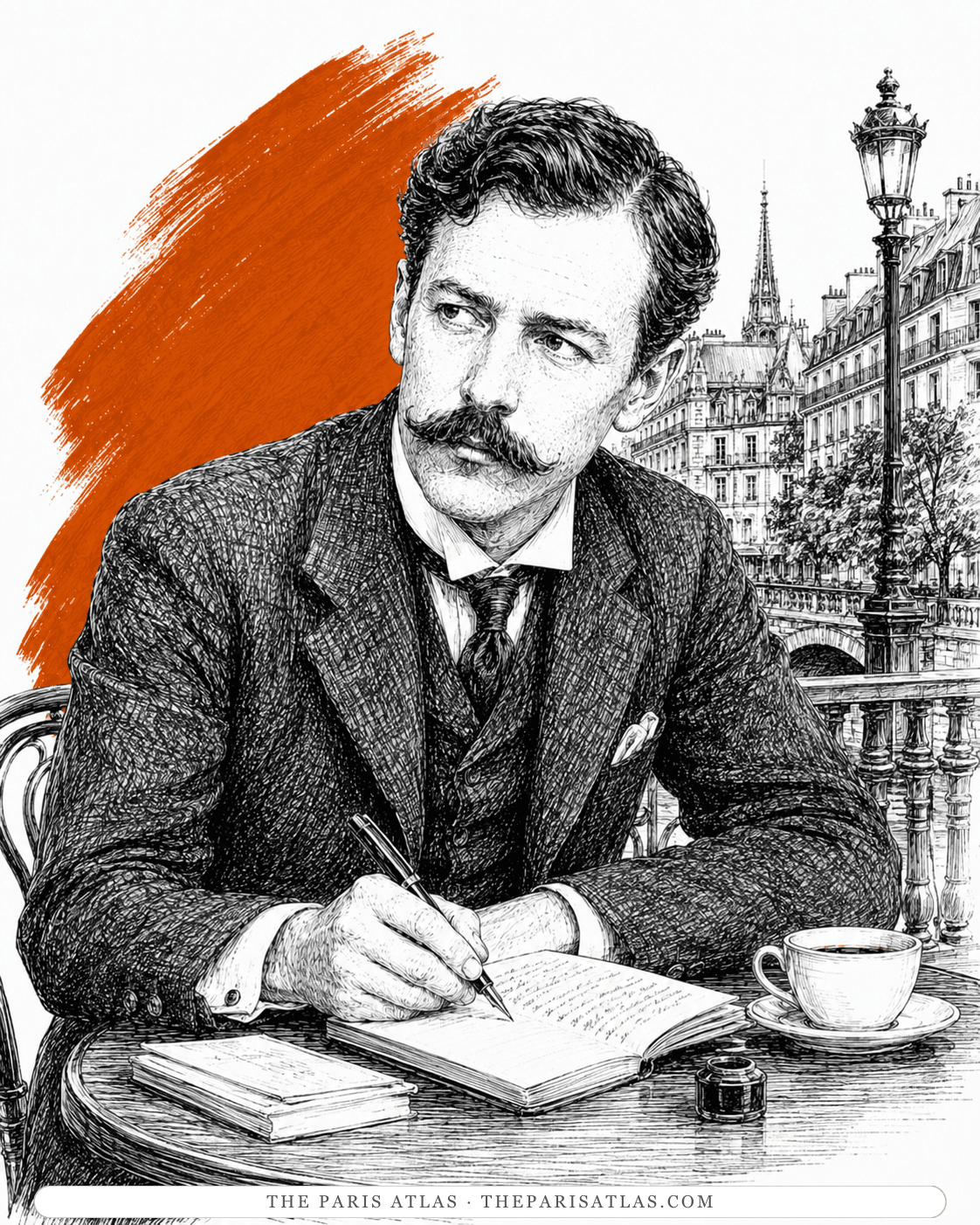
Met
The Anglo-American press lunches of the early twenties, where the Times man watched a young Toronto Star stringer hunt for a style — and, within two years of The Sun Also Rises, affectionately parodied the finished product in print.
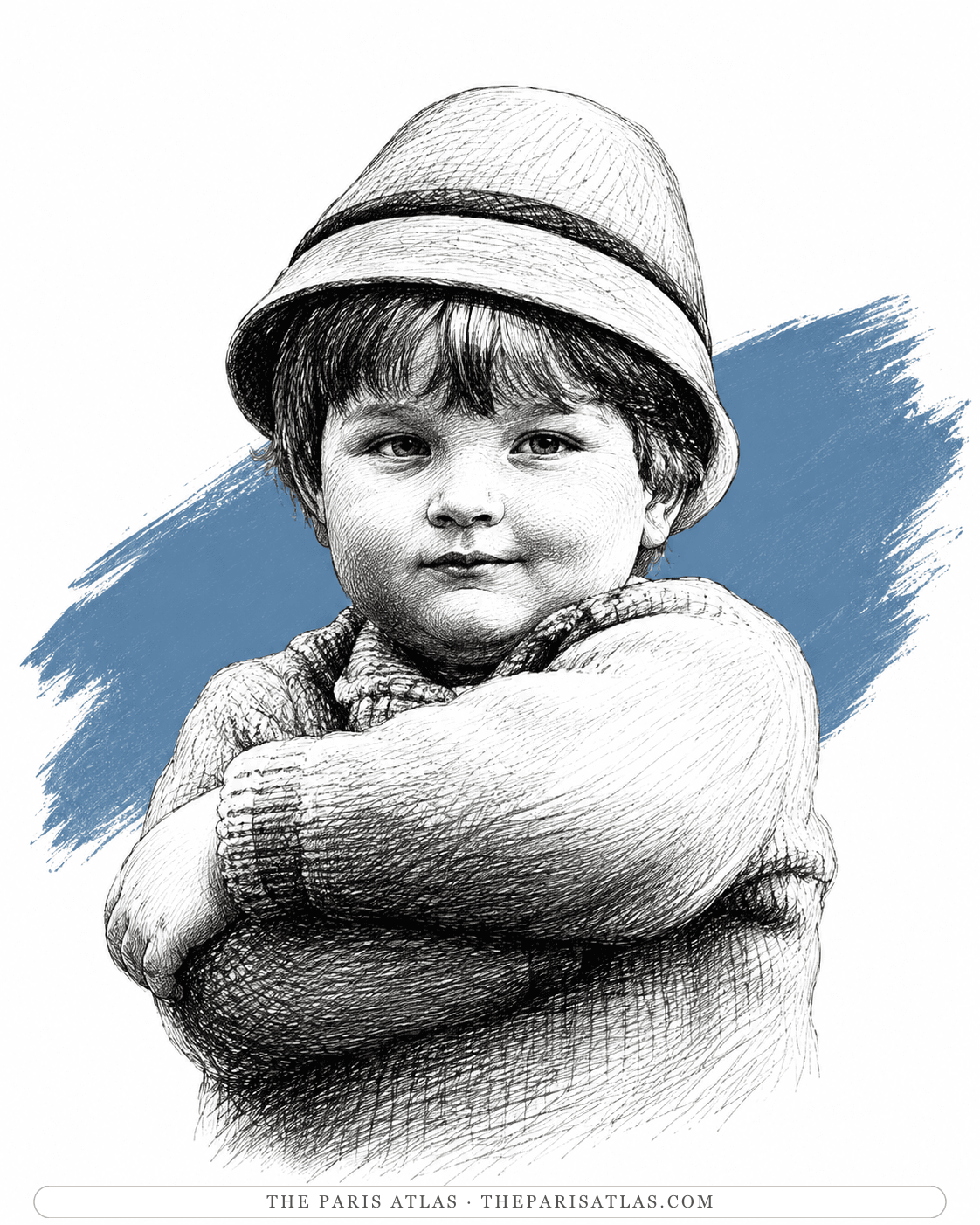
Parent of
His father. Jack — 'Bumby' — was the only child of Ernest Hemingway and Hadley Richardson.
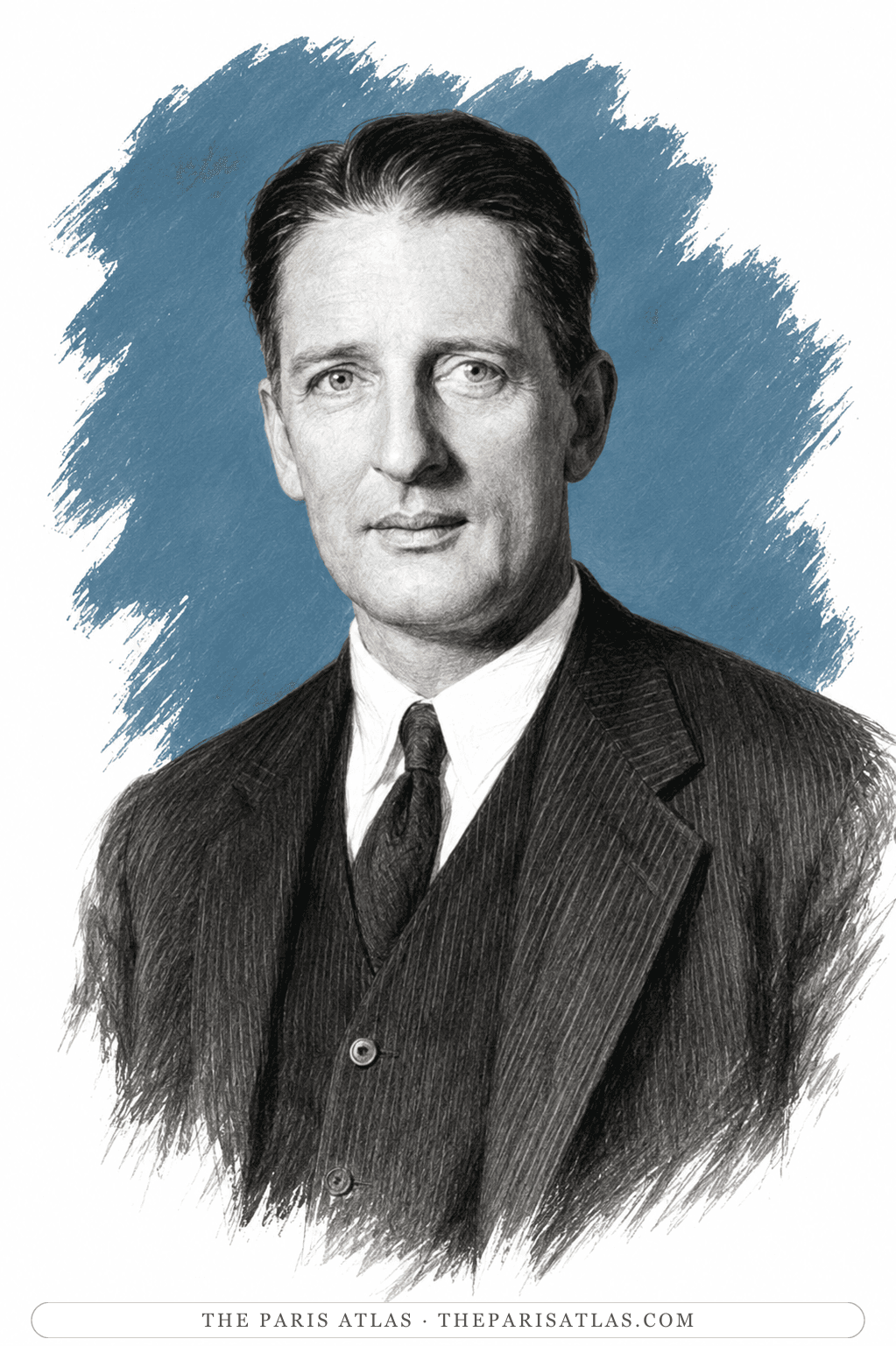
Collaborated with
Perkins signed Hemingway for Scribner's in 1926 after The Torrents of Spring broke his Boni & Liveright contract, and edited him for the rest of his life. Their correspondence runs from 1925 to Perkins's death in 1947 and is published in full as The Only Thing That Counts.
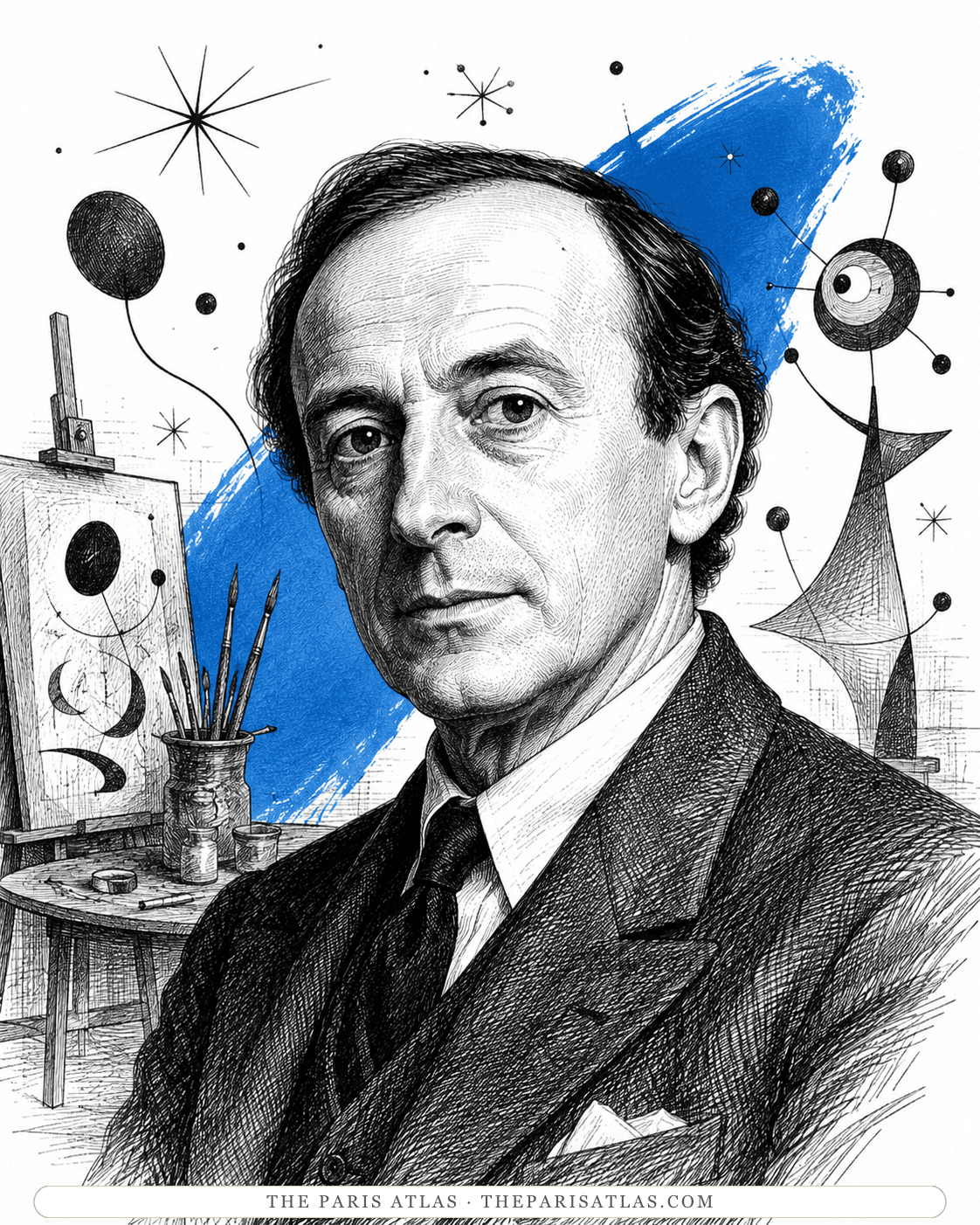
Met · 1925
Hemingway bought Miró's The Farm from Galerie Pierre in 1925 — by his own 1934 account after rolling dice with the poet Evan Shipman for the right to buy it — and the National Gallery of Art's provenance records the Hemingways owning it by 9 November 1925.
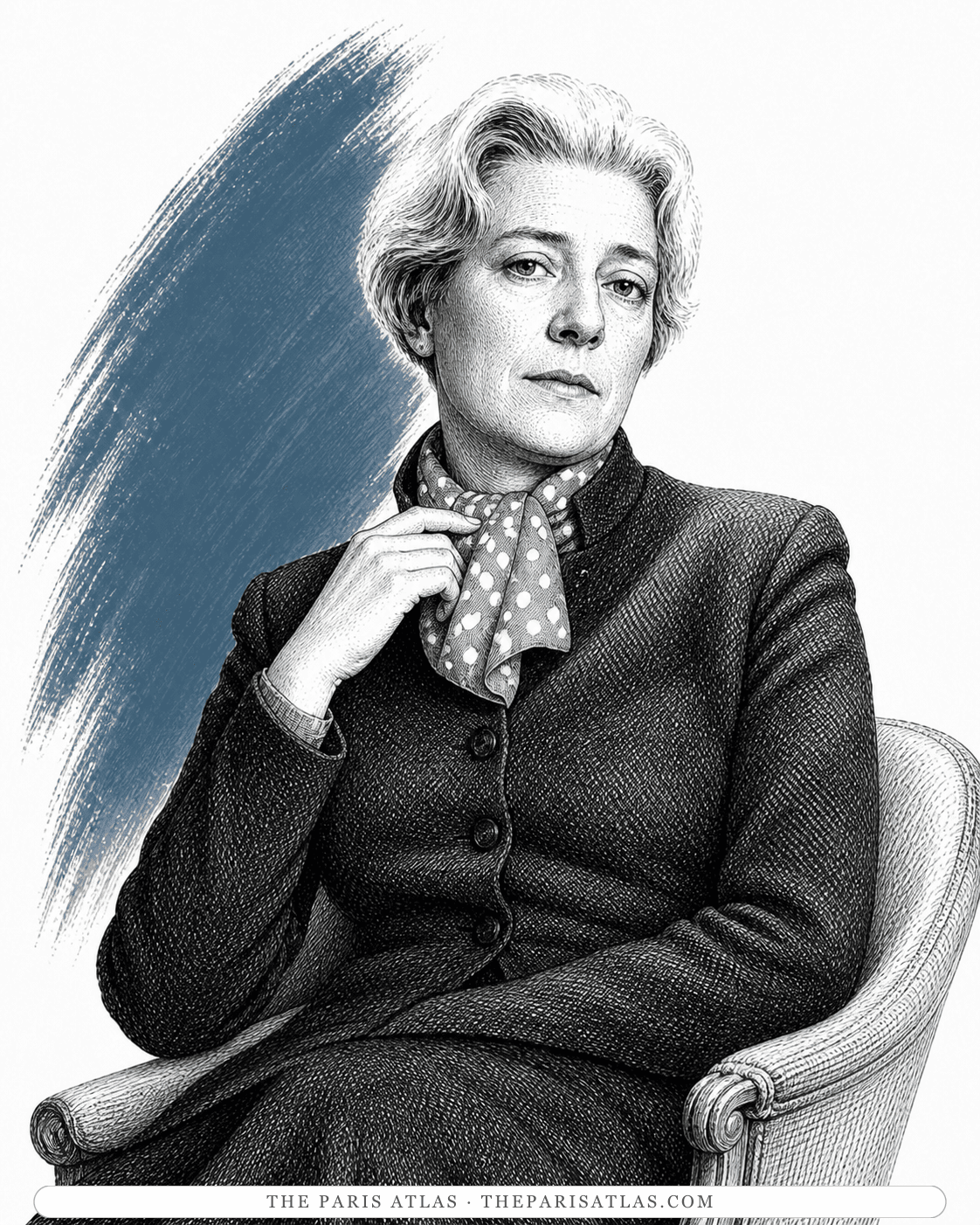
Met
A friendship documented on both sides. In 1937 Hemingway told Flanner that if a prize were ever given for the worst sportswriter in the western world he would see that she got it, over a piece she had written on bullfighting. Photographs from the liberation of Paris in August 1944 show the two at Les Deux Magots, both in United States war-correspondent uniform.
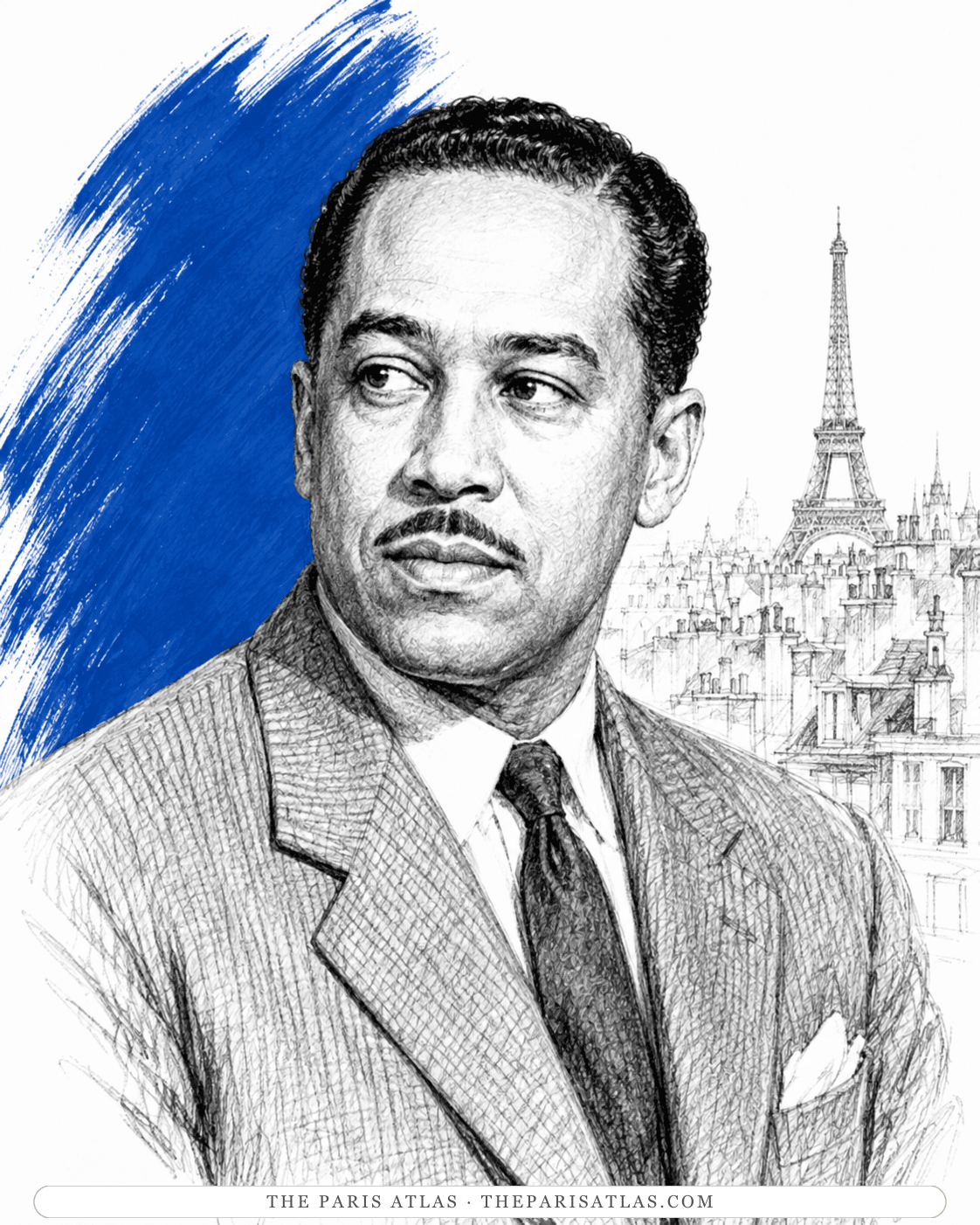
Met · 1937
Both covered the Spanish Civil War from Madrid in 1937 — Hemingway for the North American Newspaper Alliance, Hughes for the Baltimore Afro-American. A photograph by Paco Mayo, Madrid 1937, shows the two together with Mikhail Koltsov and Nicolás Guillén; the print is in the Hemingway Collection at the John F. Kennedy Presidential Library. Hughes's account of his Madrid months is in I Wonder as I Wander (1956).

Met · 1944
They met once, and it went badly. Hemingway asked to meet Steinbeck in the spring of 1944, when both were in New York; the dinner took weeks to arrange and was held at Tim Costello's on Third Avenue with Robert Capa, John O'Hara and John Hersey at the table. The evening is remembered for one thing: Hemingway bet O'Hara fifty dollars he could break over his own head the blackthorn walking stick Steinbeck had given him, did it, and asked "You call that a blackthorn?" Steinbeck, who by Jackson Benson's account admired Hemingway's writing more than that of any other writer of his time, watched and thought the whole thing unnecessarily cruel and stupid. Not a Paris meeting — this is the one documented contact between the two men, and it happened in Manhattan a decade before Steinbeck's Figaro summer on the avenue de Marigny.

Clashed with · 1949–1950
Lewis had saluted Hemingway by name in his 1930 Nobel lecture as one of the young writers who were the future of American literature. After the two crossed paths in Venice in 1949, Hemingway put a cruel physical caricature of Lewis into Across the River and Into the Trees, published the following year.

Editing the Men at War anthology in 1942, Hemingway singled out Le Feu as the rare book that told the truth about the war while it was still being fought — the trench-level standard his own war writing answered to.
The instruction at 27 rue de Fleurus, recorded in his own memoir: what to cut, what to look at, what a sentence could bear — the apprenticeship both of them spent later years disputing the credit for.
The man who taught him to distrust adjectives — the memoir's own accounting — and whose blue-pencil doctrine of cutting to the image runs under the whole Hemingway sentence.
The first model: the plain Midwestern sentences and buried feeling Hemingway learned from in Chicago — a debt he repaid, characteristically, by parodying it in The Torrents of Spring to break the apprenticeship in public.

Hemingway made the debt explicit in Green Hills of Africa, in the campfire conversation where an Austrian named Kandisky presses him on American writing: all modern American literature, he answers, comes from one book by Mark Twain called Huckleberry Finn. It is the most quoted verdict in American letters, and it is a writer naming his own source.

Named by Bukowski among his influences in a letter of his last years, alongside Dostoevsky, Celine and Sherwood Anderson. The short flat sentence is the inheritance; Bukowski also spent decades needling the Hemingway legend in print, which is its own form of debt.
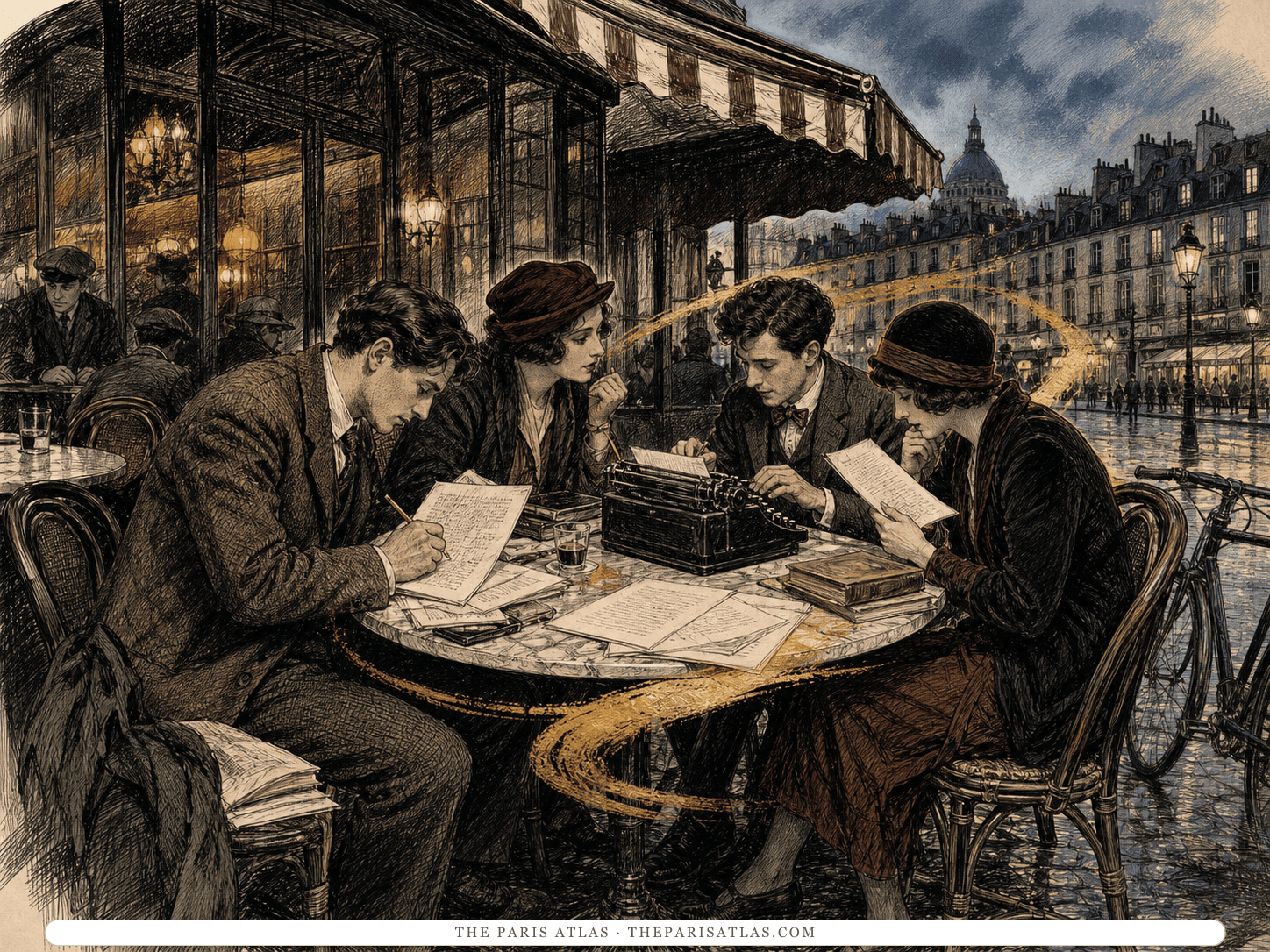
Literary generation · c. 1921–1929
Made the name famous — placed Stein's "you are all a lost generation" at the front of The Sun Also Rises, and wrote the phrase's origin story decades later in A Moveable Feast.
Methods & practice

One sitting, one old man, one fish — the entire method at its purest, and the book that won him the Nobel. Read it in an afternoon, then go back to Paris with The Sun Also Rises.

The first book: three hundred copies from a little Paris press, 1923 — everything Hemingway had that the stolen suitcase spared.

The debut story collection where the modern American short story was invented — trout streams, war flashes, and Nick Adams.
Paris cafés, Pamplona bulls, and a crowd of the beautifully damaged — the novel that named a generation.

The parody that burned a bridge on purpose: Hemingway lampoons his mentor Sherwood Anderson — and breaks a contract doing it.

The second story collection — 'The Killers,' 'Hills Like White Elephants' — the iceberg method at its coldest and most perfect.

An American ambulance driver, an English nurse, and the Italian front — the Great War's great love story.

The bullfight book: a full treatise on the corrida that keeps turning into a book about death, Spain, and how to write.

The darkest of the story collections: insomnia, nada, and 'A Clean, Well-Lighted Place' — the code with the lights going out.

A month on safari, written as an experiment: can a true book, absolutely truthful, compete with the novel? Plus the Huckleberry Finn verdict.

Key West fishing captain, rum-runner, revolutionary — Hemingway's darkest argument about how poor men survive in the Depression.

One volume, whole arsenal: every story through 1938 — 'Snows,' 'Macomber' — plus the Madrid play written under actual shellfire.

The words he spoke over the war: the narration of Joris Ivens's 1937 documentary, printed as a small, strange book the next year.

Three days behind enemy lines in the Spanish mountains — the longest novel, the biggest canvas, and the warmest heart.

A dying American colonel, a winter weekend in Venice, a young countess — the valedictory novel the critics panned and time is slowly rehabilitating.
An old Cuban fisherman, eighty-four days without a catch, and the fish of his life — the whole method in one afternoon's read.

Hemingway's memoir of being young, poor, and absurdly talented in 1920s Paris — the most seductive book ever written about writing.

Four decades of journalism in one volume — Paris cafés for the Toronto Star, Madrid under shells, the Blitz, the liberation ride to the Ritz.

A painter, three sons, a war at sea — the unfinished masterpiece that shows what Hemingway was still reaching for.

The shadow autobiography assembled: every Nick Adams story in the order of Nick's life, with eight unpublished pieces joining the canon.

Six hundred letters he ordered never published — Fitzgerald teased, Perkins courted, wives won and lost — the offstage voice, complete with sins.

All of Ernest Hemingway's poems in one scholarly edition — school verse, Paris satires, war poems, and the private jokes he never meant to publish.

The craft doctrine, extracted: every passage where Hemingway explains the work — icebergs, morning hours, and stopping while it's going good.

The complete Toronto Star files, 1920–1924: the twenty-something in Paris, learning the style on deadline for a newspaper an ocean away.

The last book he worked on: Spain, 1959 — two great matadors, one murderous rivalry, and the old aficionado keeping score a final time.

A young writer, two women, and the summer that unmade a marriage — Hemingway's strangest and most vulnerable novel.

Everything after the forty-nine: the 1987 omnibus adds the later stories and the vault's fiction — the whole short-form career, one spine.

Before Paris, before the war, before everything: the school newspaper and literary magazine work of Hemingway, sixteen years old.

Author and editor, complete: twenty-two years of letters between Hemingway and Maxwell Perkins — the working marriage behind the shelf.

Kenya, 1953 — the safari that became a marriage story, a meditation on belonging, and Hemingway's most contentious posthumous publication.

The Paris dispatches alone, in a pocket volume — the city these pages map, reported by its most famous arrival at twenty-two.

Every letter he ever wrote, eventually: the Cambridge edition's decades-long project to publish the complete correspondence — volume by volume.
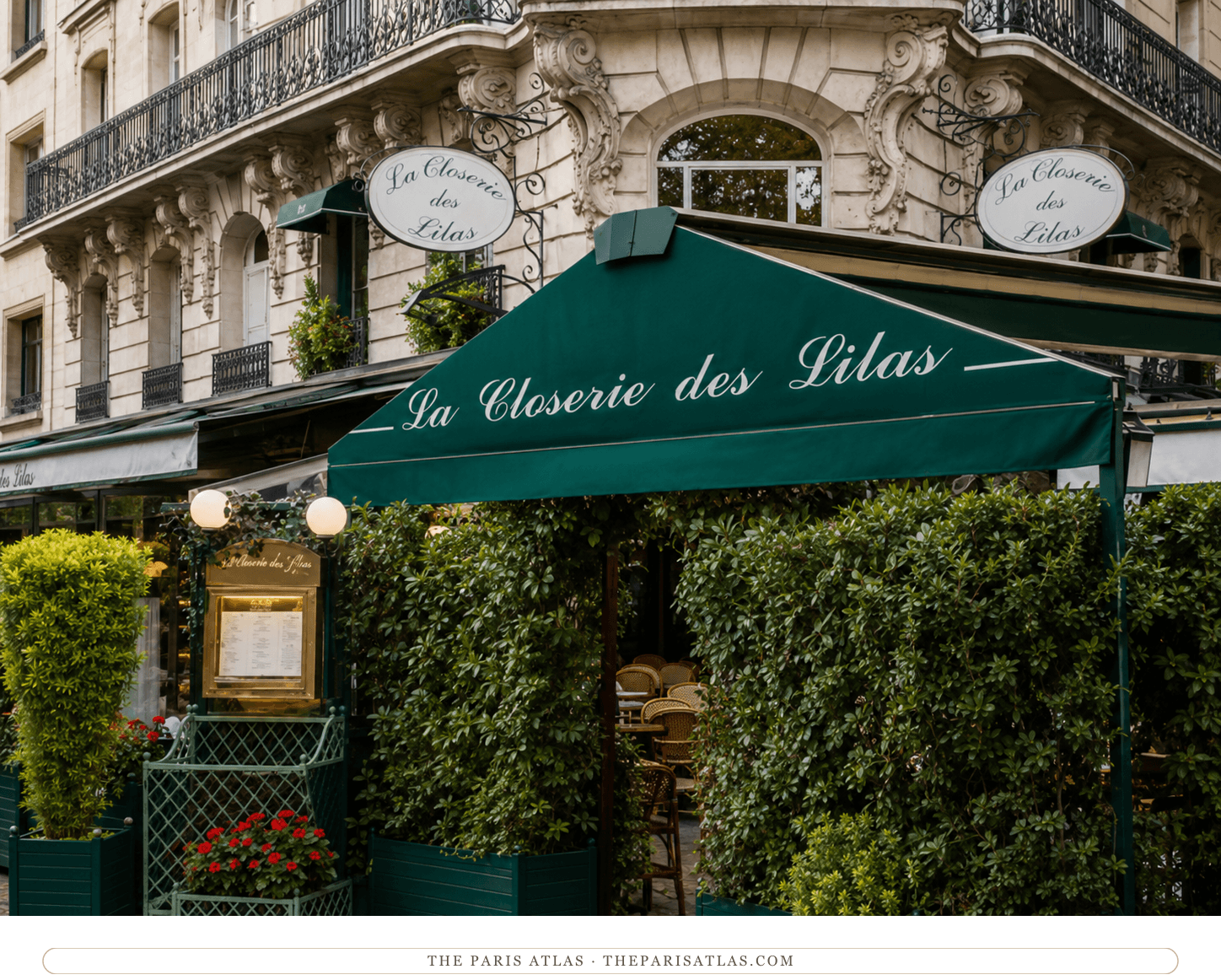
Hemingway drafts most of The Sun Also Rises at the Closerie's tables in a six-week burst, September to October 1925.
Visit the place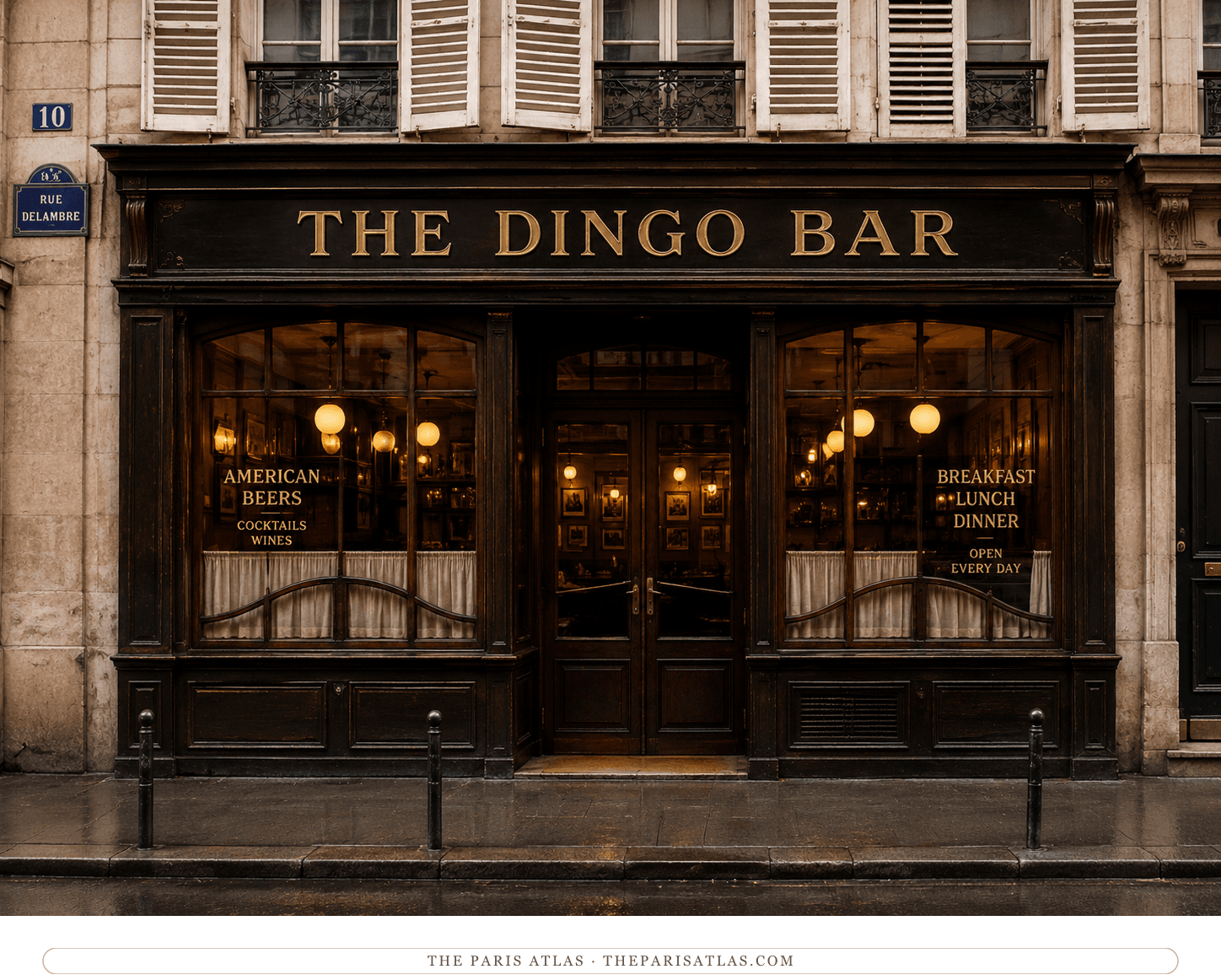
The era's most famous introduction: Fitzgerald, two weeks after Gatsby published, walks up to Hemingway at the Dingo bar — the friendship begins.
Visit the place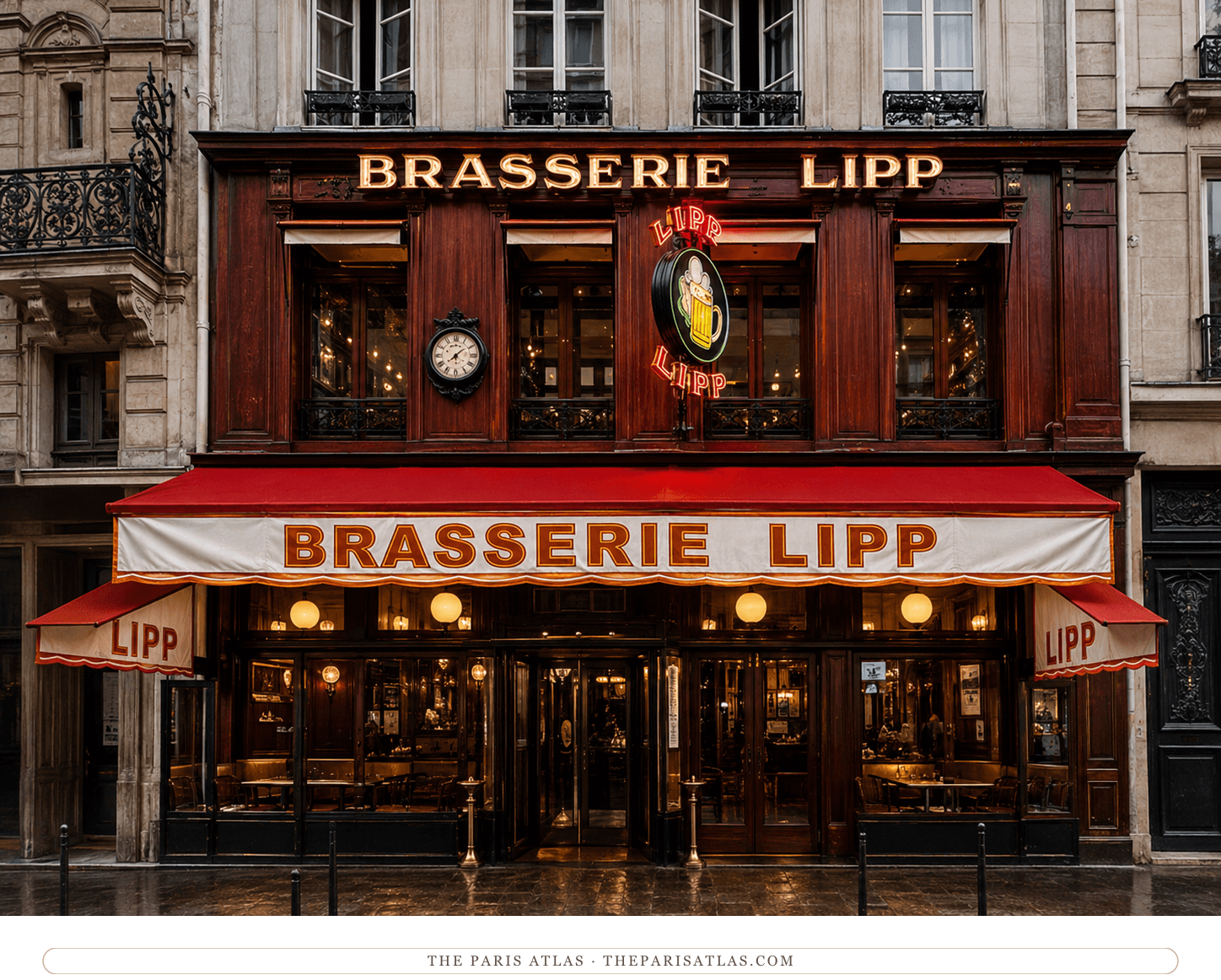
Beer, potato salad, and choucroute after a day's work — he counted it among the best places in Paris to eat.
Visit the place
Part of his Left Bank circuit, though he preferred the quieter Closerie for working.
Visit the place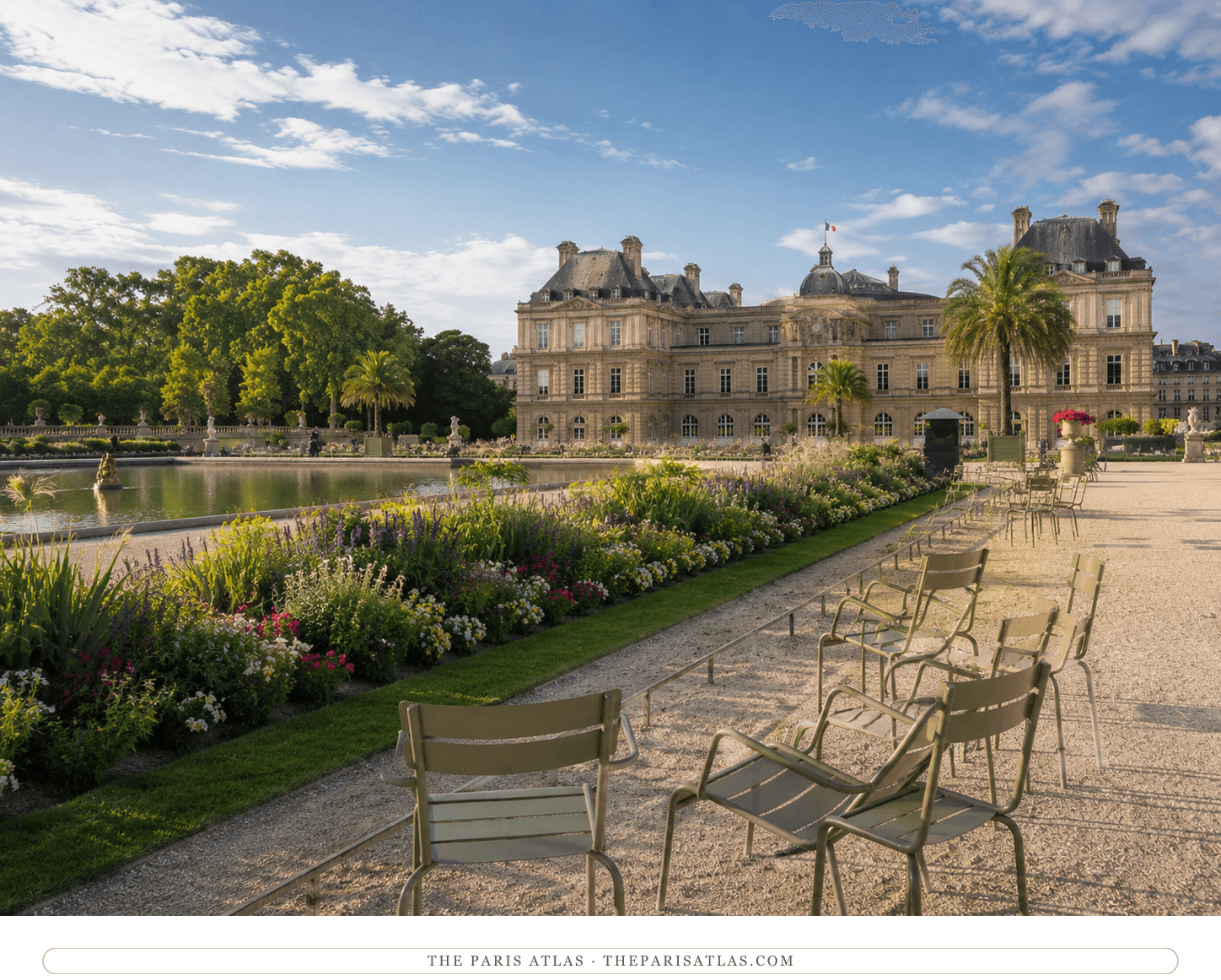
His daily walking route and hungry-day refuge — the gardens where he studied the Cezannes on an empty stomach.
Visit the place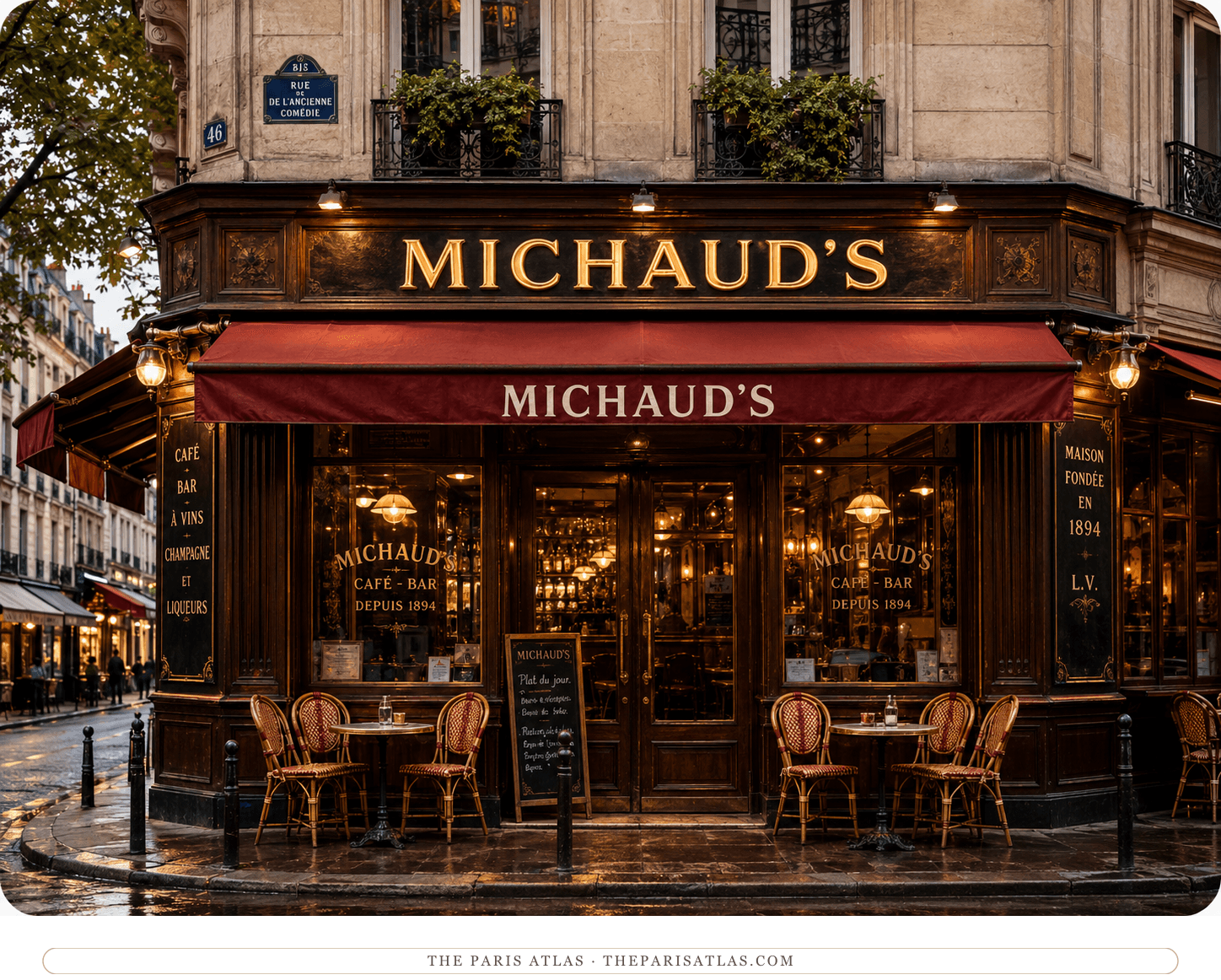
Where the Hemingways watched the Joyce family dine when they couldn't afford to themselves.
Visit the place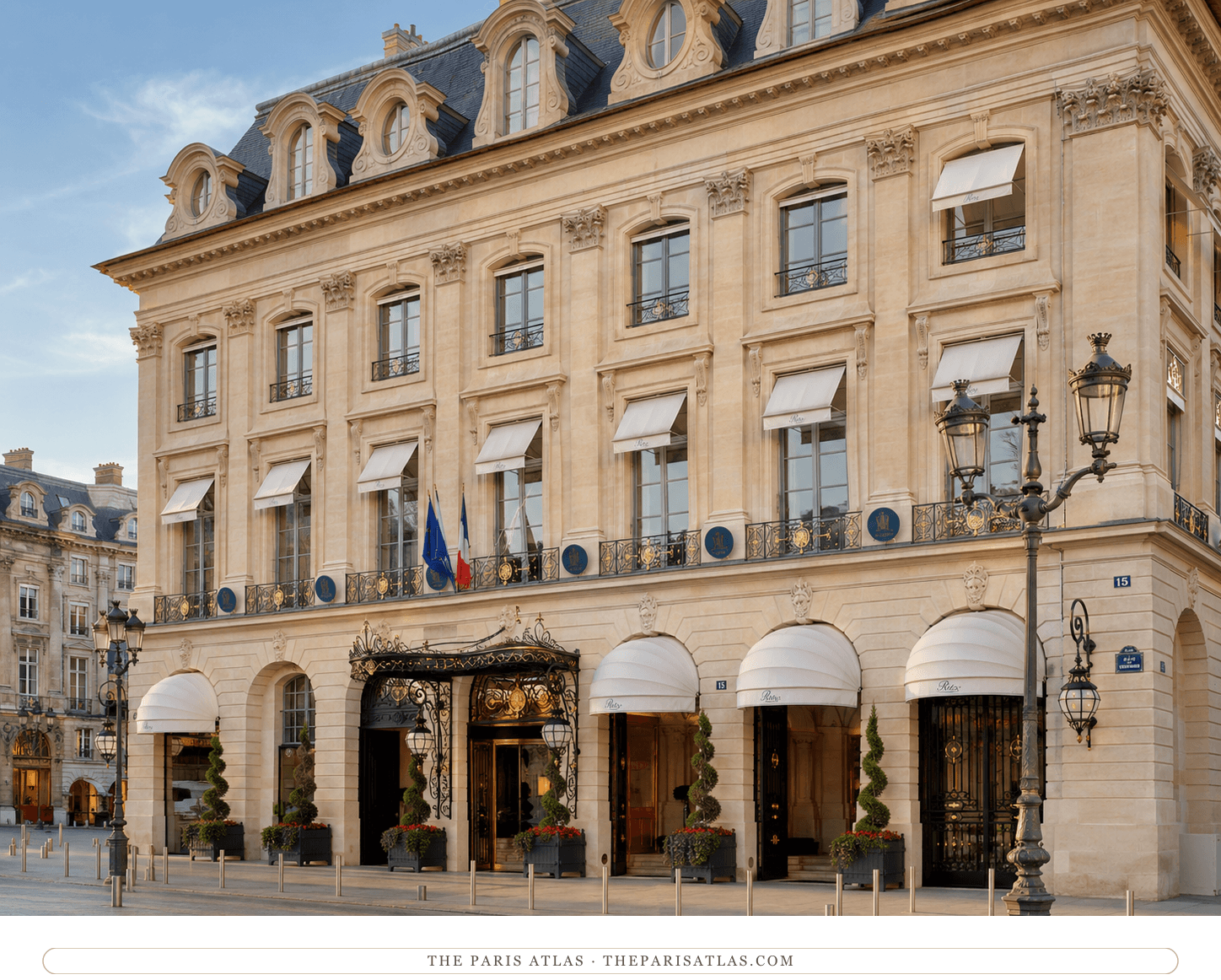
From prewar drinks with Fitzgerald to the August 1944 afternoon he arrived with his irregulars to 'liberate' the bar — the hotel repaid the loyalty by putting his name on the room.
Visit the place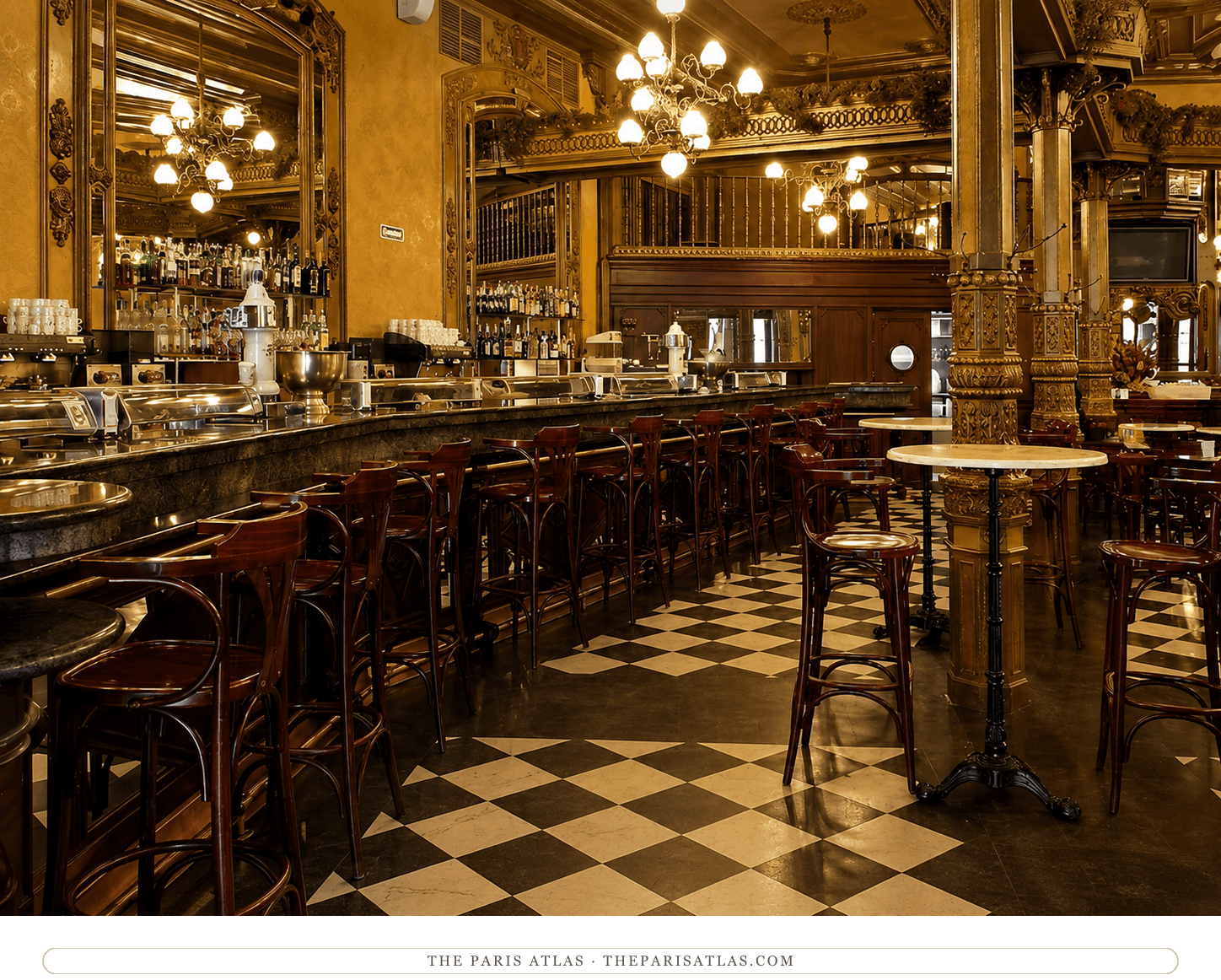
A fixture of his Pamplona summers from 1923 onward. Pamplona's city council treats the association as established; the café marks it with a Hemingway corner, which commemorates the habit rather than preserving a particular table.
Visit the place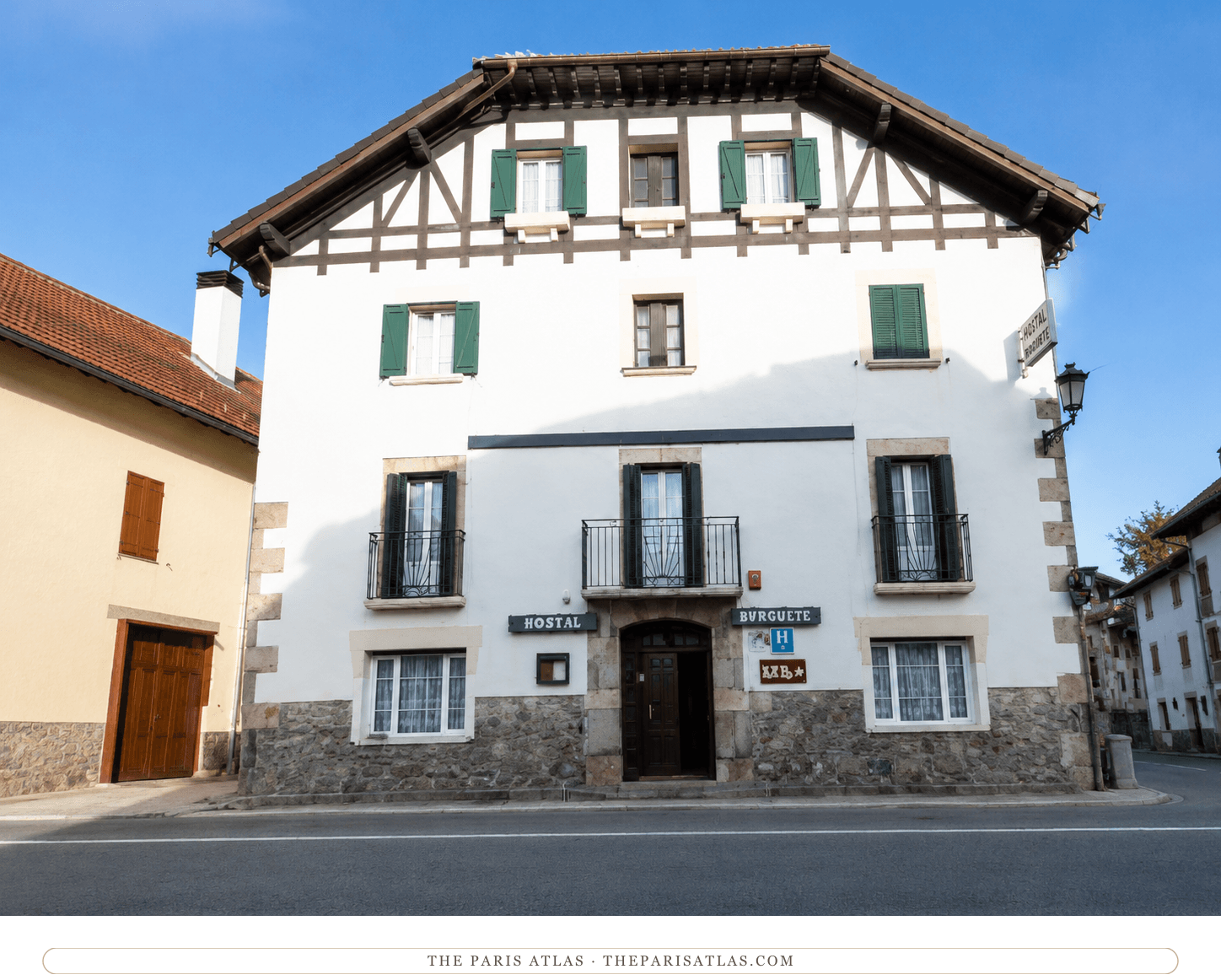
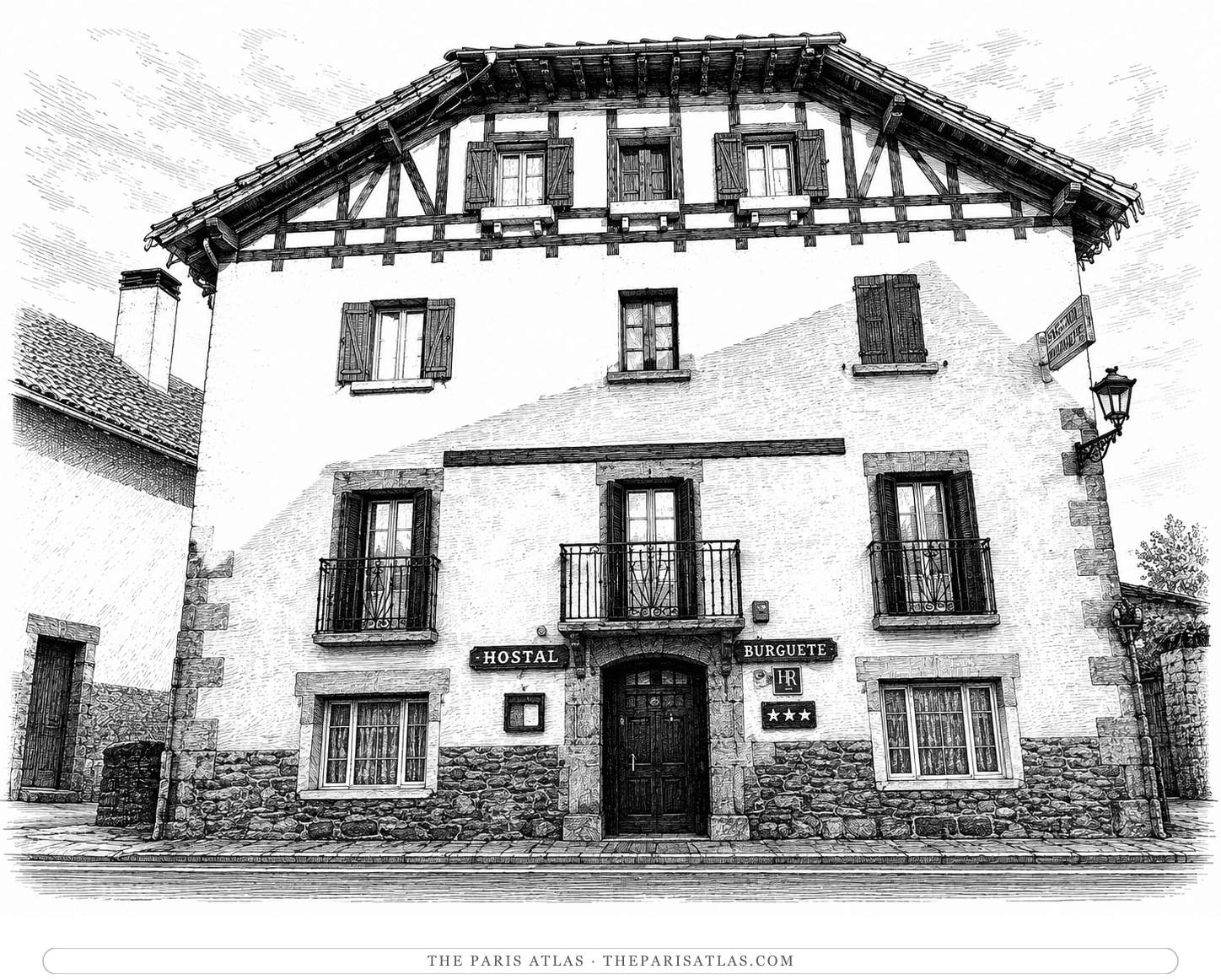
His base in the Navarrese mountains for the fishing trips of the summers of 1924 and 1925, before and after San Fermín. The inn still trades on the association and calls him a habitual guest; it publishes no founding date and no menu, so the page treats the building's continuity as established and the meal's as not.
Visit the place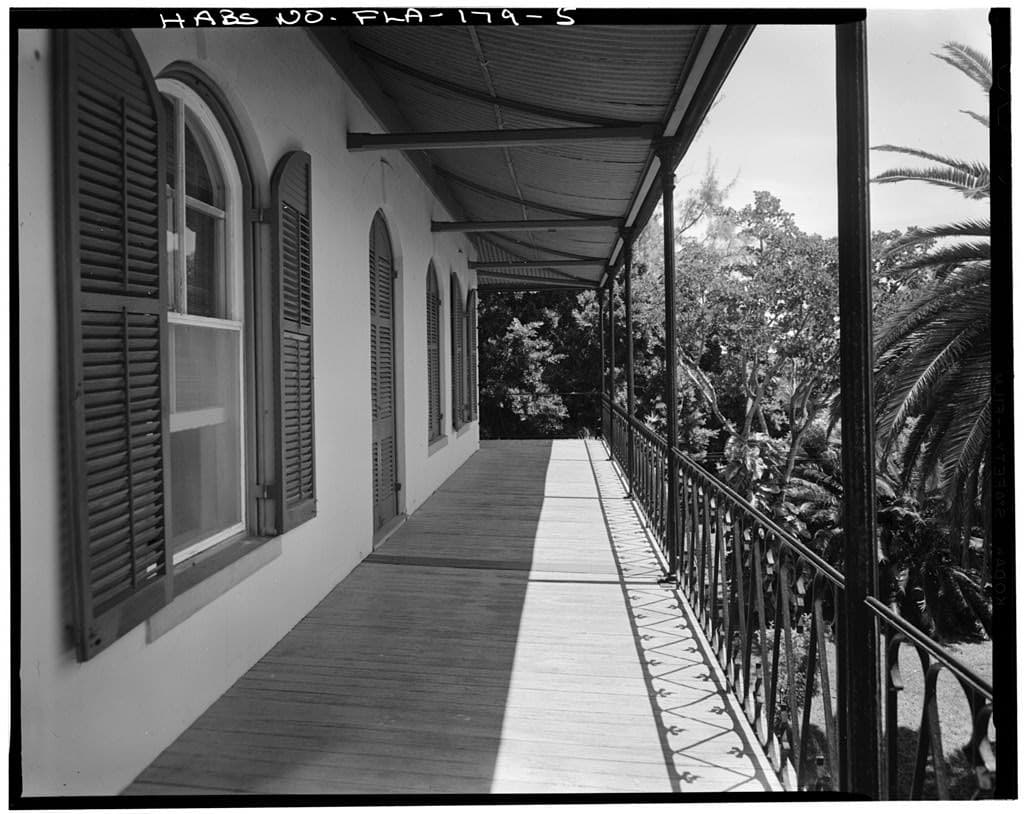
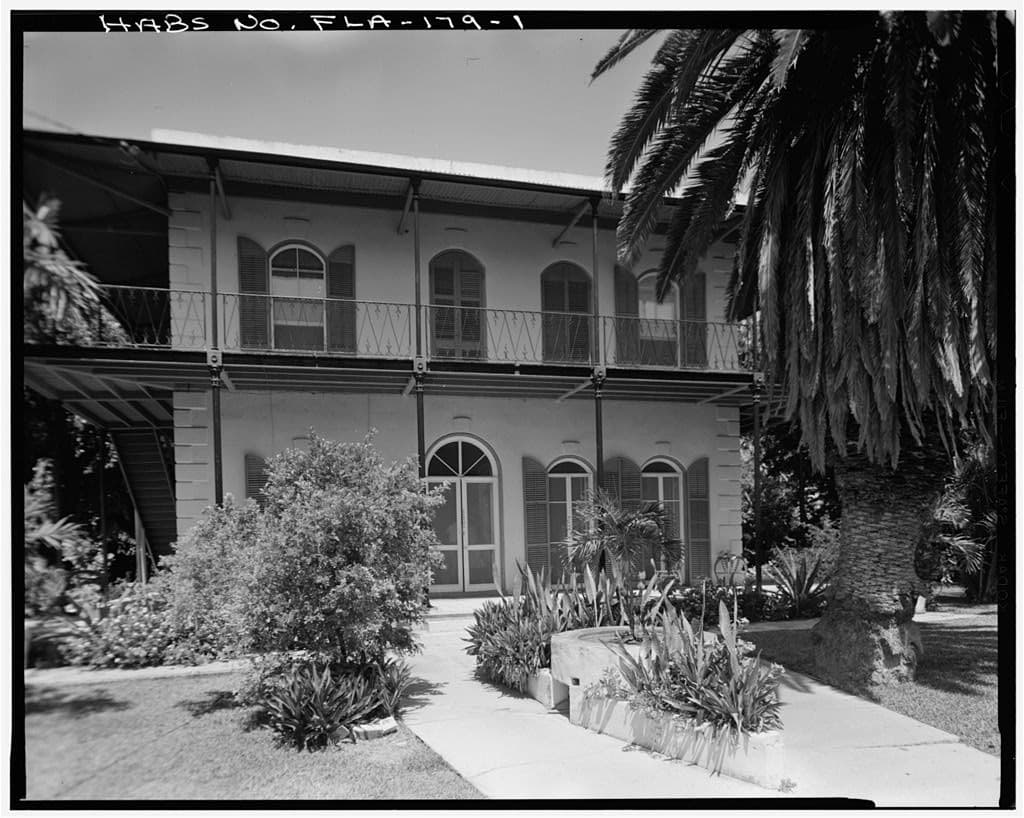
Ernest Hemingway and Pauline Pfeiffer made the Whitehead Street house their Key West home. He moved to Cuba after their 1940 divorce.
Visit the place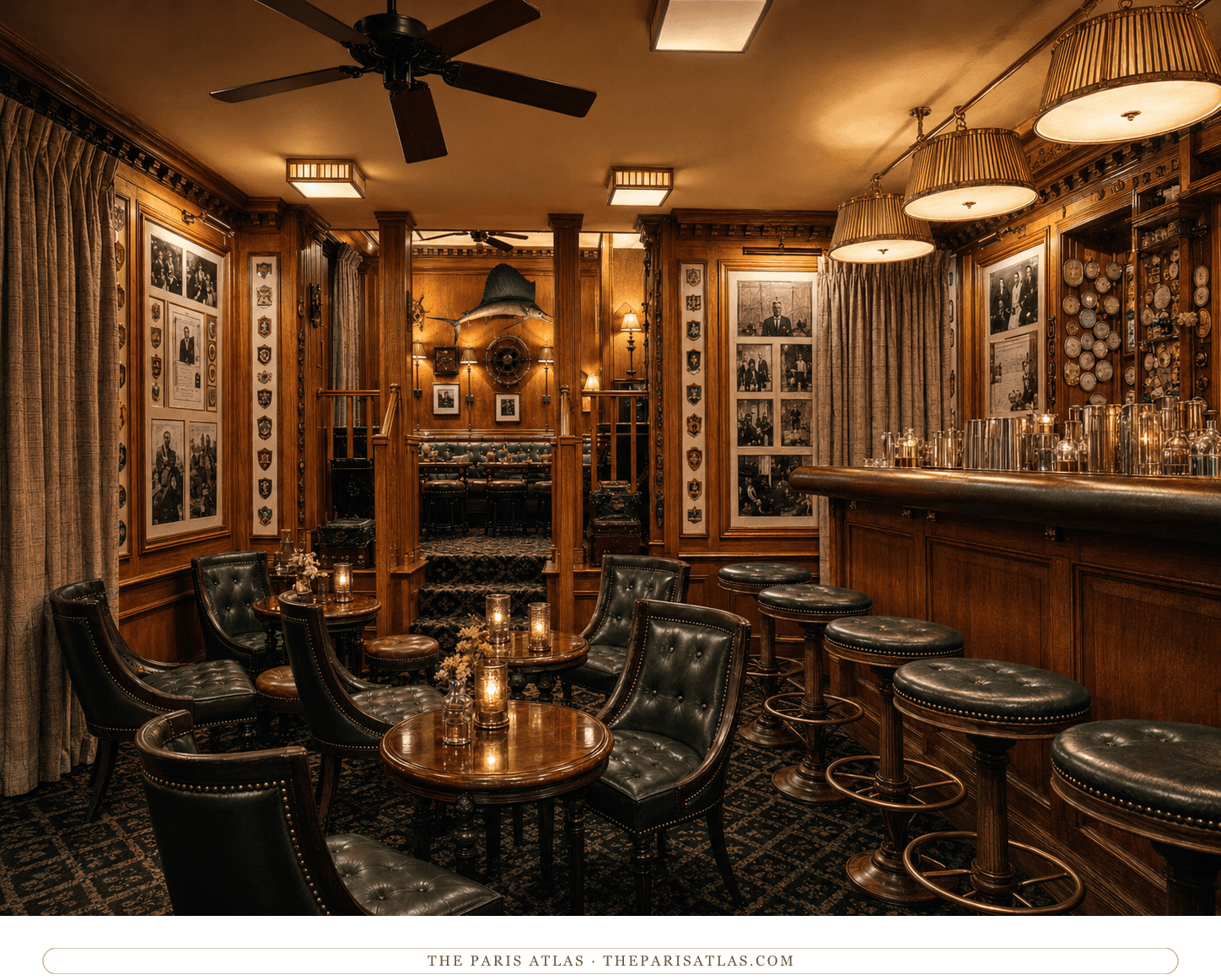
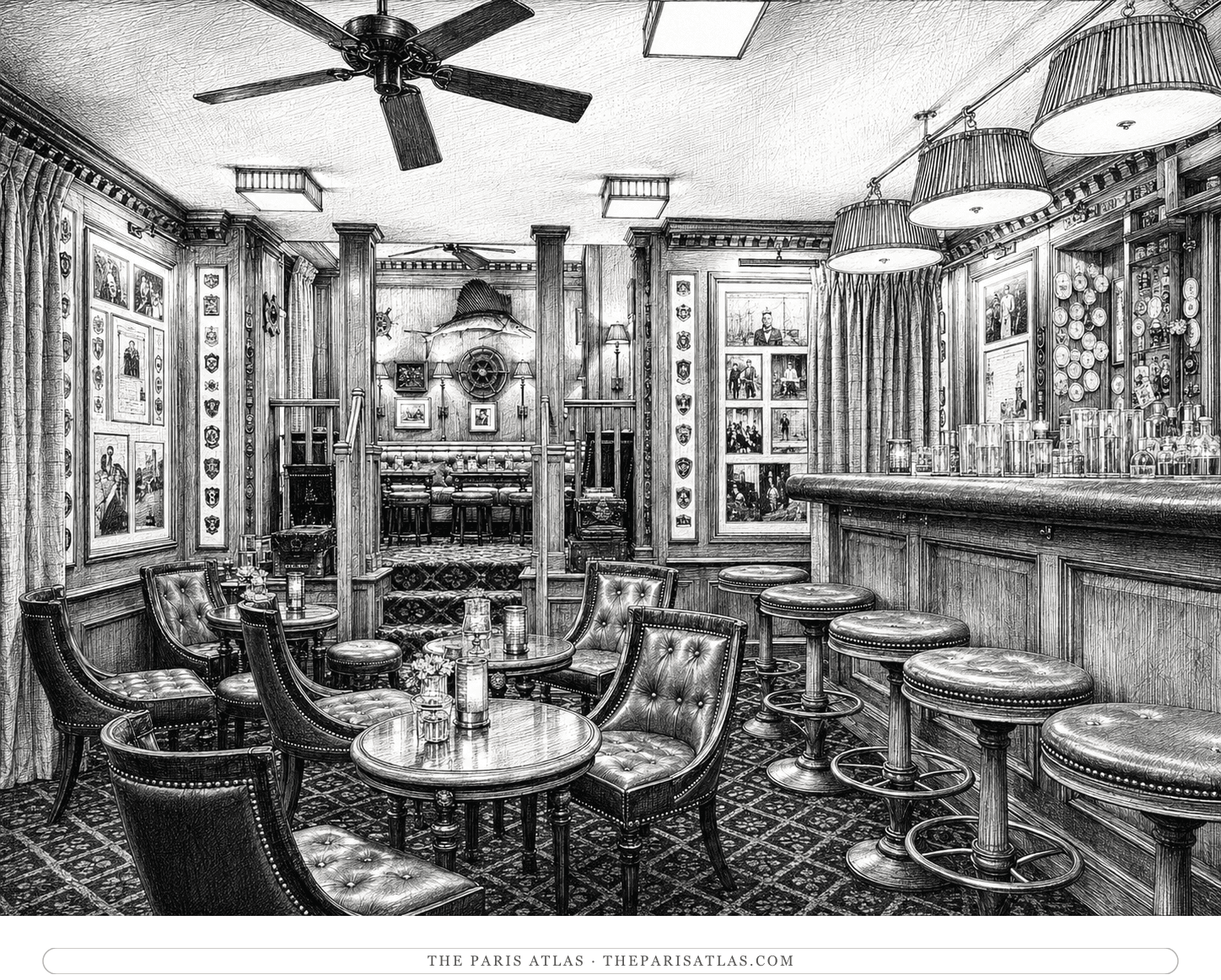
The hotel renamed its former Petit Bar in his honor in 1994, thirty-three years after his death. The bar commemorates his long association with the Ritz; it isn't a room he drank in.
Visit the place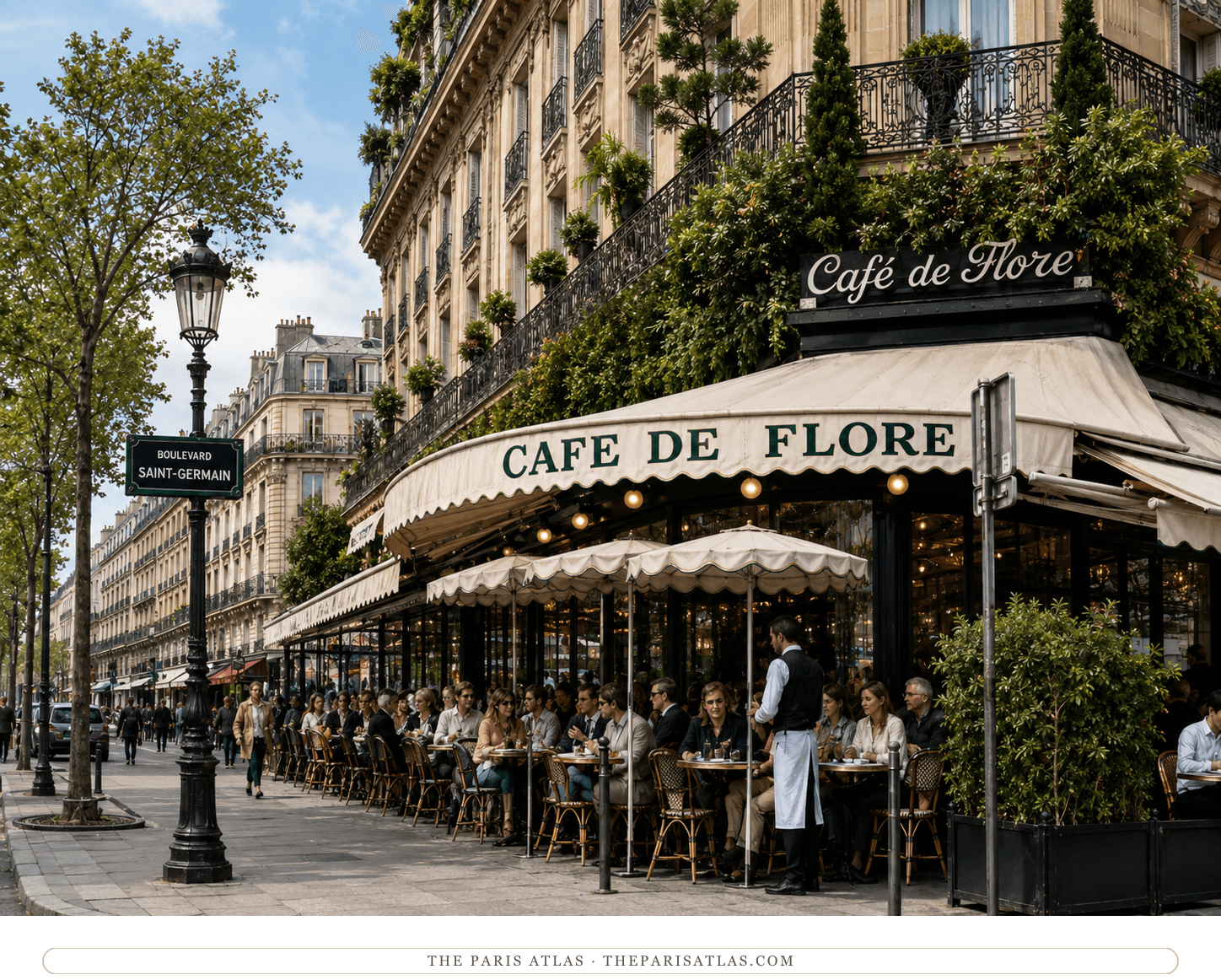
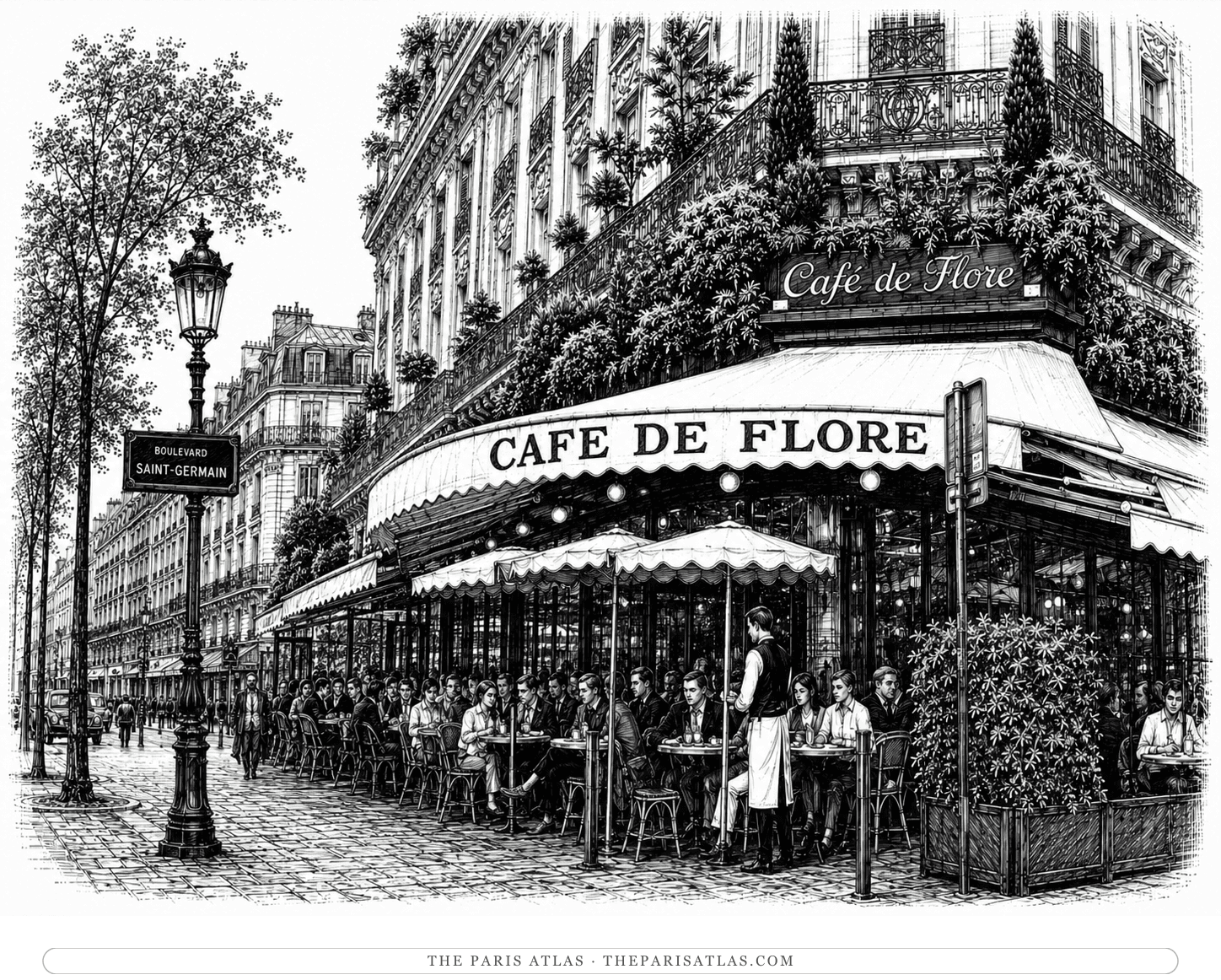
Ernest Hemingway wrote about Café de Flore in A Moveable Feast.
Visit the place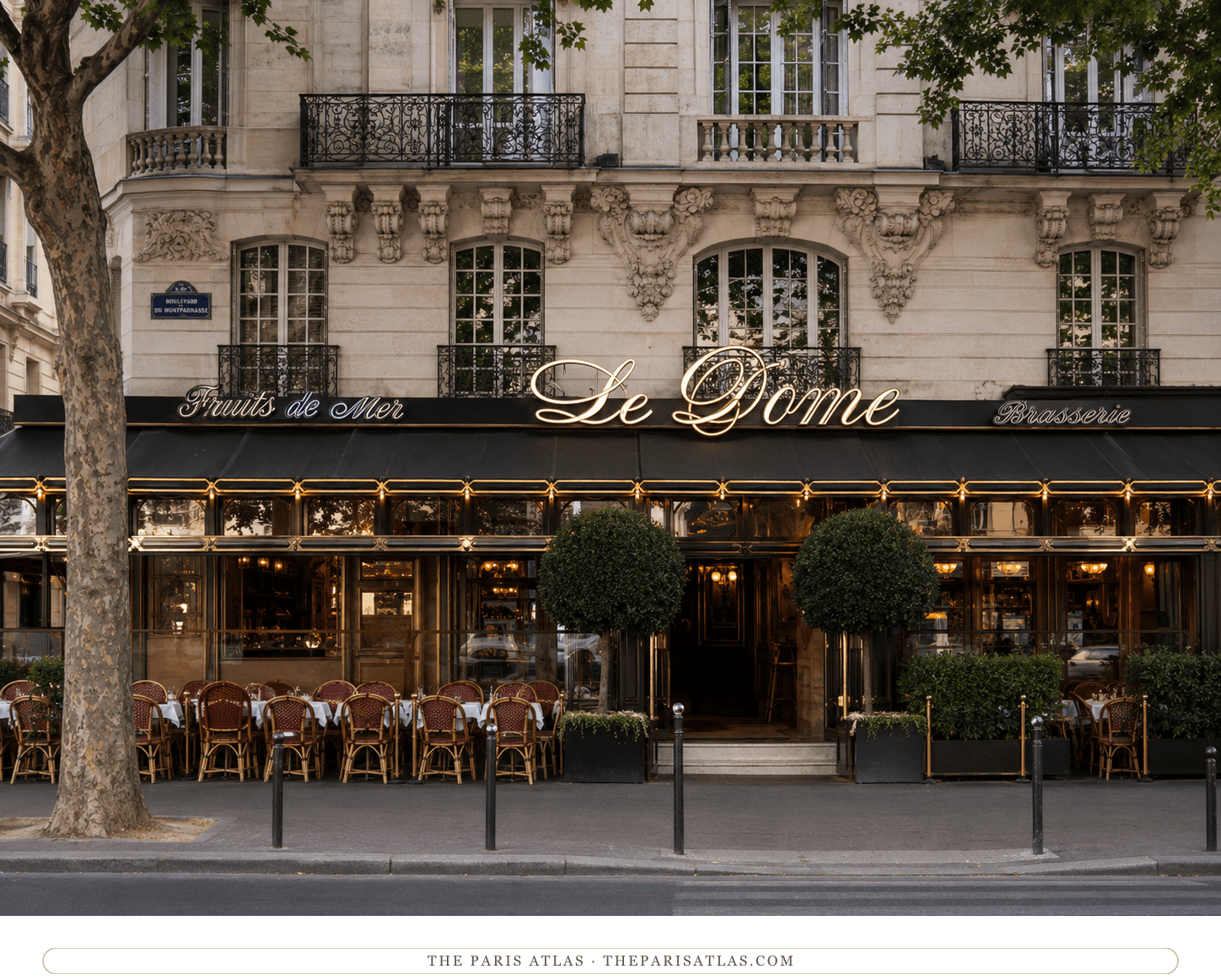
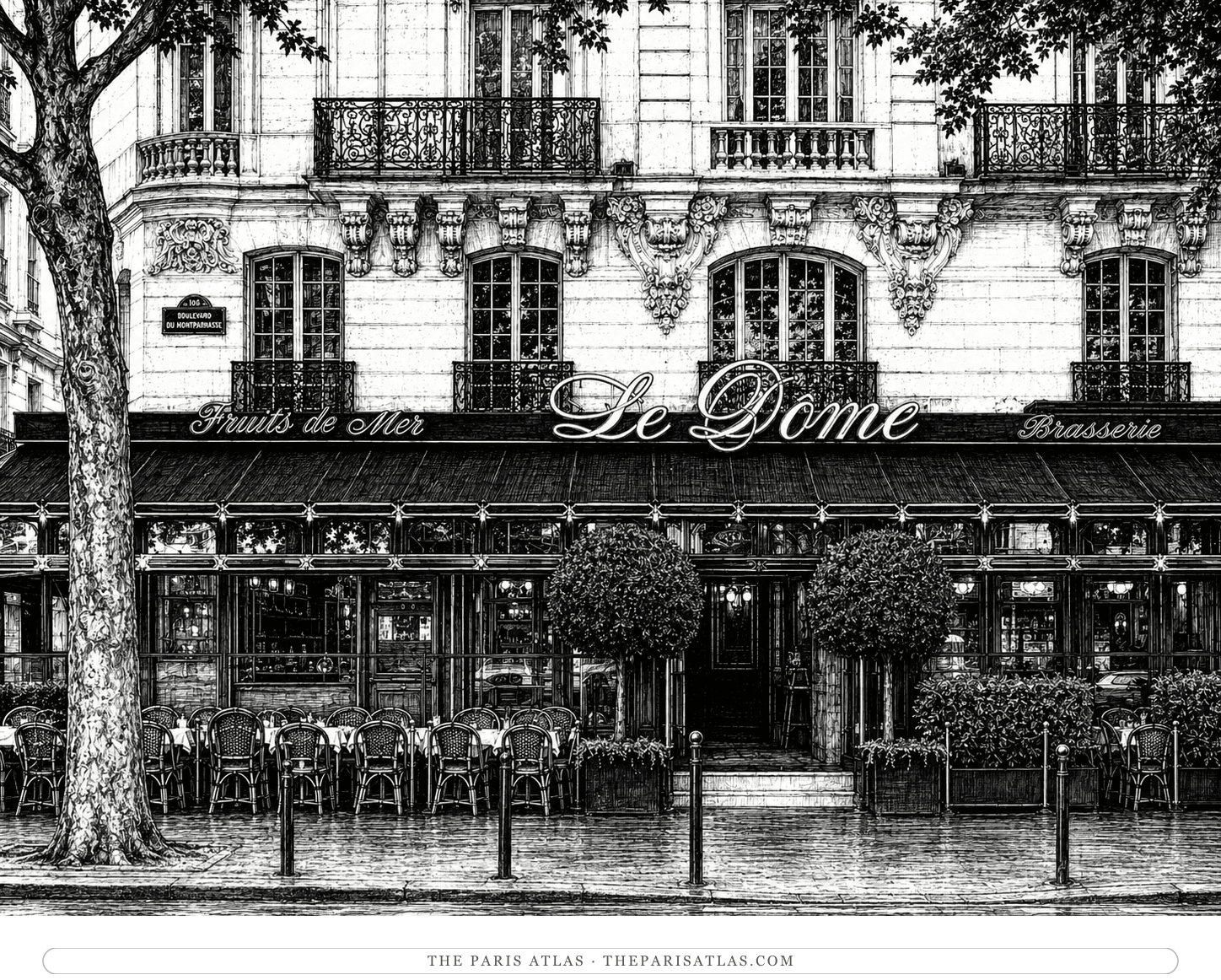
Ernest Hemingway wrote about Le Dôme in The Sun Also Rises and A Moveable Feast.
Visit the place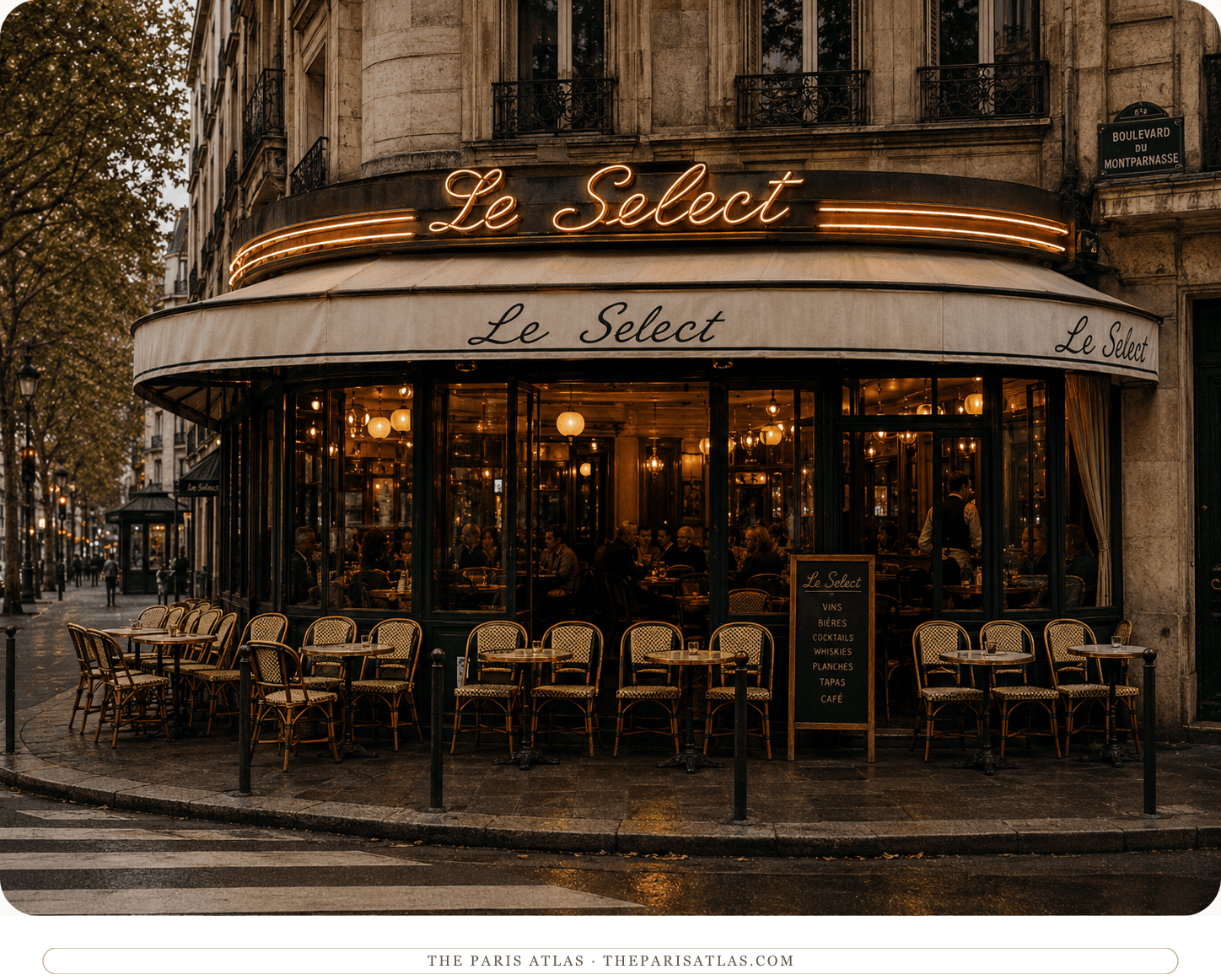
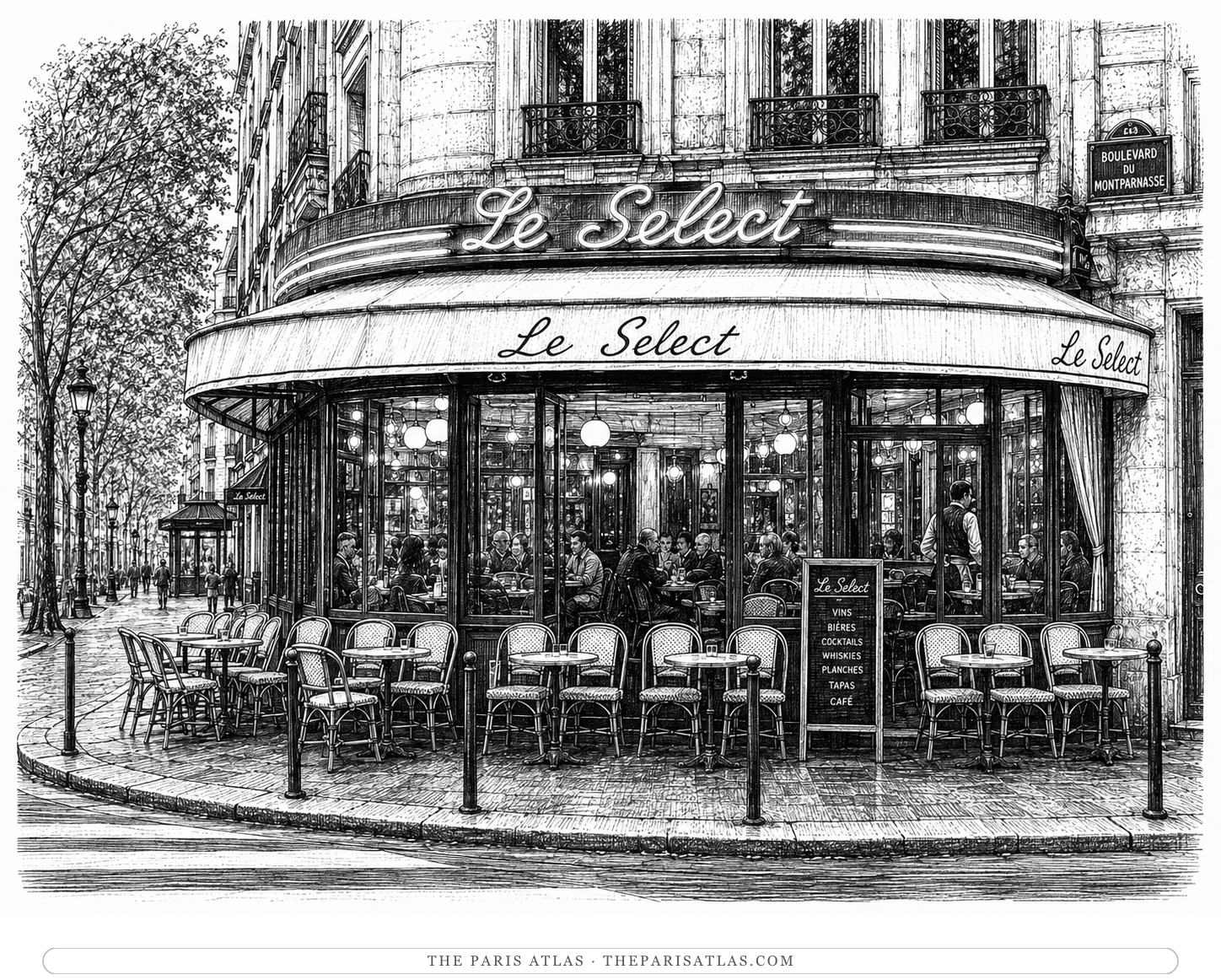
Ernest Hemingway wrote about Le Select in The Sun Also Rises.
Visit the place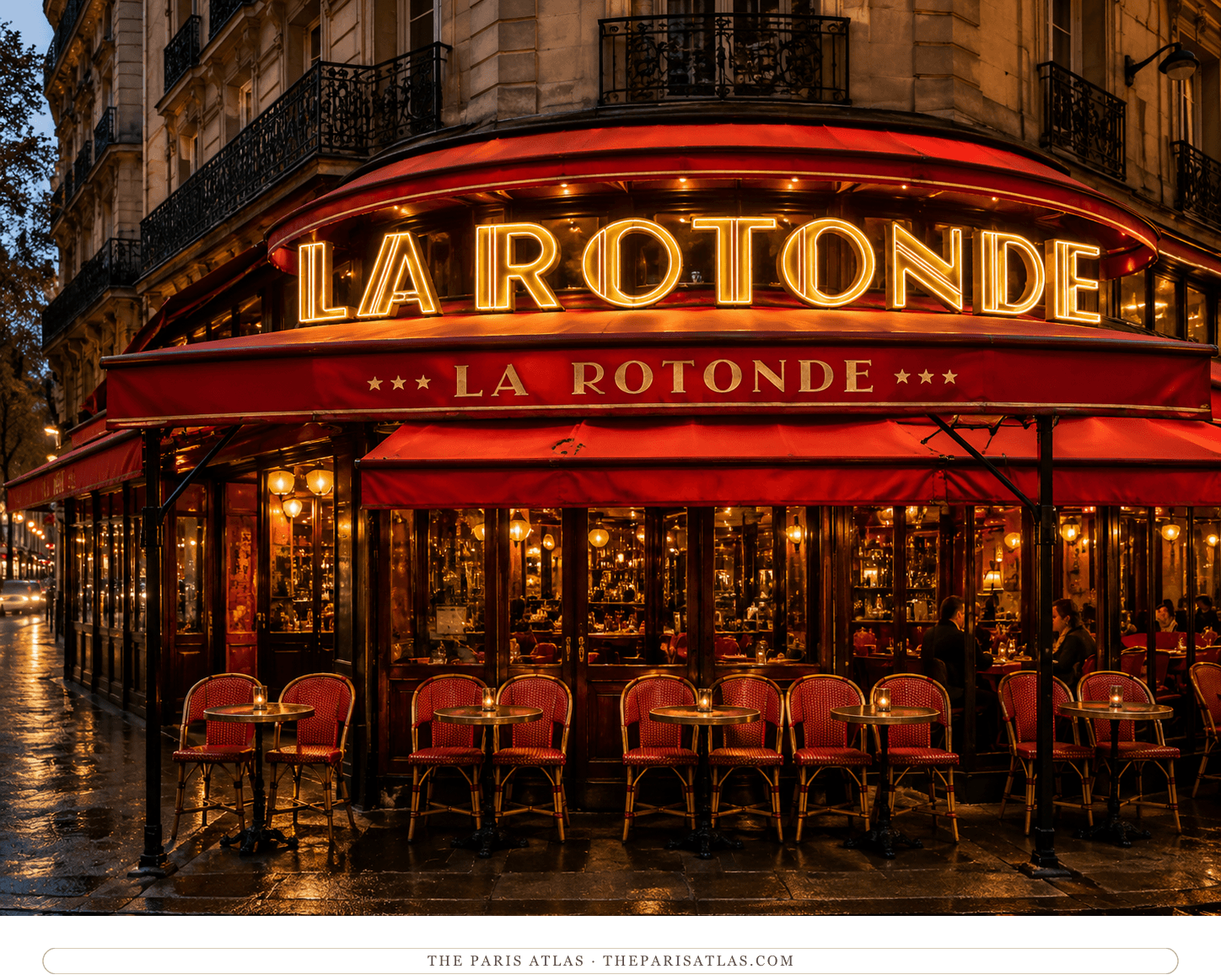
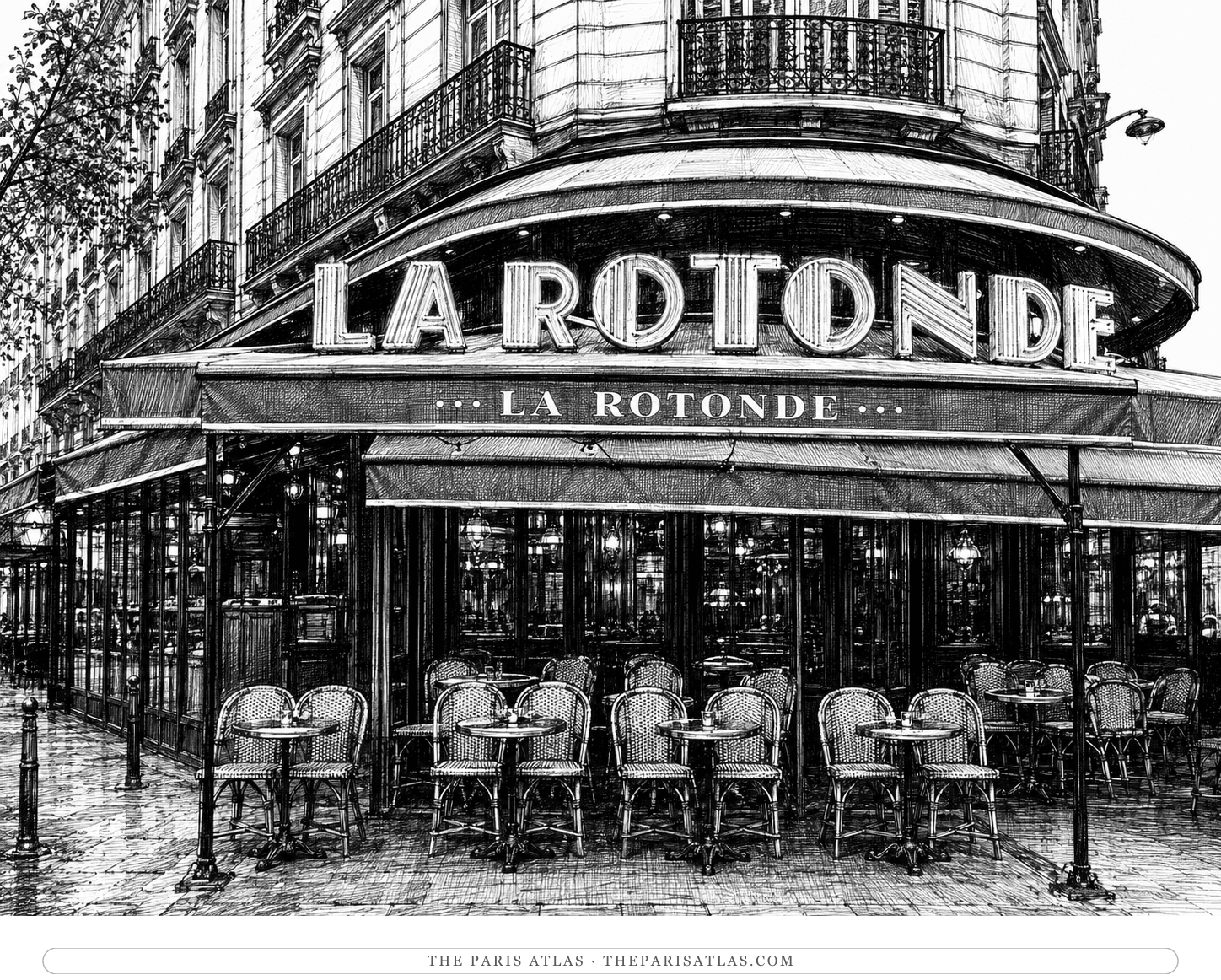
Ernest Hemingway wrote about La Rotonde in The Sun Also Rises.
Visit the place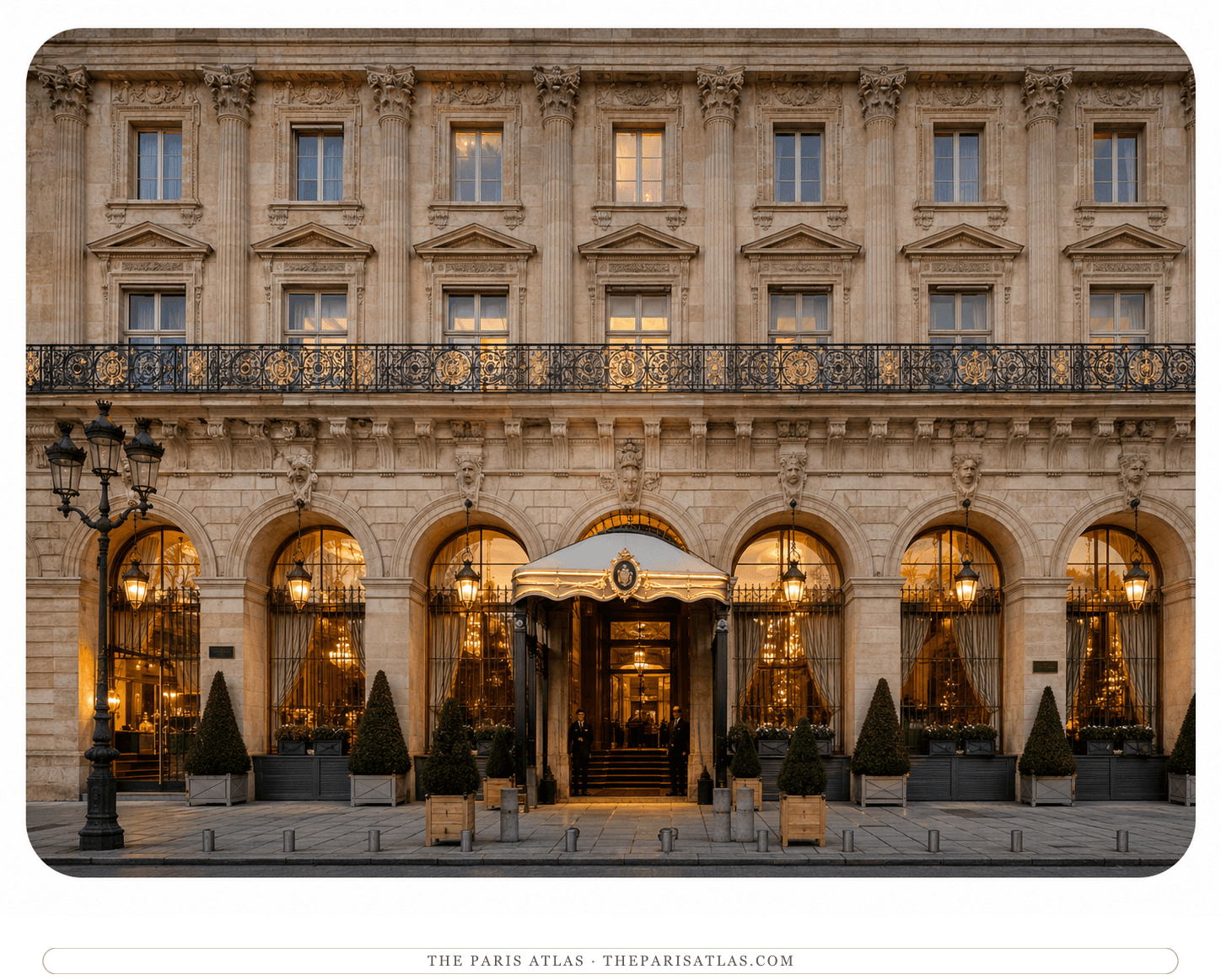
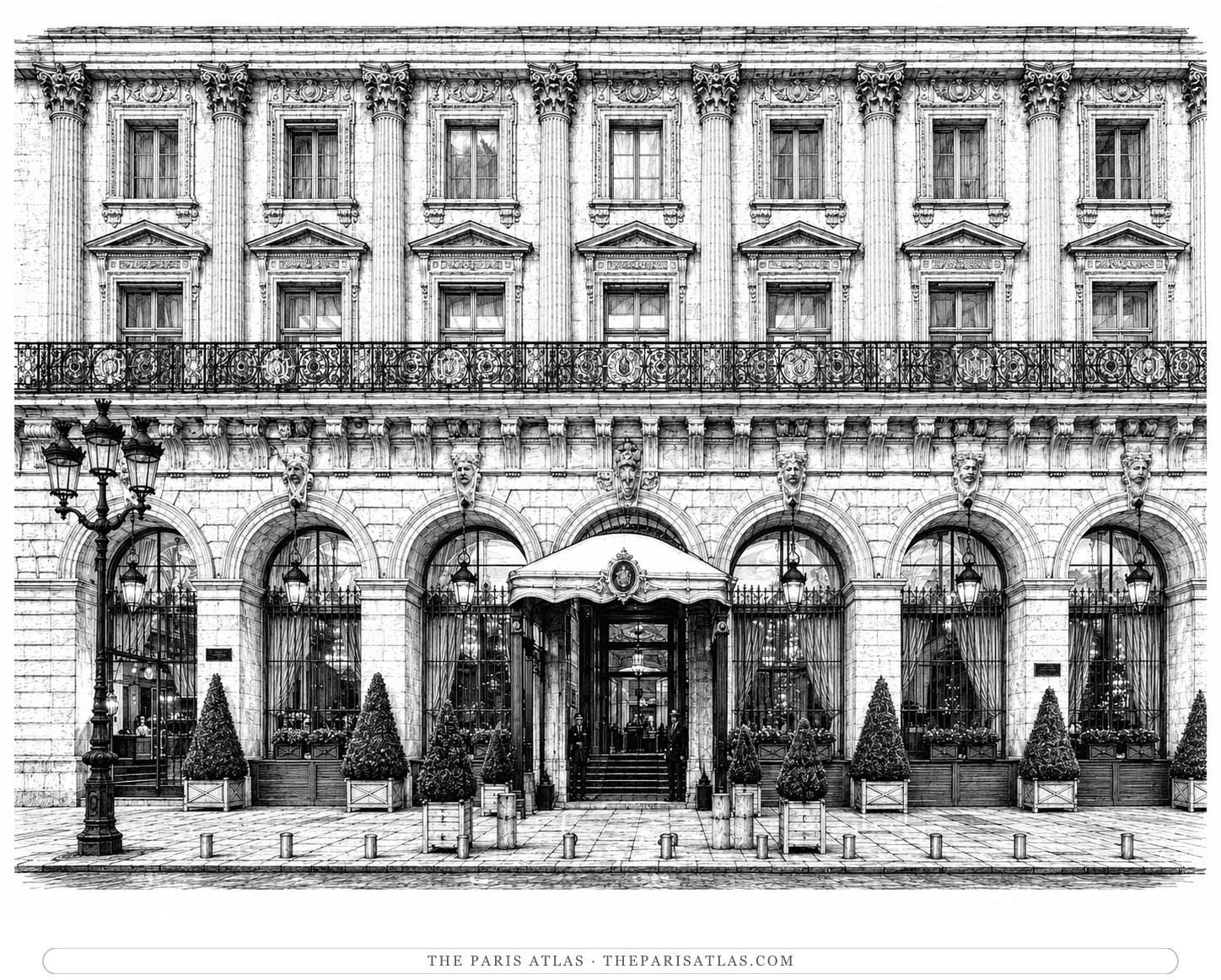
Ernest Hemingway wrote about Hôtel de Crillon in The Sun Also Rises.
Visit the place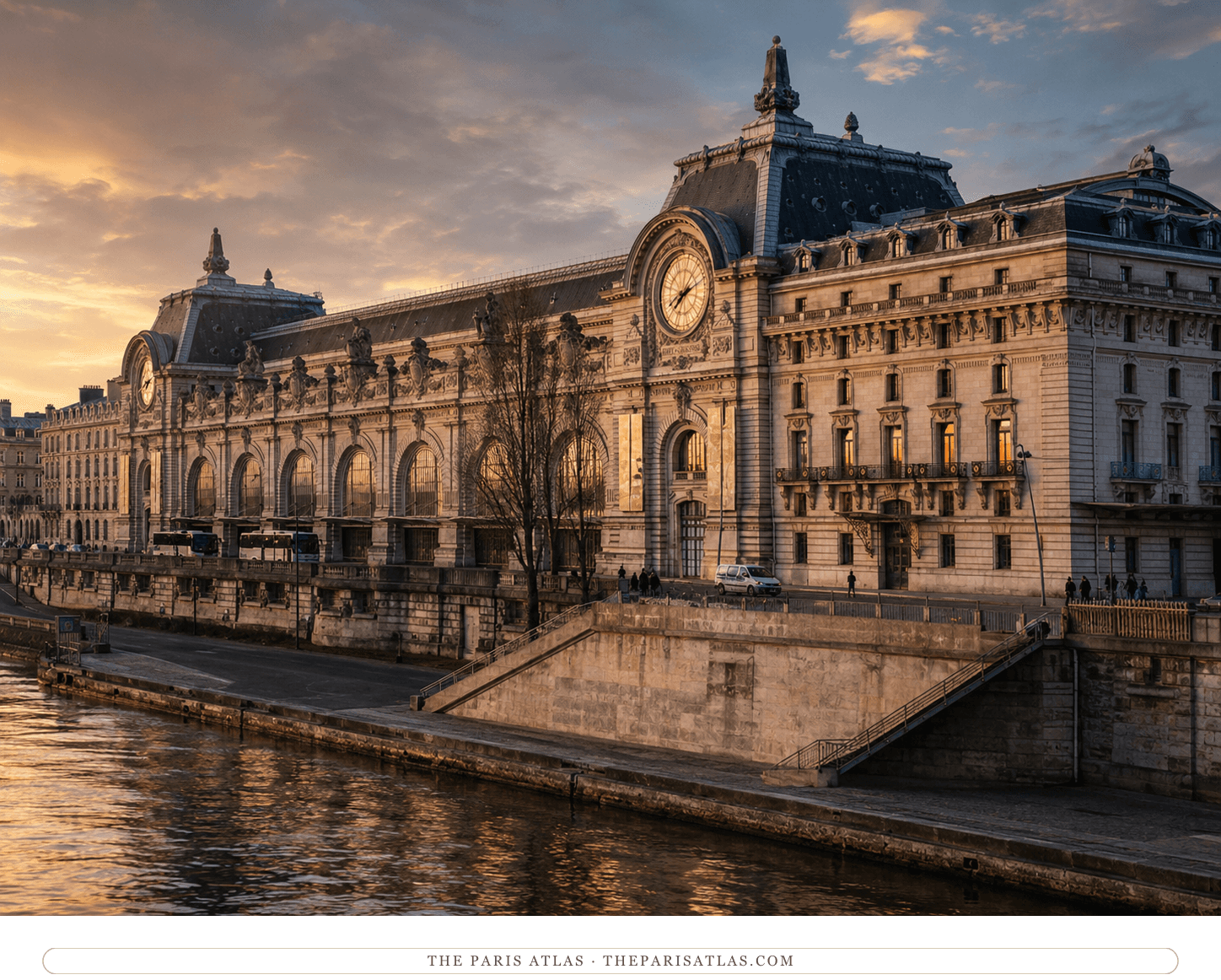
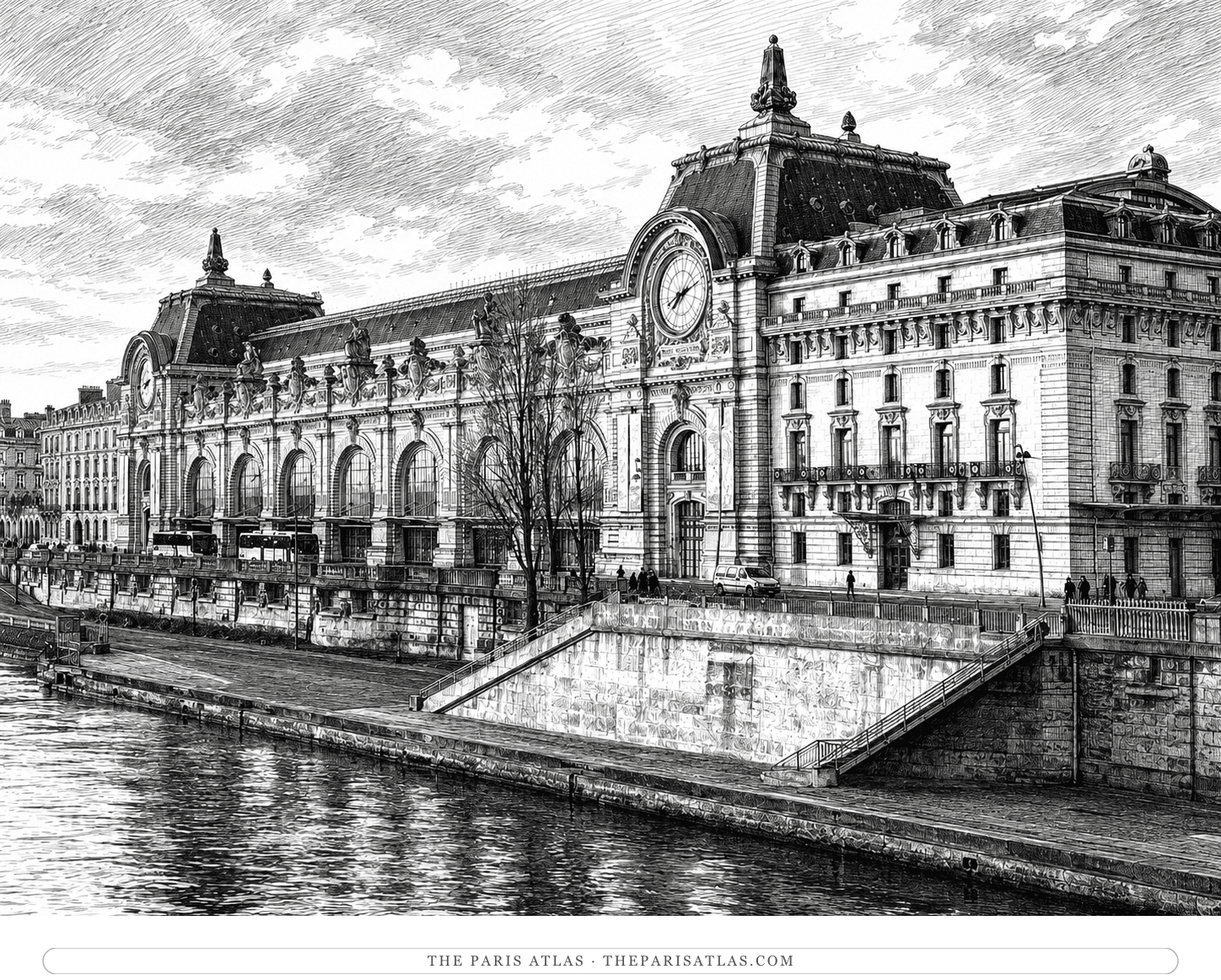
Ernest Hemingway wrote about Gare d'Orsay in The Sun Also Rises.
Visit the place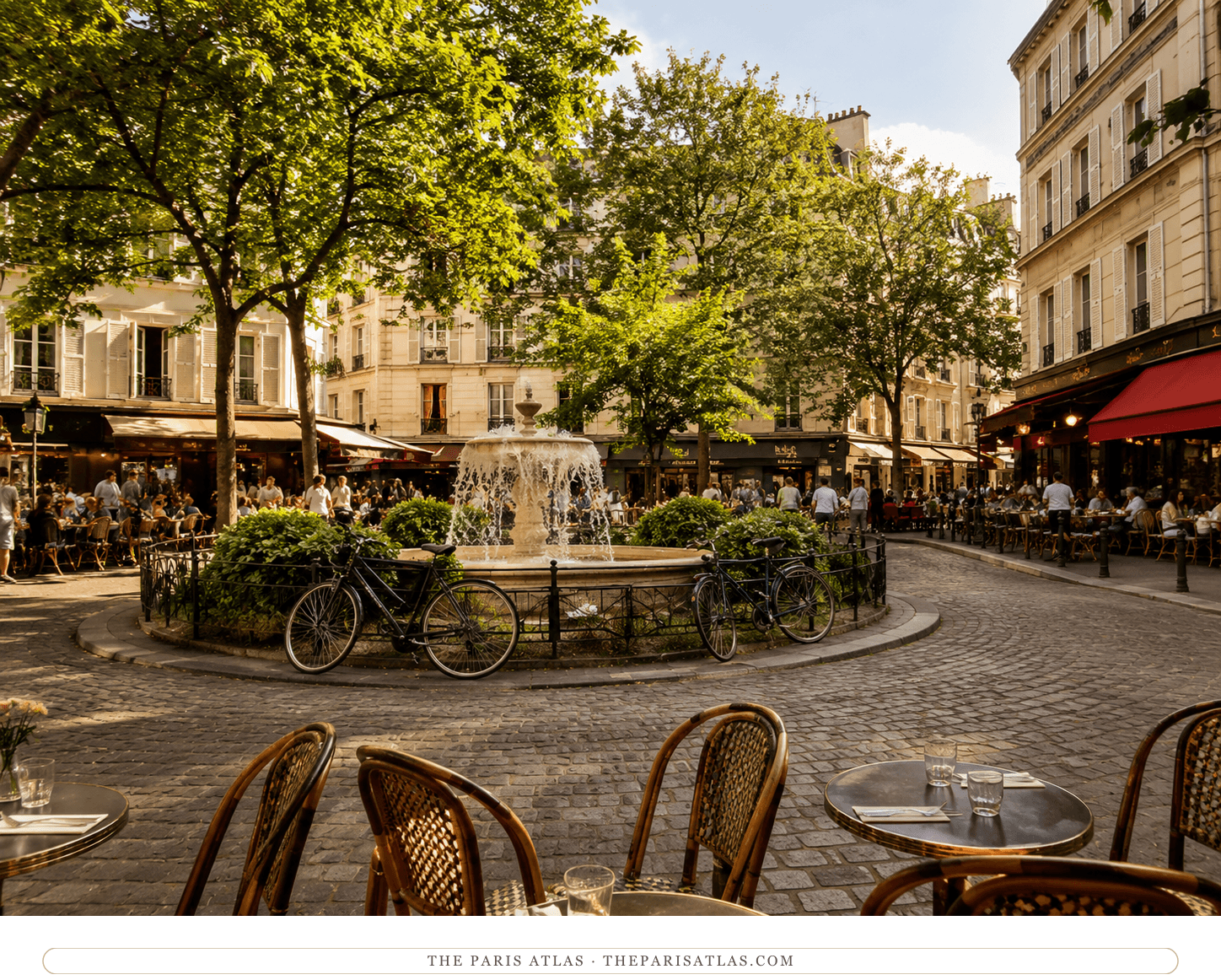
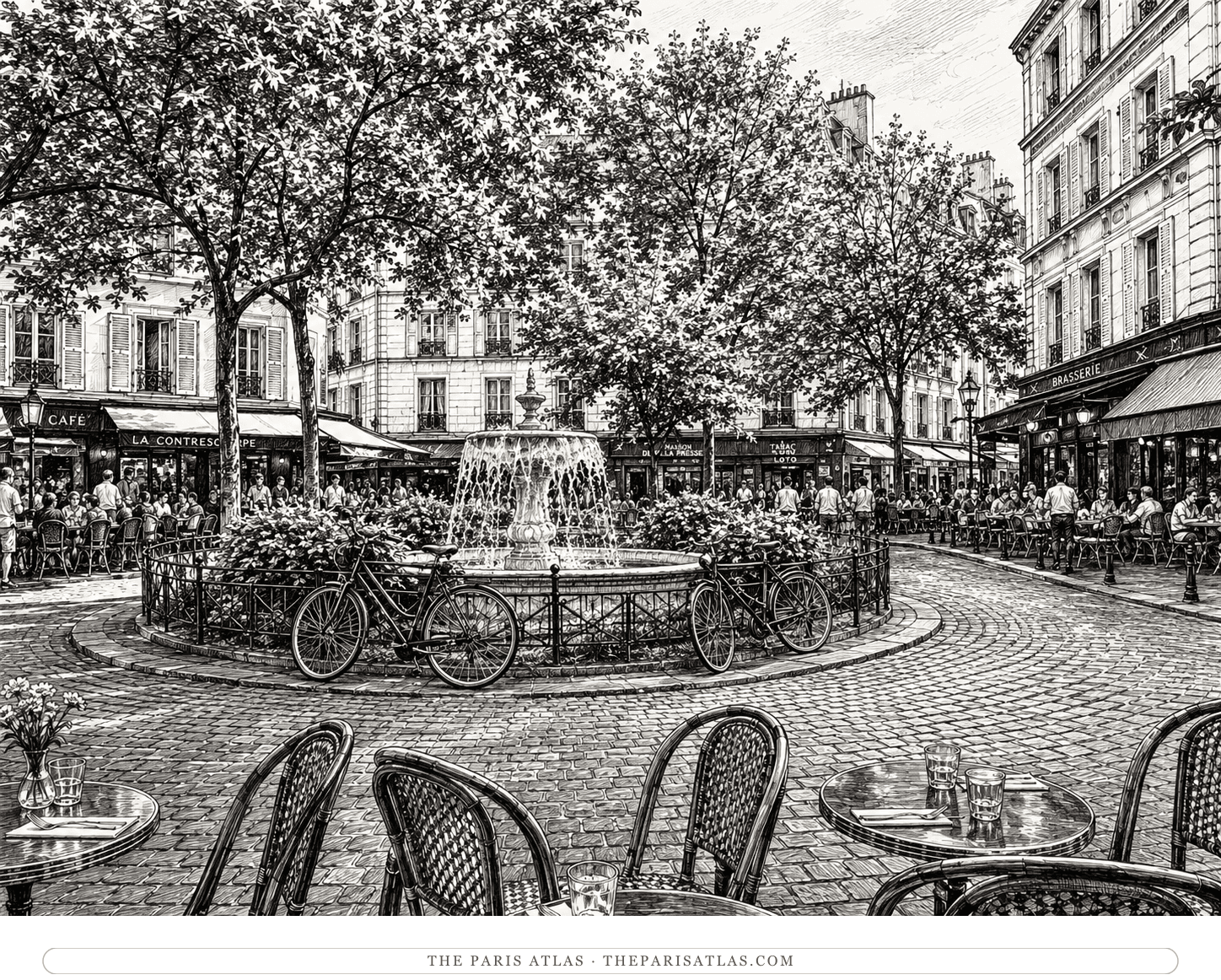
Ernest Hemingway wrote about Place de la Contrescarpe in The Sun Also Rises.
Visit the place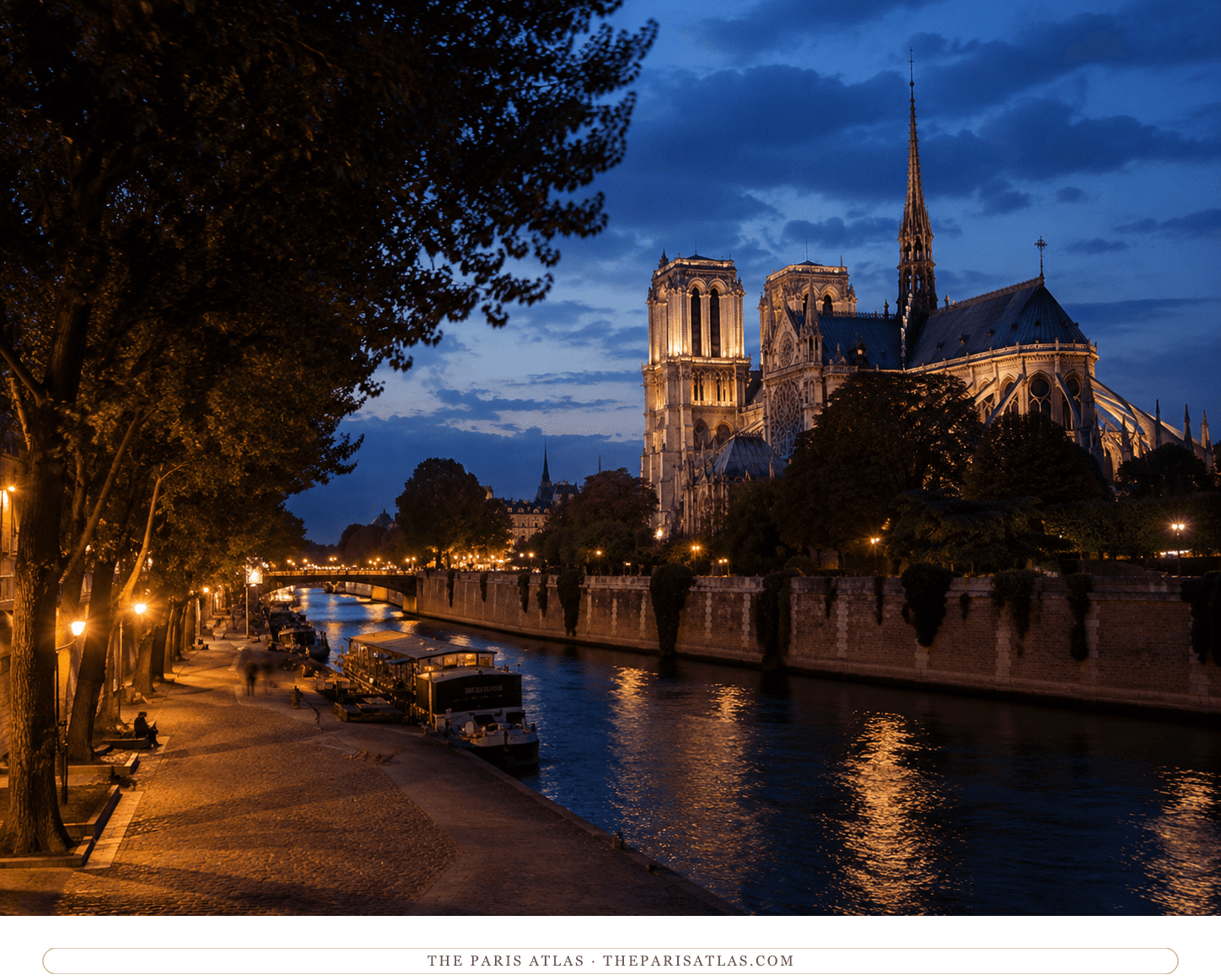
Ernest Hemingway wrote about Notre-Dame de Paris in The Sun Also Rises.
Visit the place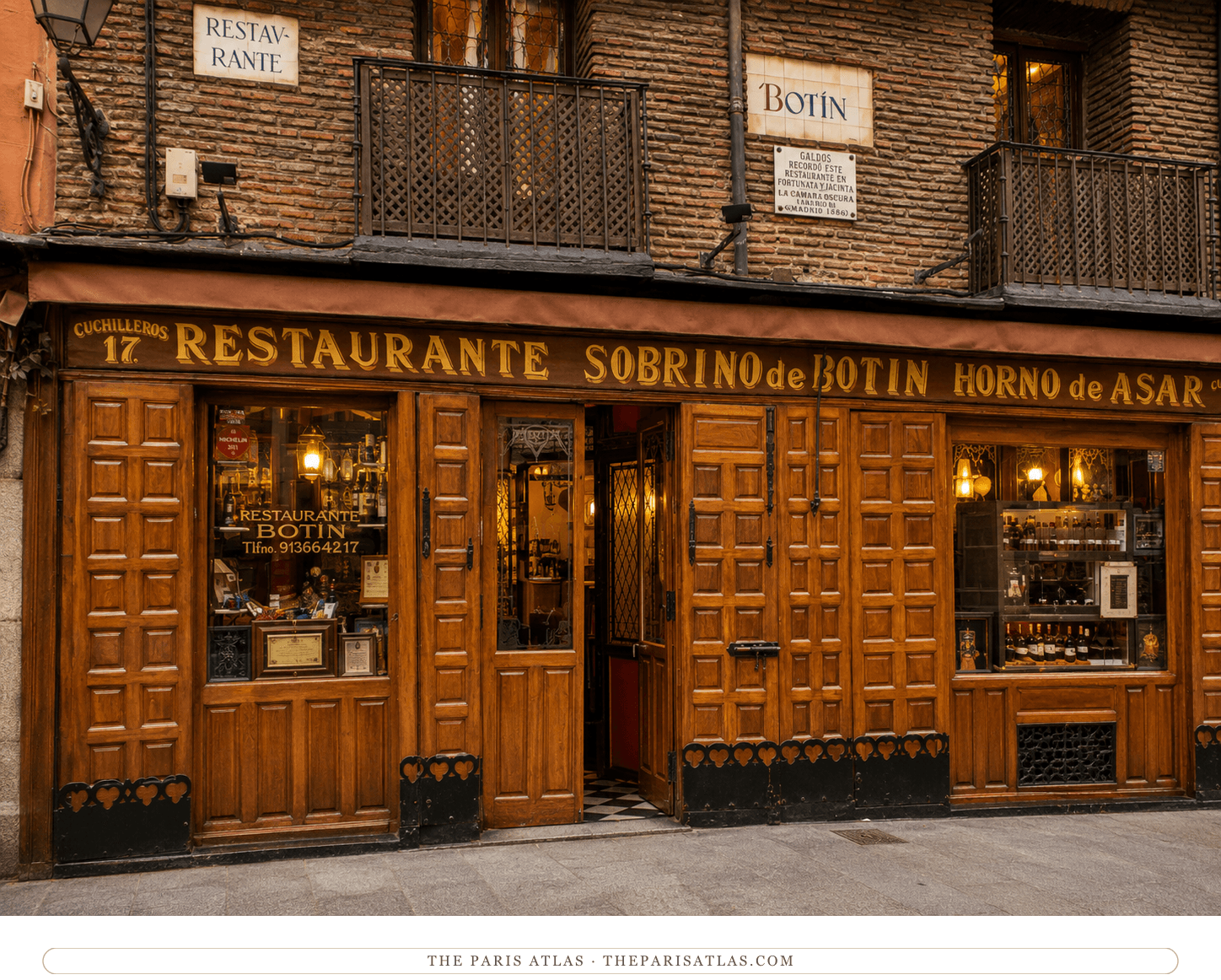
Ernest Hemingway wrote about Restaurante Botín in The Sun Also Rises.
Visit the place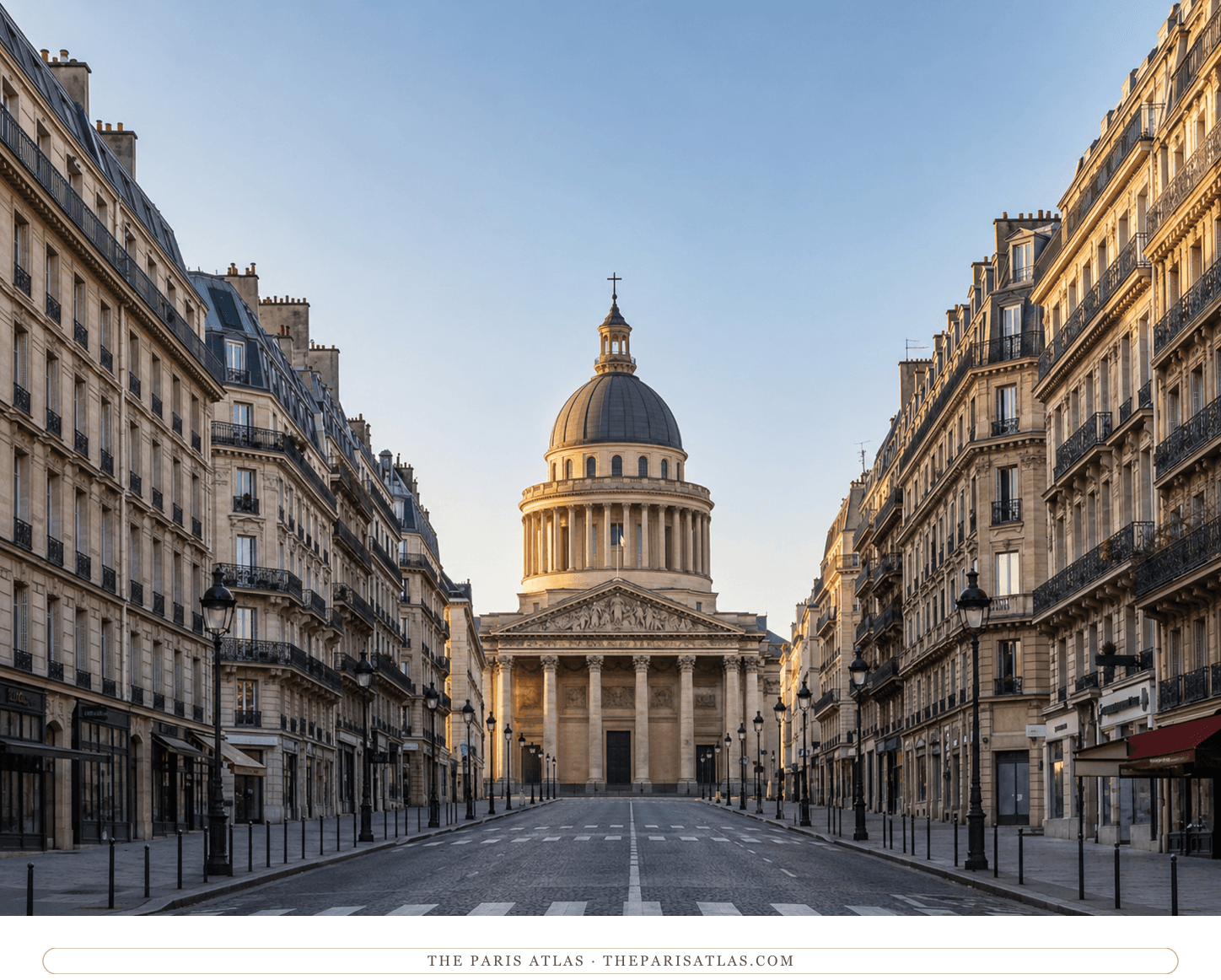
Ernest Hemingway wrote about Rue Soufflot in The Sun Also Rises.
Visit the place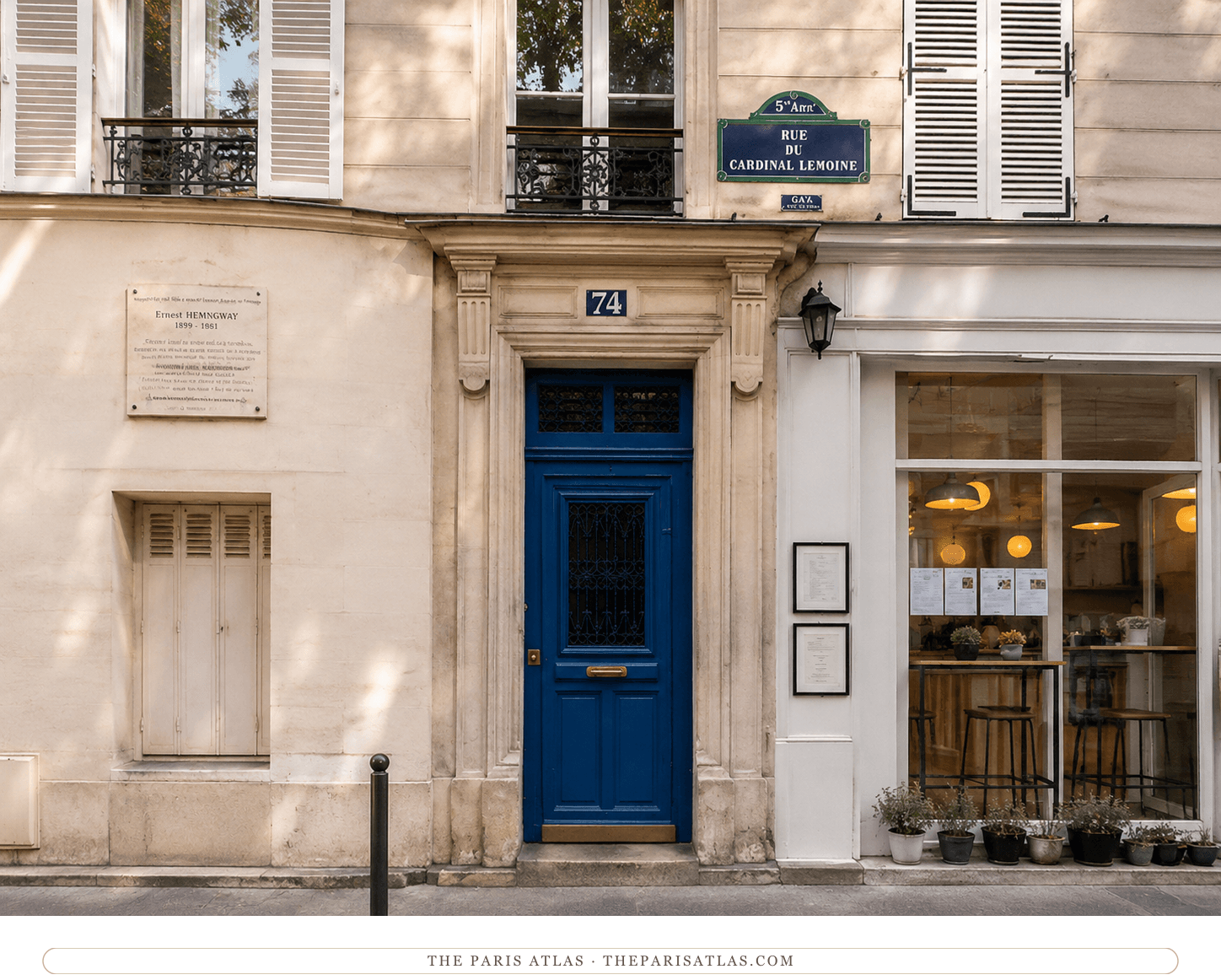
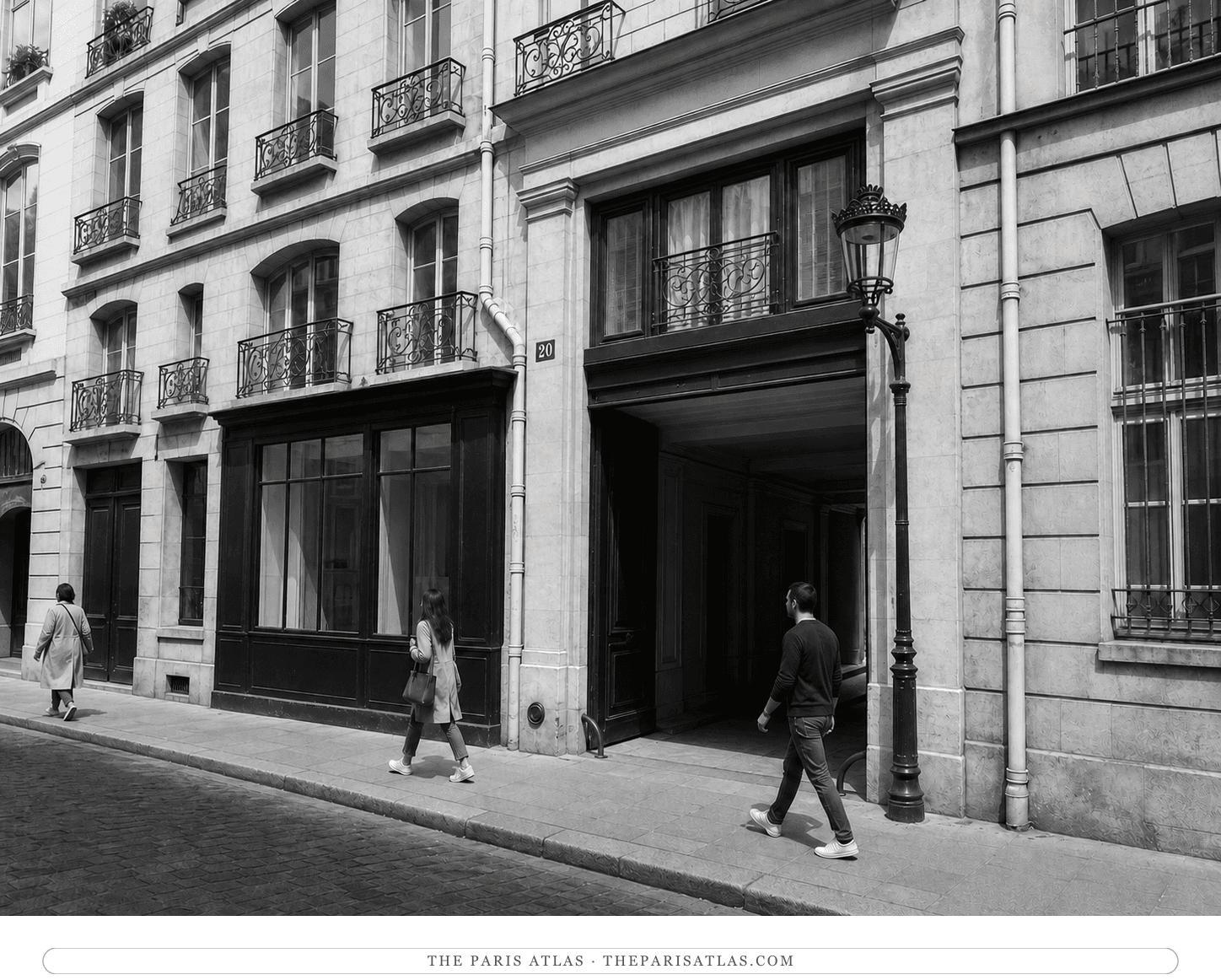
Ernest and Hadley Hemingway's first Paris apartment — the fifth-floor walk-up described in the opening pages of A Moveable Feast.
Visit the place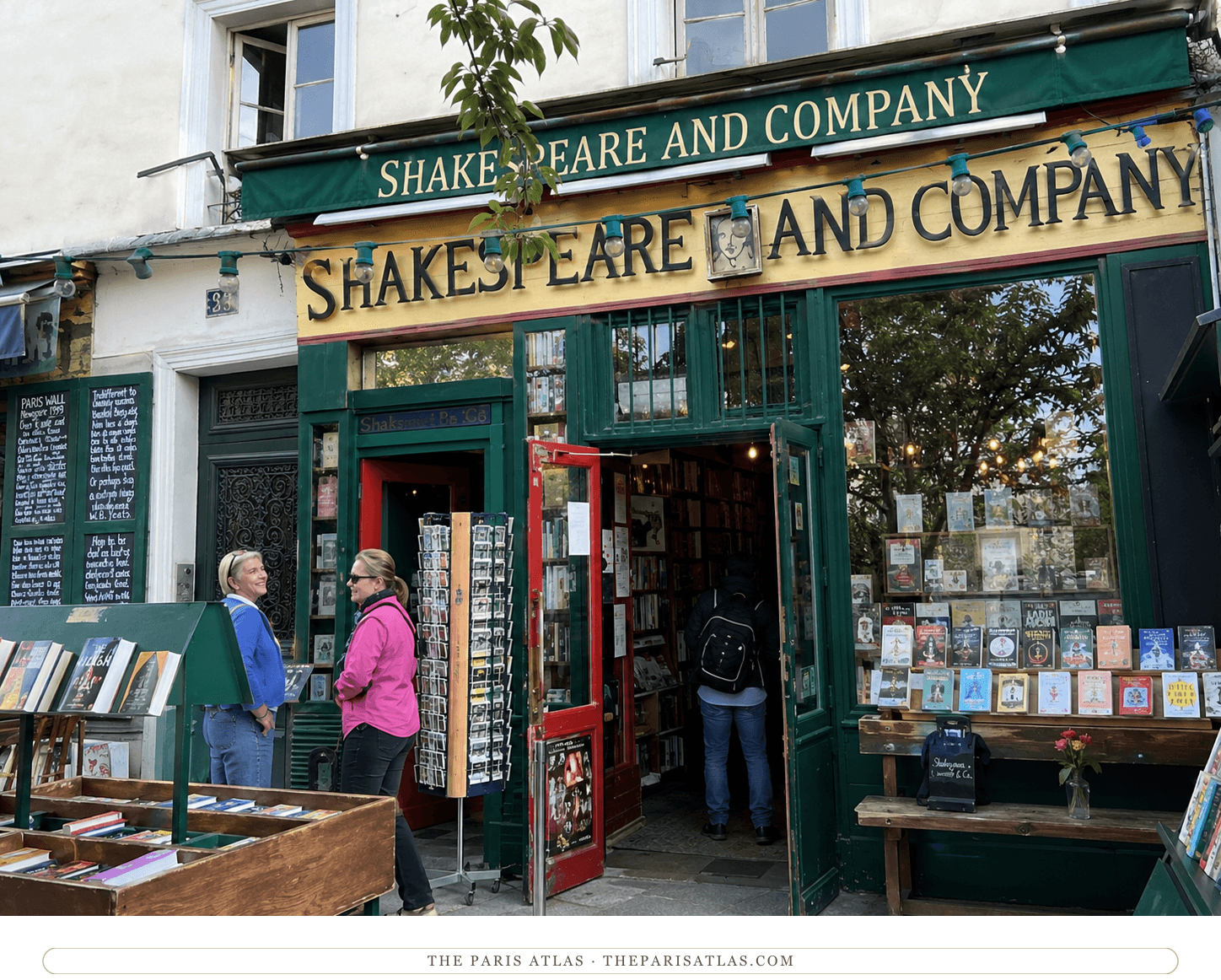
Too poor to buy books when he arrived, he borrowed from Beach's lending library by the armload, on credit.
Visit the place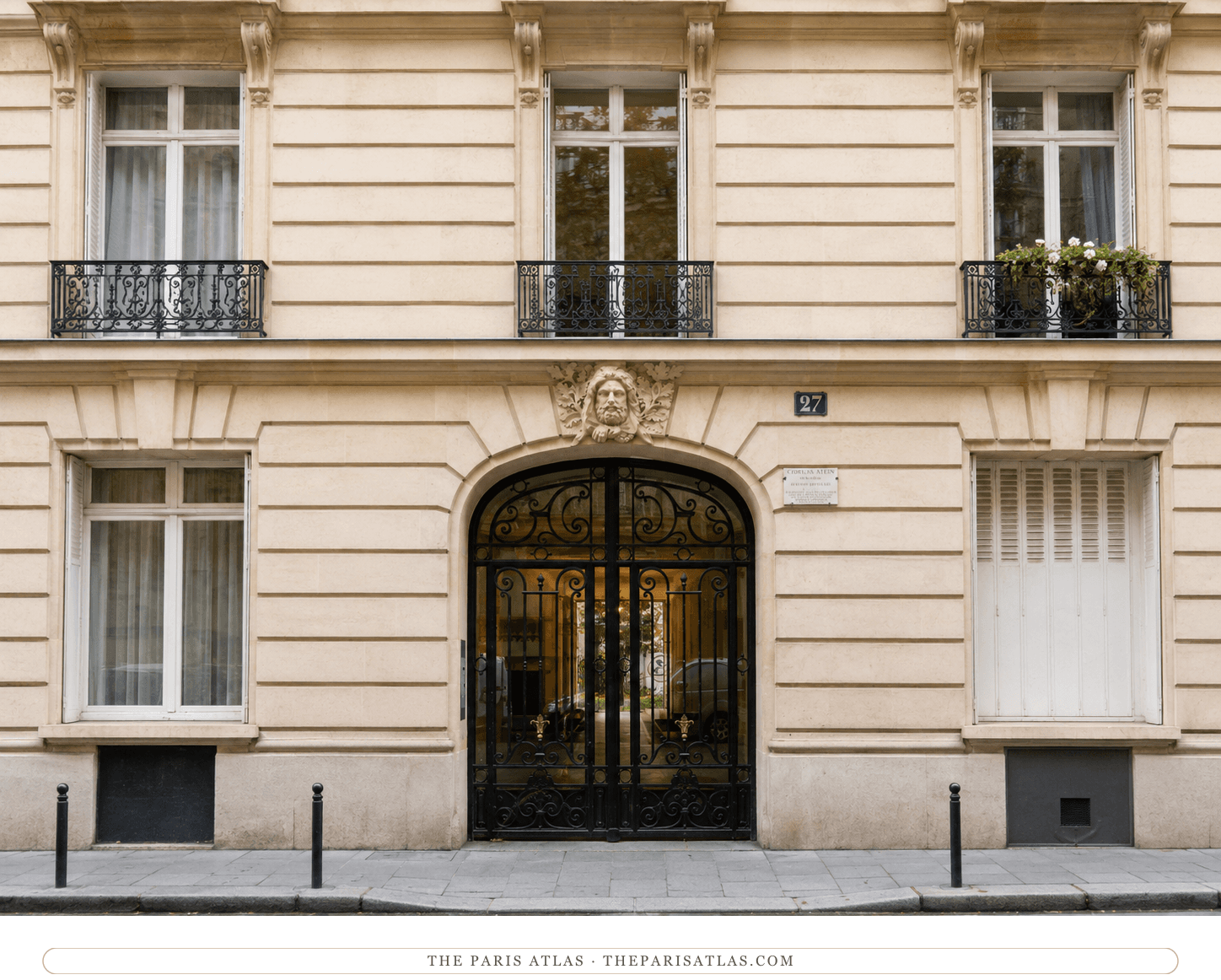
A regular at Stein's salon from his first spring in Paris — instructed, encouraged, and eventually told he belonged to a lost generation.
Visit the place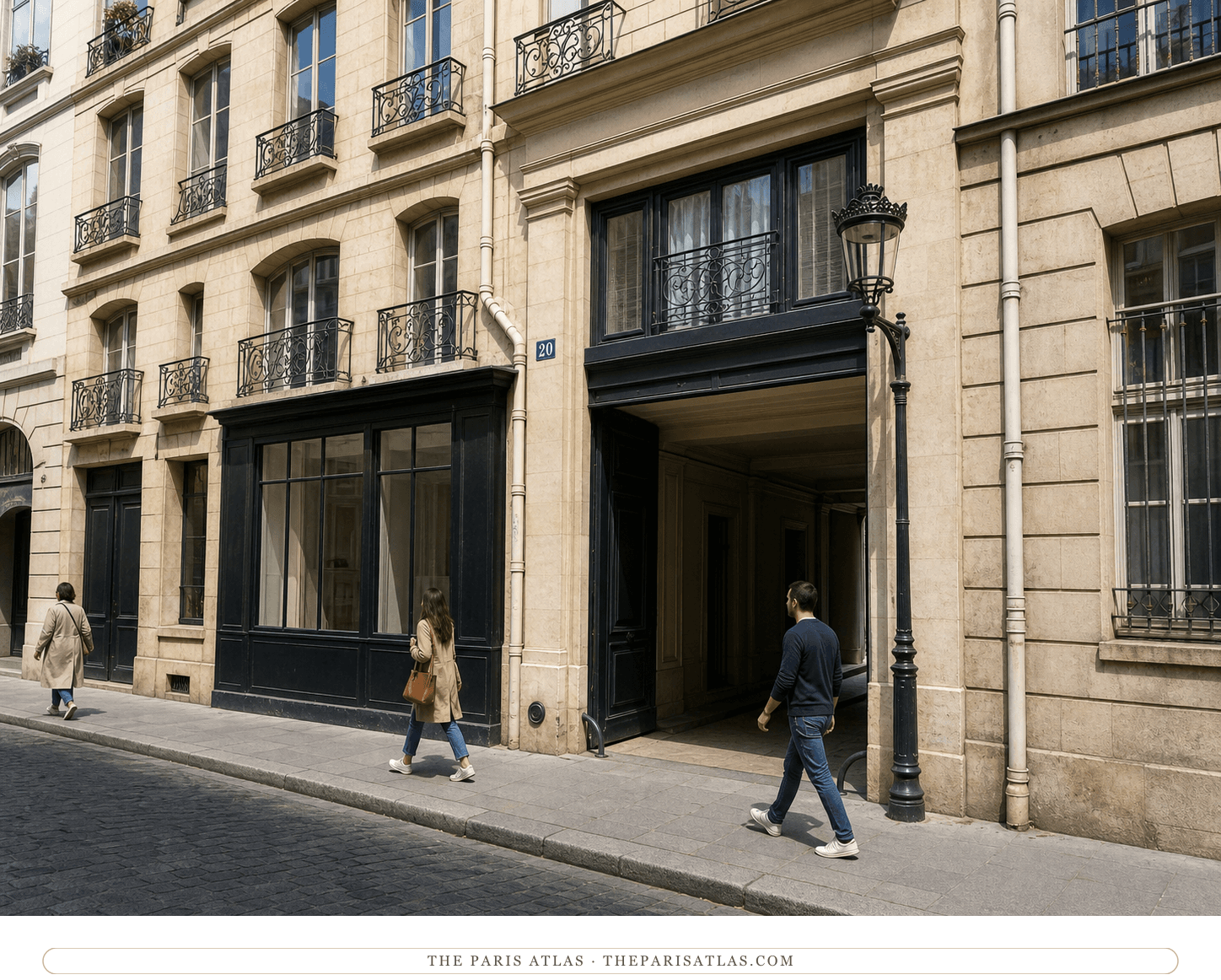
Hemingway went a few times rather than regularly, and wrote afterwards that other well-off American and French women kept salons but Barney was the only one with a small Greek temple in her garden. The sources do not date the visits.
Visit the place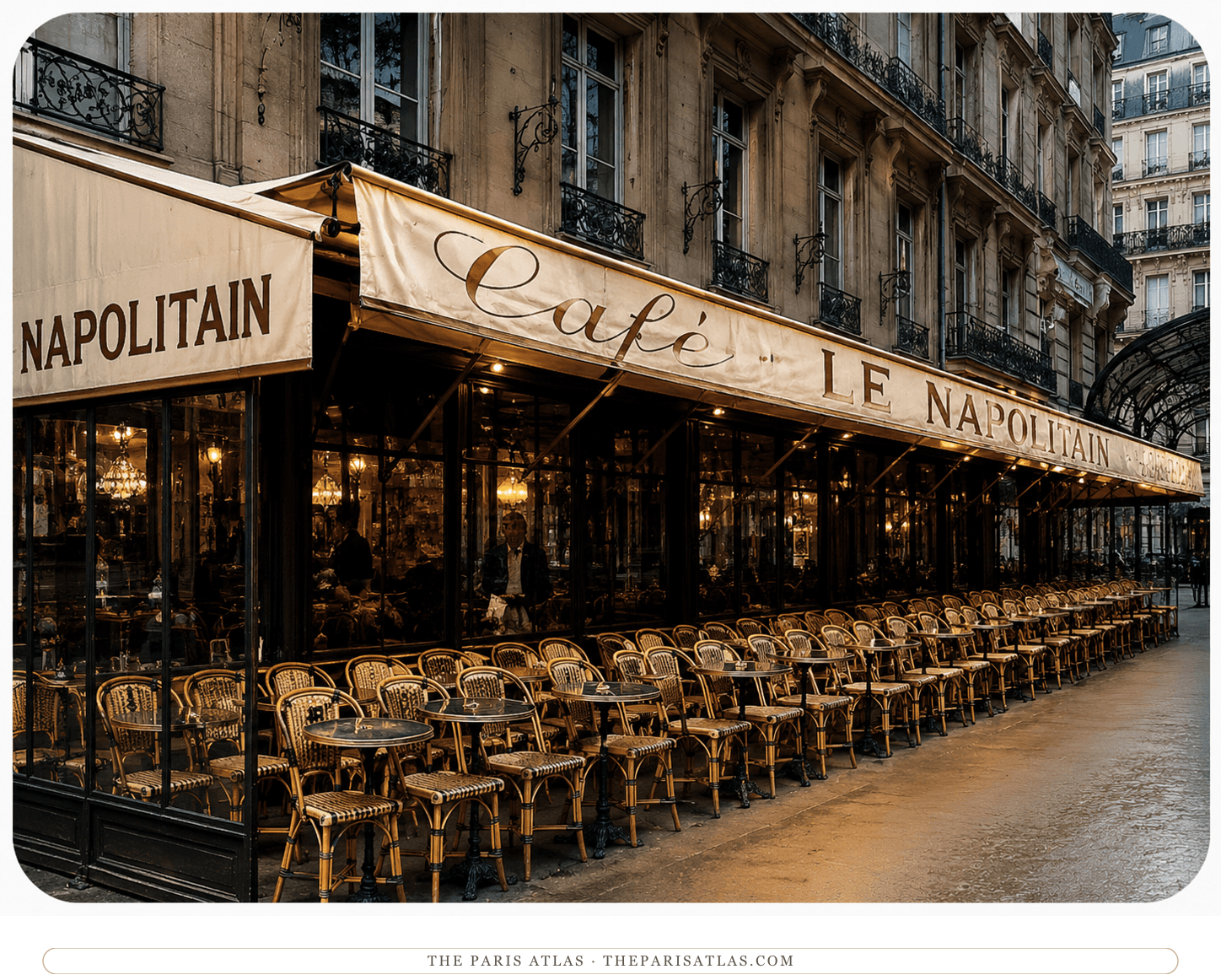
Ernest Hemingway wrote about Café Napolitain in The Sun Also Rises.
Visit the place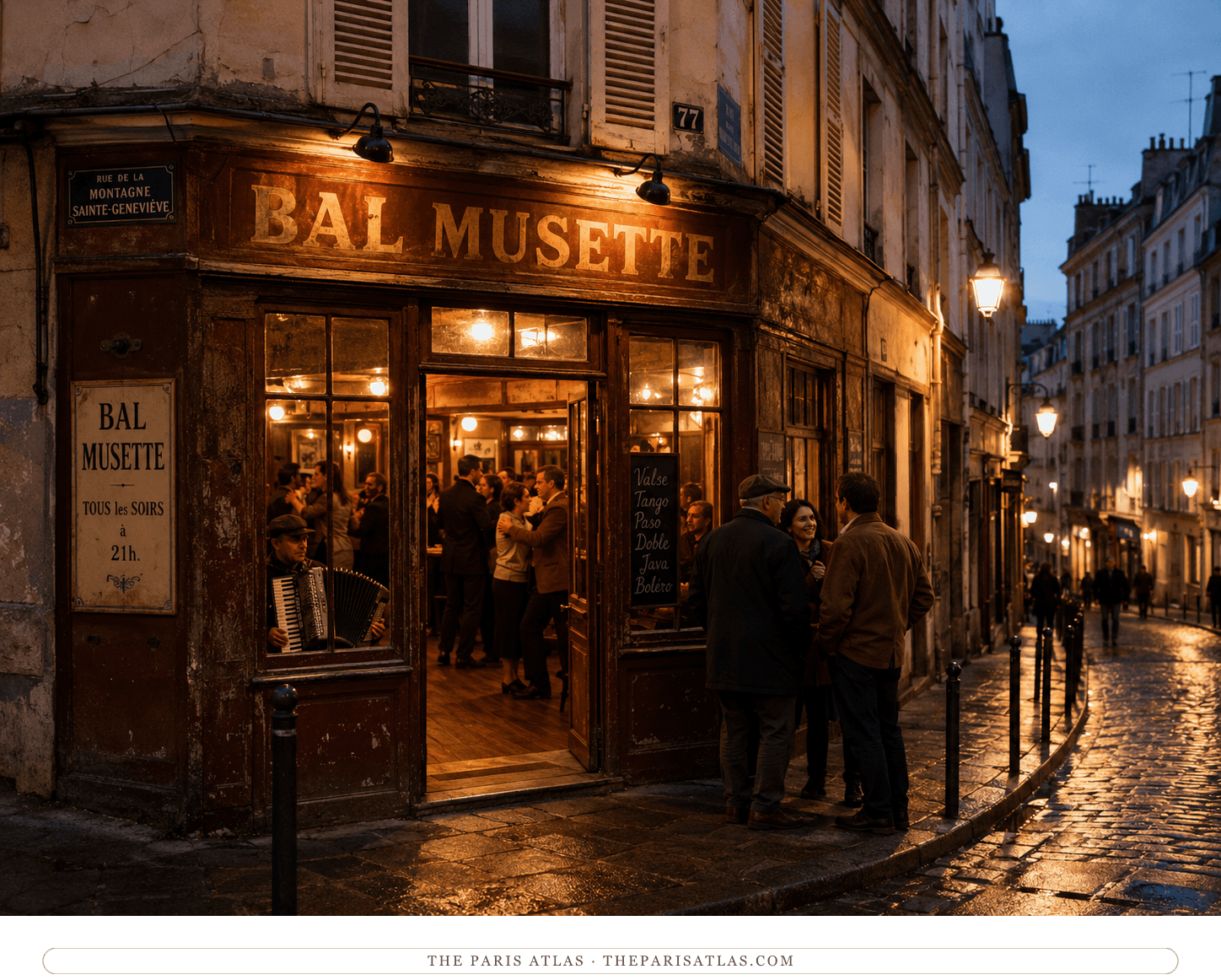
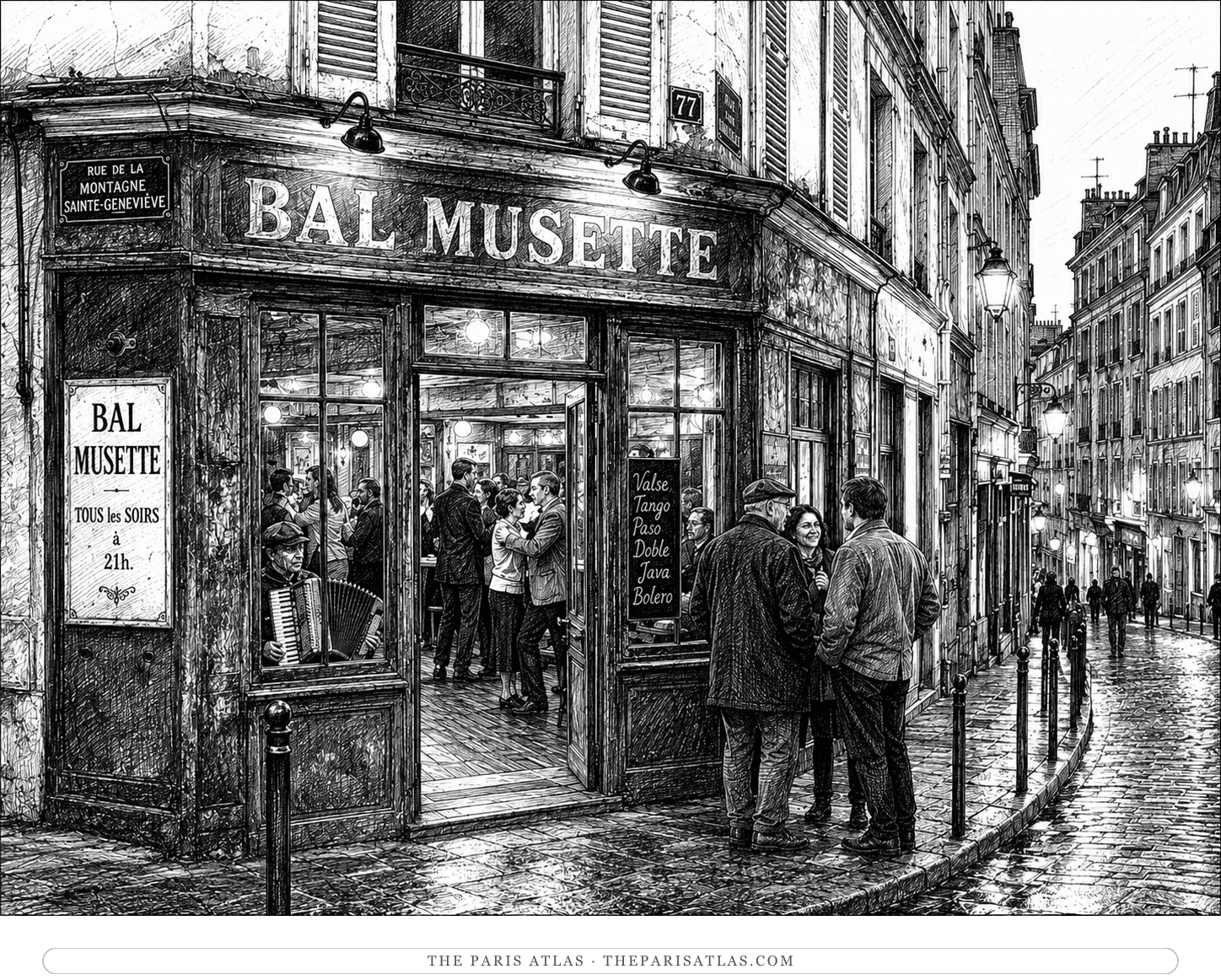
Ernest Hemingway wrote about Bal Musette in The Sun Also Rises.
Visit the place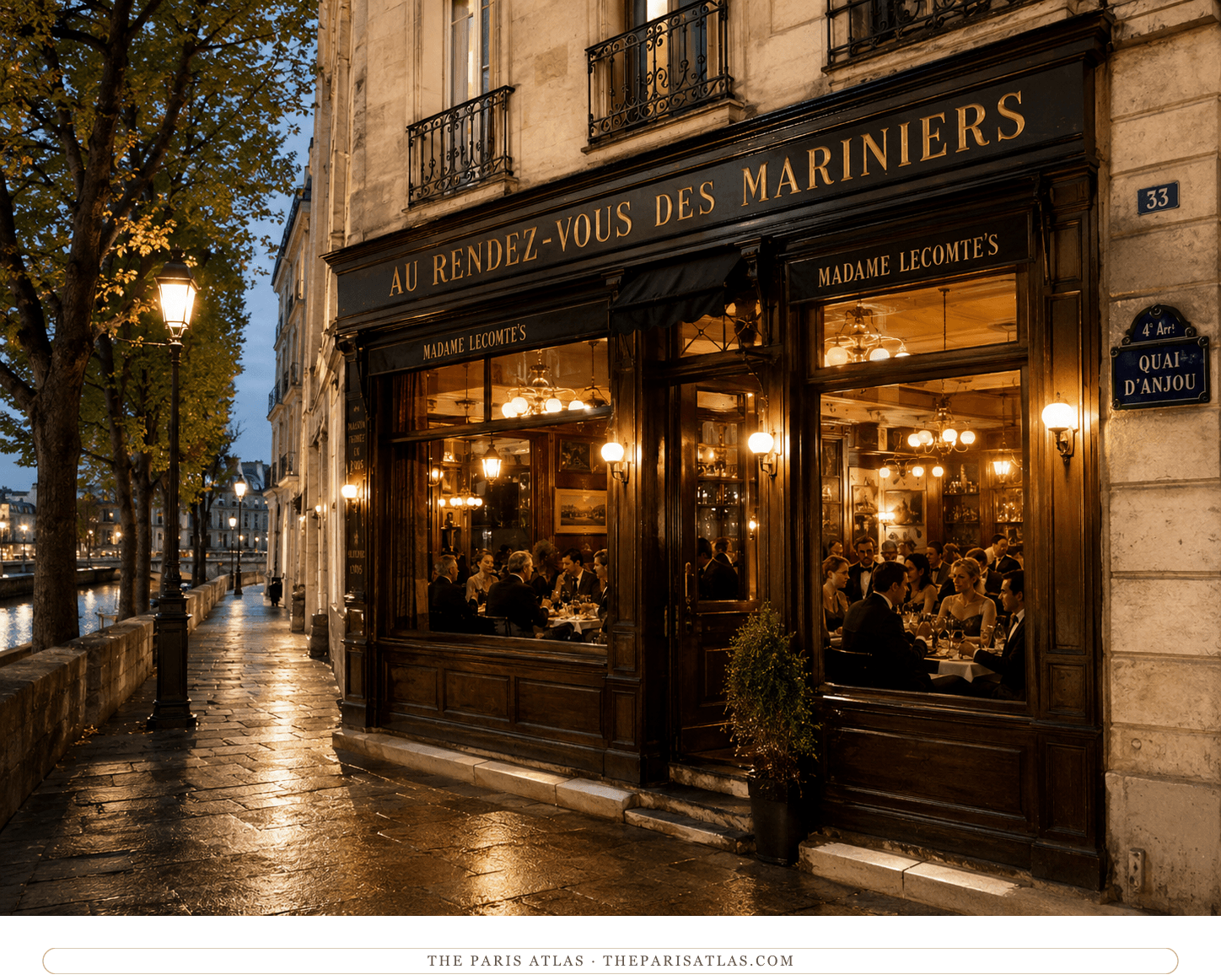
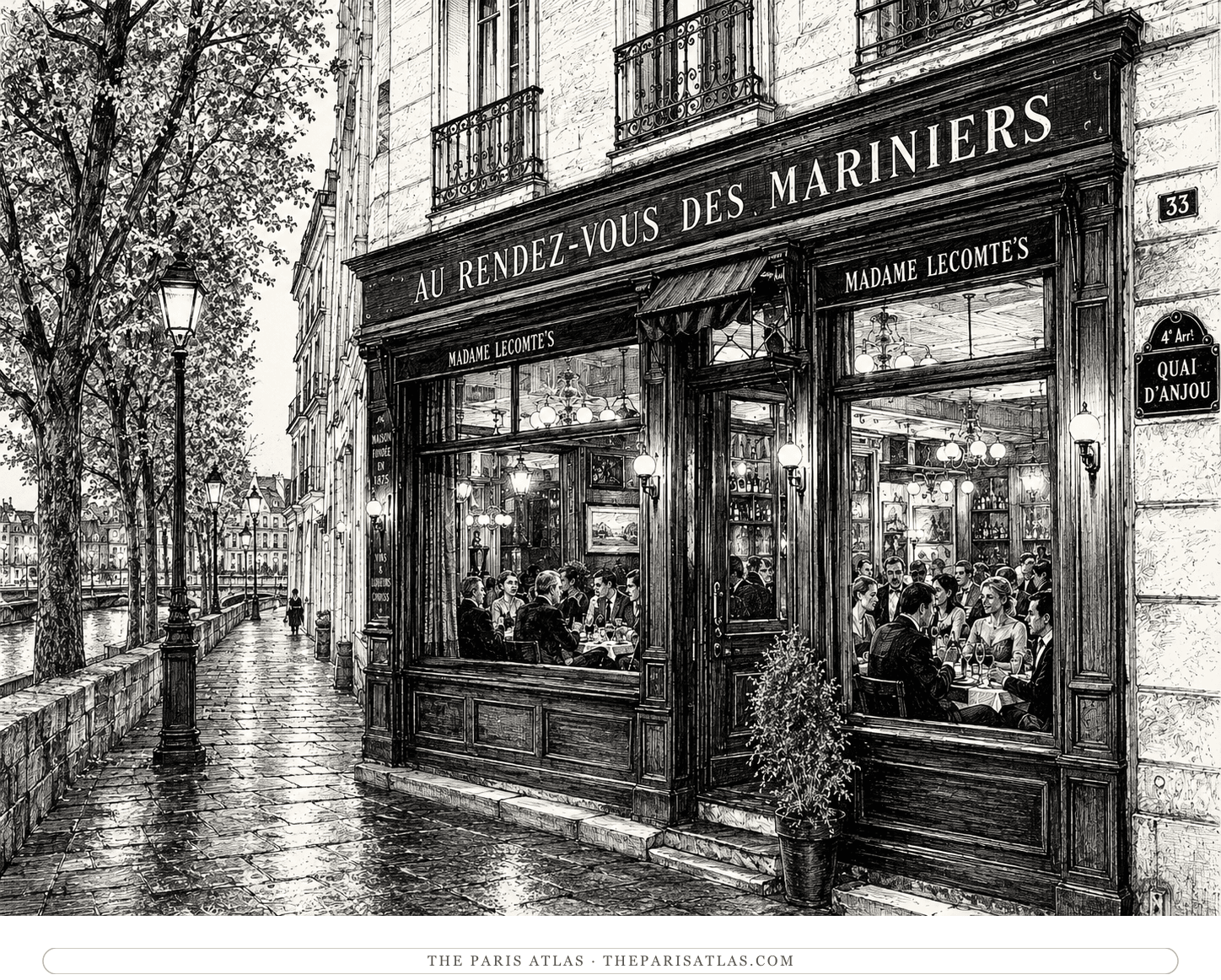
Ernest Hemingway wrote about Madame Lecomte's in The Sun Also Rises.
Visit the place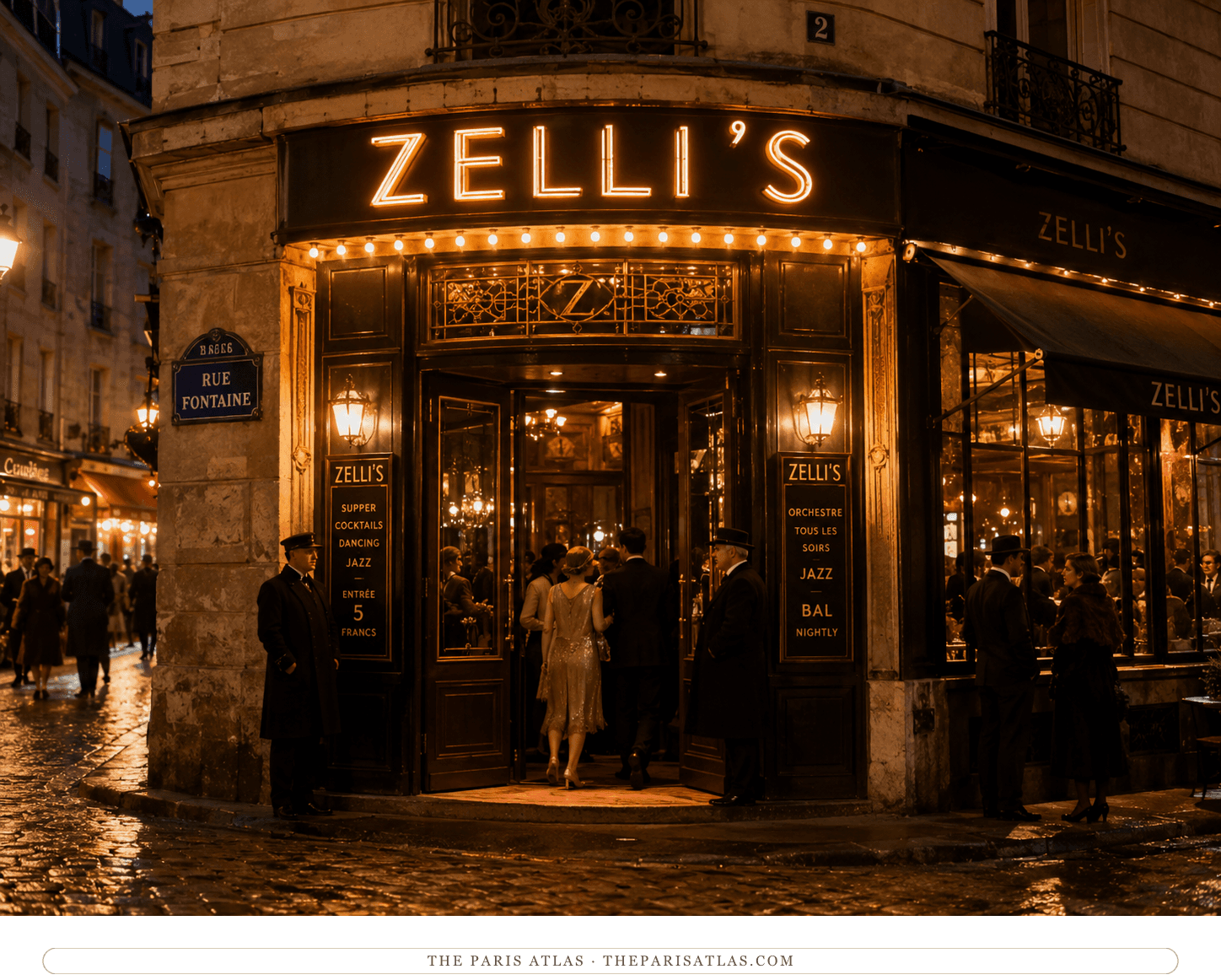
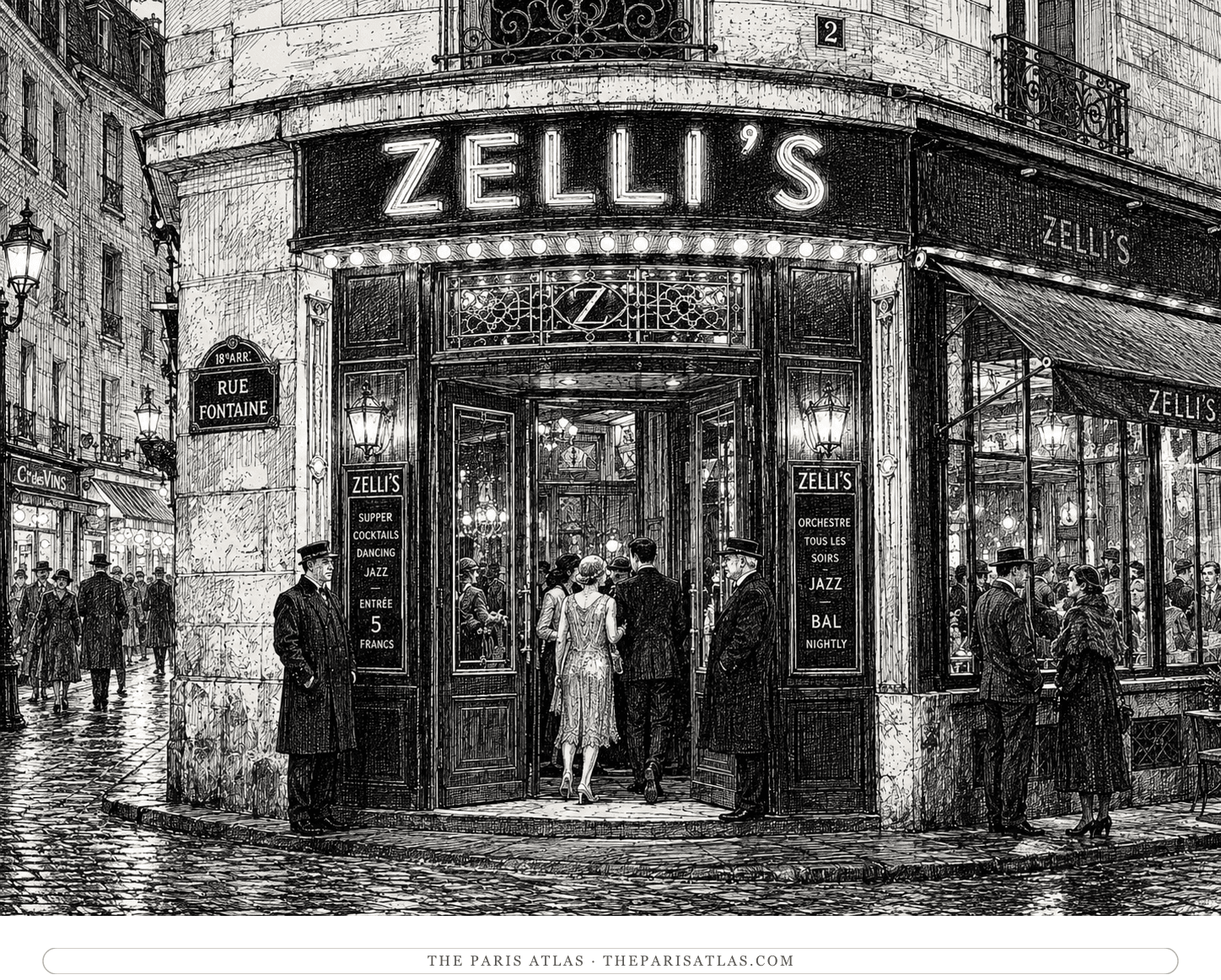
Ernest Hemingway wrote about Zelli's in The Sun Also Rises.
Visit the place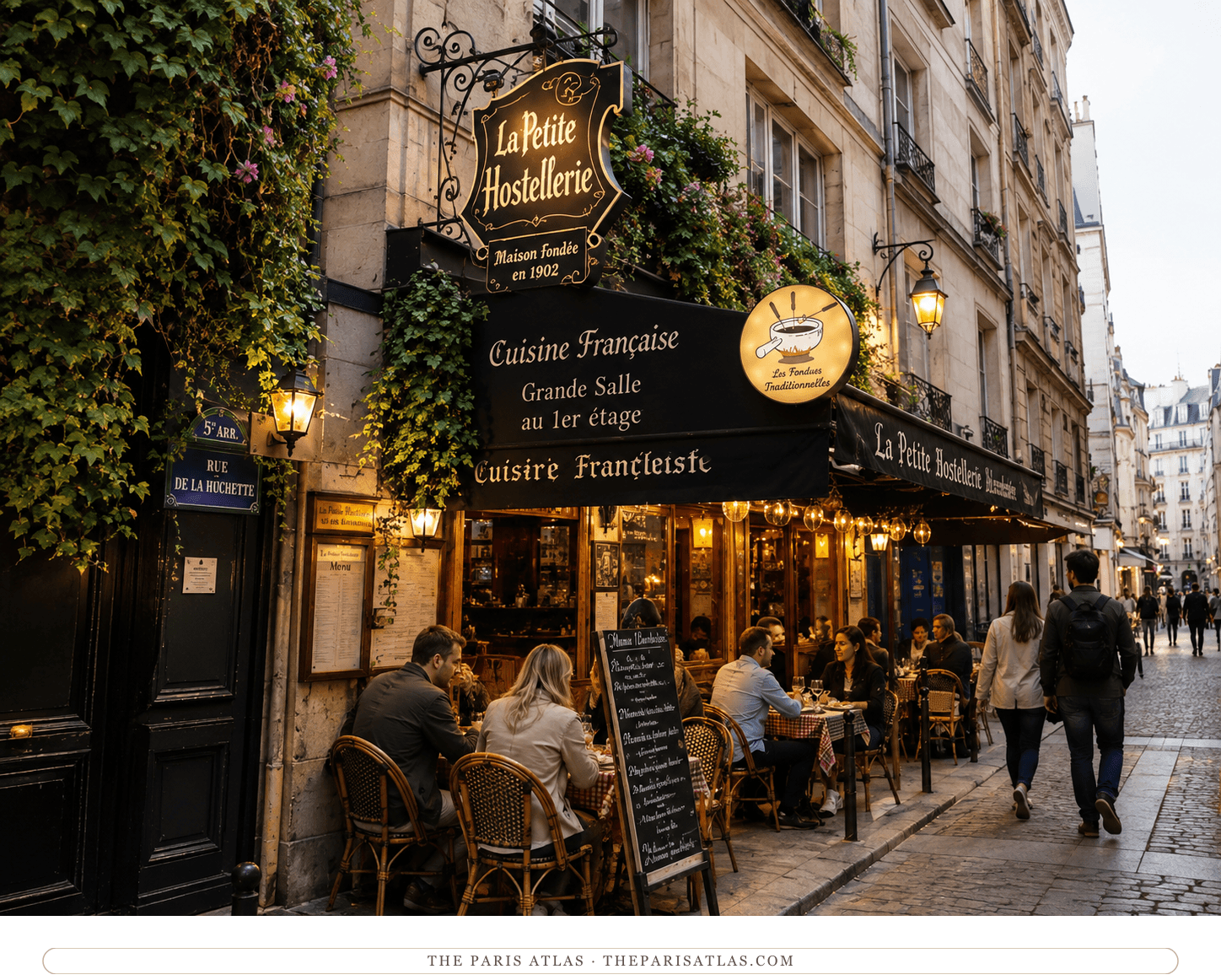
Ernest Hemingway wrote about The Latin Quarter in A Moveable Feast.
Visit the place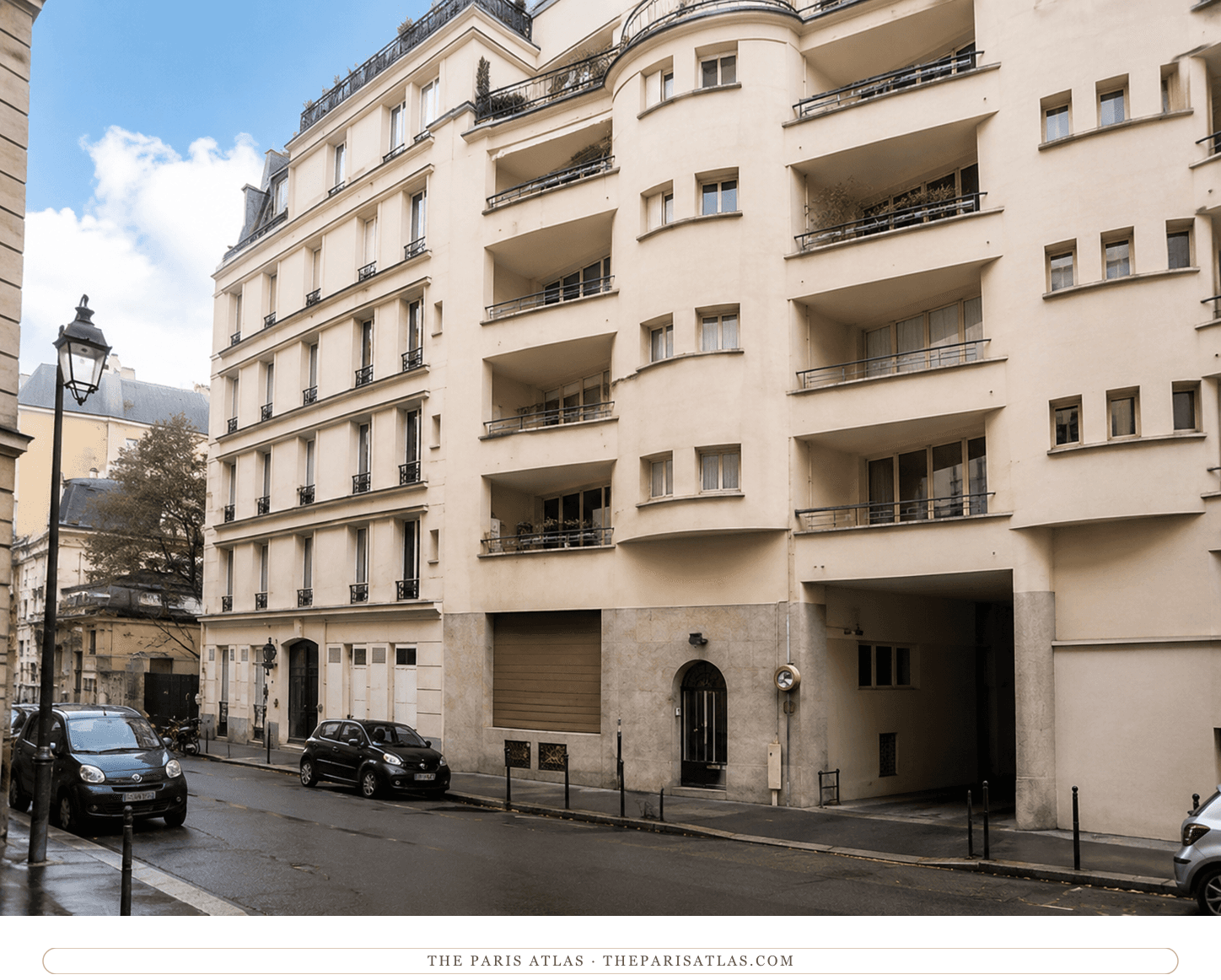
The second Hemingway flat, above a working sawmill — the journalism stopped and The Sun Also Rises was finished during these years.
Visit the place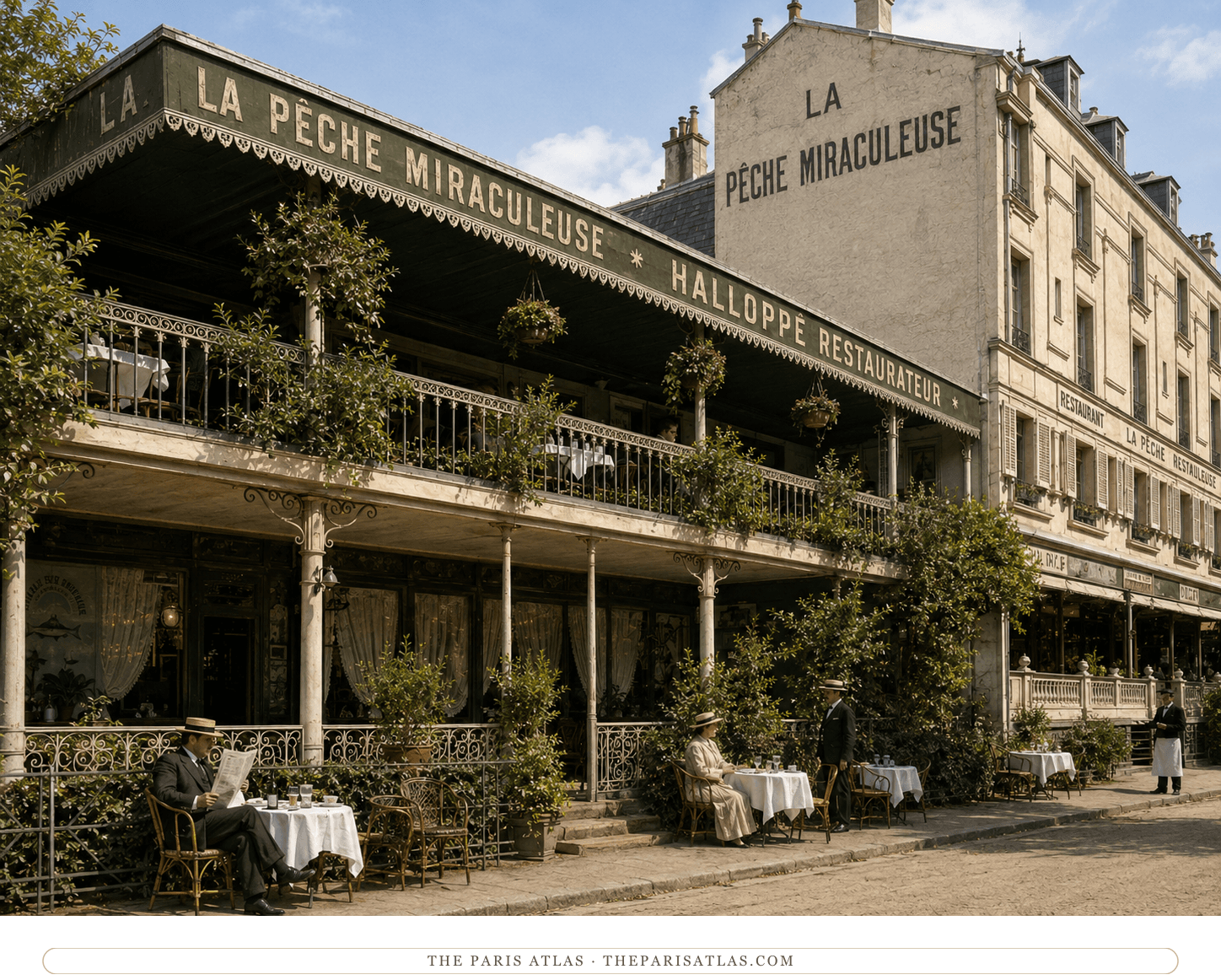
Ernest Hemingway wrote about La Pêche Miraculeuse in A Moveable Feast.
Visit the placeThe Lost Generation's Paris wasn't a mood — it was a specific set of rooms within walking distance of each other, and an exchange rate. Here is the real map under the memoir.
The most famous label in modern literature started as a complaint about a slow car repair. What 'lost' actually meant — and why the writers it named never accepted it.

Influenced by · Book
In the Men at War introduction, Hemingway named Le Feu the rare book that told the war's truth while the fighting still ran — the standard his own war prose kept.
— Ernest Hemingway (editor), Men at War: The Best War Stories of All Time — introduction (1942)
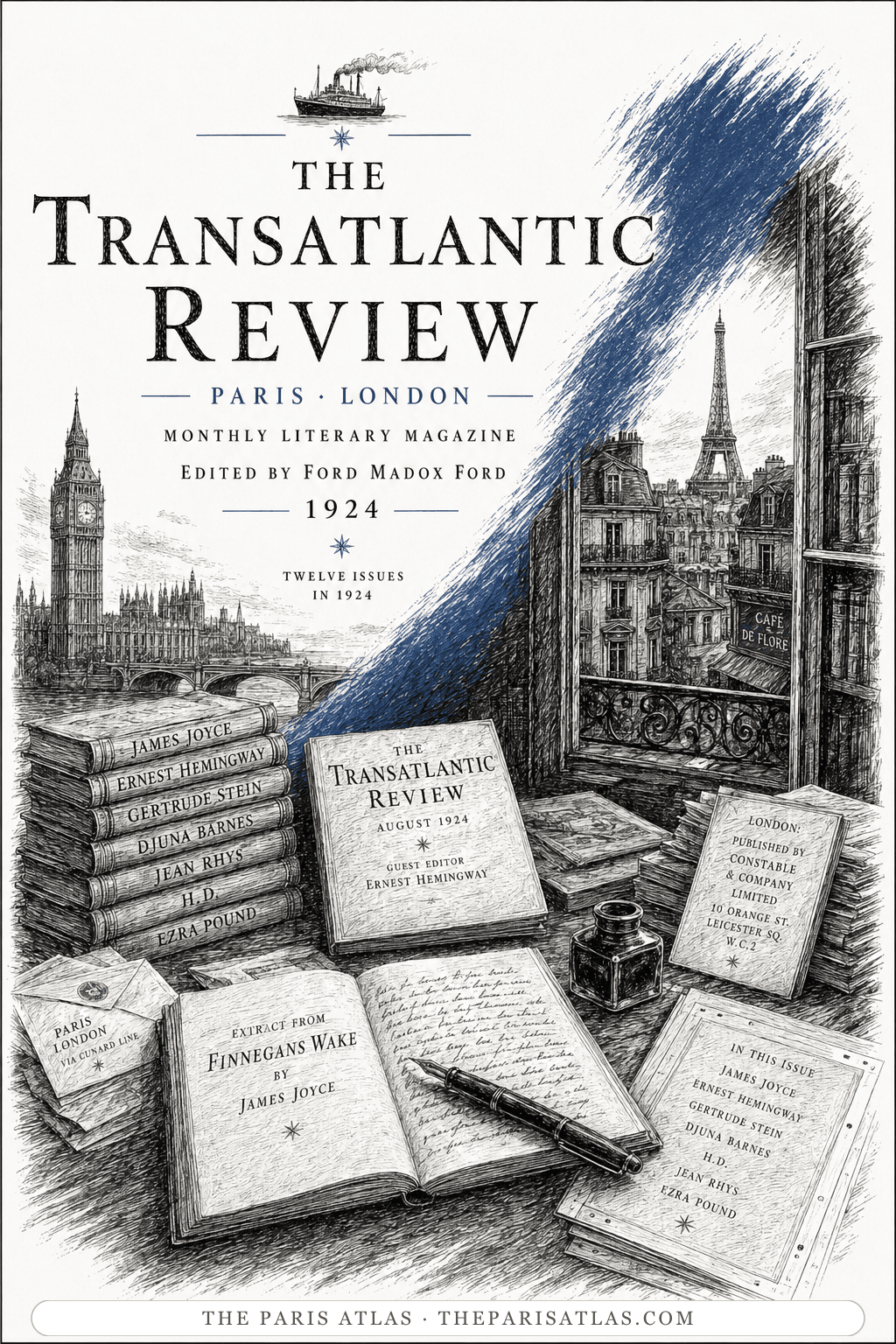
Worked for · 1924
Sub-editor on Pound's recommendation — and guest editor of the August 1924 number while Ford was in New York, which he packed with his own crowd.
He died by suicide at his house in Ketchum, Idaho, on the morning of 2 July 1961, at sixty-one, shooting himself with a double-barrelled shotgun in the front entrance foyer. Mary Welsh, his fourth wife, found him there. He had been discharged from the Mayo Clinic six days earlier and had been home in Ketchum for two days.
There is no single cause and the record holds several. The documented run-up starts with two plane crashes in Uganda on successive days in January 1954, which left him with a concussion, a fractured skull, third-degree burns and internal injuries he never fully recovered from. It takes in years of heavy drinking measured against high blood pressure and a damaged liver, work that had slowed to the point where he could not finish a few sentences for a presentation volume, and two admissions to the Mayo Clinic in 1960 and 1961 for depression. The treatment there included electroconvulsive therapy, which cost him much of his memory and, by his own account, his ability to write. His father had shot himself in 1928. Psychiatric reviews published long afterwards add bipolar illness, alcohol dependence and repeated traumatic brain injury; those are retrospective diagnoses rather than what he was treated for at the time.
Yes. The announcement on 3 July 1961 said the shotgun had gone off while he was cleaning it, and the newspapers carried it that way. Mary Welsh held to that account for five years before telling The New York Times that he had shot himself.
The bureau did keep a file on him, opened in 1942 over the counter-intelligence work he ran out of Havana, and the file released under the Freedom of Information Act runs to 1974. It includes a memorandum from January 1961 noting that he was registered at Saint Marys Hospital under an assumed name and that his psychiatrist reported him worried about an FBI investigation. That corroborates the fear of government attention he voiced in his last year, which his friends and doctors treated as delusion, and A. E. Hotchner wrote in 2011 that he had been wrong to dismiss it. It does not establish that the specific things he said about being followed were accurate.
Four times: Hadley Richardson from 1921 to 1927, Pauline Pfeiffer from 1927 to 1940, Martha Gellhorn from 1940 to 1945, and Mary Welsh from 1946 until his death. Gellhorn was the only one who left him. He had three sons, one with Hadley and two with Pauline.
Three Stories and Ten Poems, published in Paris in 1923 by Robert McAlmon's Contact Publishing Company in an edition of three hundred copies. A second Paris pamphlet, in our time, followed from the Three Mountains Press in 1924, and the expanded American collection In Our Time appeared in New York in 1925. His first novel was The Torrents of Spring, a short parody published in May 1926; The Sun Also Rises came five months after it.
It is his name for writing by omission, set out in Death in the Afternoon in 1932. A writer who genuinely knows his subject can leave most of it out and the reader will still feel it, the way an iceberg moves with dignity because only one-eighth of it shows. The condition is the knowing: leaving something out because you do not know it, he said, only makes a hole in the writing.
Yes, the Nobel Prize in Literature in 1954, a year after The Old Man and the Sea won the Pulitzer. He was still injured from the African plane crashes and did not travel to Stockholm; the American ambassador read his acceptance speech for him.
The Old Man and the Sea, which takes an afternoon and holds the whole method at its purest. After that, The Sun Also Rises for the Paris and Pamplona of 1925, and A Moveable Feast for his account of learning to write in that city.
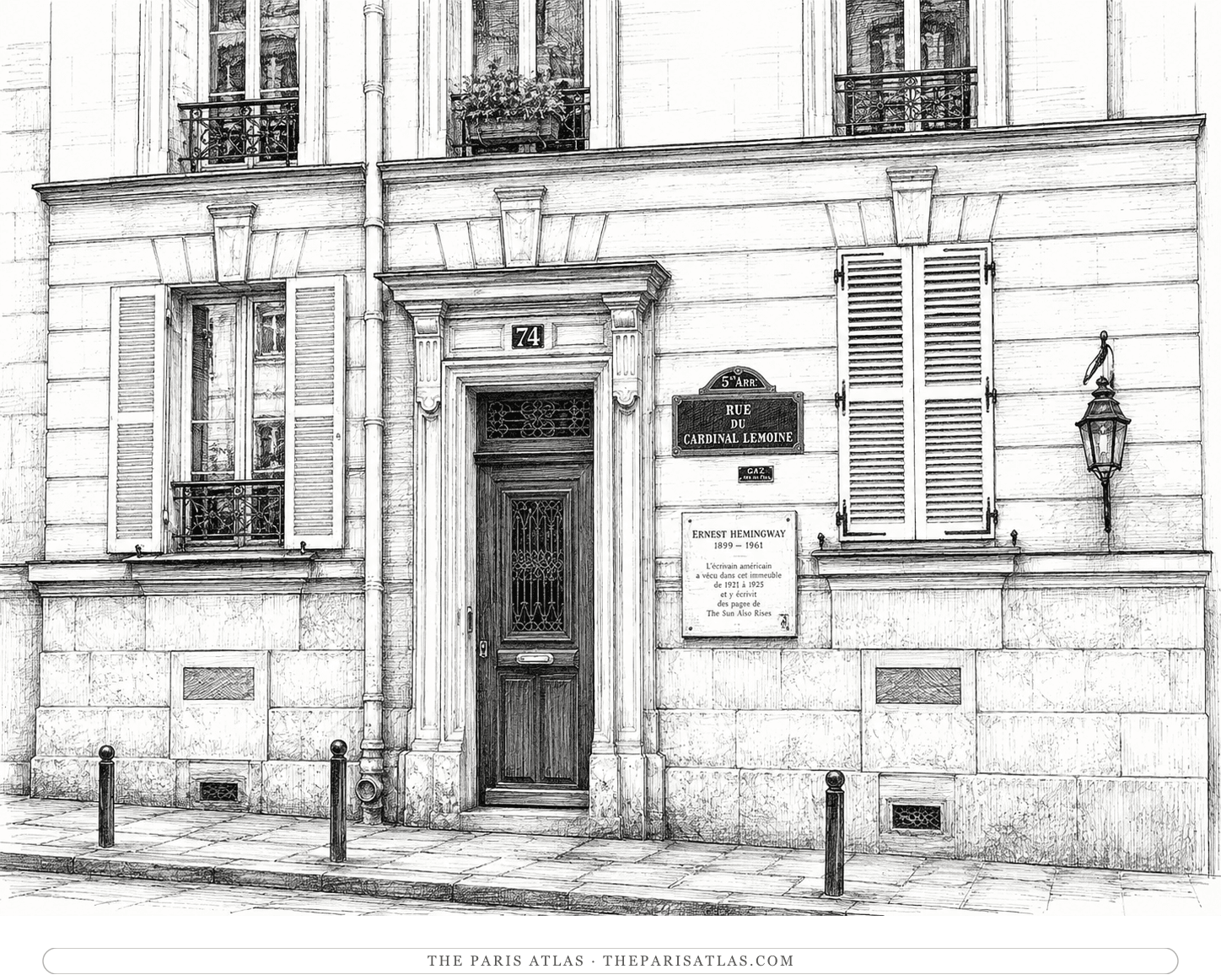
Lived at · 1922–1923
Ernest and Hadley Hemingway's first Paris apartment — the fifth-floor walk-up described in the opening pages of A Moveable Feast.
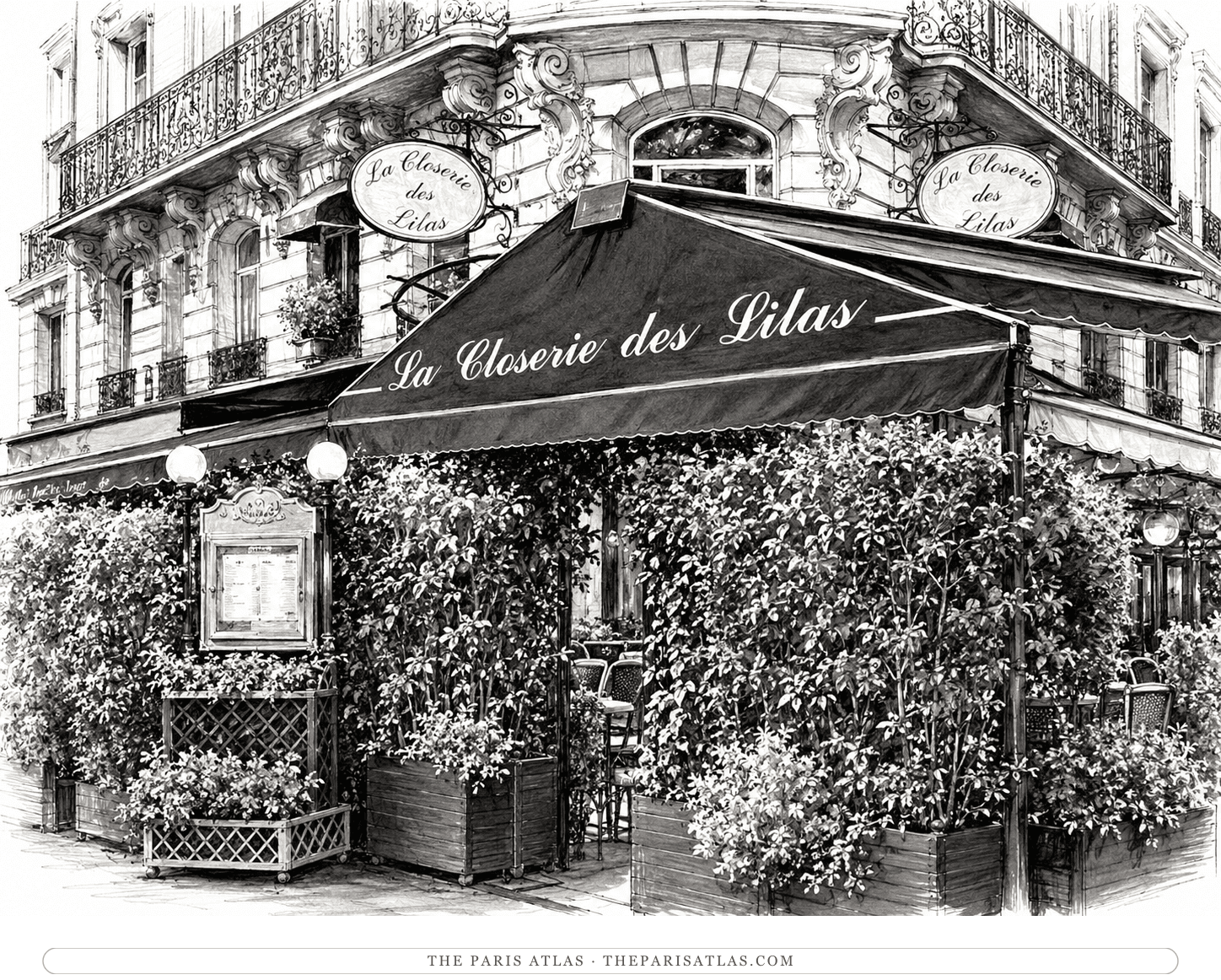
Worked at · 1925
Hemingway drafts most of The Sun Also Rises at the Closerie's tables in a six-week burst, September to October 1925.
Met · 1925-04
The era's most famous introduction: Fitzgerald, two weeks after Gatsby published, walks up to Hemingway at the Dingo bar — the friendship begins.
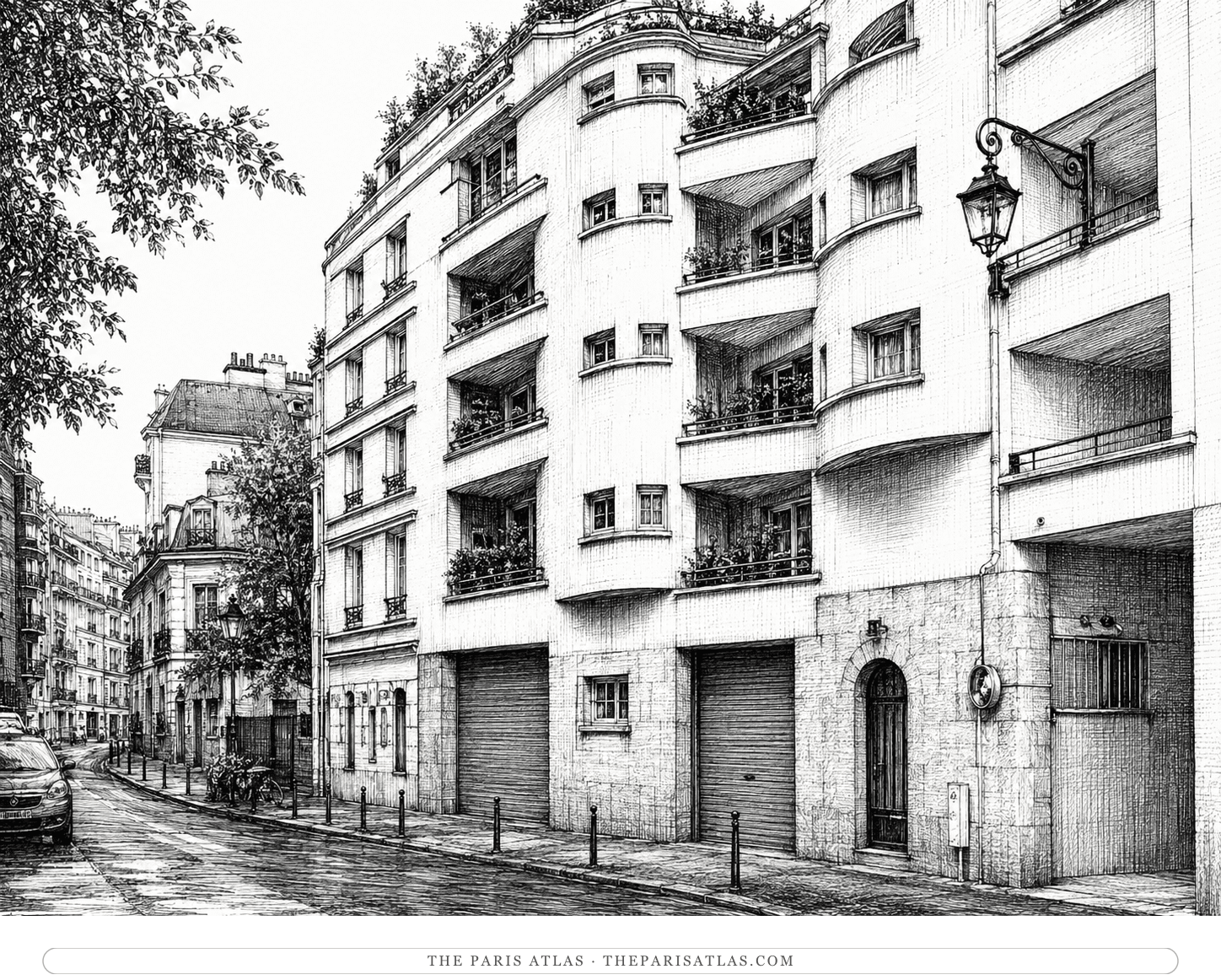
Lived at · 1924–1926
The second Hemingway flat, above a working sawmill — the journalism stopped and The Sun Also Rises was finished during these years.
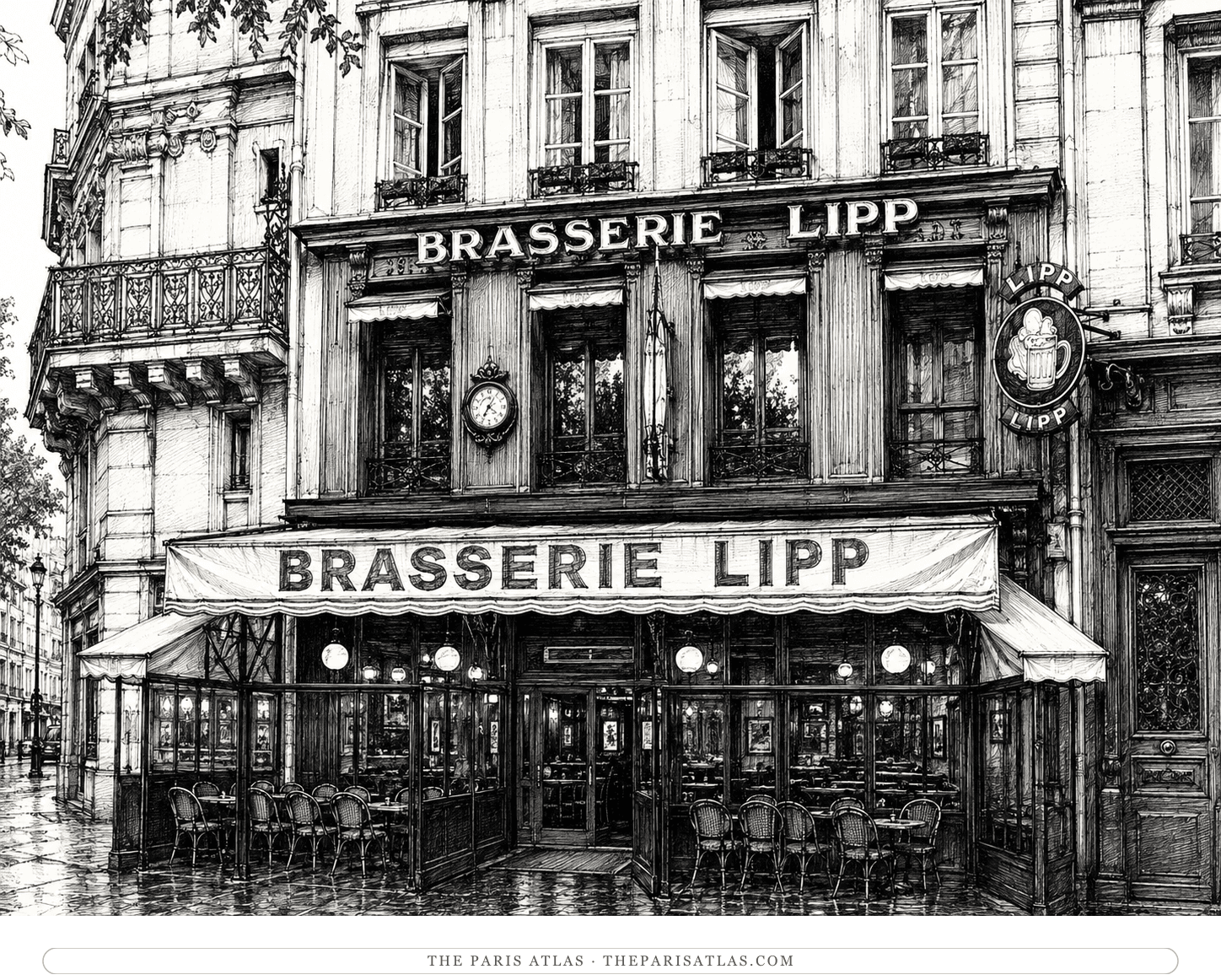
Frequented
Beer, potato salad, and choucroute after a day's work — he counted it among the best places in Paris to eat.
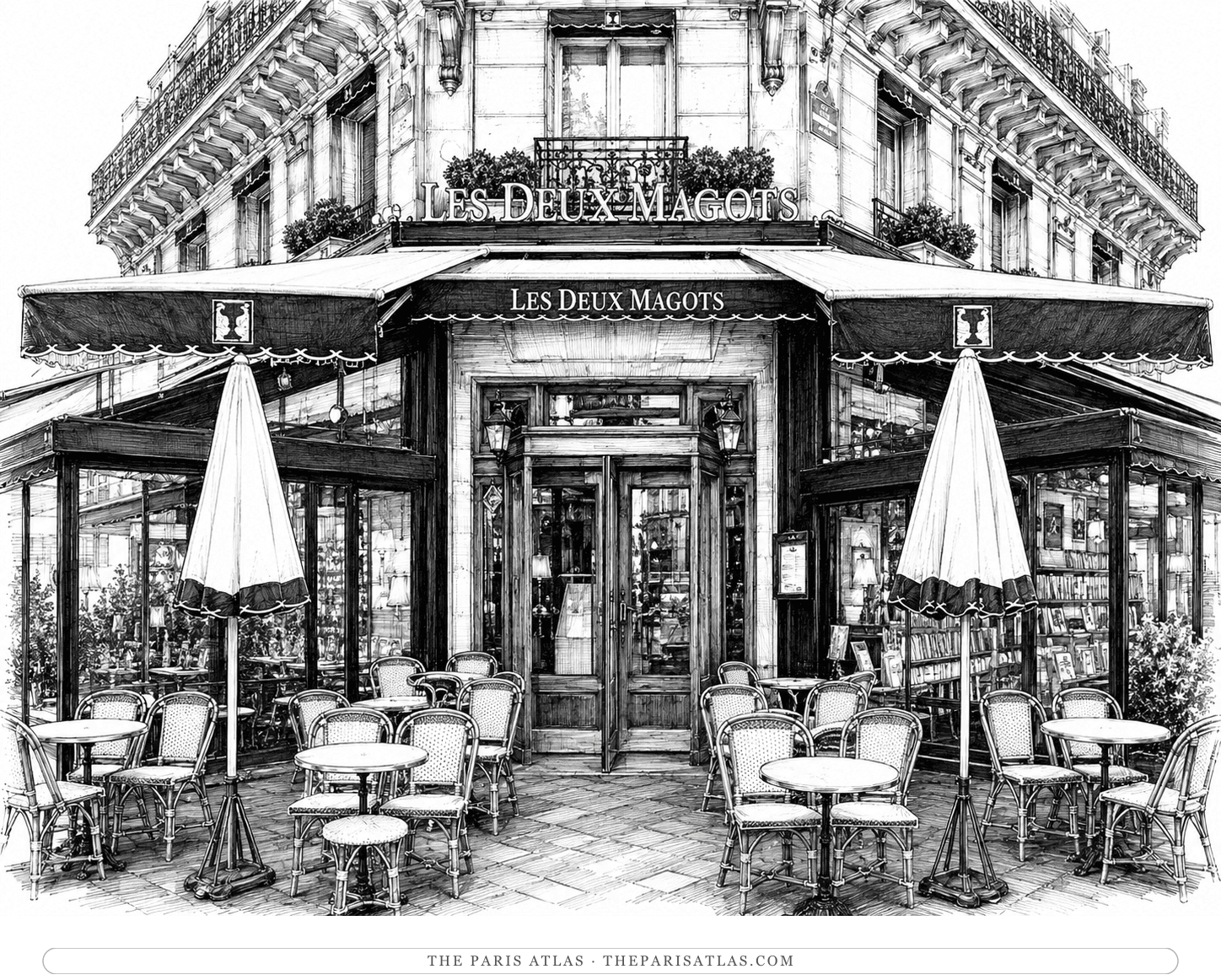
Frequented
Part of his Left Bank circuit, though he preferred the quieter Closerie for working.
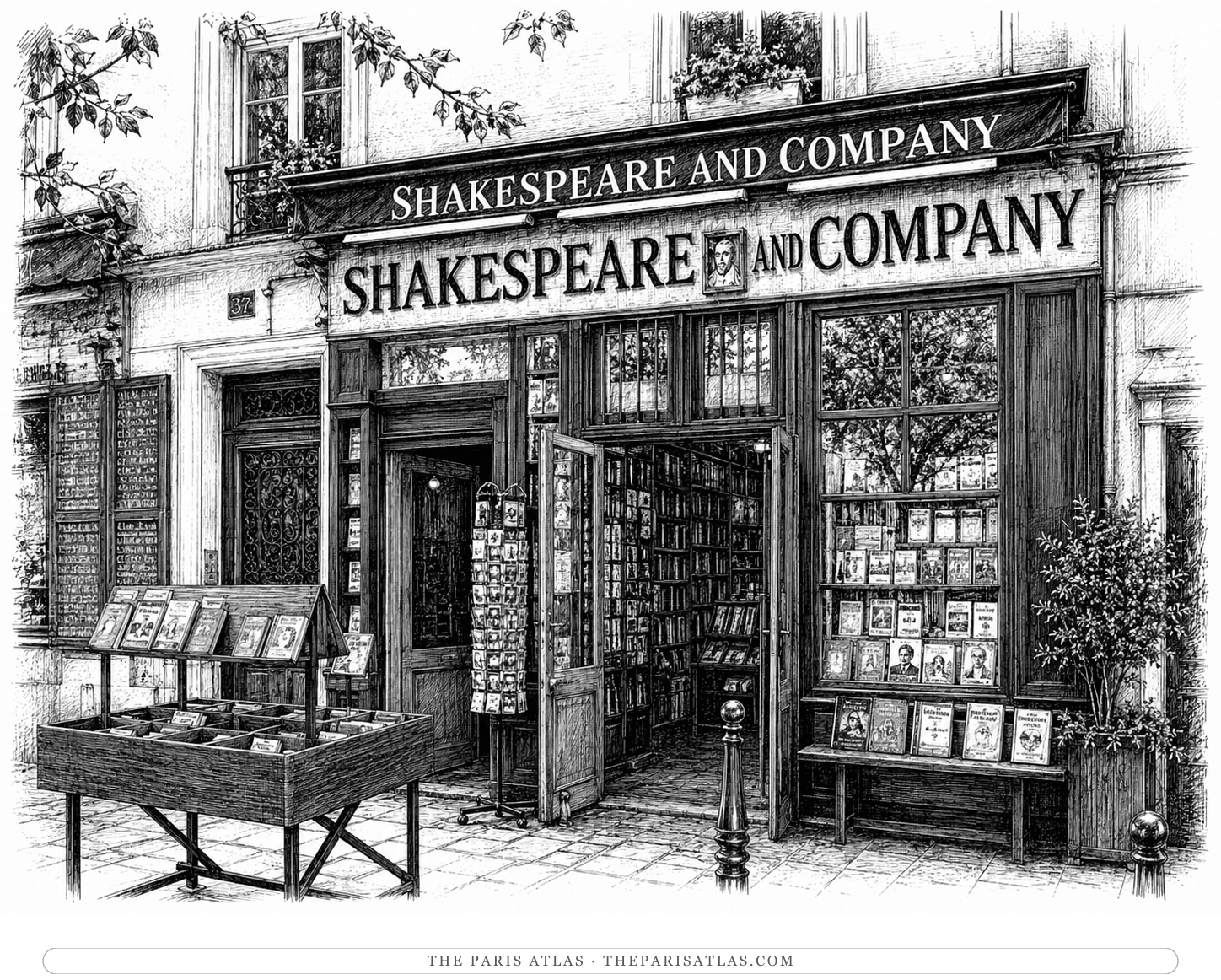
Frequented
Too poor to buy books when he arrived, he borrowed from Beach's lending library by the armload, on credit.
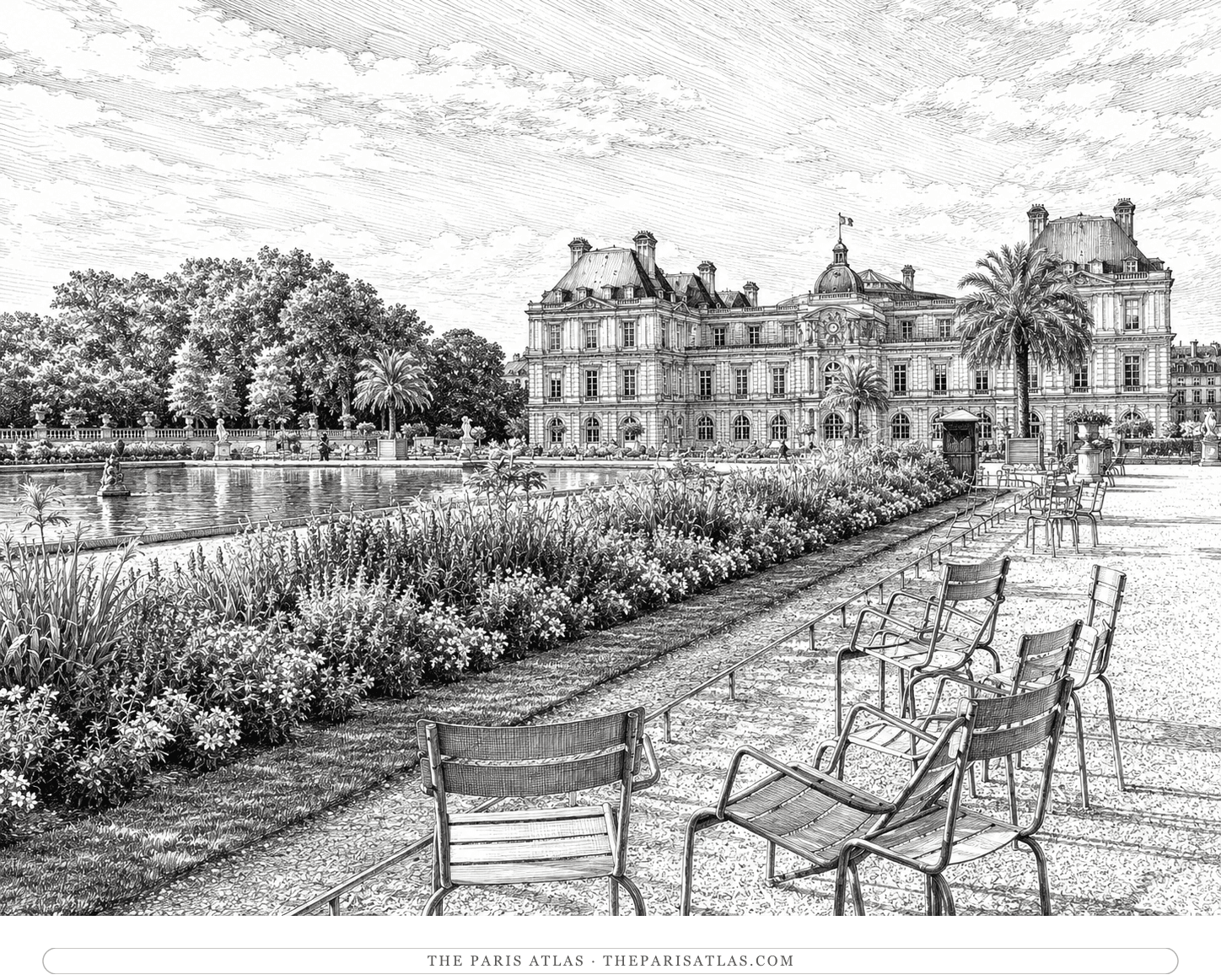
Frequented
His daily walking route and hungry-day refuge — the gardens where he studied the Cezannes on an empty stomach.
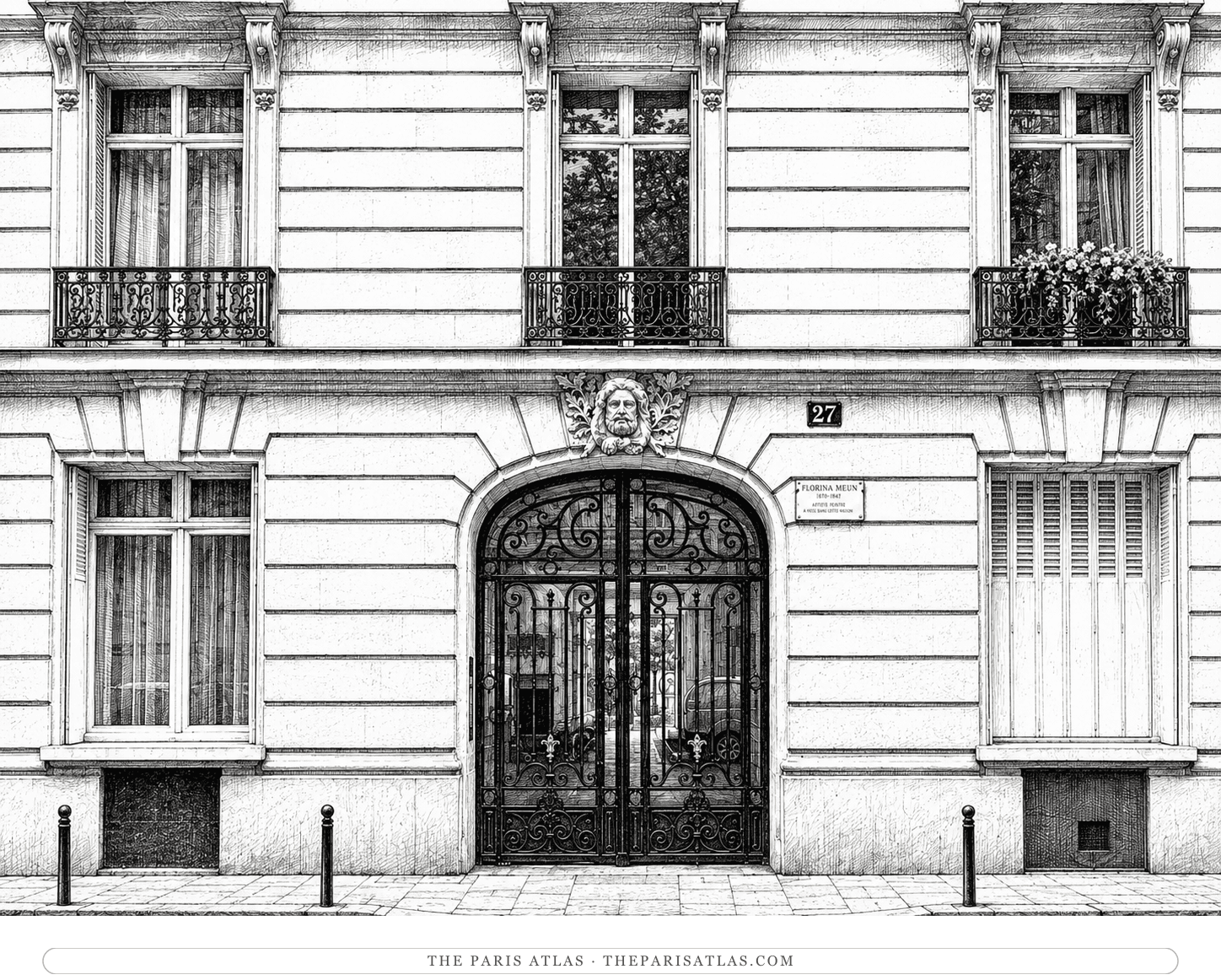
Frequented · 1922
A regular at Stein's salon from his first spring in Paris — instructed, encouraged, and eventually told he belonged to a lost generation.
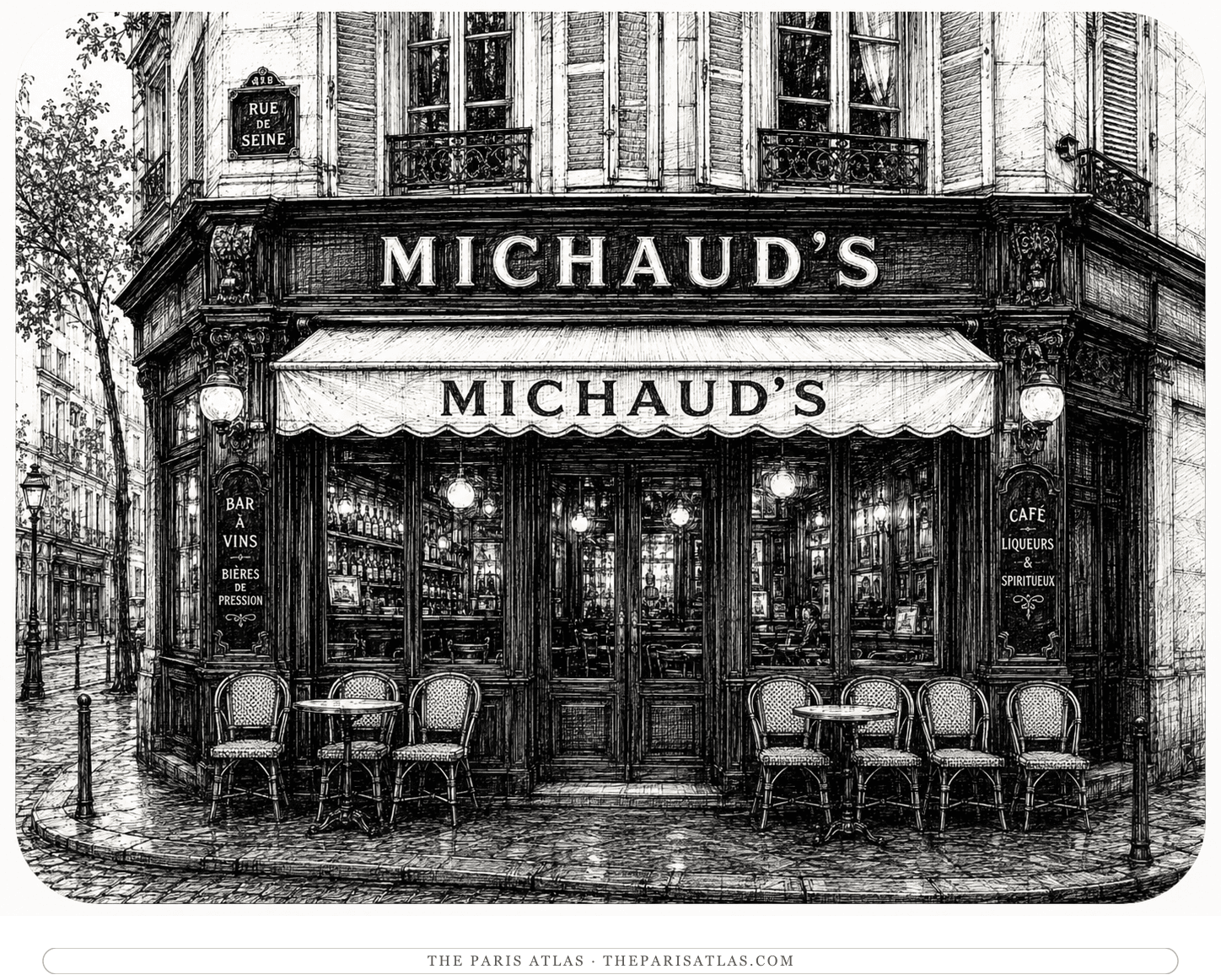
Frequented
Where the Hemingways watched the Joyce family dine when they couldn't afford to themselves.
Worked for · 1924
Sub-editor on Pound's recommendation — and guest editor of the August 1924 number while Ford was in New York, which he packed with his own crowd.
Associated with · 1921–1929
Made the name famous — placed Stein's "you are all a lost generation" at the front of The Sun Also Rises, and wrote the phrase's origin story decades later in A Moveable Feast.
Met
Fellow fixtures of the Quarter's café and racing crowds — acquainted well enough that Hemingway could file him into The Sun Also Rises as Harvey Stone, portrait and verdict in a single chapter.
Met · 1925
Met through Scott in the spring of 1925, and the wariness was mutual from the first dinner — she judged him a poseur, he judged her the enemy of Scott's work. A Moveable Feast files its side of the verdict under 'Hawks Do Not Share.'
Met · 1922
The apprenticeship at 27 rue de Fleurus: Sherwood Anderson's letter opened the door in early 1922, and Stein instructed — on writing, painting, and much else — until the friendship curdled into the era's most public literary quarrel.
Met · 1922
Met within weeks of Hemingway's arrival in Paris; Pound edited him, promoted him, and took boxing lessons in exchange — the era's fairest trade. The memoir's portrait of Pound is the warmest Hemingway ever wrote of another writer.
Met · 1921
First stop on the rue de l'Odéon, December 1921: a lending-library card extended on trust to a writer who couldn't cover the deposit. Both memoirs record the friendship; in 1944 he arrived in uniform to 'liberate' the street.
Met · 1924
Thrown together by the transatlantic review in 1924 — Ford published and employed the young subeditor, who repaid the debt with the memoir's cruelest portrait and a walk-on for Ford in The Sun Also Rises as Braddocks.
Met · 1921
Chicago, 1921: the established author befriended the young reporter and wrote the letters of introduction — to Stein, to Beach — that opened literary Paris. Hemingway repaid the debt with a parody novel; the friendship did not survive the joke.
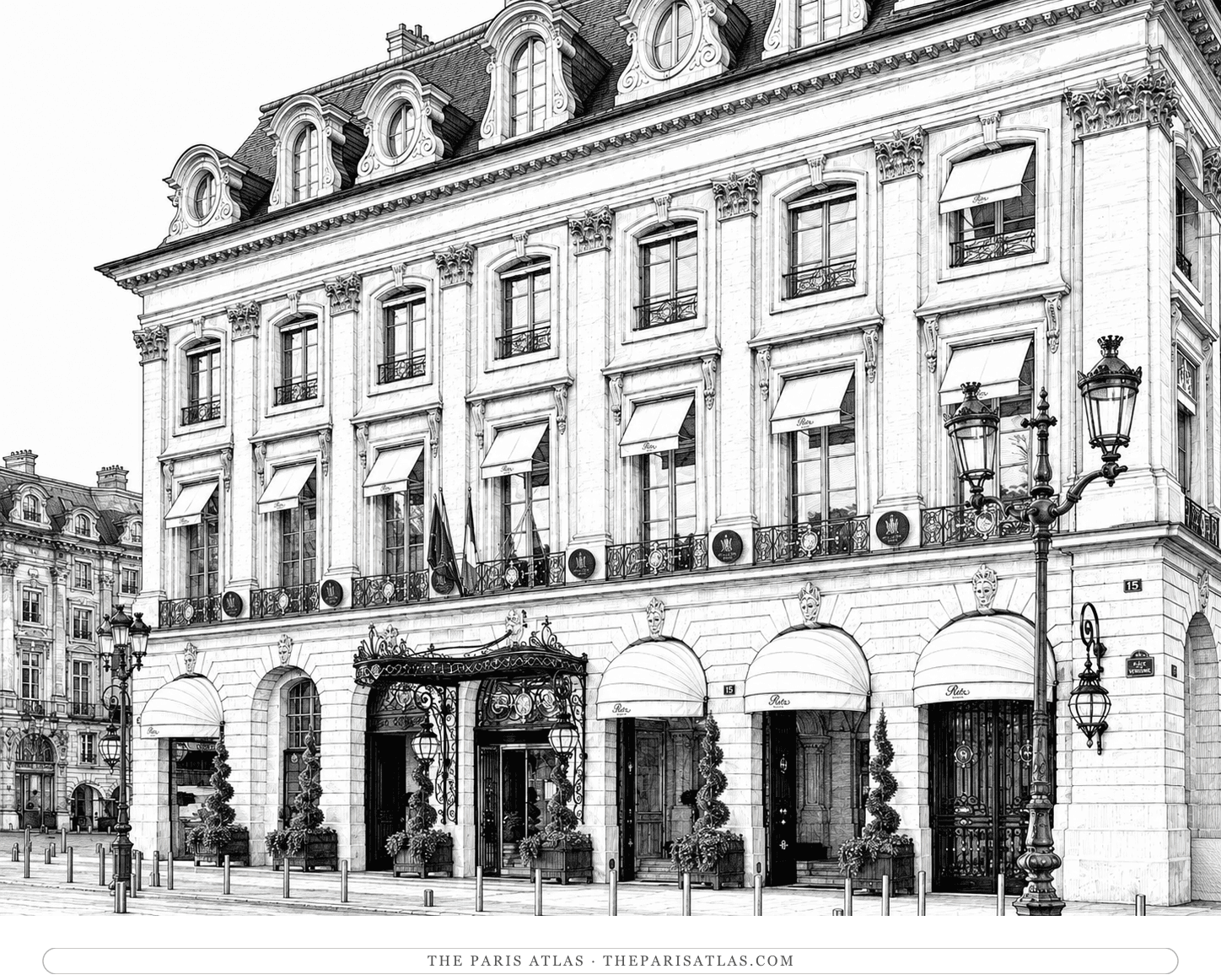
Frequented
From prewar drinks with Fitzgerald to the August 1944 afternoon he arrived with his irregulars to 'liberate' the bar — the hotel repaid the loyalty by putting his name on the room.
Met
Friends since the Michigan summers at Horton Bay, and together again in the Pamplona party of July 1925.
Met
Hemingway sought him out at Pamplona in July 1925, the season of his alternativa, and wrote about him again in Death in the Afternoon when the nerve had gone.
Met
Went to the fiesta at Pamplona with Hemingway in 1924 and again in July 1925, and supplied the comic voice of Bill Gorton.
Met
Known to each other in Montparnasse and together in the Pamplona party of July 1925, with Hemingway's wife Hadley Richardson also present. He began the novel days after it ended.
Met
Loeb recommended Hemingway's early work to Boni & Liveright, which published In Our Time in 1925. Weeks later the two quarrelled over Duff Twysden at Pamplona, and Hemingway put him in the novel as Robert Cohn.
Met
One of the party Hemingway took to the fiesta at Pamplona in July 1925, travelling with his cousin Duff Twysden.
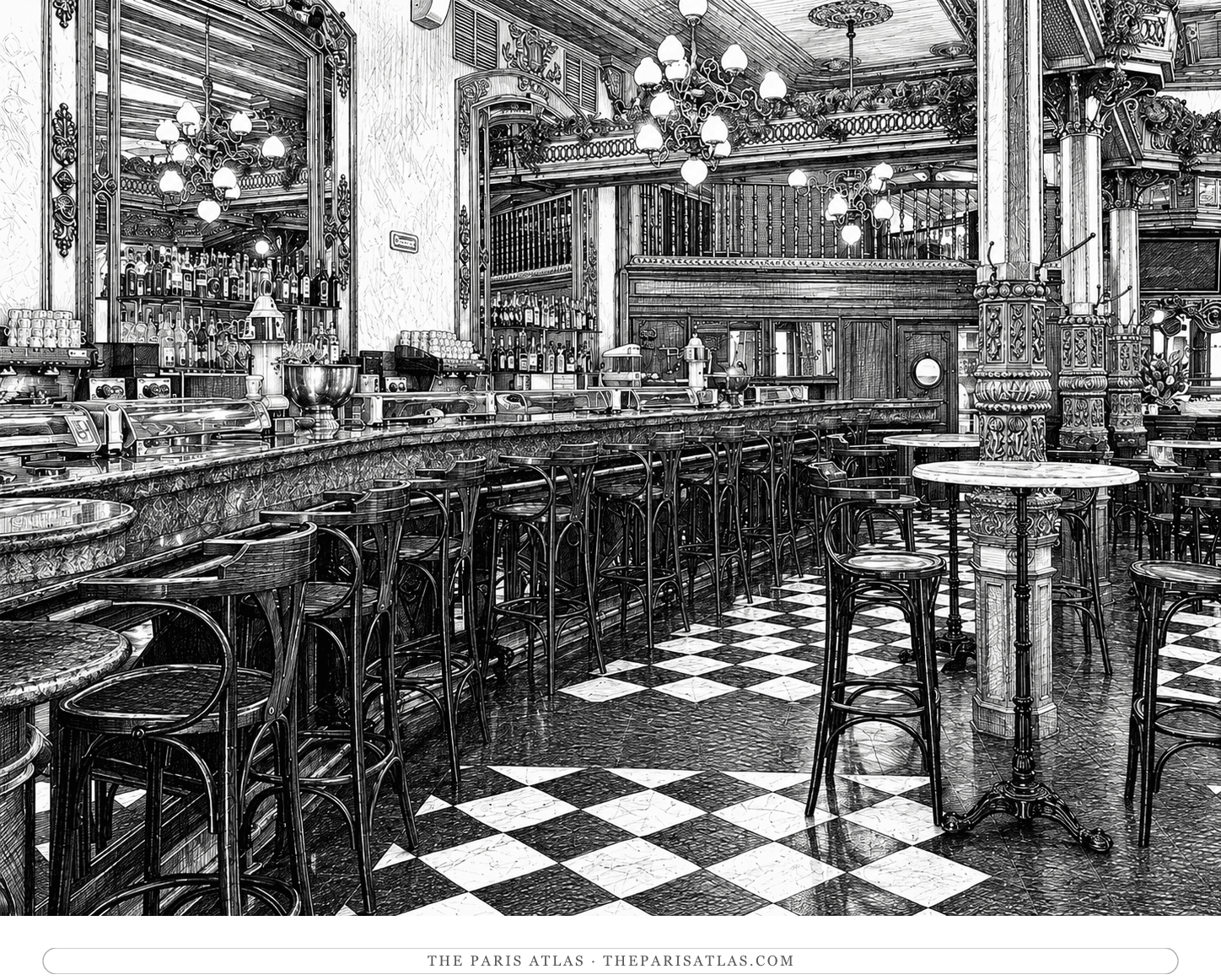
Frequented
A fixture of his Pamplona summers from 1923 onward. Pamplona's city council treats the association as established; the café marks it with a Hemingway corner, which commemorates the habit rather than preserving a particular table.
Frequented
His base in the Navarrese mountains for the fishing trips of the summers of 1924 and 1925, before and after San Fermín. The inn still trades on the association and calls him a habitual guest; it publishes no founding date and no menu, so the page treats the building's continuity as established and the meal's as not.
Frequented
Hemingway went a few times rather than regularly, and wrote afterwards that other well-off American and French women kept salons but Barney was the only one with a small Greek temple in her garden. The sources do not date the visits.
Lived at · 1931–1940
Ernest Hemingway and Pauline Pfeiffer made the Whitehead Street house their Key West home. He moved to Cuba after their 1940 divorce.
Influenced
Named by Bukowski among his influences in a letter of his last years, alongside Dostoevsky, Celine and Sherwood Anderson. The short flat sentence is the inheritance; Bukowski also spent decades needling the Hemingway legend in print, which is its own form of debt.
Mentored by · 1922
Instruction and encouragement at the rue de Fleurus salon — including the era's most quoted put-down, which he repaid with a book title and a memoir portrait.
Mentored by · 1922
Pound drilled the young Hemingway in cutting every spare word; Hemingway repaid the editing lessons by teaching Pound to box.
Met · 1922
Hemingway called at the rue de Fleurus from 1922, and with Stein she stood godmother to his son the following year — before the friendship's famous cooling, recorded from opposite sides in the two households' memoirs.
Married to · 1921–1927
The first marriage — Horton Bay to Paris to Schruns, ended by the 'pilot fish' winter of 1926; A Moveable Feast closes on his regret, and the Paris memoir is dedicated to what they were before the money came.
Married to · 1927–1940
The second marriage — begun in the wreckage of the first and lived mostly in Key West on Pfeiffer money; it ended the way it began, with the next wife already on the scene.
Married to · 1940–1945
The war marriage — Madrid under shellfire, then Cuba, then rival bylines racing to the Normandy summer; two correspondents in one house, and the only wife who left him first.
Married to · 1946–1961
The last marriage — the Finca Vigía years and then Ketchum; she survived the plane crashes, the Nobel, and the decline, and as his widow steered A Moveable Feast into print.
Met
The Anglo-American press lunches of the early twenties, where the Times man watched a young Toronto Star stringer hunt for a style — and, within two years of The Sun Also Rises, affectionately parodied the finished product in print.
Commemorated in · 1994
The hotel renamed its former Petit Bar in his honor in 1994, thirty-three years after his death. The bar commemorates his long association with the Ritz; it isn't a room he drank in.
Influenced by
Editing the Men at War anthology in 1942, Hemingway singled out Le Feu as the rare book that told the truth about the war while it was still being fought — the trench-level standard his own war writing answered to.
Influenced by
In the Men at War introduction, Hemingway named Le Feu the rare book that told the war's truth while the fighting still ran — the standard his own war prose kept.
Influenced by
The instruction at 27 rue de Fleurus, recorded in his own memoir: what to cut, what to look at, what a sentence could bear — the apprenticeship both of them spent later years disputing the credit for.
Influenced by
The man who taught him to distrust adjectives — the memoir's own accounting — and whose blue-pencil doctrine of cutting to the image runs under the whole Hemingway sentence.
Influenced by
The first model: the plain Midwestern sentences and buried feeling Hemingway learned from in Chicago — a debt he repaid, characteristically, by parodying it in The Torrents of Spring to break the apprenticeship in public.
Parent of
His father. Jack — 'Bumby' — was the only child of Ernest Hemingway and Hadley Richardson.
Met · 1944
They met in London in 1944, while she was at lunch with the writer Irwin Shaw and Hemingway came to the table to ask to be introduced. Both were reporting the war; they married two years later in Havana.
Collaborated with
Perkins signed Hemingway for Scribner's in 1926 after The Torrents of Spring broke his Boni & Liveright contract, and edited him for the rest of his life. Their correspondence runs from 1925 to Perkins's death in 1947 and is published in full as The Only Thing That Counts.
Met · 1925
Hemingway bought Miró's The Farm from Galerie Pierre in 1925 — by his own 1934 account after rolling dice with the poet Evan Shipman for the right to buy it — and the National Gallery of Art's provenance records the Hemingways owning it by 9 November 1925.
Met
A friendship documented on both sides. In 1937 Hemingway told Flanner that if a prize were ever given for the worst sportswriter in the western world he would see that she got it, over a piece she had written on bullfighting. Photographs from the liberation of Paris in August 1944 show the two at Les Deux Magots, both in United States war-correspondent uniform.
Met · 1937
Both covered the Spanish Civil War from Madrid in 1937 — Hemingway for the North American Newspaper Alliance, Hughes for the Baltimore Afro-American. A photograph by Paco Mayo, Madrid 1937, shows the two together with Mikhail Koltsov and Nicolás Guillén; the print is in the Hemingway Collection at the John F. Kennedy Presidential Library. Hughes's account of his Madrid months is in I Wonder as I Wander (1956).
Articulated · 1932
Hemingway gave informed omission its durable iceberg metaphor in chapter 16 of Death in the Afternoon.
Influenced by
Hemingway made the debt explicit in Green Hills of Africa, in the campfire conversation where an Austrian named Kandisky presses him on American writing: all modern American literature, he answers, comes from one book by Mark Twain called Huckleberry Finn. It is the most quoted verdict in American letters, and it is a writer naming his own source.
Met · 1944
They met once, and it went badly. Hemingway asked to meet Steinbeck in the spring of 1944, when both were in New York; the dinner took weeks to arrange and was held at Tim Costello's on Third Avenue with Robert Capa, John O'Hara and John Hersey at the table. The evening is remembered for one thing: Hemingway bet O'Hara fifty dollars he could break over his own head the blackthorn walking stick Steinbeck had given him, did it, and asked "You call that a blackthorn?" Steinbeck, who by Jackson Benson's account admired Hemingway's writing more than that of any other writer of his time, watched and thought the whole thing unnecessarily cruel and stupid. Not a Paris meeting — this is the one documented contact between the two men, and it happened in Manhattan a decade before Steinbeck's Figaro summer on the avenue de Marigny.
Clashed with · 1949–1950
Lewis had saluted Hemingway by name in his 1930 Nobel lecture as one of the young writers who were the future of American literature. After the two crossed paths in Venice in 1949, Hemingway put a cruel physical caricature of Lewis into Across the River and Into the Trees, published the following year.
The sources below include biographies, scholarly essays, interviews, and primary materials that informed this page. They reflect both the historical record and ongoing critical conversations about Ernest Hemingway and their work.


First-person evidence and historical context used in preparing the Ernest Hemingway page.

Official record used to verify names, dates, institutional details, or other factual information on this page.

Published analysis and historical context used in preparing the Ernest Hemingway page.
Reported from Howard Rome's clinical notes at Saint Marys Hospital: the 30 November 1960 admission under George Saviers's name, the fifty-three days, the roughly fifteen electroconvulsive treatments, the discharge of 22 January 1961, the shotgun Mary found on 21 April, the Rapid City airport, the second admission to the locked ward and the release of 26 June.
The standard scholarly account of Hemingway from 1940 to 1961, including the announcement of 3 July 1961 that the shotgun had gone off while he was cleaning it.
A retrospective psychiatric review, cited only for the diagnoses the page labels as retrospective — bipolar illness, alcohol dependence and repeated traumatic brain injury — and not for anything recorded in the chart at Rochester.
Hotchner's retraction, published in The New York Times on the fiftieth anniversary of the death, of what he had taken for his friend's delusion.
First-person evidence and historical context used in preparing the Ernest Hemingway page.
First-person evidence and historical context used in preparing the Ernest Hemingway page.
Biographical evidence used to verify chronology, relationships, and historical context connected to Ernest Hemingway.
Primary text included as part of the documented record for Ernest Hemingway.
First-person evidence and historical context used in preparing the Ernest Hemingway page.
Web source consulted for documented facts and historical context presented on the Ernest Hemingway page.
Contemporary reporting or criticism used to document the historical reception and context of Ernest Hemingway.
Published analysis and historical context used in preparing the Ernest Hemingway page.
Web source consulted for documented facts and historical context presented on the Ernest Hemingway page.
Web source consulted for documented facts and historical context presented on the Ernest Hemingway page.
Web source consulted for documented facts and historical context presented on the Ernest Hemingway page.
First-person evidence and historical context used in preparing the Ernest Hemingway page.
Web source consulted for documented facts and historical context presented on the Ernest Hemingway page.
Biographical evidence used to verify chronology, relationships, and historical context connected to Ernest Hemingway.
First-person evidence and historical context used in preparing the Ernest Hemingway page.
Official record used to verify names, dates, institutional details, or other factual information on this page.
Web source consulted for documented facts and historical context presented on the Ernest Hemingway page.
Web source consulted for documented facts and historical context presented on the Ernest Hemingway page.
Web source consulted for documented facts and historical context presented on the Ernest Hemingway page.
Published analysis and historical context used in preparing the Ernest Hemingway page.
Web source consulted for documented facts and historical context presented on the Ernest Hemingway page.
Contemporary reporting or criticism used to document the historical reception and context of Ernest Hemingway.
Archival evidence used to document the historical record connected to Ernest Hemingway.
Web source consulted for documented facts and historical context presented on the Ernest Hemingway page.
Web source consulted for documented facts and historical context presented on the Ernest Hemingway page.
Official record used to verify names, dates, institutional details, or other factual information on this page.
First-person evidence and historical context used in preparing the Ernest Hemingway page.
Web source consulted for documented facts and historical context presented on the Ernest Hemingway page.
First-person evidence and historical context used in preparing the Ernest Hemingway page.
Primary text included as part of the documented record for Ernest Hemingway.
Official record used to verify names, dates, institutional details, or other factual information on this page.
Archival evidence used to document the historical record connected to Ernest Hemingway.
Contemporary reporting or criticism used to document the historical reception and context of Ernest Hemingway.
Contemporary reporting or criticism used to document the historical reception and context of Ernest Hemingway.
Web source consulted for documented facts and historical context presented on the Ernest Hemingway page.
First-person evidence and historical context used in preparing the Ernest Hemingway page.
Contemporary reporting or criticism used to document the historical reception and context of Ernest Hemingway.
These references anchor the page in the documented record and in the scholarly conversations around Ernest Hemingway. Every claim on this page traces back to one or more of the works listed here.
 Explore more resources