
Mentioned in passing
Tropic of Cancer
Named in the novel as part of the very meaning of Paris — the Montparnasse shorthand for the whole city.
The all-night café of the Vavin crossroads and the closest thing Ernest Hemingway's The Sun Also Rises has to a home address — the crowd always ends up at the Select.
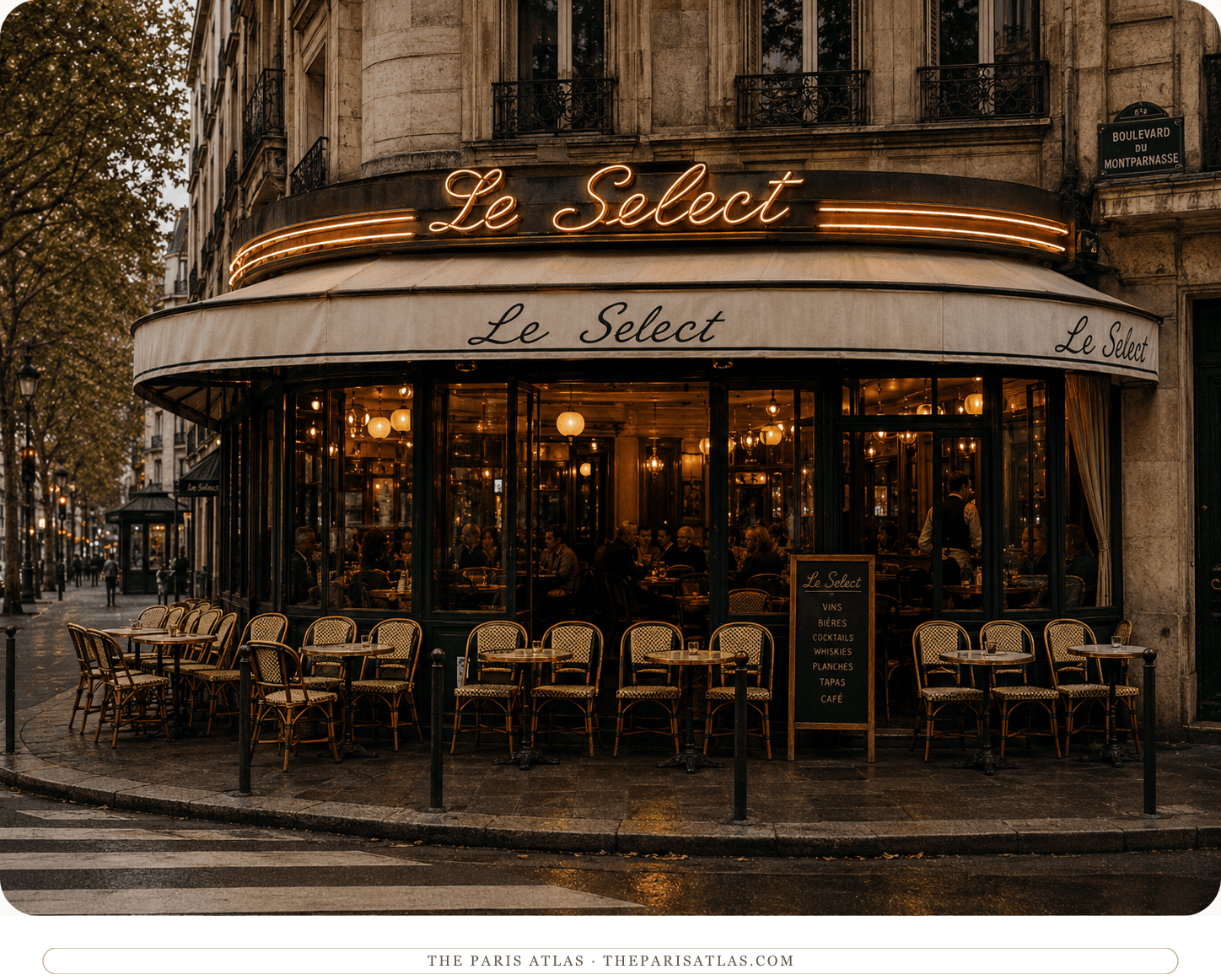
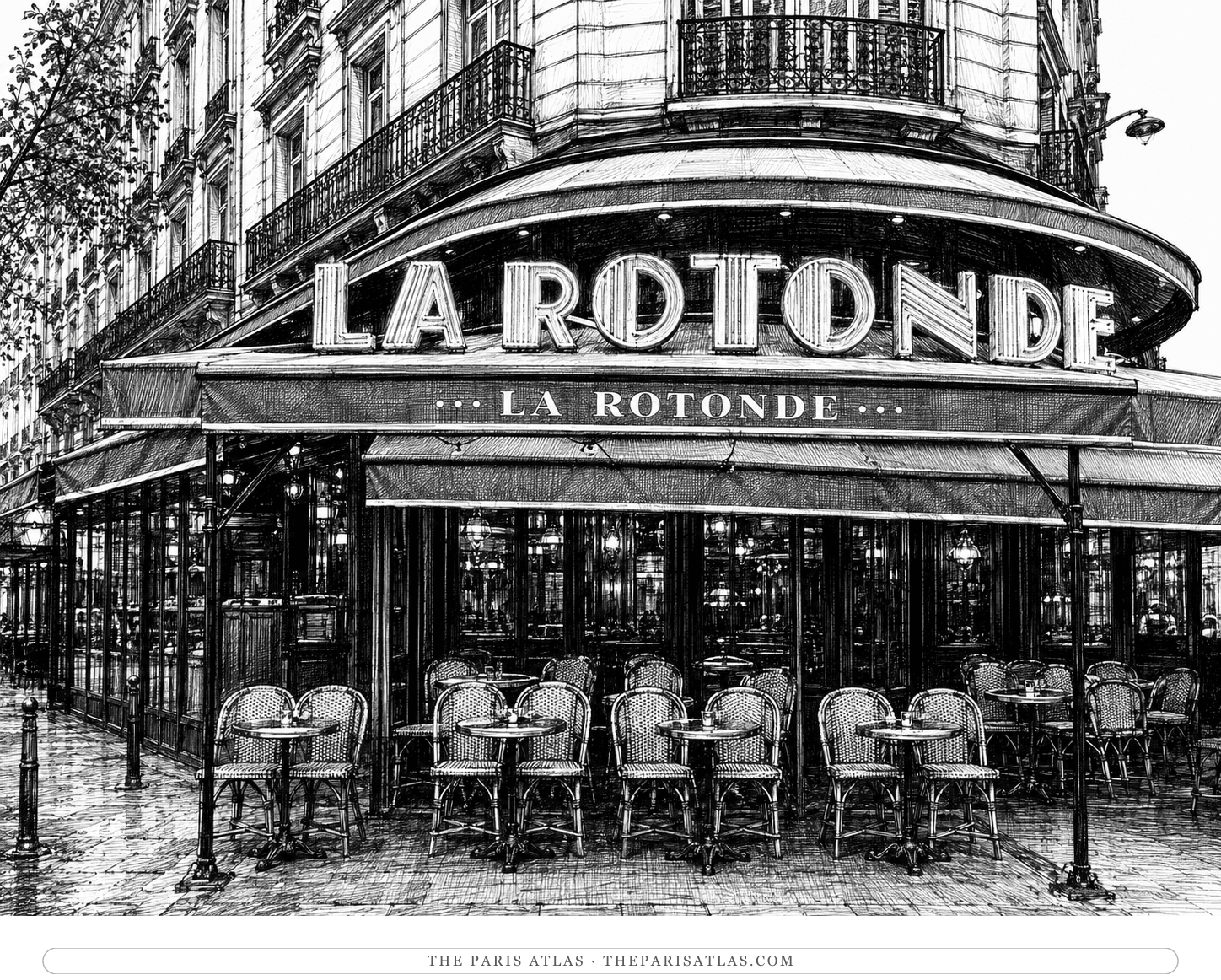
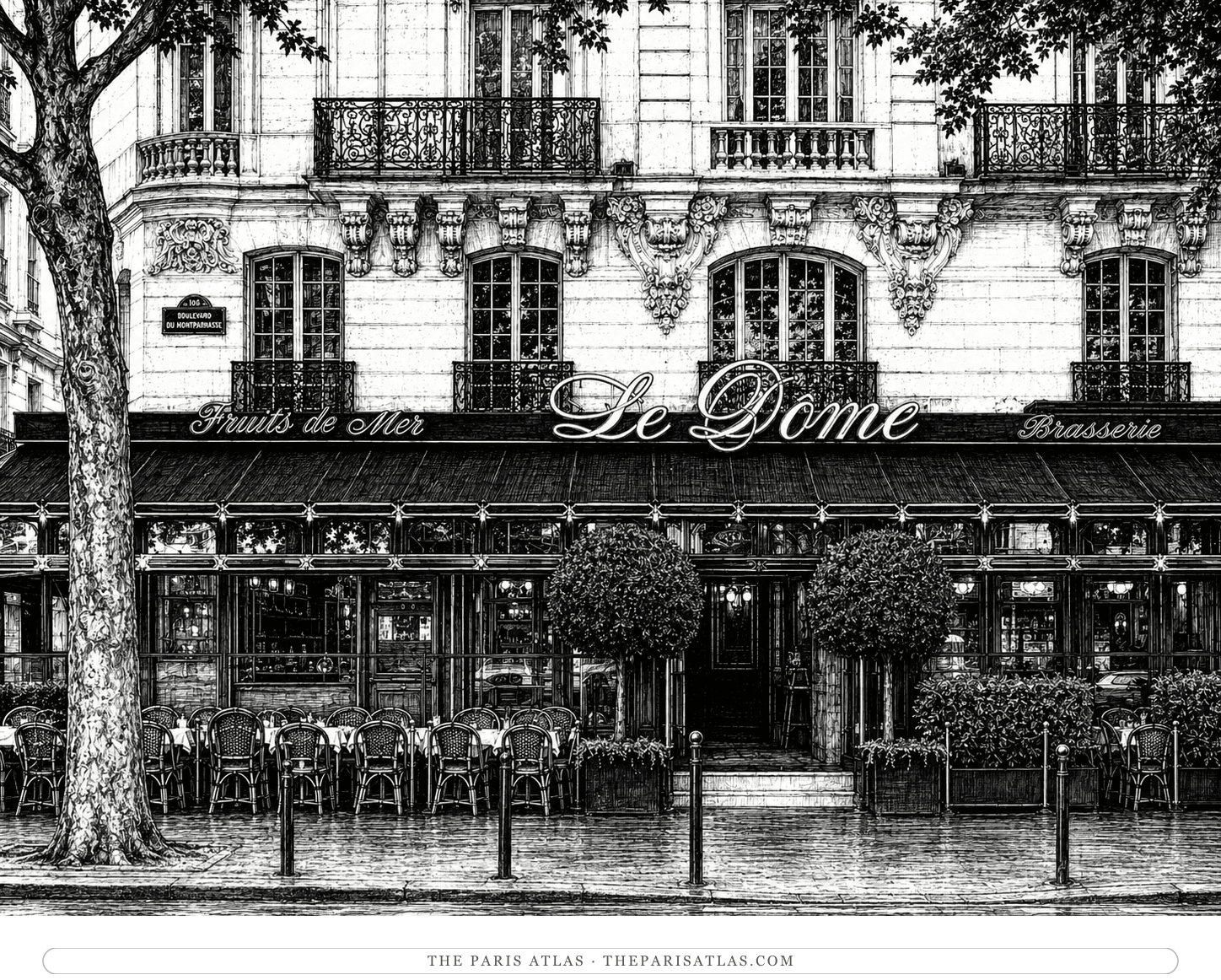
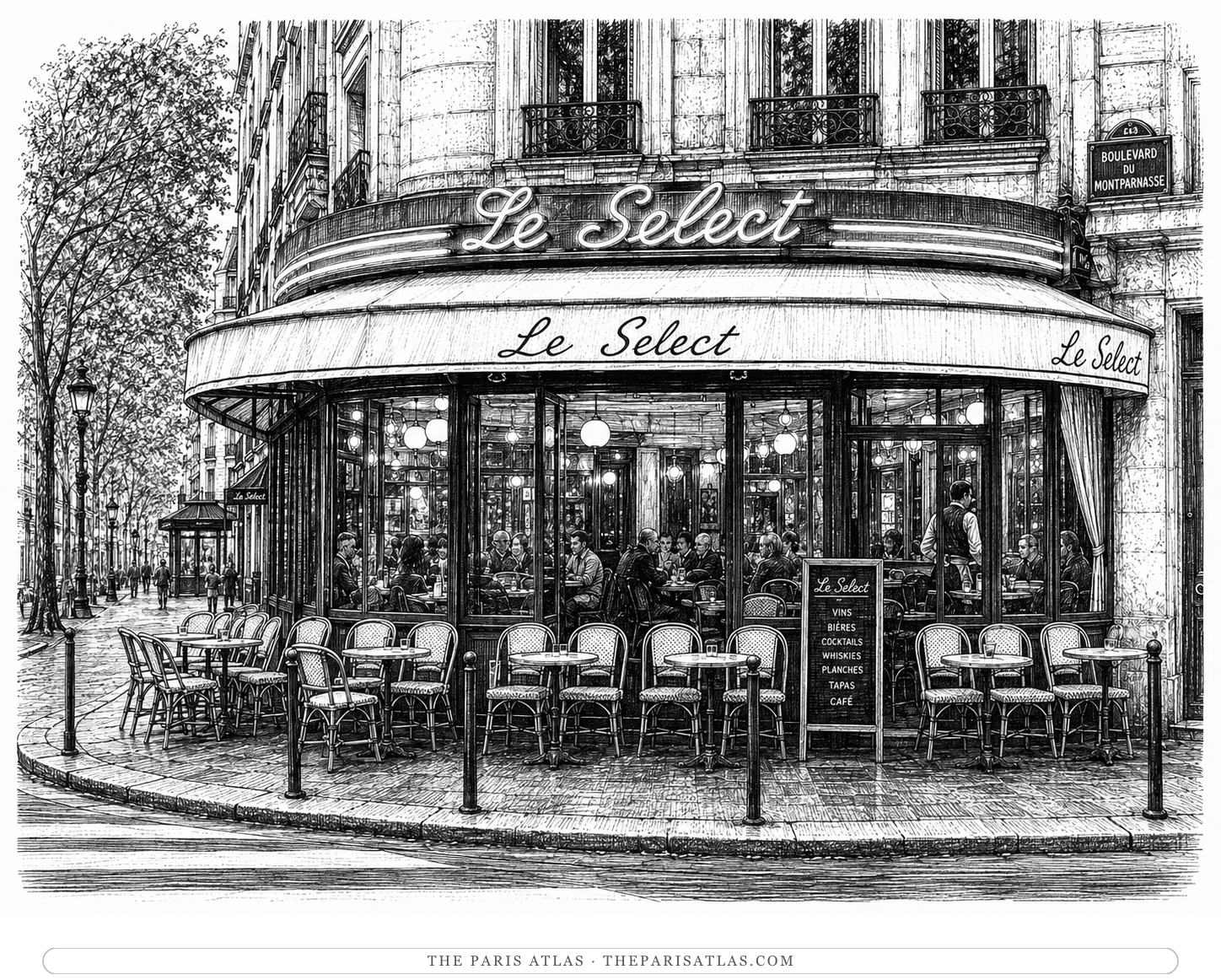
The Select arrived at the carrefour Vavin in 1923, after the Dôme and the Rotonde had already divided the crossroads between them, and found its opening by simply refusing to close: it advertised itself as an American bar open all night, the first in the quarter. That single fact reorganized Montparnasse evenings. Wherever the night began, it finished at the Select, because nowhere else was still serving.
It is the café The Sun Also Rises keeps returning to. Harvey Stone — the broke writer-about-cafés of The Sun Also Rises — sits alone on the terrace behind a pile of saucers, needing a shave and waiting for someone to talk to; taxis from the Right Bank empty out in front of it; and the novel's great walk across Paris — the island, the river, the climb through the Latin Quarter — comes down the boulevard past the Rotonde's lights and lands, where else, at the Select. Hemingway seats his cast here more often than anywhere else in the city.[1]
The café's later legend kept pace with its opening decade. In 1927 the terrace produced one of the era's famous rows, when Isadora Duncan's protest over the Sacco and Vanzetti executions boiled into a fracas; in 1929 the poet Hart Crane fought the waiters over a bar bill and spent a week in La Santé for it. The Select absorbed it all and kept the lights on. It is still open at the same address, still late, and still called by the same one-word name everyone in the novel uses.
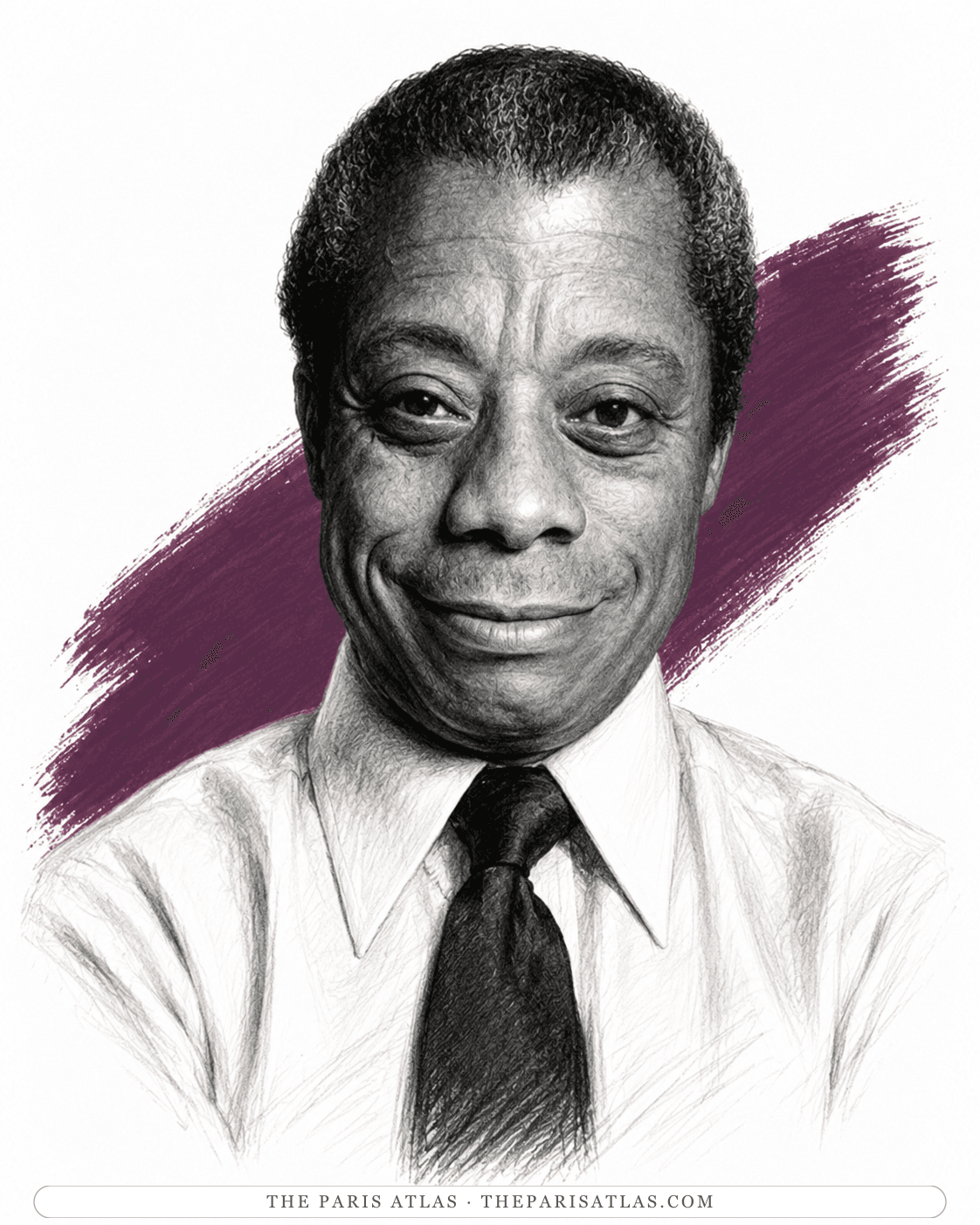
The story goes that the novelist James Baldwin worked on Giovanni's Room at the Select, and the actor and Baldwin scholar Charles Reese says flatly that this is where he finished it. However, nobody has produced a letter, a diary entry, an interview or a page number stating this as evidence. So we keep it on the record, because it is his only reported tie to Montparnasse café life, and we stop short of stating it as fact. If you have the citation, we want it.
The reason for the caution is geography. Baldwin's Paris was Saint-Germain, twenty minutes north: the Café de Flore, Les Deux Magots, Le Tournon, a room at the Hôtel Verneuil. Those are the addresses the City of Paris names and the ones his biographers use. Montparnasse belonged to the generation before his, and by the late 1940s the crossroads was living off the twenties rather than making anything new.[2]
None of which makes the story impossible. Giovanni's Room is a novel about an American adrift in Paris rooms that are not his, and a café that never closed would have suited a writer with nowhere warm to go.
I walked past the sad tables of the Rotonde to the Select. There were a few people inside at the bar, and outside, alone, sat Harvey Stone. He had a pile of saucers in front of him, and he needed a shave.
‘I’m coming over some night. The Dingo. That’s the great place, isn’t it?’ ‘Yes. That, or this new dive, The Select.’
It is, of course, easy to parody Hemingway: — ‘What are you doing?’ ‘Nothing particular.’ ‘Well, let’s go over to the Select.’ ‘Righto!’ We went over to the Select. I was feeling rather bad. He looked pretty sick too. We sat down. The waiter came — the fat one.
Paris! Meaning the Café Select, the Dôme, the Flea Market, the American Express.
Opens at the Vavin crossroads, billing itself an American bar open all night.
The summer crowd whose Pamplona trip becomes Hemingway's The Sun Also Rises makes it their nightly terminus.
The novel publishes with the Select as its Paris anchor — more scenes here than at any other café.
Isadora Duncan's Sacco-and-Vanzetti protest erupts into the terrace's most famous row.
Hart Crane brawls with the waiters and is marched off to La Santé.
Still open under the same name at the same corner.
It was the first café at the Montparnasse crossroads to stay open all night, which made it the last stop of every evening in the quarter from 1923 onward. Ernest Hemingway seats the cast of The Sun Also Rises here more often than anywhere else in Paris, and the terrace produced two of the era's better scandals.
Repeatedly — it is the novel's most-used Paris address. Harvey Stone, the broke writer of the book's café scenes, sits on the terrace behind a stack of saucers; taxis from the Right Bank unload in front of it; and the long night walk across Paris ends there. The café is named in the novel exactly as everyone still names it, in one word.
That is the story, and the actor and Baldwin scholar Charles Reese says the Select is where the novelist James Baldwin finished the book. However, nobody has produced a letter, a diary entry, an interview or a page number stating this as evidence. The addresses his biographers and the City of Paris actually name are all in Saint-Germain rather than Montparnasse. We keep the connection on the record and treat it as unproven.
The American poet fought the waiters over a bar bill in 1929 and was jailed for a week in La Santé prison for it. Two years earlier the terrace had produced another famous row, when Isadora Duncan's protest against the Sacco and Vanzetti executions turned into a brawl.
Yes, at 99 boulevard du Montparnasse on the carrefour Vavin, with the terrace intact. It still keeps late hours, which is the habit that made its name in the first place.
Mentioned in passing
Named in the novel as part of the very meaning of Paris — the Montparnasse shorthand for the whole city.

Setting of the story
Open when everywhere else has closed — the last stop of every Montparnasse evening, and the long night-walk across Paris ends at its lights.

Depicted in its pages
Where Huddleston sets his affectionate parody of the Hemingway style — 'Well, let's go over to the Select.' 'Righto!'

Recalled in the memoir
The memoir's Paris headquarters: the terrace where Stearns's expatriate decade pooled — the saucers, the borrowed francs, the racing sheets signed 'Peter Pickem' — recounted from the far side of the recovery.

Setting of the story
David sits here and drinks after reading Hella's letter, looking for a girl and finding Sue instead. The night that follows is the one he spends trying to prove something to himself.
Frequented by · 1930–1939
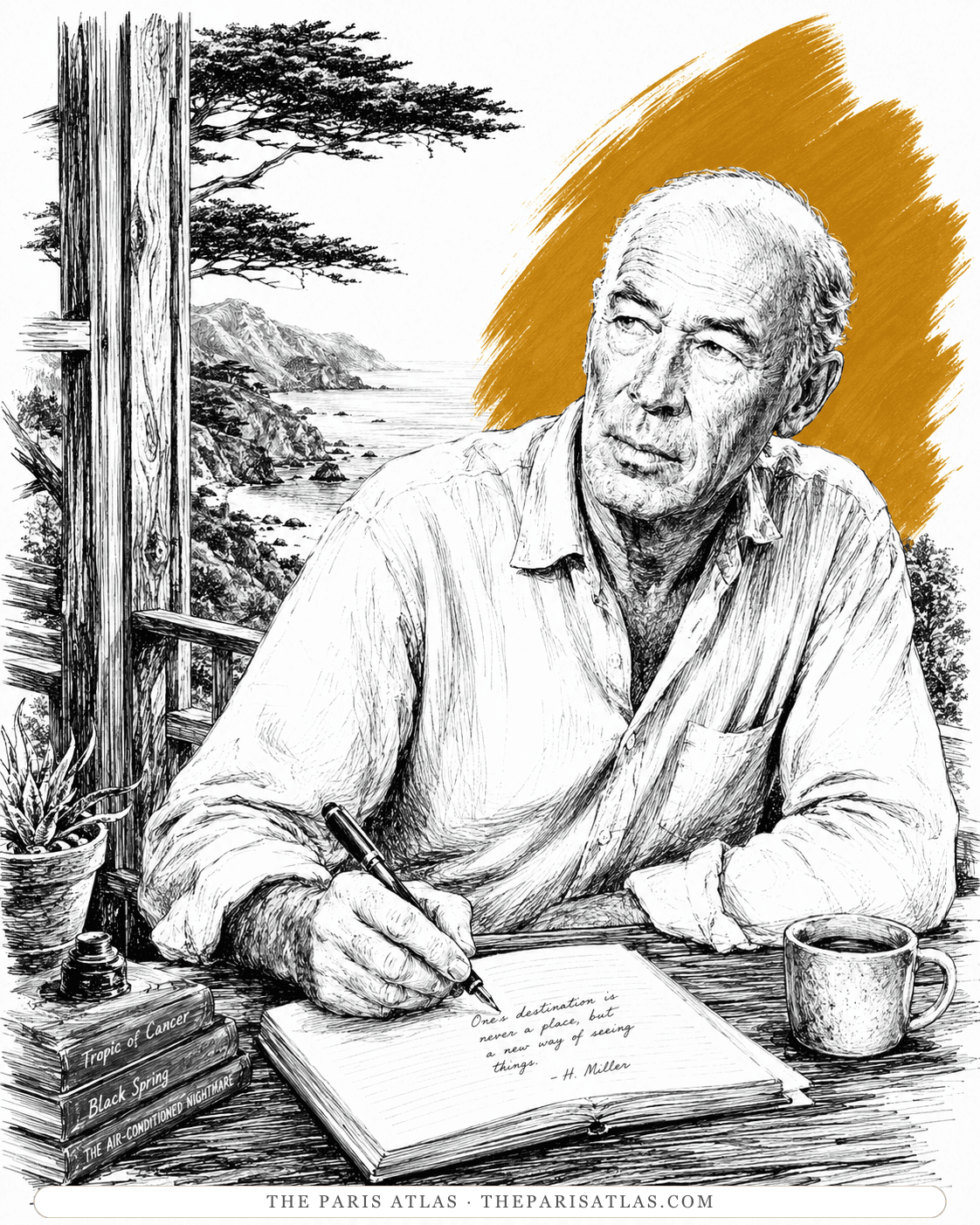
Counted among Miller's key Paris cafés — a decade after the Sun Also Rises crowd, the Select was still where the night ended.
Frequented by
Held at probable: a secondary account in Bonjour Paris has Baldwin at work on Giovanni's Room at the Select, his one recorded tie to Montparnasse café life. The actor and Baldwin scholar Charles Reese says the same, that the Select is where Baldwin finished the novel. Neither account rests on a letter, a diary entry, an interview, or a page, and a check of the searchable Leeming biography in August 2026 found no Select reference. A better source would replace this one; until one appears the site does not state it as fact.
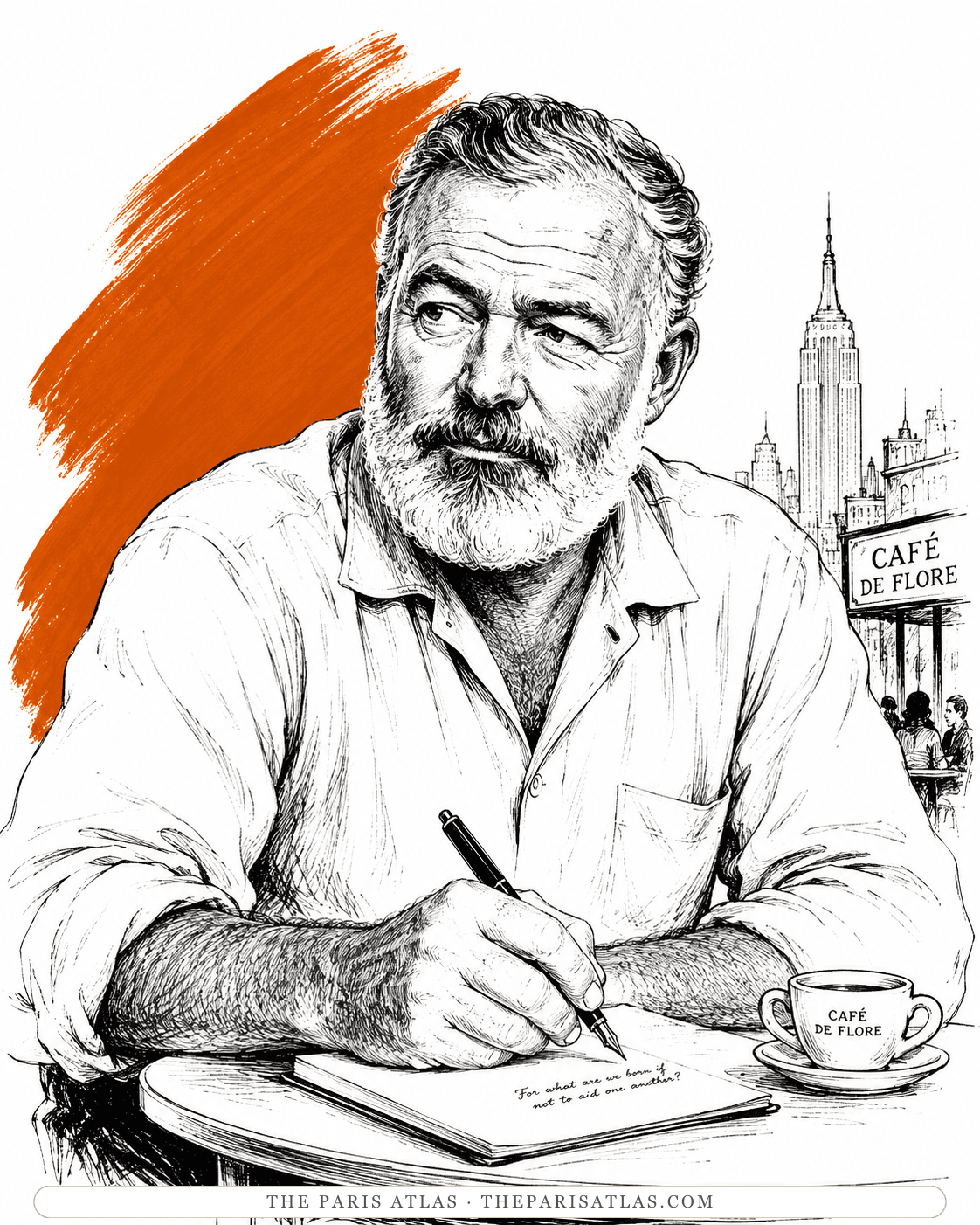
Ernest Hemingway wrote about Le Select in The Sun Also Rises.
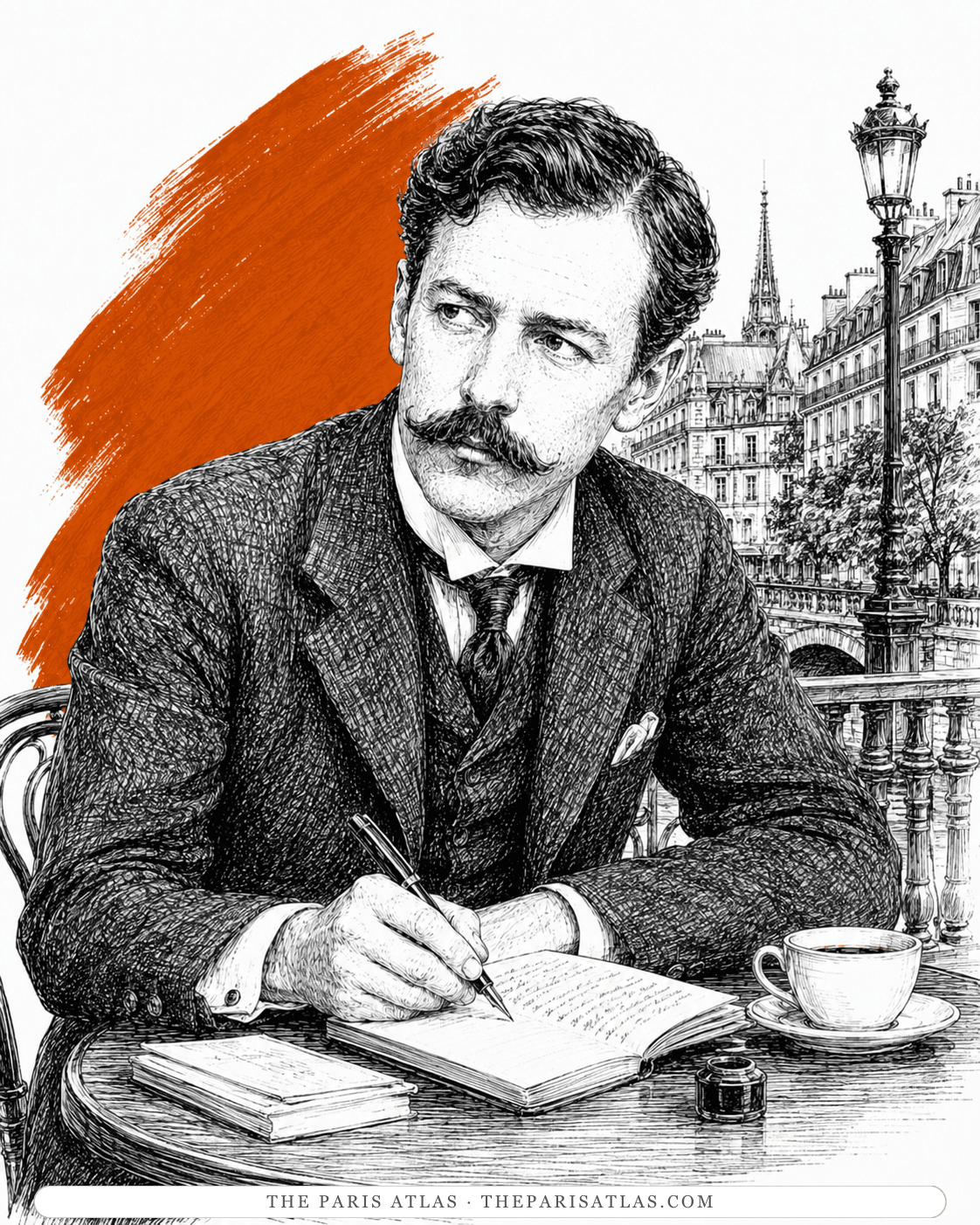
Sisley Huddleston wrote about Le Select in Paris Salons, Cafés, Studios.
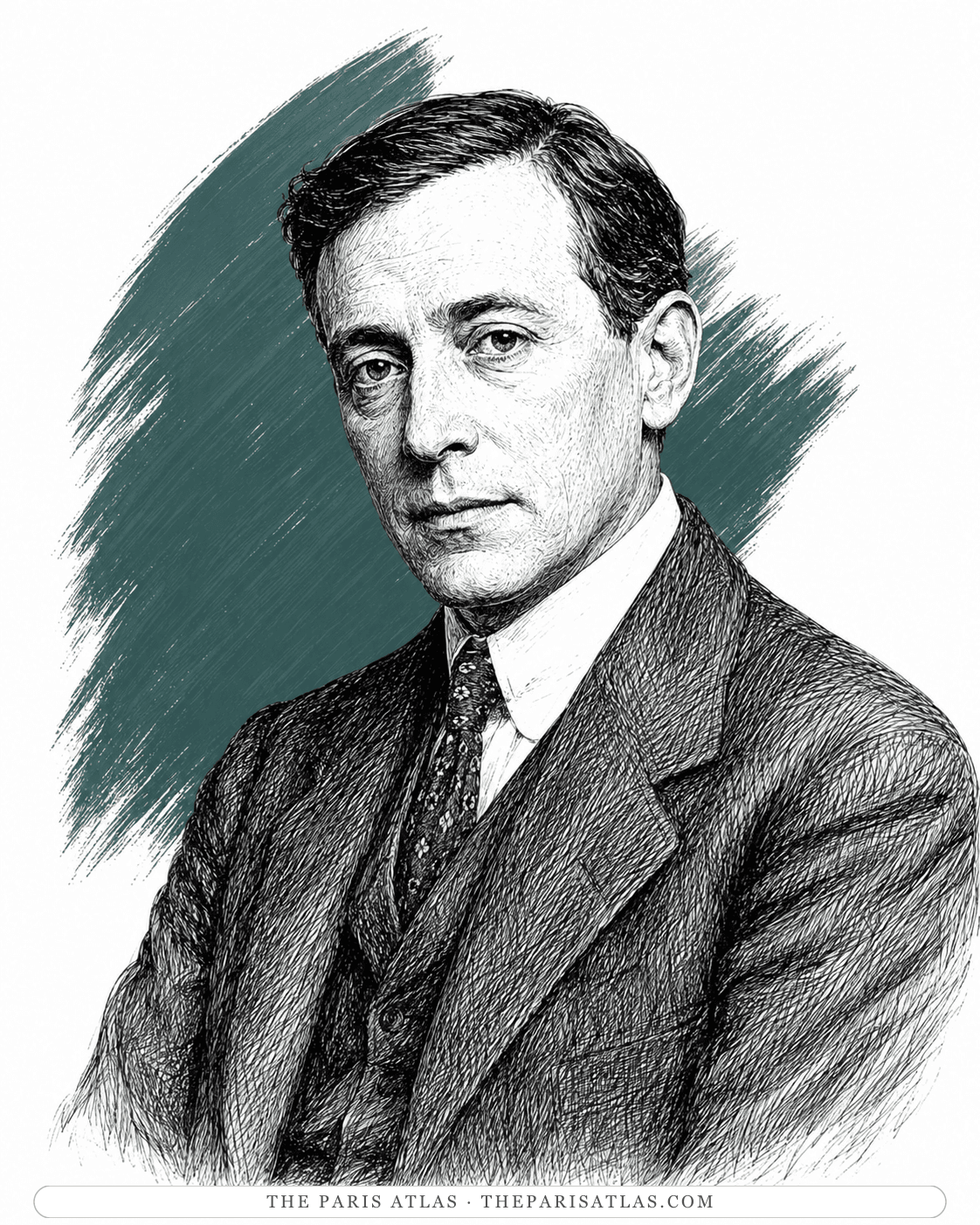
Harold Stearns wrote about Le Select in The Street I Know.
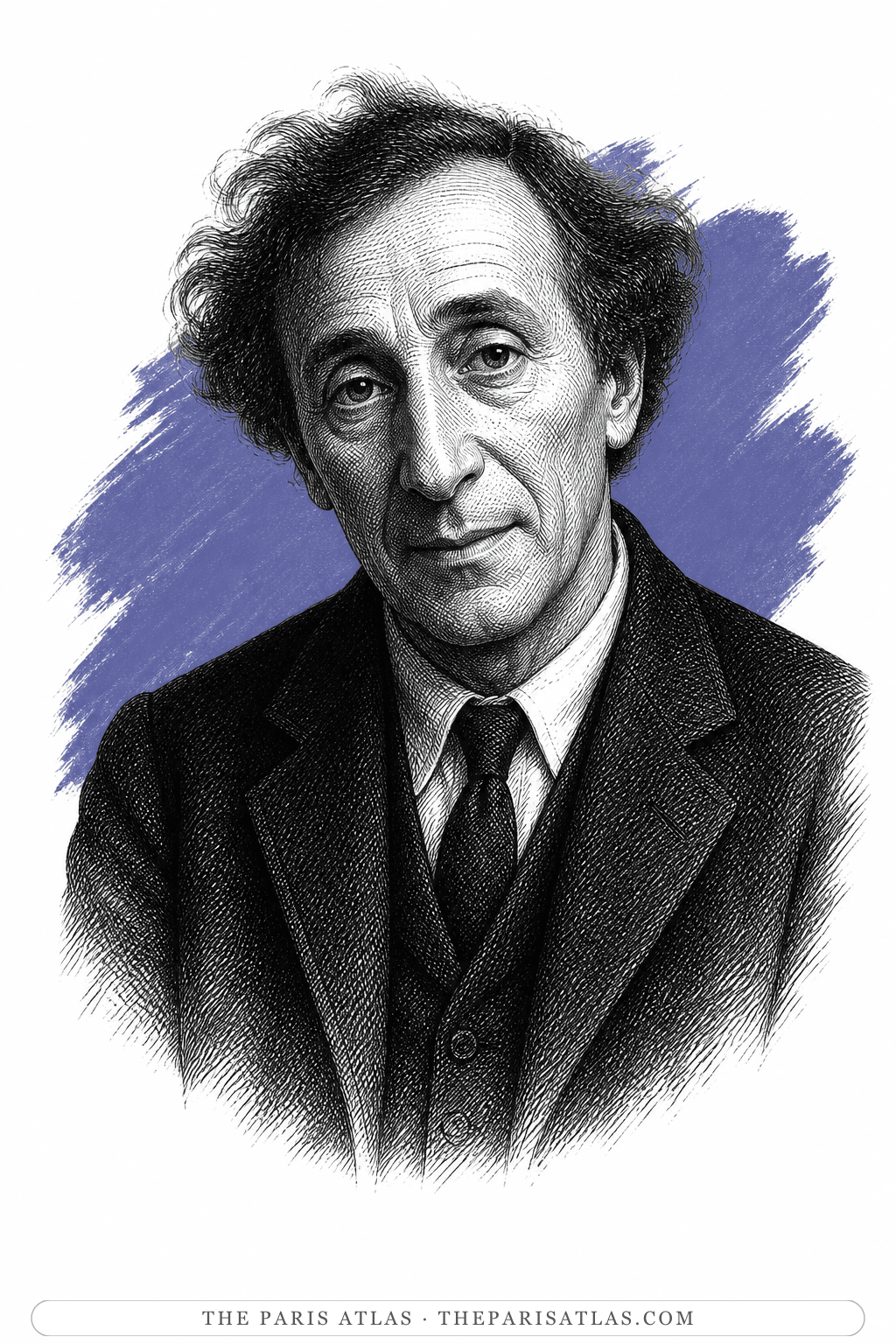
Chagall was among the Montparnasse regulars at the Select after it opened in 1925.
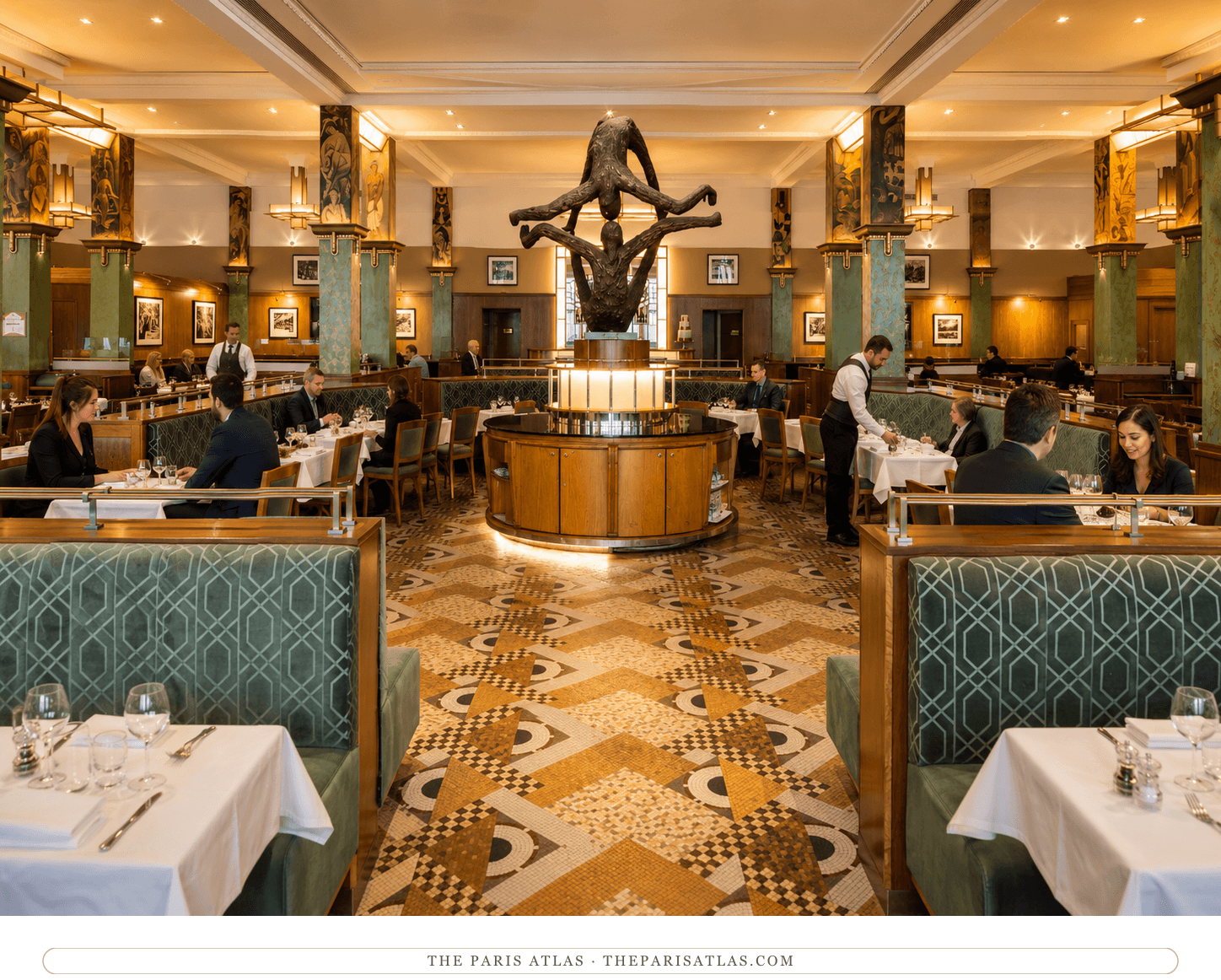
The giant brasserie of the Boulevard du Montparnasse, opened in December 1927 with a party the quarter never forgot — Blaise Cendrars was in the opening-night crowd.
Visit the place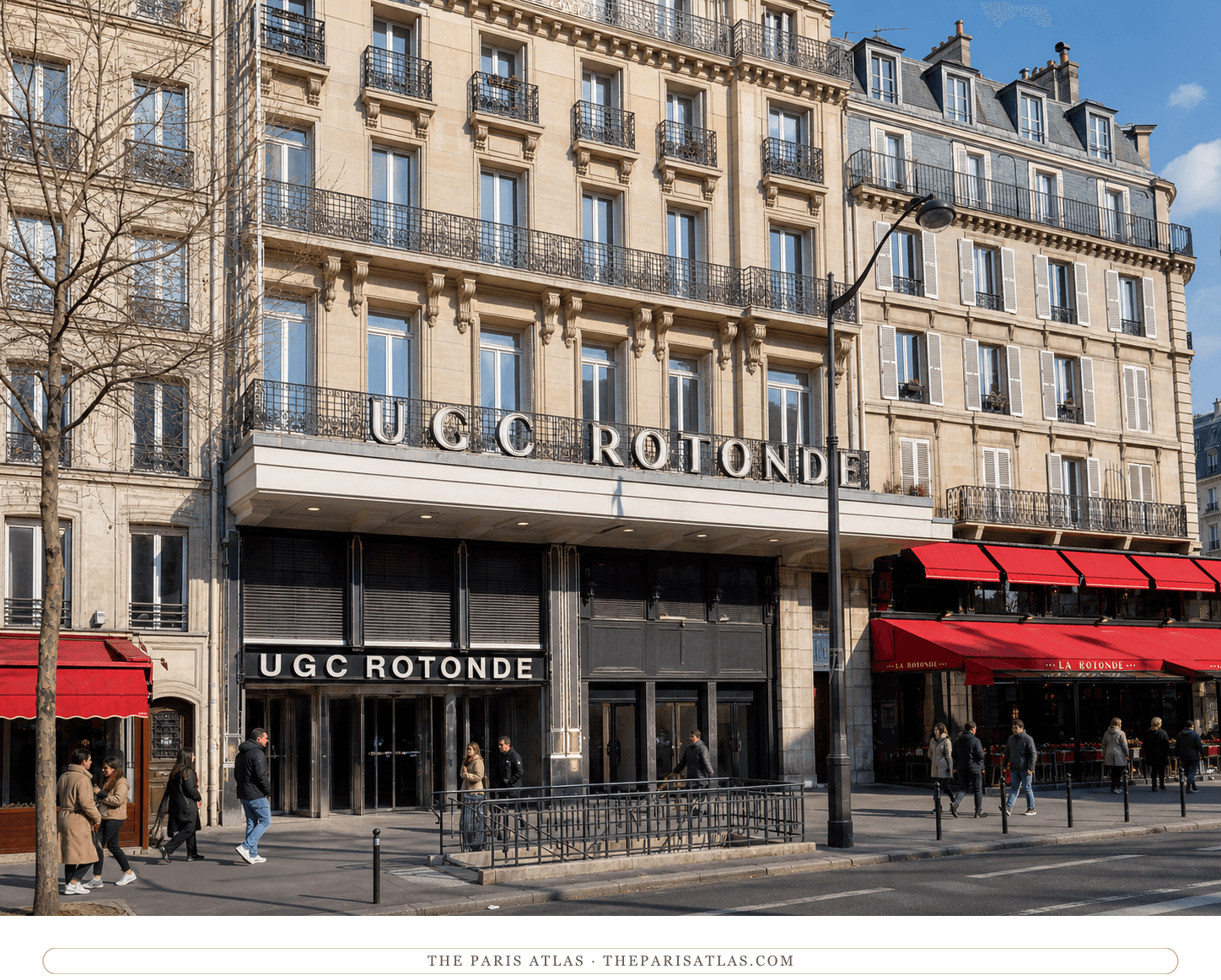
Where Simone de Beauvoir was born in 1908 and grew up with her sister Hélène — in the middle of Montparnasse, the quarter she would spend most of her life within a few streets of.
Visit the place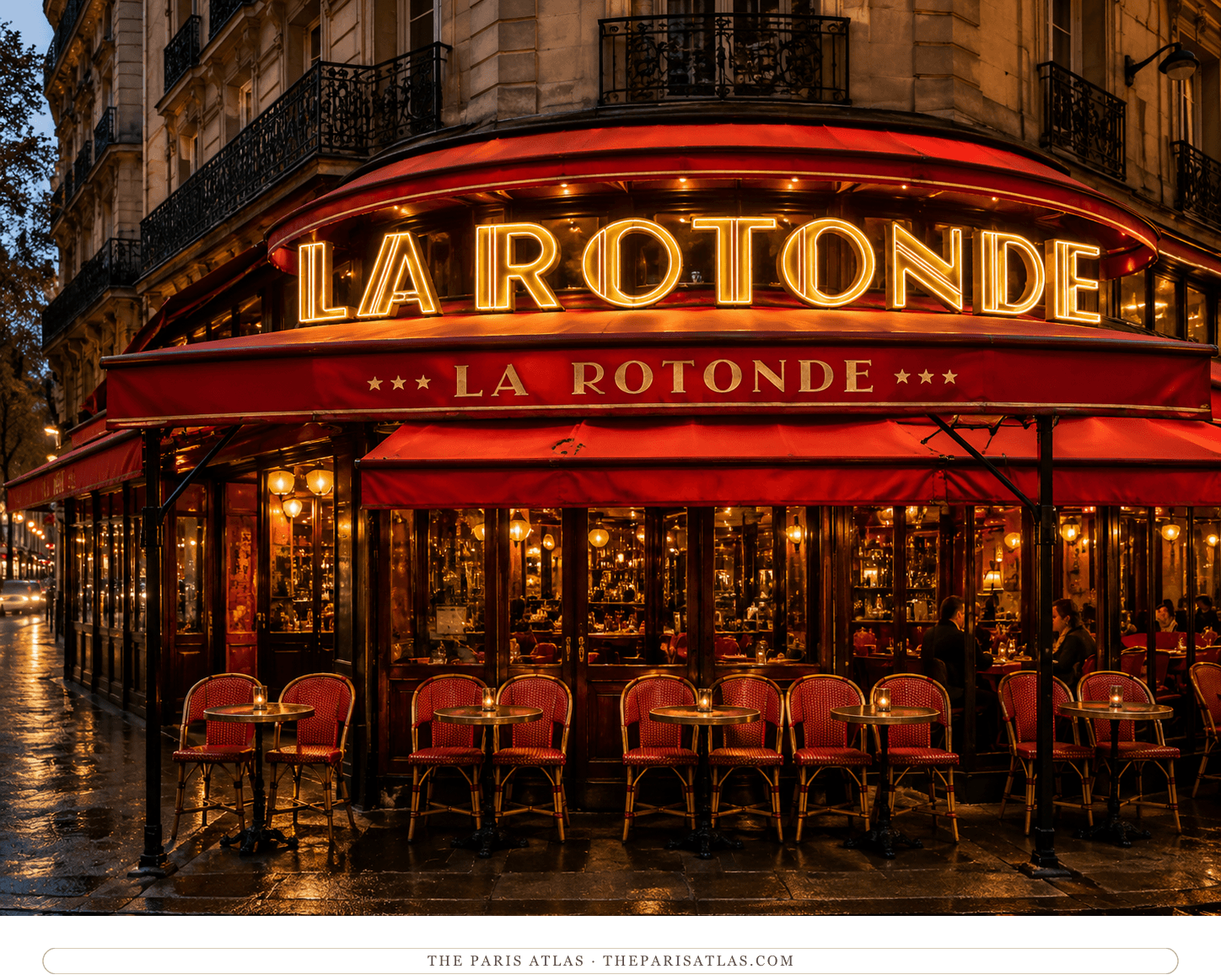
The café every taxi driver delivered Americans to — the novel's driest Montparnasse joke, and before that the painters' living room, where the patron took drawings for drinks.
Visit the place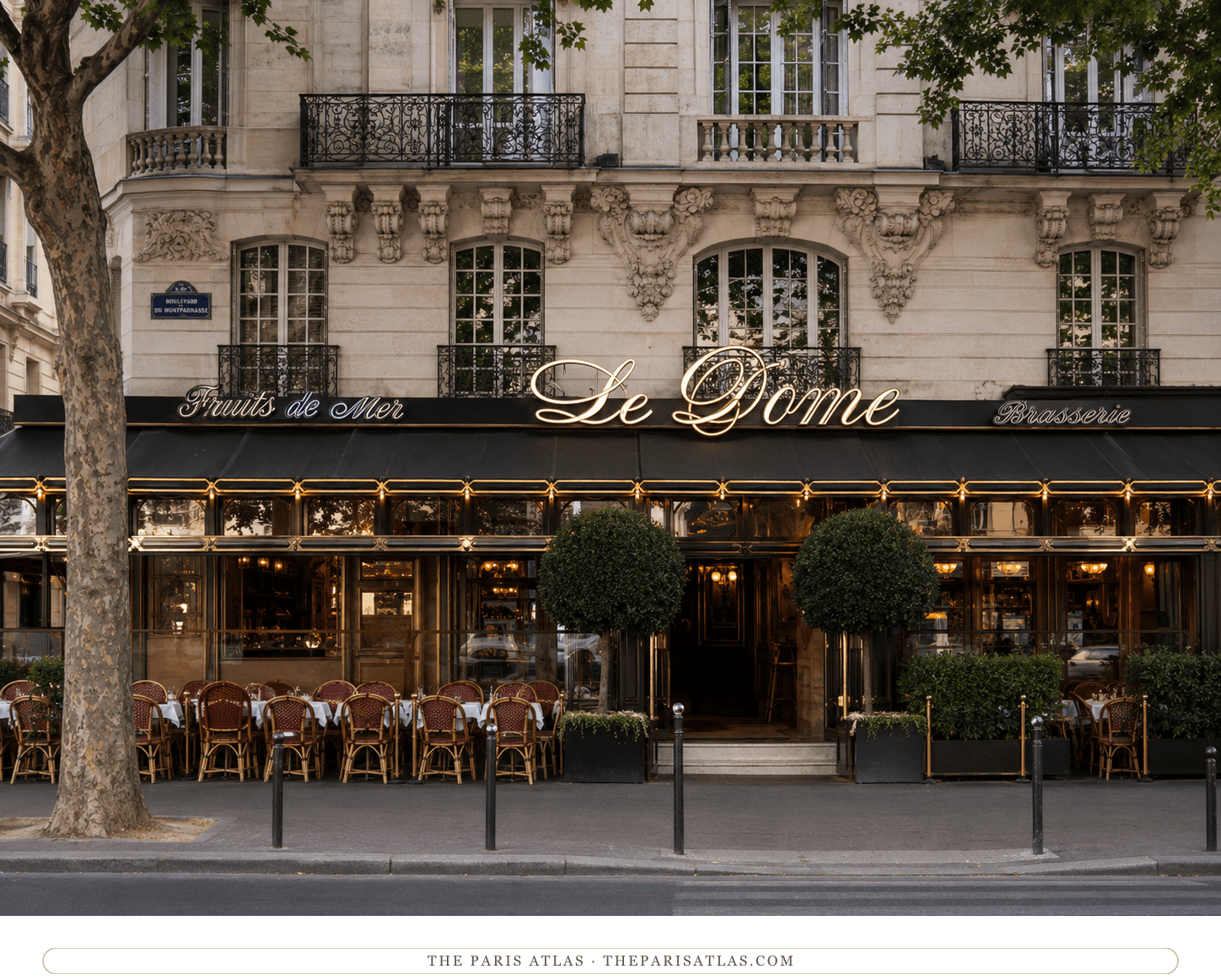
The noisy common room of Montparnasse and the setting of 'With Pascin at the Dôme' — the café for watching the show, not for working.
Visit the placeThe sources below include histories, archival materials, scholarly research, and official records that informed this page. They document Le Select, the people connected to it, and its place in Paris.


Primary text included as part of the documented record for Le Select.
The City of Paris walk through Baldwin's Paris names the addresses he actually used — the Café de Flore, Le Tournon, Les Deux Magots and the Hôtel de Verneuil — all of them in Saint-Germain rather than Montparnasse.
Primary text included as part of the documented record for Le Select.
First-person evidence and historical context used in preparing the Le Select page.

Map data used to verify addresses, geographic coordinates, and the placement associated with Le Select.
These references provide the documented foundation for this page's history and context. Claim-level citations remain attached to the specific claims they support.
 Explore more resources
Newsletter
The cafés, studios, and walk-up flats where the work was made — one story from the map in every letter.