Chaïm Soutine
- Painter
Met · 1912
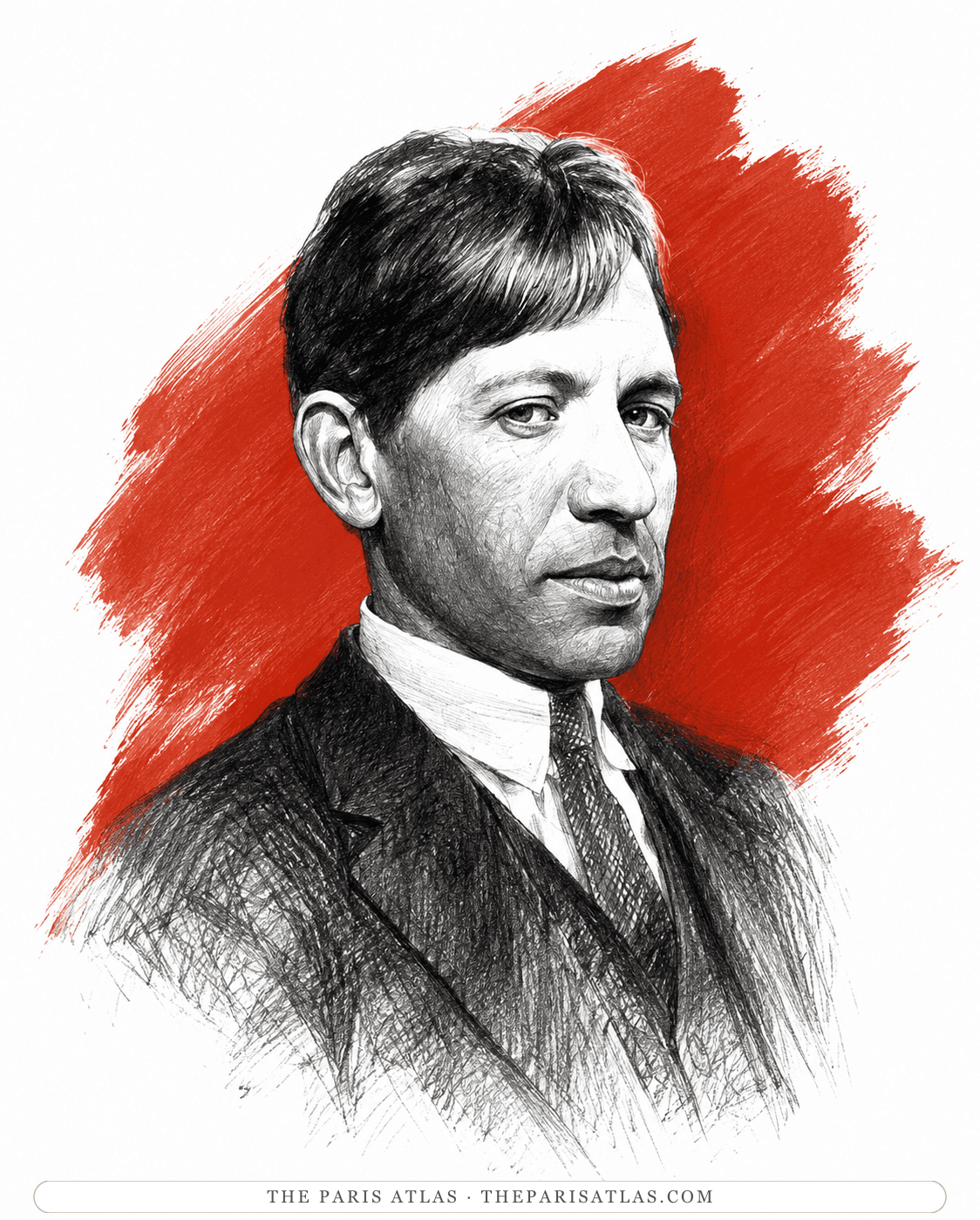
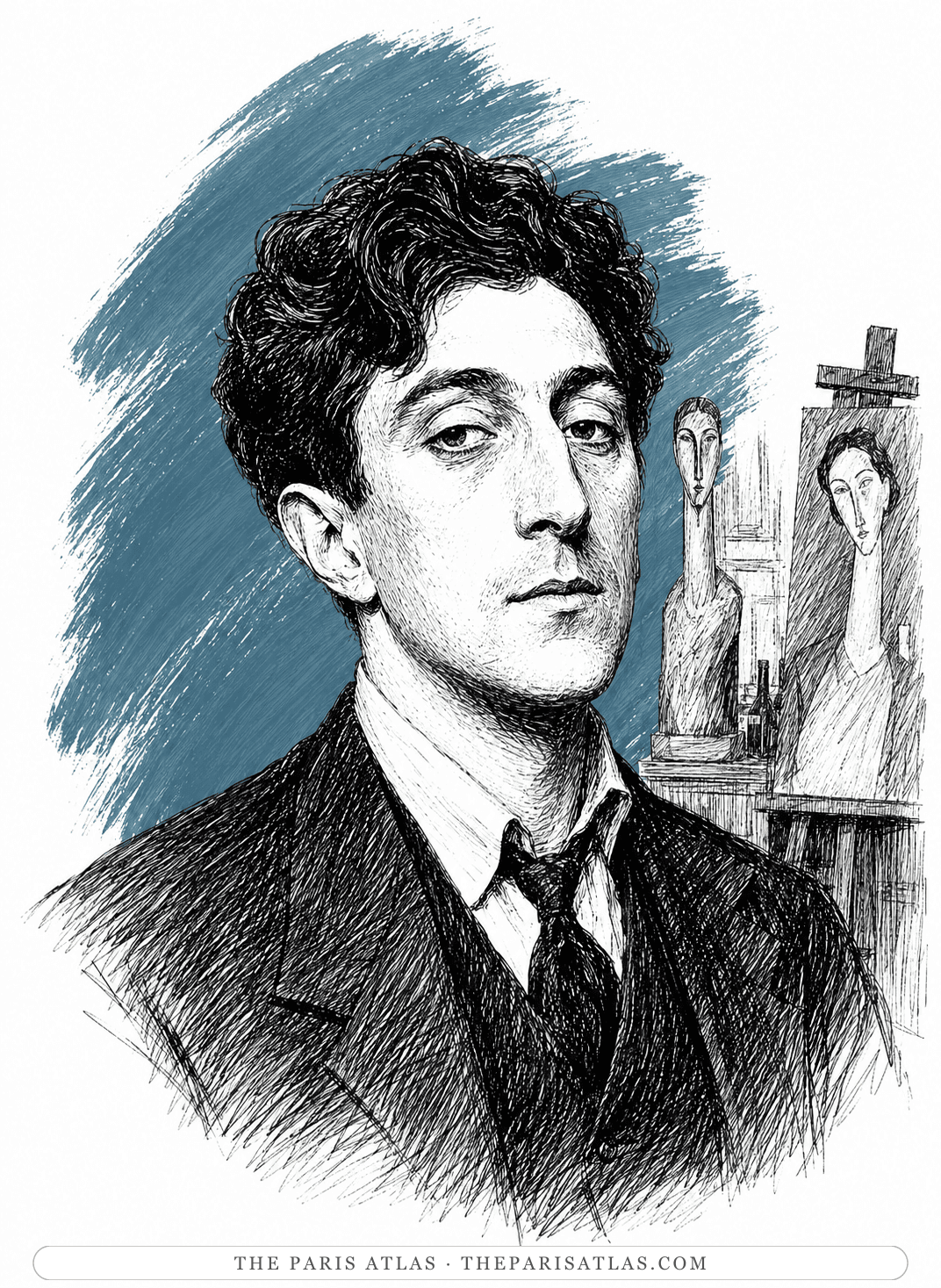
Neighbours in the cells of La Ruche at 2 passage de Dantzig in the 1910s - two Jewish painters from the Pale of Settlement working wall to wall in the beehive of emigre studios.
Painter of flying lovers, green fiddlers and remembered Vitebsk, who worked in a cell of the beehive-shaped La Ruche studios in the 1910s alongside Soutine, Modigliani and Léger, fled France in 1941, and returned to paint the ceiling of the Paris Opera at seventy-seven.
Marc Chagall painted one town for seventy years — Vitebsk, the Hasidic market town in present-day Belarus where he was born in 1887 — and painted almost all of it somewhere else. The somewhere else was mostly France: the beehive-shaped La Ruche studios at 2 passage de Dantzig, where he worked from about 1911 among Chaïm Soutine, Amedeo Modigliani and Fernand Léger; the Paris of his 1923 return; and the hill village of Saint-Paul-de-Vence where he died at ninety-seven.
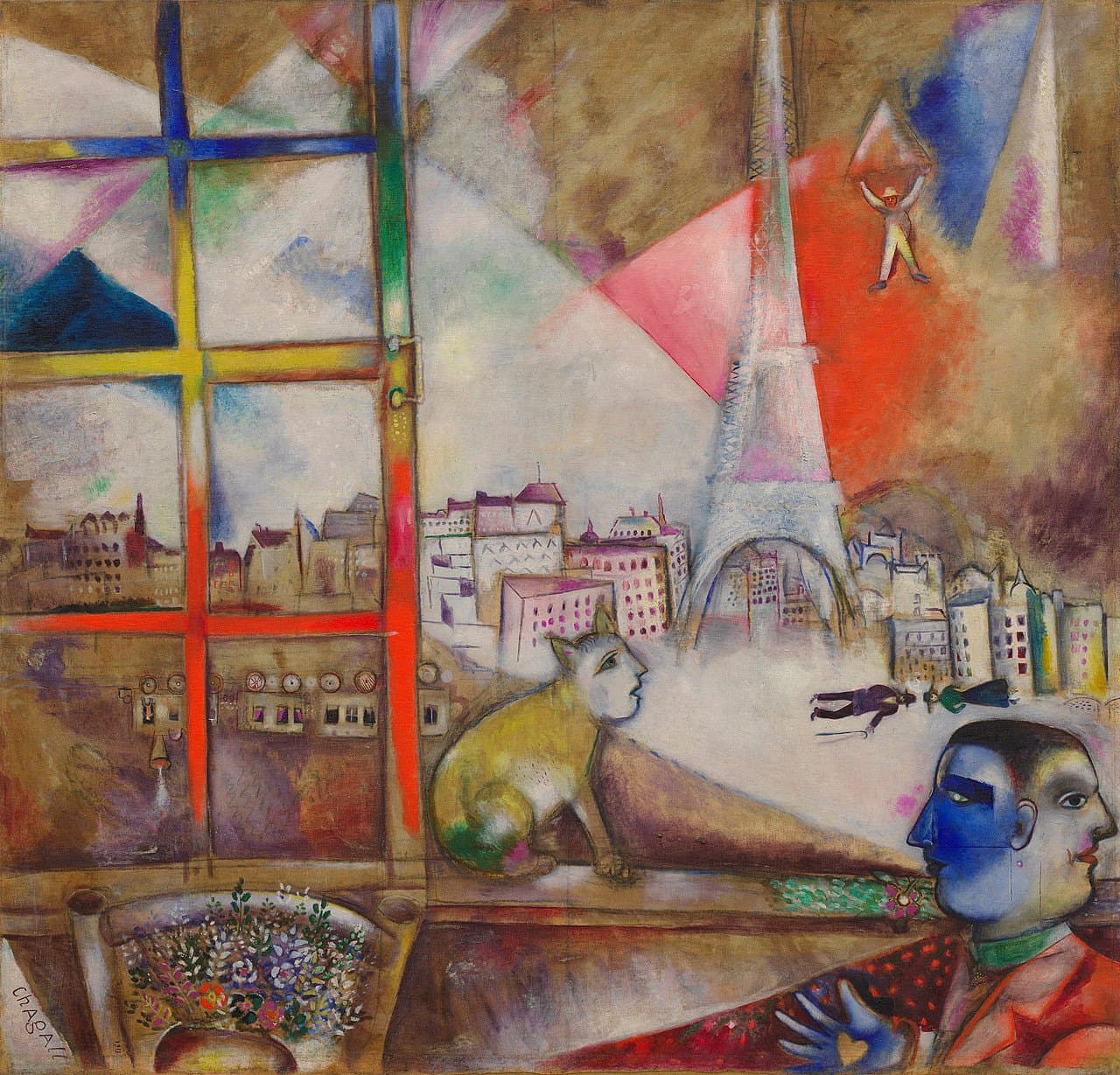
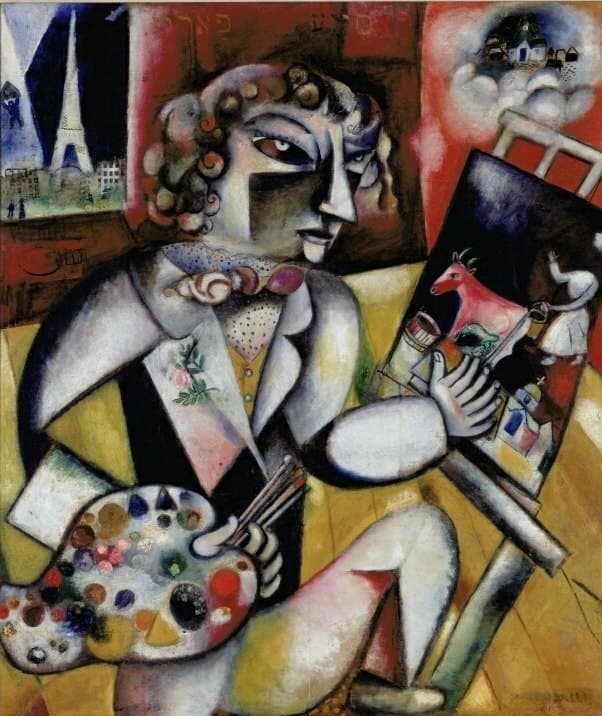
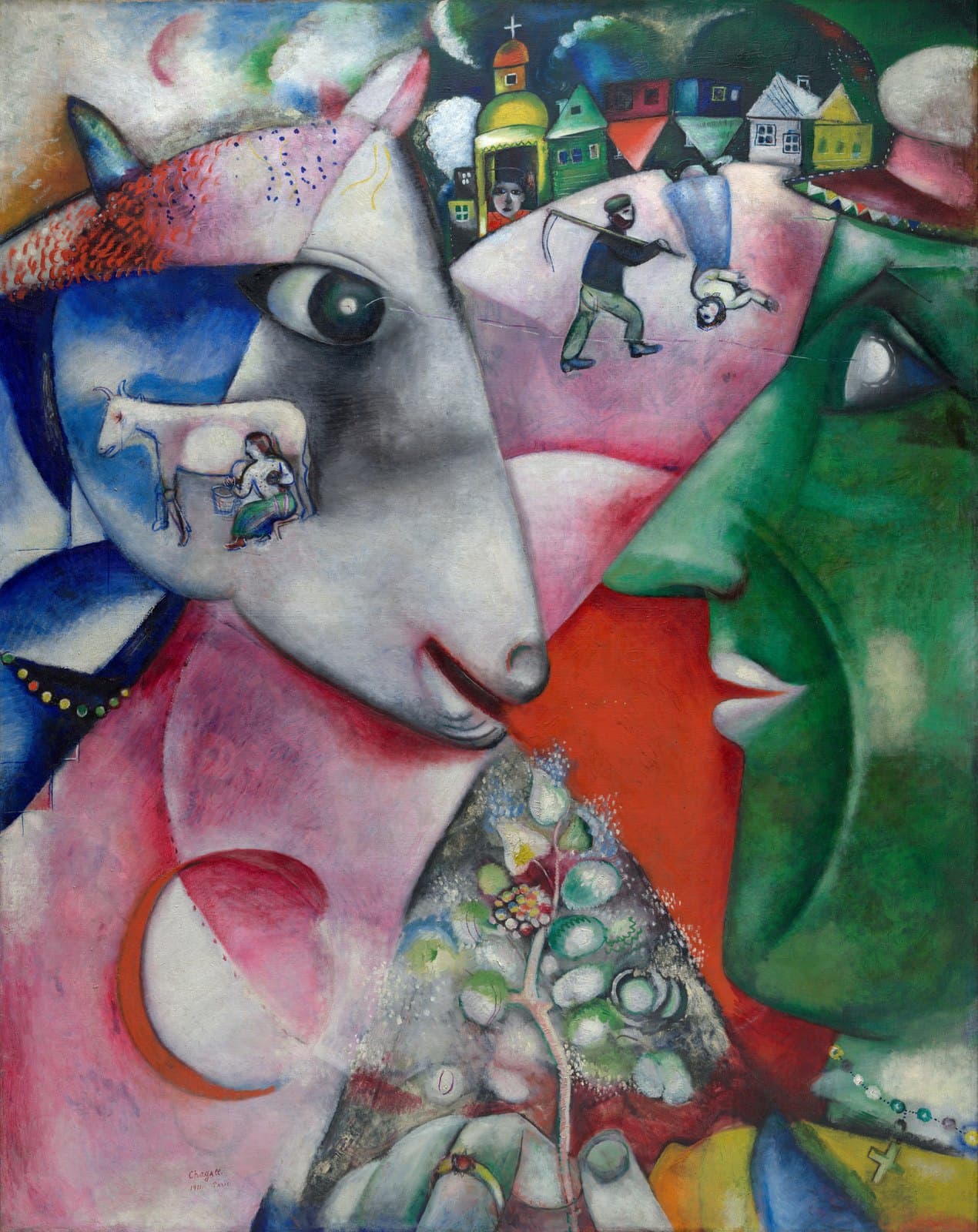
His pictures kept the town and let go of gravity — lovers over rooftops, a fiddler on a roof, a green-faced self-portrait eye to eye with a cow. Cubism taught him structure and never convinced him. 'I and the Village' and 'Paris Through the Window' were painted in the La Ruche years before he was thirty; the blue ceiling of the Palais Garnier, commissioned by André Malraux, was painted at seventy-seven.
Chagall was born Moishe Shagal on 6 July 1887 in Liozna, near Vitebsk, the eldest of nine children of a herring warehouse labourer, in a Hasidic Jewish world where image-making was suspect. He trained under the local painter Yehuda Pen, then in St Petersburg under Léon Bakst, and left for Paris in 1910 — knowing, he said later, that painting lived there.
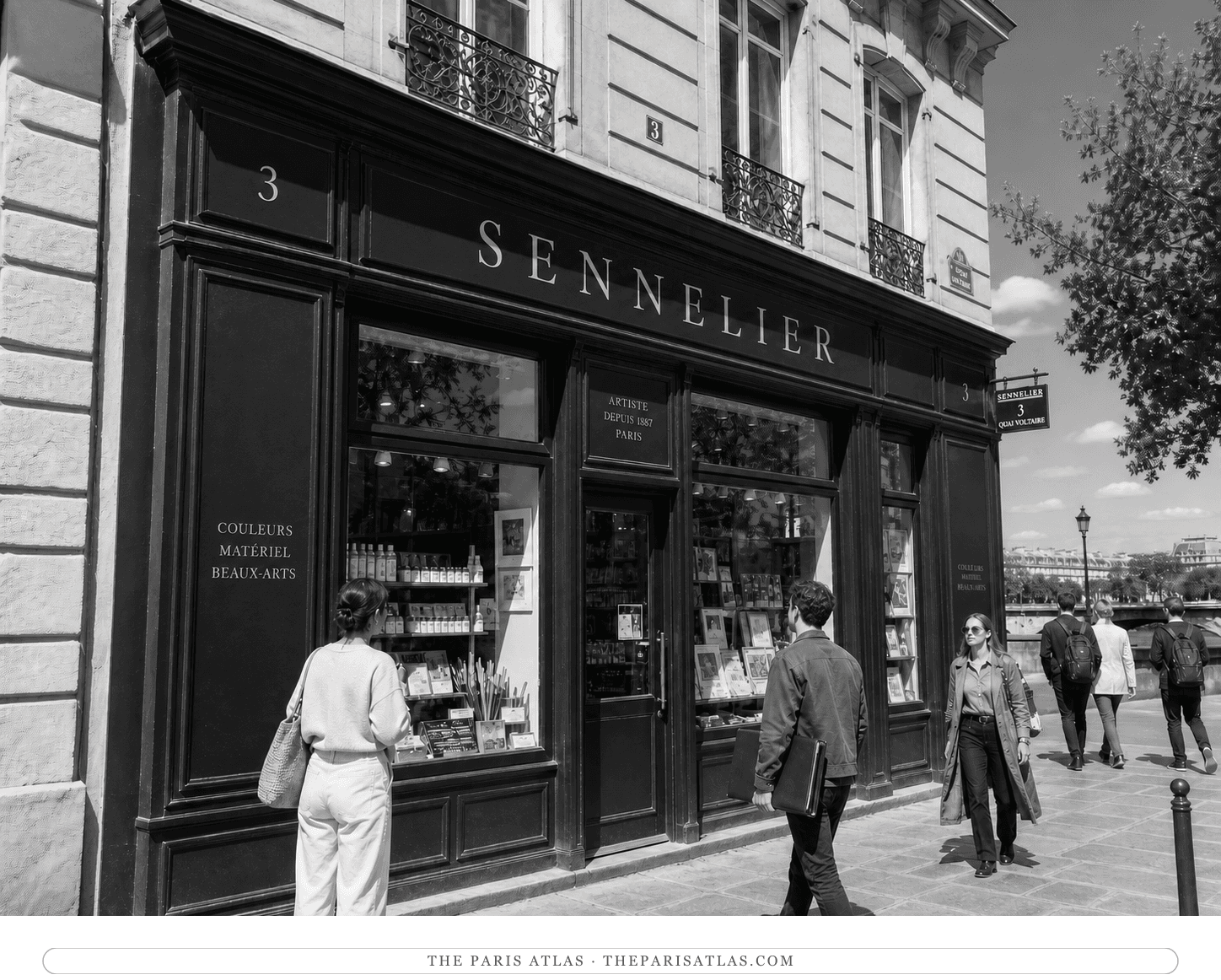
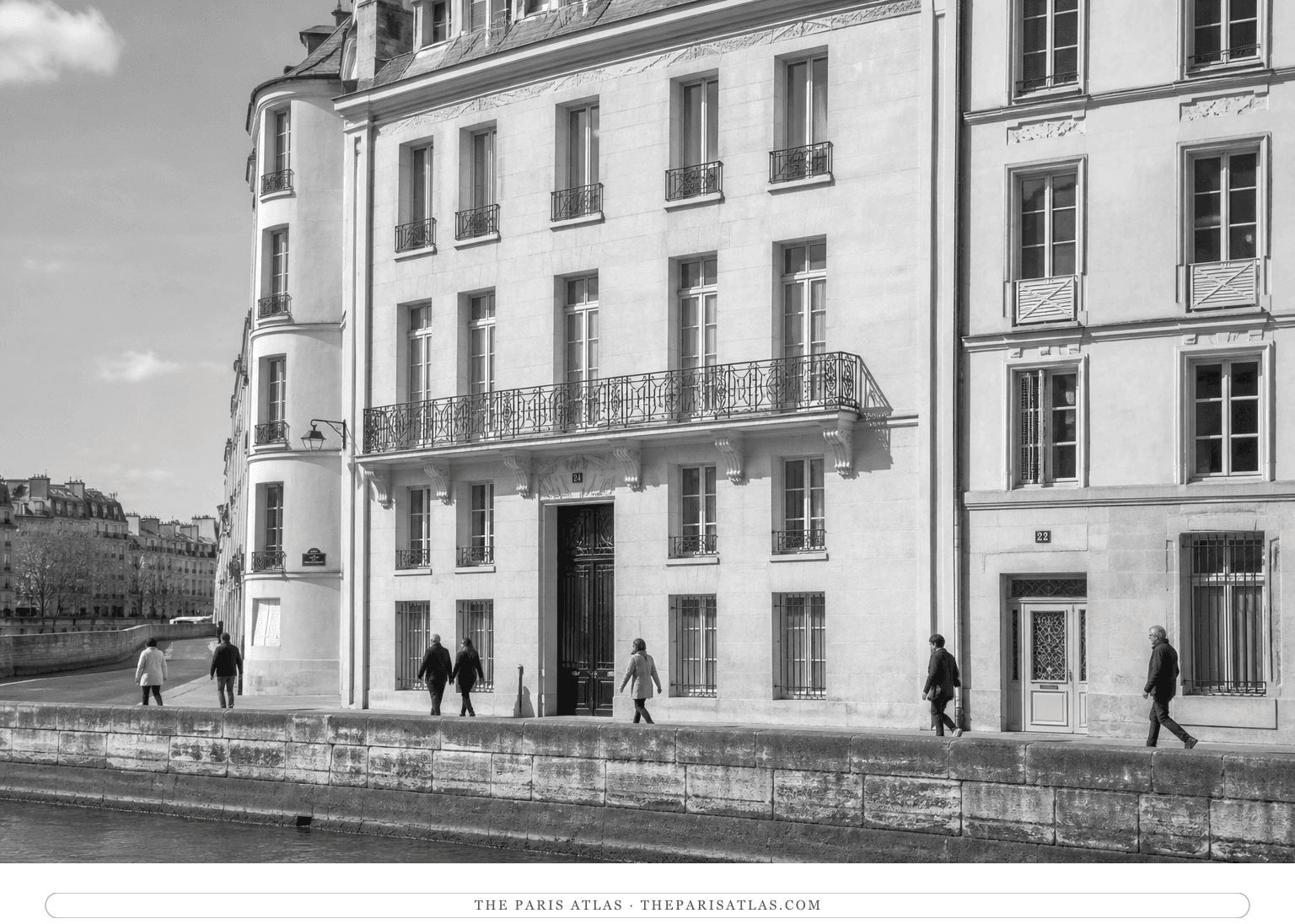
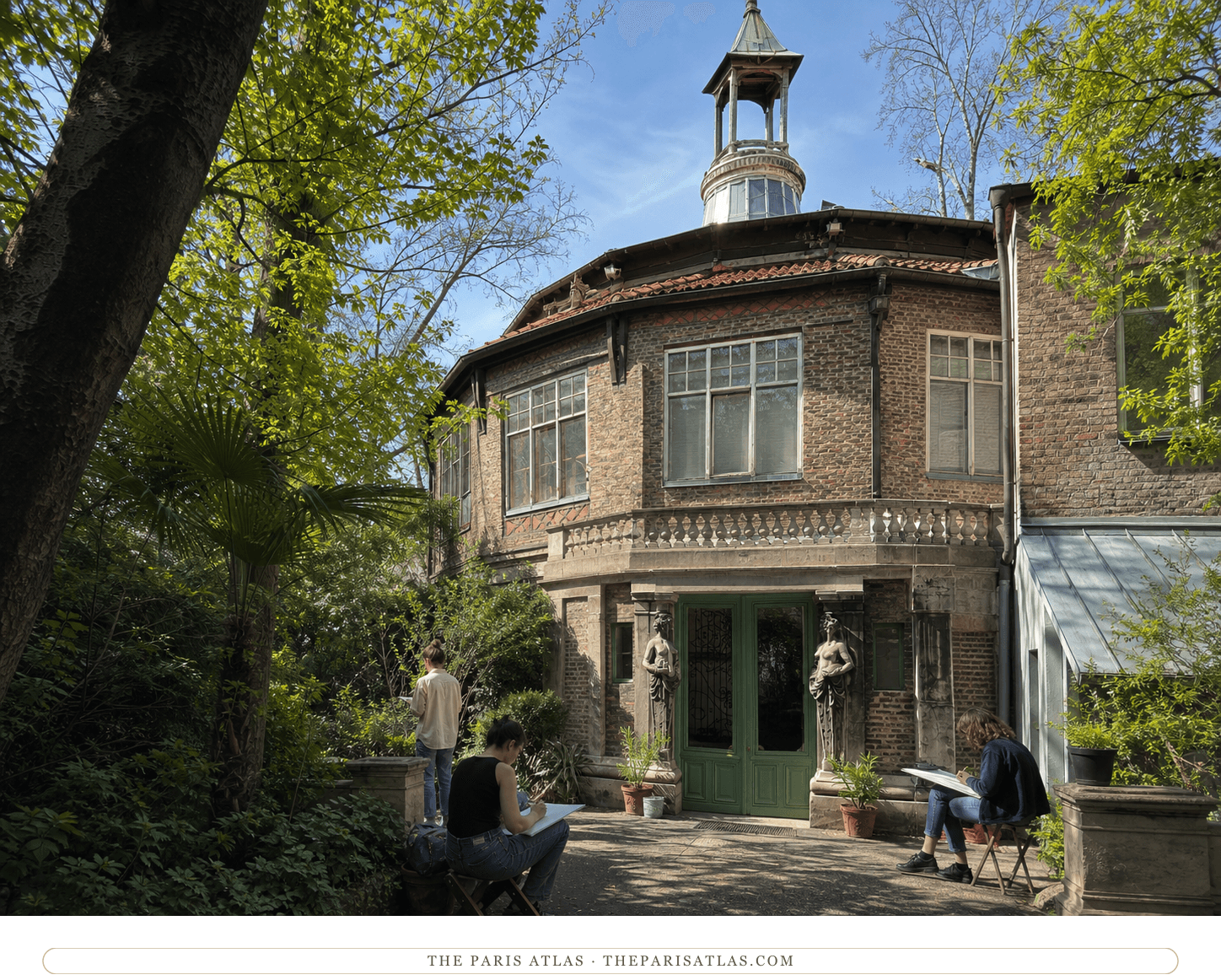
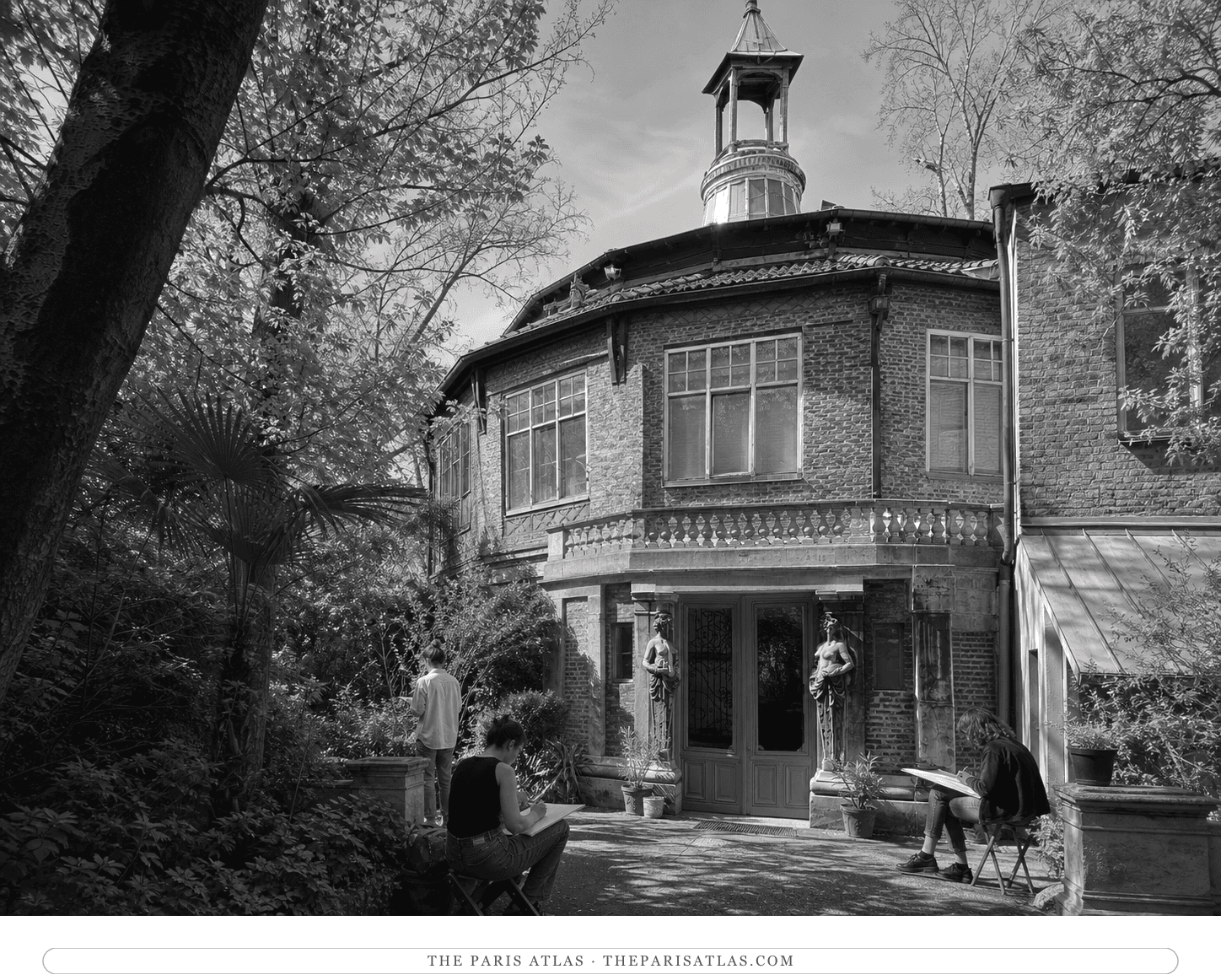
By the winter of 1911–12 he had a cell in La Ruche — the Beehive — the rotunda of cheap studios at 2 passage de Dantzig in the 15th arrondissement, built from Gustave Eiffel's 1900 Exposition wine pavilion, where the poorest émigré artists of Europe worked wall to wall: Chaïm Soutine, Amedeo Modigliani, Fernand Léger, Ossip Zadkine. Painting through the nights on Vitebsk from memory, he made I and the Village and Paris Through the Window there, and the poet Guillaume Apollinaire, seeing the work, coined a word for it: surnaturel.
A 1914 exhibition in Berlin and a visit home to see his fiancée Bella Rosenfeld turned into an eight-year absence when the First World War closed the borders behind him. He married Bella in 1915 — the flying lovers of the next sixty years are the two of them — served after the revolution as commissar of arts for Vitebsk, founded its art school, lost it in a doctrinal quarrel with Kazimir Malevich's suprematists — the rival school of pure geometric abstraction — painted the murals of Moscow's State Jewish Theatre, and got out in 1923, back to Paris, where the dealer Ambroise Vollard set him to etching Gogol, La Fontaine and the Bible.
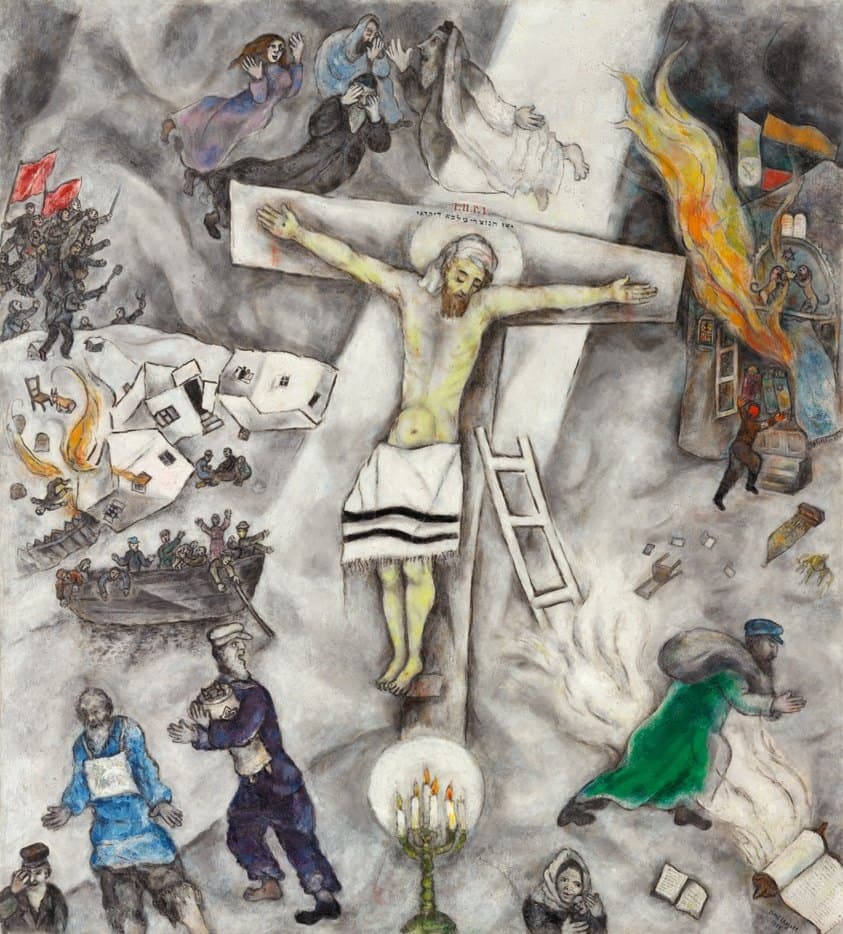
The second war hunted him. A Jewish painter whose work the Nazis had exhibited as degenerate, he stayed in France too long, and got out through Marseille in 1941 with the American rescue network of Varian Fry, reaching New York that June. Bella died there suddenly in September 1944, of an infection antibiotics — reserved for the war — would have cured; he could not work for months.
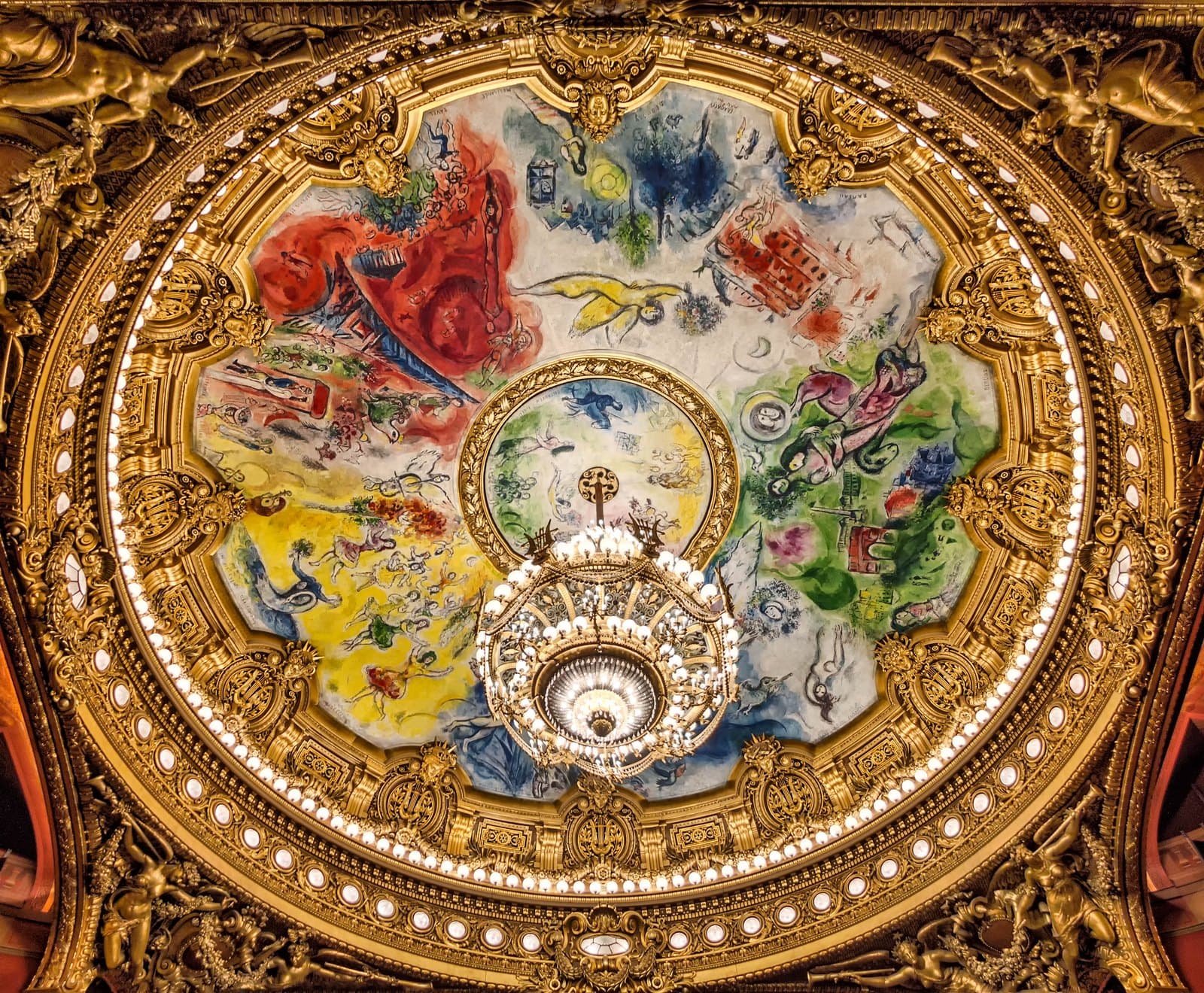
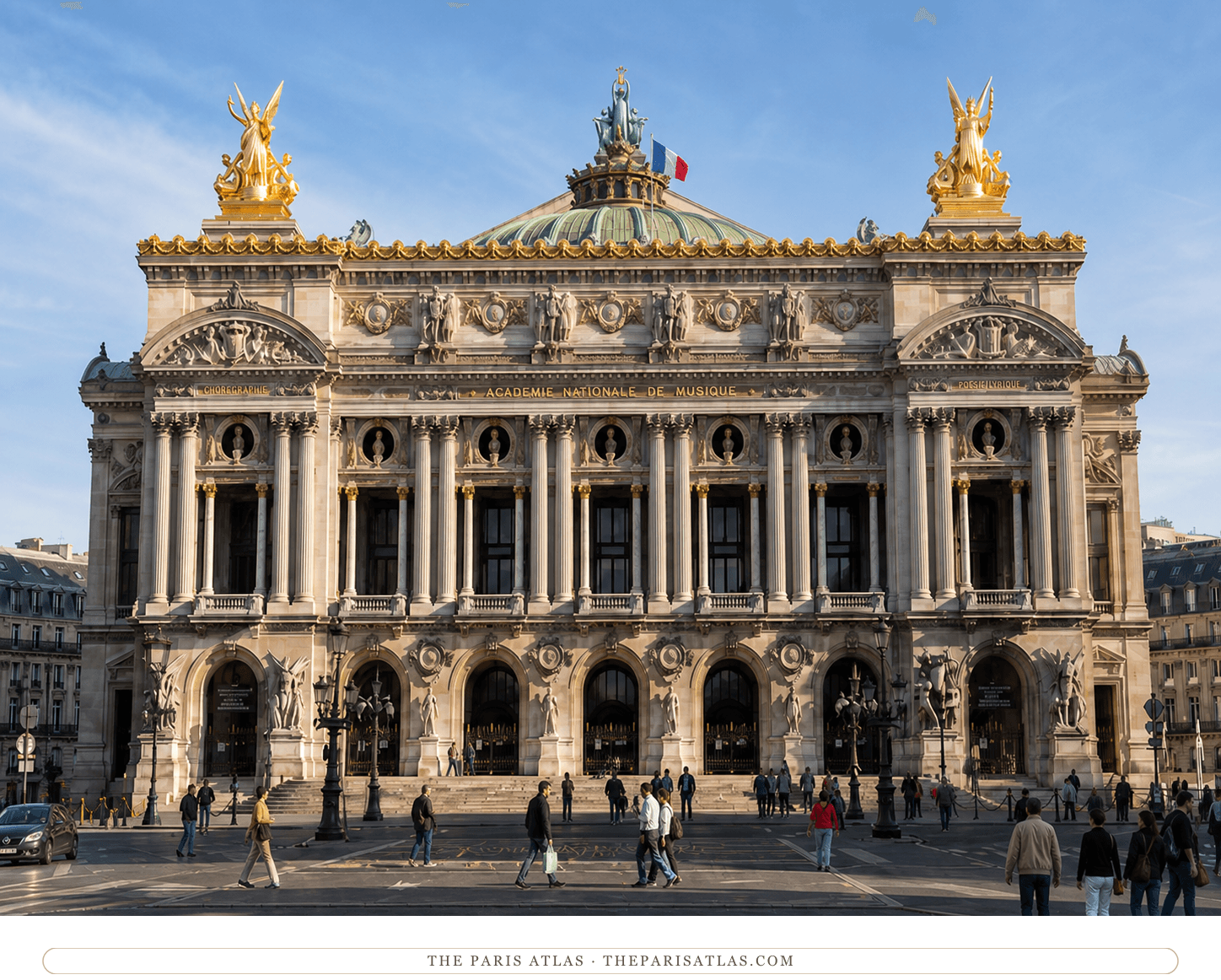
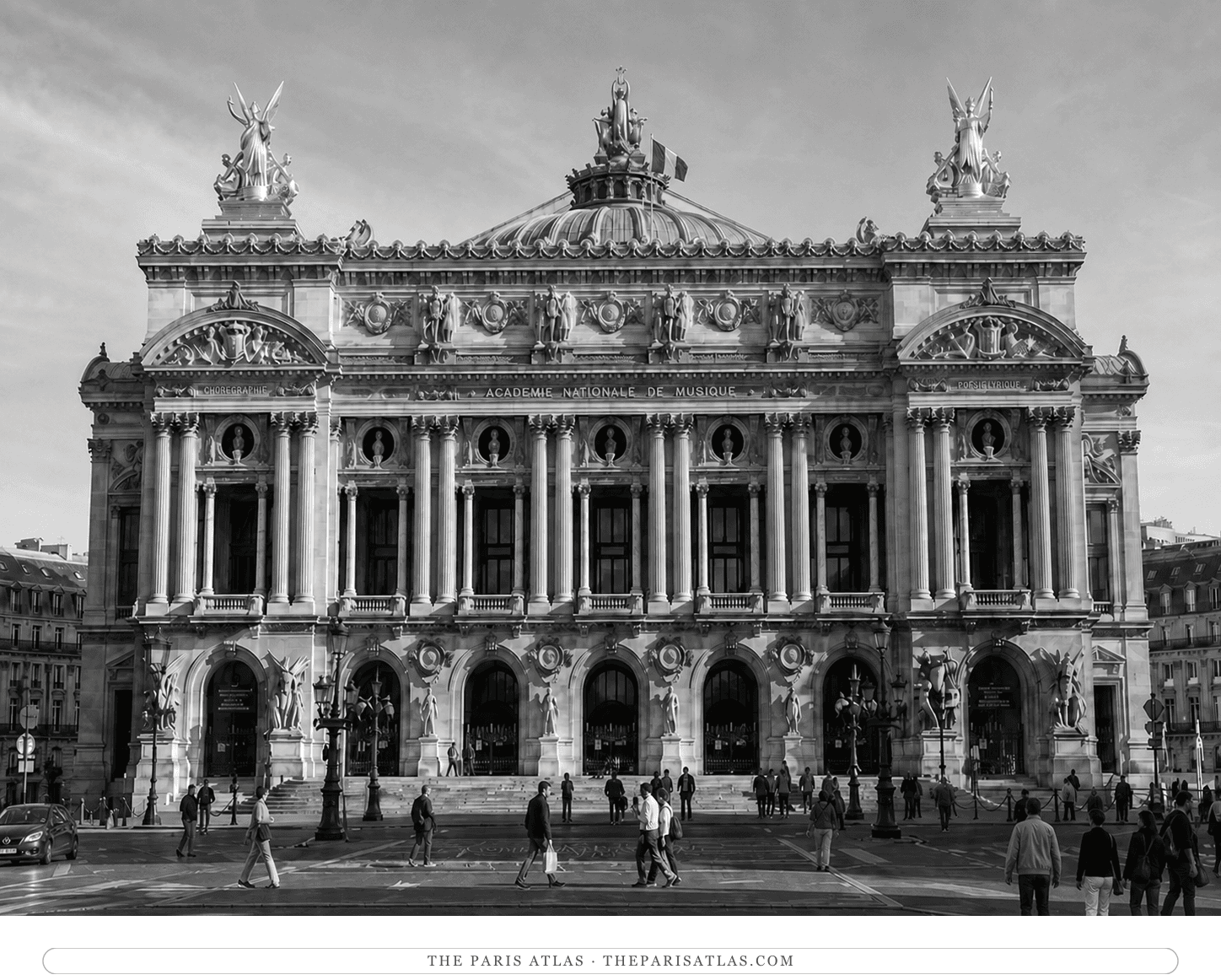
He returned to France for good in 1948 and settled in the south, finally at Saint-Paul-de-Vence. The late decades went monumental: stained glass for the synagogue of the Hadassah hospital in Jerusalem, for the cathedrals of Metz and Reims and the church at Mainz — a Jewish painter of Christian windows, which he saw as one Bible — and, in 1964, the ceiling of the Palais Garnier, the Paris Opera, commissioned by the culture minister André Malraux over loud objections to a Russian Jew painting a French monument.
The 220-square-metre canvas, painted at seventy-seven, wraps the Garnier's chandelier in blue, green and red rings of composers, dancers and Paris landmarks. He kept working — mosaics, tapestries, windows — until the end, and died at Saint-Paul-de-Vence on 28 March 1985, aged ninety-seven, the last living master of the pre-1914 Paris avant-garde.
Born on 6 July in Liozna, near Vitebsk, in the Pale of Settlement — the western region of the Russian Empire to which Jews were legally confined.
Leaves St Petersburg for Paris, after training under Yehuda Pen and Léon Bakst.
Working nights in a La Ruche studio at 2 passage de Dantzig, paints I and the Village and the Paris pictures; Apollinaire calls the work surnaturel.
A Berlin exhibition and a visit home to Vitebsk become an eight-year exile when war closes the borders.
Marries Bella Rosenfeld in Vitebsk — the flying lovers of the next sixty years of pictures.
Appointed commissar of arts for Vitebsk after the revolution; founds its People's Art School, then loses it to Malevich's suprematists.
Returns to Paris; Ambroise Vollard commissions the Gogol, La Fontaine and Bible etchings.
Escapes occupied France through Marseille with Varian Fry's rescue network; reaches New York in June.
Bella dies in New York on 2 September of an untreated infection; he stops painting for months.
Returns to France for good, settling in the south at Saint-Paul-de-Vence.
The Palais Garnier ceiling, commissioned by André Malraux, is unveiled — 220 square metres of composers and Paris landmarks painted at seventy-seven.
Dies at Saint-Paul-de-Vence on 28 March, aged ninety-seven.
Met · 1912
Neighbours in the cells of La Ruche at 2 passage de Dantzig in the 1910s - two Jewish painters from the Pale of Settlement working wall to wall in the beehive of emigre studios.
Met · 1912
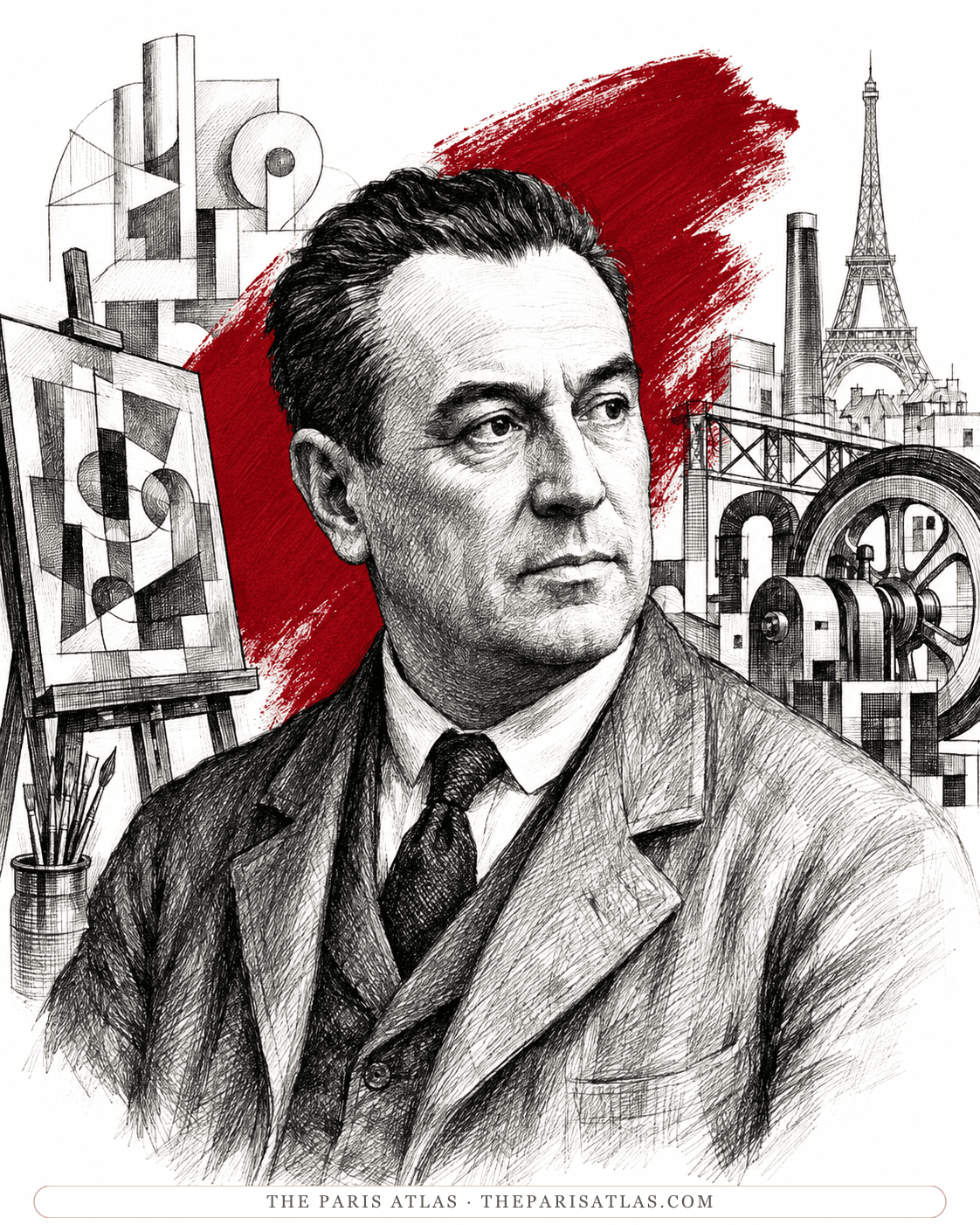
Fellow residents of La Ruche in the 1910s, where Leger was among the painters working in the rotunda's cheap studios alongside Chagall, Soutine and Modigliani.
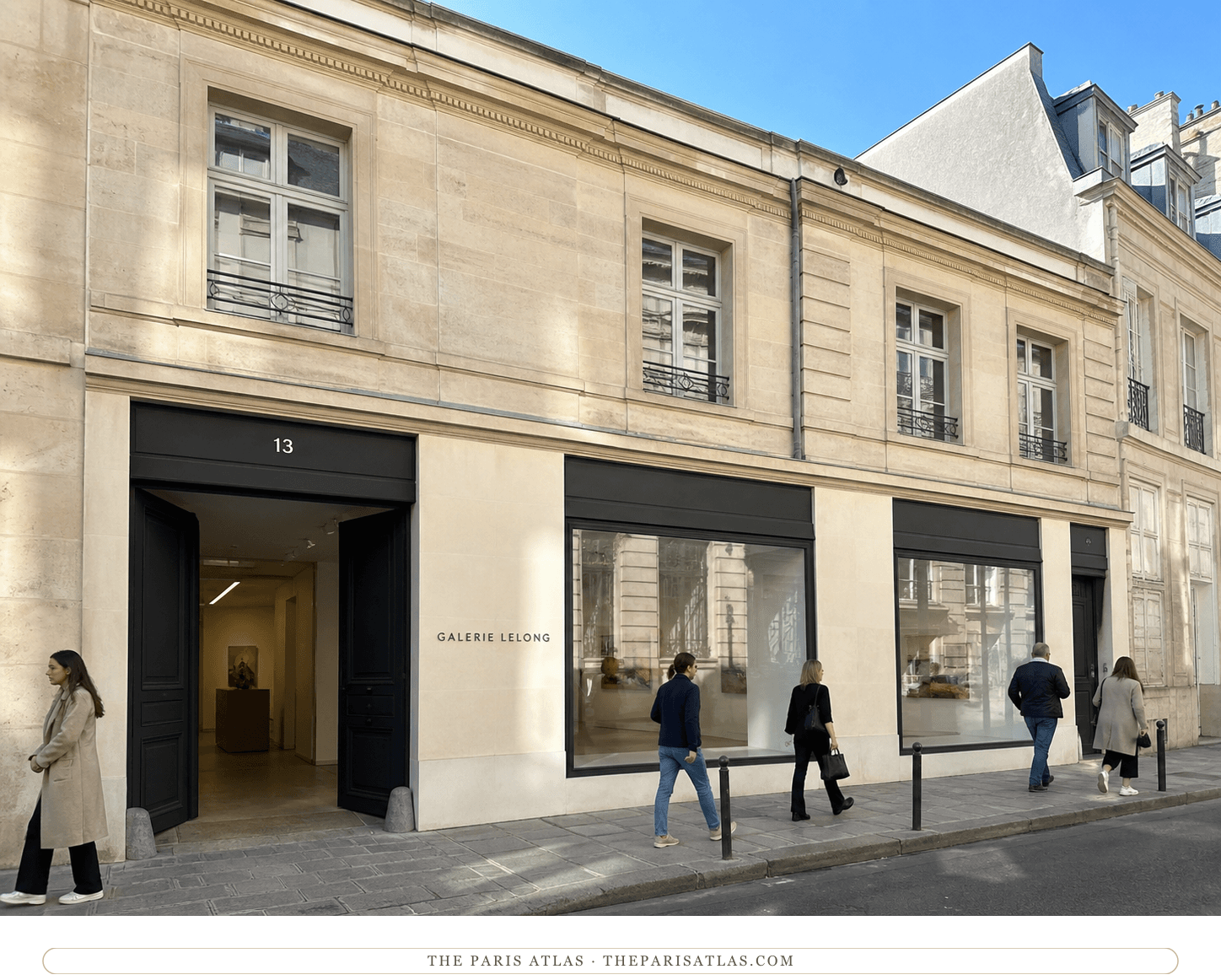
The Beehive — a rotunda of cheap artists' studios at 2 passage de Dantzig in the 15th arrondissement, assembled from Gustave Eiffel's wine pavilion after the 1900 Exposition. In the 1910s its cells held the poorest émigré painters and sculptors in Paris: Chagall, Chaïm Soutine, Amedeo Modigliani, Fernand Léger, Ossip Zadkine. Chagall painted I and the Village there. The building still houses artists today.
The pictures run on memory and feeling rather than gravity — lovers float because being in love feels like that, and Chagall said his home town of Vitebsk was more present to him in Paris than it had been in Russia. The flying couple who recur for sixty years are Chagall and his wife Bella Rosenfeld, married in Vitebsk in 1915.
Yes. André Malraux, France's culture minister, commissioned him in 1963, and the ceiling was unveiled in September 1964 — 220 square metres of canvas wrapping the Palais Garnier's chandelier in rings of blue, green and red, filled with composers from Mozart to Stravinsky and landmarks of Paris. Chagall was seventy-seven, and worked without a fee. The commission drew public objections to a Russian-born Jewish painter decorating a French monument; the ceiling outlived them.
Through Marseille in 1941, with the American journalist Varian Fry's rescue network, which smuggled artists and intellectuals out of Vichy France. Chagall — whose work the Nazis had shown in the 1937 Degenerate Art exhibition — had stayed dangerously long, was arrested in a Marseille roundup and released under American pressure, and reached New York in June 1941 with his wife Bella.
The Musée national Marc Chagall in Nice, built in his lifetime for the Biblical Message cycle; the Palais Garnier ceiling in Paris; the Centre Pompidou's collection; and his stained glass at Reims and Metz cathedrals. He is buried in the cemetery at Saint-Paul-de-Vence, the hill village where he spent his last two decades.
Met · 1912
Neighbours in the cells of La Ruche at 2 passage de Dantzig in the 1910s - two Jewish painters from the Pale of Settlement working wall to wall in the beehive of emigre studios.
Met · 1912
Fellow residents of La Ruche in the 1910s, where Leger was among the painters working in the rotunda's cheap studios alongside Chagall, Soutine and Modigliani.
The sources below include biographies, scholarly essays, interviews, and primary materials that informed this page. They reflect both the historical record and ongoing critical conversations about Marc Chagall and his work.

These references anchor the page in the documented record and in the scholarly conversations around Marc Chagall. Every claim on this page traces back to one or more of the works listed here.