
Depicted in its pages
Tropic of Cancer
The narrator's circle keeps meeting on the Rotonde's terrace — the tourists' café of the twenties become the broke writers' café of the thirties.
The café every taxi driver delivered Americans to — the novel's driest Montparnasse joke, and before that the painters' living room, where the patron took drawings for drinks.
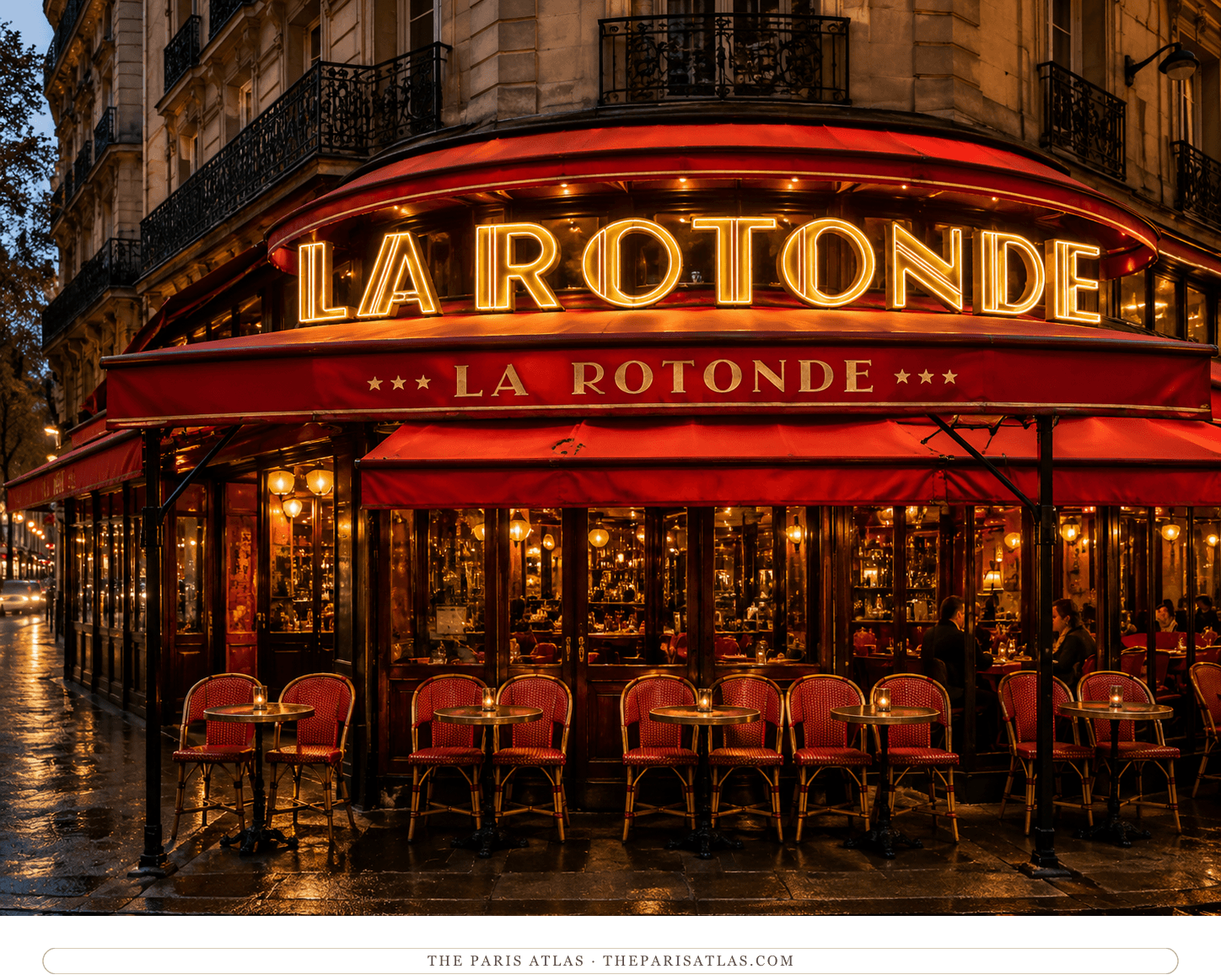
Victor Libion opened the Rotonde in 1911 across the boulevard from the Dôme and ran it on a policy unheard of in the café trade: a broke painter could sit all day over one café crème, and when the money ran out entirely, Père Libion would take a drawing against the tab. The result was the finest unpaid art collection in Paris and a clientele that included Modigliani, Soutine, Chagall, Diego Rivera, and Picasso — plus, during the war years, the Russian political exiles who argued revolution at its tables, Trotsky among them.
For Blaise Cendrars, Montparnasse was a home port. Biographical accounts describe the Rotonde as perhaps his favorite gathering place in the quarter — the table where the one-armed poet met his circle among Libion's painters.
By the mid-twenties the painters had mostly decamped and the tourist buses had found the crossroads, which is the Rotonde the novel skewers. Jake Barnes, The Sun Also Rises' narrator, observes that no matter which Montparnasse café you name, a taxi from the Right Bank delivers you to the Rotonde — and predicts, with a newspaperman's shrug, that in ten years it will be the Dôme instead. He walks past its sad, crowded tables on his way to the Select; the once-radical café had become the place Americans were taken, rather than the place anyone chose.
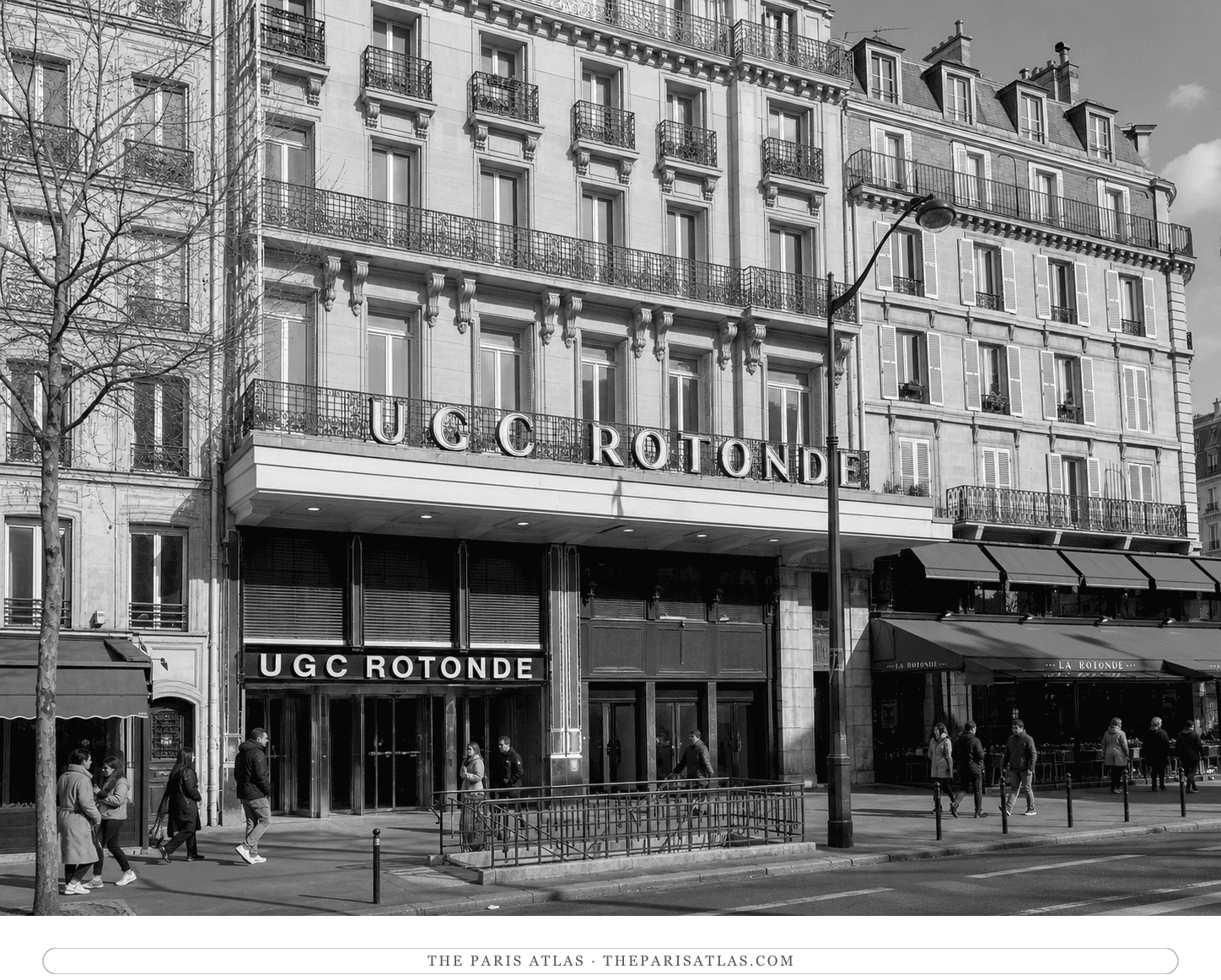
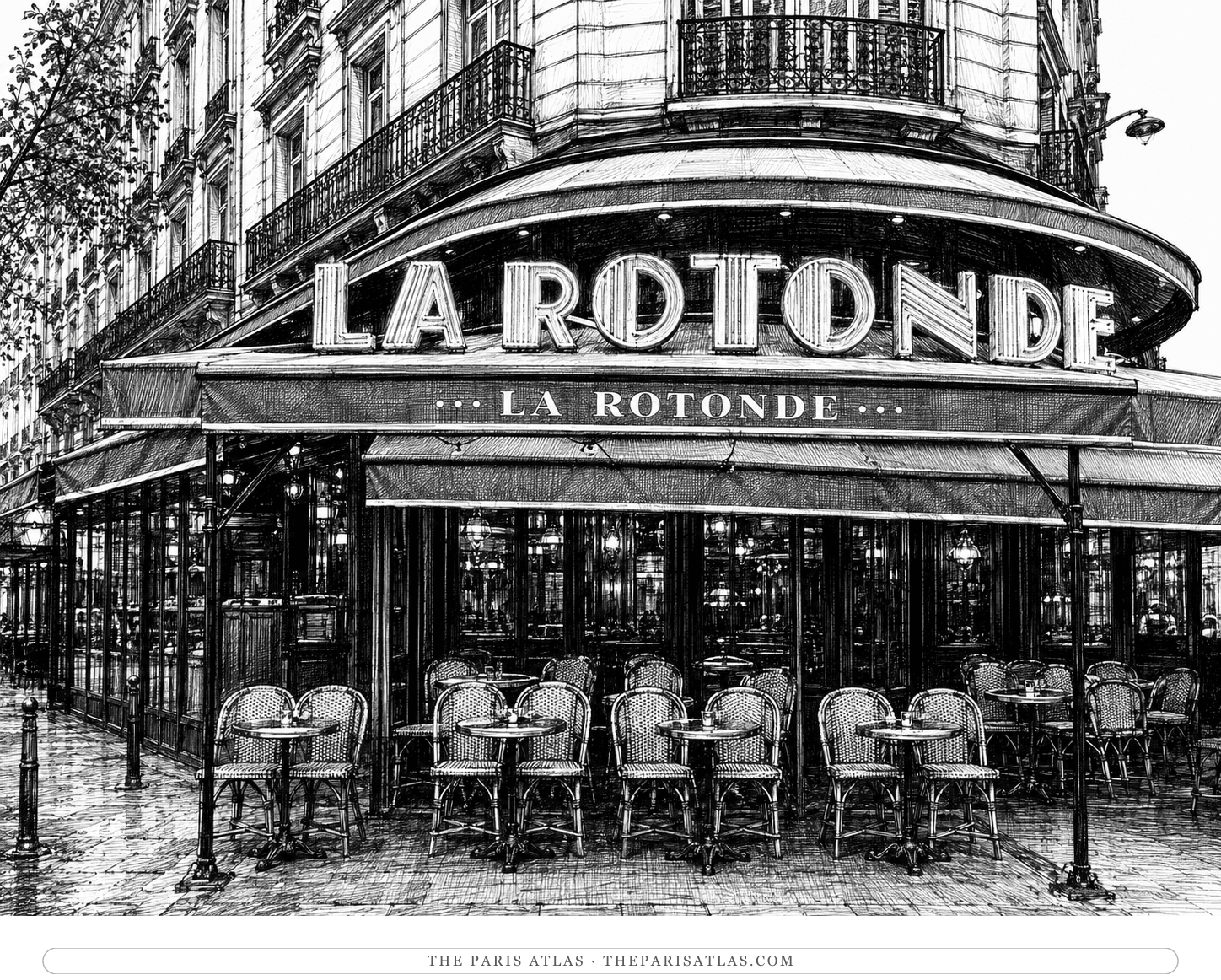
The joke aged better than the grievance. The Rotonde never closed, and a century on it has settled into the role of grand old café of the carrefour Vavin — red awning, brass, and a name that appears in more memoirs of modern art than any gallery. The canvases Père Libion took in trade would now buy the block.
The taxi stopped in front of the Rotonde. No matter what café in Montparnasse you ask a taxi-driver to bring you to from the right bank of the river, they always take you to the Rotonde. Ten years from now it will probably be the Dome. It was near enough, anyway. I walked past the sad tables of the Rotonde to the Select.
At the Closerie des Lilas you will mostly find Poles. At the Rotonde you will find Italians, Spaniards, and Balkanics — with a sprinkling of French. At the Dome there are Scandinavians, British, and Americans.
Occasionally they roll up in beautiful automobiles dressed as for the Opera, swallow-tail coats and white ties, gorgeous evening robes and cloaks; and they make a fine display of pearls and diamonds at the Rotonde. But this is exceptional. Generally they are content to put on rakish clothes as though they were Haroun al-Raschid descending in disguise to the lower town.
The three of us used to meet regularly on the terrasse of the Rotonde before going to dinner.
Victor Libion opens the Rotonde opposite the Dôme.
Drawings accepted against unpaid tabs; the walls fill with Modiglianis. Wartime exiles argue at the tables.
The painters drift off, the tourist buses arrive, and the Rotonde becomes the café Americans get delivered to.
Hemingway fixes its reputation in The Sun Also Rises with the taxi-driver joke.
Still open at 105 Boulevard du Montparnasse, red awning and all.
Depicted in its pages
The narrator's circle keeps meeting on the Rotonde's terrace — the tourists' café of the twenties become the broke writers' café of the thirties.

Mentioned in passing
Target of the novel's driest joke: name any café in Montparnasse, and the taxi from the Right Bank still delivers you to the Rotonde.

Depicted in its pages
Italians, Spaniards, and Balkanics with a sprinkling of French — the Rotonde's row in Huddleston's café census of the crossroads.
Frequented by · 1930–1939
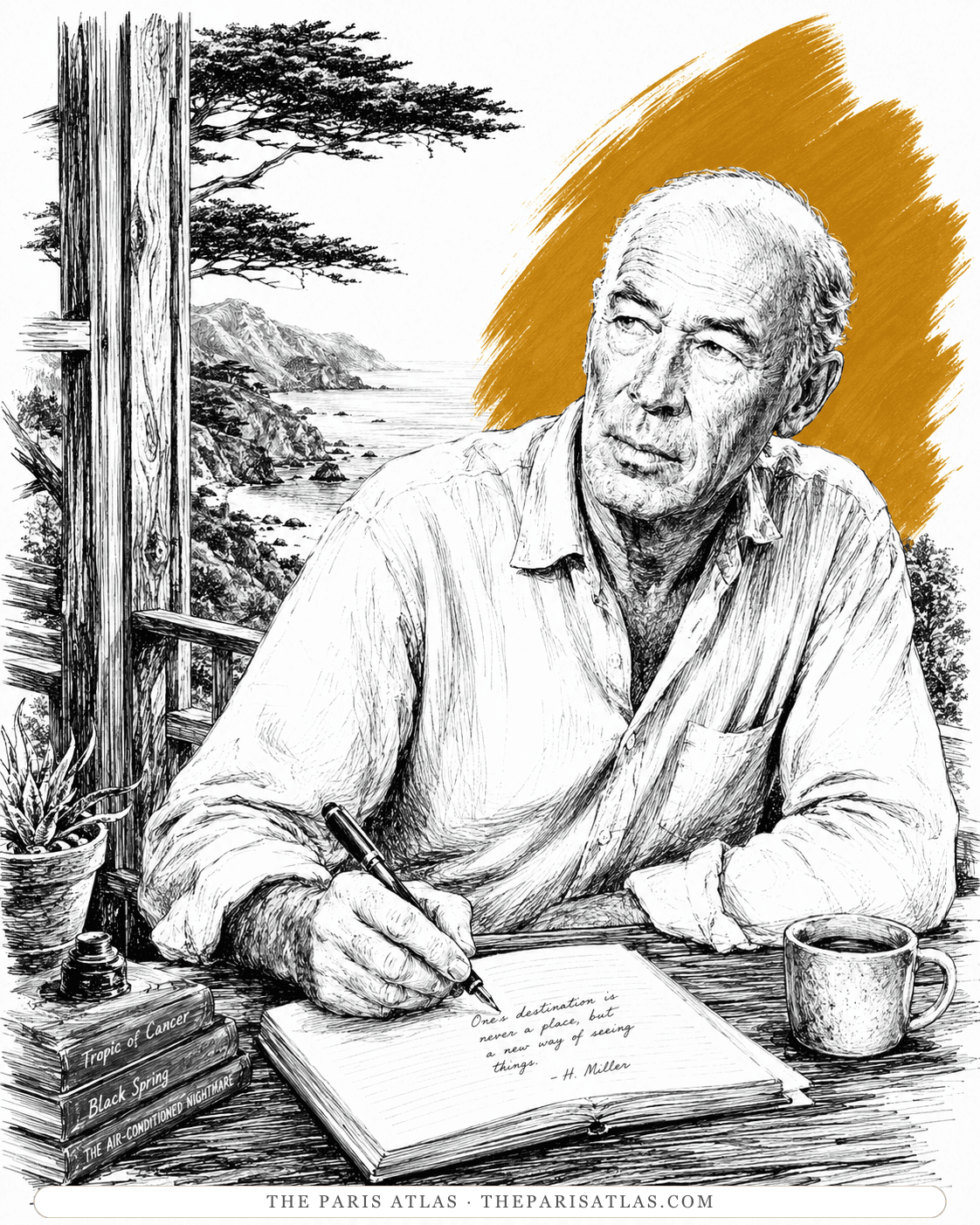
A regular terrace of Miller's circle in the 1930s, per the novel and Miller scholarship — the second generation at the crossroads the twenties made famous.
Frequented by
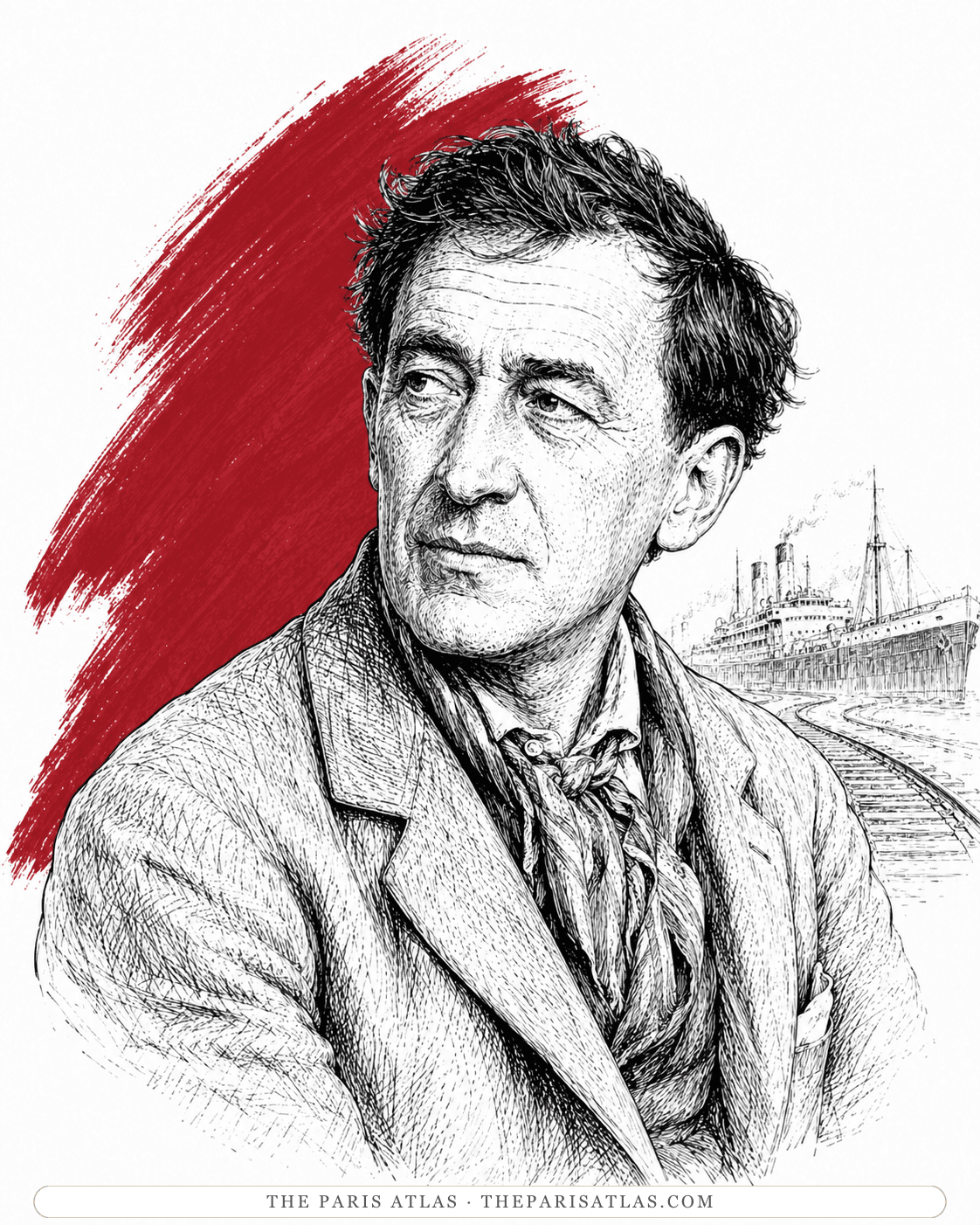
Soupault's memoir names the Rotonde as Cendrars's favorite gathering place in Montparnasse, and Olivier Renault's Le Paris de Cendrars counts it among his characteristic stops.
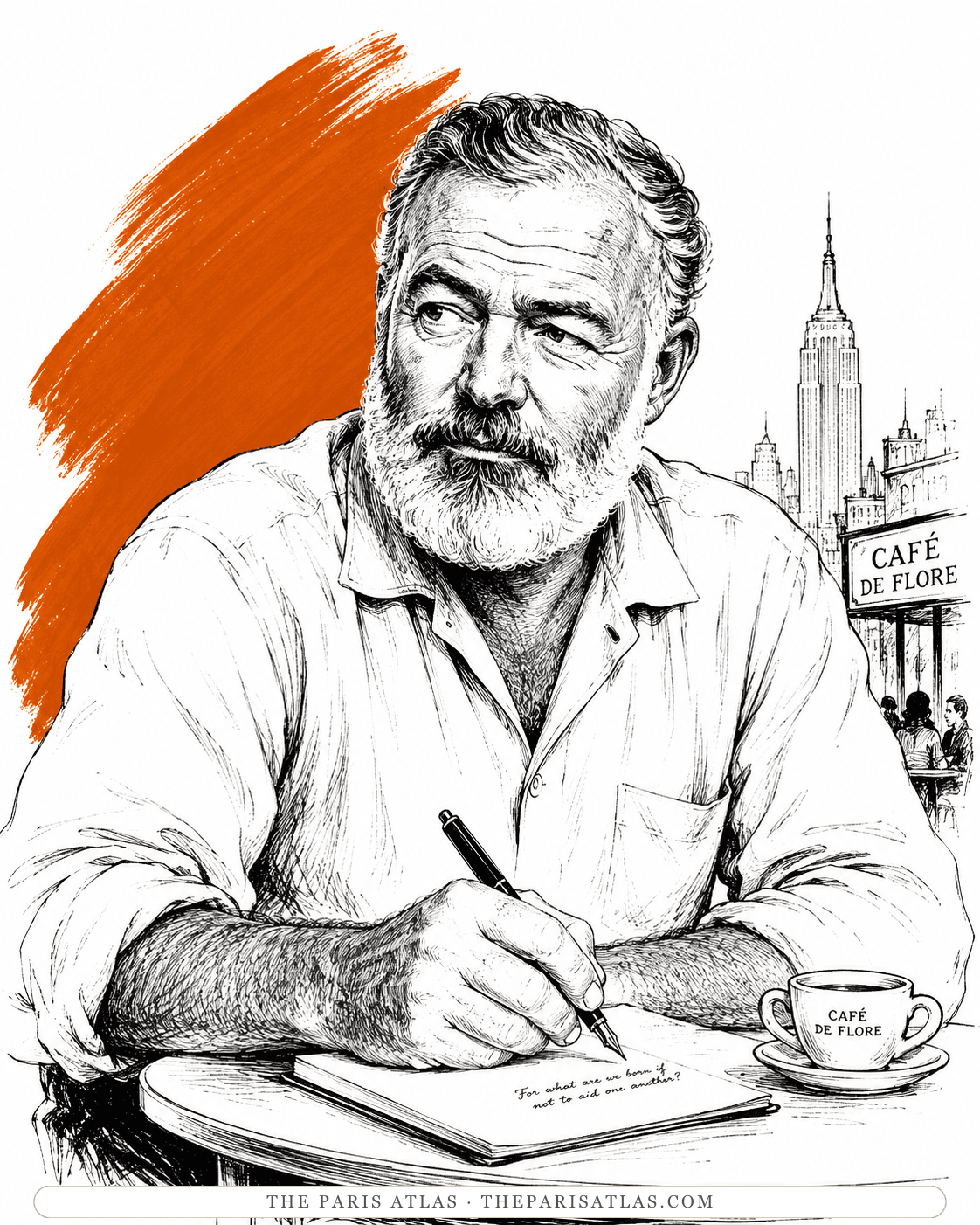
Ernest Hemingway wrote about La Rotonde in The Sun Also Rises.
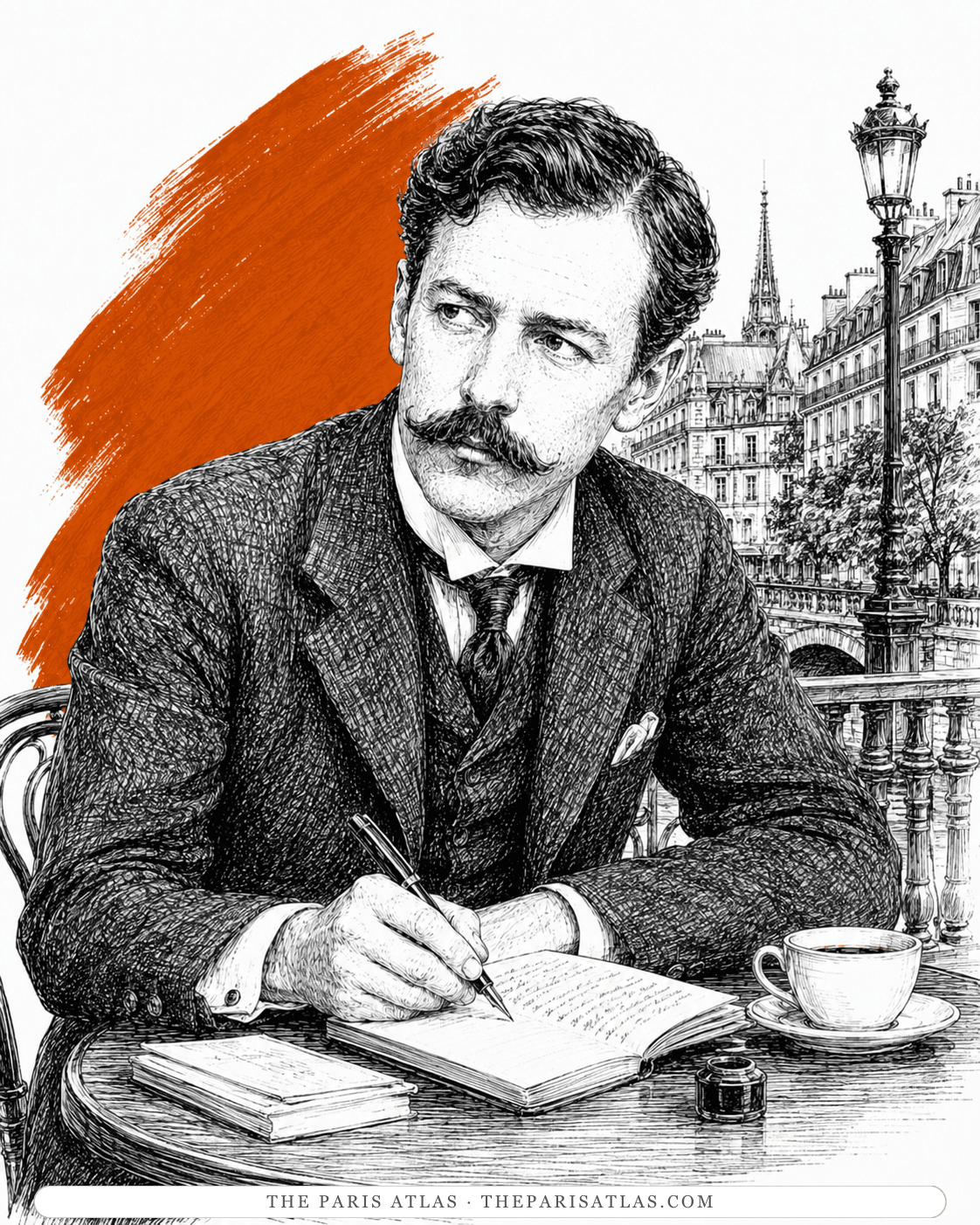
Sisley Huddleston wrote about La Rotonde in Paris Salons, Cafés, Studios.
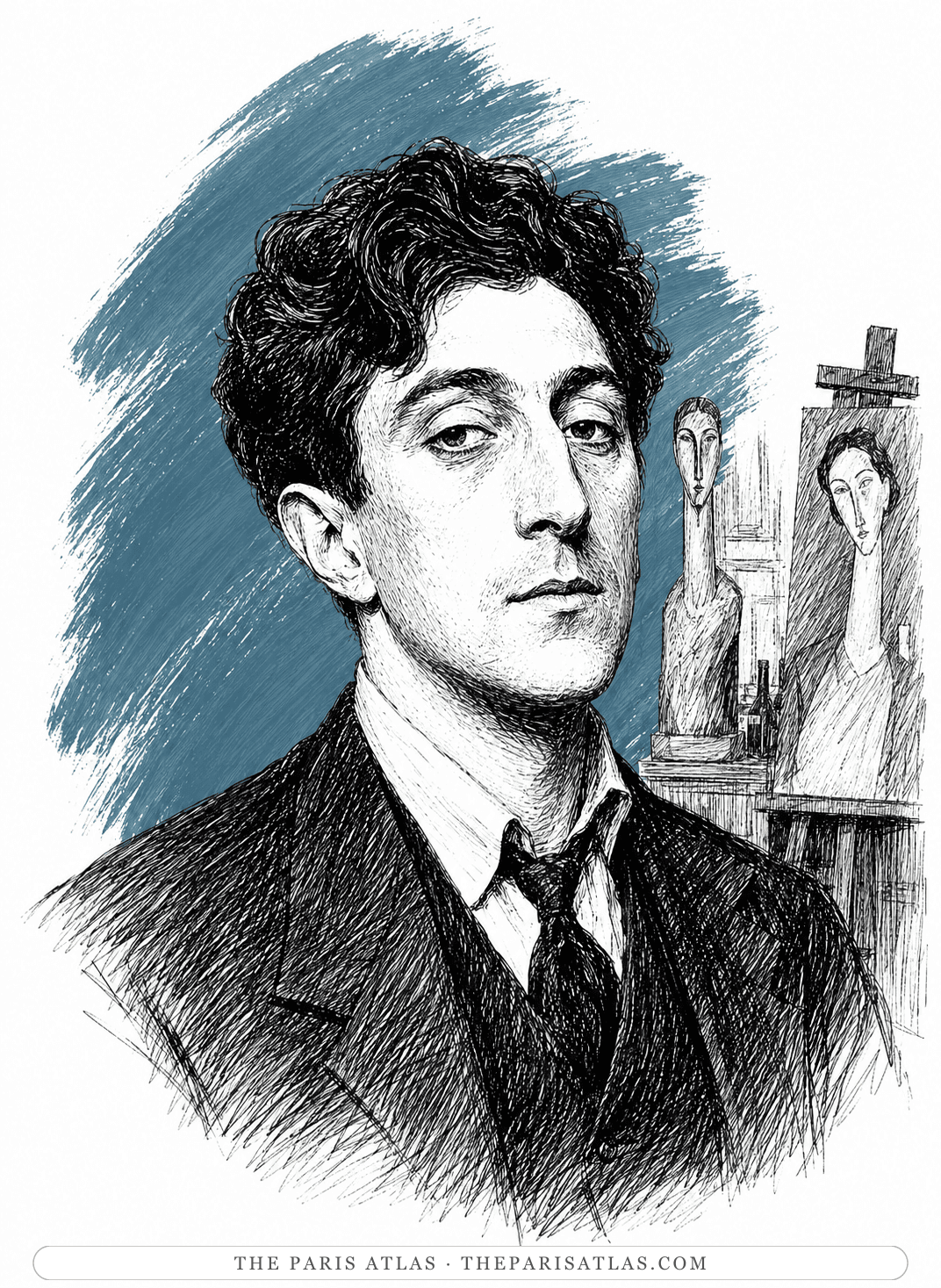
A fixture of Père Libion's café from its earliest years — he sketched portraits at the tables and traded drawings for coins, a meal, or a drink, and the Rotonde's walls filled with Modiglianis.
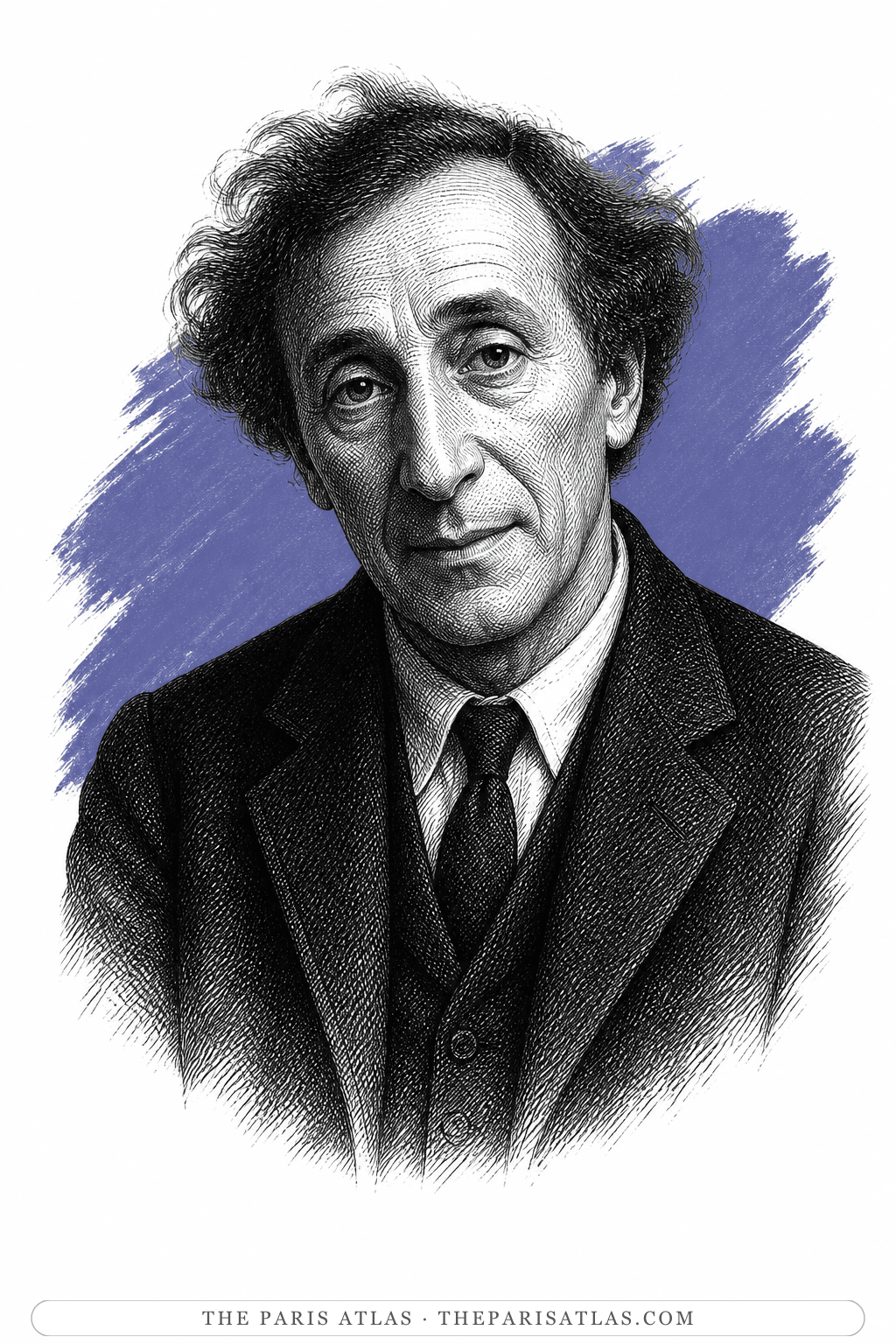
Chagall drank and argued at the Rotonde during his pre-war years at La Ruche and again after his return in the 1920s, among the Montparnasse painters.
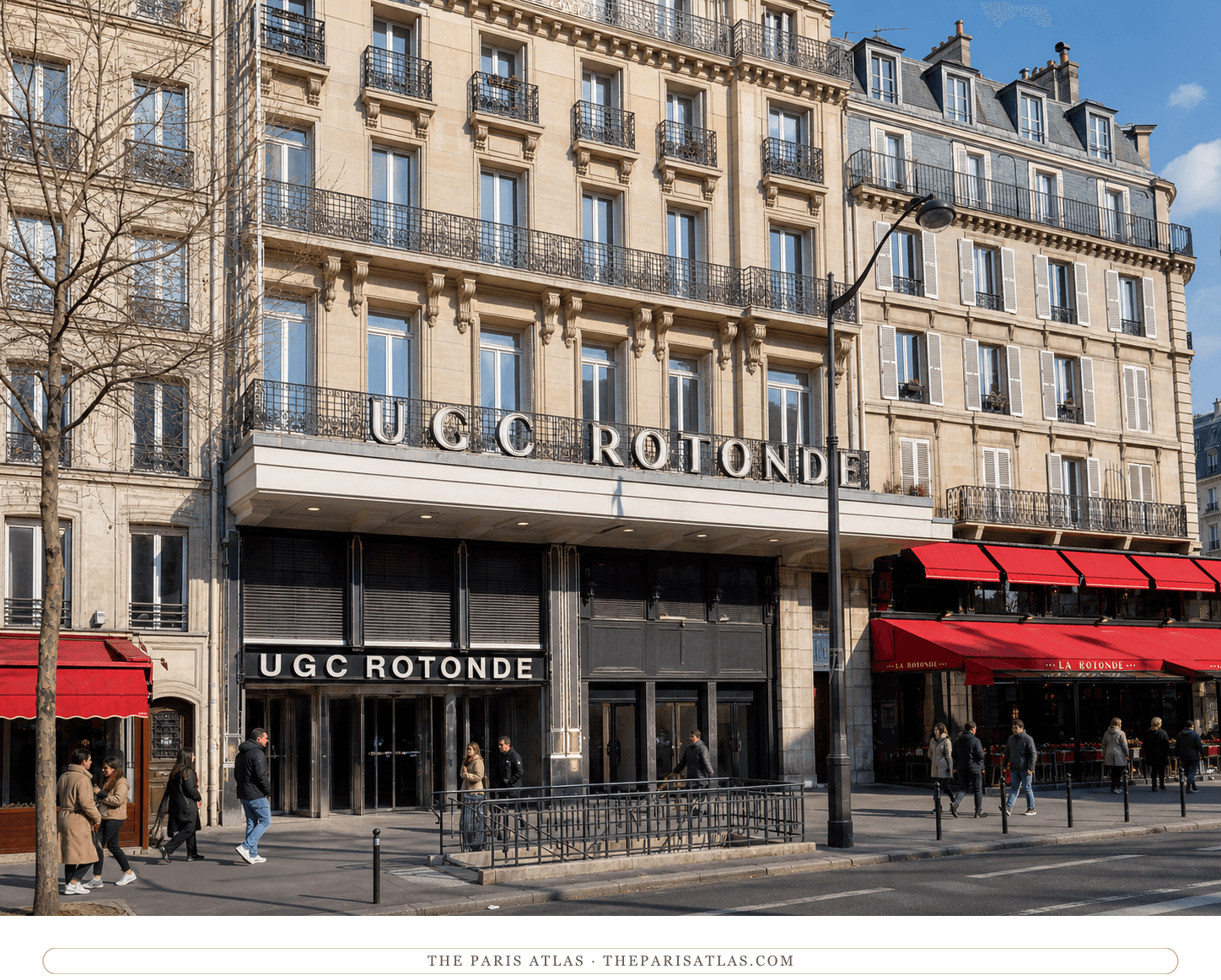
Where Simone de Beauvoir was born in 1908 and grew up with her sister Hélène — in the middle of Montparnasse, the quarter she would spend most of her life within a few streets of.
Visit the place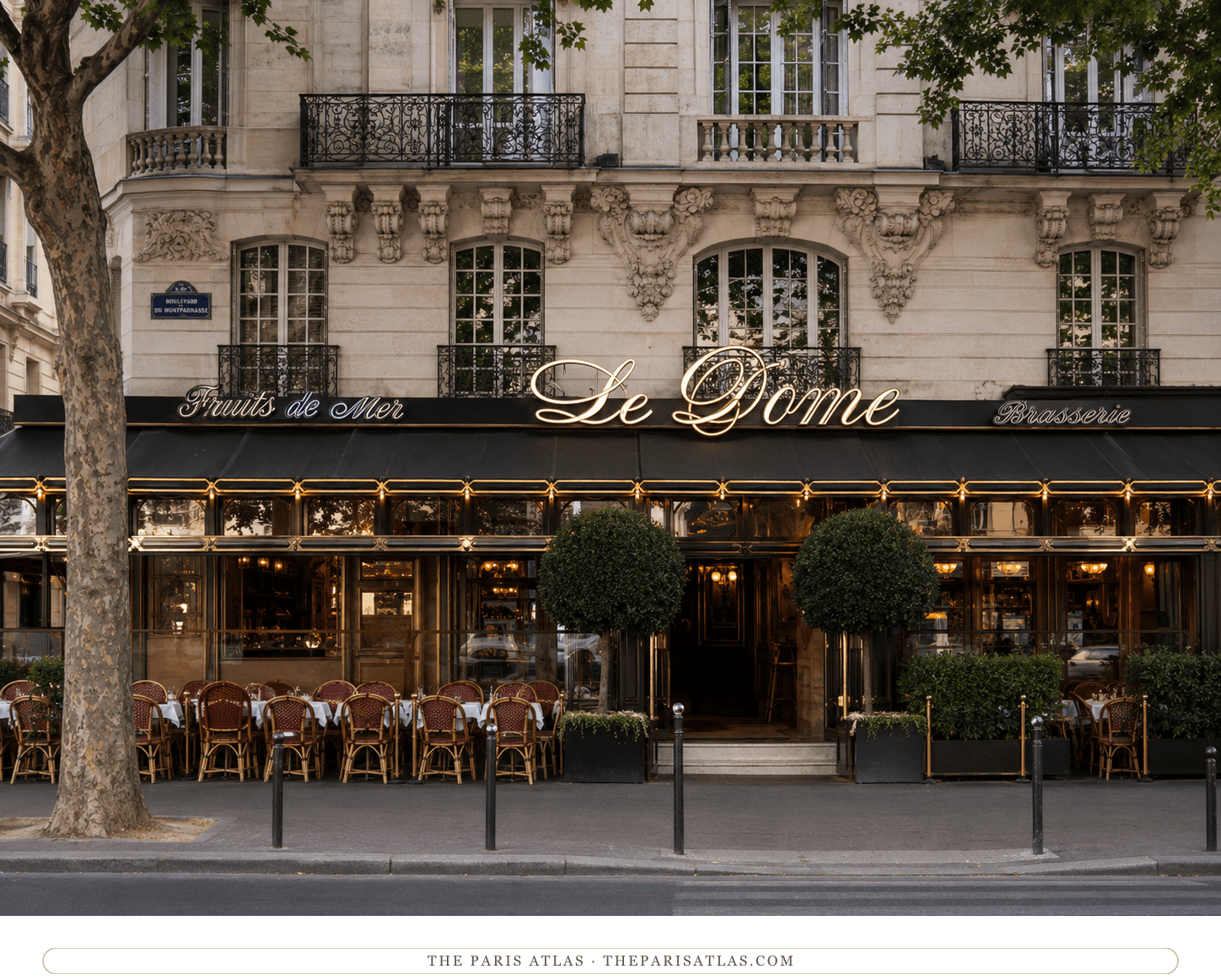
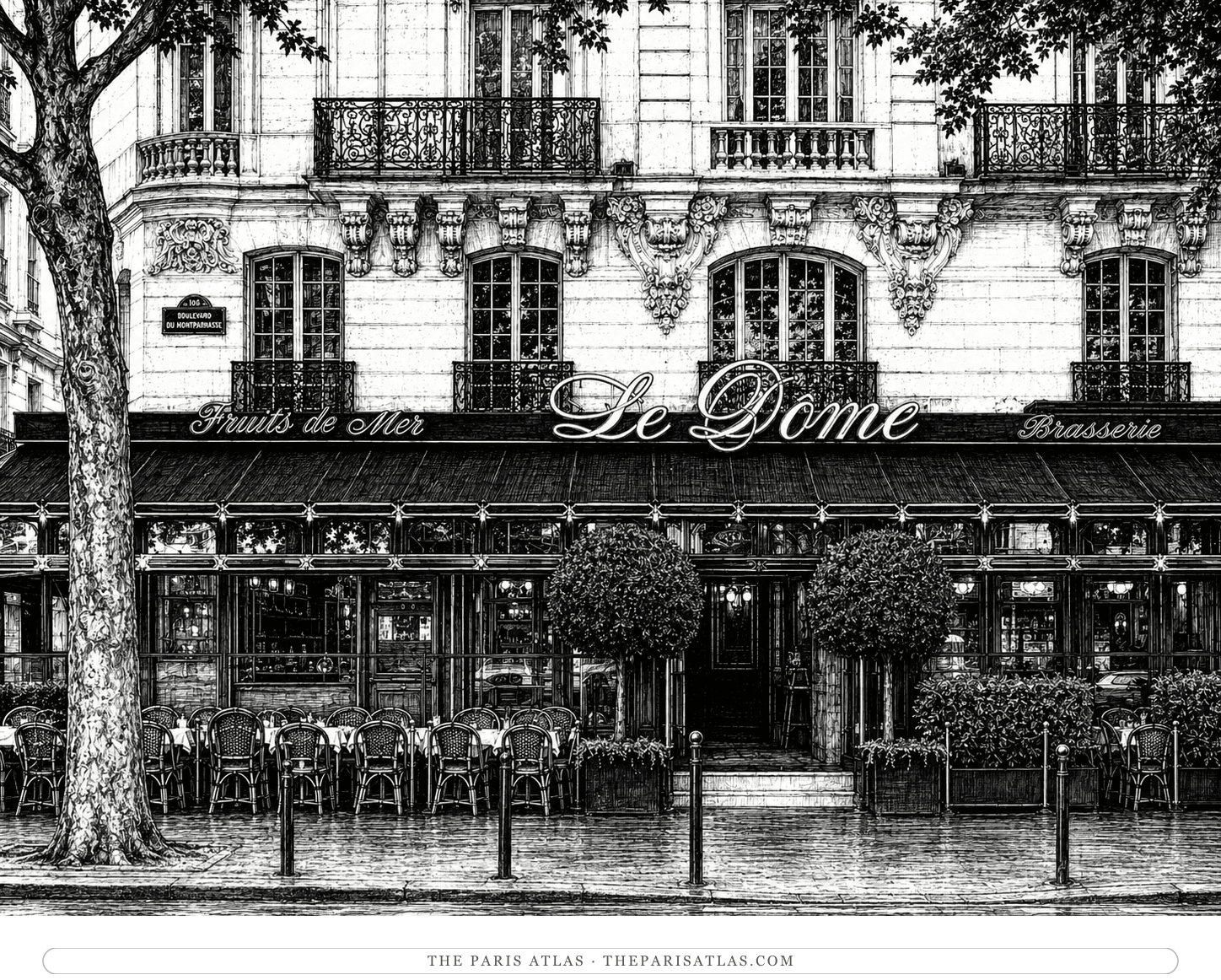
The noisy common room of Montparnasse and the setting of 'With Pascin at the Dôme' — the café for watching the show, not for working.
Visit the place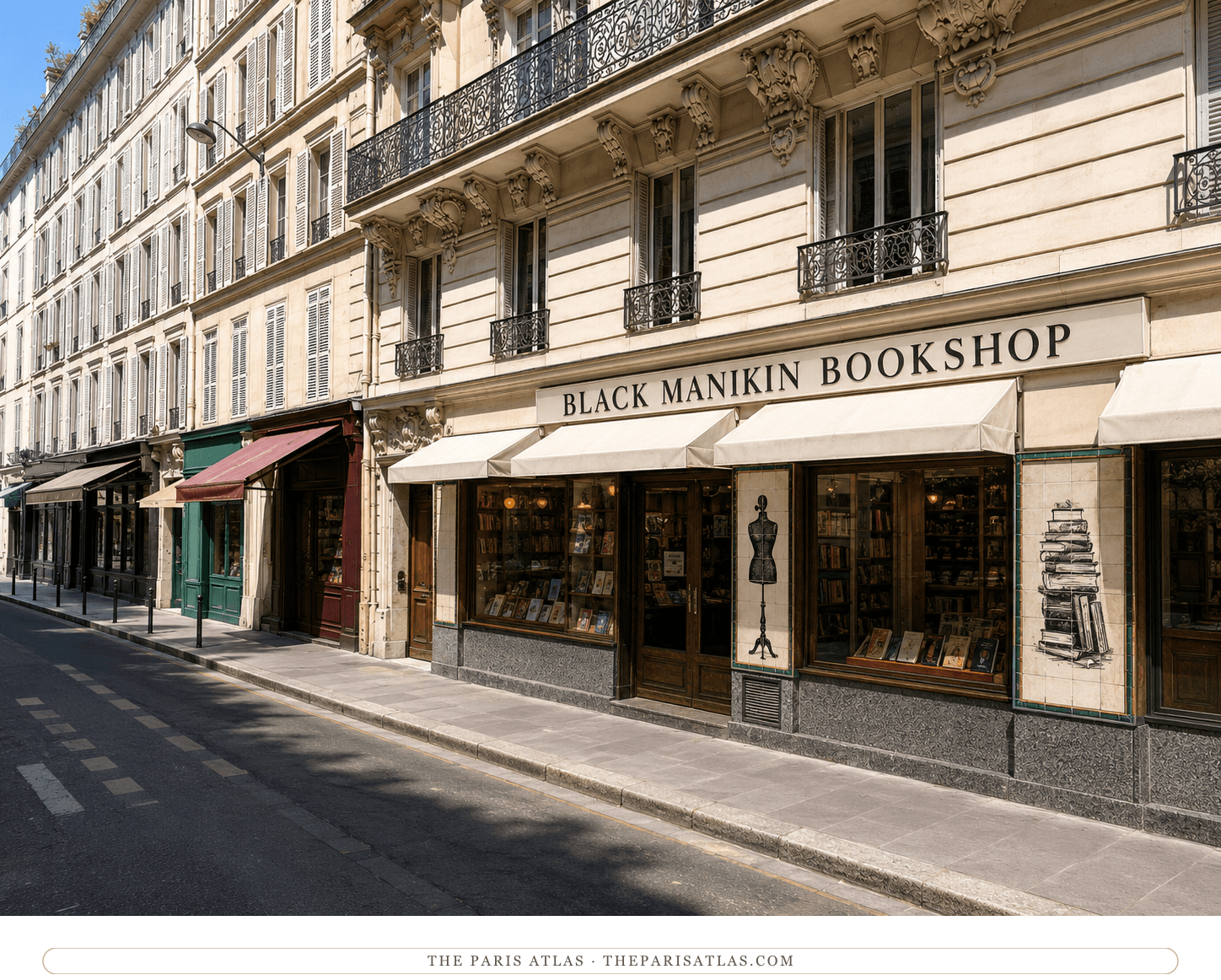
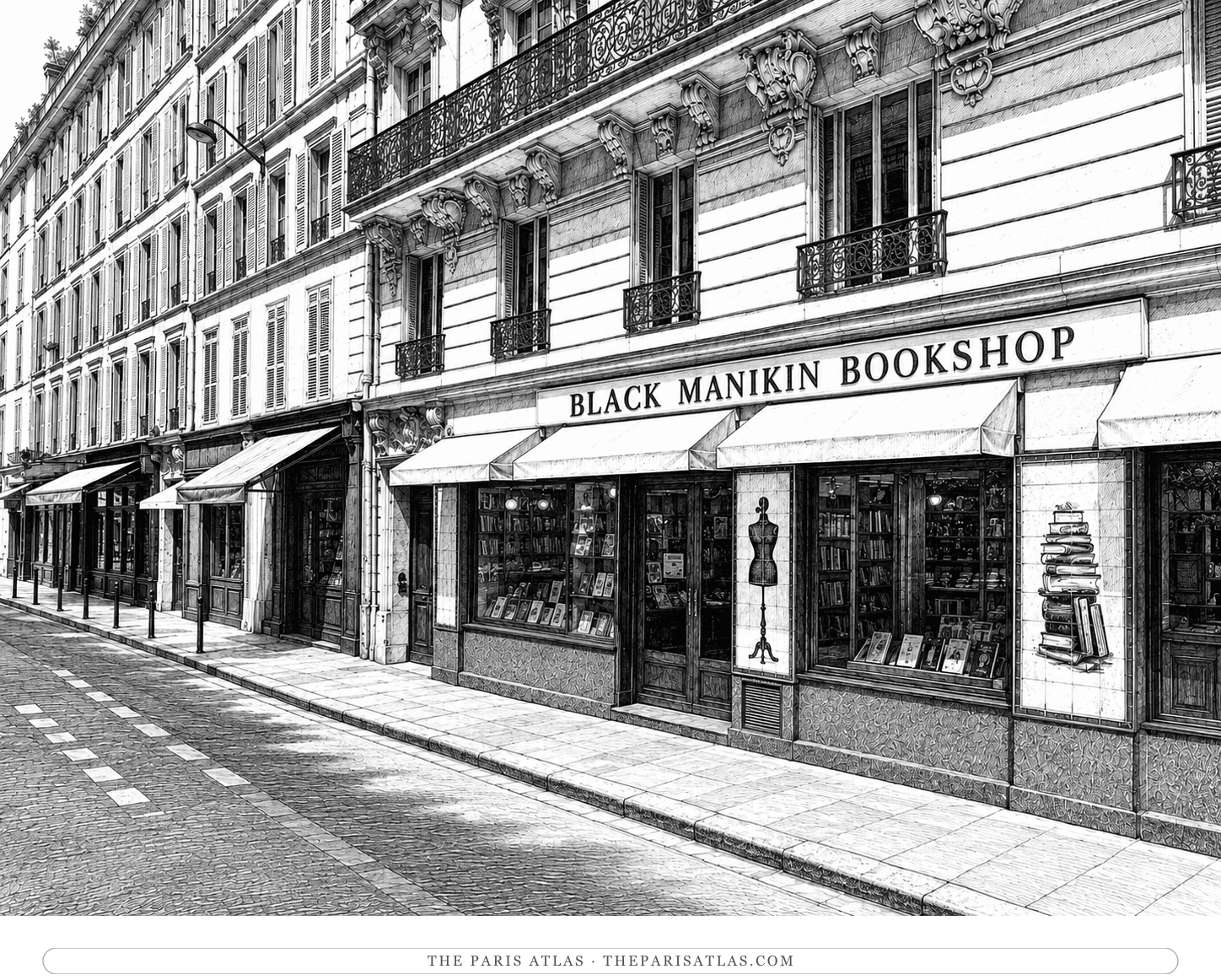
Edward Titus's Montparnasse bookshop and small press, where D. H. Lawrence settled terms on 5 April 1929 for the cheap Paris edition of Lady Chatterley's Lover that finally undercut the pirates.
Visit the place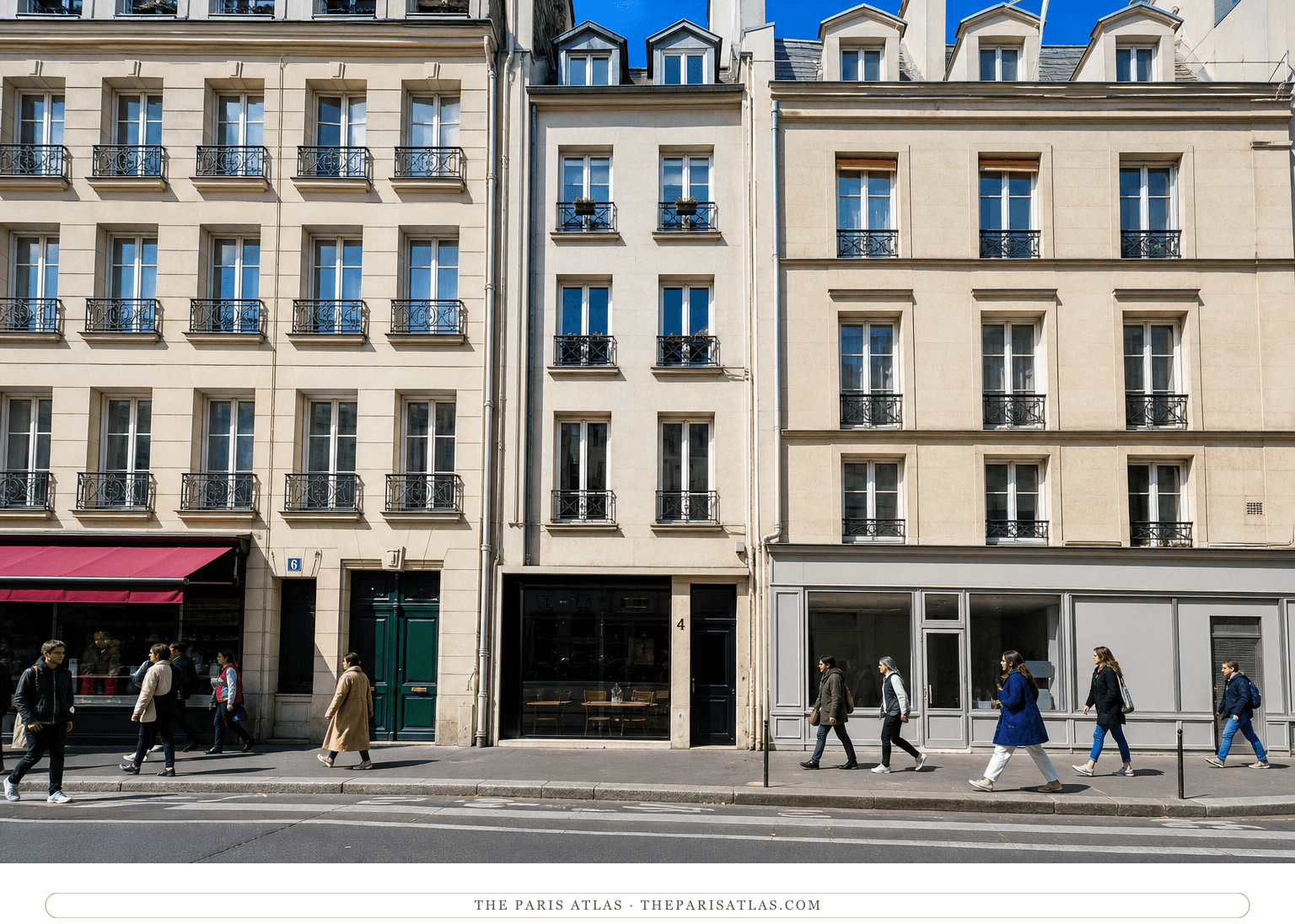
Edward Titus's Montparnasse bookshop and press, which sold copies of the privately printed first edition of Djuna Barnes's Ladies Almanack.
Visit the placeThe sources below include histories, archival materials, scholarly research, and official records that informed this page. They document La Rotonde, the people connected to it, and its place in Paris.

Primary text included as part of the documented record for La Rotonde.
First-person evidence and historical context used in preparing the La Rotonde page.

Map data used to verify addresses, geographic coordinates, and the placement associated with La Rotonde.
Official record used to verify names, dates, institutional details, or other factual information on this page.
These references provide the documented foundation for this page's history and context. Claim-level citations remain attached to the specific claims they support.
 Explore more resources
Newsletter
The cafés, studios, and walk-up flats where the work was made — one story from the map in every letter.