Moravagine
How Blaise appears in its pages: The author, inside his own novel — a mechanic in an aircraft shed at Chartres, a fellow amputee in a hospital at Cannes, and throughout the man holding the narrator's papers.
Read the character guideThe one-armed adventurer-poet of the Paris avant-garde — La Prose du Transsibérien, Moravagine, the memoir tetralogy — and the living writer Henry Miller ranked above all others.
Blaise Cendrars is one of those writers for whom a conventional biography is almost inadequate. He was a poet, novelist, publisher, journalist, filmmaker, traveler, soldier, radio personality, collector of stories and relentless inventor of himself. He helped bring the train, the ocean liner, advertising, electric light, newspapers, cinema, airplanes and the dizzying scale of the twentieth-century city into modern literature. And he repeatedly blurred what he had actually lived with what he remembered, imagined, exaggerated or transformed into myth.
He was born Frédéric-Louis Sauser in Switzerland in 1887, but the name he was given did not survive his youth. As a young writer he renamed himself Blaise Cendrars, a name often associated with embers and ashes, and began building a new identity around it. Cendrars did not simply choose a pseudonym. He spent the rest of his life turning that name into a character, a legend and, in many ways, another work of art.
Paris gave that new identity a world to enter. In the years before the First World War, Cendrars moved through the city's avant-garde alongside poets, painters, musicians and artists who were trying to invent new ways of representing modern life. In 1912 he published Les Pâques à New York. A year later came La Prose du Transsibérien et de la petite Jehanne de France, created with Sonia Delaunay: a nearly two-meter-long folding book in which poetry, typography and abstract color move together. It was less a book to be read quietly from beginning to end than an attempt to make literature feel as fast, fractured and simultaneous as the modern world itself.
That fascination with speed and movement remained at the center of Cendrars's writing. Trains, ocean liners, airplanes, newspapers, advertisements, cities and cinema were not merely backgrounds in his work. They shaped the way he wrote. His books jump between places, memories, voices and images, often with the speed of montage. He wanted literature to keep pace with a world that suddenly seemed to be moving faster than ever before.
Then the First World War changed everything. Cendrars volunteered to fight for France and was seriously wounded in 1915. His right arm had to be amputated. He had been right-handed, so he was forced to learn how to write again with his left. The wound became both a physical reality and a deep dividing line in his life: the young poet before the war and the writer who emerged afterward. Years later, he would return to the experience in La Main coupée, one of the central books of his late career.
After the war, Cendrars refused to remain only a poet. He moved into fiction, journalism, publishing and cinema, working with filmmaker Abel Gance and writing novels including L'Or, Moravagine and Dan Yack. He traveled widely and became especially fascinated by Brazil, whose landscapes, people and modernist artists entered deeply into his imagination. Wherever he went, real encounters became material for stories, and stories often grew larger than the facts that inspired them.
Cendrars also occupied a remarkable position within the artistic world of twentieth-century Paris. His life crossed those of Guillaume Apollinaire, Sonia and Robert Delaunay, Marc Chagall, Fernand Léger, Modigliani and Darius Milhaud. He became connected with Brazilian modernists, John Dos Passos and Henry Miller. He seems to appear wherever literature collided with painting, music, technology, journalism, cinema and travel.
Henry Miller, in particular, admired him deeply. Cendrars was an early supporter of Tropic of Cancer and climbed the stairs of the Villa Seurat to visit Miller when the American writer was still little known. Miller never forgot it. For decades he continued to praise Cendrars, writing about him and celebrating him in The Books in My Life as one of the living writers he admired most.[1]
By the final decades of his life, Cendrars began turning more deliberately toward his own past. In L'Homme foudroyé, La Main coupée, Bourlinguer and Le Lotissement du ciel, memory, travel, friendship, loss, anecdote and invention flow into one another until the border between autobiography and fiction becomes difficult to locate. That uncertainty was not a flaw in his work. It was one of his methods. Cendrars understood that a life could be retold, rearranged and reinvented just as completely as any novel.
In that sense, one of Cendrars's greatest creations was Blaise Cendrars himself. Frédéric Sauser created the name as a young man and spent the next half-century filling it with journeys, books, wars, friendships, disasters, rumors and stories.
He died in Paris in 1961. What survived was not simply the biography of a Swiss-born writer, but the larger figure he had spent a lifetime constructing: the one-armed poet of trains and ports, the traveler who made modern life move across the page, and the storyteller who understood that sometimes the distance between a life and a legend is where literature begins.[2]
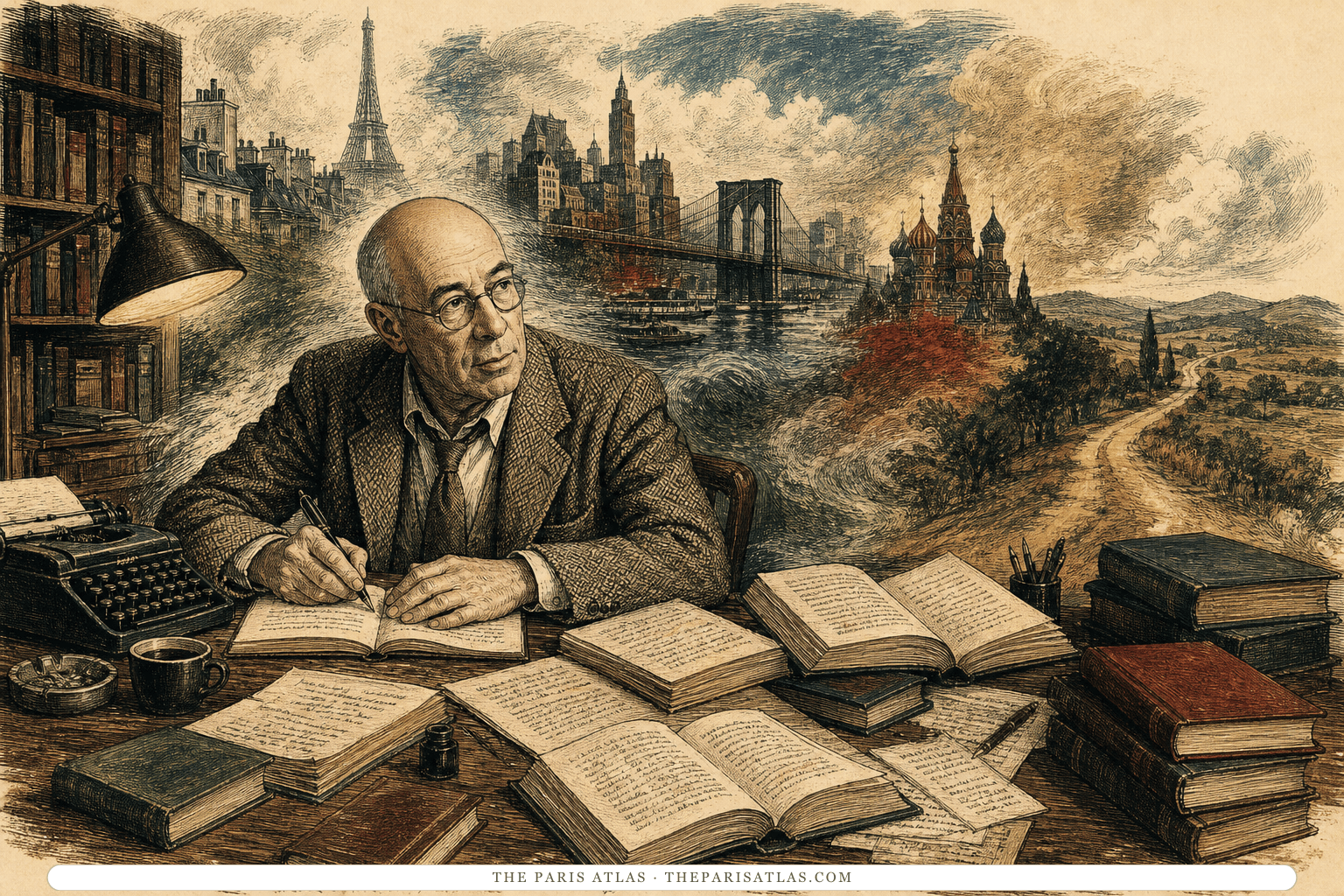
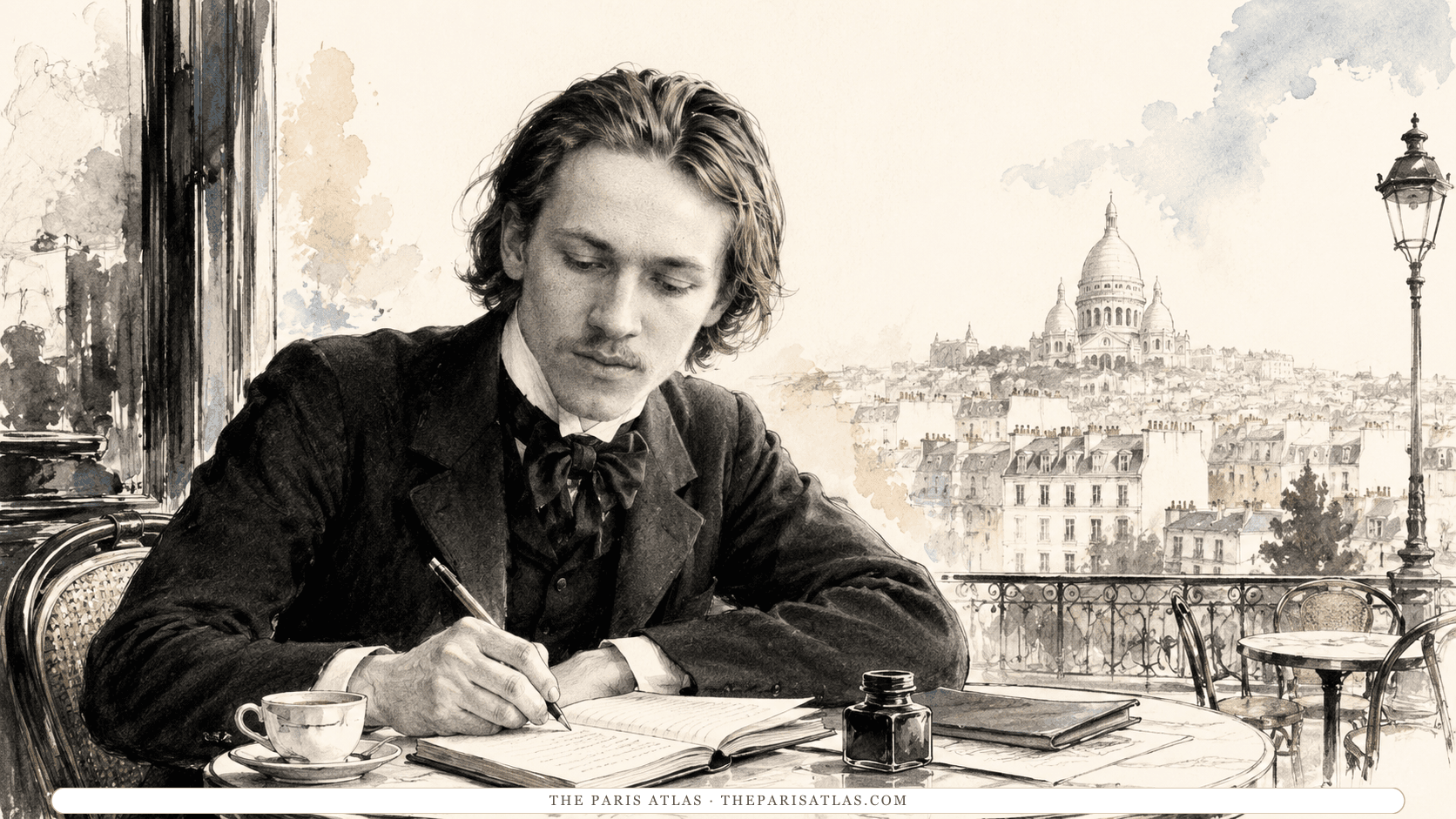
Scenes from Blaise Cendrars's life. These are original editorial illustrations, not documentary photographs.
Cendrars was born Frédéric-Louis Sauser at 27 rue de la Paix in La Chaux-de-Fonds, Switzerland, on September 1, 1887. His father, Georges-Frédéric Sauser, worked in the watch trade and repeatedly pursued new commercial ventures. His mother was Marie-Louise Dorner. The family moved repeatedly: Naples from 1894 to 1896, then Basel, then back to Neuchâtel. His schooling was correspondingly unsettled.[3]
The instability appears to have mattered enormously. Archival work describes increasing financial and marital strain between his parents; their affairs were legally separated in 1903. Cendrars was an unhappy and unenthusiastic student, and the Swiss National Library describes his childhood simply as “troubled.” Restlessness, departures, temporary rooms, hotels, ports and the feeling that home is somewhere else would eventually become almost the natural condition of his books.[4]
There is also a wonderful warning here about believing Cendrars too literally. Many older biographies say his mother was Scottish. She apparently was not. Archival genealogical research identifies Marie-Louise Dorner as coming from a German-speaking Swiss family associated with Küsnacht and Basel. Scholar Christine Le Quellec Cottier points out that the idea of the “Scottish mother” appears to have migrated from Cendrars's poetry into his supposed biography—an excellent example of the author successfully rewriting the life of Frédéric Sauser.
In 1904, instead of continuing conventional schooling, the teenager was sent to Russia. From roughly 1904 to 1907 he worked in Saint Petersburg for a Swiss watchmaker named Leuba. The move was decisive. The boy who had disliked school discovered that he loved reading. He spent substantial time in the Imperial Library and later credited a librarian known only by the initials R.R. with encouraging him to write.[4]
Cendrars later claimed that during these Russian years he produced La Légende de Novgorode, supposedly translated into Russian and privately printed. No authenticated copy was known during his lifetime. A supposed example surfaced decades later, but its authenticity has remained disputed. It is another perfect Cendrars story: possibly true, possibly transformed, and eventually inseparable from the legend he created around himself.
Russia also brought his first important romantic attachment, Hélène Kleinmann. He met her in Saint Petersburg and gave her French lessons. After he returned to Switzerland in 1907, she died in an accident. Contemporary biographical material from his hometown library describes the news as profoundly upsetting to him. His mother died the following year, making these years a period not only of intellectual awakening but of significant personal loss.
Back in Switzerland, he attended the University of Bern, initially studying medicine and later literature. There he encountered another person who would fundamentally alter his life: Félicie “Féla” Poznańska, a Polish student who became his first wife.
The literary birth of Cendrars happened not in Switzerland but between New York and Paris.
In late 1911 he went to New York, where Féla was living. There, in 1912, he wrote the long poem usually known as Les Pâques à New York—Easter in New York. He soon began signing his work Blaise Cendrars, abandoning Frédéric Sauser as his literary identity.[3]
The name itself became part of the mythology. It has traditionally been connected with braise—embers—and cendres—ashes: creation as combustion, the writer burning himself up and becoming something new. More recent scholarship goes even further: the pseudonym was not merely a pen name but a new authorial personality, a deliberately fabricated writer who could be given a different past from the biological person Frédéric Sauser.
This idea—destroy the old identity, create another one through writing—became almost the governing metaphor of his career.
Cendrars returned to Paris in 1912 and plunged into the avant-garde. He and the anarchist writer Emil Szittya established the magazine and publishing venture Les Hommes nouveaux. He published Les Pâques and began moving among the poets and painters remaking modern art.[5]
Among the people around him were Guillaume Apollinaire, Marc Chagall, Fernand Léger, Sonia and Robert Delaunay, Amedeo Modigliani, Alexander Archipenko, Léopold Survage and others associated with the School of Paris. The French Academy later grouped Cendrars with Apollinaire, Max Jacob, Pierre Reverdy and André Salmon among the defining poets of the new poetic spirit before the First World War.
One of Cendrars's clearest early literary masters was Remy de Gourmont, the Symbolist critic and writer. His early Séquences shows Gourmont's influence, although Cendrars rapidly moved beyond Symbolism toward something much faster, rougher and more expansive.
And then came the book that secured his place in modernism.
In 1913 Cendrars collaborated with Sonia Delaunay on La Prose du Transsibérien et de la petite Jehanne de France.[6]
It is not just an illustrated poem. The text and painting were designed together on a long accordion-fold sheet nearly two meters tall. Cendrars's words change typography and color while Delaunay's abstract forms run alongside them. They called it the “first simultaneous book.” MoMA and the Metropolitan Museum now regard it as one of the landmark artist's books of the twentieth century.[7]
Its subject is the Trans-Siberian Railway, but it should not be treated as straightforward memoir. MoMA explicitly describes the journey as mostly imaginary. The poem uses flashbacks, jumps in geography, changing speeds and fractured chronology to reproduce what modern travel feels like rather than merely document where a traveler went.
That distinction is fundamental to Cendrars.
He takes fact + memory + fantasy + typography + speed + autobiography and mixes them until determining where one ends and another begins becomes almost impossible.
The train becomes a literary technique.
Before Cendrars, trains and machines could appear in poems. Cendrars wanted poetry itself to behave like modern machinery.
His lines expand and contract. Scenes interrupt each other. Countries collide. Advertisements, streets, railroad timetables, voices and memories can occupy the same mental instant. Cambridge's history of modernism emphasizes the radical temporal and spatial dislocations, free verse and variable line lengths of Transsibérien. The Met likewise describes his abrupt switches among experiences and locations as central to his modernist method.
His great subject was essentially: What happens to human consciousness when the world suddenly becomes fast?
Railroads, automobiles, aviation, cinema, wireless communication, ocean liners, mass newspapers and advertising were shrinking the planet. Cendrars tried to invent a language capable of keeping up.
Féla returned from America, and she and Cendrars married around the beginning of the war period. They had three children: Odilon, born in 1914; Rémy, born in 1916; and Miriam, born in 1919. Miriam later became an important guardian and biographer of her father's legacy.
Then the First World War divided Cendrars's life into a before and an after.
Though still Swiss, he volunteered for French service in 1914 and served in the Foreign Legion. In September 1915, during the Champagne offensive, he was seriously wounded and his right arm was amputated. He had been right-handed. In February 1916 France naturalized him as a citizen.[8]
The physical and psychological consequences were profound. Historian and Cendrars scholar Laurence Campa describes the war injury as a central trauma of both his life and his work. He had to relearn ordinary actions and writing with his left hand, and his texts repeatedly transformed the lost right hand into a symbol of the person he had been before 1915.[9]
Cendrars did not simply “overcome” the event. It shattered his identity. His later writing repeatedly returns to war, memory, lost companions, the body and the idea that the person who survived was not quite the person who had gone away.
The most important year after the war may have been 1917.
Cendrars withdrew to Méréville and entered an extraordinary period of work, producing or developing L'Eubage, Moravagine, Profond aujourd'hui and La Fin du monde filmée par l'Ange Notre-Dame. Scholars have interpreted this period as a kind of second literary birth: the right-handed poet had effectively disappeared, and a new left-handed writer emerged.
That same year he met the actress Raymone Duchâteau.
Raymone became the longest-lasting emotional relationship of his adult life—although not a simple one. The Swiss National Library calls her his muse, while Cendrars scholarship describes a relationship that went through periods of intimacy, separation and idealization. They would not marry civilly until October 27, 1949, more than thirty years after meeting.
That extraordinary delay tells you something about Cendrars. Permanence and conventional domesticity were rarely his natural mode.
After the war, Cendrars kept moving between art forms.
He became a founder and director of Éditions de la Sirène, worked around cinema, and collaborated with director Abel Gance. The movies fascinated him because montage offered exactly what his writing sought: scenes could be cut together, space could change instantly, and several realities could effectively coexist.
He also collaborated repeatedly with Fernand Léger. Their La Fin du monde filmée par l'Ange Notre-Dame fused typography, illustration and cinematic imagination, extending experiments that had begun before the war with the Delaunays.
In 1923 Cendrars supplied the scenario for La Création du monde, with music by Darius Milhaud and sets and costumes by Léger. Once again he was operating between literature, painting, performance and music rather than staying obediently inside a single discipline.
His 1921 Anthologie nègre also deserves a careful treatment.
Cendrars assembled and rewrote African stories at a moment when European avant-garde artists were intensely interested in African art and oral traditions. The collection contributed to the recognition of African narrative traditions as literature and later fed directly into La Création du monde.
But an encyclopedia today should not repeat the romantic claim that these were simply stories Cendrars collected while wandering through Africa. Modern scholarship has shown that he worked extensively from material gathered and published by European ethnographers, missionaries and earlier collectors, reshaping those sources for his own book. Postcolonial scholarship has consequently examined both the anthology's artistic importance and the problems of appropriation, reframing and colonial mediation built into it.
If Russia helped create the young Cendrars, Brazil transformed the mature one.
In Paris in 1923 he met the Brazilian modernists Oswald de Andrade and Tarsila do Amaral. Through their circle and the patron Paulo Prado, Cendrars was invited to Brazil. He arrived in 1924 and returned again in 1926 and 1927–28.
He traveled with Brazilian modernists, experienced Rio's Carnival, toured the historic towns of Minas Gerais and spent time on estates in the interior. Brazil supplied images, characters and landscapes that would continue resurfacing in his prose for decades.
More interestingly, the influence was reciprocal. The BnF describes Cendrars, Oswald and Tarsila exchanging methods: snapshot-like scenes, compressed images, jokes, fragments, sudden sensory impressions and apparent immediacy. Cendrars helped arrange publication of Oswald's Pau Brasil in Paris, while Tarsila illustrated Cendrars's Feuilles de route. Paris and Brazil altered one another.
Cendrars largely moved away from poetry during the 1920s.
His breakthrough as a novelist came with L'Or in 1925, based on Johann August Sutter, the Swiss emigrant whose California empire was overwhelmed by the Gold Rush. It became Cendrars's first major international commercial success.
The subject is almost absurdly perfect for him: a man crosses the world, constructs himself from nothing, achieves enormous success and then has the forces of history destroy everything.
Cendrars repeatedly gravitated toward such figures—wanderers, adventurers, eccentrics, failures, outsiders, visionaries, criminals, migrants, people whose lives become improbable stories.
Then came Moravagine in 1926.
Where L'Or turns adventure into legend, Moravagine turns it into nightmare. It is a deliberately disturbing, feverish novel organized around an unstable and violent central figure moving through revolution, travel and catastrophe.
This side of Cendrars matters because the familiar image of the cheerful globe-trotting adventurer can conceal how much darkness exists in his work. War, insanity, bodily vulnerability, obsession, crime, disaster and the collapse of identity recur repeatedly. Moravagine also shows how little interest Cendrars had in the well-behaved realist novel.
He followed it with the linked Dan Yack books, later combined as Les Confessions de Dan Yack, another experiment involving solitude, wealth, travel, art and extreme experience.
During the 1930s Cendrars increasingly turned toward reportage.
This was hardly a departure from literature. Newspapers were one of his great raw materials. He loved the collision of facts, headlines, names, disasters, inventions and strange human lives that journalism supplied.
He reported for major French publications and traveled widely. In 1936 he covered the maiden voyage of the Normandie and spent time in Hollywood, where cinema remained one of his abiding fascinations.
The boundaries had now virtually disappeared: journalism could become fiction; biography could become adventure; memoir could contain inventions; a novel could resemble reportage.
This fluidity became his mature style.
In 1938, when Cendrars was around fifty and struggling with unhappiness and difficulty writing, he met Élisabeth Prévost, a wealthy, fiercely independent twenty-seven-year-old traveler and adventurer.
She invited him to her estate in the Ardennes, where he stayed for an extended period before the Second World War. Their precise relationship remains deliberately difficult to categorize. Biographical sources agree that it was intense and important, but even later testimony did not reduce it neatly to a conventional love affair.
Prévost is worth including because she appears almost like someone Cendrars could have invented: a cosmopolitan traveler who crossed Africa, rode horses, explored remote regions and resisted conventional bourgeois life.
In other words, he met a woman whose real biography sounded like one of his books.
When another war arrived, Cendrars again went toward it—this time as a war correspondent attached to British forces in 1939–40. After France's defeat he withdrew to Aix-en-Provence.
For roughly three years he wrote little.
Then in 1943 an enormous late creative period began.
Between 1945 and 1949 appeared the four books generally known as his autobiographical tetralogy: L'Homme foudroyé, La Main coupée, Bourlinguer, and Le Lotissement du ciel.
Calling them autobiography is both correct and misleading.
Cendrars famously called them “memoirs that are not memoirs.” The books move associatively instead of chronologically. Memories produce digressions; digressions become stories; real people acquire legendary qualities; remembered scenes collide with dreams, stories heard from others, spiritual speculation and outright literary invention.
They are probably the fullest expression of what Cendrars had been doing all along: life is raw material, not a contract with literal fact.
Another personal loss entered these years when his son Rémy died in an aviation accident in 1945. It joined the death of Hélène, the loss of his mother, the First World War and the loss of his arm among the private griefs that sit behind the outwardly exuberant mythology of Cendrars the adventurer.
Cendrars's relationship with Raymone survived decades of distance, quarrels and other attachments.
They finally married civilly in Switzerland on October 27, 1949. In 1959, after Cendrars's conversion to Catholicism, they also celebrated a religious marriage in Paris.
It is tempting to describe Raymone simply as “the great love of his life,” but “muse, companion and recurring emotional center” is probably more accurate. Cendrars's relationships were rarely orderly, and Raymone's extraordinary importance is partly demonstrated by the fact that she remained in his life across more than forty years.
In 1950 Cendrars returned permanently to Paris. He lived with Raymone at 23 rue Jean-Dolent, beside the rear wall of La Santé prison, and became increasingly involved with French radio. His conversations with Michel Manoll helped turn the older Cendrars himself into a public character: the great one-armed raconteur looking back on modernism's heroic age.
His final major novel, Emmène-moi au bout du monde!…, appeared in 1956. His health then deteriorated after a series of strokes, one of which left him severely impaired.
André Malraux made him a Commander of the Légion d'honneur in 1960. Shortly before his death he received the Grand Prix littéraire de la Ville de Paris.
Cendrars died in Paris on January 21, 1961, aged seventy-three.
The easiest way to recognize Cendrars is movement.
His writing tends to resist stationary description. Images arrive, collide and vanish. The sentence wants to cross a border. A city becomes a ship becomes a memory becomes a newspaper clipping becomes a childhood image.
His mature style combines free verse, abrupt changes of scale, lists, montage, colloquial speech, technical vocabulary, proper names, advertising language, travel narrative, journalism, autobiography and fantasy. The visual experiments of Sonia Delaunay and Fernand Léger were not decorative additions to this project; they belonged to the same attempt to represent simultaneity and the fractured perception of modern life.
And he did not believe literal factual accuracy was the only form of truth. Scholarship on his autobiographical writing repeatedly emphasizes his refusal to observe the normal border between fact and fiction.
That makes him unexpectedly contemporary.
Remy de Gourmont was perhaps his clearest early literary master. Rimbaud represented the wandering, rebellious model of the poet that Cendrars's generation admired. Critics have also long noticed a Whitmanesque quality in Cendrars's long lines, catalogues and desire to contain the enormous modern world within a poem.
But paintings, machines and cities influenced Cendrars almost as much as books.
Apollinaire was a crucial contemporary and fellow architect of poetic modernism rather than simply a teacher. Sonia and Robert Delaunay gave Cendrars a visual language of simultaneity and color. Fernand Léger shared his fascination with machines, cities, signs and modern visual experience. Cinema gave him montage. Newspapers supplied compression and collision. Travel supplied displacement.
That mixture explains why calling Cendrars merely a “travel writer” misses most of what makes him interesting.
His influence radiated in several directions.
John Dos Passos became one of his greatest American champions, translating Cendrars and helping introduce his work to American readers. Dos Passos's own experiments with documentary fragments, newsreels and cinematic montage belong to an artistic world remarkably close to Cendrars's.
Henry Miller admired him enormously. Miller later wrote about Cendrars and supplied a celebrated introduction to his selected writings. The attraction is easy to understand: both writers wanted literature to absorb travel, friendship, anecdote, sexuality, mysticism, poverty, cities and the writer's own unstable personality.
That admiration also helps connect Cendrars to the Beat generation. Scholarship on Miller and the Beats notes the shared enthusiasm for Cendrars among Miller and central Beat writers alongside Rimbaud, Apollinaire and the Dada/Surrealist avant-garde.
His influence on Brazilian modernism was much more direct but also reciprocal: Oswald de Andrade and Tarsila do Amaral absorbed aspects of his compressed, immediate technique while Cendrars himself absorbed Brazil.
And formally, his manipulation of his own identity anticipated something much later: the contemporary writer who turns the authorial self into a deliberately unstable character. Scholars have consequently discussed Cendrars as an autofictional writer before “autofiction” had a name.
Paris mattered to him less as a stable “home” than as an enormous machine for encounters.
In the 1910s he had a room at 4 rue de Savoie but often preferred hotels; Montparnasse and La Rotonde were social headquarters where he encountered artists and writers. He was close to Sonia and Robert Delaunay and had access to their studio at 3 rue des Grands-Augustins. Much later he lived at 23 rue Jean-Dolent, and his final home was 5 rue José-Maria-de-Heredia.
Cendrars's real masterpiece may ultimately be Blaise Cendrars.
Frédéric Sauser was born in Switzerland. “Blaise Cendrars” was born through writing.
He then spent fifty years feeding that invented identity with Russia, New York, Paris, war, Brazil, ships, trains, journalism, cinema, painters, lovers, friendships, losses and stories. By old age, the fictional author and the biological man were almost impossible to pull apart—and that was largely the point. Scholarship on his autobiographical writing describes precisely this process: the books do not simply document their author; they manufacture him.
That is why Cendrars still feels unusually modern. He understood extraordinarily early that identity itself could be montage.
And beneath the famous persona of the smiling, cigar-smoking adventurer is a more complicated life: a disrupted childhood, lost relationships, war trauma, physical disability, periods of poverty and creative paralysis, family bereavement, restless relationships and repeated attempts to begin again. The speed and exuberance of his books do not erase those things. In many ways, they are what the exuberance is fighting against.
That tension—between catastrophe and appetite for life—is probably the key to Blaise Cendrars.
Born Frédéric-Louis Sauser in La Chaux-de-Fonds, Switzerland, at the center of the Swiss watchmaking industry.
His childhood is unsettled by repeated moves. The family lives in Naples, Basel and Neuchâtel, giving him an early experience of changing countries, languages and surroundings.
Sent to Saint Petersburg to work for a Swiss watchmaker. Russia becomes one of the formative experiences of his youth and later feeds the mythology surrounding La Prose du Transsibérien.
Returns to Switzerland and studies medicine and then literature at the University of Bern, where he meets Polish student Félicie “Féla” Poznańska, his future first wife. He later travels between Paris, Russia and New York.
In New York and Paris, Frédéric Sauser becomes Blaise Cendrars. He publishes Les Pâques, adopts his permanent pseudonym and enters the Paris avant-garde, where he meets Guillaume Apollinaire and other modernist artists and writers.
Publishes La Prose du Transsibérien et de la petite Jehanne de France with Sonia Delaunay. Their nearly two-meter folding work combines poetry, typography and abstract color in what they call the “first simultaneous book.”
Volunteers to fight for France in the First World War and marries Féla before going to the front. On September 28, 1915, he is seriously wounded in Champagne and loses his right arm. Formerly right-handed, he learns to write with his left. France grants him citizenship in 1916. His sons Odilon and Rémy are born during these years.
Begins an intense new period of writing after the war and meets actress Raymone Duchâteau, who will remain an important figure in his life for decades. He also becomes a publisher, experiments with cinema alongside Abel Gance and publishes Anthologie nègre. His daughter Miriam is born in 1919.
His world expands far beyond Paris. He writes the scenario for La Création du monde, with music by Darius Milhaud and designs by Fernand Léger, and makes three important journeys to Brazil, becoming close to Brazilian modernists including Oswald de Andrade and Tarsila do Amaral.
Publishes L'Or, the story of Johann August Sutter, which becomes his first major international success. The much darker and more experimental Moravagine follows in 1926.
Increasingly works as a journalist and reporter, turning real people, travel and current events into literary material. In 1936 he reports from the maiden voyage of the Normandie and travels to Hollywood, continuing his fascination with cinema.
Returns to war as a correspondent attached to British forces during the opening of the Second World War. After the fall of France, he settles in Aix-en-Provence, where a period of relative literary silence eventually gives way to one of the greatest bursts of writing of his life.
Publishes the four books later known as his autobiographical tetralogy: L'Homme foudroyé, La Main coupée, Bourlinguer and Le Lotissement du ciel. Memory and invention increasingly merge as Cendrars turns his own life into literature.
More than thirty years after first meeting Raymone Duchâteau, Cendrars marries her in Switzerland on October 27, 1949. The following year he returns to Paris.
Publishes his final novel, Emmène-moi au bout du monde!…. His health then declines severely after strokes; by 1958 he is left aphasic.
Receives major recognition late in life, including the rank of Commander of the Légion d'honneur. He dies in Paris on January 21, 1961, aged seventy-three, leaving behind both a remarkable body of work and the carefully constructed legend of Blaise Cendrars.
How Blaise appears in its pages: The author, inside his own novel — a mechanic in an aircraft shed at Chartres, a fellow amputee in a hospital at Cannes, and throughout the man holding the narrator's papers.
Read the character guide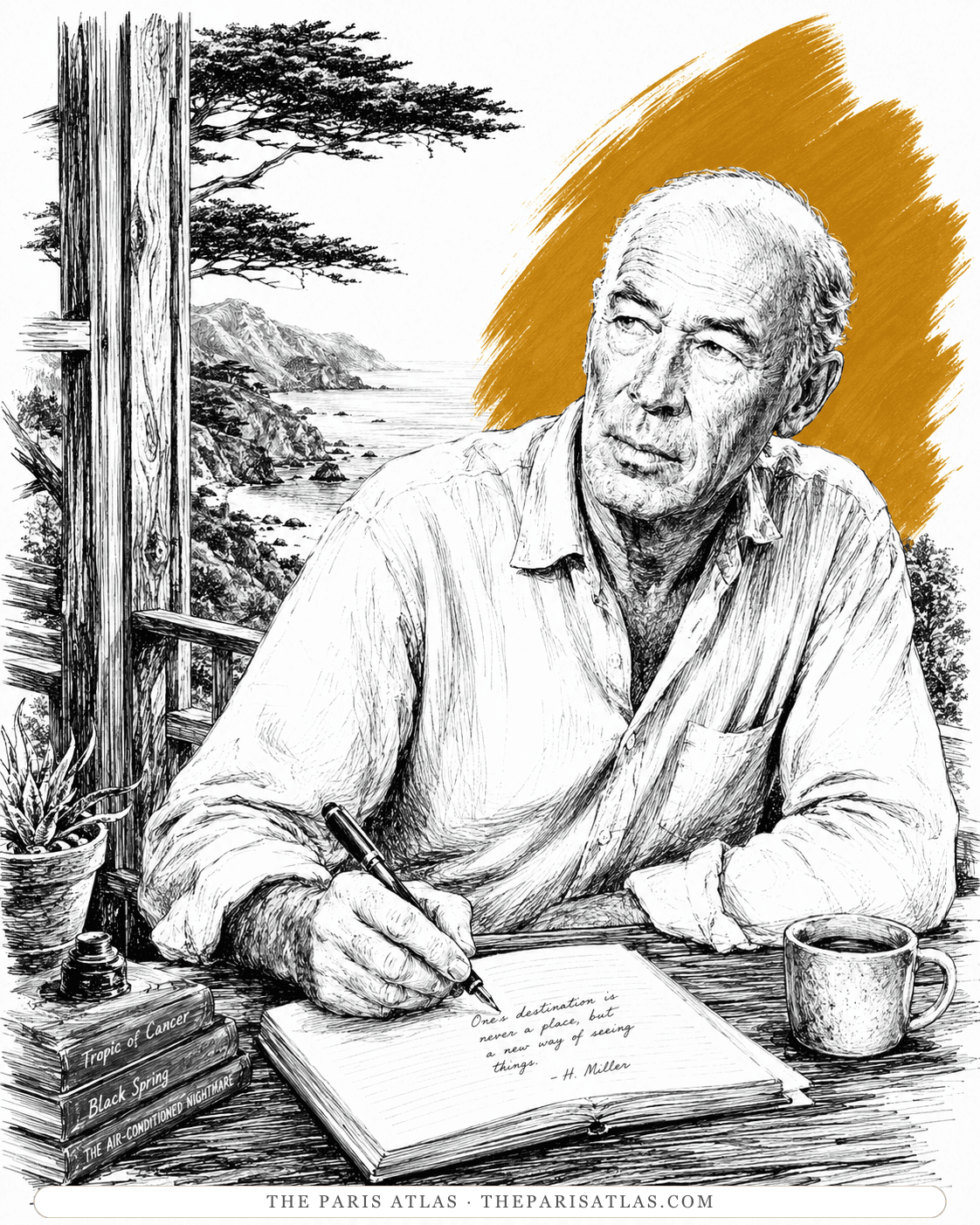
Met · 1934
Cendrars wrote one of the first reviews Tropic of Cancer received and came to the Villa Seurat to meet its author — the beginning of a mutual admiration Miller spent four decades repaying in print.

Met · 1918–1922
Cendrars was Gance's assistant on J'accuse — he also appears among the risen dead — and stayed through the three years of La Roue, where he cut with him and brought in Arthur Honegger.
Collaborated with · 1913
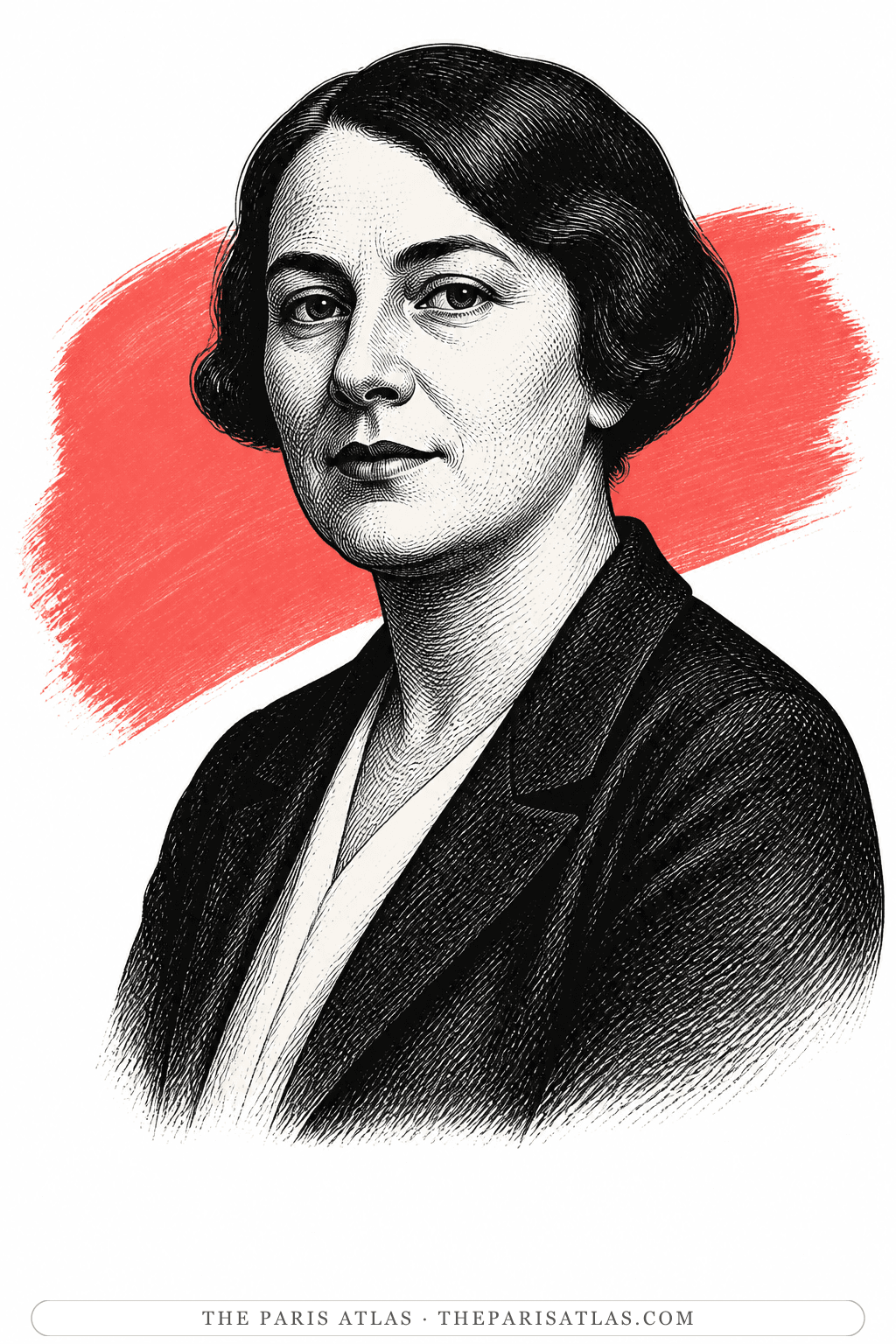
La Prose du Transsiberien et de la petite Jehanne de France, 1913: Cendrars's railway poem and Delaunay's simultaneous colour printed as one two-metre folding sheet - the century's most celebrated artist's book.

Collaborated with · 1945
Doisneau met Cendrars at Aix-en-Provence in 1945, and the two made La Banlieue de Paris - Cendrars's text set against Doisneau's photographs of austere postwar working-class neighbourhoods on the edge of the city. Cendrars, writing about the way Doisneau worked, likened him to a thief intent on his target. The book fixed the suburbs as Doisneau's subject.
The Books in My Life crowns Cendrars the living writer Miller loved above all others — the restless, first-person, all-devouring prose Miller took as permission for his own.
The wildest door and the truest one — the monster-novel that made his legend, and the book Henry Miller pressed on everyone he met.

The poem where 'Blaise Cendrars' is born: a starving night in Manhattan, addressed to Christ — and modern French poetry changes course.

The two-meter poem: a train across Siberia, a girl asking if they're far from Montmartre, and Sonia Delaunay's colors running the whole way down.

Four pages that end the war literature of glory: the poet-legionnaire's confession, with drawings by Fernand Léger.

Seven uncles scattered to the world's ends, one boy reading their letters — the wander-poem John Dos Passos loved enough to translate.

Poems that stretch to fit the century — nineteen dispatches from the studios of Chagall, Léger, and Delaunay, and the last verse before the novels.

The compilation that put African storytelling on Paris shelves in 1921 — creation myths, trickster tales, and the source of a Ballets Suédois landmark.

The rise and ruin of General Sutter, told at telegraph speed — the little novel that made Cendrars famous and Hollywood hungry.
A young psychiatrist frees the world's most dangerous patient and follows him into the abyss — the monster-novel Henry Miller pressed on everyone.

A jilted millionaire sails three artists to Antarctica to see what silence does to them — then comes back and buys the whaling trade.

The true case of Jean Galmot — rum fortunes, a Guiana seat in parliament, a prison cell, and a death in Cayenne that started a riot.

The memoir tetralogy opens like a lightning strike: war, gypsies, and the art of being astonished — written after a decade of silence.

Blaise Cendrars's memoir of the Foreign Legion squad he led in the First World War, written thirty years after he lost his right arm in it.

Eleven ports and the sea-word for knocking about the world — with the great Genoa chapter, the tetralogy's buried childhood, at its heart.

The tetralogy ascends: a levitating saint, the Brazilian outback — and, unspoken at the center, a son who fell from the sky.
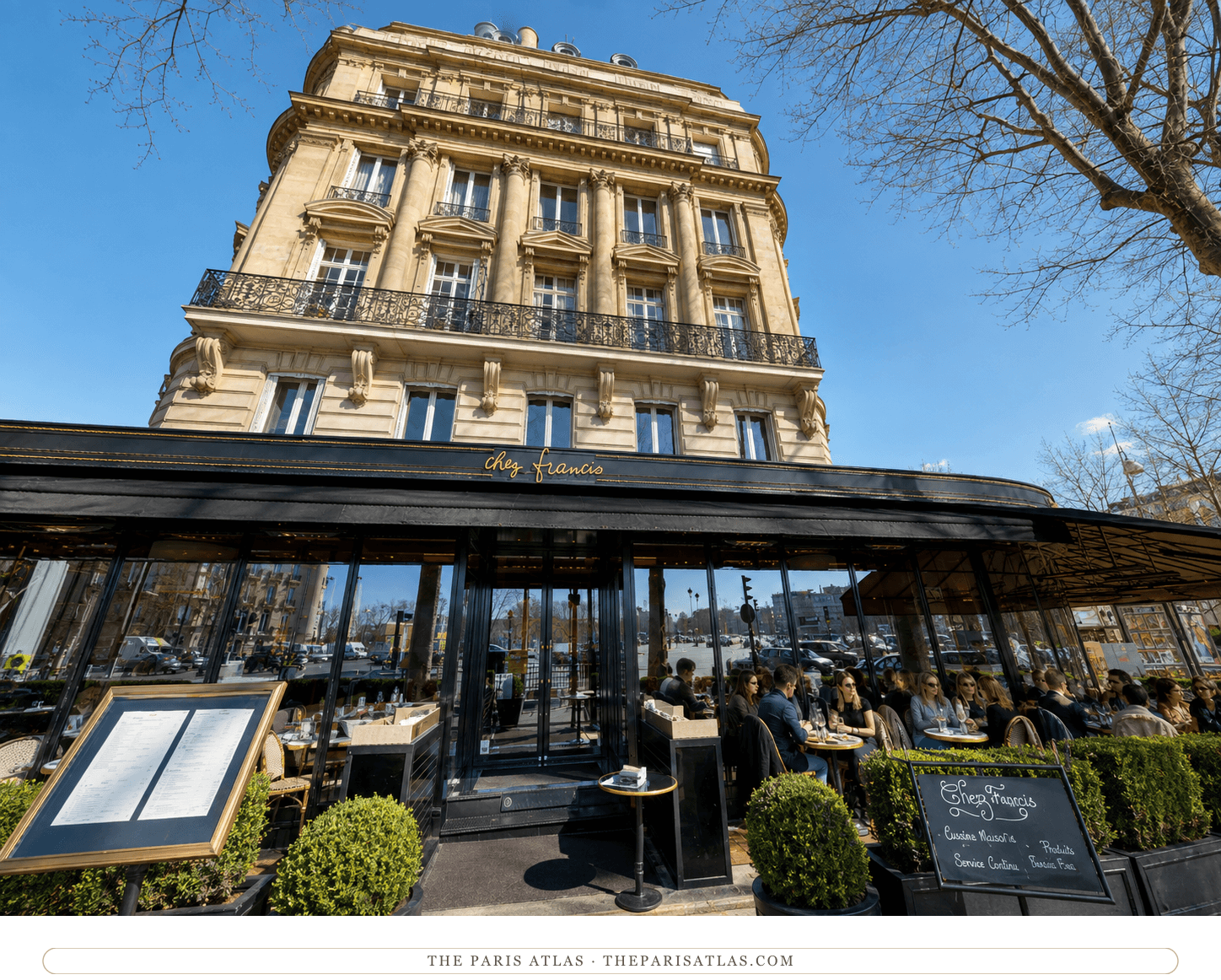
Claude Leroy's study La main de Cendrars catches him at Francis on the place de l'Alma in 1923, drinking champagne with a friend, and Cendrars studies treat the brasserie as one of his characteristic stops.
Visit the place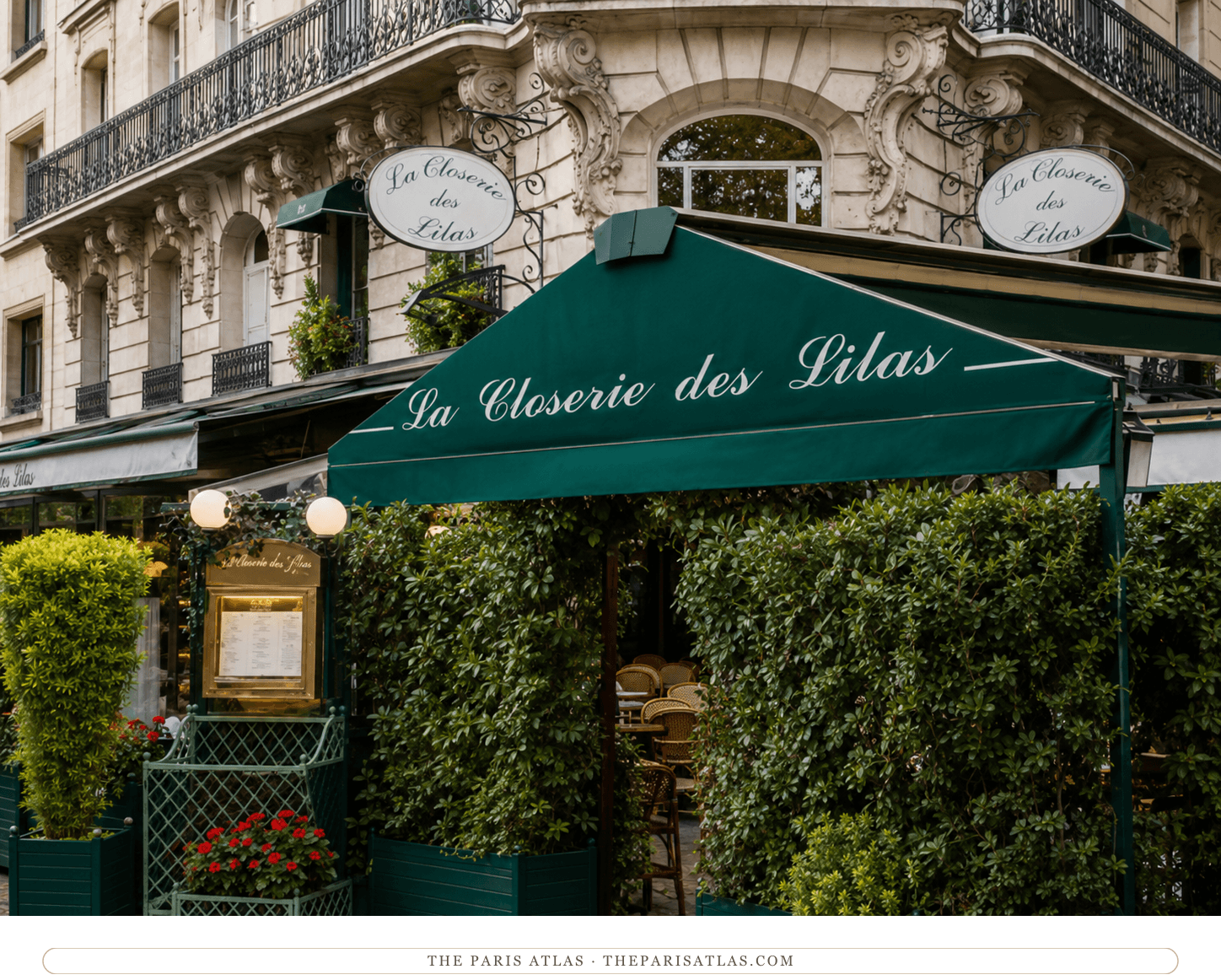
Ernest Hemingway's A Moveable Feast records seeing Blaise Cendrars at the Closerie and spending time with him there — a firsthand account rather than café legend.
Visit the place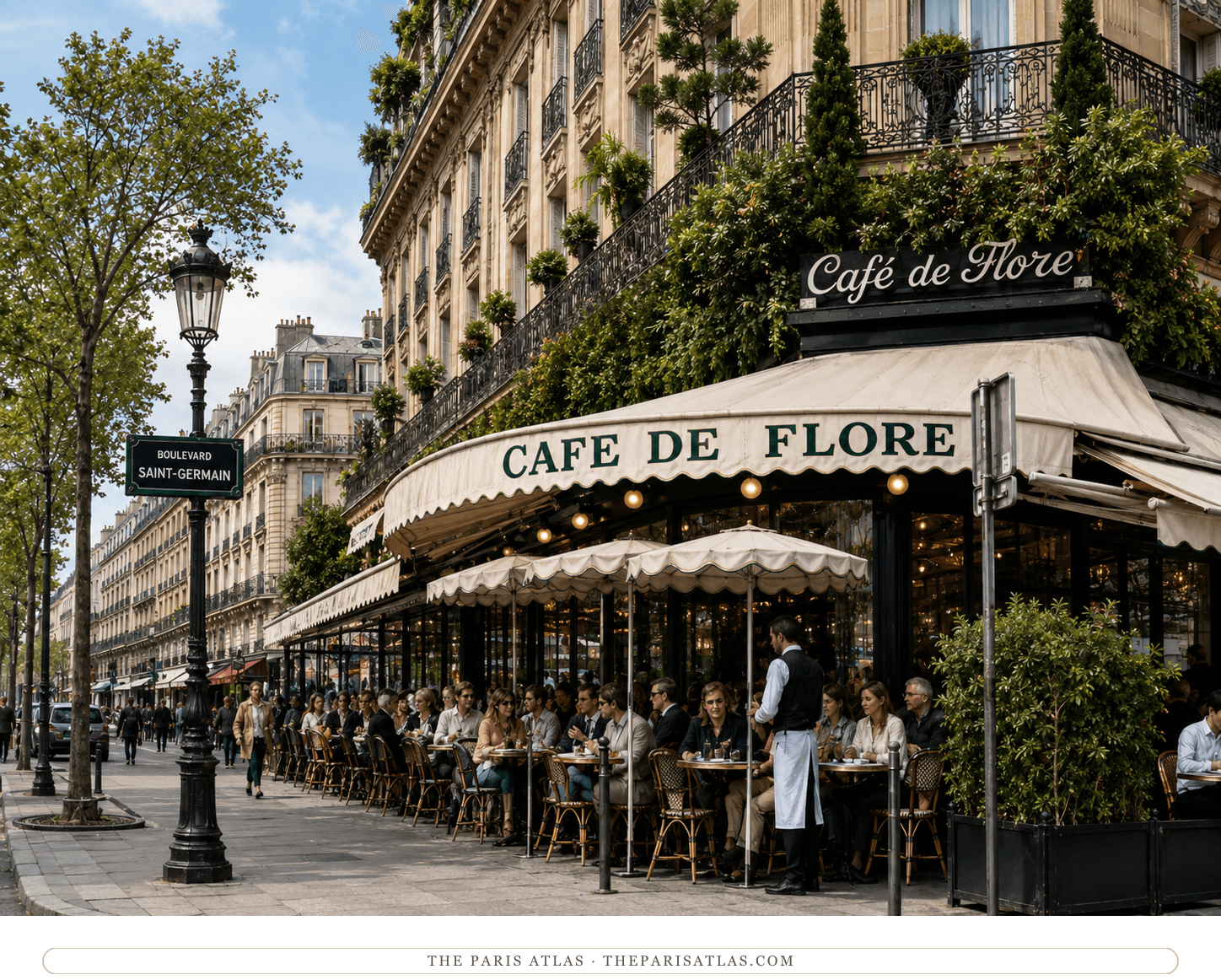
Philippe Soupault's memoir places Cendrars among the regulars at Guillaume Apollinaire's Wednesday gatherings at the Flore in the spring of 1917, around six in the evening, and describes leaving the café at his side to walk the city.
Visit the place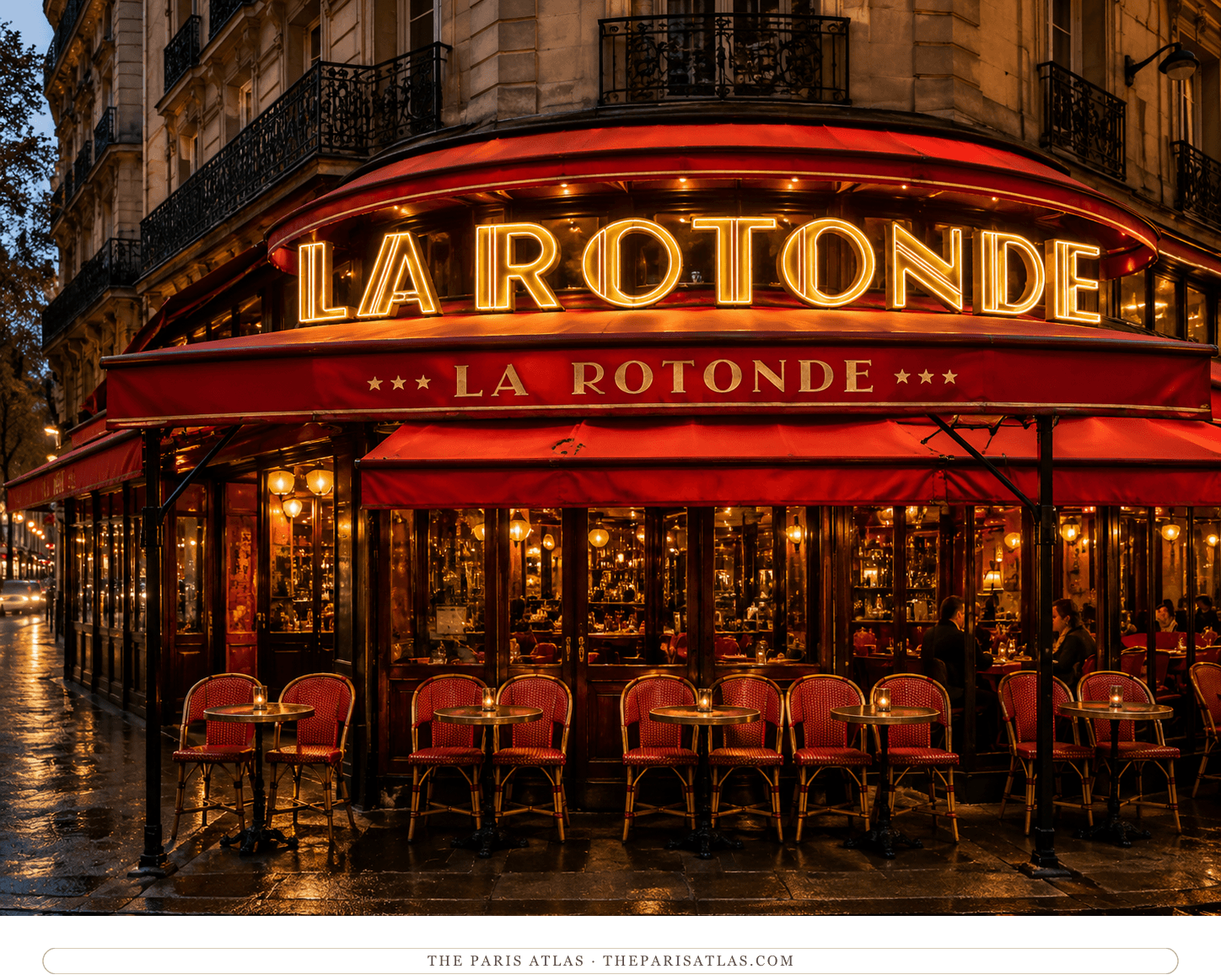
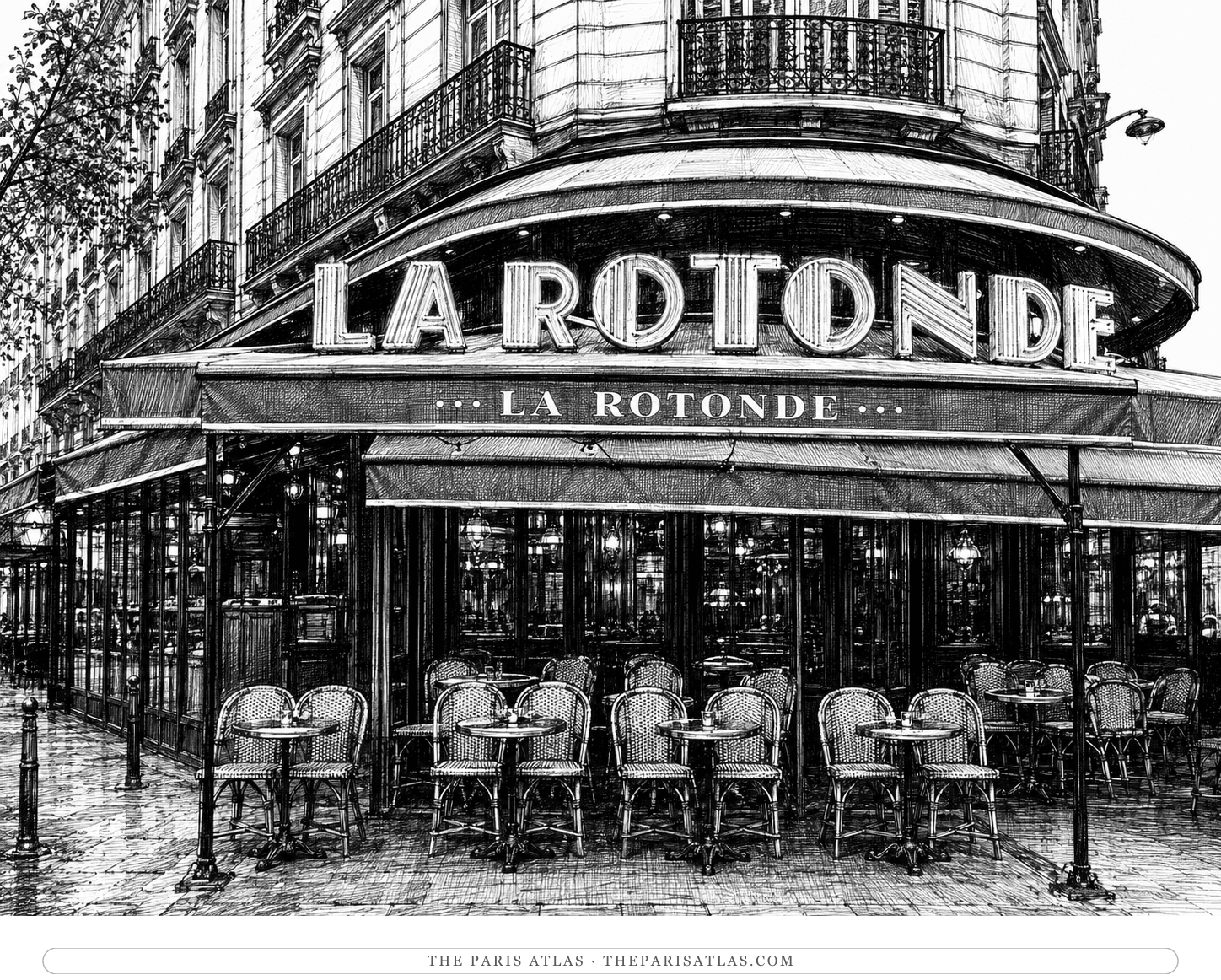
Soupault's memoir names the Rotonde as Cendrars's favorite gathering place in Montparnasse, and Olivier Renault's Le Paris de Cendrars counts it among his characteristic stops.
Visit the place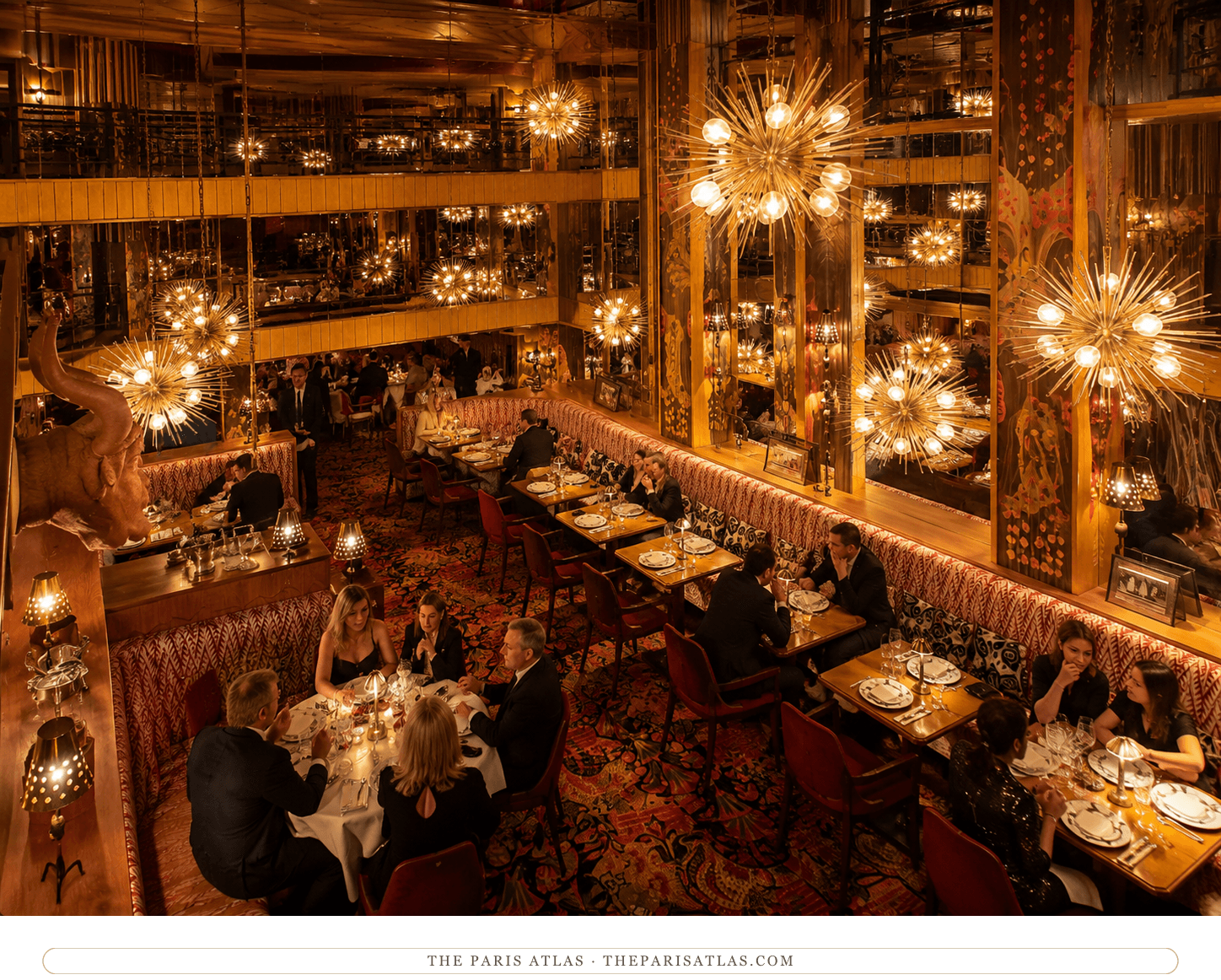
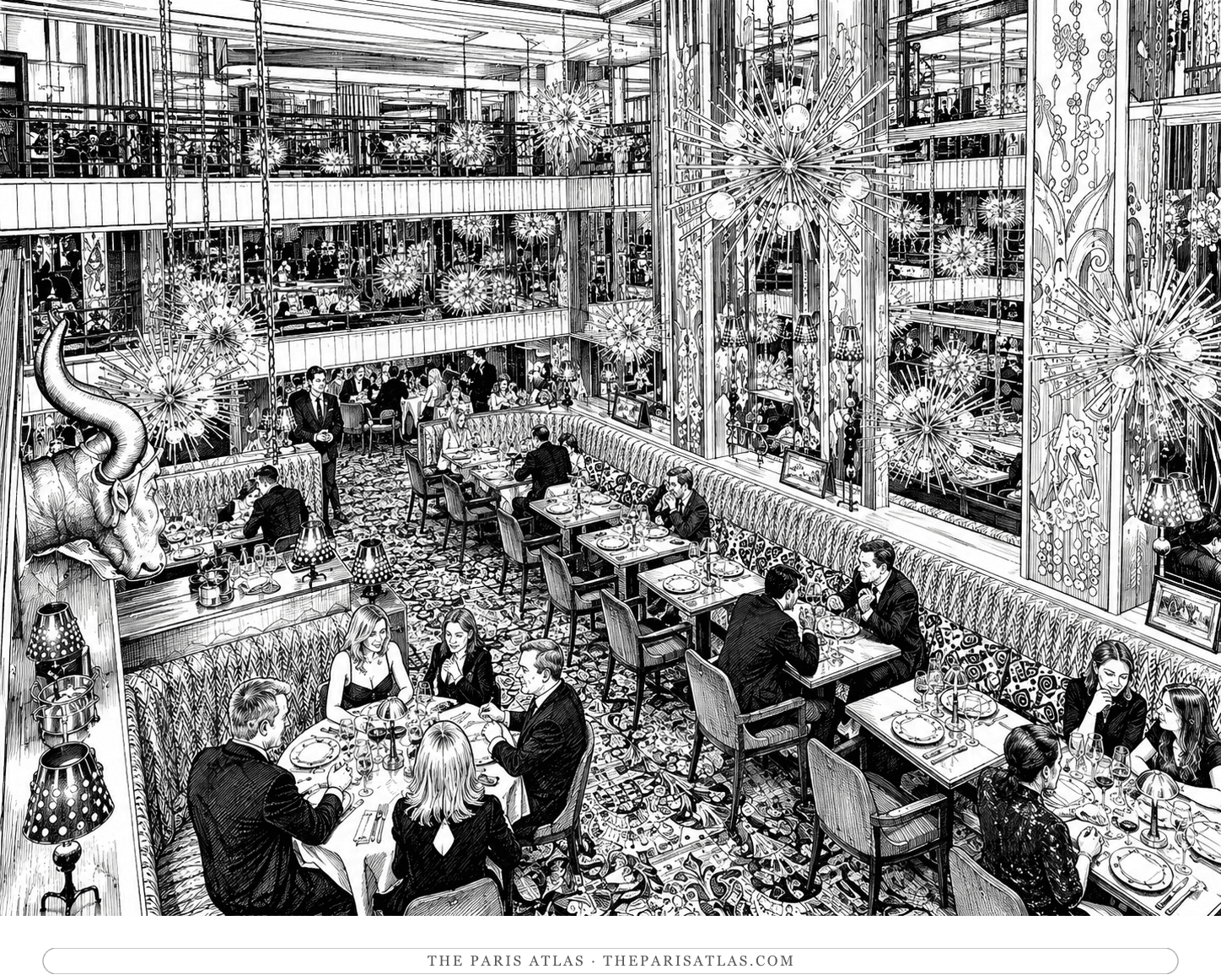
Olivier Renault's Le Paris de Cendrars counts the Bœuf among his stops — the Right Bank bar of the Cocteau–Milhaud crowd he moved in after the war.
Visit the place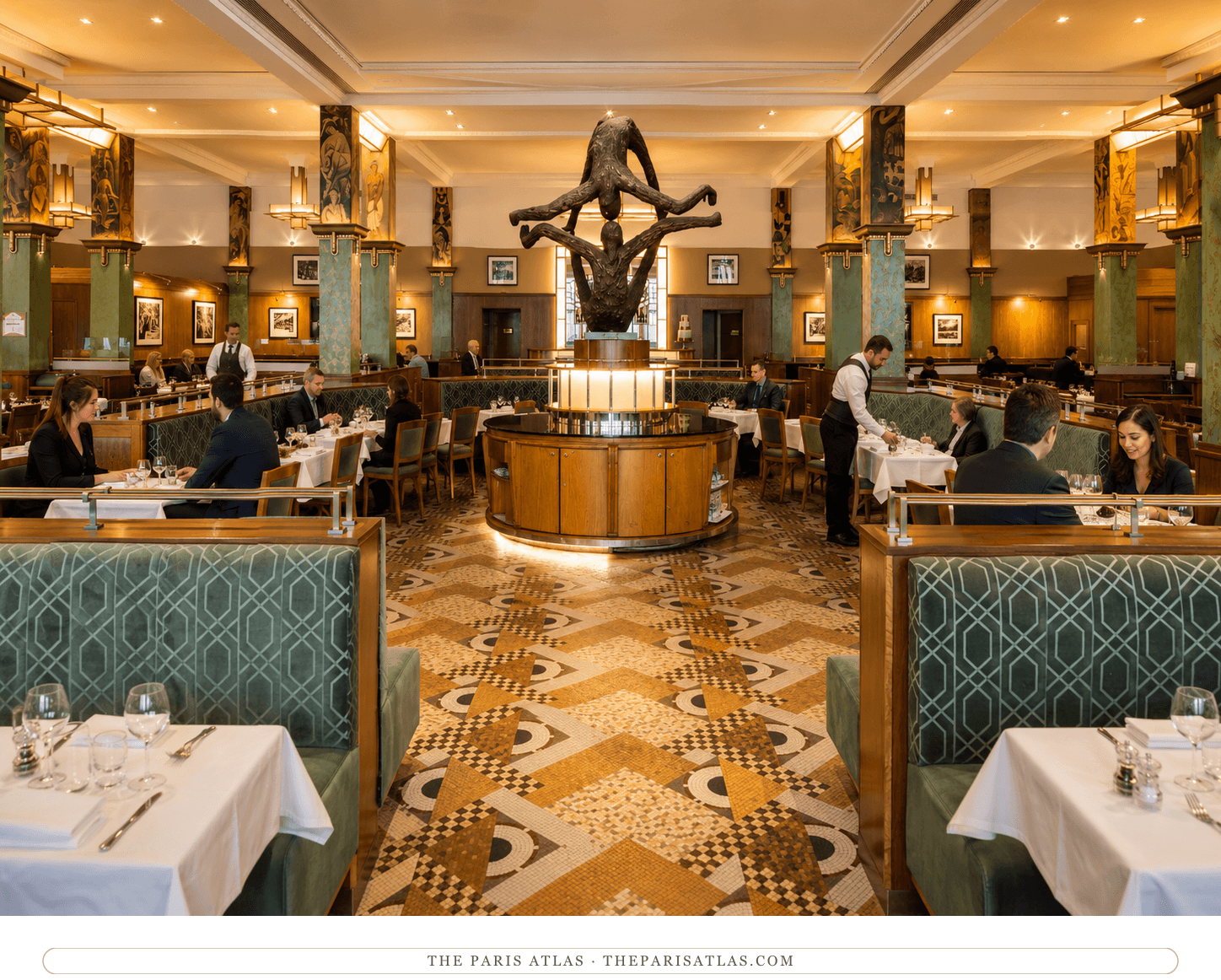
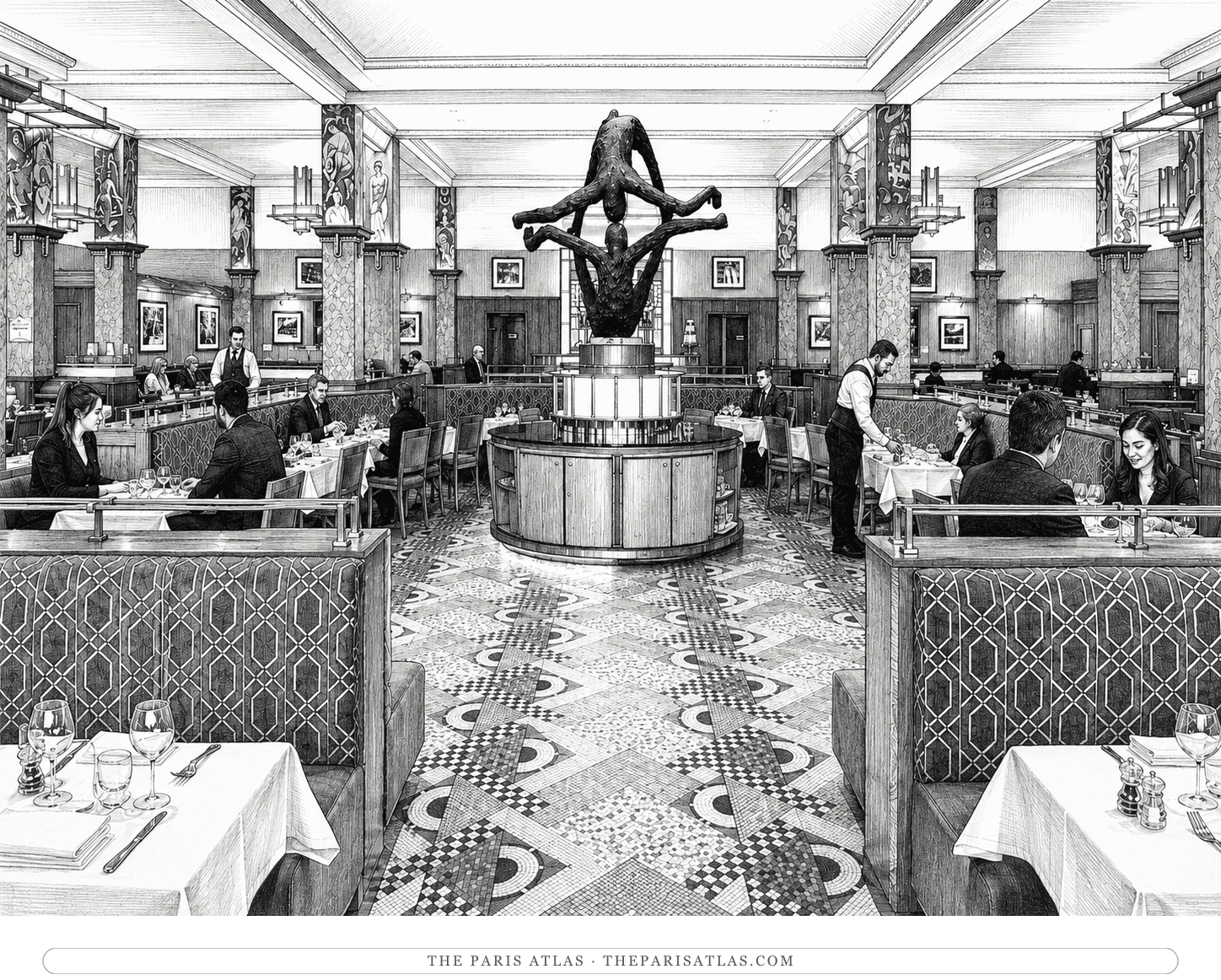
Cendrars was in the crowd at La Coupole's opening celebration on 20 December 1927, and in L'Homme foudroyé he writes of passing the night at La Coupole before leaving at dawn — his own record of time spent in the room, beyond the opening itself.
Visit the place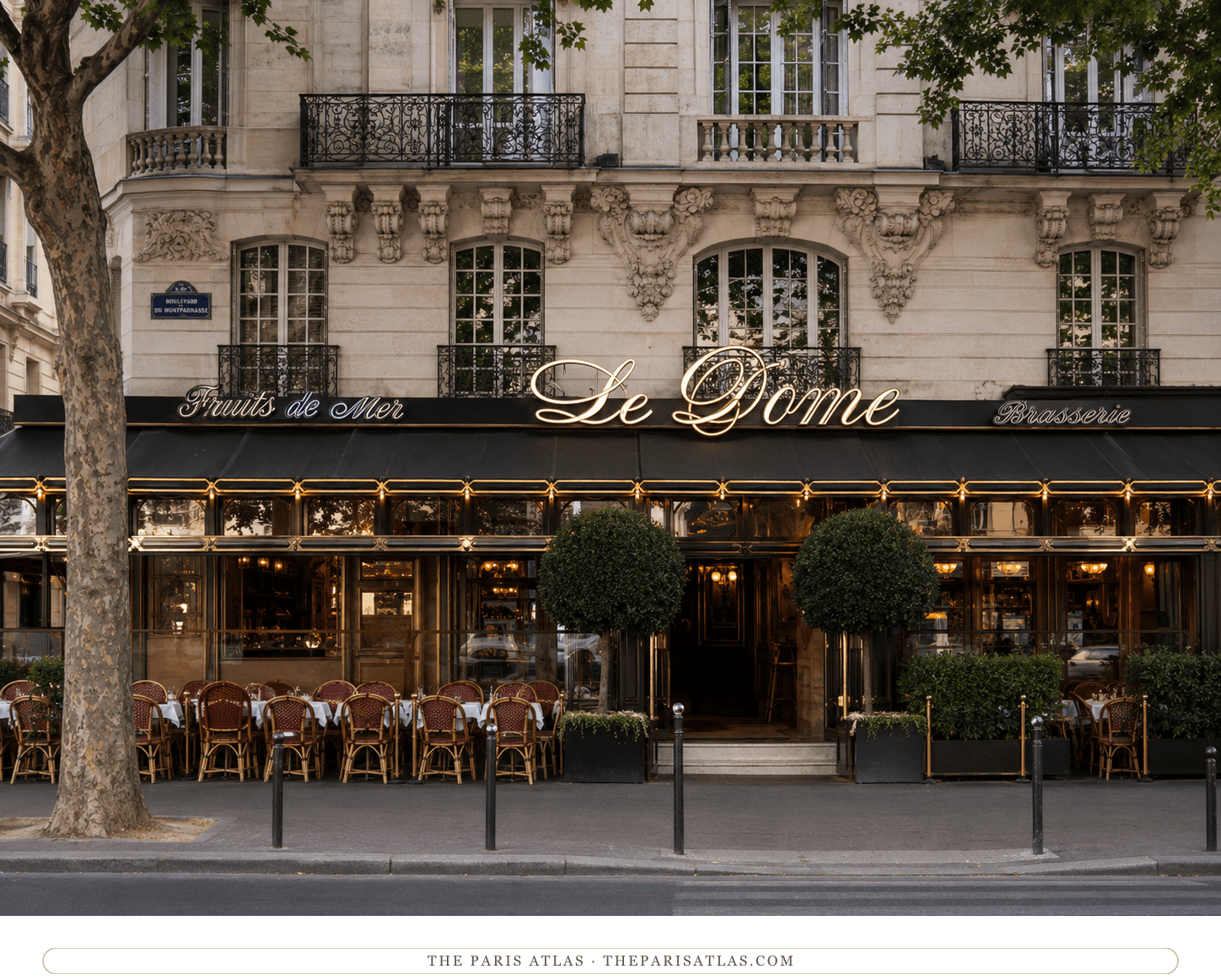
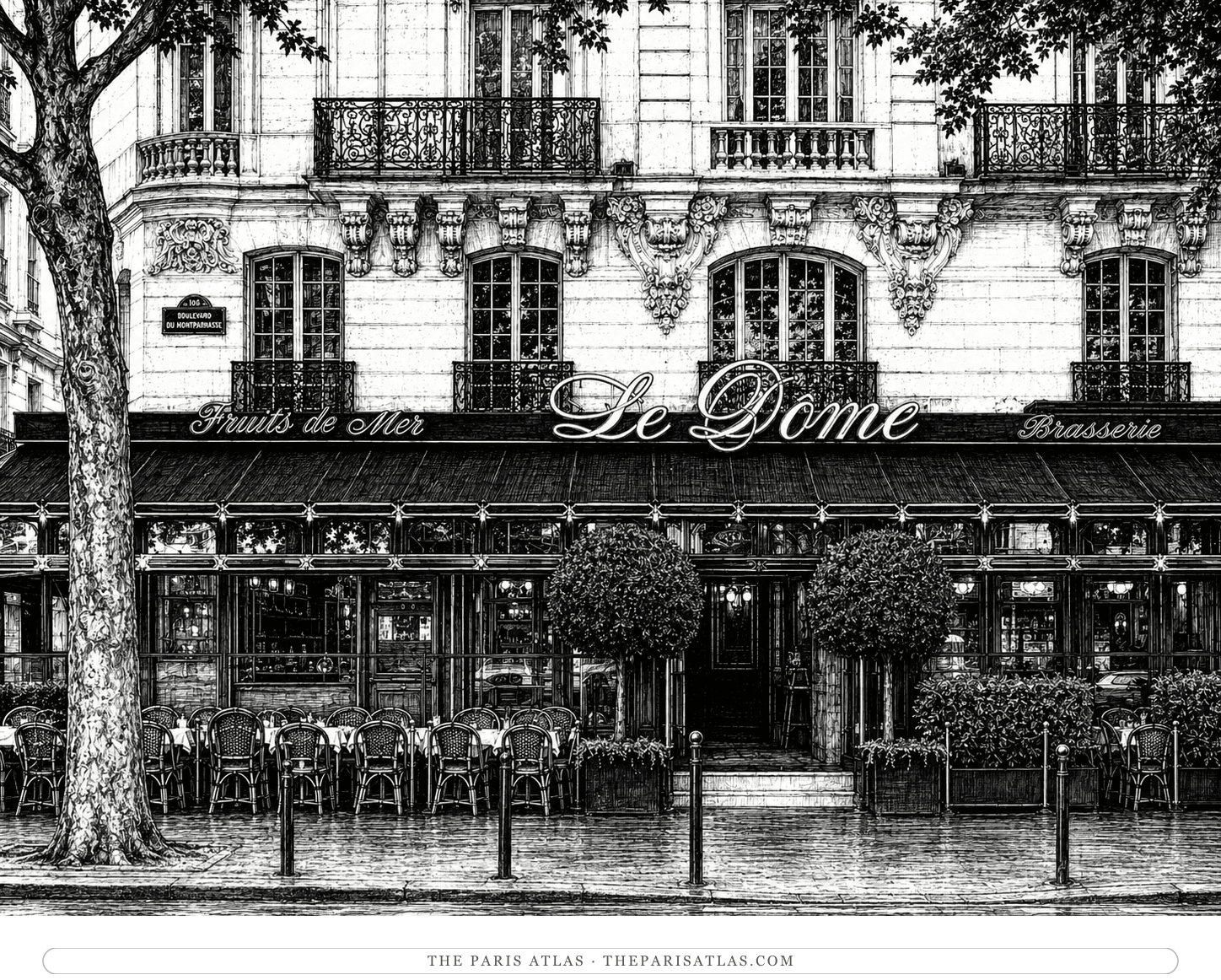
Michel Seuphor's 1957 history of abstract painting recalls the Dôme terrace as the place where, on the same day, one could meet Cendrars back from America alongside Delaunay, Arp, Tzara and Ehrenburg; a Montparnasse café history also counts him among those who came to the Dôme to drink and talk.
Visit the place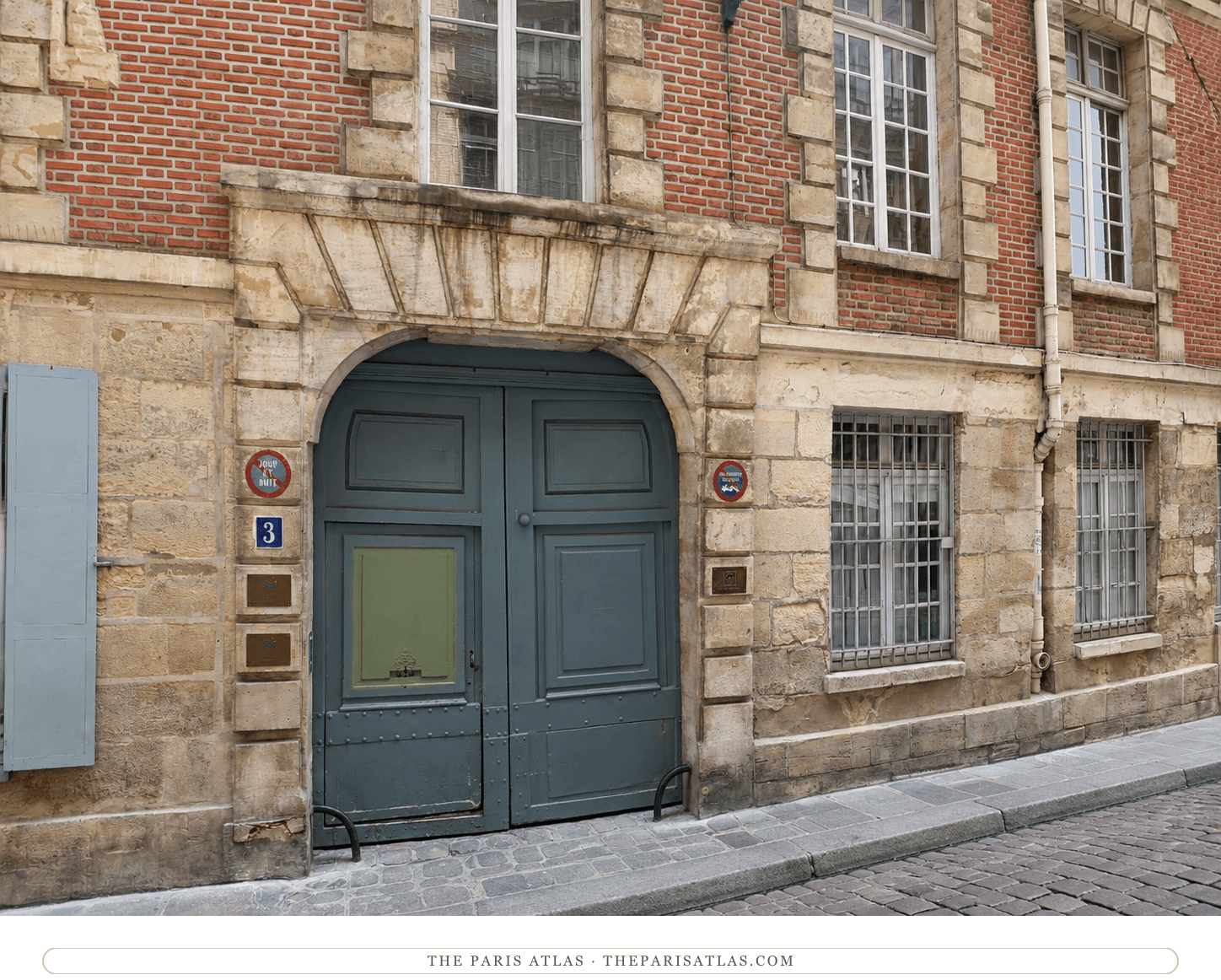
The Delaunays' apartment-studio, where La Prose du Transsibérien was made with Sonia Delaunay in 1913. Christopher Green's Metropolitan Museum essay records that Cendrars held the key to the studio while the couple sat out the First World War abroad — a detail Sonia Delaunay confirmed to Green directly.
Visit the place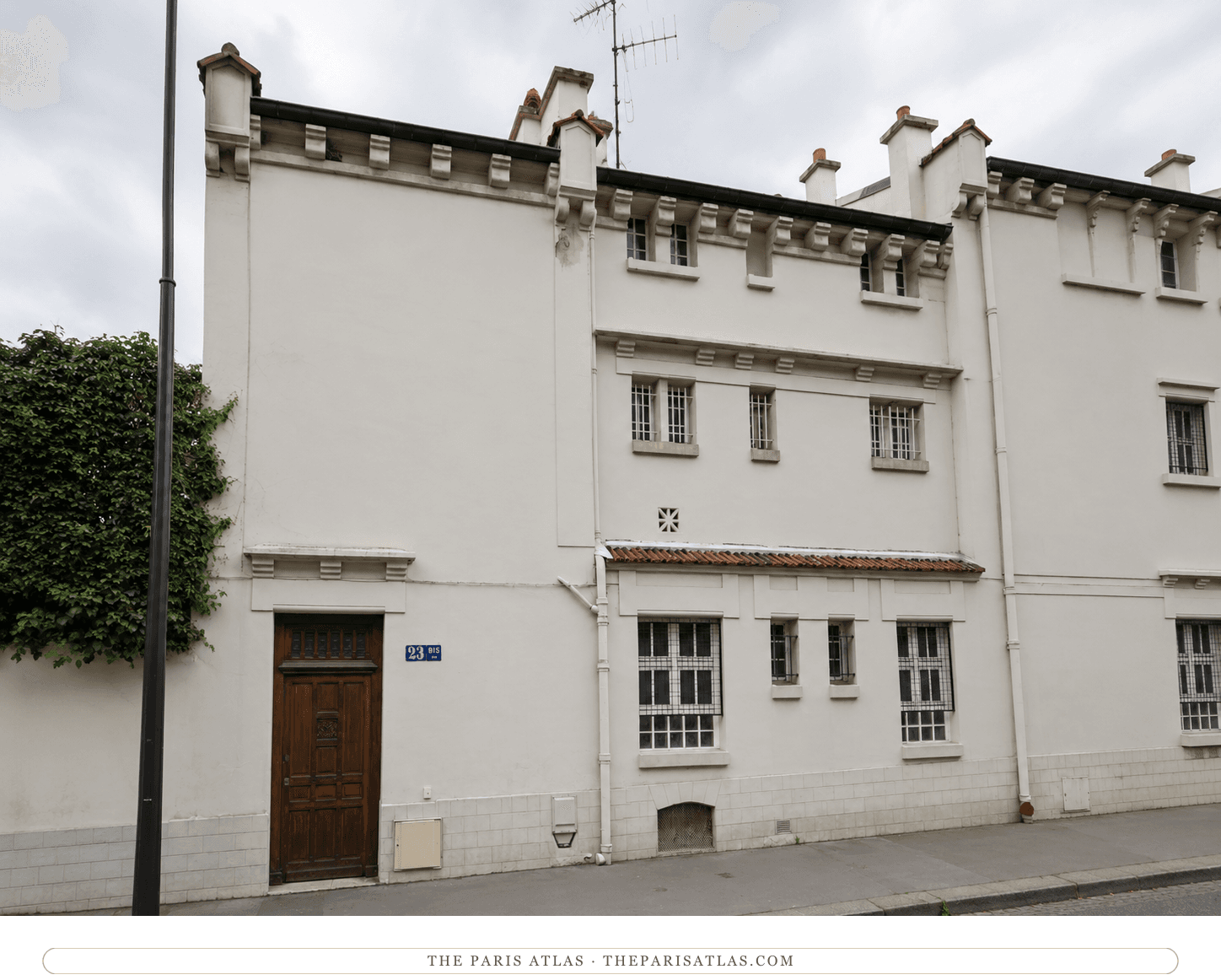
The Bibliothèque de la Ville de La Chaux-de-Fonds, holder of a major Cendrars archive, records that after their honeymoon Cendrars and Raymone settled at 23 rue Jean-Dolent, facing La Santé prison; the Leroy-credited chronology dates the move out to 25 August 1959.
Visit the place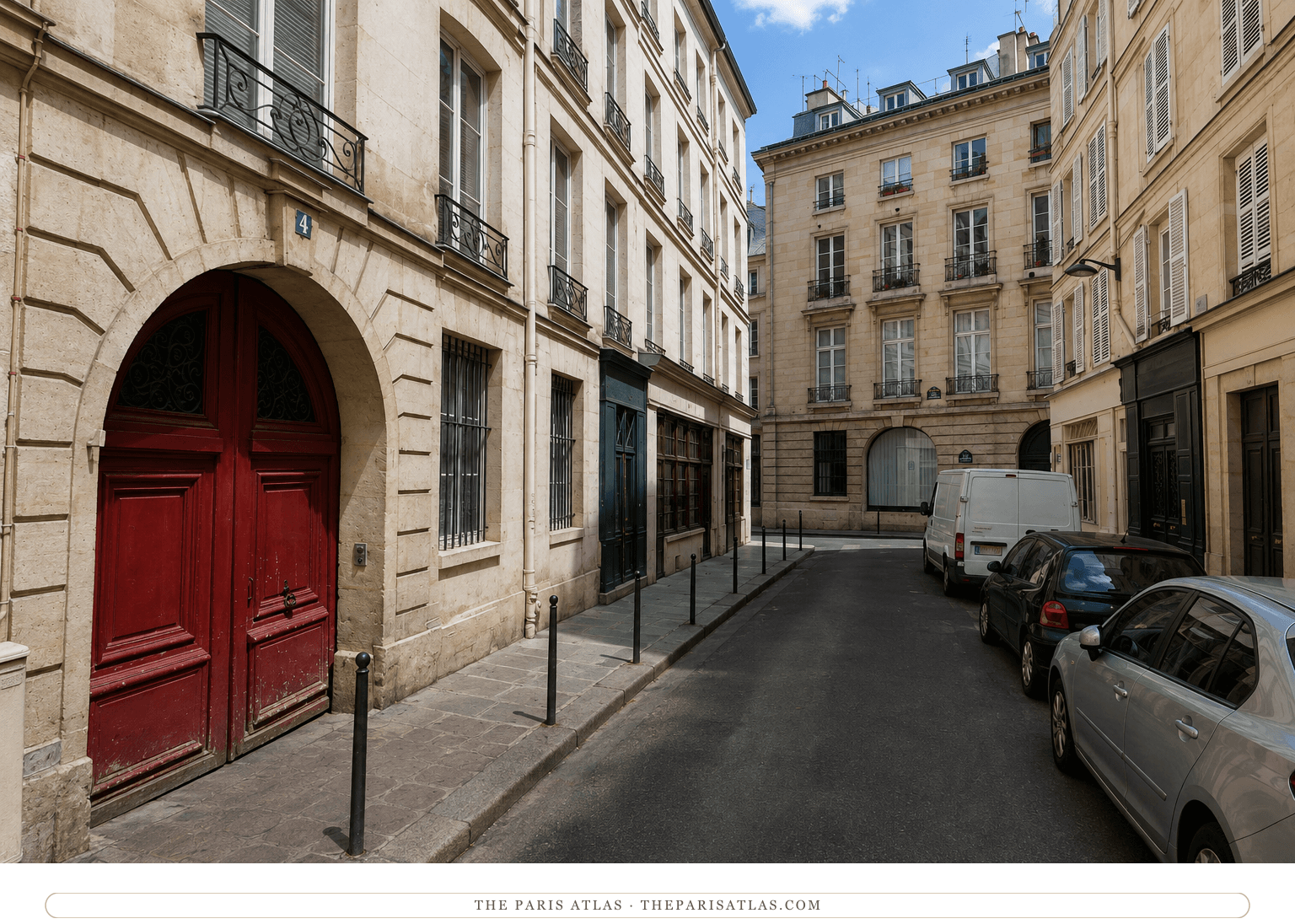
The catalogue essay for Cendrars's letters to his brother Georges states that on returning to Paris in June 1912 he settled at 4 rue de Savoie and founded Les Hommes nouveaux there; the BnF's notice for La Prose du Transsibérien preserves the imprint with the same address.
Visit the place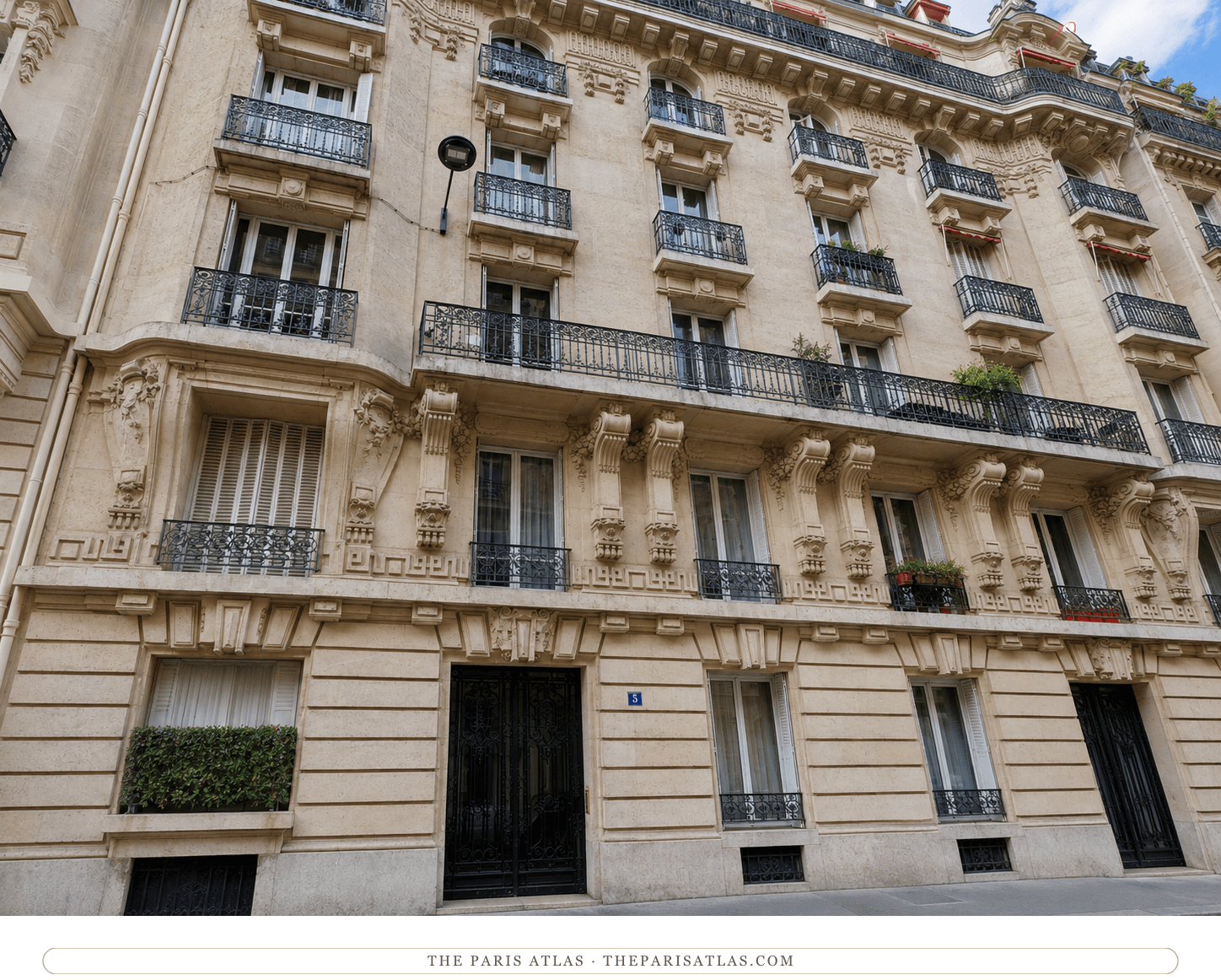
The chronology prepared with Claude Leroy records the move to 5 rue José-Maria-de-Heredia on 25 August 1959 and Cendrars's death at home on 21 January 1961.
Visit the place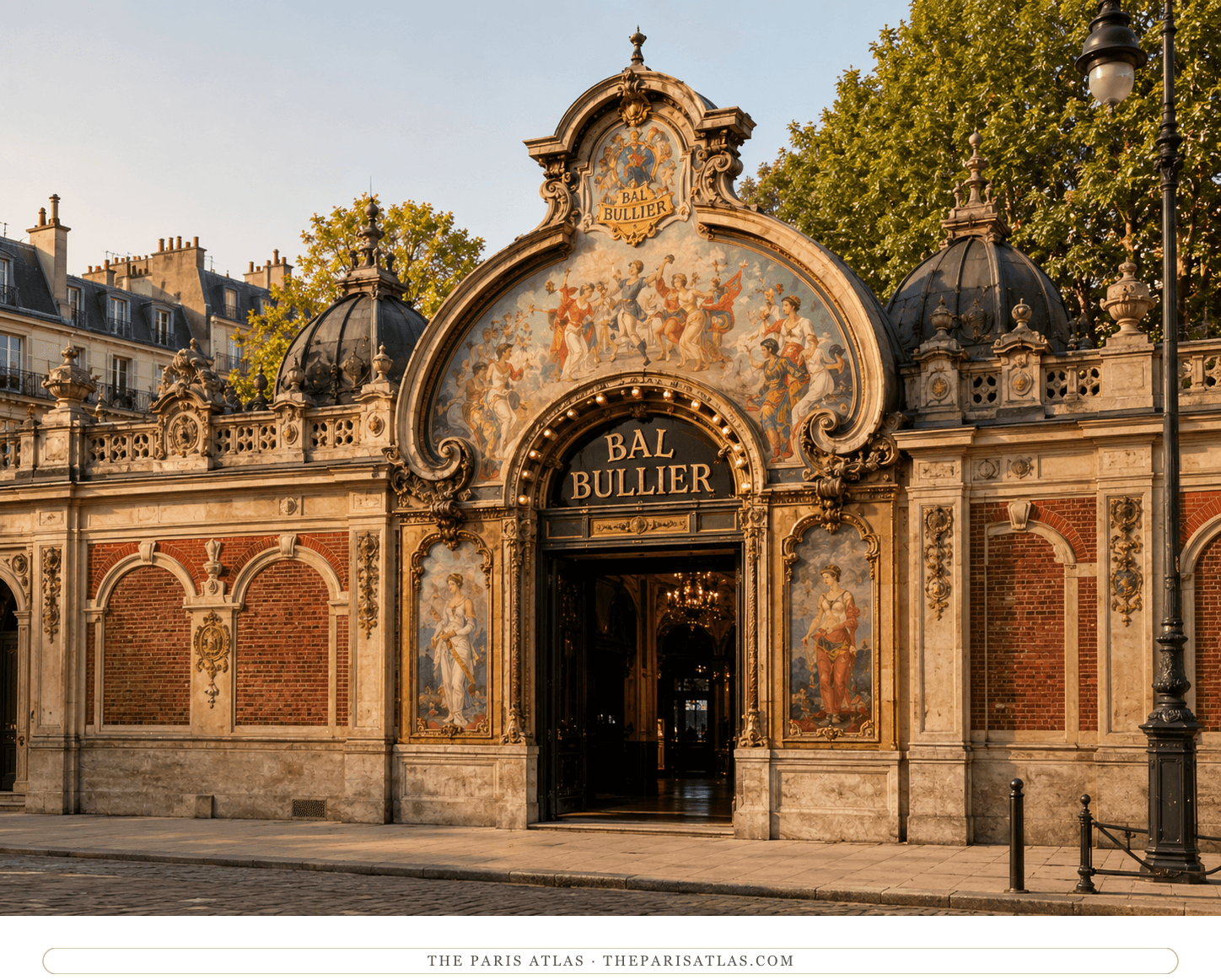
The Centre Pompidou's exhibition text states that on the Left Bank the Delaunays, Blaise Cendrars and Apollinaire would dance at the Bal Bullier; its Sonia Delaunay resources tie the same evenings to her 1913 painting and simultaneous dress, the subject of Cendrars's poem.
Visit the placeA Swiss-French poet and novelist (1887–1961), one of the restless adventurer-writers of the Paris avant-garde. He was born Frédéric-Louis Sauser in Swiss watchmaking country and made himself a new name.
The long poem La Prose du Transsibérien (1913), the "first simultaneous book," painted down its two-metre length by Sonia Delaunay; and novels such as Moravagine and Gold (L'Or).
He lost his right arm fighting with the French Foreign Legion in Champagne in 1915, taught himself to write left-handed, and treated the loss, characteristically, as an editorial improvement.
Miller ranked him the living writer he loved above all others. Cendrars wrote one of the first reviews Tropic of Cancer received and came to the Villa Seurat to meet its author — the start of four decades of mutual admiration.
Yes. He was Abel Gance's assistant on J'accuse and stayed through the three years of La Roue, where he cut alongside Gance and brought in the composer Arthur Honegger.
Influenced
The Books in My Life crowns Cendrars the living writer Miller loved above all others — the restless, first-person, all-devouring prose Miller took as permission for his own.
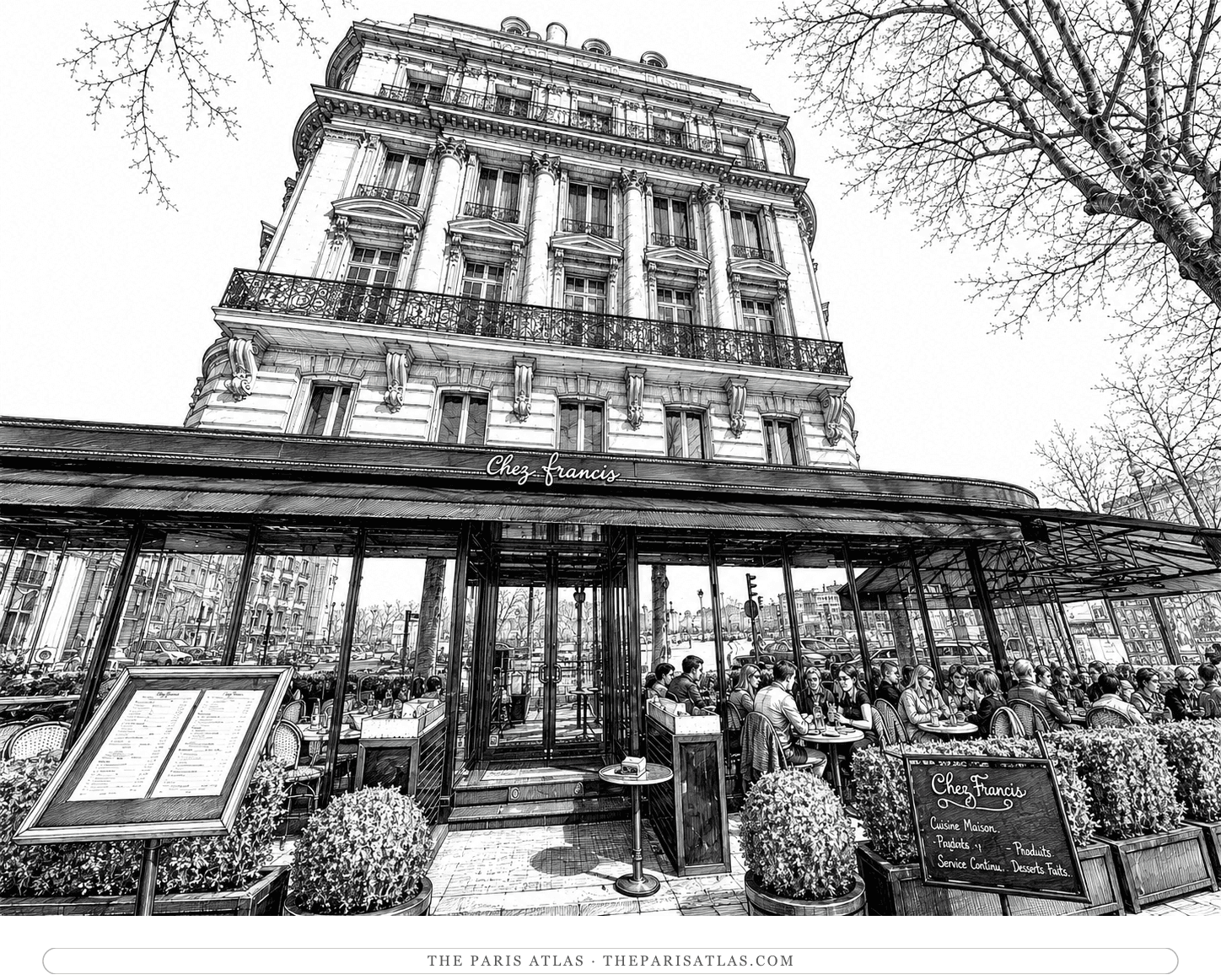
Frequented
Claude Leroy's study La main de Cendrars catches him at Francis on the place de l'Alma in 1923, drinking champagne with a friend, and Cendrars studies treat the brasserie as one of his characteristic stops.
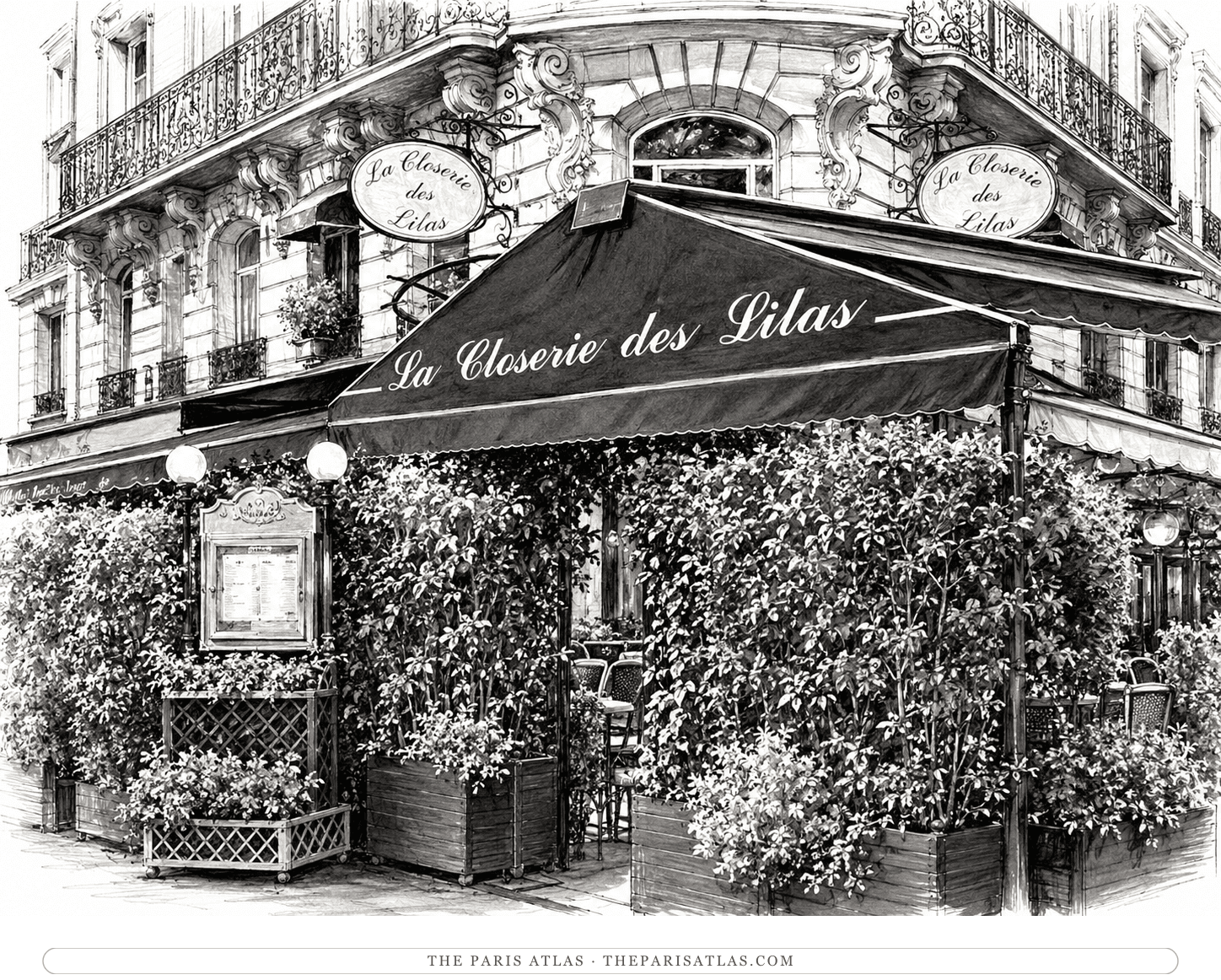
Frequented
Ernest Hemingway's A Moveable Feast records seeing Blaise Cendrars at the Closerie and spending time with him there — a firsthand account rather than café legend.
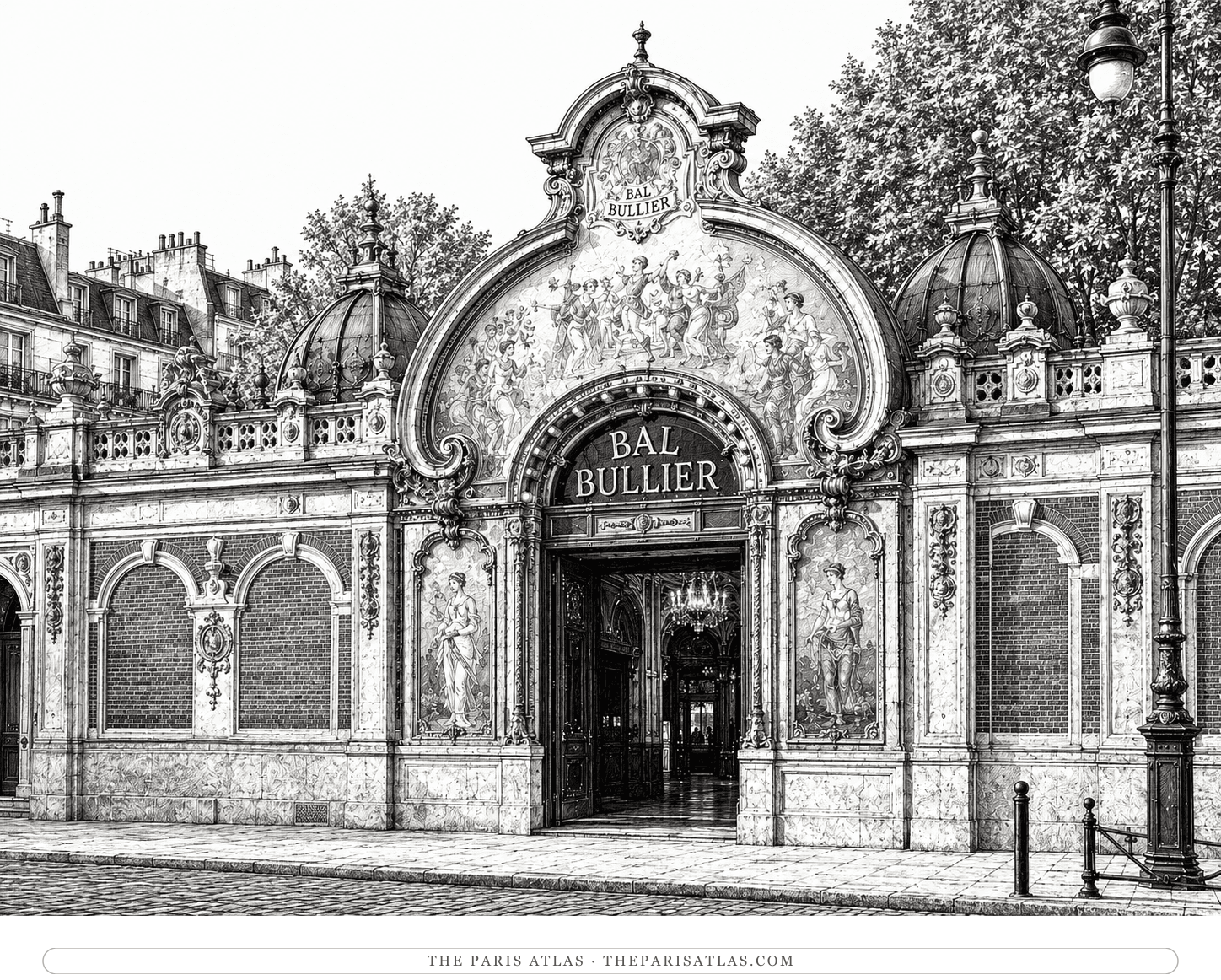
Frequented · 1913–1914
The Centre Pompidou's exhibition text states that on the Left Bank the Delaunays, Blaise Cendrars and Apollinaire would dance at the Bal Bullier; its Sonia Delaunay resources tie the same evenings to her 1913 painting and simultaneous dress, the subject of Cendrars's poem.
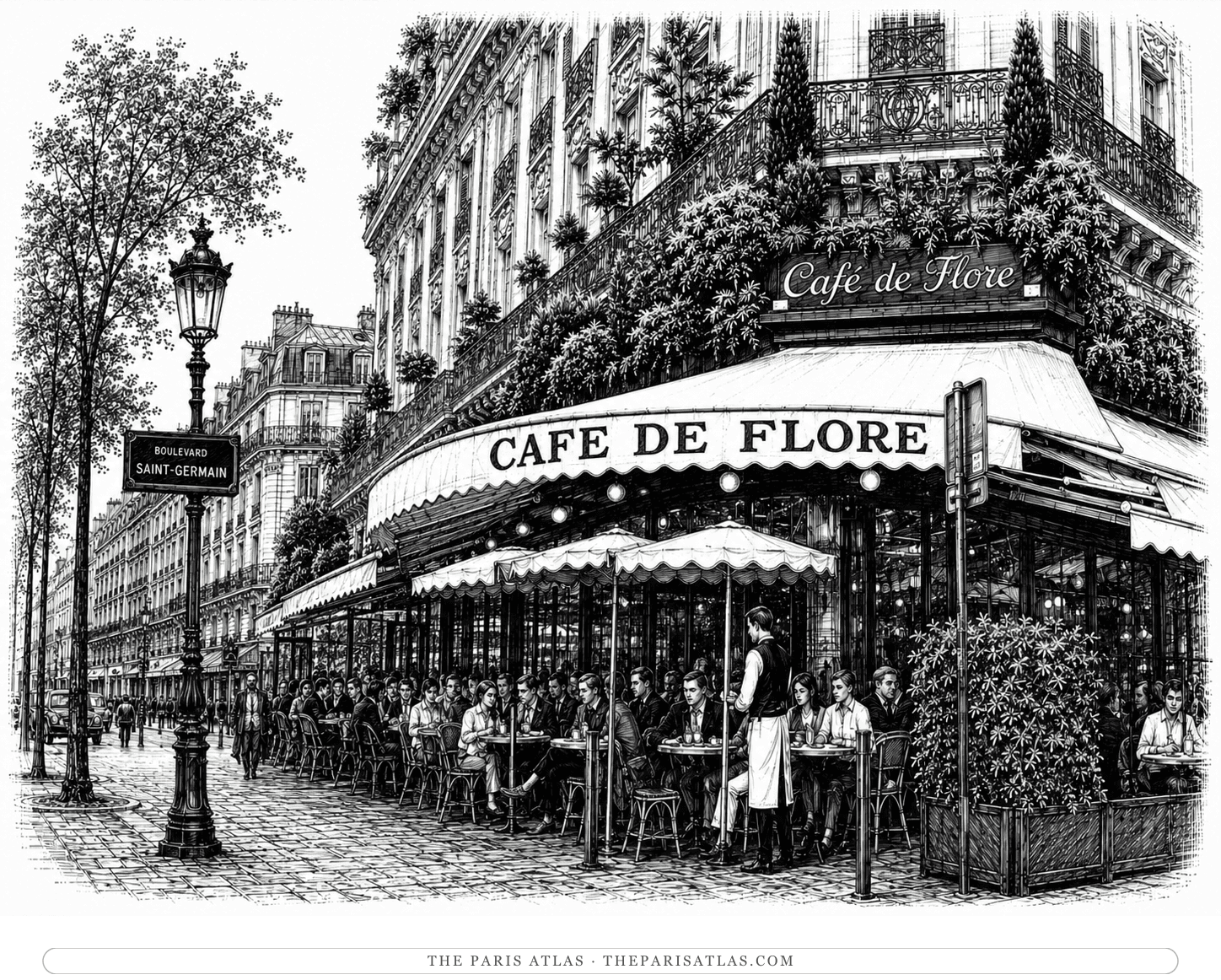
Frequented · 1917
Philippe Soupault's memoir places Cendrars among the regulars at Guillaume Apollinaire's Wednesday gatherings at the Flore in the spring of 1917, around six in the evening, and describes leaving the café at his side to walk the city.
Frequented
Soupault's memoir names the Rotonde as Cendrars's favorite gathering place in Montparnasse, and Olivier Renault's Le Paris de Cendrars counts it among his characteristic stops.
Frequented · 1922
Olivier Renault's Le Paris de Cendrars counts the Bœuf among his stops — the Right Bank bar of the Cocteau–Milhaud crowd he moved in after the war.
Frequented · 1927
Cendrars was in the crowd at La Coupole's opening celebration on 20 December 1927, and in L'Homme foudroyé he writes of passing the night at La Coupole before leaving at dawn — his own record of time spent in the room, beyond the opening itself.
Frequented
Michel Seuphor's 1957 history of abstract painting recalls the Dôme terrace as the place where, on the same day, one could meet Cendrars back from America alongside Delaunay, Arp, Tzara and Ehrenburg; a Montparnasse café history also counts him among those who came to the Dôme to drink and talk.
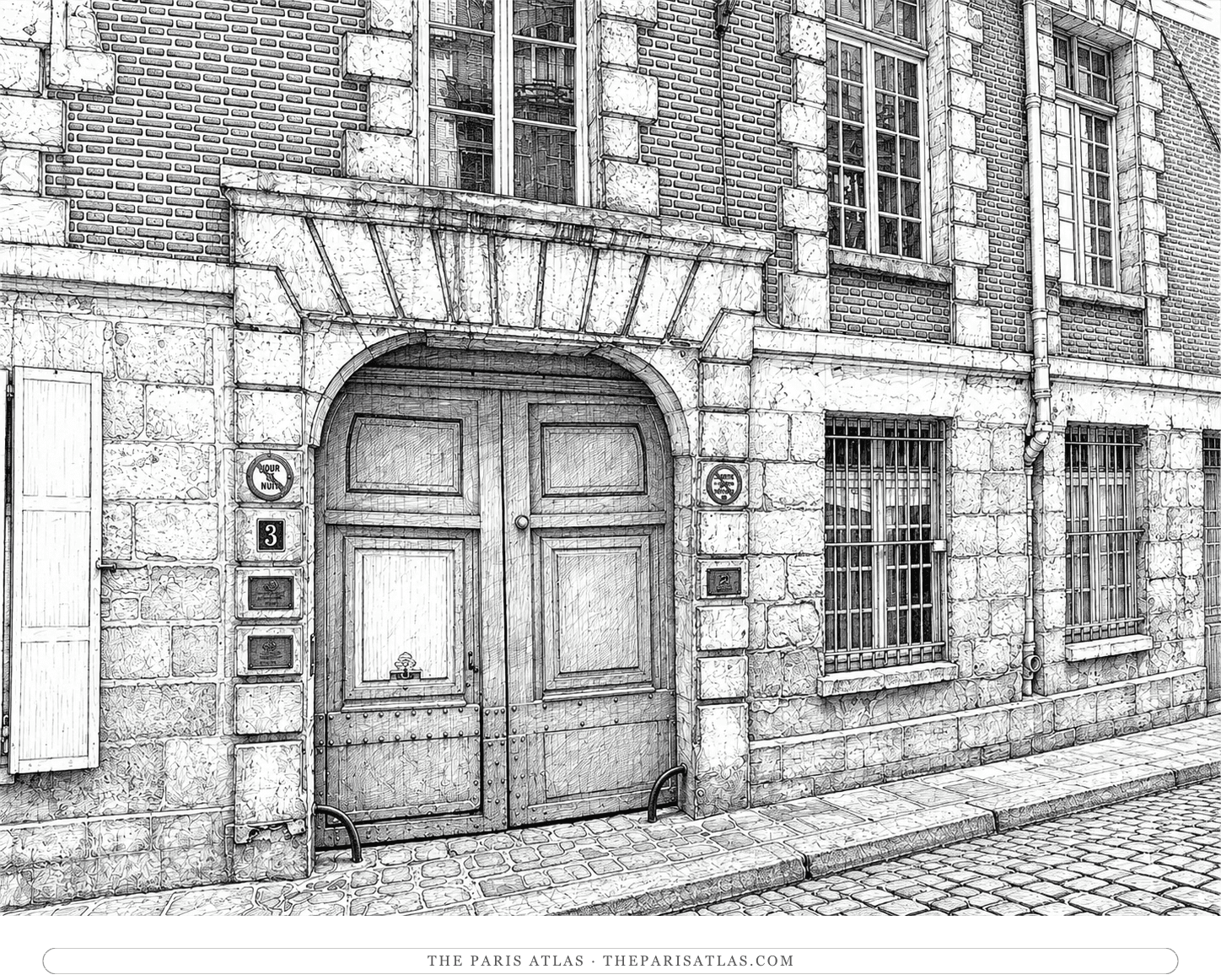
Frequented · 1913
The Delaunays' apartment-studio, where La Prose du Transsibérien was made with Sonia Delaunay in 1913. Christopher Green's Metropolitan Museum essay records that Cendrars held the key to the studio while the couple sat out the First World War abroad — a detail Sonia Delaunay confirmed to Green directly.
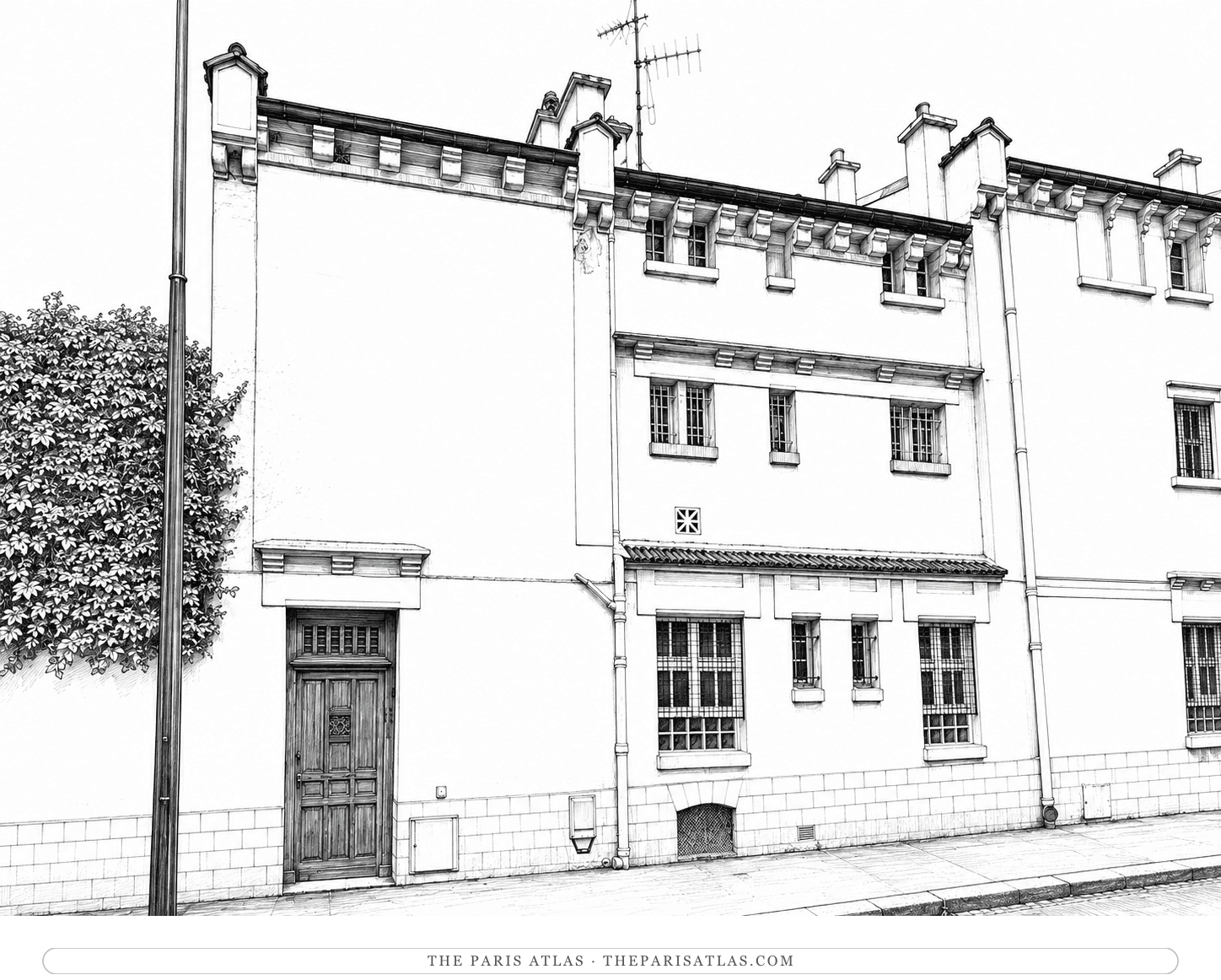
Lived at · 1950–1959
The Bibliothèque de la Ville de La Chaux-de-Fonds, holder of a major Cendrars archive, records that after their honeymoon Cendrars and Raymone settled at 23 rue Jean-Dolent, facing La Santé prison; the Leroy-credited chronology dates the move out to 25 August 1959.
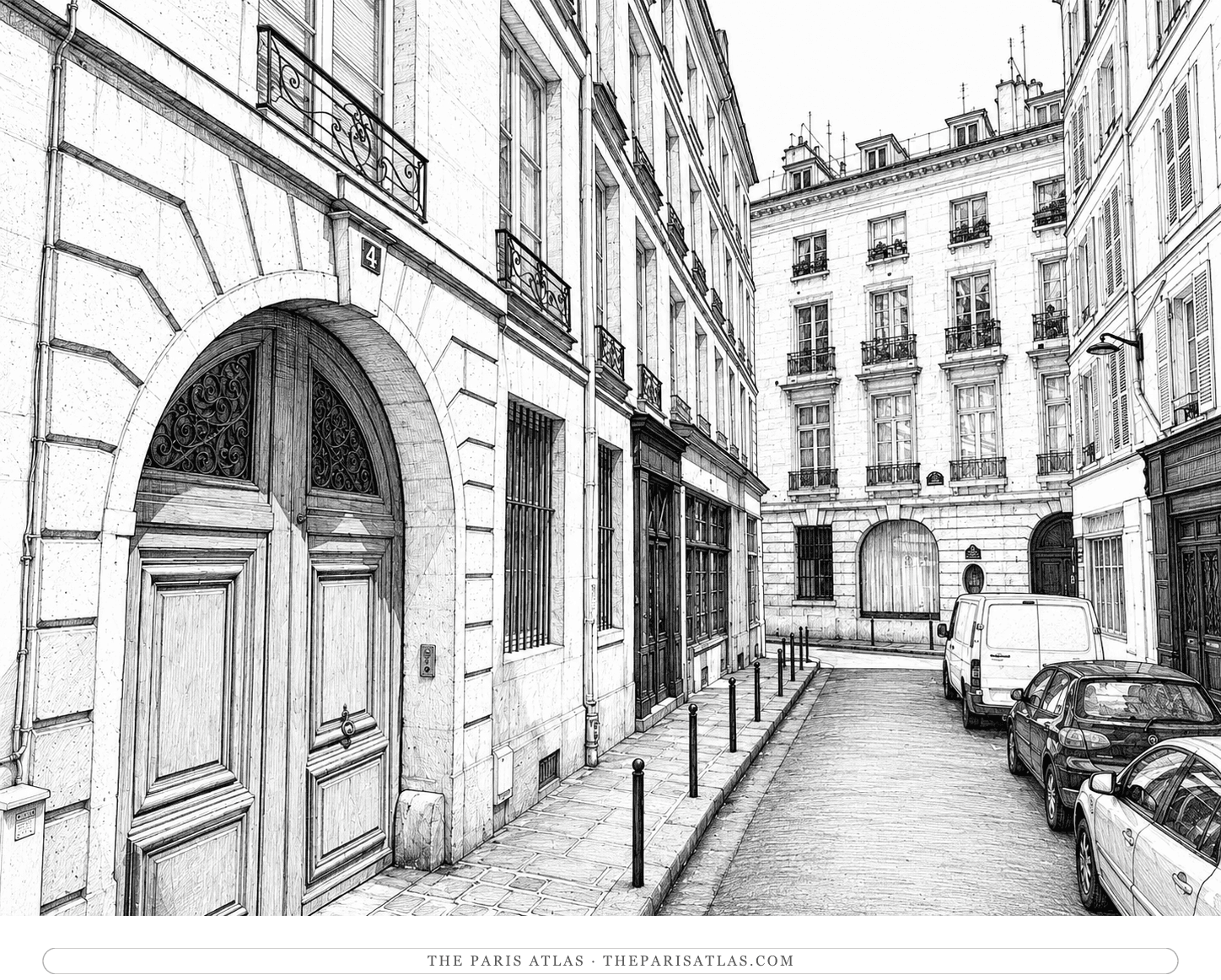
Lived at · 1912–1914
The catalogue essay for Cendrars's letters to his brother Georges states that on returning to Paris in June 1912 he settled at 4 rue de Savoie and founded Les Hommes nouveaux there; the BnF's notice for La Prose du Transsibérien preserves the imprint with the same address.
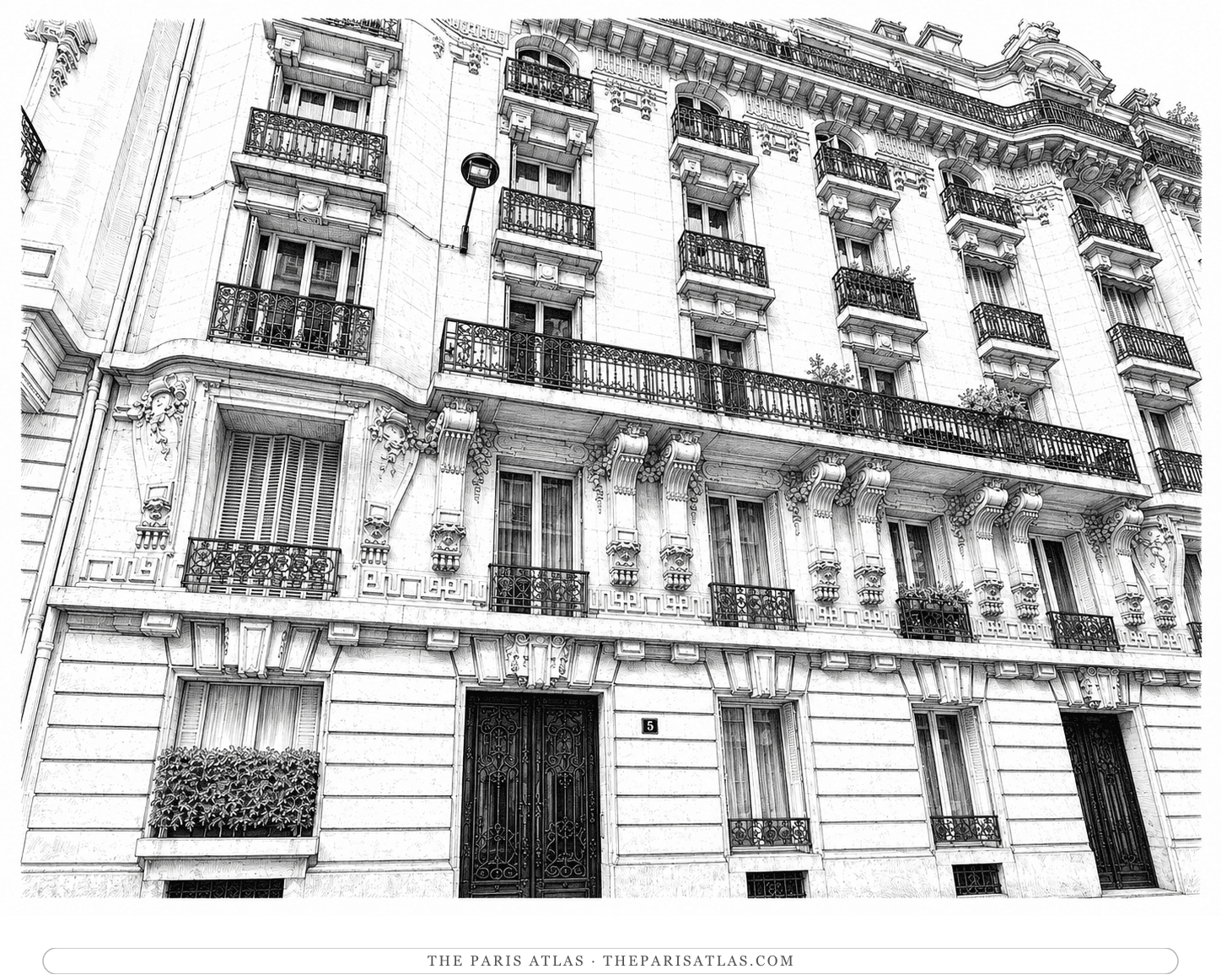
Lived at · 1959–1961
The chronology prepared with Claude Leroy records the move to 5 rue José-Maria-de-Heredia on 25 August 1959 and Cendrars's death at home on 21 January 1961.
Met · 1934
Cendrars wrote one of the first reviews Tropic of Cancer received and came to the Villa Seurat to meet its author — the beginning of a mutual admiration Miller spent four decades repaying in print.
Met · 1918–1922
Cendrars was Gance's assistant on J'accuse — he also appears among the risen dead — and stayed through the three years of La Roue, where he cut with him and brought in Arthur Honegger.
Collaborated with · 1913
La Prose du Transsiberien et de la petite Jehanne de France, 1913: Cendrars's railway poem and Delaunay's simultaneous colour printed as one two-metre folding sheet - the century's most celebrated artist's book.
Collaborated with · 1945
Doisneau met Cendrars at Aix-en-Provence in 1945, and the two made La Banlieue de Paris - Cendrars's text set against Doisneau's photographs of austere postwar working-class neighbourhoods on the edge of the city. Cendrars, writing about the way Doisneau worked, likened him to a thief intent on his target. The book fixed the suburbs as Doisneau's subject.
The sources below include biographies, scholarly essays, interviews, and primary materials that informed this page. They reflect both the historical record and ongoing critical conversations about Blaise Cendrars and their work.

Published analysis and historical context used in preparing the Blaise Cendrars page.

Biographical evidence used to verify chronology, relationships, and historical context connected to Blaise Cendrars.
Web source consulted for documented facts and historical context presented on the Blaise Cendrars page.
Archival evidence used to document the historical record connected to Blaise Cendrars.
Web source consulted for documented facts and historical context presented on the Blaise Cendrars page.
First-person evidence and historical context used in preparing the Blaise Cendrars page.
Biographical evidence used to verify chronology, relationships, and historical context connected to Blaise Cendrars.
Biographical evidence used to verify chronology, relationships, and historical context connected to Blaise Cendrars.
Web source consulted for documented facts and historical context presented on the Blaise Cendrars page.
Web source consulted for documented facts and historical context presented on the Blaise Cendrars page.
First-person evidence and historical context used in preparing the Blaise Cendrars page.
Web source consulted for documented facts and historical context presented on the Blaise Cendrars page.
First-person evidence and historical context used in preparing the Blaise Cendrars page.
Web source consulted for documented facts and historical context presented on the Blaise Cendrars page.
Published analysis and historical context used in preparing the Blaise Cendrars page.
Web source consulted for documented facts and historical context presented on the Blaise Cendrars page.
Web source consulted for documented facts and historical context presented on the Blaise Cendrars page.
Archival evidence used to document the historical record connected to Blaise Cendrars.
Web source consulted for documented facts and historical context presented on the Blaise Cendrars page.
Web source consulted for documented facts and historical context presented on the Blaise Cendrars page.
Contemporary reporting or criticism used to document the historical reception and context of Blaise Cendrars.
These references anchor the page in the documented record and in the scholarly conversations around Blaise Cendrars. Every claim on this page traces back to one or more of the works listed here.
 Explore more resources