

Rum
The true case of Jean Galmot — rum fortunes, a Guiana seat in parliament, a prison cell, and a death in Cayenne that started a riot.
- 1930
About Blaise Cendrars
The story, briefly
Spoiler-freeRhum: l'aventure de Jean Galmot (1930) is Cendrars at his most reportorial: the life of Jean Galmot, the French adventurer who went to Guiana with nothing, built a fortune in rum, gold, and timber, got himself elected the colony's deputy, was prosecuted and jailed in the affairs that followed, went back — and died suddenly in Cayenne in 1928, at forty-nine, in circumstances his supporters were certain meant poison. His funeral turned into a rising. Cendrars researched it as journalism and wrote it as a novel that refuses to invent. (Full story below; the ending is behind the accordion.)
The story, in more detail
By 1930 Cendrars had become a working reporter — the interviews, the crime stories, the assignments — and Rhum is what happened when a real case turned out to be built exactly like one of his novels. Galmot's arc had everything the fiction had been reaching for: the self-made man from nowhere, the colonial fortune assembled out of rum and nerve, the political ascent on the votes of Guianese workers who took him for their own against the metropolitan interests, and the legal machinery that closed on him afterward. Cendrars tracked the record and the witnesses and then told it straight — short chapters, documentary tone, no invented interiors.
The refusal to embellish is the book's argument. Where L'Or had taken a true life and given it the velocity of myth, Rhum keeps its hands visible: this happened, these were the accounts, this is what the crowd did when the news reached the street. It belongs to the shelf as the era's proof that the adventurer-writers were also, when it counted, reporters — and as the one book here that carries the French colonial world's own politics inside the story rather than as scenery. Cendrars would spend much of the decade in journalism; this is where the two trades meet cleanly.
The full story
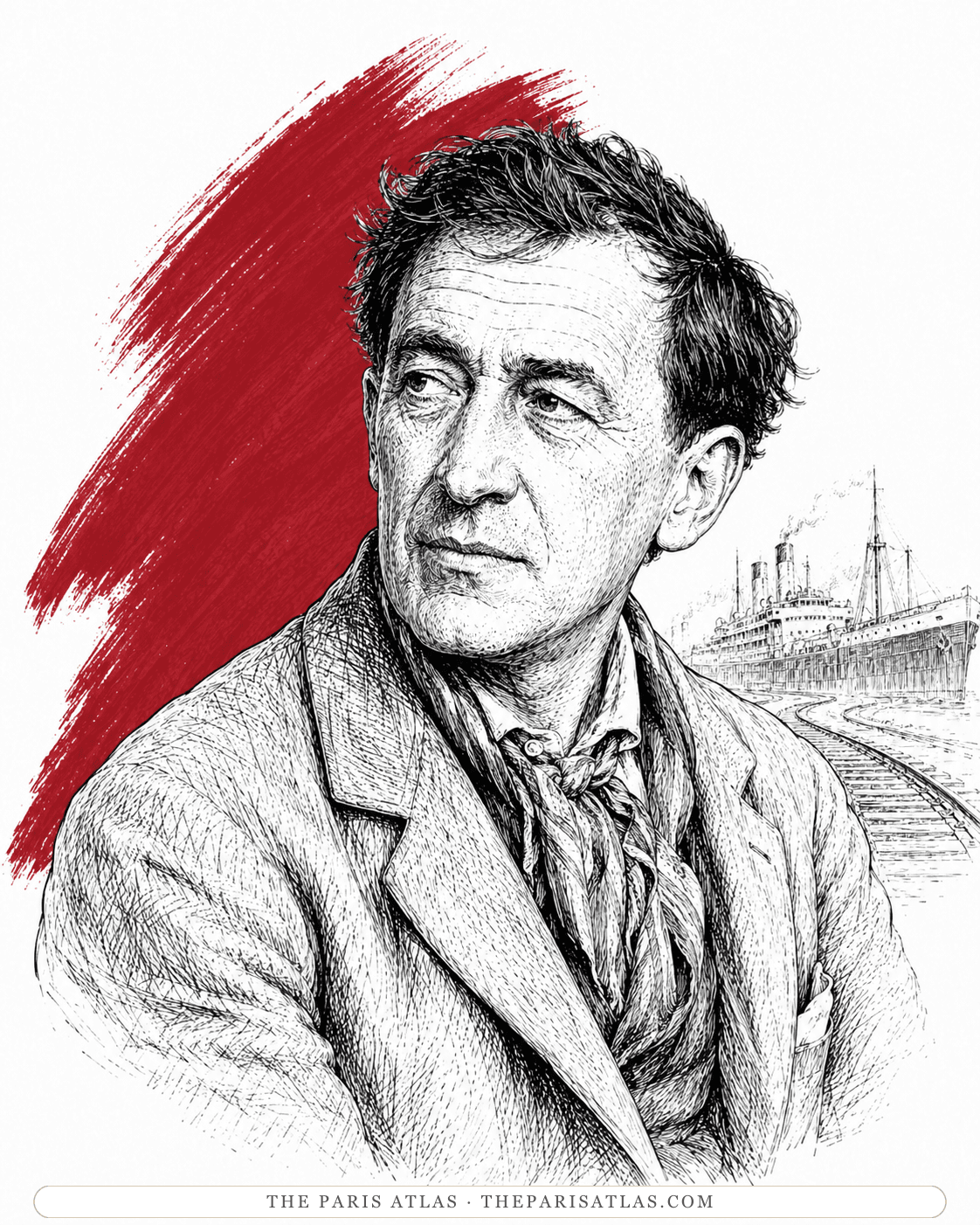
Jean Galmot arrives in French Guiana in the century's first decade with ambition and no capital, and builds — rum above all, then gold concessions, timber, shipping, an empire assembled in a colony most of France thought of only as a penal one. He makes himself indispensable and, to the metropolitan trading houses, intolerable: a man outside the system taking the trade they consider theirs.
In 1919 the Guianese elect him their deputy, and the collision becomes political. The years that follow bring the counter-attack — commercial affairs, a criminal prosecution, imprisonment — and Galmot, ruined on paper and vindicated in the eyes of the people who voted for him, returns to Guiana in 1928 to a welcome that terrifies his opponents.
How it ends — spoilers ahead
He dies in Cayenne that August, suddenly and in agony, aged forty-nine. His supporters have no doubt it is poison; the streets erupt, and the reprisals that follow the funeral leave people dead — a colonial city rioting over a Frenchman it had claimed as its own. The official account and the popular one never converge, and Cendrars, who has spent the book refusing to invent, declines to close the case for the reader: he lays out what was said, what was proved, and what a crowd believed strongly enough to die for, and leaves the verdict where he found it.
Themes and analysis
Fortune on the river
The commercial expansion in chapter V is built out of lists: trading posts, ports, ships, commodities and factories. Moving rapidly between distant places gives Galmot's enterprise a scale no single scene could contain. Cendrars also interrupts the inventory with testimony and a portrait of Galmot dictating business decisions from a reclining chair. The contrast makes apparent ease depend on an immense network of movement and work. Figures and quoted letters lend documentary weight, but their arrangement serves an admiring argument about the man; an accumulation of facts is not the same as neutrality.
The reversal
Chapter IX calls its prisoner a free man. That paradox is developed through competing kinds of confinement: the cell restricts Galmot's body, while the narrator depicts his opponents as prisoners of money and political calculation. Shaving, recalling friendships and writing become signs that he retains an inner life the authorities cannot administer. Letters interrupt the narrator's praise with Galmot's own accounts of distress and hope. The repeated assertion of freedom does not erase the cell's humiliations; it asks the reader to separate physical captivity from the moral independence the book claims for its hero.
Why we recommend it
A case that reads like fiction
Rum fortunes, a parliamentary seat, a prison term, and a death that started a riot — none of it invented.
Documentary nerve
The restraint is the achievement: the most excitable prose stylist of his generation holding still for the record.
The reporter behind the adventurer
The trade Cendrars actually practiced for two decades, on its best day.
What this book explores
Timeline
1919
The Guianese elect Jean Galmot their deputy, and his collision with the metropolitan trading houses turns political.
1928
Galmot dies suddenly in Cayenne in August, aged forty-nine; his supporters are certain it was poison, and the funeral turns into a rising.
1930
Cendrars, by now a working reporter, publishes Rhum: l'aventure de Jean Galmot with Grasset — the true case told straight, no invented interiors.
Book editions
Hardcover
- Hardcover
- Grasset
- 1930
Reader reviews
Readers may also like


The African Saga
The earlier book that turned him outward from Europe — this is what he did with a reporter's notebook.
Read our takeRum: frequently asked questions
Who wrote Rum?
Blaise Cendrars. Rhum: l'aventure de Jean Galmot was published in Paris in 1930.
What is Rum about?
The life of Jean Galmot, the French adventurer who went to Guiana with nothing, built a fortune in rum, gold, and timber, was elected the colony's deputy, was prosecuted and jailed, and died suddenly in Cayenne in 1928.
Is it fiction or reportage?
Both, in a sense — Cendrars researched the real case as journalism and wrote it as a novel that refuses to invent, with short chapters, documentary tone, and no invented interiors.
How does it compare to Gold?
It is the anti-Gold: the same true-life-fortune shape, opposite method — where the earlier book mythologized, this one keeps its hands visible and its receipts intact.
Was Jean Galmot a real person?
Yes. He was the deputy for Guiana from 1919, prosecuted and jailed, and dead in Cayenne in August 1928 — the events are matters of record.
If you like Blaise Cendrars
Explore authors with a similar voice, perspective, and influence.
Henry Miller
The devoted heir — Miller crowned Cendrars above every living writer, and the torrential first-person prose is the family resemblance.
View author
Louis-Ferdinand Céline
The other voyager at the end of the night — spoken rhythm, black exuberance, and a war wound at the center of everything.
View author
Ernest Hemingway
Author of The Sun Also Rises and A Moveable Feast; his pared-down style, developed in 1920s Paris, became the most imitated in American prose.
View author
References
References
The sources below include the primary text, editions, scholarship, archival materials, and other records that informed this page. They document Rum, its publication, and its place in literary history.


1Rum
NovelBlaise Cendrars, 1930Used forThe primary text represented by this page, used for descriptions of the work’s contents and for any quoted passages shown here.
2Rhum: l'aventure de Jean Galmot — French text
WebsiteEbooks libres et gratuits, 2014Used forSelected primary passages in chapters V and IX of the July 2014 Ebooks libres et gratuits French transcription. Literary analysis of the narration and quoted letters, not independent verification of the commercial, colonial, medical or legal claims. No complete-volume or first-edition collation claimed.
3Rencontres de Chaminadour — Blaise Cendrars chronology (prepared with thanks to Claude Leroy)
WebsiteUsed forUsed to verify Rum's bibliographic context and its place within Blaise Cendrars's published work.
4Bibliothèque de la Ville de La Chaux-de-Fonds — dossier Blaise Cendrars : « Tout ça, c'est digne d'être vécu »
WebsiteUsed forUsed for independent archival, institutional, or historical context surrounding Blaise Cendrars and Rum.

5Meet Blaise Cendrars: the one-armed poet who worked with Sonia Delaunay, Fernand Léger and Robert Doisneau
PeriodicalThe Art Newspaper, 2022Used forUsed to cross-check chronology, publication history, and the circumstances in which Rum appeared.
6The Paris Review — The Art of Fiction No. 38: Blaise Cendrars
PeriodicalUsed forUsed for an additional scholarly or biographical perspective on Rum and Blaise Cendrars's wider career.
i
Why these sources are here
The primary text is the baseline reference for every book page. Additional references document publication history, interpretation, and historical context where that evidence is available.
 Explore more resources