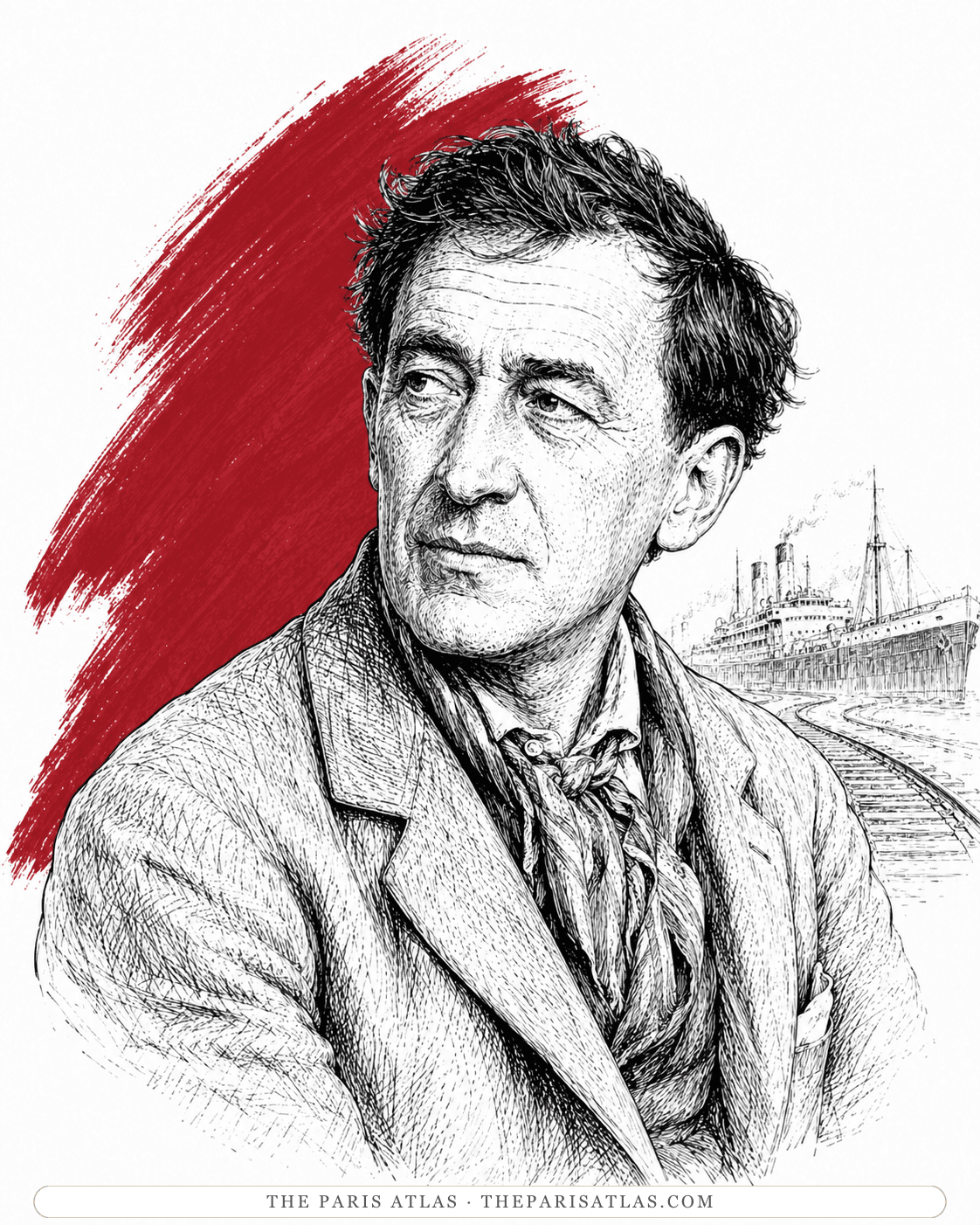

Moravagine
The next year's novel — the documentary engine turned from history to nightmare.
Read our take
The rise and ruin of General Sutter, told at telegraph speed — the little novel that made Cendrars famous and Hollywood hungry.
L'Or (1925), Cendrars' first novel, tells the true story of Johann August Sutter — the Swiss who built a private empire in California and was destroyed by the one thing found on his land: gold. Told in short, hammered chapters at newsreel velocity, it made Cendrars internationally famous overnight, reached America as Sutter's Gold, and set Hollywood circling for a decade. The moral is minted on every page: the strike that should have made Sutter the richest man on earth buried him instead. (Full story below; the ending is behind the accordion.)
Cendrars found in Sutter a countryman-mirror: another Swiss who invented himself in flight — debts and a family abandoned in Basel, a new name and empire on the far side of the world. New Helvetia, Sutter's California barony of wheat, cattle, and orchards, was feudal paradise built from nothing — until January 1848, when his carpenter found yellow metal in the millrace at Coloma, and the world arrived. The novel's genius is treating the gold rush not as adventure but as apocalypse: the forty-niners as locusts, the strike as the exact instrument of ruin.
The telling made it modern: chapters like telegrams, decades crossed in a page, the documentary tone Cendrars had built in verse now driving prose — a technique the newsreel novels of the next decade (Dos Passos first among them) studied closely. Success was immediate and international; the 1926 American edition, Sutter's Gold, sold widely, Eisenstein drafted a famous unmade adaptation, and Hollywood finally filmed it in 1936. On this shelf it stands as the hinge between the poems' legend-making and the memoirs' — proof the adventurer could build a book as ruthlessly as a myth.
Basel, 1834: Johann August Sutter walks out on debts, wife, and children, and vanishes westward — New York, the Missouri frontier, Honolulu, Sitka — trading and scheming his way to Mexican California. There, on a land grant at the Sacramento's fork, he builds New Helvetia: fort, fields, herds, workshops, a private nation with himself as general. For a decade the empire compounds; Sutter is the richest man on the coast, patron of wagon trains, master of a feudal Eden at the world's far edge.
Then the millrace at Coloma, January 1848. Gold. His own workers desert first; then the world's — a locust-cloud of diggers who trample the wheat, slaughter the herds, squat the land, and burn what argues. California becomes a state; the state becomes a bonanza; and the man who owned the ground it happened on is ruined by the discovery, reduced to a litigant wandering courthouses with his claims.
The endgame is the cruelest chapter: Sutter's great lawsuit — his claim to the land under San Francisco itself — wins a ruling in 1855, and the mob answers by burning his remaining world; his sons are scattered or destroyed. The old man spends his last decades as a pensioner-petitioner in the East, haunting Washington with his portfolio of rights, half prophet and half ghost, dying on the Capitol's doorstep in 1880 still waiting for Congress and justice — which, the book's last irony notes, never came. Gold ends as it promised: the strike made everyone rich but the man whose land it slept under.
Marshall wants more than proof that the grains are gold: he wants control over who knows. The forgotten lock and the bookkeeper's interruption turn a discovery into a problem of circulation. Bolting the door can protect a conversation, but not the news once the metal becomes payment outside the fort. Sutter's testing and consultation of an encyclopedia establish certainty about the substance without securing his future. The chapter's claim to translate a manuscript strengthens its documentary effect; it remains part of Cendrars's novel, not independent historical verification.
In the Washington chapter, repeated movements through offices and corridors replace forward progress. Sutter remains conspicuous while the purpose of his visits becomes less intelligible to those around him: being recognized is not the same as being heard. The final prank exploits that gap. A child supplies the announcement the authorities have withheld, and Sutter accepts it as the end of his ordeal. When the Capitol's shadow covers his body, an institution that has not resolved his claim finally encloses him as an image. The novel gives him a visual ending, not a judgment.
No book states the gold-rush moral more cleanly: the strike as catastrophe, ownership as curse.
A whole continental epic in an evening — compression as a form of violence, entirely deliberate.
The poet becomes a novelist overnight — and the world's adventurer becomes, briefly, its most fashionable author.
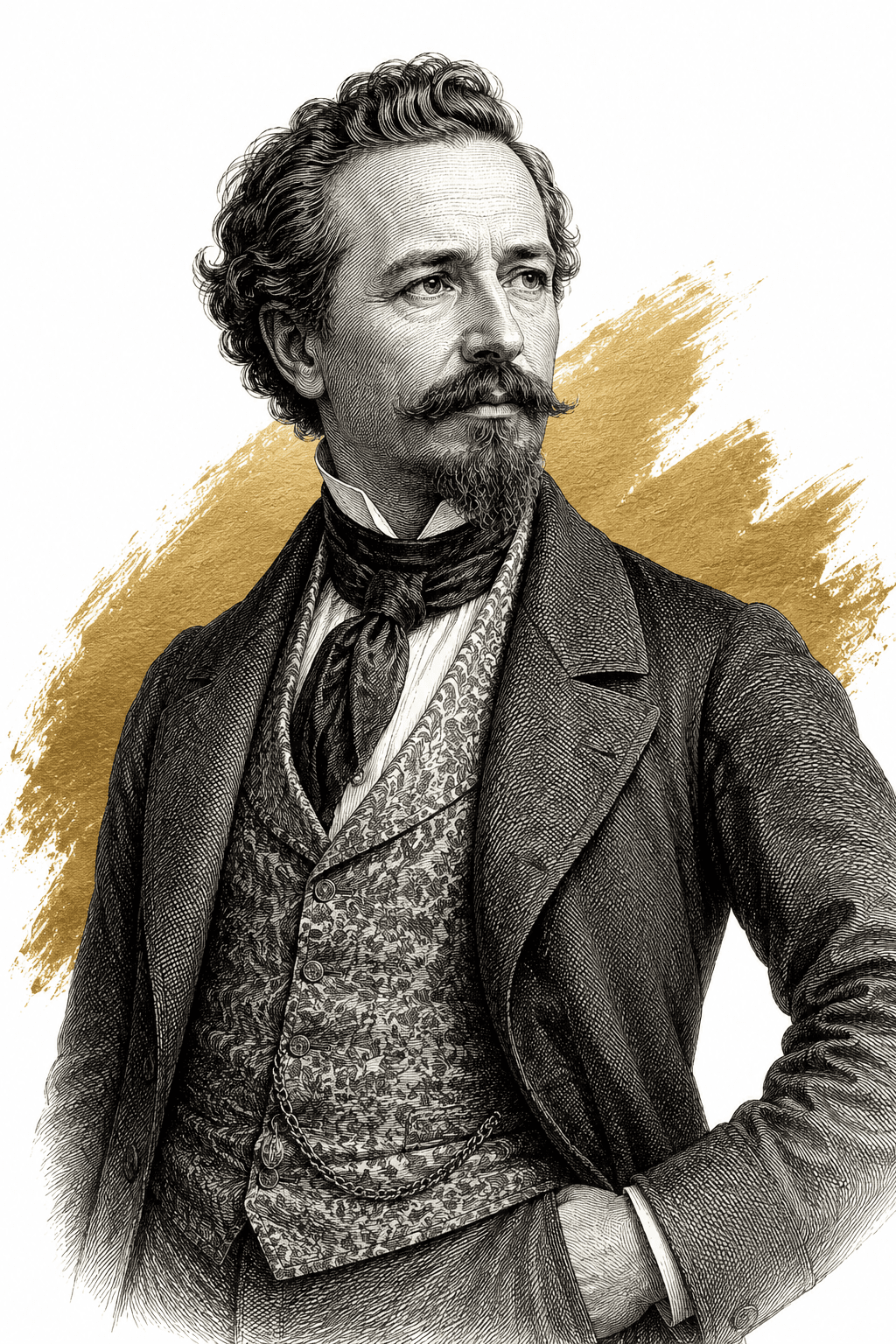
The Swiss runaway who built a private colony in the Sacramento Valley, and was ruined when gold was found on his land in January 1848.
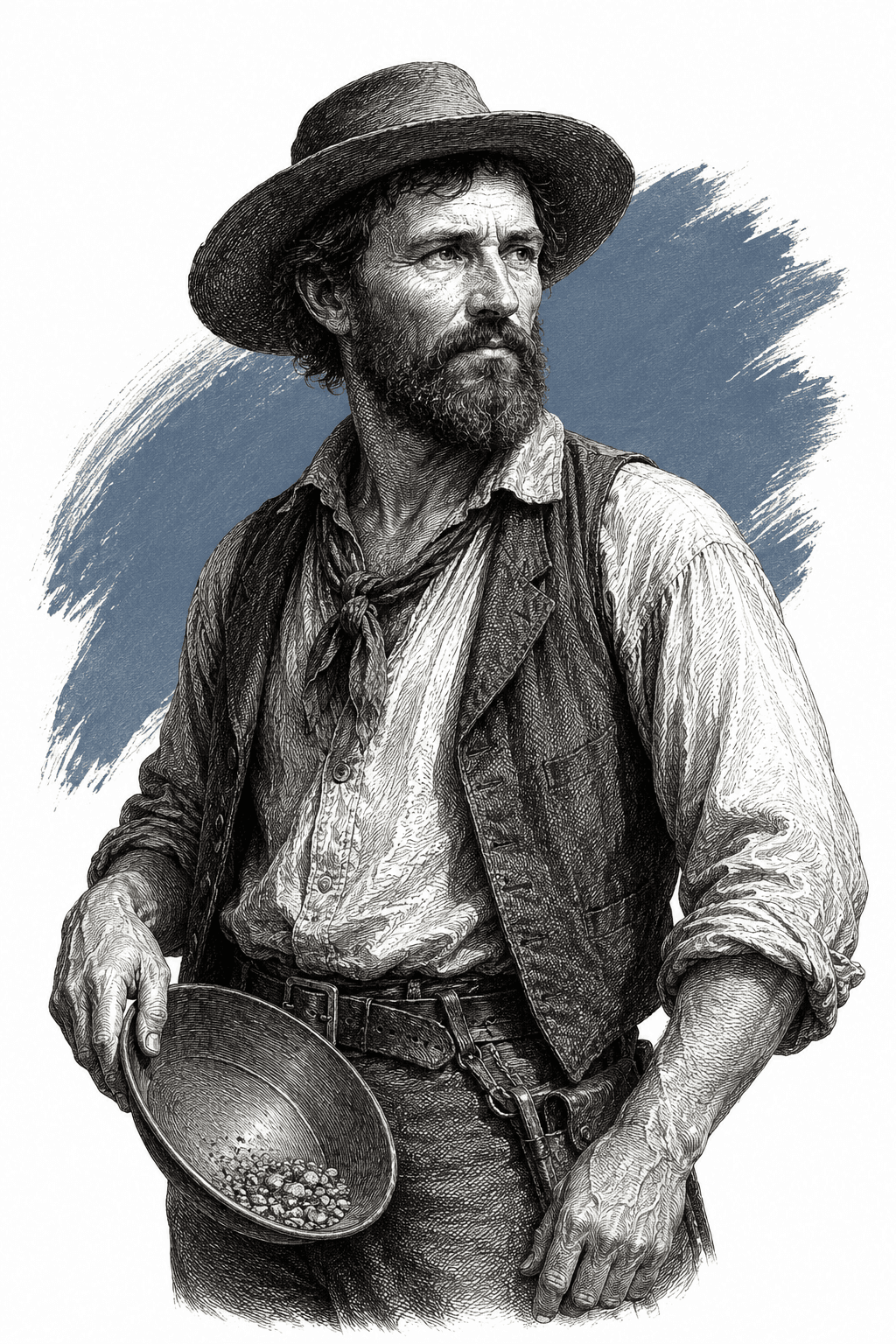
The carpenter from New Jersey who found the first gold in the bed of a mill canal at Coloma in January 1848, working on a saw-mill for Johann August Sutter.
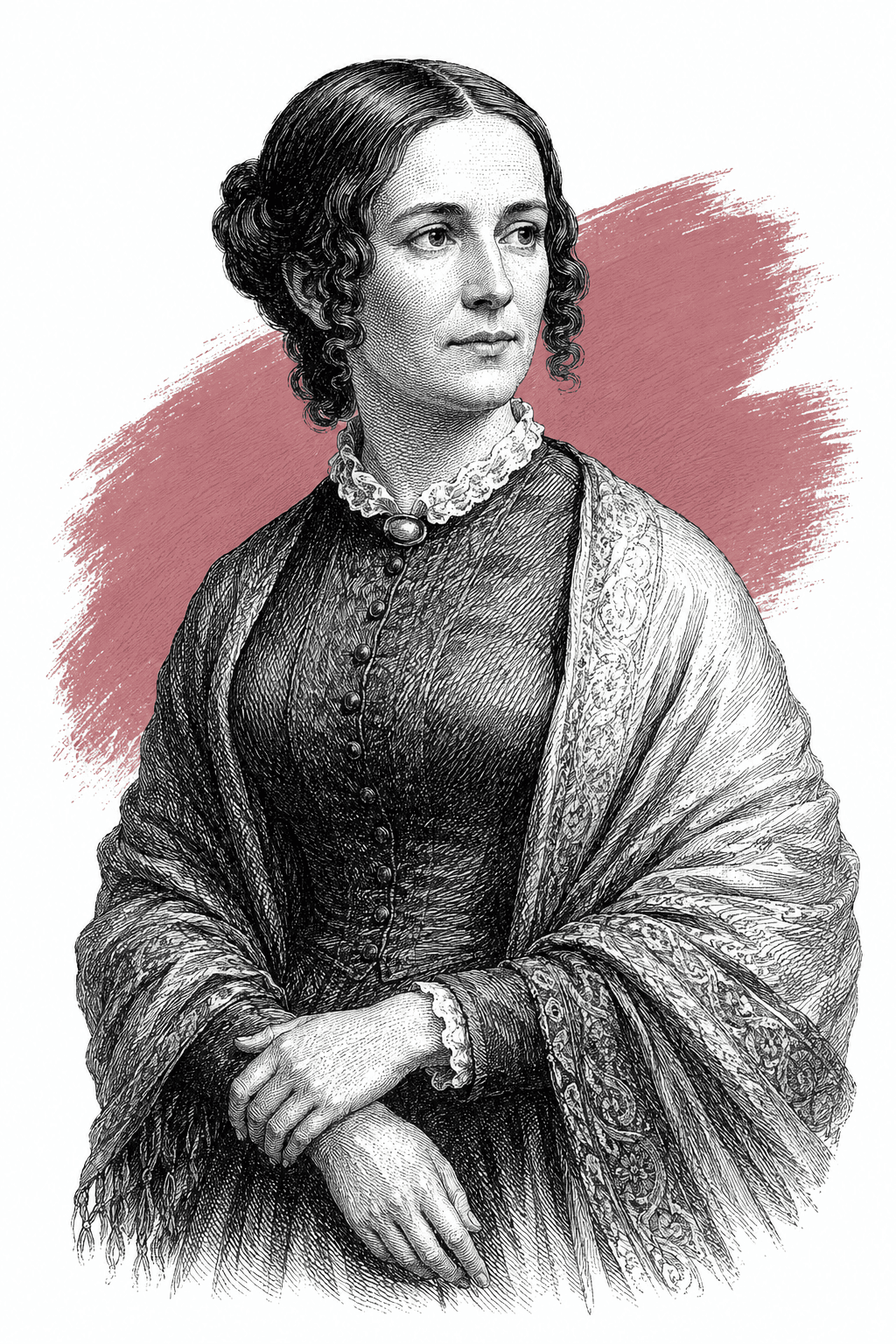
The wife Johann August Sutter walked out on in 1834. Fifteen years later she crossed the Atlantic and the Isthmus of Panama with their four children to find him.
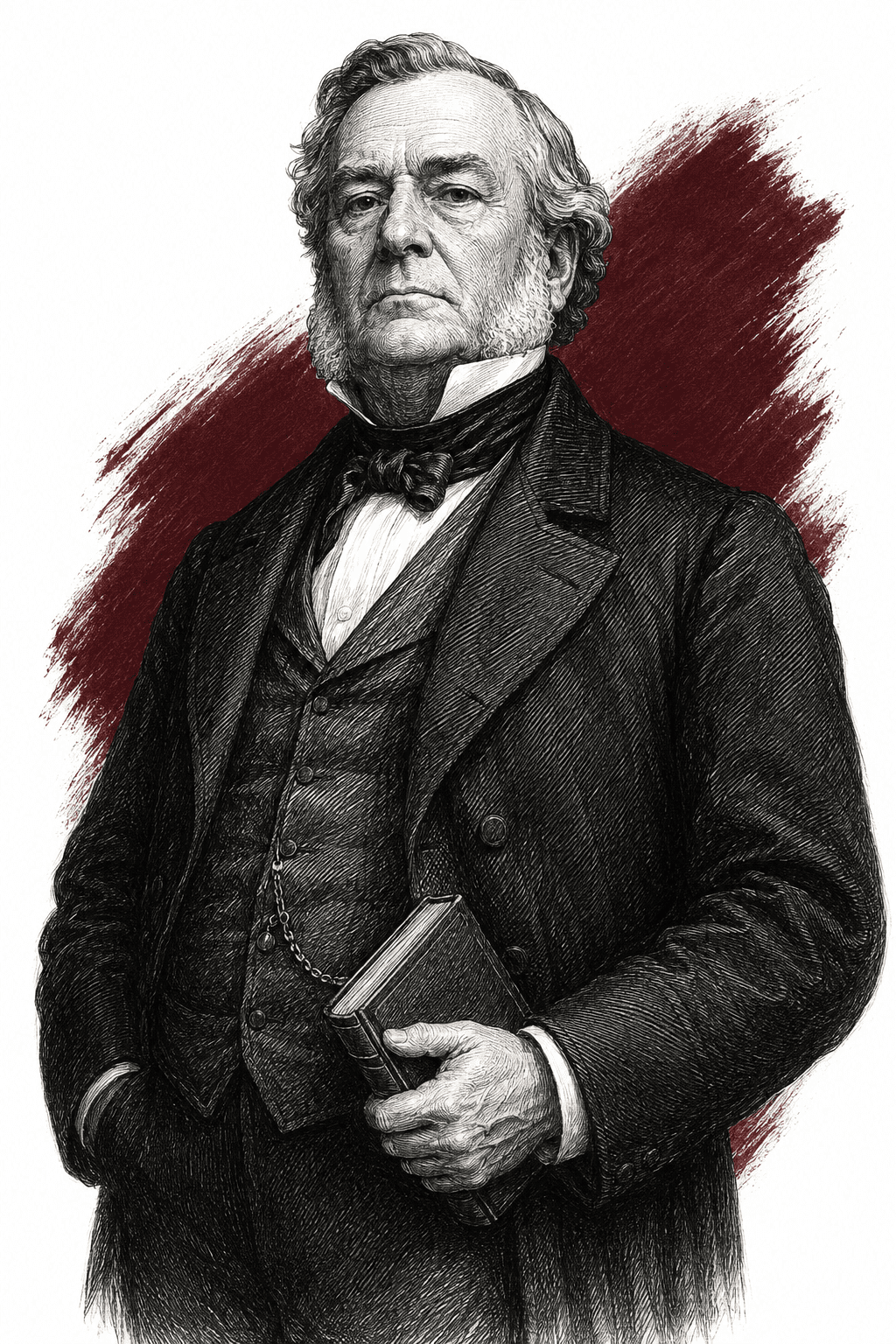
The California judge who hears Johann August Sutter's land case and rules for him in 1855 — and then spends years trying to talk him out of the victory.

The missionary among the Californian Indians who cannot read or write, travels only on foot, and is the one man who comes to Johann August Sutter when the gold rush ruins him.
1925
Grasset publishes L'Or, Cendrars' first novel, told in short hammered chapters at newsreel velocity; it makes him internationally famous overnight.
1926
The American edition appears as Sutter's Gold and sells widely; Eisenstein later drafts a famous unmade Hollywood adaptation.
1936
Hollywood finally films the book, without Eisenstein.

The next year's novel — the documentary engine turned from history to nightmare.
Read our take
The uncles' fever, given one man's whole life.
Read our take
Miller's Cendrars crusade names the wonder — the chapter is the best English door to this shelf.
Read our takeBlaise Cendrars. Published in 1925 as L'Or, it was his first novel.
The true story of Johann August Sutter, the Swiss who built a private empire in California and was destroyed by the one thing found on his land — gold.
Yes. It retells the real rise and fall of Sutter, whose California estate the Gold Rush overran, and whom Cendrars saw as a countryman-mirror — another self-invented Swiss.
Told in short, hammered chapters at newsreel velocity, it made Cendrars internationally famous overnight, reached America as Sutter's Gold, and had Hollywood circling for a decade.
Short, compressed chapters at breakneck pace — closer to reportage or a newsreel than to a traditional novel.
Explore authors with a similar voice, perspective, and influence.

The devoted heir — Miller crowned Cendrars above every living writer, and the torrential first-person prose is the family resemblance.
View author
The other voyager at the end of the night — spoken rhythm, black exuberance, and a war wound at the center of everything.
View author
Author of The Sun Also Rises and A Moveable Feast; his pared-down style, developed in 1920s Paris, became the most imitated in American prose.
View authorThe sources below include the primary text, editions, scholarship, archival materials, and other records that informed this page. They document Gold, its publication, and its place in literary history.


The primary text represented by this page, used for descriptions of the work’s contents and for any quoted passages shown here.

The Swiss National Library bibliography verifies Nina Rootes's English translation and the 2003 Peter Owen edition of Gold.
Used to verify Gold's bibliographic context and its place within Blaise Cendrars's published work.
Used for independent archival, institutional, or historical context surrounding Blaise Cendrars and Gold.
Used to cross-check chronology, publication history, and the circumstances in which Gold appeared.
Used for an additional scholarly or biographical perspective on Gold and Blaise Cendrars's wider career.
Primary reading of Chapter Nine I–II (pp. 78–85) and Chapter Sixteen I and IX (pp. 166–167, 177–178) in Henry Longan Stuart's 1926 English translation. Public OCR, not a whole-volume reading or independent historical verification.
The primary text is the baseline reference for every book page. Additional references document publication history, interpretation, and historical context where that evidence is available.
 Explore more resources