
The Colossus of Maroussi
The same late warmth — there aimed at a country, here at a library.
Read our take
by Henry Miller
The scandalous autobiographer turns to the shelf: a reading life told like an adventure, from boyhood pulp to Cendrars.
In 1952 Miller did what no one expected of literature's most banned man: he wrote a book about reading. Not criticism — autobiography by way of the shelf: the boyhood adventure books, the discovery of Dostoevsky announced to him on a Brooklyn street corner, the lifelong crusades for Blaise Cendrars and Jean Giono, and the heretical case that books are stepping stones to life, not substitutes for it. The famous appendix lists the hundred books that made him. (A reading memoir — nothing here to spoil.)
Conceived at Big Sur as the first installment of a projected study of his whole reading life, the book runs on a paradox Miller states up front: the great lesson of a life of passionate reading is that you should read less, and live more. What follows disobeys the lesson on every page — chapters of ravenous enthusiasm for the books that built him, from Rider Haggard's She and the boyhood adventure shelf (taken as seriously as any classic) to the Brooklyn afternoon a friend stopped him on the street to say a writer called Dostoevsky existed, a moment he ranks with falling in love.
The heart of the book is advocacy. Miller writes as literature's debtor, paying forward: long, evangelizing chapters on Blaise Cendrars — in his telling the most alive writer of the age, and criminally unread in English — and on Jean Giono, the novelist of Provence, stand among the era's great acts of literary friendship. And the appendix became legend: 'The Hundred Books Which Influenced Me Most,' a list readers have been mining, and arguing with, since 1952. Chapter to chapter it is the warmest book he ever wrote — the rage all burned off, the appetite intact.
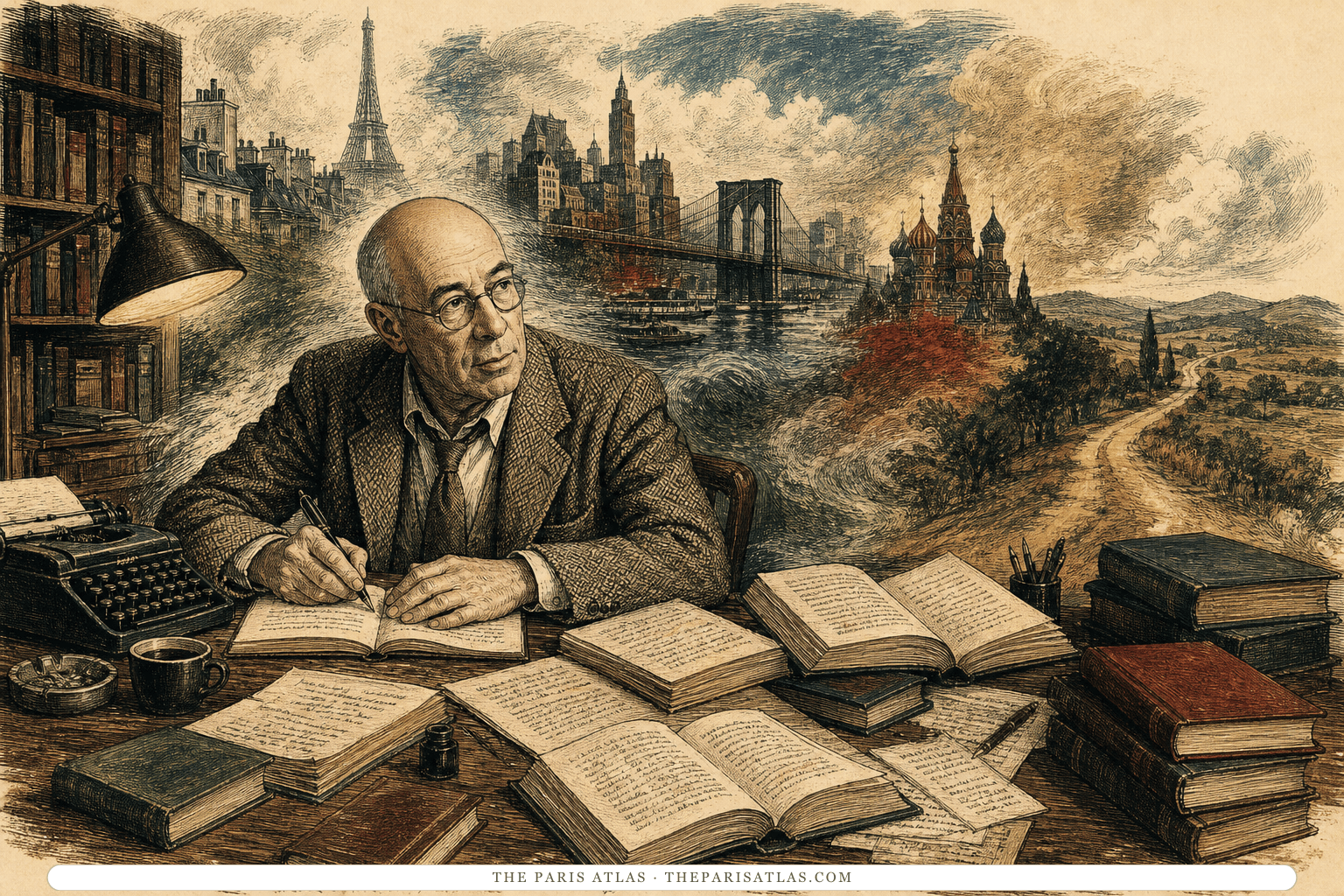
A reading autobiography in loose chapters: the boyhood canon of adventure and blood, defended without apology; the street-corner annunciation of Dostoevsky; the crusading essays on Cendrars and Giono; a chapter on the theater of his youth; meditations on influence, on rereading, on why the books that matter are the ones that send you away from books. Running underneath, the Big Sur doctrine: reading as a live wire between lives, not a refuge from living.
Then the appendices, including the hundred-books list — the most quoted pages, and the best argument-starter Miller ever published. Dip anywhere; it is a book built for browsing, by a man who read that way.
Rereading Haggard's She brings back something less comfortable than boyhood delight. In the passage quoted by Rebecca Stott, Miller says that Ayesha's destruction both lodged the novel in his memory and made that memory difficult to recover. The force of the episode lies in this contradiction: what reading preserves can also be what the reader resists remembering. His response blurs criticism with autobiography, because explaining the scene becomes a way of exposing his own loss and fear. The adventure shelf thus holds disturbances as well as pleasures; its influence cannot be measured simply by the plots he can recount.
An inventory of formative books promises to make a reading life legible, but Miller repeatedly unsettles that promise. As Katy Masuga observes, his account admits that he cannot finish tracing his influences or even exhaust what one writer means to him. The list therefore sits beside a narrative that keeps exceeding it. Books are not merely stored evidence of a completed past: encountering and writing about them remains part of present experience. Read this way, the crowded personal library represents an unfinished relationship, not a definitive explanation of its owner. The memoir makes a self through recollection rather than simply cataloguing one.
Miller's chapters on Blaise Cendrars are the great fan letters of the century — advocacy that moved a reputation across an ocean.
No banned pages, no scores settled — just appetite. The gentlest full-length introduction to the voice.
A hundred books, ranked by gratitude rather than prestige — the anti-canon that launched a thousand reading projects.
1950
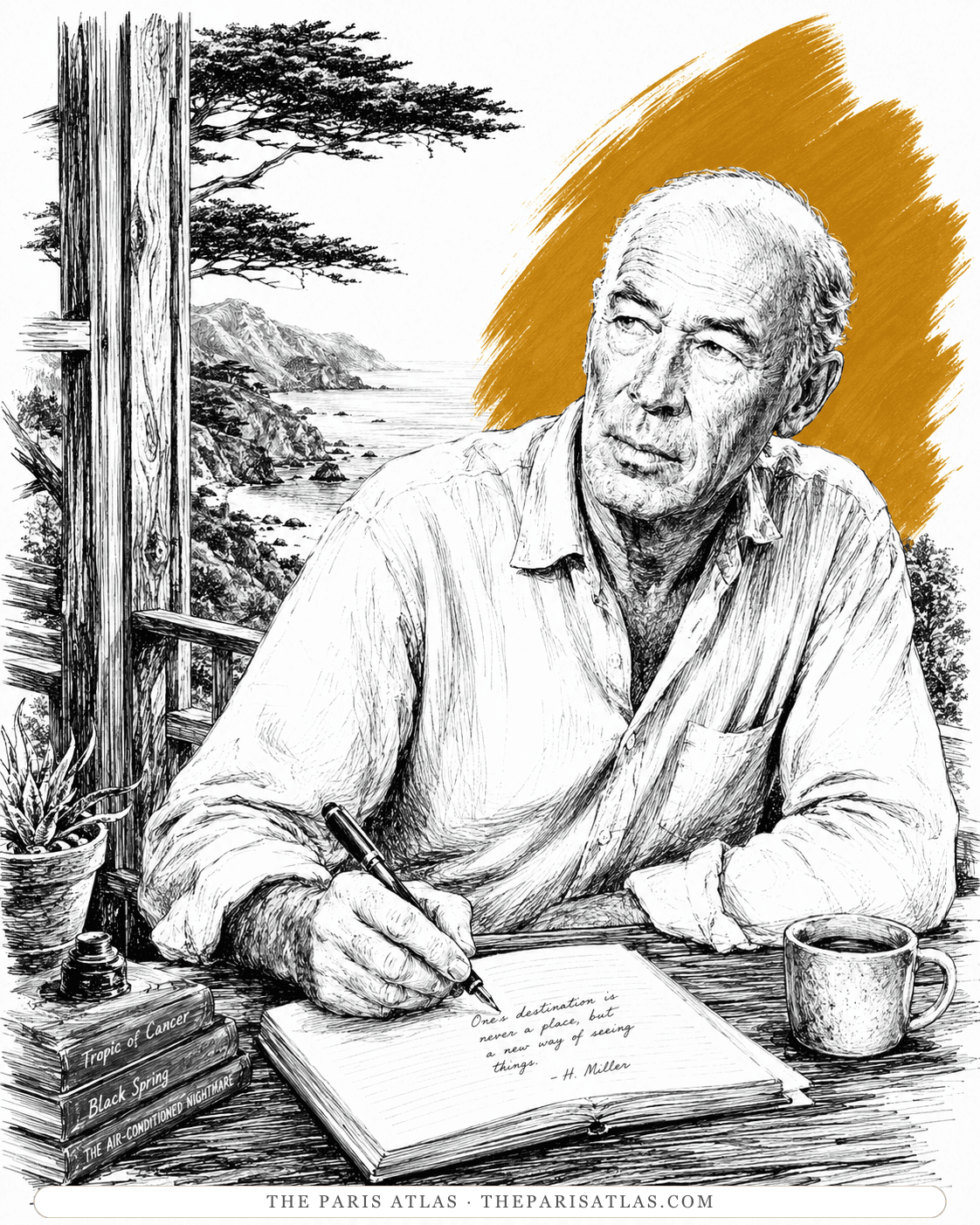
Miller begins the manuscript at his Big Sur cabin on Partington Ridge, framing it as the first volume of a lifelong study of his reading.
1952
New Directions and London's Peter Owen publish it jointly; with the sheets printed in Ireland and the American shipment held in customs, the British edition reaches shelves first.
1962
Miller's crusade for Blaise Cendrars in these pages bears fruit: New Directions publishes Cendrars's Selected Writings, translated by Walter Albert with Miller's preface.

The same late warmth — there aimed at a country, here at a library.
Read our take
The essay collection where this doctrine of living-over-reading first surfaced.
Read our take
The book all this reading finally produced — the debts here are its bibliography.
Read our takeHenry Miller. It was published in 1952 — a book about reading by literature's most banned man.
Miller's life as a reader: the boyhood adventure books, the discovery of Dostoevsky, his crusades for Blaise Cendrars and Jean Giono, and his case that books are stepping-stones to life, not substitutes for it.
Not in the conventional sense. It is autobiography by way of the shelf — the story of a life told through what he read.
Yes. A famous appendix lists the hundred books that made him.
Above all Blaise Cendrars — the living writer Miller said he loved most — and Jean Giono, alongside the boyhood and Russian books that formed him.
Explore authors with a similar voice, perspective, and influence.

Miller's acknowledged master at making literature out of the gutter. Journey gave him permission; Cancer is what he did with it.
View author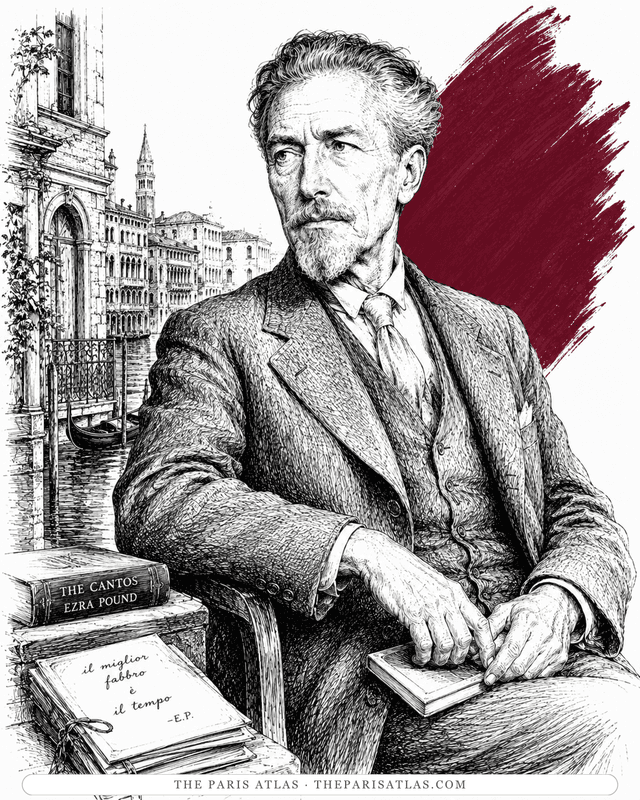
Pound read Cancer and sent Miller a famously backhanded postcard. Both believed literature's job was to wake the reader by any means necessary.
View author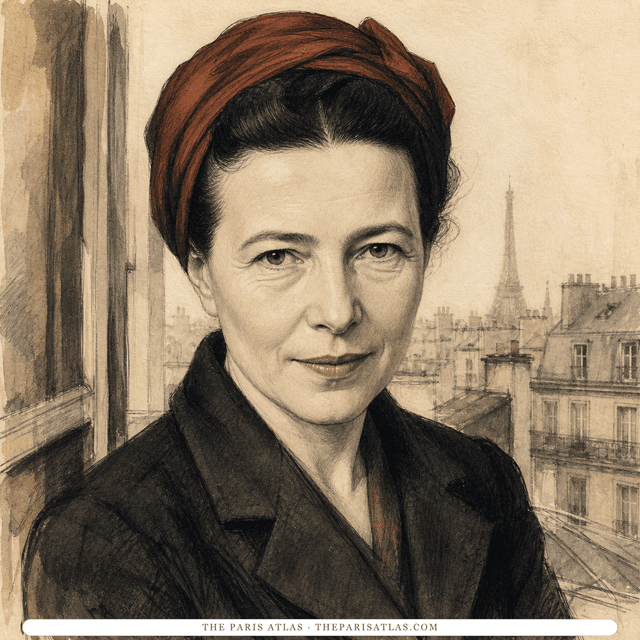
French writer and philosopher whose novels, memoirs, and social analysis examined freedom, gender, responsibility, aging, and the material conditions that shape a life.
View authorThe sources below include the primary text, editions, scholarship, archival materials, and other records that informed this page. They document The Books in My Life, its publication, and its place in literary history.


The primary text represented by this page, used for descriptions of the work’s contents and for any quoted passages shown here.
Used to place The Books in My Life within Henry Miller's published work and verify its bibliographic context.

Used for independent biographical, archival, or historical context surrounding Henry Miller's career and the period in which The Books in My Life appeared.

Used to cross-check authorship, chronology, and the work's place in Henry Miller's wider catalogue.
Used to verify Henry Miller's bibliography and place The Books in My Life within the broader chronology of Henry Miller's career.
Miller's recollection of reading She, quoted on page 150, supports the reading of memory and disturbance; the complete primary chapter was not collated.
The introduction's discussion and primary quotations support the reading of literary autobiography as an unfinished activity, rather than a complete inventory of influences.
The primary text is the baseline reference for every book page. Additional references document publication history, interpretation, and historical context where that evidence is available.
 Explore more resources