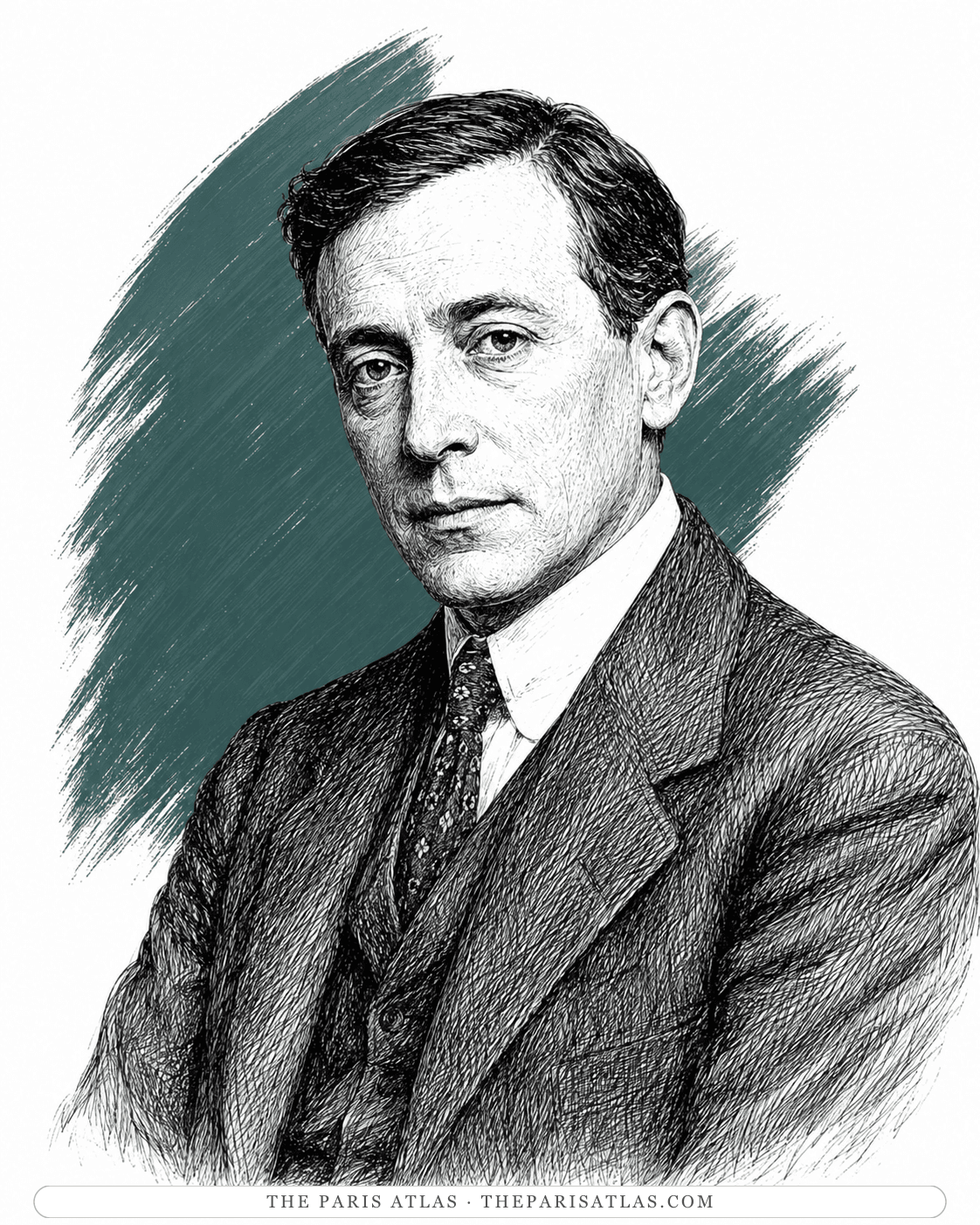
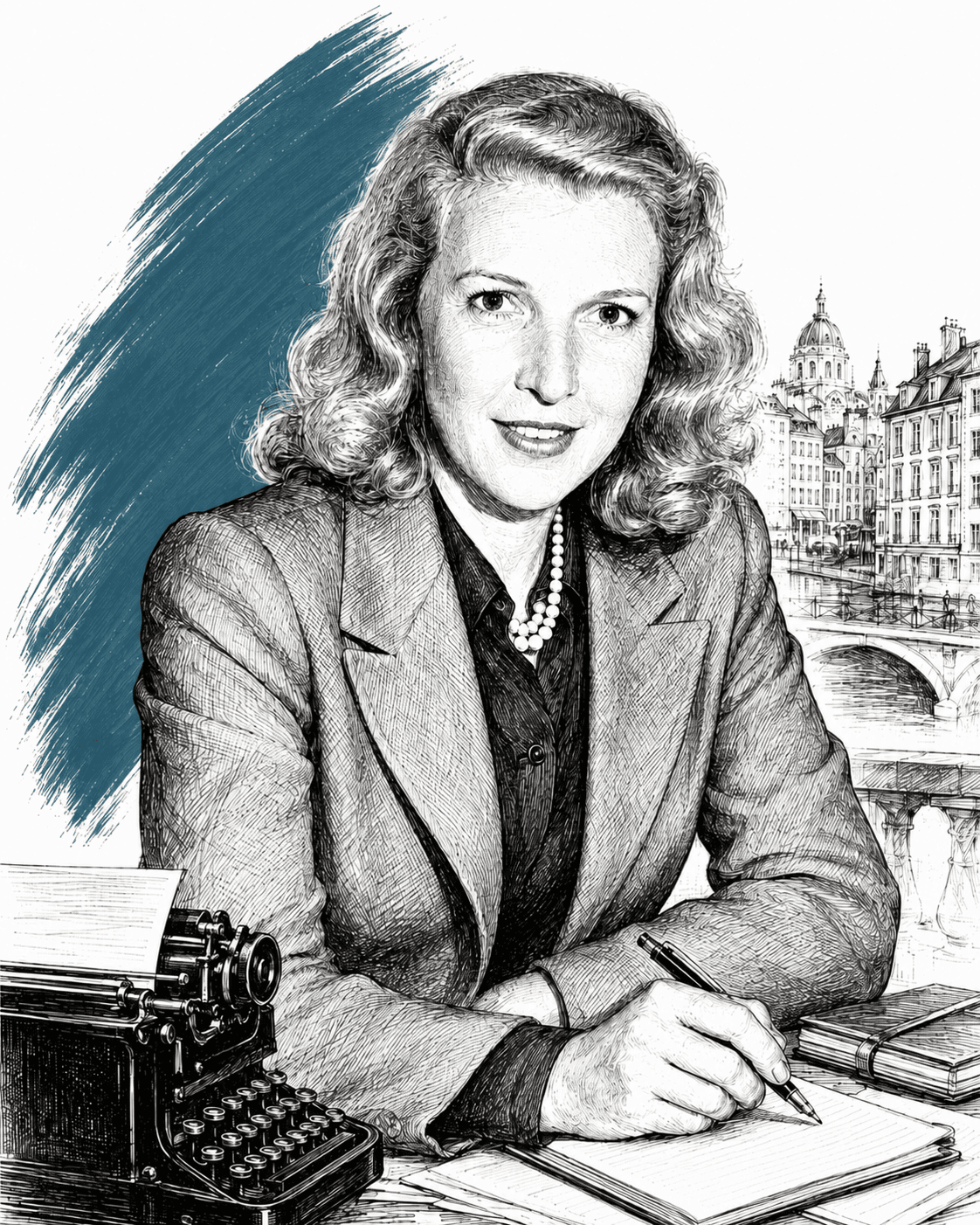
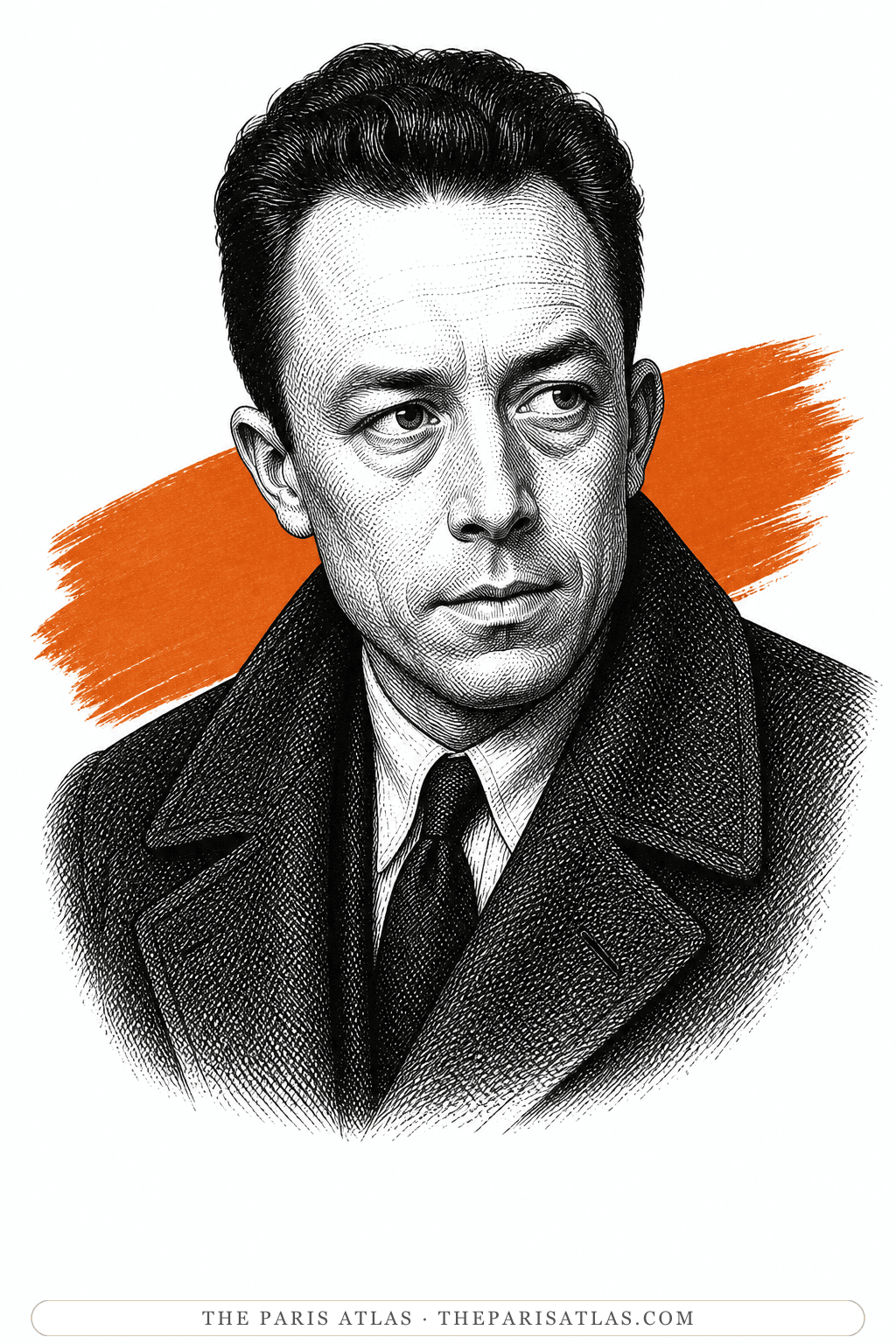
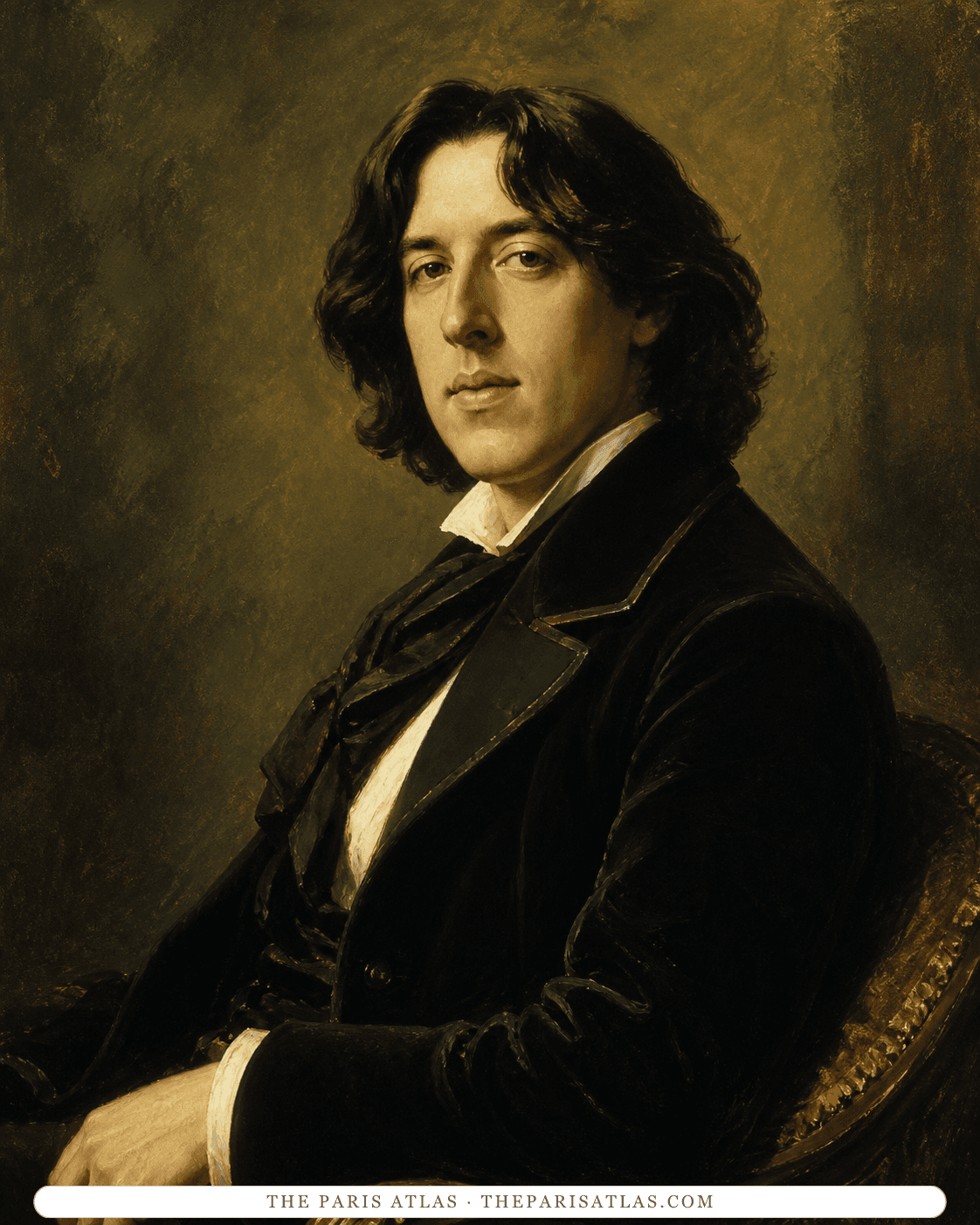

James Baldwin was forty-seven, Nikki Giovanni twenty-eight. A London television studio, one evening in November 1971, and neither of them willing to let the other off easily.
The era's arguments in prose — symposia, verdicts, and stock-takings: the books that told America what it was, and sent a generation abroad to escape the answer.
The twenties ran on arguments as much as on novels. Before and alongside the fiction, a generation of critics — H. L. Mencken swinging the hammer, Van Wyck Brooks taking the longer view, the little magazines supplying the ammunition — conducted a public trial of American civilization: its puritanism, its commercialism, its suspicion of art and pleasure. The essay collection became a cultural event in its own right, and the symposium — many specialists, one verdict — became the form's heavy artillery.
Civilization in the United States (1922) is the form's monument and this shelf's cornerstone: thirty contributors, one facet of national life apiece, and a collective conclusion so bleak its own editor sailed for France on delivering the manuscript. The books in this genre are where the expatriate exodus stops being a mood and becomes an argument — you can read the exact reasoning that packed the boats for Paris.
Read them now as period documents and as uncomfortable mirrors, in either order. The complaints — conformity, commercial culture, a press nobody trusts — have a way of sounding current; and the fiction elsewhere on our shelves is these essays' answer, written from the far side of the Atlantic by the people who took the verdict literally.
James Baldwin was forty-seven, Nikki Giovanni twenty-eight. A London television studio, one evening in November 1971, and neither of them willing to let the other off easily.

Louis-Ferdinand Céline's short 1948 attack on Jean-Paul Sartre — a defence against a specific accusation that turns into a comic literary confrontation about who owns postwar French letters.

The lecture years on the page: creativity, women, and the examined life, gathered from the talks that made her a campus phenomenon.

One long letter to Alfred Perlès — Miller sails to New York in 1935, hates it magnificently, and sails back. A round trip, as the title says.

Beauvoir's diary of her four-month lecture tour across the United States in 1947 — the trip on which she met Nelson Algren, an encounter later scored across The Mandarins and her Letters to Nelson Algren.

Sixteen years later, Stearns reruns the great inquiry — thirty-six Americans, and a country he no longer wants to flee.

Louis-Ferdinand Céline's 1937 political pamphlet — a hybrid work in which fictional dialogue, three ballet scenarios and an extended racial and political monologue interrupt one another.

The scandalous exile finds his paradise: fog, cliffs, children, neighbors, pilgrims — and the question of whether paradise can be lived in.

Four decades of journalism in one volume — Paris cafés for the Toronto Star, Madrid under shells, the Blitz, the liberation ride to the Ritz.

Louis-Ferdinand Céline's ten Copenhagen prison notebooks — February to October 1946 — first published in complete scholarly form in 2019, and the workshop in which the postwar novels began.

The 1922 symposium that put American civilization on trial — and sent the jury to Paris.

The interviews, collected: three decades of Nin answering questions, from little magazines to the fame years, in one scholarly volume.

Ten wartime essays on Dickens, Kipling, boys' comics and seaside postcards, including the piece on Salvador Dalí that a publisher cut out of a printed book.

Her first book: a defense of Lawrence written in sixteen days, published in Paris in 1932 — the door her whole literary life walked through.

The complete Toronto Star files, 1920–1924: the twenty-something in Paris, learning the style on deadline for a newspaper an ocean away.

Oscar Wilde's long prison letter to Lord Alfred Douglas, combining accusation, self-criticism, memory, suffering, art, and a new interpretation of Christ.

The bullfight book: a full treatise on the corrida that keeps turning into a book about death, Spain, and how to write.

Louis-Ferdinand Céline's 1955 fictional interview and aesthetic manifesto — a staged conversation about his own style that turns into a comic walk across Paris.

Six hundred letters he ordered never published — Fitzgerald teased, Perkins courted, wives won and lost — the offstage voice, complete with sins.

A thousand pages of argument by mail — Miller and Michael Fraenkel start with Shakespeare and end with everything, from the Villa Seurat to the war.

Before Paris, before the war, before everything: the school newspaper and literary magazine work of Hemingway, sixteen years old.

The craft doctrine, extracted: every passage where Hemingway explains the work — icebergs, morning hours, and stopping while it's going good.

Everything Miller ever said about the work itself, gathered into one volume — the accidental craft book of the century's least teachable writer.

Louis-Ferdinand Céline's 1933 speech at Médan — instead of praising Émile Zola, he asks what has happened to the reality naturalism tried to describe, and predicts that literature committed to it will not be tolerated for long.

The late essays: masculinity reconsidered, women's becoming, travel, and craft — the last collection published in her lifetime.

George Orwell's first book of essays: Charles Dickens, the twopenny school-story papers, and Henry Miller's Paris.

Four essays and dialogues in which Oscar Wilde argues that criticism is creative, art need not copy life, and a work should not be reduced to a moral lesson.

Dr. Louis Destouches's medical essay on the Ford factories in Detroit — a physician's report on what mass production does to the human body and what factory medicine is actually for.

Louis-Ferdinand Céline's 1938 political pamphlet — a short grotesque opening beside the Seine gives way to a sustained argument against another war with Germany.

Louis-Ferdinand Céline's 1941 political pamphlet — written after the fall of France, its later sections turn from defeat toward a social programme built around leisure, family and the arts.

Four wartime letters distinguish love of one’s country from the nationalism that makes murder a virtue.

The Villa Seurat portfolio — portraits, surrealist manifestos, and the essay on Brassaï, gathered by Obelisk in 1938 and never quite reprinted whole.

Louis-Ferdinand Céline's 1936 political and philosophical pamphlet — a short, disillusioned report from the Soviet Union that quickly widens into an argument against political utopianism.

Beauvoir's long 1951–52 essay on the Marquis de Sade for Les Temps modernes — the philosophical argument that turned Sade from a scandal into a serious moral problem for postwar existentialism.

James Baldwin and Sol Stein were classmates at DeWitt Clinton High School in the Bronx. Fifty years later Stein opened the file drawer that held their letters.

A 1955 mass-market paperback of Henry Miller's legal writing, sold for twenty-five cents while his major books were still banned in America.

The book Baldwin wrote after the funerals: Medgar Evers, Malcolm X, Martin Luther King, and a friend he could not get out of jail.

Thirteen essays from the years Baldwin came home: Harlem, the segregated South, a writers' congress at the Sorbonne, and the end of his friendship with Richard Wright.

Ten essays, a stepfather's funeral on the day Harlem burned, and eight days in a Paris jail.

James Baldwin and the photographer Richard Avedon had been at the same Bronx high school. Thirty years later they made a book about what America looked like in 1964.

Four Mediterranean essays about bodily happiness, ruins, summer and the refusal to postpone life.

The 1924 philosophical opening Louis Destouches wrote for La Vie, Pasteur, Semmelweis et la Mort — cut by La Presse médicale, lost to the League of Nations archive in Geneva, and rediscovered in 2014.

The Paris dispatches alone, in a pocket volume — the city these pages map, reported by its most famous arrival at twenty-two.

The 1947 credo: writing from the unconscious outward — Nin's working method, stated in a pamphlet's span.

Louis-Ferdinand Céline's preface to Albert Serouille's 1944 history of Bezons — the neglected Paris suburb where Dr. Louis Destouches spent the war working the municipal dispensary.

Beauvoir's first philosophical essay, written under the Occupation and published a few months after the Liberation — the shorter, earlier statement of the argument The Ethics of Ambiguity would work out at book length three years later.

Louis-Ferdinand Céline's 1933 article in Candide — his first concentrated public explanation of what his writing is trying to do, six months after Journey to the End of the Night.

A 1946 pamphlet manifesto: why the psychological novel needs the logic of dreams, not the inventory of rooms.

Volume two of the Nightmare: America surveyed again — but the heart of the book is the long, aching essay remembering France.

Louis-Ferdinand Céline's ten-page defence memorandum, written from the Copenhagen prison on 6 November 1946 — the primary source for how he answered the treason charges the French judiciary was building against him.

Miller's surrealist film-on-paper, written after Anaïs Nin's House of Incest — 200 copies from Obelisk in 1937, with a drawing by Abraham Rattner.

Sixty years of letters, edited by her biographer Caroline Moorehead. Faster, funnier and ruder than the prose Gellhorn published.

Louis-Ferdinand Céline's 1924 medical thesis — a literary account of the Hungarian physician who discovered that doctors were killing their own patients.

Six late chamber pieces in one volume — the old man's small forms, from a dream of his mother to the view from eighty.

Late essays from the sage of Big Sur: Thoreau, the young Beats, the art of staying still while beating your wings.

A wartime miscellany with one masterpiece inside: 'Reunion in Brooklyn,' the exile's homecoming to the parents he fled.

Henry Miller's 1945 account of driving across the United States for a year and disliking most of what he found.

The first one-volume Nin: fiction, diary, and criticism selected in 1973, at the height of the fame, as the front door to the shelf.

The scandalous autobiographer turns to the shelf: a reading life told like an adventure, from boyhood pulp to Cendrars.

Beauvoir's six-hundred-page 1970 study of old age — the companion volume to The Second Sex, arguing that Western societies treat their elderly as a scandal to be hidden and that this is a decision, not a fact.

The first Miller book America was allowed to read: stories and essays smuggled home from the Paris years, Tropics not included.

Everything James Baldwin published and never put in a book, gathered twenty-three years after he died: reviews from his early twenties, speeches, open letters, and one short story.

Baldwin on the movies he grew up on, beginning with the film he was taken to at seven and ending with The Exorcist.

Beauvoir's 1947 essay giving existentialism the ethics Sartre never got around to writing — the philosophical statement of the argument She Came to Stay had put in a novel and The Second Sex would put in a thousand pages two years later.

Baldwin goes to Atlanta to report on the murders of twenty-eight Black people, most of them children, and comes back unconvinced by the conviction.

Sixty years of war reporting in one book, written by someone who kept going back long after the story stopped being hers.

Two letters written for the centenary of emancipation: one to a fifteen-year-old nephew, one about the night Baldwin had dinner with Elijah Muhammad.

Henry Miller's best pages from thirty years of writing, selected by his friend Lawrence Durrell.

Every letter he ever wrote, eventually: the Cambridge edition's decades-long project to publish the complete correspondence — volume by volume.

Written under the Blitz: George Orwell's argument that England could not win the war without becoming a socialist country.

Beauvoir's 1957 book on her two-month trip to Mao's China — the most politically contested of her nonfiction, a document of what a serious European left intellectual could and could not see in the People's Republic in the mid-1950s.

The stray pieces, gathered: four decades of essays and reviews, led by the 1930 Lawrence piece that started her public writing.

Camus asks whether life is worth living when the universe supplies no final meaning.

Her criticism at full length: the case for the poetic, psychological novel, written at the height of the Diary's fame.

Author and editor, complete: twenty-two years of letters between Hemingway and Maxwell Perkins — the working marriage behind the shelf.

The modern one-volume Nin: thirty-eight selections in chronological order, with the whole posthumous shelf finally in the pool.

Thirty-seven years of essays in one volume, assembled by Baldwin two years before he died — the single book to own if you are only owning one.

Colette's most personal book — a meditation on desire, pleasure, and the varieties of love, built from portraits rather than plot.

A quotations collection with receipts: 365 verified Nin lines, each with its citation — the antidote to the internet's fake Nin.

The second year of verified Nin: 365 more sourced quotations, arranged across life, love, consciousness, women and men, and art.

A history and critique of rebellion that asks when resistance turns into justified murder.

Two months in the coal towns of Lancashire and Yorkshire, then a long argument with the people Orwell agreed with.

Beauvoir's thousand-page 1949 argument that femininity is made and not born — the founding book of second-wave feminism and the century's most influential work of feminist philosophy.

An essay arguing that poverty should be ended by changing property relations, not managed through charity, so each person can develop freely.

The words he spoke over the war: the narration of Joris Ivens's 1937 documentary, printed as a small, strange book the next year.

Miller on Rimbaud — the boy who invented modern poetry and walked away — in the least objective, most alive study ever written of him.

The other half of the career: fifty years of reporting on everything that was not a war.

Essays from the turn of the decade — writing, Balzac, healers, and bums — where the Paris provocateur starts sounding like a sage.

The white whale of the Villa Seurat: the D. H. Lawrence book that nearly swallowed Miller in 1933, published at last in 1980.

Miller's own explanation of the banned books — the essay where he tells censors, critics, and readers what he thought the sex was for.

Five early essays in which poverty, silence, sunlight and death already form the vocabulary of the later books.

Six dispatches on what the war was doing to civilians, and the reporting that got her barred.

Louis-Ferdinand Céline's 1957 argument for a broad postwar amnesty — nineteen handwritten pages that widen his own case into a general demand for reconciliation.

Three friends argue about abstract painting in one slim volume — the painter from the Jockey bar, Miller, and Saroyan.

Gellhorn's letters from 1930 to 1949: the Depression, Spain, Normandy, Dachau and the Hemingway marriage, printed with the replies included.

Gallimard's Cahiers Céline 3 — the collected medical corpus of Dr. Louis Destouches, before he became Céline: the 1924 Semmelweis thesis and the public-health and factory-medicine writings that surrounded it.

Cahiers Céline 6 and 10 — Céline's ten-year correspondence with the writer Albert Paraz, from the Danish exile years through the return to France, and the surviving public campaign to have Céline read again after the war.

Cahiers Céline 5 — Céline's correspondence with the women in his life beyond Lucette: the American dancer Elizabeth Craig, Karen Marie Jensen, Cillie Pam and others, from the pre-Journey years through exile.

Cahiers Céline 9 — the 758-page scholarly edition of Céline's letters to his literary secretary Marie Canavaggia, twenty-four years of the working relationship that saw the novels into print.

Cahiers Céline 11 — 302 pages of the intense, then broken correspondence between Céline in Danish exile and the American Jewish literary scholar Milton Hindus, culminating in Hindus's 1948 visit to Denmark and his 1950 portrait of Céline as a crippled giant.

Cahiers Céline 4 — the young Louis Destouches's surviving letters and earliest known writing from the Sangha-Oubangui trading post in French Equatorial Africa, 1916–1917, the year Journey to the End of the Night's Bikomimbo chapters were quarried from.

The central single-volume selection of Céline's correspondence — 2,080 pages, five decades, and a private voice that changes with every recipient.

The underground newspaper column that invented the public Bukowski — autobiography, fiction and provocation with no editor in the way.

The columns the first book left out — nine years of underground newspaper writing, gathered after his death.

Thirty-nine recovered pieces, including Bukowski reviewing his own first book and assessing Ginsberg, Creeley and Zukofsky.

The first story Bukowski published and the last one he wrote, in the same book — forty-six years of work recovered from magazines nobody kept.

Bukowski on how to write, assembled from two thousand pages of unpublished letters.

The other book about writing: stories, essays, interviews and introductions, edited by the scholar who recovered his uncollected prose.

Thirty-four interviews across thirty years, from an unknown in a Hollywood apartment to a famous man beside a San Pedro pool.

The letters Bukowski wrote to his uncle in Andernach, the German town where he was born, published there by a Bukowski society ten years after his death.

Ten years of letters between Charles Bukowski in Los Angeles and the Canadian poet Al Purdy, printed as photographs of the originals with Bukowski's drawings still on them.

A Black Spring dream rewritten by hand and carried across eighty silkscreened pages by Bezalel Schatz.

A blocked writing day becomes a horse, a bridge, a volcano, a gondola, and finally the sad angel hovering above them all.

Forty-five years and nearly a million words — the expanded correspondence that restored lost letters and passages cut from the 1963 selection.

Six late essays moving from the Florida wetlands to Picasso, Cabeza de Vaca, Marie Corelli, a Japanese stranger, and Jack Nicholson.

A five-hundred-copy Berkeley cabinet of corrected typescripts, a work schedule, a Black Spring epilogue, circus memory, art, and publisher intervention.

A late, hand-sized argument that American sexual freedom remains stunted by puritanism and emotional immaturity.

Miller’s passionate appraisal of Jakob Wassermann’s miscarriage-of-justice novel, first made as a five-hundred-copy illustrated Colt Press book.

Miller’s four-page salute to John Cowper Powys: youthful idol, joyful philosopher, daily writer, and proof that age need not diminish imaginative life.

Seven short works—essay, letter, memory, fiction, and meditation—issued as the eleventh number of Irving Stettner’s Stroker.

A Pound-prompted comic anatomy of money: part mock economics, part cultural history, and wholly suspicious of the value people agree to worship.

A late dream of death and reconciliation, followed by Miller’s imaginative China: the lifelong quarrel with his mother finally released.

Miller’s wartime antiwar argument: an open letter to Alfred Perlès followed by a demand that violence be confronted first within the self.

Miller at eighty: gratitude, bodily comedy, and a refusal to treat old age as the end of imaginative appetite.

An aging pacifist writer confronts Mishima’s spectacular death without endorsing his militarism or reducing him to a diagnosis.

An illustrated wartime indictment of the American market for art—and of the commercial compromises demanded from writers who want to survive.

Miller passes the hat for Alfred Perlès: a funny, urgent Paris appeal to buy his friend six months in Ibiza and the freedom to finish a novel.

Eleven Miller watercolors issued as a portfolio: color, line, and visual improvisation allowed to stand without prose explanation.

Anne Poor’s postwar drawings meet Miller’s memories of prewar Greece in a compact, independent collaboration.

Bob Nash’s art prompts an imaginative journey in a brief illustrated essay from Miller’s Big Sur circle.

A richly made tribute to the painter Hans Reichel, where friendship, abstraction, order, and improvisation converge.

Miller’s incandescent portrait of Beauford Delaney: painter, friend, and proof that creative abundance could survive American neglect.

A facsimile notebook from Miller’s American journey, preserving the raw handwriting, drawings, lists, and reversals behind finished prose.

Miller’s watercolor argument turns seeing into renewal: the familiar world made liquid, bright, and strange again.

Miller’s case for amateur freedom: painting as renewed attention, appetite, and affection rather than professional mastery.

Miller salutes Jean Varda—painter, collagist, host, and floating-world architect of an improvisational California life.

A collector and a writer negotiate books, manuscripts, friendship, and literary survival across eighteen years of letters.

Miller’s late letters to Irving Stettner and his handmade magazine stay funny, visual, and fiercely attentive to ordinary life.

Three decades of letters join a self-made writer to a scholar of France through Rimbaud, Nin, Gide, and remembered Paris.

Miller’s side of the defining Paris correspondence: love, rivalry, manuscripts, money, and two writers inventing themselves in public and private.

Before Paris became legend, Miller wrote the struggle in real time to his oldest artistic confidant: work, failure, books, marriage, and escape.

Two exuberant old literary outsiders exchange myth, appetite, illness, books, and encouragement across the Atlantic.

A first, scarce window into Miller’s letters to Emil Schnellock, preserving the apprenticeship before the fuller archive appeared.

A critic’s manuscript prompts Miller to contest interpretation, explain intention, and turn disagreement into sustained correspondence.

Georges Belmont’s Paris conversations draw Miller into direct speech about Brooklyn, France, sex, censorship, painting, and the making of a public self.

At Pacific Palisades, Christian de Bartillat prompts an aging Miller to move backward through Paris, America, friendships, work, and survival.

Miller, Kay Boyle, Erica Jong, and Thomas Sanchez offer four dissenting Americas: lunacy, imprisonment, migration, and the contested West.

A centennial Miller arranged as a life journey: ten books distilled into a bracing autobiography of appetite, independence, and renewal.

Miller joins a compact international tribute to Joseph Delteil, celebrating the French writer’s appetite, independence, and stubborn singularity.

Two British volumes gather Miller’s major prose modes—Paris, America, travel, art, friendship, and the essayistic voice between them.

Herta Hilscher-Wittgenstein’s photographs visit the Gotham Book Mart founder, with Miller and Anaïs Nin adding affectionate testimony.

A pocket-sized self-portrait assembled from stories, essays, autobiographical sketches, and photographs for readers meeting Miller beyond the scandal.

Short alphabetical essays turn questions about belief, authority and everyday judgment into arguments a reader can test.

A writer asks what women could create if they had an income, uninterrupted time and access to education.

Nine travel essays from Morocco, Algeria, Ceylon, South India and Istanbul, written by a man who had already decided the places he loved were going.

More than four hundred letters across sixty-three years, selected from seven thousand pages — and far more forthcoming than the autobiography.

The 1920 essay in which Freud watched his grandson throw a wooden reel out of his cot and concluded that something in us wants to repeat, and something wants to die.

Freud's late argument that living together costs each of us the satisfactions we most want, and that the price is paid in guilt.

The 1923 book that redrew the mind as three parts, the I, the It and the Over-I, and gave English its ego, id and super-ego.

Freud's argument that every dream is a disguised wish, built on his own dreams and printed in 1899 with 1900 on the title page.

The short 1905 book that argued children have a sexual life, and that Freud rewrote five times before he was done.

Fourteen short pieces and a murder story, published in 1980 by a writer who had not finished a book in fifteen years.

Twenty-three short chapters on why Rome grew and why it fell, written in 1734 by a judge who thought a country's dissensions were a sign of life.

Two Persian travellers loose in Paris, writing home about a city they cannot make sense of — and the household one of them left behind, coming apart while he is away.

Twenty years of comparing the laws of every country Montesquieu could find out about, and the Book XI argument that split power three ways in the United States Constitution.

Stowe's answer to the charge that she made it all up: the court cases, runaway advertisements and testimony behind Uncle Tom's Cabin.

Gertrude Stein's short book about her friend Pablo Picasso, written in French in Paris in 1938 by one of his first collectors.

Twenty-eight short pieces published at eighty for the daughters Maya Angelou never had, from a Stamps childhood to a dinner in Senegal with a friend she met in Paris.

Frederick Douglass's Independence Day speech of 1852: praise for the men who signed the Declaration, then a charge that the country had betrayed it.

Twelve essays from 1841, and the second of them is "Self-Reliance": trust yourself, and stop apologising for it.

Emerson's first book, 95 pages long and unsigned: the woods of Concord, a transparent eyeball, and an idea he found in a Paris museum.

Six great men as six kinds of mind: the philosopher, the mystic, the skeptic, the poet, the man of the world and the writer.

Emerson's speech to Harvard's Phi Beta Kappa Society in 1837, telling American students to stop copying Europe and think for themselves.

Twenty-four letters praising English Quakers, merchants, scientists and playwrights. Paris answered by burning the book in the courtyard of its high court.

Dante's plan to serve philosophy to ordinary readers as a banquet, in Italian, with his own poems as the dishes.

Dante, writing in Latin, makes the case for poetry in Italian, and mocks nearly every Italian dialect on the way.

Zelda Fitzgerald's novel, play, eleven stories, twelve magazine pieces and a selection of her letters to F. Scott Fitzgerald, in one volume.

Aldous Huxley takes mescaline in May 1953 and writes down what happens to the world when he looks at it.

Aldous Huxley gathers the saints and sages of East and West into one book, and argues that they were all describing the same thing.

Rousseau's essay on how people who were born roughly equal ended up rich and poor, masters and servants, starting with the first man to fence off a field.

Rousseau raises an imaginary boy from birth to marriage, by nature instead of books, and the Parlement de Paris orders the result burned.

Rousseau's last book: ten walks around the edge of Paris, a dog that knocks him flat at Ménilmontant, and a boat drifting on a Swiss lake.
Newsletter
The Friday letter explains one book at a time — what style it works in, why that matters, and where to go next.