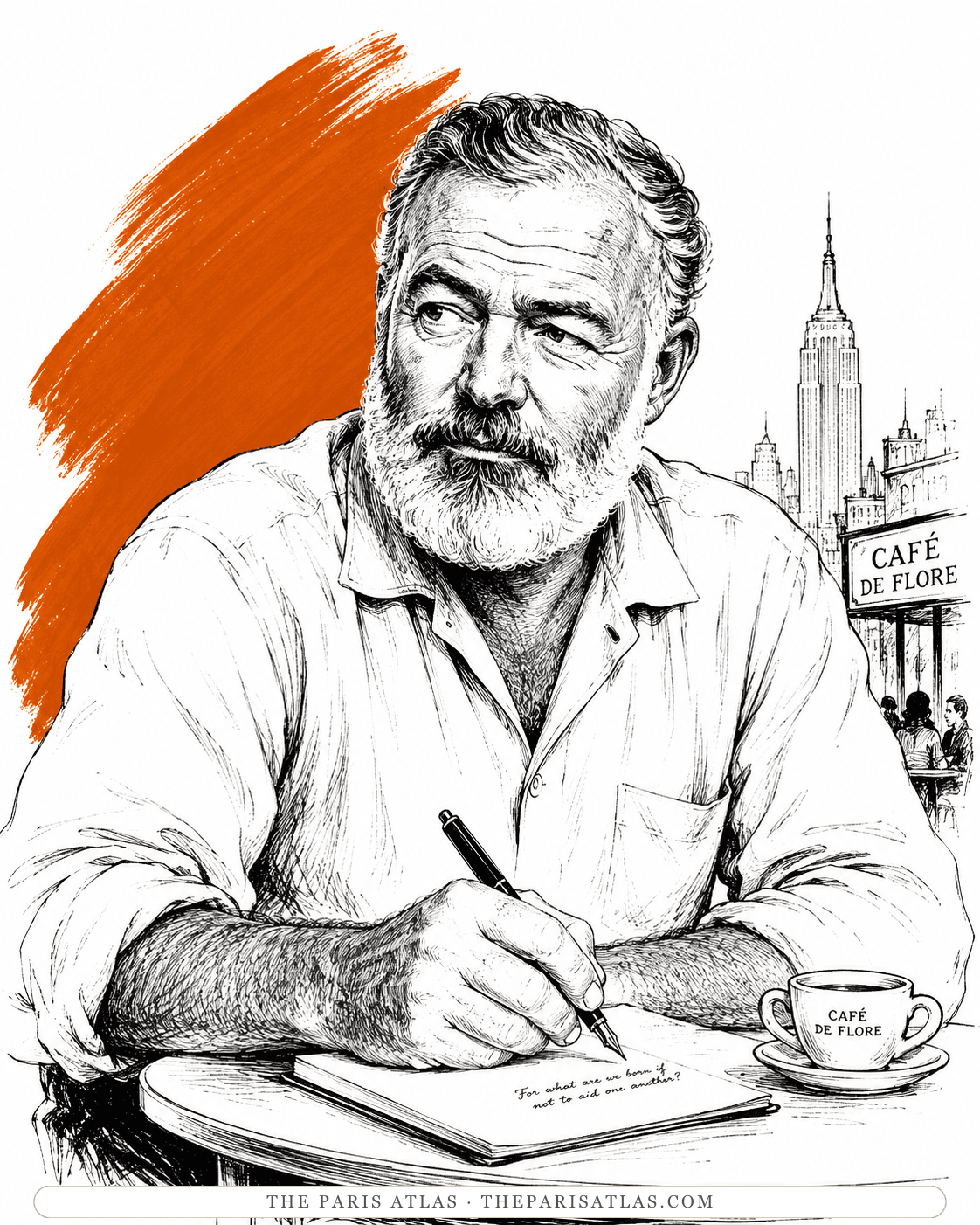

Ernest Hemingway: Selected Letters 1917–1961
Baker's wide-angle selection — this is one relationship at full depth.
Read our take
Author and editor, complete: twenty-two years of letters between Hemingway and Maxwell Perkins — the working marriage behind the shelf.
From the 1925 courtship that pried Hemingway loose from Boni & Liveright to Perkins's death in 1947, this 1996 volume — edited by Matthew J. Bruccoli with Robert W. Trogdon — prints the two men's correspondence whole: contracts and cuts, obscenity negotiations, money, fishing, grief, and the steady mutual regard of the century's most productive author-editor bond. The title is the correspondence's own credo about writing: the utterly real thing is the only thing that counts. (Letters — nothing here to spoil.)
Perkins of Scribner — Fitzgerald's editor, Wolfe's wrangler — landed Hemingway in 1926 after the Torrents of Spring maneuver, and the file that follows is the spine of this shelf's Hemingway wing: The Sun Also Rises argued word by word (which profanities survive, which shock is essential), A Farewell to Arms serialized and defended, the story collections assembled, For Whom the Bell Tolls steered to its triumph — every book a paper trail of proposals, protests, and settlements between a combative author and an editor whose steadiness was its own genius.[1]
Bruccoli and Trogdon print both sides in full, which is the volume's advantage over any selection: the negotiation as drama, with Perkins's tact answering Hemingway's weather. It is also, by the end, unexpectedly moving — twenty-two years closing with Perkins's sudden death in 1947 and Hemingway's grief for the man he trusted most in publishing. The scholarly letters edition cites this book as a standard source; readers can take it simply as the best sustained view of how the masterpieces actually got made and sold.[1]
The correspondence complete, 1925–1947, both directions: the recruitment; the Sun Also Rises and Farewell to Arms files with their obscenity diplomacy; advances, royalties, and the Depression's arithmetic; the war years and For Whom the Bell Tolls; and the late letters before Perkins's death — annotated throughout, with the business of literature and the friendship inside it equally visible.[1]
Pairs perfectly with the books themselves: read a novel's file here after the novel, and watch it get born.[1]
In a 1938 letter to Perkins, Hemingway says that two stories set at Madrid's Chicote's Bar are typed but still imperfect. He expects another revision and measures them against his earlier stories. A finished typescript is not a finished story in this account: the editor receives the author's uncertainty before publication, not just a package ready to print. The comparison with past work makes revision a continuing standard rather than a confession of defeat. This passage is reproduced in a scholarly article citing pages 265–66 of the letters edition; the original letter and the stories' successive drafts were not collated here.
A 1935 line from Perkins about the ‘utterly real thing in writing’ gives this edition its title. The contemporary review that reproduces it also notes the correspondence's long negotiations over advances, royalties and the order of stories in collections. That contrast matters: Perkins's editorial ideal was voiced within the practical business of getting books into print, not apart from it. The letters could be patient and encouraging while still requiring figures, permissions and decisions. This reading rests on one reproduced line and the review's account of the exchange; it does not establish how Perkins answered every proposal.
Twenty-two years of author and editor at full candor — the model the whole industry still cites.
Watching Perkins negotiate the unprintable words of 1926, book by book, is publishing history at its most entertaining.
The file closes with Perkins's death and Hemingway's rare, unguarded mourning — the business correspondence that became a friendship's record.
1925–1926
Perkins of Scribner courts Hemingway away from Boni & Liveright and lands him after the Torrents of Spring maneuver — the start of the correspondence.
1947
Perkins dies suddenly; twenty-two years of letters close with Hemingway's grief for the man he trusted most in publishing.
1996
Scribner publishes the correspondence whole, edited by Matthew J. Bruccoli with Robert W. Trogdon — both sides in full.

Baker's wide-angle selection — this is one relationship at full depth.
Read our take
The complete edition absorbing all correspondence — this volume remains the Perkins thread's standard home.
Read our take
The complete correspondence between Ernest Hemingway and his editor Maxwell Perkins, 1925–1947, edited by Matthew J. Bruccoli with Robert W. Trogdon and published in 1996.
The Scribner editor — Fitzgerald's editor and Wolfe's wrangler — who landed Hemingway in 1926 and steered his books for the next two decades.
The working marriage behind the shelf: contracts and cuts, obscenity negotiations, money, fishing, grief, and every book argued word by word from The Sun Also Rises to For Whom the Bell Tolls.
From the correspondence's own credo about writing — that the utterly real thing is the only thing that counts.
It prints both sides in full — Perkins's tact answering Hemingway's weather — making it the best sustained view of how the masterpieces actually got made and sold.
Explore authors with a similar voice, perspective, and influence.

The other great stylist the Great War produced — where Hemingway cut the language down, Céline set it on fire. The same wound, opposite treatments.
View author
Paris on no money a decade later, with the restraint removed. Miller called Hemingway's Paris a tourist's Paris; readers get to referee.
View author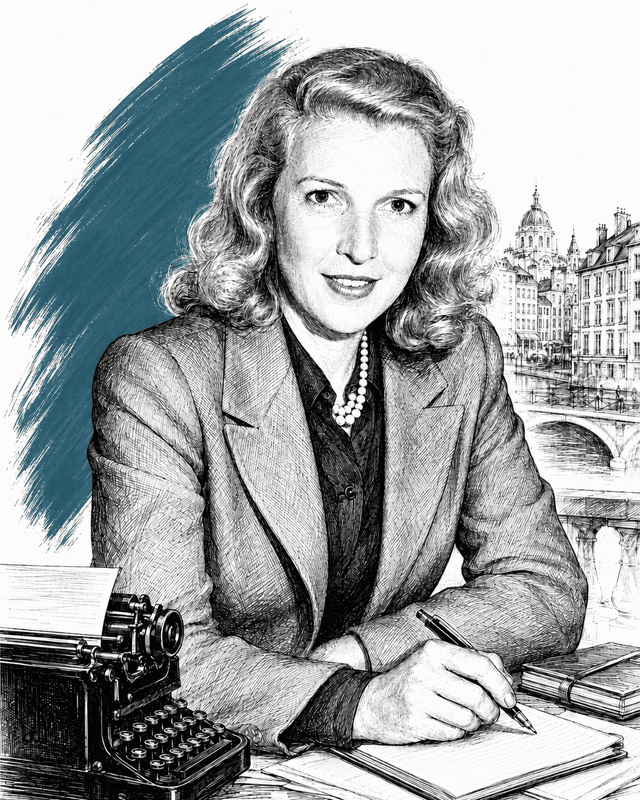
War correspondent who covered the Spanish Civil War, D-Day, and conflicts across five more decades; Hemingway's third wife, 1940–1945.
View authorThe sources below include the primary text, editions, scholarship, archival materials, and other records that informed this page. They document The Only Thing That Counts, its publication, and its place in literary history.


A scholarly article reproduces part of Hemingway's 1938 letter to Perkins about two Chicote's Bar stories, citing pp. 265–66 of this correspondence. The quotation was not collated with the printed volume or autograph letter.
Contemporaneous review reproducing Perkins's 1935 remark about the real in writing and describing the business side of the exchange. Only that selected line and the review's account are used.
Used to place The Only Thing That Counts within Ernest Hemingway's published work and verify its bibliographic context.
Used for independent biographical, archival, or historical context surrounding Ernest Hemingway's career and the period in which The Only Thing That Counts appeared.
Used to cross-check authorship, chronology, and the work's place in Ernest Hemingway's wider catalogue.

Used to verify Ernest Hemingway's bibliography and place The Only Thing That Counts within the broader chronology of Ernest Hemingway's career.
The primary text is the baseline reference for every book page. Additional references document publication history, interpretation, and historical context where that evidence is available.
 Explore more resources