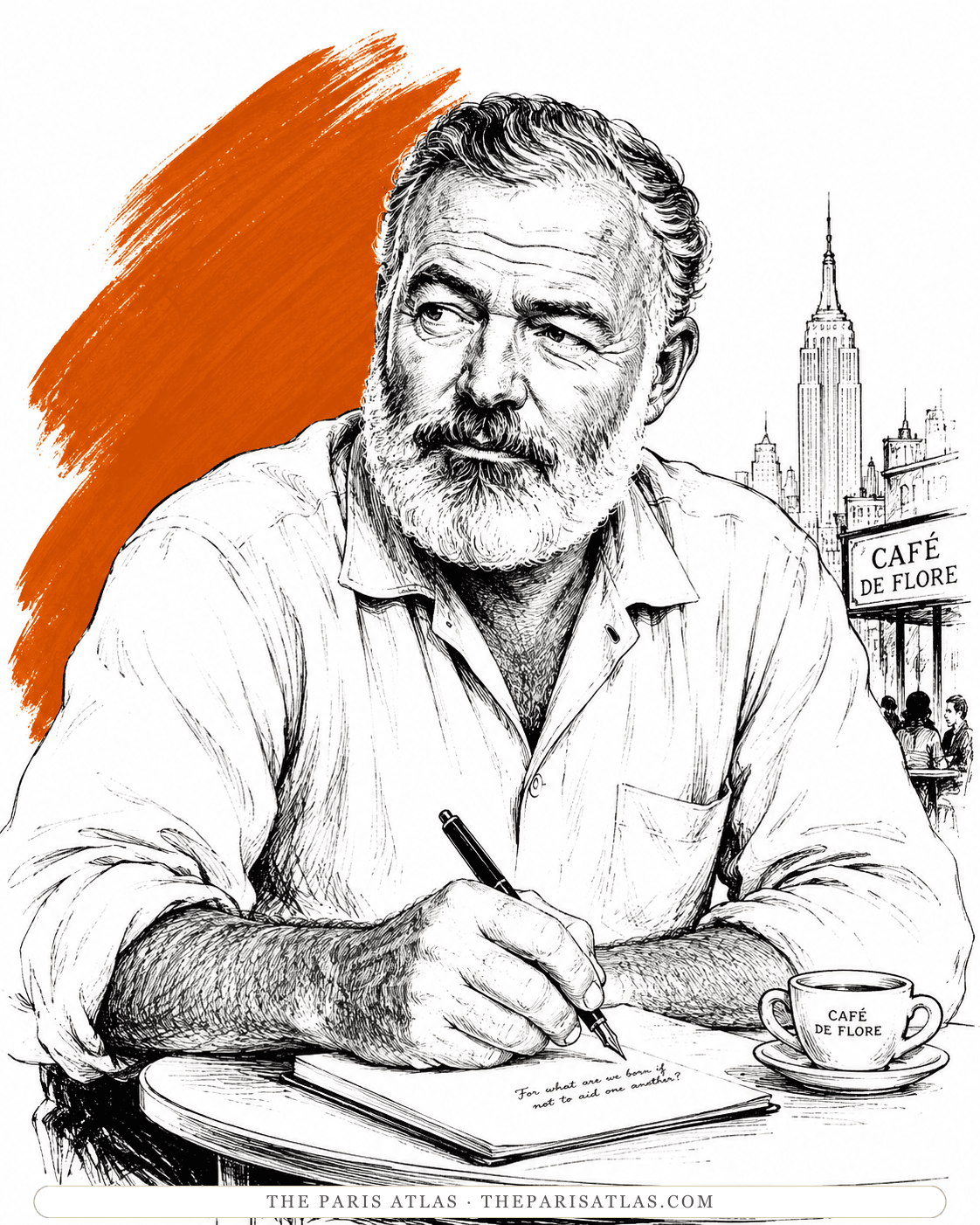
Ernest Hemingway
- Author
- Journalist
Married to · 1940–1945
The war marriage — Madrid under shellfire, then Cuba, then rival bylines racing to the Normandy summer; two correspondents in one house, and the only wife who left him first.
War correspondent who covered the Spanish Civil War, D-Day, and conflicts across five more decades; Hemingway's third wife, 1940–1945.
Martha Gellhorn was an American war correspondent who reported from the front lines of conflicts across more than fifty years, from the Spanish Civil War in 1937 to the American invasion of Panama in 1989. She was born in St. Louis, Missouri, on 8 November 1908 and died in London on 15 February 1998.
She reported the Spanish Civil War, the Winter War in Finland, the Second World War in Britain, Italy, France and Germany, the war in Java against Dutch rule, Vietnam, the Six-Day War and the wars in Central America. She was at Dachau within days of its liberation, and what she saw there governed the rest of her working life.
She was the only woman to land in Normandy during the invasion. Refused accreditation, she locked herself in a hospital ship's lavatory, crossed on the night of 6 June 1944, and went ashore the next morning as a stretcher-bearer.
She was married to Ernest Hemingway from 1940 to 1945, and spent the following fifty years refusing to discuss it. She said she had no intention of being a footnote in someone else's life.
Martha Ellis Gellhorn was born on 8 November 1908 in St. Louis, Missouri. Her father, George Gellhorn, was a gynaecologist; her mother, Edna Fischel Gellhorn, was a suffragist and one of the founders of the League of Women Voters.[1]
She grew up in a household where campaigning was normal. She marched with her mother as a child, went to a progressive school her mother had helped establish, and then to Bryn Mawr College, which she left in 1929 before graduating because she wanted to be a reporter.
She talked her way into newspaper work, moved to Paris in 1930 with almost no money, and worked there for the United Press until she was dismissed after reporting sexual harassment by a colleague. She spent the next few years in European pacifist circles rather than reporting, and wrote her first novel out of them.[1]
Gellhorn returned to America in 1934 and was hired by Harry Hopkins, who ran Franklin Roosevelt's relief administration, to travel the country and report what the Depression was actually doing to people.
She spent months in mill towns and among unemployed families, at times travelling alongside the photographer Dorothea Lange, and filed reports that were read in the White House. She became a friend of Eleanor Roosevelt, and that friendship lasted until Roosevelt's death.
The work became her second book of fiction, The Trouble I've Seen, published in 1936: four novellas about people ruined by the Depression, drawn from the interviews.[1]
In 1937 Gellhorn went to Spain to report the civil war, with a knapsack, fifty dollars and a letter from Collier's magazine describing her as a special correspondent, which she had obtained mainly to get across the border.[2]
She wrote about the war from ground level: what shelling does to a street, what people eat, how children play in a city being bombed. Collier's printed her first piece and then put her name on the masthead, which made her a correspondent in fact.
She met Ernest Hemingway in Key West in 1936, before Spain, and they were both in Madrid in 1937. Their relationship began there.[3]
Gellhorn and Hemingway married on 21 November 1940, after his divorce from Pauline Pfeiffer. They bought the Finca Vigía outside Havana, which she had found, and lived there between assignments. They had met in Spain, where they both reported the civil war, and the experience went into For Whom the Bell Tolls, which he dedicated to her.[4]
The marriage failed over her work. Hemingway wanted her at home; she kept leaving to report, from Finland, from China, from the Caribbean, and finally from Europe. In 1944 he took the Collier's accreditation she had held — the magazine could accredit only one front-line correspondent, and he was the more famous name — which left her without official standing for the invasion of Europe.
They divorced in 1945. She was the only one of his four wives to leave him. She refused for the rest of her life to be interviewed about him, and would end interviews if he was raised. Her stated position was that she had been a working writer for years before she met him and did not intend to be remembered as his third wife.[3]
Women correspondents were barred from the invasion beaches. Denied accreditation and refused a place on the press transports, Gellhorn went to the docks, told the authorities at a hospital ship that she was going to interview nurses, and locked herself in a lavatory until the ship sailed.[5]
She crossed on the night of 6 June 1944 and went ashore at Omaha Beach the next morning as a stretcher-bearer, collecting wounded from the sand. She was the only woman to land in Normandy during the invasion, and her piece for Collier's described the field hospital and the men, not the strategy.[1]
She was arrested by military police on returning to England, held at a nurses' training camp outside London, and escaped by climbing a fence. She reported the rest of the war without accreditation, hitching rides with pilots and units, and reached Dachau days after its liberation in 1945.[5]
Gellhorn reached Dachau days after its liberation and wrote about it for Collier's. She described the dead, the survivors, the ovens, the freight cars in the siding and the medical experiments.[6]
She said afterwards that she never fully recovered from what she saw there, and that everything she wrote afterwards was affected by it. She lost, by her own account, the belief that reporting the truth would in itself prevent atrocities.
Gellhorn kept working for another forty-five years. She reported the Java conflict against Dutch rule, the Arab-Israeli wars, Vietnam, the wars in El Salvador and Nicaragua, and, at eighty-one, the American invasion of Panama in 1989.
Her Vietnam reporting in 1966, for the Guardian, concentrated on civilian casualties, and it got her barred from returning to South Vietnam.[7]
Her method never changed. She reported what happened to ordinary people in a war rather than what generals said about it. She called this the view from the ground, and she was contemptuous of what she called all that objectivity shit, arguing that a reporter who watched atrocity and stayed neutral was not being professional but useless.
Gellhorn wrote five novels, fourteen novellas and two story collections alongside the journalism, and she considered the fiction her real work. It is now much less read than the reporting.
A Stricken Field, published in 1940, is a novel about a woman journalist in Prague after the Munich agreement. Liana, from 1944, is about a marriage on a Caribbean island. The novellas, collected in The Weather in Africa and elsewhere, are generally rated higher than the novels.
Her collected war journalism, The Face of War, published in 1959, is her most important book. She expanded it three times as she added wars, in 1967, in 1986 and in 1993. Travels with Myself and Another, from 1978, is her funniest: an account of five disastrous journeys. Hemingway travels with her on the journey to China, named in the book only as U.C., for Unwilling Companion.[8]
Gellhorn adopted a son from an Italian orphanage in 1949. She named him George Alexander and called him Sandy. She married Tom Matthews, a former editor of Time, in 1954, and they divorced in 1963.
She settled in London, with a cottage in Wales, and travelled constantly into her eighties. Her last reporting trip was to Brazil in 1995, by which time she could no longer read her own manuscripts. She became a mentor to younger reporters, and the Martha Gellhorn Prize for Journalism was established in her memory.
By the mid-1990s she was nearly blind from a failed cataract operation and had ovarian cancer that had spread to her liver. On 15 February 1998, at her flat in Cadogan Square, she died by suicide, swallowing a cyanide capsule. She was eighty-nine. She had made it clear for years that she intended to end her life rather than be reduced by illness, and had kept the means to do it.[1]
English Heritage later placed a blue plaque on the building.[9]
Gellhorn covered wars on four continents across six decades, which almost nobody has matched. She did it with a method that is now standard: ignore the briefing room, go to where the war is happening to people, and write down what it does to them.
She was the only woman to land in Normandy during the invasion, and she refused to build a career on it. The landing is the story everyone tells, and it is a good one, but her own emphasis was on the fifty years of work either side of it. The Face of War shows why: it collects half a century of war reporting in one volume, by a writer who kept going back because she thought someone had to keep the record.
Six scenes from fifty years of reporting — drawn illustrations, not photographs.
Born Martha Ellis Gellhorn on 8 November in St. Louis, Missouri, daughter of a gynaecologist and of Edna Gellhorn, a suffragist and founder of the League of Women Voters.
Enters Bryn Mawr College.
Leaves Bryn Mawr before graduating to become a reporter.
Moves to Paris with almost no money and works for the United Press, until she is dismissed after reporting sexual harassment by a colleague.
Returns to America and is hired by Harry Hopkins to report for the federal relief administration on what the Depression is doing to people.
Becomes a friend of Eleanor Roosevelt, a friendship that lasts until Roosevelt's death.
Publishes The Trouble I've Seen, her second book of fiction, four novellas drawn from her Depression interviews. Meets Ernest Hemingway in Key West.
Goes to Spain to report the civil war with a knapsack, fifty dollars and a letter from Collier's. The magazine prints her first piece and puts her on the masthead.
Reports from Czechoslovakia after the Munich agreement.
Reports the Winter War in Finland after the Soviet invasion.
Publishes A Stricken Field, a novel about a woman journalist in Prague. Marries Ernest Hemingway on 21 November.
Travels to China with Hemingway to report the war against Japan.
Reports from the Caribbean and then from Britain and the Italian front.
Hemingway takes the Collier's accreditation she has held, leaving her without official standing for the invasion of Europe.
Crosses to Normandy on the night of 6 June by locking herself in a hospital ship's lavatory, and goes ashore at Omaha Beach the next morning as a stretcher-bearer, the only woman to land during the invasion.
Is arrested by military police on returning to England, held at a nurses' training camp outside London, and escapes over a fence. She reports the rest of the war without accreditation.
Reaches Dachau days after its liberation and reports it for Collier's. She said afterwards she never fully recovered from what she saw.
Divorces Hemingway. She refuses for the rest of her life to be interviewed about him.
Reports the Nuremberg trials.
Reports from Java on the war against Dutch rule.
Adopts a son, Sandy, from an Italian orphanage.
Marries Tom Matthews, a former editor of Time.
Publishes The Face of War, her collected war reporting, which she expands through the rest of her life.
Divorces Tom Matthews and settles in London.
Reports the Vietnam War for the Guardian, concentrating on civilian casualties. She is barred from returning to South Vietnam.
Reports the Six-Day War in the Middle East.
Publishes Travels with Myself and Another, an account of five disastrous journeys in which Hemingway appears throughout as an unnamed unwilling companion.
Reports the wars in El Salvador and Nicaragua, in her mid-seventies.
Reports the American invasion of Panama at eighty-one, her last war.
Nearly blind after a failed cataract operation, she stops travelling.
Dies by suicide at her London flat on 15 February, swallowing a cyanide capsule, aged eighty-nine, with ovarian cancer that had spread to her liver.
The Martha Gellhorn Prize for Journalism is established in her memory.
From November 1943, with one unavoidable break in the spring of 1944, I followed the war wherever I could reach it.
These articles are in no way adequate descriptions of the indescribable misery of war. War was always worse than I knew how to say—always. And probably from an instinct of self-preservation, one tried to write most often of what was brave and decent.
Gradually I came to realize that people will more readily swallow lies than truth, as if the taste of lies was homey, appetizing: a habit.
Married to · 1940–1945
The war marriage — Madrid under shellfire, then Cuba, then rival bylines racing to the Normandy summer; two correspondents in one house, and the only wife who left him first.
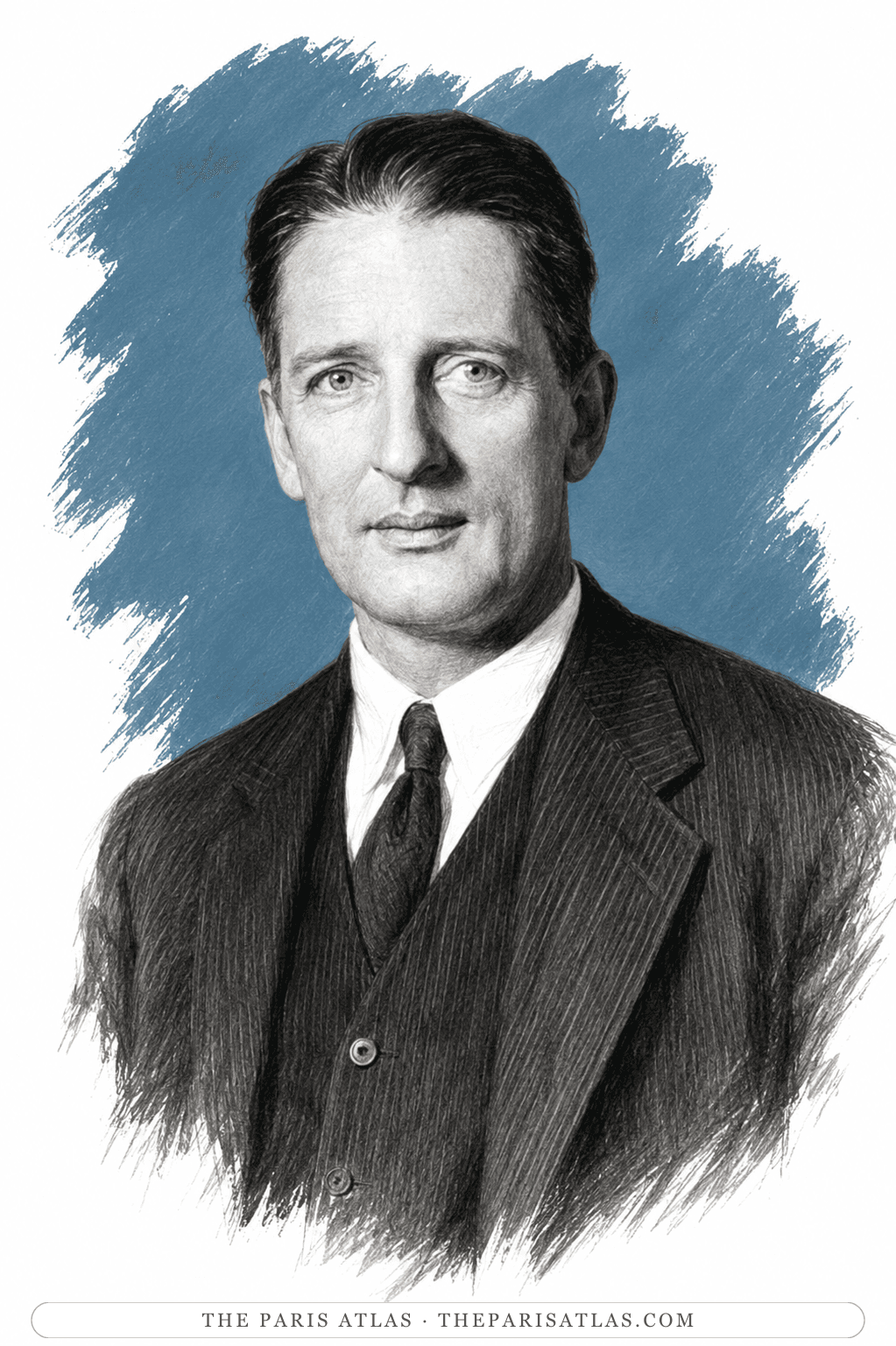
Collaborated with
Perkins edited Gellhorn at Scribner's, publishing her first collection of short fiction, The Heart of Another, in 1941. She and Hemingway, married that same year, shared a publishing house and an editor.

Sixty years of war reporting in one volume, with the essays she wrote between the dispatches decades later. If it doesn't hold you, nothing else will.

Her first novel, at twenty-five, and the one she spent the rest of her life leaving out.

Four novellas about Americans out of work, written by a twenty-seven-year-old who had spent a year being paid to go and look.

Prague in the months after Munich, written by a correspondent who had just been there and could not report the half of it.

Her first collection: nine stories written months after Spain and the Winter War, published by Scribner's in 1941 and never reprinted.

The richest man on a Caribbean island marries a young mixed-race woman to settle a score, and neither side of the island will have her.

The novel she made out of the winter fighting and what she found at Dachau — reissued forty years later under a colder title.

Stories from the peace that followed the war, written by someone unconvinced by it.

Four long stories about marriage, each one titled from a promise made at the altar.
Sixty years of war reporting in one book, written by someone who kept going back long after the story stopped being hers.

A Left Bank bachelor, two rich mistresses, and an arrangement that stops working. The only one of Gellhorn's novels set in Paris.

Three long stories about clever people who cannot see the thing standing in front of them. The title is a joke, and this was her last collection.

Six dispatches on what the war was doing to civilians, and the reporting that got her barred.

A foreign colony in a Mexican village in 1953, half of it driven out by the Red Scare. Gellhorn lived four years among people like them.

Three novellas about Europeans who stayed in East Africa: two sisters at a hotel on Kilimanjaro, a man building a farm in Kenya, a woman out of options.

A travel book organised entirely around the trips that went wrong, and the funniest thing she ever wrote.

The other half of the career: fifty years of reporting on everything that was not a war.

Fourteen novellas written between 1936 and 1978, gathered in one volume. For most of Gellhorn's fiction it is the only edition still in circulation.

Two war correspondents wrote a farce about two war correspondents. A hit in London in 1946, it closed on Broadway after four performances.

Sixty years of letters, edited by her biographer Caroline Moorehead. Faster, funnier and ruder than the prose Gellhorn published.

Gellhorn's letters from 1930 to 1949: the Depression, Spain, Normandy, Dachau and the Hemingway marriage, printed with the replies included.

Dedicatee · Book
They had reported Spain together, and the novel came out of it. The dedication is printed in the book; the marriage lasted five years.
— Ernest Hemingway Collection — Martha Gellhorn (Hemingway) | EH@JFK, John F. Kennedy Presidential Library
Depicted in · Book
Not a portrait. The JFK Library's account gives Maria her appearance, and divides her strength, toughness and loyalty between Maria and Pilar — and adds that Pilar is a composite who also owes much to Gertrude Stein. Gellhorn and Hemingway had reported the Spanish Civil War together, and that shared work is what the novel is built out of.
— Ernest Hemingway Collection — Martha Gellhorn (Hemingway) | EH@JFK, John F. Kennedy Presidential Library
Worked for · 1937–1946
The weekly carried her from the Spanish Civil War through the Second World War. In 1944 it accredited Hemingway as its European correspondent, the post she had held, and she reached Normandy without it.
An American war correspondent, born in St. Louis in 1908 and died in London in 1998. She reported wars for more than fifty years, from the Spanish Civil War in 1937 to the American invasion of Panama in 1989, and also wrote novels and short fiction.
She was refused accreditation, so she told the authorities at a hospital ship that she was going to interview nurses, locked herself in a lavatory until it sailed, and went ashore at Omaha Beach the next morning as a stretcher-bearer. She was the only woman to land during the invasion.
Yes, from November 1940 to 1945. It was his third marriage and her second. The marriage failed over her work: he wanted her at home and she kept leaving to report. She refused for the rest of her life to be interviewed about him.
Her collected war journalism, The Face of War, first published in 1959 and expanded through her life, is her main book. She also wrote five novels, fourteen novellas, two story collections, and Travels with Myself and Another, a comic account of five disastrous journeys.
She ignored briefing rooms and generals and reported what a war does to the people living through it. She was contemptuous of neutrality in the face of atrocity, arguing that a reporter who watches it and stays even-handed is useless rather than professional.
She died by suicide at her London flat on 15 February 1998, swallowing a cyanide capsule. She was eighty-nine, nearly blind after a failed cataract operation, and had ovarian cancer that had spread to her liver. She had said for years that she meant to end her life rather than be reduced by illness.
Married to · 1940–1945
The war marriage — Madrid under shellfire, then Cuba, then rival bylines racing to the Normandy summer; two correspondents in one house, and the only wife who left him first.
Worked for · 1937–1946
The weekly carried her from the Spanish Civil War through the Second World War. In 1944 it accredited Hemingway as its European correspondent, the post she had held, and she reached Normandy without it.
Dedicatee · 1940
They had reported Spain together, and the novel came out of it. The dedication is printed in the book; the marriage lasted five years.
Depicted in · 1940
Not a portrait. The JFK Library's account gives Maria her appearance, and divides her strength, toughness and loyalty between Maria and Pilar — and adds that Pilar is a composite who also owes much to Gertrude Stein. Gellhorn and Hemingway had reported the Spanish Civil War together, and that shared work is what the novel is built out of.
Collaborated with
Perkins edited Gellhorn at Scribner's, publishing her first collection of short fiction, The Heart of Another, in 1941. She and Hemingway, married that same year, shared a publishing house and an editor.
The sources below include biographies, scholarly essays, interviews, and primary materials that informed this page. They reflect both the historical record and ongoing critical conversations about Martha Gellhorn and their work.

Web source consulted for documented facts and historical context presented on the Martha Gellhorn page.
Web source consulted for documented facts and historical context presented on the Martha Gellhorn page.
Publication archive for the weekly that carried Gellhorn's war reporting.

Published analysis and historical context used in preparing the Martha Gellhorn page.
Published analysis and historical context used in preparing the Martha Gellhorn page.
Web source consulted for documented facts and historical context presented on the Martha Gellhorn page.
Reference article cross-checked for the St. Louis childhood, the Depression reporting, the D-Day crossing, the marriage and her death.
Biographical evidence used to verify chronology, relationships, and historical context connected to Martha Gellhorn.
Archival evidence used to document the historical record connected to Martha Gellhorn.
These references anchor the page in the documented record and in the scholarly conversations around Martha Gellhorn. Every claim on this page traces back to one or more of the works listed here.
 Explore more resources