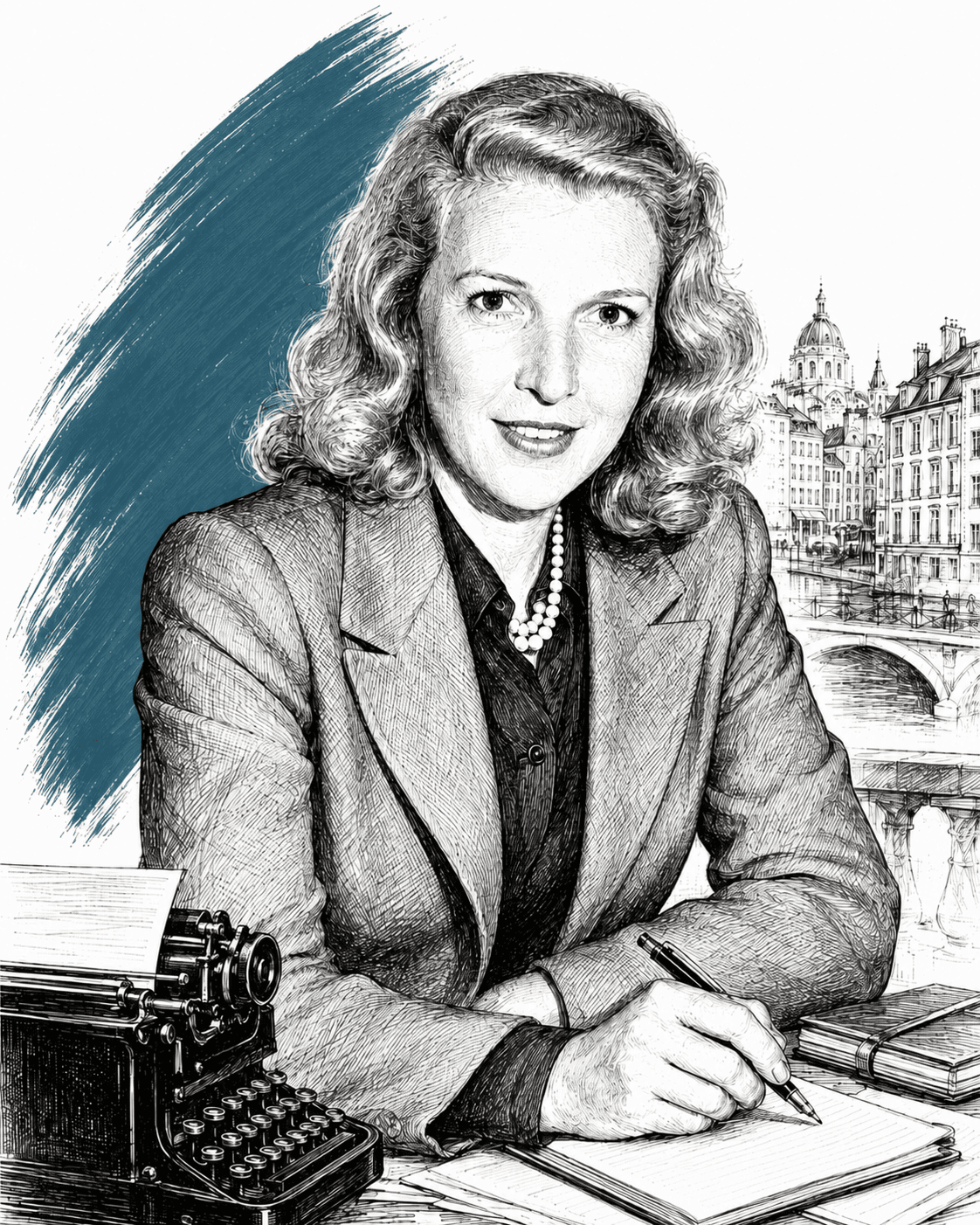

Yours, for Probably Always
The other letters volume, narrower in range and differently edited.
Read our take
Sixty years of letters, edited by her biographer Caroline Moorehead. Faster, funnier and ruder than the prose Gellhorn published.
Caroline Moorehead gathered the correspondence from ten repositories across three countries and edited it into a single volume, published by Henry Holt in 2006. The letters run from Gellhorn's arrival in Paris at twenty-two through the wars, the books, the friendships and the marriage to Hemingway. Moorehead had already written the biography and had access Gellhorn's executors granted to no one else, and the connective narrative here comes from that work.
Moorehead drew the letters from ten repositories across three countries and six American states, which is a fair measure of how scattered a correspondence becomes when the writer moves every few years for sixty of them. The volume opens with Gellhorn newly arrived in Paris at twenty-two and closes at the end of a life spent largely in other people's wars. Between those points are the friendships, the quarrels, the work, the money, and the marriage to Hemingway, which she conducted partly by post and afterwards refused to discuss in public.
The letters are the argument for reading her at all. The published prose is controlled; the correspondence is fast, profane, funny and frequently unfair, and the two voices are recognisably the same person working at different pressures. What a reader should keep in view is that this is a selection made by her biographer, who had access no one else was given and a book of her own to support. Moorehead is the best-informed reader the material has ever had and she is not a neutral one.
Moorehead ends her preface with Gellhorn arriving in Paris, but explains earlier that this apparent beginning survives through other people's keeping. Gellhorn regretted the absence of a useful personal archive; her correspondents had preserved what she had not. The collection therefore offers something different from a memoir composed in retrospect: addresses to particular people become a life assembled for strangers. That intimacy is also edited. Moorehead acknowledges substantial cuts, while retaining sequences to Walton and Drake that convey a friendship developing through repeated exchanges. The volume's movement between a restless individual and enduring relationships is partly the work of selection.
In the letter to her mother dated 19 August 1966, Gellhorn writes a message she hopes will never be read. Her departure for Vietnam puts two obligations into conflict: reporting from direct experience and protecting the person who fears for her. The affectionate address does not resolve that conflict. Instead, the letter turns an account of political conscience into a request for understanding and forgiveness. Its imagined reader matters as much as the war it discusses. Rather than presenting courage as freedom from attachment, this exchange shows the emotional cost of acting while remaining answerable to someone loved.
The letters are funnier and ruder than the published prose, and the voice is recognisably the same one.
Most accounts of that marriage descend from his circle. This is the counterweight.
The editorial work behind the book is the reason the correspondence exists in readable form at all.
1930s
The correspondence opens with Gellhorn newly arrived in Paris at twenty-two — the start of sixty years of letters through the wars, the books, and the marriage to Hemingway.
2006
Caroline Moorehead, Gellhorn's biographer, gathers the letters from ten repositories across three countries, and Henry Holt publishes the selection; a Chatto & Windus edition follows in the UK.
2007
Owl Books publishes the first paperback edition of Moorehead’s selection.
The other letters volume, narrower in range and differently edited.
Read our take

Caroline Moorehead, Gellhorn's biographer, who gathered the correspondence from ten repositories across three countries. It was published by Henry Holt in 2006.
Gellhorn's life from her arrival in Paris at twenty-two through the wars, the books, the friendships, and the marriage to Ernest Hemingway.
A pioneering American war correspondent and novelist, one of the great reporters of the century, and briefly Hemingway's third wife.
For Gellhorn in her own unguarded voice across six decades — she was a formidable and very funny correspondent.
Moorehead drew them from ten repositories across three countries and six American states — a measure of how far Gellhorn's restless life scattered them.
Explore authors with a similar voice, perspective, and influence.

The other great journalist of the Spanish Civil War, reporting the same conflict with the same refusal to flatter the side he preferred.
View author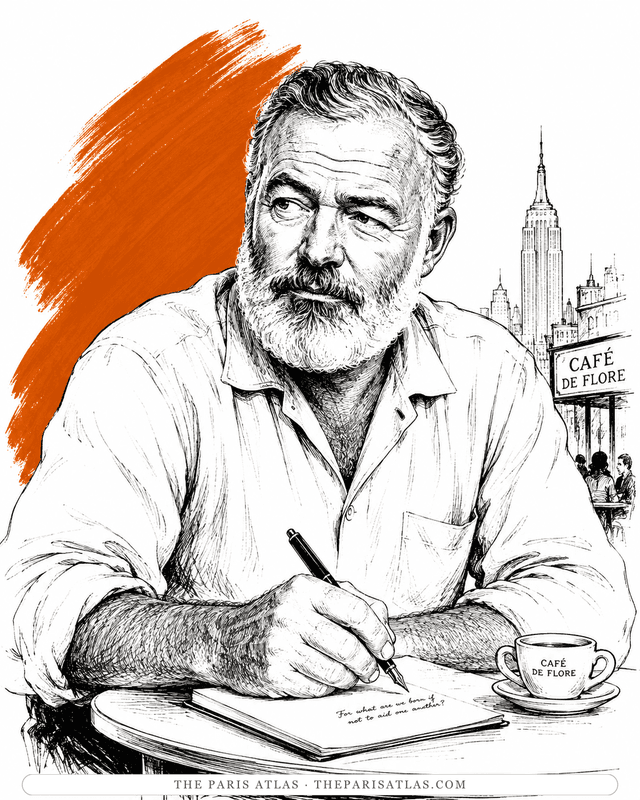
They covered Spain together and he dedicated a novel to her. Read them side by side for how differently the same war lands in fiction and in dispatch.
View author
The Brooklyn dropout who arrived in Paris broke at thirty-eight and wrote the exuberant, banned books that ended American censorship.
View authorThe sources below include the primary text, editions, scholarship, archival materials, and other records that informed this page. They document Selected Letters of Martha Gellhorn, its publication, and its place in literary history.


The primary text represented by this page, used for descriptions of the work’s contents and for any quoted passages shown here.
Used to place Selected Letters of Martha Gellhorn within Martha Gellhorn's published work and verify its bibliographic context.
Used for independent biographical, archival, or historical context surrounding Martha Gellhorn's career and the period in which Selected Letters of Martha Gellhorn appeared.
Used to cross-check authorship, chronology, and the work's place in Martha Gellhorn's wider catalogue.
Used to verify Martha Gellhorn's bibliography and place Selected Letters of Martha Gellhorn within the broader chronology of Martha Gellhorn's career.
Web source consulted for documented facts and historical context presented on the Selected Letters of Martha Gellhorn page.
Editor's preface, published as Macmillan's public excerpt, for the collection's archival and editorial construction.
Complete public transcription of the 19 August 1966 letter, explicitly credited to Moorehead's Selected Letters.
The primary text is the baseline reference for every book page. Additional references document publication history, interpretation, and historical context where that evidence is available.
 Explore more resources