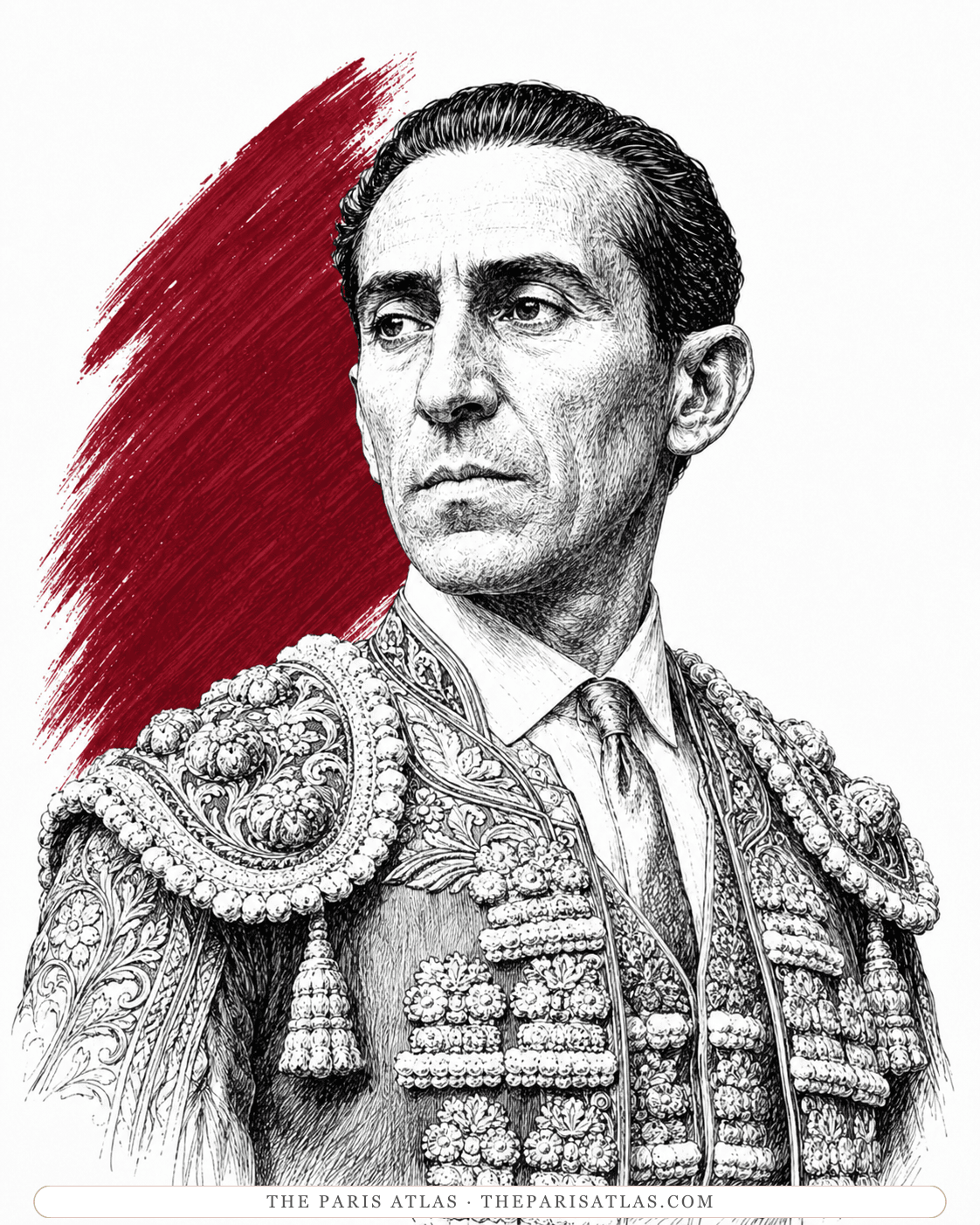
Juan Belmonte
- Matador
Met
A year of afternoons: the reporter sat with the matador and turned his voice into Juan Belmonte, matador de toros — the as-told-to masterpiece that binds the two names permanently.
Spain's great liberal reporter — the man Belmonte trusted with his life story, the chronicler of the Civil War's cruelties on both sides, and the exile whose books came back decades after he died.
Manuel Chaves Nogales came out of Seville and rose to the top of Madrid journalism between the wars — director of the great Republican daily Ahora, a reporter who flew across Europe for his stories when flying was still an adventure, and a stylist whose credo was the plainest job description in the trade: walking and telling. He interviewed the century as it happened — aviators, dancers, dictators-in-waiting — and wrote it all in prose that read like fiction and checked out like reportage.[1]
His masterpiece came out of a year of afternoons with a matador: Juan Belmonte, matador de toros (1935), the bullfighter's life told in the first person — Belmonte speaking, Chaves Nogales writing — which readers in two languages have called the best book ever written about the bulls, and one of the best as-told-to books about anything. Two years earlier he had done something comparable for a flamenco dancer stranded in revolutionary Russia in El maestro Juan Martínez que estaba allí: the journalist as ventriloquist, giving his century better voices than it deserved.[2]
The Civil War broke his world in half. A liberal democrat with, as he wrote, equal contempt for the butchery on both sides, he left Spain in late 1936 when the Republic's government left Madrid, and wrote the war's most clear-eyed stories from Paris exile — A sangre y fuego (1937), nine tales of heroes, beasts, and martyrs. When France fell he fled again, to London, where he ran continental news operations and died in 1944, a year before the war's end, at forty-six. Spain forgot him for half a century; the rediscovery, when it came in the 2000s, made him what he now is — the conscience of Spanish journalism, back in print everywhere.[3]
Born in Seville, into a family of journalists and writers.
Rises through Madrid journalism — aviation reportage flown in person, interviews across a Europe between the wars.
Directs the Republican daily Ahora; publishes El maestro Juan Martínez que estaba allí (1934), a flamenco dancer's Russia, told in the first person.
Juan Belmonte, matador de toros — a year of afternoons with the matador, and the best book ever written about the bulls.
Leaves Spain when the Republic's government leaves Madrid — a liberal with, he wrote, equal contempt for the barbarism of both sides.
A sangre y fuego, written in Paris exile: nine stories of the Civil War — heroes, beasts, and martyrs of Spain.
France falls; he flees a second time, to London.
Dies in London at forty-six, a year short of the war's end.
The great rediscovery: Spain republishes him, and the forgotten reporter becomes a classic.
Met
A year of afternoons: the reporter sat with the matador and turned his voice into Juan Belmonte, matador de toros — the as-told-to masterpiece that binds the two names permanently.

The matador who invented modern bullfighting tells his life to Spain's greatest reporter — night swims, secret capework in the dark, and the melancholy of surviving the golden age.
A Spanish journalist and writer (1897–1944), one of Spain's great liberal reporters, best remembered for the matador's life he set down and for his clear-eyed Civil War stories — and rediscovered decades after his death.
Juan Belmonte, Killer of Bulls (1935), the as-told-to life of the matador Juan Belmonte; and A sangre y fuego (1937), nine stories of the Spanish Civil War written from exile in Paris.
A liberal democrat with, as he wrote, equal contempt for the butchery on both sides. He left Spain in late 1936 when the Republic's government left Madrid, and wrote the war's most clear-eyed stories from Paris.
In London in 1944, at forty-six, a year before the war's end. When France fell he fled a second time, to Britain, where he ran continental news operations.
Through Juan Belmonte — the matador whose life he wrote is the same bullfighter the expatriates watched at Pamplona, and who appears in Hemingway's The Sun Also Rises under his own name. Chaves Nogales's book is that world answering in its own voice.
Spain forgot him for half a century. The rediscovery, when it came in the 2000s, put him back in print everywhere and made him what he now is — often called the conscience of Spanish journalism.
Met
A year of afternoons: the reporter sat with the matador and turned his voice into Juan Belmonte, matador de toros — the as-told-to masterpiece that binds the two names permanently.
The sources below include biographies, scholarly essays, interviews, and primary materials that informed this page. They reflect both the historical record and ongoing critical conversations about Manuel Chaves Nogales and their work.


Web source consulted for documented facts and historical context presented on the Manuel Chaves Nogales page.
First-person evidence and historical context used in preparing the Manuel Chaves Nogales page.

Contemporary reporting or criticism used to document the historical reception and context of Manuel Chaves Nogales.
Web source consulted for documented facts and historical context presented on the Manuel Chaves Nogales page.
These references anchor the page in the documented record and in the scholarly conversations around Manuel Chaves Nogales. Every claim on this page traces back to one or more of the works listed here.
 Explore more resources