

The Lowest Trees Have Tops
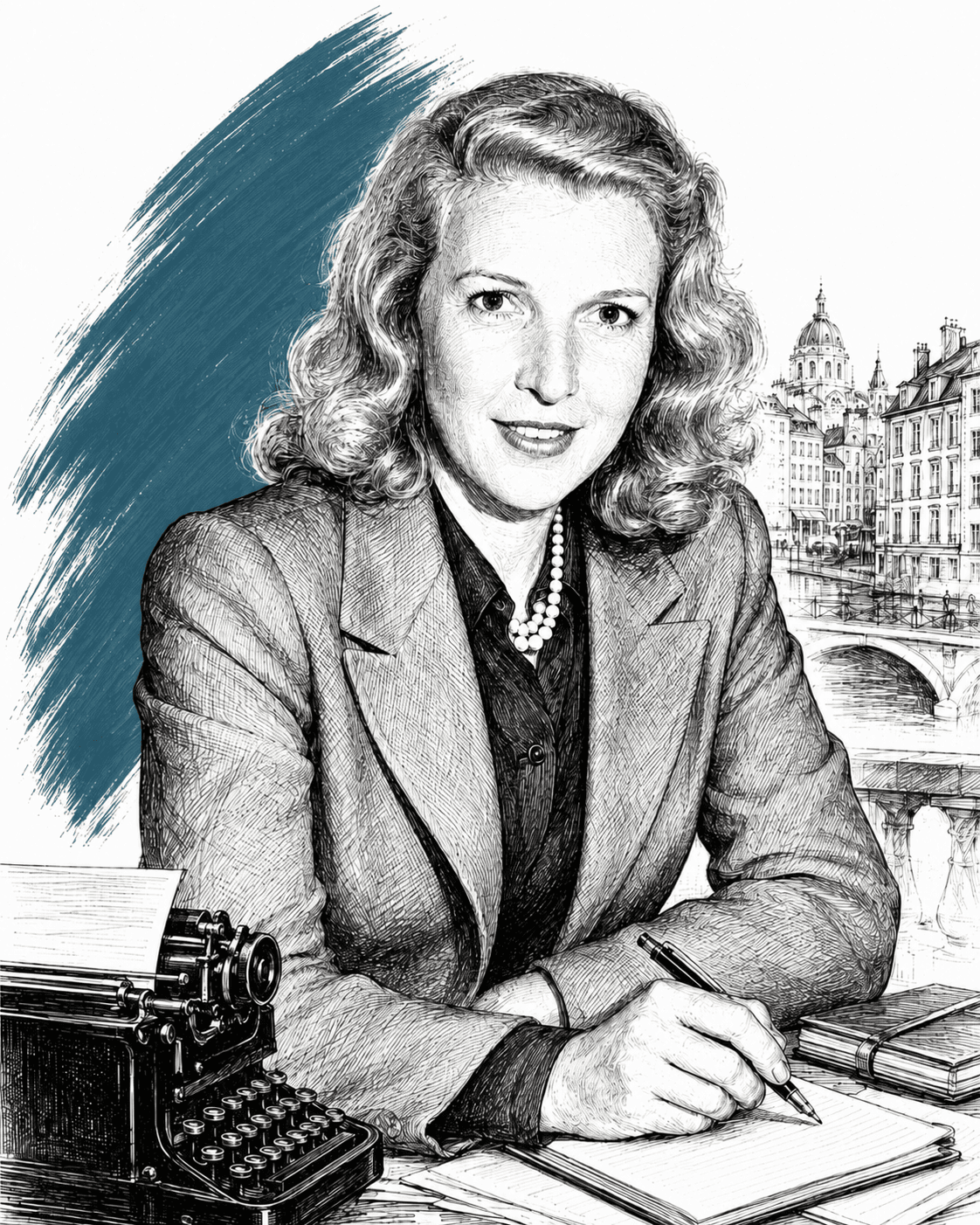
A foreign colony in a Mexican village in 1953, half of it driven out by the Red Scare. Gellhorn lived four years among people like them.
- 1967
About Martha Gellhorn
The story, briefly
Spoiler-freeSet in 1953 in the invented Mexican village of San Ignacio del Tule, the novel follows a small foreign community that has settled there — some of them Communists, some of them mild conservatives, none of them in much danger from each other. Gellhorn spent four years living in Mexico, and called the book a bit of fluff written to amuse herself. It has little plot and a reporter's eye for infidelity and illegitimacy.
The story, in more detail
San Ignacio del Tule is invented. The community in it is not, in the sense that Gellhorn had spent four years living among people like them. The village holds a colony of Westerners — Americans who are there because of what the Red Scare did to them at home, and Europeans who were there first — and much of the novel is about the distance between those two kinds of exile, and the different stories each group tells about why it left.
There is no strong central action, and Gellhorn did not pretend otherwise. What the book has instead is the social life of the settlement: who is sleeping with whom, whose child is whose, which suspicions get aired and which are kept, and the old resentments the colony brought along and did not put down. This record carries no full plot because the novel does not really have one.
Themes and analysis
A village gathering
Tule’s leisurely conversation has an uneasy social foundation. In the passages Anita Kamala Dalal reproduces, Susanna presents wasted time as the town’s chief product and treats noninterference as a condition of communal life. The joke offers a welcome alternative to competitive ambition: people need not justify every hour by what they produce. Yet Dalal points out that the foreign residents bring money with them and rely on servants. Read with that qualification, the village’s apparent freedom from work raises a question about whose leisure the narrator is describing.
At the silversmith's bench
Bartolo’s importance extends beyond his romance with Raquel. Dalal’s reading follows how the silversmith intervenes against Mrs. Hatfield’s intimidation when the expatriates cannot protect their own tolerant way of life. In the passage she quotes, he objects to an American visitor behaving as though she controls a Mexican town. His defense of local belonging complicates the foreigners’ international ideal: their freedom depends on someone asserting a national claim they do not share. The community’s openness is therefore something that must be defended, not simply a pleasant effect of its surroundings.
Why we recommend it
Written from residence, not assignment
Most of her books come from arriving somewhere. This one comes from staying.
A community rather than a plot
The book is structurally closer to reportage than to a novel, which is either its problem or its method depending on the reader.
The late fiction
Published when she was fifty-eight, between the Vietnam reporting and the African novellas.
What this book explores
Timeline
1953
The novel's setting — the invented Mexican village of San Ignacio del Tule, drawn from the four years Gellhorn spent living among such an expatriate colony.
1967
Michael Joseph publishes it in London — Gellhorn fifty-eight, between the Vietnam reporting and the African novellas.
1969
A first US edition follows from Dodd, Mead in New York, two years after the London printing.
Book editions
Hardcover
- Hardcover
- Michael Joseph
- 1967
Hardcover
- Hardcover
- Dodd, Mead
- 1969
Reader reviews
Readers may also like


The Lowest Trees Have Tops: frequently asked questions
Who wrote The Lowest Trees Have Tops?
Martha Gellhorn. The novel was published in 1967.
What is The Lowest Trees Have Tops about?
Set in 1953 in the invented Mexican village of San Ignacio del Tule, it follows a small foreign community that has settled there — some of them Communists, some mild conservatives — none of them in much danger from each other.
Is it based on Gellhorn's own life?
She spent four years living in Mexico, among the kind of expatriate community she invented for the novel.
Where does the title come from?
From a line of Elizabethan verse — the poem "The Lowest Trees Have Tops" attributed to Edward Dyer, whose conceit runs beneath the book.
What kind of novel is it?
A quiet novel of an expatriate community in a Mexican village, watched with Gellhorn's reporter's eye.
If you like Martha Gellhorn
Explore authors with a similar voice, perspective, and influence.

Manuel Chaves Nogales
The other great journalist of the Spanish Civil War, reporting the same conflict with the same refusal to flatter the side he preferred.
View author
Ernest Hemingway
They covered Spain together and he dedicated a novel to her. Read them side by side for how differently the same war lands in fiction and in dispatch.
View author
Henry Miller
The Brooklyn dropout who arrived in Paris broke at thirty-eight and wrote the exuberant, banned books that ended American censorship.
View author
References
References
The sources below include the primary text, editions, scholarship, archival materials, and other records that informed this page. They document The Lowest Trees Have Tops, its publication, and its place in literary history.


1Martha Gellhorn: A Life
BiographyCaroline Moorehead, 2003Used forUsed to verify The Lowest Trees Have Tops's bibliographic context and its place within Martha Gellhorn's published work.
2Martha Gellhorn — War Correspondent and Writer | Blue Plaques
WebsiteEnglish HeritageUsed forUsed for independent archival, institutional, or historical context surrounding Martha Gellhorn and The Lowest Trees Have Tops.
3Ernest Hemingway Collection — Martha Gellhorn (Hemingway) | EH@JFK, John F. Kennedy Presidential Library
WebsiteJohn F. Kennedy Presidential Library and MuseumUsed forUsed to cross-check chronology, publication history, and the circumstances in which The Lowest Trees Have Tops appeared.
4Martha Gellhorn | Historic Missourians
WebsiteThe State Historical Society of MissouriUsed forUsed for an additional scholarly or biographical perspective on The Lowest Trees Have Tops and Martha Gellhorn's wider career.

5In Search of Home: The Writings of Katherine Anne Porter, Martha Gellhorn, Elizabeth Bishop and Joan Didion
NonfictionUniversity College London, doctoral thesis, 1998Used forCritical discussion and reproduced primary passages; not a complete reading or collation of the novel.
i
Why these sources are here
The primary text is the baseline reference for every book page. Additional references document publication history, interpretation, and historical context where that evidence is available.
 Explore more resources