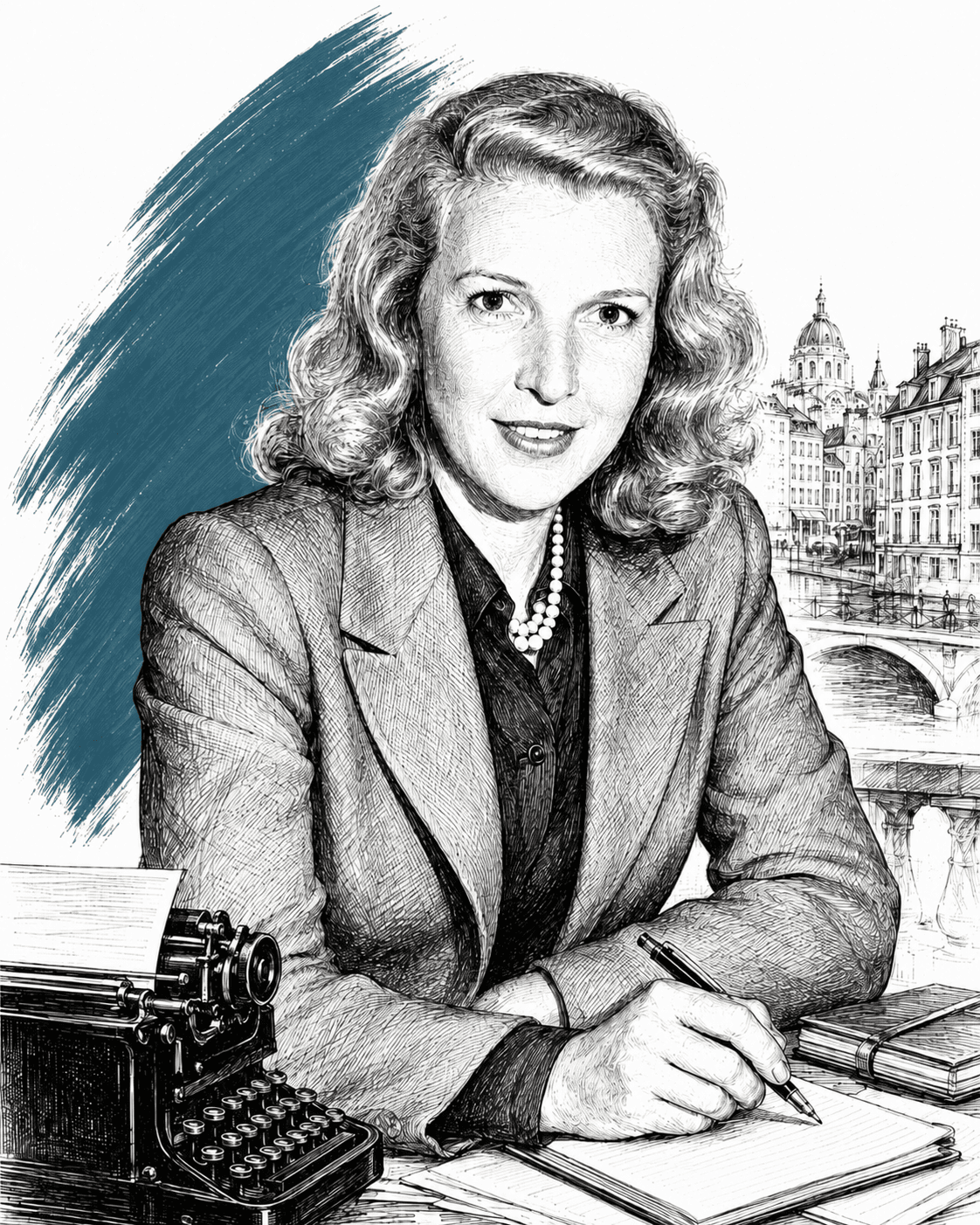

The Face of War
The collected war reporting, which she expanded in 1967 to take in Vietnam.
Read our take
Six dispatches on what the war was doing to civilians, and the reporting that got her barred.
In September 1966 the Guardian ran six articles by Gellhorn on what the war was doing to Vietnamese civilians. The paper collected them the same year as a thirty-four-page illustrated booklet. She was refused a visa to return to South Vietnam afterwards, and never reported from the country again. It is the shortest item in her bibliography and one of the most consequential.
Gellhorn was fifty-seven and had not reported a war in some years when she went to South Vietnam in 1966. She did not attach herself to the American briefings, which is the decision the whole series follows from. She went to the hospitals, the orphanages and the camps where displaced villagers were being held, and she wrote about what the war was doing to the people it was ostensibly being fought for. The Guardian ran the six pieces in September 1966.
The consequence was immediate. She was refused permission to return to South Vietnam and never reported from the country again, which is why a career of sixty years contains only these six articles on the defining American war of her lifetime. The Guardian collected them the same year as a thirty-four-page illustrated booklet — the physical object recorded here — and she later folded the reporting into expanded editions of The Face of War. The booklet itself is scarce.
Gellhorn begins A New Kind of War with an official promise to protect the Vietnamese population, then tests that language against the hospital ward. The children sitting on cool tiles make the contrast stark: their stillness is not evidence of peace. She traces their injuries to different attacks, refusing to make civilian suffering a story about only one side’s weapons. Returning from these individual lives to the opening promise, the report makes bodily safety the measure of a policy’s credibility.
In Real War and the War of Words, the soldier’s paperback and countdown shift attention from military pronouncements to an ordinary person. He talks about the aircraft, his depot job and going home. Gellhorn places their conversation between descriptions of support work and a criticism of exaggerated danger. Her affection for him complicates any simple opposition between criticizing the war and respecting its participants. The passage asks readers to notice particular hardships, including boredom, instead of treating every serviceman as the same heroic figure.
She went to the hospitals and the refugee camps rather than the briefings, which is why the series reads differently from most 1966 coverage.
Barred from returning. Few pieces of reporting carry their own consequence this legibly.
Thirty years after Spain, in a war her own country was prosecuting.
1966
Gellhorn reports from hospitals, orphanages, and camps for displaced people in South Vietnam.
September 1966
The Guardian publishes her six reports, subsequently gathered into an illustrated booklet that year.
1967
The reporting enters an expanded edition of The Face of War.
The collected war reporting, which she expanded in 1967 to take in Vietnam.
Read our take
Martha Gellhorn. It was published in 1966.
Six articles the Guardian ran in September 1966 on what the war was doing to Vietnamese civilians, collected the same year as a short illustrated booklet.
She was refused a visa to return to South Vietnam and never reported from there again.
The war's effect on Vietnamese civilians rather than the military campaign — her lifelong view from the ground.
In 1966, at fifty-seven, after some years away from war reporting.
Explore authors with a similar voice, perspective, and influence.
The other great journalist of the Spanish Civil War, reporting the same conflict with the same refusal to flatter the side he preferred.
View author
They covered Spain together and he dedicated a novel to her. Read them side by side for how differently the same war lands in fiction and in dispatch.
View author
The Brooklyn dropout who arrived in Paris broke at thirty-eight and wrote the exuberant, banned books that ended American censorship.
View authorThe sources below include the primary text, editions, scholarship, archival materials, and other records that informed this page. They document Vietnam: A New Kind of War, its publication, and its place in literary history.

Used to verify Vietnam: A New Kind of War's bibliographic context and its place within Martha Gellhorn's published work.
Used for independent archival, institutional, or historical context surrounding Martha Gellhorn and Vietnam: A New Kind of War.
Used to cross-check chronology, publication history, and the circumstances in which Vietnam: A New Kind of War appeared.
Used for an additional scholarly or biographical perspective on Vietnam: A New Kind of War and Martha Gellhorn's wider career.

Both reports read in a later course anthology; page numbers belong to that anthology, not the original booklet. No original-edition collation.
The primary text is the baseline reference for every book page. Additional references document publication history, interpretation, and historical context where that evidence is available.
 Explore more resources