
The Face of War
Its deliberate companion — the wars in one volume, everything else in this one.
Read our take
The other half of the career: fifty years of reporting on everything that was not a war.
The companion volume to The Face of War, collecting the peacetime journalism she filed between the conflicts — the American Depression, post-war Europe, the McCarthy years, Israel and the Palestinian refugee camps, England, and the state of the world as she found it into the 1980s. Read beside the war book it corrects the standard picture of her: the battlefield was where she became famous, not where she spent most of her working life.
Gellhorn is precise about what the book is: articles from six decades of peacetime reporting, where peacetime means only that the country in the background was not at war at the moment of writing. The pieces run from a lynching in the American South in 1931 through the House Un-American Activities Committee, Israel in the fifties, the Eichmann trial in 1962, the death of Franco in 1976, torture in El Salvador in 1984, and the British miners' strike. It is a wider range than the war book and a stranger one, because the through-line is not a conflict but her own attention.
The articles are grouped by decade and each decade opens with an introduction explaining what she was doing and how the piece came to be written. Those introductions are the pleasure of the volume and also its limit: she is candid about work, money, politics and her own misjudgements, and she leaves out the marriages, the love affairs and the child entirely. A reader looking for the life will find the working life and a deliberate silence around the rest.
In the Camden letter reproduced in “The Thirties,” the prize drawing compresses a public crisis into a small domestic choice. Gellhorn first presents the duck as food, so the father’s wish to make it his daughter’s pet interrupts the reader’s expectation. His answer makes deprivation include play and companionship, not hunger alone. Gellhorn’s hesitation about sounding sentimental also matters: she is defending emotional attention within a report addressed to an official. The detail asks that relief recipients be understood as parents and children rather than reduced to cases.
The opening of “White into Black” sets a remembered landscape against a place that refuses to serve as a writer’s retreat. Gellhorn admits that she chose Haiti for scenery and solitude before the hotel’s noise and dust interrupt that plan. The sensory contrast exposes the narrowness of her starting position: a country has been imagined as useful background for her novel. Her later judgment that she should have left adds hindsight to the arrival scene, warning readers that the traveller’s first impressions are neither complete knowledge nor an innocent view.
Fifty years of peacetime journalism is the bulk of the career, and almost none of the reputation. This is the volume that shows the proportion.
She covered American political fear at close range, and it produced some of the sharpest writing in the book.
Including the Palestine reporting, which we would rather present with its arguments visible than leave out.
1930s–1980s
Gellhorn writes the peacetime dispatches later selected for this collection.
1988
Atlantic Monthly Press publishes the collection as a companion to The Face of War.
2016
Eland publishes a new edition of the peacetime dispatches.
Its deliberate companion — the wars in one volume, everything else in this one.
Read our take
The Depression reporting that became fiction in 1936 appears here in its original form.
Read our takeMartha Gellhorn. It was published in 1988, the companion volume to her war journalism.
A collection of her peacetime journalism filed between the wars — the American Depression, post-war Europe, the McCarthy years, Israel and the Palestinian refugee camps, England, and the state of the world into the 1980s.
The Face of War collects her war reporting; The View from the Ground collects everything she filed in peacetime, drawn from six decades.
Gellhorn is precise about it: peacetime means only that the country she is reporting in is not itself at war. The subjects are often just as hard.
For the full range of Gellhorn the reporter beyond the battlefields — her eye trained on injustice at home and abroad.
Explore authors with a similar voice, perspective, and influence.
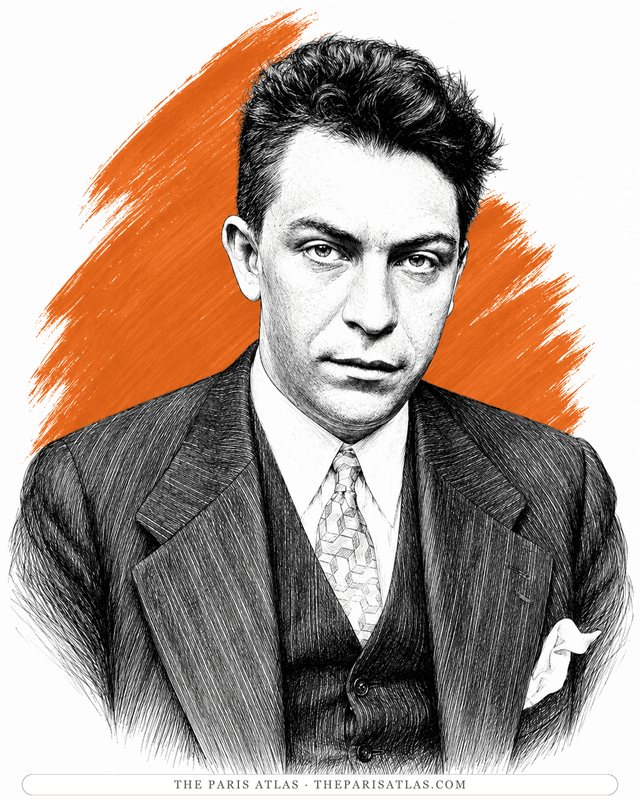
The other great journalist of the Spanish Civil War, reporting the same conflict with the same refusal to flatter the side he preferred.
View author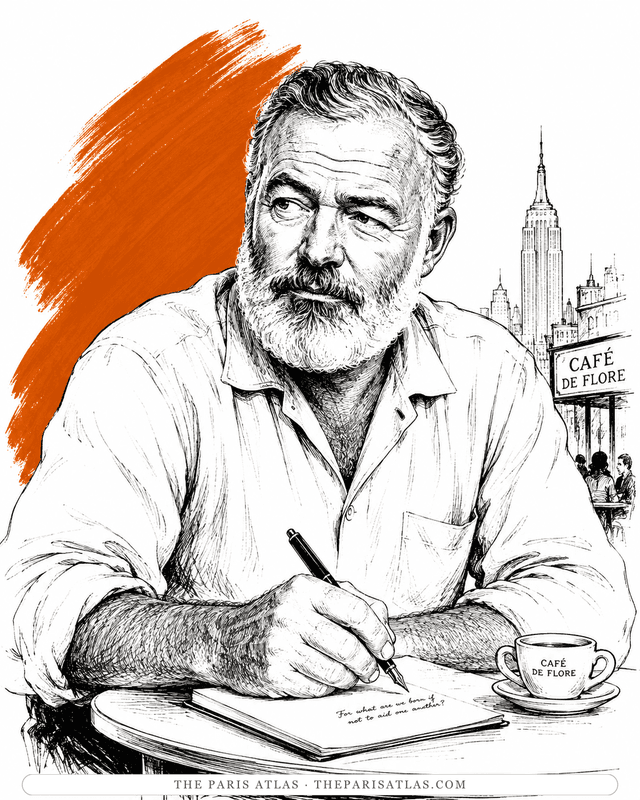
They covered Spain together and he dedicated a novel to her. Read them side by side for how differently the same war lands in fiction and in dispatch.
View author
The Brooklyn dropout who arrived in Paris broke at thirty-eight and wrote the exuberant, banned books that ended American censorship.
View authorThe sources below include the primary text, editions, scholarship, archival materials, and other records that informed this page. They document The View from the Ground, its publication, and its place in literary history.


Used to verify The View from the Ground's bibliographic context and its place within Martha Gellhorn's published work.
Used for independent archival, institutional, or historical context surrounding Martha Gellhorn and The View from the Ground.
Used to cross-check chronology, publication history, and the circumstances in which The View from the Ground appeared.
Used for an additional scholarly or biographical perspective on The View from the Ground and Martha Gellhorn's wider career.
Web source consulted for documented facts and historical context presented on the The View from the Ground page.

Primary report as reproduced within Gellhorn’s retrospective magazine essay; she identifies the appended reports as edited selections.
Limited to the freely readable arrival passage; the subscription-only remainder was not read.
Confirms the collection includes these pieces, not exact scene pagination or textual identity with the magazine versions.
The primary text is the baseline reference for every book page. Additional references document publication history, interpretation, and historical context where that evidence is available.
 Explore more resources