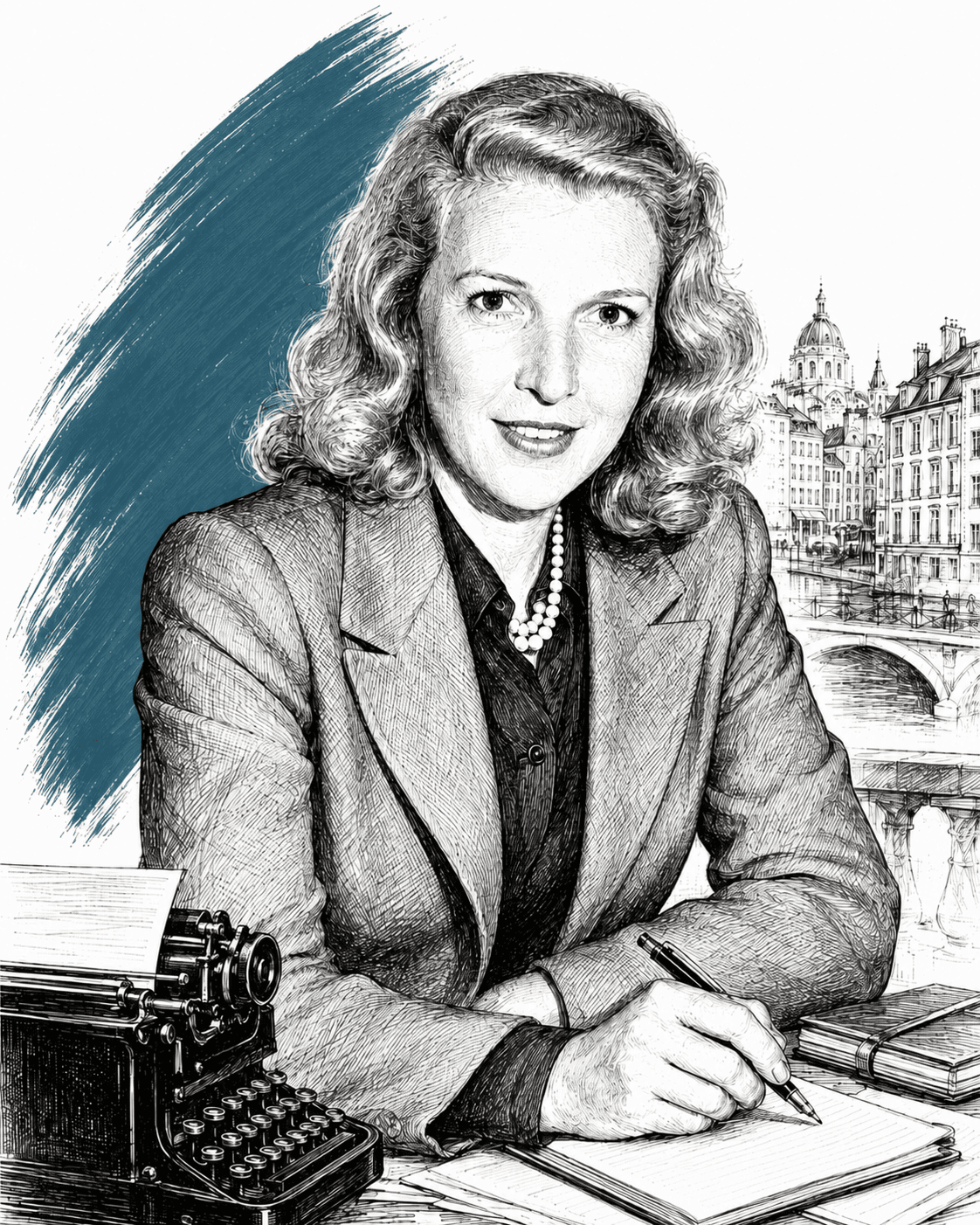

The Face of War
The same eye turned on war instead of poverty — read together, they show a single subject held for sixty years.
Read our take
Four novellas about Americans out of work, written by a twenty-seven-year-old who had spent a year being paid to go and look.
In 1934 Gellhorn was hired to travel the United States and report what federal relief was actually doing for people. She turned what she saw into four novellas about the unemployed — an old woman, two laid-off union men, a delivery boy, a child — and published them in 1936 with a commendation from H. G. Wells. It made her name at twenty-seven, two years before she reported a war, and it establishes the subject she kept for sixty years: not the catastrophe, but the people it lands on.
Four novellas, in this order: Mrs Maddison, Joe and Pete, Jim, and Ruby. Mrs Maddison is an older Southern woman keeping a household together as it enters a rural rehabilitation scheme. Joe and Pete are soup-factory workers and union men, after a strike and a layoff. Jim is a delivery boy who steals from the clothing store he works for so that he and the woman he is marrying can be properly dressed for the wedding. Ruby is a child drawn into prostitution for the sake of small things — candy, toiletries, a pair of roller skates.
Gellhorn wrote them out of the year she spent in the field for the Federal Emergency Relief Administration, and began the sequence while staying at the White House as a guest of the Roosevelts. H. G. Wells contributed an introductory commendation to the 1936 edition, praising the book for its accuracy and for refusing to be sentimental about it. The novella length is the point: each piece has room to follow a life rather than an incident, and it is the form she returned to for the rest of her career.
The borrowed paint on Mrs Maddison’s shoes and the repairs to her glove turn dressing into a small piece of work. In Denise Geneix’s French translation, the pin holding the hat’s flower rubs against her forehead: looking composed has a physical cost. Her later argument with Mrs Cahill extends this concern beyond appearances. She wants clothes for her granddaughter; the visitor points to her own worn shoes. Their disagreement is not simply over whether poverty exists, but over who may decide what relief is for. Mrs Maddison insists on remaining someone who provides for others.
Maybelle’s strength cannot solve the problem of a roof too fragile to bear her weight. The contrast gives her request a practical urgency: money and roofing material will not be enough without another person’s help. Mrs Maddison promises to speak to Alec, but the excerpt leaves the repair ahead of them, not accomplished. Placed before the relief-office visit, their conversation shows assistance beginning in an ordinary exchange between friends. It also makes Mrs Maddison more than an applicant for aid. Even while seeking help herself, she can connect someone else with the person needed to make a home habitable.
Go and look, talk to the people it is happening to, write it plainly. She worked that way for six more decades; this is the first place it is visible.
Two books published before she met Hemingway, and this is the one that made her reputation.
Four novellas, no padding, no uplift. The last one is about a child and it is very difficult to forget.
1934
Gellhorn is hired to travel the United States and report what federal relief is doing for people, beginning the sequence as a guest of the Roosevelts at the White House.
1936
William Morrow publishes the four novellas about the unemployed, with an introductory commendation by H. G. Wells; it makes her name at twenty-seven, two years before Spain.
2012
Eland reissues it as The Trouble I've Seen: Four Stories from the Great Depression, with an introduction by Caroline Moorehead.
The same eye turned on war instead of poverty — read together, they show a single subject held for sixty years.
Read our takeMartha Gellhorn. Published in 1936, it was an early book, written before her war reporting made her famous.
Four novellas about the unemployed during the Depression — an old woman, two laid-off union men, a delivery boy, and a child — drawn from what Gellhorn saw traveling the United States.
In 1934 she was hired to travel the country and report what federal relief was actually doing for people. She turned what she saw into fiction.
Four linked novellas — documentary fiction rooted directly in her relief-work reporting.
It was praised on publication and marked Gellhorn's arrival, still in her twenties, as a serious writer attentive to ordinary lives.
Explore authors with a similar voice, perspective, and influence.

The other great journalist of the Spanish Civil War, reporting the same conflict with the same refusal to flatter the side he preferred.
View author
They covered Spain together and he dedicated a novel to her. Read them side by side for how differently the same war lands in fiction and in dispatch.
View author
The Brooklyn dropout who arrived in Paris broke at thirty-eight and wrote the exuberant, banned books that ended American censorship.
View authorThe sources below include the primary text, editions, scholarship, archival materials, and other records that informed this page. They document The Trouble I've Seen, its publication, and its place in literary history.


Used to verify The Trouble I've Seen's bibliographic context and its place within Martha Gellhorn's published work.
Used for independent archival, institutional, or historical context surrounding Martha Gellhorn and The Trouble I've Seen.
Used to cross-check chronology, publication history, and the circumstances in which The Trouble I've Seen appeared.
Used for an additional scholarly or biographical perspective on The Trouble I've Seen and Martha Gellhorn's wider career.
Publisher’s opening excerpt in Denise Geneix’s French translation, revised by the publisher. Supports the clothes, relief disagreement and houseboat readings; not a complete novella or an English-edition collation.
The primary text is the baseline reference for every book page. Additional references document publication history, interpretation, and historical context where that evidence is available.
 Explore more resources