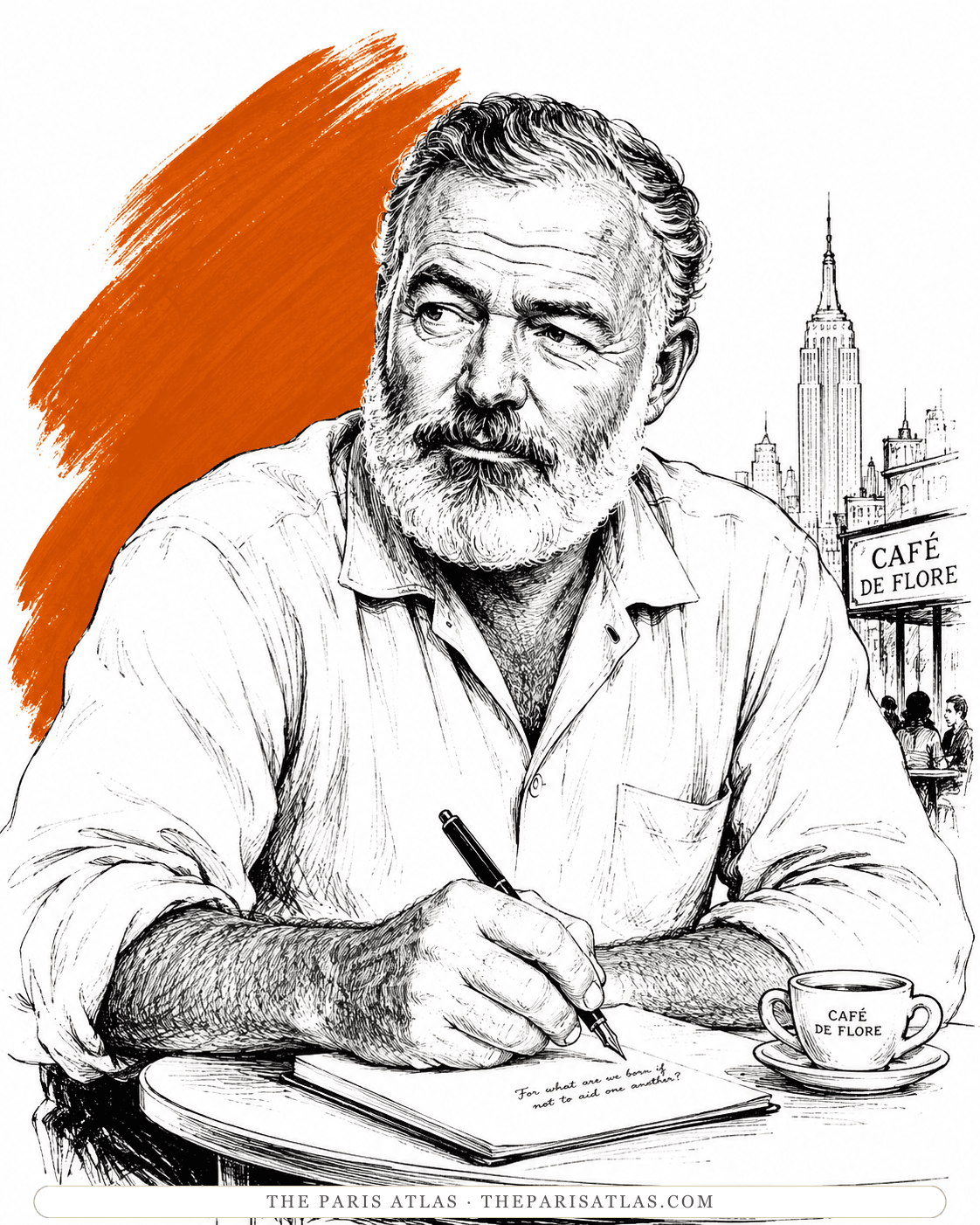

Ernest Hemingway: Selected Letters 1917–1961
Baker's six hundred — the single-volume door this edition turned into an archive.
Read our take
Every letter he ever wrote, eventually: the Cambridge edition's decades-long project to publish the complete correspondence — volume by volume.
Where Carlos Baker chose six hundred letters, the Cambridge Edition of the Letters of Ernest Hemingway intends all of them — an estimated six thousand, annotated to scholarly standard, published in chronological volumes since 2011 by Cambridge University Press with the Hemingway Letters Project at Penn State. Volume 1 opens with a schoolboy in 1907; the project plans some seventeen volumes and will take a generation to finish. One page here stands for the whole enterprise. (Letters — nothing here to spoil.)
The project exists because the Baker selection, revelatory as it was, showed how much lay beneath: thousands of unpublished letters across libraries and private hands, the fullest continuous record of the century's most documented literary life. The Hemingway Letters Project — headquartered at Penn State, with the estate's blessing — began publishing through Cambridge in 2011: every recoverable letter, complete and annotated, in chronological order. Volume 1 (1907–1922) runs from childhood notes to the eve of the Paris breakthrough; successive volumes have carried the record through the twenties and thirties, with six published by 2024 and the transatlantic Paris years among them.[1]
For readers, the edition changes the scale of the man: the daily correspondent — wheedling, joking, ordering fishing tackle, courting, feuding, grieving — restored around the famous crises the selections kept. For scholars it is the standard citation. For this shelf it is the completist's horizon: the Baker volume remains the single-evening door; the Cambridge edition is the archive it opened, arriving volume by volume for years yet.[1]
The complete recoverable correspondence, in chronological volumes: childhood and Oak Park; the war and the Toronto and Chicago apprenticeships; Paris, the little magazines, and the first books; the Key West and Spain decades — each volume with full scholarly apparatus: identifications, chronologies, and the patient footnoting of every fishing partner and forgotten editor.[1]
Not a straight-through read but a life to visit — open any volume to any month and the voice is running, unguarded, at full speed.[1]
In a February 1922 letter to his mother, excerpted by editor Sandra Spanier, Paris becomes both a place of satisfaction and a place where Hemingway's writing is being noticed. He reports dinner with Gertrude Stein, her interest in his poems, and a forthcoming visit to Ezra Pound. These details give the enthusiasm a social shape: belonging depends on invitations, conversation and encouragement, not simply on being abroad. Written to a parent, the report also presents a young writer finding his footing. It is a moment of hope, not a retrospective account of inevitable success.
The edition's apparently immediate voice depends on work that readers can easily overlook. Sandra Spanier describes locating letters scattered among institutions and private owners; the Penn State team also researches recipients and builds chronologies. A hotel register, for example, helped establish dates for Volume 5. Such evidence changes how a casual reference can be understood: a name or journey becomes a connection that can be checked. The resulting sequence is not a diary Hemingway deliberately kept. It is a reconstruction from surviving messages, with context supplied by other people's research.
No literary life of the century is being documented at this resolution — the daily texture of it all, restored.
The Paris years arrive letter by letter — deals, feuds, and friendships as they happened, week to week.
When a biography cites a Hemingway letter now, this is where it points.
1907
The correspondence the edition gathers opens with a schoolboy's notes — the start of the fullest continuous record of the century's most documented literary life.
2011
Cambridge University Press begins publishing the complete letters — Volume 1, 1907–1922 — with the Hemingway Letters Project at Penn State; some seventeen volumes are planned.
2024
Six volumes are in print, carrying the record through the twenties and thirties; the project is decades from done.
Baker's six hundred — the single-volume door this edition turned into an archive.
Read our take
The Perkins thread pulled out whole — one correspondence, one volume.
Read our take
The Cambridge Edition — a scholarly project to publish all of Hemingway's correspondence, an estimated six thousand letters, in chronological volumes since 2011.
Where Carlos Baker chose six hundred letters, the Cambridge edition intends every recoverable one, complete and annotated to scholarly standard.
Roughly six thousand letters across a planned seventeen volumes — begun in 2011, six volumes in by 2024, and decades from finished.
Cambridge University Press, with the Hemingway Letters Project headquartered at Penn State and the estate's blessing.
Most readers want Baker's single-volume selection first; the Cambridge edition is the whole archive it opened, best visited volume by volume.
Explore authors with a similar voice, perspective, and influence.
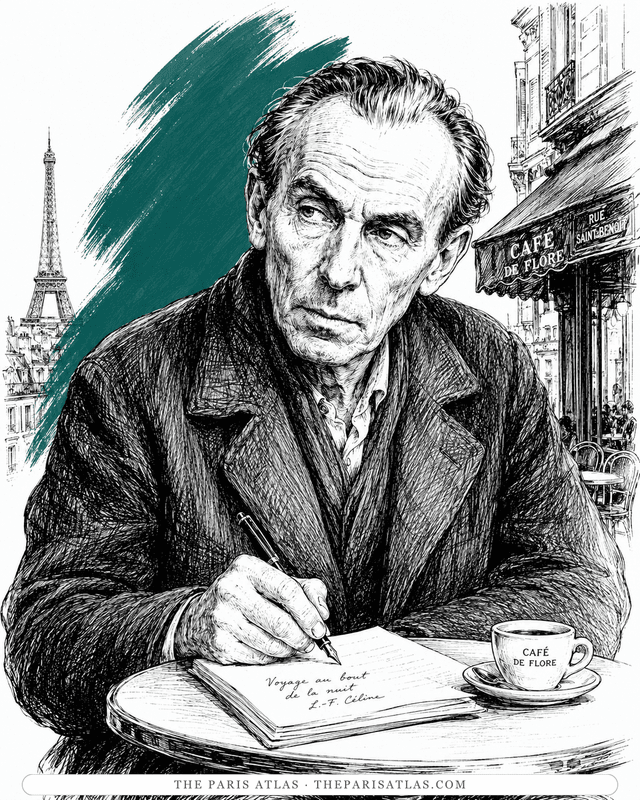
The other great stylist the Great War produced — where Hemingway cut the language down, Céline set it on fire. The same wound, opposite treatments.
View author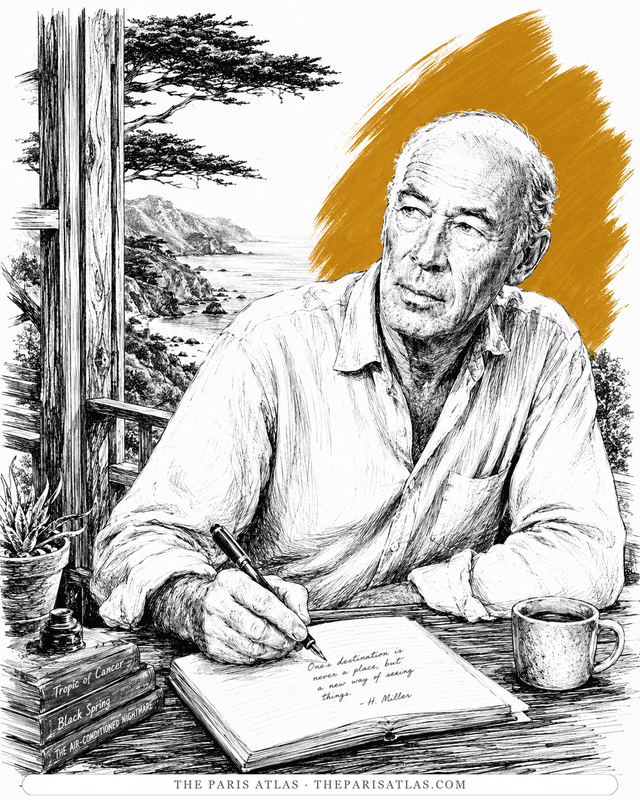
Paris on no money a decade later, with the restraint removed. Miller called Hemingway's Paris a tourist's Paris; readers get to referee.
View author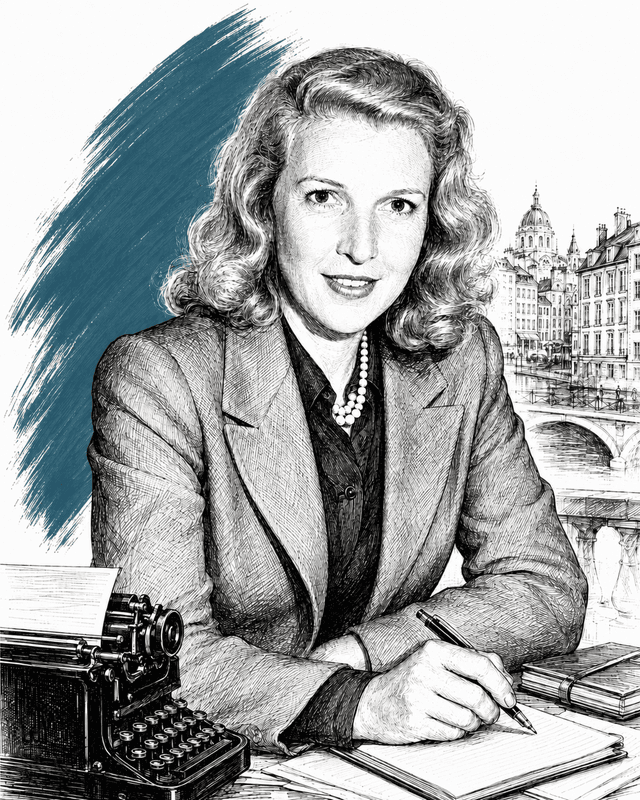
War correspondent who covered the Spanish Civil War, D-Day, and conflicts across five more decades; Hemingway's third wife, 1940–1945.
View authorThe sources below include the primary text, editions, scholarship, archival materials, and other records that informed this page. They document The Letters of Ernest Hemingway, its publication, and its place in literary history.


Used to place The Letters of Ernest Hemingway within Ernest Hemingway's published work and verify its bibliographic context.
Used for independent biographical, archival, or historical context surrounding Ernest Hemingway's career and the period in which The Letters of Ernest Hemingway appeared.
Used to cross-check authorship, chronology, and the work's place in Ernest Hemingway's wider catalogue.
Used to verify Ernest Hemingway's bibliography and place The Letters of Ernest Hemingway within the broader chronology of Ernest Hemingway's career.
The edition's general editor discusses assembling the letters and quotes passages from a February 1922 letter to Hemingway's mother.
Project participants explain annotation, chronology and archival research; this is not a transcript of Hemingway's correspondence.
The primary text is the baseline reference for every book page. Additional references document publication history, interpretation, and historical context where that evidence is available.
 Explore more resources