
François Mauriac
- Author
Met · 1933-03
An unlikely pairing preserved by Vitoux: Céline and François Mauriac dine together at the Rendez-vous des Mariniers in March 1933, the year after Journey to the End of the Night.
The doctor of the Paris slums who wrote the century's blackest, funniest novel — and changed the sound of French prose.
Few writers make the page feel as physically alive as Louis-Ferdinand Céline. His sentences mutter, sprint, stammer, explode, fall silent, and suddenly open into lyric beauty. What looks spontaneous was created through obsessive revision. He did not merely put slang into literature; he rebuilt the novel around breath, interruption, nervous rhythm, and the pressure of a speaking voice.
His life moved through an extraordinary series of roles: Paris shopkeeper's son, decorated cavalryman, colonial employee, public-health doctor, literary sensation, political pamphleteer, fugitive, prisoner, exile, and late-life master. The polemical writings he published before and during the Second World War permanently changed his reputation. His novels nevertheless remain among the boldest experiments in modern French prose.
Louis-Ferdinand Destouches was wounded and decorated in the first weeks of the Great War, drifted through colonial Africa and a Ford assembly line in Detroit, and settled into medical practice among the poor of suburban Paris — treating patients by day and, at night, writing under his grandmother's name, Céline.
Journey to the End of the Night (1932) detonated on arrival.[1] Written in a spoken, spat, ranting French that critics said couldn't be literature until suddenly it was the most influential style in the language, it followed one battered survivor through war, empire, America, and back to the Paris gutter. Death on the Installment Plan reached further back, into a shrieking Belle Époque childhood, and pushed the style further out.
The style was the revolution: a spoken, ranting French strung on ellipses — the famous three dots — that pulled literary prose down to the pitch of a voice talking in your ear. Sartre put a line of his at the front of Nausea, Henry Miller read Journey in manuscript while writing Tropic of Cancer, and the shock waves run through Vonnegut, Heller, and every novelist since who has trusted a voice over a plot. The German trilogy of his last years — Castle to Castle, North, Rigadoon — turned his own flight across wartime Germany into late masterpieces.
Then came the part of Céline's life that permanently complicated his reputation. Between 1937 and 1941, he published three political pamphlets setting out highly controversial ideas about Jews, French society, politics, and the direction Europe was taking. He remained in Paris during the German Occupation before fleeing France in 1944 and eventually reaching Denmark, where he was arrested.[2] A French court later convicted him of collaboration in absentia, followed by an amnesty in 1951. His political writings have continued to complicate public recognition of Céline ever since, even as his novels remain widely read, studied, translated, and admired for the revolution they brought to modern prose.
Céline was born into a lower-middle-class family. His father worked in insurance, while his mother sold and repaired antique lace. The family settled in Passage Choiseul, one of Paris's covered shopping arcades: a narrow commercial world of shop windows, damp corridors, gossip, customers, debt, and the daily anxiety of keeping a small business alive.
He later transformed the arcade into the Passage des Bérésinas in Death on the Installment Plan. The adult writer's fascination with cramped interiors began here, along with his ear for sales talk, complaints, insults, and half-finished stories. His parents sent him to England and Germany to improve his languages and placed him in commercial apprenticeships, but he never settled comfortably into the respectable future planned for him.
In 1912, at eighteen, Destouches enlisted in the 12th Cuirassiers. On October 27, 1914, during a liaison mission near Poelkapelle in Belgium, a bullet struck his right arm and caused serious nerve damage. He received the Médaille militaire and Croix de Guerre and was removed from front-line service.[3]
The experience became the emotional foundation of Journey to the End of the Night. In Céline's war, officers make grand declarations while soldiers try not to be killed. The body, not the slogan, tells the truth. This became one of his lasting methods: whenever society presents an ideal — military glory, colonial progress, industrial efficiency, respectable family life — he looks for the frightened, exhausted person trapped beneath it.
After leaving the army, Destouches worked briefly at the French consulate in London. In 1916 he went to Cameroon, then under French colonial rule, to work for a forestry company. Illness brought him back to France the following year. In Journey, the episode returns without exotic romance: the colony appears as a landscape of fever, boredom, exploitation, greed, and administrative absurdity.
He studied medicine in Rennes and Paris and completed a 1924 thesis on Ignaz Semmelweis[4], the doctor who struggled to persuade other physicians that handwashing could prevent deadly infections in maternity wards. Céline later reshaped the thesis into Semmelweis, a dramatic portrait of a visionary destroyed by the resistance of his profession.
Work with the League of Nations Health Section took him through Europe and North America. Modern factories, particularly the Ford system around Detroit, supplied material for his portrait of industrial labor — the raw material he later turned into La Médecine chez Ford. He eventually practiced medicine in working-class Clichy. By day he listened to patients describe pain, money trouble, exhaustion, and fear; by night he wrote. Medicine trained his attention on bodies, symptoms, evasions, and the stories people tell when they need to be understood.
Writing as Louis-Ferdinand Céline, he published Voyage au bout de la nuit — Journey to the End of the Night — in 1932. Its narrator, Ferdinand Bardamu, travels through the First World War, colonial Africa, industrial America, and the poor outskirts of Paris. The novel has the shape of an adventure, but each destination reveals another system for using people up: the army, the colony, the factory, and even medicine.
The book became an immediate sensation. It was widely expected to win the Prix Goncourt but received the Prix Renaudot instead. Readers understood that the deeper shock was not simply the subject matter. It was the voice: intimate, unstable, vulgar, comic, frightened, and musical. It sounded less like an author presenting a finished object than a person urgently speaking before someone could interrupt him.
Céline's second major novel, Mort à crédit — published in 1936 and translated as Death on the Installment Plan or Death on Credit[5] — moves backward into Ferdinand's childhood and adolescence. The family shop, Passage Choiseul, disastrous apprenticeships, parental rage, sexual curiosity, and impossible schemes return in grotesquely enlarged form.
The book is darker and formally wilder than Journey. Its adults are frauds, dreamers, bullies, or exhausted failures, while children absorb the panic around them and answer it with fantasy, desire, lies, and rebellion. The language and sexual material alarmed the publisher. Passages were removed over fears of an obscenity case, leaving visible gaps in early printings. What once seemed excessive is now widely treated as a central achievement of modern French fiction.
Céline called his method a "little music" and said he had brought the spoken word into print.[6] He was not simply copying conversation. Ordinary speech is full of repetition and empty space; Céline composed the illusion of speech, arranging it so precisely that the reader feels a voice forming in the present moment.
His famous rows of three dots break sentences into pulses, permit abrupt turns, and suggest thought arriving faster than grammar can contain it. Exclamation marks turn narration into performance. Fragments isolate an image or a blow. A conventional paragraph explains; a Céline paragraph seems to breathe, flinch, accelerate, and recover.
He did not invent slang, ellipses, or broken syntax. His innovation was to make them govern the architecture of an entire novel. The narrator's voice no longer sat above the story as commentary. It became the story's nervous system.
Céline combined barracks slang, workers' speech, medical vocabulary, obscenity, sales patter, music-hall timing, lyric description, and sudden passages of classical beauty. A page can move from a joke to a diagnosis, then from an insult to an image of tenderness.
This mixture also makes him difficult to translate. The plot crosses languages more easily than the pressure of the French, which depends on sound, social register, double meaning, and the precise distance between a common word and an outrageous one.
In Céline, comedy is not a break from suffering. People are funniest when frightened, vain, ill, sexually excited, or desperate to seem important. His black humor prevents misery from becoming a solemn lecture. It also denies the narrator any position of moral purity: Bardamu and Ferdinand expose themselves whenever they expose the world.
Céline's first-person voice does not merely report. It sweats, aches, panics, tires, becomes aroused, feels disgust, and loses control. The result is unusually immediate and sometimes uncomfortable. The reader is denied the safe distance of a calm, trustworthy guide.
The body in Céline is hungry, feverish, wounded, embarrassed, desirous, diseased, and ridiculous. Sex is rarely presented as a separate romantic realm. It mixes with money, performance, power, illness, shame, prostitution, and the comedy of people failing to control themselves.
In Death on the Installment Plan, adolescent desire appears through fantasy and humiliation. In the recovered novel War, hospital wards, injured soldiers, prostitution, bodily damage, and appetite occupy the same feverish atmosphere. This remains shocking because Céline removes the polite boundary between "serious" suffering and private physical life. War, work, sickness, and sex all happen to the same vulnerable body.
Between 1937 and 1941, Céline published three political pamphlets: Bagatelles pour un massacre (Trifles for a Massacre, 1937), L'École des cadavres (The School of Corpses, 1938), and Les Beaux Draps (A Fine Mess, 1941). In them, he set out highly controversial ideas about Jews, French society, politics, war, and the direction Europe was taking. These writings became inseparable from his public reputation and have continued to complicate the way his literary legacy is discussed.
During the German occupation, Céline held no official government post and did not formally join the principal collaborationist organizations. He nevertheless sent letters to newspapers associated with the collaborationist press. As the liberation of Paris approached in 1944, he fled France with his wife, the dancer Lucette Almanzor, and their cat, Bébert.
Céline's reputation became unusually complicated after the war. His major novels continued to be published, translated, studied, and admired for their literary importance, while his political writings made official recognition far more controversial. In 2011, his name was removed from a French government list of national commemorations, and in 2018 Gallimard suspended plans to republish the three political pamphlets. As a result, Céline has remained an important figure in French literature while also being one whose public commemoration continues to provoke debate.
The idea that Céline was a conspiracy theorist referred mainly to a large, all-purpose theory of secret Jewish control that Céline developed in Bagatelles pour un massacre and repeated in later pamphlets. He blamed Jews for several contradictory forces at once.
His principal claims were:
Céline supported some of this argument by citing The Protocols of the Elders of Zion, a fabricated document that pretended to record secret Jewish plans for world control.[7] So, in plain terms, Céline accused Jews of controlling nearly every institution he distrusted — banks, governments, newspapers, publishing, entertainment, industry, international diplomacy, communism, capitalism, and war itself.
Céline and Lucette traveled through Germany to Sigmaringen, where the remnants of the Vichy government had gathered under German protection, and then reached Denmark. Danish authorities arrested him in Copenhagen in December 1945 after France requested his extradition. He spent time in prison and a hospital before being released in 1947.
A French court later convicted him in absentia for collaboration. In 1951, he received an amnesty connected with his status as a disabled veteran and returned to France, settling with Lucette in Meudon.
His first books after exile attracted limited attention, but D'un château l'autre (Castle to Castle) restored his literary presence in 1957. It was followed by Nord (North) in 1960 and the posthumous Rigodon (Rigadoon) in 1969. Often called the German trilogy, these books recount flight, bombardment, political collapse, and refugee existence through an even more fractured style. The aging narrator complains, exaggerates, contradicts himself, and then produces scenes of extraordinary clarity. The trilogy is less a calm defense than a literary survival act.
Céline spent his final decade at 25ter Route des Gardes in Meudon. Lucette taught dance while he continued writing, increasingly withdrawn from Parisian literary society. On June 30, 1961, he completed a revised draft of Rigodon.
The next day, July 1, he died suddenly at home, aged sixty-seven. Contemporary reporting described an embolism; later biographies have often called it a ruptured aneurysm or stroke. The available accounts agree that he suffered a sudden fatal vascular event.
His family delayed the public announcement. He was quietly buried in Meudon on July 4 under his civil name, Dr. Louis Destouches, before most of the literary world knew he had died. The secrecy suited a writer who had spent his last years both famous and isolated. Rigodon remained unpublished until 1969.
When Céline fled his Montmartre home in 1944, a vast body of manuscripts disappeared. He maintained that they had been stolen. In 2021, roughly six thousand manuscript leaves were revealed, including the previously unpublished Guerre and Londres, both issued in 2022.
The recovered pages connect war, London, medicine, sexuality, and the early formation of his voice. They also expose the enormous labor beneath prose that pretends to be pouring out uncontrollably. The surviving manuscript of Death on the Installment Plan entered the Bibliothèque nationale de France in 2024.
Céline did not make literature more realistic merely by adding vulgar words. He changed the relationship between writing and the human voice. After him, a novel could sound unstable without being shapeless, conversational without being casual, and musical without traditional elegance. Jean-Paul Sartre's early engagement was explicit: he used a line from Céline's play L'Église as the epigraph to Nausea.
His place in literary history rests on two facts that cannot be collapsed into one verdict. The political pamphlets explain why official honors remain contested. The novels, meanwhile, transformed the art of prose.
Nearly a century after Journey to the End of the Night, Céline can still sound less like a historical monument than a dangerous contemporary voice. He made written French breathe, cough, swear, panic, joke, and sing. Many writers adopted parts of his method. Very few reproduced the sensation of a mind and body struggling to remain alive inside every sentence.
A few scenes from Céline's life — drawn illustrations, not photographs.
A survey of Céline's published output — novels, plays, ballets, screenplays, political and polemical writings, medical texts, prefaces and miscellaneous prose, writings on writing, songs, and the correspondence collected in his lifetime and after.
Histoire du petit Mouck (The Story of Little Muck) — a story Céline wrote as Louis Destouches for his young daughter Colette, with illustrations by his first wife, Édith Follet. It was later published in 1997 and issued by Gallimard in a facsimile edition in 2025.
Céline was fascinated by dance and repeatedly tried to have ballets produced. Several of these pieces originally appeared inside other publications before being collected in Ballets sans musique, sans personne, sans rien in 1959.
These are distinct from Céline's novels and form another substantial part of his published output. The standard scholarly collection Écrits polémiques brings together seven of the principal pieces.
Before becoming famous as Céline, Dr. Louis Destouches wrote extensively about medicine, public health, industrial organization, hygiene, malaria, and social medicine. Scholars identify roughly twenty medical/public-health texts from this period. Most were later gathered in Semmelweis et autres écrits médicaux.
Among the principal identifiable titles are:
There are also numerous shorter pieces, statements, prefaces, literary comments, and responses scattered through newspapers, journals, later collections, and the Cahiers Céline.
Céline also wrote songs. Two are particularly well documented:
Both were set to music in collaboration with Jean Noceti, and Céline himself was recorded singing them. They were later collected in Chansons (Songs), published in 1981.
Céline was an enormous letter writer. The following are collections of his letters, rather than separate literary works. Some overlap because later scholarly editions reprinted or expanded earlier collections.
Born Louis Ferdinand Auguste Destouches at Courbevoie on 27 May. He grows up in and around Paris, most memorably near Passage Choiseul — the enclosed world of small shops, customers, family quarrels, and money worries he would later transform into the feverish childhood landscape of Death on the Installment Plan.
At eighteen, Destouches volunteers for the cavalry, joining the 12th Cuirassiers. He is already in uniform when Europe goes to war two years later.
During the war's first autumn, he volunteers for a dangerous liaison mission in Flanders and is wounded in the right arm. He is decorated for his service. The damaged arm, headaches, ringing in his ears, and other lingering effects of the war remain part of his life and later enter his fiction.
Removed from front-line service, he spends time working at the French consulate in London and then leaves for colonial Cameroon, where he works for a trading company. Illness eventually sends him back to France. London and Africa will both reappear, radically transformed, in his later fiction.
Studies medicine, first at Rennes and later in Paris. His doctoral thesis is devoted to the Hungarian physician Ignaz Semmelweis, whose struggle to convince other doctors of the importance of hygiene Céline turns into something already halfway between medical history and literature.
Qualifies in medicine and joins the Health Section of the League of Nations. His missions take him across Europe and beyond, including a visit to the Ford factories in Detroit — an encounter with modern industrial production that will later reappear in Journey to the End of the Night.
Meets the American dancer Elizabeth Craig, who becomes his companion during the years in which he begins transforming himself from Dr. Louis Destouches into a novelist. Journey to the End of the Night will eventually be dedicated to her.
Establishes himself as a doctor in working-class Clichy. His private practice struggles, but he continues working in public dispensaries while beginning the manuscript that will become Journey to the End of the Night — patients by day, writing whenever he can.
Journey to the End of the Night appears under the name Louis-Ferdinand Céline, Céline being the first name of his maternal grandmother. The novel is widely expected to win the Prix Goncourt; Guy Mazeline receives it instead, while Céline wins the Prix Renaudot. The controversy only adds to the book's explosive arrival.
Publishes Death on the Installment Plan, pushing his broken, spoken, rhythm-driven prose further than before. Later that year he travels to the Soviet Union and, after returning, publishes Mea Culpa, a short political essay sharply critical of Soviet communism.
Publishes three political pamphlets: Bagatelles pour un massacre (Trifles for a Massacre, 1937), L'École des cadavres (The School of Corpses, 1938), and Les Beaux Draps (A Fine Mess, 1941). These writings become a lasting part of the debate surrounding his public reputation.
Marries the dancer Lucette Almanzor, who will remain with him through flight, exile, imprisonment, his return to France, and his final years at Meudon.
Publishes Guignol's Band, his wild return to the London of his youth. In June, with the Allied armies advancing through France, Céline leaves Paris with Lucette and their famous cat Bébert. He abandons a large quantity of papers and manuscripts at his apartment on 4 rue Girardon — material he believes lost for the rest of his life.
Céline, Lucette, and Bébert cross a collapsing Germany, passing through Baden-Baden and eventually Sigmaringen, where the remnants of the Vichy government and other French exiles have gathered. In March 1945 they finally reach Copenhagen. Decades later, Céline will turn this chaotic journey into the material of his German trilogy.
Danish authorities arrest Céline in Copenhagen on 17 December 1945 after France seeks his extradition. He spends roughly a year and a half imprisoned before being released in 1947, although he is required to remain in Denmark.
While still living in Denmark, Céline is tried in absentia in France. On 21 February, the Paris Court of Justice sentences him to one year in prison, a fine, confiscation of part of his property, and national degradation.
Céline receives an amnesty in April and returns to France in July after six years away. He and Lucette settle at Meudon, where he eventually resumes medical practice from the house, continuing the strange double life he had lived before fame: Céline the novelist upstairs, Dr. Destouches seeing patients at the door.
Publishes Féerie pour une autre fois (Fable for Another Time) and Normance. The books extend his increasingly fragmented late style, but neither restores the enormous public attention that had surrounded his first two novels.
D'un château l'autre (Castle to Castle) appears. Drawing on his months among the French exiles at Sigmaringen, the novel brings Céline forcefully back into French literary discussion and begins the extraordinary final phase of his career.
Publishes Nord (North), returning to the flight through Germany. Together with Castle to Castle and the still-unpublished Rigodon, it forms what is now known as Céline's German trilogy.
Works through the final version of Rigodon at Meudon. Céline dies suddenly at home on 1 July 1961, aged sixty-seven. His death is initially kept private, and he is quietly buried at Meudon. Ernest Hemingway dies in Idaho the following day, 2 July — an extraordinary coincidence involving two writers permanently marked by the First World War.
After his death, two major works appear: Le Pont de Londres: Guignol's Band II in 1964 and Rigodon in 1969, completing the German trilogy and extending his published career almost a decade beyond his death.
One of the strangest episodes in modern literary history: thousands of pages of Céline manuscripts believed lost since 1944 are revealed to have survived. The recovered material includes unpublished fiction, drafts, and large portions of works thought incomplete.
The rediscovery produces an unexpected second posthumous career. Guerre (War) and Londres (London) appear in 2022, followed by La Volonté du roi Krogold (The Will of King Krogold) and related recovered material in 2023 — new Céline books appearing more than sixty years after his death.
Met · 1933-03
An unlikely pairing preserved by Vitoux: Céline and François Mauriac dine together at the Rendez-vous des Mariniers in March 1933, the year after Journey to the End of the Night.

Met · 1926
The American dancer of his Montparnasse years — companion through the writing of Journey to the End of the Night, and the name on its dedication page.

Met · 1936
The dancer he married in 1943 and never left: through the flight across Germany, the Danish prison and exile, and the last years at Meudon — she survived him by fifty-eight years, guarding the house and the estate.

Met
Montmartre neighbors and the tightest of the painter friendships — Gen Paul drew and painted him for decades, quarrels included, and haunts the delirious late novels in transposed form.
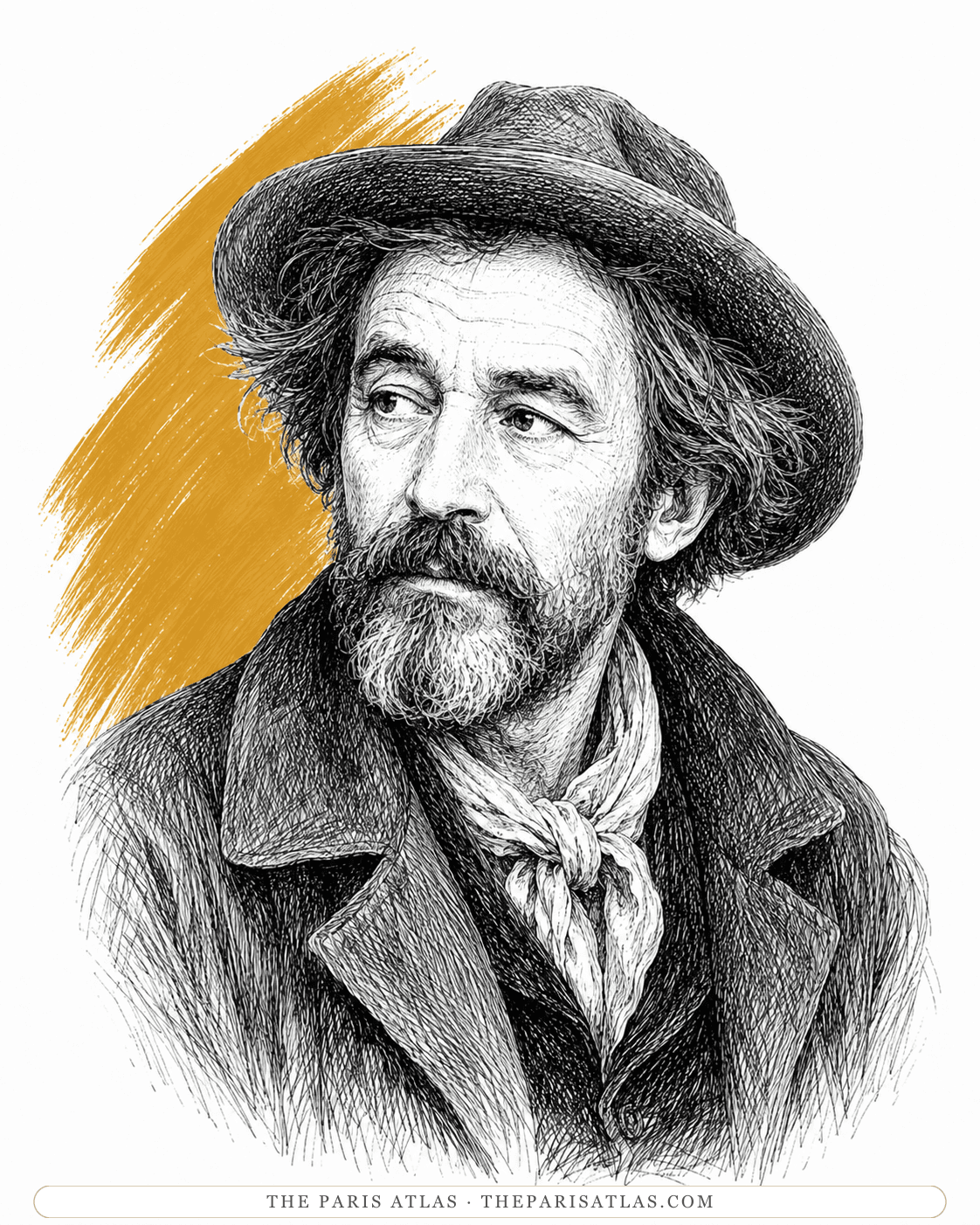
Met
The muralist with the barge on the Seine — confidant from before the fame, host of the floating studio, and author of the warmest memoir of the man, La Brinquebale avec Céline.

Met · 1948
The American critic who championed the novels, corresponded with the Danish exile, and visited in 1948 — an encounter that produced The Crippled Giant, his disenchanted record of the stay.
Clashed with · 1948
Hindus championed the novels and made a pilgrimage to the Danish exile in 1948; the visit soured. The Crippled Giant, the disenchanted book he drew from it, ended the acquaintance and drew Céline's lasting resentment.

Clashed with · 1945–1948
The dispute begins with the passage in Sartre's essay in Les Temps modernes no. 3 (December 1945) asserting that Céline had supported Nazi political positions because he had been paid to do so. Céline learned of the passage in Denmark and replied in late 1947 with the short pamphlet À l'agité du bocal, published by Albert Paraz in 1948 in Le Gala des vaches and in Pierre Lanauve de Tartas's separate edition.
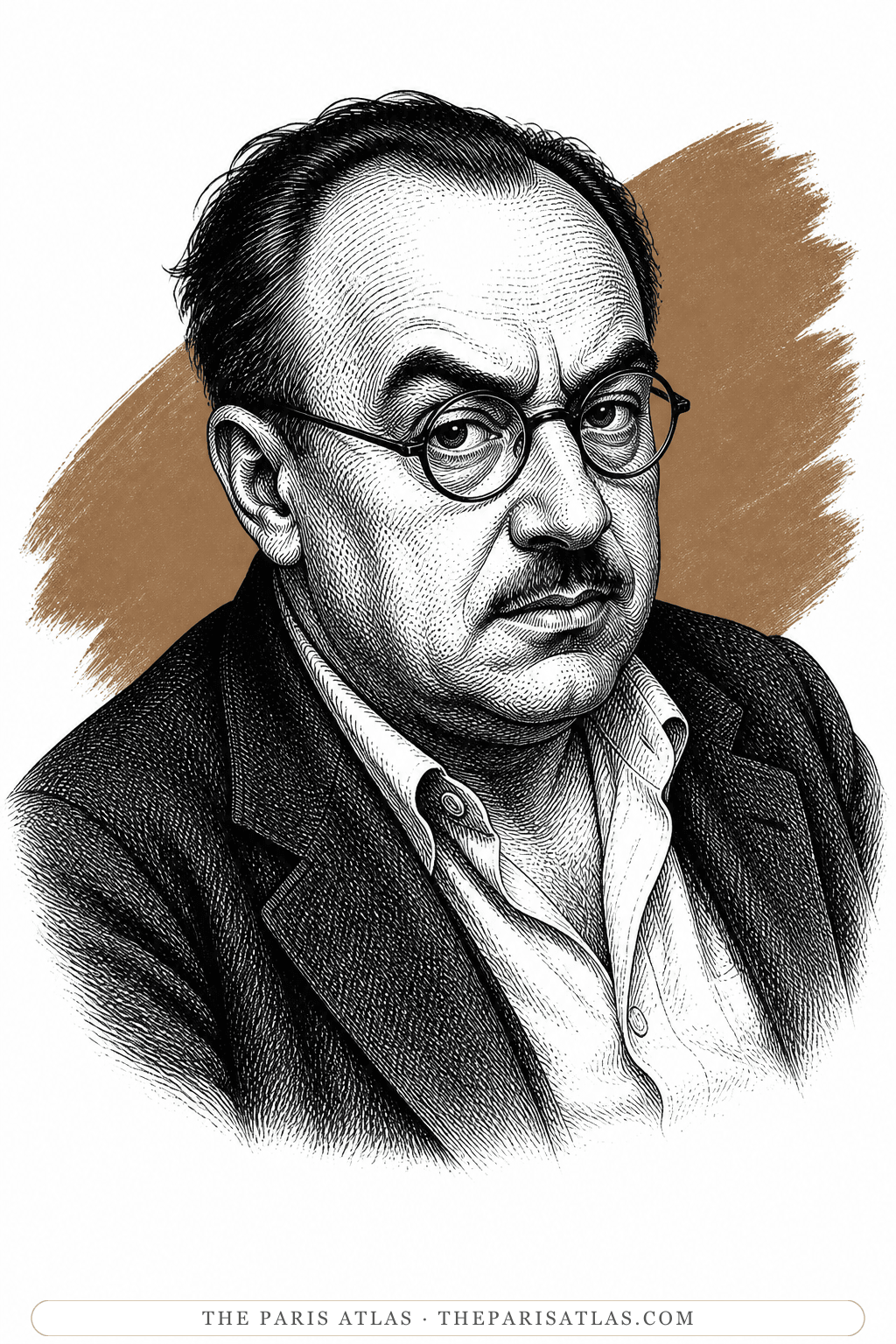
Collaborated with · 1947–1957
Paraz forwarded to Céline the offending passage from Sartre's Les Temps modernes essay in late 1947 and then in 1948 published À l'agité du bocal inside Le Gala des vaches. The correspondence between the two runs from 1947 to Paraz's death in 1957 and is one of the principal sources for the Danish exile years.
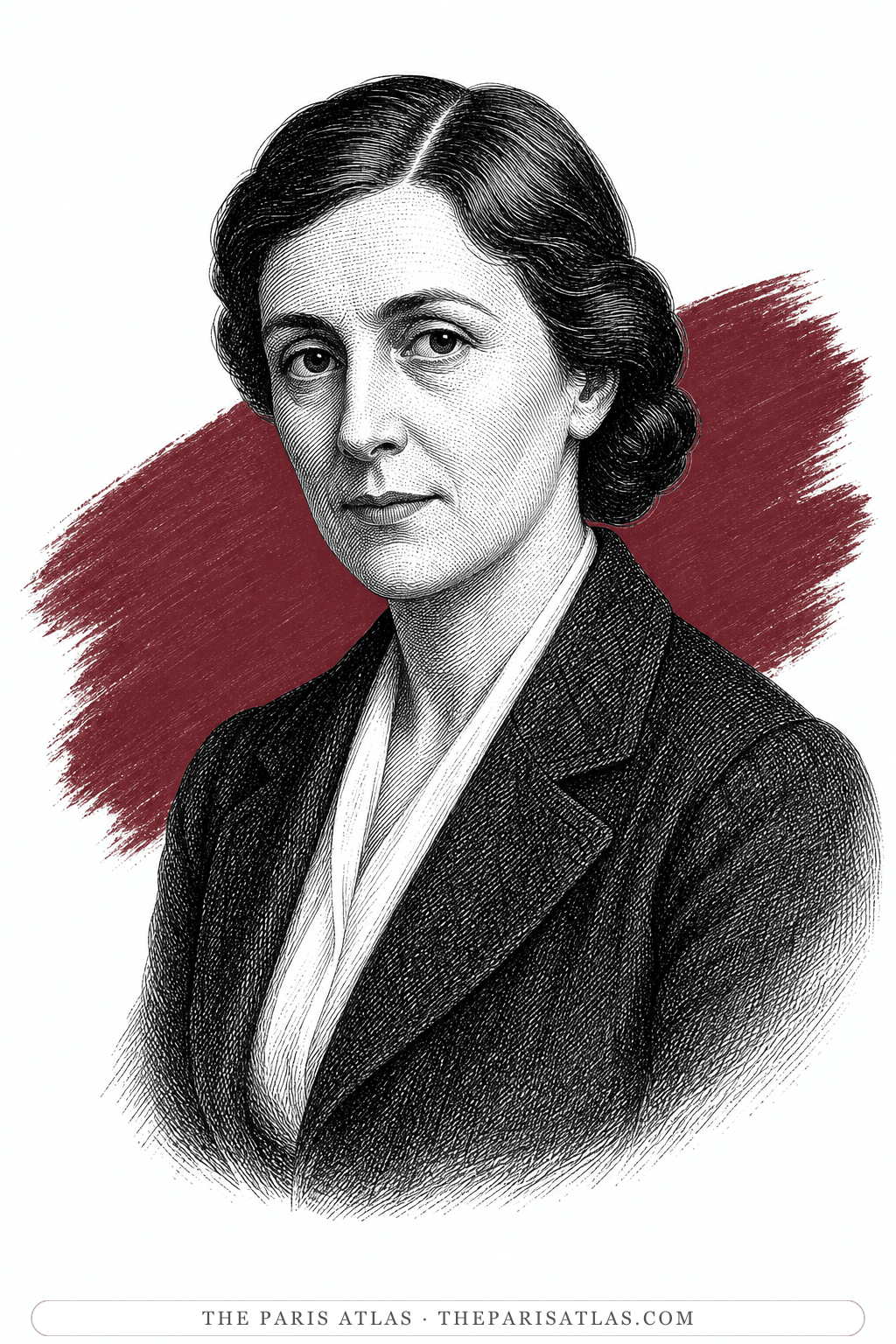
Collaborated with · 1936–1961
From 1936 until Céline's death in 1961 she worked as his literary secretary and trusted intermediary — seeing manuscripts through to publication, preserving typescript states across the 1944 flight from Paris, and later assembling the material Robert Poulet used to prepare the posthumous 1964 Le Pont de Londres.
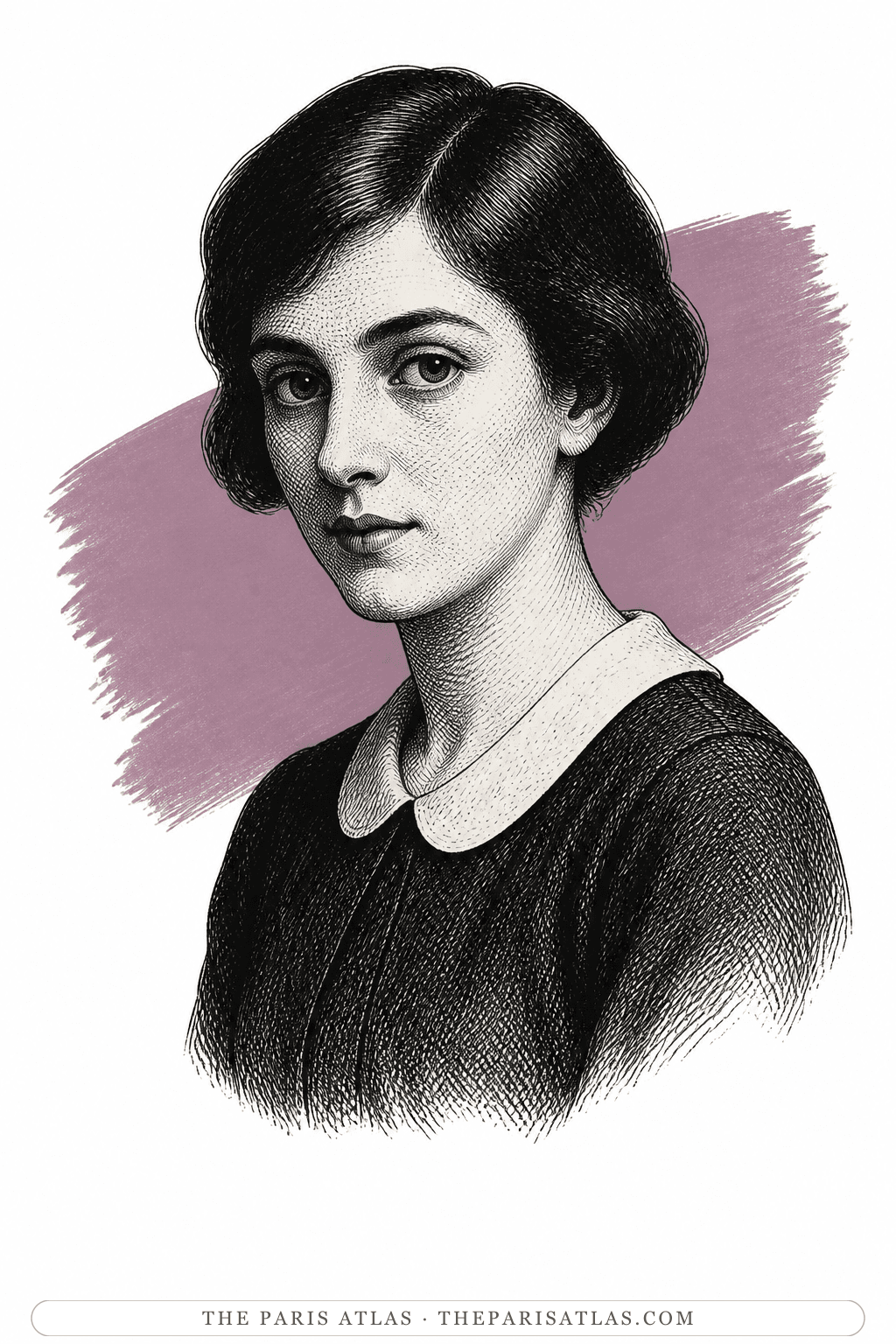
Married to · 1919–1928
Louis Destouches's first marriage — Rennes, 1919. Their daughter Colette Destouches was born in 1920. The couple separated in 1926 and divorced in 1928. Around 1923 Édith Follet illustrated and appears to have transcribed the family Oriental fairy tale Histoire du petit Mouck.

Clashed with
Adversaries in print, never companions: Desnos' militant anti-fascism put him publicly against Céline's political pamphlets of the late thirties — one of the era's starkest collisions between a writer and his critics. Desnos died at Terezín in 1945; the argument outlived them both.

Le Feu brought the trenches into French prose from the ranks a generation before Journey — and Céline, famously stingy with admiration, named Barbusse among the few modern writers he rated.
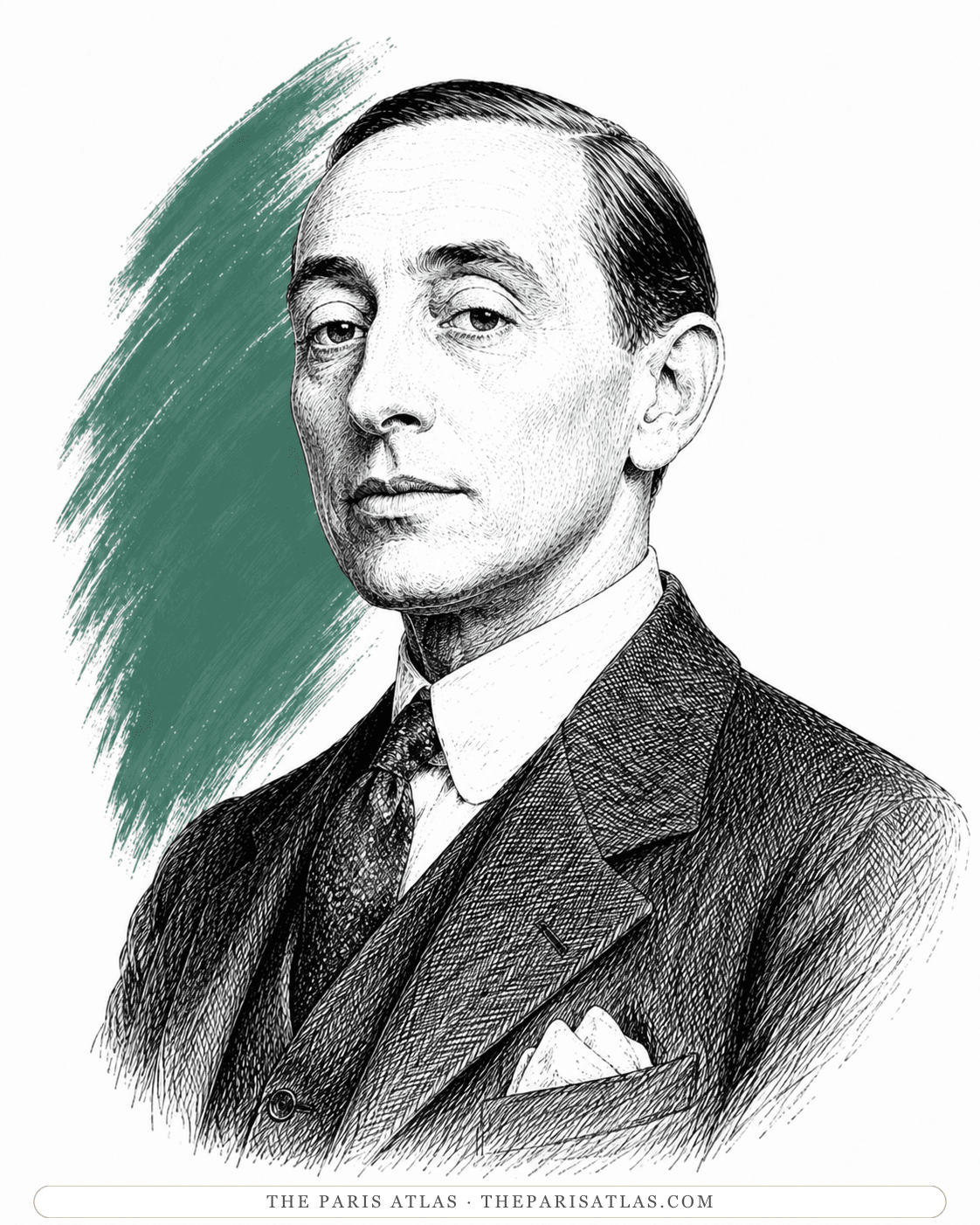
The telegraphic speed of Ouvert la nuit ran ahead of the spoken style Céline would push to its limit — and Morand stood on the short list of moderns Céline admitted to rating.
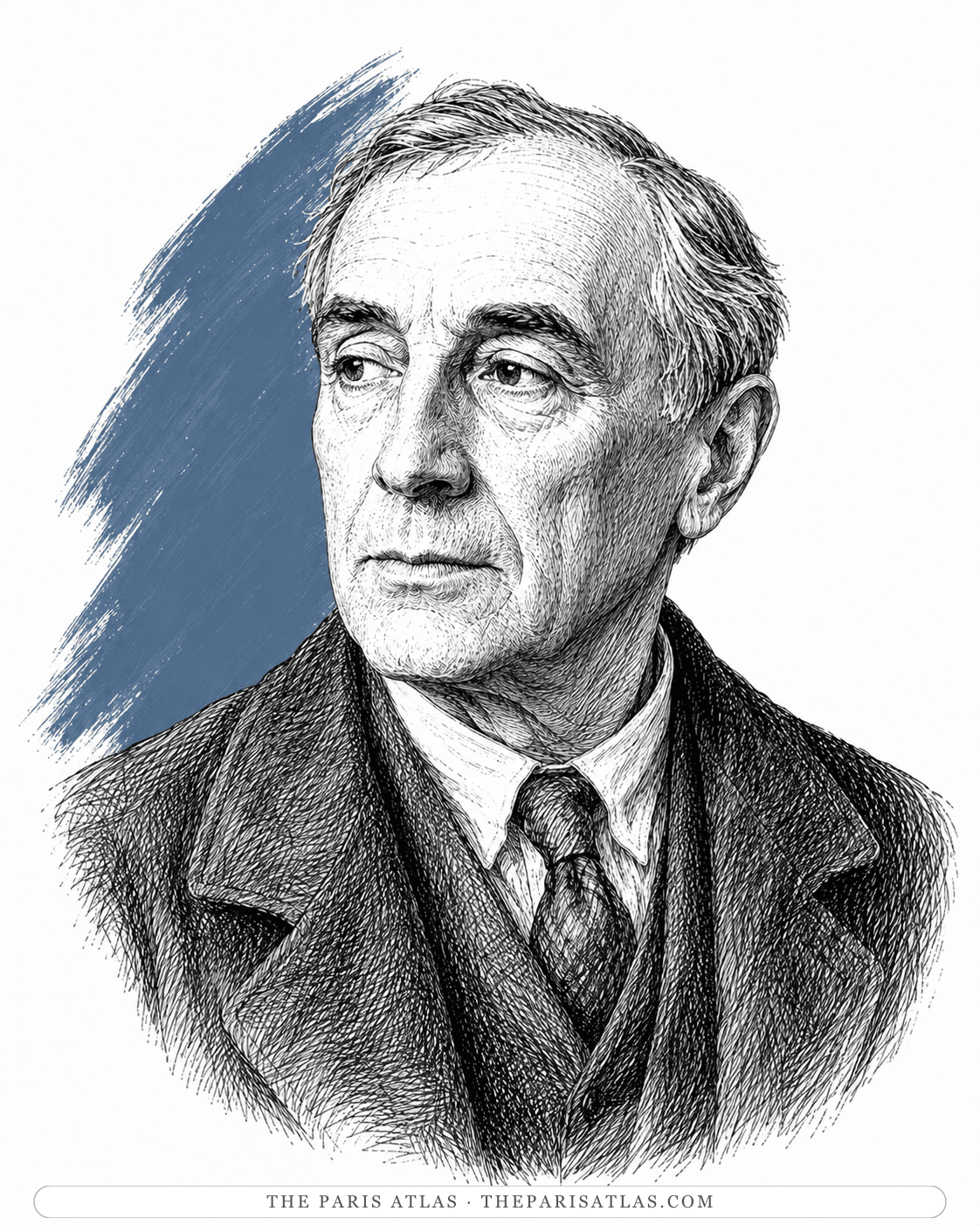
The Vaudois novelist wrote spoken French into literature a generation early — plain speech, biblical rhythm — and earned a place on Céline's famously short list of admired moderns.

Journey detonated in Paris while Miller was writing Cancer, and he acknowledged the kinship ever after — the spoken torrent, the gutter's truth, the first person with nothing left to protect.

Bukowski named him. Writing to a correspondent late in life, he set down a list: "I once read almost everything. My influences are Dostoevski, Nietzsche, Schopenhauer, Hamsun, Celine, Jeffers, Hemingway, Sherwood Anderson, Gorky." Journey to the End of the Night, Celine's 1932 novel of a Paris underclass told in gutter speech, is the closest thing Bukowski's own low-life first person has to a model.

The masterpiece, and the only honest place to begin: war, Africa, Detroit, and the Paris night, narrated by the century's greatest bad attitude. If the first fifty pages take, you're his for life.

The 1924 philosophical opening Louis Destouches wrote for La Vie, Pasteur, Semmelweis et la Mort — cut by La Presse médicale, lost to the League of Nations archive in Geneva, and rediscovered in 2014.

Louis-Ferdinand Céline's 1924 medical thesis — a literary account of the Hungarian physician who discovered that doctors were killing their own patients.
Louis-Ferdinand Céline's 1932 first novel, which follows one man from the First World War through colonial Africa and industrial America to the Paris slums.

Louis-Ferdinand Céline's 1933 speech at Médan — instead of praising Émile Zola, he asks what has happened to the reality naturalism tried to describe, and predicts that literature committed to it will not be tolerated for long.

Louis-Ferdinand Céline's 1933 play in five acts — Doctor Bardamu moves through colonial Africa, New York, the League of Nations and the Paris suburbs, everywhere finding institutions absorbed by hierarchy, money and paperwork instead of the people they claim to serve.

Louis-Ferdinand Céline's 1933 article in Candide — his first concentrated public explanation of what his writing is trying to do, six months after Journey to the End of the Night.

Céline's shrieking, hilarious portrait of a Belle Époque Paris childhood in the Paris arcades — poverty as opera.

Louis-Ferdinand Céline's 1936 political and philosophical pamphlet — a short, disillusioned report from the Soviet Union that quickly widens into an argument against political utopianism.

Louis-Ferdinand Céline's 1937 political pamphlet — a hybrid work in which fictional dialogue, three ballet scenarios and an extended racial and political monologue interrupt one another.

Louis-Ferdinand Céline's 1938 political pamphlet — a short grotesque opening beside the Seine gives way to a sustained argument against another war with Germany.

Dr. Louis Destouches's medical essay on the Ford factories in Detroit — a physician's report on what mass production does to the human body and what factory medicine is actually for.

Louis-Ferdinand Céline's 1941 political pamphlet — written after the fall of France, its later sections turn from defeat toward a social programme built around leisure, family and the arts.

Louis-Ferdinand Céline's 1944 novel — a wounded French veteran drops into a London underworld of pimps, prostitutes, musicians and eccentrics.

Louis-Ferdinand Céline's preface to Albert Serouille's 1944 history of Bezons — the neglected Paris suburb where Dr. Louis Destouches spent the war working the municipal dispensary.

Louis-Ferdinand Céline's ten-page defence memorandum, written from the Copenhagen prison on 6 November 1946 — the primary source for how he answered the treason charges the French judiciary was building against him.

Louis-Ferdinand Céline's short 1948 attack on Jean-Paul Sartre — a defence against a specific accusation that turns into a comic literary confrontation about who owns postwar French letters.

Louis-Ferdinand Céline's unfinished 1949 novel — an eighteen-year-old cavalry volunteer's first terrible night at the barracks.

Louis-Ferdinand Céline's 1952 novel — the first volume of his postwar Féerie sequence, a feverish mixture of prison, memory and grievance.

Louis-Ferdinand Céline's 1954 novel — the second volume of the Féerie sequence, a single night of Allied bombing over Montmartre.

Louis-Ferdinand Céline's 1955 fictional interview and aesthetic manifesto — a staged conversation about his own style that turns into a comic walk across Paris.

Louis-Ferdinand Céline's 1957 novel — the first of the German trilogy — about the last months of the Vichy government-in-exile at Sigmaringen.

Louis-Ferdinand Céline's 1957 argument for a broad postwar amnesty — nineteen handwritten pages that widen his own case into a general demand for reconciliation.

Louis-Ferdinand Céline's 1959 collection of five ballet scenarios — witches, sirens, gods and dockworkers, all speaking through movement rather than music.

Louis-Ferdinand Céline's 1960 novel — the second of the German trilogy — about his 1944 flight into a collapsing Germany.

Louis-Ferdinand Céline's posthumous 1964 novel — Guignol's Band II picks up in wartime London with gas-mask experiments, a fourteen-year-old niece, and the criminal past that will not release Ferdinand.

Louis-Ferdinand Céline's posthumous 1969 novel — the final volume of the German trilogy, and the escape at last completed.

Louis-Ferdinand Céline's early play — a bourgeois drawing-room comedy that slides through infidelity, a Paris house of assignation and Heaven, where God turns a telescope on the earthly spectacle.

Louis-Ferdinand Céline's two songs — the sailor's chant À nœud coulant and the underworld revenge ballad Règlement, both recorded in his own voice in 1956 and collected as a book in 1981.

Louis-Ferdinand Céline's ~905-page preliminary manuscript of Féerie pour une autre fois — memories of Montmartre before the flight from Paris, and the bombing that reorganises the narrative into escape.

The central single-volume selection of Céline's correspondence — 2,080 pages, five decades, and a private voice that changes with every recipient.

Louis-Ferdinand Céline's recovered 2022 novel — a young Ferdinand comes to on a battlefield, survives a military hospital, and starts moving toward London.

Louis-Ferdinand Céline's recovered 2022 novel Londres, arriving in English as London on 13 October 2026 in Charlotte Mandell's New Directions translation — a French criminal underworld in wartime London destroys itself around Ferdinand.

Louis-Ferdinand Céline's recovered short story, published in La Nouvelle Revue française in 2023 — a humiliated elderly woman in Pontabon carries her private mythology of a dead captain to his grave and walks away.

Louis-Ferdinand Céline's recovered 2023 legendary novel — an imaginary Middle Ages of kings, troubadours, murder and personified Death, drawn from two overlapping manuscripts he never completed.

Louis-Ferdinand Céline's Oriental fairy tale, written around 1923 for his young daughter and illustrated by his first wife — a wandering child who is repeatedly offered safety and repeatedly leaves.

Gallimard's Cahiers Céline 3 — the collected medical corpus of Dr. Louis Destouches, before he became Céline: the 1924 Semmelweis thesis and the public-health and factory-medicine writings that surrounded it.

Cahiers Céline 4 — the young Louis Destouches's surviving letters and earliest known writing from the Sangha-Oubangui trading post in French Equatorial Africa, 1916–1917, the year Journey to the End of the Night's Bikomimbo chapters were quarried from.

Cahiers Céline 5 — Céline's correspondence with the women in his life beyond Lucette: the American dancer Elizabeth Craig, Karen Marie Jensen, Cillie Pam and others, from the pre-Journey years through exile.

Cahiers Céline 9 — the 758-page scholarly edition of Céline's letters to his literary secretary Marie Canavaggia, twenty-four years of the working relationship that saw the novels into print.

Cahiers Céline 6 and 10 — Céline's ten-year correspondence with the writer Albert Paraz, from the Danish exile years through the return to France, and the surviving public campaign to have Céline read again after the war.

Cahiers Céline 11 — 302 pages of the intense, then broken correspondence between Céline in Danish exile and the American Jewish literary scholar Milton Hindus, culminating in Hindus's 1948 visit to Denmark and his 1950 portrait of Céline as a crippled giant.

Louis-Ferdinand Céline's ten Copenhagen prison notebooks — February to October 1946 — first published in complete scholarly form in 2019, and the workshop in which the postwar novels began.

The childhood address — the family arrived in 1899, when his mother opened her shop at number 67, and moved within the arcade to number 64 in 1904, staying until 1907. Death on the Installment Plan rebuilds the passage as the Passage des Bérésinas.
Visit the place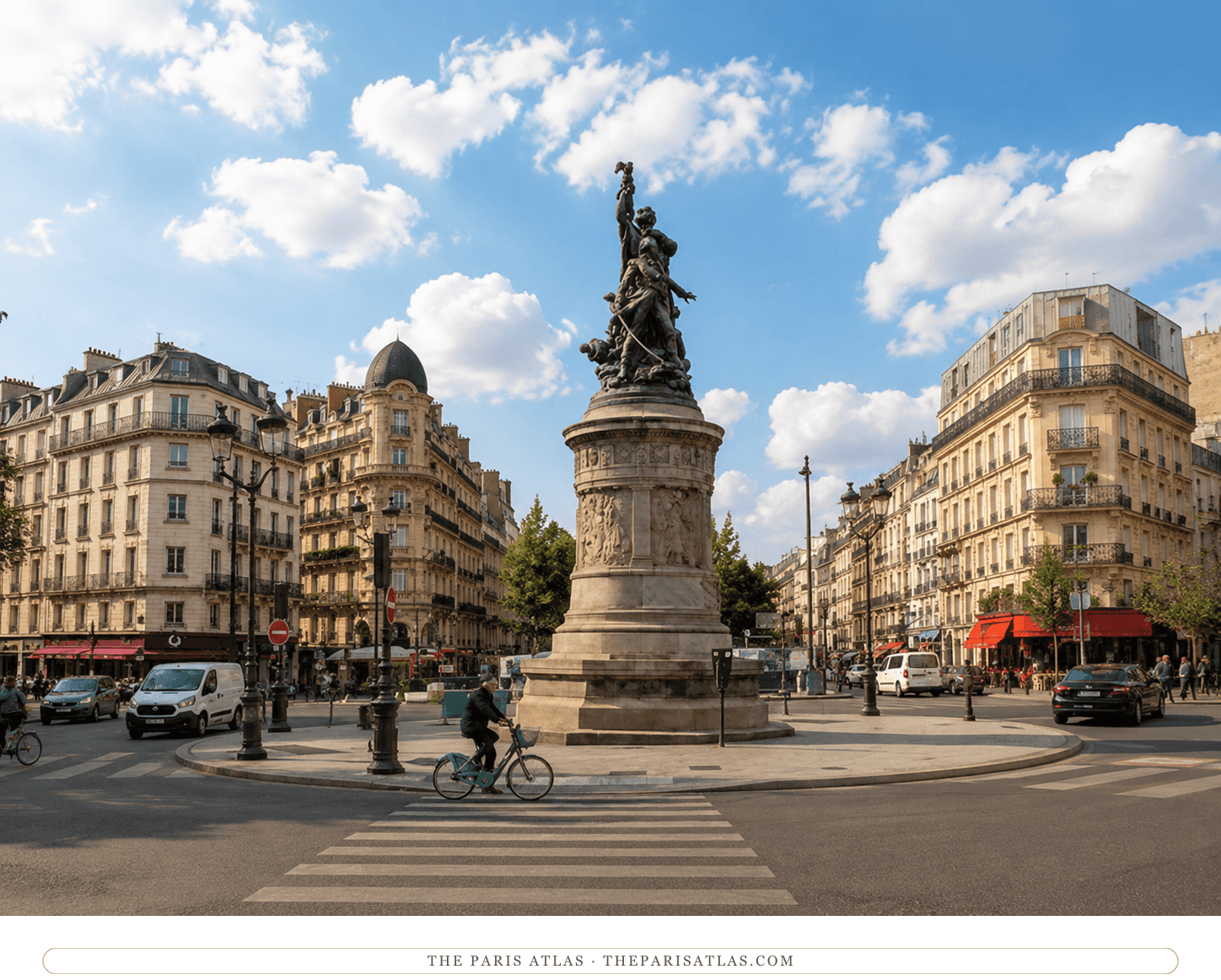
Louis-Ferdinand Céline wrote about Place de Clichy in Journey to the End of the Night.
Visit the place
An unlikely pairing preserved by Vitoux: Céline and François Mauriac dine together at the Rendez-vous des Mariniers in March 1933, the year after Journey to the End of the Night.
Visit the place
The fifth-floor Montmartre flat of the Occupation years, from March 1941 until 17 June 1944, when Céline and Lucette left for Germany and Denmark — abandoning the manuscripts that resurfaced seventy-seven years later.
Visit the place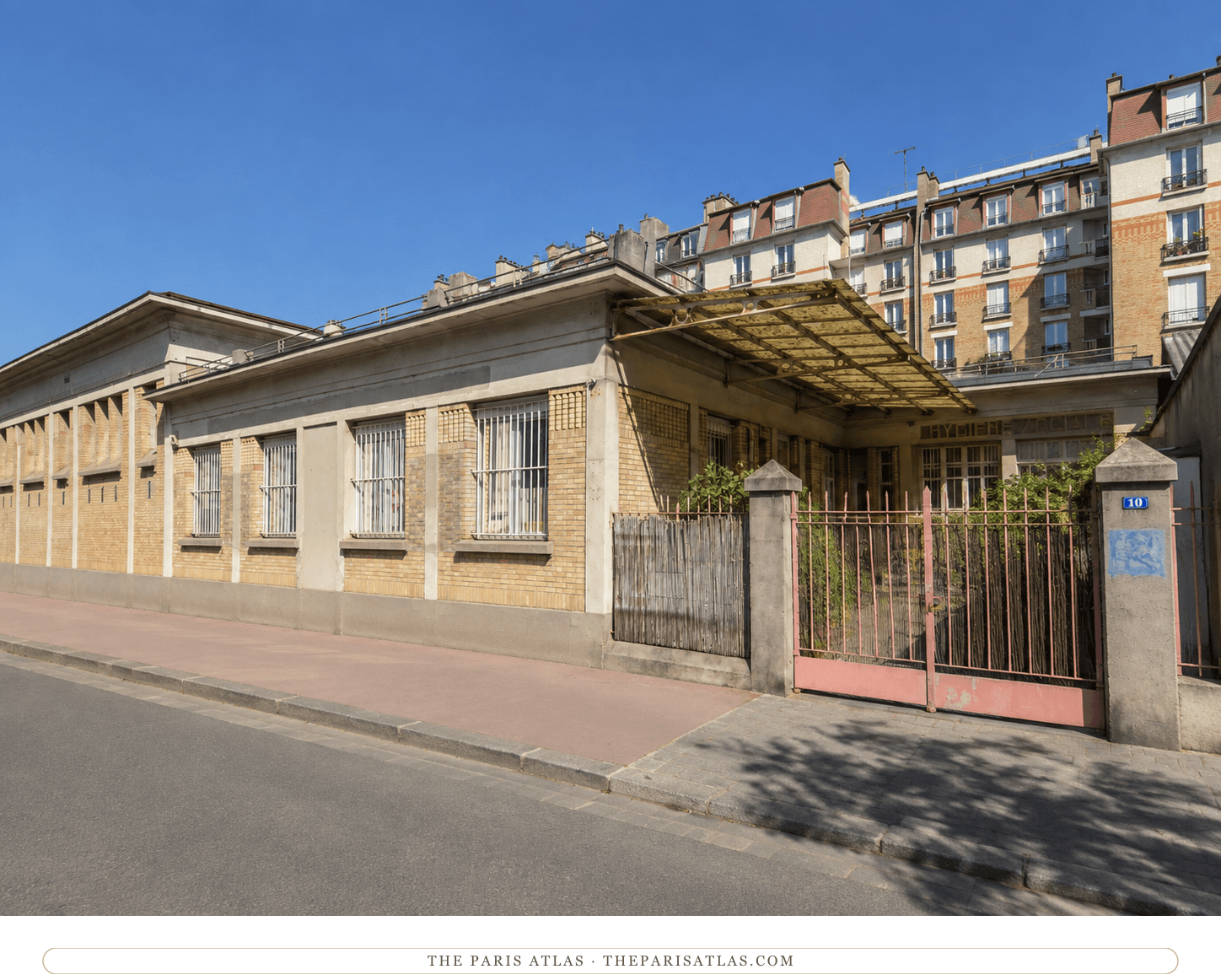
Dr Louis Destouches joined the new municipal dispensary's founding team on 8 January 1929 and practiced there nearly nine years — the day job behind Journey to the End of the Night, whose Rancy fictionalizes Clichy.
Visit the place
The Meudon hillside house of the last decade — the German trilogy written at the ground-floor table, Rigodon declared finished on 30 June 1961, and Céline dead at the house the next day.
Visit the place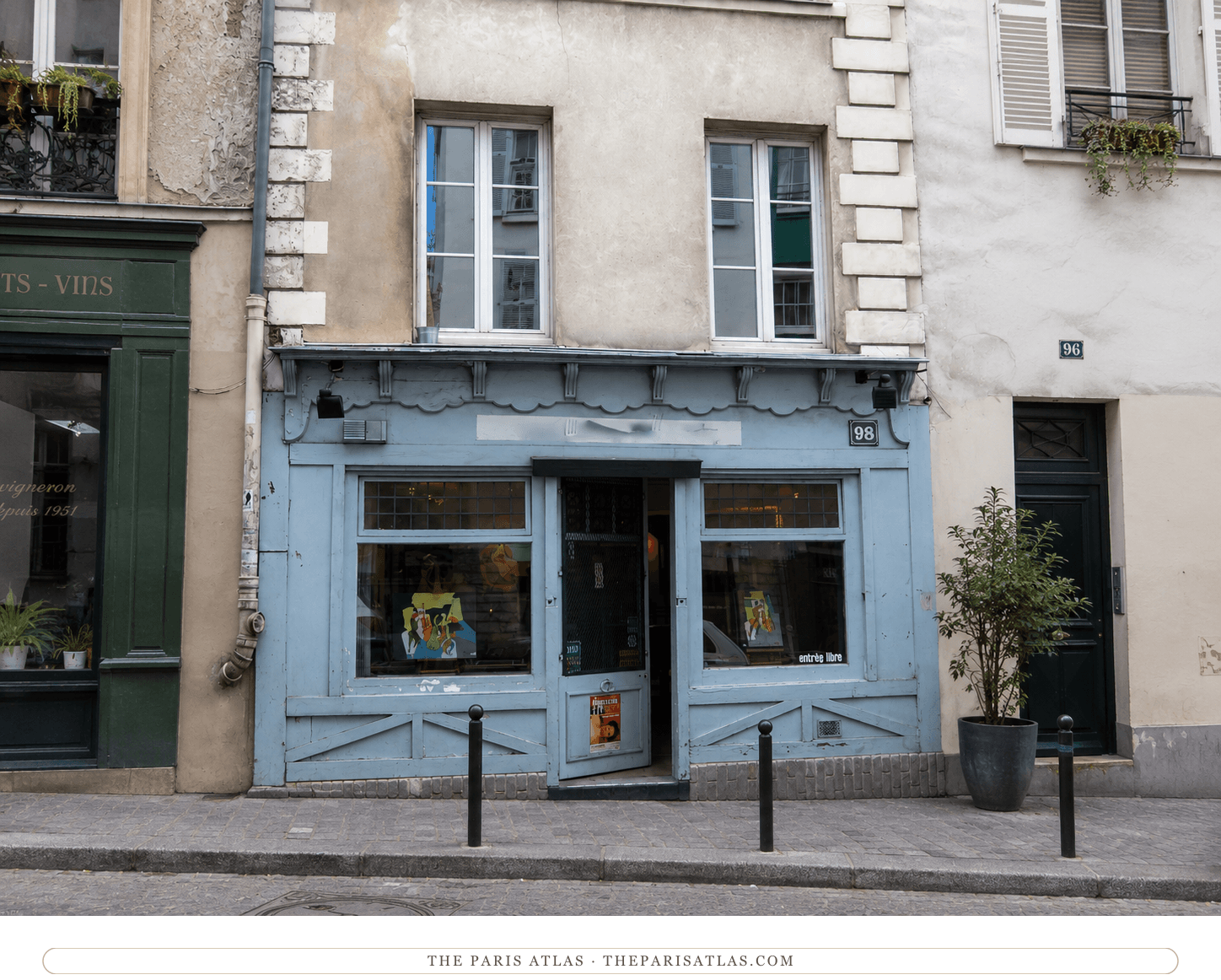
The longest tenancy of his life and the desk behind both novels — Journey to the End of the Night in 1932 and Death on the Installment Plan in 1936 were written here, in the years he was practising at the Clichy dispensary.
Visit the place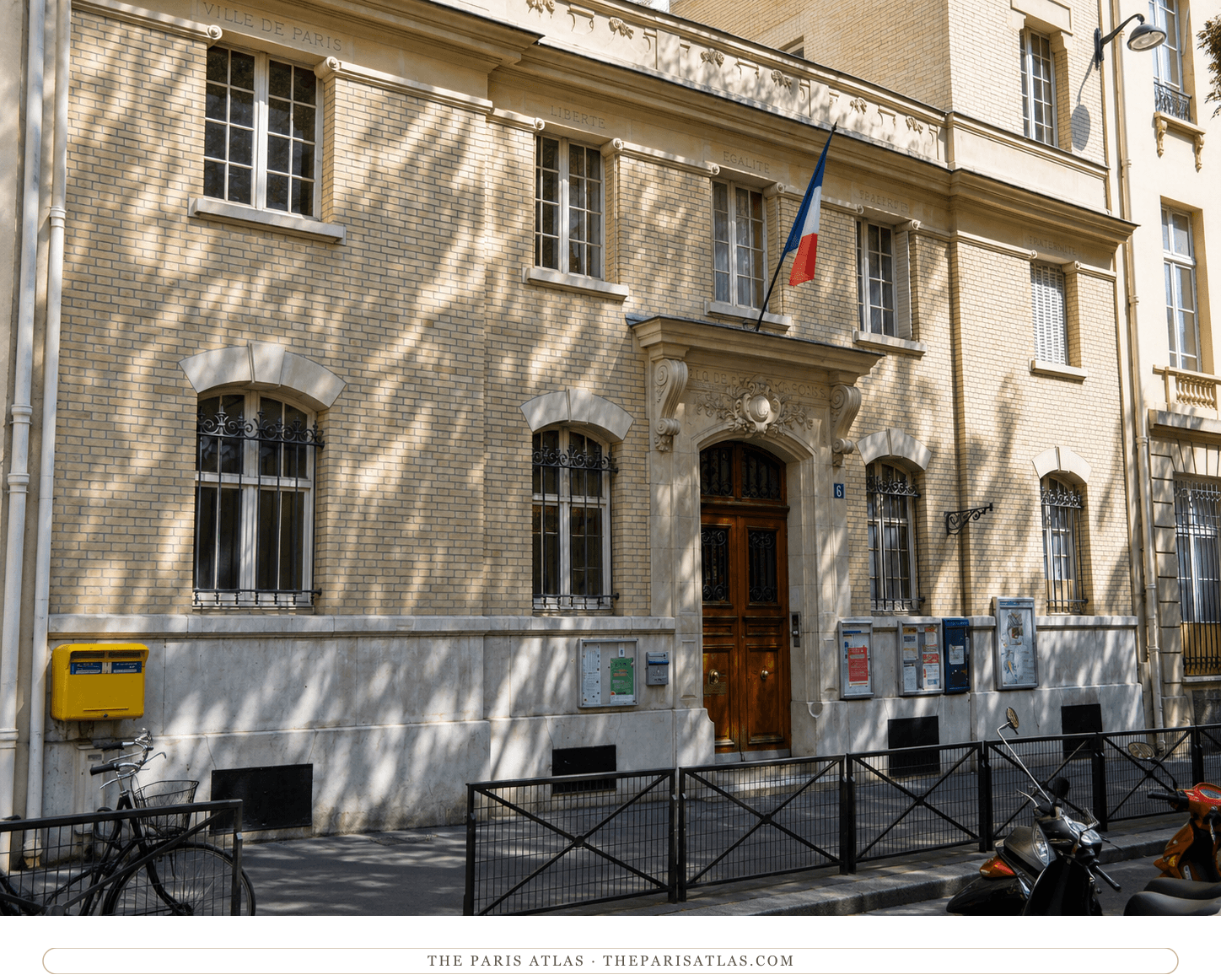
Registered on 1 October 1900, aged six, and there until 27 February 1905, when he left for Saint-Joseph des Tuileries. The school is a short walk from the Passage Choiseul, where the family was living above his mother's shop.
Visit the placeThe most famous label in modern literature started as a complaint about a slow car repair. What 'lost' actually meant — and why the writers it named never accepted it.
Summer reading is a matching problem, not a ranking problem. Our seasonal guide pairs the moderns to the July you're actually having.
A French novelist and doctor (1894–1961) — the pen name of Louis Ferdinand Destouches. He is one of the most influential figures in modern French literature: author of Journey to the End of the Night, whose spoken, ranting style reshaped the sound of French prose.
His first novel, Journey to the End of the Night (1932), written in a spoken, ranting French that became one of the most influential styles in the language. Death on the Installment Plan (1936) pushed the style further.
A written version of spoken French — ellipses, exclamations, slang, syntax broken to the rhythm of a voice at the end of its patience — that critics said couldn't be literature until it became one of the most imitated styles in the language. He called it his 'little music.'
Yes. Louis Ferdinand Destouches was wounded and decorated in the first weeks of the First World War, then practiced medicine among the poor of suburban Paris — treating patients by day and writing at night under his grandmother's name, Céline.
The political pamphlets he wrote in the late 1930s, and his years in Paris under the German Occupation. He fled to Denmark ahead of the Liberation, French courts convicted him of collaboration in absentia, and an amnesty followed in 1951.
He was imprisoned in Copenhagen while France sought his extradition, and was amnestied in absentia in 1951. He spent his last years practicing medicine at Meudon, outside Paris, where he died in 1961.
Journey to the End of the Night, the 1932 debut that carries one battered survivor through war, empire, America, and back to the Paris gutter. Death on the Installment Plan (1936) pushes the style further and reaches back into his childhood; the German trilogy is for readers who already know the voice.
Because the novels' influence is beyond dispute — Henry Miller read Journey in manuscript while writing Tropic of Cancer — and because we record figures as the era knew them, the whole record included. France has argued about him ever since, and kept reading him.
Met · 1933-03
An unlikely pairing preserved by Vitoux: Céline and François Mauriac dine together at the Rendez-vous des Mariniers in March 1933, the year after Journey to the End of the Night.
Met · 1926
The American dancer of his Montparnasse years — companion through the writing of Journey to the End of the Night, and the name on its dedication page.
Met · 1936
The dancer he married in 1943 and never left: through the flight across Germany, the Danish prison and exile, and the last years at Meudon — she survived him by fifty-eight years, guarding the house and the estate.
Met
Montmartre neighbors and the tightest of the painter friendships — Gen Paul drew and painted him for decades, quarrels included, and haunts the delirious late novels in transposed form.
Met
The muralist with the barge on the Seine — confidant from before the fame, host of the floating studio, and author of the warmest memoir of the man, La Brinquebale avec Céline.
Met · 1948
The American critic who championed the novels, corresponded with the Danish exile, and visited in 1948 — an encounter that produced The Crippled Giant, his disenchanted record of the stay.
Influenced
Journey detonated in Paris while Miller was writing Cancer, and he acknowledged the kinship ever after — the spoken torrent, the gutter's truth, the first person with nothing left to protect.

Lived at · 1941–1944
The fifth-floor Montmartre flat of the Occupation years, from March 1941 until 17 June 1944, when Céline and Lucette left for Germany and Denmark — abandoning the manuscripts that resurfaced seventy-seven years later.

Worked at · 1929–1937
Dr Louis Destouches joined the new municipal dispensary's founding team on 8 January 1929 and practiced there nearly nine years — the day job behind Journey to the End of the Night, whose Rancy fictionalizes Clichy.

Lived at · 1951–1961
The Meudon hillside house of the last decade — the German trilogy written at the ground-floor table, Rigodon declared finished on 30 June 1961, and Céline dead at the house the next day.

Lived at · 1899–1907
The childhood address — the family arrived in 1899, when his mother opened her shop at number 67, and moved within the arcade to number 64 in 1904, staying until 1907. Death on the Installment Plan rebuilds the passage as the Passage des Bérésinas.

Lived at · 1929–1941
The longest tenancy of his life and the desk behind both novels — Journey to the End of the Night in 1932 and Death on the Installment Plan in 1936 were written here, in the years he was practising at the Clichy dispensary.

Studied at · 1900–1905
Registered on 1 October 1900, aged six, and there until 27 February 1905, when he left for Saint-Joseph des Tuileries. The school is a short walk from the Passage Choiseul, where the family was living above his mother's shop.
Clashed with · 1945–1948
The dispute begins with the passage in Sartre's essay in Les Temps modernes no. 3 (December 1945) asserting that Céline had supported Nazi political positions because he had been paid to do so. Céline learned of the passage in Denmark and replied in late 1947 with the short pamphlet À l'agité du bocal, published by Albert Paraz in 1948 in Le Gala des vaches and in Pierre Lanauve de Tartas's separate edition.
Collaborated with · 1947–1957
Paraz forwarded to Céline the offending passage from Sartre's Les Temps modernes essay in late 1947 and then in 1948 published À l'agité du bocal inside Le Gala des vaches. The correspondence between the two runs from 1947 to Paraz's death in 1957 and is one of the principal sources for the Danish exile years.
Collaborated with · 1936–1961
From 1936 until Céline's death in 1961 she worked as his literary secretary and trusted intermediary — seeing manuscripts through to publication, preserving typescript states across the 1944 flight from Paris, and later assembling the material Robert Poulet used to prepare the posthumous 1964 Le Pont de Londres.
Married to · 1919–1928
Louis Destouches's first marriage — Rennes, 1919. Their daughter Colette Destouches was born in 1920. The couple separated in 1926 and divorced in 1928. Around 1923 Édith Follet illustrated and appears to have transcribed the family Oriental fairy tale Histoire du petit Mouck.
Influenced
Bukowski named him. Writing to a correspondent late in life, he set down a list: "I once read almost everything. My influences are Dostoevski, Nietzsche, Schopenhauer, Hamsun, Celine, Jeffers, Hemingway, Sherwood Anderson, Gorky." Journey to the End of the Night, Celine's 1932 novel of a Paris underclass told in gutter speech, is the closest thing Bukowski's own low-life first person has to a model.
Influenced by
Le Feu brought the trenches into French prose from the ranks a generation before Journey — and Céline, famously stingy with admiration, named Barbusse among the few modern writers he rated.
Clashed with
Adversaries in print, never companions: Desnos' militant anti-fascism put him publicly against Céline's political pamphlets of the late thirties — one of the era's starkest collisions between a writer and his critics. Desnos died at Terezín in 1945; the argument outlived them both.
Influenced by
The telegraphic speed of Ouvert la nuit ran ahead of the spoken style Céline would push to its limit — and Morand stood on the short list of moderns Céline admitted to rating.
Influenced by
The Vaudois novelist wrote spoken French into literature a generation early — plain speech, biblical rhythm — and earned a place on Céline's famously short list of admired moderns.
Clashed with · 1948
Hindus championed the novels and made a pilgrimage to the Danish exile in 1948; the visit soured. The Crippled Giant, the disenchanted book he drew from it, ended the acquaintance and drew Céline's lasting resentment.
The sources below include biographies, scholarly essays, interviews, and primary materials that informed this page. They reflect both the historical record and ongoing critical conversations about Louis-Ferdinand Céline and their work.

Universalis on Journey specifically — publication in 1932, Ferdinand Bardamu, the autobiographical elements, Céline's identity as a suburban doctor when the novel appeared, and its contemporary reception.
The Universalis sub-article on the Danish exile — legal situation, imprisonment, and the years before his return to France.

Detailed academic study of Céline's First World War experience — the injury, the psychological importance of 1914–1915 to his writing, the departure for Cameroon, the African correspondence, and the connections to Journey.
The publisher's page for Céline's medical thesis on Semmelweis — his medical education, his fascination with the Hungarian physician, and the relationship between medicine and his early literary voice.
Universalis on Céline's second major novel — 1936 publication, Ferdinand as narrator, the autobiographical relationship to Céline's childhood, and the development of the narrative voice introduced in Journey.
Céline himself discusses his writing — his theory of literary style, the 'little music', his approach to spoken language, rhythm, punctuation, and his sense of himself as an innovator. The primary source for the sections on ellipses, speech, and how prose should sound.
The USHMM's entry on The Protocols of the Elders of Zion — the fabricated document Céline cited while developing some of the arguments in his pamphlets. Explains the origins, history, circulation, and content.
General biographical reference — birth as Louis Ferdinand Destouches, family, the Passage Choiseul childhood, military service, medical career, the novels, the political writings, the departure from France, Denmark, and the final years.
The Universalis sub-article on Céline's early literary career.
The Universalis sub-article on the political writings and the Occupation period.
Concise chronology of Céline's early adulthood and medical career — 1912 enlistment, the October 1914 wound, London and Africa, medical education, the Semmelweis thesis, League of Nations work, the Clichy practice, and the beginning of Journey.
Modern scholarly overview by Véronique Duché — the First World War experience, violence and fiction, the prose, the difficulty of translating Céline, and the continuing literary significance of his style.
Cambridge scholarly introduction to Céline and Journey to the End of the Night — the 1932 arrival, the novel's place in twentieth-century French literature, and the relation between the novel and the experiences of twentieth-century Europe.
The BnF's own announcement — the strongest primary institutional source on the recovered manuscripts. Céline's 1944 departure, the manuscripts he left behind, their reappearance, and the BnF's 2024 acquisition of the Mort à crédit manuscript.
Academic study focused on Céline's use of popular French, slang, and spoken-language effects across Journey and Death on Credit.
On Céline's early play L'Église and its relationship to his later fiction, including the line used as the epigraph to Sartre's La Nausée.
Céline's letters and the biographical context around his literary career, his own thoughts about his writing, the autobiographical foundations of the novels, and the flight to Sigmaringen, Denmark, imprisonment, and eventual return.
Study connecting the recovered novel Guerre, Céline's First World War experience, the relationship between his wartime memories and his later writing, and the political arguments he developed in the 1930s.
On Céline's post-exile literary career — the 1951 return, Féerie pour une autre fois, Normance, D'un château l'autre, and the revival of public interest during the 1950s.
Céline's literary chronology and later writing, including the notebooks, shorter writings, work on slang, and late interviews and reflections.
Biographical information about family, childhood, Passage Choiseul, the publication of Journey and its Prix Goncourt / Prix Renaudot history, and the later Meudon years.
Contemporary Le Monde report from 5 July 1961, four days after Céline's death — the death on 1 July, the initial secrecy, the burial at Meudon, and the reaction. The primary press source for the death section.
Biographical detail on the Meudon house, the return to France, Lucette Destouches, the final decade, the completion of Rigodon, the 1961 death, and the fate of the house afterwards.
The BnF's overview of the manuscripts Céline left behind when he departed Paris in 1944 — the 2021 public rediscovery, the recovered Mort à crédit manuscript, and its 2024 arrival at the BnF.
Le Monde's story of the manuscripts that reappeared decades after Céline's death — the ~6,000 recovered pages, the history of their disappearance, the 2021 revelation, and the material later issued as Guerre and Londres.
Detailed academic analysis of Bagatelles pour un massacre — the primary scholarly citation for the six-bullet political-theories section on this page. Documents Céline's statements about banking, finance, industry, government, the League of Nations, journalism, cultural institutions, war, and international politics.
Traces the material Céline used while constructing Bagatelles — quotations, newspapers, political publications, contemporary arguments, and previously circulating theories. Essential when distinguishing Céline's own formulations from ideas he encountered elsewhere.
Discusses Kaplan's research into the intellectual and political sources behind Bagatelles, including Céline's use of The Protocols of the Elders of Zion and other writings circulating during the period.
Historical and political context — Céline's pamphlets within the wider intellectual and political world of 1930s France: the Popular Front, nationalism, literature and political debate, and Céline's position within the politically engaged literary culture of the period.
On the relationship between Céline's medical background and the vocabulary he later used to describe politics and society — his tendency to describe political and social questions through the language and structure of medical diagnosis.
Primary text — the actual pamphlet in which Céline makes many of the political claims described on this page. Cited alongside the scholarly summaries so the source of the arguments is on the page too.
Primary text — Céline's 1938 follow-up to Bagatelles, which allows the development of his views on France, Germany, Jews, war, nationalism, and European politics to be followed in his own words.
These references anchor the page in the documented record and in the scholarly conversations around Louis-Ferdinand Céline. Every claim on this page traces back to one or more of the works listed here.
 Explore more resources


