Castle to Castle
How Lucette appears in its pages: The narrator's wife, Céline's real companion Lucette Destouches. She keeps house at the Löwen hotel and later at Meudon; she is his witness through the whole trilogy.
Ballet dancer, Céline's wife from 1943, and companion of the flight to Denmark and back — she outlived him by fifty-eight years, dying at 107.
A professional ballet dancer trained in the Paris studios, Lucette Almanzor met Louis-Ferdinand Destouches in the mid-thirties and married him in 1943 — in time for the catastrophe: the flight across collapsing Germany in 1944, the Danish exile and imprisonment, and the long return to Meudon, where she taught dance in the house while Céline wrote his last books. Widowed in 1961, she guarded the estate through every storm that followed and became, in extreme old age, the last living witness of the century's most argued-over French writer. She died in 2019, at a hundred and seven.
Lucie Almanzor — professionally Lucette Almansor and later Lucette Destouches — was born in Paris on 20 July 1912. She trained as a dancer in the Paris studios of the twenties and thirties, worked as a professional ballet dancer and later became a teacher. Dance was her calling before Céline; it remained her occupation while she lived with him, and it was what she went back to after his death.[1]
She met Louis-Ferdinand Destouches in the mid-1930s. They lived together for several years at his apartment on rue Girardon in Montmartre before marrying on 14 February 1943, less than eighteen months before the Liberation of Paris. Céline was almost fifty; Lucette was thirty. He had already published Journey to the End of the Night, Death on the Installment Plan and the three political pamphlets; she was still teaching dance.[2]
On 17 June 1944 Céline left Paris with Lucette, their cat Bébert and the actor Robert Le Vigan. They crossed into Germany and eventually reached Sigmaringen, the Baden-Württemberg town where the Vichy government-in-exile was interned in the last months of the war. From there they made their way to Copenhagen. In December 1945 Céline was arrested at the request of the French authorities and imprisoned in Vestre Fængsel; Lucette remained free and became his lifeline to the outside world, bringing him books and paper across eighteen months of confinement. The couple stayed in Denmark until 1951.[2]
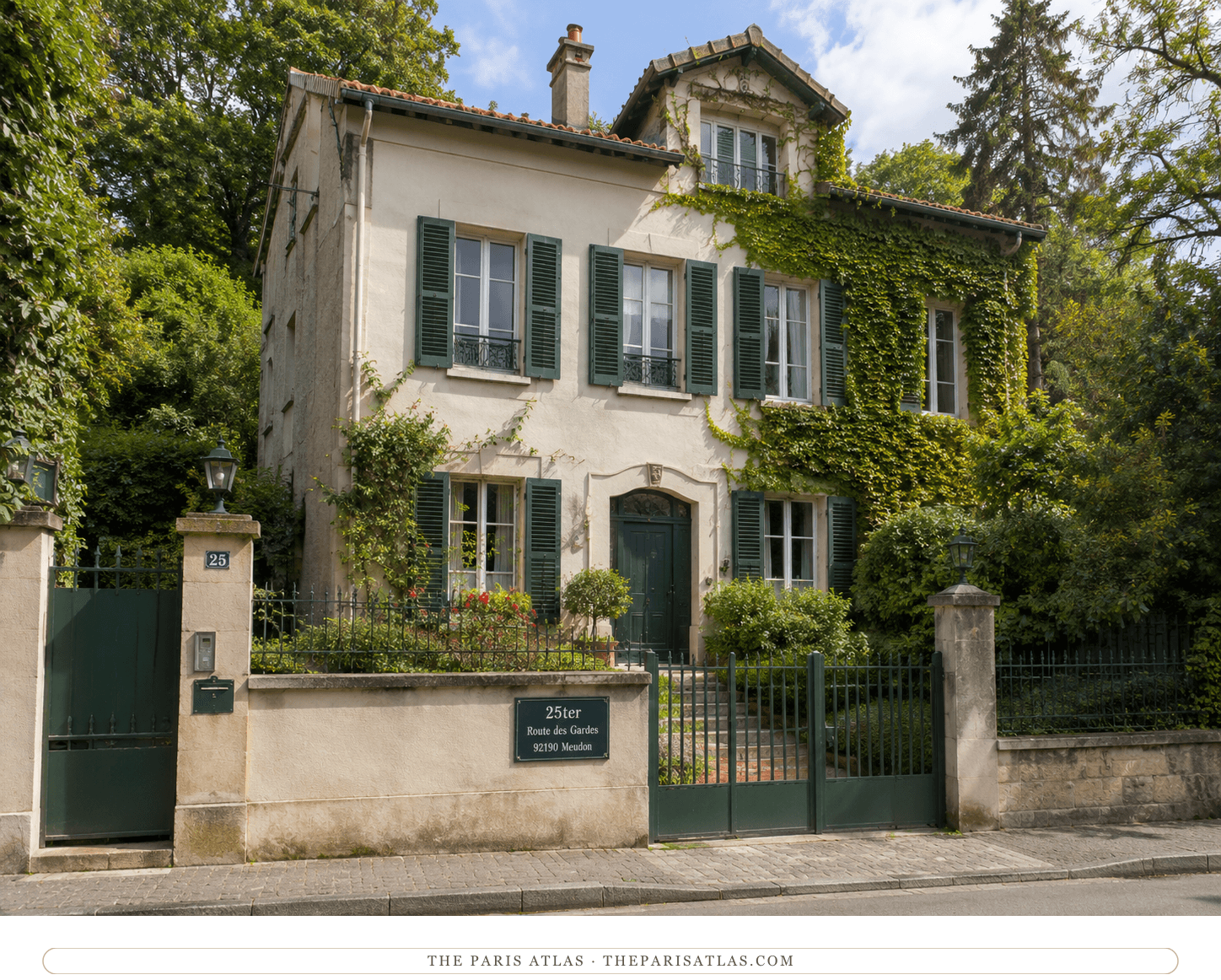
In 1951 the Destouches returned to France and settled at 25 ter route des Gardes in Meudon, on the western edge of Paris. Céline saw patients from a small ground-floor practice and wrote the German trilogy — D'un château l'autre, Nord and Rigodon — in the upstairs rooms. Lucette turned the ground floor of the house into a ballet studio and taught local children and adolescents for decades. The teaching, the dogs and the birds in the garden are the domestic ordinary that surrounds the last books.[3]
Céline died on 1 July 1961. Lucette outlived him by fifty-eight years. She refused to authorise reprints of the three prewar pamphlets, defended the estate against successive controversies, gave rare interviews and helped the biographers who won her trust. She was still alive when the recovered manuscripts of Guerre, Londres and the Krogold material were revealed publicly in 2021, though she did not live to see them printed; she died at Meudon on 8 November 2019, aged 107. For decades she was the last living witness of one of the twentieth century's most argued-over French writers.[1]
How Lucette appears in its pages: The narrator's wife, Céline's real companion Lucette Destouches. She keeps house at the Löwen hotel and later at Meudon; she is his witness through the whole trilogy.

How Lucette appears in its pages: The narrator's wife, Céline's real companion Lucette Destouches. She appears in the Montmartre memories and continues into Normance's bombing night.

How Lucette appears in its pages: The narrator's wife, Céline's real companion Lucette Destouches. She receives him upstairs after the elevator-shaft fall and stays with him through the bombing.

How Lucette appears in its pages: The narrator's wife, Céline's real companion Lucette Destouches, who crosses Germany with him and holds their small group together at Zornhof.

How Lucette appears in its pages: The narrator's wife, Céline's real companion Lucette Destouches. She stays with him through the ruined cities, the wrecked stations, and the Swedish Red Cross train that finally reaches the border.
Met · 1936
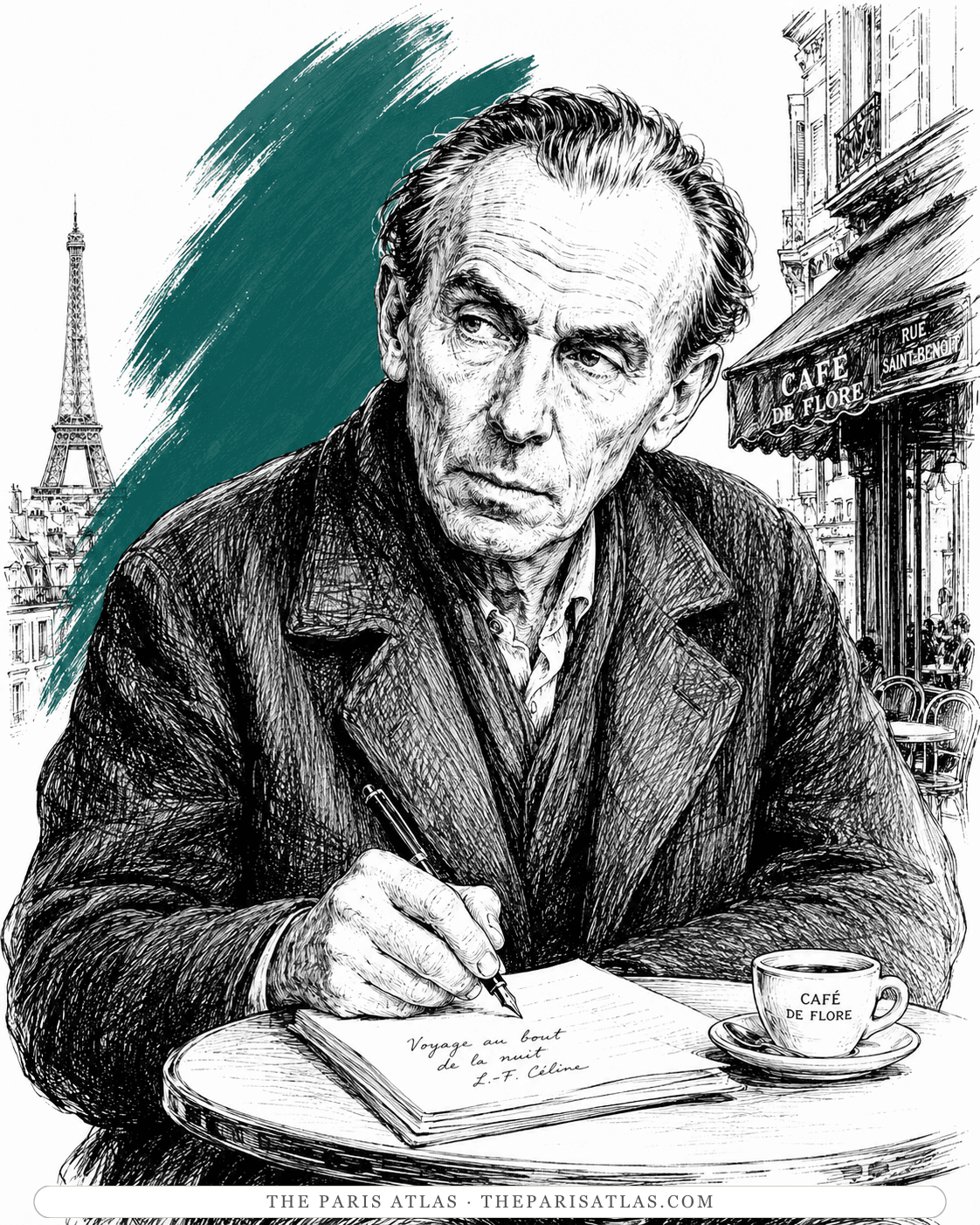
The dancer he married in 1943 and never left: through the flight across Germany, the Danish prison and exile, and the last years at Meudon — she survived him by fifty-eight years, guarding the house and the estate.
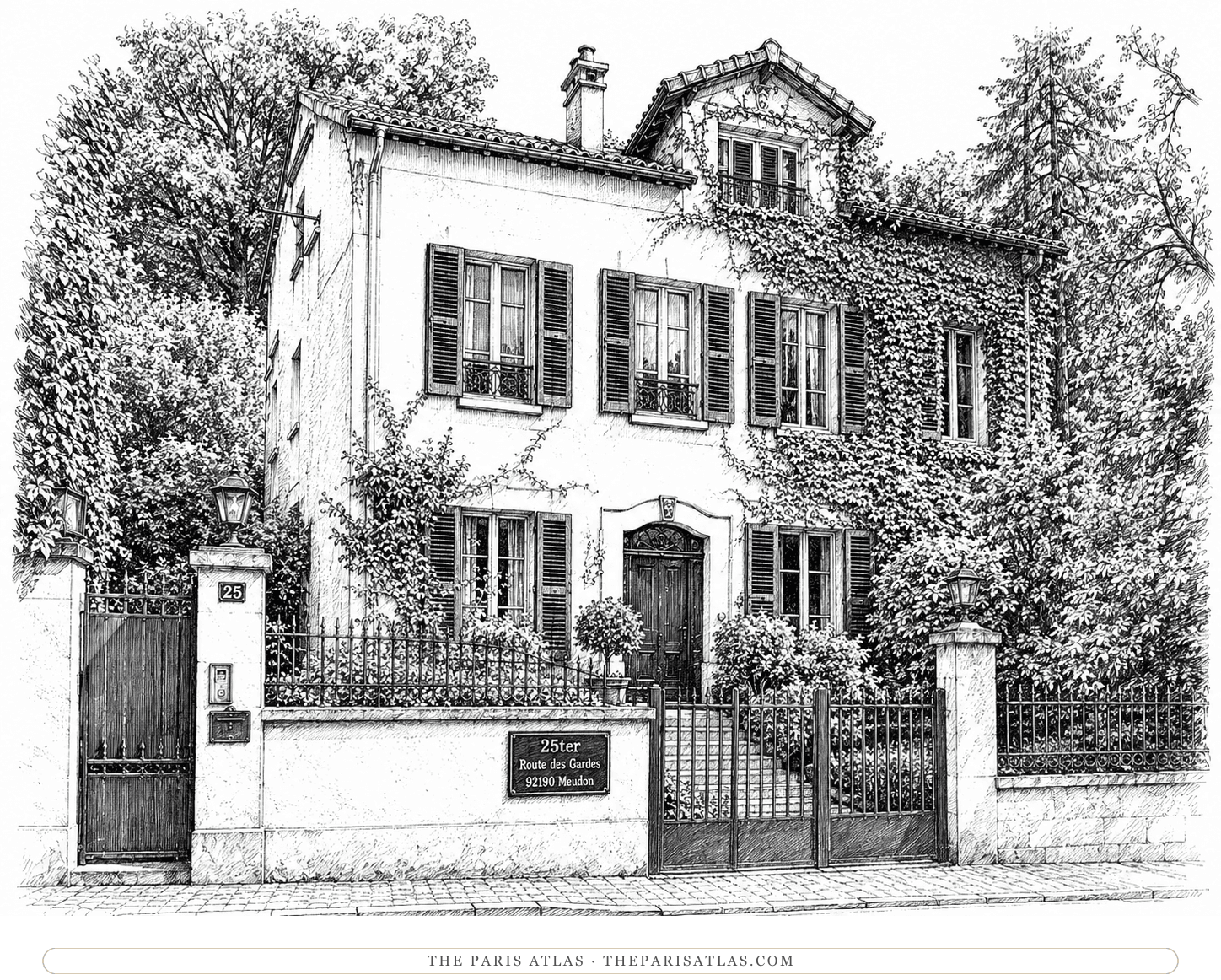
Lived at · 1951–2019
Lucette kept the Meudon house for nearly seven decades — through Céline's death in 1961 and her own long guardianship of the estate — until her death in 2019 at a hundred and seven.
Worked at · 1951
The upstairs studio was her dance school — she taught there while Céline wrote below, and went on teaching into extreme old age.
Met · 1936
The dancer he married in 1943 and never left: through the flight across Germany, the Danish prison and exile, and the last years at Meudon — she survived him by fifty-eight years, guarding the house and the estate.
The sources below include biographies, scholarly essays, interviews, and primary materials that informed this page. They reflect both the historical record and ongoing critical conversations about Lucette Destouches and their work.

Biographical evidence used to verify chronology, relationships, and historical context connected to Lucette Destouches.

Contemporary reporting or criticism used to document the historical reception and context of Lucette Destouches.
These references anchor the page in the documented record and in the scholarly conversations around Lucette Destouches. Every claim on this page traces back to one or more of the works listed here.
 Explore more resources