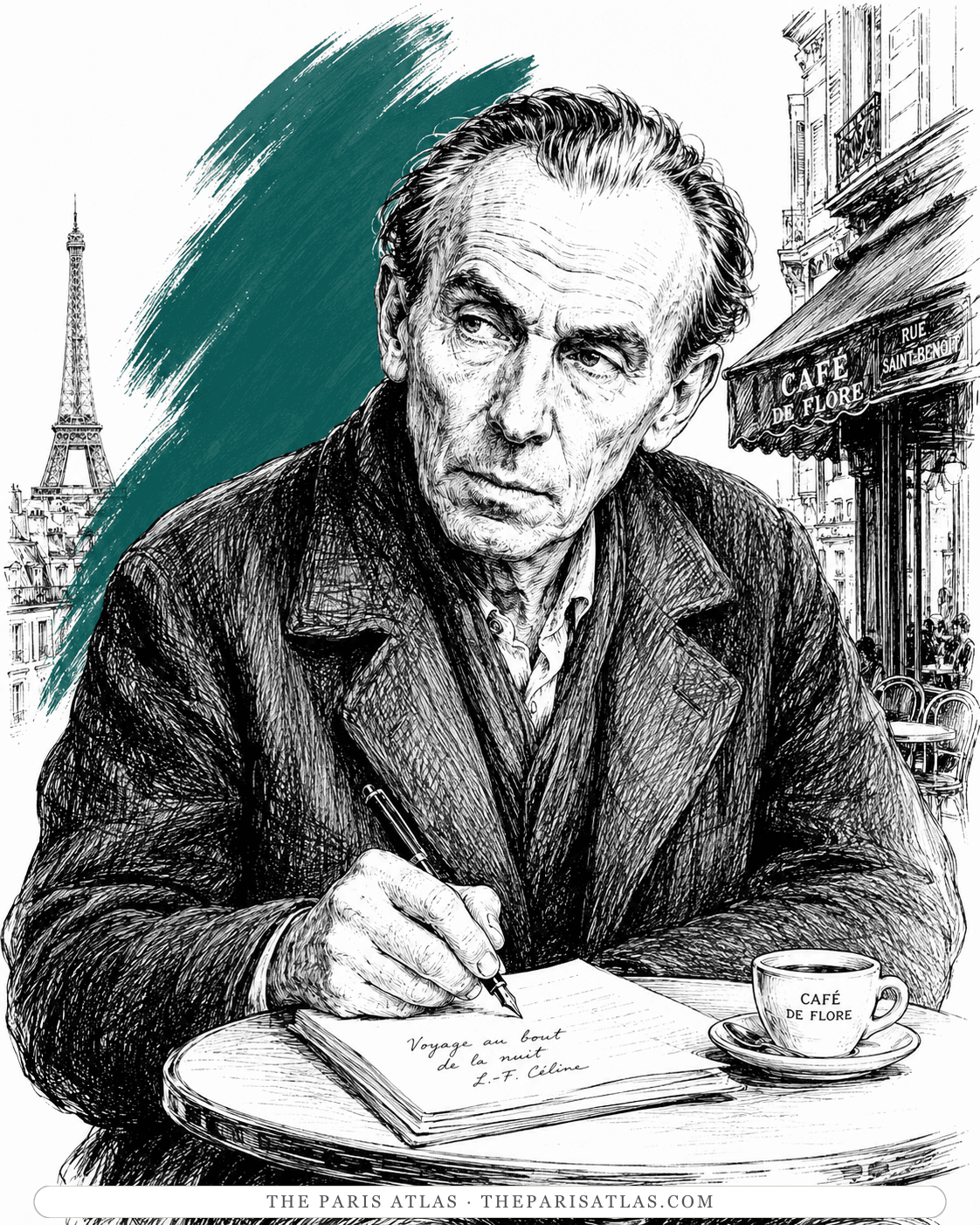


Rigadoon
Louis-Ferdinand Céline's posthumous 1969 novel — the final volume of the German trilogy, and the escape at last completed.
- 1969
About Louis-Ferdinand Céline
The story, briefly
Spoiler-freeWith Nazi Germany collapsing around them, Ferdinand, Lili and Bébert attempt to cross a country of bombed cities, wrecked railways, displaced civilians and retreating armies in order to reach Denmark. Much of the novel unfolds aboard trains or in railway stations, where every journey is interrupted, rerouted or threatened by bombing. It is the final volume of Céline's German trilogy and the culmination of the escape begun in North.
The story, in more detail
Rigadoon resumes the northward journey toward the Baltic, although Céline constantly jumps backward and forward in time. The first attempt to get to Denmark fails. Ferdinand and Lili are redirected, spend time again in the orbit of Sigmaringen, and then try once more to travel north.
Germany has effectively become a moving refugee camp. Trains are overcrowded with soldiers, civilians, wounded people, women and children. Stations vanish under bombing. Tracks are destroyed. Ferdinand repeatedly uses his status as a doctor to obtain transportation, information or protection.
Eventually he and Lili become responsible for a group of vulnerable children traveling through the chaos — an unlikely responsibility that becomes crucial to their own survival.
The full plot
The travelers set off from the circumstances left unresolved in North, still searching for a route to Denmark. Their path repeatedly doubles back on itself. They travel through ruined cities, get stranded in railway stations, encounter military personnel and refugees, and narrowly escape bombardments.
La Vigue eventually separates from them, leaving Ferdinand, Lili and Bébert to continue alone.
As the German transport system disintegrates, Ferdinand encounters a group of children whose original caretaker can no longer manage them. Because he is a doctor, he takes responsibility for them. The grotesque irony is that this group of fugitives now acquires a humanitarian identity: Ferdinand can present himself not simply as a French refugee but as the medical custodian of children who need evacuation.
The children become their passport through the collapsing Reich. Ferdinand manages to get the group aboard a Swedish Red Cross transport. The train offers the possibility that every previous train has failed to provide — actual passage across the frontier.
How it ends — spoilers ahead
Ferdinand, Lili, Bébert and the children finally cross into Denmark aboard a Swedish Red Cross train.
Ferdinand passes as the doctor responsible for the children, and the humanitarian transport gets them across the border that they have spent the trilogy trying to reach. The fugitives ultimately reach Copenhagen.
It is the closest Céline's German trilogy comes to a conventional resolution: after North and Castle to Castle repeatedly strand the characters inside Germany, Rigadoon finally gets them out. But the safety is temporary. Historically, Céline would soon be arrested and imprisoned in Denmark — a future the novel leaves hanging beyond the escape itself.
Themes and analysis
A place on the next train
The children's presence complicates Ferdinand's position as rescuer. Gaëtan Jarnot points to the underground passages where they find routes through gaps and wreckage that the adult follows. In this part of the escape, practical knowledge belongs to those the narrator's insulting descriptions would place beneath him. Their initiative prevents the journey from becoming a simple account of a doctor's competence. Care and dependence move in both directions: the children need protection, but Ferdinand also needs their ability to negotiate a landscape that defeats ordinary movement.
Keeping Bébert close
The train carries familiar companions without giving them a private refuge. In the crowded-carriage passage discussed by Jarnot, Bébert is named alongside the travelers as bodies press together and other passengers interrupt the view outside. The journey is experienced through that pressure, not through an orderly panorama of passing scenery. Keeping the small group together therefore matters more than possessing a comfortable space within it. The carriage offers movement, but the narrative's restricted sightlines keep escape entangled with confinement and dependence on strangers.
Why we recommend it
The escape at last
Where North and Castle to Castle strand the characters inside Germany, Rigadoon is the volume in which the escape actually happens. A Swedish Red Cross transport for vulnerable children finally gets Céline, Lili, and Bébert across the border.
Céline's final book
He completed the revised draft on 30 June 1961 and died the next day. Published posthumously in 1969, it is the last work he wrote and the completion of the trilogy.
Germany as moving refugee camp
Most of the novel unfolds aboard trains and in railway stations. Overcrowded transports, bombed tracks, stranded civilians and retreating armies dominate — one of the great late-war landscapes in fiction.
What this book explores
The people in its pages
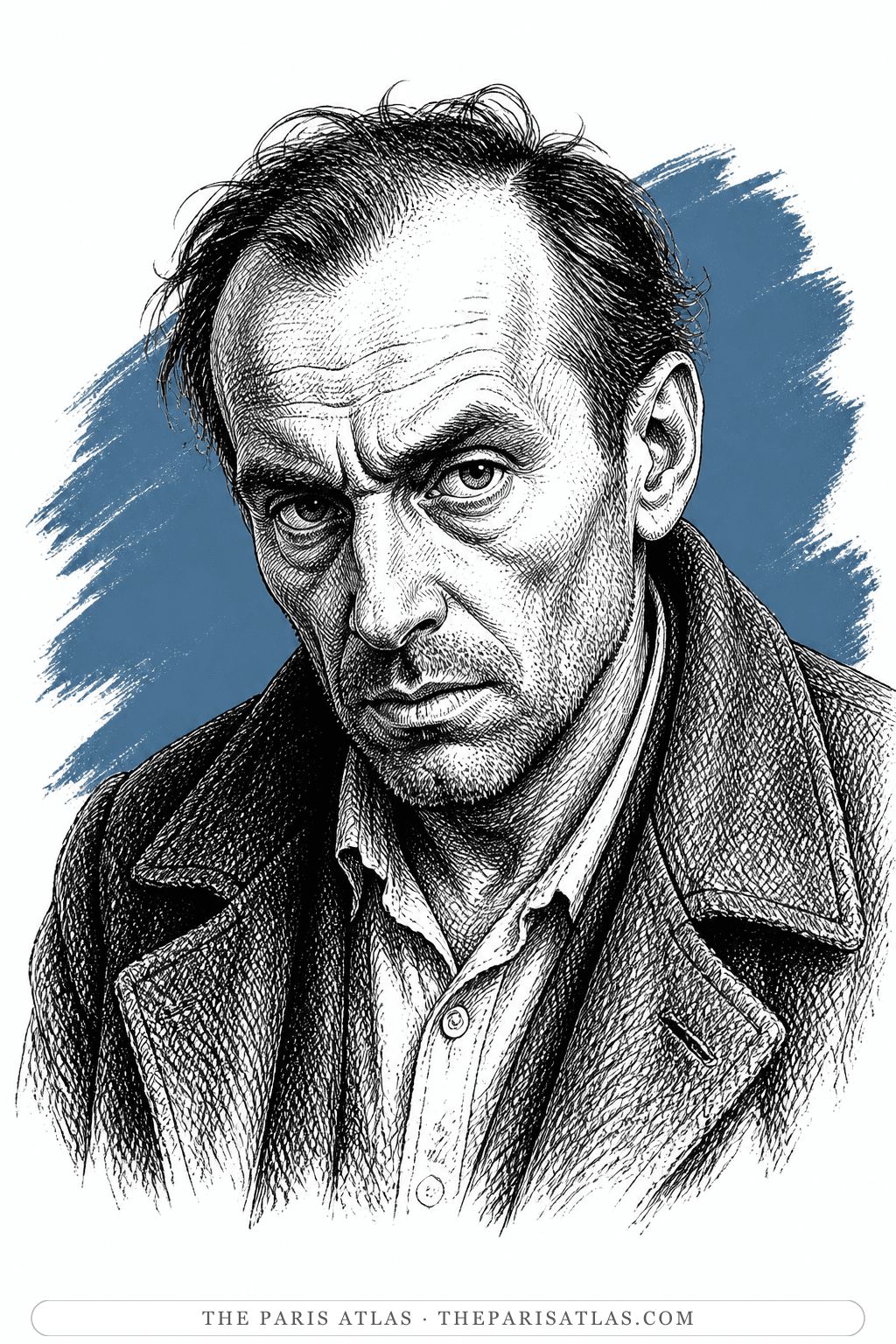
Ferdinand
The narrator. Céline himself, still searching for a route to Denmark through a Germany that has effectively become a moving refugee camp. His status as a doctor is what eventually gets the group out.
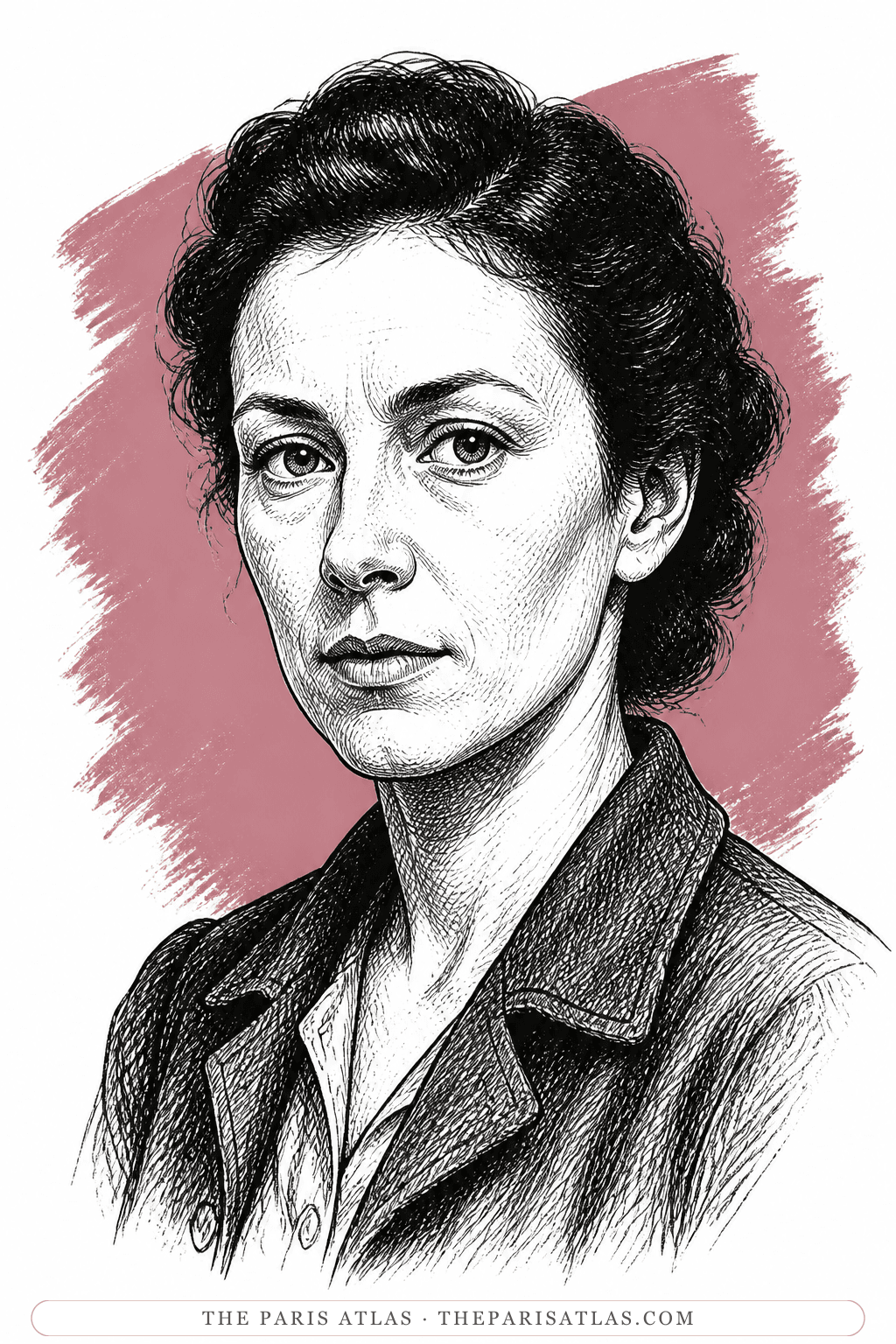
Lili
The narrator's wife, Céline's real companion Lucette Destouches. She stays with him through the ruined cities, the wrecked stations, and the Swedish Red Cross train that finally reaches the border.
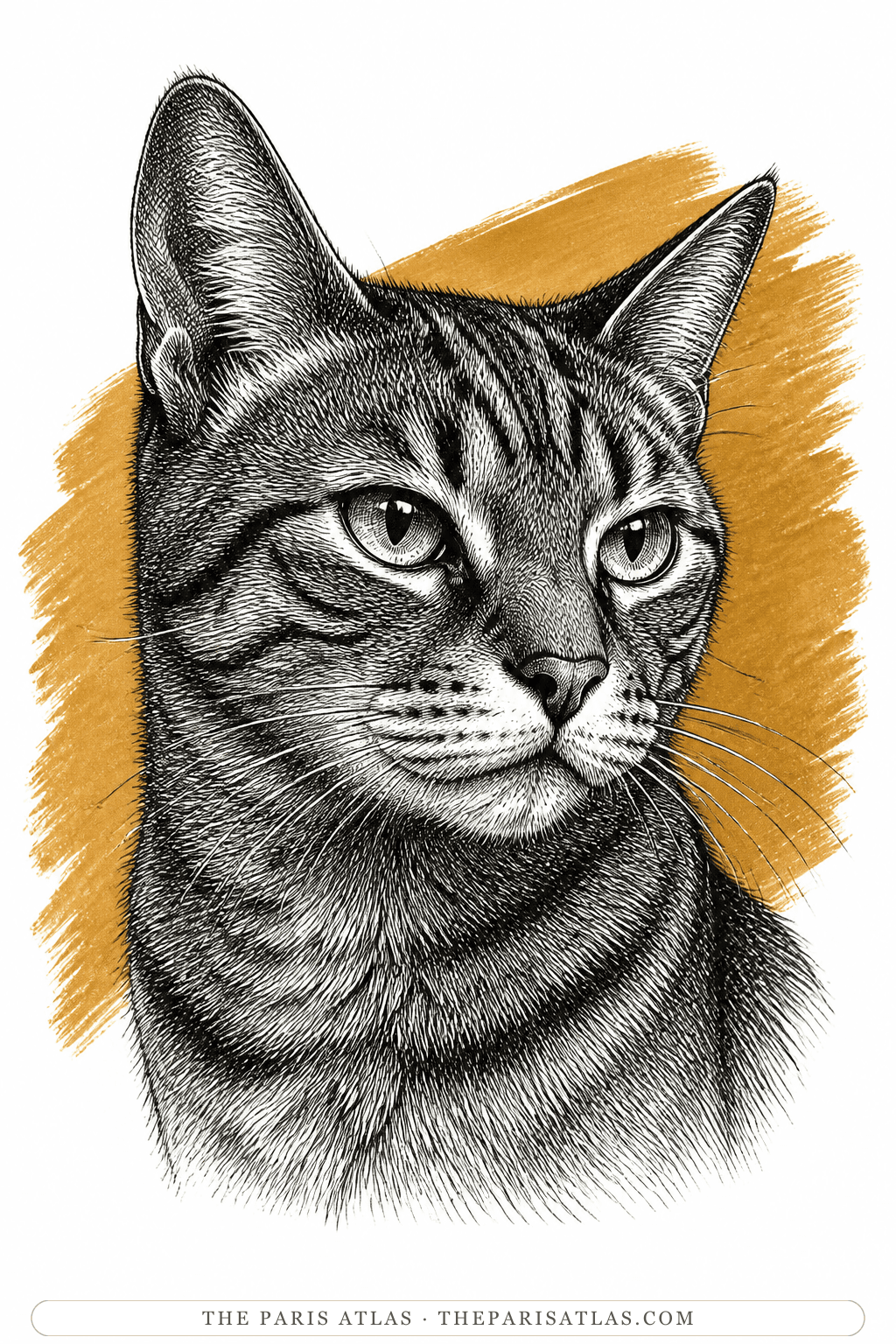
Bébert
The cat, carried across a collapsing Germany. He crosses into Denmark with Céline and Lili on the Swedish Red Cross transport at the trilogy's end.

La Vigue
The actor from North and Castle to Castle. He eventually separates from Ferdinand and Lili, leaving them to continue toward Denmark alone with Bébert.
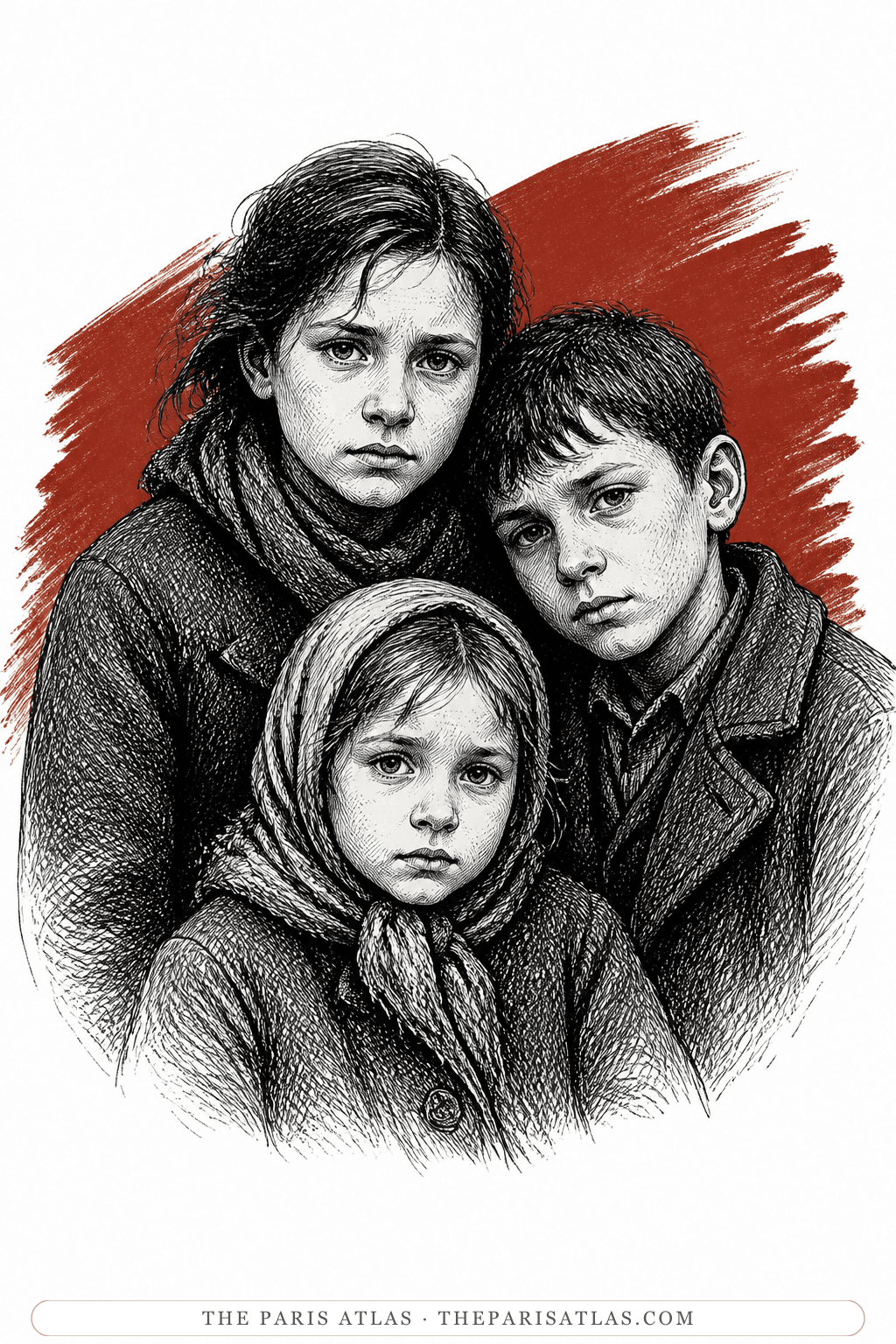
The children
A group of vulnerable children whose original caretaker can no longer manage them. Because Ferdinand is a doctor, he takes them on — and they become the humanitarian identity that carries the fugitives across the border.
Timeline
1961
Céline completes the revised manuscript on 30 June.
July 1961
He dies on 1 July, leaving Rigodon unpublished.
1969
Gallimard issues the novel posthumously as the last volume of the German trilogy.
Book editions
Paperback
- Paperback
- Dalkey Archive Press
- Ralph Manheim
Paperback
- Paperback
- Gallimard Folio
Reader reviews
Readers may also like

Castle to Castle
The trilogy's Sigmaringen novel, which Rigadoon repeatedly revisits and detours back through.
Read our take
Journey to the End of the Night
The debut whose narrator's voice is the one carrying the trilogy home.
Read our take
Death on the Installment Plan
Céline's childhood novel; read it before or after the trilogy to see the whole arc of the Ferdinand narrator.
Read our take
A Farewell to Arms
Hemingway on the earlier war — the same generation on a very different escape.
Read our takeRigadoon: frequently asked questions
What is Rigadoon about?
The escape from a collapsing Germany. Céline, Lili and Bébert try to cross bombed cities, wrecked railways and refugee-choked stations to reach Denmark. Ferdinand's status as a doctor and a chance responsibility for a group of vulnerable children ultimately gets them across the border on a Swedish Red Cross transport.
When was Rigadoon published?
Céline completed the revised draft on 30 June 1961 and died the next day. Gallimard published Rigodon posthumously in 1969, eight years after his death.
Is Rigadoon the last book of the German trilogy?
Yes. In publication order it is the third and last (1969, after Castle to Castle in 1957 and North in 1960). Chronologically it is also the last — the arc runs North → Castle to Castle → Rigadoon in both story time and publication order for this final volume.
Does Rigadoon actually end with the escape?
Yes — Ferdinand, Lili, Bébert and the children reach Denmark on the Swedish Red Cross train. It is the closest the trilogy comes to a conventional resolution. Historically, Céline would then be arrested and imprisoned in Copenhagen, a future the novel leaves hanging.
Who was Bébert?
The cat Céline and Lili carried out of France in 1944, across Germany, into Denmark, and back to Meudon. He is a real character in the German trilogy as well as a real animal Céline outlived by only a few years.
Should I read the German trilogy in publication order or chronological order?
Most readers follow publication order — Castle to Castle → North → Rigadoon. That was the order Céline wrote them in and the order that reveals how his voice sharpens over three books. Chronological order (North → Castle to Castle → Rigadoon) makes the escape story clearer if you want continuity.
If you like Louis-Ferdinand Céline
Explore authors with a similar voice, perspective, and influence.
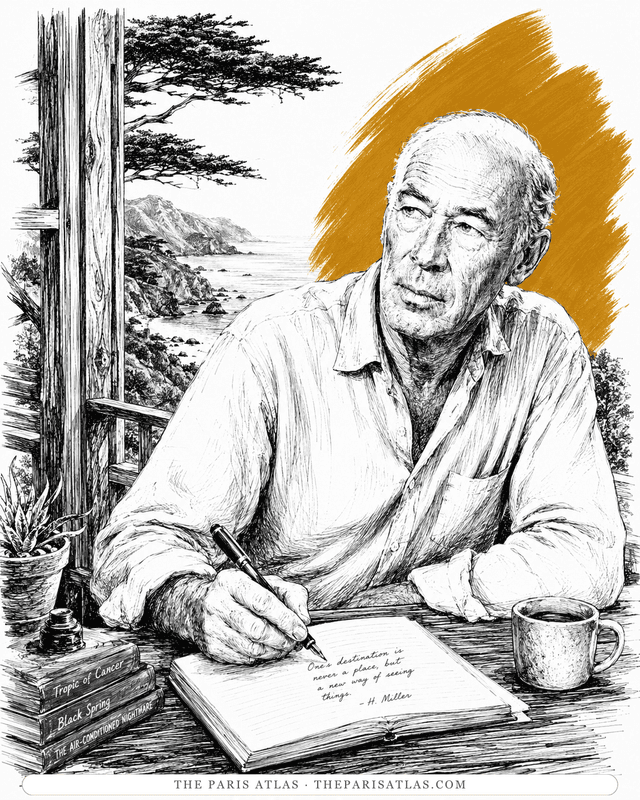
Henry Miller
Miller read Journey in manuscript while writing Tropic of Cancer and never recovered — the two books are the era's twin gutter-testaments.
View author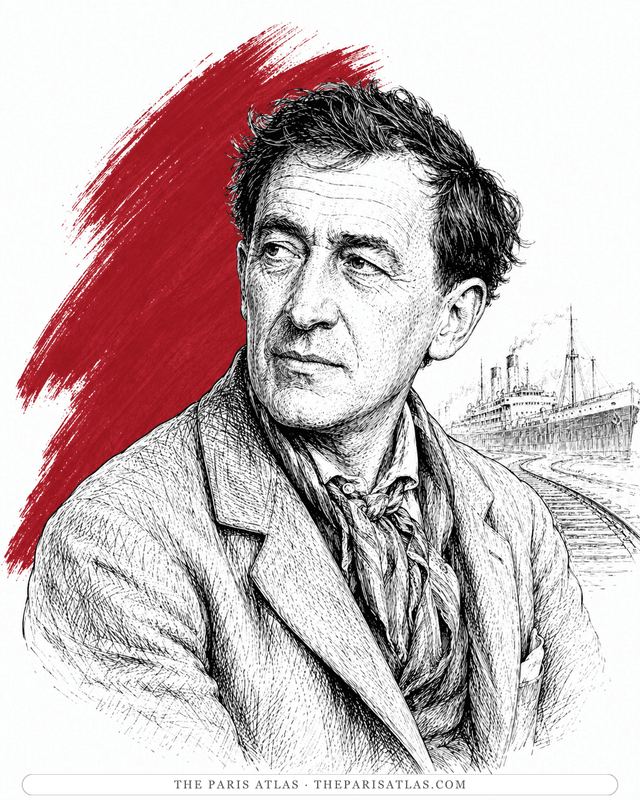
Blaise Cendrars
The other French modernist Céline could not look away from: a war-wounded amputee whose spoken prose ran ahead of grammar and whose Moravagine anticipates Bardamu's tour of the century's slaughterhouses.
View author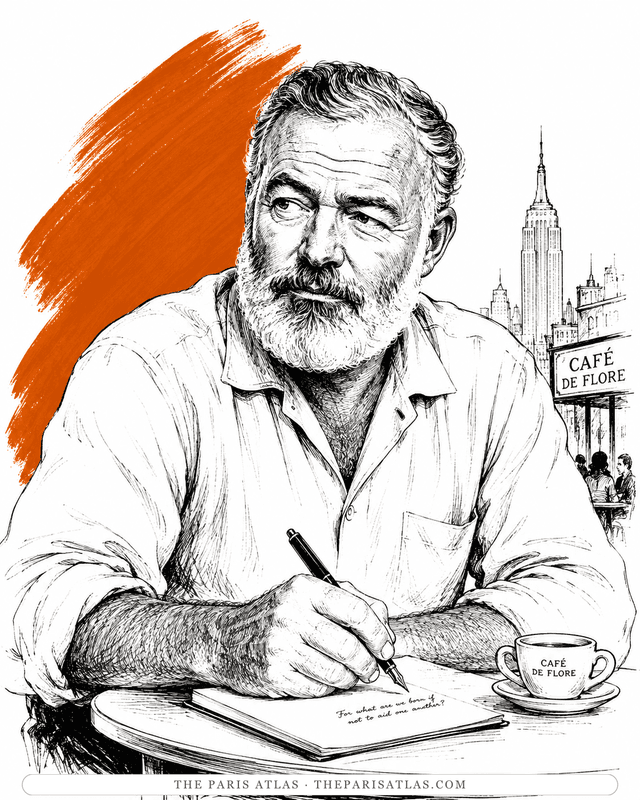
Ernest Hemingway
The same war, the same refusal of the big words — delivered in whispers where Céline delivers it in screams. Both writers died in the same week of July 1961.
View author
References
References
The sources below include the primary text, editions, scholarship, archival materials, and other records that informed this page. They document Rigadoon, its publication, and its place in literary history.


1L'espace dans Rigodon de Céline — section 2-2, Espaces clos
WebsiteUniversité de Nantes / Mémoire OnlineUsed forSelected critical section with reproduced primary passages; no whole-study or independent complete-novel collation.

2Louis-Ferdinand Céline, Romans II: D'un château l'autre — Nord — Rigodon (edition and 'Composition de la trilogie' pp. 955–961; per-book Notices)
EssaysGallimard, Bibliothèque de la Pléiade, 1974Used forPublished analysis and historical context used in preparing the Rigadoon page.
3Céline: 1944–1961 — Cavalier de l'Apocalypse (esp. pp. 33–41 on the wartime journey through Germany)
BiographyMercure de France, 1981Used forBiographical evidence used to verify chronology, relationships, and historical context connected to Rigadoon.
4Interview with Lucette Destouches on Rigodon (Magazine Littéraire, no. 26, February 1969)
PeriodicalMagazine Littéraire, 1969Used forContemporary reporting or criticism used to document the historical reception and context of Rigadoon.
5Céline ou la dénarrativisation de l'Histoire dans D'un château l'autre et Rigodon (Études françaises, vol. 53, no. 3, pp. 89–103)
EssaysÉrudit / Études françaises, 2017Used forPublished analysis and historical context used in preparing the Rigadoon page.
6The Wartime Trilogy by Louis-Ferdinand Céline (research starter)
WebsiteEBSCOUsed forWeb source consulted for documented facts and historical context presented on the Rigadoon page.
7Connoisseur of Destruction (review of Rigadoon and the German trilogy)
PeriodicalThe New Yorker, 1974Used forContemporary reporting or criticism used to document the historical reception and context of Rigadoon.
i
Why these sources are here
The primary text is the baseline reference for every book page. Additional references document publication history, interpretation, and historical context where that evidence is available.
 Explore more resources