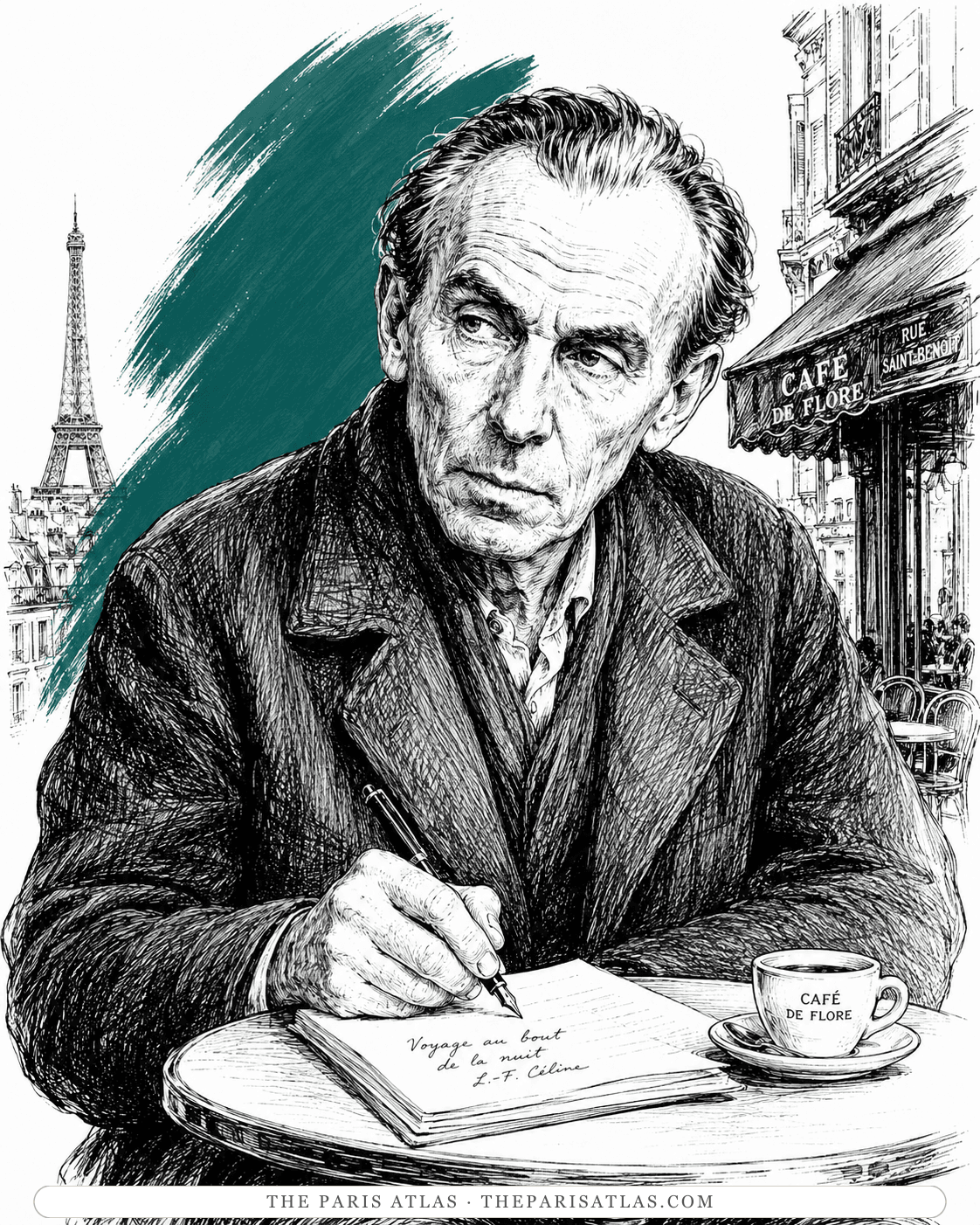

Castle to Castle
The 1957 novel that immediately followed, and the first place readers could see the "emotive style" argued for here applied to a long book again.
Read our take
Louis-Ferdinand Céline's 1955 fictional interview and aesthetic manifesto — a staged conversation about his own style that turns into a comic walk across Paris.
Céline stages an imaginary interview with the mysterious Professor Y in order to explain his own approach to writing. What begins as literary publicity quickly becomes a comic confrontation. Professor Y proves to be an inept interviewer, forcing Céline to supply not only the answers but practically the questions as well. Between arguments, insults and increasingly bizarre behaviour, Céline lays out his theory of the "emotive style" — writing designed to recover the movement, rhythm and emotional force of spoken language. By the end, the interview itself has broken down and turned into a comic journey through Paris.
The fictionalised "Céline" believes he receives too little publicity and that his publisher has failed to promote him properly. So he decides to participate in the modern literary ritual of the interview. He meets Professor Y at the Square des Arts-et-Métiers.
The problem is that Professor Y does not behave like an interviewer. He offers abstract intellectual questions Céline dislikes, hesitates, loses control of the exchange and eventually becomes little more than a prop in Céline's performance.
Céline therefore conducts both sides of the interview himself.
He explains that his major literary invention is not slang itself but what he calls style rendu émotif — an attempt to carry the emotion and rhythm of spoken language into written prose. From there come discussions of punctuation, ellipses, rhythm, argot, cinema, modern fiction and the famous metaphor of writing as a carefully engineered Métro system, whose rails guide the reader along a predetermined path.
Céline opens by portraying himself as commercially neglected and insufficiently appreciated. Literary publicity has become unavoidable, so he resolves to "play the game" and submit to an interview.
Because a suitable interviewer is apparently unavailable, he ends up with Professor Y. They meet at the Square des Arts-et-Métiers. Céline waits for the professor to question him. Almost nothing useful happens.
Professor Y eventually offers the sort of abstract intellectual topic Céline dislikes. Céline rejects the premise and turns the interview toward what he actually wants to discuss: style. He argues that novels built primarily around ideas or conventional storytelling have lost their force. His own objective, he says, is to recover emotion through the memory of spoken language.
This does not mean simply transcribing ordinary speech. Céline emphasises the labour required to manufacture an apparently spontaneous voice. Argot is only one ingredient. Syntax must be altered; punctuation must organise breath and rhythm; the famous three dots help propel and suspend the voice.
The Métro becomes his principal metaphor. A successful writer lays down invisible rails beneath the reader, just as tracks determine the route of a train. The passenger experiences movement without constantly noticing the engineering beneath it.
As Céline grows more animated, the ostensible interviewer becomes increasingly incapable of controlling the interview. Professor Y's physical and psychological condition deteriorates. His alternate designation — Colonel Réséda — emerges, and the interview slides into delirium and farce.
The static literary conversation now turns into movement through Paris. Céline and the professor leave the Square des Arts-et-Métiers and make their way toward the literary world the book has been mocking all along: the headquarters associated with Gallimard and the NRF at 5 rue Sébastien-Bottin.
By the end, the original roles have completely reversed. Professor Y is no longer successfully interviewing Céline. Céline dominates the conversation, manages the professor and effectively carries the entire performance.
The pair's movement through Paris replaces the interview with an actual comic narrative. What began as publicity for a writer has become another Céline story.
That transformation is part of the joke: Céline sets out to explain how his fiction works and ends up demonstrating it.
Professor Y's silence threatens more than conversation: it prevents the writer from putting himself on display. When questioning finally begins, Céline rejects the philosophical subject and takes command. Yet hostility is not merely an obstacle to publicity. The fictional writer imagines recounting a fight to Gaston Gallimard, making him laugh and winning a larger advance. The quarrel becomes something that can be sold. This joke complicates Céline's pose as the isolated, mistreated author: even his attack on literary publicity supplies entertainment for the publisher whose approval he needs.
The Métro image hinges on a trick of perception: its rails seem straight while actually being shaped otherwise. Céline links that deceptive straightness to a voice the reader seems to hear inside their own head. The writer's route is therefore felt as inward movement, not merely followed as an external story. That makes the metaphor both intimate and controlling. What feels personally immediate has been arranged by someone else; the apparent closeness between speaker and reader depends on a technique that conceals its own intervention.
Entretiens avec le professeur Y is Céline's closest thing to an aesthetic manifesto, but it should not be read as a dry theoretical essay. Céline deliberately converts literary theory into comedy.
Its central distinction is between spoken language and the artificial reconstruction of spoken emotion in writing. Céline does not claim simply to write the way people talk. His argument is almost the opposite: enormous technical labour is required to create prose that gives the reader the sensation and emotional immediacy of speech.
This helps explain the ellipses, broken syntax, exclamations, repetitions, slang and rhythmic distortions of the later novels. They are not merely decoration. They are part of a system for regulating pace and emotional pressure.
The book is also about authorship as performance. Céline controls interviewer, interview, publicity, theory and narrative simultaneously. The supposed interview becomes a parody of the increasingly important postwar literary-media industry. Michel Lacroix therefore describes it as both fictionalised publicity and a manifesto about the textual construction of orality.
What the book explores:
This is the shortest, clearest place he explains what he thinks he is doing with his sentences — the ellipses, the broken syntax, the argot, the rhythmic distortions. It is also very funny.
The interview format is the joke: Céline argues about style while the interviewer collapses and the whole conversation wanders across Paris toward Gallimard's front door.
The technical vocabulary Céline introduces here — the emotive style, the three-dot rhythm, the Métro rails — is the vocabulary reviewers used for the German trilogy that followed. Either order works.
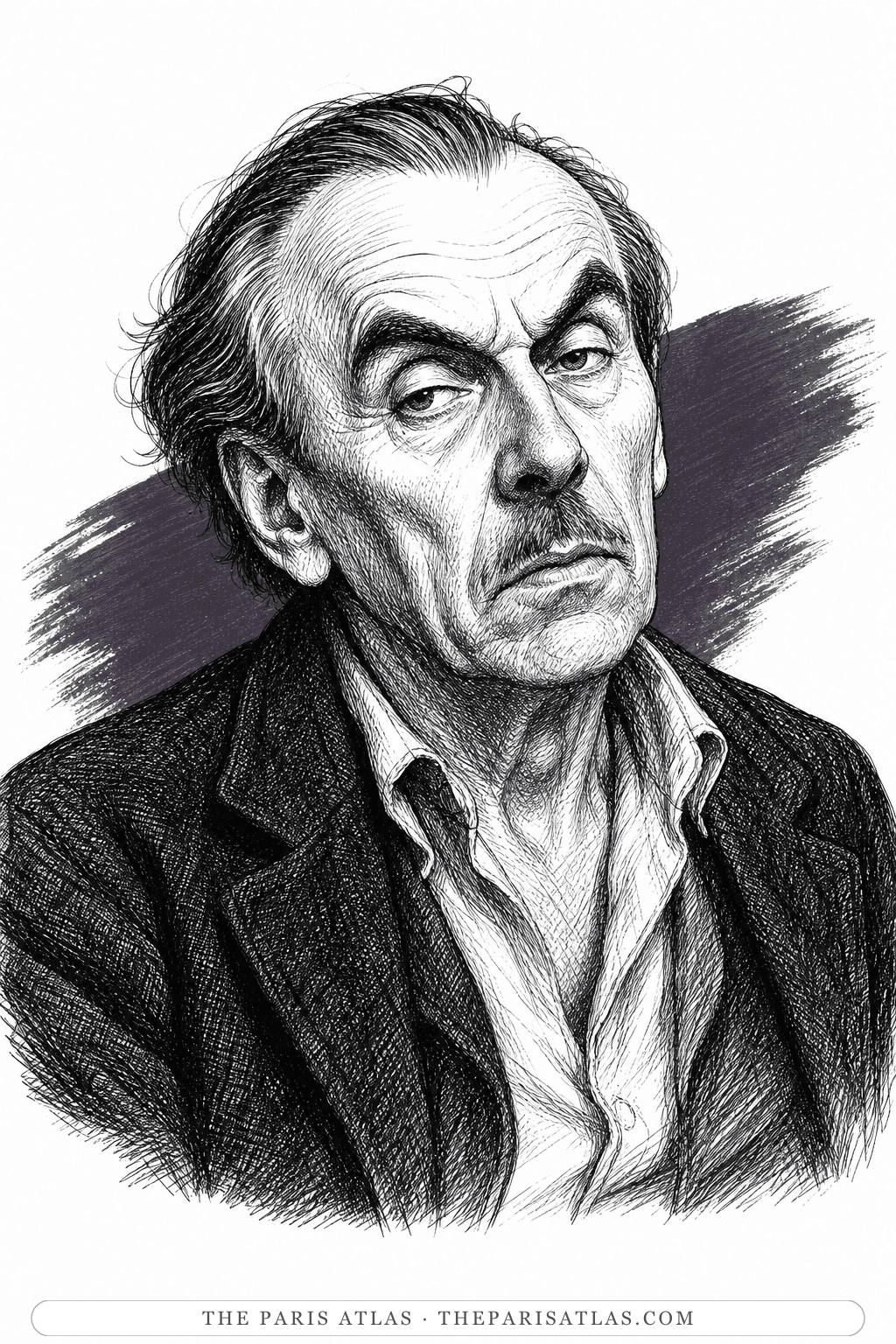
The interviewee: an exaggerated Céline complaining about publicity, defending his sentences and eventually running the interview himself.
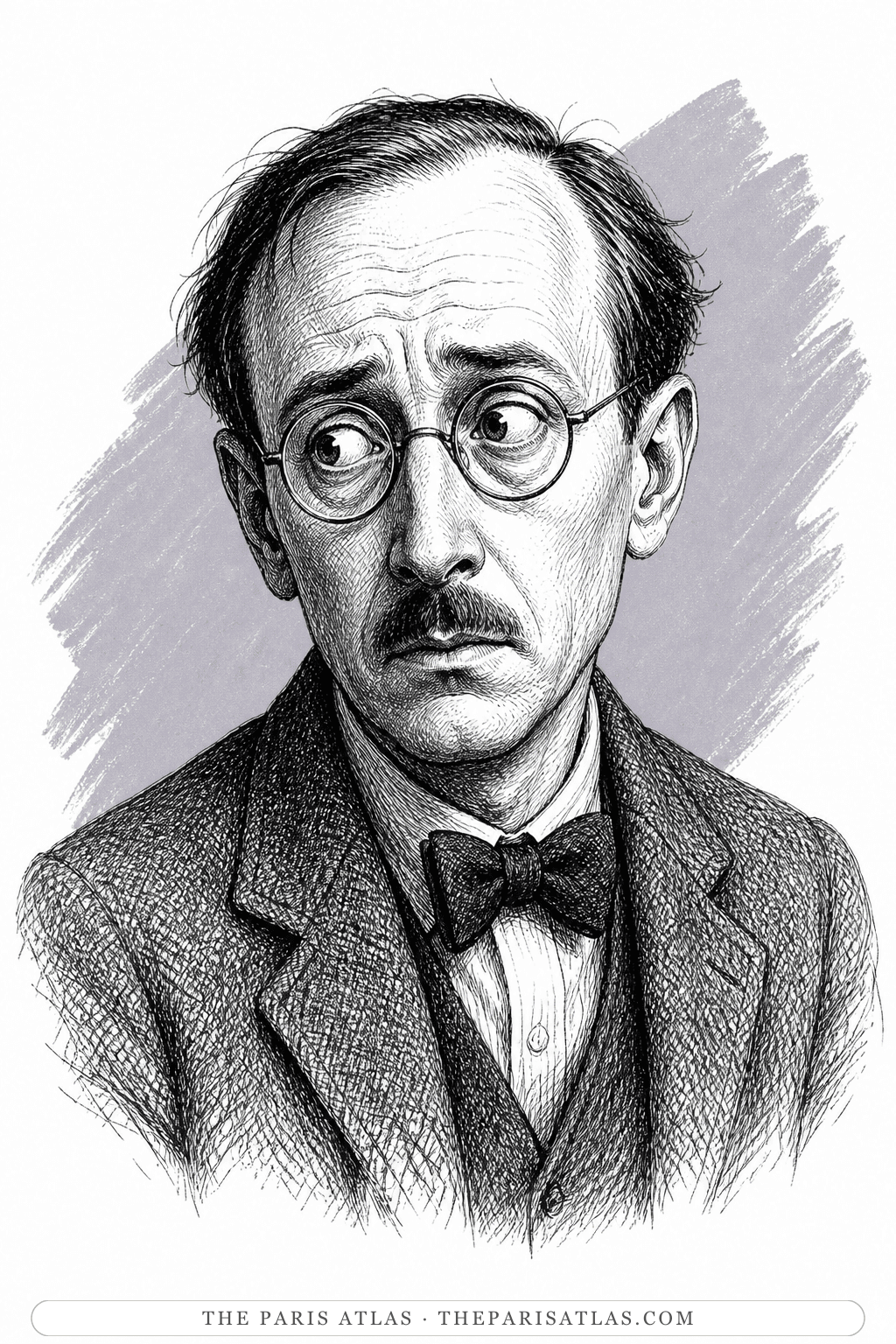
The supposed interviewer, whose alternate designation Colonel Réséda emerges as the exchange collapses. A fictional construction, not a disguised portrait — scholars have proposed Milton Hindus as one possible model, but Professor Y is not simply Hindus.
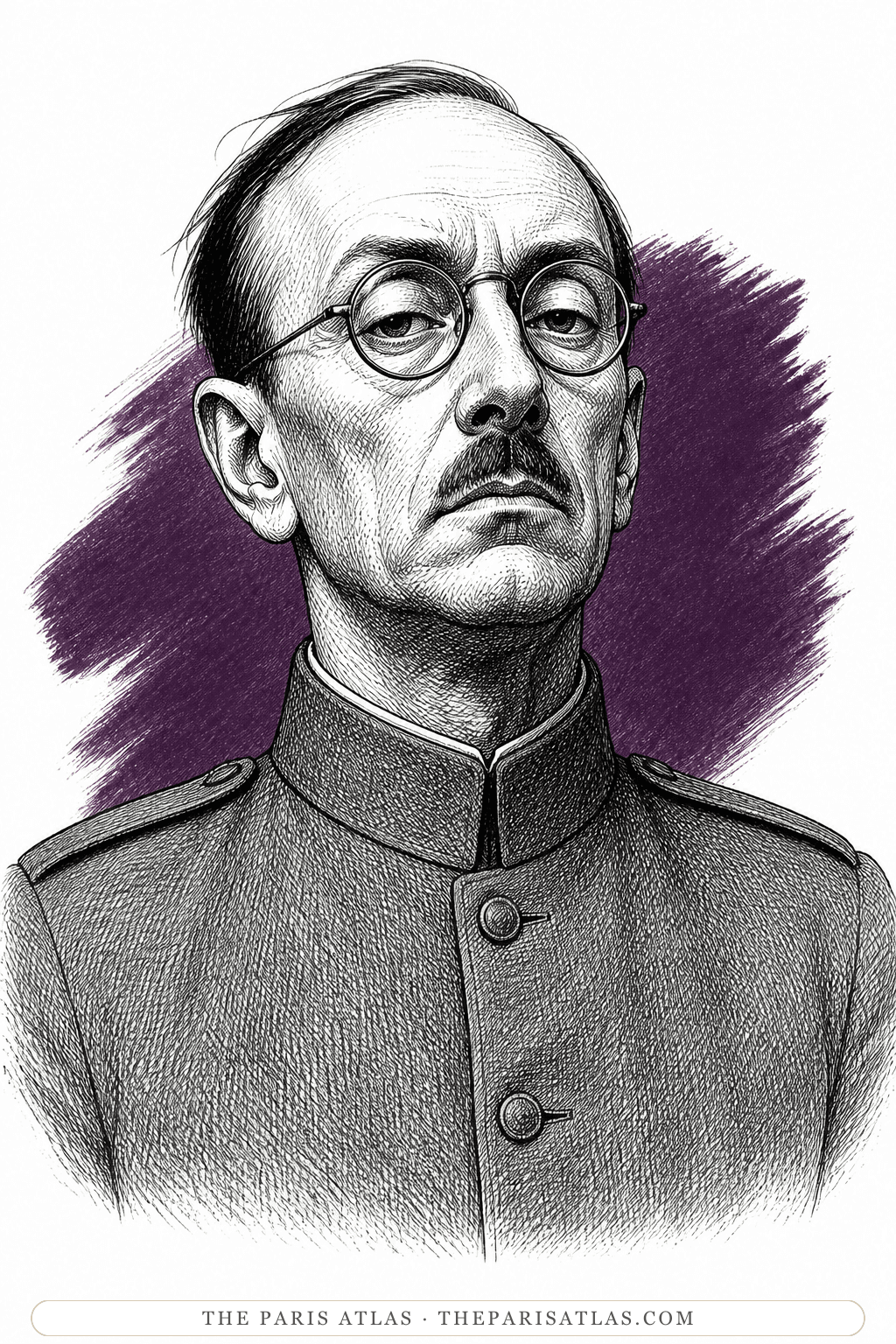
The military alternate identity that emerges from Professor Y as the interview slides into delirium.
1954–1955
The imaginary interview appears in installments in La Nouvelle Nouvelle Revue française.
1955
Gallimard publishes Entretiens avec le professeur Y as a book.
1993
The work is included with the two Féerie novels and manuscript variants in the Bibliothèque de la Pléiade.
The 1957 novel that immediately followed, and the first place readers could see the "emotive style" argued for here applied to a long book again.
Read our take

The posthumous 1969 close of the trilogy; the last long demonstration of the method described in Entretiens.
Read our take
Céline's 1932 debut. Entretiens describes the technique the debut half-invented and the trilogy perfected.
Read our takeNo. Céline invented the interviewer and wrote both sides of the exchange.
A fictional interviewer who also becomes associated with the identity Colonel Réséda. Scholars have proposed real-life influences, including Milton Hindus, but he should not simply be identified as Hindus.
His term for prose designed to transmit the emotional movement and rhythm associated with spoken language rather than merely reproduce ordinary speech.
In his own theory, punctuation helps control rhythm, pauses, acceleration and the reader's movement through a sentence. The three dots are part of a rhythm system, not a stylistic tic.
Céline compares literary technique to laying tracks: the reader appears to move freely, but the writer has painstakingly engineered the route underneath.
Because it is one of the clearest places where he explicitly explains what he believes he is doing stylistically — while simultaneously demonstrating the technique through the book's own comic voice.
Explore authors with a similar voice, perspective, and influence.
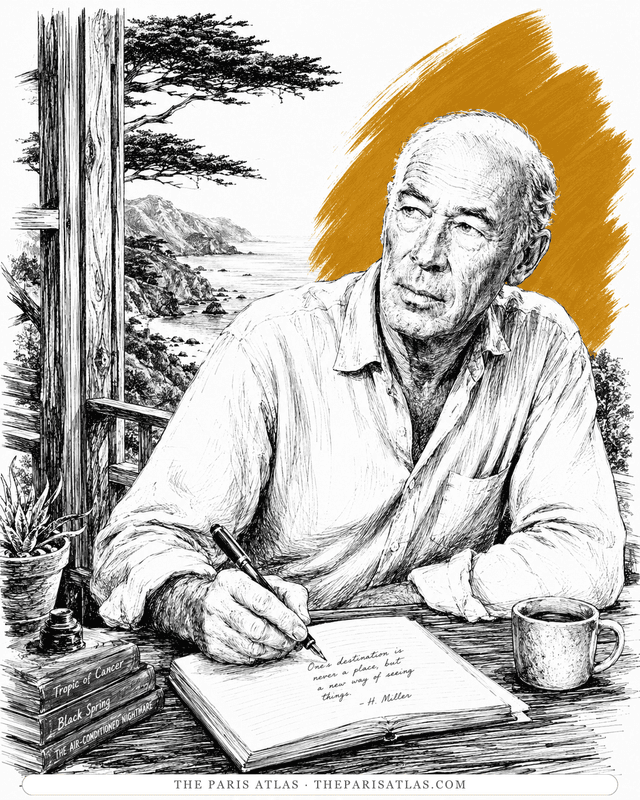
Miller read Journey in manuscript while writing Tropic of Cancer and never recovered — the two books are the era's twin gutter-testaments.
View author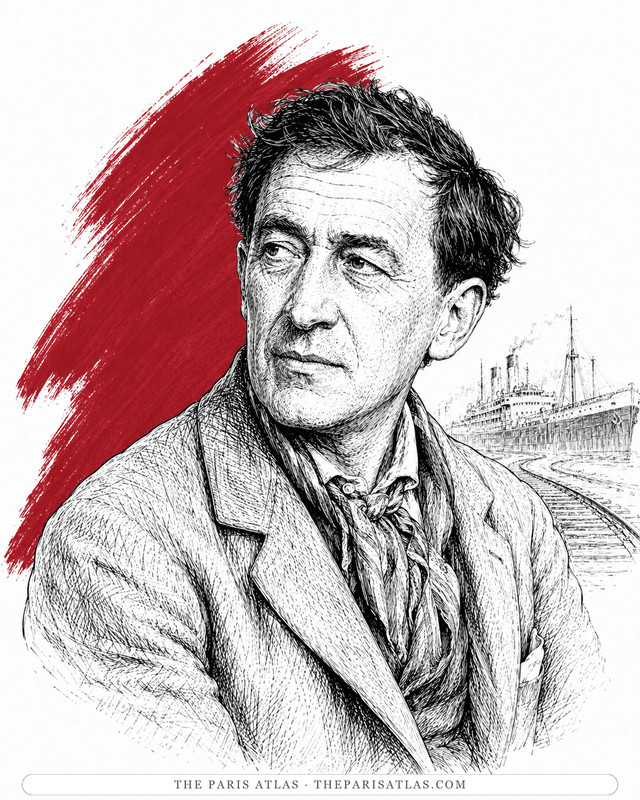
The other French modernist Céline could not look away from: a war-wounded amputee whose spoken prose ran ahead of grammar and whose Moravagine anticipates Bardamu's tour of the century's slaughterhouses.
View author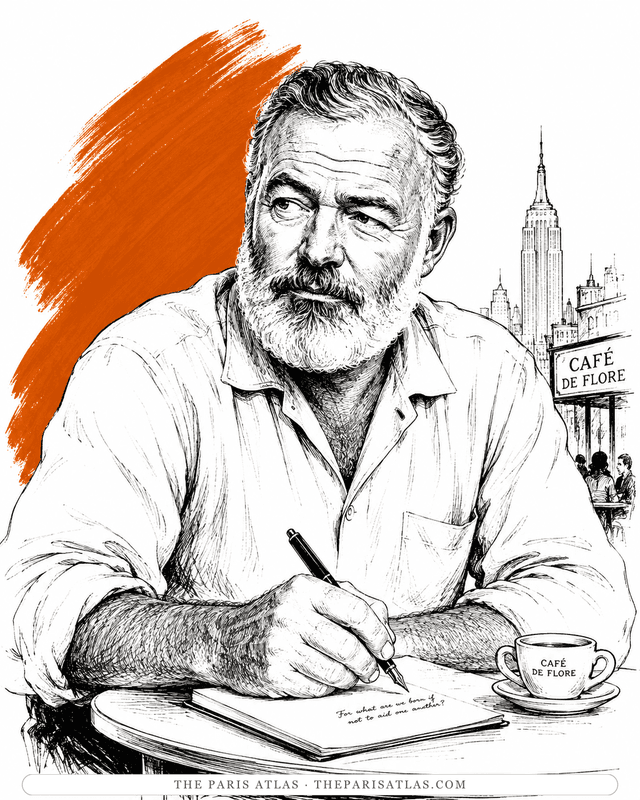
The same war, the same refusal of the big words — delivered in whispers where Céline delivers it in screams. Both writers died in the same week of July 1961.
View authorThe sources below include the primary text, editions, scholarship, archival materials, and other records that informed this page. They document Entretiens avec le professeur Y, its publication, and its place in literary history.


The primary text represented by this page, used for descriptions of the work’s contents and for any quoted passages shown here.

Published analysis and historical context used in preparing the Entretiens avec le professeur Y page.
Published analysis and historical context used in preparing the Entretiens avec le professeur Y page.
Published analysis and historical context used in preparing the Entretiens avec le professeur Y page.
Published analysis and historical context used in preparing the Entretiens avec le professeur Y page.
Web source consulted for documented facts and historical context presented on the Entretiens avec le professeur Y page.
Web source consulted for documented facts and historical context presented on the Entretiens avec le professeur Y page.
Published analysis and historical context used in preparing the Entretiens avec le professeur Y page.
The primary text is the baseline reference for every book page. Additional references document publication history, interpretation, and historical context where that evidence is available.
 Explore more resources