The Paris AtlasCharting the artists, works, and places worth returning to.
Cover of Hommage à Zola by Louis-Ferdinand Céline

Hommage à Zola

Homage to Zola

by Louis-Ferdinand Céline

Louis-Ferdinand Céline's 1933 speech at Médan — instead of praising Émile Zola, he asks what has happened to the reality naturalism tried to describe, and predicts that literature committed to it will not be tolerated for long.

Published
1933
Setting
France, Paris
Shelf rating
3.7

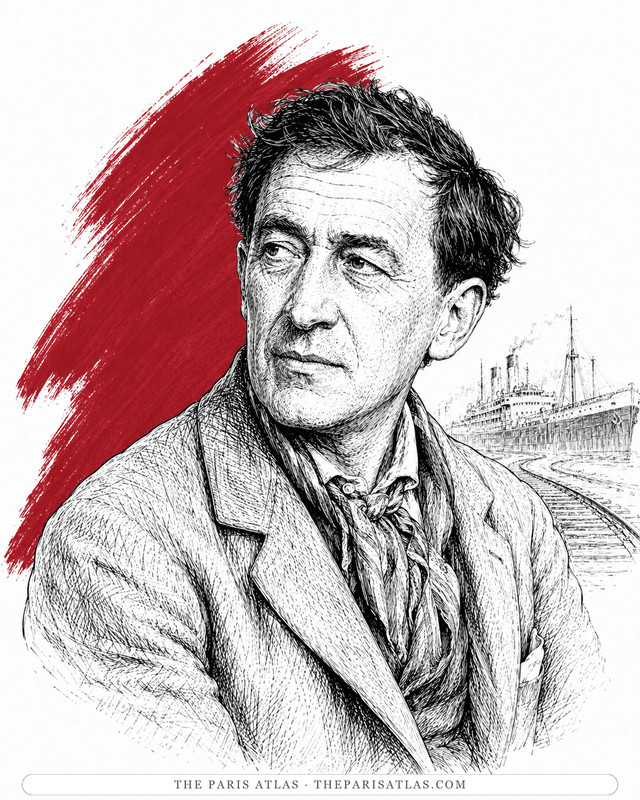
About Louis-Ferdinand Céline

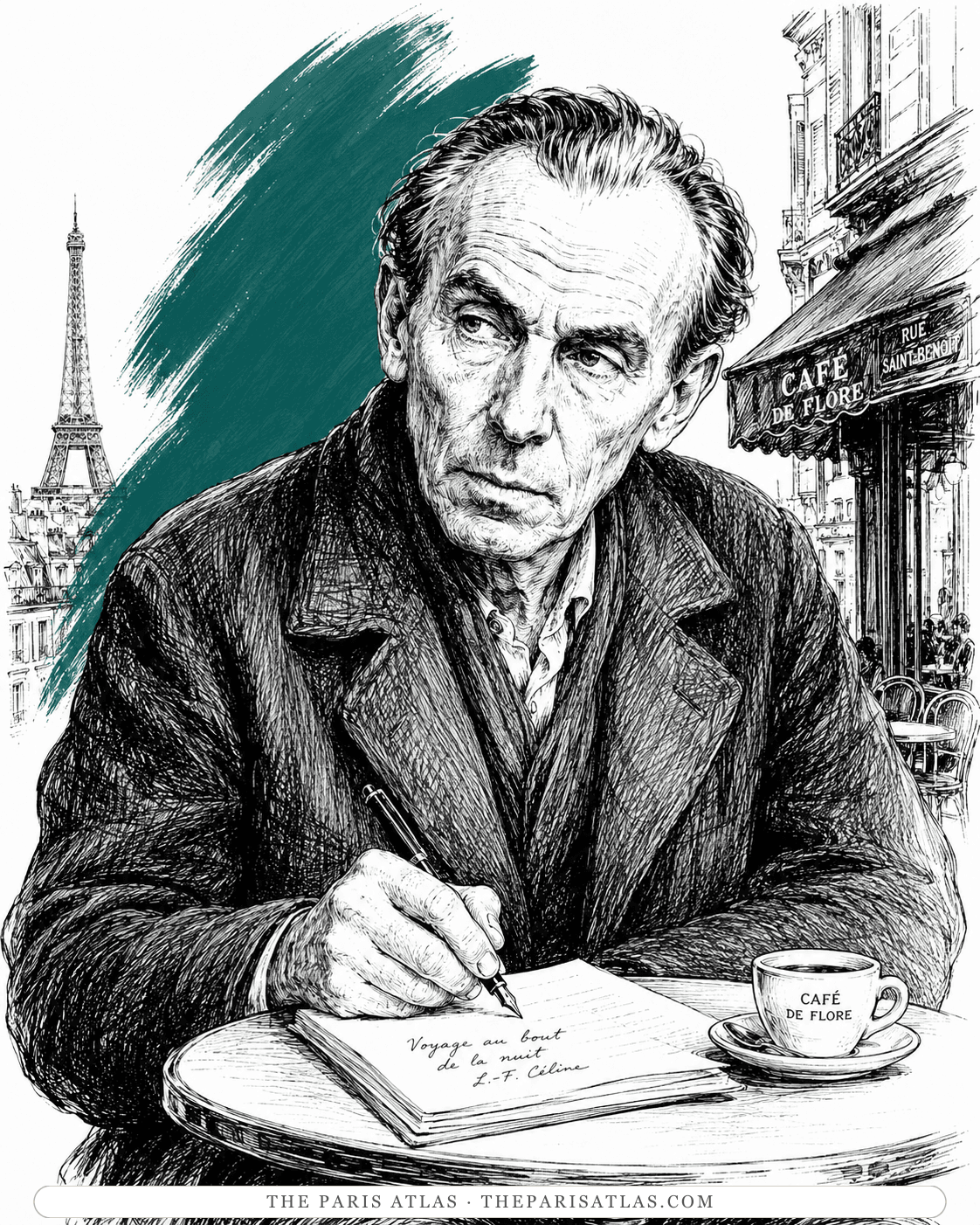
Illustrated portrait of Louis-Ferdinand Céline

The story, briefly

Spoiler-free

This is not a story but a speech delivered by Céline at Médan on 1 October 1933 during the annual commemoration of Émile Zola. Céline begins by acknowledging the difficulty of judging Zola because Zola's world still seems so close. Then he makes an unexpected move: instead of primarily praising Zola's life or books, he asks what has happened to the reality that naturalism tried to describe. His answer is that modern reality has become even more extreme — industrialisation, mass politics, war, propaganda and technological organisation have created forms of life that make Zola's nineteenth-century misery look almost familiar.

The story, in more detail

Céline begins with a childhood memory of the Paris Exposition of 1900. What remains in his memory is not optimism about progress but crowds, dust, feet, machinery and enormous mechanical forces. For Céline, this is the moment "modern life" begins.

He then compares that world to Zola's. The alcoholism and misery of L'Assommoir have not disappeared. But modern society has produced new forms of exhaustion and delirium — offices, telephones, machines, bureaucracy, industrial labour and mass organisation.

The problem for the modern naturalist is therefore not a shortage of material. It is that reality itself is increasingly managed by ideological systems that do not welcome doubt.

The full progression

What happens, beginning to end — the ending included. Open when you're ready.

Céline acknowledges Zola but resists easy retrospective judgment. He recalls the Exposition of 1900. Machinery becomes the emblem of the emerging modern world.

He compares contemporary life to the social reality Zola described. He argues that modern misery is not necessarily less severe; it has changed form.

He turns toward war and organised political systems. The individual has become increasingly exposed to enormous collective structures.

Céline asks whether naturalism — literature committed to looking directly at uncomfortable reality — can survive in societies demanding ideological certainty.

He ends by suggesting that naturalism will have completed its historical mission when societies finally prohibit it.

The speech therefore becomes less an encomium to Zola than an argument about what it means to inherit Zola's commitment to reality in the twentieth century.

How it ends — spoilers aheadThe final movement, ending included. Open when you're ready.

Céline does not end on conventional praise. He ends with a prediction that a genuinely naturalistic literature will become intolerable to increasingly organised ideological societies.

In his formulation, the naturalist school will have fulfilled its task when it is prohibited everywhere.

It is a dark but coherent tribute: Zola matters precisely because literature must continue looking at realities that political systems would prefer to simplify or suppress.

Themes and analysis

The speech clarifies Céline's relationship to naturalism. He does not simply declare himself Zola's successor. Instead, he argues that the historical reality available to a twentieth-century writer has changed. The modern writer inherits Zola's determination to look directly at material conditions but now confronts mechanised warfare, mass political movements, new technologies and propaganda.

Martine Léonard's study of the speech emphasises precisely this tension between homage and distance: Céline honours Zola while defining the difference between Zola's historical world and his own.

What the speech explores:

  • Zola and naturalism
  • Industrial modernity
  • War and mass death
  • Technology and bureaucracy
  • Truth, doubt and ideology
  • The writer's social role

Why we recommend it

  1. Céline's clearest statement on naturalism

    This is the shortest and most direct place where Céline names what he inherits from Zola — a commitment to uncomfortable reality — and what he thinks that commitment now costs.

  2. One year after Journey

    The speech comes at the moment Céline is being read for the first time as a major writer. It shows him thinking publicly about lineage: what came before him, and what he thinks literature has to do next.

  3. The 1900 Exposition as first image of modernity

    Céline's memory of the Paris Exposition of 1900 — crowds, dust, machinery — is one of his most compact accounts of how the twentieth century began, and of the world naturalism had to describe.

What this book explores

Real people in this book

The real people this book portrays, dedicates itself to, or draws from — every connection carries its source.

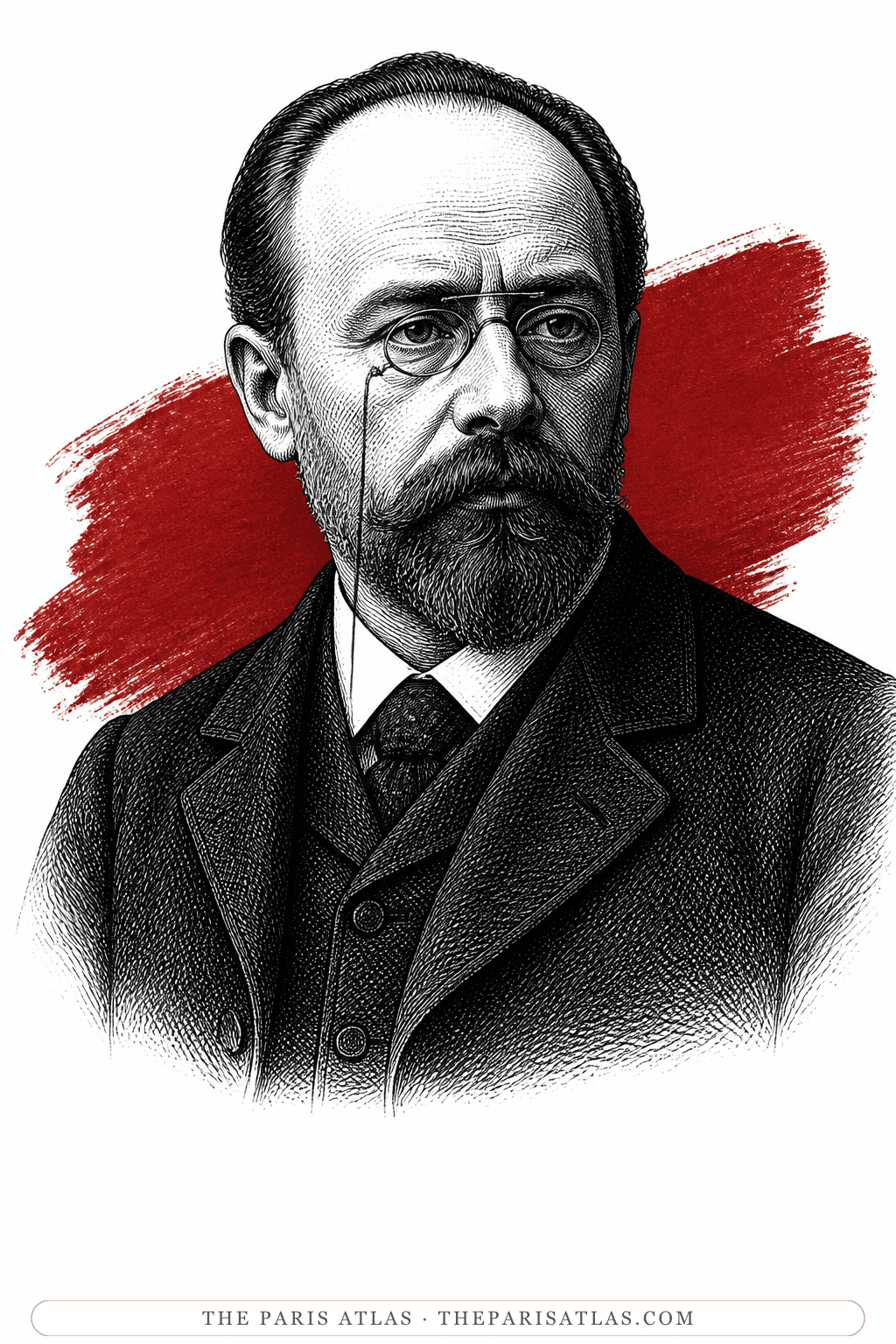
Émile Zola

  • Author
  • Journalist
  • Critic

Inspired by · 1933

Céline's Médan speech of 1 October 1933 uses Zola as the starting point for a discussion of how social reality and the writer's task have changed since the nineteenth century — the inheritance of naturalism confronted with industrial modernity, mechanised warfare, mass politics and propaganda.

Martine Léonard, Scholarly study of Céline's Hommage à Zola — publication history, the invitation from Lucien Descaves, the 1936 reprint in Robert Denoël's Apologie de Mort à crédit, later inclusion in Cahiers Céline no. 1, plus the complete text of the speech; Louis-Ferdinand Céline, Primary text of Louis-Ferdinand Céline's Hommage à Zola, delivered at Médan on 1 October 1933 (1933)

Book editions

Paperback
Paperback
French
Éditions Gallimard (in Cahiers Céline no. 1)

Reader reviews

Loading reviews…

Recommended alongside Qu'on s'explique.

Hommage à Zola: frequently asked questions

Where did Céline deliver Hommage à Zola?

At Médan, Émile Zola's home, during the annual Zola commemoration on 1 October 1933.

Is Hommage à Zola straightforward praise of Zola?

No. Céline uses Zola as the starting point for a discussion of how social reality and the writer's task have changed since the nineteenth century.

What does Céline say about naturalism?

He treats its willingness to examine uncomfortable reality as valuable but questions whether modern political societies will continue tolerating such doubt.

Why does Céline discuss the 1900 Paris Exposition?

He remembers its crowds and enormous machines as an early image of the industrial modernity that would dominate the twentieth century.

When was the speech first published?

Robert Denoël first printed it in 1936 in Apologie de Mort à crédit; it was later included in Cahiers Céline no. 1 (Gallimard, 1976).

Where can Hommage à Zola be read today?

Inside the Gallimard Cahiers Céline no. 1 volume; the complete text is also mirrored online in the Martine Léonard scholarly study.

If you like Louis-Ferdinand Céline

Explore authors with a similar voice, perspective, and influence.

  • Illustrated portrait of Henry Miller

    Henry Miller

    Miller read Journey in manuscript while writing Tropic of Cancer and never recovered — the two books are the era's twin gutter-testaments.

    View author
  • Illustrated portrait of Blaise Cendrars

    Blaise Cendrars

    The other French modernist Céline could not look away from: a war-wounded amputee whose spoken prose ran ahead of grammar and whose Moravagine anticipates Bardamu's tour of the century's slaughterhouses.

    View author
  • Illustrated portrait of Ernest Hemingway

    Ernest Hemingway

    The same war, the same refusal of the big words — delivered in whispers where Céline delivers it in screams. Both writers died in the same week of July 1961.

    View author
References

References

The sources below include biographies, scholarly essays, interviews, and primary materials that informed this page. They reflect both the historical record and ongoing critical conversations about Louis-Ferdinand Céline and his work.

  1. 1Scholarly study of Céline's Hommage à Zola — publication history, the invitation from Lucien Descaves, the 1936 reprint in Robert Denoël's Apologie de Mort à crédit, later inclusion in Cahiers Céline no. 1, plus the complete text of the speech

    Études françaises (Érudit)
    View source
  1. 2Primary text of Louis-Ferdinand Céline's Hommage à Zola, delivered at Médan on 1 October 1933

    Maurras.net (text mirror), 1933
    View source
i
Why these sources are here

These references anchor the page in the documented record and in the scholarly conversations around Louis-Ferdinand Céline. Every claim on this page traces back to one or more of the works listed here.

Explore more resources