
Louis-Ferdinand Céline's 1932 first novel, which follows one man from the First World War through colonial Africa and industrial America to the Paris slums.
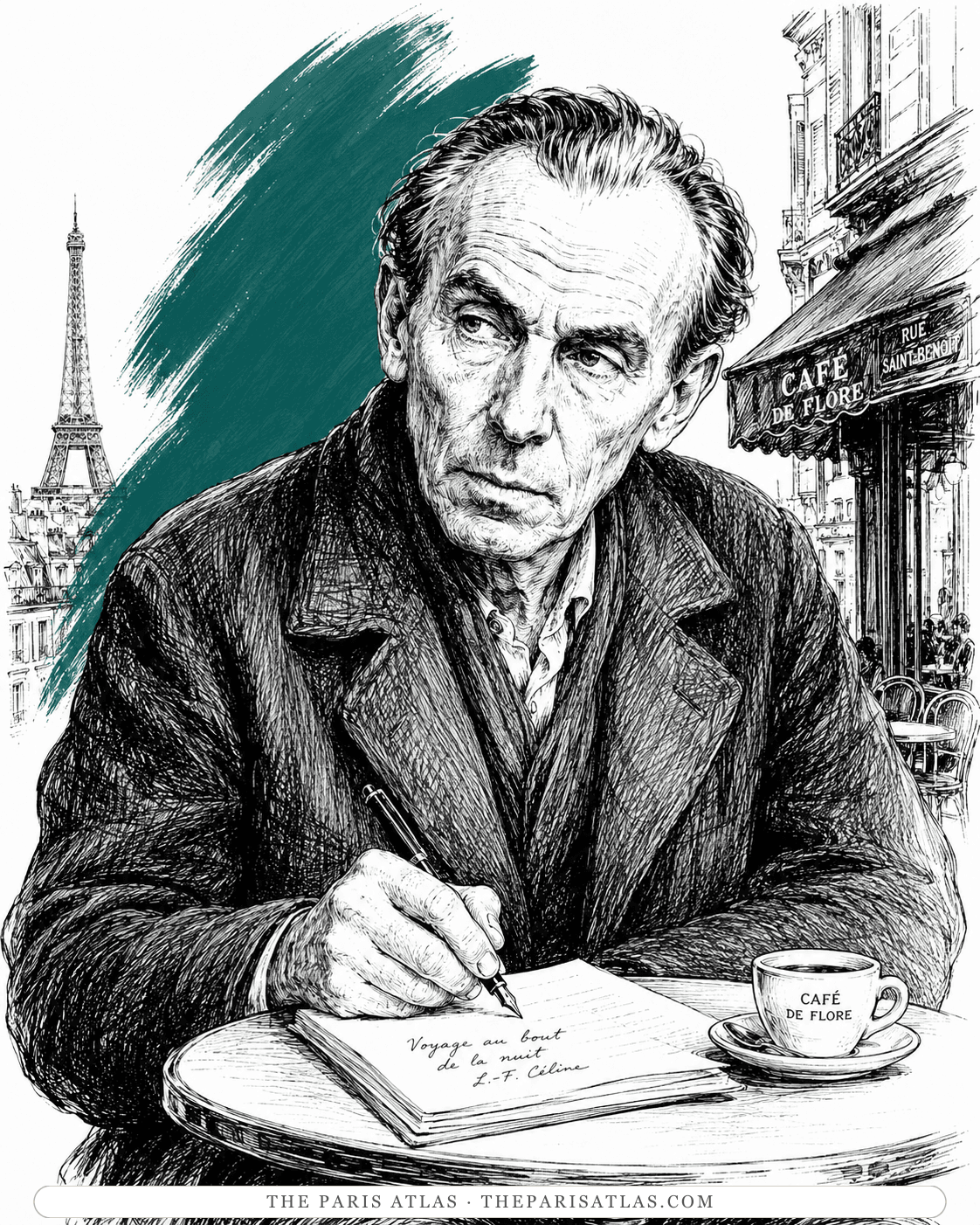
42 Louis-Ferdinand Céline titles: 14 novels, 1 story collection, 3 plays and screenplays, 1 children's book, 1 memoir or travel book, 1 volume of correspondence, 20 volumes of nonfiction, and 1 book of poems. They are listed below by form, earliest first, and every one links to its own page.
Start with Journey to the End of the Night, the 1932 debut. If the first fifty pages take, you are his for life. From there, read Death on the Installment Plan (the childhood memoir-turned-novel) and A Moveable Feast... no, Guignol's Band (his one full London novel) — then the recovered Guerre and Londres for the earlier arc, and the German trilogy (Castle to Castle, North, Rigadoon) for the shattering end. Save the four polemical pamphlets for after the fiction, and read Entretiens avec le professeur Y at any point to hear him explain his own method.
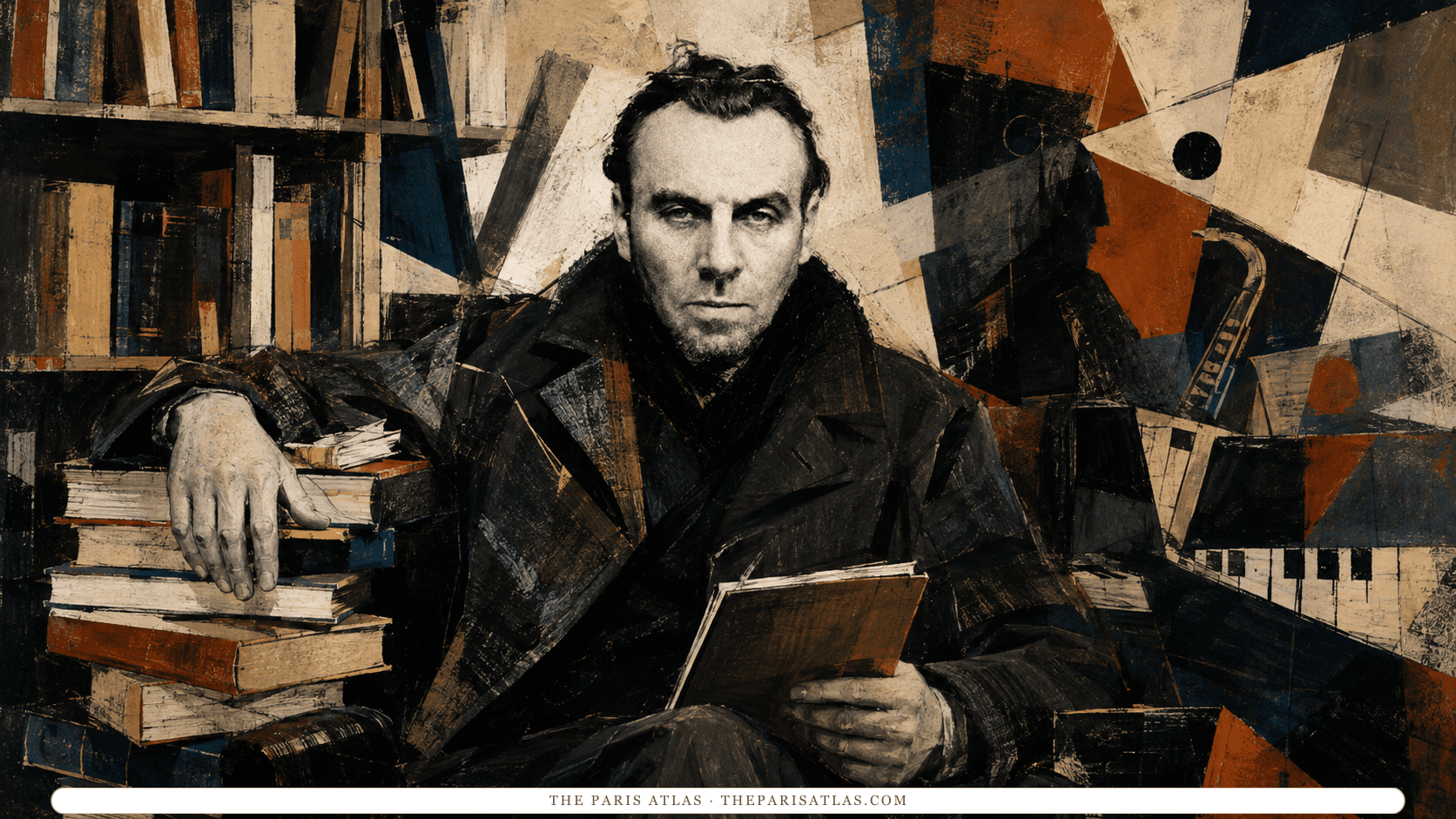
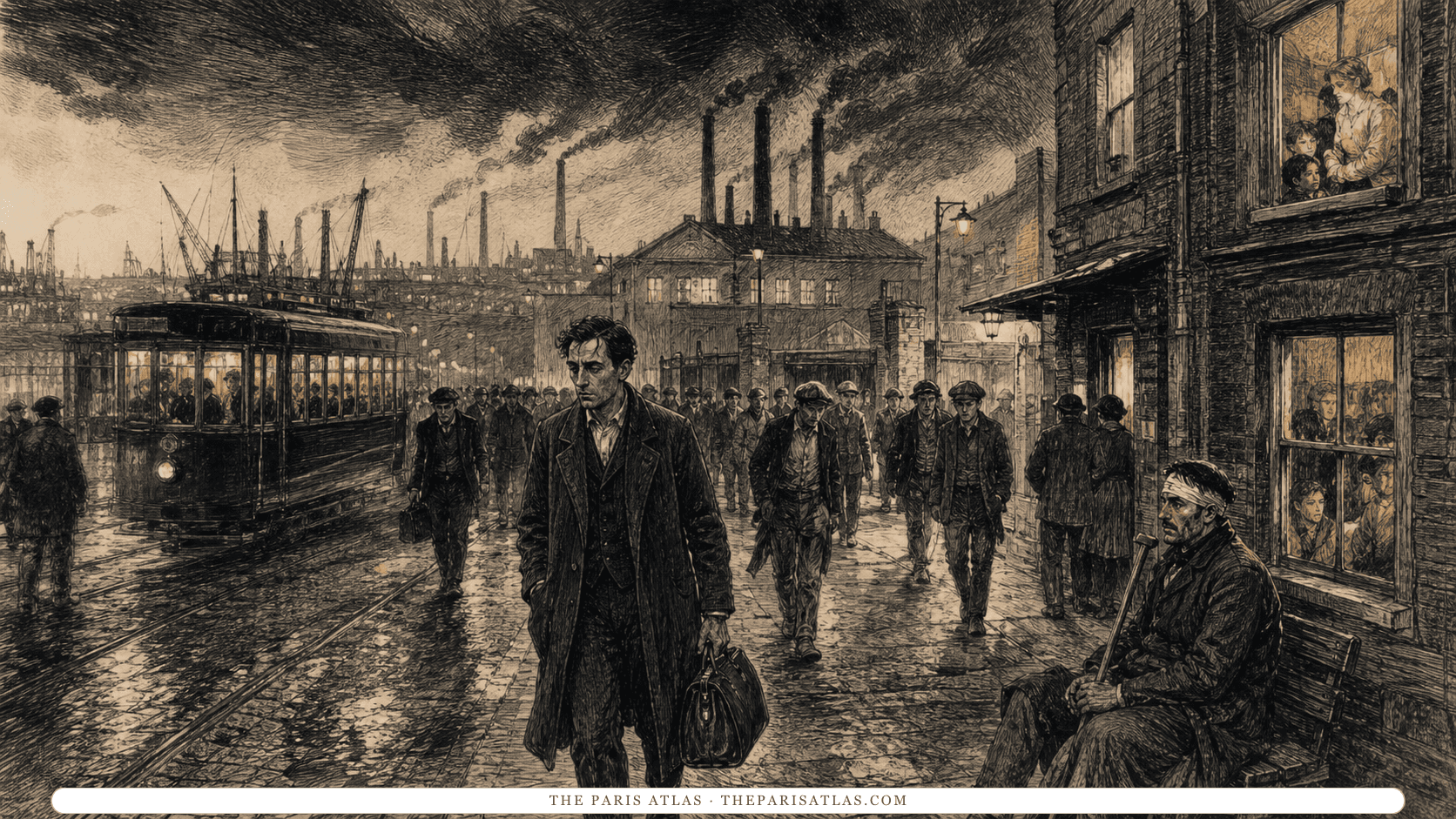
Louis-Ferdinand Céline's 1932 first novel, which follows one man from the First World War through colonial Africa and industrial America to the Paris slums.

Céline's shrieking, hilarious portrait of a Belle Époque Paris childhood in the Paris arcades — poverty as opera.

Louis-Ferdinand Céline's 1944 novel — a wounded French veteran drops into a London underworld of pimps, prostitutes, musicians and eccentrics.

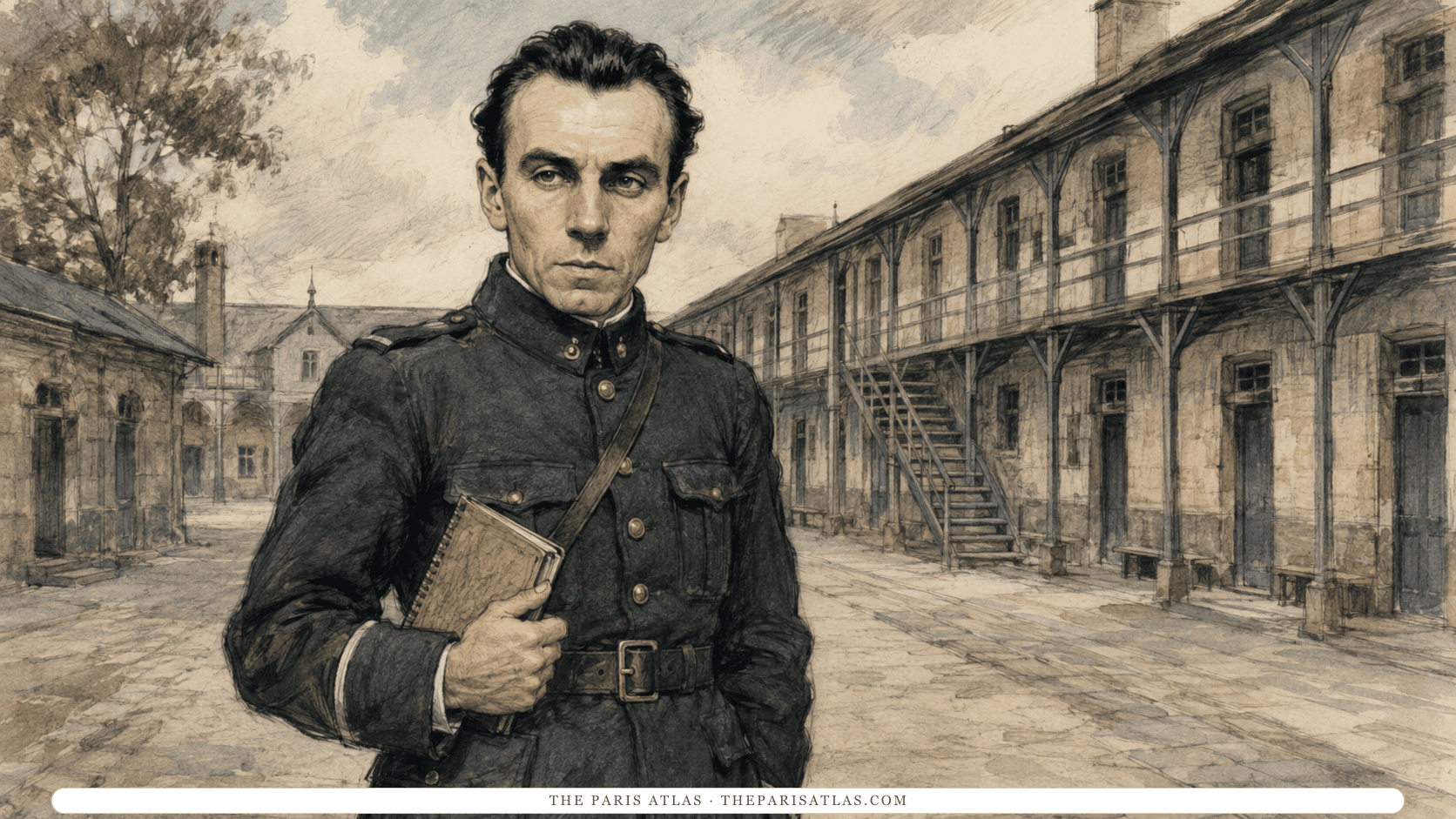
Louis-Ferdinand Céline's unfinished 1949 novel — an eighteen-year-old cavalry volunteer's first terrible night at the barracks.

Louis-Ferdinand Céline's 1952 novel — the first volume of his postwar Féerie sequence, a feverish mixture of prison, memory and grievance.

Louis-Ferdinand Céline's 1954 novel — the second volume of the Féerie sequence, a single night of Allied bombing over Montmartre.

Louis-Ferdinand Céline's 1957 novel — the first of the German trilogy — about the last months of the Vichy government-in-exile at Sigmaringen.

Louis-Ferdinand Céline's 1960 novel — the second of the German trilogy — about his 1944 flight into a collapsing Germany.

Louis-Ferdinand Céline's posthumous 1964 novel — Guignol's Band II picks up in wartime London with gas-mask experiments, a fourteen-year-old niece, and the criminal past that will not release Ferdinand.

Louis-Ferdinand Céline's posthumous 1969 novel — the final volume of the German trilogy, and the escape at last completed.

Louis-Ferdinand Céline's ~905-page preliminary manuscript of Féerie pour une autre fois — memories of Montmartre before the flight from Paris, and the bombing that reorganises the narrative into escape.

Louis-Ferdinand Céline's recovered 2022 novel — a young Ferdinand comes to on a battlefield, survives a military hospital, and starts moving toward London.

Louis-Ferdinand Céline's recovered 2022 novel Londres, arriving in English as London on 13 October 2026 in Charlotte Mandell's New Directions translation — a French criminal underworld in wartime London destroys itself around Ferdinand.

Louis-Ferdinand Céline's recovered 2023 legendary novel — an imaginary Middle Ages of kings, troubadours, murder and personified Death, drawn from two overlapping manuscripts he never completed.

Louis-Ferdinand Céline's recovered short story, published in La Nouvelle Revue française in 2023 — a humiliated elderly woman in Pontabon carries her private mythology of a dead captain to his grave and walks away.
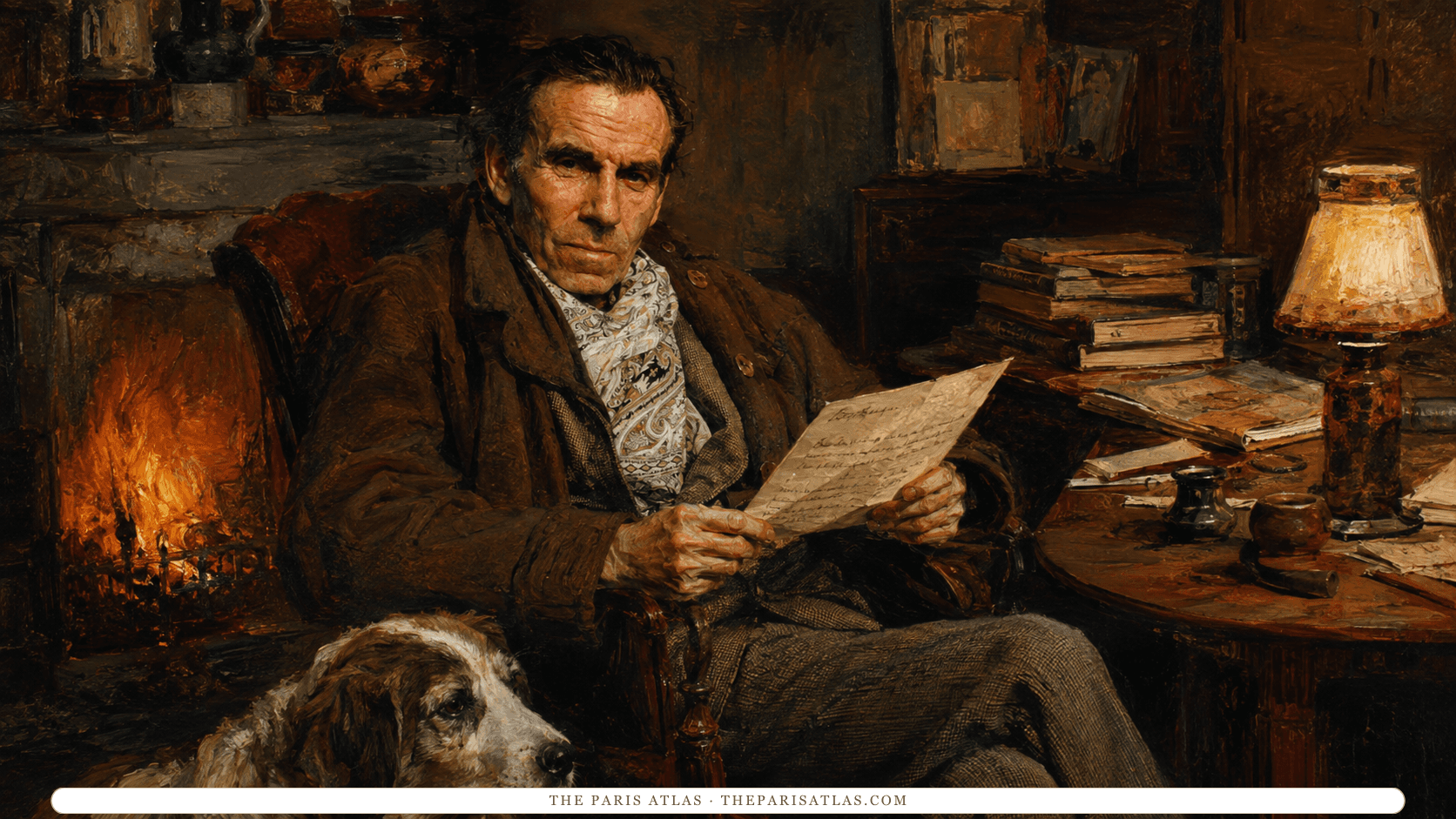

Louis-Ferdinand Céline's 1933 play in five acts — Doctor Bardamu moves through colonial Africa, New York, the League of Nations and the Paris suburbs, everywhere finding institutions absorbed by hierarchy, money and paperwork instead of the people they claim to serve.

Louis-Ferdinand Céline's 1959 collection of five ballet scenarios — witches, sirens, gods and dockworkers, all speaking through movement rather than music.

Louis-Ferdinand Céline's early play — a bourgeois drawing-room comedy that slides through infidelity, a Paris house of assignation and Heaven, where God turns a telescope on the earthly spectacle.
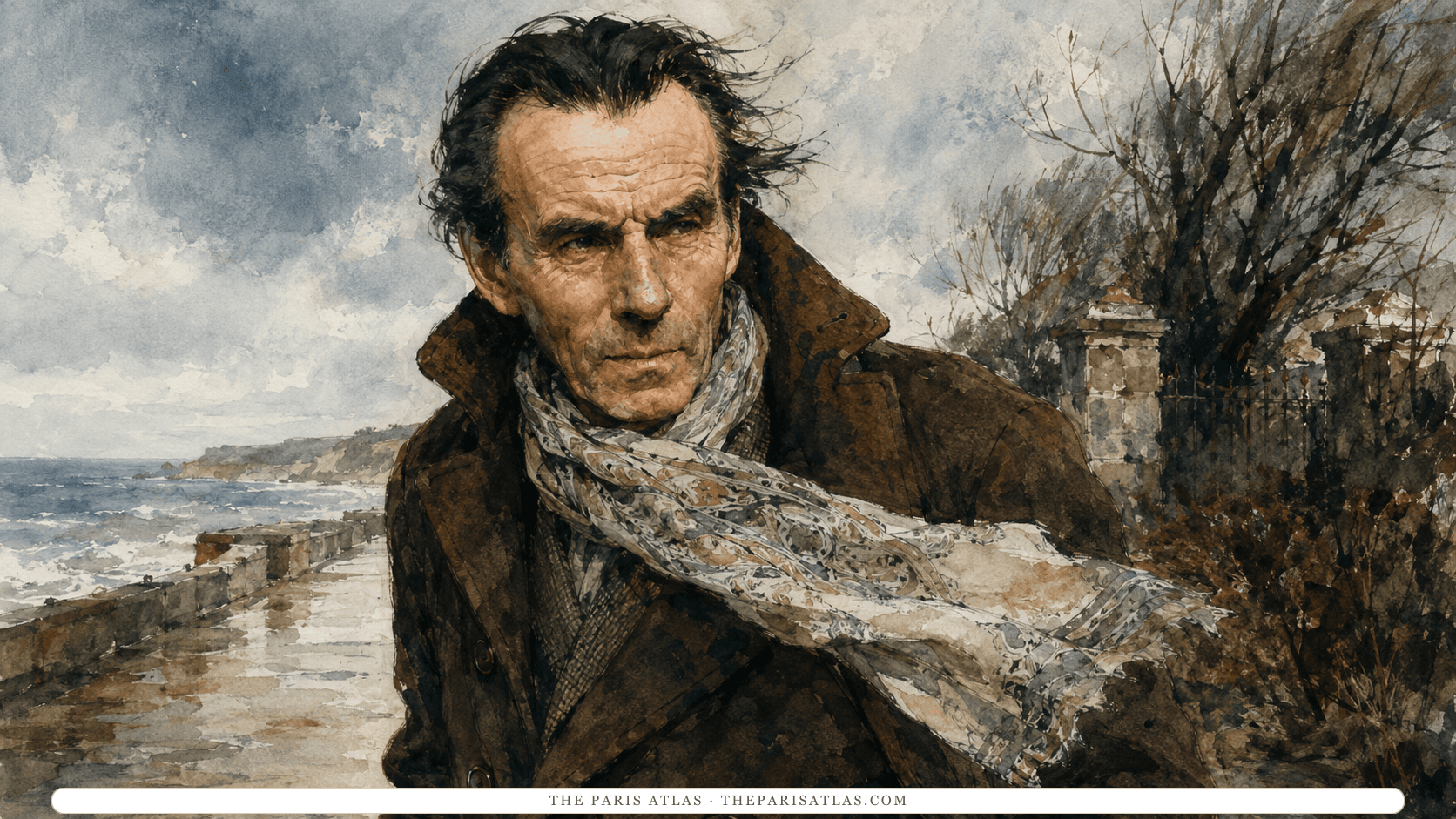

Louis-Ferdinand Céline's Oriental fairy tale, written around 1923 for his young daughter and illustrated by his first wife — a wandering child who is repeatedly offered safety and repeatedly leaves.
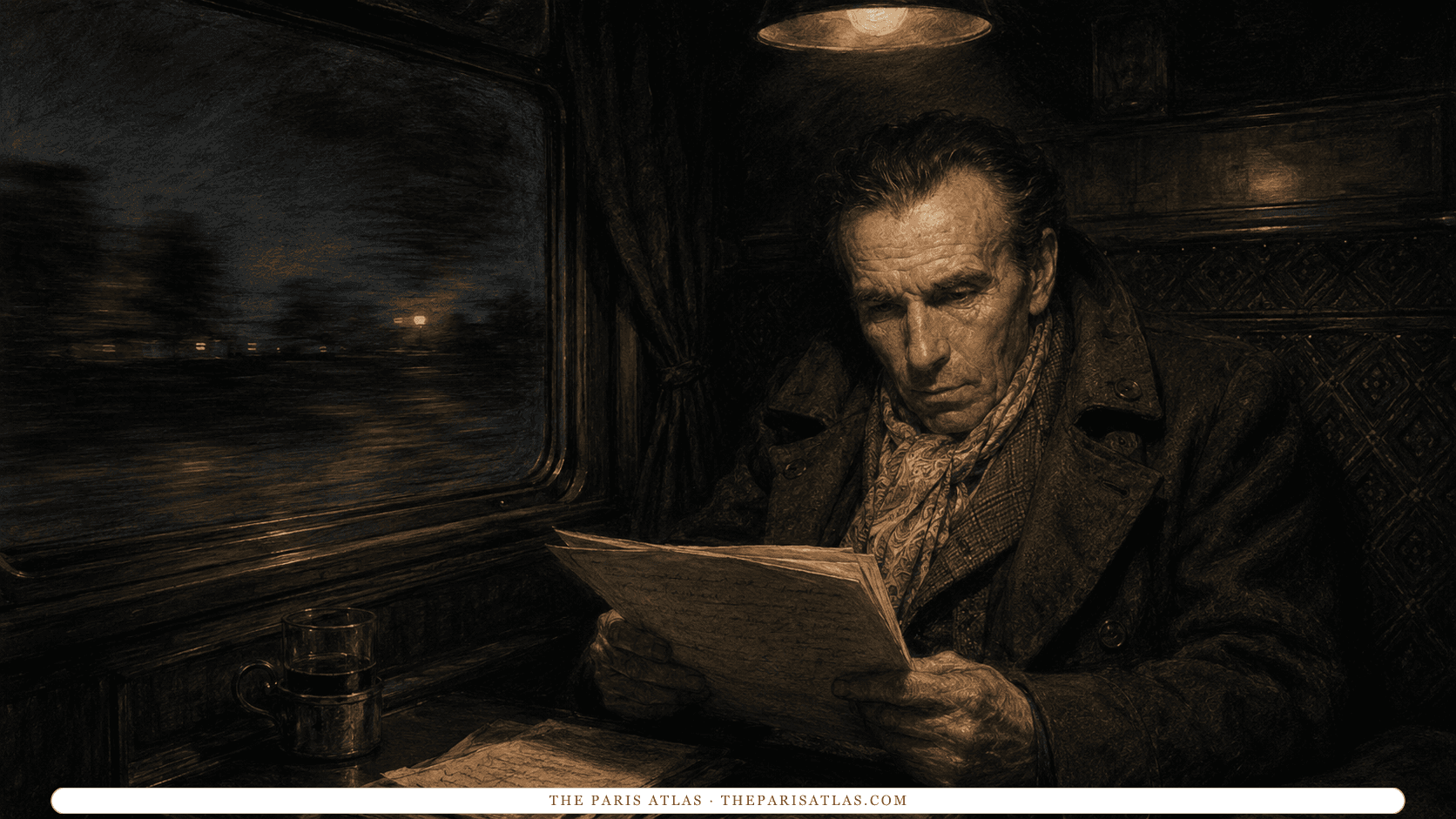

Louis-Ferdinand Céline's ten Copenhagen prison notebooks — February to October 1946 — first published in complete scholarly form in 2019, and the workshop in which the postwar novels began.
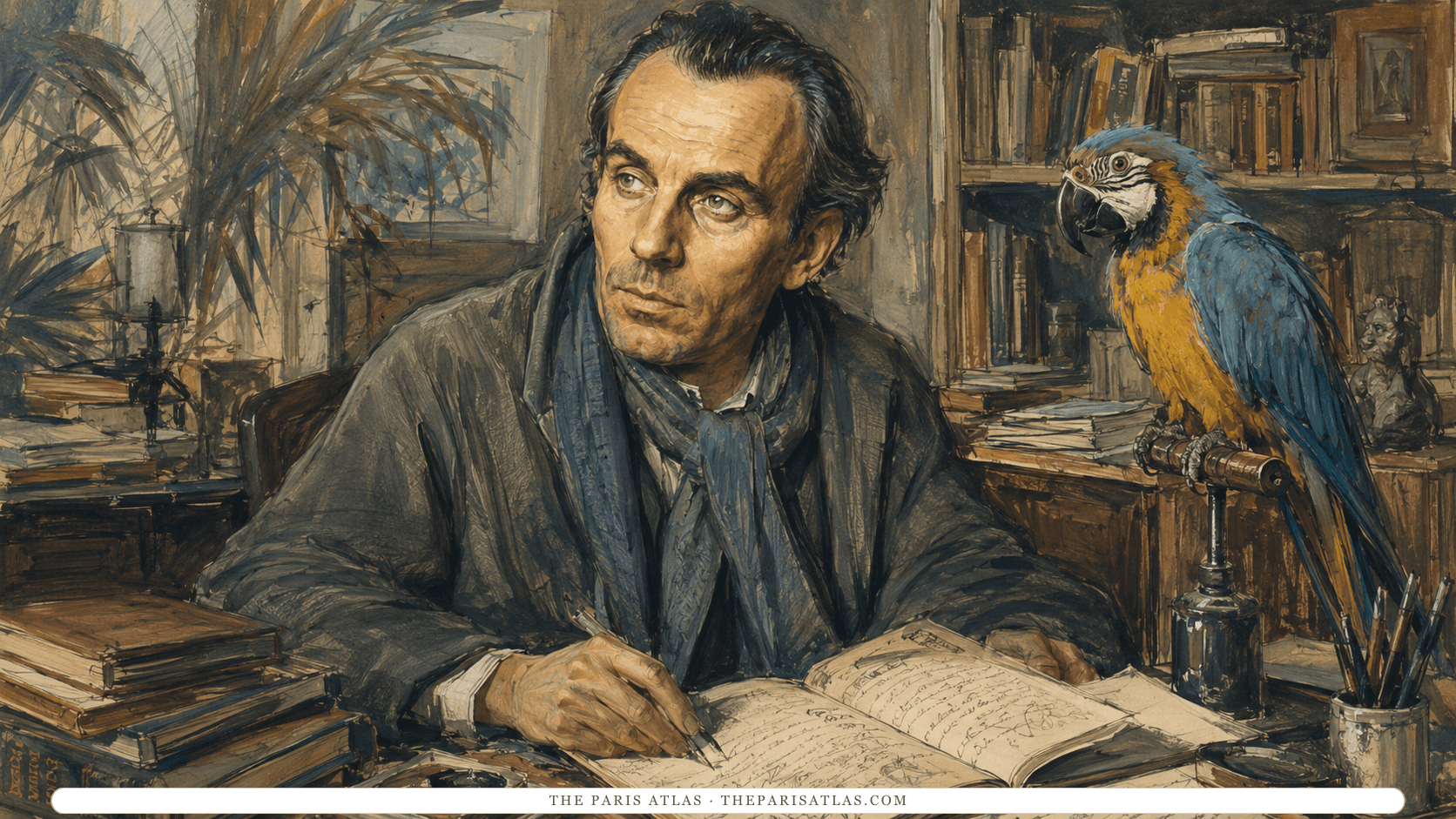

The central single-volume selection of Céline's correspondence — 2,080 pages, five decades, and a private voice that changes with every recipient.

The 1924 philosophical opening Louis Destouches wrote for La Vie, Pasteur, Semmelweis et la Mort — cut by La Presse médicale, lost to the League of Nations archive in Geneva, and rediscovered in 2014.

Louis-Ferdinand Céline's 1924 medical thesis — a literary account of the Hungarian physician who discovered that doctors were killing their own patients.

Louis-Ferdinand Céline's 1933 speech at Médan — instead of praising Émile Zola, he asks what has happened to the reality naturalism tried to describe, and predicts that literature committed to it will not be tolerated for long.

Louis-Ferdinand Céline's 1933 article in Candide — his first concentrated public explanation of what his writing is trying to do, six months after Journey to the End of the Night.

Louis-Ferdinand Céline's 1936 political and philosophical pamphlet — a short, disillusioned report from the Soviet Union that quickly widens into an argument against political utopianism.

Louis-Ferdinand Céline's 1937 political pamphlet — a hybrid work in which fictional dialogue, three ballet scenarios and an extended racial and political monologue interrupt one another.

Louis-Ferdinand Céline's 1938 political pamphlet — a short grotesque opening beside the Seine gives way to a sustained argument against another war with Germany.

Dr. Louis Destouches's medical essay on the Ford factories in Detroit — a physician's report on what mass production does to the human body and what factory medicine is actually for.

Louis-Ferdinand Céline's 1941 political pamphlet — written after the fall of France, its later sections turn from defeat toward a social programme built around leisure, family and the arts.

Louis-Ferdinand Céline's preface to Albert Serouille's 1944 history of Bezons — the neglected Paris suburb where Dr. Louis Destouches spent the war working the municipal dispensary.

Louis-Ferdinand Céline's ten-page defence memorandum, written from the Copenhagen prison on 6 November 1946 — the primary source for how he answered the treason charges the French judiciary was building against him.

Louis-Ferdinand Céline's short 1948 attack on Jean-Paul Sartre — a defence against a specific accusation that turns into a comic literary confrontation about who owns postwar French letters.

Louis-Ferdinand Céline's 1955 fictional interview and aesthetic manifesto — a staged conversation about his own style that turns into a comic walk across Paris.

Louis-Ferdinand Céline's 1957 argument for a broad postwar amnesty — nineteen handwritten pages that widen his own case into a general demand for reconciliation.

Gallimard's Cahiers Céline 3 — the collected medical corpus of Dr. Louis Destouches, before he became Céline: the 1924 Semmelweis thesis and the public-health and factory-medicine writings that surrounded it.

Cahiers Céline 4 — the young Louis Destouches's surviving letters and earliest known writing from the Sangha-Oubangui trading post in French Equatorial Africa, 1916–1917, the year Journey to the End of the Night's Bikomimbo chapters were quarried from.

Cahiers Céline 5 — Céline's correspondence with the women in his life beyond Lucette: the American dancer Elizabeth Craig, Karen Marie Jensen, Cillie Pam and others, from the pre-Journey years through exile.

Cahiers Céline 9 — the 758-page scholarly edition of Céline's letters to his literary secretary Marie Canavaggia, twenty-four years of the working relationship that saw the novels into print.

Cahiers Céline 6 and 10 — Céline's ten-year correspondence with the writer Albert Paraz, from the Danish exile years through the return to France, and the surviving public campaign to have Céline read again after the war.

Cahiers Céline 11 — 302 pages of the intense, then broken correspondence between Céline in Danish exile and the American Jewish literary scholar Milton Hindus, culminating in Hindus's 1948 visit to Denmark and his 1950 portrait of Céline as a crippled giant.

Louis-Ferdinand Céline's two songs — the sailor's chant À nœud coulant and the underworld revenge ballad Règlement, both recorded in his own voice in 1956 and collected as a book in 1981.
Your progress
The 1932 debut. Africa, America, the trenches and the Paris night, narrated by the century's greatest bad attitude. The only honest place to begin.
The 1936 second novel — Ferdinand's childhood in the Passage Choiseul before the war. The three-dot ellipsis arrives here.
The recovered 2022 novel; the French criminal underworld in wartime London destroys itself around Ferdinand.
The 1944 novel Céline himself published — the wandering London underworld tour, half of a sequence he never completed.
The posthumous 1964 continuation of Guignol's Band. Colonel O'Collogham's gas-mask experiments, Virginia, and the walk across London Bridge.
The 1952 first volume — memory and grievance from the Copenhagen prison and the rue Girardon apartment.
The 1936 short pamphlet after his USSR trip — political anthropology before the trilogy proper.
The 1937 pamphlet. Substantial, hybrid, embedded ballets. Never re-authorised by Céline after 1945.
The 1938 continuation — Franco-German geopolitics and opposition to the war that was coming.
The 1941 wartime piece — banned in the zone libre; carries the fullest social programme (the 35-hour week, communisme Labiche).
The 1955 fictional interview and aesthetic manifesto — the emotive style, the three-dot rhythm, the Métro metaphor.
The 1933 five-act play — the earliest surviving Bardamu, in Africa, New York, Geneva and the Paris suburbs.
The 1959 collection of five ballet scenarios — dance, sirens, gods and dockside comedy.
The recovered 2023 medieval legend — the imaginative workshop under Death on the Installment Plan and the London books.
The recovered 2023 short story in La NRF — a young, near-Balzacian Céline before Journey.
The 1924 medical thesis. Tragic biography as much as scientific study, and the first thing Céline wrote.
The ten Copenhagen prison notebooks (published 2019) — the workshop in which Féerie began.
The Oriental fairy tale Céline wrote around 1923 for his young daughter Colette, illustrated by his first wife Édith Follet.
The unfinished 1949 military novel — Ferdinand's arrival at the barracks, the sequence Céline abandoned.
The 2009 Pléiade selection, edited by Henri Godard and Jean-Paul Louis — 2,080 pages spanning 1907–1961.
The 1948 short pamphlet answering Sartre's December 1945 accusation — the Céline / Sartre confrontation in one sitting.
The Médan speech of 1 October 1933 — Céline's clearest statement on what he inherits from Zola, and what he thinks the twentieth century has done to it.
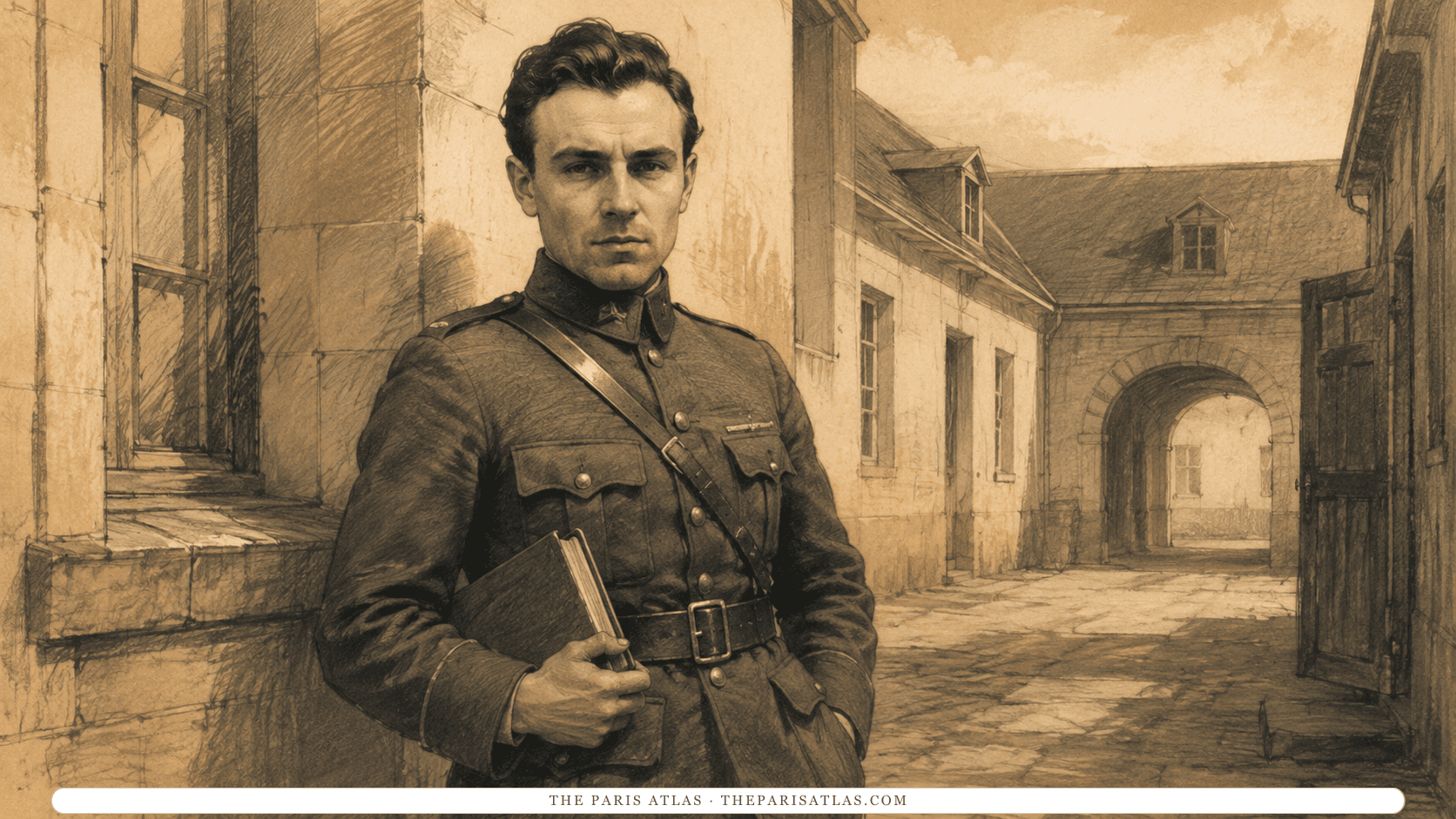
Journey to the End of the Night, his 1932 debut. It is the novel his whole reputation begins from, and it introduces the narrator and the voice every later book depends on.
Journey to the End of the Night (1932), Death on the Installment Plan (1936), Guignol's Band (1944), Casse-pipe (1949, unfinished), Féerie pour une autre fois (1952), Normance (1954), Castle to Castle (1957), North (1960), Le Pont de Londres (posthumous 1964), Rigadoon (posthumous 1969). Guerre and Londres, published in 2022, were recovered manuscripts from the 1930s.
You need Journey to the End of the Night to meet the narrator and the voice. Everything else is optional context: the London books, the Féerie sequence, and Cahiers de prison all deepen the trilogy without being required to read it.
Only after the fiction, and knowing what they are. Bagatelles pour un massacre, L'École des cadavres and Les Beaux draps are political pamphlets from 1937–41; Céline refused to authorise reprints after 1945, and they have never been issued in a standard consumer edition since. They are documented works, not casual reading.
Yes. The 2021 discovery yielded Guerre and Londres (published 2022), La Volonté du roi Krogold (2023) and the short story La Vieille dégoûtante (also 2023). Further recovered pieces are possible.
The sources below include bibliographies, archives, publisher records, and scholarship used to verify the Louis-Ferdinand Céline catalogue and publication order.

Biographical evidence used to verify chronology, relationships, and historical context connected to Louis-Ferdinand Céline books.

Contemporary reporting or criticism used to document the historical reception and context of Louis-Ferdinand Céline books.
Archival evidence used to document the historical record connected to Louis-Ferdinand Céline books.
Web source consulted for documented facts and historical context presented on the Louis-Ferdinand Céline books page.
These references document which titles belong in the bibliography and when they appeared. The recommended reading order remains an editorial judgment by The Paris Atlas.
 Explore more resources
Newsletter
We will tell you when this guide adds a book, review, or new reading-order recommendation.