
Guignol's Band
The direct predecessor — London Bridge picks up where Guignol's Band leaves Ferdinand and Sosthène.
Read our take
Louis-Ferdinand Céline's posthumous 1964 novel — Guignol's Band II picks up in wartime London with gas-mask experiments, a fourteen-year-old niece, and the criminal past that will not release Ferdinand.
Picking up directly where Guignol's Band leaves off, Ferdinand and the eccentric Sosthène de Rodiencourt become involved with the equally eccentric Colonel O'Collogham, who is trying to design and test improved gas masks during the First World War. Ferdinand soon becomes more interested in the colonel's young niece, Virginia, while his old acquaintances from London's French criminal underworld begin closing in on him. As Zeppelin raids, hallucinations, police trouble, pimps, prostitutes and Ferdinand's unresolved involvement in the earlier Greenwich affair converge, Ferdinand once again faces the question that follows him throughout Céline's London books: whether to flee or remain trapped in the world he has entered.
Sosthène's grand promises at the end of the first volume come to very little. Instead of an exotic expedition, he and Ferdinand answer an advertisement placed by Colonel O'Collogham, an inventor experimenting with gas masks.
The colonel's house becomes their temporary refuge. Sosthène throws himself into the experiments, while Ferdinand becomes fascinated with Virginia, the colonel's fourteen-year-old niece. Their relationship becomes sexual, and Virginia becomes pregnant. Meanwhile Ferdinand's past catches up with him.
Figures from the French underworld reappear. The consequences of Claben's death and the Greenwich affair remain unresolved. Ferdinand suspects both the police and former associates of looking for him.
Reality itself becomes unstable. During one of the book's memorable episodes, Centipede / Mille-Pattes, whom Ferdinand had killed in Guignol's Band, appears again as if returned from the dead and joins Ferdinand and Virginia.
Ferdinand and Sosthène arrive at Colonel O'Collogham's house because the colonel is participating in a competition to develop effective gas masks. O'Collogham conducts bizarre experiments with gases and explosives. Sosthène, whose personality combines charlatanism, mystical interests and endless schemes, eagerly joins him.
Ferdinand is far less interested in engineering. He becomes increasingly attached to Virginia, the colonel's young niece. They spend time together both inside the colonel's strange household and on expeditions through London.
The city itself becomes nearly as important as the plot. Ferdinand moves through streets, docks, pubs, clubs and immigrant districts while wartime London is periodically transformed by bombing and air raids. Claire Lozier describes the two Guignol's Band volumes as constructing London like an urban palimpsest, in which memory, geography, languages and different historical Londons overlap.
Ferdinand cannot escape the French underworld he entered in the first volume. Cascade and other figures return; prostitutes and pimps circulate through the narrative; the unresolved death of Claben continues to threaten Ferdinand with police attention or revenge.
Virginia becomes pregnant by Ferdinand, turning what had seemed another temporary attachment into an immediate practical crisis.
At the same time, Ferdinand's damaged wartime consciousness becomes increasingly important. The narrative slides freely among actual danger, memory, paranoia and hallucination. The reappearance of the dead Centipede is the most spectacular example.
Eventually the group must move again. Ferdinand has to decide whether to escape toward America or remain with Virginia and Sosthène as pressure grows around them. The novel's final movement takes the characters toward the bridge that gives the posthumous edition its title.
The story does not neatly resolve the police danger, Ferdinand's future with Virginia or his ultimate escape.
Instead, Ferdinand, Virginia and Sosthène move onto and across London Bridge, turning the bridge into a threshold rather than a destination. The ending suggests another departure, another escape and another continuation — but Céline never completed the larger sequence he once envisioned.
That incompleteness is important. The text published in 1964 was assembled posthumously from manuscript and typescript states found after Céline's death. Guignol's Band as a whole remained unfinished.
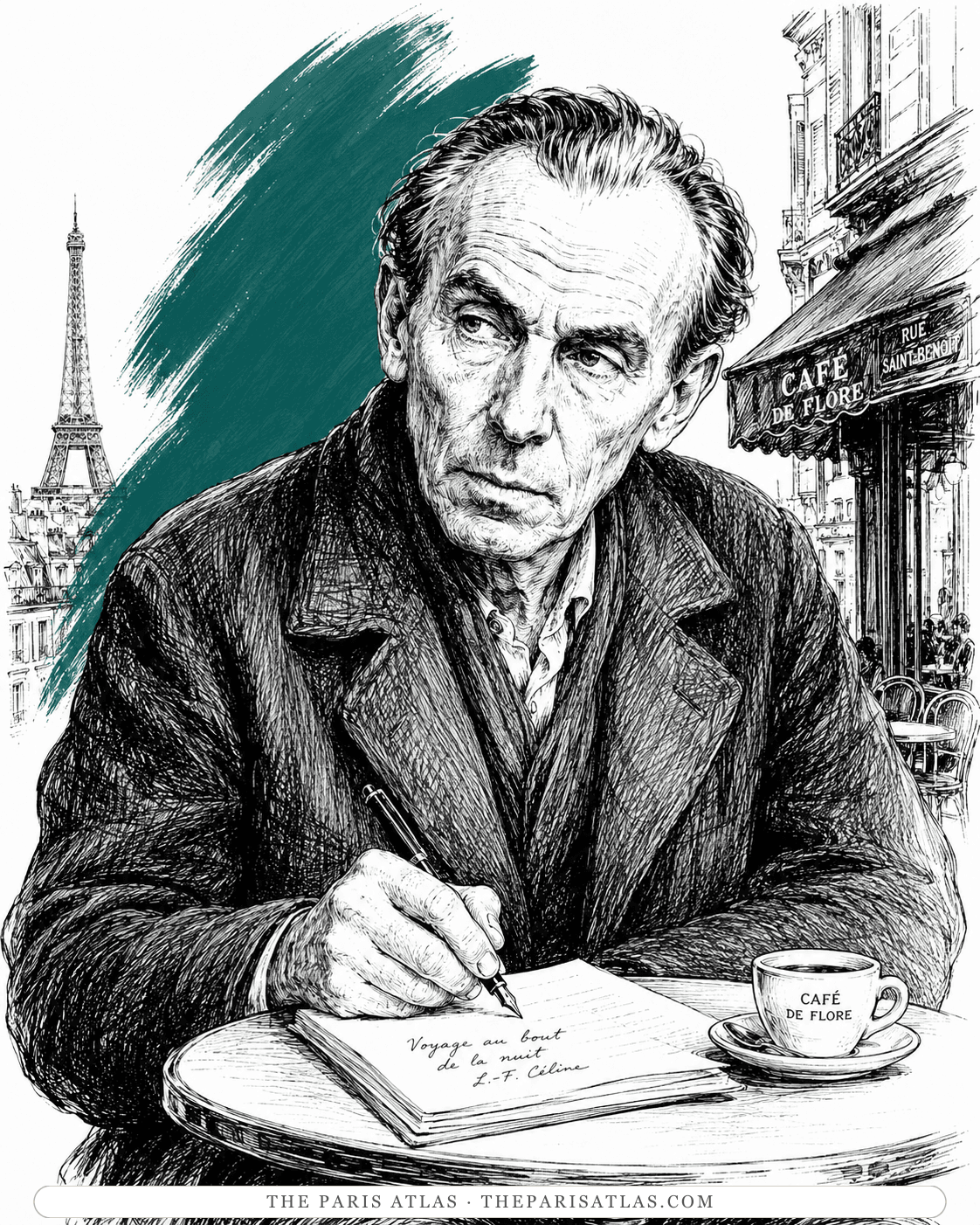
A device meant to keep poison out becomes part of a household organized around poison. In Eugène Fabre's contemporary account, the colonel stores gases around the house, and an explosion wrecks the workshop. The experiment brings the battlefield into the supposed refuge: safety is pursued through another exposure to danger. This reversal gives the scene more force than a portrait of eccentric inventors. For a narrator already wounded in war, the apparatus of protection also reproduces the world from which he is trying to get away.
The crossing pictured here can be read in two directions: toward Ferdinand's uncertain future and back toward a city already being transformed in memory. Claire Lozier shows how the narration moves between the London of 1915 and the city known to the narrator decades later, using the present tense for both. That shift makes streets seem immediately available while exposing their distance from the moment of writing. London is therefore more than the place Ferdinand passes through; it is a place the telling repeatedly loses and reconstructs.
The deepest subject of London Bridge may be wandering. Ferdinand is continually trying to get somewhere else — away from war, away from the police, away from criminals, perhaps to America — but movement rarely produces genuine escape.
London becomes the perfect city for this structure. Streets, docks, bridges, clubs and neighbourhoods continually rearrange themselves through memory. Claire Lozier's description of Céline's London as a palimpsest is especially useful: the city is simultaneously a remembered London of 1915–16, a literary London reconstructed decades later, and an invented city shaped by Ferdinand's perceptions.
The book also develops the connection between war injury and narration. Ferdinand's perception is unstable because his world is unstable: bombing, tinnitus, fear, alcohol, sexual desire and hallucination all pass through the same voice.
Finally, the London books are highly multilingual. French characters live inside an English-speaking metropolis, and misunderstandings, distorted English and linguistic collisions become part of the comedy and the style.
What the book explores:
London Bridge is where the London sequence Céline began in 1944 actually continues. The plot conceived in the first volume — Ferdinand hunted by the underworld, Sosthène promising escape — comes to life here.
The extended episode in the colonel's household — bizarre experiments, Virginia, London under bombing — is one of Céline's most inventive comic settings.
Reading Le Pont de Londres alongside the recovered Londres (2022) is the whole picture of Céline's Ferdinand in London — one written in 1944 and reworked to the end of his life, the other written in the 1930s and only recovered in this century.
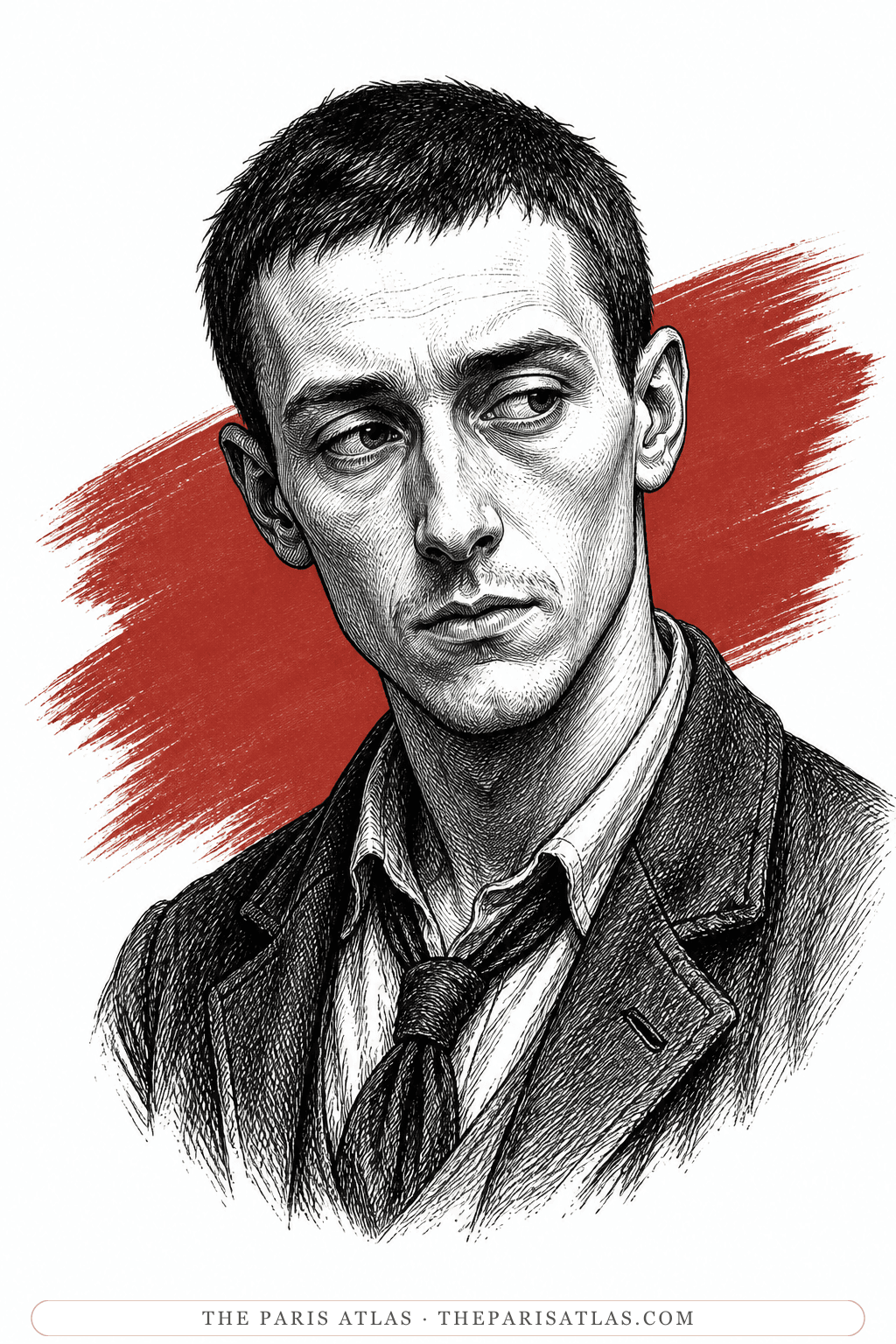
Narrator and protagonist; the same Ferdinand of the London novels — wounded veteran, drifter, sometime medical assistant.
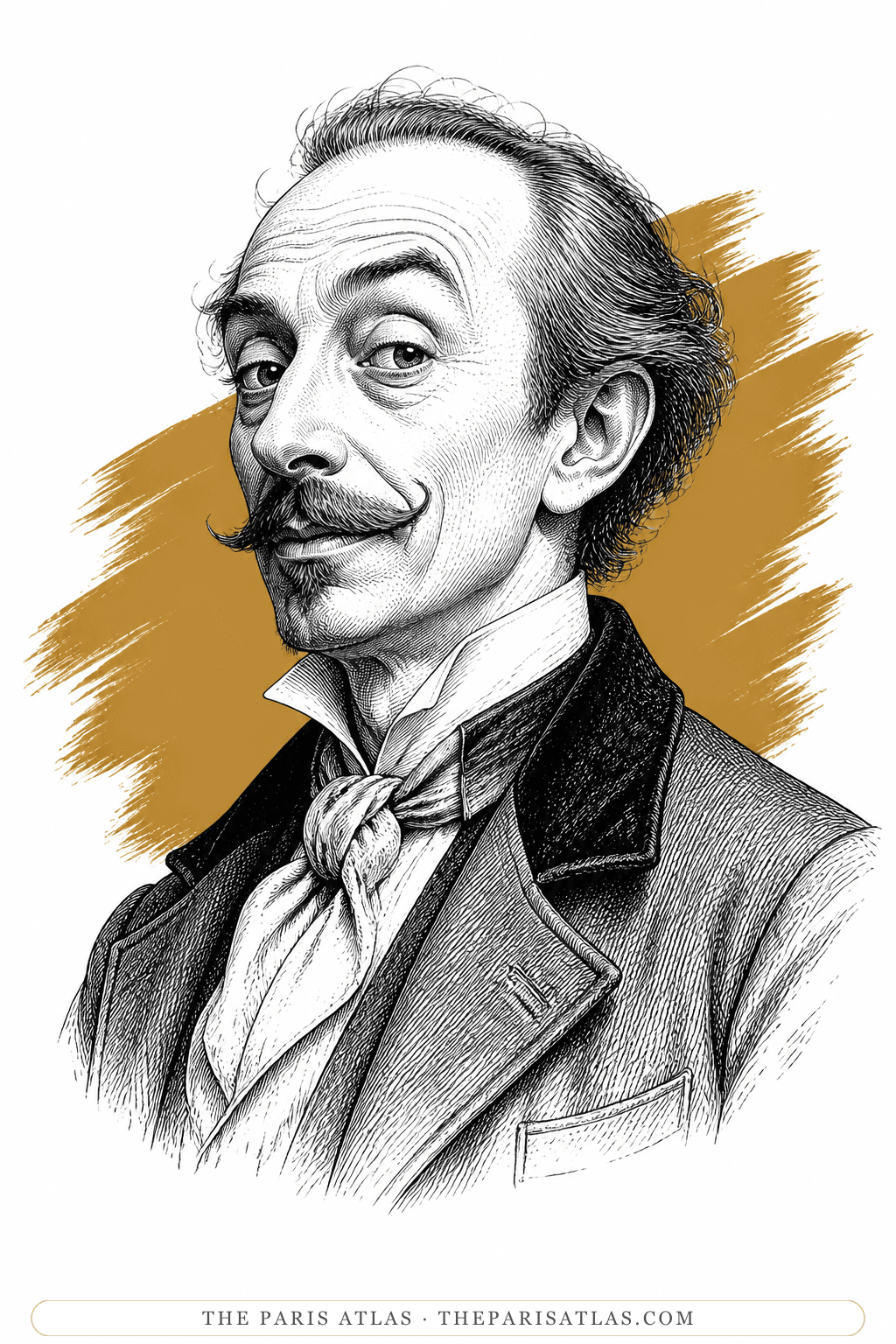
Adventurer, mystic and charlatan; Ferdinand's companion since the end of Guignol's Band, and the one who leads him to Colonel O'Collogham.
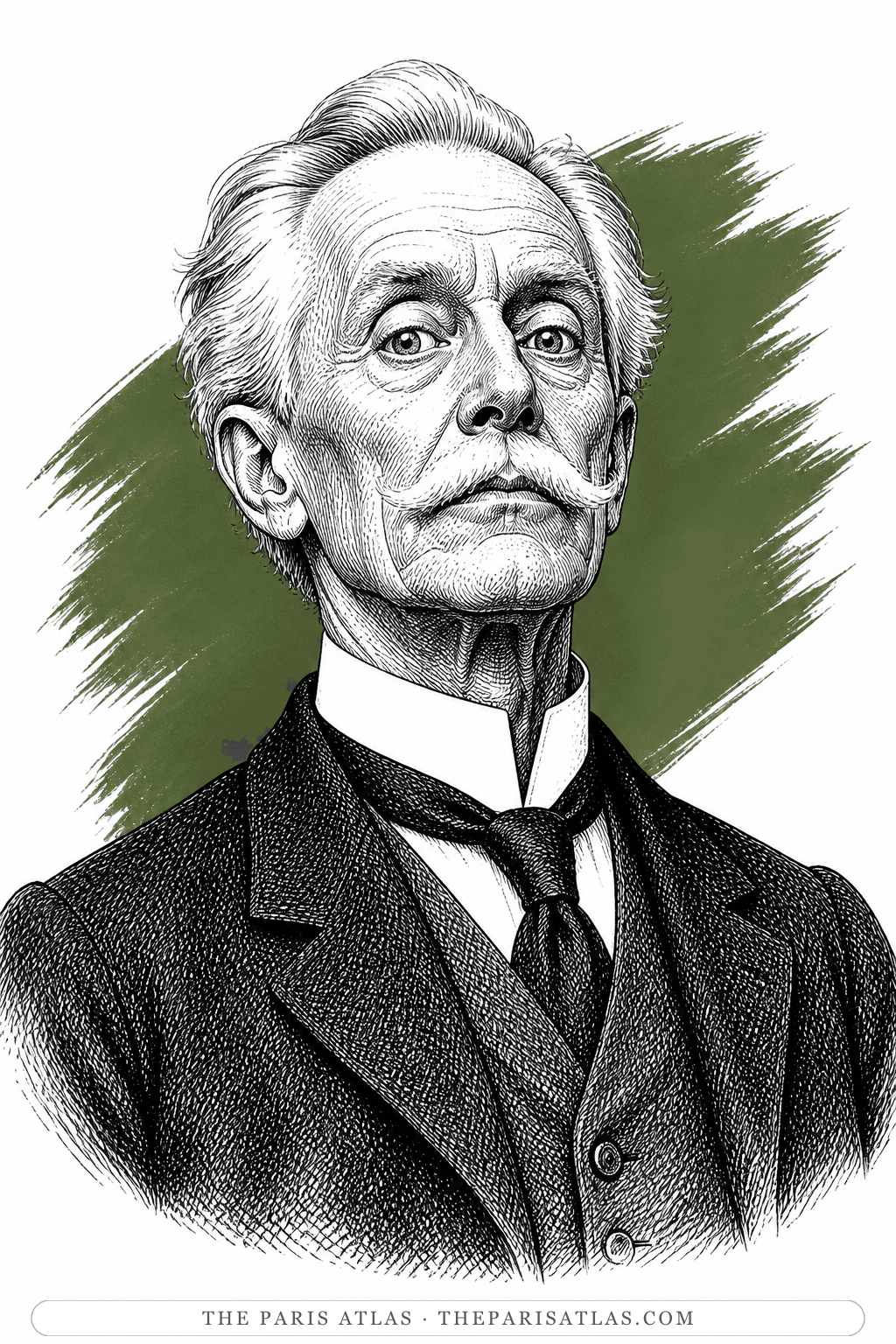
Eccentric retired British officer obsessed with gas-mask experiments. Spellings vary by edition and translation (O'Colloghan is also used).
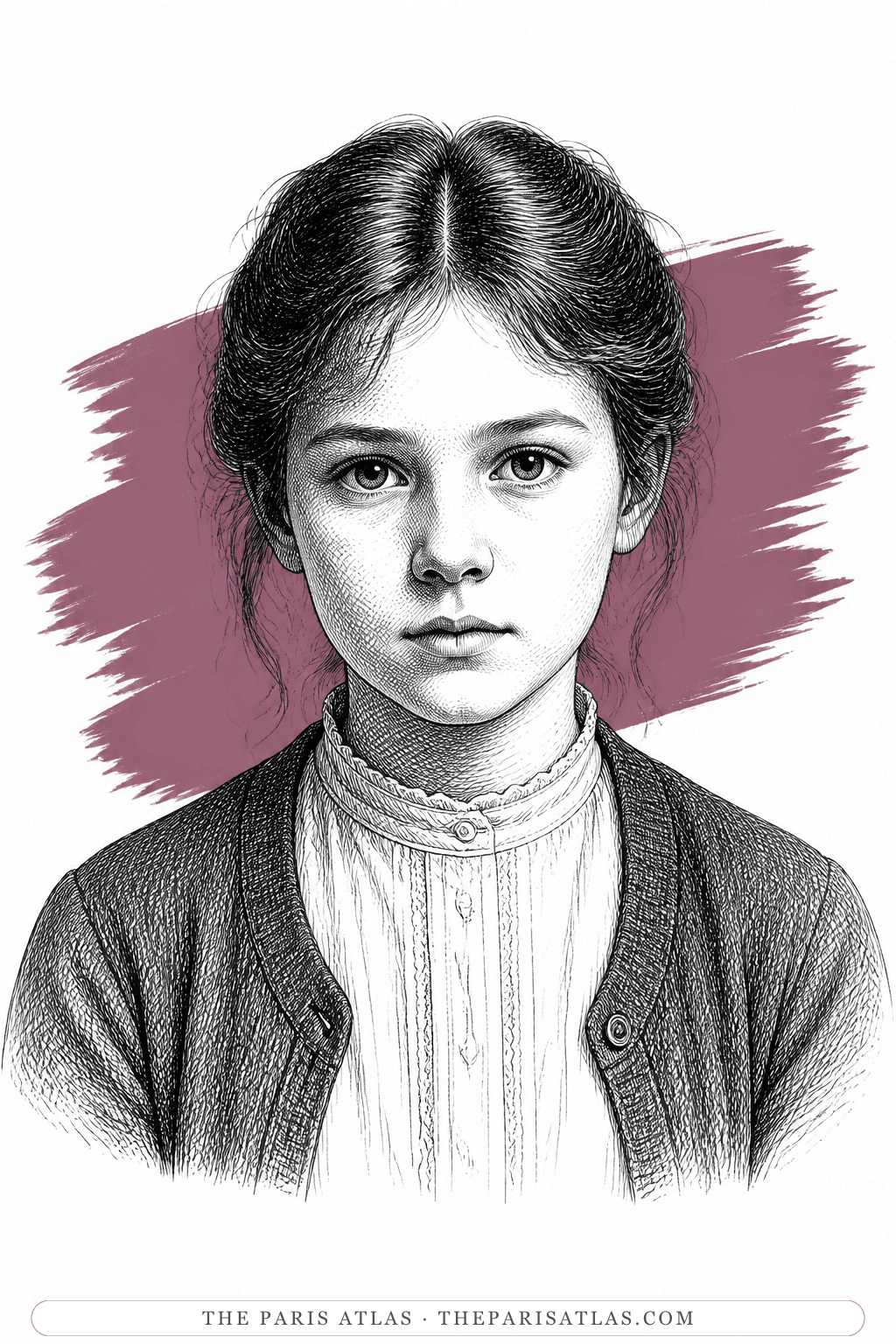
The colonel's fourteen-year-old niece and Ferdinand's principal attachment; she becomes pregnant during the novel.
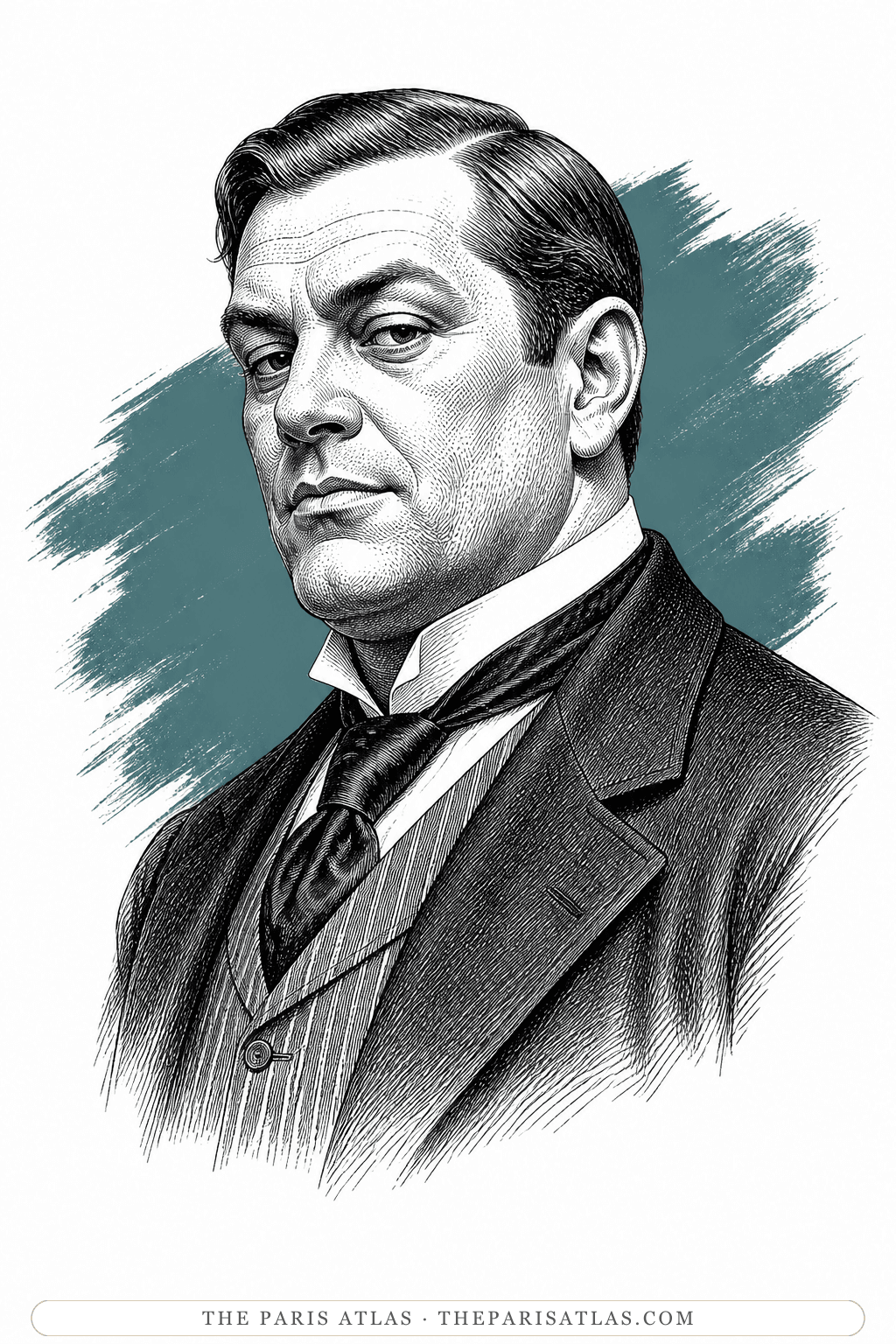
Pimp and recurring figure from Guignol's Band; the French London underworld does not release Ferdinand.
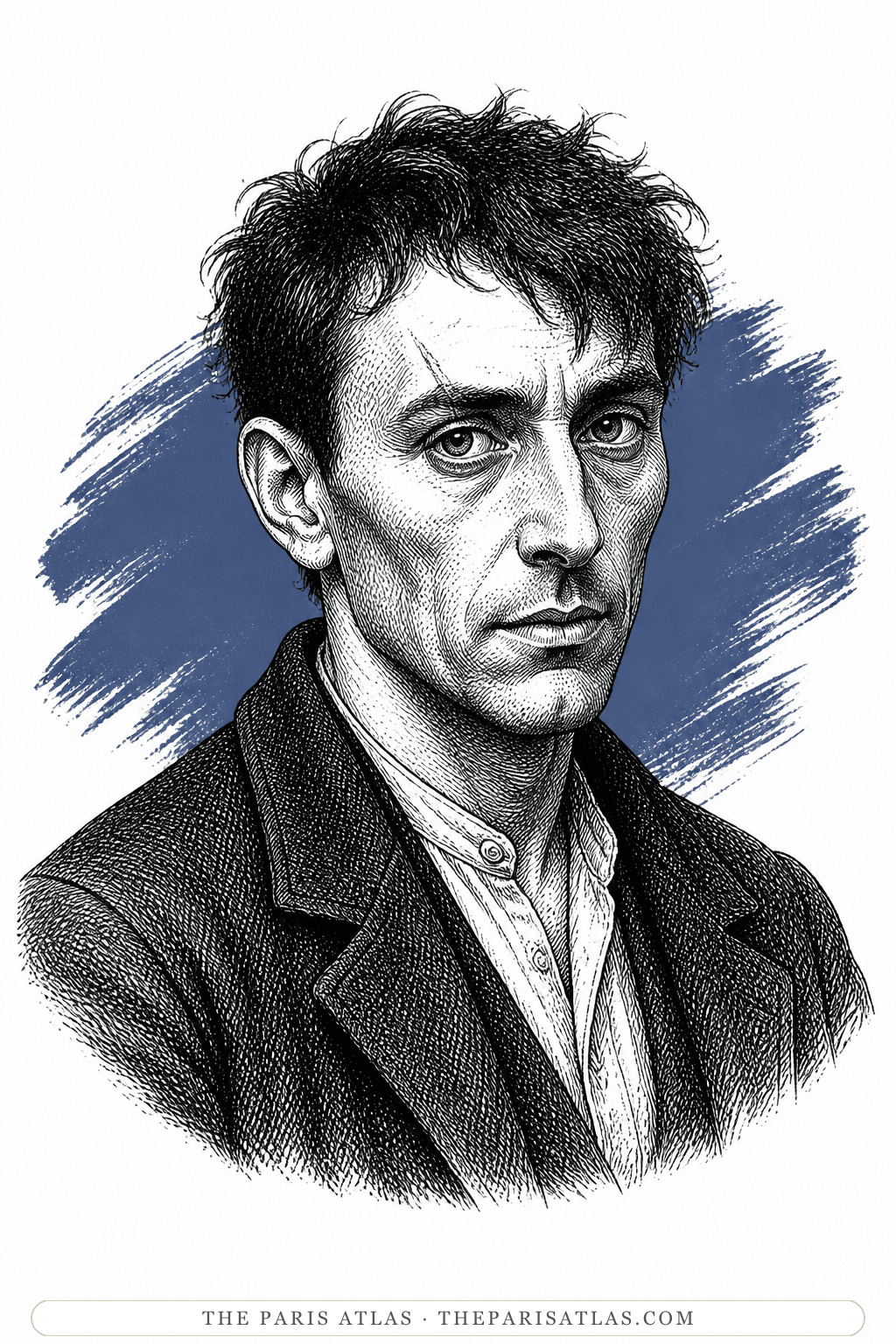
Criminal killed in Guignol's Band who reappears in an uncanny or hallucinatory episode of London Bridge — the novel's most vivid example of the narrator's fraying grip on reality.
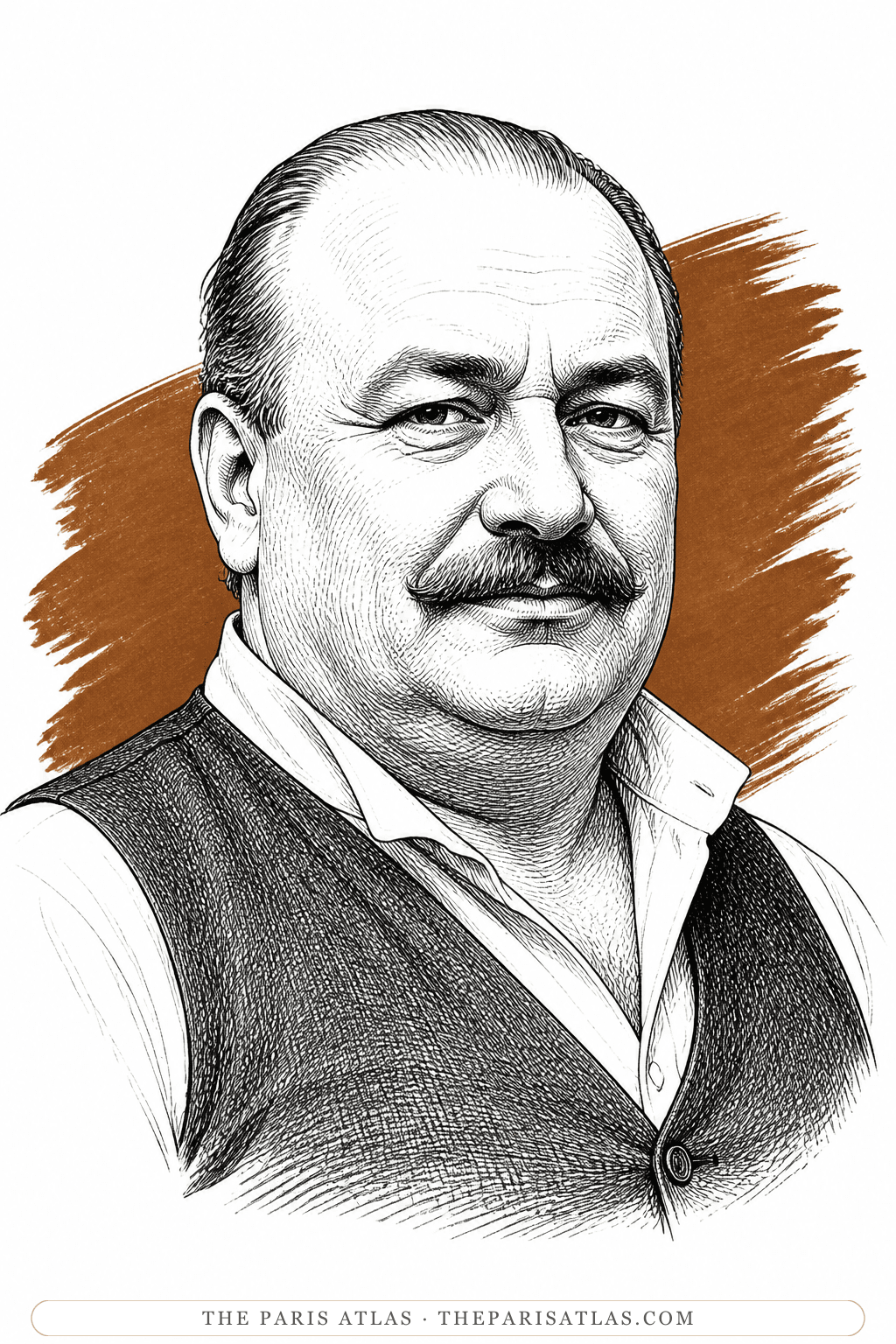
Publican and underworld figure in the London French circle.

Connected with the London criminal circle and its women.

Prostitute from Ferdinand's London milieu.
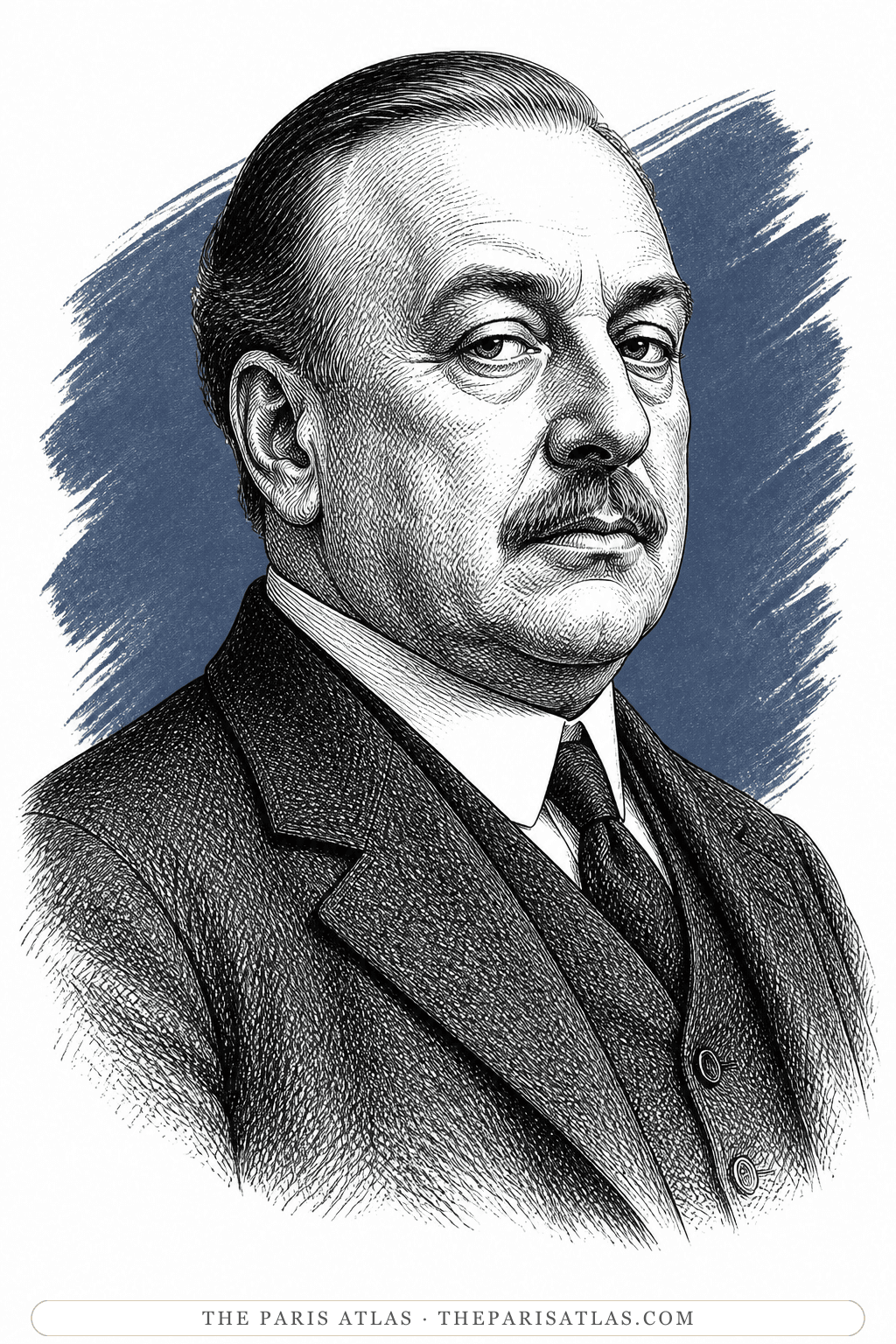
The Greenwich pawnbroker, dead by the time London Bridge begins but still the central threat pursuing Ferdinand through the police and the underworld.
1944
Guignol’s Band appears as the first part of the London sequence.
1961
Céline’s death leaves the continuation unpublished; Marie Canavaggia subsequently locates manuscript material.
1964
Robert Poulet’s edition of the continuation appears as Le Pont de Londres.
The direct predecessor — London Bridge picks up where Guignol's Band leaves Ferdinand and Sosthène.
Read our take
The other London novel — a separate recovered manuscript, chronologically earlier in Ferdinand's arc, published in 2022.
Read our take
The recovered novel that ends with Ferdinand heading for England; the London sequence starts from the world Guerre closes.
Read our take
Céline's 1932 debut, whose narrator is the same Ferdinand at a later moment in his life.
Read our takeYes. It begins where the first volume leaves Ferdinand and Sosthène — hunted by criminals, watched by the police, attached to Sosthène's promise of another escape.
No. They are separate manuscripts and separate narratives. Le Pont de Londres is Guignol's Band II, published posthumously in 1964. Londres is a different early manuscript recovered decades later.
His former secretary Marie Canavaggia found manuscript material after his death, and Robert Poulet prepared the posthumous 1964 edition from multiple textual states.
Not in the sense of a fully finalised Céline manuscript. The larger Guignol's Band project remained unfinished, and the posthumous volume was editorially reconstructed.
She is Colonel O'Collogham's fourteen-year-old niece. Ferdinand becomes involved with her, and she becomes pregnant during the novel.
It serves as both an actual location and a symbolic threshold in the final movement: Ferdinand is once again crossing toward an uncertain future rather than arriving at a stable destination.
Explore authors with a similar voice, perspective, and influence.
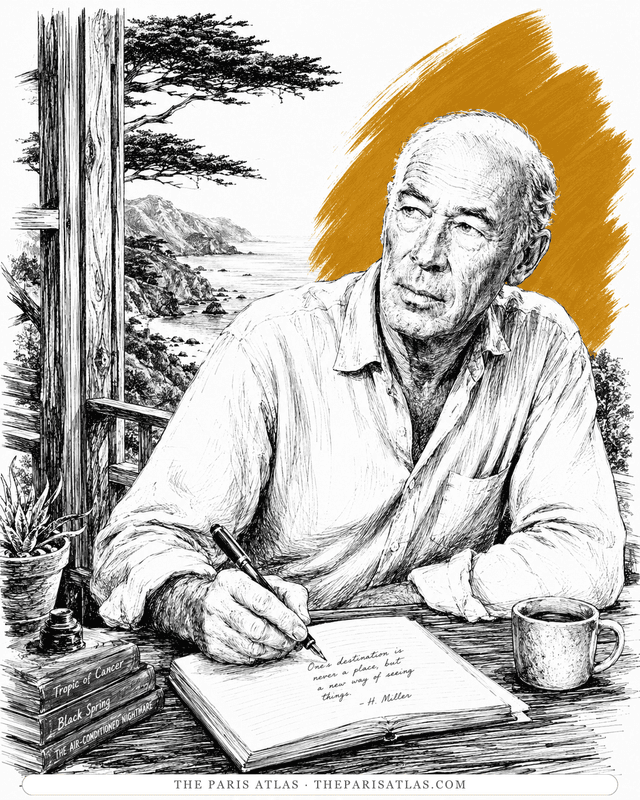
Miller read Journey in manuscript while writing Tropic of Cancer and never recovered — the two books are the era's twin gutter-testaments.
View author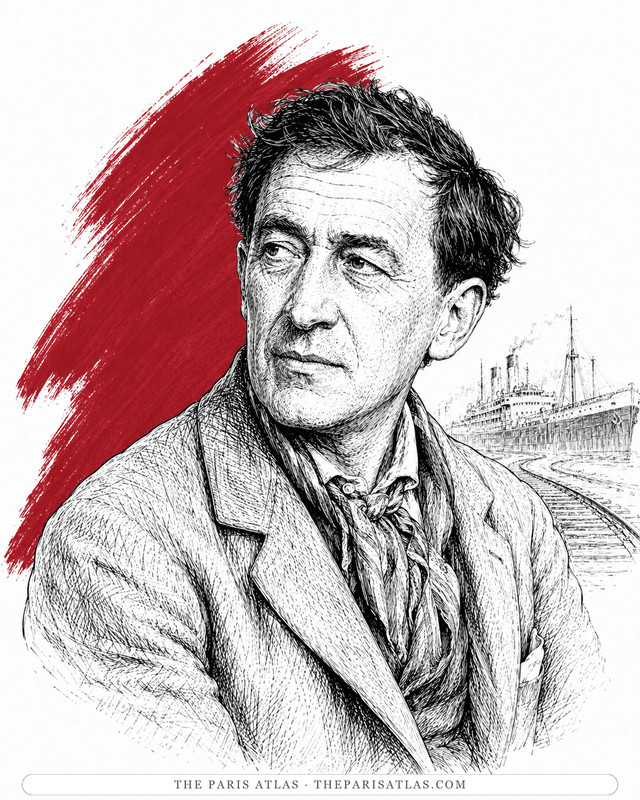
The other French modernist Céline could not look away from: a war-wounded amputee whose spoken prose ran ahead of grammar and whose Moravagine anticipates Bardamu's tour of the century's slaughterhouses.
View author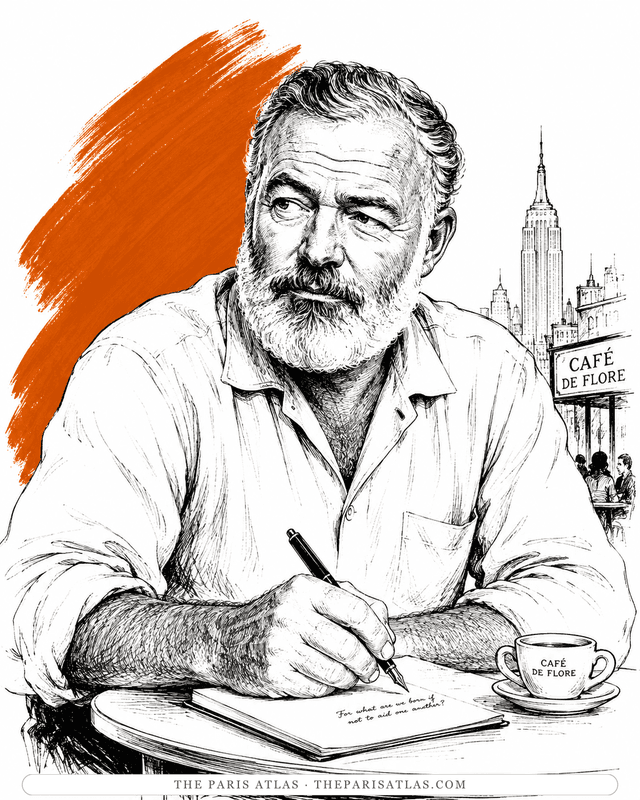
The same war, the same refusal of the big words — delivered in whispers where Céline delivers it in screams. Both writers died in the same week of July 1961.
View authorThe sources below include the primary text, editions, scholarship, archival materials, and other records that informed this page. They document Le Pont de Londres, its publication, and its place in literary history.


The primary text represented by this page, used for descriptions of the work’s contents and for any quoted passages shown here.

Published analysis and historical context used in preparing the Le Pont de Londres page.
Published analysis and historical context used in preparing the Le Pont de Londres page.
Published analysis and historical context used in preparing the Le Pont de Londres page.
Published analysis and historical context used in preparing the Le Pont de Londres page.
The primary text is the baseline reference for every book page. Additional references document publication history, interpretation, and historical context where that evidence is available.
 Explore more resources