
Lettres à Marie Canavaggia
Cahiers Céline 9 — the 758-page scholarly edition of Céline's letters to his literary secretary Marie Canavaggia, twenty-four years of the working relationship that saw the novels into print.
Read our take
Cahiers Céline 6 and 10 — Céline's ten-year correspondence with the writer Albert Paraz, from the Danish exile years through the return to France, and the surviving public campaign to have Céline read again after the war.
Albert Paraz — French novelist, essayist, tubercular, socialist-anarchist — was one of the very small number of French writers who publicly defended Céline while Céline was still exiled in Denmark and facing extradition charges. This is their surviving ten-year correspondence, from 1947 (Céline still at Vestre Fængsel and its country hospital) through Paraz's death in 1957. Cahiers Céline 6 (1980, edited by Jean-Pierre Dauphin) printed the first scholarly edition; Cahiers Céline 10 (2009, edited by Jean-Paul Louis) expanded it substantially. The letters are practical, funny, angry, tactical — the record of Paraz keeping Céline's name in circulation in Paris while Céline pushes drafts, manuscripts, denunciations and jokes back from Denmark.
The correspondence opens in 1947, with Céline released from prison but confined to Denmark, in poor health, and unable to publish under his own name in France.
Paraz is in the south of France, tubercular, publishing books and defending Céline in print — the 1948 Le Gala des vaches contains his essay on Céline that is the first serious postwar attempt to argue for reading the novels again.
The letters cover manuscripts (Féerie pour une autre fois, the drafts of what will become the German trilogy), publishing tactics (which small houses will risk him, which will not), lawsuits, the extradition proceedings, and Céline's steady sense that he is being punished for the pamphlets he already wrote.
Money, Danish weather, cats, Paraz's health, Lucette's dance work and Céline's medical practice from the Meudon house after 1951 all pass through.
The 1950s letters follow Céline back into French publishing — the amnesty, the return to France, the reception of D'un château l'autre — and Paraz's decline: worse tuberculosis, hospital stays, decreasing letters.
Paraz dies in 1957. The correspondence closes there.
Two writers keep each other going through a decade in which one is trapped in Denmark and one is dying slowly of tuberculosis in France. The letters are the survival document of that.
Paraz's function in the record is unusual: he is a professional writer who spent the postwar years arguing in print that Céline should be read again, and this correspondence is the private half of that public campaign.
Céline's letters here are less careful than in the Canavaggia correspondence. Paraz is a friend, not a secretary, and Céline talks about literature, politics, French publishing, money and health in a register that is closer to the novels — sarcastic, aggrieved, funny.
The Jean-Paul Louis edition (Cahiers Céline 10, 2009) restores letters and passages the 1980 first edition had cut or missed. Read the 2009 volume if you can get it.
The correspondence ends in September 1957, weeks before Paraz's death.
D'un château l'autre had appeared four months earlier and put Céline forcefully back into French literary conversation. Paraz had lived to see the campaign work.
The wish for an elaborate watch complicates the letters' story of hardship. In the passage dated 13 March 1951, Céline piles up the desired mechanisms until the sentence sounds almost impatient with ordinary timekeeping. The object is imagined through what it would do, not described as something he owns. This distinction matters: the letter records an extravagant wish, not a purchase. Its mixture of precision and excess also makes the correspondent a performer, choosing an arresting detail through which Paraz can picture him.
Voices, trumpets, drums and ballet make a curious model for a page of prose: they describe timing and force rather than a sequence of events. Céline presents his books as something the reader should hear and feel. The letter excerpt dated 4 August 1952 sharpens that distinction by separating the changing music of an age from its repeated stories. This is an argument for how to read him, not an objective verdict on other writers. The musical imagery advertises a particular effect and makes a private letter double as a statement of artistic ambition.
Paraz was the professional writer who publicly argued that Céline should be read again. This correspondence is the private machinery behind that argument.
In these letters he is not writing for posterity or for a publisher. He is writing to one friend, and the voice loosens — closer to the tone the novels caught than to anything the interviews preserve.
For anyone reading D'un château l'autre or the German trilogy, this is the primary documentary source for how the ten Danish and early Meudon years actually felt to the man living them.
1947–1957
Céline and Albert Paraz exchange the letters represented in the collection.
1980
Gallimard publishes Jean-Pierre Dauphin’s first scholarly selection as Cahiers Céline 6.
2009
Jean-Paul Louis’s expanded edition appears as Cahiers Céline 10.
Cahiers Céline 9 — the 758-page scholarly edition of Céline's letters to his literary secretary Marie Canavaggia, twenty-four years of the working relationship that saw the novels into print.
Read our take
Louis-Ferdinand Céline's 1957 novel — the first of the German trilogy — about the last months of the Vichy government-in-exile at Sigmaringen.
Read our take
Louis-Ferdinand Céline's 1952 novel — the first volume of his postwar Féerie sequence, a feverish mixture of prison, memory and grievance.
Read our takeFrench novelist, essayist and controversialist (1899–1957). Socialist-anarchist by conviction, tubercular from the 1930s, and one of the very small number of French writers who publicly defended Céline while Céline was still exiled in Denmark.
Cahiers Céline 6, edited by Jean-Pierre Dauphin, appeared in 1980. Cahiers Céline 10, edited by Jean-Paul Louis, is the expanded 2009 re-edition — additional letters, corrected texts, deeper scholarly apparatus. Read vol. 10 if you can get it.
1947 to 1957 — from Céline's release from Vestre Fængsel through Paraz's death in September 1957.
Not directly, but the letters are the daily context for Féerie pour une autre fois and the early drafts of what would become the German trilogy. Céline's postwar novels were being planned while these letters were being written.
No. The Paraz correspondence has not been translated. English readers who want it must read it in French.
Paraz's 1948 book — an essay collection containing his argument for reading Céline again after the war. It is the public counterpart to the private letters printed here.
Explore authors with a similar voice, perspective, and influence.
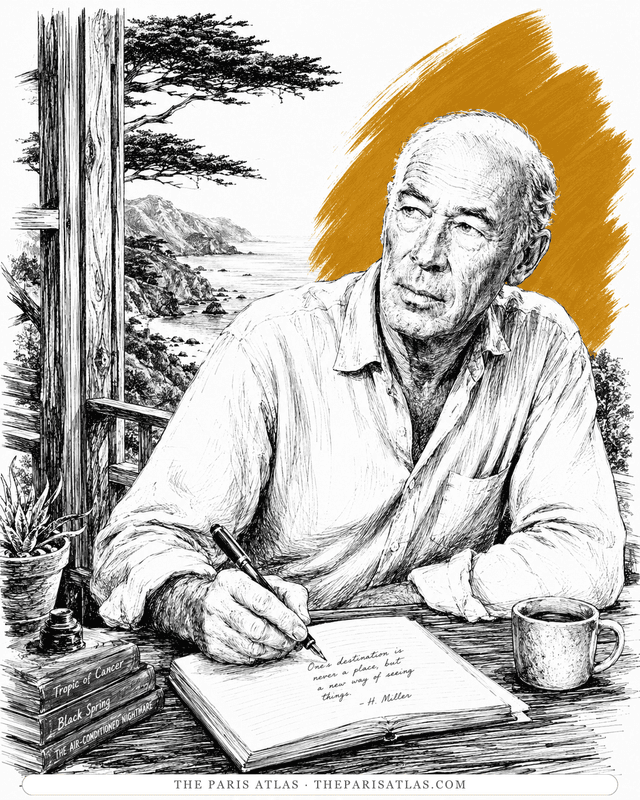
Miller read Journey in manuscript while writing Tropic of Cancer and never recovered — the two books are the era's twin gutter-testaments.
View author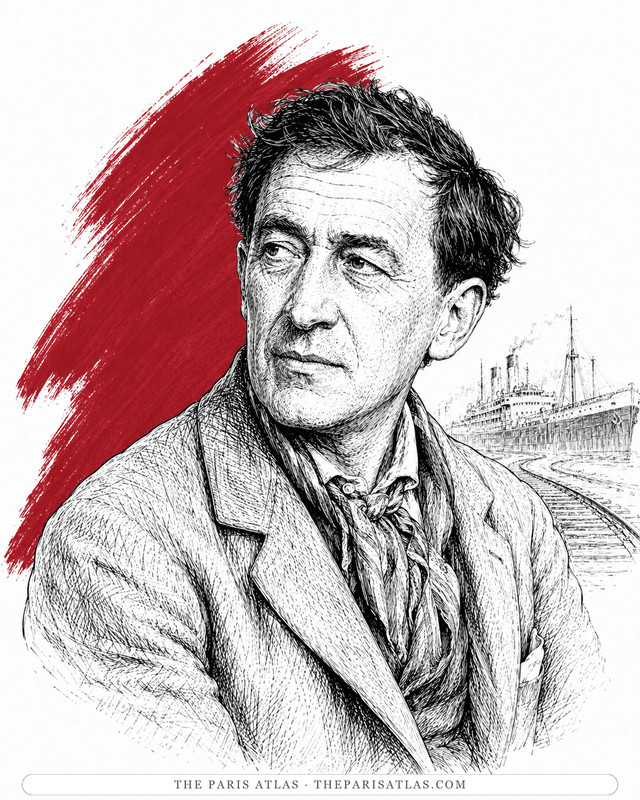
The other French modernist Céline could not look away from: a war-wounded amputee whose spoken prose ran ahead of grammar and whose Moravagine anticipates Bardamu's tour of the century's slaughterhouses.
View author
The same war, the same refusal of the big words — delivered in whispers where Céline delivers it in screams. Both writers died in the same week of July 1961.
View authorThe sources below include the primary text, editions, scholarship, archival materials, and other records that informed this page. They document Lettres à Albert Paraz, its publication, and its place in literary history.

The primary text represented by this page, used for descriptions of the work’s contents and for any quoted passages shown here.

Published analysis and historical context used in preparing the Lettres à Albert Paraz page.
Biographical evidence used to verify chronology, relationships, and historical context connected to Lettres à Albert Paraz.
The Pléiade correspondence catalogue establishes the publication and editorial history of Céline's letters.
The scholarly review assesses the correspondence edition and the documentary value of Céline's surviving letters.
The attributed letter quotations and displayed 4 August 1952 excerpt support the two readings; the editorial presentation and Cécile Guilbert's commentary are distinguished from Céline's words.
The primary text is the baseline reference for every book page. Additional references document publication history, interpretation, and historical context where that evidence is available.
 Explore more resources